
Joshua Brown 007
2.9k ပို့စ်များ

Joshua Brown 007
I am a forward-thinking crypto advisor with a strong grasp of blockchain innovation and digital asset management. @JavedJatt331726
Open Trade
High-Frequency Trader
2.5 Years
1.2K+ ဖော်လိုလုပ်ထားသည်
15.7K+ ဖော်လိုလုပ်သူများ
6.4K+ လိုက်ခ်လုပ်ထားသည်
ပို့စ်များ
ပိုင်ဆိုင်မှုစာရင်း
အားလုံး
Quotes
ဗီဒီယိုများ
တိုက်ရိုက်ထုတ်လွှင့်ခြင်း
#BTC☀ $BTC
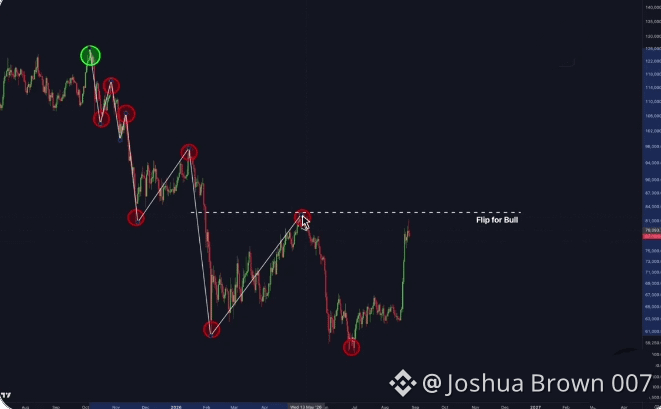
$83K is the level I’m watching.
Until BTC breaks above the previous high and turns it into a higher high, this pump is still a lower-high setup.
So I’m not calling the bull market yet.
Break $83K → reclaim structure → higher high → confirmation.
Until then, patience.
Price can move fast, but market structure doesn’t lie.
$ETH
$XRP
$83K is the level I’m watching.
Until BTC breaks above the previous high and turns it into a higher high, this pump is still a lower-high setup.
So I’m not calling the bull market yet.
Break $83K → reclaim structure → higher high → confirmation.
Until then, patience.
Price can move fast, but market structure doesn’t lie.
$ETH
$XRP
🎙️ Dusk Campaign Live ✨ CLICK DUSK TRADE 👈 Collect Rewards
ပြီး
04 နာရီ 17 မိနစ် 56 စက္ကန့်
1.2k
2
#dusk $DUSK @Dusk
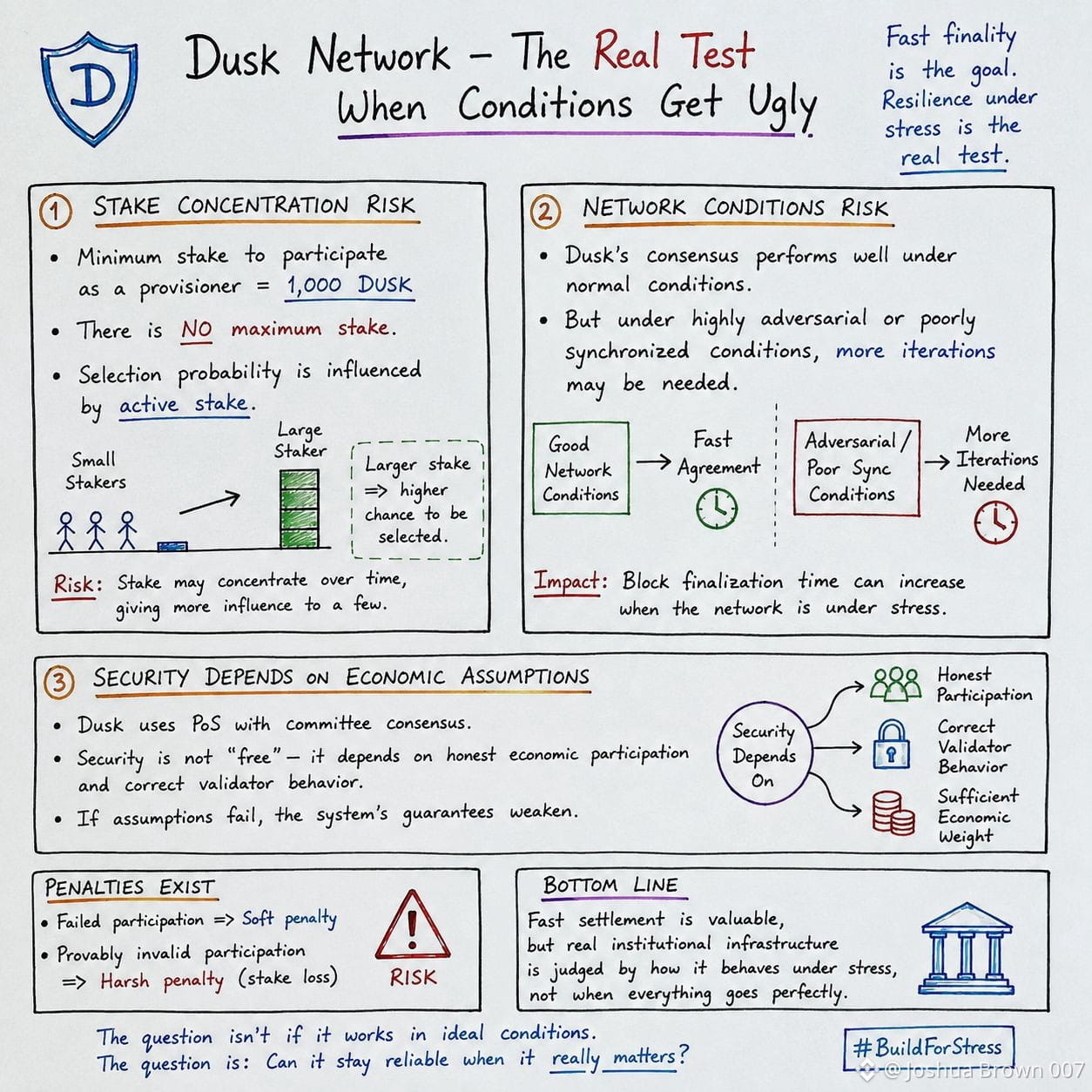
The real test begins when conditions get ugly.
Dusk targets fast, deterministic settlement, but the technical design has trade offs worth discussing.
Consensus relies on staked economic weight.
A provisioner needs at least 1,000 DUSK to participate, but there is no maximum stake. Since active stake affects selection probability, larger capital positions can carry greater influence in consensus participation.
That creates an important question:
How resilient is the validator set if stake becomes concentrated among a smaller number of participants?
Then there’s the network itself.
Under highly adversarial or poorly synchronized conditions, consensus may require more iterations, increasing block-finalization time.
And staking isn't risk free either:
failed participation can trigger soft penalties, while provably invalid consensus behavior can lead to harsher penalties.
Fast settlement is valuable.
But real institutional infrastructure is ultimately judged by how it behaves under stress not when everything goes perfectly.
The real test begins when conditions get ugly.
Dusk targets fast, deterministic settlement, but the technical design has trade offs worth discussing.
Consensus relies on staked economic weight.
A provisioner needs at least 1,000 DUSK to participate, but there is no maximum stake. Since active stake affects selection probability, larger capital positions can carry greater influence in consensus participation.
That creates an important question:
How resilient is the validator set if stake becomes concentrated among a smaller number of participants?
Then there’s the network itself.
Under highly adversarial or poorly synchronized conditions, consensus may require more iterations, increasing block-finalization time.
And staking isn't risk free either:
failed participation can trigger soft penalties, while provably invalid consensus behavior can lead to harsher penalties.
Fast settlement is valuable.
But real institutional infrastructure is ultimately judged by how it behaves under stress not when everything goes perfectly.
$BTC
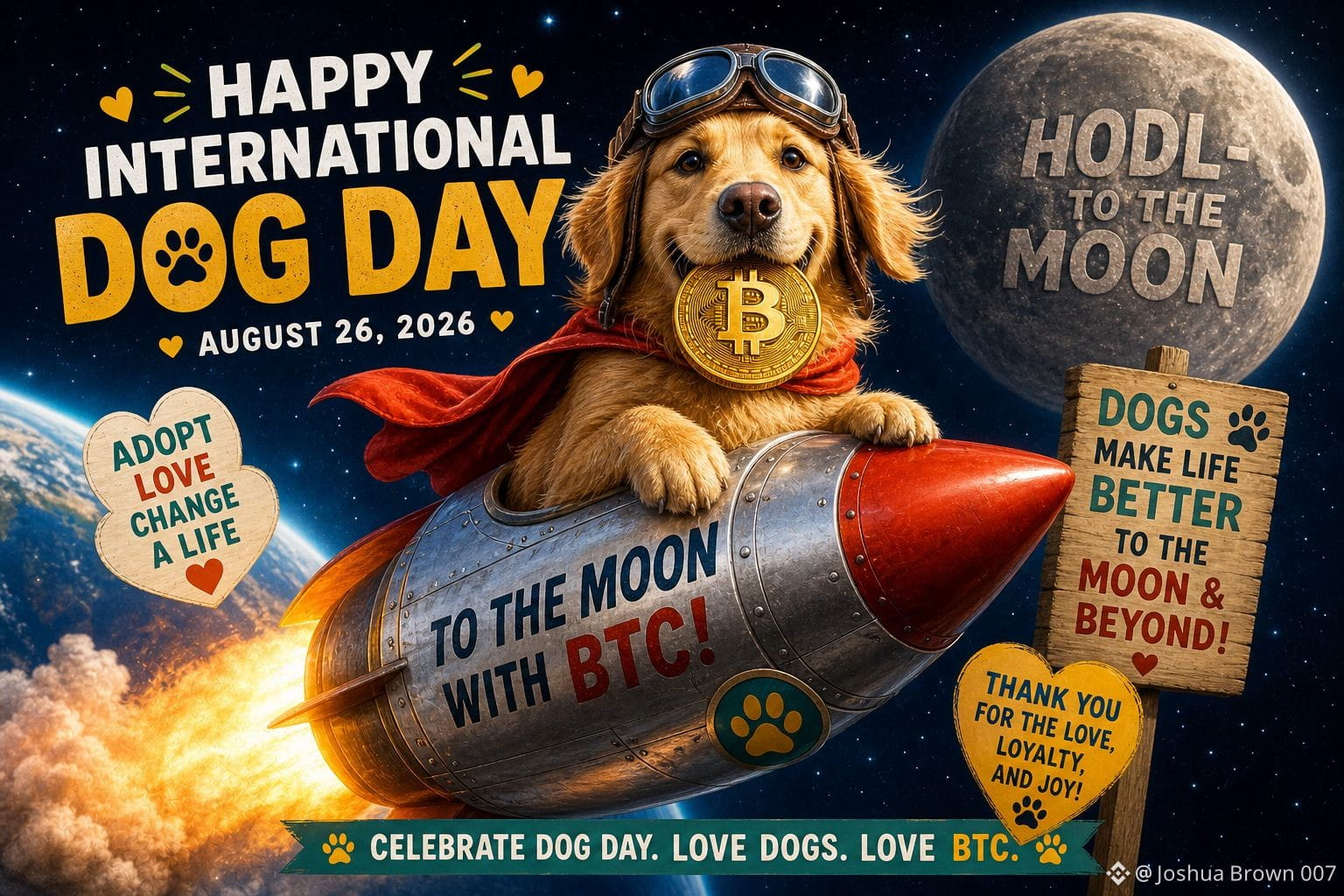
Every trader sits in front of their laptop screen, staring intently at the live Bitcoin chart, with their mind completely fixated on the thought of keeping their crypto portfolio packed with Bitcoin at all times. Just like almost everyone else these days, every trader firmly believes that the ultimate key to financial security and wealth is nothing but Bitcoin. The friend suggests that instead of always thinking about adding Bitcoin to a portfolio, it is time on this special day to add this voiceless creature to life instead. There is a lot of hesitation at first, with excuses from every trader about how difficult it would be to raise a pet and how it would distract from the crypto market, but the moment that little puppy looks up with its innocent eyes and wags its tail, the stubborn resistance melts away, and a smiling acceptance follows by naming the pup "Crypto."
It becomes clear to every trader that while people blindly trust Bitcoin to secure their financial future, a dog offers the exact same unconditional trust, remaining the world's most loyal companion who genuinely does not care whether a trader is rich or poor, loving them simply for who they are. Whenever the crypto market crashes and a sea of red numbers brings on massive stress, this little "Crypto" climbs right into the lap and licks away the anxiety, as if to remind every trader that life does not end with market fluctuations. It brings every trader the deep understanding that while Bitcoin provides financial freedom, a pet grants emotional freedom and completely washes away daily stress. Now, the advice shared among every trader is that while keeping Bitcoin in a portfolio is highly important, giving a dog a place in life, adopting them, and showing them compassion is far more essential, because if Bitcoin is the ultimate digital asset, these loyal animals are truly the greatest and most genuine assets in life.
#BTC
Every trader sits in front of their laptop screen, staring intently at the live Bitcoin chart, with their mind completely fixated on the thought of keeping their crypto portfolio packed with Bitcoin at all times. Just like almost everyone else these days, every trader firmly believes that the ultimate key to financial security and wealth is nothing but Bitcoin. The friend suggests that instead of always thinking about adding Bitcoin to a portfolio, it is time on this special day to add this voiceless creature to life instead. There is a lot of hesitation at first, with excuses from every trader about how difficult it would be to raise a pet and how it would distract from the crypto market, but the moment that little puppy looks up with its innocent eyes and wags its tail, the stubborn resistance melts away, and a smiling acceptance follows by naming the pup "Crypto."
It becomes clear to every trader that while people blindly trust Bitcoin to secure their financial future, a dog offers the exact same unconditional trust, remaining the world's most loyal companion who genuinely does not care whether a trader is rich or poor, loving them simply for who they are. Whenever the crypto market crashes and a sea of red numbers brings on massive stress, this little "Crypto" climbs right into the lap and licks away the anxiety, as if to remind every trader that life does not end with market fluctuations. It brings every trader the deep understanding that while Bitcoin provides financial freedom, a pet grants emotional freedom and completely washes away daily stress. Now, the advice shared among every trader is that while keeping Bitcoin in a portfolio is highly important, giving a dog a place in life, adopting them, and showing them compassion is far more essential, because if Bitcoin is the ultimate digital asset, these loyal animals are truly the greatest and most genuine assets in life.
#BTC
#news_update $ETH
Bitmine Buys Another $81M in Ethereum as ETH Outperforms Bitcoin.
News By Jason Nelson
Aug 24, 2026
Bitmine Immersion Technologies is another step closer to its goal of owning 5% of Ethereum’s supply after buying another 32,447 ETH, worth roughly $81 million, last week.
The company said Monday that it held 5,847,611 ETH, worth around $15 billion as of August 23.
With Ethereum’s supply at approximately 120.7 million tokens, the 5% mark is about 6.04 million ETH. That puts Bitmine roughly 187,000 ETH short of its goal.
Bitmine Buys Another $81M in Ethereum as ETH Outperforms Bitcoin.
News By Jason Nelson
Aug 24, 2026
Bitmine Immersion Technologies is another step closer to its goal of owning 5% of Ethereum’s supply after buying another 32,447 ETH, worth roughly $81 million, last week.
The company said Monday that it held 5,847,611 ETH, worth around $15 billion as of August 23.
With Ethereum’s supply at approximately 120.7 million tokens, the 5% mark is about 6.04 million ETH. That puts Bitmine roughly 187,000 ETH short of its goal.
#BitcoinRises23.6%Weekly
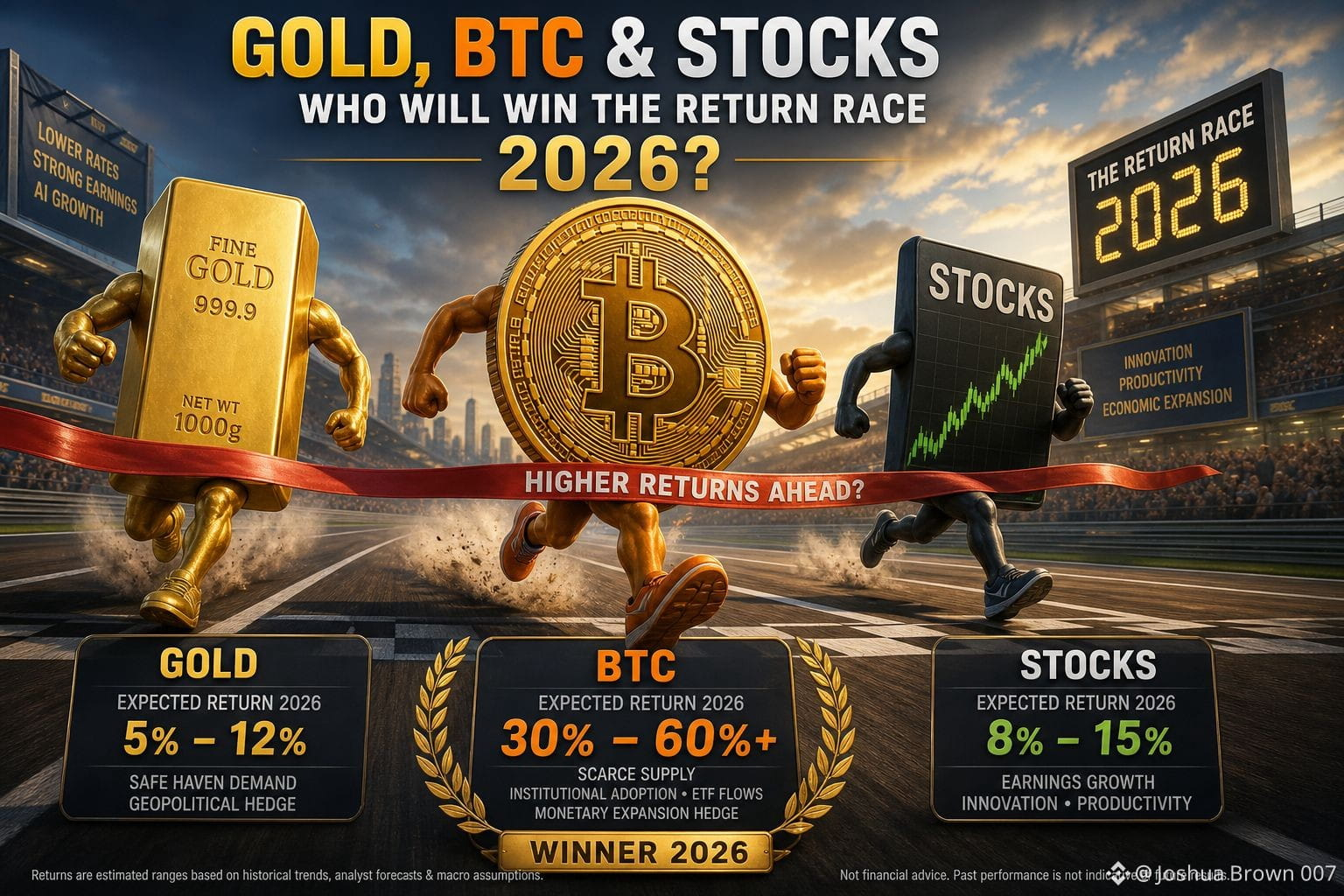
Gold, BTC and stocks who will win the return Race 2026?
Hey everyone, especially those tracking who will win the return race between gold, Bitcoin, and stocks in 2026. Over the last few months, I have been looking closely at how our portfolios are moving compared to traditional markets, and honestly, the reality check has been brutal but necessary. When I did a deep analysis of my own holdings last week, I realized how dramatically the global macro scene has flipped the leaderboard this year.
We all remember Bitcoin hitting that jaw-dropping milestone above one hundred and twenty thousand dollars late last year, making everyone feel invincible. But look at where we are now in late 2026. Gold is currently dominating the percentage gains with an impressive eighteen percent year-to-date surge, and the S&P 500 keeps grinding upward with steady twelve percent returns despite global inflation. Meanwhile, our beloved crypto has been struggling to permanently reclaim the eighty-thousand-dollar psychological barrier after a massive liquid shock, leaving it deep in negative territory for the year.
I noticed a fascinating shift in market psychology recently; whenever geopolitical tensions spike now, capital isn't rushing into crypto like it used to. Instead, institutional money is rotating straight back into defensive assets and high-yielding corporate equities. It proves that Bitcoin is still behaving like a high-beta risk asset rather than a true safe haven, letting gold win the safety crown. Survival right now isn't about panic selling, but about recognizing that the macro cycle has temporarily favored cash flow and physical assets over speculative tech.
Which asset class do you think will ultimately finish the year on top?
#BitcoinOpenInterestFallsToTwoMonthLow #AIHardwareStocksFallPreMarketAAOIDown11.66% #SP500FuturesFall
$XAUT
$NVDA.US
$BTC
Gold, BTC and stocks who will win the return Race 2026?
Hey everyone, especially those tracking who will win the return race between gold, Bitcoin, and stocks in 2026. Over the last few months, I have been looking closely at how our portfolios are moving compared to traditional markets, and honestly, the reality check has been brutal but necessary. When I did a deep analysis of my own holdings last week, I realized how dramatically the global macro scene has flipped the leaderboard this year.
We all remember Bitcoin hitting that jaw-dropping milestone above one hundred and twenty thousand dollars late last year, making everyone feel invincible. But look at where we are now in late 2026. Gold is currently dominating the percentage gains with an impressive eighteen percent year-to-date surge, and the S&P 500 keeps grinding upward with steady twelve percent returns despite global inflation. Meanwhile, our beloved crypto has been struggling to permanently reclaim the eighty-thousand-dollar psychological barrier after a massive liquid shock, leaving it deep in negative territory for the year.
I noticed a fascinating shift in market psychology recently; whenever geopolitical tensions spike now, capital isn't rushing into crypto like it used to. Instead, institutional money is rotating straight back into defensive assets and high-yielding corporate equities. It proves that Bitcoin is still behaving like a high-beta risk asset rather than a true safe haven, letting gold win the safety crown. Survival right now isn't about panic selling, but about recognizing that the macro cycle has temporarily favored cash flow and physical assets over speculative tech.
Which asset class do you think will ultimately finish the year on top?
#BitcoinOpenInterestFallsToTwoMonthLow #AIHardwareStocksFallPreMarketAAOIDown11.66% #SP500FuturesFall
$XAUT
$NVDA.US
$BTC
#dusk $DUSK @Dusk
The real test of a financial blockchain isn’t moving value.
It’s knowing exactly when that value has settled.
Think about a traditional financial transaction.
One side transfers an asset.
Another side provides payment.
Between those two actions, there can be delays, intermediaries, reconciliation, and uncertainty.
Atomic settlement changes that model.
The core idea is simple: related parts of a transaction should succeed together—or the transaction should not happen at all.
Technically, this matters because it reduces the risk of one side completing while the other side fails.
For financial markets, that distinction is huge.
An asset transfer isn’t truly useful if the corresponding payment is still uncertain.
This is where Dusk’s architecture becomes interesting.
Its design is aimed at financial use cases where execution, settlement, privacy, compliance, and deterministic transaction outcomes need to work together rather than exist as disconnected layers.
Atomicity gives the transaction a clear rule:
Either the required state transition happens as intended, or it doesn’t.
That creates a stronger foundation for things like securities settlement, delivery-versus-payment, and other multi-party financial transactions.
The interesting part isn’t simply putting assets onchain.
It’s making the blockchain behave more like infrastructure that financial markets can actually rely on.
And that’s a much bigger challenge than tokenization alone.
#GoldNearsThreeMonthHigh #SamsungFalls8.97%DraggingKospiDown3.24% #BrentDrops1.87%
The real test of a financial blockchain isn’t moving value.
It’s knowing exactly when that value has settled.
Think about a traditional financial transaction.
One side transfers an asset.
Another side provides payment.
Between those two actions, there can be delays, intermediaries, reconciliation, and uncertainty.
Atomic settlement changes that model.
The core idea is simple: related parts of a transaction should succeed together—or the transaction should not happen at all.
Technically, this matters because it reduces the risk of one side completing while the other side fails.
For financial markets, that distinction is huge.
An asset transfer isn’t truly useful if the corresponding payment is still uncertain.
This is where Dusk’s architecture becomes interesting.
Its design is aimed at financial use cases where execution, settlement, privacy, compliance, and deterministic transaction outcomes need to work together rather than exist as disconnected layers.
Atomicity gives the transaction a clear rule:
Either the required state transition happens as intended, or it doesn’t.
That creates a stronger foundation for things like securities settlement, delivery-versus-payment, and other multi-party financial transactions.
The interesting part isn’t simply putting assets onchain.
It’s making the blockchain behave more like infrastructure that financial markets can actually rely on.
And that’s a much bigger challenge than tokenization alone.
#GoldNearsThreeMonthHigh #SamsungFalls8.97%DraggingKospiDown3.24% #BrentDrops1.87%
#SP500FuturesFall
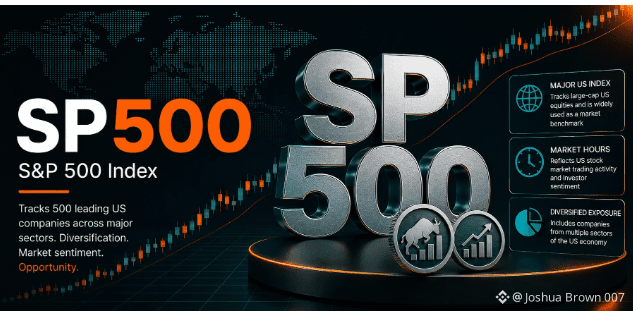
I was watching the S&P 500 early this morning and honestly stopped scrolling for a moment. Something about the chart felt different today.
The Vantage SP500 CFD is hovering around 7,680, barely moving. But what caught my eye was the 50-period and 200-period moving averages sitting almost on top of each other, compressed within roughly five points. When I have seen this kind of squeeze before, the market is usually loading up for a bigger move in either direction. Right now it is doing neither. Just waiting.
Midweek was rough. Treasury yield pressure built up, Walmart's numbers disappointed, and the index slid all the way down to 7,648 during Thursday's session. Then Friday flipped everything. Stronger than expected US business activity data pushed the index back above 7,700, the Dow added over 500 points. But zoom out to the weekly picture and it still finished down roughly 1.4%, with tech and chip names dragging the hardest.
When I ran through the RSI, it was sitting around 45, cooling off sharply after briefly touching overbought territory during Friday's rally. That is not a reversal signal on its own. Momentum just stalled.
When I ran through the RSI, it was sitting around 45, cooling off sharply after briefly touching overbought territory during Friday's rally. That is not a reversal signal on its own. Momentum just stalled.
The real test comes August 28. Fed Chair Kevin Warsh delivers his first Jackson Hole keynote, and with long-dated yields already near multi-decade highs, even a slightly hawkish tone could shake things up considerably before the September FOMC meeting.
What is your read on Warsh, does he signal patience or does he give yields another reason to climb?
I was watching the S&P 500 early this morning and honestly stopped scrolling for a moment. Something about the chart felt different today.
The Vantage SP500 CFD is hovering around 7,680, barely moving. But what caught my eye was the 50-period and 200-period moving averages sitting almost on top of each other, compressed within roughly five points. When I have seen this kind of squeeze before, the market is usually loading up for a bigger move in either direction. Right now it is doing neither. Just waiting.
Midweek was rough. Treasury yield pressure built up, Walmart's numbers disappointed, and the index slid all the way down to 7,648 during Thursday's session. Then Friday flipped everything. Stronger than expected US business activity data pushed the index back above 7,700, the Dow added over 500 points. But zoom out to the weekly picture and it still finished down roughly 1.4%, with tech and chip names dragging the hardest.
When I ran through the RSI, it was sitting around 45, cooling off sharply after briefly touching overbought territory during Friday's rally. That is not a reversal signal on its own. Momentum just stalled.
When I ran through the RSI, it was sitting around 45, cooling off sharply after briefly touching overbought territory during Friday's rally. That is not a reversal signal on its own. Momentum just stalled.
The real test comes August 28. Fed Chair Kevin Warsh delivers his first Jackson Hole keynote, and with long-dated yields already near multi-decade highs, even a slightly hawkish tone could shake things up considerably before the September FOMC meeting.
What is your read on Warsh, does he signal patience or does he give yields another reason to climb?
စိစစ်အတည်ပြုထားသည်
#BrentDrops1.87%
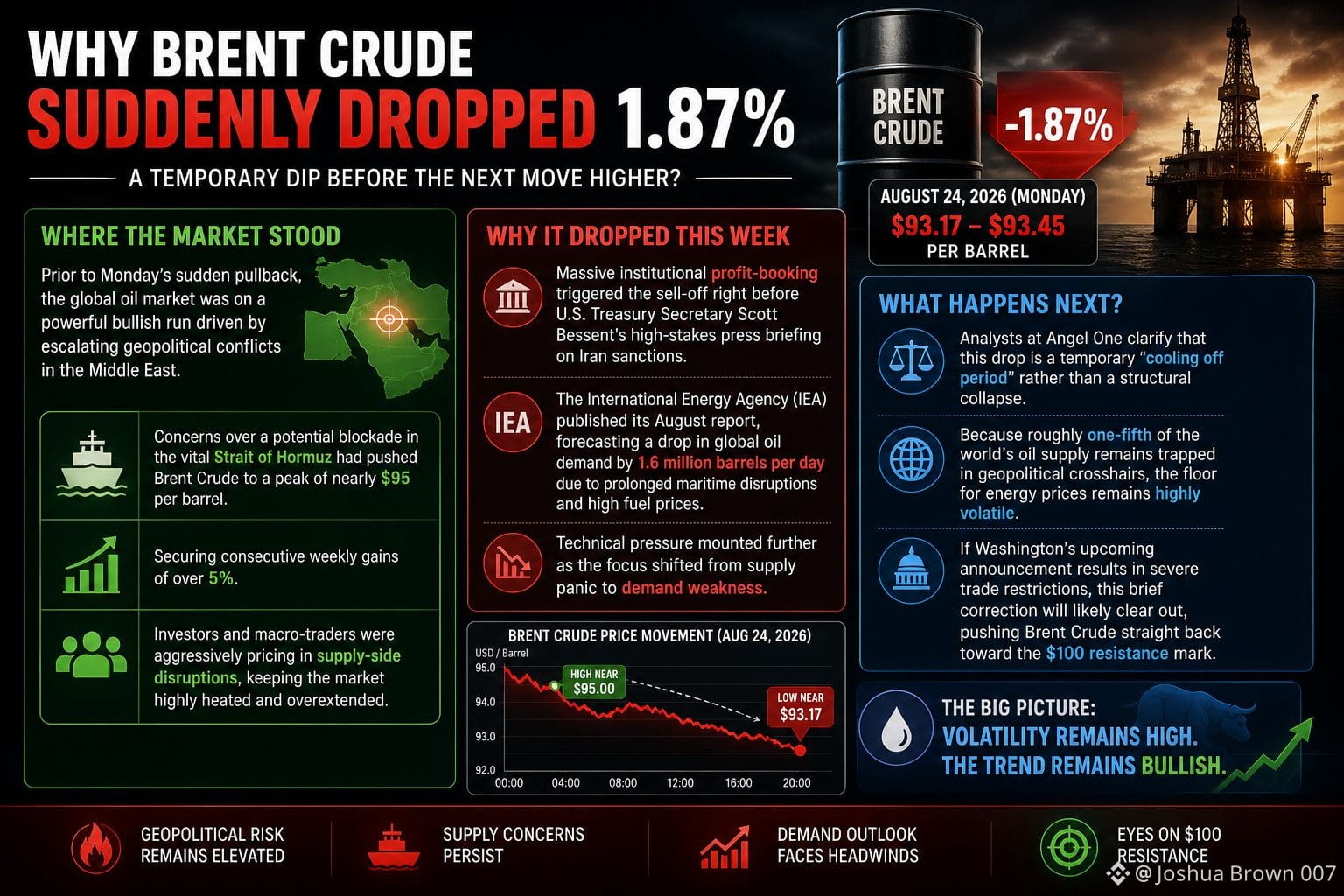
Why Brent Crude Suddenly Dropped 1.87%
Where the Market Stood,
Prior to Monday’s sudden pullback, the global oil market was on a powerful bullish run driven by escalating geopolitical conflicts in the Middle East. Concerns over a potential blockade in the vital Strait of Hormuz had pushed Brent Crude to a peak of nearly $95 per barrel, securing consecutive weekly gains of over 5%. Investors and macro-traders were aggressively pricing in supply-side disruptions, keeping the market highly heated and overextended.
Why It Dropped,
This Week On Monday, August 24, 2026, the benchmark reversed sharply, plunging as much as 1.87% to hover between $93.17 and $93.45 per barrel. According to energy updates from Big News Network, this flash drop was triggered by massive institutional profit-booking right before U.S. Treasury Secretary Scott Bessent’s high-stakes press briefing on Iran sanctions. Technical pressure mounted further as the International Energy Agency (IEA) published its August report, forecasting a drop in global oil demand by 1.6 million barrels per day due to prolonged maritime disruptions and high fuel prices, which temporarily shifted market focus from supply panic to demand weakness.
What Happens Next?
Market analysts at Angel One clarify that this drop is a temporary "cooling off" period rather than a structural collapse. Because roughly one-fifth of the world's oil supply remains trapped in geopolitical crosshairs, the floor for energy prices remains highly volatile. If Washington's upcoming announcement results in severe trade restrictions, this brief correction will likely clear out, pushing Brent Crude straight back toward the $100 resistance mark.
$XBR
Why Brent Crude Suddenly Dropped 1.87%
Where the Market Stood,
Prior to Monday’s sudden pullback, the global oil market was on a powerful bullish run driven by escalating geopolitical conflicts in the Middle East. Concerns over a potential blockade in the vital Strait of Hormuz had pushed Brent Crude to a peak of nearly $95 per barrel, securing consecutive weekly gains of over 5%. Investors and macro-traders were aggressively pricing in supply-side disruptions, keeping the market highly heated and overextended.
Why It Dropped,
This Week On Monday, August 24, 2026, the benchmark reversed sharply, plunging as much as 1.87% to hover between $93.17 and $93.45 per barrel. According to energy updates from Big News Network, this flash drop was triggered by massive institutional profit-booking right before U.S. Treasury Secretary Scott Bessent’s high-stakes press briefing on Iran sanctions. Technical pressure mounted further as the International Energy Agency (IEA) published its August report, forecasting a drop in global oil demand by 1.6 million barrels per day due to prolonged maritime disruptions and high fuel prices, which temporarily shifted market focus from supply panic to demand weakness.
What Happens Next?
Market analysts at Angel One clarify that this drop is a temporary "cooling off" period rather than a structural collapse. Because roughly one-fifth of the world's oil supply remains trapped in geopolitical crosshairs, the floor for energy prices remains highly volatile. If Washington's upcoming announcement results in severe trade restrictions, this brief correction will likely clear out, pushing Brent Crude straight back toward the $100 resistance mark.
$XBR
#SolanaGovernanceVoteToDoubleDeflationRate
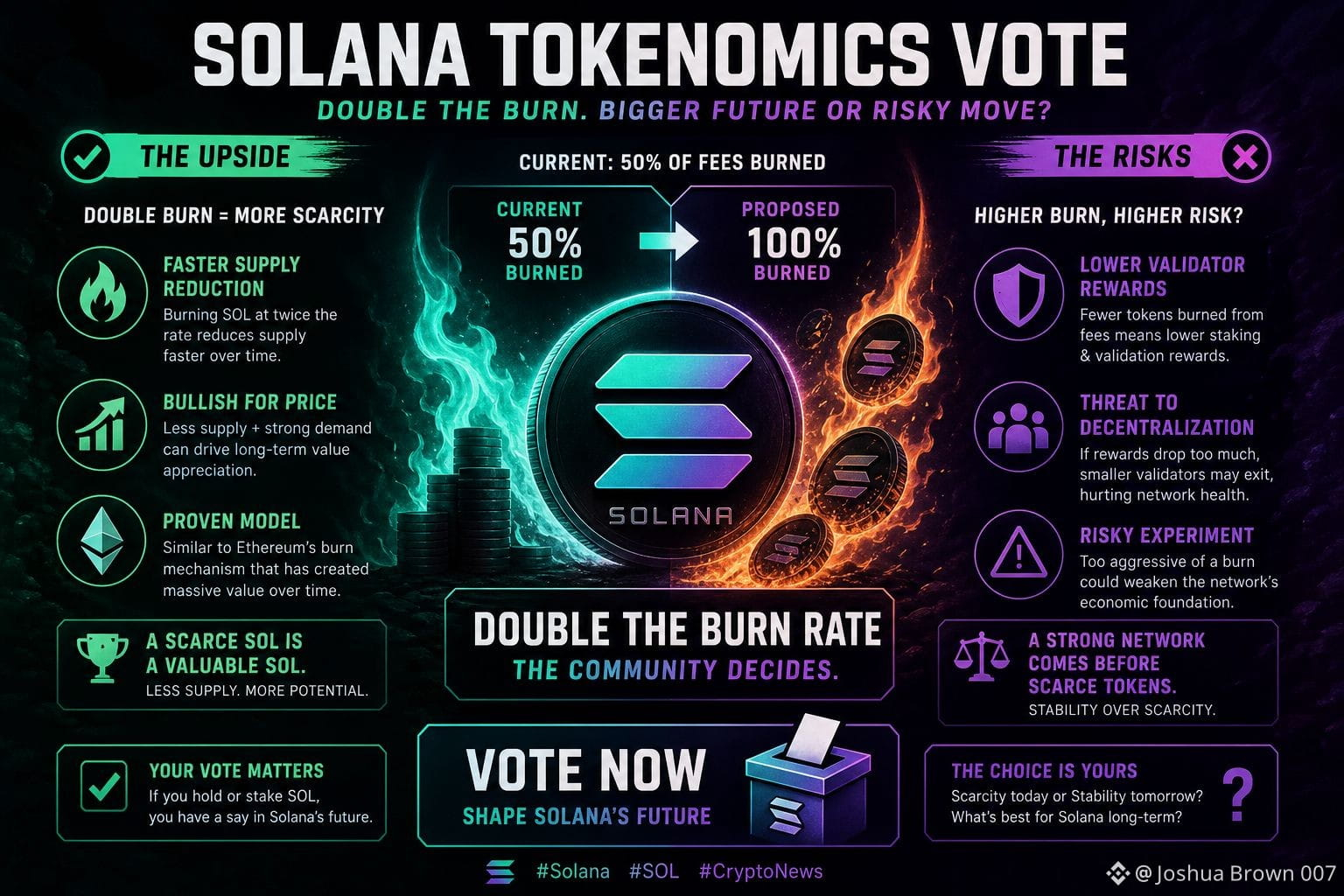
I’ve been diving into the latest Solana news, and there is a pretty massive tokenomics vote happening right now that everyone is talking about. Basically, there is a new governance proposal on the table to double the network's deflation rate. If you aren't familiar with how it works right now, Solana permanently burns half of all its transaction fees to help keep the token supply in check. This new vote wants to turn that mechanism way up, essentially destroying coins at twice the current speed whenever the network gets busy with trading or minting.
When you look at the research, this move is a classic double-edged sword for the ecosystem. On the bright side, cutting down the supply faster usually creates scarcity, which makes investors happy because it can push the token value up over time, similar to what Ethereum did a while back. But on the flip side, some folks are worried it might hurt the network's foundation. If the token supply tightens up too fast, it could lower the overall rewards that regular validators rely on to keep the blockchain running, which might accidentally hurt decentralization.
Ultimately, it is a really fascinating experiment in crypto economics, and the community seems pretty split down the middle. If you hold or stake any SOL, your voting power actually matters here, so it is definitely worth keeping a close eye on how the final numbers shake out. It really comes down to a choice between making the token scarcer today or protecting the network's long-term stability. What do you think is doubling the burn rate a smart move, or are we playing with fire? Let me know your thoughts!
#Solana #CryptoNews #GoldNearsThreeMonthHigh $SOL
$XRP
$LAB
I’ve been diving into the latest Solana news, and there is a pretty massive tokenomics vote happening right now that everyone is talking about. Basically, there is a new governance proposal on the table to double the network's deflation rate. If you aren't familiar with how it works right now, Solana permanently burns half of all its transaction fees to help keep the token supply in check. This new vote wants to turn that mechanism way up, essentially destroying coins at twice the current speed whenever the network gets busy with trading or minting.
When you look at the research, this move is a classic double-edged sword for the ecosystem. On the bright side, cutting down the supply faster usually creates scarcity, which makes investors happy because it can push the token value up over time, similar to what Ethereum did a while back. But on the flip side, some folks are worried it might hurt the network's foundation. If the token supply tightens up too fast, it could lower the overall rewards that regular validators rely on to keep the blockchain running, which might accidentally hurt decentralization.
Ultimately, it is a really fascinating experiment in crypto economics, and the community seems pretty split down the middle. If you hold or stake any SOL, your voting power actually matters here, so it is definitely worth keeping a close eye on how the final numbers shake out. It really comes down to a choice between making the token scarcer today or protecting the network's long-term stability. What do you think is doubling the burn rate a smart move, or are we playing with fire? Let me know your thoughts!
#Solana #CryptoNews #GoldNearsThreeMonthHigh $SOL
$XRP
$LAB
#dusk $DUSK @Dusk
I’m not just looking at what Dusk can do anymore, I’m looking at how intelligently it does the work behind the scenes.
One example is hiding inside the execution layer.
Dusk uses host functions to handle computationally heavy cryptographic operations natively, instead of forcing everything through the WASM environment.
That includes Blake2b & Poseidon hashing, PlonK and Groth16 proof verification, plus Schnorr and BLS signatures.
Why does that matter?
The whitepaper notes that WASM can be 45–255% slower than native execution for complex workloads because of virtualization overhead.
So Dusk’s efficiency story goes beyond PoS.
It’s also about where and how computation happens reducing unnecessary overhead while keeping cryptographic operations scalable.
And that’s the part I find interesting.
If blockchain is going to handle serious financial activity, efficiency shouldn’t be something added later.
It should be engineered into the foundation.
Sometimes the smartest innovation is the work happening quietly underneath.
#BitcoinStrongestWeekSinceMarch2023 #AnthropicIPOCouldTopSpaceXRecordReportsSay #USCanadaTradeTalksCollapseCanadaVowsRetaliation #BSTREndsCantorSPACGoPublicPlan
$DUSK $PUMP
I’m not just looking at what Dusk can do anymore, I’m looking at how intelligently it does the work behind the scenes.
One example is hiding inside the execution layer.
Dusk uses host functions to handle computationally heavy cryptographic operations natively, instead of forcing everything through the WASM environment.
That includes Blake2b & Poseidon hashing, PlonK and Groth16 proof verification, plus Schnorr and BLS signatures.
Why does that matter?
The whitepaper notes that WASM can be 45–255% slower than native execution for complex workloads because of virtualization overhead.
So Dusk’s efficiency story goes beyond PoS.
It’s also about where and how computation happens reducing unnecessary overhead while keeping cryptographic operations scalable.
And that’s the part I find interesting.
If blockchain is going to handle serious financial activity, efficiency shouldn’t be something added later.
It should be engineered into the foundation.
Sometimes the smartest innovation is the work happening quietly underneath.
#BitcoinStrongestWeekSinceMarch2023 #AnthropicIPOCouldTopSpaceXRecordReportsSay #USCanadaTradeTalksCollapseCanadaVowsRetaliation #BSTREndsCantorSPACGoPublicPlan
$DUSK $PUMP
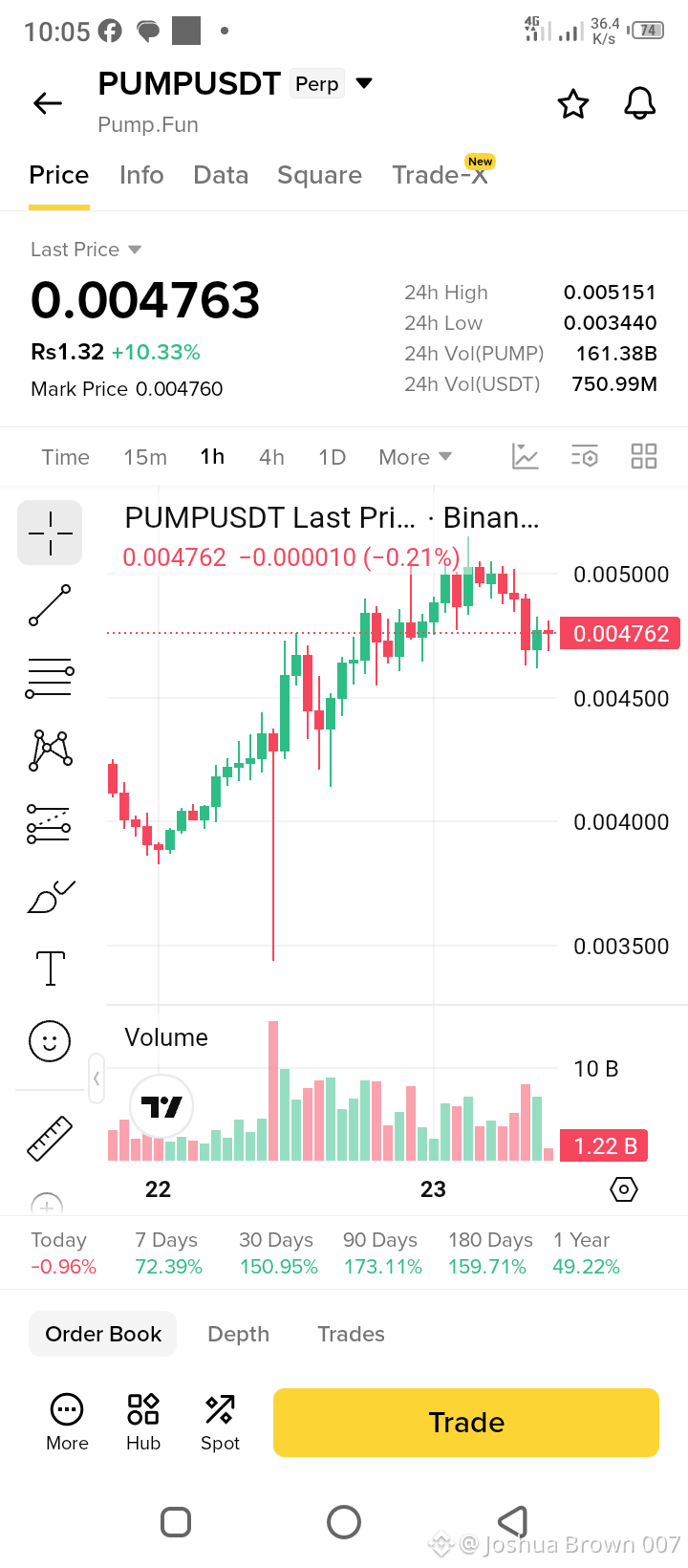
#pumpiscoming $PUMP
Entry (Short): 0.005050 - 0.005200
Stop-Loss: 0.005500
Take Profit 1: 0.004500
Take Profit 2: 0.004000
Entry (Long): 0.004100 - 0.004200
Stop-Loss: 0.003900.
Take Profit: 0.004900.
The V-shaped recovery indicates strong demand, but the bounce is overextended.
Volume is declining, suggesting the impulsive move is ending.
Price is trapped between resistance and support, indicating a range-bound market.
Smart Money will likely push price to 0.005151 to grab stop losses before reversing.
The FVG between 0.004000 - 0.004200 must be filled for a healthy move upward.
$GOOGL.US
$TRUMP
#NvidiaAIServerPricesRiseOver15% #BSTREndsCantorSPACGoPublicPlan #USCanadaTradeTalksCollapseCanadaVowsRetaliation
Entry (Short): 0.005050 - 0.005200
Stop-Loss: 0.005500
Take Profit 1: 0.004500
Take Profit 2: 0.004000
Entry (Long): 0.004100 - 0.004200
Stop-Loss: 0.003900.
Take Profit: 0.004900.
The V-shaped recovery indicates strong demand, but the bounce is overextended.
Volume is declining, suggesting the impulsive move is ending.
Price is trapped between resistance and support, indicating a range-bound market.
Smart Money will likely push price to 0.005151 to grab stop losses before reversing.
The FVG between 0.004000 - 0.004200 must be filled for a healthy move upward.
$GOOGL.US
$TRUMP
#NvidiaAIServerPricesRiseOver15% #BSTREndsCantorSPACGoPublicPlan #USCanadaTradeTalksCollapseCanadaVowsRetaliation
#TrumpCrypto
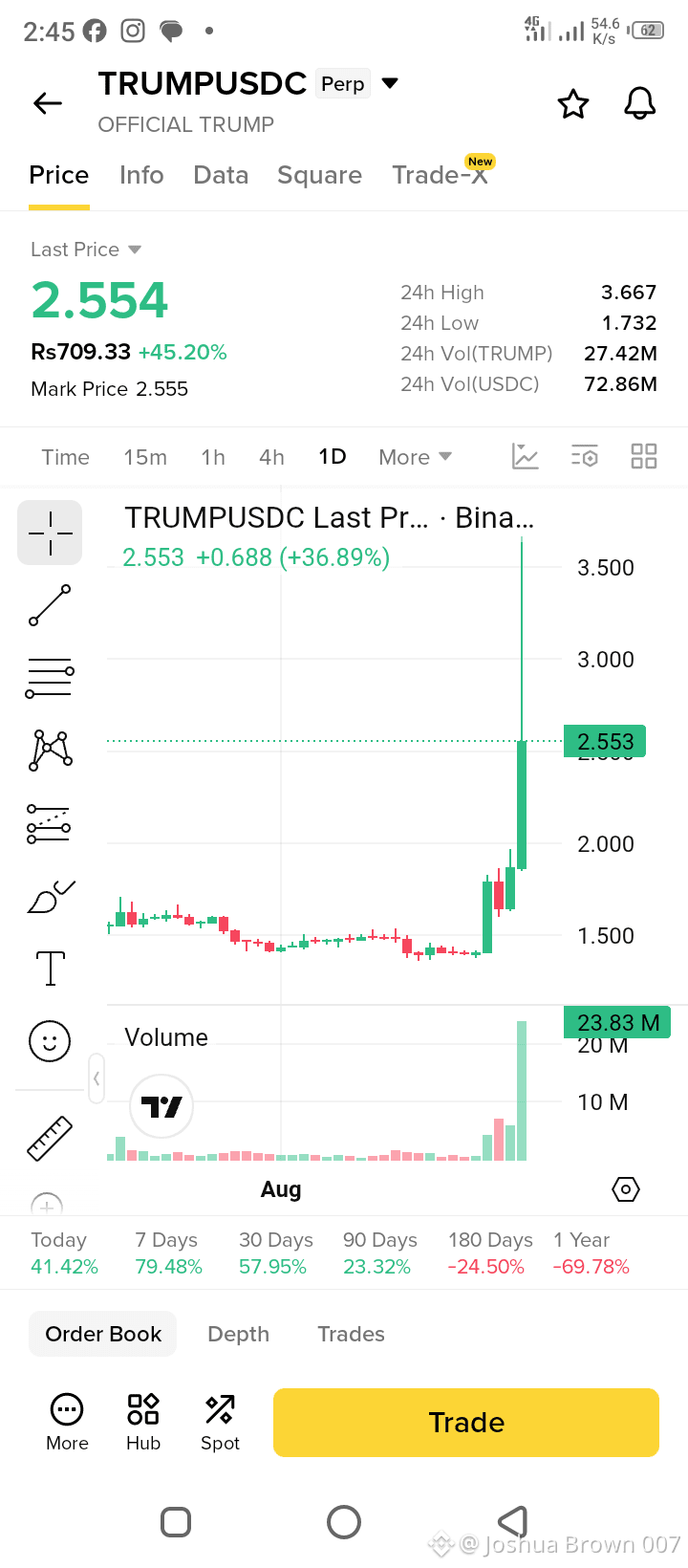
TRUMPUSDC Pump Alert: Pure Bull Trap or Sustained Breakout?
The $TRUMP USDC perpetual chart is displaying an incredibly aggressive, vertical spike of over +45% in a single day, forcing a move from the $1.50 baseline up to a staggering 24-hour high of 3.667. While this massive green candle looks ultra-bullish on the surface, the structural data points toward a classic Bull Trap. The long upper wick extending from the 2.55 mark all the way to 3.66 proves that heavy profit-taking and distribution are already happening at the top, trapping late-stage retail buyers who chased the FOMO.
This explosive move is heavily driven by a perpetual short squeeze rather than sustainable spot buying, creating a massive liquidity vacuum directly underneath the current price. Looking at the macro context, the token is still down -24.50% over the last 180 days and a massive -69.78% over the past year. Spiking over 45% within a dominant, long-term macro downtrend is historically a distribution event where large players dump their supply onto retail traders buying the breakout.
Because the price moved up vertically without building any solid support floors or consolidation zones on the way up, a sharp retrace or crash is highly probable. Once the localized buying exhaustion sets in, a cascade of panic selling and long liquidations will likely trigger, pulling the price rapidly back down to test previous support zones around the $1.50 to $1.80 regions. Manage your risk carefully, use strict stop-losses, and avoid buying the top of overextended parables.
$BEAT
TRUMPUSDC Pump Alert: Pure Bull Trap or Sustained Breakout?
The $TRUMP USDC perpetual chart is displaying an incredibly aggressive, vertical spike of over +45% in a single day, forcing a move from the $1.50 baseline up to a staggering 24-hour high of 3.667. While this massive green candle looks ultra-bullish on the surface, the structural data points toward a classic Bull Trap. The long upper wick extending from the 2.55 mark all the way to 3.66 proves that heavy profit-taking and distribution are already happening at the top, trapping late-stage retail buyers who chased the FOMO.
This explosive move is heavily driven by a perpetual short squeeze rather than sustainable spot buying, creating a massive liquidity vacuum directly underneath the current price. Looking at the macro context, the token is still down -24.50% over the last 180 days and a massive -69.78% over the past year. Spiking over 45% within a dominant, long-term macro downtrend is historically a distribution event where large players dump their supply onto retail traders buying the breakout.
Because the price moved up vertically without building any solid support floors or consolidation zones on the way up, a sharp retrace or crash is highly probable. Once the localized buying exhaustion sets in, a cascade of panic selling and long liquidations will likely trigger, pulling the price rapidly back down to test previous support zones around the $1.50 to $1.80 regions. Manage your risk carefully, use strict stop-losses, and avoid buying the top of overextended parables.
$BEAT
#dusk $DUSK @Dusk
Sometimes the part nobody talks about is what keeps everything moving underneath.
I was looking at how Dusk handles communication between nodes, and Kadcast caught my attention.
Instead of having every node repeatedly broadcast messages to all its neighbours, Kadcast uses a Kademlia-based structure with multicast trees. Messages are forwarded through selected peers at increasing XOR distances.
That sounds like a small architectural choice, but it can reduce redundant transmissions and unnecessary bandwidth.
I like these details because they’re easy to overlook.
A network isn’t only about what users see on the surface. A lot of the experience comes from the quiet infrastructure working underneath it.
That side of Dusk deserves more attention.
#SandboxSANDSuspectedInfiniteMintFlawOnBase #USTariffsOnCanadianGoodsTakeEffect #USDollarFallsToThreeMonthLow #USThreeMajorIndexesPostWeeklyLosses
Sometimes the part nobody talks about is what keeps everything moving underneath.
I was looking at how Dusk handles communication between nodes, and Kadcast caught my attention.
Instead of having every node repeatedly broadcast messages to all its neighbours, Kadcast uses a Kademlia-based structure with multicast trees. Messages are forwarded through selected peers at increasing XOR distances.
That sounds like a small architectural choice, but it can reduce redundant transmissions and unnecessary bandwidth.
I like these details because they’re easy to overlook.
A network isn’t only about what users see on the surface. A lot of the experience comes from the quiet infrastructure working underneath it.
That side of Dusk deserves more attention.
#SandboxSANDSuspectedInfiniteMintFlawOnBase #USTariffsOnCanadianGoodsTakeEffect #USDollarFallsToThreeMonthLow #USThreeMajorIndexesPostWeeklyLosses
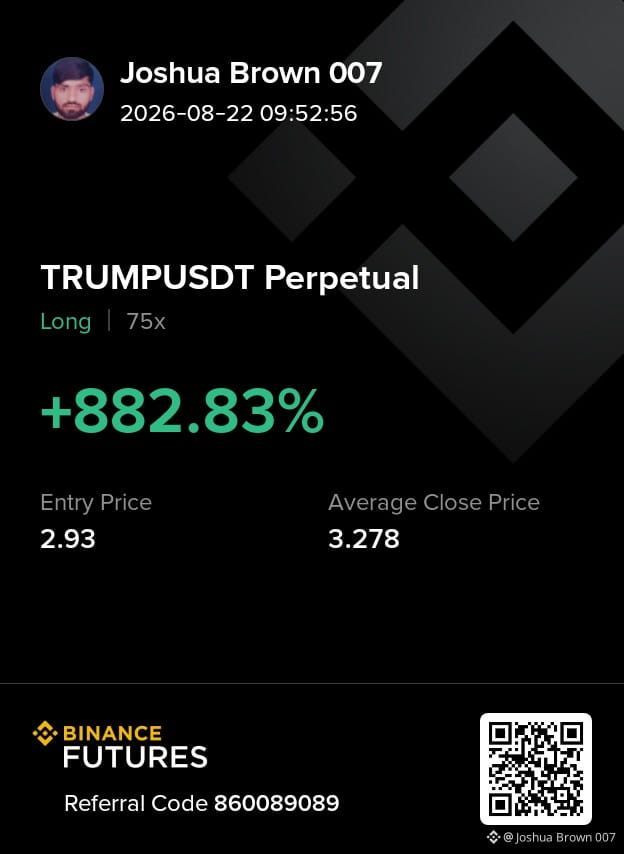
#TRUMP $TRUMP
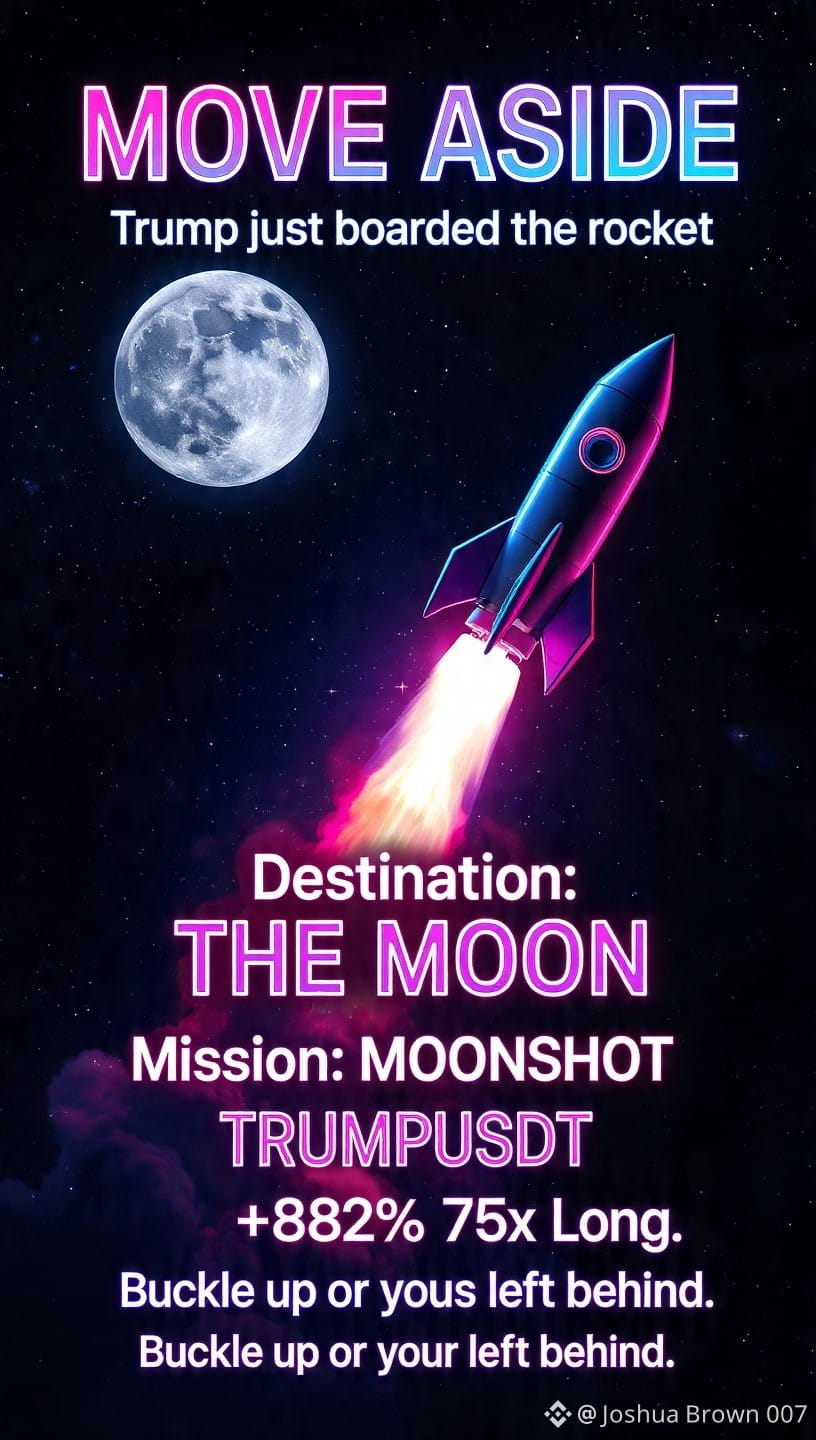
Attention everyone:
Please step to the side.
Trump just caught a flight 🚀
With the entire Trump Family on board
And they’re not going to Washington...
They’re going TO THE MOON 🌙
75x leverage. Diamond hands.
Paper hands watching from the ground.
Moonshot loading... 99%
#TRUMPUSDT #MakeBagsGreatAgain #USDollarFallsToThreeMonthLow
Attention everyone:
Please step to the side.
Trump just caught a flight 🚀
With the entire Trump Family on board
And they’re not going to Washington...
They’re going TO THE MOON 🌙
75x leverage. Diamond hands.
Paper hands watching from the ground.
Moonshot loading... 99%
#TRUMPUSDT #MakeBagsGreatAgain #USDollarFallsToThreeMonthLow
#dusk $DUSK @Dusk
While researching Dusk today, I came across a detail I hadn’t really stopped to think about before.
And honestly, I think this deserves more attention from the community.
We often talk about what happens when an onchain transaction works perfectly.
But what happens when real life gets messy?
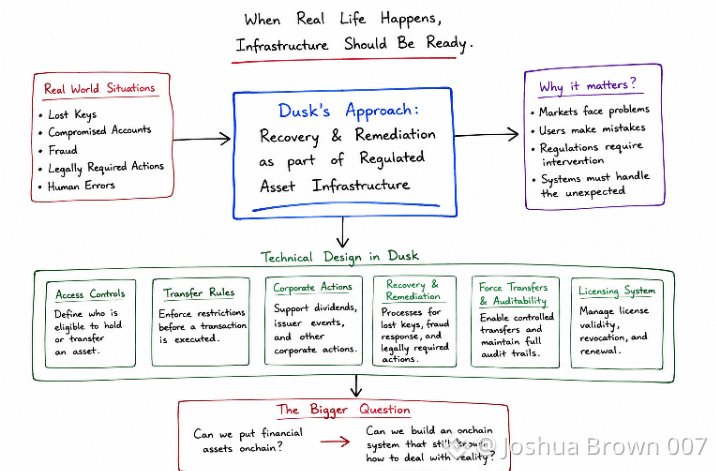
A lost key.
Fraud.
A compromised account.
A legally required intervention.
Traditional financial infrastructure has procedures for these situations. So if regulated assets are going onchain, the infrastructure needs to think about them too.
What I found interesting in Dusk’s technical design is that recovery and remediation are treated as part of the regulated asset workflow not simply ignored as edge cases.
The technical side goes deeper:
Access controls can determine who is eligible to hold or transfer an asset.
Transfer rules can enforce restrictions before a transaction proceeds.
Corporate actions can support things like dividends and issuer-driven events.
The architecture includes recovery/remediation processes for lost keys, fraud response and legally required actions.
The asset layer also describes force transfers and auditability, while the licensing system can handle license validity, revocation and renewal.
That changed the way I look at tokenization.
Maybe the real question isn't only:
Can we put financial assets onchain?
It’s...
Can we build an onchain financial system that still knows how to deal with reality?
I’ve done my research on this angle.
Now I’d genuinely encourage the community to dig into it too....
$XBIT.US $ONG
#SamsungToAnnounceNewShareholderReturnPlanFriday #TrumpPressesCongressToPassClarityAct #USJoblessClaimsFallTo206000 #WalmartFalls7%
While researching Dusk today, I came across a detail I hadn’t really stopped to think about before.
And honestly, I think this deserves more attention from the community.
We often talk about what happens when an onchain transaction works perfectly.
But what happens when real life gets messy?
A lost key.
Fraud.
A compromised account.
A legally required intervention.
Traditional financial infrastructure has procedures for these situations. So if regulated assets are going onchain, the infrastructure needs to think about them too.
What I found interesting in Dusk’s technical design is that recovery and remediation are treated as part of the regulated asset workflow not simply ignored as edge cases.
The technical side goes deeper:
Access controls can determine who is eligible to hold or transfer an asset.
Transfer rules can enforce restrictions before a transaction proceeds.
Corporate actions can support things like dividends and issuer-driven events.
The architecture includes recovery/remediation processes for lost keys, fraud response and legally required actions.
The asset layer also describes force transfers and auditability, while the licensing system can handle license validity, revocation and renewal.
That changed the way I look at tokenization.
Maybe the real question isn't only:
Can we put financial assets onchain?
It’s...
Can we build an onchain financial system that still knows how to deal with reality?
I’ve done my research on this angle.
Now I’d genuinely encourage the community to dig into it too....
$XBIT.US $ONG
#SamsungToAnnounceNewShareholderReturnPlanFriday #TrumpPressesCongressToPassClarityAct #USJoblessClaimsFallTo206000 #WalmartFalls7%
#CryptoRally
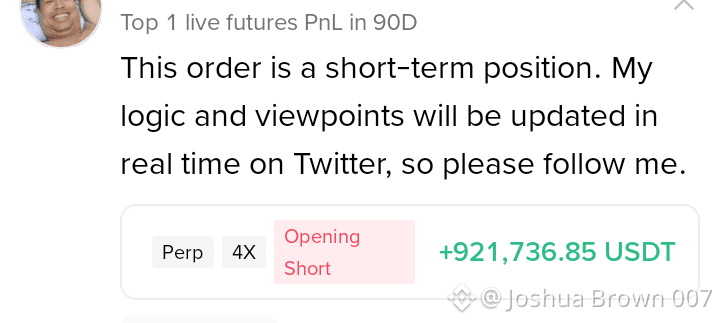
There was a time I used to stare at screenshots like this and feel sick to my stomach.
Perp 4X Short. +$921,736.85 PnL. Top 1 on the leaderboard in 90 Days.
My first thought? "Why not me?"
My second thought? "I just blew my account again with 50x leverage."
The headache is real.
The sleepless nights are real.
The "maybe trading is not for me" thoughts are real.
But you know what’s also real?
This guy started from zero too.
So here’s my promise to myself:
For the next 3-5 years, I’m playing a different game.
No more gambling. No more revenge trading.
My Policy:
1. Learn every single day - Charts, Risk, Psychology, Discipline
2. Build capital slowly - Job, savings, $100 at a time. No loans, no shortcuts.
3. Respect risk - 4X-5X max. SL on every trade. Protect the account first.
My 5 Year Plan:
Year 1-2 → Master skill + $10K account
Year 3-4 → Build track record + Raise funds + $100K account
Year 5 → My name on that Top 1 leaderboard
I don’t know if I’ll make it.
But I know I’ll regret it if I don’t try.
Saving this screenshot today.
Posting my own version of it in 2029. InshaAllah.
To everyone grinding in silence: I see you.
We’re building something real.
See you at the top 💪
#FromZeroToTop1 #TradingJourney #CryptoPakistan #5YearPlan
There was a time I used to stare at screenshots like this and feel sick to my stomach.
Perp 4X Short. +$921,736.85 PnL. Top 1 on the leaderboard in 90 Days.
My first thought? "Why not me?"
My second thought? "I just blew my account again with 50x leverage."
The headache is real.
The sleepless nights are real.
The "maybe trading is not for me" thoughts are real.
But you know what’s also real?
This guy started from zero too.
So here’s my promise to myself:
For the next 3-5 years, I’m playing a different game.
No more gambling. No more revenge trading.
My Policy:
1. Learn every single day - Charts, Risk, Psychology, Discipline
2. Build capital slowly - Job, savings, $100 at a time. No loans, no shortcuts.
3. Respect risk - 4X-5X max. SL on every trade. Protect the account first.
My 5 Year Plan:
Year 1-2 → Master skill + $10K account
Year 3-4 → Build track record + Raise funds + $100K account
Year 5 → My name on that Top 1 leaderboard
I don’t know if I’ll make it.
But I know I’ll regret it if I don’t try.
Saving this screenshot today.
Posting my own version of it in 2029. InshaAllah.
To everyone grinding in silence: I see you.
We’re building something real.
See you at the top 💪
#FromZeroToTop1 #TradingJourney #CryptoPakistan #5YearPlan
#dusk $DUSK @Dusk
I almost overlooked Dusk for the same reason most people do: I was looking at the narrative, not the engineering underneath it.
The deeper I went into the architecture, the more I realized there’s a different story here.
Dusk isn’t simply trying to make blockchain finance “private.”
It is trying to make the underlying infrastructure behave more like financial infrastructure actually needs to behave.
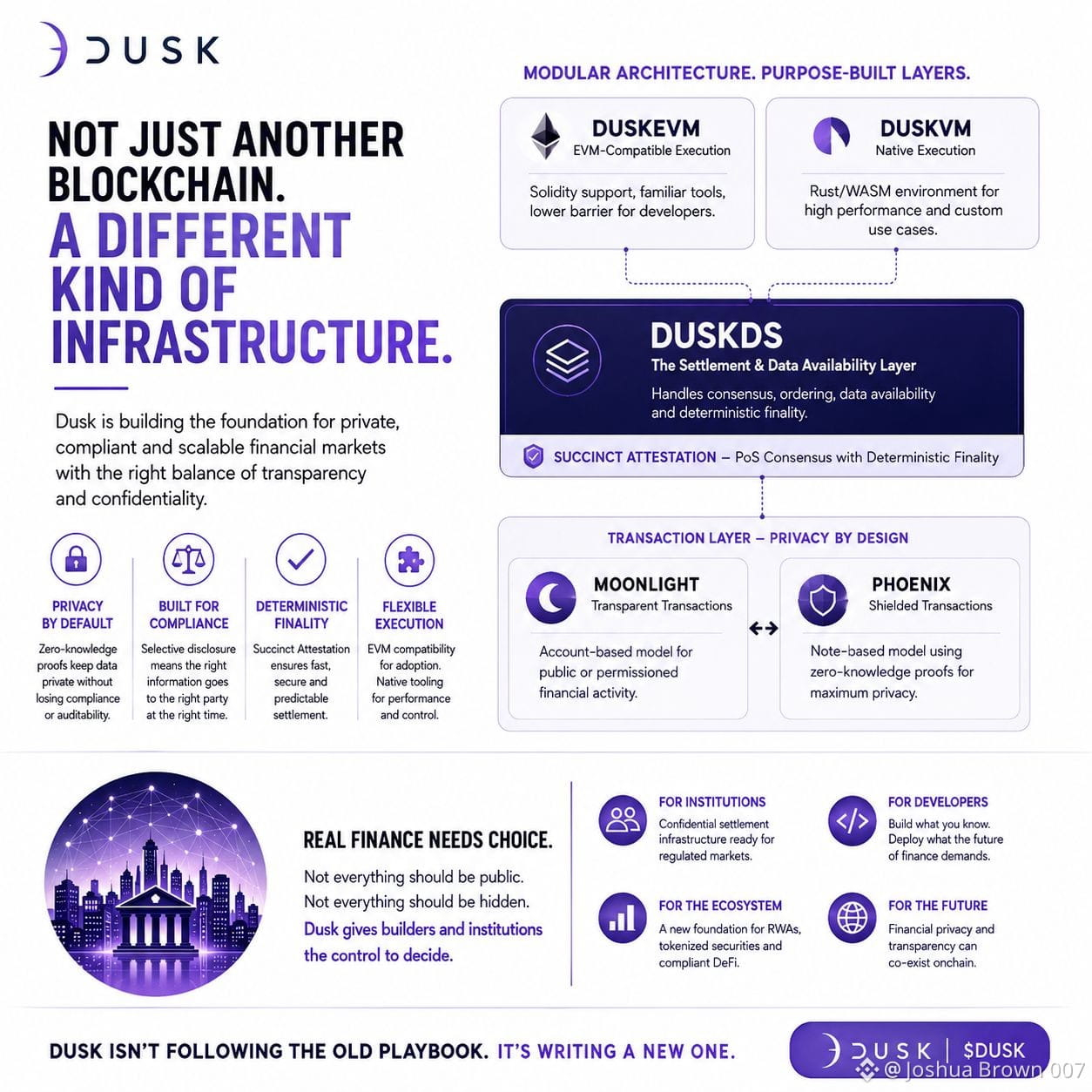
DuskDS sits underneath as the settlement and data-availability layer, with Succinct Attestation providing proof-of-stake consensus and deterministic finality.
Then the architecture separates execution.
DuskEVM gives developers an EVM-compatible path for Solidity and familiar tooling, while DuskVM gives native Rust/WASM execution directly on the L1.
That separation caught my attention.
Because real markets aren't one-size-fits-all.
And the same thinking appears at the transaction level too.
Moonlight handles transparent account-based activity, while Phoenix uses shielded, note-based transfers with zero-knowledge proofs. Information can remain protected without making every workflow completely opaque.
That feels much more human to me.
People don't actually want “maximum transparency” or “maximum privacy” all the time.
They want control over what is visible, to whom, and when.
That is the part of Dusk I’m starting to remember.
Not just another blockchain with a big narrative, but an architecture built around a very real problem: how do you bring financial activity onchain without forcing every detail into public view?
That question deserves more attention.
Is Dusk’s architecture becoming more interesting to you too, or am I reading too much into it?
$DUSK
I almost overlooked Dusk for the same reason most people do: I was looking at the narrative, not the engineering underneath it.
The deeper I went into the architecture, the more I realized there’s a different story here.
Dusk isn’t simply trying to make blockchain finance “private.”
It is trying to make the underlying infrastructure behave more like financial infrastructure actually needs to behave.
DuskDS sits underneath as the settlement and data-availability layer, with Succinct Attestation providing proof-of-stake consensus and deterministic finality.
Then the architecture separates execution.
DuskEVM gives developers an EVM-compatible path for Solidity and familiar tooling, while DuskVM gives native Rust/WASM execution directly on the L1.
That separation caught my attention.
Because real markets aren't one-size-fits-all.
And the same thinking appears at the transaction level too.
Moonlight handles transparent account-based activity, while Phoenix uses shielded, note-based transfers with zero-knowledge proofs. Information can remain protected without making every workflow completely opaque.
That feels much more human to me.
People don't actually want “maximum transparency” or “maximum privacy” all the time.
They want control over what is visible, to whom, and when.
That is the part of Dusk I’m starting to remember.
Not just another blockchain with a big narrative, but an architecture built around a very real problem: how do you bring financial activity onchain without forcing every detail into public view?
That question deserves more attention.
Is Dusk’s architecture becoming more interesting to you too, or am I reading too much into it?
$DUSK
#dusk $DUSK @Dusk
The Number That Made Me Look Twice
I was looking through Dusk’s numbers today and one thing made me stop.
Not the token price.
Not the market cap.
The emission curve.
Most people see token supply as one big number.
But a protocol’s real economic story can be hidden in how that supply enters the system over time.
Dusk starts with 500 million DUSK, with another 500 million scheduled to be emitted over time, putting the maximum supply at 1 billion DUSK.
What caught my attention was the schedule behind that second half.
The protocol spreads those emissions across 36 years, using a geometric decay model with a 0.5 reduction rate every four years.
So the numbers step down rather than staying flat.
Years 0–4: about 250.48M DUSK
Years 4–8: about 125.24M
Years 8–12: about 62.62M
Then the curve keeps shrinking.
That tells me something about the design philosophy.
Dusk isn’t treating network incentives as a short campaign that needs maximum emissions today.
It is trying to create a long economic runway where incentives gradually become less emission-dependent over time.
And that’s a side of $DUSK I rarely see discussed.
When I look at a blockchain now, I don’t only ask what the technology can do.
I also ask:
How was the economic system designed to survive after the early years?
That question might be more important than the headline supply number itself.
The Number That Made Me Look Twice
I was looking through Dusk’s numbers today and one thing made me stop.
Not the token price.
Not the market cap.
The emission curve.
Most people see token supply as one big number.
But a protocol’s real economic story can be hidden in how that supply enters the system over time.
Dusk starts with 500 million DUSK, with another 500 million scheduled to be emitted over time, putting the maximum supply at 1 billion DUSK.
What caught my attention was the schedule behind that second half.
The protocol spreads those emissions across 36 years, using a geometric decay model with a 0.5 reduction rate every four years.
So the numbers step down rather than staying flat.
Years 0–4: about 250.48M DUSK
Years 4–8: about 125.24M
Years 8–12: about 62.62M
Then the curve keeps shrinking.
That tells me something about the design philosophy.
Dusk isn’t treating network incentives as a short campaign that needs maximum emissions today.
It is trying to create a long economic runway where incentives gradually become less emission-dependent over time.
And that’s a side of $DUSK I rarely see discussed.
When I look at a blockchain now, I don’t only ask what the technology can do.
I also ask:
How was the economic system designed to survive after the early years?
That question might be more important than the headline supply number itself.
Long term supply discipline
0%
Sustainable staking incentives
0%
Real network utility for token
100%
Predictable emission schedule
0%
1 မဲများ • မဲပိတ်ပါပြီ
Log in to explore more content