
Bros, today is a big day—World Cup is kicking off in the US!
But I want to highlight a hidden link that most people haven't connected: this game is actually related to the recent plunge in US stocks this week.
Sounds far-fetched? Let me break it down for you—
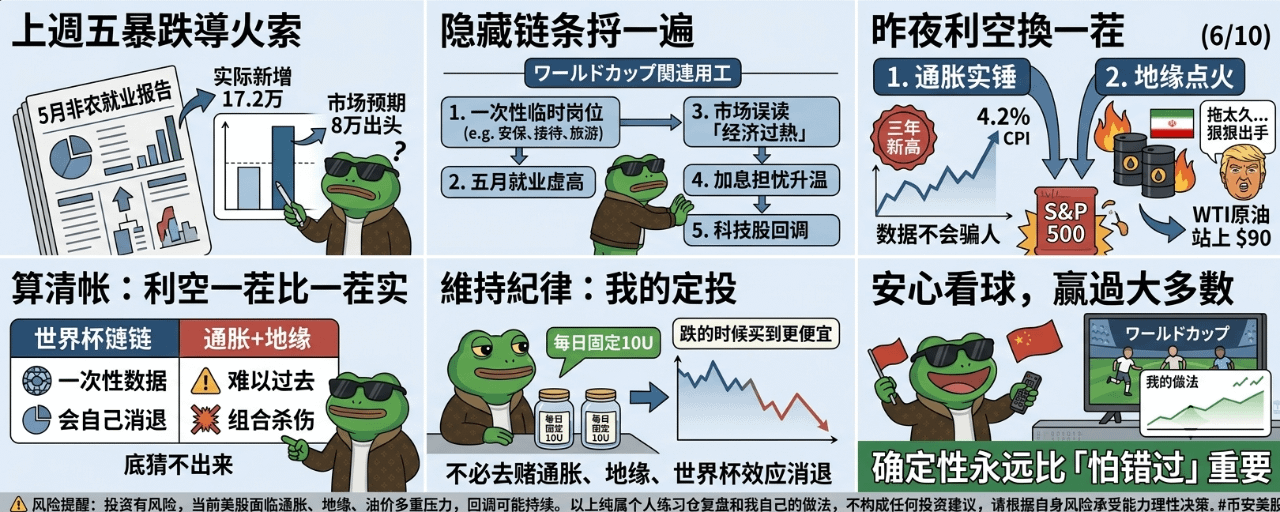
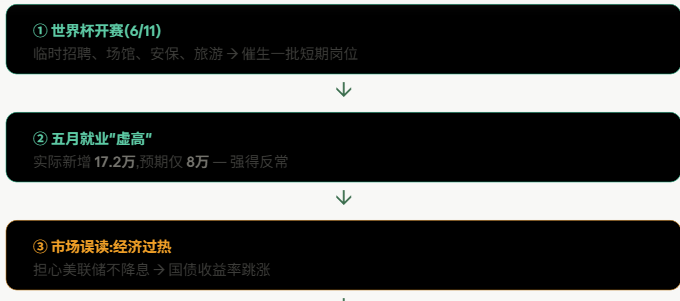
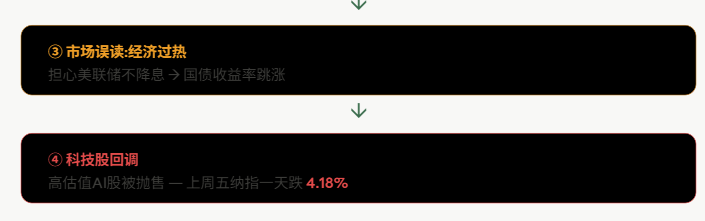
Last Friday's crash in US stocks (NASDAQ dropped 4.18% in one day) was partly triggered by the strong May non-farm payroll data: actual jobs added were 172,000, while the market was only expecting a bit over 80,000. It was excessively strong. Strong employment should be a good thing, but it raised concerns in the market about 'with the economy so hot, how can the Fed lower rates?', leading to a spike in treasury yields and a sell-off of overvalued tech stocks.
Here's the problem—where is this "abnormally strong" coming from? Several institutions’ analyses point to the same source: the World Cup starting today. The temporary jobs related to the event—recruitment, venues, hospitality, security, tourism—have artificially inflated the employment numbers for May.
So the chain is like this: World Cup creates a batch of temporary jobs → May employment data looks inflated → Market misreads it as "economic overheating" → Concerns over rate hikes increase → Tech stocks correct.
What’s the point of understanding this chain? It tells you that the factors pushing up employment are one-off events. The jobs tied to the World Cup will fade away once the event is over. This means next month’s employment data will likely drop, and the market’s excessive worry about "rate hikes" may turn out to be an overreaction. I’m not saying this will cause a rebound in US stocks immediately.
Just a reminder, when a bearish sentiment is built on "one-off data," its impact may not be as long-lasting as it seems right now.
[But the reason for yesterday's drop has changed, and it’s more solid now.]
Let’s pull back to last night (June 10), where the US stocks dropped again: the Nasdaq fell 1.98% to close at 25,169, the S&P dropped 1.62%, and the Dow fell 953 points, down 1.87%. This is the third significant drop this week.
But tonight's sell-off isn’t driven by the World Cup's "artificially high employment" chain; it's two more tangible punches:
Firstly, the inflation reality. The CPI report that morning showed inflation spiking to 4.2%, a three-year high. This is no longer about "worrying whether or not to raise rates"; it’s a fact that "inflation is truly back." Data doesn’t lie.
Secondly, geopolitical sparks. Trump stated that negotiations with Iran have "dragged on too long" and threatened to "hit hard." As geopolitical tensions rise, oil prices immediately jumped, with WTI crude up 2% above $90. Rising oil prices will feed into inflation—these two reinforce each other.
High inflation + rising oil prices + geopolitical uncertainty, this combination is much trickier than last Friday's "emotional sell-off." The World Cup chain is a one-time thing that will fade; but inflation and geopolitical issues aren’t going away easily.
[My Approach]
So you see, the bearish news this week keeps "changing hands"—from rate hike expectations to geopolitical issues, to concrete inflation fears. Each time someone shouts, "It must be the bottom now," but you can’t predict the bottom, especially when the bearish news gets more substantial.
I didn’t call a bottom last Friday, and I won’t change my tune just because it’s dropped again these days. I only do what I can control: maintain discipline and invest my fixed $10 every day. When it dips, that $10 buys me cheaper shares, and when a real rebound happens, I won’t regret not buying more. The essence of dollar-cost averaging is to keep me from gambling on inflation, geopolitical issues, or the World Cup effect during these continuous drops.
These institutions, smarter than I am, are guessing wrong. I don't have the skills, nor do I pretend to.
So just relax and watch the game today. Watching the market drop won’t make it bounce back; stick to your buying plan, enjoy the game, and live your life. The calmer you can stay during market turmoil—neither impulsively adding to positions nor panic-selling—the more you’ve already won against most.
⚠️ Risk Reminder: Investing carries risks. The current US stock market faces multiple pressures from inflation, geopolitical tensions, and oil prices, and corrections may persist. The above is purely my personal practice and analysis; it does not constitute any investment advice. Please make rational decisions based on your own risk tolerance.#币安美股