
Pikiran itu terus kembali kepada saya saat menatap @NewtonProtocol. Kebanyakan orang membahas keuangan otomatis seolah-olah risiko utamanya adalah agennya sendiri: bot, model, strategi, kecepatannya. Saya melihat masalahnya agak berbeda.
Bagi saya, risiko yang sebenarnya dimulai lebih awal.
Apa sebenarnya yang saya izinkan sistem untuk lakukan?
Pertanyaan itu penting karena agen AI hanya bisa seaman kebijakan yang mengendalikannya. Jika batasnya tidak jelas, otomatisasi mungkin tetap berperilaku “benar” dari sudut pandang teknis sambil menghasilkan sesuatu yang sesungguhnya tidak pernah benar-benar dimaksudkan oleh pengguna.
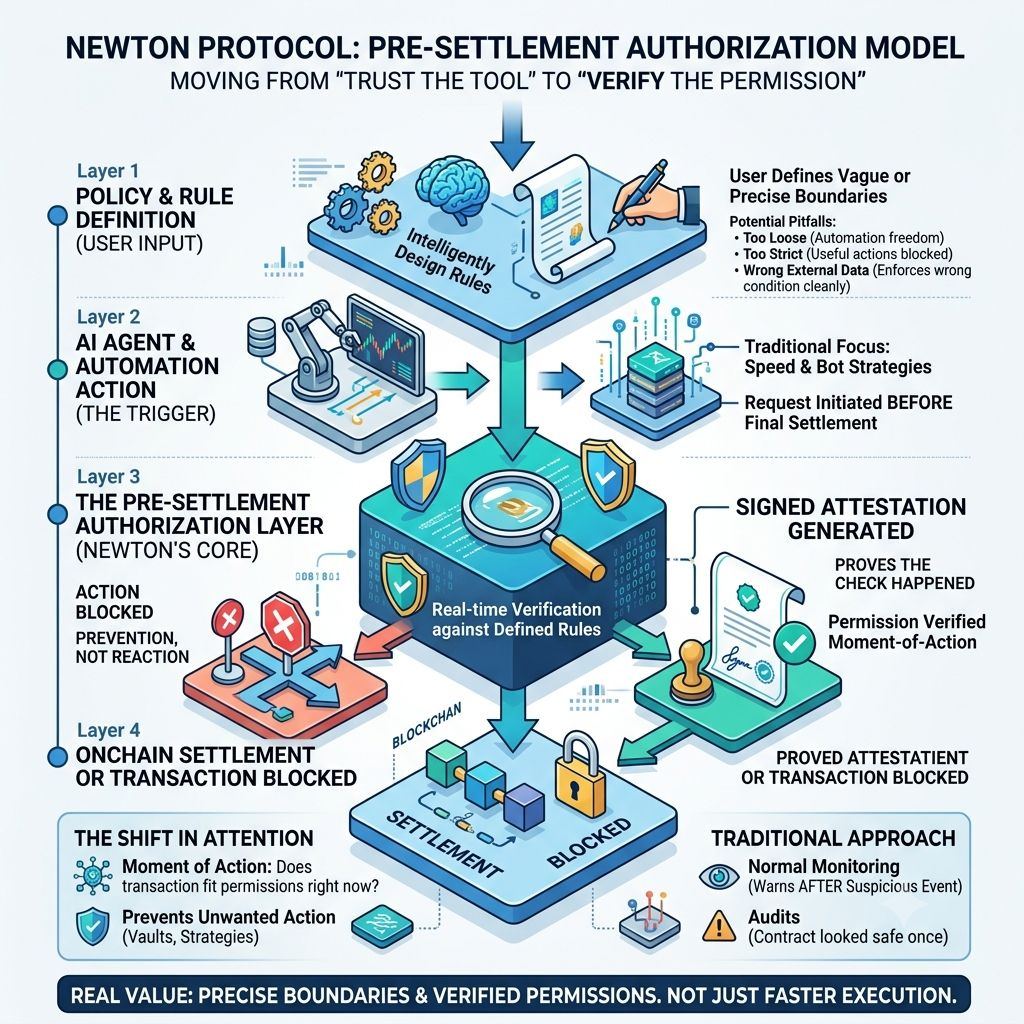
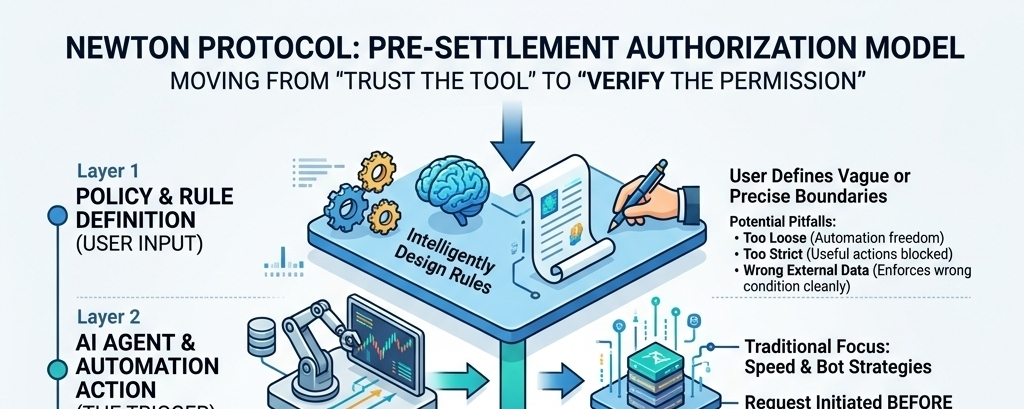
Di sinilah arah Mainnet Beta Newton dan VaultKit terasa lebih spesifik dibanding narasi perdagangan berbasis AI yang biasanya. Newton tidak hanya membahas eksekusi yang lebih cepat. Ia berfokus pada otorisasi pra-penyelesaian, yaitu sebuah tindakan diperiksa terhadap aturan yang telah ditetapkan sebelum akhirnya menetap di blockchain. Jika permintaannya sesuai dengan kebijakan, sebuah attestation yang ditandatangani dapat membuktikan bahwa pemeriksaan itu terjadi. Jika tidak, tindakan tersebut tidak boleh dilanjutkan.
Saya suka gagasan itu karena menggeser fokus dari respons ke pencegahan.
Alat pemantauan biasa mungkin akan memperingatkan saya setelah sesuatu yang mencurigakan terjadi. Audit mungkin memberi tahu saya bahwa kontrak terlihat aman pada suatu waktu tertentu. Namun, lapisan kebijakan pra-penyelesaian mengajukan pertanyaan yang berbeda pada saat tindakan dilakukan: apakah transaksi ini sesuai dengan struktur izin saat ini?
Perbedaan itu terasa penting untuk vault, strategi otomatis, dan alur kerja yang dikendalikan oleh agen.
Namun, saya tidak yakin ini membuat semuanya otomatis menjadi aman. Pernyataan pengesahan (attestation) yang ditandatangani membuktikan bahwa sebuah aturan telah diperiksa. Itu tidak secara ajaib membuktikan bahwa aturan tersebut ditulis dengan sempurna. Jika kebijakannya terlalu longgar, otomatisasi bisa mendapatkan terlalu banyak kebebasan. Jika kebijakannya terlalu ketat, tindakan yang bermanfaat bisa terblokir. Jika data eksternal salah, sistem mungkin menerapkan kondisi yang salah dengan sangat rapi.
Itulah bagian yang paling menarik menurut saya tentang NEWT. Newton membangun dengan berfokus pada otorisasi, tetapi kualitas otorisasi masih bergantung pada seberapa cerdas aturan tersebut dirancang.
Jadi saya tidak hanya memantau Newt sebagai cerita tentang agen AI.
Saya mengamatinya sebagai uji apakah keuangan onchain dapat beralih dari “percaya pada alat” menjadi “memverifikasi izin”.
Karena dalam keuangan yang terotomatisasi, eksekusi terbaik tidak selalu yang tercepat.
Kadang eksekusi terbaik adalah yang diizinkan untuk alasan yang tepat.
$NEWT @NewtonProtocol #Newt $LAB $VANRY #Velvet #xau #VANRY #Labs