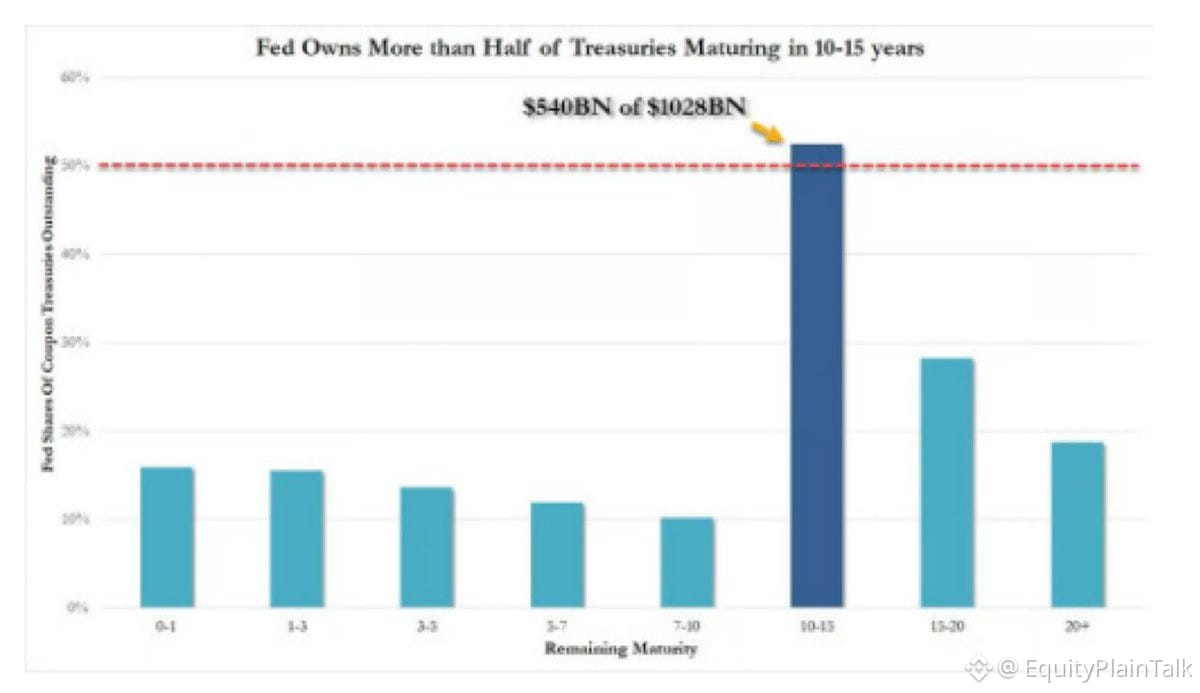
The Fed now holds over 50% of all Treasuries maturing in the next 10-15 years.
This isn't just a data point. It's a structural shift in how the bond market functions.
When the central bank owns that much of the supply, price discovery gets distorted. Yields don't purely reflect market demand anymore—they reflect Fed policy, QE legacy, and balance sheet decisions.
For equity investors, this matters. It keeps long-term rates artificially lower than they'd be in a free market. That props up valuations, especially for growth stocks sensitive to discount rates.
But it also means when the Fed eventually unwinds or stops rolling over, there's a supply wave coming. And the private market will need to absorb it.
Watch the 10-year. Watch Fed balance sheet updates. This concentration creates both stability and fragility.
This isn't just a data point. It's a structural shift in how the bond market functions.
When the central bank owns that much of the supply, price discovery gets distorted. Yields don't purely reflect market demand anymore—they reflect Fed policy, QE legacy, and balance sheet decisions.
For equity investors, this matters. It keeps long-term rates artificially lower than they'd be in a free market. That props up valuations, especially for growth stocks sensitive to discount rates.
But it also means when the Fed eventually unwinds or stops rolling over, there's a supply wave coming. And the private market will need to absorb it.
Watch the 10-year. Watch Fed balance sheet updates. This concentration creates both stability and fragility.