
Most storage networks scream when they fail. Alerts, errors, downtime—everything is obvious. Walrus doesn’t behave like that. It whispers.
A blob can be fully available, technically intact, with every repair ticked off, and still carry tension in its silence. Engineers notice it first: reads that take a fraction longer, slivers that hesitate before returning, subtle throughput fluctuations. The protocol says “all systems go,” but behavior says, maybe not yet.
That is the invisible risk. Not data loss. Not outages. But the kind of unease that stops teams from committing critical paths to a layer. The blob is alive—but trust isn’t.
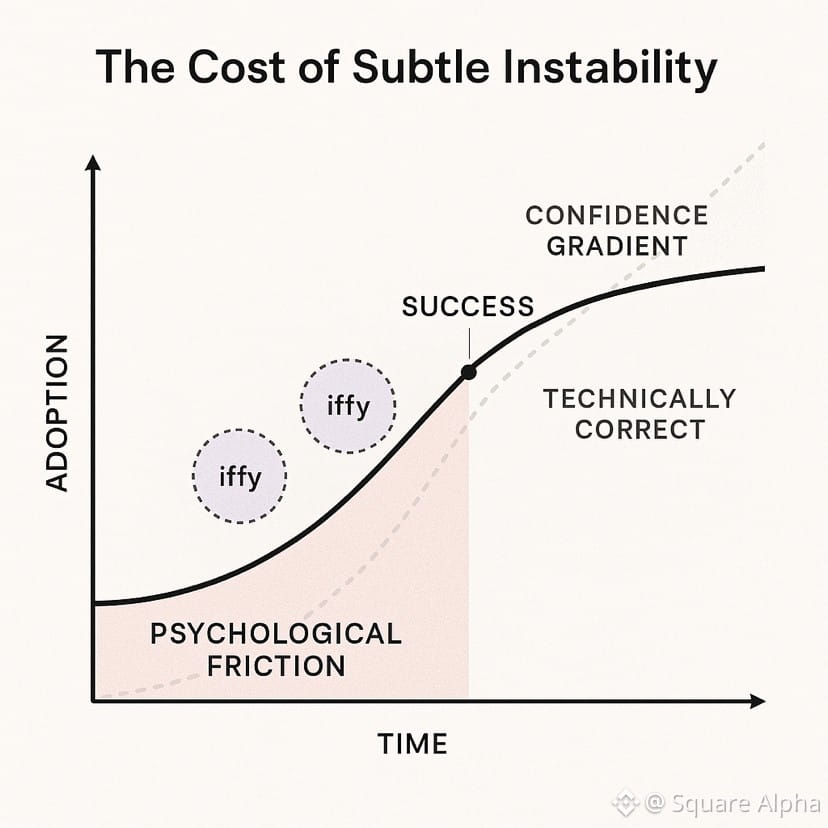
The Cost of Subtle Instability
On Walrus, every near-miss is remembered. Partial repairs leave traces. Slivers that were slow to recover remain under soft constraints. Thresholds pass, proofs validate, but the confidence gradient persists. It doesn’t reset. The system is correct, but the human operators aren’t fully convinced.
This is why adoption curves are deceptive. A technically perfect network can still be ignored. Developers route around “iffy” blobs, product teams delay migrations, and adoption stalls—not because Walrus failed, but because psychological friction exists in the quiet gaps between success and certainty.
Why That Matters
Most storage projects treat availability as binary. Either a blob exists, or it doesn’t. That works until complexity hits: multiple users, AI agents, NFT marketplaces, off-chain computation. Then the binary metric fails to capture reality.
Walrus introduces gradients into infrastructure thinking. The system acknowledges that survivability under churn doesn’t guarantee usability. That recognition is a feature, not a flaw. Because if builders ignore this nuance, they will build critical paths on layers that look alive but aren’t truly dependable under stress.
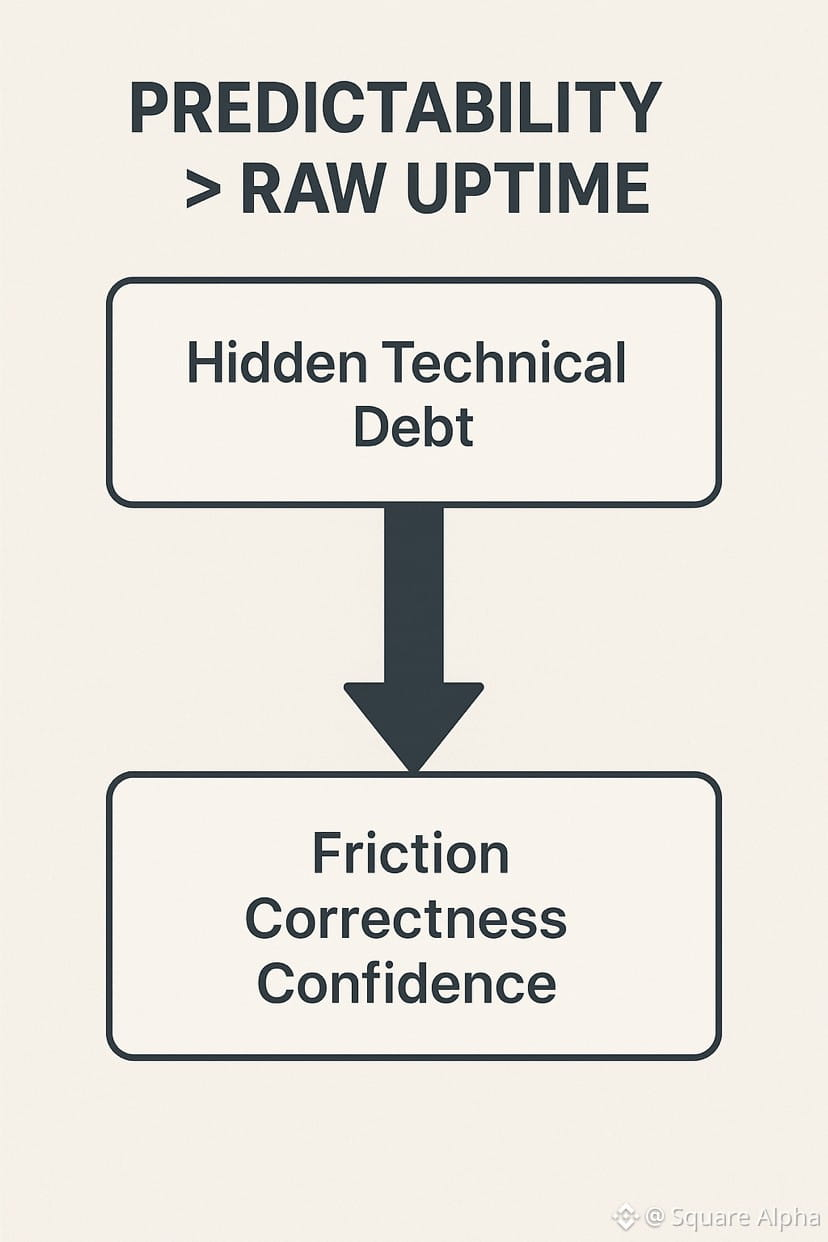
Predictability > Raw Uptime
In infrastructure, predictability often trumps uptime. A service that fails in a clear, measurable way is easier to mitigate. A service that survives but is intermittently “soft” creates hidden technical debt.
Walrus makes this debt visible. It surfaces the friction between correctness and confidence. Teams stop asking if the data exists. They start asking if they can depend on it repeatedly under pressure. That shift in behavior is how real infrastructure earns adoption—not through metrics, but through repeated, quiet validation.
Conclusion
Walrus doesn’t sell reassurance. It enforces reality. Blobs survive, proofs pass, repairs tick over—but adoption is won in the tension. The network treats data as alive, but it lets teams experience the cost of uncertainty, shaping their choices and integrations.
The real advantage isn’t in surviving churn. It’s in making the cost of doubt visible before it becomes catastrophic. That’s why builders who understand operational nuance prefer Walrus. Not because it’s perfect. Because it tells the truth about the state of their critical data—silently, consistently, and without compromise.
