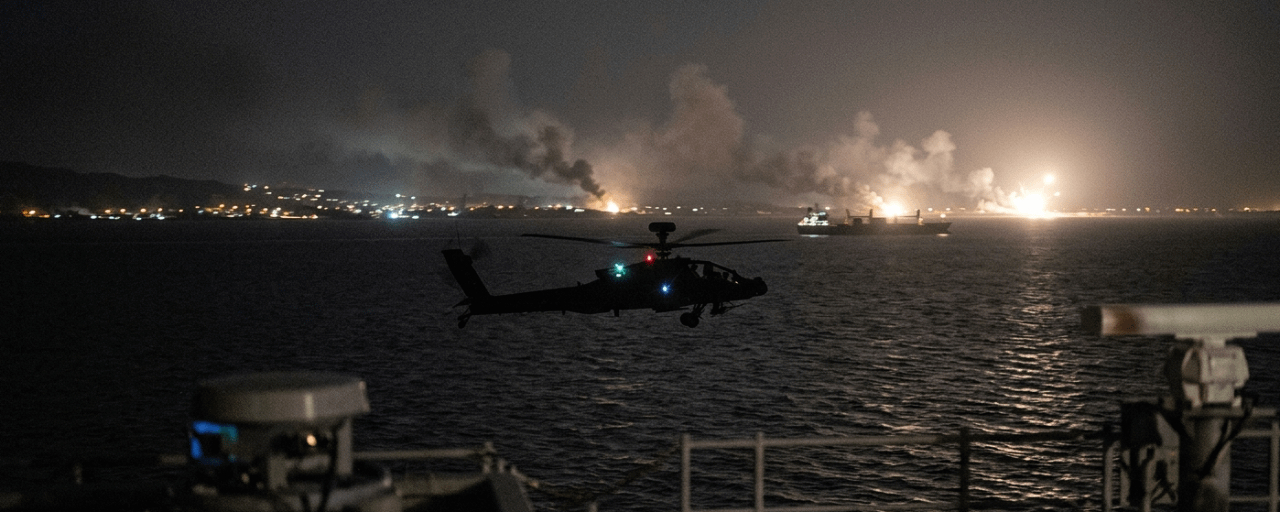

The fragile ceasefire between the United States and Iran is facing its most serious test yet after a series of military exchanges over the past two days reignited tensions across the Gulf region. The latest developments have raised fears of a broader conflict and renewed concerns about global energy security. �
Reuters +1
📍 What Triggered the Latest Escalation?
The crisis intensified after a U.S. Army Apache helicopter went down near the Strait of Hormuz. President Donald Trump blamed Iran for the incident, while U.S. officials reported that the two crew members were rescued safely. The event immediately cast doubt on ongoing diplomatic efforts that had been aimed at turning the temporary ceasefire into a lasting agreement. �
Defense News +1
⚔️ Timeline of Key Events
June 9 – U.S. Launches Retaliatory Strikes
Acting on President Trump's orders, U.S. forces carried out what CENTCOM described as "self-defense strikes" against Iranian military targets. The operation focused on air-defense systems, radar installations, and command facilities near the Strait of Hormuz. �
KPBS +1
June 10 – Iran Responds
Iran retaliated with missile and drone attacks targeting U.S. military facilities in Bahrain, Kuwait, and Jordan. Regional defense systems intercepted many of the incoming threats, but the attacks marked a major escalation and further weakened hopes for a diplomatic breakthrough. �
New York Post +1
June 11 – New Wave of U.S. Airstrikes
For a second consecutive night, U.S. forces launched additional strikes against Iranian military infrastructure in southern Iran, including surveillance and communications facilities near Bandar Abbas and surrounding coastal areas. �
Reuters +1
🌍 Regional and Global Impact
United States: President Trump warned that further military action could follow if a peace agreement is not reached quickly, while maintaining that Washington is seeking a negotiated solution. �
The Guardian +1
Iran: Iranian military leaders have threatened to block maritime traffic through the Strait of Hormuz and warned neighboring Gulf states against supporting U.S. military operations. �
Reuters +1
Global Markets: Rising tensions have pushed oil prices higher as traders worry about disruptions to one of the world's most important energy corridors. The uncertainty has increased pressure on global markets and energy supplies. �
Reuters +1
🔍 What Happens Next?
With both sides exchanging strikes and diplomatic negotiations under severe strain, the ceasefire that began in April appears increasingly fragile. Analysts warn that any further escalation around the Strait of Hormuz could have significant consequences for regional stability, global trade, and energy markets. �
Council on Foreign Relations +1
#Geopolitics #MiddleEast #GlobalNews #USIran #StraitOfHormuz #OilMarkets #BreakingNews $CL