The word "ceasefire" is being stretched beyond recognition in the Middle East.
This Wednesday morning, Iran reportedly targeted Gulf countries following US strikes on Iranian territory launched Tuesday. Jordan's military intercepted five Iranian missiles. Bahrain activated alarms. Kuwait fired air defenses.
Iran's Revolutionary Guard confirmed it had struck F-35 aircraft hangars and a command-and-control facility at the US Al-Azraq base in Jordan — a direct attack on American military infrastructure on allied soil. Centcom has not yet confirmed this.
Tuesday's US strikes set this chain of events in motion.
US Central Command launched strikes on Iran at 5 p.m. Eastern Time on Tuesday, describing the operation as "a proportional response to unjustified Iranian aggression."
The trigger: Iran had shot down a US Army Apache helicopter. Both crew members — the pilot and the gunner — were rescued within two hours by a remotely piloted aquatic drone. The helicopter had been brought down by an Iranian one-way attack drone, according to a US official.
Hours before the strikes, Trump publicly accused Iran of downing the aircraft and promised a response. CENTCOM later confirmed it had completed its military action, having targeted Iranian air defense systems, ground control stations, and surveillance radar installations near the Strait of Hormuz.
The strikes also came as Israeli forces continued pounding southern Lebanon in their campaign against Hezbollah — despite a US-brokered ceasefire that was supposed to have halted those operations.
Diplomacy is still technically on the table — barely.
American and Iranian negotiators have reportedly narrowed their focus to four core elements of a nuclear agreement that US officials say would effectively freeze Iran's programme for approximately 15 years. Trump had said earlier that a deal could be reached within "two or three days." The strikes happened anyway.
Iran's Foreign Minister Araghchi issued a pointed warning Tuesday — foreign forces operating near Iranian territory face constant risk from human error, accidents, or being caught in crossfire. The message was deliberate.
Each exchange of strikes pushes a permanent agreement further out of reach. The latest escalation — an Iranian missile attack on a US military base in Jordan — represents a significant threshold crossing. Hitting American forces directly on allied territory is not a minor provocation.
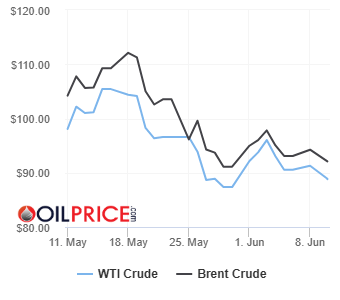
WTI and Brent both fell to 7-week lows on Tuesday after US Energy Secretary Chris Wright said ship traffic through the Strait of Hormuz was rising meaningfully, though offered no specific data on actual oil flow volumes. U.S. West Texas Intermediate (WTI) slid $3.10 (3.4%) to settle at $88.20 a barrel. Brent crude fell $2.80 (3.0%) to settle at $91.45 a barrel.
Wednesday morning, prices have risen modestly despite this escalation; WTI is at $88.8, up 0.80%. Brent sits at $92.9, adding 0.8%.