Attention 🥶 🥶 🥶
Just 5 minutes
From what I’m observing right now, the ceasefire in the Gulf isn’t stable—it’s aging, fragile, and under serious pressure. Four weeks in, and both the U.S. and Iran are still pushing each other hard. This doesn’t feel like peace. It feels like a pause before something bigger.
Diplomacy Happened — But Went Nowhere
I’ve followed the talks closely. There was a moment when it looked like diplomacy might actually move forward. U.S. and Iranian officials sat face-to-face in Islamabad, with Pakistan trying to mediate.
But in the end? Nothing.
No agreement. No breakthrough. Just both sides holding onto their demands.
That tells me one thing clearly: both want a deal—but not the same deal. And until someone compromises, this situation stays on the edge.
This Feels Like a Setup for Miscalculation
What concerns me most right now is the risk of misunderstanding. In conflicts like this, wars don’t always start intentionally—they start because one side misreads the other.
That’s exactly the environment we’re in.
One move leads to another. One reaction gets misinterpreted. And suddenly, escalation takes over.
The Strait Has Become the Core Battleground
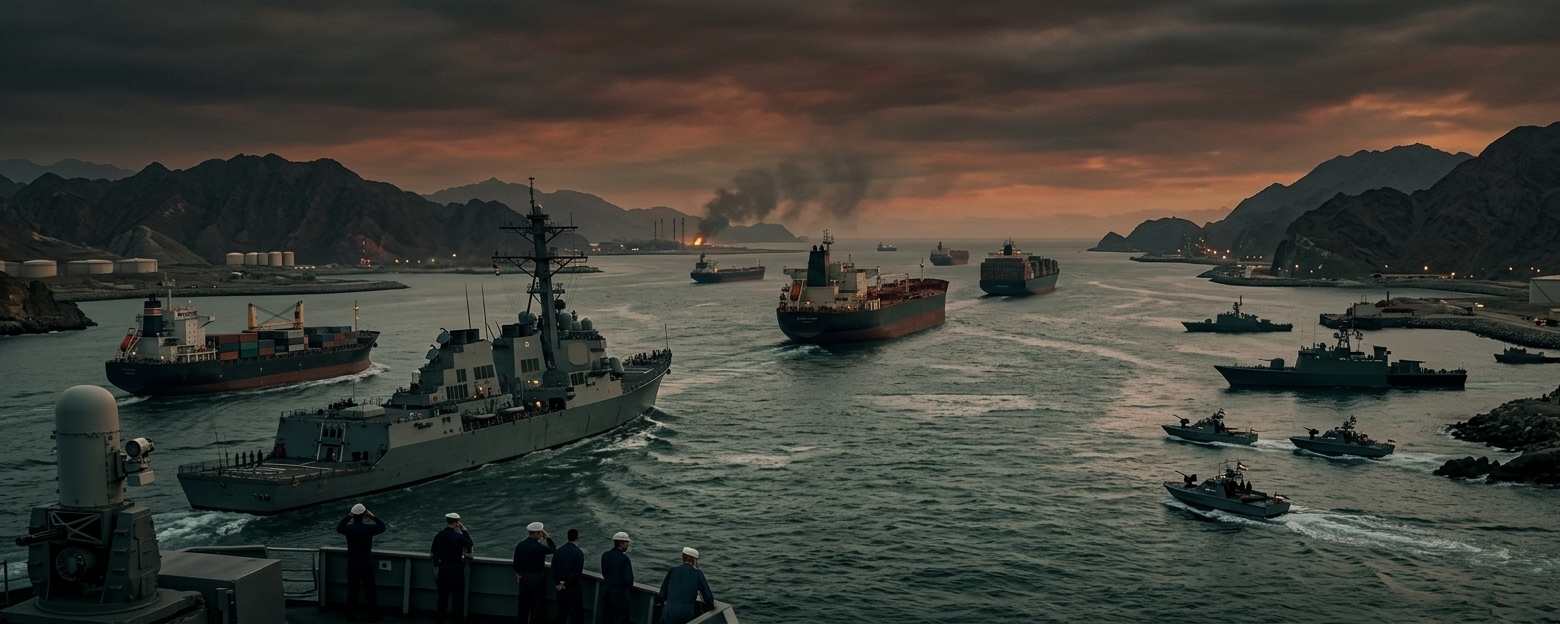
Everything I’m seeing points to one central issue: control of the Strait of Hormuz.
Before February 28, it was open. No restrictions. No tolls.
Now? Iran has turned it into leverage.
It’s not just a waterway anymore—it’s a weapon, a bargaining tool, and a source of pressure on the global economy.
And Iran has made it clear: there’s no going back to the old normal.
The U.S. Move Was Meant to Send a Message
When the U.S. escorted ships through the strait, I didn’t see it as a routine operation. I saw it as a signal.
A challenge.
The question now isn’t what happened—it’s what comes next. Does it stop there? Or does Iran respond in a way that escalates everything again?
Why the World Should Be Paying Attention
This situation isn’t isolated. The Strait of Hormuz carries a massive portion of global energy supply.
When it’s disrupted, the effects spread everywhere:
Oil and gas shortages
Rising fuel prices
Pressure on industries
Even risks to food supply due to fertilizer disruptions
I see this as more than a military issue—it’s an economic shockwave in motion.
Donald Trump Is Under Pressure Too
From my perspective, Donald Trump seems frustrated. He expected pressure and force to push Iran into submission.
That hasn’t happened.
Instead, Iran is holding its ground—and that’s complicating everything.
Trump wants a deal, but not just any deal. It has to look stronger than the nuclear agreement negotiated under Barack Obama.
That limits his options.
Iran Looks Ready to Escalate if Needed
What stands out to me is Iran’s posture. It’s not backing down—it’s preparing.
After losing top leadership figures earlier in the conflict, the current leadership seems willing to take risks. That includes pushing escalation if it serves their strategy.
That’s dangerous.
The United Arab Emirates Could Be the Next Flashpoint
I’m also watching the United Arab Emirates very closely. It looks like Iran is targeting it strategically—especially areas like Fujairah, which are critical for oil exports outside the strait.
That’s not random. That’s calculated pressure.
At the same time, the UAE is strengthening ties with the U.S. and Israel, even hosting advanced missile defense systems.
But here’s the key point: they still don’t want direct war.
And if the ceasefire collapses, that position may not hold.
This Is One Step Away from Escalation
Looking at everything—the failed diplomacy, military signaling, economic pressure, and regional involvement—I don’t see stability.
I see tension building.
The ceasefire is still there, but barely holding. And in situations like this, it doesn’t take much to break it.
One wrong move.
One miscalculation.
And this could slide straight back into full-scale war—with global consequences.