
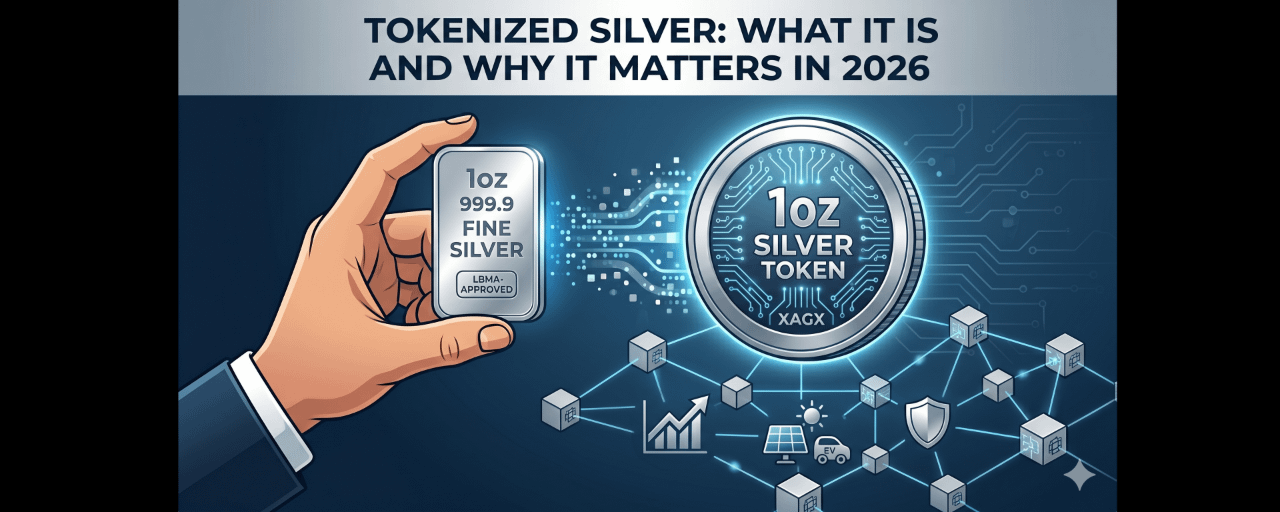
Tokenized silver is quickly becoming one of the most interesting trends in real-world assets. In simple terms, it gives investors blockchain-based exposure to silver, combining a traditional hard asset with the speed, accessibility, and flexibility of digital markets.
What makes this especially relevant in 2026 is the growing demand for assets that are both defensive and usable. Silver sits at a rare intersection: it has investment appeal, but it is also heavily used in industries like solar, electronics, and EVs, which helps support long-term demand. At the same time, the tokenized silver market has already developed meaningful scale, with market data showing hundreds of millions in market value and rising interest across crypto-native platforms.
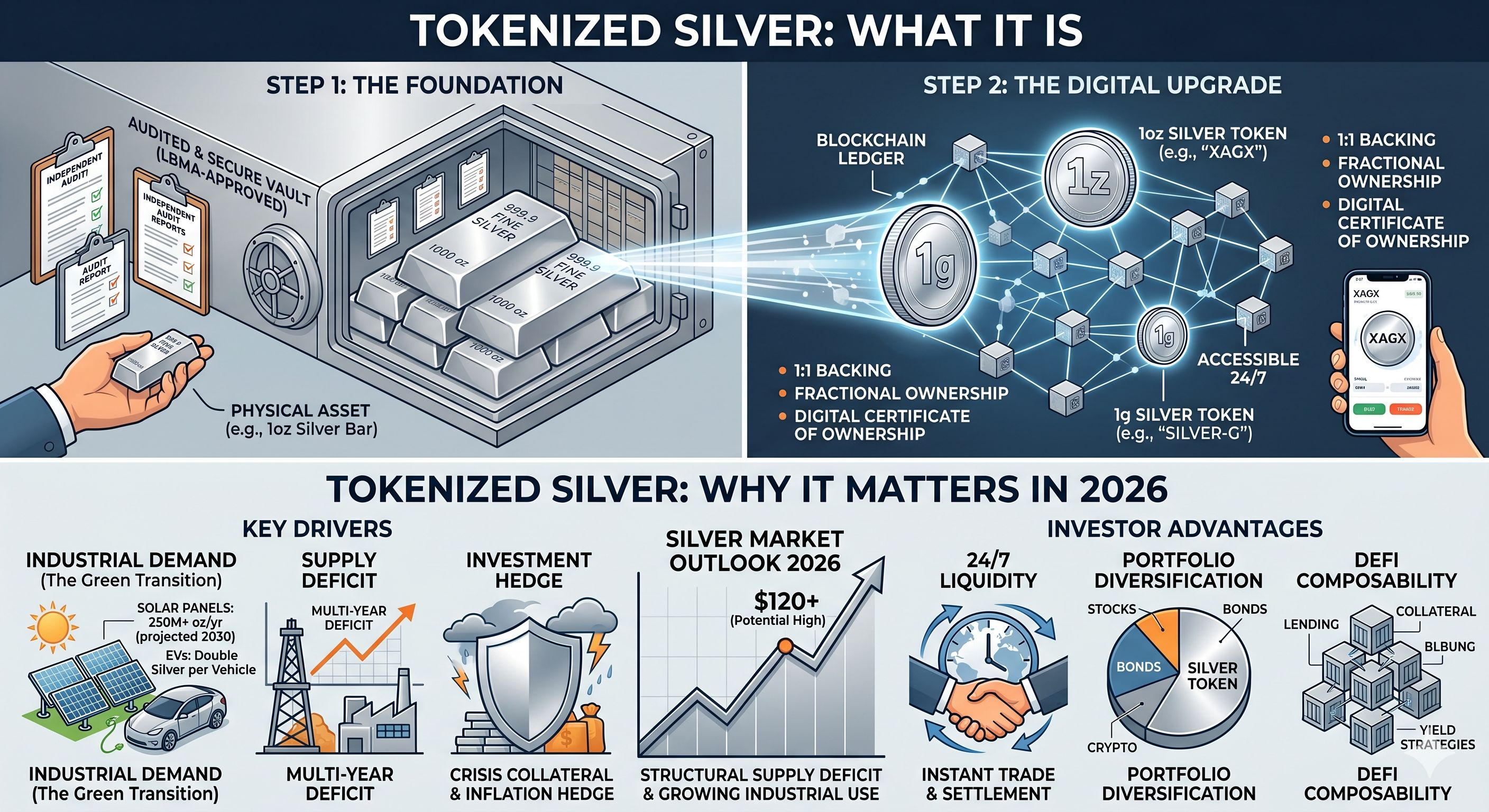
For investors, the appeal is straightforward. Tokenized silver can reduce friction by removing many of the pain points of physical ownership, including storage, transport, and slower settlement, while also enabling fractional access and 24/7 trading. That makes it easier for a wider range of users to participate in silver markets without needing to buy full bars or deal with traditional commodity infrastructure.
The bigger story is that tokenized silver is not just a new product category. It is part of a larger shift toward real-world asset tokenization, where familiar assets become more liquid, more transparent, and more compatible with DeFi. That is why tokenized silver matters in 2026: it brings an established commodity into the digital economy in a way that feels practical, not theoretical.