
Been digging through the $PIXEL whitepaper again. Not the fluffy version. The actual mechanics.
Here’s what caught me. Pixels started as a farming game everybody knows that. But the founding thesis was never about building one title. They said it plain - solve play-to-earn completely. Not patch it. Not rebrand it. Solve it.
Most people missed that line because they were too busy chasing airdrops.
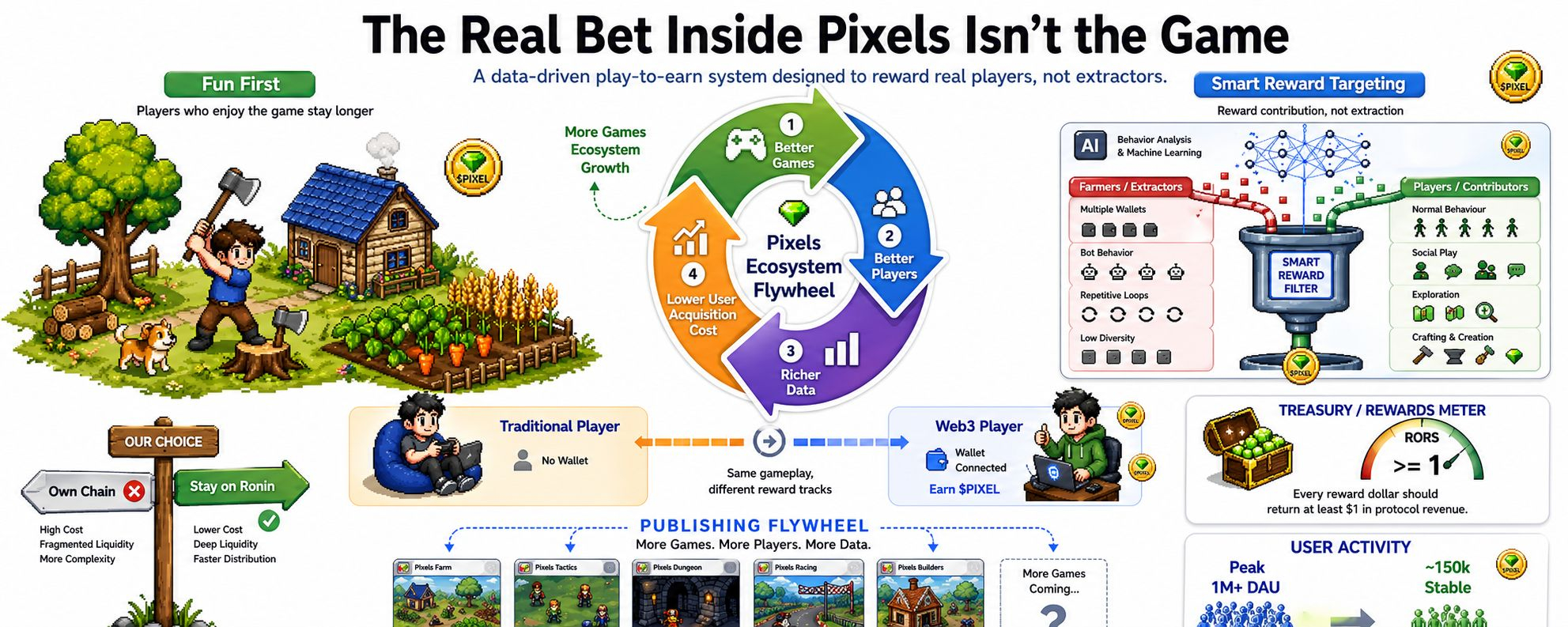
The three pillar structure is where the actual thinking lives. Fun first sounds dumb simple but watch how many Web3 projects skip it. They build reward loops first, ask questions later. Pixels design team keeps saying intrinsic motivation matters more than extrinsic. Meaning if somebody only shows up for $Pixel they’ll leave the second yields drop. You need people who actually enjoy chopping virtual wood.
Second pillar is the heavy one. Smart reward targeting. They built a data infrastructure that works like an ad network but backwards. Instead of buying attention they’re rewarding behavior. Machine learning decides which player actions create long term value. Not just who farms fastest. Not who runs twenty wallets. The system looks for signals that normal humans leave behind.
Something feels different about this approach. Most games just dump tokens on whoever shows up. Pixels is trying to separate farmers from players. Not sure the tech is there yet but at least they identified the split.
Third pillar connects everything. Publishing flywheel. Better games bring better players. Better players generate richer data. Richer data lowers user acquisition costs. Lower costs attract more games into the @Pixels ecosystem. Circular logic that actually holds water.
The whitepaper calls this self-sustaining growth. Each cycle strengthens the whole thing. That’s the theory anyway.
Here’s what’s happening right now on the ground. Binance Square has a live campaign running through late April. 15 million $Pixel up for grabs. Creators are posting with #Pixel tagging the project account. Engagement looks forced because all campaigns look forced. But the volume is real.
The team rejected launching their own blockchain recently. Said chain revenue models aren’t convincing. Token burn from transactions doesn’t move the needle. That kind of honesty is rare. Most founders would take the valuation bump and figure out the rest later. Pixels said no and stayed on Ronin.
The Stacked layer keeps coming up in ecosystem updates. Separates traditional gamers from Web3 users completely. Somebody playing through a normal platform never touches a wallet. Somebody else connects through Stacked and earns Pixel for identical actions. Same gameplay. Different reward tracks. Keeps regulatory doors open while still rewarding onchain participants.
Daily active users peaked over a million last year. Stabilized around 150k now. That’s not nothing. Most GameFi projects crater to zero after farmers leave. Pixels still has bodies in the fields. Not growing but not dead either.
The RORS metric they introduced is brutal. Return on Reward Spend means every $PIXEL leaving treasury needs to generate at least a dollar in protocol revenue. If the ratio drops below one the system cuts you off. Cold business logic wrapped in pixel graphics.
Something is building but feels slow. Not the usual hype cycle. More like they’re sealing leaks before turning on the pumps. The whitepaper admits traditional play-to-earn failed because incentives were misaligned. Short term extractors won. Real players lost. Pixels answer is data driven targeting that rewards contribution not extraction.
The publishing flywheel hasn’t fully spun yet. They need more games in the ecosystem to generate richer data. Need richer data to lower acquisition costs. Need lower costs to bring more games. Chicken and egg situation. But at least they identified the loop instead of pretending infinite growth exists.
Not sure this works. But watching somebody try to fix the actual problem instead of slapping bandaids on it. That’s worth paying attention to.