Binance Square

vanar

1.7M vues
52,799 mentions
Crypto Insight Bulletin
·
--
Vanar Chain Week 1 Survival Guide? Completed. Now We Cook. 👨‍🍳🔥 Okay fam, let’s be real for a second. ✋ Launch weeks are usually a nightmare. Networks crash, gas fees spike, and bridges break. But looking at the charts this morning? Vanar was boring. And in crypto, "boring" is the most bullish signal you can get. ✅ 100% Uptime. ✅ Gas: Flat at $0.0005. (Yes, I checked). ✅ Validators: Worldpay nodes are humming. So... What's the Play for Week 2? Now that we know the engine works, it's time to see how fast this car can actually drive. I’m keeping my eyes on Neutron this week. 🧠 We are starting to see the first "Heavy Data" blocks come through people compressing actual files (500:1) and putting them on-chain. This isn't just "tech speak" this is the difference between a calculator and a computer. The Countdown is Real ⏳ We are exactly 16 days out from Step Conference Dubai. I’ve heard rumors that the demo in Dubai isn't just a video... they are running live Agentic Payments on stage. Robots paying robots. If you thought last week was loud, you aren't ready for February. Let’s get this bread. 🥖🚀 @Vanar #vanar $VANRY
Vanar Chain Week 1 Survival Guide? Completed. Now We Cook. 👨‍🍳🔥

Okay fam, let’s be real for a second. ✋ Launch weeks are usually a nightmare. Networks crash, gas fees spike, and bridges break.

But looking at the charts this morning? Vanar was boring. And in crypto, "boring" is the most bullish signal you can get. ✅ 100% Uptime. ✅ Gas: Flat at $0.0005. (Yes, I checked). ✅ Validators: Worldpay nodes are humming.

So... What's the Play for Week 2? Now that we know the engine works, it's time to see how fast this car can actually drive.

I’m keeping my eyes on Neutron this week. 🧠 We are starting to see the first "Heavy Data" blocks come through people compressing actual files (500:1) and putting them on-chain. This isn't just "tech speak" this is the difference between a calculator and a computer.

The Countdown is Real ⏳ We are exactly 16 days out from Step Conference Dubai. I’ve heard rumors that the demo in Dubai isn't just a video... they are running live Agentic Payments on stage. Robots paying robots.

If you thought last week was loud, you aren't ready for February. Let’s get this bread. 🥖🚀

@Vanarchain

#vanar $VANRY
Vanar Chain Is Built for Real People Web3 doesn’t have to be complicated, and @Vanar proves it. Vanar Chain is focused on speed, smooth UX, and real consumer apps like gaming, AI, and digital experiences. It’s not just tech talk, it’s usable tech. With $VANRY powering the ecosystem. #vanar feels like Web3 that normal people can actually enjoy. Vanar Chain isn’t hype, it’s progress. Simple, fast, and built for everyday users — that’s the kind of Web3 future people actually want.
Vanar Chain Is Built for Real People

Web3 doesn’t have to be complicated, and @Vanarchain proves it. Vanar Chain is focused on speed, smooth UX, and real consumer apps like gaming, AI, and digital experiences. It’s not just tech talk, it’s usable tech. With $VANRY powering the ecosystem. #vanar feels like Web3 that normal people can actually enjoy.

Vanar Chain isn’t hype, it’s progress. Simple, fast, and built for everyday users — that’s the kind of Web3 future people actually want.
Vanar Chain’s Progress Makes More Sense When You Check the NumbersLet me explain how I’m thinking about Vanar right now, without hype or marketing fluff. I’ve been trying to spend more time on projects where the numbers actually match the direction they’re heading. That’s why Vanar Chain still feels relevant to me. Not because it’s all over social media, but because the recent data shows the project is still active and moving forward. On the market side, $VANRY has been trading roughly in the $0.007 to $0.008 range lately, with daily volume sitting in the millions. On its own, that’s not exciting. But it matters. A lot of small-cap tokens dry up fast when the market slows down. Liquidity disappears. Interest fades. That hasn’t really happened here. Trading is still steady, which tells me people haven’t just walked away. What matters more to me than price, though, is what’s happening behind the scenes. Vanar has been continuing to build out its AI-focused infrastructure, especially around Neutron and Kayon. These aren’t just ideas sitting on a roadmap. They’re being shaped into actual services people are meant to use, including subscription-style access that requires #vanar .That’s an important shift away from pure speculation. When a token starts being tied to real usage instead of just trading activity, the conversation changes. Network activity can come from people using tools and services, not just swapping tokens back and forth. That’s usually how longer-term demand starts to form, slowly and quietly. There’s also been steady progress on the network itself. Recent updates point to better node participation and strong transaction reliability. It’s not flashy, but it’s critical. If a chain can’t handle traffic consistently, nothing else really matters. Stability isn’t exciting, but it’s what keeps developers around. I don’t want to oversell this. Adoption is still early. There’s no breakout app pulling in massive user numbers yet, and vanary is still volatile like any small-cap asset. Competition in the AI and gaming-focused blockchain space is real, and execution will matter a lot from here. Still, the overall picture feels grounded. The token is active. The infrastructure is being used, not just talked about. And the roadmap looks like it’s slowly turning into real products. That’s why I’m still watching @Vanar . Not because of price predictions, but because the data suggests the project is building step by step, even when no one’s cheering loudly.

Vanar Chain’s Progress Makes More Sense When You Check the Numbers

Let me explain how I’m thinking about Vanar right now, without hype or marketing fluff. I’ve been trying to spend more time on projects where the numbers actually match the direction they’re heading. That’s why Vanar Chain still feels relevant to me. Not because it’s all over social media, but because the recent data shows the project is still active and moving forward.

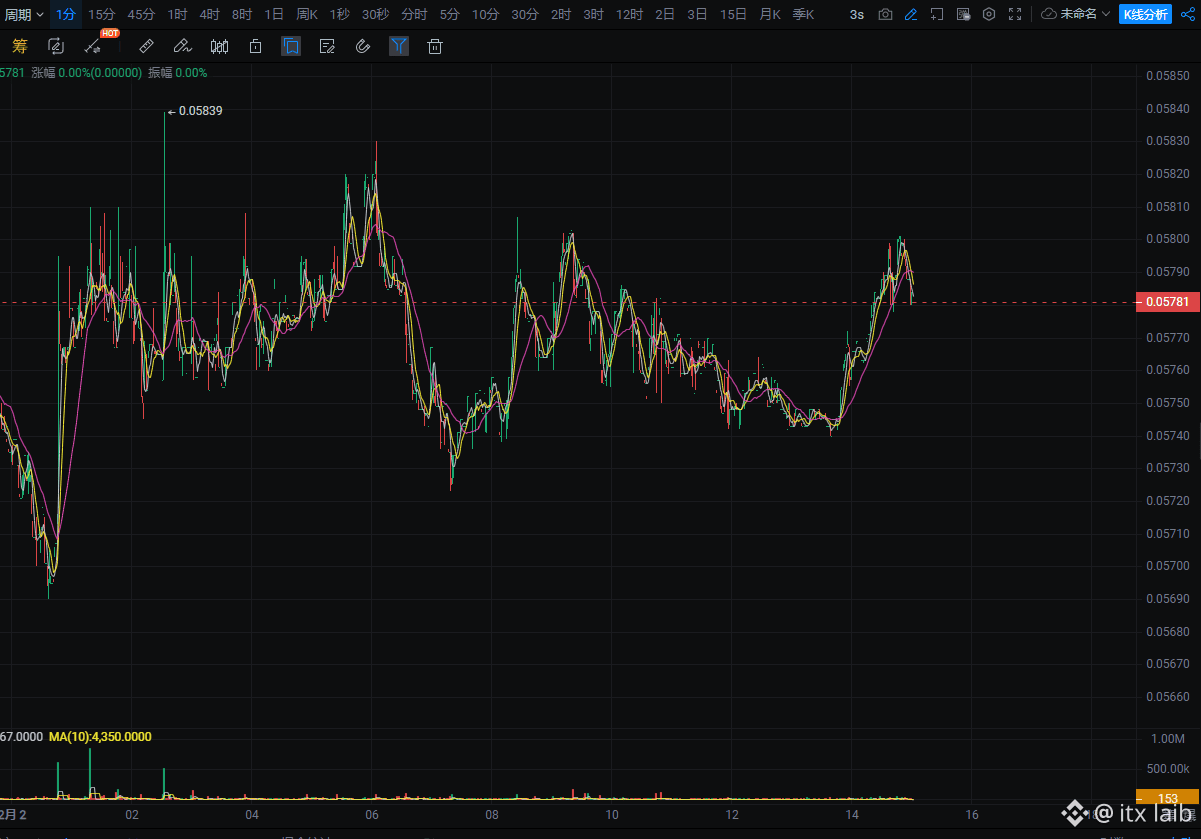
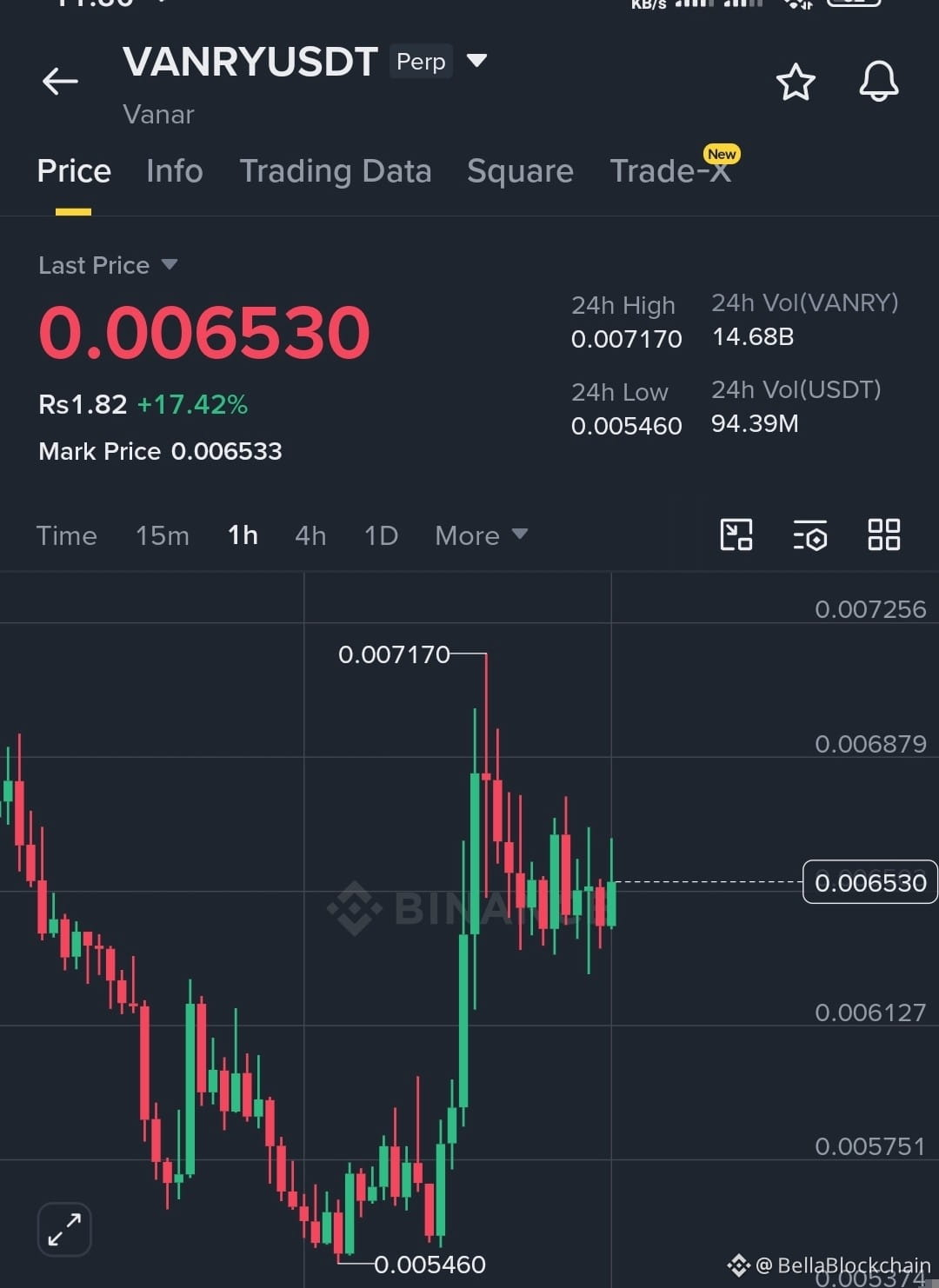
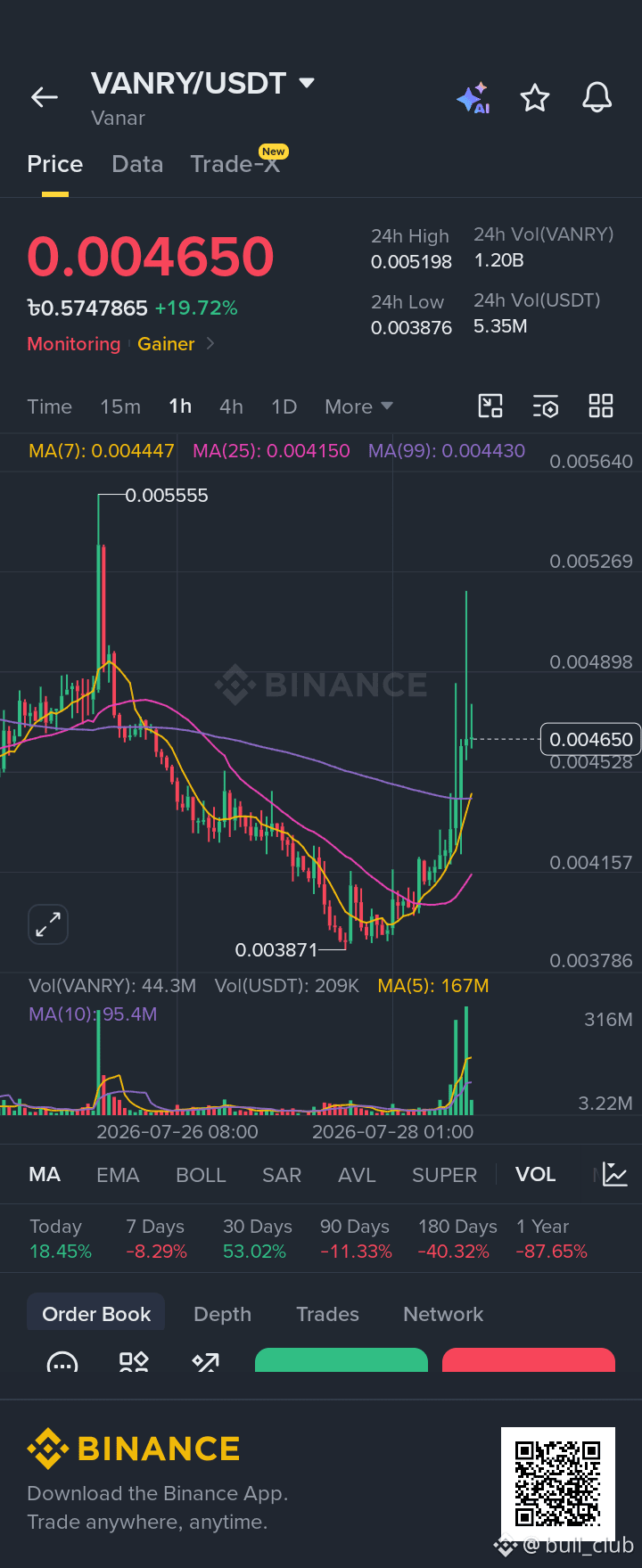
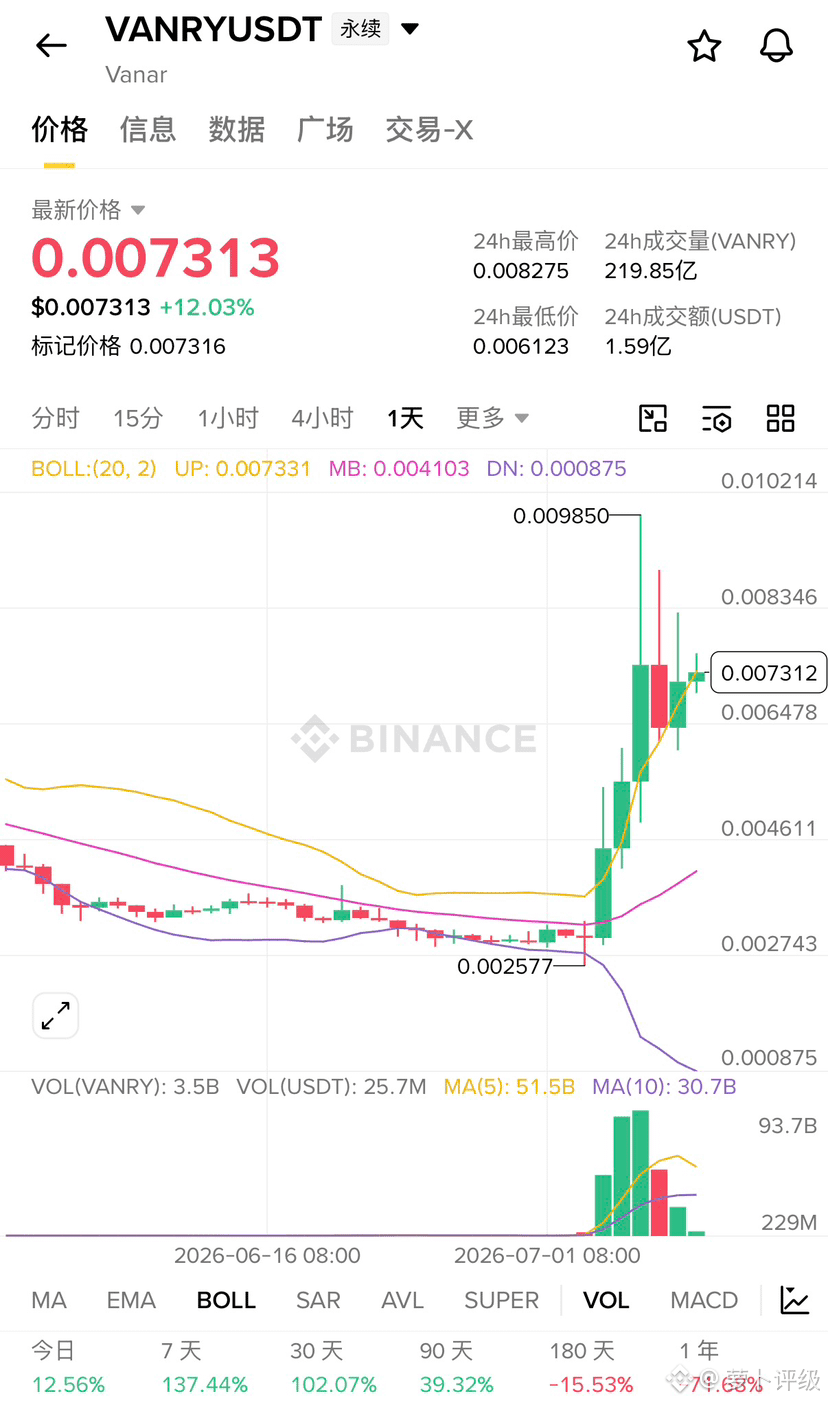
On the market side, $VANRY has been trading roughly in the $0.007 to $0.008 range lately, with daily volume sitting in the millions. On its own, that’s not exciting. But it matters. A lot of small-cap tokens dry up fast when the market slows down. Liquidity disappears. Interest fades. That hasn’t really happened here. Trading is still steady, which tells me people haven’t just walked away. What matters more to me than price, though, is what’s happening behind the scenes. Vanar has been continuing to build out its AI-focused infrastructure, especially around Neutron and Kayon. These aren’t just ideas sitting on a roadmap. They’re being shaped into actual services people are meant to use, including subscription-style access that requires #vanar .That’s an important shift away from pure speculation.

When a token starts being tied to real usage instead of just trading activity, the conversation changes. Network activity can come from people using tools and services, not just swapping tokens back and forth. That’s usually how longer-term demand starts to form, slowly and quietly. There’s also been steady progress on the network itself. Recent updates point to better node participation and strong transaction reliability. It’s not flashy, but it’s critical. If a chain can’t handle traffic consistently, nothing else really matters. Stability isn’t exciting, but it’s what keeps developers around.

I don’t want to oversell this. Adoption is still early. There’s no breakout app pulling in massive user numbers yet, and vanary is still volatile like any small-cap asset. Competition in the AI and gaming-focused blockchain space is real, and execution will matter a lot from here. Still, the overall picture feels grounded. The token is active. The infrastructure is being used, not just talked about. And the roadmap looks like it’s slowly turning into real products. That’s why I’m still watching @Vanarchain . Not because of price predictions, but because the data suggests the project is building step by step, even when no one’s cheering loudly.
Vanar Chain: Built for Games, Creators, and Real PeopleIf Web3 wants millions of users, it has to stop acting like an exclusive club. That’s the whole vibe behind Vanar Chain. @vanar isn’t building another “developer-only” blockchain, it’s building an engine for experiences people actually enjoy using. Games, entertainment, AI, digital worlds… this is where Vanar is placing its bets, and honestly, it makes a lot of sense. Vanar Chain is designed to disappear into the background while apps take the spotlight. Fast finality, smooth interactions, and low friction are the priority. Users shouldn’t care what chain they’re on or how gas works, they should just click, play, watch, and create. That consumer-first mindset is what separates Vanar from a lot of other networks trying to do the same thing. And powering all of this is $VANRY . It’s the fuel that keeps transactions flowing, rewards participation, and connects creators, developers, and users into one ecosystem. Instead of overcomplicating token utility, Vanar keeps it practical and aligned with real usage. That’s why #Vanar feels more like a product ecosystem than a pure crypto experiment. Why Vanar Chain Just Makes Sense Built for mainstream users, not just crypto nativesOptimized for gaming, AI, media, and immersive appsFast transactions that keep experiences smoothLow fees that don’t interrupt the funVANRY powers real utility across the network Vanar Chain isn’t trying to win the loudest marketing contest. It’s focused on building the kind of infrastructure that creators and users will naturally gravitate toward. If the future of Web3 is entertainment-driven and user-friendly, @Vanar is already aligned with that reality. With $VANRY at its core and a clear consumer-first vision, #vanar is shaping a Web3 experience that feels less like crypto… and more like the internet people actually want to use.

Vanar Chain: Built for Games, Creators, and Real People

If Web3 wants millions of users, it has to stop acting like an exclusive club. That’s the whole vibe behind Vanar Chain. @vanar isn’t building another “developer-only” blockchain, it’s building an engine for experiences people actually enjoy using. Games, entertainment, AI, digital worlds… this is where Vanar is placing its bets, and honestly, it makes a lot of sense.

Vanar Chain is designed to disappear into the background while apps take the spotlight. Fast finality, smooth interactions, and low friction are the priority. Users shouldn’t care what chain they’re on or how gas works, they should just click, play, watch, and create. That consumer-first mindset is what separates Vanar from a lot of other networks trying to do the same thing.

And powering all of this is $VANRY . It’s the fuel that keeps transactions flowing, rewards participation, and connects creators, developers, and users into one ecosystem. Instead of overcomplicating token utility, Vanar keeps it practical and aligned with real usage. That’s why #Vanar feels more like a product ecosystem than a pure crypto experiment.

Why Vanar Chain Just Makes Sense

Built for mainstream users, not just crypto nativesOptimized for gaming, AI, media, and immersive appsFast transactions that keep experiences smoothLow fees that don’t interrupt the funVANRY powers real utility across the network

Vanar Chain isn’t trying to win the loudest marketing contest. It’s focused on building the kind of infrastructure that creators and users will naturally gravitate toward. If the future of Web3 is entertainment-driven and user-friendly, @Vanarchain is already aligned with that reality. With $VANRY at its core and a clear consumer-first vision, #vanar is shaping a Web3 experience that feels less like crypto… and more like the internet people actually want to use.
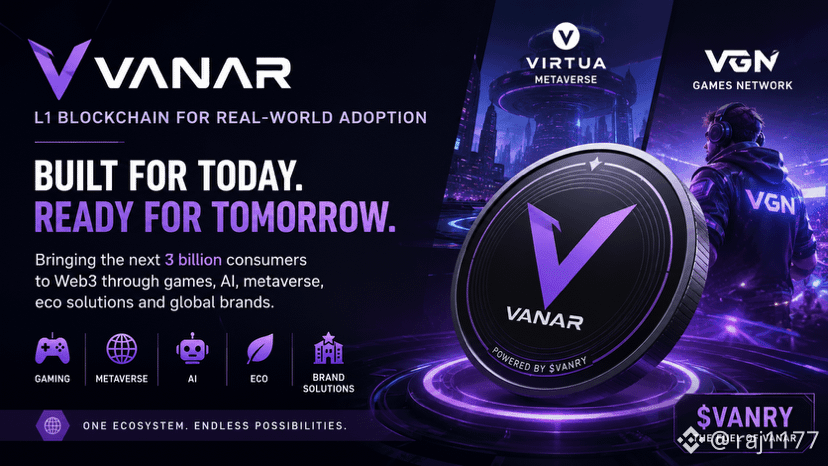
How Is Vanar Blockchain Bringing Real-World Users Into Web3 @Vanar $VANRY #vanar Vanar is a Layer 1 blockchain built from the ground up for real-world adoption. Instead of focusing only on technical users, Vanar is designed for everyday people, brands, and businesses. Its main mission is to make Web3 simple, practical, and accessible, helping onboard the next three billion users without complexity. The Vanar team brings strong experience from gaming, entertainment, and brand development. This background shapes the platform’s design philosophy, with a clear focus on smooth user experience, fast performance, and easy integration. By avoiding unnecessary complexity, Vanar creates an environment that feels familiar to mainstream users while still leveraging blockchain technology behind the scenes. Vanar supports several fast-growing and real-world sectors, including gaming, metaverse experiences, artificial intelligence, eco-friendly digital solutions, and brand-focused tools. This broad support allows the ecosystem to grow alongside market demand and enables developers and companies to build applications that users can adopt naturally. Two notable products built on Vanar are Virtua Metaverse and the VGN Games Network. Virtua Metaverse focuses on immersive digital worlds, digital ownership, and branded experiences. The VGN Games Network connects games and players through blockchain technology, helping developers build scalable and engaging gaming ecosystems. The entire Vanar ecosystem is powered by the VANRY token. VANRY is used for network operations, ecosystem activity, and value exchange across Vanar products. As adoption grows, the token plays a key role in keeping the ecosystem active and connected. Overall, Vanar is a purpose-built Layer 1 blockchain focused on real adoption. With strong industry experience, user-first design, and support for major mainstream sectors, Vanar aims to make Web3 practical, accessible, and ready for global use.
How Is Vanar Blockchain Bringing Real-World Users Into Web3

@Vanarchain $VANRY #vanar

Vanar is a Layer 1 blockchain built from the ground up for real-world adoption. Instead of focusing only on technical users, Vanar is designed for everyday people, brands, and businesses. Its main mission is to make Web3 simple, practical, and accessible, helping onboard the next three billion users without complexity.

The Vanar team brings strong experience from gaming, entertainment, and brand development. This background shapes the platform’s design philosophy, with a clear focus on smooth user experience, fast performance, and easy integration. By avoiding unnecessary complexity, Vanar creates an environment that feels familiar to mainstream users while still leveraging blockchain technology behind the scenes.

Vanar supports several fast-growing and real-world sectors, including gaming, metaverse experiences, artificial intelligence, eco-friendly digital solutions, and brand-focused tools. This broad support allows the ecosystem to grow alongside market demand and enables developers and companies to build applications that users can adopt naturally.

Two notable products built on Vanar are Virtua Metaverse and the VGN Games Network. Virtua Metaverse focuses on immersive digital worlds, digital ownership, and branded experiences. The VGN Games Network connects games and players through blockchain technology, helping developers build scalable and engaging gaming ecosystems.

The entire Vanar ecosystem is powered by the VANRY token. VANRY is used for network operations, ecosystem activity, and value exchange across Vanar products. As adoption grows, the token plays a key role in keeping the ecosystem active and connected.

Overall, Vanar is a purpose-built Layer 1 blockchain focused on real adoption. With strong industry experience, user-first design, and support for major mainstream sectors, Vanar aims to make Web3 practical, accessible, and ready for global use.
The "Agentic" Flip: Why 2026 is the Year Vanar Moves from Apps to Autonomous AgentsFor years, it has been all about dApps in the blockchain narrative. We built them, we used them, and celebrated when they could kick out the middleman. But as 2026 progresses, a sea change is sweeping through the Vanar Chain: the evolution from static applications to dynamic, autonomous agents. It's not about dumping AI within existing tools; rather, it's all about redesigning the interaction paradigm at its core, enabling the network not just to process transactions but to reason, act, and even evolve-creating a digital economy that is living and breathing autonomously. The "Agentic Flip" secret, however, is found within the less-talked-about but vitally important layer of "Axon," the latest coordination layer from Vanar. Yes, while many discussions on CE's still revolve around CE’s core layer - Vanar’s groundbreaking "AI Engine" - "Kayon," one can rest assured that "Axon” is where all that "magic happens” for the "Next Gen." Here, one can think, for example, on an "AI Agent” working independently with an assortment of Tokenized RWA, responding directly to market sentiment. Is that "automation” or is that "Smart Agents” being created, where "intent” is directly acted upon within the "protocol”? However, such an evolution also represents a new definition of the term "gas" in the context of the new Vanar Chain. No longer is it used to drive human interaction, as the value of Vanar is required to propel Machine to Machine (M2M) transaction velocities. Artificial Intelligent agents, far outpacing human interaction speeds, produce transactions at an ever-accelerating rate, with each transaction requiring the value of Vanry execute the complex instructions. In such an evolution, the velocity of the asset is linked to the growing operations of the M2M economy and represents a "supply shock" yet to be fully expressed in the markets. Ultimately, Vanar’s shift towards autonomous agents via its Axon layer and M2M transactional capabilities is ushering in an era of Contextual Sovereignty. An era where, via its Neutron Seed tech, this chain is no longer just storing information; it’s imbuing that information with context and memory to allow agents to truly comprehend the digital world they’re interacting with. An era where Vanar changes from an applications platform to an ecosystem for autonomous digital entities, making Vanar longer just a token but its lifeblood as a burgeoning digital civilization. @Vanar #Vanar $VANRY #vanar

The "Agentic" Flip: Why 2026 is the Year Vanar Moves from Apps to Autonomous Agents

For years, it has been all about dApps in the blockchain narrative. We built them, we used them, and celebrated when they could kick out the middleman. But as 2026 progresses, a sea change is sweeping through the Vanar Chain: the evolution from static applications to dynamic, autonomous agents. It's not about dumping AI within existing tools; rather, it's all about redesigning the interaction paradigm at its core, enabling the network not just to process transactions but to reason, act, and even evolve-creating a digital economy that is living and breathing autonomously.
The "Agentic Flip" secret, however, is found within the less-talked-about but vitally important layer of "Axon," the latest coordination layer from Vanar. Yes, while many discussions on CE's still revolve around CE’s core layer - Vanar’s groundbreaking "AI Engine" - "Kayon," one can rest assured that "Axon” is where all that "magic happens” for the "Next Gen." Here, one can think, for example, on an "AI Agent” working independently with an assortment of Tokenized RWA, responding directly to market sentiment. Is that "automation” or is that "Smart Agents” being created, where "intent” is directly acted upon within the "protocol”?
However, such an evolution also represents a new definition of the term "gas" in the context of the new Vanar Chain. No longer is it used to drive human interaction, as the value of Vanar is required to propel Machine to Machine (M2M) transaction velocities. Artificial Intelligent agents, far outpacing human interaction speeds, produce transactions at an ever-accelerating rate, with each transaction requiring the value of Vanry execute the complex instructions. In such an evolution, the velocity of the asset is linked to the growing operations of the M2M economy and represents a "supply shock" yet to be fully expressed in the markets.
Ultimately, Vanar’s shift towards autonomous agents via its Axon layer and M2M transactional capabilities is ushering in an era of Contextual Sovereignty. An era where, via its Neutron Seed tech, this chain is no longer just storing information; it’s imbuing that information with context and memory to allow agents to truly comprehend the digital world they’re interacting with. An era where Vanar changes from an applications platform to an ecosystem for autonomous digital entities, making Vanar longer just a token but its lifeblood as a burgeoning digital civilization.
@Vanarchain #Vanar $VANRY #vanar
Binance BiBi:
Hey there! That's a great question. M2M stands for Machine-to-Machine. In this article, it refers to the high-speed, automated transactions between AI agents on the Vanar chain. These transactions happen much faster than human interactions. Hope this helps
#vanar $VANRY NVIDIA Inception and Vanar Expanding our ecosystem After lengthy discussions, Vanar Chain announced it has joined NVIDIA Inception. Inception is a selective program that nurtures innovative companies revolutionizing industries with technological advancements. Joining this program means Vanar can tap into NVIDIA’s expertise and resources, supporting developers building products on the Vanar blockchain. This allows anyone creating on Vanar to craft engaging, immersive, and innovative experiences for users across multiple platforms and devices. Through NVIDIA Inception, our ecosystem gains access to advanced AI, graphics, and gaming tools alongside NVIDIA’s guidance. It also opens doors to collaboration with industry-leading experts and other AI-driven organizations, giving developers opportunities they wouldn’t have otherwise. The synergies are clear. NVIDIA’s strengths in gaming, AI, and open-world creation align with Vanar’s vision for mainstream use of its technology. Key tools include: NVIDIA CUDA-X AI: A toolkit for AI applications, including IP tracking, analytics, and metaverse creation. cuDNN and TensorRT: Optimize AI model training for diverse applications, such as conversational AI for NPCs. NVIDIA Omniverse: A collaborative platform for 3D digital twins and immersive, interactive experiences in the metaverse. NVIDIA Gameworks: Advanced real-time graphics and physics tools. “We are thrilled to join NVIDIA Inception,” said Jawad Ashraf, CEO of Vanar Chain. “This is a milestone in our journey to revolutionize L1 blockchain. NVIDIA’s technology and deep learning expertise will help us build a faster, scalable platform that unlocks the potential of decentralized applications for mainstream users.” NVIDIA Inception supports startups during critical stages of product development, prototyping, and deployment. Members gain custom ongoing benefits and technical assistance, providing the tools necessary to grow effectively. #Vanar @Vanar #NVIDIA #creatorpad #Binance
#vanar $VANRY

NVIDIA Inception and Vanar Expanding our ecosystem

After lengthy discussions, Vanar Chain announced it has joined NVIDIA Inception. Inception is a selective program that nurtures innovative companies revolutionizing industries with technological advancements. Joining this program means Vanar can tap into NVIDIA’s expertise and resources, supporting developers building products on the Vanar blockchain. This allows anyone creating on Vanar to craft engaging, immersive, and innovative experiences for users across multiple platforms and devices.

Through NVIDIA Inception, our ecosystem gains access to advanced AI, graphics, and gaming tools alongside NVIDIA’s guidance. It also opens doors to collaboration with industry-leading experts and other AI-driven organizations, giving developers opportunities they wouldn’t have otherwise.

The synergies are clear. NVIDIA’s strengths in gaming, AI, and open-world creation align with Vanar’s vision for mainstream use of its technology. Key tools include:

NVIDIA CUDA-X AI: A toolkit for AI applications, including IP tracking, analytics, and metaverse creation.

cuDNN and TensorRT: Optimize AI model training for diverse applications, such as conversational AI for NPCs.

NVIDIA Omniverse: A collaborative platform for 3D digital twins and immersive, interactive experiences in the metaverse.

NVIDIA Gameworks: Advanced real-time graphics and physics tools.

“We are thrilled to join NVIDIA Inception,” said Jawad Ashraf, CEO of Vanar Chain. “This is a milestone in our journey to revolutionize L1 blockchain. NVIDIA’s technology and deep learning expertise will help us build a faster, scalable platform that unlocks the potential of decentralized applications for mainstream users.”

NVIDIA Inception supports startups during critical stages of product development, prototyping, and deployment. Members gain custom ongoing benefits and technical assistance, providing the tools necessary to grow effectively.

#Vanar @Vanarchain #NVIDIA #creatorpad #Binance
Vanar And The Difference Between Talking About AI And Being Ready For ItVanar was not built to react to the AI conversation. It was built with a quieter assumption that most infrastructure still avoids admitting. That assumption is that intelligent systems will stop behaving like tools and start behaving like real participants. When you design for that early the entire structure changes. Most blockchains were designed around humans. Wallets interfaces approvals dashboards. That made sense for a long time. Humans are patient. They tolerate friction. They recover when context breaks. AI does none of this. Agents do not click. They do not wait. They do not restart politely when memory is lost. They either operate continuously or they fail silently. This is where many AI narratives collapse. AI readiness is often reduced to speed. Throughput benchmarks. TPS comparisons. These are familiar metrics but they miss the real constraints. Intelligence needs memory that persists across time. It needs reasoning that can be inspected rather than guessed. It needs automation that can act without becoming reckless. And it needs settlement rails that function without human ceremony. Vanar organizes itself around these requirements rather than around performance theater. This becomes clear when looking at what is already live. myNeutron shows that semantic memory can exist at the infrastructure layer. Context does not reset every session. Intelligence compounds. For AI systems this is the difference between reacting and learning. Kayon addresses another limit. Reasoning. AI that cannot explain itself quickly hits trust ceilings especially in enterprise and regulated environments. Kayon brings reasoning and explainability on chain as part of the logic itself. Decisions become traceable. Accountability becomes structural. Flows is where many stacks break. Translating intelligence into action is dangerous if the system was not designed for it. Automation without guardrails becomes brittle. Flows demonstrates how intelligent execution can be constrained controlled and safe. Intelligence is allowed to act but not without boundaries. Together these systems form an intelligent stack rather than a collection of tools. Memory feeds reasoning. Reasoning informs action. Action settles value. Each layer depends on the others. This is also where retrofitting becomes obvious. Infrastructure that was never designed for intelligence fragments responsibility. Memory lives off chain. Reasoning happens elsewhere. Automation relies on scripts. Settlement lags behind intent. It works until scale exposes the seams. Vanar avoids much of this by starting with fewer assumptions and more restraint. Cross chain availability beginning with Base is not expansion for optics. It is exposure. AI infrastructure cannot remain isolated and still claim readiness. Intelligence needs to operate where users data liquidity and activity already exist. Reach matters more than novelty. This shift also reframes the role of VANRY. VANRY is not positioned as a narrative token. It sits underneath usage. It enables settlement participation and economic activity across the intelligent stack. AI agents do not open wallets or approve transactions manually. They require value movement that behaves like infrastructure not ritual. This is why payments complete AI first systems. Without settlement intelligence remains impressive but economically inert. VANRY connects decision making to consequence. Action to value. It is worth stating plainly. Web3 does not lack base layers. It lacks proof that AI can operate natively and safely at scale. Many new L1 launches will struggle not because they are poorly built but because they were designed for a different era. Vanar does not try to solve everything. It focuses on being ready for the kind of usage that does not announce itself. Agents enterprises systems that simply expect infrastructure to work. That kind of usage is unforgiving. Infrastructure either holds or it disappears. Vanar feels like it was built with that pressure in mind. $VANRY #vanar @Vanar

Vanar And The Difference Between Talking About AI And Being Ready For It

Vanar was not built to react to the AI conversation. It was built with a quieter assumption that most infrastructure still avoids admitting. That assumption is that intelligent systems will stop behaving like tools and start behaving like real participants. When you design for that early the entire structure changes.

Most blockchains were designed around humans. Wallets interfaces approvals dashboards. That made sense for a long time. Humans are patient. They tolerate friction. They recover when context breaks. AI does none of this. Agents do not click. They do not wait. They do not restart politely when memory is lost. They either operate continuously or they fail silently.

This is where many AI narratives collapse.

AI readiness is often reduced to speed. Throughput benchmarks. TPS comparisons. These are familiar metrics but they miss the real constraints. Intelligence needs memory that persists across time. It needs reasoning that can be inspected rather than guessed. It needs automation that can act without becoming reckless. And it needs settlement rails that function without human ceremony.

Vanar organizes itself around these requirements rather than around performance theater.

This becomes clear when looking at what is already live. myNeutron shows that semantic memory can exist at the infrastructure layer. Context does not reset every session. Intelligence compounds. For AI systems this is the difference between reacting and learning.

Kayon addresses another limit. Reasoning. AI that cannot explain itself quickly hits trust ceilings especially in enterprise and regulated environments. Kayon brings reasoning and explainability on chain as part of the logic itself. Decisions become traceable. Accountability becomes structural.

Flows is where many stacks break. Translating intelligence into action is dangerous if the system was not designed for it. Automation without guardrails becomes brittle. Flows demonstrates how intelligent execution can be constrained controlled and safe. Intelligence is allowed to act but not without boundaries.

Together these systems form an intelligent stack rather than a collection of tools. Memory feeds reasoning. Reasoning informs action. Action settles value. Each layer depends on the others.

This is also where retrofitting becomes obvious. Infrastructure that was never designed for intelligence fragments responsibility. Memory lives off chain. Reasoning happens elsewhere. Automation relies on scripts. Settlement lags behind intent. It works until scale exposes the seams.

Vanar avoids much of this by starting with fewer assumptions and more restraint.

Cross chain availability beginning with Base is not expansion for optics. It is exposure. AI infrastructure cannot remain isolated and still claim readiness. Intelligence needs to operate where users data liquidity and activity already exist. Reach matters more than novelty.

This shift also reframes the role of VANRY.

VANRY is not positioned as a narrative token. It sits underneath usage. It enables settlement participation and economic activity across the intelligent stack. AI agents do not open wallets or approve transactions manually. They require value movement that behaves like infrastructure not ritual.

This is why payments complete AI first systems. Without settlement intelligence remains impressive but economically inert. VANRY connects decision making to consequence. Action to value.

It is worth stating plainly. Web3 does not lack base layers. It lacks proof that AI can operate natively and safely at scale. Many new L1 launches will struggle not because they are poorly built but because they were designed for a different era.

Vanar does not try to solve everything. It focuses on being ready for the kind of usage that does not announce itself. Agents enterprises systems that simply expect infrastructure to work.

That kind of usage is unforgiving. Infrastructure either holds or it disappears.

Vanar feels like it was built with that pressure in mind.

$VANRY
#vanar
@Vanar
Vanar Chain: Architecting the Future of AI-Native Mainstream Adoption@Vanar $VANRY #vanar In the rapidly evolving landscape of 2026, the conversation around blockchain has shifted from "What can it do?" to "How efficiently can it scale?" Leading this shift is @vanar, a high-performance Layer 1 (L1) EVM blockchain that has moved beyond being just another infrastructure play to becoming the world's first AI-native ecosystem designed for the next three billion users. An on-chain AI engine that allows smart contracts to make verifiable decisions based on the data in the Neutron layer without needing external oracles#vanar

Vanar Chain: Architecting the Future of AI-Native Mainstream Adoption

@Vanarchain $VANRY #vanar
In the rapidly evolving landscape of 2026, the conversation around blockchain has shifted from "What can it do?" to "How efficiently can it scale?" Leading this shift is @vanar, a high-performance Layer 1 (L1) EVM blockchain that has moved beyond being just another infrastructure play to becoming the world's first AI-native ecosystem designed for the next three billion users.
An on-chain AI engine that allows smart contracts to make verifiable decisions based on the data in the Neutron layer without needing external oracles#vanar
The Vanar Thesis: Gaming, Brands, AI — One Chain to Scale ItVanar is one of those projects that makes more sense when you stop looking at it like “just another L1” and start looking at it like an adoption play. The whole pitch is simple: most blockchains were engineered for crypto-native users, but real-world growth comes from people who don’t care about gas, wallets, or technical complexity. Vanar is trying to build an L1 that feels practical for mainstream apps—especially the kinds of products that already have massive audiences, like gaming, entertainment communities, digital brands, and consumer platforms. A big part of what’s “behind” Vanar is that it didn’t spawn out of thin air. It’s tied to an existing ecosystem that already understood the consumer side of Web3, and the project evolved from that foundation into something bigger: not only a place for metaverse-style assets or game networks, but a full chain built to support consumer-scale applications. That’s why you see the project consistently talking about onboarding the next billions of users instead of only competing on raw speed or buzzwords. Technically, Vanar is taking a few decisions that are very “product-minded.” First, it’s EVM compatible, which basically means it’s not forcing developers to learn a brand-new world. If you’ve built on Ethereum-style tooling, you can build here without rebuilding your entire stack. That matters because most real adoption comes from the path of least resistance—teams ship where the tooling is familiar and the migration cost is low. The next decision is the one that consumer apps care about the most: cost predictability. The crypto world is used to chaotic fee markets, but brands and mainstream apps can’t build reliable user experiences when the cost of a transaction can randomly spike. Vanar’s approach leans into controlled fee logic meant to keep costs stable and modelable. In plain terms, it’s trying to feel like infrastructure you can plan around, not a chain where your economics change overnight. Then there’s the network security philosophy. Vanar places a lot of emphasis on reputation—who is validating, how trust is built, and how the network is represented. This is a different vibe than fully open validator environments from day one. It’s more curated and foundation-led early on, which is often done when a network wants to look and feel “enterprise and brand friendly.” The tradeoff is that it’s not purely permissionless in spirit at the start, but the advantage is control, coordination, and credibility—things that mainstream partners usually demand. Where Vanar is trying to separate itself right now is the AI-native direction. Most chains treat AI like something that happens outside the blockchain—an off-chain service that occasionally interacts with smart contracts. Vanar is pushing a stack narrative where data becomes more structured and more usable for “intelligent” systems: memory, context, reasoning, and eventually automations. The idea is that apps won’t just store state; they’ll store meaningful context that can power AI-driven workflows. Whether that becomes truly useful at scale is the big bet, but that’s clearly the direction they want to own. On the token side, $VANRY is the fuel that keeps the system moving. It’s positioned as the gas token for the Vanar network, and it also plays into staking and participation. The Ethereum contract you shared matters because it gives $VANRY access to the biggest liquidity rails—exchanges, DeFi infrastructure, and broad interoperability. Many projects do this on purpose: the chain handles real usage, while Ethereum representation helps with liquidity and accessibility. Etherscan also gives a clean look at ongoing activity like holders and transfers, which is the most objective “heartbeat” you can check without relying on marketing posts. So what’s going on right now? The most grounded way to say it is: the network exists, the connectivity and infrastructure are live, the ecosystem tooling is in place for developers, staking participation exists, and the broader product story is shifting toward “AI stack + applications” rather than only gaming/metaverse branding. It feels like a build-and-expand phase where the foundation is set and the next goal is shipping the higher-level layers and driving real usage. About your “last 24 hours” request—strictly from what can be verified from the sources you shared, the clearest update is the on-chain activity on the Ethereum-side $VANRY contract, which continuously reflects transfers and movement. For real announcements like partnerships, product releases, integrations, or roadmap changes, the only reliable way to do a true 24-hour bulletin is to follow the project’s primary announcement. If you tell me which one you use for Vanar updates, I’ll rewrite the last section into a clean “24h new items” list based only on posts made during that window, and keep it just as human and clean as this. If you’re trying to judge what matters next, don’t overcomplicate it. The make-or-break signals are simple: are real apps using the chain in ways normal users care about, do the AI layers become something builders actually adopt, does the validator set and staking model grow in a transparent and credible way, and does interoperability stay smooth enough that liquidity and user access don’t become bottlenecks. If those pieces come together, Vanar’s positioning gets stronger. If they don’t, it risks being another project with a good narrative but limited real-world pull. #vanar @Vanar $VANRY {spot}(VANRYUSDT) #Vanar

The Vanar Thesis: Gaming, Brands, AI — One Chain to Scale It

Vanar is one of those projects that makes more sense when you stop looking at it like “just another L1” and start looking at it like an adoption play. The whole pitch is simple: most blockchains were engineered for crypto-native users, but real-world growth comes from people who don’t care about gas, wallets, or technical complexity. Vanar is trying to build an L1 that feels practical for mainstream apps—especially the kinds of products that already have massive audiences, like gaming, entertainment communities, digital brands, and consumer platforms.

A big part of what’s “behind” Vanar is that it didn’t spawn out of thin air. It’s tied to an existing ecosystem that already understood the consumer side of Web3, and the project evolved from that foundation into something bigger: not only a place for metaverse-style assets or game networks, but a full chain built to support consumer-scale applications. That’s why you see the project consistently talking about onboarding the next billions of users instead of only competing on raw speed or buzzwords.

Technically, Vanar is taking a few decisions that are very “product-minded.” First, it’s EVM compatible, which basically means it’s not forcing developers to learn a brand-new world. If you’ve built on Ethereum-style tooling, you can build here without rebuilding your entire stack. That matters because most real adoption comes from the path of least resistance—teams ship where the tooling is familiar and the migration cost is low.

The next decision is the one that consumer apps care about the most: cost predictability. The crypto world is used to chaotic fee markets, but brands and mainstream apps can’t build reliable user experiences when the cost of a transaction can randomly spike. Vanar’s approach leans into controlled fee logic meant to keep costs stable and modelable. In plain terms, it’s trying to feel like infrastructure you can plan around, not a chain where your economics change overnight.

Then there’s the network security philosophy. Vanar places a lot of emphasis on reputation—who is validating, how trust is built, and how the network is represented. This is a different vibe than fully open validator environments from day one. It’s more curated and foundation-led early on, which is often done when a network wants to look and feel “enterprise and brand friendly.” The tradeoff is that it’s not purely permissionless in spirit at the start, but the advantage is control, coordination, and credibility—things that mainstream partners usually demand.

Where Vanar is trying to separate itself right now is the AI-native direction. Most chains treat AI like something that happens outside the blockchain—an off-chain service that occasionally interacts with smart contracts. Vanar is pushing a stack narrative where data becomes more structured and more usable for “intelligent” systems: memory, context, reasoning, and eventually automations. The idea is that apps won’t just store state; they’ll store meaningful context that can power AI-driven workflows. Whether that becomes truly useful at scale is the big bet, but that’s clearly the direction they want to own.

On the token side, $VANRY is the fuel that keeps the system moving. It’s positioned as the gas token for the Vanar network, and it also plays into staking and participation. The Ethereum contract you shared matters because it gives $VANRY access to the biggest liquidity rails—exchanges, DeFi infrastructure, and broad interoperability. Many projects do this on purpose: the chain handles real usage, while Ethereum representation helps with liquidity and accessibility. Etherscan also gives a clean look at ongoing activity like holders and transfers, which is the most objective “heartbeat” you can check without relying on marketing posts.

So what’s going on right now? The most grounded way to say it is: the network exists, the connectivity and infrastructure are live, the ecosystem tooling is in place for developers, staking participation exists, and the broader product story is shifting toward “AI stack + applications” rather than only gaming/metaverse branding. It feels like a build-and-expand phase where the foundation is set and the next goal is shipping the higher-level layers and driving real usage.

About your “last 24 hours” request—strictly from what can be verified from the sources you shared, the clearest update is the on-chain activity on the Ethereum-side $VANRY contract, which continuously reflects transfers and movement. For real announcements like partnerships, product releases, integrations, or roadmap changes, the only reliable way to do a true 24-hour bulletin is to follow the project’s primary announcement. If you tell me which one you use for Vanar updates, I’ll rewrite the last section into a clean “24h new items” list based only on posts made during that window, and keep it just as human and clean as this.

If you’re trying to judge what matters next, don’t overcomplicate it. The make-or-break signals are simple: are real apps using the chain in ways normal users care about, do the AI layers become something builders actually adopt, does the validator set and staking model grow in a transparent and credible way, and does interoperability stay smooth enough that liquidity and user access don’t become bottlenecks. If those pieces come together, Vanar’s positioning gets stronger. If they don’t, it risks being another project with a good narrative but limited real-world pull.

#vanar @Vanarchain $VANRY
#Vanar
#vanar $VANRY Vanar is building a world where blockchain fades into the background and pure experience takes the spotlight, bringing games, brands, and digital lives together in one seamless flow where people truly own what they earn, create, and love, turning play into possibility and technology into something human, simple, and powerful enough to welcome billions into Web3 without fear, confusion, or barriers, just connection, creativity, and a future that finally feels made for everyone 🌍@Vanar
#vanar $VANRY Vanar is building a world where blockchain fades into the background and pure experience takes the spotlight, bringing games, brands, and digital lives together in one seamless flow where people truly own what they earn, create, and love, turning play into possibility and technology into something human, simple, and powerful enough to welcome billions into Web3 without fear, confusion, or barriers, just connection, creativity, and a future that finally feels made for everyone 🌍@Vanarchain
A Story That Starts With People Not Protocols@Vanar feels like it was born from a quiet frustration, the kind that grows when talented people keep watching good ideas fail simply because real humans were never considered in the design. The team behind Vanar had already spent years inside gaming studios, entertainment pipelines, and brand ecosystems, watching millions of users interact with digital worlds effortlessly while blockchain products struggled to onboard even a fraction of that audience. I’m sensing that Vanar did not start with the question of how powerful a blockchain could be, but with a much more emotional one about why everyday people kept bouncing off Web3 despite its promise. They’re building from the belief that technology should adapt to human behavior, not demand humans reshape themselves around technology, and that belief quietly shapes everything Vanar has become. The Desire to Reach the Next Three Billion At the heart of Vanar is a very human ambition, one rooted in inclusion rather than exclusivity, because the team understood early on that Web3 would never reach its potential if it only spoke to insiders. They’re not chasing the same audience that already understands wallets and private keys, but the much larger group of people who just want experiences that feel smooth, expressive, and emotionally engaging. If it becomes clear that the next three billion users will enter Web3 through games, entertainment, and culture rather than finance charts, then we’re seeing exactly why Vanar’s focus feels different. I’m noticing a quiet respect for mainstream users here, an understanding that their time, attention, and trust must be earned gently. Why Building a Layer 1 Was an Emotional Decision Choosing to build a Layer 1 blockchain was not just a technical move for Vanar, it was a commitment, because relying on existing infrastructure would have meant inheriting compromises that break experiences at scale. Games stutter when networks lag, virtual worlds feel lifeless when transactions stall, and brands lose confidence when costs spike unpredictably, and these are not abstract problems but emotional ones that directly affect how people feel inside digital spaces. Vanar was built to feel stable, predictable, and responsive, because trust grows when systems behave consistently. I’m seeing that the architecture reflects a deep understanding of how fragile user immersion really is. Architecture That Respects Human Attention Vanar’s underlying system is designed to stay out of the way, to do its job quietly while letting creativity, play, and interaction take center stage. Fast confirmation, low latency, and efficient execution are not marketed as technical trophies but treated as necessities, because delays and friction break emotional flow. If it becomes obvious that users should never have to think about block times or fees to enjoy a digital moment, then we’re seeing why Vanar’s design philosophy feels closer to the traditional internet than to experimental crypto systems. I’m noticing that this chain was built to disappear into the experience, and that invisibility is intentional. Products That Carry Real Emotional Weight Vanar’s vision does not live only in documents or roadmaps, it already breathes inside real products that people use, explore, and return to. Virtua Metaverse shows what happens when blockchain supports imagination instead of overshadowing it, creating digital spaces where ownership feels natural and creativity feels unforced. Meanwhile, VGN reflects an understanding that gamers care deeply about continuity, identity, and shared value, not just isolated wins. I’m feeling that these products exist because the team understands how emotional investment forms in games and worlds, and how easily it can be broken by poor infrastructure. VANRY as the Pulse of the Ecosystem The VANRY is woven into the ecosystem as a living mechanism rather than a symbol, quietly powering transactions, securing the network, and aligning incentives across builders and users. When a token exists only for speculation, it feels hollow, but when it circulates through real experiences, it begins to reflect the heartbeat of the ecosystem itself. I’m noticing that VANRY’s purpose is not to shout for attention but to move value smoothly through the network, rewarding participation and long-term belief rather than short-term noise. What Really Shows Network Health Vanar’s health is not measured by sudden spikes or viral moments, but by calmer signals that take time to reveal themselves. Active developers, returning users, stable transaction flows, and partners who choose to build again after their first launch all tell a deeper story about trust. They’re watching whether experiences remain smooth under pressure and whether communities grow organically rather than through incentives alone. If it becomes clear that sustainability matters more than spectacle, then Vanar’s metrics begin to tell a very human story about patience and consistency. The Problems Vanar Is Gently Unraveling Web3 has often felt fragmented, intimidating, and emotionally distant, and Vanar exists because that reality needed to change. By uniting gaming, metaverse experiences, AI-driven systems, eco initiatives, and brand solutions under one flexible network, Vanar is lowering the emotional barrier to entry. I’m seeing an effort to make ownership feel empowering instead of confusing, and participation feel rewarding instead of risky. This is not about replacing existing platforms overnight, but about slowly weaving blockchain into places where it feels helpful rather than forced. Risks That Come With Being Honest Vanar’s path is not without uncertainty, because building for mainstream adoption requires tradeoffs that purists may question. If it becomes necessary to prioritize usability and partnerships early on, then decentralization must deepen thoughtfully over time to preserve trust. There is also the reality that trends shift, narratives fade, and gaming cycles move unpredictably. I’m sensing that Vanar’s greatest risk is also its greatest challenge, remaining flexible without losing its core identity as a network built for people first. A Future That Feels More Human Than Technical Looking ahead, Vanar feels like it is preparing for a future where blockchain becomes less visible but more meaningful, quietly supporting worlds, communities, and intelligent systems without demanding attention. We’re seeing the outline of an ecosystem where technology fades into the background and emotion, creativity, and connection take the lead. If it becomes true that mass adoption arrives through joy, curiosity, and belonging rather than complexity, then Vanar’s long-term direction feels quietly aligned with how humans actually grow into new technologies. A Closing That Lingers Vanar does not feel like a race, it feels like a conversation, one that unfolds slowly as trust is earned rather than demanded. They’re building with the understanding that people remember how experiences made them feel long after they forget how they worked. I’m left with the sense that if Web3 is ever going to feel natural, welcoming, and emotionally resonant, it will be through projects like Vanar, patiently shaping the future until it feels less like a system we use and more like a world we belong to. @Vanar $VANRY #vanar

A Story That Starts With People Not Protocols

@Vanarchain feels like it was born from a quiet frustration, the kind that grows when talented people keep watching good ideas fail simply because real humans were never considered in the design. The team behind Vanar had already spent years inside gaming studios, entertainment pipelines, and brand ecosystems, watching millions of users interact with digital worlds effortlessly while blockchain products struggled to onboard even a fraction of that audience. I’m sensing that Vanar did not start with the question of how powerful a blockchain could be, but with a much more emotional one about why everyday people kept bouncing off Web3 despite its promise. They’re building from the belief that technology should adapt to human behavior, not demand humans reshape themselves around technology, and that belief quietly shapes everything Vanar has become.

The Desire to Reach the Next Three Billion

At the heart of Vanar is a very human ambition, one rooted in inclusion rather than exclusivity, because the team understood early on that Web3 would never reach its potential if it only spoke to insiders. They’re not chasing the same audience that already understands wallets and private keys, but the much larger group of people who just want experiences that feel smooth, expressive, and emotionally engaging. If it becomes clear that the next three billion users will enter Web3 through games, entertainment, and culture rather than finance charts, then we’re seeing exactly why Vanar’s focus feels different. I’m noticing a quiet respect for mainstream users here, an understanding that their time, attention, and trust must be earned gently.

Why Building a Layer 1 Was an Emotional Decision

Choosing to build a Layer 1 blockchain was not just a technical move for Vanar, it was a commitment, because relying on existing infrastructure would have meant inheriting compromises that break experiences at scale. Games stutter when networks lag, virtual worlds feel lifeless when transactions stall, and brands lose confidence when costs spike unpredictably, and these are not abstract problems but emotional ones that directly affect how people feel inside digital spaces. Vanar was built to feel stable, predictable, and responsive, because trust grows when systems behave consistently. I’m seeing that the architecture reflects a deep understanding of how fragile user immersion really is.

Architecture That Respects Human Attention

Vanar’s underlying system is designed to stay out of the way, to do its job quietly while letting creativity, play, and interaction take center stage. Fast confirmation, low latency, and efficient execution are not marketed as technical trophies but treated as necessities, because delays and friction break emotional flow. If it becomes obvious that users should never have to think about block times or fees to enjoy a digital moment, then we’re seeing why Vanar’s design philosophy feels closer to the traditional internet than to experimental crypto systems. I’m noticing that this chain was built to disappear into the experience, and that invisibility is intentional.

Products That Carry Real Emotional Weight

Vanar’s vision does not live only in documents or roadmaps, it already breathes inside real products that people use, explore, and return to. Virtua Metaverse shows what happens when blockchain supports imagination instead of overshadowing it, creating digital spaces where ownership feels natural and creativity feels unforced. Meanwhile, VGN reflects an understanding that gamers care deeply about continuity, identity, and shared value, not just isolated wins. I’m feeling that these products exist because the team understands how emotional investment forms in games and worlds, and how easily it can be broken by poor infrastructure.

VANRY as the Pulse of the Ecosystem

The VANRY is woven into the ecosystem as a living mechanism rather than a symbol, quietly powering transactions, securing the network, and aligning incentives across builders and users. When a token exists only for speculation, it feels hollow, but when it circulates through real experiences, it begins to reflect the heartbeat of the ecosystem itself. I’m noticing that VANRY’s purpose is not to shout for attention but to move value smoothly through the network, rewarding participation and long-term belief rather than short-term noise.

What Really Shows Network Health

Vanar’s health is not measured by sudden spikes or viral moments, but by calmer signals that take time to reveal themselves. Active developers, returning users, stable transaction flows, and partners who choose to build again after their first launch all tell a deeper story about trust. They’re watching whether experiences remain smooth under pressure and whether communities grow organically rather than through incentives alone. If it becomes clear that sustainability matters more than spectacle, then Vanar’s metrics begin to tell a very human story about patience and consistency.

The Problems Vanar Is Gently Unraveling

Web3 has often felt fragmented, intimidating, and emotionally distant, and Vanar exists because that reality needed to change. By uniting gaming, metaverse experiences, AI-driven systems, eco initiatives, and brand solutions under one flexible network, Vanar is lowering the emotional barrier to entry. I’m seeing an effort to make ownership feel empowering instead of confusing, and participation feel rewarding instead of risky. This is not about replacing existing platforms overnight, but about slowly weaving blockchain into places where it feels helpful rather than forced.

Risks That Come With Being Honest

Vanar’s path is not without uncertainty, because building for mainstream adoption requires tradeoffs that purists may question. If it becomes necessary to prioritize usability and partnerships early on, then decentralization must deepen thoughtfully over time to preserve trust. There is also the reality that trends shift, narratives fade, and gaming cycles move unpredictably. I’m sensing that Vanar’s greatest risk is also its greatest challenge, remaining flexible without losing its core identity as a network built for people first.

A Future That Feels More Human Than Technical

Looking ahead, Vanar feels like it is preparing for a future where blockchain becomes less visible but more meaningful, quietly supporting worlds, communities, and intelligent systems without demanding attention. We’re seeing the outline of an ecosystem where technology fades into the background and emotion, creativity, and connection take the lead. If it becomes true that mass adoption arrives through joy, curiosity, and belonging rather than complexity, then Vanar’s long-term direction feels quietly aligned with how humans actually grow into new technologies.

A Closing That Lingers

Vanar does not feel like a race, it feels like a conversation, one that unfolds slowly as trust is earned rather than demanded. They’re building with the understanding that people remember how experiences made them feel long after they forget how they worked. I’m left with the sense that if Web3 is ever going to feel natural, welcoming, and emotionally resonant, it will be through projects like Vanar, patiently shaping the future until it feels less like a system we use and more like a world we belong to.

@Vanarchain $VANRY #vanar
💘 VANAR 💘Vanar Chain: Building the Future of Gaming and Entertainment 🚀 @Vanar is revolutionizing the gaming and entertainment industry with its high-performance blockchain infrastructure. By providing a scalable, secure, and developer-friendly platform, Vanar Chain is empowering creators to build immersive experiences and drive engagement. What is Vanar Chain? Vanar Chain is a blockchain platform designed to support the needs of gaming and entertainment industries. With its fast transaction speeds and low fees, Vanar Chain is ideal for applications that require high performance and scalability. Key Features of Vanar Chain: - High-Performance Infrastructure: Fast and scalable blockchain infrastructure for gaming and entertainment apps. - Interoperability: Seamless integration with existing systems and blockchain networks. - Community-Driven: Decentralized governance and incentivization for creators and users. The Role of VANRY in the Ecosystem VANRY is the native token of Vanar Chain, powering transactions, governance, and ecosystem growth. VANRY holders can: - Stake tokens to participate in governance and earn rewards - Use VANRY for transactions and access premium features Why Vanar Chain Matters Vanar Chain is transforming gaming and entertainment by providing a decentralized platform for creators and users. With its cutting-edge tech and growing ecosystem, Vanar Chain is an exciting project to watch. Get Involved! Join the Vanar community and explore the future of gaming and entertainment. Follow vanar for updates, and dive into the possibilities of $VANRY #vanar #Blockchain #Gaming

💘 VANAR 💘

Vanar Chain: Building the Future of Gaming and Entertainment 🚀
@Vanarchain is revolutionizing the gaming and entertainment industry with its high-performance blockchain infrastructure. By providing a scalable, secure, and developer-friendly platform, Vanar Chain is empowering creators to build immersive experiences and drive engagement.
What is Vanar Chain?
Vanar Chain is a blockchain platform designed to support the needs of gaming and entertainment industries. With its fast transaction speeds and low fees, Vanar Chain is ideal for applications that require high performance and scalability.
Key Features of Vanar Chain:
- High-Performance Infrastructure: Fast and scalable blockchain infrastructure for gaming and entertainment apps.
- Interoperability: Seamless integration with existing systems and blockchain networks.
- Community-Driven: Decentralized governance and incentivization for creators and users.
The Role of VANRY in the Ecosystem
VANRY is the native token of Vanar Chain, powering transactions, governance, and ecosystem growth. VANRY holders can:
- Stake tokens to participate in governance and earn rewards
- Use VANRY for transactions and access premium features
Why Vanar Chain Matters
Vanar Chain is transforming gaming and entertainment by providing a decentralized platform for creators and users. With its cutting-edge tech and growing ecosystem, Vanar Chain is an exciting project to watch.
Get Involved!
Join the Vanar community and explore the future of gaming and entertainment. Follow vanar for updates, and dive into the possibilities of $VANRY
#vanar #Blockchain #Gaming
🔥 VANAR 🔥🚀 *Vanar Chain: The Future of Blockchain Gaming* 🚀 The gaming industry is on the cusp of a revolution, and Vanar Chain is leading the charge. @Vanar ris building a high-performance blockchain platform that's designed to meet the demands of modern gaming. Let's dive into what makes Vanar Chain a game-changer. 💡 *Why Vanar Chain?* - *Lightning-Fast Transactions*: Vanar Chain's unique architecture enables fast and seamless transactions, perfect for gaming applications. - *Scalability*: Built to handle high-volume gaming ecosystems, Vanar Chain is ideal for large-scale gaming platforms. - *Security*: Enterprise-grade security ensures a safe and secure gaming experience for users. The $VANRY token is at the heart of the Vanar ecosystem, enabling transactions, governance, and incentives. 💸 👉 *Use Cases* 1. *Gaming Platforms*: Build and deploy blockchain-based games with ease 2. *NFT Marketplaces*: Create, buy, and sell gaming NFTs 3. *Virtual Economies*: Manage in-game assets and currencies Vanar Chain is poised to revolutionize the gaming industry. Explore the possibilities and join the movement! 💪 #vanar #BlockchainGaming #Web3 💬 What's your take on the future of blockchain gaming?

🔥 VANAR 🔥

🚀 *Vanar Chain: The Future of Blockchain Gaming* 🚀

The gaming industry is on the cusp of a revolution, and Vanar Chain is leading the charge. @Vanarchain ris building a high-performance blockchain platform that's designed to meet the demands of modern gaming. Let's dive into what makes Vanar Chain a game-changer.

💡 *Why Vanar Chain?*
- *Lightning-Fast Transactions*: Vanar Chain's unique architecture enables fast and seamless transactions, perfect for gaming applications.
- *Scalability*: Built to handle high-volume gaming ecosystems, Vanar Chain is ideal for large-scale gaming platforms.
- *Security*: Enterprise-grade security ensures a safe and secure gaming experience for users.

The $VANRY token is at the heart of the Vanar ecosystem, enabling transactions, governance, and incentives. 💸

👉 *Use Cases*
1. *Gaming Platforms*: Build and deploy blockchain-based games with ease
2. *NFT Marketplaces*: Create, buy, and sell gaming NFTs
3. *Virtual Economies*: Manage in-game assets and currencies

Vanar Chain is poised to revolutionize the gaming industry. Explore the possibilities and join the movement! 💪 #vanar #BlockchainGaming #Web3

💬 What's your take on the future of blockchain gaming?
THE GLOBAL CRYPTOCURRENCY & BLOCKCHAIN ECOSYSTEM: A DEEP ANALYSIS OF TECHNOLOGY, MARKETS, REGULATIONCryptocurrency and blockchain technology now represent one of the most consequential transformations in modern economic and technological history, comparable in long-term impact to the rise of the internet and mobile computing. What began as an experimental response to systemic weaknesses exposed by the 2008 global financial crisis has matured into a decentralized digital infrastructure that increasingly underpins finance, commerce, governance, entertainment, and data ownership. The central innovation of blockchain is not limited to the creation of digital money, but rather lies in the engineering of trust through cryptography, economic incentives, and distributed consensus. By 2025, blockchain has transitioned from a disruptive concept at the margins of finance into a strategic layer of global digital infrastructure, supported by institutions, regulated by governments, and progressively adopted by everyday users. The ecosystem now encompasses monetary networks such as Bitcoin, programmable settlement layers like Ethereum, stablecoin-based payment rails operating across borders, and consumer-focused blockchains such as Vanar Chain, which are purpose-built to support real-world adoption at scale. At its foundation, blockchain is a form of distributed ledger technology in which records are maintained collectively by a network rather than by a central authority. Transactions are authorized through cryptographic signatures, validated according to transparent protocol rules, and grouped into blocks that are cryptographically linked to one another. This structure produces immutability in practice, as altering historical records would require overwhelming control over network resources, rendering manipulation economically irrational in well-designed systems. Independent nodes verify transactions and maintain synchronized copies of the ledger, replacing institutional trust with mathematical verification and economic deterrence. Over time, blockchain architectures have evolved beyond monolithic designs, separating execution, validation, and data availability functions to improve scalability while preserving security. This evolution reflects the industry’s broader shift from ideological experimentation toward pragmatic system design capable of supporting high-volume, low-latency, consumer-grade applications. Consensus mechanisms form the economic core of blockchain security. Proof of Work established the original model by anchoring network integrity to real-world energy expenditure, creating a system whose security derives from physical resource costs. While Proof of Work remains unmatched in neutrality and resistance to capture, its energy intensity and throughput limitations have encouraged the adoption of alternative mechanisms. Proof of Stake secures networks through economic collateral rather than computation, requiring validators to lock native assets and exposing them to financial penalties for dishonest behavior. This model significantly reduces energy consumption and enables faster transaction finality, while introducing new dynamics related to capital concentration, governance influence, and validator incentives. Delegated and authority-based variants further optimize performance by narrowing validator sets, trading degrees of decentralization for predictability, regulatory compatibility, and operational efficiency. Layer-2 systems and rollups have redefined scalability by moving transaction execution off the base layer while inheriting its security guarantees. By 2025, layered architectures process the majority of transactional activity on leading networks, demonstrating that blockchain scalability is now primarily an architectural challenge rather than a fundamental limitation. Digital assets have diversified into distinct economic categories with clearly differentiated roles. Bitcoin has consolidated its position as a digitally native monetary asset defined by fixed supply, predictable issuance, and global liquidity. The structural effects of the 2024 halving continue to shape market dynamics by reducing new issuance while institutional demand increasingly dominates marginal capital flows. Ethereum functions as programmable settlement infrastructure, with value derived from network usage, developer activity, and fee-based value capture mechanisms rather than scarcity alone. Stablecoins have emerged as the most widely adopted blockchain-based financial instruments, enabling efficient cross-border payments, on-chain liquidity, and dollar-denominated settlement at global scale. Their growing systemic importance has accelerated regulatory engagement and integration with traditional payment systems. Beyond these core assets, token design has matured toward functional utility, governance participation, and sustainable value capture, reflecting a departure from purely speculative issuance models. Smart contracts have transformed blockchains from passive record-keeping systems into active execution environments. These self-executing programs enable decentralized exchanges, lending protocols, derivatives markets, insurance mechanisms, and governance systems to operate transparently and autonomously. Web3 architecture shifts control of assets and identity from centralized platforms to users, reducing dependence on intermediaries and expanding censorship resistance. Decentralized autonomous organizations introduce new forms of coordination, allowing globally distributed participants to allocate capital and make collective decisions through transparent, rule-based mechanisms. Although DAOs continue to face challenges related to legal recognition and governance efficiency, they demonstrate the viability of large-scale coordination without traditional corporate structures. Tokenomics has evolved into a sophisticated discipline that blends game theory, behavioral economics, and monetary design, emphasizing long-term sustainability, incentive alignment, and resilience against short-term speculative behavior. Decentralized finance represents one of blockchain’s most transformative applications by reconstructing financial primitives in an open and permissionless environment. Automated market makers have replaced traditional order books with algorithmic liquidity pools, while lending protocols enable collateralized credit without centralized intermediaries. Yield strategies, derivatives, and structured financial products now operate entirely on-chain with unprecedented transparency. However, decentralization does not eliminate risk. Smart contract vulnerabilities, oracle manipulation, liquidity fragmentation, and governance attacks have resulted in significant losses across multiple market cycles. By 2025, DeFi risk management increasingly relies on formal verification, modular protocol design, decentralized insurance mechanisms, and conservative collateral frameworks to balance innovation with systemic stability. Non-fungible tokens and metaverse ecosystems have likewise evolved beyond early speculative excess. NFTs increasingly function as programmable representations of ownership, licensing rights, identity credentials, and interoperable digital assets rather than simple collectibles. Their long-term value lies in utility, composability, and integration across digital environments. Metaverse platforms are converging with gaming, social interaction, and digital commerce, supported by blockchain-based ownership and settlement layers. Consumer-oriented ecosystems associated with chains such as Vanar demonstrate how blockchain can support immersive digital economies while abstracting technical complexity away from end users, underscoring the industry’s growing focus on usability and performance as prerequisites for mass adoption. The sustainability debate surrounding blockchain has matured into a nuanced analysis of energy efficiency, sourcing, and economic trade-offs. Proof of Work mining increasingly utilizes renewable and stranded energy sources, while Proof of Stake systems emphasize capital efficiency and incentive alignment. Staking introduces its own risks, including validator concentration and liquidity constraints, prompting innovation in liquid staking and restaking mechanisms. Environmental impact is now assessed within a broader framework that includes financial inclusion, infrastructure efficiency, and comparative evaluation relative to legacy systems. Security remains the most persistent barrier to widespread adoption. While protocol-level robustness has improved substantially, user-facing vulnerabilities continue to account for the majority of losses. Wallet security failures, private key mismanagement, and social engineering attacks remain dominant threat vectors. Advances in hardware wallets, multi-signature custody, and account abstraction have improved user safety, while institutional participation has driven the development of regulated custody solutions and insurance frameworks. Education and intuitive user experience remain critical determinants of long-term security outcomes. Regulatory developments between 2024 and 2025 mark a decisive shift toward integration rather than exclusion. The approval of spot Bitcoin exchange-traded funds in the United States signaled formal acceptance of digital assets within traditional investment frameworks. The European Union implemented comprehensive regulatory standards emphasizing transparency, consumer protection, and market integrity. Across Asia and the Middle East, governments advanced tokenization initiatives and central bank digital currency pilots. Regulatory focus increasingly targets intermediaries such as exchanges, custodians, and issuers rather than decentralized protocols themselves, allowing innovation to continue while addressing systemic risk, compliance, and taxation. Institutional adoption now plays a central role in shaping market structure and capital flows. Asset managers, payment providers, and public institutions leverage blockchain for settlement efficiency, programmability, and transparency. Tokenized real-world assets, including bonds, funds, and commodities, represent a growing convergence between traditional finance and decentralized infrastructure. Market infrastructure has matured through the development of derivatives, clearing mechanisms, and liquidity venues comparable to those of established financial markets, contributing to improved stability and capital efficiency. Emerging trends in 2025 highlight the convergence of blockchain with other transformative technologies. Artificial intelligence increasingly intersects with blockchain through data integrity solutions, autonomous agents, and decentralized computation markets. Interoperability protocols aim to unify fragmented ecosystems, while privacy-preserving technologies balance transparency with confidentiality. Consumer-first blockchains prioritize predictable costs, high performance, and seamless integration, reflecting the growing understanding that mainstream adoption depends on invisibility rather than technical complexity. From a social and ethical perspective, blockchain challenges existing power structures by redistributing control over money, data, and coordination mechanisms. It offers tools for financial inclusion, censorship resistance, and transparent governance, while simultaneously raising concerns related to surveillance, inequality, and accountability. The technology itself remains neutral; its societal impact will be shaped by governance decisions, regulatory frameworks, and cultural adoption patterns. Looking forward, the near-term outlook suggests continued consolidation around resilient networks, deeper institutional integration, and clearer regulatory boundaries. Over the long term, blockchain is likely to become invisible infrastructure embedded within everyday digital interactions, much like the internet today. Value will accrue not to speculative narratives, but to systems that combine strong security, sound economic design, regulatory compatibility, and genuine real-world utility. The ultimate measure of blockchain’s success will not be market price cycles, but its ability to quietly and reliably support the next era of the global digital economy $VANRY #vanar @Vanar

THE GLOBAL CRYPTOCURRENCY & BLOCKCHAIN ECOSYSTEM: A DEEP ANALYSIS OF TECHNOLOGY, MARKETS, REGULATION

Cryptocurrency and blockchain technology now represent one of the most consequential transformations in modern economic and technological history, comparable in long-term impact to the rise of the internet and mobile computing. What began as an experimental response to systemic weaknesses exposed by the 2008 global financial crisis has matured into a decentralized digital infrastructure that increasingly underpins finance, commerce, governance, entertainment, and data ownership. The central innovation of blockchain is not limited to the creation of digital money, but rather lies in the engineering of trust through cryptography, economic incentives, and distributed consensus. By 2025, blockchain has transitioned from a disruptive concept at the margins of finance into a strategic layer of global digital infrastructure, supported by institutions, regulated by governments, and progressively adopted by everyday users. The ecosystem now encompasses monetary networks such as Bitcoin, programmable settlement layers like Ethereum, stablecoin-based payment rails operating across borders, and consumer-focused blockchains such as Vanar Chain, which are purpose-built to support real-world adoption at scale.
At its foundation, blockchain is a form of distributed ledger technology in which records are maintained collectively by a network rather than by a central authority. Transactions are authorized through cryptographic signatures, validated according to transparent protocol rules, and grouped into blocks that are cryptographically linked to one another. This structure produces immutability in practice, as altering historical records would require overwhelming control over network resources, rendering manipulation economically irrational in well-designed systems. Independent nodes verify transactions and maintain synchronized copies of the ledger, replacing institutional trust with mathematical verification and economic deterrence. Over time, blockchain architectures have evolved beyond monolithic designs, separating execution, validation, and data availability functions to improve scalability while preserving security. This evolution reflects the industry’s broader shift from ideological experimentation toward pragmatic system design capable of supporting high-volume, low-latency, consumer-grade applications.
Consensus mechanisms form the economic core of blockchain security. Proof of Work established the original model by anchoring network integrity to real-world energy expenditure, creating a system whose security derives from physical resource costs. While Proof of Work remains unmatched in neutrality and resistance to capture, its energy intensity and throughput limitations have encouraged the adoption of alternative mechanisms. Proof of Stake secures networks through economic collateral rather than computation, requiring validators to lock native assets and exposing them to financial penalties for dishonest behavior. This model significantly reduces energy consumption and enables faster transaction finality, while introducing new dynamics related to capital concentration, governance influence, and validator incentives. Delegated and authority-based variants further optimize performance by narrowing validator sets, trading degrees of decentralization for predictability, regulatory compatibility, and operational efficiency. Layer-2 systems and rollups have redefined scalability by moving transaction execution off the base layer while inheriting its security guarantees. By 2025, layered architectures process the majority of transactional activity on leading networks, demonstrating that blockchain scalability is now primarily an architectural challenge rather than a fundamental limitation.
Digital assets have diversified into distinct economic categories with clearly differentiated roles. Bitcoin has consolidated its position as a digitally native monetary asset defined by fixed supply, predictable issuance, and global liquidity. The structural effects of the 2024 halving continue to shape market dynamics by reducing new issuance while institutional demand increasingly dominates marginal capital flows. Ethereum functions as programmable settlement infrastructure, with value derived from network usage, developer activity, and fee-based value capture mechanisms rather than scarcity alone. Stablecoins have emerged as the most widely adopted blockchain-based financial instruments, enabling efficient cross-border payments, on-chain liquidity, and dollar-denominated settlement at global scale. Their growing systemic importance has accelerated regulatory engagement and integration with traditional payment systems. Beyond these core assets, token design has matured toward functional utility, governance participation, and sustainable value capture, reflecting a departure from purely speculative issuance models.
Smart contracts have transformed blockchains from passive record-keeping systems into active execution environments. These self-executing programs enable decentralized exchanges, lending protocols, derivatives markets, insurance mechanisms, and governance systems to operate transparently and autonomously. Web3 architecture shifts control of assets and identity from centralized platforms to users, reducing dependence on intermediaries and expanding censorship resistance. Decentralized autonomous organizations introduce new forms of coordination, allowing globally distributed participants to allocate capital and make collective decisions through transparent, rule-based mechanisms. Although DAOs continue to face challenges related to legal recognition and governance efficiency, they demonstrate the viability of large-scale coordination without traditional corporate structures. Tokenomics has evolved into a sophisticated discipline that blends game theory, behavioral economics, and monetary design, emphasizing long-term sustainability, incentive alignment, and resilience against short-term speculative behavior.
Decentralized finance represents one of blockchain’s most transformative applications by reconstructing financial primitives in an open and permissionless environment. Automated market makers have replaced traditional order books with algorithmic liquidity pools, while lending protocols enable collateralized credit without centralized intermediaries. Yield strategies, derivatives, and structured financial products now operate entirely on-chain with unprecedented transparency. However, decentralization does not eliminate risk. Smart contract vulnerabilities, oracle manipulation, liquidity fragmentation, and governance attacks have resulted in significant losses across multiple market cycles. By 2025, DeFi risk management increasingly relies on formal verification, modular protocol design, decentralized insurance mechanisms, and conservative collateral frameworks to balance innovation with systemic stability.
Non-fungible tokens and metaverse ecosystems have likewise evolved beyond early speculative excess. NFTs increasingly function as programmable representations of ownership, licensing rights, identity credentials, and interoperable digital assets rather than simple collectibles. Their long-term value lies in utility, composability, and integration across digital environments. Metaverse platforms are converging with gaming, social interaction, and digital commerce, supported by blockchain-based ownership and settlement layers. Consumer-oriented ecosystems associated with chains such as Vanar demonstrate how blockchain can support immersive digital economies while abstracting technical complexity away from end users, underscoring the industry’s growing focus on usability and performance as prerequisites for mass adoption.
The sustainability debate surrounding blockchain has matured into a nuanced analysis of energy efficiency, sourcing, and economic trade-offs. Proof of Work mining increasingly utilizes renewable and stranded energy sources, while Proof of Stake systems emphasize capital efficiency and incentive alignment. Staking introduces its own risks, including validator concentration and liquidity constraints, prompting innovation in liquid staking and restaking mechanisms. Environmental impact is now assessed within a broader framework that includes financial inclusion, infrastructure efficiency, and comparative evaluation relative to legacy systems.
Security remains the most persistent barrier to widespread adoption. While protocol-level robustness has improved substantially, user-facing vulnerabilities continue to account for the majority of losses. Wallet security failures, private key mismanagement, and social engineering attacks remain dominant threat vectors. Advances in hardware wallets, multi-signature custody, and account abstraction have improved user safety, while institutional participation has driven the development of regulated custody solutions and insurance frameworks. Education and intuitive user experience remain critical determinants of long-term security outcomes.
Regulatory developments between 2024 and 2025 mark a decisive shift toward integration rather than exclusion. The approval of spot Bitcoin exchange-traded funds in the United States signaled formal acceptance of digital assets within traditional investment frameworks. The European Union implemented comprehensive regulatory standards emphasizing transparency, consumer protection, and market integrity. Across Asia and the Middle East, governments advanced tokenization initiatives and central bank digital currency pilots. Regulatory focus increasingly targets intermediaries such as exchanges, custodians, and issuers rather than decentralized protocols themselves, allowing innovation to continue while addressing systemic risk, compliance, and taxation.
Institutional adoption now plays a central role in shaping market structure and capital flows. Asset managers, payment providers, and public institutions leverage blockchain for settlement efficiency, programmability, and transparency. Tokenized real-world assets, including bonds, funds, and commodities, represent a growing convergence between traditional finance and decentralized infrastructure. Market infrastructure has matured through the development of derivatives, clearing mechanisms, and liquidity venues comparable to those of established financial markets, contributing to improved stability and capital efficiency.
Emerging trends in 2025 highlight the convergence of blockchain with other transformative technologies. Artificial intelligence increasingly intersects with blockchain through data integrity solutions, autonomous agents, and decentralized computation markets. Interoperability protocols aim to unify fragmented ecosystems, while privacy-preserving technologies balance transparency with confidentiality. Consumer-first blockchains prioritize predictable costs, high performance, and seamless integration, reflecting the growing understanding that mainstream adoption depends on invisibility rather than technical complexity.
From a social and ethical perspective, blockchain challenges existing power structures by redistributing control over money, data, and coordination mechanisms. It offers tools for financial inclusion, censorship resistance, and transparent governance, while simultaneously raising concerns related to surveillance, inequality, and accountability. The technology itself remains neutral; its societal impact will be shaped by governance decisions, regulatory frameworks, and cultural adoption patterns.
Looking forward, the near-term outlook suggests continued consolidation around resilient networks, deeper institutional integration, and clearer regulatory boundaries. Over the long term, blockchain is likely to become invisible infrastructure embedded within everyday digital interactions, much like the internet today. Value will accrue not to speculative narratives, but to systems that combine strong security, sound economic design, regulatory compatibility, and genuine real-world utility. The ultimate measure of blockchain’s success will not be market price cycles, but its ability to quietly and reliably support the next era of the global digital economy
$VANRY
#vanar
@Vanar
Vanar, Built for People Who Just Want Things to Work#Vanar @Vanar $VANRY @Vanar doesn’t feel like it started from a whiteboard full of buzzwords. It feels like it came from watching how people actually behave online. The team’s experience with games, entertainment, and brands shows up everywhere in the way the project thinks about technology. They’re not assuming users want to learn Web3. They’re assuming users want smooth experiences, familiar flows, and tools that don’t interrupt the moment. I’m drawn to that mindset because real adoption has never come from forcing people to change. It comes from removing friction quietly, almost gently, until something new feels normal. At its core, Vanar is a Layer 1 blockchain, powered by the VANRY token, but it doesn’t position itself like a financial machine. It feels more like infrastructure that’s meant to stay out of the way. Behind the scenes, the network is designed to handle constant activity. Lots of small actions, happening all the time. The kind of behavior you see in games, digital worlds, and online platforms where people log in daily and expect everything to respond instantly. That design choice matters. Most real users don’t interact once and leave. They explore, they earn, they trade, they come back tomorrow. Vanar is built around that rhythm. The chain exists to support it, not to slow it down or demand attention. They chose gaming and entertainment as an entry point for a reason. Those environments are unforgiving. If something feels clunky, people drop off immediately. If fees spike, if delays appear, if onboarding feels confusing, the experience breaks. Starting here wasn’t about trend chasing. It was about pressure testing the technology in spaces where usability isn’t optional. And that pressure shaped the architecture. Low fees weren’t a nice-to-have, they were necessary. Fast confirmation wasn’t a marketing line, it was survival. If a system can survive in a game, it has a real chance of surviving anywhere else. This philosophy shows up clearly in the products connected to Vanar. Virtua, the metaverse platform, is rooted in the idea of persistence. It understands something deeply human about digital spaces. People want their time to matter. They want what they build, collect, and earn to carry forward instead of disappearing with the next update. Ownership, in this context, isn’t about speculation. It’s about continuity. Then there’s VGN, the games network, which focuses on entry. Most people don’t leave Web3 because they dislike ownership. They leave because the first steps feel confusing or risky. VGN’s approach tries to ease people in gently, letting them start with familiar experiences before asking them to understand deeper concepts. Play first. Learn later. I’m always watching this part closely, because onboarding is where most good ideas fail. Vanar seems aware of that, and awareness alone already puts it ahead of many projects. The architectural decisions behind the network feel grounded in real problems. Micro-transactions need to be cheap. Actions need to feel instant. The system needs to handle scale without forcing users to think about it. That’s why the ecosystem leans into consumer-facing verticals like gaming, digital worlds, AI-driven tools, brand solutions, and even eco-focused initiatives. All of these spaces already have large audiences who don’t want to care about infrastructure. They just want things to work. Using Vanar, at least in its ideal form, is meant to feel quiet. You open something familiar. You interact without friction. You earn or collect without questioning the process. You move between experiences without starting over. The blockchain is there, but it never interrupts the moment. We’re seeing more projects talk about this invisible approach to Web3, but fewer actually build for it. Vanar feels like it’s trying to. Growth here hasn’t been about being the loudest in the room. It’s shown up through steady ecosystem development, a clear focus on products, and a consistent effort to tie the network to real use instead of abstract promises. The VANRY token supports that system, but it isn’t positioned as the entire story. The story is usage, not hype. That doesn’t mean there are no risks. Adoption is always uncertain, especially in competitive spaces like gaming and entertainment. Expanding across multiple verticals can stretch focus. Market volatility can distort perception, making progress look better or worse than it really is. And delivering smooth consumer experiences at scale is hard work. Early awareness of these risks matters. It keeps expectations grounded and allows growth to happen without illusion. Looking forward, the most meaningful version of Vanar isn’t a future where everyone suddenly cares about blockchains. It’s a future where people don’t need to. Where ownership feels natural. Where digital effort carries weight. Where identity and value don’t reset every time someone moves to a new platform. And It becomes powerful precisely because it fades into the background. We’re seeing the outline of that idea now. Whether it fully becomes real depends on consistency, care, and respect for the user. Those things take time. I’m not moved by perfection. I’m moved by intention. Vanar feels intentional. Built with an understanding of how people actually live online, not just how systems are supposed to work. If it keeps choosing patience over noise, and experience over abstraction, it could grow into something quietly meaningful. The kind of technology you barely notice at first, until you realize how much smoother everything feels with it there. #vanar

Vanar, Built for People Who Just Want Things to Work

#Vanar @Vanarchain $VANRY
@Vanarchain doesn’t feel like it started from a whiteboard full of buzzwords. It feels like it came from watching how people actually behave online. The team’s experience with games, entertainment, and brands shows up everywhere in the way the project thinks about technology. They’re not assuming users want to learn Web3. They’re assuming users want smooth experiences, familiar flows, and tools that don’t interrupt the moment.
I’m drawn to that mindset because real adoption has never come from forcing people to change. It comes from removing friction quietly, almost gently, until something new feels normal.
At its core, Vanar is a Layer 1 blockchain, powered by the VANRY token, but it doesn’t position itself like a financial machine. It feels more like infrastructure that’s meant to stay out of the way. Behind the scenes, the network is designed to handle constant activity. Lots of small actions, happening all the time. The kind of behavior you see in games, digital worlds, and online platforms where people log in daily and expect everything to respond instantly.
That design choice matters. Most real users don’t interact once and leave. They explore, they earn, they trade, they come back tomorrow. Vanar is built around that rhythm. The chain exists to support it, not to slow it down or demand attention.
They chose gaming and entertainment as an entry point for a reason. Those environments are unforgiving. If something feels clunky, people drop off immediately. If fees spike, if delays appear, if onboarding feels confusing, the experience breaks. Starting here wasn’t about trend chasing. It was about pressure testing the technology in spaces where usability isn’t optional.
And that pressure shaped the architecture. Low fees weren’t a nice-to-have, they were necessary. Fast confirmation wasn’t a marketing line, it was survival. If a system can survive in a game, it has a real chance of surviving anywhere else.
This philosophy shows up clearly in the products connected to Vanar. Virtua, the metaverse platform, is rooted in the idea of persistence. It understands something deeply human about digital spaces. People want their time to matter. They want what they build, collect, and earn to carry forward instead of disappearing with the next update. Ownership, in this context, isn’t about speculation. It’s about continuity.
Then there’s VGN, the games network, which focuses on entry. Most people don’t leave Web3 because they dislike ownership. They leave because the first steps feel confusing or risky. VGN’s approach tries to ease people in gently, letting them start with familiar experiences before asking them to understand deeper concepts. Play first. Learn later.
I’m always watching this part closely, because onboarding is where most good ideas fail. Vanar seems aware of that, and awareness alone already puts it ahead of many projects.
The architectural decisions behind the network feel grounded in real problems. Micro-transactions need to be cheap. Actions need to feel instant. The system needs to handle scale without forcing users to think about it. That’s why the ecosystem leans into consumer-facing verticals like gaming, digital worlds, AI-driven tools, brand solutions, and even eco-focused initiatives. All of these spaces already have large audiences who don’t want to care about infrastructure.
They just want things to work.
Using Vanar, at least in its ideal form, is meant to feel quiet. You open something familiar. You interact without friction. You earn or collect without questioning the process. You move between experiences without starting over. The blockchain is there, but it never interrupts the moment.
We’re seeing more projects talk about this invisible approach to Web3, but fewer actually build for it. Vanar feels like it’s trying to.
Growth here hasn’t been about being the loudest in the room. It’s shown up through steady ecosystem development, a clear focus on products, and a consistent effort to tie the network to real use instead of abstract promises. The VANRY token supports that system, but it isn’t positioned as the entire story. The story is usage, not hype.
That doesn’t mean there are no risks. Adoption is always uncertain, especially in competitive spaces like gaming and entertainment. Expanding across multiple verticals can stretch focus. Market volatility can distort perception, making progress look better or worse than it really is. And delivering smooth consumer experiences at scale is hard work.
Early awareness of these risks matters. It keeps expectations grounded and allows growth to happen without illusion.
Looking forward, the most meaningful version of Vanar isn’t a future where everyone suddenly cares about blockchains. It’s a future where people don’t need to. Where ownership feels natural. Where digital effort carries weight. Where identity and value don’t reset every time someone moves to a new platform.
And It becomes powerful precisely because it fades into the background.
We’re seeing the outline of that idea now. Whether it fully becomes real depends on consistency, care, and respect for the user. Those things take time.
I’m not moved by perfection. I’m moved by intention. Vanar feels intentional. Built with an understanding of how people actually live online, not just how systems are supposed to work.
If it keeps choosing patience over noise, and experience over abstraction, it could grow into something quietly meaningful. The kind of technology you barely notice at first, until you realize how much smoother everything feels with it there.

#vanar
Vanar Chain ($VANRY): Scalable, Secure, and Developer-Ready BlockchainAs blockchain adoption accelerates, speed, scalability, and security remain the biggest challenges for developers and users alike. @Vanar is solving this with $VANRY , powering Vanar Chain, a high-performance, scalable blockchain designed for modern decentralized applications. By combining low-latency transactions with robust security protocols, Vanar Chain ensures DeFi projects, NFT platforms, and enterprise solutions can operate efficiently and reliably. Vanar Chain also prioritizes developer experience, providing tools and smart contract capabilities that make it easy to build sophisticated applications without worrying about network congestion or high fees. $VANRY is central to the ecosystem, enabling transactions, governance, and incentivizing participation across the network. By bridging performance, decentralization, and usability, Vanar Chain is establishing itself as a next-generation blockchain infrastructure, ready to support mass adoption and complex Web3 applications. For users and developers alike, $VANRY fers seamless access to a fast, secure, and scalable blockchain environment. #vanar

Vanar Chain ($VANRY): Scalable, Secure, and Developer-Ready Blockchain

As blockchain adoption accelerates, speed, scalability, and security remain the biggest challenges for developers and users alike. @Vanarchain is solving this with $VANRY , powering Vanar Chain, a high-performance, scalable blockchain designed for modern decentralized applications. By combining low-latency transactions with robust security protocols, Vanar Chain ensures DeFi projects, NFT platforms, and enterprise solutions can operate efficiently and reliably.

Vanar Chain also prioritizes developer experience, providing tools and smart contract capabilities that make it easy to build sophisticated applications without worrying about network congestion or high fees. $VANRY is central to the ecosystem, enabling transactions, governance, and incentivizing participation across the network.

By bridging performance, decentralization, and usability, Vanar Chain is establishing itself as a next-generation blockchain infrastructure, ready to support mass adoption and complex Web3 applications. For users and developers alike, $VANRY fers seamless access to a fast, secure, and scalable blockchain environment.

#vanar
·
--
Haussier
What are the real world applications of storing vectors on chain on VanarChain? VanarChain, founded in 2018, is an AI focused Layer 1, where data is not only referenced but can also be compressed and stored directly on chain. When I talk about storing vectors on chain, I mean putting embeddings of text, images, and transactions into a shared state, so any dapp can run similarity search, verify provenance, and share context without relying on separate private databases. The most practical use is a “memory layer” for AI agents, an assistant that can remember user behavior, understand preferences, and then act through smart contract logic. In PayFi and RWA, vectors help quickly match records, invoices, and documents, score risk, and detect fraud by comparing how similar data patterns are. In gaming and digital content, on chain vectors enable item recommendations, anti bot signals, and personalization that improves over time. @Vanar $VANRY #vanar {future}(VANRYUSDT)
What are the real world applications of storing vectors on chain on VanarChain?

VanarChain, founded in 2018, is an AI focused Layer 1, where data is not only referenced but can also be compressed and stored directly on chain. When I talk about storing vectors on chain, I mean putting embeddings of text, images, and transactions into a shared state, so any dapp can run similarity search, verify provenance, and share context without relying on separate private databases.

The most practical use is a “memory layer” for AI agents, an assistant that can remember user behavior, understand preferences, and then act through smart contract logic. In PayFi and RWA, vectors help quickly match records, invoices, and documents, score risk, and detect fraud by comparing how similar data patterns are. In gaming and digital content, on chain vectors enable item recommendations, anti bot signals, and personalization that improves over time.

@Vanarchain $VANRY #vanar
@Vanar is setting new standards as an AI-native L1. Following the V23 upgrade, the integration of Kayon for on-chain reasoning and Neutron for semantic memory makes the ecosystem uniquely powerful. For developers and brands, $VANRY offers the scalability and intelligence needed for real-world adoption in gaming and finance. The future of Web3 is intelligent, and it’s being built right here. #Vanar#vanar $VANRY
@Vanarchain is setting new standards as an AI-native L1. Following the V23 upgrade, the integration of Kayon for on-chain reasoning and Neutron for semantic memory makes the ecosystem uniquely powerful. For developers and brands, $VANRY offers the scalability and intelligence needed for real-world adoption in gaming and finance. The future of Web3 is intelligent, and it’s being built right here. #Vanar#vanar $VANRY
VANAR FEELS LIKE THE MOMENT WEB3 FINALLY STARTS MAKING SENSEWhen I first spent real time exploring Vanar I didn’t expect to feel anything different from what I have felt with dozens of other blockchain projects. Most of them promise revolutions yet struggle to explain how normal people are meant to fit into that future. Vanar quietly surprised me because it does not feel like it was built to impress crypto insiders. It feels like it was built to work for real people who just want technology to feel natural instead of overwhelming. What immediately stands out is how grounded the entire ecosystem feels. Vanar does not chase noise or trends. It focuses on speed simplicity and usability in a way that feels intentional. Transactions move fast enough that waiting never becomes a thought and costs are so low they almost disappear from the experience. That matters more than people realize because everyday users will never care about decentralization if it comes with friction confusion or constant fees. As I spent more time learning about the technology I became genuinely interested in how Vanar integrates artificial intelligence at a foundational level. AI is not treated as an optional layer or an external tool. It is part of how the chain itself functions. This allows applications to become more responsive more adaptive and more useful over time. Instead of a blockchain that simply records actions Vanar begins to feel like a system that understands and evolves alongside the applications built on it. The structure of the network also reflects a careful balance between performance and trust. Vanar blends multiple consensus ideas to keep things efficient while maintaining accountability across validators. It avoids the heavy energy costs that have damaged the reputation of blockchain while still offering strong reliability. For developers this balance matters even more because the platform remains compatible with Ethereum tooling which lowers the barrier to entry and makes experimentation far less intimidating. What truly brings all of this to life is the ecosystem growing on top of Vanar. Projects like Virtua and the VGN Games Network show how blockchain can exist in the background rather than dominating the experience. Gaming immersive worlds and digital ownership feel intuitive instead of technical. Users can participate without needing to understand wallets gas or protocols and that simplicity is where real adoption begins. The VANRY token supports the ecosystem without becoming the sole focus of it. It powers transactions secures the network through staking and encourages participation across the community. The design feels measured and sustainable rather than aggressive or speculative. There is a sense that the token exists to support growth rather than to chase short term attention. Another aspect that left a strong impression on me is Vanar’s commitment to sustainability. Environmental responsibility is built into infrastructure decisions rather than added later as a talking point. This matters because any blockchain that hopes to work with global brands or reach mainstream audiences has to prove it can operate responsibly at scale. As I reflect on everything Vanar is building what stays with me is the feeling of intention. This is not a project trying to force people into Web3. It is quietly reshaping Web3 so people do not need to think about it at all. The technology fades into the background and what remains is experience usefulness and trust. I have watched many projects rise and disappear because they were built for speculation instead of people. Vanar feels like it is solving the unglamorous problems that actually block adoption. Speed cost clarity and sustainability are not exciting buzzwords but they are the foundation of anything that lasts. If Web3 is ever going to become part of everyday life it will be through platforms like Vanar that focus less on promises and more on making things finally feel right. @Vanar #vanar $VANRY {spot}(VANRYUSDT)

VANAR FEELS LIKE THE MOMENT WEB3 FINALLY STARTS MAKING SENSE

When I first spent real time exploring Vanar I didn’t expect to feel anything different from what I have felt with dozens of other blockchain projects. Most of them promise revolutions yet struggle to explain how normal people are meant to fit into that future. Vanar quietly surprised me because it does not feel like it was built to impress crypto insiders. It feels like it was built to work for real people who just want technology to feel natural instead of overwhelming.

What immediately stands out is how grounded the entire ecosystem feels. Vanar does not chase noise or trends. It focuses on speed simplicity and usability in a way that feels intentional. Transactions move fast enough that waiting never becomes a thought and costs are so low they almost disappear from the experience. That matters more than people realize because everyday users will never care about decentralization if it comes with friction confusion or constant fees.

As I spent more time learning about the technology I became genuinely interested in how Vanar integrates artificial intelligence at a foundational level. AI is not treated as an optional layer or an external tool. It is part of how the chain itself functions. This allows applications to become more responsive more adaptive and more useful over time. Instead of a blockchain that simply records actions Vanar begins to feel like a system that understands and evolves alongside the applications built on it.

The structure of the network also reflects a careful balance between performance and trust. Vanar blends multiple consensus ideas to keep things efficient while maintaining accountability across validators. It avoids the heavy energy costs that have damaged the reputation of blockchain while still offering strong reliability. For developers this balance matters even more because the platform remains compatible with Ethereum tooling which lowers the barrier to entry and makes experimentation far less intimidating.

What truly brings all of this to life is the ecosystem growing on top of Vanar. Projects like Virtua and the VGN Games Network show how blockchain can exist in the background rather than dominating the experience. Gaming immersive worlds and digital ownership feel intuitive instead of technical. Users can participate without needing to understand wallets gas or protocols and that simplicity is where real adoption begins.

The VANRY token supports the ecosystem without becoming the sole focus of it. It powers transactions secures the network through staking and encourages participation across the community. The design feels measured and sustainable rather than aggressive or speculative. There is a sense that the token exists to support growth rather than to chase short term attention.

Another aspect that left a strong impression on me is Vanar’s commitment to sustainability. Environmental responsibility is built into infrastructure decisions rather than added later as a talking point. This matters because any blockchain that hopes to work with global brands or reach mainstream audiences has to prove it can operate responsibly at scale.

As I reflect on everything Vanar is building what stays with me is the feeling of intention. This is not a project trying to force people into Web3. It is quietly reshaping Web3 so people do not need to think about it at all. The technology fades into the background and what remains is experience usefulness and trust.

I have watched many projects rise and disappear because they were built for speculation instead of people. Vanar feels like it is solving the unglamorous problems that actually block adoption. Speed cost clarity and sustainability are not exciting buzzwords but they are the foundation of anything that lasts. If Web3 is ever going to become part of everyday life it will be through platforms like Vanar that focus less on promises and more on making things finally feel right.

@Vanarchain #vanar $VANRY
Connectez-vous pour découvrir d’autres contenus
Découvrez les dernières actus sur les cryptos
⚡️ Prenez part aux dernières discussions sur les cryptos
💬 Interagissez avec vos créateurs préféré(e)s
👍 Profitez du contenu qui vous intéresse
Adresse e-mail/Nº de téléphone