

#tobechukwu
tobechukwu
1M vues
178 mentions
Populaire
Récents

·
--
Haussier
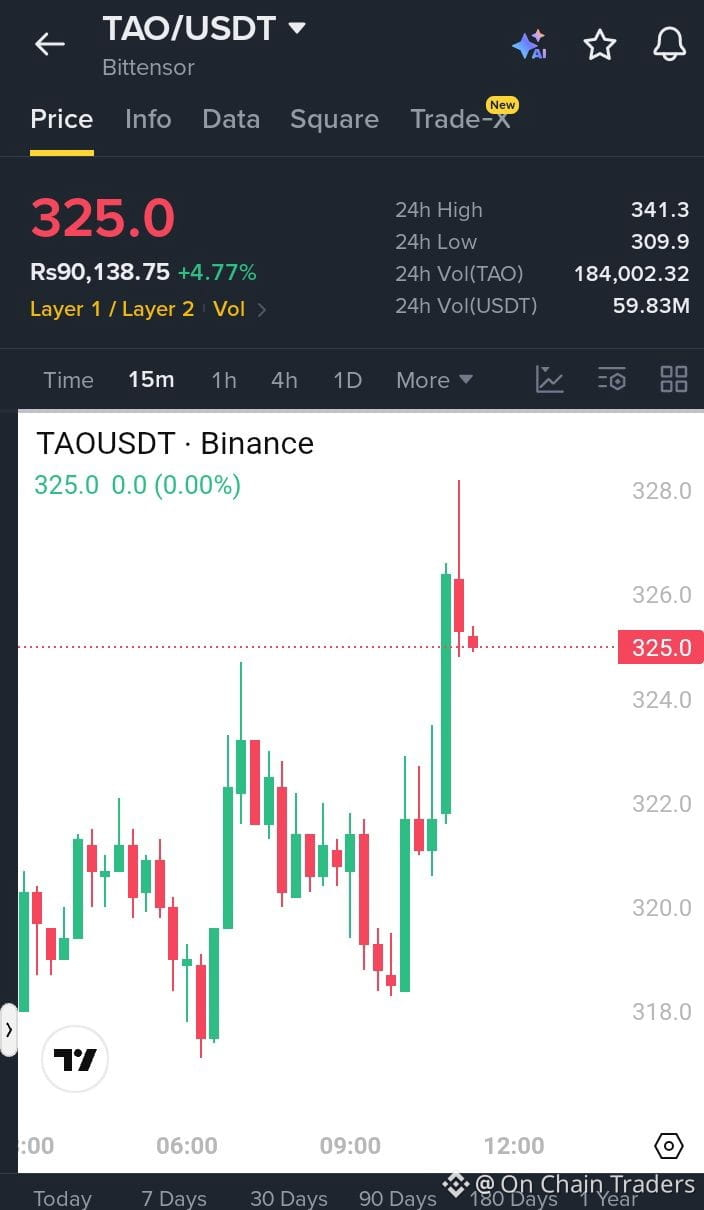
$TAO O is holding the $320 support zone, forming a bullish consolidation after the recent push.
Entry: $320–$325
TP1: $332 | TP2: $341 | TP3: $355
SL: $312
Bullish above $320; a breakout above $341 could trigger the next upside move.
#tobechukwu
{future}(TAOUSDT)
#Crypto_Jobs🎯 r #BinanceSquareFamily #BinanceSquareFamily
$TAO O is holding the $320 support zone, forming a bullish consolidation after the recent push.
Entry: $320–$325
TP1: $332 | TP2: $341 | TP3: $355
SL: $312
Bullish above $320; a breakout above $341 could trigger the next upside move.
#tobechukwu
#Crypto_Jobs🎯 r #BinanceSquareFamily #BinanceSquareFamily
Entry: $320–$325
TP1: $332 | TP2: $341 | TP3: $355
SL: $312
Bullish above $320; a breakout above $341 could trigger the next upside move.
#tobechukwu
#Crypto_Jobs🎯 r #BinanceSquareFamily #BinanceSquareFamily
23

·
--
Haussier
🚨 BINANCE CRYPTO ALERT 🚨
⚠️ BINANCE HAS ISSUED A MAJOR COMPLIANCE UPDATE
Several crypto platforms are now restricted from transacting with Binance following recent regulatory developments.
🔥 AFFECTED PLATFORMS INCLUDE
HTX
EXMO
Rapira
Exnode
BitPapa
Shelbit
Tradex
WhiteBird
Aifory Pro
And several others
💰 COINS TO WATCH
₿ BTC$
🟡 BNB
♦️ ETH
💵 USDT
💎 XRP
🔵 SOL
🟣 TON
🟢 DOGE
{spot}(BTCUSDT)
⚠️ Binance warns that transactions involving the restricted platforms may be held for compliance review and affected wallets could face restrictions.
🔐 STAY ALERT
🛡️ PROTECT YOUR WALLET
📲 VERIFY BEFORE YOU TRANSFER
🔥 Crypto moves fast. Smart users stay informed.
#binanc $AAPLB #BTC #BNB #ETH #tobechukwu
{spot}(ETHUSDT)
🚨 BINANCE CRYPTO ALERT 🚨
⚠️ BINANCE HAS ISSUED A MAJOR COMPLIANCE UPDATE
Several crypto platforms are now restricted from transacting with Binance following recent regulatory developments.
🔥 AFFECTED PLATFORMS INCLUDE
HTX
EXMO
Rapira
Exnode
BitPapa
Shelbit
Tradex
WhiteBird
Aifory Pro
And several others
💰 COINS TO WATCH
₿ BTC$
🟡 BNB
♦️ ETH
💵 USDT
💎 XRP
🔵 SOL
🟣 TON
🟢 DOGE
⚠️ Binance warns that transactions involving the restricted platforms may be held for compliance review and affected wallets could face restrictions.
🔐 STAY ALERT
🛡️ PROTECT YOUR WALLET
📲 VERIFY BEFORE YOU TRANSFER
🔥 Crypto moves fast. Smart users stay informed.
#binanc $AAPLB #BTC #BNB #ETH #tobechukwu
⚠️ BINANCE HAS ISSUED A MAJOR COMPLIANCE UPDATE
Several crypto platforms are now restricted from transacting with Binance following recent regulatory developments.
🔥 AFFECTED PLATFORMS INCLUDE
HTX
EXMO
Rapira
Exnode
BitPapa
Shelbit
Tradex
WhiteBird
Aifory Pro
And several others
💰 COINS TO WATCH
₿ BTC$
🟡 BNB
♦️ ETH
💵 USDT
💎 XRP
🔵 SOL
🟣 TON
🟢 DOGE
⚠️ Binance warns that transactions involving the restricted platforms may be held for compliance review and affected wallets could face restrictions.
🔐 STAY ALERT
🛡️ PROTECT YOUR WALLET
📲 VERIFY BEFORE YOU TRANSFER
🔥 Crypto moves fast. Smart users stay informed.
#binanc $AAPLB #BTC #BNB #ETH #tobechukwu


75

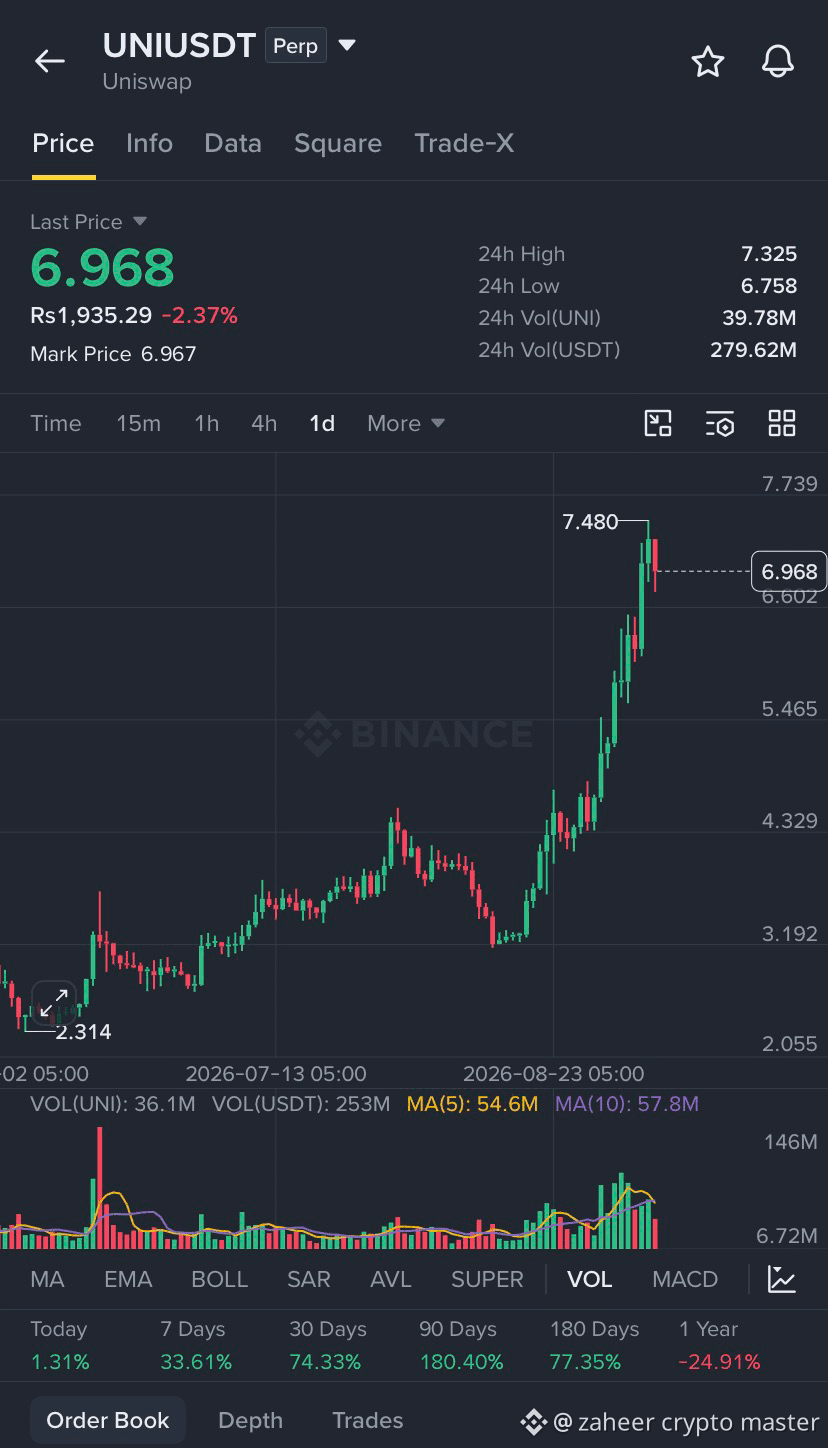

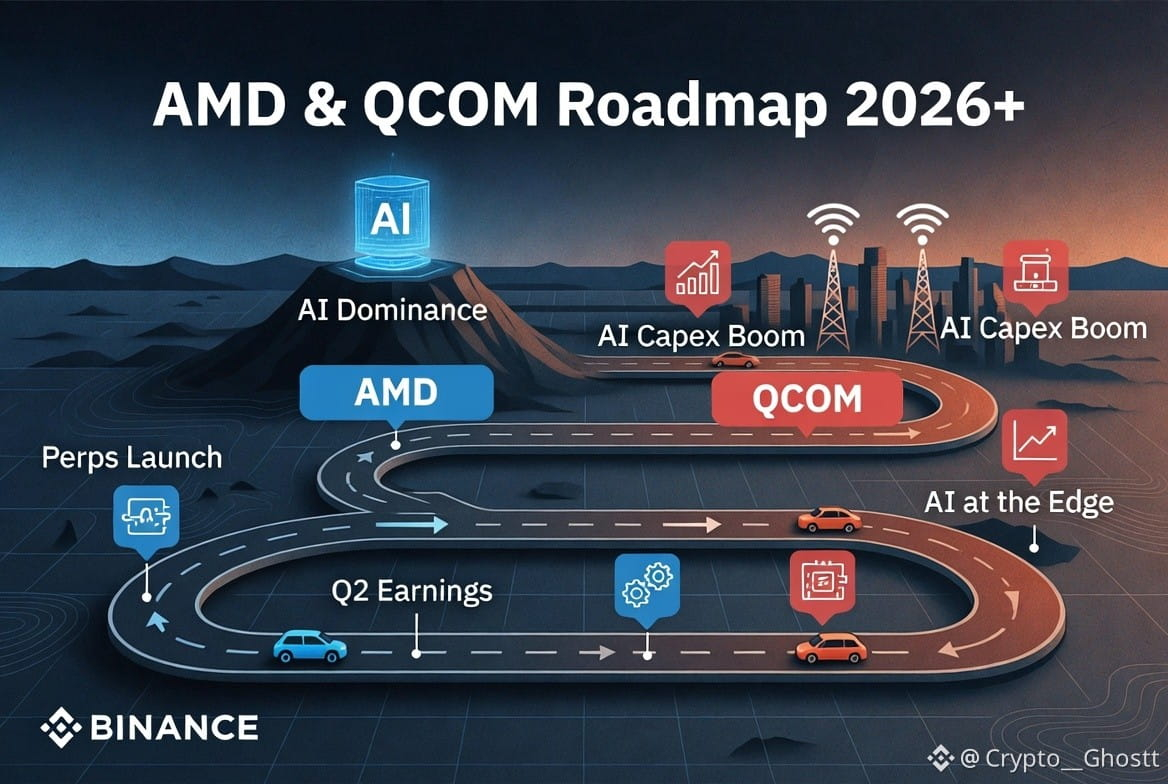
Binance now offers USDT perpetual futures on both $AMD and $QCOM 10x #leaverage , increasing crypto trader access and volatility.
AMD: Stronger outlook. AI/data center boom continues with solid growth. High-beta favorite for leveraged crypto flows.
QCOM: Steady play on #5G autos & edge AI. Less explosive than AMD but more diversified.
Verdict: AMD has better upside momentum; both will see amplified swings due to Binance perps. Watch AI spending and macro.#tobechukwu #altcycle #USPPISurge
{future}(AMDUSDT)
{future}(QCOMUSDT)
Binance now offers USDT perpetual futures on both $AMD and $QCOM 10x #leaverage , increasing crypto trader access and volatility.
AMD: Stronger outlook. AI/data center boom continues with solid growth. High-beta favorite for leveraged crypto flows.
QCOM: Steady play on #5G autos & edge AI. Less explosive than AMD but more diversified.
Verdict: AMD has better upside momentum; both will see amplified swings due to Binance perps. Watch AI spending and macro.#tobechukwu #altcycle #USPPISurge
AMD: Stronger outlook. AI/data center boom continues with solid growth. High-beta favorite for leveraged crypto flows.
QCOM: Steady play on #5G autos & edge AI. Less explosive than AMD but more diversified.
Verdict: AMD has better upside momentum; both will see amplified swings due to Binance perps. Watch AI spending and macro.#tobechukwu #altcycle #USPPISurge
1
315

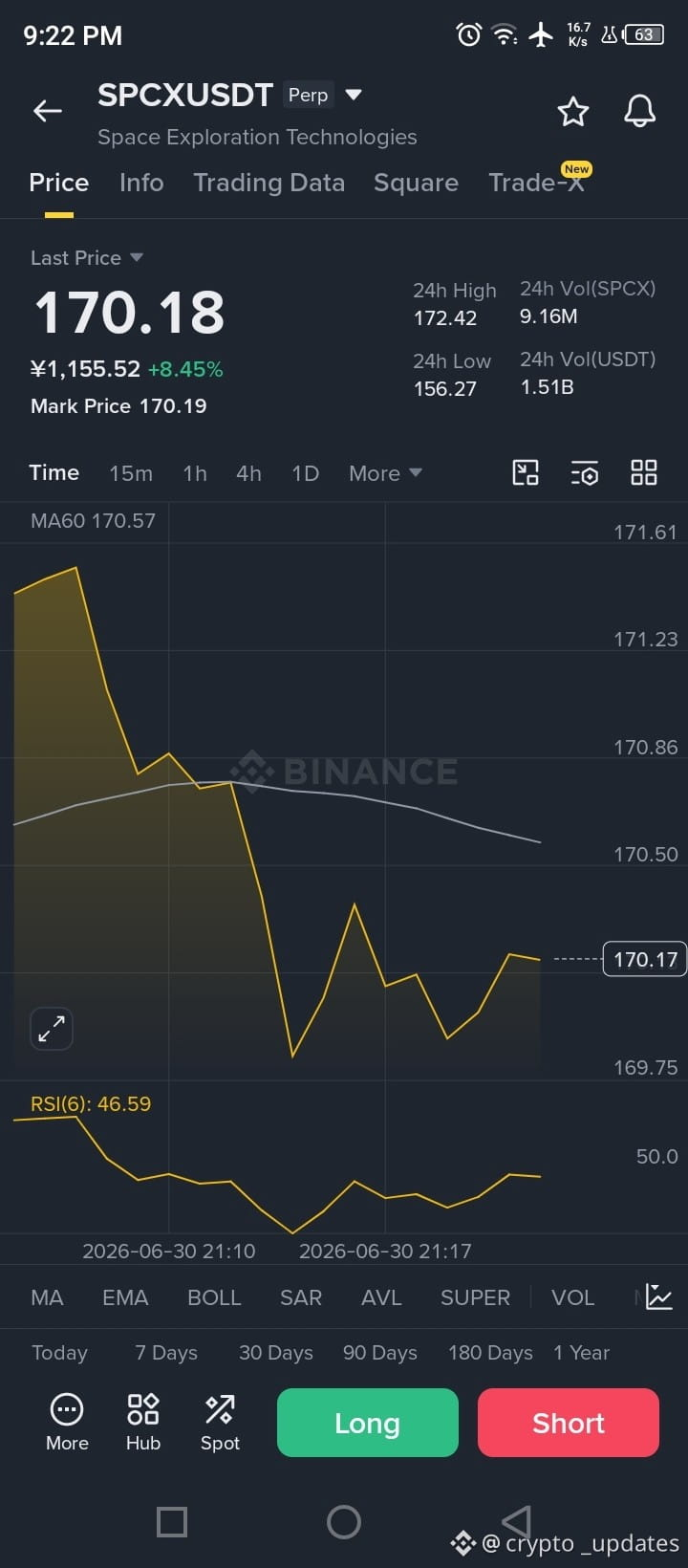
🐉 $SPCX quietly climbing. 🎯 Levels at 182 ➜ 193 ➜ 220 🚀
#SamsungSKHynixSharesRiseYTD #DowHitsRecordClose AzerbaijanDraftsVirtualAssetBillRequiringCentralBankLicenseAAVERises13.16%To$94.32AAVERises13.16%To$94.32#YenHitsFourDecadeLowVsDollar #GoldHoldsDecline SupremeCourtRulesPresidentsCanFireSECCFTCCommissioners#tobechukwu
🐉 $SPCX quietly climbing. 🎯 Levels at 182 ➜ 193 ➜ 220 🚀
#SamsungSKHynixSharesRiseYTD #DowHitsRecordClose AzerbaijanDraftsVirtualAssetBillRequiringCentralBankLicenseAAVERises13.16%To$94.32AAVERises13.16%To$94.32#YenHitsFourDecadeLowVsDollar #GoldHoldsDecline SupremeCourtRulesPresidentsCanFireSECCFTCCommissioners#tobechukwu
#SamsungSKHynixSharesRiseYTD #DowHitsRecordClose AzerbaijanDraftsVirtualAssetBillRequiringCentralBankLicenseAAVERises13.16%To$94.32AAVERises13.16%To$94.32#YenHitsFourDecadeLowVsDollar #GoldHoldsDecline SupremeCourtRulesPresidentsCanFireSECCFTCCommissioners#tobechukwu
147

Article
Influencer Pepe Presale is Live: Experts Predict 100X Meme Coin Growth by 2025Experts are already calling it: this could be a 100X meme coin by the end of 2025, and the clock’s ticking as prices climb through 60 stages. This isn’t just another flash-in-the-pan token — it’s the first cryptocurrency built for payments in the influencer economy, a $25 billion juggernaut in 2025 that is set to soar to $48 billion by 2027.
The Influencer Pepe presale is your golden window to get in before this frog leaps to the moon — don’t let it pass you by
Let’s talk numbers: INPEPE boasts a 380 trillion token supply, with 104.5 trillion (27.5%) up for grabs in the presale at $0.0000001781 — meaning a $100 buy snags you 561 million tokens today.
A 100X jump to $0.00001781 by the end of 2025 pushes the market cap to $6.77 billion — a colossal leap that experts say is within reach. Why? The influencer economy’s the rocket fuel: $25 billion now grows to $48 billion by 2027, and INPEPE’s the first payment method for X tips, TikTok merchandise sales, Instagram brand collaborations and so much more.
Staking at a whopping 20,617% APY locks up supply, potentially cutting circulation as holders chase massive returns, while 20% (76 trillion INPEPE) is dedicated to marketing — think influencer hype reaching millions.
The high staking APY could slash supply by a third, driving scarcity as demand spikes from influencers and their fans. The presale’s 60 stages mean $0.0000001781 is a disappearing act — by Q3/Q4 2025 launch, this could mirror PEPE’s 2023 frenzy, but with real utility.
Influencers are also pushing the meme coin to millions, and every stage cuts your gains. The widget on the project’s website is your entry — ETH, BNB, USDT, or card, your choice — but time’s running out. Don’t be the one watching this explode from the sidelines — hit it now and secure your stake in the next 100X meme coin. INPEPE’s the influencer economy’s fue l— grab it before the presale stages price you out
#tobechukwu
#haroonahmadofficial
#DelistingAlert
#Crypto_Jobs🎯
#ETHETFsApproved
Influencer Pepe Presale is Live: Experts Predict 100X Meme Coin Growth by 2025
Experts are already calling it: this could be a 100X meme coin by the end of 2025, and the clock’s ticking as prices climb through 60 stages. This isn’t just another flash-in-the-pan token — it’s the first cryptocurrency built for payments in the influencer economy, a $25 billion juggernaut in 2025 that is set to soar to $48 billion by 2027.
The Influencer Pepe presale is your golden window to get in before this frog leaps to the moon — don’t let it pass you by
Let’s talk numbers: INPEPE boasts a 380 trillion token supply, with 104.5 trillion (27.5%) up for grabs in the presale at $0.0000001781 — meaning a $100 buy snags you 561 million tokens today.
A 100X jump to $0.00001781 by the end of 2025 pushes the market cap to $6.77 billion — a colossal leap that experts say is within reach. Why? The influencer economy’s the rocket fuel: $25 billion now grows to $48 billion by 2027, and INPEPE’s the first payment method for X tips, TikTok merchandise sales, Instagram brand collaborations and so much more.
Staking at a whopping 20,617% APY locks up supply, potentially cutting circulation as holders chase massive returns, while 20% (76 trillion INPEPE) is dedicated to marketing — think influencer hype reaching millions.
The high staking APY could slash supply by a third, driving scarcity as demand spikes from influencers and their fans. The presale’s 60 stages mean $0.0000001781 is a disappearing act — by Q3/Q4 2025 launch, this could mirror PEPE’s 2023 frenzy, but with real utility.
Influencers are also pushing the meme coin to millions, and every stage cuts your gains. The widget on the project’s website is your entry — ETH, BNB, USDT, or card, your choice — but time’s running out. Don’t be the one watching this explode from the sidelines — hit it now and secure your stake in the next 100X meme coin. INPEPE’s the influencer economy’s fue l— grab it before the presale stages price you out
#tobechukwu
#haroonahmadofficial
#DelistingAlert
#Crypto_Jobs🎯
#ETHETFsApproved
The Influencer Pepe presale is your golden window to get in before this frog leaps to the moon — don’t let it pass you by
Let’s talk numbers: INPEPE boasts a 380 trillion token supply, with 104.5 trillion (27.5%) up for grabs in the presale at $0.0000001781 — meaning a $100 buy snags you 561 million tokens today.
A 100X jump to $0.00001781 by the end of 2025 pushes the market cap to $6.77 billion — a colossal leap that experts say is within reach. Why? The influencer economy’s the rocket fuel: $25 billion now grows to $48 billion by 2027, and INPEPE’s the first payment method for X tips, TikTok merchandise sales, Instagram brand collaborations and so much more.
Staking at a whopping 20,617% APY locks up supply, potentially cutting circulation as holders chase massive returns, while 20% (76 trillion INPEPE) is dedicated to marketing — think influencer hype reaching millions.
The high staking APY could slash supply by a third, driving scarcity as demand spikes from influencers and their fans. The presale’s 60 stages mean $0.0000001781 is a disappearing act — by Q3/Q4 2025 launch, this could mirror PEPE’s 2023 frenzy, but with real utility.
Influencers are also pushing the meme coin to millions, and every stage cuts your gains. The widget on the project’s website is your entry — ETH, BNB, USDT, or card, your choice — but time’s running out. Don’t be the one watching this explode from the sidelines — hit it now and secure your stake in the next 100X meme coin. INPEPE’s the influencer economy’s fue l— grab it before the presale stages price you out
#tobechukwu
#haroonahmadofficial
#DelistingAlert
#Crypto_Jobs🎯
#ETHETFsApproved
42

·
--
$TST
{future}(TSTUSDT)
Tut USDT is trading around 0.01563 USDT on Binance spot right now.
Over the last 24 hours, it moved up from 0.01396 to 0.01563, a gain of about 11.96%.
The session high reached 0.02063 USDT, while the low was 0.01390 USDT.
That range shows strong intraday volatility and active short-term speculation.
Trading volume is very heavy at about 1.21 billion TST, with roughly 20.50 million USDT in turnover.
This kind of volume suggests the token is getting serious trader attention in the current session.
TST is tagged as Meme, Seed, and BSC, so momentum can be fast but reversals can also be sharp.
From a market structure view, buyers have defended the low zone and pushed price back above the open.
As long as volume stays elevated, TST may continue to attract short-term momentum traders.
Still, meme-style tokens are highly sentiment-driven, so price can swing quickly in either direction.
The key theme right now is rising activity, strong liquidity, and high-risk/high-volatility trading behavior.
Overall, TST is one of those coins where opportunity and risk are both unusually high at the same time.
#TST #tobechukwu #tstprediction #TST&CheemsOnBinance #tstanalaysis🔥🔥🔥🔥
$TST
Tut USDT is trading around 0.01563 USDT on Binance spot right now.
Over the last 24 hours, it moved up from 0.01396 to 0.01563, a gain of about 11.96%.
The session high reached 0.02063 USDT, while the low was 0.01390 USDT.
That range shows strong intraday volatility and active short-term speculation.
Trading volume is very heavy at about 1.21 billion TST, with roughly 20.50 million USDT in turnover.
This kind of volume suggests the token is getting serious trader attention in the current session.
TST is tagged as Meme, Seed, and BSC, so momentum can be fast but reversals can also be sharp.
From a market structure view, buyers have defended the low zone and pushed price back above the open.
As long as volume stays elevated, TST may continue to attract short-term momentum traders.
Still, meme-style tokens are highly sentiment-driven, so price can swing quickly in either direction.
The key theme right now is rising activity, strong liquidity, and high-risk/high-volatility trading behavior.
Overall, TST is one of those coins where opportunity and risk are both unusually high at the same time.
#TST #tobechukwu #tstprediction #TST&CheemsOnBinance #tstanalaysis🔥🔥🔥🔥
Tut USDT is trading around 0.01563 USDT on Binance spot right now.
Over the last 24 hours, it moved up from 0.01396 to 0.01563, a gain of about 11.96%.
The session high reached 0.02063 USDT, while the low was 0.01390 USDT.
That range shows strong intraday volatility and active short-term speculation.
Trading volume is very heavy at about 1.21 billion TST, with roughly 20.50 million USDT in turnover.
This kind of volume suggests the token is getting serious trader attention in the current session.
TST is tagged as Meme, Seed, and BSC, so momentum can be fast but reversals can also be sharp.
From a market structure view, buyers have defended the low zone and pushed price back above the open.
As long as volume stays elevated, TST may continue to attract short-term momentum traders.
Still, meme-style tokens are highly sentiment-driven, so price can swing quickly in either direction.
The key theme right now is rising activity, strong liquidity, and high-risk/high-volatility trading behavior.
Overall, TST is one of those coins where opportunity and risk are both unusually high at the same time.
#TST #tobechukwu #tstprediction #TST&CheemsOnBinance #tstanalaysis🔥🔥🔥🔥

227

·
--
$GENIUS is moving strongly at $0.3661. Support: $0.345 | Resistance: $0.385 | Target 🎯: $0.410–$0.430. Next move: Bulls need to clear $0.385 for continuation. Pro tip: Don’t chase; a retest of support can offer a cleaner setup. 🔥
$GENIUS
{spot}(GENIUSUSDT)
#tobechukwu #YapayzekaAI #Uniswp
$GENIUS is moving strongly at $0.3661. Support: $0.345 | Resistance: $0.385 | Target 🎯: $0.410–$0.430. Next move: Bulls need to clear $0.385 for continuation. Pro tip: Don’t chase; a retest of support can offer a cleaner setup. 🔥
$GENIUS
#tobechukwu #YapayzekaAI #Uniswp
$GENIUS
#tobechukwu #YapayzekaAI #Uniswp
62

Article
Could Grand Theft VI be the first ‘crypto native’ video game in history? The internet weighs inGrand Theft Auto VI is already set up to be the cultural release of 2026; whether it becomes the first truly “crypto native” blockbuster game is still mostly a Rorschach test for the internet’s hopes and delusions.
Rockstar Games has locked in November 19, 2026 as the release date for Grand Theft Auto VI on PlayStation 5 and Xbox Series X/S, igniting the usual cycle of map speculation, leak hunting and economic hype around what is likely to be the biggest entertainment launch of the decade. A growing subculture inside crypto Twitter and Web3 gaming circles has layered a new fantasy on top of that: the idea that GTA VI will be the first truly “crypto native” AAA title, with real cryptocurrency integration, on-chain assets, player-owned NFTs and maybe even play-to-earn mechanics that convert crime sprees into off-chain money.
Rumors around this premise have been circulating since at least 2021, when gaming journalist Tom Henderson floated the idea that GTA VI might feature some form of in-game cryptocurrency, a line that has since been recycled endlessly by token promoters and YouTube hype channels. More recent commentary imagines GTA VI integrating a token like Notcoin (NOT) from the TON ecosystem, with one speculative scenario sketching out players completing missions to earn NOT, trading it for in-game resources, and ultimately cashing out into real-world currency, effectively turning the game into a mass-market bridge between a blockbuster franchise and an existing crypto economy. Others fantasize about native NFTs for cars, real estate and weapons, decentralized dark markets and in-character wallets on the protagonist’s phone.
This is where reality crashes back in. Rockstar has never confirmed any crypto integration for GTA VI; in fact, its track record points in the opposite direction. In 2022, the company moved to explicitly ban cryptocurrencies and NFTs from community-run GTA V role-play servers, updating its terms to state that “the use of cryptocurrencies or crypto assets (e.g. NFTs)” in monetized servers was not allowed, and that any server generating revenue through crypto sponsorships or in-game integrations would be shut down. Analysts tracking Rockstar’s legal enforcement have repeatedly noted that the company, and parent Take-Two Interactive, want to own and control every monetization vector tied to Grand Theft Auto’s worlds.
Even more sober crypto media have poured cold water on the idea that GTA VI will suddenly flip into a permissionless Web3 lab. A 2025 analysis from Bitstore, for example, walked through the rumors and concluded that while “players dream of making money in GTA 6,” there is “no evidence” that Rockstar intends to add real crypto payouts or play-to-earn structures, and that the more plausible outcome is an in-game “digital currency” and satirical references that lampoon the space rather than hand it the keys to the franchise.
Could that change over the life of the title? In theory, yes: a future patch or spinoff mode could integrate regulated stablecoins or tokenized assets behind heavy KYC, mirroring the way mainstream finance is experimenting with tokenization under laws like the GENIUS Act. But that would be a late-stage convergence of two very conservative institutions: a risk-averse AAA publisher and a tightly supervised digital-asset regime. The internet’s vision of GTA VI as the first fully “crypto native” blockbuster, with player-owned NFTs, permissionless markets and real-money P2E, is, for now, mostly a projection of Web3’s own unmet desires onto a game whose creators have repeatedly signaled they want control, not decentralization.
#Write2Earn
#Robertkiyosaki
#EconomicAlert
#tobechukwu
#YapayzekaAI
Could Grand Theft VI be the first ‘crypto native’ video game in history? The internet weighs in
Grand Theft Auto VI is already set up to be the cultural release of 2026; whether it becomes the first truly “crypto native” blockbuster game is still mostly a Rorschach test for the internet’s hopes and delusions.
Rockstar Games has locked in November 19, 2026 as the release date for Grand Theft Auto VI on PlayStation 5 and Xbox Series X/S, igniting the usual cycle of map speculation, leak hunting and economic hype around what is likely to be the biggest entertainment launch of the decade. A growing subculture inside crypto Twitter and Web3 gaming circles has layered a new fantasy on top of that: the idea that GTA VI will be the first truly “crypto native” AAA title, with real cryptocurrency integration, on-chain assets, player-owned NFTs and maybe even play-to-earn mechanics that convert crime sprees into off-chain money.
Rumors around this premise have been circulating since at least 2021, when gaming journalist Tom Henderson floated the idea that GTA VI might feature some form of in-game cryptocurrency, a line that has since been recycled endlessly by token promoters and YouTube hype channels. More recent commentary imagines GTA VI integrating a token like Notcoin (NOT) from the TON ecosystem, with one speculative scenario sketching out players completing missions to earn NOT, trading it for in-game resources, and ultimately cashing out into real-world currency, effectively turning the game into a mass-market bridge between a blockbuster franchise and an existing crypto economy. Others fantasize about native NFTs for cars, real estate and weapons, decentralized dark markets and in-character wallets on the protagonist’s phone.
This is where reality crashes back in. Rockstar has never confirmed any crypto integration for GTA VI; in fact, its track record points in the opposite direction. In 2022, the company moved to explicitly ban cryptocurrencies and NFTs from community-run GTA V role-play servers, updating its terms to state that “the use of cryptocurrencies or crypto assets (e.g. NFTs)” in monetized servers was not allowed, and that any server generating revenue through crypto sponsorships or in-game integrations would be shut down. Analysts tracking Rockstar’s legal enforcement have repeatedly noted that the company, and parent Take-Two Interactive, want to own and control every monetization vector tied to Grand Theft Auto’s worlds.
Even more sober crypto media have poured cold water on the idea that GTA VI will suddenly flip into a permissionless Web3 lab. A 2025 analysis from Bitstore, for example, walked through the rumors and concluded that while “players dream of making money in GTA 6,” there is “no evidence” that Rockstar intends to add real crypto payouts or play-to-earn structures, and that the more plausible outcome is an in-game “digital currency” and satirical references that lampoon the space rather than hand it the keys to the franchise.
Could that change over the life of the title? In theory, yes: a future patch or spinoff mode could integrate regulated stablecoins or tokenized assets behind heavy KYC, mirroring the way mainstream finance is experimenting with tokenization under laws like the GENIUS Act. But that would be a late-stage convergence of two very conservative institutions: a risk-averse AAA publisher and a tightly supervised digital-asset regime. The internet’s vision of GTA VI as the first fully “crypto native” blockbuster, with player-owned NFTs, permissionless markets and real-money P2E, is, for now, mostly a projection of Web3’s own unmet desires onto a game whose creators have repeatedly signaled they want control, not decentralization.
#Write2Earn
#Robertkiyosaki
#EconomicAlert
#tobechukwu
#YapayzekaAI
Rockstar Games has locked in November 19, 2026 as the release date for Grand Theft Auto VI on PlayStation 5 and Xbox Series X/S, igniting the usual cycle of map speculation, leak hunting and economic hype around what is likely to be the biggest entertainment launch of the decade. A growing subculture inside crypto Twitter and Web3 gaming circles has layered a new fantasy on top of that: the idea that GTA VI will be the first truly “crypto native” AAA title, with real cryptocurrency integration, on-chain assets, player-owned NFTs and maybe even play-to-earn mechanics that convert crime sprees into off-chain money.
Rumors around this premise have been circulating since at least 2021, when gaming journalist Tom Henderson floated the idea that GTA VI might feature some form of in-game cryptocurrency, a line that has since been recycled endlessly by token promoters and YouTube hype channels. More recent commentary imagines GTA VI integrating a token like Notcoin (NOT) from the TON ecosystem, with one speculative scenario sketching out players completing missions to earn NOT, trading it for in-game resources, and ultimately cashing out into real-world currency, effectively turning the game into a mass-market bridge between a blockbuster franchise and an existing crypto economy. Others fantasize about native NFTs for cars, real estate and weapons, decentralized dark markets and in-character wallets on the protagonist’s phone.
This is where reality crashes back in. Rockstar has never confirmed any crypto integration for GTA VI; in fact, its track record points in the opposite direction. In 2022, the company moved to explicitly ban cryptocurrencies and NFTs from community-run GTA V role-play servers, updating its terms to state that “the use of cryptocurrencies or crypto assets (e.g. NFTs)” in monetized servers was not allowed, and that any server generating revenue through crypto sponsorships or in-game integrations would be shut down. Analysts tracking Rockstar’s legal enforcement have repeatedly noted that the company, and parent Take-Two Interactive, want to own and control every monetization vector tied to Grand Theft Auto’s worlds.
Even more sober crypto media have poured cold water on the idea that GTA VI will suddenly flip into a permissionless Web3 lab. A 2025 analysis from Bitstore, for example, walked through the rumors and concluded that while “players dream of making money in GTA 6,” there is “no evidence” that Rockstar intends to add real crypto payouts or play-to-earn structures, and that the more plausible outcome is an in-game “digital currency” and satirical references that lampoon the space rather than hand it the keys to the franchise.
Could that change over the life of the title? In theory, yes: a future patch or spinoff mode could integrate regulated stablecoins or tokenized assets behind heavy KYC, mirroring the way mainstream finance is experimenting with tokenization under laws like the GENIUS Act. But that would be a late-stage convergence of two very conservative institutions: a risk-averse AAA publisher and a tightly supervised digital-asset regime. The internet’s vision of GTA VI as the first fully “crypto native” blockbuster, with player-owned NFTs, permissionless markets and real-money P2E, is, for now, mostly a projection of Web3’s own unmet desires onto a game whose creators have repeatedly signaled they want control, not decentralization.
#Write2Earn
#Robertkiyosaki
#EconomicAlert
#tobechukwu
#YapayzekaAI
165
·
--
Baissier
$XAG Silver is trading below the 7-day, 25-day, and 99-day moving averages, showing that the broader trend remains under pressure. Recent price action suggests buyers are attempting to defend support, but momentum is still weak. A decisive move above nearby resistance is needed to shift sentiment, while losing current support could trigger another leg lower.
Market Sentiment: Bearish 🐻
#XAG # #Silver BinanceSquare #Marketupdates #PreciousMetalsPump n #PriceActionAnalysis #USTreasuryYieldsRetreat %$NVDA.US #tobechukwu
$XAG Silver is trading below the 7-day, 25-day, and 99-day moving averages, showing that the broader trend remains under pressure. Recent price action suggests buyers are attempting to defend support, but momentum is still weak. A decisive move above nearby resistance is needed to shift sentiment, while losing current support could trigger another leg lower.
Market Sentiment: Bearish 🐻
#XAG # #Silver BinanceSquare #Marketupdates #PreciousMetalsPump n #PriceActionAnalysis #USTreasuryYieldsRetreat %$NVDA.US #tobechukwu
Market Sentiment: Bearish 🐻
#XAG # #Silver BinanceSquare #Marketupdates #PreciousMetalsPump n #PriceActionAnalysis #USTreasuryYieldsRetreat %$NVDA.US #tobechukwu
57

CLARITY Act Gains New Urgency as More Than 100 Crypto Organizations Urge Senate ActionThe U.S. digital asset industry is pressing Congress to move faster on crypto market structure legislation as regulatory competition intensifies globally. On April 23, 2026, the Blockchain Association, the Crypto Council for Innovation, and over 90 organizations — with total support exceeding 100 when including Stand With Crypto chapters — urged the Senate Banking Committee to advance a markup of the CLARITY Act, arguing that a federal framework is now essential for market certainty, consumer protections, and long-term U.S. competitiveness.
In a joint letter to Senate Banking Committee leaders, the coalition stated that current momentum in Washington should translate into formal legislative action. The signatories included exchanges, venture firms, infrastructure providers, advocacy groups, and digital asset firms and organizations, including Coinbase, Circle, Kraken, Andreessen Horowitz, Chainalysis, Uniswap Labs, and Ripple.
The letter noted that the committee’s work follows years of bipartisan engagement across congressional offices and federal agencies. It also argued that agency activity alone cannot provide a lasting solution for the sector. The coalition warned against a return to “regulation by enforcement,” which it said created prolonged uncertainty for builders and market participants. It added:
The industry is positioning market structure as a foundational issue rather than a narrow compliance requirement. The letter explains that a comprehensive federal framework would clarify regulatory jurisdiction, introduce disclosure standards tailored to digital assets, and establish consistent rules across all 50 states. It also outlines key priorities, including maintaining consumer rewards linked to payment stablecoins, enabling oversight by the U.S. Securities and Exchange Commission (SEC) and Commodity Futures Trading Commission (CFTC) for tokenized financial instruments, safeguarding decentralized technology developers and service providers, and enhancing disclosure and token certification processes.
For crypto firms, investors, and developers, those issues affect where products launch, how businesses scale, and whether capital remains in the U.S. or moves offshore. For policymakers, the stakes include jobs, innovation, and the country’s strategic position in digital finance.
The broader argument in the letter is that the U.S. can still set the global standard if Congress acts while bipartisan engagement remains active. The coalition said the country’s leadership in financial markets has historically depended on clear rules, strong institutions, and openness to innovation. It used that point to position market structure legislation as a decision with near-term and long-term consequences for the digital asset economy. The letter concluded:
That outlook gives the issue relevance beyond the crypto sector, because the Senate’s next move could influence how digital assets are regulated, developed, and integrated into U.S. financial markets.
#Notcoin
#haroonahmadofficial
#tobechukwu
#xmucan
#FactCheck
CLARITY Act Gains New Urgency as More Than 100 Crypto Organizations Urge Senate Action
The U.S. digital asset industry is pressing Congress to move faster on crypto market structure legislation as regulatory competition intensifies globally. On April 23, 2026, the Blockchain Association, the Crypto Council for Innovation, and over 90 organizations — with total support exceeding 100 when including Stand With Crypto chapters — urged the Senate Banking Committee to advance a markup of the CLARITY Act, arguing that a federal framework is now essential for market certainty, consumer protections, and long-term U.S. competitiveness.
In a joint letter to Senate Banking Committee leaders, the coalition stated that current momentum in Washington should translate into formal legislative action. The signatories included exchanges, venture firms, infrastructure providers, advocacy groups, and digital asset firms and organizations, including Coinbase, Circle, Kraken, Andreessen Horowitz, Chainalysis, Uniswap Labs, and Ripple.
The letter noted that the committee’s work follows years of bipartisan engagement across congressional offices and federal agencies. It also argued that agency activity alone cannot provide a lasting solution for the sector. The coalition warned against a return to “regulation by enforcement,” which it said created prolonged uncertainty for builders and market participants. It added:
The industry is positioning market structure as a foundational issue rather than a narrow compliance requirement. The letter explains that a comprehensive federal framework would clarify regulatory jurisdiction, introduce disclosure standards tailored to digital assets, and establish consistent rules across all 50 states. It also outlines key priorities, including maintaining consumer rewards linked to payment stablecoins, enabling oversight by the U.S. Securities and Exchange Commission (SEC) and Commodity Futures Trading Commission (CFTC) for tokenized financial instruments, safeguarding decentralized technology developers and service providers, and enhancing disclosure and token certification processes.
For crypto firms, investors, and developers, those issues affect where products launch, how businesses scale, and whether capital remains in the U.S. or moves offshore. For policymakers, the stakes include jobs, innovation, and the country’s strategic position in digital finance.
The broader argument in the letter is that the U.S. can still set the global standard if Congress acts while bipartisan engagement remains active. The coalition said the country’s leadership in financial markets has historically depended on clear rules, strong institutions, and openness to innovation. It used that point to position market structure legislation as a decision with near-term and long-term consequences for the digital asset economy. The letter concluded:
That outlook gives the issue relevance beyond the crypto sector, because the Senate’s next move could influence how digital assets are regulated, developed, and integrated into U.S. financial markets.
#Notcoin
#haroonahmadofficial
#tobechukwu
#xmucan
#FactCheck
In a joint letter to Senate Banking Committee leaders, the coalition stated that current momentum in Washington should translate into formal legislative action. The signatories included exchanges, venture firms, infrastructure providers, advocacy groups, and digital asset firms and organizations, including Coinbase, Circle, Kraken, Andreessen Horowitz, Chainalysis, Uniswap Labs, and Ripple.
The letter noted that the committee’s work follows years of bipartisan engagement across congressional offices and federal agencies. It also argued that agency activity alone cannot provide a lasting solution for the sector. The coalition warned against a return to “regulation by enforcement,” which it said created prolonged uncertainty for builders and market participants. It added:
The industry is positioning market structure as a foundational issue rather than a narrow compliance requirement. The letter explains that a comprehensive federal framework would clarify regulatory jurisdiction, introduce disclosure standards tailored to digital assets, and establish consistent rules across all 50 states. It also outlines key priorities, including maintaining consumer rewards linked to payment stablecoins, enabling oversight by the U.S. Securities and Exchange Commission (SEC) and Commodity Futures Trading Commission (CFTC) for tokenized financial instruments, safeguarding decentralized technology developers and service providers, and enhancing disclosure and token certification processes.
For crypto firms, investors, and developers, those issues affect where products launch, how businesses scale, and whether capital remains in the U.S. or moves offshore. For policymakers, the stakes include jobs, innovation, and the country’s strategic position in digital finance.
The broader argument in the letter is that the U.S. can still set the global standard if Congress acts while bipartisan engagement remains active. The coalition said the country’s leadership in financial markets has historically depended on clear rules, strong institutions, and openness to innovation. It used that point to position market structure legislation as a decision with near-term and long-term consequences for the digital asset economy. The letter concluded:
That outlook gives the issue relevance beyond the crypto sector, because the Senate’s next move could influence how digital assets are regulated, developed, and integrated into U.S. financial markets.
#Notcoin
#haroonahmadofficial
#tobechukwu
#xmucan
#FactCheck
1
102

·
--
Haussier
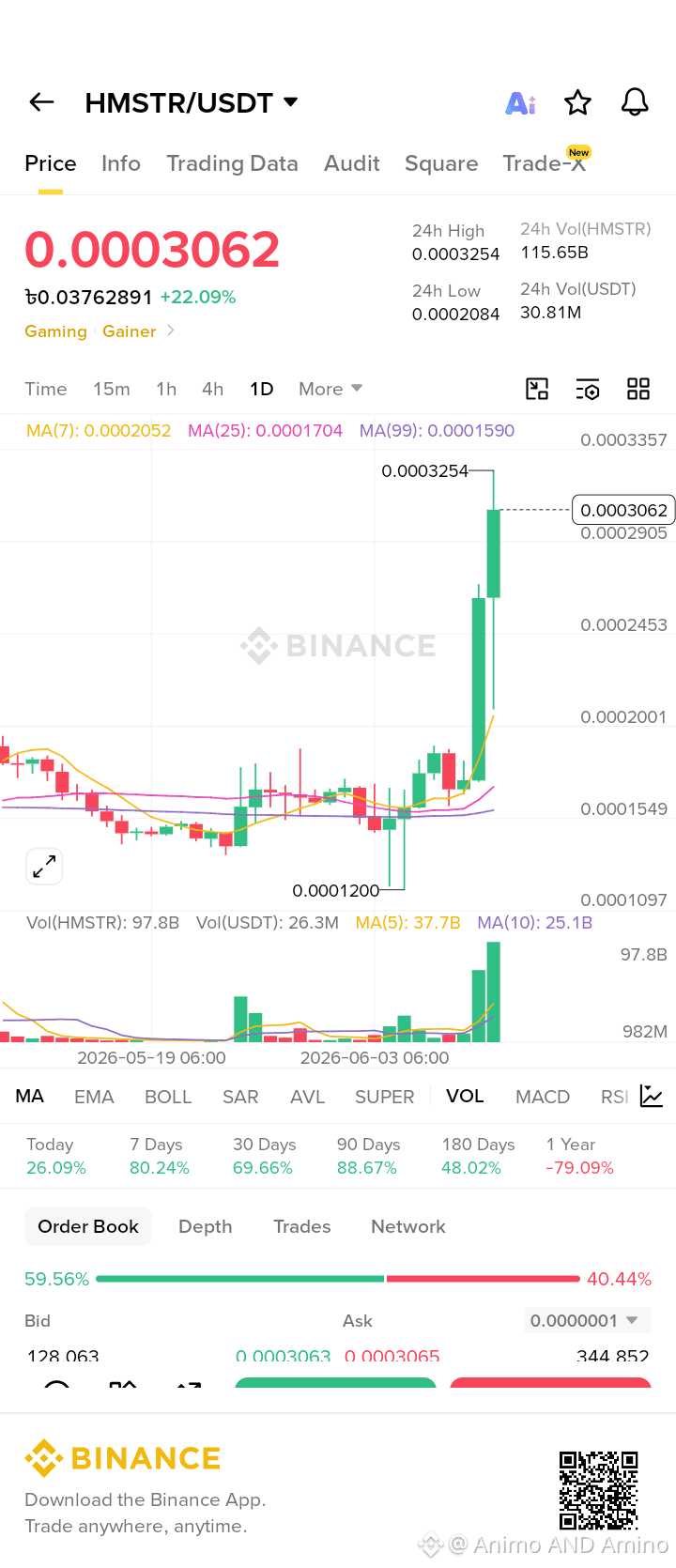
Telling people a hyper-inflationary tap-to-earn token is going to hit $1 or $10 is basic math ignorance. It will never turn $10 into $1,000; it will only turn your hard-earned cash into pennies for the airdrop dumpers. $HMSTR $TON $NOT #TON #TrendingTopic #tobechukwu #hmster #NOT
{spot}(HMSTRUSDT)
Telling people a hyper-inflationary tap-to-earn token is going to hit $1 or $10 is basic math ignorance. It will never turn $10 into $1,000; it will only turn your hard-earned cash into pennies for the airdrop dumpers. $HMSTR $TON $NOT #TON #TrendingTopic #tobechukwu #hmster #NOT
223
Gold News: Gold Price Future Clouded by Oil Spike and Rate OutlookGold price slips for first weekly loss in five as oil surge lifts inflation fears. Rising yields and stronger dollar pressure the gold market outlook.
Spot Gold (XAUUSD) is holding on Friday after buyers stepped in to defend $4644.46 but this isn’t a recovery. It’s a pause. The same forces that pressured gold all week are still in place and the charts aren’t giving bulls much to work with. Keep reading for the levels and what needs to change to shift the bias.
Nearby resistance is the 50-day moving average at $4870.42. After a successful test of it on April 17, the market has produced a series of lower-highs and lower-lows, indicating the presence of sellers and the lack of buying interest.
At 12:32 GMT, XAUUSD is trading $4707.52, up $13.43 or +0.29%.
Our key value area is $4495.33 to $4401.84. This is where I think gold is going. Last week, it gave traders a chance to buy strength and play for a breakout over the 50-day moving average. When this move failed to materialize, bids got pulled and sellers took over.
The market is also trading on the weak side of a long-term pivot at $4744.34. If the selling pressure persists and $4644.46 is taken out then look for the move to possibly extend into the long-term 61.8% level at $4541.88.
Spot Brent Crude Oil jumped roughly 18% this week and held above $105 a barrel. That move is tied directly to the Strait of Hormuz situation and it’s creating a ceiling on Spot Gold (XAUUSD) that most people aren’t talking about clearly enough. Here’s the problem. Higher oil means higher inflation. Higher inflation means the Fed holds rates longer. The Fed holding rates longer keeps the dollar firm and pulls capital toward yield bearing assets. Gold sits in the middle of that chain and gets squeezed from both ends
Over the near-term I believe traders will be offered the opportunity to buy again, but this time in the value zone at $4495.33 to $4401.84. With the trend up according to the 200-day moving average at $4245.95, traders will see value using the 200-day moving average as their lean. Simply put, I’m looking for a clear buy the dip opportunity.
Last week gold had a shot at the 50-day moving average and couldn’t take it out. That’s the tell. When a market gets a clean look at resistance and stalls, bids get pulled and sellers move in. That’s exactly what happened and now gold is on track for its first weekly loss after four straight weeks of gains. The momentum shifted when that breakout failed and it hasn’t come back.
Gold is supposed to be the inflation hedge but that only works when rates are falling or expected to fall. Right now rates are going nowhere and oil above $100 is the reason why. The 10-Year U.S. Treasury yield is climbing and the U.S. Dollar Index is firming. Those two things together are enough to cap any rally in Spot Gold (XAUUSD) regardless of what the geopolitical picture looks like.
Physical demand out of India and China is picking up and premiums in India are tightening on supply constraints. That’s real demand and it doesn’t disappear because Treasury yields are rising. It provides a floor but right now it isn’t strong enough to override the rate and dollar headwinds hitting gold from the other direction.
I’m not interested in buying Spot Gold (XAUUSD) up here. The value zone at $4495.33 to $4401.84 is where I want to see buyers show up. The 200-day moving average at $4245.95 is the long-term anchor and as long as it holds the trend is up and the buy the dip structure is intact. That’s the trade I’m waiting for. A clean pullback into value with the 200-day MA as the lean and a defined exit if it fails.
#QueencryptoNews
#Write2Earrn
#ETHETFsApproved
#tobechukwu
#Robertkiyosaki
Gold News: Gold Price Future Clouded by Oil Spike and Rate Outlook
Gold price slips for first weekly loss in five as oil surge lifts inflation fears. Rising yields and stronger dollar pressure the gold market outlook.
Spot Gold (XAUUSD) is holding on Friday after buyers stepped in to defend $4644.46 but this isn’t a recovery. It’s a pause. The same forces that pressured gold all week are still in place and the charts aren’t giving bulls much to work with. Keep reading for the levels and what needs to change to shift the bias.
Nearby resistance is the 50-day moving average at $4870.42. After a successful test of it on April 17, the market has produced a series of lower-highs and lower-lows, indicating the presence of sellers and the lack of buying interest.
At 12:32 GMT, XAUUSD is trading $4707.52, up $13.43 or +0.29%.
Our key value area is $4495.33 to $4401.84. This is where I think gold is going. Last week, it gave traders a chance to buy strength and play for a breakout over the 50-day moving average. When this move failed to materialize, bids got pulled and sellers took over.
The market is also trading on the weak side of a long-term pivot at $4744.34. If the selling pressure persists and $4644.46 is taken out then look for the move to possibly extend into the long-term 61.8% level at $4541.88.
Spot Brent Crude Oil jumped roughly 18% this week and held above $105 a barrel. That move is tied directly to the Strait of Hormuz situation and it’s creating a ceiling on Spot Gold (XAUUSD) that most people aren’t talking about clearly enough. Here’s the problem. Higher oil means higher inflation. Higher inflation means the Fed holds rates longer. The Fed holding rates longer keeps the dollar firm and pulls capital toward yield bearing assets. Gold sits in the middle of that chain and gets squeezed from both ends
Over the near-term I believe traders will be offered the opportunity to buy again, but this time in the value zone at $4495.33 to $4401.84. With the trend up according to the 200-day moving average at $4245.95, traders will see value using the 200-day moving average as their lean. Simply put, I’m looking for a clear buy the dip opportunity.
Last week gold had a shot at the 50-day moving average and couldn’t take it out. That’s the tell. When a market gets a clean look at resistance and stalls, bids get pulled and sellers move in. That’s exactly what happened and now gold is on track for its first weekly loss after four straight weeks of gains. The momentum shifted when that breakout failed and it hasn’t come back.
Gold is supposed to be the inflation hedge but that only works when rates are falling or expected to fall. Right now rates are going nowhere and oil above $100 is the reason why. The 10-Year U.S. Treasury yield is climbing and the U.S. Dollar Index is firming. Those two things together are enough to cap any rally in Spot Gold (XAUUSD) regardless of what the geopolitical picture looks like.
Physical demand out of India and China is picking up and premiums in India are tightening on supply constraints. That’s real demand and it doesn’t disappear because Treasury yields are rising. It provides a floor but right now it isn’t strong enough to override the rate and dollar headwinds hitting gold from the other direction.
I’m not interested in buying Spot Gold (XAUUSD) up here. The value zone at $4495.33 to $4401.84 is where I want to see buyers show up. The 200-day moving average at $4245.95 is the long-term anchor and as long as it holds the trend is up and the buy the dip structure is intact. That’s the trade I’m waiting for. A clean pullback into value with the 200-day MA as the lean and a defined exit if it fails.
#QueencryptoNews
#Write2Earrn
#ETHETFsApproved
#tobechukwu
#Robertkiyosaki
Spot Gold (XAUUSD) is holding on Friday after buyers stepped in to defend $4644.46 but this isn’t a recovery. It’s a pause. The same forces that pressured gold all week are still in place and the charts aren’t giving bulls much to work with. Keep reading for the levels and what needs to change to shift the bias.
Nearby resistance is the 50-day moving average at $4870.42. After a successful test of it on April 17, the market has produced a series of lower-highs and lower-lows, indicating the presence of sellers and the lack of buying interest.
At 12:32 GMT, XAUUSD is trading $4707.52, up $13.43 or +0.29%.
Our key value area is $4495.33 to $4401.84. This is where I think gold is going. Last week, it gave traders a chance to buy strength and play for a breakout over the 50-day moving average. When this move failed to materialize, bids got pulled and sellers took over.
The market is also trading on the weak side of a long-term pivot at $4744.34. If the selling pressure persists and $4644.46 is taken out then look for the move to possibly extend into the long-term 61.8% level at $4541.88.
Spot Brent Crude Oil jumped roughly 18% this week and held above $105 a barrel. That move is tied directly to the Strait of Hormuz situation and it’s creating a ceiling on Spot Gold (XAUUSD) that most people aren’t talking about clearly enough. Here’s the problem. Higher oil means higher inflation. Higher inflation means the Fed holds rates longer. The Fed holding rates longer keeps the dollar firm and pulls capital toward yield bearing assets. Gold sits in the middle of that chain and gets squeezed from both ends
Over the near-term I believe traders will be offered the opportunity to buy again, but this time in the value zone at $4495.33 to $4401.84. With the trend up according to the 200-day moving average at $4245.95, traders will see value using the 200-day moving average as their lean. Simply put, I’m looking for a clear buy the dip opportunity.
Last week gold had a shot at the 50-day moving average and couldn’t take it out. That’s the tell. When a market gets a clean look at resistance and stalls, bids get pulled and sellers move in. That’s exactly what happened and now gold is on track for its first weekly loss after four straight weeks of gains. The momentum shifted when that breakout failed and it hasn’t come back.
Gold is supposed to be the inflation hedge but that only works when rates are falling or expected to fall. Right now rates are going nowhere and oil above $100 is the reason why. The 10-Year U.S. Treasury yield is climbing and the U.S. Dollar Index is firming. Those two things together are enough to cap any rally in Spot Gold (XAUUSD) regardless of what the geopolitical picture looks like.
Physical demand out of India and China is picking up and premiums in India are tightening on supply constraints. That’s real demand and it doesn’t disappear because Treasury yields are rising. It provides a floor but right now it isn’t strong enough to override the rate and dollar headwinds hitting gold from the other direction.
I’m not interested in buying Spot Gold (XAUUSD) up here. The value zone at $4495.33 to $4401.84 is where I want to see buyers show up. The 200-day moving average at $4245.95 is the long-term anchor and as long as it holds the trend is up and the buy the dip structure is intact. That’s the trade I’m waiting for. A clean pullback into value with the 200-day MA as the lean and a defined exit if it fails.
#QueencryptoNews
#Write2Earrn
#ETHETFsApproved
#tobechukwu
#Robertkiyosaki
294

·
--
just give me 5 second attention 💰
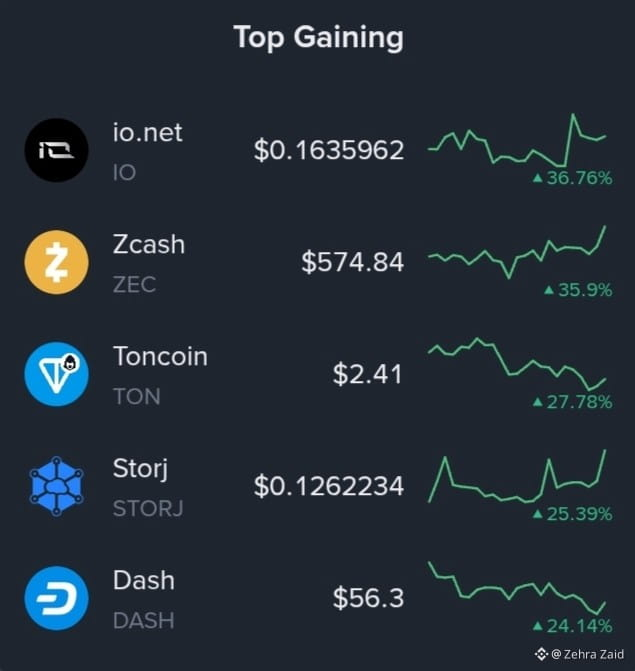
$IO 🚀
IO showed strong bullish momentum as AI and decentralized GPU narratives gained traction. Rising volume and renewed investor interest supported the upward move.
$ZEC 📈
ZEC gained strength from increased privacy-coin demand and improving market sentiment. Buyers stepped in as the coin broke key resistance levels.
$TON 🔥
TON remained bullish due to growing Telegram ecosystem adoption and strong community activity. Consistent buying pressure kept momentum positive.
{future}(ZECUSDT)
{future}(TONUSDT)
#IO #ZECUSDT #tobechukwu #TON
just give me 5 second attention 💰
$IO 🚀
IO showed strong bullish momentum as AI and decentralized GPU narratives gained traction. Rising volume and renewed investor interest supported the upward move.
$ZEC 📈
ZEC gained strength from increased privacy-coin demand and improving market sentiment. Buyers stepped in as the coin broke key resistance levels.
$TON 🔥
TON remained bullish due to growing Telegram ecosystem adoption and strong community activity. Consistent buying pressure kept momentum positive.
#IO #ZECUSDT #tobechukwu #TON
$IO 🚀
IO showed strong bullish momentum as AI and decentralized GPU narratives gained traction. Rising volume and renewed investor interest supported the upward move.
$ZEC 📈
ZEC gained strength from increased privacy-coin demand and improving market sentiment. Buyers stepped in as the coin broke key resistance levels.
$TON 🔥
TON remained bullish due to growing Telegram ecosystem adoption and strong community activity. Consistent buying pressure kept momentum positive.
#IO #ZECUSDT #tobechukwu #TON
2
839

$AIGENSYN
NOW TIME TO BUY DREAM COIN
NOW TARGET INSHALLAH HIT TO
0.1
#AIGENSYN
#BTC☀
#SolanaAnnualDrop51.9%
#ETHStakingATH39.2M
#tobechukwu
$AIGENSYN
NOW TIME TO BUY DREAM COIN
NOW TARGET INSHALLAH HIT TO
0.1
#AIGENSYN
#BTC☀
#SolanaAnnualDrop51.9%
#ETHStakingATH39.2M
#tobechukwu
NOW TIME TO BUY DREAM COIN
NOW TARGET INSHALLAH HIT TO
0.1
#AIGENSYN
#BTC☀
#SolanaAnnualDrop51.9%
#ETHStakingATH39.2M
#tobechukwu
1
344
·
--
Baissier
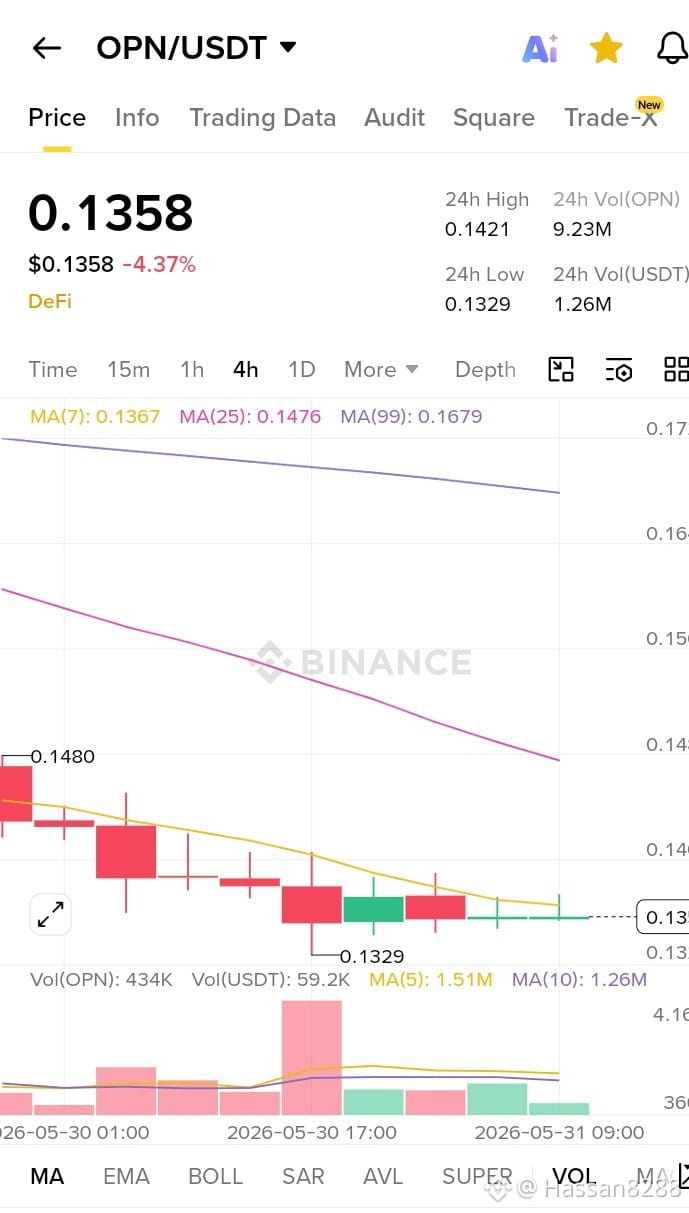
Based on this $USDC 4H OPN/USDT chart:
Price: 0.1358
MA(7): 0.1367
MA(25): 0.1476
MA(99): 0.1679
Price remains below all major moving averages.
Lower highs and lower lows are still visible.
Volume is relatively weak and no strong breakout candle has appeared.
Market Bias: Bearish 🐻
For your post, select Bearish.
Post
📉 OPN/USDT Analysis (4H)
OPN continues to trade below key moving averages, showing that sellers still control the trend. Price is attempting to hold support near $0.133, but a lack of strong buying volume keeps the market under pressure.
🔹 Support: $0.1330 🔹 Resistance: $0.1420 🔹 Trend: Bearish until a confirmed breakout above resistance
Traders should watch for increased volume and a move above resistance before expecting a trend reversal.
#BearishPattern PN #OPNUSDT #Crypto #BTC inance #Altcoins #CryptoTrading #tobechukwu echnicalAnalysis #DeFi #TradingView #BearishAlert Trend 🐻📊
Based on this $USDC 4H OPN/USDT chart:
Price: 0.1358
MA(7): 0.1367
MA(25): 0.1476
MA(99): 0.1679
Price remains below all major moving averages.
Lower highs and lower lows are still visible.
Volume is relatively weak and no strong breakout candle has appeared.
Market Bias: Bearish 🐻
For your post, select Bearish.
Post
📉 OPN/USDT Analysis (4H)
OPN continues to trade below key moving averages, showing that sellers still control the trend. Price is attempting to hold support near $0.133, but a lack of strong buying volume keeps the market under pressure.
🔹 Support: $0.1330 🔹 Resistance: $0.1420 🔹 Trend: Bearish until a confirmed breakout above resistance
Traders should watch for increased volume and a move above resistance before expecting a trend reversal.
#BearishPattern PN #OPNUSDT #Crypto #BTC inance #Altcoins #CryptoTrading #tobechukwu echnicalAnalysis #DeFi #TradingView #BearishAlert Trend 🐻📊
Price: 0.1358
MA(7): 0.1367
MA(25): 0.1476
MA(99): 0.1679
Price remains below all major moving averages.
Lower highs and lower lows are still visible.
Volume is relatively weak and no strong breakout candle has appeared.
Market Bias: Bearish 🐻
For your post, select Bearish.
Post
📉 OPN/USDT Analysis (4H)
OPN continues to trade below key moving averages, showing that sellers still control the trend. Price is attempting to hold support near $0.133, but a lack of strong buying volume keeps the market under pressure.
🔹 Support: $0.1330 🔹 Resistance: $0.1420 🔹 Trend: Bearish until a confirmed breakout above resistance
Traders should watch for increased volume and a move above resistance before expecting a trend reversal.
#BearishPattern PN #OPNUSDT #Crypto #BTC inance #Altcoins #CryptoTrading #tobechukwu echnicalAnalysis #DeFi #TradingView #BearishAlert Trend 🐻📊
244
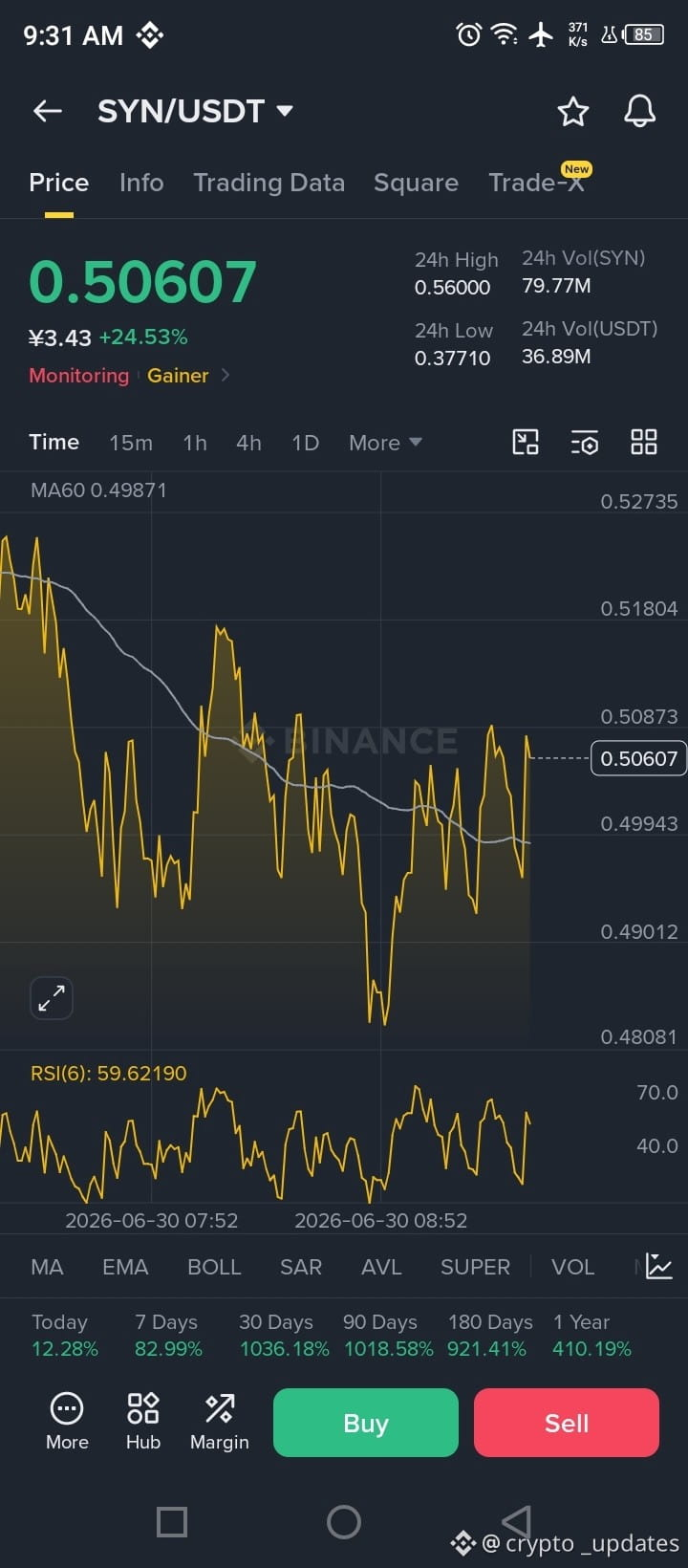
⚡ $SYN is seeing massive swings right now 👀
Market activity is spiking hard. 🔥📉
AAVERises13.16%To$94.32#YenHitsFourDecadeLowVsDollar #TechRallyLiftsDowToRecord #TerraLabs #tobechukwu #UKFCAFinalizesCryptoFramework
⚡ $SYN is seeing massive swings right now 👀
Market activity is spiking hard. 🔥📉
AAVERises13.16%To$94.32#YenHitsFourDecadeLowVsDollar #TechRallyLiftsDowToRecord #TerraLabs #tobechukwu #UKFCAFinalizesCryptoFramework
Market activity is spiking hard. 🔥📉
AAVERises13.16%To$94.32#YenHitsFourDecadeLowVsDollar #TechRallyLiftsDowToRecord #TerraLabs #tobechukwu #UKFCAFinalizesCryptoFramework
190
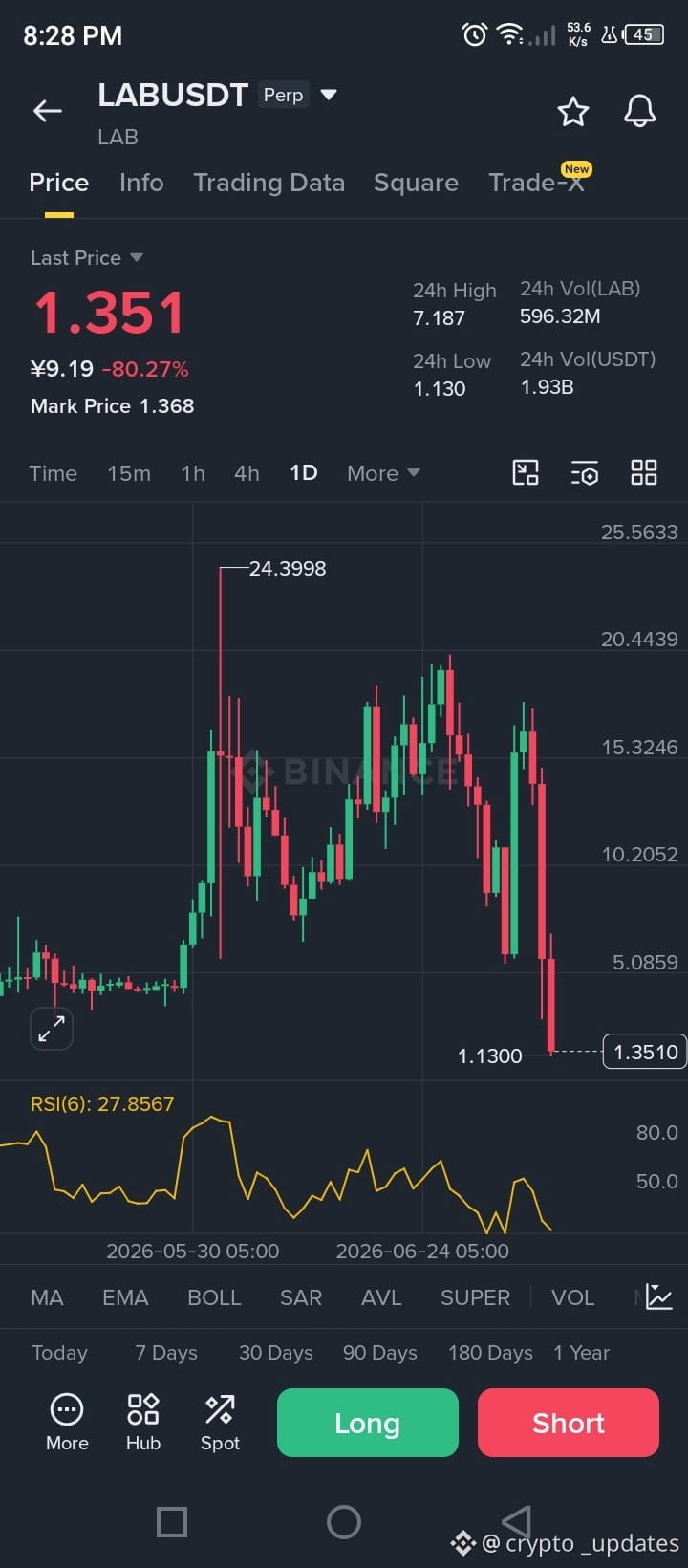
Signal Alert ⚡
🚀 $LAB LONG
Entry: 2.5130 | Lev: 20x Cross
TP: 2.80 / 3.30 / 4.20 🎯
SL: 2.20
#OilRises5%OnUSIranTensions #tobechukwu #Crypto_Jobs🎯 #VTHO #Crypto_Jobs🎯
Signal Alert ⚡
🚀 $LAB LONG
Entry: 2.5130 | Lev: 20x Cross
TP: 2.80 / 3.30 / 4.20 🎯
SL: 2.20
#OilRises5%OnUSIranTensions #tobechukwu #Crypto_Jobs🎯 #VTHO #Crypto_Jobs🎯
🚀 $LAB LONG
Entry: 2.5130 | Lev: 20x Cross
TP: 2.80 / 3.30 / 4.20 🎯
SL: 2.20
#OilRises5%OnUSIranTensions #tobechukwu #Crypto_Jobs🎯 #VTHO #Crypto_Jobs🎯
4
2
769
·
--
Baissier
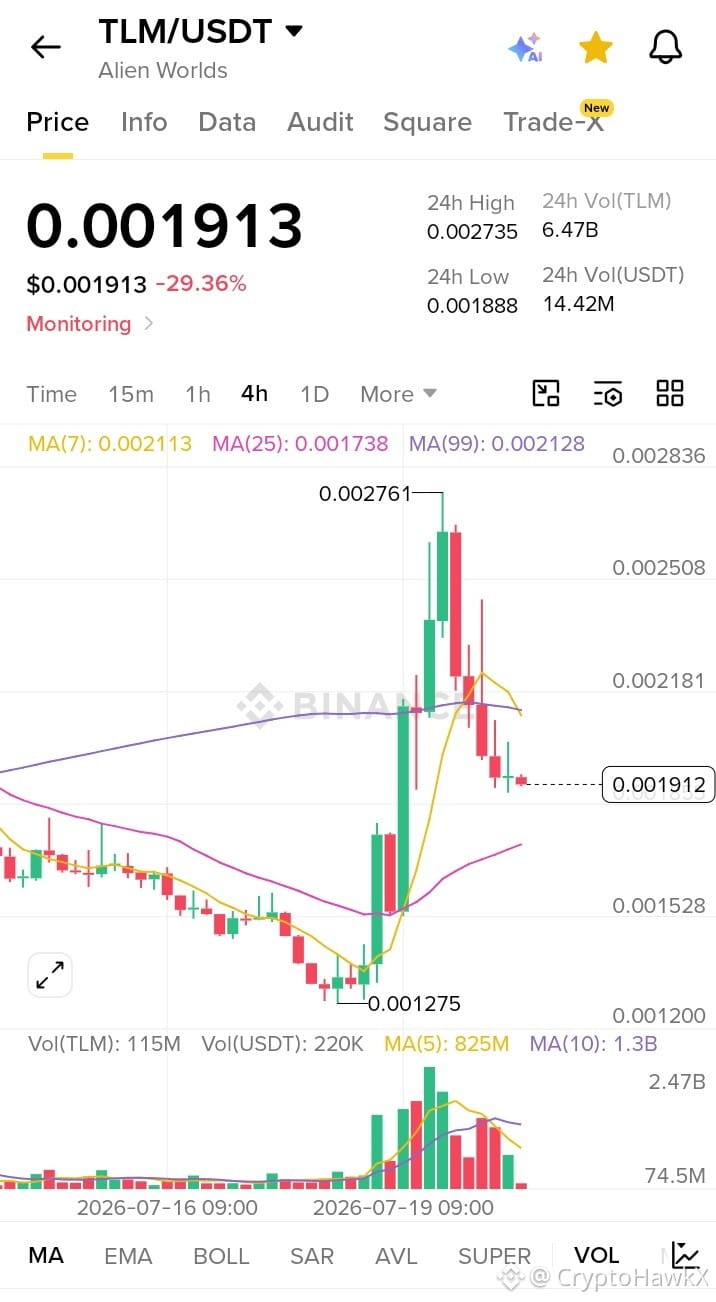
$TLM TLM/USDT Analysis: Bearish 📉
TLM/USDT is showing continued weakness on the 4-hour timeframe after a sharp rejection from the recent high around 0.00276. Price is trading below the short-term moving averages, and sellers remain in control. Unless buyers reclaim the 0.00210–0.00220 resistance zone with strong volume, the trend is likely to remain under pressure. Watch the 0.00188 area as key support—a break below it could trigger another leg down.
Bias: Bearish 🐻
#TLM #AlienWorlds orlds #TLMUSDT #Crypto #CryptoTrading #Binance #BEARISH📉 tcoins #tobechukwu echnicalAnalysis #PriceAction #BurnhamToBecomeUKPrimeMinister gSignals #tobeempire h #CryptoMarket #SupportAndResistance #TradingView #DYOR
$TLM TLM/USDT Analysis: Bearish 📉
TLM/USDT is showing continued weakness on the 4-hour timeframe after a sharp rejection from the recent high around 0.00276. Price is trading below the short-term moving averages, and sellers remain in control. Unless buyers reclaim the 0.00210–0.00220 resistance zone with strong volume, the trend is likely to remain under pressure. Watch the 0.00188 area as key support—a break below it could trigger another leg down.
Bias: Bearish 🐻
#TLM #AlienWorlds orlds #TLMUSDT #Crypto #CryptoTrading #Binance #BEARISH📉 tcoins #tobechukwu echnicalAnalysis #PriceAction #BurnhamToBecomeUKPrimeMinister gSignals #tobeempire h #CryptoMarket #SupportAndResistance #TradingView #DYOR
TLM/USDT is showing continued weakness on the 4-hour timeframe after a sharp rejection from the recent high around 0.00276. Price is trading below the short-term moving averages, and sellers remain in control. Unless buyers reclaim the 0.00210–0.00220 resistance zone with strong volume, the trend is likely to remain under pressure. Watch the 0.00188 area as key support—a break below it could trigger another leg down.
Bias: Bearish 🐻
#TLM #AlienWorlds orlds #TLMUSDT #Crypto #CryptoTrading #Binance #BEARISH📉 tcoins #tobechukwu echnicalAnalysis #PriceAction #BurnhamToBecomeUKPrimeMinister gSignals #tobeempire h #CryptoMarket #SupportAndResistance #TradingView #DYOR
129
Connectez-vous pour découvrir plus de contenu
Rejoignez la communauté mondiale des adeptes de cryptomonnaies sur Binance Square
⚡️ Suviez les dernières informations importantes sur les cryptomonnaies.
💬 Jugé digne de confiance par la plus grande plateforme d’échange de cryptomonnaies au monde.
👍 Découvrez les connaissances que partagent les créateurs vérifiés.
Adresse e-mail/Nº de téléphone
Sujets d’actualité
1
#OpenAIUnveilsAlwaysOnAgentDots
5 vues
25 mentions
2
#ChainlinkLaunchesBankSWIFTLedgerFramework
800 vues
51 mentions
3
#EarningsSeason
418,496 vues
3,178 mentions
4
#SECChairWantsStockMarketsOnChain
4,102 vues
147 mentions
5
#MulticoinInvestsInGrass
2,224 vues
107 mentions
6
#CEARenamesToBNBStandardUnderBNC
3,504 vues
109 mentions
7
#BitwiseLaunchesFirstSpotNEARETF
55,053 vues
746 mentions
8
#USJobOpeningsFallToFiveMonthLow
58,409 vues
580 mentions
9
#ECBToTestAIAgentsInDigitalEuroPayments
37,363 vues
616 mentions
10
#JapanFSABacksFourthStablecoinTradeSettlementPilot
42,244 vues
636 mentions