

#kdmrcrypto
kdmrcrypto
378,769 vues
325 mentions
Populaire
Récents


·
--
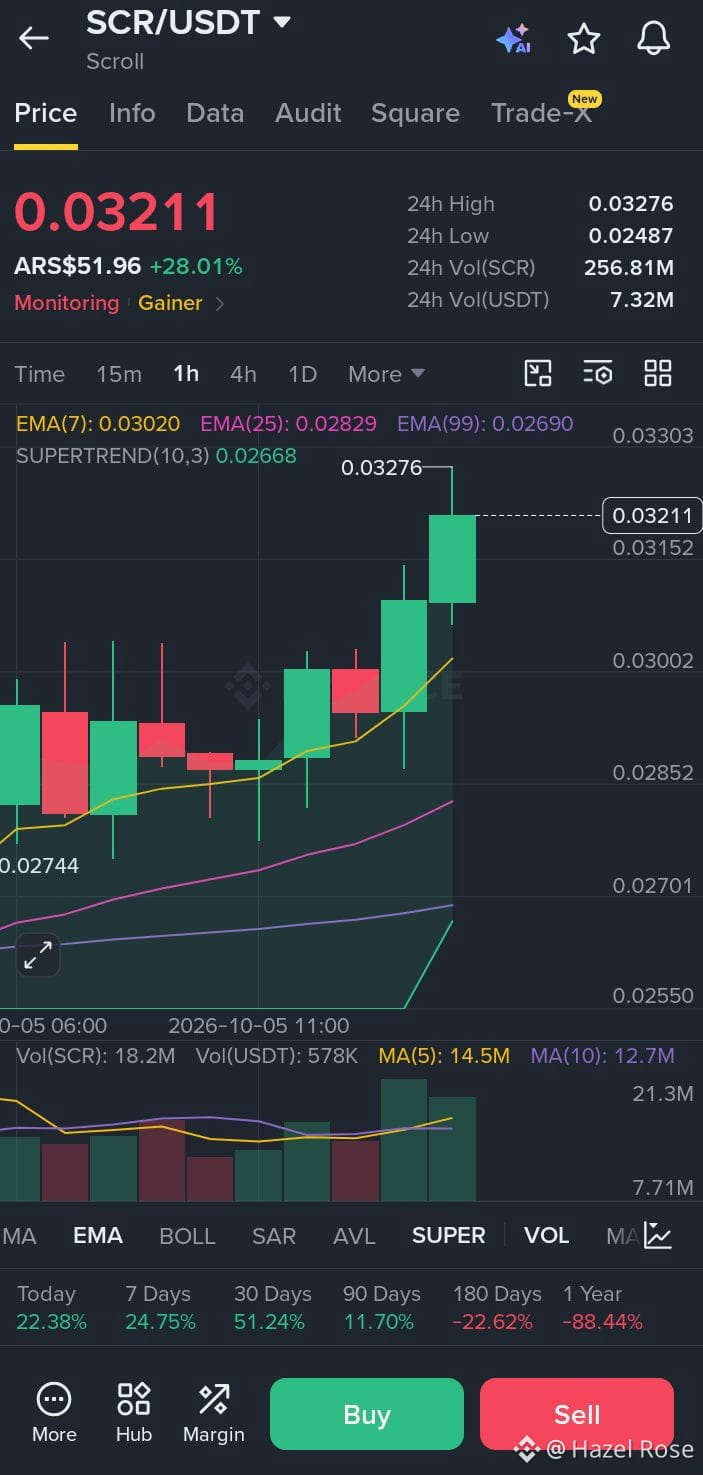
$SCR — 26.87% GAINER
$SCR is pushing around $0.03201 after a powerful move. Support: $0.0295–$0.0300 | Resistance: $0.0340–$0.0350 | Target 🎯: $0.038 → $0.042 | Stop-loss: $0.0280. If buyers defend $0.030, momentum could continue toward $0.04, but rejection around resistance may trigger a quick pullback.
{spot}(SCRUSDT)
#DriftHackVictimsBeginClaims #EthereumValidatorExitQueueJumps392% #SECHaltsCryptoETFReviewsAmidFundingLapse #GreekPoliceBustCryptoScamRingArrest17 #kdmrcrypto
$SCR — 26.87% GAINER
$SCR is pushing around $0.03201 after a powerful move. Support: $0.0295–$0.0300 | Resistance: $0.0340–$0.0350 | Target 🎯: $0.038 → $0.042 | Stop-loss: $0.0280. If buyers defend $0.030, momentum could continue toward $0.04, but rejection around resistance may trigger a quick pullback.
#DriftHackVictimsBeginClaims #EthereumValidatorExitQueueJumps392% #SECHaltsCryptoETFReviewsAmidFundingLapse #GreekPoliceBustCryptoScamRingArrest17 #kdmrcrypto
$SCR is pushing around $0.03201 after a powerful move. Support: $0.0295–$0.0300 | Resistance: $0.0340–$0.0350 | Target 🎯: $0.038 → $0.042 | Stop-loss: $0.0280. If buyers defend $0.030, momentum could continue toward $0.04, but rejection around resistance may trigger a quick pullback.
#DriftHackVictimsBeginClaims #EthereumValidatorExitQueueJumps392% #SECHaltsCryptoETFReviewsAmidFundingLapse #GreekPoliceBustCryptoScamRingArrest17 #kdmrcrypto
1
230

China's US Treasury Holdings Fell to Lowest Level Since 2009 in MayThe trade policies of the Trump administration have hurt the standing of the U.S. debt around the world, principally with heavy treasury holders like China that have been directly affected by these measures. According to recent data published by the U.S. Treasury, Chinese holdings of U.S. treasuries fell to a new low since 2009, with the Chinese government reducing its exposure by nearly $1 billion from the number reported in April.
While this might not be seen as a significant drop by some analysts, others claim that it signals a new direction in the Chinese policy towards acquiring American foreign debt, amidst the dangers of retaliation if trade negotiations go south.
In March, China reduced its exposure to the U.S. debt by nearly $19 billion, falling to the third place among the top holders of treasuries behind Japan and the U.K., while it sold $8.2 billion of its American debt stash in April
Despite the continued selling and ongoing trade tensions between the two nations, China still holds $756.3 billion in U.S. securities, which contradicts the theory that the Chinese government is weaponizing these assets.
Nonetheless, the offloading moves echo the recommendations of Chinese analysts about diversifying the exposure from these potentially risky assets to less troubled commodities, including safe havens like gold and other metals.
The U.S. government’s measures have driven debt holders worldwide to adjust their exposures, driving a substitution of international investors for local buyers. While foreign buyers held 57% of the treasury issuance in 2008, this number has fallen to 32%, signaling potential trust issues in the proficiency of the current administration in dealing with the spiraling debt issue.
#LISTAAirdrop
#kdmrcrypto
#Binance
#NOTCOİN
#xmucan
China's US Treasury Holdings Fell to Lowest Level Since 2009 in May
The trade policies of the Trump administration have hurt the standing of the U.S. debt around the world, principally with heavy treasury holders like China that have been directly affected by these measures. According to recent data published by the U.S. Treasury, Chinese holdings of U.S. treasuries fell to a new low since 2009, with the Chinese government reducing its exposure by nearly $1 billion from the number reported in April.
While this might not be seen as a significant drop by some analysts, others claim that it signals a new direction in the Chinese policy towards acquiring American foreign debt, amidst the dangers of retaliation if trade negotiations go south.
In March, China reduced its exposure to the U.S. debt by nearly $19 billion, falling to the third place among the top holders of treasuries behind Japan and the U.K., while it sold $8.2 billion of its American debt stash in April
Despite the continued selling and ongoing trade tensions between the two nations, China still holds $756.3 billion in U.S. securities, which contradicts the theory that the Chinese government is weaponizing these assets.
Nonetheless, the offloading moves echo the recommendations of Chinese analysts about diversifying the exposure from these potentially risky assets to less troubled commodities, including safe havens like gold and other metals.
The U.S. government’s measures have driven debt holders worldwide to adjust their exposures, driving a substitution of international investors for local buyers. While foreign buyers held 57% of the treasury issuance in 2008, this number has fallen to 32%, signaling potential trust issues in the proficiency of the current administration in dealing with the spiraling debt issue.
#LISTAAirdrop
#kdmrcrypto
#Binance
#NOTCOİN
#xmucan
While this might not be seen as a significant drop by some analysts, others claim that it signals a new direction in the Chinese policy towards acquiring American foreign debt, amidst the dangers of retaliation if trade negotiations go south.
In March, China reduced its exposure to the U.S. debt by nearly $19 billion, falling to the third place among the top holders of treasuries behind Japan and the U.K., while it sold $8.2 billion of its American debt stash in April
Despite the continued selling and ongoing trade tensions between the two nations, China still holds $756.3 billion in U.S. securities, which contradicts the theory that the Chinese government is weaponizing these assets.
Nonetheless, the offloading moves echo the recommendations of Chinese analysts about diversifying the exposure from these potentially risky assets to less troubled commodities, including safe havens like gold and other metals.
The U.S. government’s measures have driven debt holders worldwide to adjust their exposures, driving a substitution of international investors for local buyers. While foreign buyers held 57% of the treasury issuance in 2008, this number has fallen to 32%, signaling potential trust issues in the proficiency of the current administration in dealing with the spiraling debt issue.
#LISTAAirdrop
#kdmrcrypto
#Binance
#NOTCOİN
#xmucan
137
India plans more seats for women in parliament, links it to ‘delimitation’The Indian government is seeking to expedite the implementation of a 2023 law that reserves 33 percent of seats in parliament and state assemblies for women, but has linked the move to a sweeping redrawing of parliamentary constituencies, sharpening political tensions.
We’re set to take historic steps to empower women,” Prime Minister Narendra Modi said before a special sitting of parliament on Thursday as his government introduced three bills to be debated in the Lok Sabha, the lower house of parliament.
While two of the three bills relate to extending the number of women in parliament and state assemblies, a third bill relates to “delimitation”, as the process to redraw parliamentary boundaries based on population is called in India. The bill aims to increase the overall size of parliament from 543 Lok Sabha seats to 850
The bills are being taken up during a three-day special session and will require a two-thirds majority in both houses to pass. Modi’s National Democratic Alliance (NDA) holds 293 seats in lower house of parliament while a two-thirds majority would require 360 votes
Women currently account for 14 percent of the Lok Sabha members. “We are all united to give rightful positions to women in India,” Parliamentary Affairs Minister Kiren Rijiju said on Thursday
Several Asian countries, including India’s neighbours like Nepal and Bangladesh, have similar quotas for women in national legislatures. India already mandates that one-third of seats be set aside for women in local governing bodies
But the opposition was not convinced. Some members from southern states turned up in parliament dressed in black as a mark of protest.
MK Stalin, chief minister of the southern state of Tamil Nadu and a rival to the BJP, burned a copy of the bill and raised a black flag in protest, urging people across the state to do the same.
“Let the flames of resistance spread across Tamil Nadu,” Stalin said, accusing the BJP of trying to marginalise the state through redrawn boundaries. “Let the arrogance of the fascist BJP be brought down
#Robertkiyosaki
#HalvingUpdate
#UnicornChannel
#kdmrcrypto
#LISTAAirdrop
India plans more seats for women in parliament, links it to ‘delimitation’
The Indian government is seeking to expedite the implementation of a 2023 law that reserves 33 percent of seats in parliament and state assemblies for women, but has linked the move to a sweeping redrawing of parliamentary constituencies, sharpening political tensions.
We’re set to take historic steps to empower women,” Prime Minister Narendra Modi said before a special sitting of parliament on Thursday as his government introduced three bills to be debated in the Lok Sabha, the lower house of parliament.
While two of the three bills relate to extending the number of women in parliament and state assemblies, a third bill relates to “delimitation”, as the process to redraw parliamentary boundaries based on population is called in India. The bill aims to increase the overall size of parliament from 543 Lok Sabha seats to 850
The bills are being taken up during a three-day special session and will require a two-thirds majority in both houses to pass. Modi’s National Democratic Alliance (NDA) holds 293 seats in lower house of parliament while a two-thirds majority would require 360 votes
Women currently account for 14 percent of the Lok Sabha members. “We are all united to give rightful positions to women in India,” Parliamentary Affairs Minister Kiren Rijiju said on Thursday
Several Asian countries, including India’s neighbours like Nepal and Bangladesh, have similar quotas for women in national legislatures. India already mandates that one-third of seats be set aside for women in local governing bodies
But the opposition was not convinced. Some members from southern states turned up in parliament dressed in black as a mark of protest.
MK Stalin, chief minister of the southern state of Tamil Nadu and a rival to the BJP, burned a copy of the bill and raised a black flag in protest, urging people across the state to do the same.
“Let the flames of resistance spread across Tamil Nadu,” Stalin said, accusing the BJP of trying to marginalise the state through redrawn boundaries. “Let the arrogance of the fascist BJP be brought down
#Robertkiyosaki
#HalvingUpdate
#UnicornChannel
#kdmrcrypto
#LISTAAirdrop
We’re set to take historic steps to empower women,” Prime Minister Narendra Modi said before a special sitting of parliament on Thursday as his government introduced three bills to be debated in the Lok Sabha, the lower house of parliament.
While two of the three bills relate to extending the number of women in parliament and state assemblies, a third bill relates to “delimitation”, as the process to redraw parliamentary boundaries based on population is called in India. The bill aims to increase the overall size of parliament from 543 Lok Sabha seats to 850
The bills are being taken up during a three-day special session and will require a two-thirds majority in both houses to pass. Modi’s National Democratic Alliance (NDA) holds 293 seats in lower house of parliament while a two-thirds majority would require 360 votes
Women currently account for 14 percent of the Lok Sabha members. “We are all united to give rightful positions to women in India,” Parliamentary Affairs Minister Kiren Rijiju said on Thursday
Several Asian countries, including India’s neighbours like Nepal and Bangladesh, have similar quotas for women in national legislatures. India already mandates that one-third of seats be set aside for women in local governing bodies
But the opposition was not convinced. Some members from southern states turned up in parliament dressed in black as a mark of protest.
MK Stalin, chief minister of the southern state of Tamil Nadu and a rival to the BJP, burned a copy of the bill and raised a black flag in protest, urging people across the state to do the same.
“Let the flames of resistance spread across Tamil Nadu,” Stalin said, accusing the BJP of trying to marginalise the state through redrawn boundaries. “Let the arrogance of the fascist BJP be brought down
#Robertkiyosaki
#HalvingUpdate
#UnicornChannel
#kdmrcrypto
#LISTAAirdrop
94
Iran claims it replenishes missile launchers faster than before Operation Roaring LionAdditionally, a Saturday N12 News report stated that Israel’s security establishment had located missile launchers aimed at Israel, poised to strike if a ceasefire wasn't reached with Lebanon.
Iran claimed it is replenishing its missile and drone launchers at a higher speed than it did prior to the war with the US and Israel, the Revolutionary Guards Aerospace Force commander, Majid Mousavi, said in a video shared on social media on Sunday, according to Nournews.
They have lost this phase of the war! They have lost the Strait, Lebanon, and the region," Mousavi said.
Mousavi's statement was shared alongside an edited video of him inspecting an unspecified underground missile facility. The video also included footage of drones, missiles, and launchers inside underground facilities as well as ground missile launches.
Mousavi also claimed that "Unlike Iran, the enemy has been unable to replenish its ammunition during the ceasefire."
While neither the US nor Israel has officially responded to these claims, a Saturday N12 News report stated that Israel’s security establishment had located missile launchers aimed at Israel, poised to strike if a ceasefire wasn't reached between Israel and Lebanon
The threat from Iran was the motivation for US President Donald Trump's increased pressure on Israel to come to an agreement with Lebanon, and hisFriday announcement that Israel is prohibited from “bombing Lebanon any longer,” according to the N12 report.
Israel and the US are also preparing for the possibility that war will resume with Iran, as tensions over the Strait of Hormuz threaten peace negotiations, a source told the Israeli news outlet. The IDF has reportedly approved a list of targets for attack, focusing on national infrastructure and energy. The military is also planning operations that, if implemented, would continue toward the goals from the previous round of fighting.
Israel was surprised by Trump’s announcement that the IDF is “prohibited” from continuing strikes against Hezbollah in Lebanon, according to a Saturday Axios report
The report noted that Prime Minister Benjamin Netanyahu was “personally stunned and alarmed” by the post, and that Israeli officials sought clarification from the White House
This comes after Trump posted on Truth Social that Israel was prohibited from “bombing Lebanon any longer,” and that the US will work with Lebanon separately and “deal with the Hezbollah situation in an appropriate manner.”
The language implied that Trump was directly issuing an order to Israel, which would be unimaginable under other presidential administrations, Axios noted.
Notably, according to the ceasefire agreement, Israel still has the right to take military action during the ceasefire, “in self-defense, at any time, against planned, imminent, or ongoing attacks.”
#MegadropLista
#kdmrcrypto
#IDKwhatIamdoing
#BinanceHerYerde
#YiHeBinance
Iran claims it replenishes missile launchers faster than before Operation Roaring Lion
Additionally, a Saturday N12 News report stated that Israel’s security establishment had located missile launchers aimed at Israel, poised to strike if a ceasefire wasn't reached with Lebanon.
Iran claimed it is replenishing its missile and drone launchers at a higher speed than it did prior to the war with the US and Israel, the Revolutionary Guards Aerospace Force commander, Majid Mousavi, said in a video shared on social media on Sunday, according to Nournews.
They have lost this phase of the war! They have lost the Strait, Lebanon, and the region," Mousavi said.
Mousavi's statement was shared alongside an edited video of him inspecting an unspecified underground missile facility. The video also included footage of drones, missiles, and launchers inside underground facilities as well as ground missile launches.
Mousavi also claimed that "Unlike Iran, the enemy has been unable to replenish its ammunition during the ceasefire."
While neither the US nor Israel has officially responded to these claims, a Saturday N12 News report stated that Israel’s security establishment had located missile launchers aimed at Israel, poised to strike if a ceasefire wasn't reached between Israel and Lebanon
The threat from Iran was the motivation for US President Donald Trump's increased pressure on Israel to come to an agreement with Lebanon, and hisFriday announcement that Israel is prohibited from “bombing Lebanon any longer,” according to the N12 report.
Israel and the US are also preparing for the possibility that war will resume with Iran, as tensions over the Strait of Hormuz threaten peace negotiations, a source told the Israeli news outlet. The IDF has reportedly approved a list of targets for attack, focusing on national infrastructure and energy. The military is also planning operations that, if implemented, would continue toward the goals from the previous round of fighting.
Israel was surprised by Trump’s announcement that the IDF is “prohibited” from continuing strikes against Hezbollah in Lebanon, according to a Saturday Axios report
The report noted that Prime Minister Benjamin Netanyahu was “personally stunned and alarmed” by the post, and that Israeli officials sought clarification from the White House
This comes after Trump posted on Truth Social that Israel was prohibited from “bombing Lebanon any longer,” and that the US will work with Lebanon separately and “deal with the Hezbollah situation in an appropriate manner.”
The language implied that Trump was directly issuing an order to Israel, which would be unimaginable under other presidential administrations, Axios noted.
Notably, according to the ceasefire agreement, Israel still has the right to take military action during the ceasefire, “in self-defense, at any time, against planned, imminent, or ongoing attacks.”
#MegadropLista
#kdmrcrypto
#IDKwhatIamdoing
#BinanceHerYerde
#YiHeBinance
Iran claimed it is replenishing its missile and drone launchers at a higher speed than it did prior to the war with the US and Israel, the Revolutionary Guards Aerospace Force commander, Majid Mousavi, said in a video shared on social media on Sunday, according to Nournews.
They have lost this phase of the war! They have lost the Strait, Lebanon, and the region," Mousavi said.
Mousavi's statement was shared alongside an edited video of him inspecting an unspecified underground missile facility. The video also included footage of drones, missiles, and launchers inside underground facilities as well as ground missile launches.
Mousavi also claimed that "Unlike Iran, the enemy has been unable to replenish its ammunition during the ceasefire."
While neither the US nor Israel has officially responded to these claims, a Saturday N12 News report stated that Israel’s security establishment had located missile launchers aimed at Israel, poised to strike if a ceasefire wasn't reached between Israel and Lebanon
The threat from Iran was the motivation for US President Donald Trump's increased pressure on Israel to come to an agreement with Lebanon, and hisFriday announcement that Israel is prohibited from “bombing Lebanon any longer,” according to the N12 report.
Israel and the US are also preparing for the possibility that war will resume with Iran, as tensions over the Strait of Hormuz threaten peace negotiations, a source told the Israeli news outlet. The IDF has reportedly approved a list of targets for attack, focusing on national infrastructure and energy. The military is also planning operations that, if implemented, would continue toward the goals from the previous round of fighting.
Israel was surprised by Trump’s announcement that the IDF is “prohibited” from continuing strikes against Hezbollah in Lebanon, according to a Saturday Axios report
The report noted that Prime Minister Benjamin Netanyahu was “personally stunned and alarmed” by the post, and that Israeli officials sought clarification from the White House
This comes after Trump posted on Truth Social that Israel was prohibited from “bombing Lebanon any longer,” and that the US will work with Lebanon separately and “deal with the Hezbollah situation in an appropriate manner.”
The language implied that Trump was directly issuing an order to Israel, which would be unimaginable under other presidential administrations, Axios noted.
Notably, according to the ceasefire agreement, Israel still has the right to take military action during the ceasefire, “in self-defense, at any time, against planned, imminent, or ongoing attacks.”
#MegadropLista
#kdmrcrypto
#IDKwhatIamdoing
#BinanceHerYerde
#YiHeBinance
103

·
--
Haussier
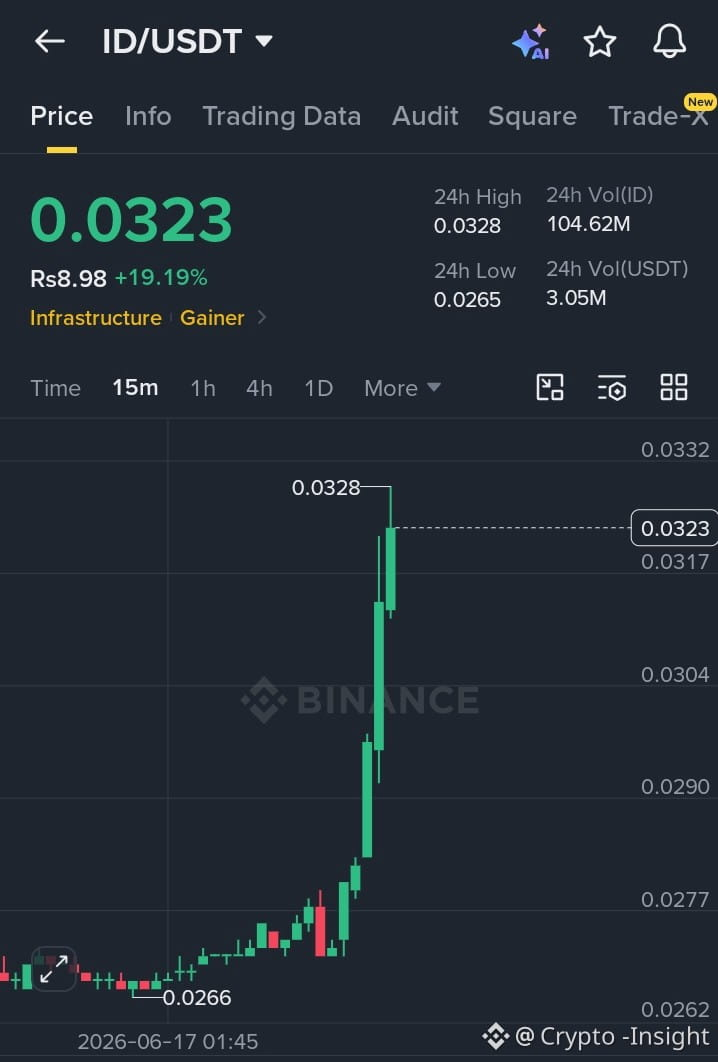
🚀 $ID /USDT EXPLODES HIGHER — AI INFRASTRUCTURE TOKEN LEADS THE CHARGE!is one of the market's standout performers today, surging to 0.0323 USDT with an impressive +19.19% gain as buyers flood into the AI infrastructure sector. Momentum is accelerating fast, pushing the token near its 24-hour high of 0.0328 USDT and placing it firmly on traders' watchlists.
🔥 Trading activity has exploded, with over 104.62M ID changing hands in the last 24 hours, signaling aggressive accumulation and growing market interest.
The recent breakout from the 0.0265 support zone confirms strong bullish momentum. As long as price remains above 0.0300 USDT, bulls maintain the advantage and could target higher resistance levels in the sessions ahead.
📈 Current Price: 0.0323 USDT
🚀 24H Change: +19.19%
⚡ 24H High: 0.0328 USDT
🔥 24H Volume: 104.62M ID
🛡️ Key Support: 0.0304 → 0.0290
🎯 Key Resistance: 0.0328 → 0.0332
The trend is clear: buyers are in control, volume is surging, and momentum remains strong. If bulls break through resistance, the next move could be explosive.
#kdmrcrypto #Kabosu $ID
{spot}(IDUSDT)
🚀 $ID /USDT EXPLODES HIGHER — AI INFRASTRUCTURE TOKEN LEADS THE CHARGE!is one of the market's standout performers today, surging to 0.0323 USDT with an impressive +19.19% gain as buyers flood into the AI infrastructure sector. Momentum is accelerating fast, pushing the token near its 24-hour high of 0.0328 USDT and placing it firmly on traders' watchlists.
🔥 Trading activity has exploded, with over 104.62M ID changing hands in the last 24 hours, signaling aggressive accumulation and growing market interest.
The recent breakout from the 0.0265 support zone confirms strong bullish momentum. As long as price remains above 0.0300 USDT, bulls maintain the advantage and could target higher resistance levels in the sessions ahead.
📈 Current Price: 0.0323 USDT
🚀 24H Change: +19.19%
⚡ 24H High: 0.0328 USDT
🔥 24H Volume: 104.62M ID
🛡️ Key Support: 0.0304 → 0.0290
🎯 Key Resistance: 0.0328 → 0.0332
The trend is clear: buyers are in control, volume is surging, and momentum remains strong. If bulls break through resistance, the next move could be explosive.
#kdmrcrypto #Kabosu $ID
🔥 Trading activity has exploded, with over 104.62M ID changing hands in the last 24 hours, signaling aggressive accumulation and growing market interest.
The recent breakout from the 0.0265 support zone confirms strong bullish momentum. As long as price remains above 0.0300 USDT, bulls maintain the advantage and could target higher resistance levels in the sessions ahead.
📈 Current Price: 0.0323 USDT
🚀 24H Change: +19.19%
⚡ 24H High: 0.0328 USDT
🔥 24H Volume: 104.62M ID
🛡️ Key Support: 0.0304 → 0.0290
🎯 Key Resistance: 0.0328 → 0.0332
The trend is clear: buyers are in control, volume is surging, and momentum remains strong. If bulls break through resistance, the next move could be explosive.
#kdmrcrypto #Kabosu $ID
1
182

·
--
هناك ترقب في كأس العالم ويأترى من سيفوز بالكل لذا العام وهناك احتمالات كبيره وجميع الفرق تشد بقوتهااا لنيل الفوز ولكن الاجمل في هذا الشي انو في حمله جداً روعه وتتضمن تووقعات الجميع وهناك مكافأة تربحهاا عندما تجيب توقع صحيح ولكن من يأترى هل البرتغال ستحقق اهداف بطوليه شركوناا في التعليقات 👇🏻
#Binance #kdmrcrypto #BinancePickAndWin
هناك ترقب في كأس العالم ويأترى من سيفوز بالكل لذا العام وهناك احتمالات كبيره وجميع الفرق تشد بقوتهااا لنيل الفوز ولكن الاجمل في هذا الشي انو في حمله جداً روعه وتتضمن تووقعات الجميع وهناك مكافأة تربحهاا عندما تجيب توقع صحيح ولكن من يأترى هل البرتغال ستحقق اهداف بطوليه شركوناا في التعليقات 👇🏻
#Binance #kdmrcrypto #BinancePickAndWin
#Binance #kdmrcrypto #BinancePickAndWin
2
18

Article
Top Ukrainian officials return Polish awards in WWII disputeTop Ukrainian officials have said they are returning Polish awards after President Volodymyr Zelenskyy was stripped of Warsaw’s top honour in a dispute between the allies over World War II massacres.
Zelenskyy’s chief of staff, Kyrylo Budanov; Ukraine’s ambassador to Warsaw, Vasyl Bodnar; and Foreign Minister Andrii Sybiha said on Saturday they would relinquish awards bestowed by Poland.
“Our nations have long-standing relations and different pages of history – both heroic and tragic,” Budanov posted on social media. “However, this should be an occasion for deep reflection, not crude political speculation
Zelenskyy angered many in Poland over his naming of a military unit after a Ukrainian paramilitary organisation accused of massacring Poles during World War II
In a decree on May 26, Zelenskyy named a military unit the Ukrainian Insurgent Army (UPA) – the name of a group that operated in the 1940s and 1950s
Ukrainian officials criticised the decision as one that played into Russia’s hands. Budanov, the Ukrainian Presidential Office chief, wrote on Telegram that it was “an unfriendly act toward our people” and “a gift to the Moscow aggressor, which will certainly use it against both of our countries”.
Foreign Minister Sybiha called it a “strategic mistake” while Bodnar said it was “especially painful” as Ukraine fends off Russian attacks
Polish Prime Minister Donald Tusk, a political rival of President Nawrocki, urged both sides to “calm tensions” in a post on X on Friday
The UPA fought against both Nazi German and Soviet forces, but is also accused of mass killings of Poles in Nazi-occupied areas. Ukrainians say UPA and Polish underground forces launched large-scale attacks and reprisals against each other that led to deaths among Ukrainian and Polish civilians
#MegadropLista
#NOTCOİN
#jasmyustd
#kdmrcrypto
#Launchpool
Top Ukrainian officials return Polish awards in WWII dispute
Top Ukrainian officials have said they are returning Polish awards after President Volodymyr Zelenskyy was stripped of Warsaw’s top honour in a dispute between the allies over World War II massacres.
Zelenskyy’s chief of staff, Kyrylo Budanov; Ukraine’s ambassador to Warsaw, Vasyl Bodnar; and Foreign Minister Andrii Sybiha said on Saturday they would relinquish awards bestowed by Poland.
“Our nations have long-standing relations and different pages of history – both heroic and tragic,” Budanov posted on social media. “However, this should be an occasion for deep reflection, not crude political speculation
Zelenskyy angered many in Poland over his naming of a military unit after a Ukrainian paramilitary organisation accused of massacring Poles during World War II
In a decree on May 26, Zelenskyy named a military unit the Ukrainian Insurgent Army (UPA) – the name of a group that operated in the 1940s and 1950s
Ukrainian officials criticised the decision as one that played into Russia’s hands. Budanov, the Ukrainian Presidential Office chief, wrote on Telegram that it was “an unfriendly act toward our people” and “a gift to the Moscow aggressor, which will certainly use it against both of our countries”.
Foreign Minister Sybiha called it a “strategic mistake” while Bodnar said it was “especially painful” as Ukraine fends off Russian attacks
Polish Prime Minister Donald Tusk, a political rival of President Nawrocki, urged both sides to “calm tensions” in a post on X on Friday
The UPA fought against both Nazi German and Soviet forces, but is also accused of mass killings of Poles in Nazi-occupied areas. Ukrainians say UPA and Polish underground forces launched large-scale attacks and reprisals against each other that led to deaths among Ukrainian and Polish civilians
#MegadropLista
#NOTCOİN
#jasmyustd
#kdmrcrypto
#Launchpool
Zelenskyy’s chief of staff, Kyrylo Budanov; Ukraine’s ambassador to Warsaw, Vasyl Bodnar; and Foreign Minister Andrii Sybiha said on Saturday they would relinquish awards bestowed by Poland.
“Our nations have long-standing relations and different pages of history – both heroic and tragic,” Budanov posted on social media. “However, this should be an occasion for deep reflection, not crude political speculation
Zelenskyy angered many in Poland over his naming of a military unit after a Ukrainian paramilitary organisation accused of massacring Poles during World War II
In a decree on May 26, Zelenskyy named a military unit the Ukrainian Insurgent Army (UPA) – the name of a group that operated in the 1940s and 1950s
Ukrainian officials criticised the decision as one that played into Russia’s hands. Budanov, the Ukrainian Presidential Office chief, wrote on Telegram that it was “an unfriendly act toward our people” and “a gift to the Moscow aggressor, which will certainly use it against both of our countries”.
Foreign Minister Sybiha called it a “strategic mistake” while Bodnar said it was “especially painful” as Ukraine fends off Russian attacks
Polish Prime Minister Donald Tusk, a political rival of President Nawrocki, urged both sides to “calm tensions” in a post on X on Friday
The UPA fought against both Nazi German and Soviet forces, but is also accused of mass killings of Poles in Nazi-occupied areas. Ukrainians say UPA and Polish underground forces launched large-scale attacks and reprisals against each other that led to deaths among Ukrainian and Polish civilians
#MegadropLista
#NOTCOİN
#jasmyustd
#kdmrcrypto
#Launchpool
347
·
--
Haussier
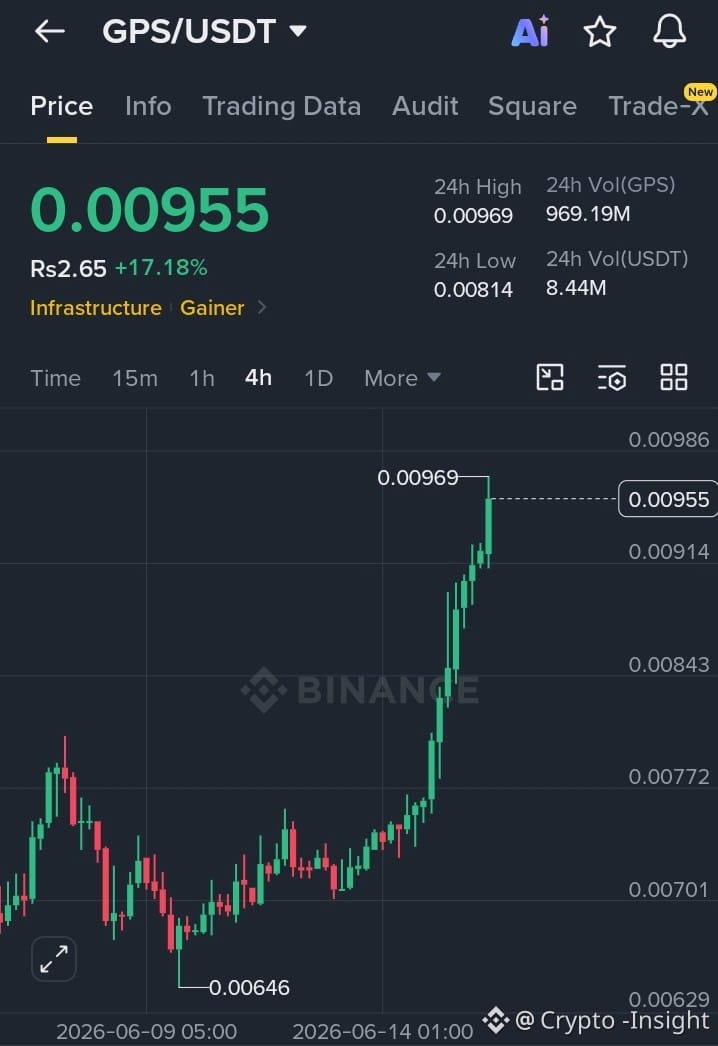
$GPS USDT is showing exactly what strong momentum looks like. After launching from the 0.0062 region, price has aggressively climbed into the 0.0096 area, printing a gain of more than 50% in just a few sessions while volume explodes toward the 1 billion mark.
The market is now testing a critical breakout zone near 0.0097. Bulls remain firmly in control, defending every dip and refusing to give back gains. If buyers force a clean break above resistance, the next expansion leg could accelerate rapidly as momentum traders and breakout chasers pile in.
This isn't a quiet recovery anymore—it's a full-scale momentum move. As long as GPS holds above the 0.0090 support region, the path of least resistance remains higher.🔥 Momentum is building. Resistance is under pressure. The next breakout could be explosive.
#kdmrcrypto #KEEP_SUPPORT $GPS
{spot}(GPSUSDT)
$GPS USDT is showing exactly what strong momentum looks like. After launching from the 0.0062 region, price has aggressively climbed into the 0.0096 area, printing a gain of more than 50% in just a few sessions while volume explodes toward the 1 billion mark.
The market is now testing a critical breakout zone near 0.0097. Bulls remain firmly in control, defending every dip and refusing to give back gains. If buyers force a clean break above resistance, the next expansion leg could accelerate rapidly as momentum traders and breakout chasers pile in.
This isn't a quiet recovery anymore—it's a full-scale momentum move. As long as GPS holds above the 0.0090 support region, the path of least resistance remains higher.🔥 Momentum is building. Resistance is under pressure. The next breakout could be explosive.
#kdmrcrypto #KEEP_SUPPORT $GPS
The market is now testing a critical breakout zone near 0.0097. Bulls remain firmly in control, defending every dip and refusing to give back gains. If buyers force a clean break above resistance, the next expansion leg could accelerate rapidly as momentum traders and breakout chasers pile in.
This isn't a quiet recovery anymore—it's a full-scale momentum move. As long as GPS holds above the 0.0090 support region, the path of least resistance remains higher.🔥 Momentum is building. Resistance is under pressure. The next breakout could be explosive.
#kdmrcrypto #KEEP_SUPPORT $GPS
1
107
Bitcoin's bounce isn't a bullish revival, with anything from $68,000 to $80,000 seen as a markerIn other words, anything below $80,000 would be seen as a corrective bounce within the broader bear market that began last year. Only a move beyond that would signal the beginning of a new advance.
Technically, a recovery up to $68K could be viewed as a rebound from the downward momentum seen between 11 May and 5 June," said Alex Kuptsikevich, the chief analyst at FxPro, hinting at a lower price level to beat for the bulls.
A rally even to these levels hinges on ETF flows and macro factors. The 11 spot bitcoin ETFs listed in the U.S. have processed redemptions over $5 billion in the past four weeks. On Monday, investors yanked another $91 million, according to data source SoSoValue.
These outflows need to meaningfully reverse for the bitcoin price to gain upward momentum. In addition, Wednesday's U.S. inflation data may have to come in softer than expected, easing concerns the Fed will raise interest rates. The data is expected to show the cost of living topped 4% in May, well above the Fed's 2% goal.
The constructive path is conditional: inflation softens, Treasury yields stabilize, AI equities stop de-risking, BTC/ETH ETF outflows slow, and the market reclaims the key technical levels. Until then, the conclusion is deliberately simple: below the reclaim, there is no regime shift," Hex Trust said. Stay alert!
#Fatihcoşar
#haroonahmadofficial
#kdmrcrypto
#MegadropLista
#VETUSDT
Bitcoin's bounce isn't a bullish revival, with anything from $68,000 to $80,000 seen as a marker
In other words, anything below $80,000 would be seen as a corrective bounce within the broader bear market that began last year. Only a move beyond that would signal the beginning of a new advance.
Technically, a recovery up to $68K could be viewed as a rebound from the downward momentum seen between 11 May and 5 June," said Alex Kuptsikevich, the chief analyst at FxPro, hinting at a lower price level to beat for the bulls.
A rally even to these levels hinges on ETF flows and macro factors. The 11 spot bitcoin ETFs listed in the U.S. have processed redemptions over $5 billion in the past four weeks. On Monday, investors yanked another $91 million, according to data source SoSoValue.
These outflows need to meaningfully reverse for the bitcoin price to gain upward momentum. In addition, Wednesday's U.S. inflation data may have to come in softer than expected, easing concerns the Fed will raise interest rates. The data is expected to show the cost of living topped 4% in May, well above the Fed's 2% goal.
The constructive path is conditional: inflation softens, Treasury yields stabilize, AI equities stop de-risking, BTC/ETH ETF outflows slow, and the market reclaims the key technical levels. Until then, the conclusion is deliberately simple: below the reclaim, there is no regime shift," Hex Trust said. Stay alert!
#Fatihcoşar
#haroonahmadofficial
#kdmrcrypto
#MegadropLista
#VETUSDT
Technically, a recovery up to $68K could be viewed as a rebound from the downward momentum seen between 11 May and 5 June," said Alex Kuptsikevich, the chief analyst at FxPro, hinting at a lower price level to beat for the bulls.
A rally even to these levels hinges on ETF flows and macro factors. The 11 spot bitcoin ETFs listed in the U.S. have processed redemptions over $5 billion in the past four weeks. On Monday, investors yanked another $91 million, according to data source SoSoValue.
These outflows need to meaningfully reverse for the bitcoin price to gain upward momentum. In addition, Wednesday's U.S. inflation data may have to come in softer than expected, easing concerns the Fed will raise interest rates. The data is expected to show the cost of living topped 4% in May, well above the Fed's 2% goal.
The constructive path is conditional: inflation softens, Treasury yields stabilize, AI equities stop de-risking, BTC/ETH ETF outflows slow, and the market reclaims the key technical levels. Until then, the conclusion is deliberately simple: below the reclaim, there is no regime shift," Hex Trust said. Stay alert!
#Fatihcoşar
#haroonahmadofficial
#kdmrcrypto
#MegadropLista
#VETUSDT
2
115
·
--
Haussier
$GUN USDT BULLS ARE IN CONTROL — RESISTANCE IS CRACKING UNDER PRESSURE
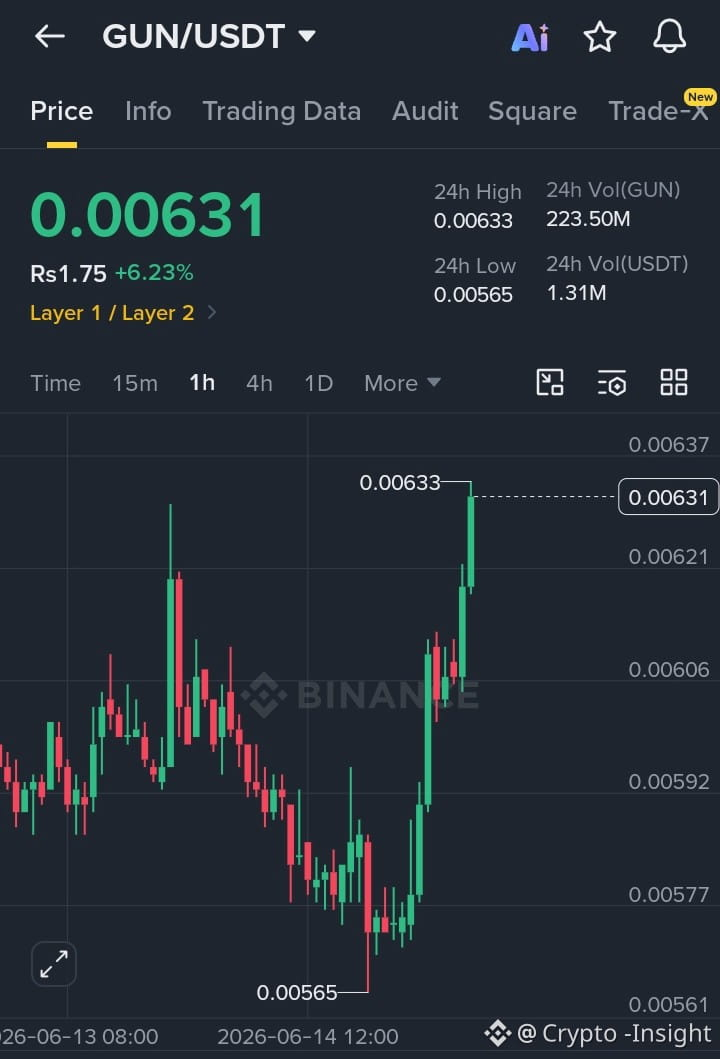
$GUN USDT is trading at 0.00631, holding just beneath its 24-hour high of 0.00633 after delivering a strong +6.23% advance from the 0.00565 low. The market has maintained a clear sequence of higher lows and higher highs, signaling sustained bullish momentum and continued buyer dominance.
What stands out is the volume. With over 223.50M GUN traded and 1.31M USDT turnover, participation remains elevated as traders aggressively position around the breakout zone. Price continues to hug resistance rather than retreat from it—a classic sign that bulls are absorbing sell pressure and preparing for another push higher.
The critical level is now 0.00633–0.00637. A decisive breakout above this zone could trigger a fresh liquidity run and accelerate momentum into new short-term highs. On the downside, as long as price holds above 0.00606–0.00592, the bullish structure remains intact and buyers retain control of the trend.
Volume is surging. Resistance is weakening. Momentum is building. The next breakout attempt could arrive fast.
#KamileUrayCommUNITY #kdmrcrypto $GUN
{spot}(GUNUSDT)
$GUN USDT BULLS ARE IN CONTROL — RESISTANCE IS CRACKING UNDER PRESSURE
$GUN USDT is trading at 0.00631, holding just beneath its 24-hour high of 0.00633 after delivering a strong +6.23% advance from the 0.00565 low. The market has maintained a clear sequence of higher lows and higher highs, signaling sustained bullish momentum and continued buyer dominance.
What stands out is the volume. With over 223.50M GUN traded and 1.31M USDT turnover, participation remains elevated as traders aggressively position around the breakout zone. Price continues to hug resistance rather than retreat from it—a classic sign that bulls are absorbing sell pressure and preparing for another push higher.
The critical level is now 0.00633–0.00637. A decisive breakout above this zone could trigger a fresh liquidity run and accelerate momentum into new short-term highs. On the downside, as long as price holds above 0.00606–0.00592, the bullish structure remains intact and buyers retain control of the trend.
Volume is surging. Resistance is weakening. Momentum is building. The next breakout attempt could arrive fast.
#KamileUrayCommUNITY #kdmrcrypto $GUN
$GUN USDT is trading at 0.00631, holding just beneath its 24-hour high of 0.00633 after delivering a strong +6.23% advance from the 0.00565 low. The market has maintained a clear sequence of higher lows and higher highs, signaling sustained bullish momentum and continued buyer dominance.
What stands out is the volume. With over 223.50M GUN traded and 1.31M USDT turnover, participation remains elevated as traders aggressively position around the breakout zone. Price continues to hug resistance rather than retreat from it—a classic sign that bulls are absorbing sell pressure and preparing for another push higher.
The critical level is now 0.00633–0.00637. A decisive breakout above this zone could trigger a fresh liquidity run and accelerate momentum into new short-term highs. On the downside, as long as price holds above 0.00606–0.00592, the bullish structure remains intact and buyers retain control of the trend.
Volume is surging. Resistance is weakening. Momentum is building. The next breakout attempt could arrive fast.
#KamileUrayCommUNITY #kdmrcrypto $GUN
1
195
Jump Crypto’s ‘Firedancer’ is taking a slow and steady approach to its long-awaited Solana infrastruIn an interview with CoinDesk, the lead engineer at Firedancer gives an update on how the new client, also known as a software, is fairing in the Solana ecosystem.
The rollout, however, is intentionally restrained. Patel said the team preferred to roll out progressively across the network rather than through a broad public launch, as the team remains cautious about rapidly increasing adoption.
We don’t want everybody to run it yet,” Patel said. “If half the network upgrades before we’ve done full security audits, that would be a bit much.”
Firedancer, developed by Jump Crypto, is a validator client for Solana, or another version of the software that runs the blockchain. The effort emerged partly in response to concerns around Solana’s earlier outages and its reliance on a single dominant client maintained by Solana infrastructure firm Anza.
Rather than framing Firedancer as a competitor to Anza, Patel described the relationship as collaborative.
The project has also become a key part of Solana’s broader effort to prepare the network for institutional-grade trading activity and real-world financial applications. Patel said Firedancer has helped shift Solana engineering from a reactive posture during periods of heavy congestion to one where developers can confidently scale new use cases.
I remember when there were memecoin and NFT launches, we were frantically watching all the performance dashboards,” Patel said. “But now it’s like, ‘Oh yeah, yet another big launch, it’s fine.’”
The team recently completed a public security audit competition with a $1 million bug bounty pool, a move Patel said gave Jump additional confidence in expanding the rollout.
While Firedancer’s rollout remains gradual, its quiet move onto mainnet marks one of the most consequential infrastructure upgrades in Solana’s history, and a major test of whether blockchain networks can achieve trading speeds closer to traditional financial markets.
#SolanaStrong
#hottoken
#GamingCoins
#jasmyustd
#kdmrcrypto
Jump Crypto’s ‘Firedancer’ is taking a slow and steady approach to its long-awaited Solana infrastru
In an interview with CoinDesk, the lead engineer at Firedancer gives an update on how the new client, also known as a software, is fairing in the Solana ecosystem.
The rollout, however, is intentionally restrained. Patel said the team preferred to roll out progressively across the network rather than through a broad public launch, as the team remains cautious about rapidly increasing adoption.
We don’t want everybody to run it yet,” Patel said. “If half the network upgrades before we’ve done full security audits, that would be a bit much.”
Firedancer, developed by Jump Crypto, is a validator client for Solana, or another version of the software that runs the blockchain. The effort emerged partly in response to concerns around Solana’s earlier outages and its reliance on a single dominant client maintained by Solana infrastructure firm Anza.
Rather than framing Firedancer as a competitor to Anza, Patel described the relationship as collaborative.
The project has also become a key part of Solana’s broader effort to prepare the network for institutional-grade trading activity and real-world financial applications. Patel said Firedancer has helped shift Solana engineering from a reactive posture during periods of heavy congestion to one where developers can confidently scale new use cases.
I remember when there were memecoin and NFT launches, we were frantically watching all the performance dashboards,” Patel said. “But now it’s like, ‘Oh yeah, yet another big launch, it’s fine.’”
The team recently completed a public security audit competition with a $1 million bug bounty pool, a move Patel said gave Jump additional confidence in expanding the rollout.
While Firedancer’s rollout remains gradual, its quiet move onto mainnet marks one of the most consequential infrastructure upgrades in Solana’s history, and a major test of whether blockchain networks can achieve trading speeds closer to traditional financial markets.
#SolanaStrong
#hottoken
#GamingCoins
#jasmyustd
#kdmrcrypto
The rollout, however, is intentionally restrained. Patel said the team preferred to roll out progressively across the network rather than through a broad public launch, as the team remains cautious about rapidly increasing adoption.
We don’t want everybody to run it yet,” Patel said. “If half the network upgrades before we’ve done full security audits, that would be a bit much.”
Firedancer, developed by Jump Crypto, is a validator client for Solana, or another version of the software that runs the blockchain. The effort emerged partly in response to concerns around Solana’s earlier outages and its reliance on a single dominant client maintained by Solana infrastructure firm Anza.
Rather than framing Firedancer as a competitor to Anza, Patel described the relationship as collaborative.
The project has also become a key part of Solana’s broader effort to prepare the network for institutional-grade trading activity and real-world financial applications. Patel said Firedancer has helped shift Solana engineering from a reactive posture during periods of heavy congestion to one where developers can confidently scale new use cases.
I remember when there were memecoin and NFT launches, we were frantically watching all the performance dashboards,” Patel said. “But now it’s like, ‘Oh yeah, yet another big launch, it’s fine.’”
The team recently completed a public security audit competition with a $1 million bug bounty pool, a move Patel said gave Jump additional confidence in expanding the rollout.
While Firedancer’s rollout remains gradual, its quiet move onto mainnet marks one of the most consequential infrastructure upgrades in Solana’s history, and a major test of whether blockchain networks can achieve trading speeds closer to traditional financial markets.
#SolanaStrong
#hottoken
#GamingCoins
#jasmyustd
#kdmrcrypto
1
369

Article
MakerDAO Celebrates D3M Debt Ceiling Milestone — Here’s Why It MattersMakerDAO recently announced a significant achievement with its D3M debt ceiling hitting a new all-time high. This accomplishment was amplified in a widely shared post by @CompoundLabs, highlighting the growing relevance of MakerDAO in the decentralized finance space. The tweet celebrated this milestone and its importance for the DeFi community.
The broader crypto market is currently showing mixed signals, with various assets demonstrating fluctuating momentum. Within this context, MakerDAO’s D3M debt ceiling increase signals substantial growth in its decentralized finance offerings. As institutional interest in DeFi continues to build, this milestone reflects a positive trend for MakerDAO and its users, fostering confidence in the platform’s future. The D3M mechanism, designed to provide liquidity, plays a crucial role in MakerDAO’s ability to adapt to market demands and enhance its competitive edge.
As of now, MakerDAO’s trading volume remains unreported, reflecting a period of low activity with no recent price changes to note. However, the community’s enthusiasm around the D3M achievement suggests potential for future trading flows and market engagement. The excitement surrounding this accomplishment could set the stage for increased interest from both retail and institutional investors as the ecosystem evolves.
MakerDAO has been a pioneer in the decentralized finance sector, enabling users to generate loans and earn interest through its stablecoin, DAI. The D3M mechanism, or Direct Deposit Module, is a crucial feature that allows MakerDAO to manage its liquidity effectively. This recent achievement in raising the debt ceiling illustrates the platform’s ongoing growth trajectory and adaptation to market dynamics, which is essential for maintaining its leadership position in the DeFi space.
Traders and investors should keep an eye on MakerDAO’s developments as the D3M mechanism continues to evolve. With its recent milestone, there is potential for increased liquidity and user engagement within the platform. Observing how this impacts broader DeFi sentiment and MakerDAO’s market performance will be crucial in the coming weeks. Additionally, traders should remain aware of the potential risks associated with market volatility as the ecosystem adapts to these changes.
#kdmrcrypto
#Notcoin
#MegadropLista
#ZeusInCrypto
#Dogecoin
MakerDAO Celebrates D3M Debt Ceiling Milestone — Here’s Why It Matters
MakerDAO recently announced a significant achievement with its D3M debt ceiling hitting a new all-time high. This accomplishment was amplified in a widely shared post by @CompoundLabs, highlighting the growing relevance of MakerDAO in the decentralized finance space. The tweet celebrated this milestone and its importance for the DeFi community.
The broader crypto market is currently showing mixed signals, with various assets demonstrating fluctuating momentum. Within this context, MakerDAO’s D3M debt ceiling increase signals substantial growth in its decentralized finance offerings. As institutional interest in DeFi continues to build, this milestone reflects a positive trend for MakerDAO and its users, fostering confidence in the platform’s future. The D3M mechanism, designed to provide liquidity, plays a crucial role in MakerDAO’s ability to adapt to market demands and enhance its competitive edge.
As of now, MakerDAO’s trading volume remains unreported, reflecting a period of low activity with no recent price changes to note. However, the community’s enthusiasm around the D3M achievement suggests potential for future trading flows and market engagement. The excitement surrounding this accomplishment could set the stage for increased interest from both retail and institutional investors as the ecosystem evolves.
MakerDAO has been a pioneer in the decentralized finance sector, enabling users to generate loans and earn interest through its stablecoin, DAI. The D3M mechanism, or Direct Deposit Module, is a crucial feature that allows MakerDAO to manage its liquidity effectively. This recent achievement in raising the debt ceiling illustrates the platform’s ongoing growth trajectory and adaptation to market dynamics, which is essential for maintaining its leadership position in the DeFi space.
Traders and investors should keep an eye on MakerDAO’s developments as the D3M mechanism continues to evolve. With its recent milestone, there is potential for increased liquidity and user engagement within the platform. Observing how this impacts broader DeFi sentiment and MakerDAO’s market performance will be crucial in the coming weeks. Additionally, traders should remain aware of the potential risks associated with market volatility as the ecosystem adapts to these changes.
#kdmrcrypto
#Notcoin
#MegadropLista
#ZeusInCrypto
#Dogecoin
The broader crypto market is currently showing mixed signals, with various assets demonstrating fluctuating momentum. Within this context, MakerDAO’s D3M debt ceiling increase signals substantial growth in its decentralized finance offerings. As institutional interest in DeFi continues to build, this milestone reflects a positive trend for MakerDAO and its users, fostering confidence in the platform’s future. The D3M mechanism, designed to provide liquidity, plays a crucial role in MakerDAO’s ability to adapt to market demands and enhance its competitive edge.
As of now, MakerDAO’s trading volume remains unreported, reflecting a period of low activity with no recent price changes to note. However, the community’s enthusiasm around the D3M achievement suggests potential for future trading flows and market engagement. The excitement surrounding this accomplishment could set the stage for increased interest from both retail and institutional investors as the ecosystem evolves.
MakerDAO has been a pioneer in the decentralized finance sector, enabling users to generate loans and earn interest through its stablecoin, DAI. The D3M mechanism, or Direct Deposit Module, is a crucial feature that allows MakerDAO to manage its liquidity effectively. This recent achievement in raising the debt ceiling illustrates the platform’s ongoing growth trajectory and adaptation to market dynamics, which is essential for maintaining its leadership position in the DeFi space.
Traders and investors should keep an eye on MakerDAO’s developments as the D3M mechanism continues to evolve. With its recent milestone, there is potential for increased liquidity and user engagement within the platform. Observing how this impacts broader DeFi sentiment and MakerDAO’s market performance will be crucial in the coming weeks. Additionally, traders should remain aware of the potential risks associated with market volatility as the ecosystem adapts to these changes.
#kdmrcrypto
#Notcoin
#MegadropLista
#ZeusInCrypto
#Dogecoin
341
Article
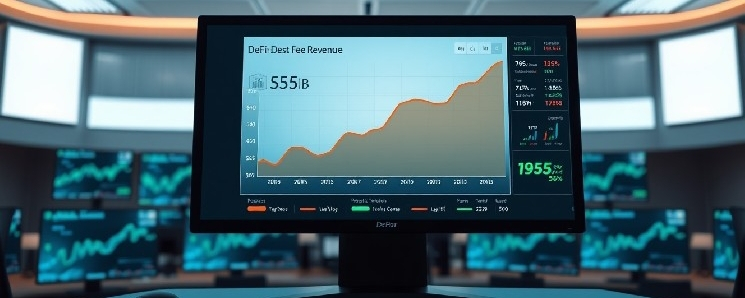
DeFi Cumulative Fee Revenue Reaches $25 Billion, Led by DEXsThe cumulative fee revenue generated by decentralized finance (DeFi) protocols from the start of 2023 through May 2026 has reached approximately $25 billion, according to a new report from Unfolded. The data, sourced from Token Terminal, highlights a significant milestone for the sector, demonstrating that DeFi platforms can generate real, measurable income beyond speculative trading activity.
Decentralized exchanges (DEXs) were the primary contributors, accounting for roughly half of the total fee revenue collected during this period. Their dominance reflects the sustained user demand for permissionless trading, particularly in volatile market conditions where traders seek direct control over their assets. Following DEXs, platforms offering liquid staking tokens (LSTs) emerged as the second-largest revenue source, with lending protocols and derivatives platforms also contributing meaningfully.
The report noted a particularly steep increase in fee generation between 2025 and 2026. This acceleration coincides with a broader market recovery and the maturation of several key DeFi applications, including more efficient automated market makers and improved cross-chain interoperability solutions. The growth suggests that DeFi is transitioning from an experimental phase into a more established financial infrastructure layer.
Unfolded described DeFi’s ability to generate real revenue and support cash flow-based valuation logic as a key achievement for the industry. However, the firm also cautioned that revenue sources remain heavily concentrated in specific verticals, particularly DEXs and LSTs. This lack of diversification means the overall ecosystem is still vulnerable to shocks affecting those dominant sectors. For DeFi to achieve long-term stability, broader revenue distribution across lending, derivatives, insurance, and other use cases will be necessary.
The $25 billion fee milestone underscores DeFi’s growing economic footprint and its potential to support fundamental valuation models. Yet the concentration of revenue in a handful of protocol types highlights an ongoing structural challenge. As the sector continues to evolve, achieving a more balanced revenue mix will be critical to reducing systemic risk and attracting mainstream institutional participation.
It is the total amount of fees collected by DeFi protocols from user transactions, trading, lending, staking, and other activities over a specified period. It serves as a key metric for measuring protocol usage and economic value.
The spike is attributed to a broader crypto market recovery, increased trading volume on DEXs, and the growing adoption of liquid staking and lending platforms. Technological improvements in scalability and user experience also contributed.
Yes. Heavy reliance on a few protocol types—especially DEXs and LSTs—makes the ecosystem vulnerable to sector-specific downturns. Greater diversification across lending, derivatives, insurance, and other verticals would strengthen resilience.
#ETHETFsApproved
#GamingCoins
#kdmrcrypto
#LISTAAirdrop
#ZeusInCrypto
DeFi Cumulative Fee Revenue Reaches $25 Billion, Led by DEXs
The cumulative fee revenue generated by decentralized finance (DeFi) protocols from the start of 2023 through May 2026 has reached approximately $25 billion, according to a new report from Unfolded. The data, sourced from Token Terminal, highlights a significant milestone for the sector, demonstrating that DeFi platforms can generate real, measurable income beyond speculative trading activity.
Decentralized exchanges (DEXs) were the primary contributors, accounting for roughly half of the total fee revenue collected during this period. Their dominance reflects the sustained user demand for permissionless trading, particularly in volatile market conditions where traders seek direct control over their assets. Following DEXs, platforms offering liquid staking tokens (LSTs) emerged as the second-largest revenue source, with lending protocols and derivatives platforms also contributing meaningfully.
The report noted a particularly steep increase in fee generation between 2025 and 2026. This acceleration coincides with a broader market recovery and the maturation of several key DeFi applications, including more efficient automated market makers and improved cross-chain interoperability solutions. The growth suggests that DeFi is transitioning from an experimental phase into a more established financial infrastructure layer.
Unfolded described DeFi’s ability to generate real revenue and support cash flow-based valuation logic as a key achievement for the industry. However, the firm also cautioned that revenue sources remain heavily concentrated in specific verticals, particularly DEXs and LSTs. This lack of diversification means the overall ecosystem is still vulnerable to shocks affecting those dominant sectors. For DeFi to achieve long-term stability, broader revenue distribution across lending, derivatives, insurance, and other use cases will be necessary.
The $25 billion fee milestone underscores DeFi’s growing economic footprint and its potential to support fundamental valuation models. Yet the concentration of revenue in a handful of protocol types highlights an ongoing structural challenge. As the sector continues to evolve, achieving a more balanced revenue mix will be critical to reducing systemic risk and attracting mainstream institutional participation.
It is the total amount of fees collected by DeFi protocols from user transactions, trading, lending, staking, and other activities over a specified period. It serves as a key metric for measuring protocol usage and economic value.
The spike is attributed to a broader crypto market recovery, increased trading volume on DEXs, and the growing adoption of liquid staking and lending platforms. Technological improvements in scalability and user experience also contributed.
Yes. Heavy reliance on a few protocol types—especially DEXs and LSTs—makes the ecosystem vulnerable to sector-specific downturns. Greater diversification across lending, derivatives, insurance, and other verticals would strengthen resilience.
#ETHETFsApproved
#GamingCoins
#kdmrcrypto
#LISTAAirdrop
#ZeusInCrypto
Decentralized exchanges (DEXs) were the primary contributors, accounting for roughly half of the total fee revenue collected during this period. Their dominance reflects the sustained user demand for permissionless trading, particularly in volatile market conditions where traders seek direct control over their assets. Following DEXs, platforms offering liquid staking tokens (LSTs) emerged as the second-largest revenue source, with lending protocols and derivatives platforms also contributing meaningfully.
The report noted a particularly steep increase in fee generation between 2025 and 2026. This acceleration coincides with a broader market recovery and the maturation of several key DeFi applications, including more efficient automated market makers and improved cross-chain interoperability solutions. The growth suggests that DeFi is transitioning from an experimental phase into a more established financial infrastructure layer.
Unfolded described DeFi’s ability to generate real revenue and support cash flow-based valuation logic as a key achievement for the industry. However, the firm also cautioned that revenue sources remain heavily concentrated in specific verticals, particularly DEXs and LSTs. This lack of diversification means the overall ecosystem is still vulnerable to shocks affecting those dominant sectors. For DeFi to achieve long-term stability, broader revenue distribution across lending, derivatives, insurance, and other use cases will be necessary.
The $25 billion fee milestone underscores DeFi’s growing economic footprint and its potential to support fundamental valuation models. Yet the concentration of revenue in a handful of protocol types highlights an ongoing structural challenge. As the sector continues to evolve, achieving a more balanced revenue mix will be critical to reducing systemic risk and attracting mainstream institutional participation.
It is the total amount of fees collected by DeFi protocols from user transactions, trading, lending, staking, and other activities over a specified period. It serves as a key metric for measuring protocol usage and economic value.
The spike is attributed to a broader crypto market recovery, increased trading volume on DEXs, and the growing adoption of liquid staking and lending platforms. Technological improvements in scalability and user experience also contributed.
Yes. Heavy reliance on a few protocol types—especially DEXs and LSTs—makes the ecosystem vulnerable to sector-specific downturns. Greater diversification across lending, derivatives, insurance, and other verticals would strengthen resilience.
#ETHETFsApproved
#GamingCoins
#kdmrcrypto
#LISTAAirdrop
#ZeusInCrypto
43
Hong Kong links up with Shanghai trade authorities to put cargo data on blockchainHKMA teams up with mainland regulators to develop a cross-border platform linking cargo data and electronic bills of lading, aiming to cut trade finance friction and plug Chinese supply chains into global markets
The MoU signals growing adoption of bitcoin in real-world plumbing, targeting $1.5 trillion in annual cargo finance where paper work and jams still cost a lot in delays in fraud.
By plugging mainland cargo data into Hong Kong’s international-facing infrastructure, officials aim to reduce friction in cross-border trade while reinforcing the city’s status as the primary conduit between China and global capital markets.
Under the agreement, the parties will study the creation of a cross-border platform under the HKMA’s Project Ensemble framework. The initiative will explore the use of electronic bills of lading and blockchain-based documentation to streamline trade finance, while connecting with Hong Kong’s Commercial Data Interchange and CargoX to facilitate secure data sharing.
For Hong Kong, the move extends its digital asset strategy beyond tokenized green bonds and into the real economy. Instead of focusing solely on sovereign issuance or crypto markets, regulators are targeting the operational bottlenecks in cargo finance, where paper documents, fragmented data, and manual verification continue to slow credit decisions.
If successful, the platform could embed Hong Kong deeper into mainland supply chains while offering international investors and banks a compliant gateway to Chinese trade data. In doing so, the city is attempting to turn blockchain from a pilot project into core cross-border financial infrastructure.
#orocryptotrends
#BinanceHerYerde
#Notcion
#TrumpSaysIranConflictHasEnded
#kdmrcrypto
Hong Kong links up with Shanghai trade authorities to put cargo data on blockchain
HKMA teams up with mainland regulators to develop a cross-border platform linking cargo data and electronic bills of lading, aiming to cut trade finance friction and plug Chinese supply chains into global markets
The MoU signals growing adoption of bitcoin in real-world plumbing, targeting $1.5 trillion in annual cargo finance where paper work and jams still cost a lot in delays in fraud.
By plugging mainland cargo data into Hong Kong’s international-facing infrastructure, officials aim to reduce friction in cross-border trade while reinforcing the city’s status as the primary conduit between China and global capital markets.
Under the agreement, the parties will study the creation of a cross-border platform under the HKMA’s Project Ensemble framework. The initiative will explore the use of electronic bills of lading and blockchain-based documentation to streamline trade finance, while connecting with Hong Kong’s Commercial Data Interchange and CargoX to facilitate secure data sharing.
For Hong Kong, the move extends its digital asset strategy beyond tokenized green bonds and into the real economy. Instead of focusing solely on sovereign issuance or crypto markets, regulators are targeting the operational bottlenecks in cargo finance, where paper documents, fragmented data, and manual verification continue to slow credit decisions.
If successful, the platform could embed Hong Kong deeper into mainland supply chains while offering international investors and banks a compliant gateway to Chinese trade data. In doing so, the city is attempting to turn blockchain from a pilot project into core cross-border financial infrastructure.
#orocryptotrends
#BinanceHerYerde
#Notcion
#TrumpSaysIranConflictHasEnded
#kdmrcrypto
The MoU signals growing adoption of bitcoin in real-world plumbing, targeting $1.5 trillion in annual cargo finance where paper work and jams still cost a lot in delays in fraud.
By plugging mainland cargo data into Hong Kong’s international-facing infrastructure, officials aim to reduce friction in cross-border trade while reinforcing the city’s status as the primary conduit between China and global capital markets.
Under the agreement, the parties will study the creation of a cross-border platform under the HKMA’s Project Ensemble framework. The initiative will explore the use of electronic bills of lading and blockchain-based documentation to streamline trade finance, while connecting with Hong Kong’s Commercial Data Interchange and CargoX to facilitate secure data sharing.
For Hong Kong, the move extends its digital asset strategy beyond tokenized green bonds and into the real economy. Instead of focusing solely on sovereign issuance or crypto markets, regulators are targeting the operational bottlenecks in cargo finance, where paper documents, fragmented data, and manual verification continue to slow credit decisions.
If successful, the platform could embed Hong Kong deeper into mainland supply chains while offering international investors and banks a compliant gateway to Chinese trade data. In doing so, the city is attempting to turn blockchain from a pilot project into core cross-border financial infrastructure.
#orocryptotrends
#BinanceHerYerde
#Notcion
#TrumpSaysIranConflictHasEnded
#kdmrcrypto
154
French soldier serving with UNIFIL killed in Lebanon attackA French soldier serving with the United Nations peacekeeping mission in Lebanon has been killed, and three others were wounded in an attack that UNIFIL and French officials said was likely carried out by Hezbollah.
Three other members of the peacekeeping mission were wounded in the attack in the village of Ghandouriyeh in southern Lebanon, UNIFIL said on Saturday, two of them seriously.
UNIFIL noted that initial assessments indicated they came from non-state actors, allegedly Hezbollah, and that an investigation had been launched into what it called “a deliberate attack”
In calls with Lebanese President Joseph Aoun and Prime Minister Nawaf Salam, French President Emmanuel Macron condemned the “unacceptable attack”, his office said in a statement on Saturday
Macron also said the evidence so far pointed to the Lebanese armed group and urged the Lebanese government to act against those responsible.
The Iran-aligned armed group rejected the allegations, calling for “exercising caution in issuing judgements regarding the incident”
“We deny any connection to us with the incident that occurred with UNIFIL forces in the Ghandouriyeh area in Bint Jbeil,” Hezbollah said in a statement.
French Armed Forces Minister Catherine Vautrin said the patrol was ambushed while on a mission to open a route to a UNIFIL post that had been isolated by fighting in the area. The soldier was killed by direct small-arms fire, she said.
Lebanon’s army condemned the shooting and said it had opened an investigation
President Aoun has also offered condolences and ordered an immediate probe, while Prime Minister Salam condemned the attack.
The deadly incidents come just days after an Israel-Lebanon 10-day ceasefire took effect and days before a truce in the United States-Israel war on Iran was set to expire.
Lebanon was drawn into the war in early March after Hezbollah fired rockets towards Israel in response to the US-Israeli killing of Iranian Supreme Leader Ali Khamenei on February 28. Israel responded with a devastating bombing campaign and a ground invasion that killed more than 2,000 people and forced more than 1.2 million others from their homes
The declaration of a ceasefire in Lebanon was seen as a boost to efforts for an agreement to end the US-Israel war on Iran. Pakistani Foreign Minister Ishaq Dar said fighting between Israel and Hezbollah had been a key sticking point in US-Iran talks last weekend in Islamabad.
It was not clear whether Hezbollah would abide by a truce it did not play a role in negotiating, especially when it leaves Israeli troops occupying a stretch of southern Lebanon.
UNIFIL, the UN Interim Force in Lebanon, was first deployed in 1978 along the border between Israel and Lebanon and has remained through successive conflicts, including a 2024 war during which its positions came under repeated fire.
Last month, two UN peacekeepers were killed in southern Lebanon amid Israel’s ground invasion of the country. UNFIL said they were killed when an explosion of unknown origin destroyed their vehicle.
World leaders have condemned the escalating violence and attacks on peacekeepers.
Last month, in a post on X, UN Secretary-General Antonio Guterres called on all parties to the war to abide by international law and ensure the security of all UN personnel.
This is just one of a number of recent incidents that have jeopardized the safety & security of peacekeepers,” Guterres had said.
#Write2Earrn
#Robertkiyosaki
#kdmrcrypto
#NOTCOİN
#UNIUSDT
French soldier serving with UNIFIL killed in Lebanon attack
A French soldier serving with the United Nations peacekeeping mission in Lebanon has been killed, and three others were wounded in an attack that UNIFIL and French officials said was likely carried out by Hezbollah.
Three other members of the peacekeeping mission were wounded in the attack in the village of Ghandouriyeh in southern Lebanon, UNIFIL said on Saturday, two of them seriously.
UNIFIL noted that initial assessments indicated they came from non-state actors, allegedly Hezbollah, and that an investigation had been launched into what it called “a deliberate attack”
In calls with Lebanese President Joseph Aoun and Prime Minister Nawaf Salam, French President Emmanuel Macron condemned the “unacceptable attack”, his office said in a statement on Saturday
Macron also said the evidence so far pointed to the Lebanese armed group and urged the Lebanese government to act against those responsible.
The Iran-aligned armed group rejected the allegations, calling for “exercising caution in issuing judgements regarding the incident”
“We deny any connection to us with the incident that occurred with UNIFIL forces in the Ghandouriyeh area in Bint Jbeil,” Hezbollah said in a statement.
French Armed Forces Minister Catherine Vautrin said the patrol was ambushed while on a mission to open a route to a UNIFIL post that had been isolated by fighting in the area. The soldier was killed by direct small-arms fire, she said.
Lebanon’s army condemned the shooting and said it had opened an investigation
President Aoun has also offered condolences and ordered an immediate probe, while Prime Minister Salam condemned the attack.
The deadly incidents come just days after an Israel-Lebanon 10-day ceasefire took effect and days before a truce in the United States-Israel war on Iran was set to expire.
Lebanon was drawn into the war in early March after Hezbollah fired rockets towards Israel in response to the US-Israeli killing of Iranian Supreme Leader Ali Khamenei on February 28. Israel responded with a devastating bombing campaign and a ground invasion that killed more than 2,000 people and forced more than 1.2 million others from their homes
The declaration of a ceasefire in Lebanon was seen as a boost to efforts for an agreement to end the US-Israel war on Iran. Pakistani Foreign Minister Ishaq Dar said fighting between Israel and Hezbollah had been a key sticking point in US-Iran talks last weekend in Islamabad.
It was not clear whether Hezbollah would abide by a truce it did not play a role in negotiating, especially when it leaves Israeli troops occupying a stretch of southern Lebanon.
UNIFIL, the UN Interim Force in Lebanon, was first deployed in 1978 along the border between Israel and Lebanon and has remained through successive conflicts, including a 2024 war during which its positions came under repeated fire.
Last month, two UN peacekeepers were killed in southern Lebanon amid Israel’s ground invasion of the country. UNFIL said they were killed when an explosion of unknown origin destroyed their vehicle.
World leaders have condemned the escalating violence and attacks on peacekeepers.
Last month, in a post on X, UN Secretary-General Antonio Guterres called on all parties to the war to abide by international law and ensure the security of all UN personnel.
This is just one of a number of recent incidents that have jeopardized the safety & security of peacekeepers,” Guterres had said.
#Write2Earrn
#Robertkiyosaki
#kdmrcrypto
#NOTCOİN
#UNIUSDT
Three other members of the peacekeeping mission were wounded in the attack in the village of Ghandouriyeh in southern Lebanon, UNIFIL said on Saturday, two of them seriously.
UNIFIL noted that initial assessments indicated they came from non-state actors, allegedly Hezbollah, and that an investigation had been launched into what it called “a deliberate attack”
In calls with Lebanese President Joseph Aoun and Prime Minister Nawaf Salam, French President Emmanuel Macron condemned the “unacceptable attack”, his office said in a statement on Saturday
Macron also said the evidence so far pointed to the Lebanese armed group and urged the Lebanese government to act against those responsible.
The Iran-aligned armed group rejected the allegations, calling for “exercising caution in issuing judgements regarding the incident”
“We deny any connection to us with the incident that occurred with UNIFIL forces in the Ghandouriyeh area in Bint Jbeil,” Hezbollah said in a statement.
French Armed Forces Minister Catherine Vautrin said the patrol was ambushed while on a mission to open a route to a UNIFIL post that had been isolated by fighting in the area. The soldier was killed by direct small-arms fire, she said.
Lebanon’s army condemned the shooting and said it had opened an investigation
President Aoun has also offered condolences and ordered an immediate probe, while Prime Minister Salam condemned the attack.
The deadly incidents come just days after an Israel-Lebanon 10-day ceasefire took effect and days before a truce in the United States-Israel war on Iran was set to expire.
Lebanon was drawn into the war in early March after Hezbollah fired rockets towards Israel in response to the US-Israeli killing of Iranian Supreme Leader Ali Khamenei on February 28. Israel responded with a devastating bombing campaign and a ground invasion that killed more than 2,000 people and forced more than 1.2 million others from their homes
The declaration of a ceasefire in Lebanon was seen as a boost to efforts for an agreement to end the US-Israel war on Iran. Pakistani Foreign Minister Ishaq Dar said fighting between Israel and Hezbollah had been a key sticking point in US-Iran talks last weekend in Islamabad.
It was not clear whether Hezbollah would abide by a truce it did not play a role in negotiating, especially when it leaves Israeli troops occupying a stretch of southern Lebanon.
UNIFIL, the UN Interim Force in Lebanon, was first deployed in 1978 along the border between Israel and Lebanon and has remained through successive conflicts, including a 2024 war during which its positions came under repeated fire.
Last month, two UN peacekeepers were killed in southern Lebanon amid Israel’s ground invasion of the country. UNFIL said they were killed when an explosion of unknown origin destroyed their vehicle.
World leaders have condemned the escalating violence and attacks on peacekeepers.
Last month, in a post on X, UN Secretary-General Antonio Guterres called on all parties to the war to abide by international law and ensure the security of all UN personnel.
This is just one of a number of recent incidents that have jeopardized the safety & security of peacekeepers,” Guterres had said.
#Write2Earrn
#Robertkiyosaki
#kdmrcrypto
#NOTCOİN
#UNIUSDT
96
The Stablecoin Moment: Morph's CEO Colin Goltra on Global Payment Settlement and the Future of CryptColin Goltra is the Chief Executive Officer of Morph, a blockchain platform building universal infrastructure for borderless payments and financial services. He recently joined the Bitcoin.com News Podcast to talk about the market:
In this episode Colin identifies the passing year as the critical “ stablecoin moment,” driven by a perfect storm of regulatory clarity (like the Genius Act and MiCA) and technological advancements on smart-contracting ecosystems that have finally solved the performance and scalability issues that plagued earlier attempts with Bitcoin. Morph’s mission has pivoted to stablecoin-based global payment settlement, adopting a “ruthlessly pragmatic” strategy to prepare for a market that could be dominated by either one or two fiat-backed stablecoins (USD-linked like USDC and USDT) or by a rise in relevant regional stablecoins.
He highlights the profound impact of stablecoins in emerging economies, where access to the dollar provides a crucial hedge against high local fiat inflation, citing the Philippine Peso as a prime example. Looking at the current landscape, Colin pinpoints four key active verticals in crypto: institutional stablecoin-based payments, the significant growth of Real-World Assets ( RWAs), prediction markets for valuable information, and the emerging space of Agentic AI, which will require crypto layers for payment and transacting.
The long-term vision for crypto, according to Colin, anticipates a transition from a purely “cryptonative” era to a more institutional and pragmatic phase over the next decade. He predicts that for the average person, the underlying blockchain infrastructure will “melt away at the UX level,” becoming an invisible rail for better, faster payment solutions. A major challenge remains a knowledge gap for small and mid-sized businesses. To address this, Morph is funding a $150 million payment accelerator to incentivize traditional payment businesses to migrate their transaction volume onto the Morph chain.
Before joining Morph, Colin Goltra served as Chief Operating Officer at Yield Guild Games (YGG) and as Director of Southeast Asia at Binance, where he played a key role in driving regional growth and ecosystem development.
Colin has been in the global crypto ecosystem for over 12 years and remains an avid believer in technology and its ability to improve the world. Prior to crypto, his background was in traditional technology and finance in Silicon Valley.
Morph is a payments-focused blockchain designed to power unified stablecoin liquidity and high-performance onchain settlement. Through native integrations and cross-chain infrastructure, Morph connects exchange liquidity with real-world financial flows.
To learn more about them visit Morph.network, and follow the team on X.
The Bitcoin.com News podcast features interviews with the most interesting leaders, founders and investors in the world of Cryptocurrency, Decentralized Finance ( DeFi), NFTs and the Metaverse. Follow us on iTunes or Spotify.
#InvestmentAccessibility
#CryptoTrends2024
#kdmrcrypto
#MantaRWA
#BinanceHerYerde
The Stablecoin Moment: Morph's CEO Colin Goltra on Global Payment Settlement and the Future of Crypt
Colin Goltra is the Chief Executive Officer of Morph, a blockchain platform building universal infrastructure for borderless payments and financial services. He recently joined the Bitcoin.com News Podcast to talk about the market:
In this episode Colin identifies the passing year as the critical “ stablecoin moment,” driven by a perfect storm of regulatory clarity (like the Genius Act and MiCA) and technological advancements on smart-contracting ecosystems that have finally solved the performance and scalability issues that plagued earlier attempts with Bitcoin. Morph’s mission has pivoted to stablecoin-based global payment settlement, adopting a “ruthlessly pragmatic” strategy to prepare for a market that could be dominated by either one or two fiat-backed stablecoins (USD-linked like USDC and USDT) or by a rise in relevant regional stablecoins.
He highlights the profound impact of stablecoins in emerging economies, where access to the dollar provides a crucial hedge against high local fiat inflation, citing the Philippine Peso as a prime example. Looking at the current landscape, Colin pinpoints four key active verticals in crypto: institutional stablecoin-based payments, the significant growth of Real-World Assets ( RWAs), prediction markets for valuable information, and the emerging space of Agentic AI, which will require crypto layers for payment and transacting.
The long-term vision for crypto, according to Colin, anticipates a transition from a purely “cryptonative” era to a more institutional and pragmatic phase over the next decade. He predicts that for the average person, the underlying blockchain infrastructure will “melt away at the UX level,” becoming an invisible rail for better, faster payment solutions. A major challenge remains a knowledge gap for small and mid-sized businesses. To address this, Morph is funding a $150 million payment accelerator to incentivize traditional payment businesses to migrate their transaction volume onto the Morph chain.
Before joining Morph, Colin Goltra served as Chief Operating Officer at Yield Guild Games (YGG) and as Director of Southeast Asia at Binance, where he played a key role in driving regional growth and ecosystem development.
Colin has been in the global crypto ecosystem for over 12 years and remains an avid believer in technology and its ability to improve the world. Prior to crypto, his background was in traditional technology and finance in Silicon Valley.
Morph is a payments-focused blockchain designed to power unified stablecoin liquidity and high-performance onchain settlement. Through native integrations and cross-chain infrastructure, Morph connects exchange liquidity with real-world financial flows.
To learn more about them visit Morph.network, and follow the team on X.
The Bitcoin.com News podcast features interviews with the most interesting leaders, founders and investors in the world of Cryptocurrency, Decentralized Finance ( DeFi), NFTs and the Metaverse. Follow us on iTunes or Spotify.
#InvestmentAccessibility
#CryptoTrends2024
#kdmrcrypto
#MantaRWA
#BinanceHerYerde
In this episode Colin identifies the passing year as the critical “ stablecoin moment,” driven by a perfect storm of regulatory clarity (like the Genius Act and MiCA) and technological advancements on smart-contracting ecosystems that have finally solved the performance and scalability issues that plagued earlier attempts with Bitcoin. Morph’s mission has pivoted to stablecoin-based global payment settlement, adopting a “ruthlessly pragmatic” strategy to prepare for a market that could be dominated by either one or two fiat-backed stablecoins (USD-linked like USDC and USDT) or by a rise in relevant regional stablecoins.
He highlights the profound impact of stablecoins in emerging economies, where access to the dollar provides a crucial hedge against high local fiat inflation, citing the Philippine Peso as a prime example. Looking at the current landscape, Colin pinpoints four key active verticals in crypto: institutional stablecoin-based payments, the significant growth of Real-World Assets ( RWAs), prediction markets for valuable information, and the emerging space of Agentic AI, which will require crypto layers for payment and transacting.
The long-term vision for crypto, according to Colin, anticipates a transition from a purely “cryptonative” era to a more institutional and pragmatic phase over the next decade. He predicts that for the average person, the underlying blockchain infrastructure will “melt away at the UX level,” becoming an invisible rail for better, faster payment solutions. A major challenge remains a knowledge gap for small and mid-sized businesses. To address this, Morph is funding a $150 million payment accelerator to incentivize traditional payment businesses to migrate their transaction volume onto the Morph chain.
Before joining Morph, Colin Goltra served as Chief Operating Officer at Yield Guild Games (YGG) and as Director of Southeast Asia at Binance, where he played a key role in driving regional growth and ecosystem development.
Colin has been in the global crypto ecosystem for over 12 years and remains an avid believer in technology and its ability to improve the world. Prior to crypto, his background was in traditional technology and finance in Silicon Valley.
Morph is a payments-focused blockchain designed to power unified stablecoin liquidity and high-performance onchain settlement. Through native integrations and cross-chain infrastructure, Morph connects exchange liquidity with real-world financial flows.
To learn more about them visit Morph.network, and follow the team on X.
The Bitcoin.com News podcast features interviews with the most interesting leaders, founders and investors in the world of Cryptocurrency, Decentralized Finance ( DeFi), NFTs and the Metaverse. Follow us on iTunes or Spotify.
#InvestmentAccessibility
#CryptoTrends2024
#kdmrcrypto
#MantaRWA
#BinanceHerYerde
141
Cryptoquant Researchers Warn Bitcoin's April Rally Mirrors 2022 Bear Market Demand PatternAccording to Cryptoquant‘s latest report, bitcoin‘s apparent demand metric, which tracks the 30-day change in estimated onchain spot buying activity, stayed negative for the full duration of April’s price run. Perpetual futures demand expanded during the same window as speculative traders pushed prices higher through leverage rather than direct coin accumulation.
Cryptoquant researchers describe the gap between rising futures activity and contracting spot demand as one of the clearest onchain signals that price gains are speculative in nature. When spot demand falls while price climbs, the market’s marginal buyer is positioned in derivatives, not in actual bitcoin.
The analyst’s phased breakdown of demand data makes the dynamic hard to dispute. Each phase of April’s rally showed higher perpetual futures demand alongside negative spot apparent demand. This was not a case of spot buyers lagging behind and catching up. Spot demand actively contracted as futures activity climbed.
Cryptoquant market strategists note that rallies with this structure tend to be self-limiting. Without fresh spot demand to absorb elevated prices, the unwind of futures positioning becomes the primary driver of the next decline.
The historical parallel Cryptoquant researchers draw is direct and worth taking seriously. The same demand signature appeared at the onset of the 2022 bear market, when perpetual futures demand expanded in isolation while spot apparent demand stayed in contraction. That setup preceded a multi-month price decline. Cryptoquant applies onchain demand decomposition consistently across cycles and identifies this pattern as a reliable early indicator of price fragility.
Bitcoin has already begun pulling back from the April peak. Price slipped from $79,000 to $75,000 following the rally’s high, a move consistent with how futures-led rallies historically resolve once speculative positioning begins to unwind. As of Saturday, May 2, BTC is exchanging hands just above $78,000 after trying again to reach the $80,000 mark.
Cryptoquant’s Bull Score Index declined from 50 to 40 in April, crossing back below the neutral threshold and returning to bearish territory. The index briefly reached 50, neutral ground, in mid-April before sliding to 40 by month’s end despite the 20% price gain during that stretch. Cryptoquant describes a score of 40 as conditions “getting bearish,” placing the market in a range historically associated with continued price weakness.
The Bull Score is a composite index Cryptoquant builds from multiple onchain and market indicators, scaled from 0 to 100. Scores above 50 reflect bullish conditions. Scores below 50 reflect bearish conditions. The market action also coincides with the U.S.-Iran conflict and geopolitical rumblings. Yesterday, Trump said the conflict was over, which gave bitcoin another boost alongside equities.
Cryptoquant analysts conclude that without a reversal in apparent demand from negative to positive territory, any push back toward the $79,000 local peak will lack the on-chain support needed to produce a sustained breakout.
The data does not guarantee a repeat of 2022’s prolonged downturn, but Cryptoquant makes clear the current demand structure matches the historical profile of price fragility, not accumulation.
#LISTAAirdrop
#kdmrcrypto
#jasmyustd
#hottrendingtopics
#BTCSurpasses$80K
Cryptoquant Researchers Warn Bitcoin's April Rally Mirrors 2022 Bear Market Demand Pattern
According to Cryptoquant‘s latest report, bitcoin‘s apparent demand metric, which tracks the 30-day change in estimated onchain spot buying activity, stayed negative for the full duration of April’s price run. Perpetual futures demand expanded during the same window as speculative traders pushed prices higher through leverage rather than direct coin accumulation.
Cryptoquant researchers describe the gap between rising futures activity and contracting spot demand as one of the clearest onchain signals that price gains are speculative in nature. When spot demand falls while price climbs, the market’s marginal buyer is positioned in derivatives, not in actual bitcoin.
The analyst’s phased breakdown of demand data makes the dynamic hard to dispute. Each phase of April’s rally showed higher perpetual futures demand alongside negative spot apparent demand. This was not a case of spot buyers lagging behind and catching up. Spot demand actively contracted as futures activity climbed.
Cryptoquant market strategists note that rallies with this structure tend to be self-limiting. Without fresh spot demand to absorb elevated prices, the unwind of futures positioning becomes the primary driver of the next decline.
The historical parallel Cryptoquant researchers draw is direct and worth taking seriously. The same demand signature appeared at the onset of the 2022 bear market, when perpetual futures demand expanded in isolation while spot apparent demand stayed in contraction. That setup preceded a multi-month price decline. Cryptoquant applies onchain demand decomposition consistently across cycles and identifies this pattern as a reliable early indicator of price fragility.
Bitcoin has already begun pulling back from the April peak. Price slipped from $79,000 to $75,000 following the rally’s high, a move consistent with how futures-led rallies historically resolve once speculative positioning begins to unwind. As of Saturday, May 2, BTC is exchanging hands just above $78,000 after trying again to reach the $80,000 mark.
Cryptoquant’s Bull Score Index declined from 50 to 40 in April, crossing back below the neutral threshold and returning to bearish territory. The index briefly reached 50, neutral ground, in mid-April before sliding to 40 by month’s end despite the 20% price gain during that stretch. Cryptoquant describes a score of 40 as conditions “getting bearish,” placing the market in a range historically associated with continued price weakness.
The Bull Score is a composite index Cryptoquant builds from multiple onchain and market indicators, scaled from 0 to 100. Scores above 50 reflect bullish conditions. Scores below 50 reflect bearish conditions. The market action also coincides with the U.S.-Iran conflict and geopolitical rumblings. Yesterday, Trump said the conflict was over, which gave bitcoin another boost alongside equities.
Cryptoquant analysts conclude that without a reversal in apparent demand from negative to positive territory, any push back toward the $79,000 local peak will lack the on-chain support needed to produce a sustained breakout.
The data does not guarantee a repeat of 2022’s prolonged downturn, but Cryptoquant makes clear the current demand structure matches the historical profile of price fragility, not accumulation.
#LISTAAirdrop
#kdmrcrypto
#jasmyustd
#hottrendingtopics
#BTCSurpasses$80K
Cryptoquant researchers describe the gap between rising futures activity and contracting spot demand as one of the clearest onchain signals that price gains are speculative in nature. When spot demand falls while price climbs, the market’s marginal buyer is positioned in derivatives, not in actual bitcoin.
The analyst’s phased breakdown of demand data makes the dynamic hard to dispute. Each phase of April’s rally showed higher perpetual futures demand alongside negative spot apparent demand. This was not a case of spot buyers lagging behind and catching up. Spot demand actively contracted as futures activity climbed.
Cryptoquant market strategists note that rallies with this structure tend to be self-limiting. Without fresh spot demand to absorb elevated prices, the unwind of futures positioning becomes the primary driver of the next decline.
The historical parallel Cryptoquant researchers draw is direct and worth taking seriously. The same demand signature appeared at the onset of the 2022 bear market, when perpetual futures demand expanded in isolation while spot apparent demand stayed in contraction. That setup preceded a multi-month price decline. Cryptoquant applies onchain demand decomposition consistently across cycles and identifies this pattern as a reliable early indicator of price fragility.
Bitcoin has already begun pulling back from the April peak. Price slipped from $79,000 to $75,000 following the rally’s high, a move consistent with how futures-led rallies historically resolve once speculative positioning begins to unwind. As of Saturday, May 2, BTC is exchanging hands just above $78,000 after trying again to reach the $80,000 mark.
Cryptoquant’s Bull Score Index declined from 50 to 40 in April, crossing back below the neutral threshold and returning to bearish territory. The index briefly reached 50, neutral ground, in mid-April before sliding to 40 by month’s end despite the 20% price gain during that stretch. Cryptoquant describes a score of 40 as conditions “getting bearish,” placing the market in a range historically associated with continued price weakness.
The Bull Score is a composite index Cryptoquant builds from multiple onchain and market indicators, scaled from 0 to 100. Scores above 50 reflect bullish conditions. Scores below 50 reflect bearish conditions. The market action also coincides with the U.S.-Iran conflict and geopolitical rumblings. Yesterday, Trump said the conflict was over, which gave bitcoin another boost alongside equities.
Cryptoquant analysts conclude that without a reversal in apparent demand from negative to positive territory, any push back toward the $79,000 local peak will lack the on-chain support needed to produce a sustained breakout.
The data does not guarantee a repeat of 2022’s prolonged downturn, but Cryptoquant makes clear the current demand structure matches the historical profile of price fragility, not accumulation.
#LISTAAirdrop
#kdmrcrypto
#jasmyustd
#hottrendingtopics
#BTCSurpasses$80K
51
·
--
Haussier
$SOL /USDT is currently sitting at 68.34, grinding after a controlled intraday pullback from the 69.59 high. Price action is compressing just above key support zones, with the market repeatedly failing to hold momentum above the 69 handle, signaling clear overhead pressure from sellers.
Volatility remains alive — price traded as low as 67.77, showing that dips are still getting accepted but not fully defended with conviction. With 1.60M $SOL / 109.22M USDT in 24h volume, liquidity is still flowing, not drying up — meaning this isn’t a dead market, it’s a coiling one.
Structure is simple: bulls need a clean reclaim of 69.60 to unlock continuation toward higher liquidity. Failure to hold 67.70 flips momentum fast and opens the door for a deeper sweep into lower support levels.
Market is tightening. Pressure is building. Next expansion move won’t be subtle.
#krypton #kdmrcrypto $SOL
{spot}(SOLUSDT)
$SOL /USDT is currently sitting at 68.34, grinding after a controlled intraday pullback from the 69.59 high. Price action is compressing just above key support zones, with the market repeatedly failing to hold momentum above the 69 handle, signaling clear overhead pressure from sellers.
Volatility remains alive — price traded as low as 67.77, showing that dips are still getting accepted but not fully defended with conviction. With 1.60M $SOL / 109.22M USDT in 24h volume, liquidity is still flowing, not drying up — meaning this isn’t a dead market, it’s a coiling one.
Structure is simple: bulls need a clean reclaim of 69.60 to unlock continuation toward higher liquidity. Failure to hold 67.70 flips momentum fast and opens the door for a deeper sweep into lower support levels.
Market is tightening. Pressure is building. Next expansion move won’t be subtle.
#krypton #kdmrcrypto $SOL
Volatility remains alive — price traded as low as 67.77, showing that dips are still getting accepted but not fully defended with conviction. With 1.60M $SOL / 109.22M USDT in 24h volume, liquidity is still flowing, not drying up — meaning this isn’t a dead market, it’s a coiling one.
Structure is simple: bulls need a clean reclaim of 69.60 to unlock continuation toward higher liquidity. Failure to hold 67.70 flips momentum fast and opens the door for a deeper sweep into lower support levels.
Market is tightening. Pressure is building. Next expansion move won’t be subtle.
#krypton #kdmrcrypto $SOL
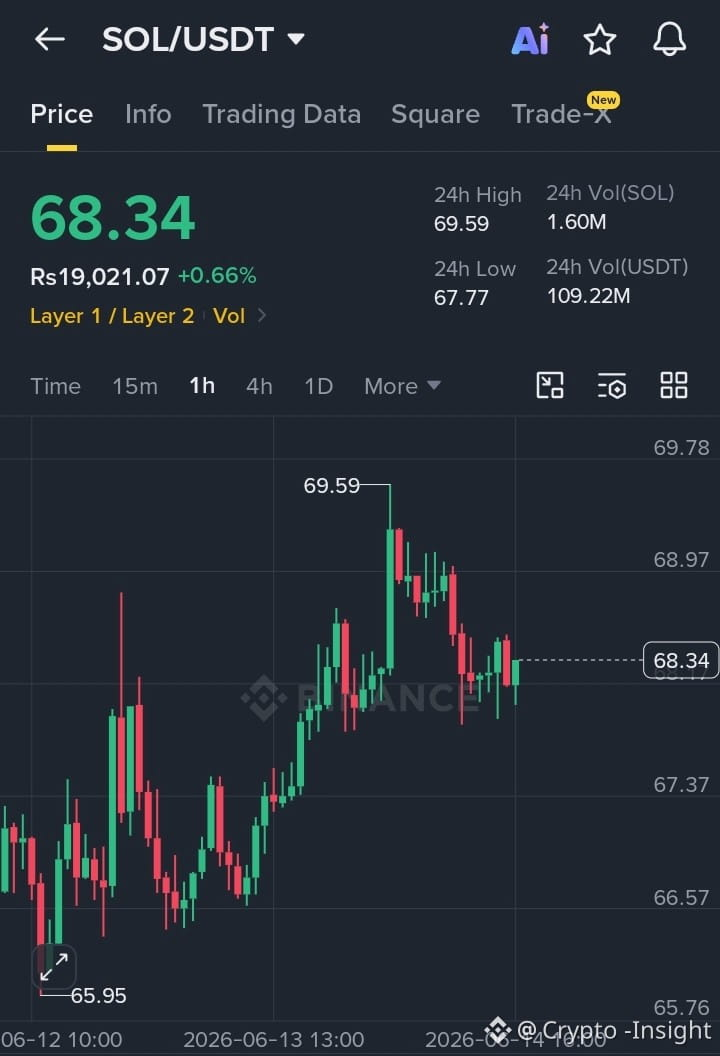
2
99
Indonesian students protest gov’t policies amid economic strainSome 1,500 Indonesian students have taken to the streets of the capital to protest against a series of economic policies by the government of President Prabowo Subianto, as Southeast Asia’s biggest economy faces mounting fiscal pressures amid a global supply chain crisis.
Demonstrators in Jakarta outlined five key demands for the government on Friday, particularly the lowering of fuel and food prices.
They also urged the government to roll back state welfare programmes they say are expensive and “wasteful”, including Prabowo’s flagship free meals and village cooperative initiatives.
Called the “Heading to Bankrupt Indonesia” protests, demonstrators donned yellow university jackets after Friday prayers and marched towards Jakarta’s central monument, the Hotel Indonesia traffic circle, where they gathered and voiced their frustration
Organisers told reporters that some protesters were blocked from joining by the police and military officials. Scuffles broke out as some students attempted to break through the police lines and metal barricades
This week, the government introduced a 32 percent price hike, angering many.
In addition, demonstrators on Friday called for more targeted spending. The $15bn-a-year free meals programme, which aims to reduce poverty and malnutrition, for example, has been the subject of a corruption probe, with Prabowo firing the programme’s head in early June
“Wasteful spending on free meals has led to a fiscal situation where subsidies initially provided had been withdrawn,” student protester Rafael Arreva told the Reuters news agency while standing in front of a police blockade
Protesters also demanded an end to the expanding role of the military in government, saying it was a threat to the country’s young democracy
The government is in denial about the current situation,” Yatalathof Ma’shum Imawan, who chairs the student group that organised the rally, told The Associated Press. “We urge Prabowo to have the courage to acknowledge his mistake and stop denying it.
Indonesia last saw mass protests in August when demonstrators called for housing reforms. Clashes between protesters and security forces left at least 13 people dead
#PEPEATH
#kdmrcrypto
#MegadropLista
#Notcoin
#coinaute
Indonesian students protest gov’t policies amid economic strain
Some 1,500 Indonesian students have taken to the streets of the capital to protest against a series of economic policies by the government of President Prabowo Subianto, as Southeast Asia’s biggest economy faces mounting fiscal pressures amid a global supply chain crisis.
Demonstrators in Jakarta outlined five key demands for the government on Friday, particularly the lowering of fuel and food prices.
They also urged the government to roll back state welfare programmes they say are expensive and “wasteful”, including Prabowo’s flagship free meals and village cooperative initiatives.
Called the “Heading to Bankrupt Indonesia” protests, demonstrators donned yellow university jackets after Friday prayers and marched towards Jakarta’s central monument, the Hotel Indonesia traffic circle, where they gathered and voiced their frustration
Organisers told reporters that some protesters were blocked from joining by the police and military officials. Scuffles broke out as some students attempted to break through the police lines and metal barricades
This week, the government introduced a 32 percent price hike, angering many.
In addition, demonstrators on Friday called for more targeted spending. The $15bn-a-year free meals programme, which aims to reduce poverty and malnutrition, for example, has been the subject of a corruption probe, with Prabowo firing the programme’s head in early June
“Wasteful spending on free meals has led to a fiscal situation where subsidies initially provided had been withdrawn,” student protester Rafael Arreva told the Reuters news agency while standing in front of a police blockade
Protesters also demanded an end to the expanding role of the military in government, saying it was a threat to the country’s young democracy
The government is in denial about the current situation,” Yatalathof Ma’shum Imawan, who chairs the student group that organised the rally, told The Associated Press. “We urge Prabowo to have the courage to acknowledge his mistake and stop denying it.
Indonesia last saw mass protests in August when demonstrators called for housing reforms. Clashes between protesters and security forces left at least 13 people dead
#PEPEATH
#kdmrcrypto
#MegadropLista
#Notcoin
#coinaute
Demonstrators in Jakarta outlined five key demands for the government on Friday, particularly the lowering of fuel and food prices.
They also urged the government to roll back state welfare programmes they say are expensive and “wasteful”, including Prabowo’s flagship free meals and village cooperative initiatives.
Called the “Heading to Bankrupt Indonesia” protests, demonstrators donned yellow university jackets after Friday prayers and marched towards Jakarta’s central monument, the Hotel Indonesia traffic circle, where they gathered and voiced their frustration
Organisers told reporters that some protesters were blocked from joining by the police and military officials. Scuffles broke out as some students attempted to break through the police lines and metal barricades
This week, the government introduced a 32 percent price hike, angering many.
In addition, demonstrators on Friday called for more targeted spending. The $15bn-a-year free meals programme, which aims to reduce poverty and malnutrition, for example, has been the subject of a corruption probe, with Prabowo firing the programme’s head in early June
“Wasteful spending on free meals has led to a fiscal situation where subsidies initially provided had been withdrawn,” student protester Rafael Arreva told the Reuters news agency while standing in front of a police blockade
Protesters also demanded an end to the expanding role of the military in government, saying it was a threat to the country’s young democracy
The government is in denial about the current situation,” Yatalathof Ma’shum Imawan, who chairs the student group that organised the rally, told The Associated Press. “We urge Prabowo to have the courage to acknowledge his mistake and stop denying it.
Indonesia last saw mass protests in August when demonstrators called for housing reforms. Clashes between protesters and security forces left at least 13 people dead
#PEPEATH
#kdmrcrypto
#MegadropLista
#Notcoin
#coinaute
1
353
·
--
Haussier
$METIS USDT BULLS ARE IN FULL CONTROL — 13% SURGE PUSHES PRICE INTO BREAKOUT PRESSURE ZONE
$METIS USDT is trading at 3.06, extending a strong +13.75% rally after climbing from the 2.67 low toward the 3.08 high, confirming aggressive bullish expansion and sustained momentum across the structure.
The move is backed by solid participation, with 348K METIS traded and nearly 979K USDT volume, showing real market involvement rather than a weak liquidity spike. Buyers continue to defend higher levels while pressing price directly into resistance.
The key battleground is now 3.08–3.11 resistance. A clean breakout above this zone could trigger continuation into higher liquidity levels and extend the bullish trend. However, failure to hold 2.98–2.86 support would signal exhaustion and open the door for a deeper retracement after the strong impulse move.
Volume is steady. Trend is strong. Price is pressing resistance — METIS is entering a critical decision zone.
#krypton #kdmrcrypto $METIS
{spot}(METISUSDT)
$METIS USDT BULLS ARE IN FULL CONTROL — 13% SURGE PUSHES PRICE INTO BREAKOUT PRESSURE ZONE
$METIS USDT is trading at 3.06, extending a strong +13.75% rally after climbing from the 2.67 low toward the 3.08 high, confirming aggressive bullish expansion and sustained momentum across the structure.
The move is backed by solid participation, with 348K METIS traded and nearly 979K USDT volume, showing real market involvement rather than a weak liquidity spike. Buyers continue to defend higher levels while pressing price directly into resistance.
The key battleground is now 3.08–3.11 resistance. A clean breakout above this zone could trigger continuation into higher liquidity levels and extend the bullish trend. However, failure to hold 2.98–2.86 support would signal exhaustion and open the door for a deeper retracement after the strong impulse move.
Volume is steady. Trend is strong. Price is pressing resistance — METIS is entering a critical decision zone.
#krypton #kdmrcrypto $METIS
$METIS USDT is trading at 3.06, extending a strong +13.75% rally after climbing from the 2.67 low toward the 3.08 high, confirming aggressive bullish expansion and sustained momentum across the structure.
The move is backed by solid participation, with 348K METIS traded and nearly 979K USDT volume, showing real market involvement rather than a weak liquidity spike. Buyers continue to defend higher levels while pressing price directly into resistance.
The key battleground is now 3.08–3.11 resistance. A clean breakout above this zone could trigger continuation into higher liquidity levels and extend the bullish trend. However, failure to hold 2.98–2.86 support would signal exhaustion and open the door for a deeper retracement after the strong impulse move.
Volume is steady. Trend is strong. Price is pressing resistance — METIS is entering a critical decision zone.
#krypton #kdmrcrypto $METIS
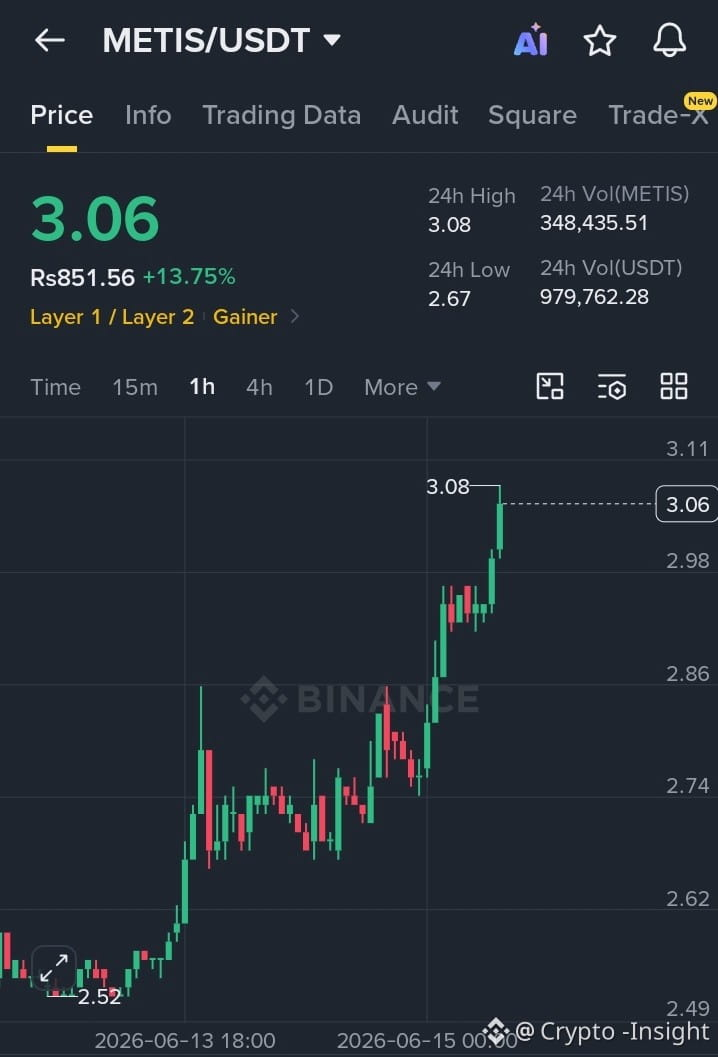
78
Connectez-vous pour découvrir plus de contenu
Rejoignez la communauté mondiale des adeptes de cryptomonnaies sur Binance Square
⚡️ Suviez les dernières informations importantes sur les cryptomonnaies.
💬 Jugé digne de confiance par la plus grande plateforme d’échange de cryptomonnaies au monde.
👍 Découvrez les connaissances que partagent les créateurs vérifiés.
Adresse e-mail/Nº de téléphone
Sujets d’actualité
1
#BinanceLaunchesBinanceIntelligence
599,771 vues
3,717 mentions
2
#BTCFallsBelow$84K
12 vues
22 mentions
3
#WinklevossFilesSpotZcashETFApplication
2,373 vues
67 mentions
4
#SouthKoreaAITradeLiftsWorldcoinTo$7.41B
361 vues
10 mentions
5
#StrategyEstimates$4.1BIncomeTaxBenefit
312 vues
9 mentions
6
#IglooShutsDownAbstractBlockchain
100 vues
24 mentions
7
#StrategyMarketCapSurpassesRumble
31,572 vues
688 mentions
8
#StriveBuys2000BTCFor$169M
17,083 vues
153 mentions
9
#EvernorthXRPTreasuryCompletesSPACMerger
228,543 vues
1,877 mentions
10
#ADAGains10%Above$0.27
79,357 vues
265 mentions