Binance Square
#jasmyustd

jasmyustd

1.3M vues
580 mentions
Panda Traders
·
--
Baissier
Panda Traders
·
--
Baissier
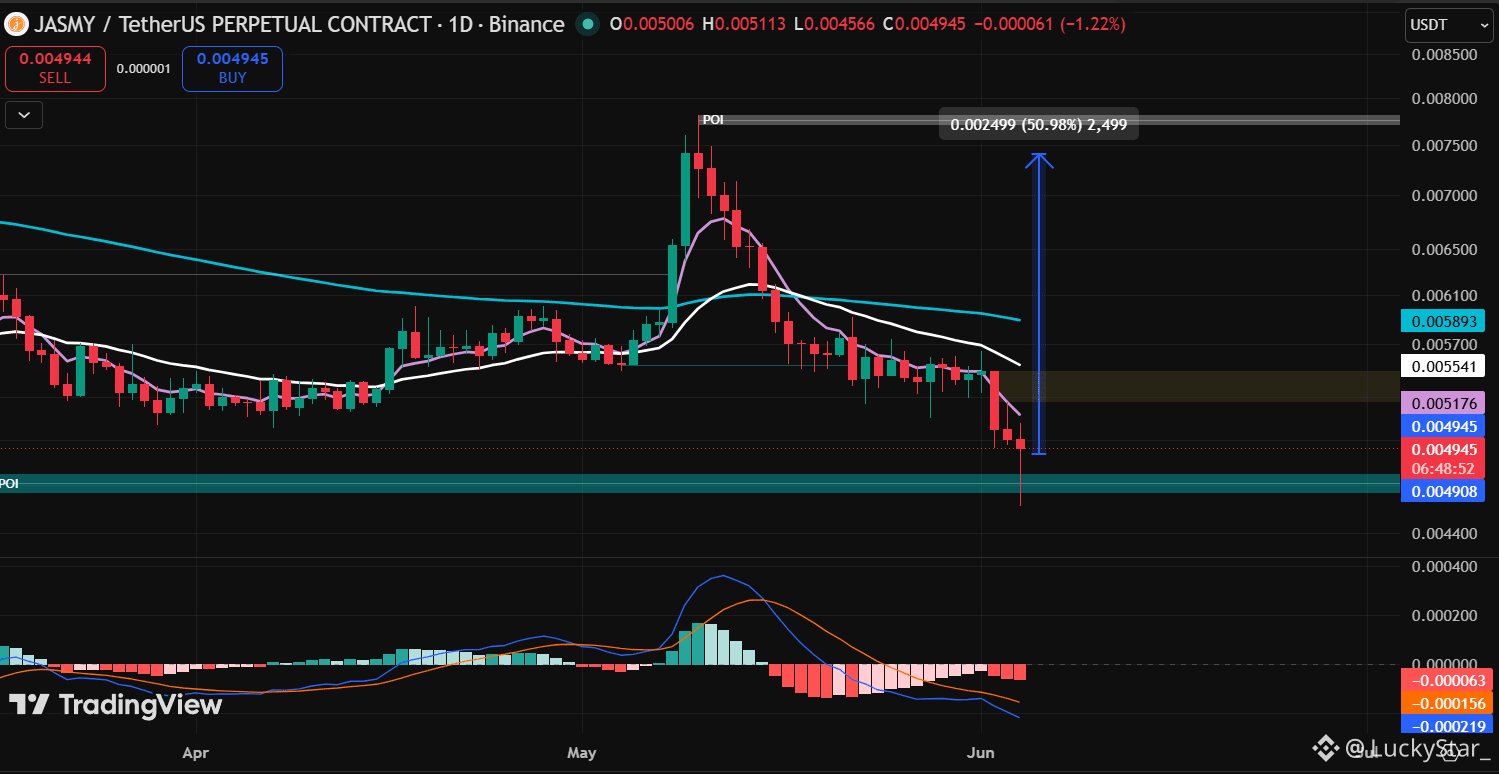
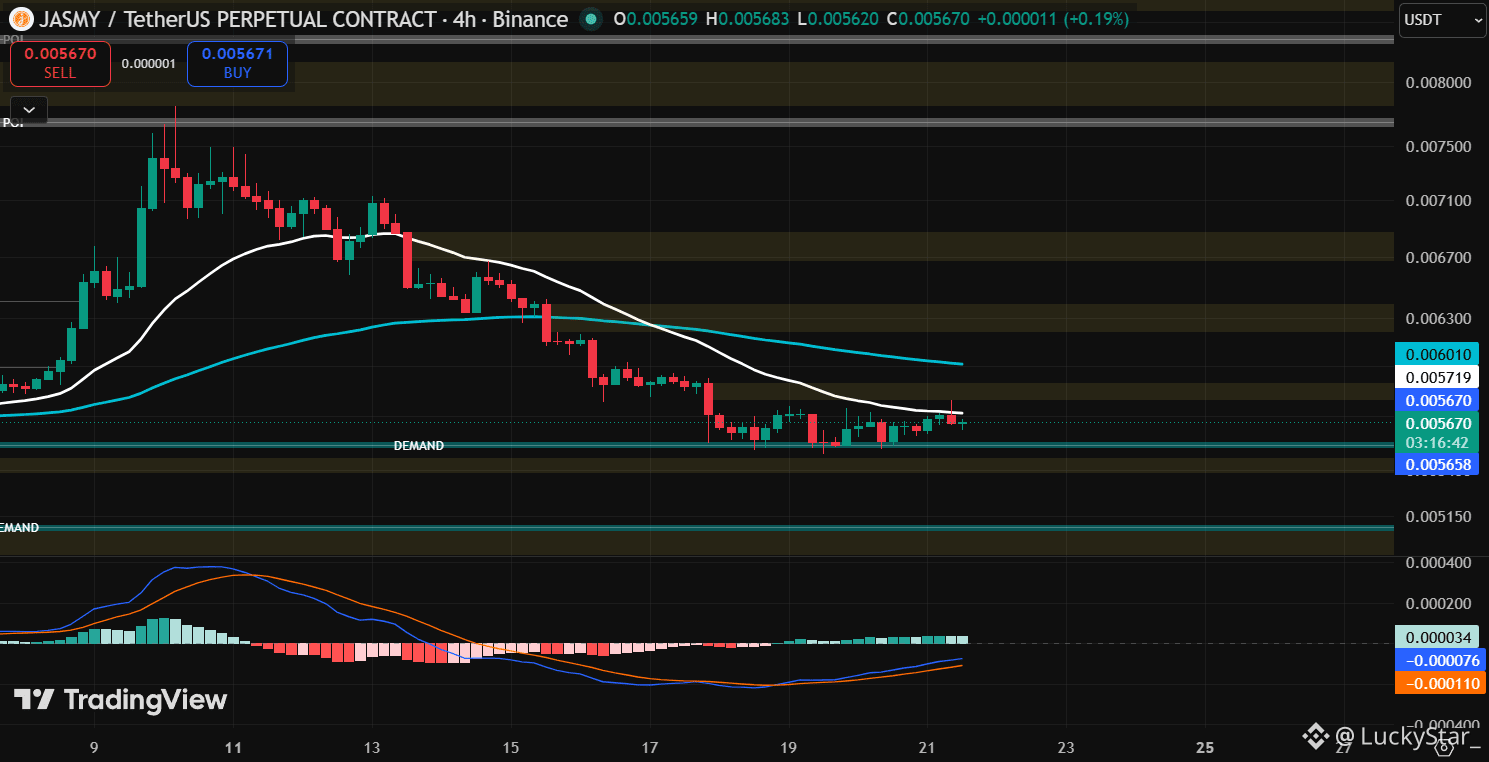
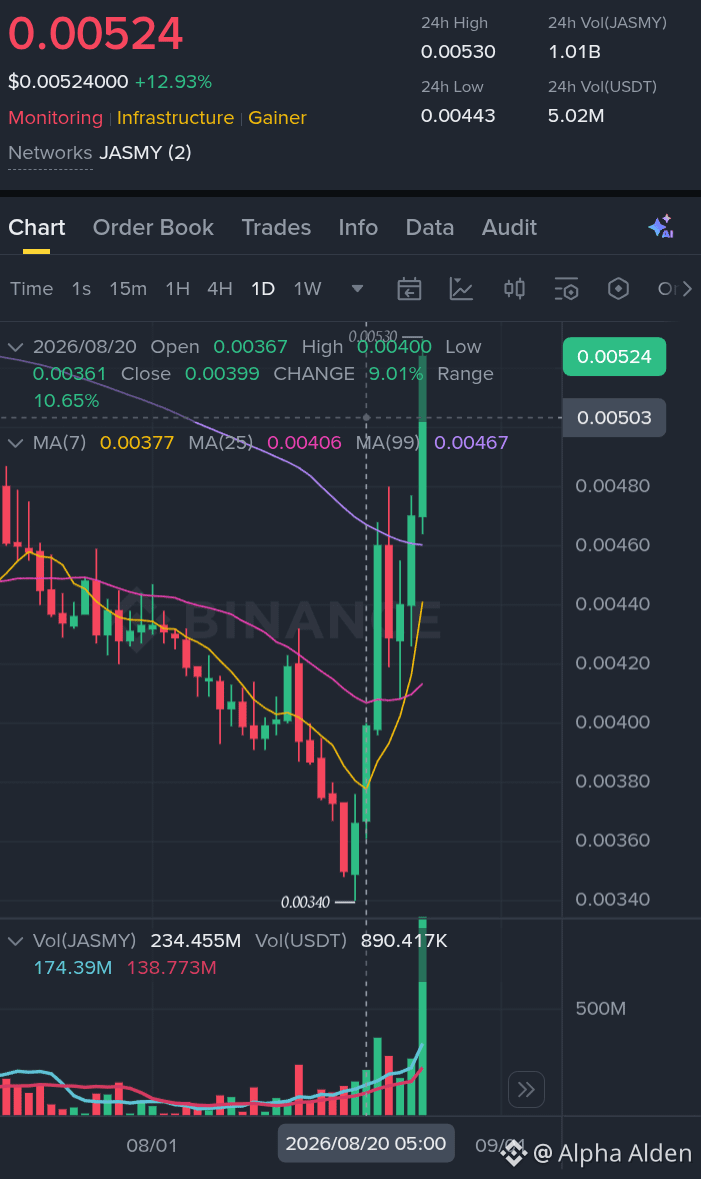
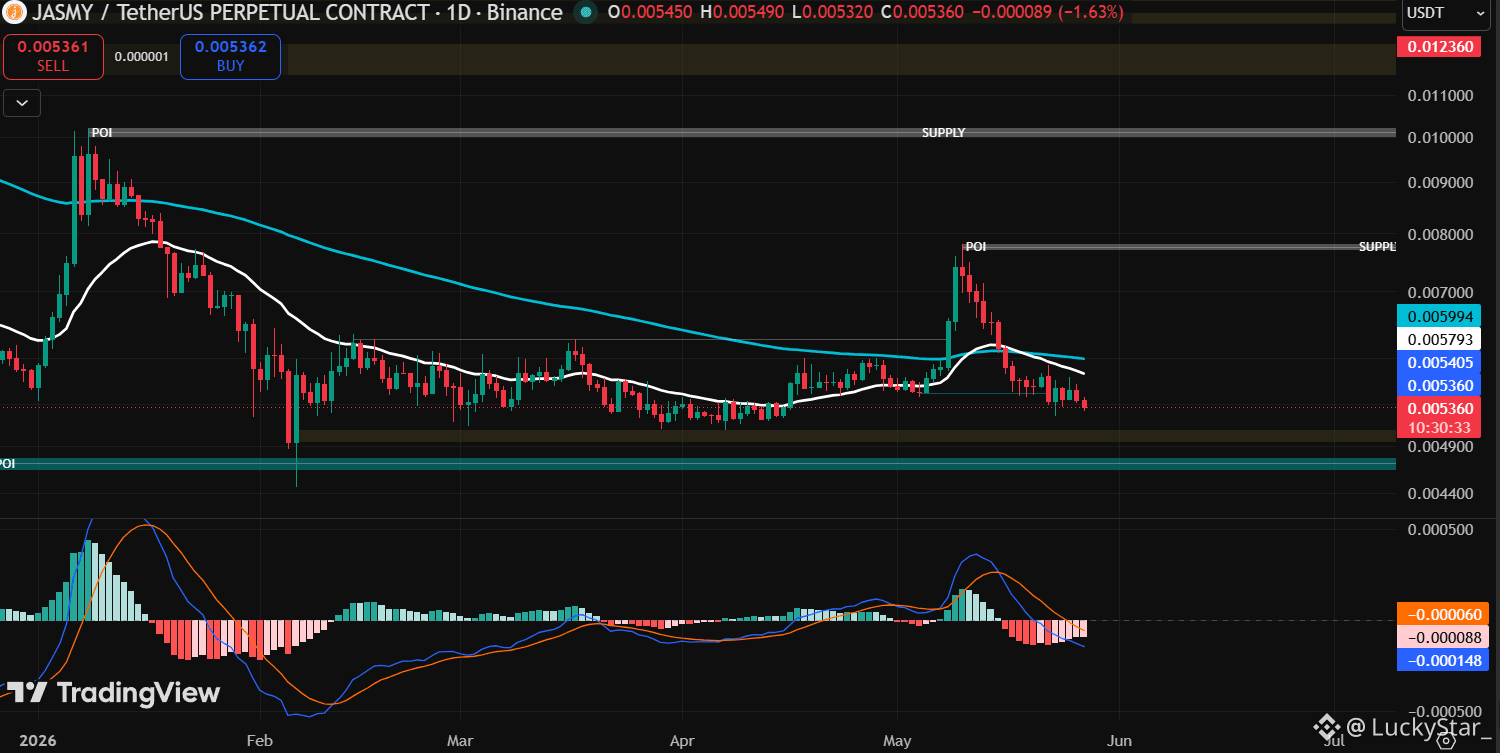
$JASMY short 📉
Entry zone: 0.00778 – 0.00794
Stop loss: 0.00815
Targets:
0.00755
0.00735
0.00718
0.00692

Risky and volatile trade so be cautious while taking leverage

click below and short now 👇
{future}(JASMYUSDT)
#Jasmyusdt⚠️⚠️ CFTC&SECStrengthenOversightCollaborationOnPredictionMarkets#BlackRockPlansMoneyMarketFundsforStablecoinUsers #CLARITYActHearingSetforMay14 #USAdds115kJobs #TomLeeonBitMineSlowingETHPurchases
Demi Nadeem:
i was open long it will pull back again? or i close
·
--
Haussier
The New World - BTC:
Jasmy's fundamentals align with this technical breakout; momentum could drive it higher.
Seattle Court Sentences Former CFO for Unauthorized $35M Cryptocurrency GambleA former chief financial officer’s (CFO) attempt to turn his employer’s treasury into a personal cryptocurrency “ yield farm” has ended in a federal prison sentence. Nevin Shetty, the 42-year-old former CFO of Seattle e-commerce unicorn Fabric, was sentenced March 5 to two years in prison for wire fraud after secretly funneling $35 million into a decentralized finance ( DeFi) scheme that collapsed in less than a month According to a press release by the U.S. Attorney’s Office, Shetty helped draft a strict, conservative investment policy for the company’s hundreds of millions in venture capital. However, in early 2022, Shetty launched a side business called HighTower Treasury. Prosecutors say Shetty’s plan was a classic crypto arbitrage. After moving $35,000,100 of Fabric’s cash into HighTower, Shetty funneled the funds into DeFi lending protocols—specifically the Terra/Luna ecosystem—which at the time offered annual percentage yields of 20% or more. Shetty planned to pay Fabric a modest 6% “safe” return while pocketing the 14% surplus for himself and his partner. In the first 30 days, the scheme appeared to work, generating roughly $133,000 in personal profit. However, the gamble turned into a nightmare in May 2022 when the TerraUSD (UST) stablecoin de-pegged, triggering a $40 billion wipeout. Within days, the $35 million Fabric treasury held by Shetty had plummeted in value to virtually nothing. The loss had significant and severe effects on the company,” U.S. District Judge Tana Lin said during the sentencing. “Your actions threw into complete turmoil the lives of those 60 people (who were laid off) … You almost put the company out of business … You were playing with money that wasn’t yours.” The financial hole left by the failed crypto bet forced Fabric to lay off 60 employees, a point the prosecution emphasized as “irrevocable damage” caused by Shetty’s greed. Despite the defense’s argument that Shetty was merely making an “unauthorized investment” rather than committing fraud, the jury found that his “web of lies”—including hiding the transfers from the board and other executives—constituted criminal activity. He chose high-yield DeFi lending protocols that promised 20% returns,” said First Assistant U.S. Attorney Charles Neil Floyd. “His lies did not fool the jury.” Shetty’s case marks one of the most significant criminal sentencings involving corporate treasury mismanagement and the volatile DeFi sector to date. #PEPEATH #CryptoTrends2024 #BinanceHerYerde #NOTCOİN #jasmyustd

Seattle Court Sentences Former CFO for Unauthorized $35M Cryptocurrency Gamble

A former chief financial officer’s (CFO) attempt to turn his employer’s treasury into a personal cryptocurrency “ yield farm” has ended in a federal prison sentence. Nevin Shetty, the 42-year-old former CFO of Seattle e-commerce unicorn Fabric, was sentenced March 5 to two years in prison for wire fraud after secretly funneling $35 million into a decentralized finance ( DeFi) scheme that collapsed in less than a month
According to a press release by the U.S. Attorney’s Office, Shetty helped draft a strict, conservative investment policy for the company’s hundreds of millions in venture capital. However, in early 2022, Shetty launched a side business called HighTower Treasury. Prosecutors say Shetty’s plan was a classic crypto arbitrage.
After moving $35,000,100 of Fabric’s cash into HighTower, Shetty funneled the funds into DeFi lending protocols—specifically the Terra/Luna ecosystem—which at the time offered annual percentage yields of 20% or more. Shetty planned to pay Fabric a modest 6% “safe” return while pocketing the 14% surplus for himself and his partner.
In the first 30 days, the scheme appeared to work, generating roughly $133,000 in personal profit. However, the gamble turned into a nightmare in May 2022 when the TerraUSD (UST) stablecoin de-pegged, triggering a $40 billion wipeout. Within days, the $35 million Fabric treasury held by Shetty had plummeted in value to virtually nothing.
The loss had significant and severe effects on the company,” U.S. District Judge Tana Lin said during the sentencing. “Your actions threw into complete turmoil the lives of those 60 people (who were laid off) … You almost put the company out of business … You were playing with money that wasn’t yours.”
The financial hole left by the failed crypto bet forced Fabric to lay off 60 employees, a point the prosecution emphasized as “irrevocable damage” caused by Shetty’s greed.
Despite the defense’s argument that Shetty was merely making an “unauthorized investment” rather than committing fraud, the jury found that his “web of lies”—including hiding the transfers from the board and other executives—constituted criminal activity.
He chose high-yield DeFi lending protocols that promised 20% returns,” said First Assistant U.S. Attorney Charles Neil Floyd. “His lies did not fool the jury.”
Shetty’s case marks one of the most significant criminal sentencings involving corporate treasury mismanagement and the volatile DeFi sector to date.
#PEPEATH
#CryptoTrends2024
#BinanceHerYerde
#NOTCOİN
#jasmyustd
Geneva Gamble: Markets Await Outcome of Secretive US-China TalksTop officials from Washington and Beijing convened this weekend in Geneva, Switzerland, and Wall Street Journal (WSJ) sources with direct knowledge of the situation say further conversations are expected to continue on Sunday. The negotiations signify the first conclave of American and Chinese envoys. Before the negotiations commenced, both nations levied substantial tariffs on mutual imports, setting the stage for thi Markets—including equities, cryptocurrencies, and gold—are teetering in suspense as the U.S.-China negotiations in Geneva carry the potential to significantly reshape the contours of global trade and finance. The S&P 500, along with other major indexes, has clawed back some ground since the tariff announcements but continues to hover roughly 8% below its peak levels. Market turbulence remains pronounced, with the Cboe Volatility Index (VIX) holding above its historical mean, signaling persistent unease. In recent days, even an offhand remark from the U.S. president or an unofficial leak from Beijing has been enough to jolt asset prices with considerable force. Moreover, any constructive outcome from the Geneva discussions—be it a scaling back of tariffs, a framework for future dialogue, or merely a softening in tone—has the potential to ignite a swift rally across equities, digital assets, and could even prompt a retreat in gold prices. WSJ reporter Brian Schwartz revealed that some delegates from both China and the U.S. departed ahead of schedule. WSJ sources, however, indicated that Bessent and Greer remained behind for an additional hour. The trade negotiations between the U.S. and China have unfolded under a deliberate veil of secrecy, reflecting the intense sensitivity and substantial consequences at play. Delegates steered clear of press interactions, aware that even subtle cues or offhand remarks could be misconstrued and ripple through financial markets with destabilizing effects. Moreover, on Sunday, the White House released a press release that noted the U.S. reached a trade deal with China. Treasury Bessent and Trade Rep. Greer said the U.S.-China trade talks in Switzerland were highly productive, with agreements reached more swiftly than expected. Bessent credited the Swiss venue and emphasized Trump’s full awareness of the developments. Greer highlighted the urgency tied to the $1.2 trillion U.S. trade deficit and expressed confidence the new deal addresses key issues. #ADPPayrollsSurge #IranDealHormuzOpen #kriptohaber24 #jasmyustd #CryptoTrends2024

Geneva Gamble: Markets Await Outcome of Secretive US-China Talks

Top officials from Washington and Beijing convened this weekend in Geneva, Switzerland, and Wall Street Journal (WSJ) sources with direct knowledge of the situation say further conversations are expected to continue on Sunday. The negotiations signify the first conclave of American and Chinese envoys. Before the negotiations commenced, both nations levied substantial tariffs on mutual imports, setting the stage for thi
Markets—including equities, cryptocurrencies, and gold—are teetering in suspense as the U.S.-China negotiations in Geneva carry the potential to significantly reshape the contours of global trade and finance. The S&P 500, along with other major indexes, has clawed back some ground since the tariff announcements but continues to hover roughly 8% below its peak levels.
Market turbulence remains pronounced, with the Cboe Volatility Index (VIX) holding above its historical mean, signaling persistent unease. In recent days, even an offhand remark from the U.S. president or an unofficial leak from Beijing has been enough to jolt asset prices with considerable force.
Moreover, any constructive outcome from the Geneva discussions—be it a scaling back of tariffs, a framework for future dialogue, or merely a softening in tone—has the potential to ignite a swift rally across equities, digital assets, and could even prompt a retreat in gold prices. WSJ reporter Brian Schwartz revealed that some delegates from both China and the U.S. departed ahead of schedule.
WSJ sources, however, indicated that Bessent and Greer remained behind for an additional hour. The trade negotiations between the U.S. and China have unfolded under a deliberate veil of secrecy, reflecting the intense sensitivity and substantial consequences at play. Delegates steered clear of press interactions, aware that even subtle cues or offhand remarks could be misconstrued and ripple through financial markets with destabilizing effects.
Moreover, on Sunday, the White House released a press release that noted the U.S. reached a trade deal with China. Treasury Bessent and Trade Rep. Greer said the U.S.-China trade talks in Switzerland were highly productive, with agreements reached more swiftly than expected. Bessent credited the Swiss venue and emphasized Trump’s full awareness of the developments. Greer highlighted the urgency tied to the $1.2 trillion U.S. trade deficit and expressed confidence the new deal addresses key issues.
#ADPPayrollsSurge
#IranDealHormuzOpen
#kriptohaber24
#jasmyustd
#CryptoTrends2024
Markets Stare Down 2026 as Recession Odds, Liquidity Hopes Pull in Opposite DirectionsAt present, three camps have taken shape: those who anticipate a sizable liquidity injection that could lift the U.S. economy and support a prolonged period of expansion. Others hold a bearish view, pointing to structural weaknesses that may overpower even aggressive liquidity efforts, recalling 2008, when capital infusions steadied banks but failed to revive broader consumption, setting the stage for the Great Recession. Then there are those who simply have no idea and are content to watch from the sidelines, popcorn in hand. The economic expansion camp points to ongoing fiscal and monetary stimulus momentum, reinforced by proactive policy signals under Trump 2.0. The U.S. Federal Reserve has already trimmed rates several times, and Trump has hinted that replacing Fed Chair Jerome Powell with a more dovish successor could pave the way for “ultra-dovish” rate cuts and a hefty infusion of liquidity into the economy. Some argue that this liquidity is being timed to help Republicans lock in midterm victories and mend approval ratings. Many draw historical comparisons to earlier Trump-era policies, often invoking Reagan’s 1980s deregulation, arguing that similar shifts can extend economic growth if liquidity arrives at the right moment. In a recent episode of Token Narratives, Bitcoin.com’s Graham Stone and David Sencil explored this theme, with the conversation ranging across Venezuela, oil markets, and direct liquidity actions, including when Trump directed Fannie Mae and Freddie Mac to jointly buy up to $200 billion in mortgage-backed securities (MBS) from public markets to lower mortgage rates and improve housing affordability. I mean, look at the news that came out yesterday or while I was sleeping,” Sencil remarked to Stone. “Trump just went out and posted something like, ‘I’m telling Freddie Mac to buy MBS.’ That’s like straight-up 2020, 2008-style QE, righ—just max liquidity. That’s QE. That’s QE infinity. So if that kind of thing does happen, and that’s being articulated in January, what happens when he gets control of the Fed when Powell steps down? Then there’s the bear camp. This group contends that while the flow of liquidity injections may be unstoppable, it cannot prevent an eventual downturn. Marc Faber, editor of the Gloom Boom & Doom Report, expects “doom” in 2026, urging investors to exit U.S. equities as uneven asset price inflation persists and the Federal Reserve loses its grip on bond markets, arguing that the era of “exceptional years” of gains has ended, with inflationary pressure and wider economic strain on the horizon. Many bears argue that mounting consumer strain and rising debt levels will outweigh liquidity effects, while inflated asset prices—particularly across tech and AI—appear increasingly frothy. They also flag political and global spillover risks, noting that sliding approval ratings for Trump and the 2026 midterms could prompt an early “Trump put.” In short, these analysts contend that the era of quantitative easing has largely passed, and even if interventions return, they may arrive too late to change the outcome. Many are now assigning meaningful odds to a U.S., and even global, recession in 2026. JPMorgan Global Research pegs the probability of a U.S./global downturn that year at 35%, citing persistent inflation and decelerating growth as the primary headwinds. On prediction markets, the odds appear lower, with Polymarket bettors pricing in a 21% chance, as of Jan. 10, 2026, of a U.S. recession by year’s end. That wager has drawn roughly $140,571 in volume. A separate Kalshi contract places the odds of a recession beginning in the first quarter at 10%. It is fair to say that whether 2026 delivers a liquidity-fueled continuation of growth or a sharp turn lower remains an open question. Policy cues, market pricing, and historical comparisons are pointing in different directions, leaving investors to balance stimulus rhetoric against debt burdens, inflation pressure, and political timing For now, markets appear guardedly optimistic, pricing in risk without fully committing to either outcome. That push and pull is likely to shape the year ahead. If liquidity arrives early and with conviction, risk assets could respond favorably, lending weight to the expansion narrative. If it arrives late—or falls short—the bear case could take hold, with recession probabilities quickly marked higher. Until clearer signals emerge, the sidelines may end up being the most crowded trade of all. #Robertkiyosaki #yescoin #jasmyustd #KEEP_SUPPORT #NOTCOİN

Markets Stare Down 2026 as Recession Odds, Liquidity Hopes Pull in Opposite Directions

At present, three camps have taken shape: those who anticipate a sizable liquidity injection that could lift the U.S. economy and support a prolonged period of expansion. Others hold a bearish view, pointing to structural weaknesses that may overpower even aggressive liquidity efforts, recalling 2008, when capital infusions steadied banks but failed to revive broader consumption, setting the stage for the Great Recession. Then there are those who simply have no idea and are content to watch from the sidelines, popcorn in hand.
The economic expansion camp points to ongoing fiscal and monetary stimulus momentum, reinforced by proactive policy signals under Trump 2.0. The U.S. Federal Reserve has already trimmed rates several times, and Trump has hinted that replacing Fed Chair Jerome Powell with a more dovish successor could pave the way for “ultra-dovish” rate cuts and a hefty infusion of liquidity into the economy. Some argue that this liquidity is being timed to help Republicans lock in midterm victories and mend approval ratings.
Many draw historical comparisons to earlier Trump-era policies, often invoking Reagan’s 1980s deregulation, arguing that similar shifts can extend economic growth if liquidity arrives at the right moment. In a recent episode of Token Narratives, Bitcoin.com’s Graham Stone and David Sencil explored this theme, with the conversation ranging across Venezuela, oil markets, and direct liquidity actions, including when Trump directed Fannie Mae and Freddie Mac to jointly buy up to $200 billion in mortgage-backed securities (MBS) from public markets to lower mortgage rates and improve housing affordability.
I mean, look at the news that came out yesterday or while I was sleeping,” Sencil remarked to Stone. “Trump just went out and posted something like, ‘I’m telling Freddie Mac to buy MBS.’ That’s like straight-up 2020, 2008-style QE, righ—just max liquidity. That’s QE. That’s QE infinity. So if that kind of thing does happen, and that’s being articulated in January, what happens when he gets control of the Fed when Powell steps down?
Then there’s the bear camp. This group contends that while the flow of liquidity injections may be unstoppable, it cannot prevent an eventual downturn. Marc Faber, editor of the Gloom Boom & Doom Report, expects “doom” in 2026, urging investors to exit U.S. equities as uneven asset price inflation persists and the Federal Reserve loses its grip on bond markets, arguing that the era of “exceptional years” of gains has ended, with inflationary pressure and wider economic strain on the horizon.
Many bears argue that mounting consumer strain and rising debt levels will outweigh liquidity effects, while inflated asset prices—particularly across tech and AI—appear increasingly frothy. They also flag political and global spillover risks, noting that sliding approval ratings for Trump and the 2026 midterms could prompt an early “Trump put.” In short, these analysts contend that the era of quantitative easing has largely passed, and even if interventions return, they may arrive too late to change the outcome.
Many are now assigning meaningful odds to a U.S., and even global, recession in 2026. JPMorgan Global Research pegs the probability of a U.S./global downturn that year at 35%, citing persistent inflation and decelerating growth as the primary headwinds. On prediction markets, the odds appear lower, with Polymarket bettors pricing in a 21% chance, as of Jan. 10, 2026, of a U.S. recession by year’s end. That wager has drawn roughly $140,571 in volume.
A separate Kalshi contract places the odds of a recession beginning in the first quarter at 10%. It is fair to say that whether 2026 delivers a liquidity-fueled continuation of growth or a sharp turn lower remains an open question. Policy cues, market pricing, and historical comparisons are pointing in different directions, leaving investors to balance stimulus rhetoric against debt burdens, inflation pressure, and political timing
For now, markets appear guardedly optimistic, pricing in risk without fully committing to either outcome. That push and pull is likely to shape the year ahead. If liquidity arrives early and with conviction, risk assets could respond favorably, lending weight to the expansion narrative. If it arrives late—or falls short—the bear case could take hold, with recession probabilities quickly marked higher. Until clearer signals emerge, the sidelines may end up being the most crowded trade of all.
#Robertkiyosaki
#yescoin
#jasmyustd
#KEEP_SUPPORT
#NOTCOİN
History Has Arrived': Robert Kiyosaki Names Bitcoin Among Safest Investments in 2026Financial author Robert Kiyosaki, known for the bestselling book Rich Dad Poor Dad, shared on social media platform X on April 4 a warning about systemic economic risks tied to 1974 policy shifts. He described links between the petrodollar system, retirement changes, and present instability. He framed 2026 as the moment those long-term consequences fully materialize. Bad news: History has arrived,” the famous author said. He explained that 1974 marked a turning point when the U.S. dollar shifted from gold backing to an oil-based system, creating what he described as the petrodollar era. He argued this change tied global demand for dollars directly to oil markets, making energy the foundation of monetary stability. He believes that in 2026, those decisions have fully played out, with geopolitical tensions over oil now driving inflation and economic instability worldwide. Today, in 2026, the world stands on the edge of world war over oil. Inflation is going through the roof,” he asserted. “Adding to the mess, Social Security and Medicare are broke.” Kiyosaki cautioned: “Millions of boomers will be homeless or living in RVs as rising oil prices cause the price of food and fuel to rise. This is occurring simultaneously as the world, whole countries, and people are deeply in debt; America is today one of the biggest debtor nations in world history.” The renowned author remarked: Kiyosaki also shared on X on March 29 his investment outlook tied to debt expansion and geopolitical tensions. He outlined two drivers shaping markets: persistent monetary expansion and prolonged conflict affecting oil supply. These dynamics were presented as central to inflation trends and asset allocation decisions. He framed these assets as protection against currency debasement and rising global uncertainty, while reinforcing his long-standing skepticism toward traditional financial instruments. #looz_crypto #KEEP_SUPPORT #jasmyustd #MbeyaconsciousComunity ##xmucanX

History Has Arrived': Robert Kiyosaki Names Bitcoin Among Safest Investments in 2026

Financial author Robert Kiyosaki, known for the bestselling book Rich Dad Poor Dad, shared on social media platform X on April 4 a warning about systemic economic risks tied to 1974 policy shifts. He described links between the petrodollar system, retirement changes, and present instability. He framed 2026 as the moment those long-term consequences fully materialize.
Bad news: History has arrived,” the famous author said. He explained that 1974 marked a turning point when the U.S. dollar shifted from gold backing to an oil-based system, creating what he described as the petrodollar era. He argued this change tied global demand for dollars directly to oil markets, making energy the foundation of monetary stability. He believes that in 2026, those decisions have fully played out, with geopolitical tensions over oil now driving inflation and economic instability worldwide.
Today, in 2026, the world stands on the edge of world war over oil. Inflation is going through the roof,” he asserted. “Adding to the mess, Social Security and Medicare are broke.”
Kiyosaki cautioned: “Millions of boomers will be homeless or living in RVs as rising oil prices cause the price of food and fuel to rise. This is occurring simultaneously as the world, whole countries, and people are deeply in debt; America is today one of the biggest debtor nations in world history.” The renowned author remarked:
Kiyosaki also shared on X on March 29 his investment outlook tied to debt expansion and geopolitical tensions. He outlined two drivers shaping markets: persistent monetary expansion and prolonged conflict affecting oil supply. These dynamics were presented as central to inflation trends and asset allocation decisions.
He framed these assets as protection against currency debasement and rising global uncertainty, while reinforcing his long-standing skepticism toward traditional financial instruments.
#looz_crypto
#KEEP_SUPPORT
#jasmyustd
#MbeyaconsciousComunity
##xmucanX
callmesae187:
check my pinned post and claim your free two red package and also win quiz in just two click in the link🎁🎁💥
USDf Explained: The Synthetic Stablecoin Climbing the RanksFalcon Finance’s USDf is an overcollateralized synthetic stablecoin designed to hold its peg to the U.S. dollar through diversified crypto reserves and institutional-grade decentralized finance ( DeFi) strategies. Unlike conventional fiat-backed tokens, USDf relies on crypto assets—including stablecoins such as USDT and USDC alongside volatile tokens like BTC and ETH—as collateral. USDf minting requires overcollateralization: stablecoins are accepted at a 1:1 ratio, while volatile tokens demand higher deposits (for example, $150 in ETH to create 100 USDf) to absorb market price swings. To maintain its $1 peg, falcon usd (USDf) also deploys arbitrage and delta-neutral trading. When the token dips below $1, buyers are incentivized; when it climbs above, users are motivated to mint and sell—automated mechanisms that restore balance. At the close of March, USDf’s market capitalization was $85 million. Over the past 146 days, its supply has expanded by 1,355.29%. Roughly 91% of USDf circulates on the Ethereum blockchain, with the remaining share issued on Binance Smart Chain. Documentation explains that holders can stake USDf to receive sUSDf, an appreciating ERC-4626 token. Yields are generated from market-neutral strategies such as funding-rate arbitrage (44% of returns) and cross-exchange arbitrage (34%), offering up to 11.8% APY. Locking sUSDf for three to twelve months can raise returns to 15%. The protocol enforces a collateral ratio between 115% and 116%, with reserves audited quarterly and monitored in real time using Chainlink Proof of Reserve. As of Aug. 18, 2025, USDf’s market capitalization stood at $1.24 billion. Growth drivers include partnerships such as Bitgo, integration with tokenized treasuries, and deployment on trading platforms like Uniswap and Curve. Supply exceeded $1 billion just three months after its April 2025 debut. USDf sits among a wave of fresh contenders climbing into the top ten stablecoin ranks, alongside Sky’s USDS, Blackrock’s BUIDL, World Liberty Financial’s USD1, and Ethena’s USDtb. #jasmyustd #cryptouniverseofficial #MegadropLista #NOTCOİN #kriptohaber24

USDf Explained: The Synthetic Stablecoin Climbing the Ranks

Falcon Finance’s USDf is an overcollateralized synthetic stablecoin designed to hold its peg to the U.S. dollar through diversified crypto reserves and institutional-grade decentralized finance ( DeFi) strategies.
Unlike conventional fiat-backed tokens, USDf relies on crypto assets—including stablecoins such as USDT and USDC alongside volatile tokens like BTC and ETH—as collateral.
USDf minting requires overcollateralization: stablecoins are accepted at a 1:1 ratio, while volatile tokens demand higher deposits (for example, $150 in ETH to create 100 USDf) to absorb market price swings.
To maintain its $1 peg, falcon usd (USDf) also deploys arbitrage and delta-neutral trading. When the token dips below $1, buyers are incentivized; when it climbs above, users are motivated to mint and sell—automated mechanisms that restore balance.
At the close of March, USDf’s market capitalization was $85 million. Over the past 146 days, its supply has expanded by 1,355.29%. Roughly 91% of USDf circulates on the Ethereum blockchain, with the remaining share issued on Binance Smart Chain.
Documentation explains that holders can stake USDf to receive sUSDf, an appreciating ERC-4626 token. Yields are generated from market-neutral strategies such as funding-rate arbitrage (44% of returns) and cross-exchange arbitrage (34%), offering up to 11.8% APY.
Locking sUSDf for three to twelve months can raise returns to 15%. The protocol enforces a collateral ratio between 115% and 116%, with reserves audited quarterly and monitored in real time using Chainlink Proof of Reserve. As of Aug. 18, 2025, USDf’s market capitalization stood at $1.24 billion.
Growth drivers include partnerships such as Bitgo, integration with tokenized treasuries, and deployment on trading platforms like Uniswap and Curve. Supply exceeded $1 billion just three months after its April 2025 debut. USDf sits among a wave of fresh contenders climbing into the top ten stablecoin ranks, alongside Sky’s USDS, Blackrock’s BUIDL, World Liberty Financial’s USD1, and Ethena’s USDtb.
#jasmyustd
#cryptouniverseofficial
#MegadropLista
#NOTCOİN
#kriptohaber24
Polymarket’s Evolution: From DeFi Startup to ICE-Backed Global PlatformPolymarket, a decentralized prediction market built on the Polygon blockchain, is entering a new phase of growth following a $2 billion investment from the Intercontinental Exchange (ICE), parent company of the New York Stock Exchange (NYSE). The deal, announced on Oct. 7, 2025, values Polymarket at up to $10 billion and positions the platform as a key bridge between Wall Street and the expanding crypto economy Founded in 2020 by New York entrepreneur Shayne Coplan, Polymarket allows users to trade on the outcomes of real-world events—from elections to sports—by buying and selling shares tied to “yes” or “no” results. Each share represents a probability of an event occurring, providing a market-based signal of public sentiment. Its rapid rise, particularly during the 2024 U.S. election cycle, showcased how decentralized markets can outperform traditional polling in predicting outcomes. The ICE investment marks one of the largest by a TradFi institution in a crypto-native company. ICE, best known for operating global exchanges and clearinghouses, aims to integrate Polymarket’s data and market infrastructure into its broader financial ecosystem. CEO Jeffrey Sprecher said the partnership aligns with ICE’s efforts to expand digital asset data services and prediction-based analytics. The funding follows Polymarket’s acquisition of QCX, a crypto derivatives exchange, for $112 million in July 2025. That move signaled the company’s push to re-enter the U.S. market under compliant structures following earlier regulatory issues. In 2022, the Commodity Futures Trading Commission (CFTC) fined Polymarket $1.4 million for operating without registration, temporarily barring U.S. users. With the Trump administration, the CFTC and Department of Justice (DOJ) recently dropped its probe against Polymarket. Polymarket operates as a peer-to-peer market where users wager cryptocurrency—mainly USDC stablecoins—on event outcomes. Liquidity is managed by automated market makers ( AMMs), ensuring smooth trading and price discovery. The platform currently runs on the Polygon network, providing low transaction costs and high-speed execution. It integrates with Web3 crypto wallets, offering a user-friendly gateway into decentralized finance (DeFi). The investment’s timing coincides with Polymarket’s rollout of bitcoin (BTC) deposits on Oct. 6, 2025. The feature enables direct BTC funding for trading, responding to user demand amid bitcoin’s rally to $126,000. The integration broadens accessibility for global users and ties Polymarket more closely to the world’s largest digital asset. Industry observers noted the pairing of ICE’s investment and bitcoin support as a strategic alignment between traditional capital and crypto liquidity. Polymarket also announced a major technical advancement: integration with Chainlink, the decentralized oracle network that connects smart contracts with verified off-chain data. The partnership, unveiled Sept. 12, 2025, enhances the reliability of event resolutions by automating data feeds and market settlements. Chainlink’s data streams and automation tools allow Polymarket to resolve prediction markets faster and with reduced human intervention. Chainlink’s oracles are particularly vital for markets based on objective data—such as crypto prices or economic indicators—where instant verification improves user trust. Together with its existing UMA Optimistic Oracle, Polymarket now employs a dual-resolution framework that blends decentralization with accuracy. The collaboration strengthens the platform’s credibility, especially for institutional participants monitoring blockchain-based Polymarket’s growth also points to the maturation of prediction markets in finance. Long regarded as a niche within DeFi, these platforms are now drawing interest from hedge funds and data firms seeking alternative forecasting models. ICE’s participation suggests institutional belief in prediction markets as legitimate financial instruments rather than speculative curiosities. Social media reaction to the deal was immediate. Crypto analysts on X (formerly Twitter) described the move as a bullish signal for Web3 adoption, while others pointed to its implications for competitors such as Kalshi and Draftkings. Analysts said ICE’s endorsement could accelerate mainstream awareness and regulatory normalization of decentralized forecasting platforms. Polymarket’s moves reflect broader trends in blockchain adoption. As data-driven finance continues to evolve, prediction markets like Polymarket are positioned to serve as sentiment indices for global events, from elections to asset prices. With ICE’s infrastructure and compliance expertise, the platform may soon achieve full access to the U.S. market, pending regulatory review. From its origins as a small DeFi experiment to its new position as a Wall Street-backed powerhouse, Polymarket exemplifies how blockchain innovation is reshaping financial data. Its embrace of bitcoin and oracles like Chainlink, coupled with ICE’s strategic investment, places it at the intersection of information, speculation, and finance—an increasingly vital nexus as markets seek real-time insights into an unpredictable world. #jasmyustd #satoshiNakamato #MegadropLista #xmucanX #BinanceHerYerde

Polymarket’s Evolution: From DeFi Startup to ICE-Backed Global Platform

Polymarket, a decentralized prediction market built on the Polygon blockchain, is entering a new phase of growth following a $2 billion investment from the Intercontinental Exchange (ICE), parent company of the New York Stock Exchange (NYSE). The deal, announced on Oct. 7, 2025, values Polymarket at up to $10 billion and positions the platform as a key bridge between Wall Street and the expanding crypto economy
Founded in 2020 by New York entrepreneur Shayne Coplan, Polymarket allows users to trade on the outcomes of real-world events—from elections to sports—by buying and selling shares tied to “yes” or “no” results. Each share represents a probability of an event occurring, providing a market-based signal of public sentiment. Its rapid rise, particularly during the 2024 U.S. election cycle, showcased how decentralized markets can outperform traditional polling in predicting outcomes.
The ICE investment marks one of the largest by a TradFi institution in a crypto-native company. ICE, best known for operating global exchanges and clearinghouses, aims to integrate Polymarket’s data and market infrastructure into its broader financial ecosystem. CEO Jeffrey Sprecher said the partnership aligns with ICE’s efforts to expand digital asset data services and prediction-based analytics.
The funding follows Polymarket’s acquisition of QCX, a crypto derivatives exchange, for $112 million in July 2025. That move signaled the company’s push to re-enter the U.S. market under compliant structures following earlier regulatory issues. In 2022, the Commodity Futures Trading Commission (CFTC) fined Polymarket $1.4 million for operating without registration, temporarily barring U.S. users. With the Trump administration, the CFTC and Department of Justice (DOJ) recently dropped its probe against Polymarket.
Polymarket operates as a peer-to-peer market where users wager cryptocurrency—mainly USDC stablecoins—on event outcomes. Liquidity is managed by automated market makers ( AMMs), ensuring smooth trading and price discovery. The platform currently runs on the Polygon network, providing low transaction costs and high-speed execution. It integrates with Web3 crypto wallets, offering a user-friendly gateway into decentralized finance (DeFi).
The investment’s timing coincides with Polymarket’s rollout of bitcoin (BTC) deposits on Oct. 6, 2025. The feature enables direct BTC funding for trading, responding to user demand amid bitcoin’s rally to $126,000. The integration broadens accessibility for global users and ties Polymarket more closely to the world’s largest digital asset. Industry observers noted the pairing of ICE’s investment and bitcoin support as a strategic alignment between traditional capital and crypto liquidity.
Polymarket also announced a major technical advancement: integration with Chainlink, the decentralized oracle network that connects smart contracts with verified off-chain data. The partnership, unveiled Sept. 12, 2025, enhances the reliability of event resolutions by automating data feeds and market settlements. Chainlink’s data streams and automation tools allow Polymarket to resolve prediction markets faster and with reduced human intervention.
Chainlink’s oracles are particularly vital for markets based on objective data—such as crypto prices or economic indicators—where instant verification improves user trust. Together with its existing UMA Optimistic Oracle, Polymarket now employs a dual-resolution framework that blends decentralization with accuracy. The collaboration strengthens the platform’s credibility, especially for institutional participants monitoring blockchain-based
Polymarket’s growth also points to the maturation of prediction markets in finance. Long regarded as a niche within DeFi, these platforms are now drawing interest from hedge funds and data firms seeking alternative forecasting models. ICE’s participation suggests institutional belief in prediction markets as legitimate financial instruments rather than speculative curiosities.
Social media reaction to the deal was immediate. Crypto analysts on X (formerly Twitter) described the move as a bullish signal for Web3 adoption, while others pointed to its implications for competitors such as Kalshi and Draftkings. Analysts said ICE’s endorsement could accelerate mainstream awareness and regulatory normalization of decentralized forecasting platforms.
Polymarket’s moves reflect broader trends in blockchain adoption. As data-driven finance continues to evolve, prediction markets like Polymarket are positioned to serve as sentiment indices for global events, from elections to asset prices. With ICE’s infrastructure and compliance expertise, the platform may soon achieve full access to the U.S. market, pending regulatory review.
From its origins as a small DeFi experiment to its new position as a Wall Street-backed powerhouse, Polymarket exemplifies how blockchain innovation is reshaping financial data. Its embrace of bitcoin and oracles like Chainlink, coupled with ICE’s strategic investment, places it at the intersection of information, speculation, and finance—an increasingly vital nexus as markets seek real-time insights into an unpredictable world.
#jasmyustd
#satoshiNakamato
#MegadropLista
#xmucanX
#BinanceHerYerde
Coinbase Introduces CUSHY Strategy to Bring Institutional Credit OnchainStablecoin settlement is now moving deeper into institutional credit. Coinbase Asset Management announced on April 30, 2026, the launch of Coinbase Stablecoin Credit Strategy, a tokenized credit fund for qualified investors and institutions. The strategy, called CUSHY, offers credit exposure through onchain infrastructure, tokenized shares, and stablecoin-focused market access. CUSHY allows eligible investors to hold tokenized shares with transparency and 24/7 onchain utility. The fund runs on Superstate’s FundOS platform, which supports fund tokenization. Coinbase Asset Management said: The strategy focuses on public credit, private and opportunistic credit, and structural alpha. Those categories include liquid credit instruments, asset-based lending for digital and traditional borrowers, and opportunities tied to tokenization, protocol incentives, rewards, and onchain market structures. The company said stablecoin transaction volume exceeded $33 trillion in 2025, with an average of 89 million addresses holding stablecoins daily across major blockchains. It added: “To meet the evolving needs of these sophisticated investors, Coinbase Asset Management is proud to introduce CUSHY – a digital credit strategy, designed to bridge the gap between traditional credit markets and the growing digital asset ecosystem.” CUSHY is supported by Coinbase Prime, Superstate, and Northern Trust, with Base, Solana, and Ethereum listed as supported networks. Risk controls are central to the product. Coinbase Asset Management said CUSHY uses standards for underwriting, diversification, liquidity, and credit quality review. Coinbase stressed: The launch positions tokenized credit as a link between stablecoin settlement, institutional lending, and digital asset infrastructure. #WLFSuesJustinSun #satoshiNakamato #jasmyustd #KEEP_SUPPORT #HouseResolution

Coinbase Introduces CUSHY Strategy to Bring Institutional Credit Onchain

Stablecoin settlement is now moving deeper into institutional credit. Coinbase Asset Management announced on April 30, 2026, the launch of Coinbase Stablecoin Credit Strategy, a tokenized credit fund for qualified investors and institutions. The strategy, called CUSHY, offers credit exposure through onchain infrastructure, tokenized shares, and stablecoin-focused market access.
CUSHY allows eligible investors to hold tokenized shares with transparency and 24/7 onchain utility. The fund runs on Superstate’s FundOS platform, which supports fund tokenization. Coinbase Asset Management said:
The strategy focuses on public credit, private and opportunistic credit, and structural alpha. Those categories include liquid credit instruments, asset-based lending for digital and traditional borrowers, and opportunities tied to tokenization, protocol incentives, rewards, and onchain market structures.
The company said stablecoin transaction volume exceeded $33 trillion in 2025, with an average of 89 million addresses holding stablecoins daily across major blockchains. It added: “To meet the evolving needs of these sophisticated investors, Coinbase Asset Management is proud to introduce CUSHY – a digital credit strategy, designed to bridge the gap between traditional credit markets and the growing digital asset ecosystem.” CUSHY is supported by Coinbase Prime, Superstate, and Northern Trust, with Base, Solana, and Ethereum listed as supported networks.
Risk controls are central to the product. Coinbase Asset Management said CUSHY uses standards for underwriting, diversification, liquidity, and credit quality review. Coinbase stressed:
The launch positions tokenized credit as a link between stablecoin settlement, institutional lending, and digital asset infrastructure.
#WLFSuesJustinSun
#satoshiNakamato
#jasmyustd
#KEEP_SUPPORT
#HouseResolution
·
--
Haussier
حان وقت الشراء...؟😍 $JELLYJELLY الصعود ما زال في اوله عليك باستغلال لصالحك يمكنك الدخول الان في صفقه شراء لونج للاستفاده من الصعود الحالي ولكن كن حذر واستخدم وقف خساره تحسبا لاي ارتداد 👉 كن سريع وادخل الان من هنا 👇 $JELLYJELLY {future}(JELLYJELLYUSDT) #GoogleDocsMagic #jasmyustd #Jasmyusdt⚠️⚠️
حان وقت الشراء...؟😍 $JELLYJELLY
الصعود ما زال في اوله عليك باستغلال لصالحك
يمكنك الدخول الان في صفقه شراء لونج للاستفاده من الصعود الحالي
ولكن كن حذر واستخدم وقف خساره تحسبا لاي ارتداد 👉
كن سريع وادخل الان من هنا 👇
$JELLYJELLY
#GoogleDocsMagic #jasmyustd #Jasmyusdt⚠️⚠️
Cryptoquant Researchers Warn Bitcoin's April Rally Mirrors 2022 Bear Market Demand PatternAccording to Cryptoquant‘s latest report, bitcoin‘s apparent demand metric, which tracks the 30-day change in estimated onchain spot buying activity, stayed negative for the full duration of April’s price run. Perpetual futures demand expanded during the same window as speculative traders pushed prices higher through leverage rather than direct coin accumulation. Cryptoquant researchers describe the gap between rising futures activity and contracting spot demand as one of the clearest onchain signals that price gains are speculative in nature. When spot demand falls while price climbs, the market’s marginal buyer is positioned in derivatives, not in actual bitcoin. The analyst’s phased breakdown of demand data makes the dynamic hard to dispute. Each phase of April’s rally showed higher perpetual futures demand alongside negative spot apparent demand. This was not a case of spot buyers lagging behind and catching up. Spot demand actively contracted as futures activity climbed. Cryptoquant market strategists note that rallies with this structure tend to be self-limiting. Without fresh spot demand to absorb elevated prices, the unwind of futures positioning becomes the primary driver of the next decline. The historical parallel Cryptoquant researchers draw is direct and worth taking seriously. The same demand signature appeared at the onset of the 2022 bear market, when perpetual futures demand expanded in isolation while spot apparent demand stayed in contraction. That setup preceded a multi-month price decline. Cryptoquant applies onchain demand decomposition consistently across cycles and identifies this pattern as a reliable early indicator of price fragility. Bitcoin has already begun pulling back from the April peak. Price slipped from $79,000 to $75,000 following the rally’s high, a move consistent with how futures-led rallies historically resolve once speculative positioning begins to unwind. As of Saturday, May 2, BTC is exchanging hands just above $78,000 after trying again to reach the $80,000 mark. Cryptoquant’s Bull Score Index declined from 50 to 40 in April, crossing back below the neutral threshold and returning to bearish territory. The index briefly reached 50, neutral ground, in mid-April before sliding to 40 by month’s end despite the 20% price gain during that stretch. Cryptoquant describes a score of 40 as conditions “getting bearish,” placing the market in a range historically associated with continued price weakness. The Bull Score is a composite index Cryptoquant builds from multiple onchain and market indicators, scaled from 0 to 100. Scores above 50 reflect bullish conditions. Scores below 50 reflect bearish conditions. The market action also coincides with the U.S.-Iran conflict and geopolitical rumblings. Yesterday, Trump said the conflict was over, which gave bitcoin another boost alongside equities. Cryptoquant analysts conclude that without a reversal in apparent demand from negative to positive territory, any push back toward the $79,000 local peak will lack the on-chain support needed to produce a sustained breakout. The data does not guarantee a repeat of 2022’s prolonged downturn, but Cryptoquant makes clear the current demand structure matches the historical profile of price fragility, not accumulation. #LISTAAirdrop #kdmrcrypto #jasmyustd #hottrendingtopics #BTCSurpasses$80K

Cryptoquant Researchers Warn Bitcoin's April Rally Mirrors 2022 Bear Market Demand Pattern

According to Cryptoquant‘s latest report, bitcoin‘s apparent demand metric, which tracks the 30-day change in estimated onchain spot buying activity, stayed negative for the full duration of April’s price run. Perpetual futures demand expanded during the same window as speculative traders pushed prices higher through leverage rather than direct coin accumulation.
Cryptoquant researchers describe the gap between rising futures activity and contracting spot demand as one of the clearest onchain signals that price gains are speculative in nature. When spot demand falls while price climbs, the market’s marginal buyer is positioned in derivatives, not in actual bitcoin.
The analyst’s phased breakdown of demand data makes the dynamic hard to dispute. Each phase of April’s rally showed higher perpetual futures demand alongside negative spot apparent demand. This was not a case of spot buyers lagging behind and catching up. Spot demand actively contracted as futures activity climbed.
Cryptoquant market strategists note that rallies with this structure tend to be self-limiting. Without fresh spot demand to absorb elevated prices, the unwind of futures positioning becomes the primary driver of the next decline.
The historical parallel Cryptoquant researchers draw is direct and worth taking seriously. The same demand signature appeared at the onset of the 2022 bear market, when perpetual futures demand expanded in isolation while spot apparent demand stayed in contraction. That setup preceded a multi-month price decline. Cryptoquant applies onchain demand decomposition consistently across cycles and identifies this pattern as a reliable early indicator of price fragility.
Bitcoin has already begun pulling back from the April peak. Price slipped from $79,000 to $75,000 following the rally’s high, a move consistent with how futures-led rallies historically resolve once speculative positioning begins to unwind. As of Saturday, May 2, BTC is exchanging hands just above $78,000 after trying again to reach the $80,000 mark.
Cryptoquant’s Bull Score Index declined from 50 to 40 in April, crossing back below the neutral threshold and returning to bearish territory. The index briefly reached 50, neutral ground, in mid-April before sliding to 40 by month’s end despite the 20% price gain during that stretch. Cryptoquant describes a score of 40 as conditions “getting bearish,” placing the market in a range historically associated with continued price weakness.
The Bull Score is a composite index Cryptoquant builds from multiple onchain and market indicators, scaled from 0 to 100. Scores above 50 reflect bullish conditions. Scores below 50 reflect bearish conditions. The market action also coincides with the U.S.-Iran conflict and geopolitical rumblings. Yesterday, Trump said the conflict was over, which gave bitcoin another boost alongside equities.
Cryptoquant analysts conclude that without a reversal in apparent demand from negative to positive territory, any push back toward the $79,000 local peak will lack the on-chain support needed to produce a sustained breakout.
The data does not guarantee a repeat of 2022’s prolonged downturn, but Cryptoquant makes clear the current demand structure matches the historical profile of price fragility, not accumulation.
#LISTAAirdrop
#kdmrcrypto
#jasmyustd
#hottrendingtopics
#BTCSurpasses$80K
The Translation Layer: Why AI Is Necessary to Scale Decentralized FinanceThe shift from manual interaction to artificial intelligence (AI) agents in decentralized finance (DeFi) represents the autopilot era of crypto. In the past, DeFi required users to be glued to screens, monitoring gas fees, slippage, and liquidation risks. Today, autonomous agents are taking over the heavy lifting, providing continuous monitoring that was previously available only to institutional hedge funds. In some cases, agents can automatically pull liquidity out of a pool if they detect a rug pull pattern or if a stablecoin starts to de-peg. According to Jacob C., the co-founder and CEO of Coinfello, AI agents are also enhancing the way DeFi users interact with smart contracts. Before AI agents, users were required to trust a centralized intermediary website (the dapp) which pointed at the smart contract,” Jacob C. said. “They had to trust the website to honestly convey what a smart contract does, to legitimately point at the correct smart contract, and to not be hacked by a malicious third party.” AI agents like Coinfello, Jacob C. argues, are eliminating this risk by interfacing directly with smart contracts, reading them, and explaining their risks to users. In other words, AI agents act as a translation layer that could prove vital if DeFi is to scale to levels that seem impossible now. Nevertheless, while AI agents undeniably enhance efficiency and streamline complex workflows, they also expose systems to new vulnerabilities—most notably oracle dependency, where external data sources can distort outcomes, and a subtle erosion of human agency, as decision-making authority shifts from individuals to algorithms. The Coinfello CEO concurs, warning that users still need to be able to verify or audit an agent before completely surrendering control or access to their funds. Most of the AI agents that we see on the market today require users to transfer funds into a wallet fully controlled by the AI agent, and to trust that the agent will not make mistakes or will not be malicious,” the CEO said. To get around this problem, Jacob C. said his platform uses what he called “ liquidity sandboxing,” a concept he says enables users to approve individual permissions to the AI agent that limit which tokens the agent can access. The Coinfello team believes this approach “creates guardrails that fundamentally solve the dangers of securely using AI agents.” Regarding the prospects of DeFi in the age of AI agents, Jacob C. foresees these agents automating actions that a user otherwise would not have time to monitor, such as dollar-cost averaging or executing personally defined trading strategies. By 2030, he predicts decentralized applications ( dApps) will decline to the point where they are no longer the primary way people use smart contracts. #tobechukwu #xmucanX #BB #jasmyustd #ZEPH

The Translation Layer: Why AI Is Necessary to Scale Decentralized Finance

The shift from manual interaction to artificial intelligence (AI) agents in decentralized finance (DeFi) represents the autopilot era of crypto. In the past, DeFi required users to be glued to screens, monitoring gas fees, slippage, and liquidation risks. Today, autonomous agents are taking over the heavy lifting, providing continuous monitoring that was previously available only to institutional hedge funds.
In some cases, agents can automatically pull liquidity out of a pool if they detect a rug pull pattern or if a stablecoin starts to de-peg. According to Jacob C., the co-founder and CEO of Coinfello, AI agents are also enhancing the way DeFi users interact with smart contracts.
Before AI agents, users were required to trust a centralized intermediary website (the dapp) which pointed at the smart contract,” Jacob C. said. “They had to trust the website to honestly convey what a smart contract does, to legitimately point at the correct smart contract, and to not be hacked by a malicious third party.”
AI agents like Coinfello, Jacob C. argues, are eliminating this risk by interfacing directly with smart contracts, reading them, and explaining their risks to users. In other words, AI agents act as a translation layer that could prove vital if DeFi is to scale to levels that seem impossible now.
Nevertheless, while AI agents undeniably enhance efficiency and streamline complex workflows, they also expose systems to new vulnerabilities—most notably oracle dependency, where external data sources can distort outcomes, and a subtle erosion of human agency, as decision-making authority shifts from individuals to algorithms. The Coinfello CEO concurs, warning that users still need to be able to verify or audit an agent before completely surrendering control or access to their funds.
Most of the AI agents that we see on the market today require users to transfer funds into a wallet fully controlled by the AI agent, and to trust that the agent will not make mistakes or will not be malicious,” the CEO said.
To get around this problem, Jacob C. said his platform uses what he called “ liquidity sandboxing,” a concept he says enables users to approve individual permissions to the AI agent that limit which tokens the agent can access. The Coinfello team believes this approach “creates guardrails that fundamentally solve the dangers of securely using AI agents.”
Regarding the prospects of DeFi in the age of AI agents, Jacob C. foresees these agents automating actions that a user otherwise would not have time to monitor, such as dollar-cost averaging or executing personally defined trading strategies. By 2030, he predicts decentralized applications ( dApps) will decline to the point where they are no longer the primary way people use smart contracts.
#tobechukwu
#xmucanX
#BB
#jasmyustd
#ZEPH
Digital yuan holdings to earn interest under China's new frameworkThe new framework due Jan. 1 will let banks pay interest on clients' e-CNY holdings. The future digital yuan will be a modern digital payment and circulation means issued and circulated within the financial system, with technical support and supervision provided by the central bank, possessing the attributes of commercial bank liabilities, based on accounts, compatible with distributed ledger technology, and having the functions of a measure of monetary value, store of value, and cross-border payment," Lei wrote. The plan also proposes to establish an international digital yuan operations centre in Shanghai. The PBOC began working on the digital yuan program in 2014 under the name of the Digital Currency Electronic Payment or DCEP project to research benefits of the CBDC. The central bank launched the digital yuan in April 2022. Since then, it has airdropped e-CNY as part of a pilot program to encourage adoption. #Altcoins! #Robertkiyosaki #GamingCoins #hottrendingtopics #jasmyustd

Digital yuan holdings to earn interest under China's new framework

The new framework due Jan. 1 will let banks pay interest on clients' e-CNY holdings.
The future digital yuan will be a modern digital payment and circulation means issued and circulated within the financial system, with technical support and supervision provided by the central bank, possessing the attributes of commercial bank liabilities, based on accounts, compatible with distributed ledger technology, and having the functions of a measure of monetary value, store of value, and cross-border payment," Lei wrote.
The plan also proposes to establish an international digital yuan operations centre in Shanghai.
The PBOC began working on the digital yuan program in 2014 under the name of the Digital Currency Electronic Payment or DCEP project to research benefits of the CBDC.
The central bank launched the digital yuan in April 2022. Since then, it has airdropped e-CNY as part of a pilot program to encourage adoption.
#Altcoins!
#Robertkiyosaki
#GamingCoins
#hottrendingtopics
#jasmyustd
Crypto money laundering balloons to $82B as Chinese-language services dominate, Chainalysis saysChinese-language networks now handle a disproportionate share of global crypto money laundering flows, according to a new Chainalysis report. Chinese-language money laundering networks (CMLNs) now account for around 20% of known laundering activity, the firm said. Inflows to these networks have grown thousands of times faster than those to centralized exchanges or decentralized finance protocols since 2020, as criminals increasingly avoid venues where funds can be frozen. Chainalysis identified at least $16.1 billion processed by CMLNs in 2025 alone, spread across 1,800 active wallets and six core service types. These range from “running point” brokers who provide initial access to bank accounts and exchange wallets, to sprawling money mule networks, informal OTC desks and so-called “Black U” services that openly trade tainted crypto at a discount. At the center of the ecosystem sit Telegram-based “guarantee platforms,” which serve as escrow and reputation hubs that connect buyers and sellers of laundering services. Even when individual channels are disrupted, vendors quickly migrate to other channels, keeping operations largely intact. The speed and scale of these networks suggest deep links to off-chain criminal organizations, including scam operations and cybercrime rings. While recent sanctions and advisories have brought greater scrutiny, Chainalysis said the findings highlight how crypto-enabled laundering has evolved into a resilient, global service industry that adapts quickly to enforcement pressure. #looz_crypto #KEEP_SUPPORT #jasmyustd #hottoken #GamingCoins

Crypto money laundering balloons to $82B as Chinese-language services dominate, Chainalysis says

Chinese-language networks now handle a disproportionate share of global crypto money laundering flows, according to a new Chainalysis report.
Chinese-language money laundering networks (CMLNs) now account for around 20% of known laundering activity, the firm said. Inflows to these networks have grown thousands of times faster than those to centralized exchanges or decentralized finance protocols since 2020, as criminals increasingly avoid venues where funds can be frozen.
Chainalysis identified at least $16.1 billion processed by CMLNs in 2025 alone, spread across 1,800 active wallets and six core service types. These range from “running point” brokers who provide initial access to bank accounts and exchange wallets, to sprawling money mule networks, informal OTC desks and so-called “Black U” services that openly trade tainted crypto at a discount.
At the center of the ecosystem sit Telegram-based “guarantee platforms,” which serve as escrow and reputation hubs that connect buyers and sellers of laundering services. Even when individual channels are disrupted, vendors quickly migrate to other channels, keeping operations largely intact.
The speed and scale of these networks suggest deep links to off-chain criminal organizations, including scam operations and cybercrime rings. While recent sanctions and advisories have brought greater scrutiny, Chainalysis said the findings highlight how crypto-enabled laundering has evolved into a resilient, global service industry that adapts quickly to enforcement pressure.
#looz_crypto
#KEEP_SUPPORT
#jasmyustd
#hottoken
#GamingCoins
Afghanistan is surrendering its mineral wealth – and its futureAfghanistan is giving away its mineral wealth. Through a pattern of deals that export value at the point of extraction, the country is surrendering control over what could – and should – be its greatest hope for a stable and prosperous future. This is not accidental. Nor is it the inevitable result of geography, decades of war, or even the nature of Taliban rule. It is the outcome of contracts that prioritise immediate cash over long-term management. Raw ore is being shipped out as Afghanistan signs away its most valuable assets on terms that lock in its own irrelevance. This is not simply mismanagement. It is a transfer of value. Afghanistan is exporting its resources at the lowest end of the chain, while others – above all China – capture the processing, pricing and strategic leverage that follow. In a sector defined by control, that is the difference between power and poverty. Beneath Afghanistan’s mountains sits one of the most concentrated reserves of critical minerals in the world: lithium, rare earths, copper, cobalt – the materials that power batteries, semiconductors, renewable energy and modern weapons. Geological surveys by the United States and Afghanistan’s own Ministry of Mines have confirmed nearly 90 occurrences, including more than 30 classified as “critical”. In another setting, they would place Afghanistan at the centre of the 21st century resource economy. Instead, they are being treated as commodities to be moved quickly and monetised cheaply. For critical minerals, value is created along the chain – processing, refining, pricing and supply. Lose that chain, and the resource itself matters far less. What is unfolding in Afghanistan is the quiet consolidation of a strategy defined elsewhere – and not in Afghanistan’s interests. This is not new. Under the former republic, mining contracts were often pushed through under political pressure, with weak oversight and little regard for national benefit. Politicians used their influence to secure rights or protect illegal operations. Kickbacks were common. In the four-and-a-half years since returning to power, the Taliban authorities have issued hundreds of mining contracts covering zinc, lead, copper, antimony, and more, with opaque terms, minimal scrutiny, and a focus on immediate returns. Foreign companies – mainly Chinese, but also from Iran, Pakistan and Turkey – secure access, extract ore, and ship it out. Afghanistan is left with little more than environmental damage and marginal returns. That institutional weakness persists, but the stakes have changed. Critical minerals now sit at the core of economic and military power. China recognised this earlier than most and has built its dominance accordingly. Over recent decades, Beijing has invested in mines abroad while consolidating processing capacity at home. Today, it controls the bulk of refining for the world’s key minerals. When the United States restricted advanced semiconductor exports, China responded by limiting exports of the key ingredients, gallium and germanium – a reminder that supply chains can be weaponised. What is lost is leverage: the ability to negotiate, build industry or choose partners. Short-term gain becomes long-term structural constraint. Afghanistan’s mineral wealth is being converted into dependency. In a sector defined by control, that is not development. It is surrender. #IDKwhatIamdoing #jasmyustd #coinaute #MegadropLista #BinanceHerYerde

Afghanistan is surrendering its mineral wealth – and its future

Afghanistan is giving away its mineral wealth. Through a pattern of deals that export value at the point of extraction, the country is surrendering control over what could – and should – be its greatest hope for a stable and prosperous future.
This is not accidental. Nor is it the inevitable result of geography, decades of war, or even the nature of Taliban rule. It is the outcome of contracts that prioritise immediate cash over long-term management.
Raw ore is being shipped out as Afghanistan signs away its most valuable assets on terms that lock in its own irrelevance.
This is not simply mismanagement. It is a transfer of value. Afghanistan is exporting its resources at the lowest end of the chain, while others – above all China – capture the processing, pricing and strategic leverage that follow.
In a sector defined by control, that is the difference between power and poverty.
Beneath Afghanistan’s mountains sits one of the most concentrated reserves of critical minerals in the world: lithium, rare earths, copper, cobalt – the materials that power batteries, semiconductors, renewable energy and modern weapons.
Geological surveys by the United States and Afghanistan’s own Ministry of Mines have confirmed nearly 90 occurrences, including more than 30 classified as “critical”.
In another setting, they would place Afghanistan at the centre of the 21st century resource economy. Instead, they are being treated as commodities to be moved quickly and monetised cheaply.
For critical minerals, value is created along the chain – processing, refining, pricing and supply. Lose that chain, and the resource itself matters far less. What is unfolding in Afghanistan is the quiet consolidation of a strategy defined elsewhere – and not in Afghanistan’s interests.
This is not new. Under the former republic, mining contracts were often pushed through under political pressure, with weak oversight and little regard for national benefit. Politicians used their influence to secure rights or protect illegal operations. Kickbacks were common.
In the four-and-a-half years since returning to power, the Taliban authorities have issued hundreds of mining contracts covering zinc, lead, copper, antimony, and more, with opaque terms, minimal scrutiny, and a focus on immediate returns. Foreign companies – mainly Chinese, but also from Iran, Pakistan and Turkey – secure access, extract ore, and ship it out. Afghanistan is left with little more than environmental damage and marginal returns.
That institutional weakness persists, but the stakes have changed.
Critical minerals now sit at the core of economic and military power. China recognised this earlier than most and has built its dominance accordingly. Over recent decades, Beijing has invested in mines abroad while consolidating processing capacity at home. Today, it controls the bulk of refining for the world’s key minerals.
When the United States restricted advanced semiconductor exports, China responded by limiting exports of the key ingredients, gallium and germanium – a reminder that supply chains can be weaponised.
What is lost is leverage: the ability to negotiate, build industry or choose partners. Short-term gain becomes long-term structural constraint. Afghanistan’s mineral wealth is being converted into dependency. In a sector defined by control, that is not development. It is surrender.
#IDKwhatIamdoing
#jasmyustd
#coinaute
#MegadropLista
#BinanceHerYerde
Prediction markets are ditching the 'casino' label to become a regular part of how people track theA new report from Bitget and Polymarket reveals that prediction markets are evolving into a $240 billion industry driven by retail users who are trading more frequently on everything from crypto to politics. The data suggest growth is being driven by frequency rather than trade size. More than 82% of users traded less than $10,000 during the quarter, a sign the market remains dominated by retail participants. Instead of placing large, infrequent bets, users are engaging in smaller trades more regularly. Prediction markets are becoming less about capital and more about consistent, repeated actions,” said Alvin Kan, Bitget Wallet's chief operating officer. “What we're seeing is a behavioral shift: The market is scaling with more taps per day, not bigger trades.” Crypto remains the primary entry point for new users, accounting for nearly 40% of early activity. Its continuous trading and familiar price movements make it a natural starting place. But as users become more active, participation shifts toward markets tied to real-world events. The report frames this evolution as a structural change. Prediction markets are no longer driven solely by spikes around major occurrences like elections. Instead, they are becoming continuous systems where users return regularly to track and respond to changing probabilities. As prediction markets evolve into core financial infrastructure, distribution becomes as important as the underlying market itself,” said Elden Mirzoian, director of growth and partnerships at Polymarket. “We're seeing a shift from episodic trading to more continuous engagement.” That shift is also changing how these markets are used. Prices increasingly reflect real-time expectations around macroeconomic trends, politics and culture, and are beginning to appear alongside traditional data sources in media and financial analysis. Growth has accelerated quickly. Monthly trading volume has climbed from about $1.2 billion in 2025 to more than $20 billion in early 2026, while active wallets have more than tripled in six months. Industry projections cited in the report estimate the market could reach $240 billion in volume this year, with a longer-term path toward $1 trillion. As participation increases, the focus is moving toward access and usability. Wallets are emerging as key entry points, helping users discover markets and interact with them in real time. #MegadropLista #Kriptocutrader #jasmyustd #haroonahmadofficial #GamingCoins

Prediction markets are ditching the 'casino' label to become a regular part of how people track the

A new report from Bitget and Polymarket reveals that prediction markets are evolving into a $240 billion industry driven by retail users who are trading more frequently on everything from crypto to politics.
The data suggest growth is being driven by frequency rather than trade size. More than 82% of users traded less than $10,000 during the quarter, a sign the market remains dominated by retail participants. Instead of placing large, infrequent bets, users are engaging in smaller trades more regularly.
Prediction markets are becoming less about capital and more about consistent, repeated actions,” said Alvin Kan, Bitget Wallet's chief operating officer. “What we're seeing is a behavioral shift: The market is scaling with more taps per day, not bigger trades.”
Crypto remains the primary entry point for new users, accounting for nearly 40% of early activity. Its continuous trading and familiar price movements make it a natural starting place. But as users become more active, participation shifts toward markets tied to real-world events.
The report frames this evolution as a structural change. Prediction markets are no longer driven solely by spikes around major occurrences like elections. Instead, they are becoming continuous systems where users return regularly to track and respond to changing probabilities.
As prediction markets evolve into core financial infrastructure, distribution becomes as important as the underlying market itself,” said Elden Mirzoian, director of growth and partnerships at Polymarket. “We're seeing a shift from episodic trading to more continuous engagement.”
That shift is also changing how these markets are used. Prices increasingly reflect real-time expectations around macroeconomic trends, politics and culture, and are beginning to appear alongside traditional data sources in media and financial analysis.
Growth has accelerated quickly. Monthly trading volume has climbed from about $1.2 billion in 2025 to more than $20 billion in early 2026, while active wallets have more than tripled in six months. Industry projections cited in the report estimate the market could reach $240 billion in volume this year, with a longer-term path toward $1 trillion.
As participation increases, the focus is moving toward access and usability. Wallets are emerging as key entry points, helping users discover markets and interact with them in real time.
#MegadropLista
#Kriptocutrader
#jasmyustd
#haroonahmadofficial
#GamingCoins
Price of bitcoin could go higher or ‘can go to zero,’ says Czech central bank governorThe Czech Central Bank purchased $1 million in bitcoin in October to run tests and conduct a study and found it is more efficient than stocks and gold but much too risky. Michl acknowledged that all assets face the risk of losing their entire value, which is why banks have portfolios. “A stock can go to zero. Even a bond can fail. So for me that is why it is not wise to bet just on one asset.” The first time I used bitcoin, I bought a coffee. Today. that coffee comes to about $350, so it was the most expensive coffee of my life.” However, he insisted that while bitcoin through time shows “very high returns, but honestly it looks too risky.” The Czech National Bank became the first central bank worldwide to purchase bitcoin in November as it announced the creation of a $1 million test portfolio that includes BTC, a USD stablecoin, and a tokenized deposit. Approved by the CNB’s bank a month prior, the pilot was aimed at acquiring hands-on experience with blockchain-based assets, which it said could redefine how the country’s payments and financial systems operate in the future. A CNB study, he said, found that because bitcoin has low long-term correlation with many traditional assets, it does not move in the same direction and that is important. “When you add an asset like this, the whole portfolio can work better. Return can go up and risk stays about the same,” he explained, adding that over the long term, “bitcoin can provide returns that are not closely linked to other assets. In some ways it is similar for me to venture capital but it is much more liquid.” However, despite finding that bitcoin has the potential to drive higher returns with smaller allocations even more so than gold, “the CNB's Bank Board decided not to invest its FX reserves in bitcoin at this time,” the study dated February 2026 states. #LISTAAirdrop #KEEP_SUPPORT #jasmyustd #hottrendingtopics #GoogleDocsMagic

Price of bitcoin could go higher or ‘can go to zero,’ says Czech central bank governor

The Czech Central Bank purchased $1 million in bitcoin in October to run tests and conduct a study and found it is more efficient than stocks and gold but much too risky.
Michl acknowledged that all assets face the risk of losing their entire value, which is why banks have portfolios. “A stock can go to zero. Even a bond can fail. So for me that is why it is not wise to bet just on one asset.”
The first time I used bitcoin, I bought a coffee. Today. that coffee comes to about $350, so it was the most expensive coffee of my life.”
However, he insisted that while bitcoin through time shows “very high returns, but honestly it looks too risky.”
The Czech National Bank became the first central bank worldwide to purchase bitcoin in November as it announced the creation of a $1 million test portfolio that includes BTC, a USD stablecoin, and a tokenized deposit. Approved by the CNB’s bank a month prior, the pilot was aimed at acquiring hands-on experience with blockchain-based assets, which it said could redefine how the country’s payments and financial systems operate in the future.
A CNB study, he said, found that because bitcoin has low long-term correlation with many traditional assets, it does not move in the same direction and that is important.
“When you add an asset like this, the whole portfolio can work better. Return can go up and risk stays about the same,” he explained, adding that over the long term, “bitcoin can provide returns that are not closely linked to other assets. In some ways it is similar for me to venture capital but it is much more liquid.”
However, despite finding that bitcoin has the potential to drive higher returns with smaller allocations even more so than gold, “the CNB's Bank Board decided not to invest its FX reserves in bitcoin at this time,” the study dated February 2026 states.
#LISTAAirdrop
#KEEP_SUPPORT
#jasmyustd
#hottrendingtopics
#GoogleDocsMagic
Bitcoin rises to $77,000 ahead of Fed decision as Trump preps for lengthy Hormuz blockBitcoin is sitting almost still while the rest of the majors give back gains and oil pushes above $111 on reports of an extended U.S. naval blockade against Iran. Iran has said the country is in a "State of Collapse," Trump claimed on Truth Social Tuesday, while Tehran has signaled it may accept an interim deal to reopen the strait if Washington lifts its blockade of Iranian ports. Bitcoin's market dominance is slowly climbing again as a result, which is what tends to happen when macro stress arrives and capital rotates into the largest asset. Ether dropped 2.6% on the week to $2,310. XRP fell 3.8% to $1.39. Solana lost 3.2% to $84.57. BNB shed 2.3% to $625. The exception was dogecoin, up 5.5% on the week to $0.1016, the only top-10 token outside stablecoins to print green over seven days. The supply overhang has finally dried up, and the sellers who were spooked by macro shifts or quantum fears have already exited, leaving the market much thinner on the sell-side than it was just a few months ago," he said to CoinDesk over email. Zaheer Ebtikar, founder of Split Research, said in a note that bitcoin's relative calm was indicative of a change in market strucute. The technical levels are sharper. Analysts at Bitget flagged $75,000 as the line where the upward range that has held since late March breaks, with a clean loss potentially opening room for further downside. Bitcoin is far less sensitive to regulatory noise or central bank policy than people think. Its sensitivity is purely a function of wider volatility, and since we're currently in a quieter trading range, there's no immediate rush for the exits," Ebtikar added. The Fed announces its rate decision later on Wednesday, the ECB follows Thursday, and the U.S. equity market sold off Tuesday on growing skepticism about the payoff from artificial intelligence capital expenditure, with Nasdaq 100 futures clawing back 0.4% in Asian hours. A reversal back toward $80,000 from current levels keeps the rally structure intact and sets up a retest of the resistance that has rejected bitcoin every attempt since February. Brent crude whipsawed between gains and losses but stayed elevated near $111 on the blockade reporting, putting renewed pressure on inflation expectations heading into the central bank decisions. Traders may watch whether bitcoin's apparent supply exhaustion holds against the next macro shock. If Ebtikar's read is correct, the seller base that capitulated through March and April is gone, and bitcoin trades on volatility rather than headlines until something forces a fresh leg of selling. If the read is wrong, $75,000 gets tested quickly and the range break Bitget flagged plays out as drawn. #ArthurHayes’LatestSpeech #jasmyustd #LISTAAirdrop #BinanceHerYerde #CryptoTrends2024

Bitcoin rises to $77,000 ahead of Fed decision as Trump preps for lengthy Hormuz block

Bitcoin is sitting almost still while the rest of the majors give back gains and oil pushes above $111 on reports of an extended U.S. naval blockade against Iran.
Iran has said the country is in a "State of Collapse," Trump claimed on Truth Social Tuesday, while Tehran has signaled it may accept an interim deal to reopen the strait if Washington lifts its blockade of Iranian ports.
Bitcoin's market dominance is slowly climbing again as a result, which is what tends to happen when macro stress arrives and capital rotates into the largest asset.
Ether dropped 2.6% on the week to $2,310. XRP fell 3.8% to $1.39. Solana lost 3.2% to $84.57. BNB shed 2.3% to $625. The exception was dogecoin, up 5.5% on the week to $0.1016, the only top-10 token outside stablecoins to print green over seven days.
The supply overhang has finally dried up, and the sellers who were spooked by macro shifts or quantum fears have already exited, leaving the market much thinner on the sell-side than it was just a few months ago," he said to CoinDesk over email.
Zaheer Ebtikar, founder of Split Research, said in a note that bitcoin's relative calm was indicative of a change in market strucute.
The technical levels are sharper. Analysts at Bitget flagged $75,000 as the line where the upward range that has held since late March breaks, with a clean loss potentially opening room for further downside.
Bitcoin is far less sensitive to regulatory noise or central bank policy than people think. Its sensitivity is purely a function of wider volatility, and since we're currently in a quieter trading range, there's no immediate rush for the exits," Ebtikar added.
The Fed announces its rate decision later on Wednesday, the ECB follows Thursday, and the U.S. equity market sold off Tuesday on growing skepticism about the payoff from artificial intelligence capital expenditure, with Nasdaq 100 futures clawing back 0.4% in Asian hours.
A reversal back toward $80,000 from current levels keeps the rally structure intact and sets up a retest of the resistance that has rejected bitcoin every attempt since February.
Brent crude whipsawed between gains and losses but stayed elevated near $111 on the blockade reporting, putting renewed pressure on inflation expectations heading into the central bank decisions.
Traders may watch whether bitcoin's apparent supply exhaustion holds against the next macro shock. If Ebtikar's read is correct, the seller base that capitulated through March and April is gone, and bitcoin trades on volatility rather than headlines until something forces a fresh leg of selling. If the read is wrong, $75,000 gets tested quickly and the range break Bitget flagged plays out as drawn.
#ArthurHayes’LatestSpeech
#jasmyustd
#LISTAAirdrop
#BinanceHerYerde
#CryptoTrends2024
$JASMY is stuck in this range for ages. Seems a visit to support is possible due to the recent dip. As always, as long as support holds, we should look for some buying opportunities! #jasmyustd #JasmyTrading #JASMY
$JASMY is stuck in this range for ages.

Seems a visit to support is possible due to the recent dip.

As always, as long as support holds, we should look for some buying opportunities!

#jasmyustd #JasmyTrading #JASMY
·
--
Potential Breakout Ahead for Jasmy : Key Signals to Watch #Jasmyusdt⚠️⚠️ #jasmyustd #jasmy. #Write2Earn! #BinanceSquareFamily Overview : Jasmy is showing signs of a possible breakout, supported by several technical indicators on the 15-minute chart. Notably, a parallel structure is forming, and accumulation around the 21 EMA could signal bullish momentum. The double bottom pattern and oversold SRSI (Stochastic Relative Strength Index) further suggest a potential uptrend. Key Highlights : - Parallel Structure : Jasmy’s current chart shows a strong parallel formation, hinting at a potential upward breakout. - Accumulation Zone : Price action around the 21 EMA (Exponential Moving Average) indicates buying interest, reinforcing support. - Double Bottom Pattern : This classic bullish pattern may signal a reversal and potential upward movement. - SRSI Oversold : Jasmy’s SRSI is in the oversold zone, suggesting that prices could soon trend higher if buying pressure increases. - Caution Due to Volatility : With the added factor of election week, market volatility is expected, urging traders to stay alert. Conclusion and Advice : Jasmy’s technical setup suggests a potential breakout, especially if the price continues to hold above support levels and the double bottom formation is confirmed. However, traders should exercise caution due to heightened volatility, implementing stop-loss orders and monitoring the market closely to manage risk effectively.
Potential Breakout Ahead for Jasmy : Key Signals to Watch

#Jasmyusdt⚠️⚠️ #jasmyustd #jasmy. #Write2Earn! #BinanceSquareFamily

Overview :
Jasmy is showing signs of a possible breakout, supported by several technical indicators on the 15-minute chart. Notably, a parallel structure is forming, and accumulation around the 21 EMA could signal bullish momentum. The double bottom pattern and oversold SRSI (Stochastic Relative Strength Index) further suggest a potential uptrend.

Key Highlights :
- Parallel Structure : Jasmy’s current chart shows a strong parallel formation, hinting at a potential upward breakout.

- Accumulation Zone : Price action around the 21 EMA (Exponential Moving Average) indicates buying interest, reinforcing support.

- Double Bottom Pattern : This classic bullish pattern may signal a reversal and potential upward movement.

- SRSI Oversold : Jasmy’s SRSI is in the oversold zone, suggesting that prices could soon trend higher if buying pressure increases.

- Caution Due to Volatility : With the added factor of election week, market volatility is expected, urging traders to stay alert.

Conclusion and Advice :
Jasmy’s technical setup suggests a potential breakout, especially if the price continues to hold above support levels and the double bottom formation is confirmed. However, traders should exercise caution due to heightened volatility, implementing stop-loss orders and monitoring the market closely to manage risk effectively.
Connectez-vous pour découvrir d’autres contenus
Rejoignez la communauté mondiale des adeptes de cryptomonnaies sur Binance Square
⚡️ Suviez les dernières informations importantes sur les cryptomonnaies.
💬 Jugé digne de confiance par la plus grande plateforme d’échange de cryptomonnaies au monde.
👍 Découvrez les connaissances que partagent les créateurs vérifiés.
Adresse e-mail/Nº de téléphone