

#defi
defi
56.7M vues
296,988 mentions
Populaire
Récents

·
--
🔮 $PYTH — The Backbone Nobody Talks About
While everyone chases price action, Pyth is quietly powering the data behind it — real-time price feeds across 50+ blockchains, used by DeFi apps, prediction markets, and even TradFi-style commodity trading.
Recent wins: integrations with Polymarket and Kalshi bringing stocks, commodities, and prediction markets on-chain — powered by Pyth's feeds.
No oracle, no accurate prices. No accurate prices, no DeFi. Simple as that.
Underrated infrastructure play or fairly priced? 🤔
{future}(PYTHUSDT)
{future}(HBARUSDT)
{future}(INXUSDT)
#PYTH #PythNetwork #Oracle #defi #BinanceSquare
🔮 $PYTH — The Backbone Nobody Talks About
While everyone chases price action, Pyth is quietly powering the data behind it — real-time price feeds across 50+ blockchains, used by DeFi apps, prediction markets, and even TradFi-style commodity trading.
Recent wins: integrations with Polymarket and Kalshi bringing stocks, commodities, and prediction markets on-chain — powered by Pyth's feeds.
No oracle, no accurate prices. No accurate prices, no DeFi. Simple as that.
Underrated infrastructure play or fairly priced? 🤔
#PYTH #PythNetwork #Oracle #defi #BinanceSquare
While everyone chases price action, Pyth is quietly powering the data behind it — real-time price feeds across 50+ blockchains, used by DeFi apps, prediction markets, and even TradFi-style commodity trading.
Recent wins: integrations with Polymarket and Kalshi bringing stocks, commodities, and prediction markets on-chain — powered by Pyth's feeds.
No oracle, no accurate prices. No accurate prices, no DeFi. Simple as that.
Underrated infrastructure play or fairly priced? 🤔
#PYTH #PythNetwork #Oracle #defi #BinanceSquare

3
2
266

·
--
🚨 AAVE is on the move! 📈
$AAVE has surged 16%, approaching the $166 level after expanding its lending collateral to include Coinbase tokenized stocks.
This could strengthen $AAVE DeFi ecosystem and attract more on-chain activity.
🔥 Is $200 the next target?
#AAVE #defi #BinanceSquare #CryptoNews
🚨 AAVE is on the move! 📈
$AAVE has surged 16%, approaching the $166 level after expanding its lending collateral to include Coinbase tokenized stocks.
This could strengthen $AAVE DeFi ecosystem and attract more on-chain activity.
🔥 Is $200 the next target?
#AAVE #defi #BinanceSquare #CryptoNews
$AAVE has surged 16%, approaching the $166 level after expanding its lending collateral to include Coinbase tokenized stocks.
This could strengthen $AAVE DeFi ecosystem and attract more on-chain activity.
🔥 Is $200 the next target?
#AAVE #defi #BinanceSquare #CryptoNews


Binance BiBi:
I see! Key claims in this post are: AAVE is said to have surged about 16% and is approaching the $166 level. The move is attributed to Aave expanding its lending collateral to include Coinbase tokenized stocks. The author suggests this could strengthen AAVE’s DeFi ecosystem and attract more on-chain activity. It also speculates that $200 could be the next target (a price prediction, not confirmed news). Always DYOR.
3
144

·
--
A successful swap isn't always a good swap.
A transaction can be confirmed, assets can arrive, and everything can look fine on-chain.
But you may still have lost value along the way.
This becomes especially important with cross-chain swaps.
Imagine moving $1,000 from one chain to another.
The transaction succeeds.
But then ask:
→ What price did you actually get?
→ How much value was lost to slippage?
→ What were the total fees?
→ Was there enough liquidity for your trade size?
→ How predictable was the settlement time?
→ What happens if the route fails or gets delayed?
That's the difference between transaction success and execution quality.
When I evaluate a cross-chain swap, I look beyond the confirmation screen:
1. Execution price
The quoted price is only an estimate. The final amount received matters more.
2. Slippage
Even a small difference can become meaningful on larger transactions.
3. Total execution cost
Network fees, protocol fees, and routing costs can all affect the final outcome.
4. Liquidity
A route that works for $50 doesn't necessarily work efficiently for $5,000.
5. Settlement speed
Fast is useful, but predictable execution matters just as much.
6. Reliability
How the system handles delays, failed transactions, or unexpected issues matters too.
7. Final value received
Ultimately, the question is simple: how much useful value reached the destination?
So instead of asking:
"Did my swap go through?"
I think the better question is:
"Did I get a good outcome?"
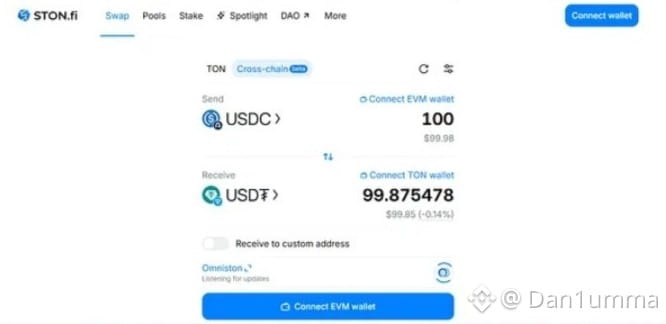
That's one reason I've been paying attention to @ston_fi.
As cross-chain infrastructure develops, simply connecting networks isn't enough.
The bigger challenge is improving the entire execution experience:
Better pricing → deeper liquidity → lower friction → more predictable outcomes
The next phase of DeFi may not be about whether cross-chain swaps are possible.
It may be about how efficiently they can be executed.
#STONfi #defi #TON
A successful swap isn't always a good swap.
A transaction can be confirmed, assets can arrive, and everything can look fine on-chain.
But you may still have lost value along the way.
This becomes especially important with cross-chain swaps.
Imagine moving $1,000 from one chain to another.
The transaction succeeds.
But then ask:
→ What price did you actually get?
→ How much value was lost to slippage?
→ What were the total fees?
→ Was there enough liquidity for your trade size?
→ How predictable was the settlement time?
→ What happens if the route fails or gets delayed?
That's the difference between transaction success and execution quality.
When I evaluate a cross-chain swap, I look beyond the confirmation screen:
1. Execution price
The quoted price is only an estimate. The final amount received matters more.
2. Slippage
Even a small difference can become meaningful on larger transactions.
3. Total execution cost
Network fees, protocol fees, and routing costs can all affect the final outcome.
4. Liquidity
A route that works for $50 doesn't necessarily work efficiently for $5,000.
5. Settlement speed
Fast is useful, but predictable execution matters just as much.
6. Reliability
How the system handles delays, failed transactions, or unexpected issues matters too.
7. Final value received
Ultimately, the question is simple: how much useful value reached the destination?
So instead of asking:
"Did my swap go through?"
I think the better question is:
"Did I get a good outcome?"
That's one reason I've been paying attention to @ston_fi.
As cross-chain infrastructure develops, simply connecting networks isn't enough.
The bigger challenge is improving the entire execution experience:
Better pricing → deeper liquidity → lower friction → more predictable outcomes
The next phase of DeFi may not be about whether cross-chain swaps are possible.
It may be about how efficiently they can be executed.
#STONfi #defi #TON
A transaction can be confirmed, assets can arrive, and everything can look fine on-chain.
But you may still have lost value along the way.
This becomes especially important with cross-chain swaps.
Imagine moving $1,000 from one chain to another.
The transaction succeeds.
But then ask:
→ What price did you actually get?
→ How much value was lost to slippage?
→ What were the total fees?
→ Was there enough liquidity for your trade size?
→ How predictable was the settlement time?
→ What happens if the route fails or gets delayed?
That's the difference between transaction success and execution quality.
When I evaluate a cross-chain swap, I look beyond the confirmation screen:
1. Execution price
The quoted price is only an estimate. The final amount received matters more.
2. Slippage
Even a small difference can become meaningful on larger transactions.
3. Total execution cost
Network fees, protocol fees, and routing costs can all affect the final outcome.
4. Liquidity
A route that works for $50 doesn't necessarily work efficiently for $5,000.
5. Settlement speed
Fast is useful, but predictable execution matters just as much.
6. Reliability
How the system handles delays, failed transactions, or unexpected issues matters too.
7. Final value received
Ultimately, the question is simple: how much useful value reached the destination?
So instead of asking:
"Did my swap go through?"
I think the better question is:
"Did I get a good outcome?"
That's one reason I've been paying attention to @ston_fi.
As cross-chain infrastructure develops, simply connecting networks isn't enough.
The bigger challenge is improving the entire execution experience:
Better pricing → deeper liquidity → lower friction → more predictable outcomes
The next phase of DeFi may not be about whether cross-chain swaps are possible.
It may be about how efficiently they can be executed.
#STONfi #defi #TON
89

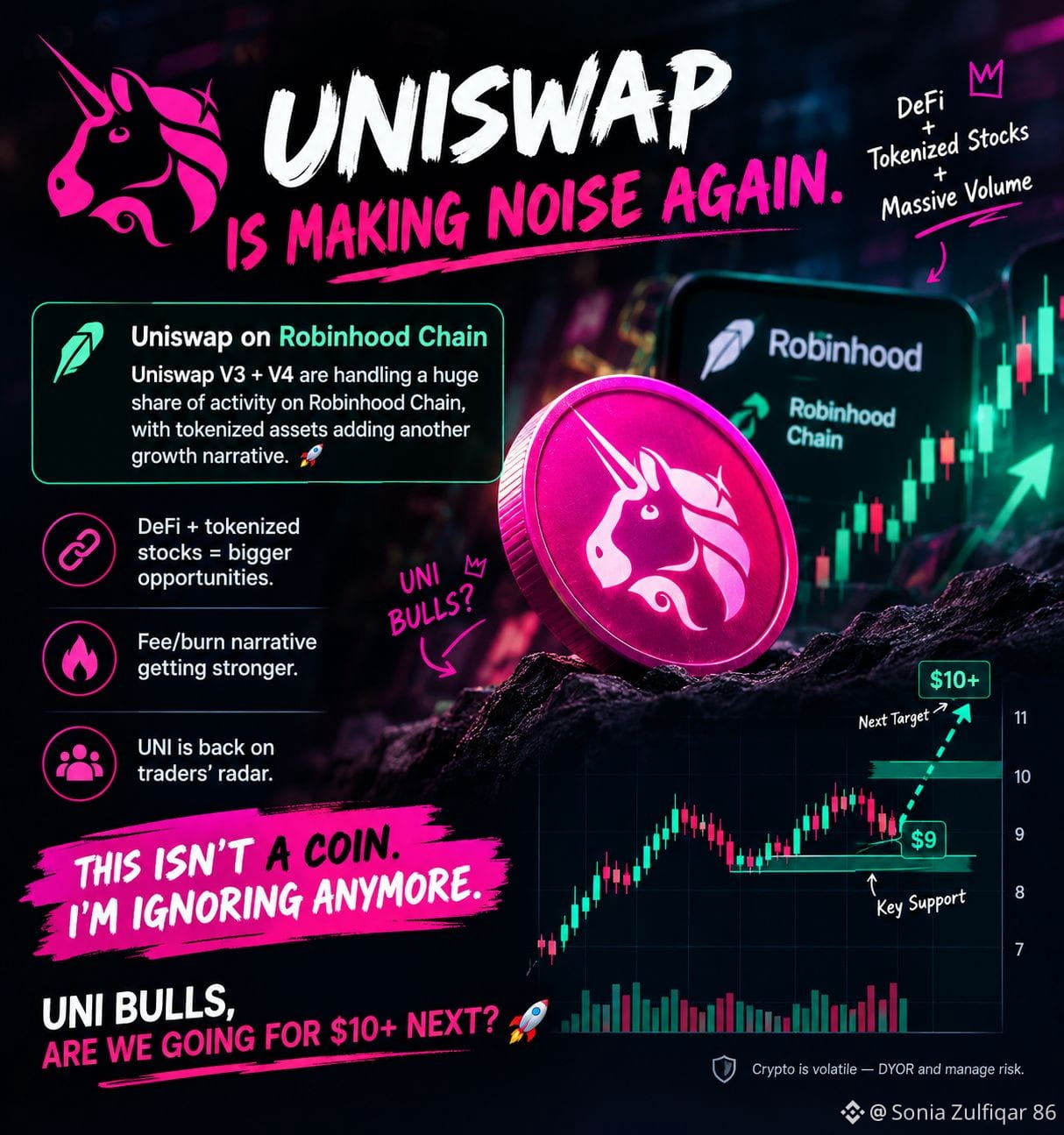
🚨 $UNI IS MAKING NOISE AGAIN. 🚨
Uniswap is becoming a major trading engine on Robinhood Chain, with Uniswap V3 + V4 handling a huge share of activity.
🔥 DeFi + tokenized stocks + massive volume
🔥 Fee/burn narrative getting stronger
🔥 UNI is back on traders’ radar
This isn’t a coin I’m ignoring anymore. 👀
UNI bulls, are we going for $10+ next? 🚀
#UNI #Uniswap #DeFi #Crypto
🚨 $UNI IS MAKING NOISE AGAIN. 🚨
Uniswap is becoming a major trading engine on Robinhood Chain, with Uniswap V3 + V4 handling a huge share of activity.
🔥 DeFi + tokenized stocks + massive volume
🔥 Fee/burn narrative getting stronger
🔥 UNI is back on traders’ radar
This isn’t a coin I’m ignoring anymore. 👀
UNI bulls, are we going for $10+ next? 🚀
#UNI #Uniswap #DeFi #Crypto
Uniswap is becoming a major trading engine on Robinhood Chain, with Uniswap V3 + V4 handling a huge share of activity.
🔥 DeFi + tokenized stocks + massive volume
🔥 Fee/burn narrative getting stronger
🔥 UNI is back on traders’ radar
This isn’t a coin I’m ignoring anymore. 👀
UNI bulls, are we going for $10+ next? 🚀
#UNI #Uniswap #DeFi #Crypto
1
3


·
--
🏦 MORGAN STANLEY LAUNCHES DIGITAL ASSET LAB DEDICATED TO TOKENIZATION AND DEFI $CELO ⚡
Wall Street titans are accelerating their race for blockchain dominance as Morgan Stanley opens a dedicated Digital Asset Lab for stablecoins, tokenization, and DeFi applications. 🐋 With Goldman Sachs and JPMorgan already building out their infrastructure, institutional capital is positioning for the next liquidity wave.
⚡ Pilot projects focusing on compliance and scalability will likely drive expanded stablecoin market caps while triggering short-term market volatility. 📊 Smart money recognizes this institutional shift toward real-world asset tokenization as a long-term catalyst for ecosystems like $CELO and $0G.
💬 Will institutional tokenization trigger the next major liquidity influx or short-term chop? 👇
⚠️ Not financial advice. Always manage your risk. 🛡️
🏷️ #CELO #0G #DeFi #Tokenization #Crypto
🔥 ⚡
🏦 MORGAN STANLEY LAUNCHES DIGITAL ASSET LAB DEDICATED TO TOKENIZATION AND DEFI $CELO ⚡
Wall Street titans are accelerating their race for blockchain dominance as Morgan Stanley opens a dedicated Digital Asset Lab for stablecoins, tokenization, and DeFi applications. 🐋 With Goldman Sachs and JPMorgan already building out their infrastructure, institutional capital is positioning for the next liquidity wave.
⚡ Pilot projects focusing on compliance and scalability will likely drive expanded stablecoin market caps while triggering short-term market volatility. 📊 Smart money recognizes this institutional shift toward real-world asset tokenization as a long-term catalyst for ecosystems like $CELO and $0G.
💬 Will institutional tokenization trigger the next major liquidity influx or short-term chop? 👇
⚠️ Not financial advice. Always manage your risk. 🛡️
🏷️ #CELO #0G #DeFi #Tokenization #Crypto
🔥 ⚡
Wall Street titans are accelerating their race for blockchain dominance as Morgan Stanley opens a dedicated Digital Asset Lab for stablecoins, tokenization, and DeFi applications. 🐋 With Goldman Sachs and JPMorgan already building out their infrastructure, institutional capital is positioning for the next liquidity wave.
⚡ Pilot projects focusing on compliance and scalability will likely drive expanded stablecoin market caps while triggering short-term market volatility. 📊 Smart money recognizes this institutional shift toward real-world asset tokenization as a long-term catalyst for ecosystems like $CELO and $0G.
💬 Will institutional tokenization trigger the next major liquidity influx or short-term chop? 👇
⚠️ Not financial advice. Always manage your risk. 🛡️
🏷️ #CELO #0G #DeFi #Tokenization #Crypto
🔥 ⚡


117

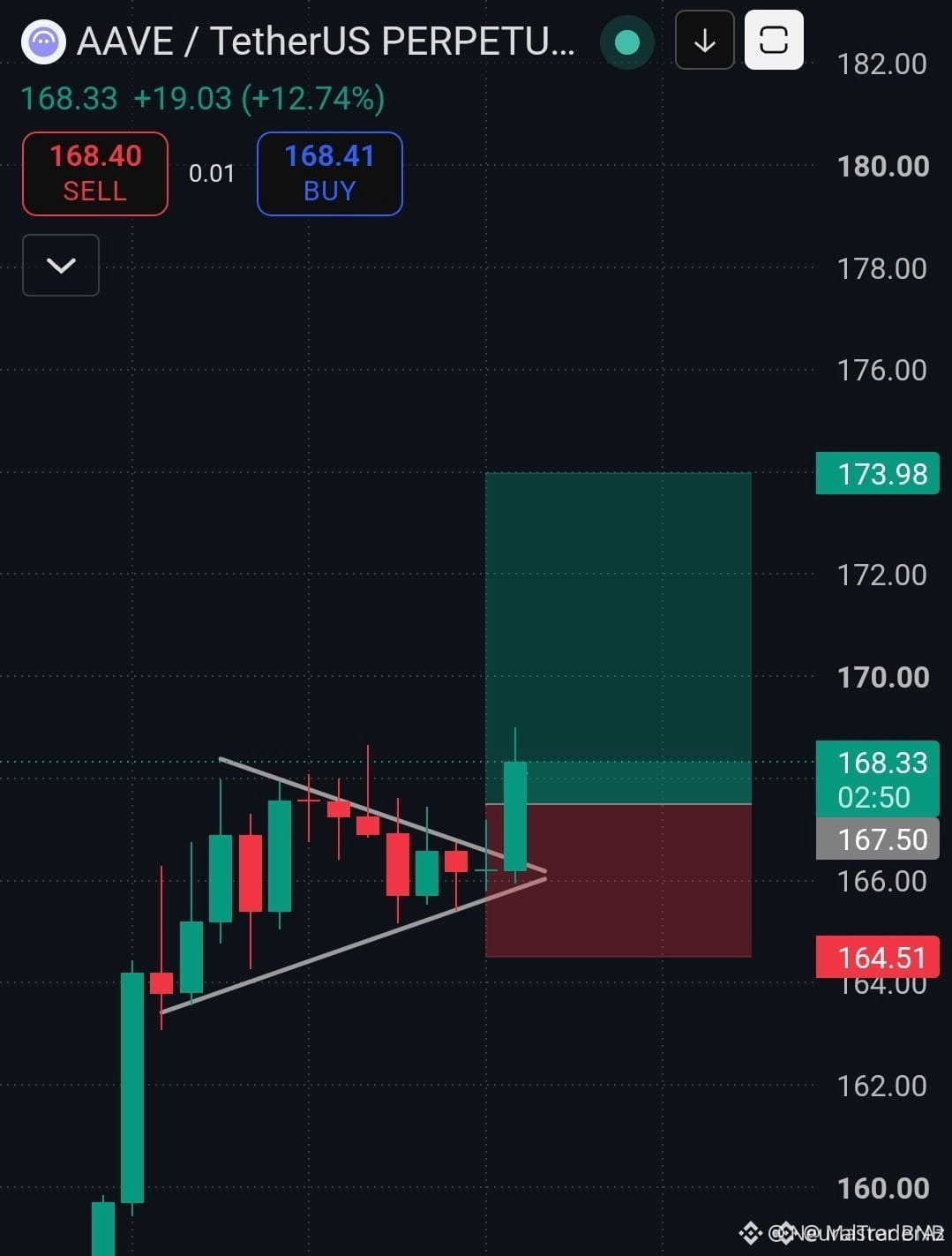
🚨 $AAVE RECLAIMS KEY LIQUIDITY ZONE AS INSTITUTIONAL DEMAND BUILDS FOR BREAKOUT! 📈
Entry: 168.81 ⚡
Target: 173.00 🚀
Stop Loss: 165.00 ⚠️
$AAVE is maintaining structural strength at a refined bullish order block around 168.81, showing clear signs of institutional absorption following a minor liquidity sweep. 🦈 Market structure favors a continuation drive higher as smart money defends this demand zone.
📌 We are tracking price expansion toward key upside inefficiencies, with initial profit-taking liquidity pooled between 170 and 173. 💡 Risk is strictly controlled below the 165 structural invalidation level, offering a solid risk-to-reward framework. 💬 Are you anticipating an immediate expansion higher from here, or waiting for a secondary retest? 👇
⚠️ Not financial advice. Always manage your risk. 🛡️
🏷️ #AAVE #LongSetup #Crypto #DeFi
🎯 🦈
🚨 $AAVE RECLAIMS KEY LIQUIDITY ZONE AS INSTITUTIONAL DEMAND BUILDS FOR BREAKOUT! 📈
Entry: 168.81 ⚡
Target: 173.00 🚀
Stop Loss: 165.00 ⚠️
$AAVE is maintaining structural strength at a refined bullish order block around 168.81, showing clear signs of institutional absorption following a minor liquidity sweep. 🦈 Market structure favors a continuation drive higher as smart money defends this demand zone.
📌 We are tracking price expansion toward key upside inefficiencies, with initial profit-taking liquidity pooled between 170 and 173. 💡 Risk is strictly controlled below the 165 structural invalidation level, offering a solid risk-to-reward framework. 💬 Are you anticipating an immediate expansion higher from here, or waiting for a secondary retest? 👇
⚠️ Not financial advice. Always manage your risk. 🛡️
🏷️ #AAVE #LongSetup #Crypto #DeFi
🎯 🦈
Entry: 168.81 ⚡
Target: 173.00 🚀
Stop Loss: 165.00 ⚠️
$AAVE is maintaining structural strength at a refined bullish order block around 168.81, showing clear signs of institutional absorption following a minor liquidity sweep. 🦈 Market structure favors a continuation drive higher as smart money defends this demand zone.
📌 We are tracking price expansion toward key upside inefficiencies, with initial profit-taking liquidity pooled between 170 and 173. 💡 Risk is strictly controlled below the 165 structural invalidation level, offering a solid risk-to-reward framework. 💬 Are you anticipating an immediate expansion higher from here, or waiting for a secondary retest? 👇
⚠️ Not financial advice. Always manage your risk. 🛡️
🏷️ #AAVE #LongSetup #Crypto #DeFi
🎯 🦈
6

·
--
🔥 AAVE LONG setup (V4 validated) – Not a guarantee, just a structured opportunity.
Entry: 171.07 | SL: 169.654 | TP1: 173.194 | TP2: 174.61
Bullish breakout structure with strong volume spikes: +301% 5m, +471% 15m volume, +15.38% 24h price.
Momentum and attention scores support short-term upside bias.
Trade with discipline — risk only what you can afford.
What’s your take on this breakout? #DeFi
$AAVE #TradingSignal #CryptoAnalysis
🔥 AAVE LONG setup (V4 validated) – Not a guarantee, just a structured opportunity.
Entry: 171.07 | SL: 169.654 | TP1: 173.194 | TP2: 174.61
Bullish breakout structure with strong volume spikes: +301% 5m, +471% 15m volume, +15.38% 24h price.
Momentum and attention scores support short-term upside bias.
Trade with discipline — risk only what you can afford.
What’s your take on this breakout? #DeFi
$AAVE #TradingSignal #CryptoAnalysis
Entry: 171.07 | SL: 169.654 | TP1: 173.194 | TP2: 174.61
Bullish breakout structure with strong volume spikes: +301% 5m, +471% 15m volume, +15.38% 24h price.
Momentum and attention scores support short-term upside bias.
Trade with discipline — risk only what you can afford.
What’s your take on this breakout? #DeFi
$AAVE #TradingSignal #CryptoAnalysis

11

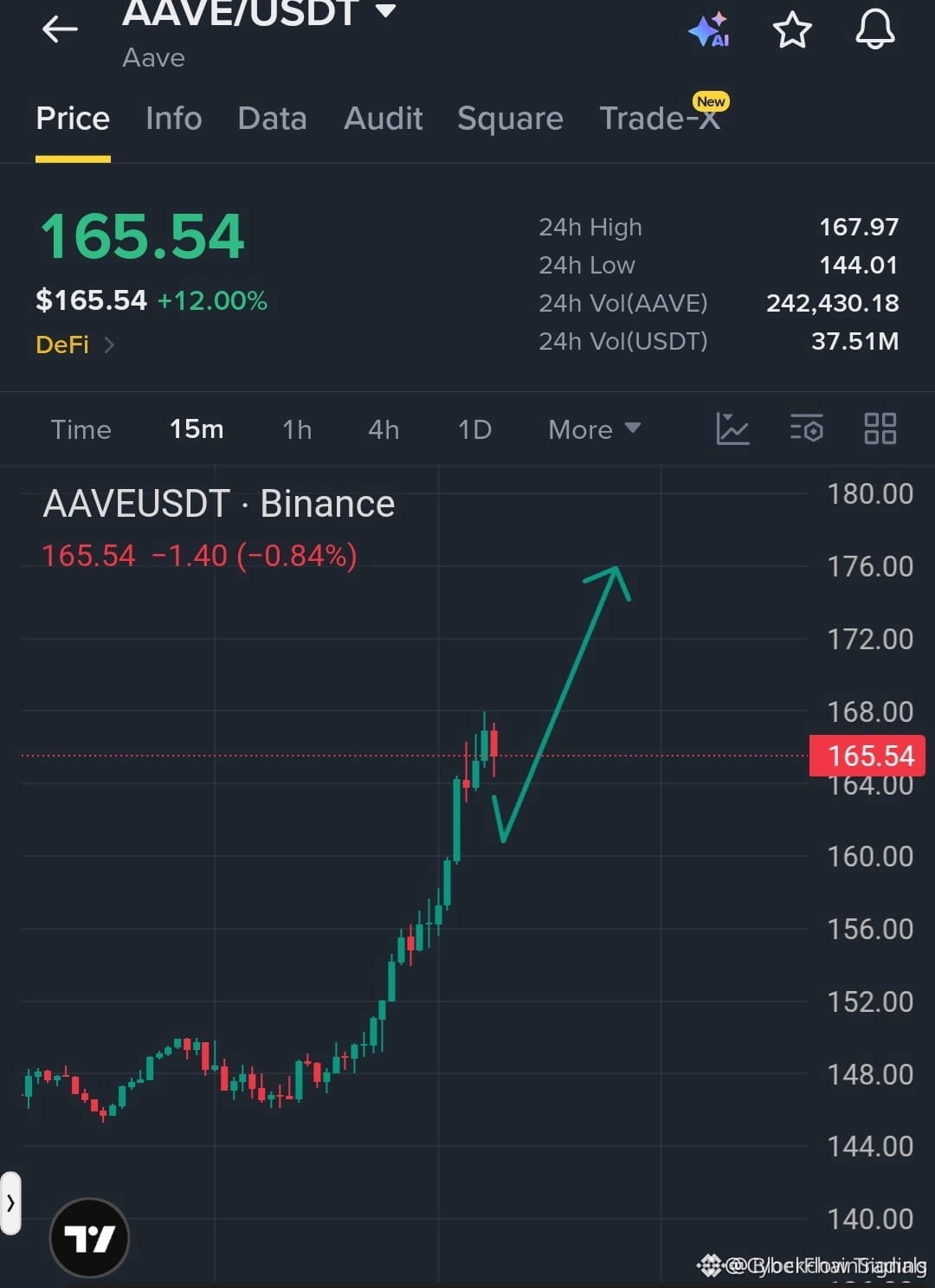
⚡ $AAVE IS CHARGING UP FOR A MASSIVE EXPANSION TOWARD LIQUIDITY! 💥
Target: 176.00 🚀
Momentum is quietly building on $AAVE as buyers absorb overhead selling pressure and defend lower time-frame market structures. 📊 Order flow is shifting decisively into bullish control, setting the stage for a strong trend continuation.
💡 Pushing past this consolidation phase opens a clean runway toward 176.00, where substantial short liquidity is primed to be swept. ⚡ Patience remains critical—letting the price action confirm before stepping in separates disciplined traders from retail noise.
💬 Are you already positioned for this expansion, or waiting for a clean breakout confirmation above resistance? 👇
⚠️ Not financial advice. Always manage your risk. 🛡️
🏷️ #AAVE #DeFi #Breakout #Crypto
🚀 ⚡
⚡ $AAVE IS CHARGING UP FOR A MASSIVE EXPANSION TOWARD LIQUIDITY! 💥
Target: 176.00 🚀
Momentum is quietly building on $AAVE as buyers absorb overhead selling pressure and defend lower time-frame market structures. 📊 Order flow is shifting decisively into bullish control, setting the stage for a strong trend continuation.
💡 Pushing past this consolidation phase opens a clean runway toward 176.00, where substantial short liquidity is primed to be swept. ⚡ Patience remains critical—letting the price action confirm before stepping in separates disciplined traders from retail noise.
💬 Are you already positioned for this expansion, or waiting for a clean breakout confirmation above resistance? 👇
⚠️ Not financial advice. Always manage your risk. 🛡️
🏷️ #AAVE #DeFi #Breakout #Crypto
🚀 ⚡
Target: 176.00 🚀
Momentum is quietly building on $AAVE as buyers absorb overhead selling pressure and defend lower time-frame market structures. 📊 Order flow is shifting decisively into bullish control, setting the stage for a strong trend continuation.
💡 Pushing past this consolidation phase opens a clean runway toward 176.00, where substantial short liquidity is primed to be swept. ⚡ Patience remains critical—letting the price action confirm before stepping in separates disciplined traders from retail noise.
💬 Are you already positioned for this expansion, or waiting for a clean breakout confirmation above resistance? 👇
⚠️ Not financial advice. Always manage your risk. 🛡️
🏷️ #AAVE #DeFi #Breakout #Crypto
🚀 ⚡
16

·
--
Baissier
🔴 CRV LONGS GETTING SWEPT TO THE DOWNSIDE!
Sellers pressing the advantage as DeFi longs get liquidated! 🩸📉
$CRV
{future}(CRVUSDT)
🔴 LIQUIDITY ZONE HIT 🔴
Long liquidation spotted 🧨
$2.779K cleared at $0.3964
Downside liquidity swept — Weak hands flushed from orderbook, waiting for buyers to step back in! 👀
🎯 Targets: $0.3880 / $0.3750
#CRV #Curve #DeFi
🔴 CRV LONGS GETTING SWEPT TO THE DOWNSIDE!
Sellers pressing the advantage as DeFi longs get liquidated! 🩸📉
$CRV
🔴 LIQUIDITY ZONE HIT 🔴
Long liquidation spotted 🧨
$2.779K cleared at $0.3964
Downside liquidity swept — Weak hands flushed from orderbook, waiting for buyers to step back in! 👀
🎯 Targets: $0.3880 / $0.3750
#CRV #Curve #DeFi
Sellers pressing the advantage as DeFi longs get liquidated! 🩸📉
$CRV
🔴 LIQUIDITY ZONE HIT 🔴
Long liquidation spotted 🧨
$2.779K cleared at $0.3964
Downside liquidity swept — Weak hands flushed from orderbook, waiting for buyers to step back in! 👀
🎯 Targets: $0.3880 / $0.3750
#CRV #Curve #DeFi
24
·
--
Haussier
😱 AAVE SHORTS GETTING ERADICATED AGAIN!
Is anyone keeping count?! AAVE is a complete short-killing machine today! 🔥🚀
$AAVE
{future}(AAVEUSDT)
🟢 LIQUIDITY ZONE HIT 🟢
Short liquidation spotted 🧨
$6.5188K cleared at $161.756
Upside liquidity swept — Relentless buying pressure blowing through leveraged bear setups! 👀
🎯 Targets: $166.00 / $171.00
#AAVE #DeFi #Whales
😱 AAVE SHORTS GETTING ERADICATED AGAIN!
Is anyone keeping count?! AAVE is a complete short-killing machine today! 🔥🚀
$AAVE
🟢 LIQUIDITY ZONE HIT 🟢
Short liquidation spotted 🧨
$6.5188K cleared at $161.756
Upside liquidity swept — Relentless buying pressure blowing through leveraged bear setups! 👀
🎯 Targets: $166.00 / $171.00
#AAVE #DeFi #Whales
Is anyone keeping count?! AAVE is a complete short-killing machine today! 🔥🚀
$AAVE
🟢 LIQUIDITY ZONE HIT 🟢
Short liquidation spotted 🧨
$6.5188K cleared at $161.756
Upside liquidity swept — Relentless buying pressure blowing through leveraged bear setups! 👀
🎯 Targets: $166.00 / $171.00
#AAVE #DeFi #Whales
15
·
--
Haussier
🔥 AAVE SHORTS ARE GETTING ABSOLUTELY MELTED AGAIN!
Bears keep fighting this trend and keep getting completely destroyed! 🤦♂️😱
$AAVE
{future}(AAVEUSDT)
🟢 LIQUIDITY ZONE HIT 🟢
Short liquidation spotted 🧨
$5.5511K cleared at $163.75
Upside liquidity swept — Constant buy pressure squeezing late shorters out of the market! 👀
🎯 Targets: $167.50 / $173.00
#AAVE #DeFi #ShortSqueeze
🔥 AAVE SHORTS ARE GETTING ABSOLUTELY MELTED AGAIN!
Bears keep fighting this trend and keep getting completely destroyed! 🤦♂️😱
$AAVE
🟢 LIQUIDITY ZONE HIT 🟢
Short liquidation spotted 🧨
$5.5511K cleared at $163.75
Upside liquidity swept — Constant buy pressure squeezing late shorters out of the market! 👀
🎯 Targets: $167.50 / $173.00
#AAVE #DeFi #ShortSqueeze
Bears keep fighting this trend and keep getting completely destroyed! 🤦♂️😱
$AAVE
🟢 LIQUIDITY ZONE HIT 🟢
Short liquidation spotted 🧨
$5.5511K cleared at $163.75
Upside liquidity swept — Constant buy pressure squeezing late shorters out of the market! 👀
🎯 Targets: $167.50 / $173.00
#AAVE #DeFi #ShortSqueeze
14
·
--
Haussier
🚀 AAVE CONTINUES TO SMASH BEARS INTO PIECES!
Yet another wave of shorts erased! AAVE is on absolute fire today! 🔥😱
$AAVE
{future}(AAVEUSDT)
🟢 LIQUIDITY ZONE HIT 🟢
Short liquidation spotted 🧨
$9.629K cleared at $164.317
Upside liquidity swept — Parabolic push gathering speed, shorts getting slaughtered level by level! 👀
🎯 Targets: $168.00 / $174.00
#AAVE #DeFi #BinanceSquare
🚀 AAVE CONTINUES TO SMASH BEARS INTO PIECES!
Yet another wave of shorts erased! AAVE is on absolute fire today! 🔥😱
$AAVE
🟢 LIQUIDITY ZONE HIT 🟢
Short liquidation spotted 🧨
$9.629K cleared at $164.317
Upside liquidity swept — Parabolic push gathering speed, shorts getting slaughtered level by level! 👀
🎯 Targets: $168.00 / $174.00
#AAVE #DeFi #BinanceSquare
Yet another wave of shorts erased! AAVE is on absolute fire today! 🔥😱
$AAVE
🟢 LIQUIDITY ZONE HIT 🟢
Short liquidation spotted 🧨
$9.629K cleared at $164.317
Upside liquidity swept — Parabolic push gathering speed, shorts getting slaughtered level by level! 👀
🎯 Targets: $168.00 / $174.00
#AAVE #DeFi #BinanceSquare
9

📉 $CRV dropped -7% yesterday from $0.36 to $0.33 — everyone's thinking "stablecoin DEX is done"
But behind the scenes: Curve just went live on Circle's Arc network (massive for stablecoin infrastructure). Llamalend V2 emissions cut, crvUSD peg holding, veCRV fee flows climbing
Big twist: retail is 54.9% short, meaning smart money is accumulating. Curve's the "unglamorous backbone" but protocol revenue is actually growing
Is this dump a buying opportunity, or is $0.30 next?
#Bitcoin #Curve #DeFi #BinanceSquare
📉 $CRV dropped -7% yesterday from $0.36 to $0.33 — everyone's thinking "stablecoin DEX is done"
But behind the scenes: Curve just went live on Circle's Arc network (massive for stablecoin infrastructure). Llamalend V2 emissions cut, crvUSD peg holding, veCRV fee flows climbing
Big twist: retail is 54.9% short, meaning smart money is accumulating. Curve's the "unglamorous backbone" but protocol revenue is actually growing
Is this dump a buying opportunity, or is $0.30 next?
#Bitcoin #Curve #DeFi #BinanceSquare
But behind the scenes: Curve just went live on Circle's Arc network (massive for stablecoin infrastructure). Llamalend V2 emissions cut, crvUSD peg holding, veCRV fee flows climbing
Big twist: retail is 54.9% short, meaning smart money is accumulating. Curve's the "unglamorous backbone" but protocol revenue is actually growing
Is this dump a buying opportunity, or is $0.30 next?
#Bitcoin #Curve #DeFi #BinanceSquare
102
·
--
Haussier
🔥 SHORTS JUST GOT ABSOLUTELY SMASHED ON AAVE!
Bears keep trying to top-tick this rally and they keep getting carried out on stretchers! 🤦♂️😱
$AAVE
{future}(AAVEUSDT)
🟢 LIQUIDITY ZONE HIT 🟢
Short liquidation spotted 🧨
$23.341K cleared at $162.995
Upside liquidity swept — Aggressive short-squeezing in full effect, momentum showing zero signs of slowing down! 👀
🎯 Targets: $166.00 / $172.00
#AAVE #DeFi #ShortSqueeze
🔥 SHORTS JUST GOT ABSOLUTELY SMASHED ON AAVE!
Bears keep trying to top-tick this rally and they keep getting carried out on stretchers! 🤦♂️😱
$AAVE
🟢 LIQUIDITY ZONE HIT 🟢
Short liquidation spotted 🧨
$23.341K cleared at $162.995
Upside liquidity swept — Aggressive short-squeezing in full effect, momentum showing zero signs of slowing down! 👀
🎯 Targets: $166.00 / $172.00
#AAVE #DeFi #ShortSqueeze
Bears keep trying to top-tick this rally and they keep getting carried out on stretchers! 🤦♂️😱
$AAVE
🟢 LIQUIDITY ZONE HIT 🟢
Short liquidation spotted 🧨
$23.341K cleared at $162.995
Upside liquidity swept — Aggressive short-squeezing in full effect, momentum showing zero signs of slowing down! 👀
🎯 Targets: $166.00 / $172.00
#AAVE #DeFi #ShortSqueeze
5
·
--
Haussier
🔥 AAVE SHORTS FLUSHED AGAIN!
Bulls are relentless today, ripping through shorts level after level! 🚀🔥
$AAVE
{future}(AAVEUSDT)
🟢 LIQUIDITY ZONE HIT 🟢
Short liquidation spotted 🧨
$40.396K cleared at $161.584
Upside liquidity swept — Leverage wiped clean as buyers keep demanding higher prices! 👀
🎯 Targets: $165.00 / $170.00
#AAVE #DeFi #BinanceSquare
🔥 AAVE SHORTS FLUSHED AGAIN!
Bulls are relentless today, ripping through shorts level after level! 🚀🔥
$AAVE
🟢 LIQUIDITY ZONE HIT 🟢
Short liquidation spotted 🧨
$40.396K cleared at $161.584
Upside liquidity swept — Leverage wiped clean as buyers keep demanding higher prices! 👀
🎯 Targets: $165.00 / $170.00
#AAVE #DeFi #BinanceSquare
Bulls are relentless today, ripping through shorts level after level! 🚀🔥
$AAVE
🟢 LIQUIDITY ZONE HIT 🟢
Short liquidation spotted 🧨
$40.396K cleared at $161.584
Upside liquidity swept — Leverage wiped clean as buyers keep demanding higher prices! 👀
🎯 Targets: $165.00 / $170.00
#AAVE #DeFi #BinanceSquare
9
·
--
Haussier
😱 HEFTY AAVE SQUEEZE DETECTED!
You can't make this up! Shorts keep stepping in front of a runaway freight train! 🚀🔥
$AAVE
{future}(AAVEUSDT)
🟢 LIQUIDITY ZONE HIT 🟢
Short liquidation spotted 🧨
$50.255K cleared at $164.017
Upside liquidity swept — Classic short squeeze unfolding, momentum is completely belonging to the bulls! 👀
🎯 Targets: $168.50 / $175.00
#AAVE #DeFi #ShortSqueeze
😱 HEFTY AAVE SQUEEZE DETECTED!
You can't make this up! Shorts keep stepping in front of a runaway freight train! 🚀🔥
$AAVE
🟢 LIQUIDITY ZONE HIT 🟢
Short liquidation spotted 🧨
$50.255K cleared at $164.017
Upside liquidity swept — Classic short squeeze unfolding, momentum is completely belonging to the bulls! 👀
🎯 Targets: $168.50 / $175.00
#AAVE #DeFi #ShortSqueeze
You can't make this up! Shorts keep stepping in front of a runaway freight train! 🚀🔥
$AAVE
🟢 LIQUIDITY ZONE HIT 🟢
Short liquidation spotted 🧨
$50.255K cleared at $164.017
Upside liquidity swept — Classic short squeeze unfolding, momentum is completely belonging to the bulls! 👀
🎯 Targets: $168.50 / $175.00
#AAVE #DeFi #ShortSqueeze
74

·
--
CRV SURGES THROUGH RESISTANCE 🚀📈
The $CRV token ripped through the $0.39064 ceiling, closing just shy of the high at $0.39260 as Asian liquidity flooded the order book. A 17.06% 24‑hour surge backed by $12.55 M of volume signals that LPs are re‑allocating capital into Curve’s stable‑coin pools, where TVL has climbed 9% week‑over‑week amid the waning restaking boom. Smart‑contract pools are now seeing tighter slippage, and cross‑chain bridges are delivering fresh yield streams that attract both retail and institutional LPs 🚀
The next hurdle sits at the $0.415–$0.425 band, where a break would cement a higher‑high, higher‑low structure and invite algorithmic buying. Should $CRV sustain above $0.390, liquidity providers are likely to deepen positions, tightening the order block at $0.39064 and feeding a self‑reinforcing momentum loop. With DeFi TVL still expanding and Curve’s fee‑share incentives outpacing peers, the upside bias remains strong, suggesting the rally could extend into the $0.45 region if buying pressure holds 📈💎
DYOR
Follow for Updates
#CRV #DEFI #CryptoTrending #BinanceSquare
CRV SURGES THROUGH RESISTANCE 🚀📈
The $CRV token ripped through the $0.39064 ceiling, closing just shy of the high at $0.39260 as Asian liquidity flooded the order book. A 17.06% 24‑hour surge backed by $12.55 M of volume signals that LPs are re‑allocating capital into Curve’s stable‑coin pools, where TVL has climbed 9% week‑over‑week amid the waning restaking boom. Smart‑contract pools are now seeing tighter slippage, and cross‑chain bridges are delivering fresh yield streams that attract both retail and institutional LPs 🚀
The next hurdle sits at the $0.415–$0.425 band, where a break would cement a higher‑high, higher‑low structure and invite algorithmic buying. Should $CRV sustain above $0.390, liquidity providers are likely to deepen positions, tightening the order block at $0.39064 and feeding a self‑reinforcing momentum loop. With DeFi TVL still expanding and Curve’s fee‑share incentives outpacing peers, the upside bias remains strong, suggesting the rally could extend into the $0.45 region if buying pressure holds 📈💎
DYOR
Follow for Updates
#CRV #DEFI #CryptoTrending #BinanceSquare
The $CRV token ripped through the $0.39064 ceiling, closing just shy of the high at $0.39260 as Asian liquidity flooded the order book. A 17.06% 24‑hour surge backed by $12.55 M of volume signals that LPs are re‑allocating capital into Curve’s stable‑coin pools, where TVL has climbed 9% week‑over‑week amid the waning restaking boom. Smart‑contract pools are now seeing tighter slippage, and cross‑chain bridges are delivering fresh yield streams that attract both retail and institutional LPs 🚀
The next hurdle sits at the $0.415–$0.425 band, where a break would cement a higher‑high, higher‑low structure and invite algorithmic buying. Should $CRV sustain above $0.390, liquidity providers are likely to deepen positions, tightening the order block at $0.39064 and feeding a self‑reinforcing momentum loop. With DeFi TVL still expanding and Curve’s fee‑share incentives outpacing peers, the upside bias remains strong, suggesting the rally could extend into the $0.45 region if buying pressure holds 📈💎
DYOR
Follow for Updates
#CRV #DEFI #CryptoTrending #BinanceSquare
41

·
--
Haussier
Stablecoins are becoming more than a way to hold dollar value in crypto. They are increasingly becoming the liquidity layer connecting different ecosystems.
That’s why the STON.fi integration with Arc caught my attention.
Arc is built with stablecoin finance in mind, while USDC serves as its native gas token. Bringing that environment into Omniston creates another route for stablecoin liquidity to interact with assets across supported chains.
What I find interesting is the bigger infrastructure shift.
Instead of liquidity staying isolated inside individual ecosystems, cross-chain systems can help make that liquidity more accessible without forcing users to manage every network separately.
This is where I think the real value of cross-chain infrastructure becomes clearer: not simply adding more chains, but making liquidity more connected and useful.
The initial $1,000 transaction limit on the Arc integration is also worth keeping in mind. Adoption is built through real usage, and practical limits matter alongside the technology.
@ston_fi #STONfi #Omniston #Arc #USDC #DeFi
#STONfi
Stablecoins are becoming more than a way to hold dollar value in crypto. They are increasingly becoming the liquidity layer connecting different ecosystems.
That’s why the STON.fi integration with Arc caught my attention.
Arc is built with stablecoin finance in mind, while USDC serves as its native gas token. Bringing that environment into Omniston creates another route for stablecoin liquidity to interact with assets across supported chains.
What I find interesting is the bigger infrastructure shift.
Instead of liquidity staying isolated inside individual ecosystems, cross-chain systems can help make that liquidity more accessible without forcing users to manage every network separately.
This is where I think the real value of cross-chain infrastructure becomes clearer: not simply adding more chains, but making liquidity more connected and useful.
The initial $1,000 transaction limit on the Arc integration is also worth keeping in mind. Adoption is built through real usage, and practical limits matter alongside the technology.
@ston_fi #STONfi #Omniston #Arc #USDC #DeFi
#STONfi
That’s why the STON.fi integration with Arc caught my attention.
Arc is built with stablecoin finance in mind, while USDC serves as its native gas token. Bringing that environment into Omniston creates another route for stablecoin liquidity to interact with assets across supported chains.
What I find interesting is the bigger infrastructure shift.
Instead of liquidity staying isolated inside individual ecosystems, cross-chain systems can help make that liquidity more accessible without forcing users to manage every network separately.
This is where I think the real value of cross-chain infrastructure becomes clearer: not simply adding more chains, but making liquidity more connected and useful.
The initial $1,000 transaction limit on the Arc integration is also worth keeping in mind. Adoption is built through real usage, and practical limits matter alongside the technology.
@ston_fi #STONfi #Omniston #Arc #USDC #DeFi
#STONfi

117
·
--
🚨 Compound DAO used reserves to buy $52M worth of COMP, pushing supporter votes past 50% of delegated power. Delegates call it a mandate breach; Foundation says it aligns with DAO goals. Market may see short-term volatility as governance tension rises. Is this a power move or overreach? #DeFi
$COMP #TradingSignal #CryptoAnalysis
🚨 Compound DAO used reserves to buy $52M worth of COMP, pushing supporter votes past 50% of delegated power. Delegates call it a mandate breach; Foundation says it aligns with DAO goals. Market may see short-term volatility as governance tension rises. Is this a power move or overreach? #DeFi
$COMP #TradingSignal #CryptoAnalysis
$COMP #TradingSignal #CryptoAnalysis

100
Connectez-vous pour découvrir plus de contenu
Rejoignez la communauté mondiale des adeptes de cryptomonnaies sur Binance Square
⚡️ Suviez les dernières informations importantes sur les cryptomonnaies.
💬 Jugé digne de confiance par la plus grande plateforme d’échange de cryptomonnaies au monde.
👍 Découvrez les connaissances que partagent les créateurs vérifiés.
Adresse e-mail/Nº de téléphone
Sujets d’actualité
1
#EarningsSeason
54,386 vues
491 mentions
2
#JapanFSABacksFourthStablecoinTradeSettlementPilot
716 vues
69 mentions
3
#BitgetHackerFailsToMoveStolenFunds
5,238 vues
202 mentions
4
#BitMineETHHoldingsTop6Million
8,675 vues
375 mentions
5
#StrategyAdds1666BTCHoldingsReach847666
7,845 vues
271 mentions
6
#NvidiaApproves$150BBuyback
3,104 vues
60 mentions
7
#OpenAIDelaysGPT6.1OverSafetyIssues
20,362 vues
589 mentions
8
#AMDToAcquireWorldLabsFor$8.2B
1,561 vues
50 mentions
9
#AnthropicIPOProspectusCouldValueItOver$2T
5,150 vues
74 mentions
10
#HackersDrainOver12.4MXRPFromDCENTWallets
37,208 vues
670 mentions