🚀 Le secret caché derrière la flambée soudaine de LUNC : le grand retour a-t-il commencé ?
Si vous pensez que le mouvement récent de
$LUNC n’est qu’un simple pump temporaire, vous passez peut-être à côté de l’image plus vaste ! Les données on-chain et les chiffres confirment qu’un changement extraordinaire est en train de se produire en coulisses, et que le géant commence à retrouver son véritable élan.
Voici les 3 principaux moteurs qui alimentent actuellement cette dynamique haussière :
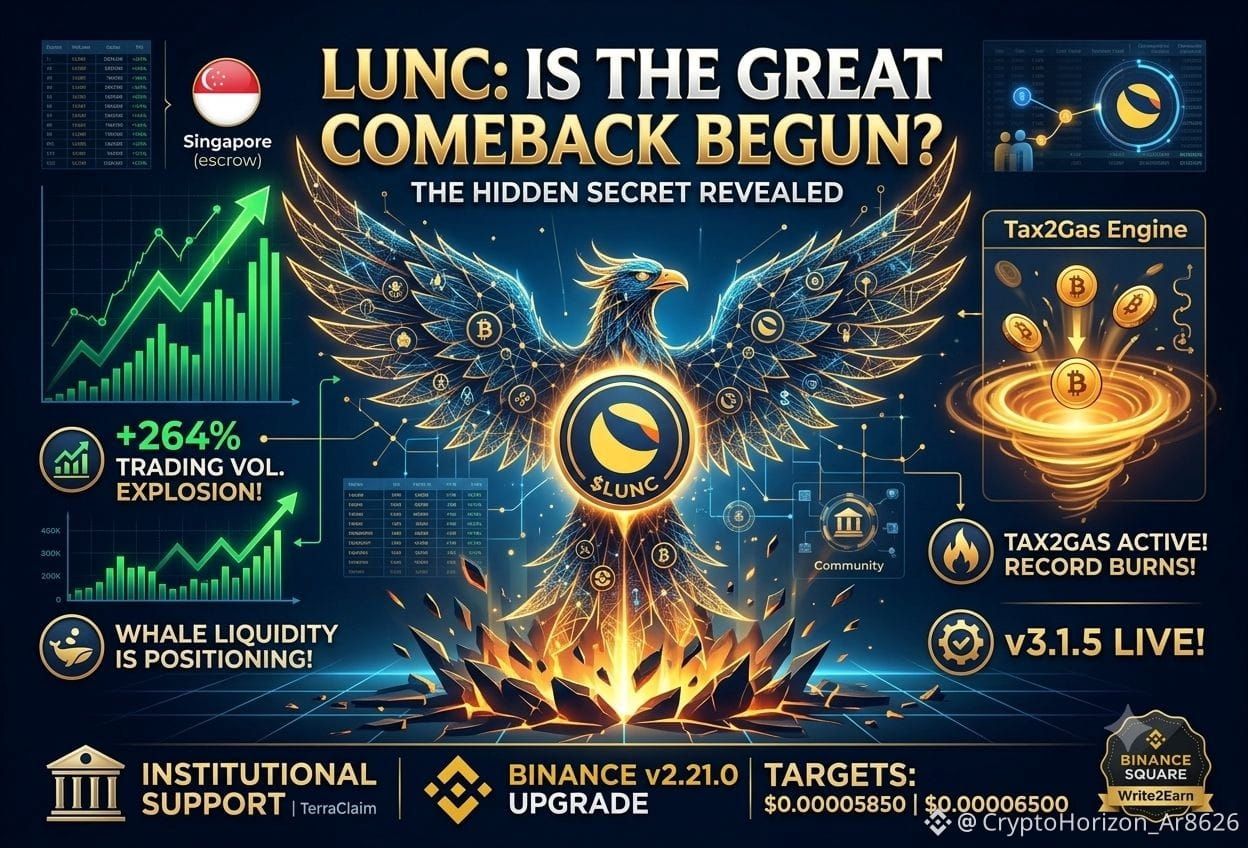
1️⃣ Afflux de Trading & Rupture de volume massive (+264%)
Le prix a franchi $0.00005518 avec une hausse dépassant +9,7%, mais le véritable titre, c’est l’explosion de +264% du volume de trading ! D’importantes entrées de liquidité provenant de méga-portefeuilles prouvent que « l’argent intelligent » se positionne de manière agressive pour la prochaine phase.
2️⃣ Moteur de Burn intelligent (Tax2Gas) fonctionnant à pleine capacité
L’activation officielle de Tax2Gas et la mise à jour v3.1.5 ont transformé la dynamique offre-demande, en acheminant automatiquement les frais de transaction vers des burns continus.
• L’offre totale brûlée a dépassé 400,2 milliards de
$LUNC .
• Contribution record de Binance à elle seule dépassant 64 milliards de tokens.
3️⃣ Mise à niveau du réseau & accumulation institutionnelle
Le support officiel complet de Binance pour la mise à niveau du réseau Terra (v2.21.0) apporte une stabilité technique et une confiance élevées. En parallèle, TerraClaim a accumulé plus de 15,8 millions de dollars en réclamations avant la prochaine audience du tribunal, signalant un solide soutien institutionnel à long terme.
🎯 Perspectives techniques & objectifs à venir :
Zone d’accumulation : rester au-dessus de $0.00005150 offre une base solide.
Objectif 1 : $0.00005850
Objectif 2 : $0.00006500
(Avertissement : ce contenu est fourni à des fins uniquement éducatives et informatives et ne constitue pas un conseil financier. Le trading de crypto comporte des risques ; faites toujours vos propres recherches – DYOR.)
#LUNC #TerraClassic #BinanceSquare #CryptoAnalysis #Write2Earn $LUNC
$USTC