

#queencryptonews
queencryptonews
130,036 vues
239 mentions
Populaire
Récents

·
--
$Q مفهوم جديد للحوكمة اللامركزية: أداء ومنظومة عملة Q (Q Protocol)
التاريخ: 31 مايو 2026
بينما تتسابق شبكات البلوكشين من الطبقات الأولى والثانية على تقديم أعلى سرعات للمعاملات وأقل رسوم غاز، يتغافل الكثيرون عن المعضلة الأكبر التي تواجه المنظومات اللامركزية اليوم: ثغرات الحوكمة ونقص الأطر القانونية المرنة. في هذا السياق، تبرز شبكة Q Protocol وعملتها الأصلية Q (التي ترتبط بنظام الحوكمة QGOV) كحل تقني ودستوري غير مسبوق، يعيد تعريف مفهوم السيادة وإدارة المخاطر في عالم الويب 3.
الأداء السعري وحركة السيولة الفورية اليوم
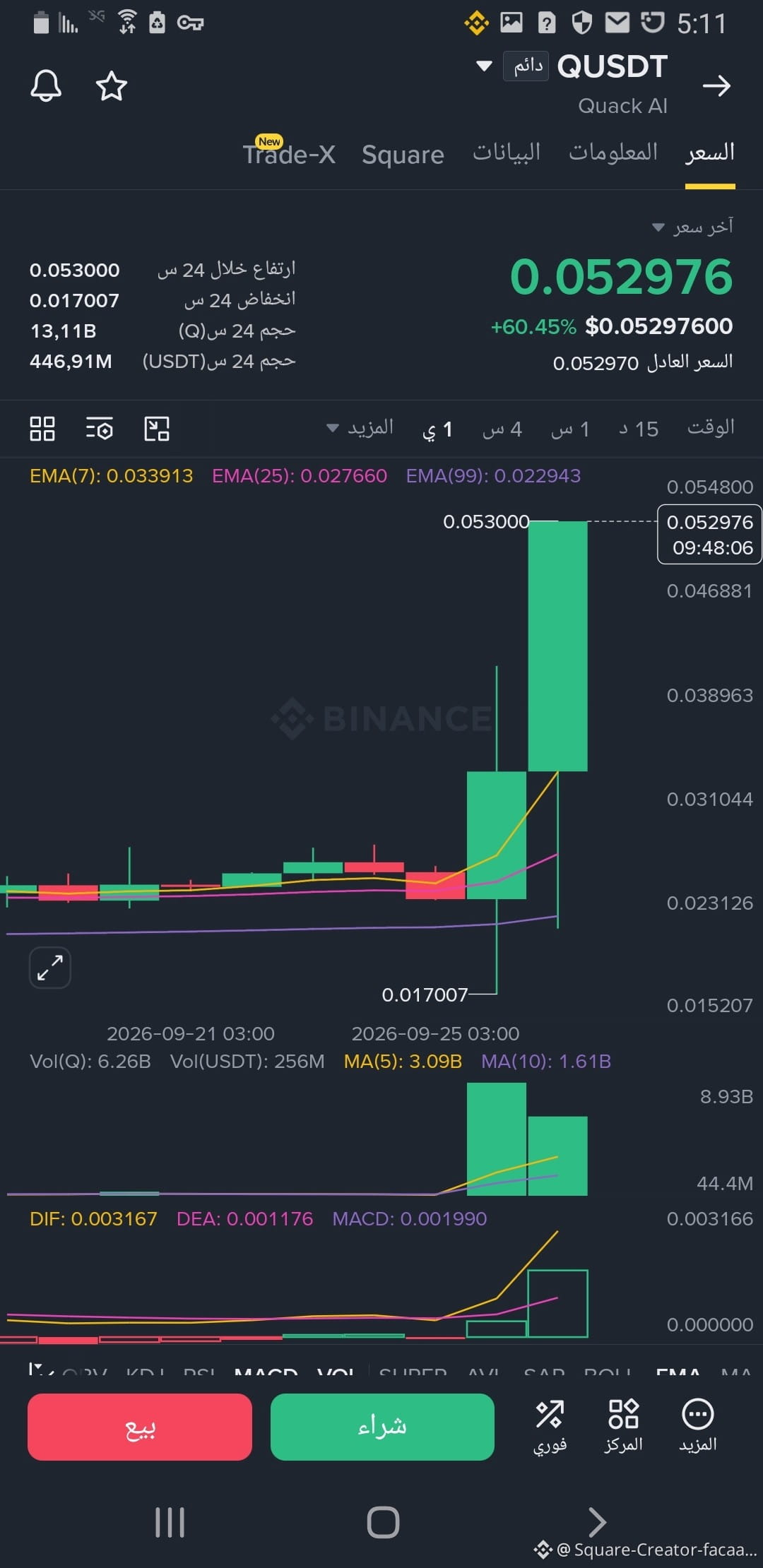
تتحرك عملة Q اليوم في نطاق تجمعي هادئ يعكس طبيعتها كأصل هيكلي مخصص للحوكمة والتشغيل وليس للمضاربات العشوائية؛ حيث يتم تداول الرمز اليوم في حدود مستويات 0.0006$ إلى 0.0008$.
الحركة السعرية والزخم الفني: على الرغم من التراجعات الكبيرة التي شهدتها العملة على مدار العام الماضي نتيجة لتركيز مجتمع التشفير على ترندات الميم والذكاء الاصطناعي، إلا أن الأسبوع الأخير من مايو شهد وميضاً إيجابياً حيث سجل الرمز ارتداداً تعافياً طفيفاً بنسبة تقارب 33% على الأطر الزمنية القصيرة، محاولاً بناء قاعدة دعم صلبة تنهي مساره الهابط التجمعي.
$Q #q #QueencryptoNews #Quark
{future}(QUSDT)
$Q مفهوم جديد للحوكمة اللامركزية: أداء ومنظومة عملة Q (Q Protocol)
التاريخ: 31 مايو 2026
بينما تتسابق شبكات البلوكشين من الطبقات الأولى والثانية على تقديم أعلى سرعات للمعاملات وأقل رسوم غاز، يتغافل الكثيرون عن المعضلة الأكبر التي تواجه المنظومات اللامركزية اليوم: ثغرات الحوكمة ونقص الأطر القانونية المرنة. في هذا السياق، تبرز شبكة Q Protocol وعملتها الأصلية Q (التي ترتبط بنظام الحوكمة QGOV) كحل تقني ودستوري غير مسبوق، يعيد تعريف مفهوم السيادة وإدارة المخاطر في عالم الويب 3.
الأداء السعري وحركة السيولة الفورية اليوم
تتحرك عملة Q اليوم في نطاق تجمعي هادئ يعكس طبيعتها كأصل هيكلي مخصص للحوكمة والتشغيل وليس للمضاربات العشوائية؛ حيث يتم تداول الرمز اليوم في حدود مستويات 0.0006$ إلى 0.0008$.
الحركة السعرية والزخم الفني: على الرغم من التراجعات الكبيرة التي شهدتها العملة على مدار العام الماضي نتيجة لتركيز مجتمع التشفير على ترندات الميم والذكاء الاصطناعي، إلا أن الأسبوع الأخير من مايو شهد وميضاً إيجابياً حيث سجل الرمز ارتداداً تعافياً طفيفاً بنسبة تقارب 33% على الأطر الزمنية القصيرة، محاولاً بناء قاعدة دعم صلبة تنهي مساره الهابط التجمعي.
$Q #q #QueencryptoNews #Quark
التاريخ: 31 مايو 2026
بينما تتسابق شبكات البلوكشين من الطبقات الأولى والثانية على تقديم أعلى سرعات للمعاملات وأقل رسوم غاز، يتغافل الكثيرون عن المعضلة الأكبر التي تواجه المنظومات اللامركزية اليوم: ثغرات الحوكمة ونقص الأطر القانونية المرنة. في هذا السياق، تبرز شبكة Q Protocol وعملتها الأصلية Q (التي ترتبط بنظام الحوكمة QGOV) كحل تقني ودستوري غير مسبوق، يعيد تعريف مفهوم السيادة وإدارة المخاطر في عالم الويب 3.
الأداء السعري وحركة السيولة الفورية اليوم
تتحرك عملة Q اليوم في نطاق تجمعي هادئ يعكس طبيعتها كأصل هيكلي مخصص للحوكمة والتشغيل وليس للمضاربات العشوائية؛ حيث يتم تداول الرمز اليوم في حدود مستويات 0.0006$ إلى 0.0008$.
الحركة السعرية والزخم الفني: على الرغم من التراجعات الكبيرة التي شهدتها العملة على مدار العام الماضي نتيجة لتركيز مجتمع التشفير على ترندات الميم والذكاء الاصطناعي، إلا أن الأسبوع الأخير من مايو شهد وميضاً إيجابياً حيث سجل الرمز ارتداداً تعافياً طفيفاً بنسبة تقارب 33% على الأطر الزمنية القصيرة، محاولاً بناء قاعدة دعم صلبة تنهي مساره الهابط التجمعي.
$Q #q #QueencryptoNews #Quark

121

·
--
Haussier
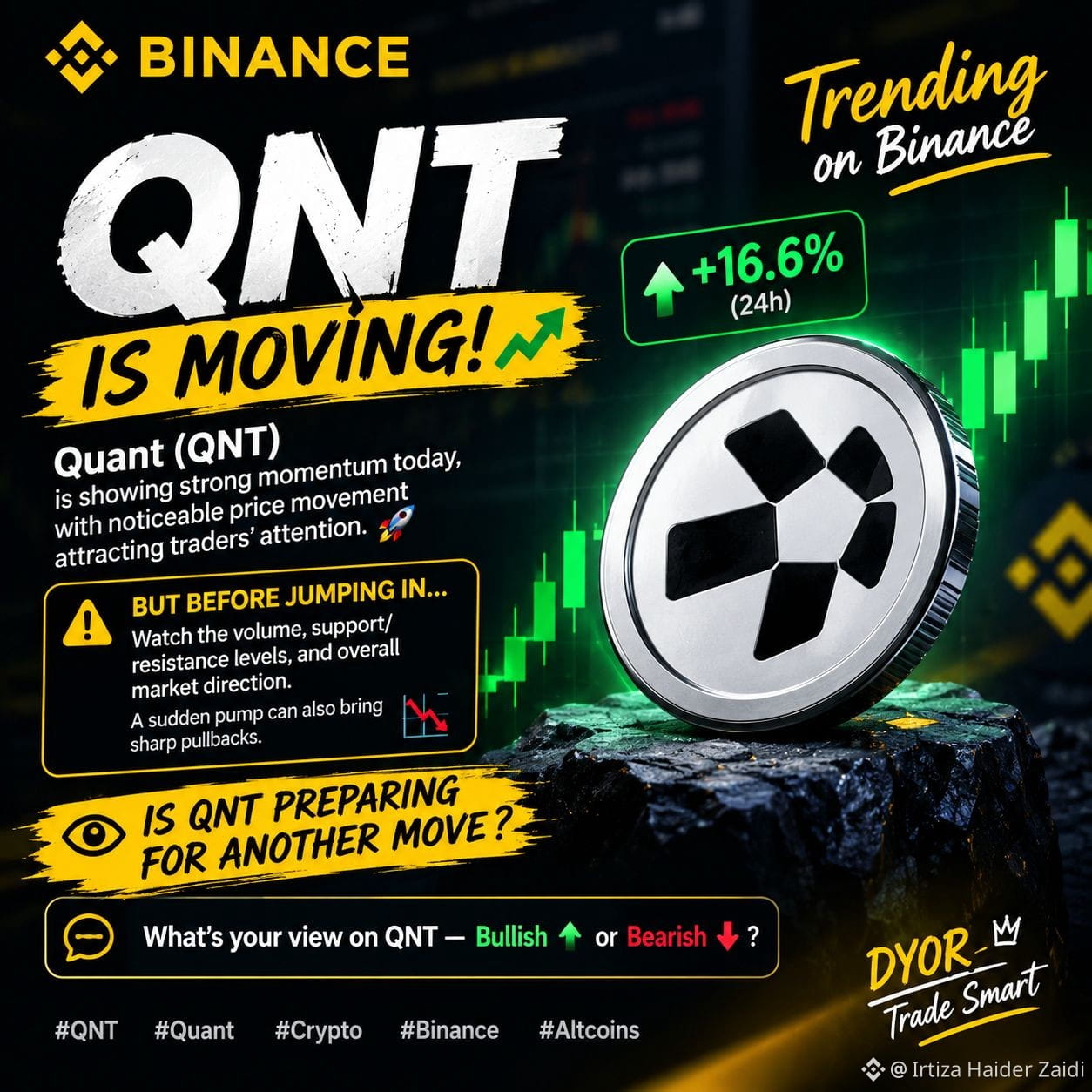
QNT IS MOVING!
Quant $QNT is showing strong momentum today, with noticeable price movement attracting traders’ attention. 📈
But before jumping in, watch the volume, support/resistance levels, and overall market direction. A sudden pump can also bring sharp pullbacks. ⚠️
👀 Is $QNT preparing for another move?
💬 What’s your view on $QNT — Bullish 🟢 or Bearish 🔴?
#QNT #QueencryptoNews #CryptoNewss #BinanceHerYerde #altcoins
QNT IS MOVING!
Quant $QNT is showing strong momentum today, with noticeable price movement attracting traders’ attention. 📈
But before jumping in, watch the volume, support/resistance levels, and overall market direction. A sudden pump can also bring sharp pullbacks. ⚠️
👀 Is $QNT preparing for another move?
💬 What’s your view on $QNT — Bullish 🟢 or Bearish 🔴?
#QNT #QueencryptoNews #CryptoNewss #BinanceHerYerde #altcoins
Quant $QNT is showing strong momentum today, with noticeable price movement attracting traders’ attention. 📈
But before jumping in, watch the volume, support/resistance levels, and overall market direction. A sudden pump can also bring sharp pullbacks. ⚠️
👀 Is $QNT preparing for another move?
💬 What’s your view on $QNT — Bullish 🟢 or Bearish 🔴?
#QNT #QueencryptoNews #CryptoNewss #BinanceHerYerde #altcoins
314

·
--
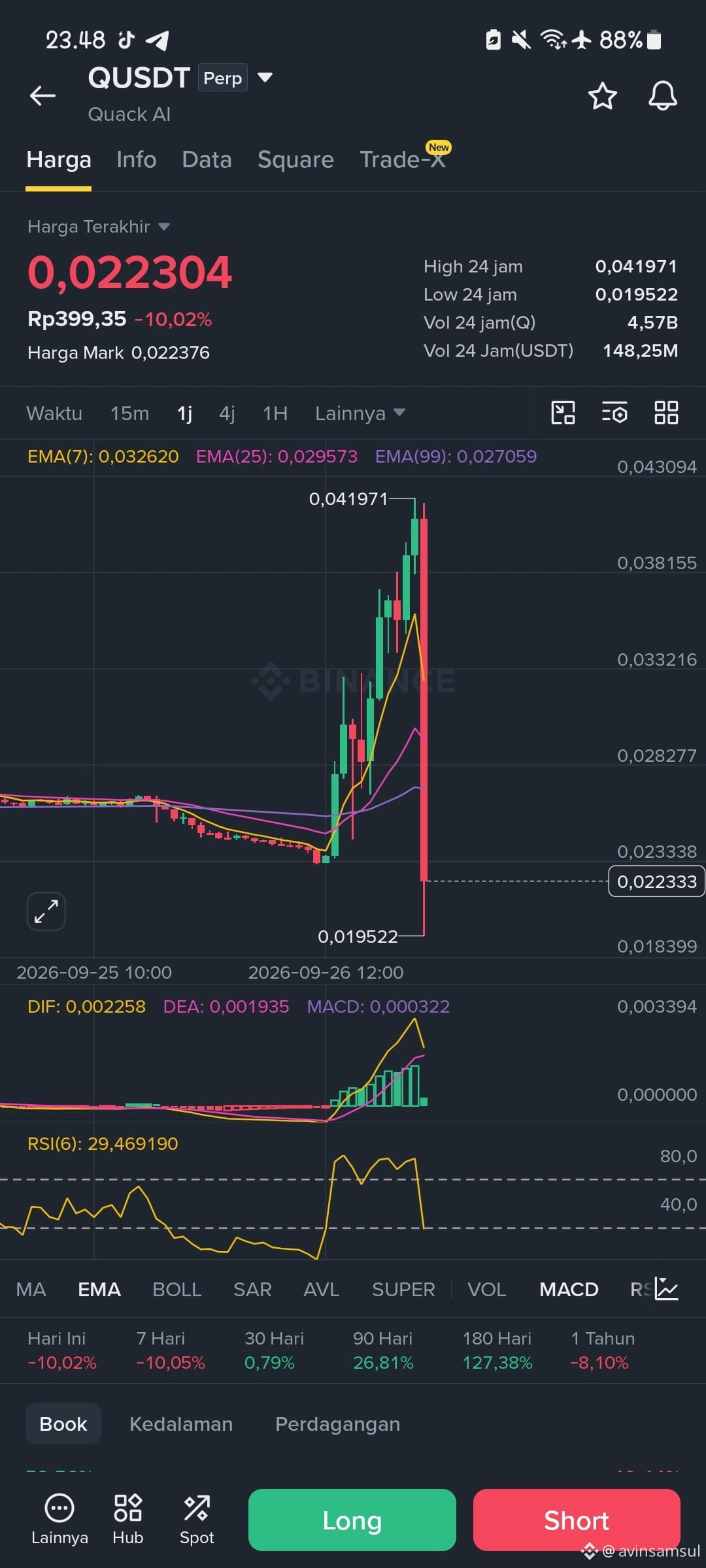
$Q is trading around $0.0231, up about 0.4% in 24h, after an extremely volatile week. Its 24h range is roughly $0.0222–$0.0259, while it remains more than 58% below its Sep. 27 all-time high of $0.0555. �
#QueencryptoNews #EarningsSeason #TrumpRejectsAIRulesForVoluntaryAudits #SECChairWantsStockMarketsOnChain #QNTRises287%
$Q is trading around $0.0231, up about 0.4% in 24h, after an extremely volatile week. Its 24h range is roughly $0.0222–$0.0259, while it remains more than 58% below its Sep. 27 all-time high of $0.0555. �
#QueencryptoNews #EarningsSeason #TrumpRejectsAIRulesForVoluntaryAudits #SECChairWantsStockMarketsOnChain #QNTRises287%
#QueencryptoNews #EarningsSeason #TrumpRejectsAIRulesForVoluntaryAudits #SECChairWantsStockMarketsOnChain #QNTRises287%
62

🔥 5 COINS TRADERS ARE WATCHING TODAY
The market moves fast — but attention usually moves first.
Here are 5 names worth keeping on your radar:
1️⃣ $QNT — gaining attention around the broader altcoin/institutional narrative 2️⃣ — frequently appearing in crypto discussions and searches 3️⃣ $LINK
{spot}(LINKUSDT)
— major infrastructure/oracle narrativepayments + tokenization narrative 5️⃣ $NEAR — AI + blockchain narrative
⚠️ Watching ≠ buying.
Before entering any trade, check: • Volume • Open interest • Funding rate • Liquidity • BTC direction • Actual catalyst
Which ONE should I break down next?
👇 Drop the ticker.
#CryptocurrencyWealth to #BinanceSquareFamily nce #altcycle oins #QueencryptoNews NT #HBAR
🔥 5 COINS TRADERS ARE WATCHING TODAY
The market moves fast — but attention usually moves first.
Here are 5 names worth keeping on your radar:
1️⃣ $QNT — gaining attention around the broader altcoin/institutional narrative 2️⃣ — frequently appearing in crypto discussions and searches 3️⃣ $LINK
— major infrastructure/oracle narrativepayments + tokenization narrative 5️⃣ $NEAR — AI + blockchain narrative
⚠️ Watching ≠ buying.
Before entering any trade, check: • Volume • Open interest • Funding rate • Liquidity • BTC direction • Actual catalyst
Which ONE should I break down next?
👇 Drop the ticker.
#CryptocurrencyWealth to #BinanceSquareFamily nce #altcycle oins #QueencryptoNews NT #HBAR
The market moves fast — but attention usually moves first.
Here are 5 names worth keeping on your radar:
1️⃣ $QNT — gaining attention around the broader altcoin/institutional narrative 2️⃣ — frequently appearing in crypto discussions and searches 3️⃣ $LINK
— major infrastructure/oracle narrativepayments + tokenization narrative 5️⃣ $NEAR — AI + blockchain narrative
⚠️ Watching ≠ buying.
Before entering any trade, check: • Volume • Open interest • Funding rate • Liquidity • BTC direction • Actual catalyst
Which ONE should I break down next?
👇 Drop the ticker.
#CryptocurrencyWealth to #BinanceSquareFamily nce #altcycle oins #QueencryptoNews NT #HBAR

379

🚀 Crypto Market Flash: BTC Holds $83K, QNT Rallies & US Spot ETF Inflows Surpass $2.4B!
The crypto market is showing strong institutional momentum despite short-term consolidation. Here are the key market developments you need to know today:
Bitcoin ($BTC) & ETF Inflows: Bitcoin is holding steady around $83,500 after a massive rally. US Spot Bitcoin ETFs recorded over $2.4 Billion in net weekly inflows—the highest single-week performance in nearly a year.
Quant ($QNT) Surge:$QNT saw a massive spike of 70%+, breaking past $170 USDT following news that The Clearing House selected Quant for its On-Chain Money Initiative.
* Binance & Circle Strategic Push: Binance announced a $100 Million investment in Circle as part of a 5-year partnership to scale global USDC adoption across key markets.
* Market Sentiment: The Crypto Fear & Greed Index remains firmly in Greed territory at 74, indicating strong underlying buyer confidence across spot and DeFi markets.
Disclaimer: This content is for informational purposes only and should not be considered financial advice. Always Do Your Own Research (DYOR) before investing!
💡
#BTC #USDC #QueencryptoNews #defi #skvirus
🚀 Crypto Market Flash: BTC Holds $83K, QNT Rallies & US Spot ETF Inflows Surpass $2.4B!
The crypto market is showing strong institutional momentum despite short-term consolidation. Here are the key market developments you need to know today:
Bitcoin ($BTC) & ETF Inflows: Bitcoin is holding steady around $83,500 after a massive rally. US Spot Bitcoin ETFs recorded over $2.4 Billion in net weekly inflows—the highest single-week performance in nearly a year.
Quant ($QNT) Surge:$QNT saw a massive spike of 70%+, breaking past $170 USDT following news that The Clearing House selected Quant for its On-Chain Money Initiative.
* Binance & Circle Strategic Push: Binance announced a $100 Million investment in Circle as part of a 5-year partnership to scale global USDC adoption across key markets.
* Market Sentiment: The Crypto Fear & Greed Index remains firmly in Greed territory at 74, indicating strong underlying buyer confidence across spot and DeFi markets.
Disclaimer: This content is for informational purposes only and should not be considered financial advice. Always Do Your Own Research (DYOR) before investing!
💡
#BTC #USDC #QueencryptoNews #defi #skvirus
The crypto market is showing strong institutional momentum despite short-term consolidation. Here are the key market developments you need to know today:
Bitcoin ($BTC) & ETF Inflows: Bitcoin is holding steady around $83,500 after a massive rally. US Spot Bitcoin ETFs recorded over $2.4 Billion in net weekly inflows—the highest single-week performance in nearly a year.
Quant ($QNT) Surge:$QNT saw a massive spike of 70%+, breaking past $170 USDT following news that The Clearing House selected Quant for its On-Chain Money Initiative.
* Binance & Circle Strategic Push: Binance announced a $100 Million investment in Circle as part of a 5-year partnership to scale global USDC adoption across key markets.
* Market Sentiment: The Crypto Fear & Greed Index remains firmly in Greed territory at 74, indicating strong underlying buyer confidence across spot and DeFi markets.
Disclaimer: This content is for informational purposes only and should not be considered financial advice. Always Do Your Own Research (DYOR) before investing!
💡
#BTC #USDC #QueencryptoNews #defi #skvirus

160

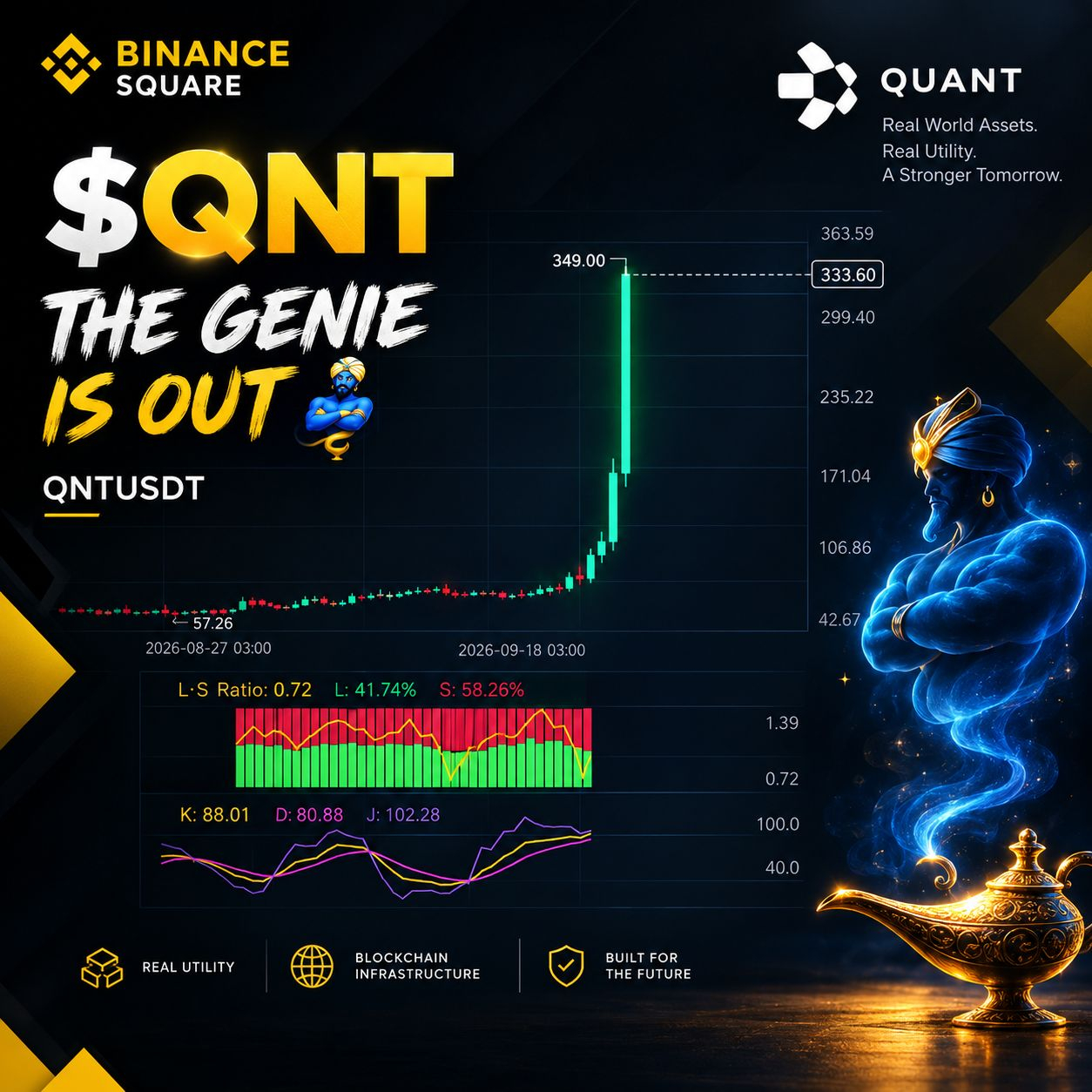
$QNT is really making moves now 😄🔥
Looks like the genie is finally out of the bottle! 🧞♂️🚀
#QNT #Quant #QueencryptoNews #squarecreator #SquareBinance
{future}(QNTUSDT)
$QNT is really making moves now 😄🔥
Looks like the genie is finally out of the bottle! 🧞♂️🚀
#QNT #Quant #QueencryptoNews #squarecreator #SquareBinance
Looks like the genie is finally out of the bottle! 🧞♂️🚀
#QNT #Quant #QueencryptoNews #squarecreator #SquareBinance
151

·
--
Haussier
📊 Let’s LONG #Q/USDT
💥 Leverage: Cross 20× - $Q
{future}(QUSDT)
✔️ Take Entries: 0.0453 - 0.04260
📈 Profit Targets:
1) 0.04730
2) 0.05150
3) 0.05600
🔖 Stop Loss: 0.0417$Q #QueencryptoNews
📊 Let’s LONG #Q/USDT
💥 Leverage: Cross 20× - $Q
✔️ Take Entries: 0.0453 - 0.04260
📈 Profit Targets:
1) 0.04730
2) 0.05150
3) 0.05600
🔖 Stop Loss: 0.0417$Q #QueencryptoNews
💥 Leverage: Cross 20× - $Q
✔️ Take Entries: 0.0453 - 0.04260
📈 Profit Targets:
1) 0.04730
2) 0.05150
3) 0.05600
🔖 Stop Loss: 0.0417$Q #QueencryptoNews
1
123

·
--
Bantinganyya srem banget, gila kau $qu #QueencryptoNews
Bantinganyya srem banget, gila kau $qu #QueencryptoNews
66

Trump’s Labor Secretary Lori Chavez-DeRemer latest to leave administrationUS Secretary of Labour Lori Chavez-DeRemer will be leaving her post in the administration of President Donald Trump, the White House has said.
Chavez-DeRemer is the third woman to leave the Trump administration since March, when the president fired Homeland Security Secretary Kristi Noem in the wake of federal immigration raids in Minnesota that led to the deaths of two protesters. Trump also ousted Attorney General Pam Bondi earlier this month.
Chavez-DeRemer has done a “phenomenal job” protecting American workers and is set to “take a position in the private sector”, White House Director of Communications Steven Cheung said in a post on X late on Monday, announcing the labour secretary’s departure.
Keith Sonderling will take on the role of Acting Secretary of Labor,” Cheung added, referring to the current deputy labour secretary.
While Cheung did not give a reason for Chavez-DeRemer’s departure, the New York Post reported in January that she was under investigation for “pursuing an ‘inappropriate’ relationship with a subordinate” and drinking in her office during the work day.
Al Jazeera was unable to independently verify the allegations.
From the beginning of her tenure, Chavez-DeRemer had some notable differences with other members of Trump’s inner circle.
She had voiced support for the pro-union Protecting the Right to Organize Act (PRO Act), earning support for her nomination from some Democrats.
Her appointment was also seen as favoured by Sean O’Brien, the president of the International Brotherhood of Teamsters, who notably spoke in support of Trump’s re-election campaign at the Republican National Convention in July 2024.
However, as the labour secretary, Chavez-DeRemer’s positions have more closely aligned with the Trump administration’s overall anti-regulatory policies, according to US media outlets. During her tenure as secretary, the Labor Department stalled on responding to calls for limits on silica exposure from Appalachian coal miners suffering from the occupational black lung disease.
Chavez-DeRemer is not the first top official to leave the Labor Department during Trump’s second term.
In August 2025, Trump fired the director of the Bureau of Labor Statistics (BLS), Erika McEntarfer, who was appointed by previous President Joe Biden, after a report showed that hiring had slowed in July and was worse in May and June than had previously been reported
Chavez-DeRemer had supported the president’s move at the time.
“I support the President’s decision to replace Biden’s Commissioner and ensure the American People can trust the important and influential data coming from BLS,” Chavez-DeRemer said in a post on X following McEntarfer’s removal
#QueencryptoNews
#writetoearn
#EconomicAlert
#receita_federal
#TrendingTopic
Trump’s Labor Secretary Lori Chavez-DeRemer latest to leave administration
US Secretary of Labour Lori Chavez-DeRemer will be leaving her post in the administration of President Donald Trump, the White House has said.
Chavez-DeRemer is the third woman to leave the Trump administration since March, when the president fired Homeland Security Secretary Kristi Noem in the wake of federal immigration raids in Minnesota that led to the deaths of two protesters. Trump also ousted Attorney General Pam Bondi earlier this month.
Chavez-DeRemer has done a “phenomenal job” protecting American workers and is set to “take a position in the private sector”, White House Director of Communications Steven Cheung said in a post on X late on Monday, announcing the labour secretary’s departure.
Keith Sonderling will take on the role of Acting Secretary of Labor,” Cheung added, referring to the current deputy labour secretary.
While Cheung did not give a reason for Chavez-DeRemer’s departure, the New York Post reported in January that she was under investigation for “pursuing an ‘inappropriate’ relationship with a subordinate” and drinking in her office during the work day.
Al Jazeera was unable to independently verify the allegations.
From the beginning of her tenure, Chavez-DeRemer had some notable differences with other members of Trump’s inner circle.
She had voiced support for the pro-union Protecting the Right to Organize Act (PRO Act), earning support for her nomination from some Democrats.
Her appointment was also seen as favoured by Sean O’Brien, the president of the International Brotherhood of Teamsters, who notably spoke in support of Trump’s re-election campaign at the Republican National Convention in July 2024.
However, as the labour secretary, Chavez-DeRemer’s positions have more closely aligned with the Trump administration’s overall anti-regulatory policies, according to US media outlets. During her tenure as secretary, the Labor Department stalled on responding to calls for limits on silica exposure from Appalachian coal miners suffering from the occupational black lung disease.
Chavez-DeRemer is not the first top official to leave the Labor Department during Trump’s second term.
In August 2025, Trump fired the director of the Bureau of Labor Statistics (BLS), Erika McEntarfer, who was appointed by previous President Joe Biden, after a report showed that hiring had slowed in July and was worse in May and June than had previously been reported
Chavez-DeRemer had supported the president’s move at the time.
“I support the President’s decision to replace Biden’s Commissioner and ensure the American People can trust the important and influential data coming from BLS,” Chavez-DeRemer said in a post on X following McEntarfer’s removal
#QueencryptoNews
#writetoearn
#EconomicAlert
#receita_federal
#TrendingTopic
Chavez-DeRemer is the third woman to leave the Trump administration since March, when the president fired Homeland Security Secretary Kristi Noem in the wake of federal immigration raids in Minnesota that led to the deaths of two protesters. Trump also ousted Attorney General Pam Bondi earlier this month.
Chavez-DeRemer has done a “phenomenal job” protecting American workers and is set to “take a position in the private sector”, White House Director of Communications Steven Cheung said in a post on X late on Monday, announcing the labour secretary’s departure.
Keith Sonderling will take on the role of Acting Secretary of Labor,” Cheung added, referring to the current deputy labour secretary.
While Cheung did not give a reason for Chavez-DeRemer’s departure, the New York Post reported in January that she was under investigation for “pursuing an ‘inappropriate’ relationship with a subordinate” and drinking in her office during the work day.
Al Jazeera was unable to independently verify the allegations.
From the beginning of her tenure, Chavez-DeRemer had some notable differences with other members of Trump’s inner circle.
She had voiced support for the pro-union Protecting the Right to Organize Act (PRO Act), earning support for her nomination from some Democrats.
Her appointment was also seen as favoured by Sean O’Brien, the president of the International Brotherhood of Teamsters, who notably spoke in support of Trump’s re-election campaign at the Republican National Convention in July 2024.
However, as the labour secretary, Chavez-DeRemer’s positions have more closely aligned with the Trump administration’s overall anti-regulatory policies, according to US media outlets. During her tenure as secretary, the Labor Department stalled on responding to calls for limits on silica exposure from Appalachian coal miners suffering from the occupational black lung disease.
Chavez-DeRemer is not the first top official to leave the Labor Department during Trump’s second term.
In August 2025, Trump fired the director of the Bureau of Labor Statistics (BLS), Erika McEntarfer, who was appointed by previous President Joe Biden, after a report showed that hiring had slowed in July and was worse in May and June than had previously been reported
Chavez-DeRemer had supported the president’s move at the time.
“I support the President’s decision to replace Biden’s Commissioner and ensure the American People can trust the important and influential data coming from BLS,” Chavez-DeRemer said in a post on X following McEntarfer’s removal
#QueencryptoNews
#writetoearn
#EconomicAlert
#receita_federal
#TrendingTopic
153
U.K.'s Farage faces standards probe over $6.7 million gift from Tether billionaire Christopher HarboThe Conservative and Labour parties argued Nigel Farage broke Commons rules by not declaring the £5 million, but Reform UK said it was an exempt, personal, unconditional gift.
Farage confirmed the gift in an interview with the Daily Telegraph, saying it was meant to keep him "safe and secure for the rest of my life" after a milkshake was thrown at him in 2019 and a firebomb attack on his home last year.
Harborne, a Thailand-based businessman with a 12% stake in stablecoin issuer Tether, made the payment in 2024. Farage announced his Clacton candidacy in early June last year and won the seat in July.
A Reform UK spokesman called the payment a "personal unconditional gift" given before Farage was elected and said his decision to stand as an MP was "entirely unrelated
The spokesman, the report added, said "We are confident everything has been declared in accordance with the rules."
The Commons code of conduct requires new MPs to register benefits received in the 12 months before their election, and says any benefit should be registered if there is doubt. Reform says the gift falls under the exemption for purely personal gifts.
The country’s main opposition Conservative Party wrote to Parliamentary Standards Commissioner Daniel Greenberg asking him to examine whether any of the funds were used to support political activity rather than security. Labour chair Anna Turley said Farage "appears to have broken the rules again."
Harborne gave Reform £9 million, then worth around $12 million, late last year in the largest single donation to a U.K. political party from a living person on record.
Earlier this month, BitMEX co-founder Ben Delo said in an op-ed he had given Reform £4 million ($5.1 million) since the start of the year.
The U.K. government imposed an immediate moratorium on crypto donations to political parties in March, citing the Rycroft review's warning that digital assets could be used to channel foreign money into U.K. politics.
The ban covers donations of any size and will be written into the Representation of the People Bill, with criminal penalties for non-compliance.
That same month, Farage invested £215,000 ($286,000) in Stack BTC, a London-listed bitcoin treasury company chaired by former Chancellor Kwasi Kwarteng, taking a 6.31% stake through his investment vehicle Thorn In The Side.
#QueencryptoNews
#Dogecoin
#Robertkiyosaki
#FactCheck
#AftermathFinanceBreach
U.K.'s Farage faces standards probe over $6.7 million gift from Tether billionaire Christopher Harbo
The Conservative and Labour parties argued Nigel Farage broke Commons rules by not declaring the £5 million, but Reform UK said it was an exempt, personal, unconditional gift.
Farage confirmed the gift in an interview with the Daily Telegraph, saying it was meant to keep him "safe and secure for the rest of my life" after a milkshake was thrown at him in 2019 and a firebomb attack on his home last year.
Harborne, a Thailand-based businessman with a 12% stake in stablecoin issuer Tether, made the payment in 2024. Farage announced his Clacton candidacy in early June last year and won the seat in July.
A Reform UK spokesman called the payment a "personal unconditional gift" given before Farage was elected and said his decision to stand as an MP was "entirely unrelated
The spokesman, the report added, said "We are confident everything has been declared in accordance with the rules."
The Commons code of conduct requires new MPs to register benefits received in the 12 months before their election, and says any benefit should be registered if there is doubt. Reform says the gift falls under the exemption for purely personal gifts.
The country’s main opposition Conservative Party wrote to Parliamentary Standards Commissioner Daniel Greenberg asking him to examine whether any of the funds were used to support political activity rather than security. Labour chair Anna Turley said Farage "appears to have broken the rules again."
Harborne gave Reform £9 million, then worth around $12 million, late last year in the largest single donation to a U.K. political party from a living person on record.
Earlier this month, BitMEX co-founder Ben Delo said in an op-ed he had given Reform £4 million ($5.1 million) since the start of the year.
The U.K. government imposed an immediate moratorium on crypto donations to political parties in March, citing the Rycroft review's warning that digital assets could be used to channel foreign money into U.K. politics.
The ban covers donations of any size and will be written into the Representation of the People Bill, with criminal penalties for non-compliance.
That same month, Farage invested £215,000 ($286,000) in Stack BTC, a London-listed bitcoin treasury company chaired by former Chancellor Kwasi Kwarteng, taking a 6.31% stake through his investment vehicle Thorn In The Side.
#QueencryptoNews
#Dogecoin
#Robertkiyosaki
#FactCheck
#AftermathFinanceBreach
Farage confirmed the gift in an interview with the Daily Telegraph, saying it was meant to keep him "safe and secure for the rest of my life" after a milkshake was thrown at him in 2019 and a firebomb attack on his home last year.
Harborne, a Thailand-based businessman with a 12% stake in stablecoin issuer Tether, made the payment in 2024. Farage announced his Clacton candidacy in early June last year and won the seat in July.
A Reform UK spokesman called the payment a "personal unconditional gift" given before Farage was elected and said his decision to stand as an MP was "entirely unrelated
The spokesman, the report added, said "We are confident everything has been declared in accordance with the rules."
The Commons code of conduct requires new MPs to register benefits received in the 12 months before their election, and says any benefit should be registered if there is doubt. Reform says the gift falls under the exemption for purely personal gifts.
The country’s main opposition Conservative Party wrote to Parliamentary Standards Commissioner Daniel Greenberg asking him to examine whether any of the funds were used to support political activity rather than security. Labour chair Anna Turley said Farage "appears to have broken the rules again."
Harborne gave Reform £9 million, then worth around $12 million, late last year in the largest single donation to a U.K. political party from a living person on record.
Earlier this month, BitMEX co-founder Ben Delo said in an op-ed he had given Reform £4 million ($5.1 million) since the start of the year.
The U.K. government imposed an immediate moratorium on crypto donations to political parties in March, citing the Rycroft review's warning that digital assets could be used to channel foreign money into U.K. politics.
The ban covers donations of any size and will be written into the Representation of the People Bill, with criminal penalties for non-compliance.
That same month, Farage invested £215,000 ($286,000) in Stack BTC, a London-listed bitcoin treasury company chaired by former Chancellor Kwasi Kwarteng, taking a 6.31% stake through his investment vehicle Thorn In The Side.
#QueencryptoNews
#Dogecoin
#Robertkiyosaki
#FactCheck
#AftermathFinanceBreach
25
Trump Slaps Brazil and Canada With 50% and 35% Tariffs; Mexico Gets Breathing RoomThe Trump Administration has officially slapped Brazil and Canada with tariffs of 50% and 35% respectively, levies that will affect the trading relations between these countries.
On July 30, President Donald Trump signed an executive order making his earlier threats official, stating that this decision was an answer to the Brazilian government’s recent actions, which posed “an unusual and extraordinary threat to the national security, foreign policy, and economy of the United States.”
The White House explained that Brazilian institutions have compelled U.S.-based social network companies to “censor political speech, deplatform users, turn over sensitive U.S. user data, or change their content moderation policies.” The prosecution of former President Jair Bolsonaro, a close friend of Trump who allegedly attempted a coup, is also mentioned as a justification for these measures.
Some products will be exempt from paying these taxes, including civil aircraft, precious metals, energy imports, and fertilizers. Coffee, on the other hand, will not.
On July 31, Trump also raised the tariff percentage collected from Canadian imports to 35%, with an executive order stating that Canada has “failed to cooperate in curbing the ongoing flood of fentanyl and other illicit drugs, and it has retaliated against the United States for the President’s actions to address this unusual and extraordinary threat to the United States.”
On Truth Social, Trump also referred to the intention of the Canadian government to recognize the Palestinian state as a pain point to achieve a better trade deal.
In contrast, Trump gave Mexico a 90-day extension of the current deal, which establishes 25% levies on Mexican imports and a 50% tariff on steel, aluminum, and copper. Trump stated that “the complexities of a deal with Mexico are somewhat different than other nations because of both the problems and assets of the border,” stressing that he was getting to “know and understand” Mexican President Claudia Sheimbaun after a phone call.
#QueencryptoNews
#Write2Earn
#EarnFreeCrypto2024
#Robertkiyosaki
#TradingCommunity
Trump Slaps Brazil and Canada With 50% and 35% Tariffs; Mexico Gets Breathing Room
The Trump Administration has officially slapped Brazil and Canada with tariffs of 50% and 35% respectively, levies that will affect the trading relations between these countries.
On July 30, President Donald Trump signed an executive order making his earlier threats official, stating that this decision was an answer to the Brazilian government’s recent actions, which posed “an unusual and extraordinary threat to the national security, foreign policy, and economy of the United States.”
The White House explained that Brazilian institutions have compelled U.S.-based social network companies to “censor political speech, deplatform users, turn over sensitive U.S. user data, or change their content moderation policies.” The prosecution of former President Jair Bolsonaro, a close friend of Trump who allegedly attempted a coup, is also mentioned as a justification for these measures.
Some products will be exempt from paying these taxes, including civil aircraft, precious metals, energy imports, and fertilizers. Coffee, on the other hand, will not.
On July 31, Trump also raised the tariff percentage collected from Canadian imports to 35%, with an executive order stating that Canada has “failed to cooperate in curbing the ongoing flood of fentanyl and other illicit drugs, and it has retaliated against the United States for the President’s actions to address this unusual and extraordinary threat to the United States.”
On Truth Social, Trump also referred to the intention of the Canadian government to recognize the Palestinian state as a pain point to achieve a better trade deal.
In contrast, Trump gave Mexico a 90-day extension of the current deal, which establishes 25% levies on Mexican imports and a 50% tariff on steel, aluminum, and copper. Trump stated that “the complexities of a deal with Mexico are somewhat different than other nations because of both the problems and assets of the border,” stressing that he was getting to “know and understand” Mexican President Claudia Sheimbaun after a phone call.
#QueencryptoNews
#Write2Earn
#EarnFreeCrypto2024
#Robertkiyosaki
#TradingCommunity
On July 30, President Donald Trump signed an executive order making his earlier threats official, stating that this decision was an answer to the Brazilian government’s recent actions, which posed “an unusual and extraordinary threat to the national security, foreign policy, and economy of the United States.”
The White House explained that Brazilian institutions have compelled U.S.-based social network companies to “censor political speech, deplatform users, turn over sensitive U.S. user data, or change their content moderation policies.” The prosecution of former President Jair Bolsonaro, a close friend of Trump who allegedly attempted a coup, is also mentioned as a justification for these measures.
Some products will be exempt from paying these taxes, including civil aircraft, precious metals, energy imports, and fertilizers. Coffee, on the other hand, will not.
On July 31, Trump also raised the tariff percentage collected from Canadian imports to 35%, with an executive order stating that Canada has “failed to cooperate in curbing the ongoing flood of fentanyl and other illicit drugs, and it has retaliated against the United States for the President’s actions to address this unusual and extraordinary threat to the United States.”
On Truth Social, Trump also referred to the intention of the Canadian government to recognize the Palestinian state as a pain point to achieve a better trade deal.
In contrast, Trump gave Mexico a 90-day extension of the current deal, which establishes 25% levies on Mexican imports and a 50% tariff on steel, aluminum, and copper. Trump stated that “the complexities of a deal with Mexico are somewhat different than other nations because of both the problems and assets of the border,” stressing that he was getting to “know and understand” Mexican President Claudia Sheimbaun after a phone call.
#QueencryptoNews
#Write2Earn
#EarnFreeCrypto2024
#Robertkiyosaki
#TradingCommunity
43

·
--
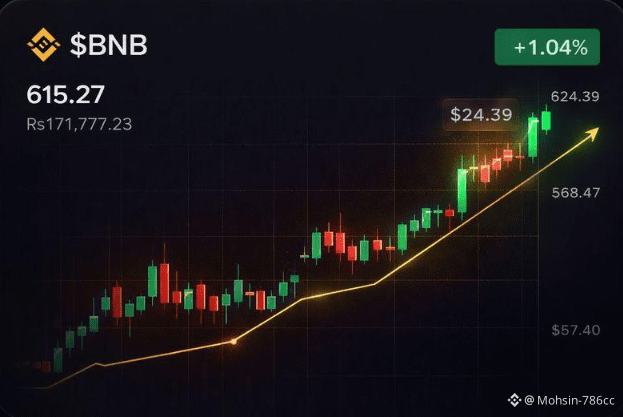
$BNB is showing relatively strong momentum, with price action staying bullish after recent recovery moves. Traders are watching key resistance areas as $BNB attempts to maintain strength above important support zones. If overall crypto market sentiment remains positive, BNB could continue its upward trend in the short term.
On the fundamental side, $BNB continues to benefit from the large Binance ecosystem, including trading fee utility, DeFi activity, and growth on BNB Chain. However, like all cryptocurrencies, volatility remains high, so sudden pullbacks are still possible if the broader market weakens. Risk management and watching volume levels remain important for traders.
#BNB
#QueencryptoNews #SouthKoreaNPSIncreasesStrategyStake #BitGoQ1RevenueUp112Percent #BitcoinETFsSee$131MNetInflows
{spot}(BNBUSDT)
$BNB is showing relatively strong momentum, with price action staying bullish after recent recovery moves. Traders are watching key resistance areas as $BNB attempts to maintain strength above important support zones. If overall crypto market sentiment remains positive, BNB could continue its upward trend in the short term.
On the fundamental side, $BNB continues to benefit from the large Binance ecosystem, including trading fee utility, DeFi activity, and growth on BNB Chain. However, like all cryptocurrencies, volatility remains high, so sudden pullbacks are still possible if the broader market weakens. Risk management and watching volume levels remain important for traders.
#BNB
#QueencryptoNews #SouthKoreaNPSIncreasesStrategyStake #BitGoQ1RevenueUp112Percent #BitcoinETFsSee$131MNetInflows
On the fundamental side, $BNB continues to benefit from the large Binance ecosystem, including trading fee utility, DeFi activity, and growth on BNB Chain. However, like all cryptocurrencies, volatility remains high, so sudden pullbacks are still possible if the broader market weakens. Risk management and watching volume levels remain important for traders.
#BNB
#QueencryptoNews #SouthKoreaNPSIncreasesStrategyStake #BitGoQ1RevenueUp112Percent #BitcoinETFsSee$131MNetInflows
1
94

Article
What Happens When You Combine Crypto, NFTs, and a Love for iGamingEvery few years the crypto industry collides with another sector and completely reshapes it. First it was finance. Then gaming economies. Now it is happening with online entertainment and gambling. When blockchain ownership, instant transactions, community-driven rewards, and creative game design come together, the result is not just another betting website. It becomes an interactive crypto experience built for people who already live inside Web3.
That is exactly the philosophy behind CryptoCasino.Vegas. Instead of copying traditional casino models and adding crypto payments as an afterthought, the entire platform was engineered around blockchain culture, digital rewards, transparency, and fast gameplay. It is less about spinning generic casino slots and more about building something that feels native to the crypto world.
Most crypto platforms still speak to users like they are new to the space. Endless explanations about wallets, confirmations, and basic concepts that anyone following crypto news already understands. CryptoCasino.Vegas skips all of that. It assumes you already know how crypto works and focuses instead on creating engaging experiences that actually use blockchain advantages properly.
Instant transactions, provably fair mechanics, transparent systems, and community rewards are not marketing slogans here. They are core infrastructure choices. The platform treats crypto not as a payment method, but as the foundation of how the entire ecosystem operates. For experienced crypto users, that difference is immediately noticeable.
The online casino industry has barely changed in two decades. Most sites still rely on the same slot designs, the same betting logic, and the same user flows. The only thing that usually changes is the logo. CryptoCasino.Vegas takes a completely different approach by designing original games that feel closer to interactive entertainment than traditional gambling. Anime-inspired visuals, fast-paced mechanics, action-based gameplay, and custom-built systems create an experience that feels modern rather than recycled. It is built to keep players engaged not because of flashing jackpots, but because the games themselves are actually fun to play.
For years the crypto industry focused on infrastructure, protocols, and financial tools. Now the real growth is happening in experiences. People adopt technology faster when it is wrapped in entertainment, rewards, and social interaction. Gaming has always been one of the strongest drivers of new user adoption, and crypto-powered entertainment is proving to be no different.
By blending engaging gameplay with real digital rewards, platforms like CryptoCasino.Vegas turn complex blockchain concepts into something intuitive and enjoyable. Users do not feel like they are learning crypto. They simply use it naturally while playing.
The old casino model is slowly losing relevance in a world where users expect transparency, instant settlement, ownership, and community participation. Crypto-native platforms are filling that gap by building systems that align with how digital economies already function.
CryptoCasino.Vegas represents this shift clearly. It is not just another gambling website that accepts crypto. It is a Web3 entertainment ecosystem that uses blockchain as a core feature, not a cosmetic upgrade. For anyone already immersed in crypto culture, it feels like a natural evolution of online gaming.
#QueencryptoNews
#ETHETFsApproved
#Fatihcoşar
#xmucanX
#Kriptocutrader
What Happens When You Combine Crypto, NFTs, and a Love for iGaming
Every few years the crypto industry collides with another sector and completely reshapes it. First it was finance. Then gaming economies. Now it is happening with online entertainment and gambling. When blockchain ownership, instant transactions, community-driven rewards, and creative game design come together, the result is not just another betting website. It becomes an interactive crypto experience built for people who already live inside Web3.
That is exactly the philosophy behind CryptoCasino.Vegas. Instead of copying traditional casino models and adding crypto payments as an afterthought, the entire platform was engineered around blockchain culture, digital rewards, transparency, and fast gameplay. It is less about spinning generic casino slots and more about building something that feels native to the crypto world.
Most crypto platforms still speak to users like they are new to the space. Endless explanations about wallets, confirmations, and basic concepts that anyone following crypto news already understands. CryptoCasino.Vegas skips all of that. It assumes you already know how crypto works and focuses instead on creating engaging experiences that actually use blockchain advantages properly.
Instant transactions, provably fair mechanics, transparent systems, and community rewards are not marketing slogans here. They are core infrastructure choices. The platform treats crypto not as a payment method, but as the foundation of how the entire ecosystem operates. For experienced crypto users, that difference is immediately noticeable.
The online casino industry has barely changed in two decades. Most sites still rely on the same slot designs, the same betting logic, and the same user flows. The only thing that usually changes is the logo. CryptoCasino.Vegas takes a completely different approach by designing original games that feel closer to interactive entertainment than traditional gambling. Anime-inspired visuals, fast-paced mechanics, action-based gameplay, and custom-built systems create an experience that feels modern rather than recycled. It is built to keep players engaged not because of flashing jackpots, but because the games themselves are actually fun to play.
For years the crypto industry focused on infrastructure, protocols, and financial tools. Now the real growth is happening in experiences. People adopt technology faster when it is wrapped in entertainment, rewards, and social interaction. Gaming has always been one of the strongest drivers of new user adoption, and crypto-powered entertainment is proving to be no different.
By blending engaging gameplay with real digital rewards, platforms like CryptoCasino.Vegas turn complex blockchain concepts into something intuitive and enjoyable. Users do not feel like they are learning crypto. They simply use it naturally while playing.
The old casino model is slowly losing relevance in a world where users expect transparency, instant settlement, ownership, and community participation. Crypto-native platforms are filling that gap by building systems that align with how digital economies already function.
CryptoCasino.Vegas represents this shift clearly. It is not just another gambling website that accepts crypto. It is a Web3 entertainment ecosystem that uses blockchain as a core feature, not a cosmetic upgrade. For anyone already immersed in crypto culture, it feels like a natural evolution of online gaming.
#QueencryptoNews
#ETHETFsApproved
#Fatihcoşar
#xmucanX
#Kriptocutrader
That is exactly the philosophy behind CryptoCasino.Vegas. Instead of copying traditional casino models and adding crypto payments as an afterthought, the entire platform was engineered around blockchain culture, digital rewards, transparency, and fast gameplay. It is less about spinning generic casino slots and more about building something that feels native to the crypto world.
Most crypto platforms still speak to users like they are new to the space. Endless explanations about wallets, confirmations, and basic concepts that anyone following crypto news already understands. CryptoCasino.Vegas skips all of that. It assumes you already know how crypto works and focuses instead on creating engaging experiences that actually use blockchain advantages properly.
Instant transactions, provably fair mechanics, transparent systems, and community rewards are not marketing slogans here. They are core infrastructure choices. The platform treats crypto not as a payment method, but as the foundation of how the entire ecosystem operates. For experienced crypto users, that difference is immediately noticeable.
The online casino industry has barely changed in two decades. Most sites still rely on the same slot designs, the same betting logic, and the same user flows. The only thing that usually changes is the logo. CryptoCasino.Vegas takes a completely different approach by designing original games that feel closer to interactive entertainment than traditional gambling. Anime-inspired visuals, fast-paced mechanics, action-based gameplay, and custom-built systems create an experience that feels modern rather than recycled. It is built to keep players engaged not because of flashing jackpots, but because the games themselves are actually fun to play.
For years the crypto industry focused on infrastructure, protocols, and financial tools. Now the real growth is happening in experiences. People adopt technology faster when it is wrapped in entertainment, rewards, and social interaction. Gaming has always been one of the strongest drivers of new user adoption, and crypto-powered entertainment is proving to be no different.
By blending engaging gameplay with real digital rewards, platforms like CryptoCasino.Vegas turn complex blockchain concepts into something intuitive and enjoyable. Users do not feel like they are learning crypto. They simply use it naturally while playing.
The old casino model is slowly losing relevance in a world where users expect transparency, instant settlement, ownership, and community participation. Crypto-native platforms are filling that gap by building systems that align with how digital economies already function.
CryptoCasino.Vegas represents this shift clearly. It is not just another gambling website that accepts crypto. It is a Web3 entertainment ecosystem that uses blockchain as a core feature, not a cosmetic upgrade. For anyone already immersed in crypto culture, it feels like a natural evolution of online gaming.
#QueencryptoNews
#ETHETFsApproved
#Fatihcoşar
#xmucanX
#Kriptocutrader
69
Article
What is a Cold Cryptocurrency WalletToday we will tell you how a cold cryptocurrency wallet differs from a hot one, give the most interesting examples of them and touch on how to create the most budget-friendly cold wallets.
Many people mistakenly believe that cryptocurrency is stored in a wallet. In fact, this is not true — it is always in the blockchain, and the main task of a cryptocurrency wallet is to provide you with the ability to access your assets. Nevertheless, it is the type of wallet you end up choosing that directly affects the security of your funds.
In the context of security and convenience, many online platforms, including online casinos, have begun integrating cryptocurrency as a method of deposit and withdrawal. For those in the online gaming community, securing your digital assets while enjoying online casino games is crucial.
This integration of cryptocurrency into online casinos not only broadens the accessibility and flexibility of gaming funds but also underscores the convergence of digital gaming and secure financial practices.
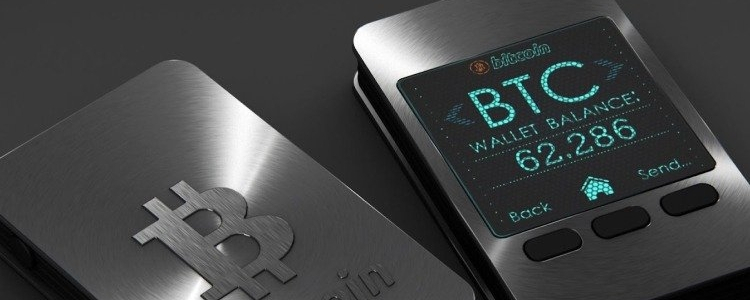
We will tell you about the main types of cryptocurrency wallets, and we will particularly focus on one of them, even if it is not the most convenient, but the safest. And, of course, we will touch upon the question of how to make a cold wallet for cryptocurrency without special expenses.
Trezor Model T supports more than 1800 coins and tokens, allowing you to make transactions via Trezor Suite. And this can be done either through a web application or locally, via your computer. For obvious reasons, the latter method is much more secure.
The Trezor Model T itself most resembles an old-school stopwatch with dimensions of 64×39×10 mm. It comes equipped with its own screen and can connect to your computer via USB cable, and offers a microSD card slot if you want to add encrypted storage directly to your hardware wallet.
The main drawback of the model, however, was the lack of Bluetooth support. The issue is rather moot, though. Yes, Bluetooth would have greatly expanded the possibilities of using the crypto wallet, but at the same time it would have become another loophole for attackers.
The cold wallet supports 19 blockchains and over 10,000 tokens, while striking a good balance between ease of operation and security. It looks like an MP3 player and offers a colour display with an underlying joystick for navigation and a camera for scanning QR codes when signing transactions.
Hot and cold wallets differ from each other, first of all, by their level of security. Cold wallet is the most reliable way to save your cryptocurrency. But with all its security, this method is not convenient. Therefore, many advanced users prefer, so to speak, a hybrid way of storing coins, using a hardware wallet for basic savings, and a hot wallet for momentary spending. And, in our opinion, this is the surest way to secure your savings.
The best hardware wallets for cryptocurrency can be found just above. For those who do not want to spend money to buy a full-fledged hardware wallet, we advise you to remember the “grandfatherly” methods of storing important information (in our case — private keys) on paper. And a more modern way of storing them can be a computer or a smartphone without Internet access.
#Write2Earn
#QueencryptoNews
#Grok
#Kriptocutrader
#xmucan
What is a Cold Cryptocurrency Wallet
Today we will tell you how a cold cryptocurrency wallet differs from a hot one, give the most interesting examples of them and touch on how to create the most budget-friendly cold wallets.
Many people mistakenly believe that cryptocurrency is stored in a wallet. In fact, this is not true — it is always in the blockchain, and the main task of a cryptocurrency wallet is to provide you with the ability to access your assets. Nevertheless, it is the type of wallet you end up choosing that directly affects the security of your funds.
In the context of security and convenience, many online platforms, including online casinos, have begun integrating cryptocurrency as a method of deposit and withdrawal. For those in the online gaming community, securing your digital assets while enjoying online casino games is crucial.
This integration of cryptocurrency into online casinos not only broadens the accessibility and flexibility of gaming funds but also underscores the convergence of digital gaming and secure financial practices.
We will tell you about the main types of cryptocurrency wallets, and we will particularly focus on one of them, even if it is not the most convenient, but the safest. And, of course, we will touch upon the question of how to make a cold wallet for cryptocurrency without special expenses.
Trezor Model T supports more than 1800 coins and tokens, allowing you to make transactions via Trezor Suite. And this can be done either through a web application or locally, via your computer. For obvious reasons, the latter method is much more secure.
The Trezor Model T itself most resembles an old-school stopwatch with dimensions of 64×39×10 mm. It comes equipped with its own screen and can connect to your computer via USB cable, and offers a microSD card slot if you want to add encrypted storage directly to your hardware wallet.
The main drawback of the model, however, was the lack of Bluetooth support. The issue is rather moot, though. Yes, Bluetooth would have greatly expanded the possibilities of using the crypto wallet, but at the same time it would have become another loophole for attackers.
The cold wallet supports 19 blockchains and over 10,000 tokens, while striking a good balance between ease of operation and security. It looks like an MP3 player and offers a colour display with an underlying joystick for navigation and a camera for scanning QR codes when signing transactions.
Hot and cold wallets differ from each other, first of all, by their level of security. Cold wallet is the most reliable way to save your cryptocurrency. But with all its security, this method is not convenient. Therefore, many advanced users prefer, so to speak, a hybrid way of storing coins, using a hardware wallet for basic savings, and a hot wallet for momentary spending. And, in our opinion, this is the surest way to secure your savings.
The best hardware wallets for cryptocurrency can be found just above. For those who do not want to spend money to buy a full-fledged hardware wallet, we advise you to remember the “grandfatherly” methods of storing important information (in our case — private keys) on paper. And a more modern way of storing them can be a computer or a smartphone without Internet access.
#Write2Earn
#QueencryptoNews
#Grok
#Kriptocutrader
#xmucan
Many people mistakenly believe that cryptocurrency is stored in a wallet. In fact, this is not true — it is always in the blockchain, and the main task of a cryptocurrency wallet is to provide you with the ability to access your assets. Nevertheless, it is the type of wallet you end up choosing that directly affects the security of your funds.
In the context of security and convenience, many online platforms, including online casinos, have begun integrating cryptocurrency as a method of deposit and withdrawal. For those in the online gaming community, securing your digital assets while enjoying online casino games is crucial.
This integration of cryptocurrency into online casinos not only broadens the accessibility and flexibility of gaming funds but also underscores the convergence of digital gaming and secure financial practices.
We will tell you about the main types of cryptocurrency wallets, and we will particularly focus on one of them, even if it is not the most convenient, but the safest. And, of course, we will touch upon the question of how to make a cold wallet for cryptocurrency without special expenses.
Trezor Model T supports more than 1800 coins and tokens, allowing you to make transactions via Trezor Suite. And this can be done either through a web application or locally, via your computer. For obvious reasons, the latter method is much more secure.
The Trezor Model T itself most resembles an old-school stopwatch with dimensions of 64×39×10 mm. It comes equipped with its own screen and can connect to your computer via USB cable, and offers a microSD card slot if you want to add encrypted storage directly to your hardware wallet.
The main drawback of the model, however, was the lack of Bluetooth support. The issue is rather moot, though. Yes, Bluetooth would have greatly expanded the possibilities of using the crypto wallet, but at the same time it would have become another loophole for attackers.
The cold wallet supports 19 blockchains and over 10,000 tokens, while striking a good balance between ease of operation and security. It looks like an MP3 player and offers a colour display with an underlying joystick for navigation and a camera for scanning QR codes when signing transactions.
Hot and cold wallets differ from each other, first of all, by their level of security. Cold wallet is the most reliable way to save your cryptocurrency. But with all its security, this method is not convenient. Therefore, many advanced users prefer, so to speak, a hybrid way of storing coins, using a hardware wallet for basic savings, and a hot wallet for momentary spending. And, in our opinion, this is the surest way to secure your savings.
The best hardware wallets for cryptocurrency can be found just above. For those who do not want to spend money to buy a full-fledged hardware wallet, we advise you to remember the “grandfatherly” methods of storing important information (in our case — private keys) on paper. And a more modern way of storing them can be a computer or a smartphone without Internet access.
#Write2Earn
#QueencryptoNews
#Grok
#Kriptocutrader
#xmucan
42

Article
Reaching instant 27ms validation on Bitcoin will take 17 GPU years of compute powerHazync’s developer reports millisecond verification for blocks 1 through 1,789, while the full-chain proving campaign remains unfinished.
azync's developer reports that a 1.7 MB standalone verifier checked a 226,434-byte cryptographic receipt covering the first 1,789 blocks of Bitcoin in 27 milliseconds. The Aug. 15 disclosure limits that result to an early stretch of Bitcoin's history. A complete genesis-to-tip proof campaign remains unfinished.
Hazync is a research prototype that uses RISC Zero's zero-knowledge virtual machine, or zkVM, to make Bitcoin validation reusable. The zkVM executes the validation program, and the resulting receipt gives other users a compact file to check. The developer's design concentrates proof generation among provers and leaves receipt verification to a much larger population.
Those two jobs have radically different costs. The developer estimates roughly 17 GPU-years for the historical backfill, followed by capacity equivalent to about six Nvidia L40S GPUs to keep pace with new blocks. Cheap receipt checks arrive after provers, auditors and archive operators have supplied the expensive work upstream.
The public Hazync repository describes a guest program built from substantial parts of Bitcoin Core v28's consensus code and libsecp256k1, compiled for 32-bit RISC-V. Reusing Core's code reduces the amount of consensus behavior that has to be restated in a separate circuit.
That measurement informs the developer's estimate of roughly 17 GPU-years for a genesis-to-tip backfill. The available material supplies representative project benchmarks instead of an audited measurement across every era of Bitcoin history. Hazync's full-chain performance therefore remains an estimate until the campaign is completed.
Software changes can also erase completed work. Every Hazync receipt commits to a METHOD_ID, a fingerprint of the compiled guest program. A new guest build receives a new identifier, leaving earlier receipts tied to the previous version.
The project restarted its genesis board on Aug. 4 after an internal audit forced a new baseline. A later soundness fix could trigger the same reset after far more GPU time has accumulated. The proving budget therefore spans stable code, the historic backfill and continuous capacity for the tip.
The guest itself contains an important review boundary as substantial Core consensus code runs inside it, alongside project-maintained slices for the subsidy schedule and script-activation heights. The project says its script-flag schedule is differentially tested as a sound superset of Core's rules, allowing extra rejection in the direction intended to preserve soundness.
A C++ portability layer adapts Core for the zkVM, and a non-Core Utreexo accumulator commits changes to Bitcoin's unspent-transaction-output set. The disclosed assumptions also cover RISC Zero's proof system, SHA-256 and secp256k1. Hazync identifies the portability shims and accumulator as its highest-priority residual review targets.
The repository reports two AI-assisted external reviews in August that failed to find a path for the guest to accept an invalid chain. A commissioned professional audit remains outstanding. Public code enables outside scrutiny, and production assurance still rests on adversarial examination of the exact guest and every component inside its proof boundary.
Hazync splits trustless sync into several jobs with different operators and budgets. Receipt verification can reach milliseconds for a proven range. Proof generation consumes GPU capacity, archive operators retain the underlying data, nodes compare tips, and auditors assess the guest.
A stable implementation with sufficient compute and outside review could reduce repeated validation across new nodes. At the project's current stage, the developer-reported 27-millisecond check covers a limited spine, while the 17 GPU-year estimate describes the unfinished path to Bitcoin's tip.
#Write2Earn
#ETHETFsApproved
#QueencryptoNews
#DOGE冲冲冲
#ZeusInCrypto
Reaching instant 27ms validation on Bitcoin will take 17 GPU years of compute power
Hazync’s developer reports millisecond verification for blocks 1 through 1,789, while the full-chain proving campaign remains unfinished.
azync's developer reports that a 1.7 MB standalone verifier checked a 226,434-byte cryptographic receipt covering the first 1,789 blocks of Bitcoin in 27 milliseconds. The Aug. 15 disclosure limits that result to an early stretch of Bitcoin's history. A complete genesis-to-tip proof campaign remains unfinished.
Hazync is a research prototype that uses RISC Zero's zero-knowledge virtual machine, or zkVM, to make Bitcoin validation reusable. The zkVM executes the validation program, and the resulting receipt gives other users a compact file to check. The developer's design concentrates proof generation among provers and leaves receipt verification to a much larger population.
Those two jobs have radically different costs. The developer estimates roughly 17 GPU-years for the historical backfill, followed by capacity equivalent to about six Nvidia L40S GPUs to keep pace with new blocks. Cheap receipt checks arrive after provers, auditors and archive operators have supplied the expensive work upstream.
The public Hazync repository describes a guest program built from substantial parts of Bitcoin Core v28's consensus code and libsecp256k1, compiled for 32-bit RISC-V. Reusing Core's code reduces the amount of consensus behavior that has to be restated in a separate circuit.
That measurement informs the developer's estimate of roughly 17 GPU-years for a genesis-to-tip backfill. The available material supplies representative project benchmarks instead of an audited measurement across every era of Bitcoin history. Hazync's full-chain performance therefore remains an estimate until the campaign is completed.
Software changes can also erase completed work. Every Hazync receipt commits to a METHOD_ID, a fingerprint of the compiled guest program. A new guest build receives a new identifier, leaving earlier receipts tied to the previous version.
The project restarted its genesis board on Aug. 4 after an internal audit forced a new baseline. A later soundness fix could trigger the same reset after far more GPU time has accumulated. The proving budget therefore spans stable code, the historic backfill and continuous capacity for the tip.
The guest itself contains an important review boundary as substantial Core consensus code runs inside it, alongside project-maintained slices for the subsidy schedule and script-activation heights. The project says its script-flag schedule is differentially tested as a sound superset of Core's rules, allowing extra rejection in the direction intended to preserve soundness.
A C++ portability layer adapts Core for the zkVM, and a non-Core Utreexo accumulator commits changes to Bitcoin's unspent-transaction-output set. The disclosed assumptions also cover RISC Zero's proof system, SHA-256 and secp256k1. Hazync identifies the portability shims and accumulator as its highest-priority residual review targets.
The repository reports two AI-assisted external reviews in August that failed to find a path for the guest to accept an invalid chain. A commissioned professional audit remains outstanding. Public code enables outside scrutiny, and production assurance still rests on adversarial examination of the exact guest and every component inside its proof boundary.
Hazync splits trustless sync into several jobs with different operators and budgets. Receipt verification can reach milliseconds for a proven range. Proof generation consumes GPU capacity, archive operators retain the underlying data, nodes compare tips, and auditors assess the guest.
A stable implementation with sufficient compute and outside review could reduce repeated validation across new nodes. At the project's current stage, the developer-reported 27-millisecond check covers a limited spine, while the 17 GPU-year estimate describes the unfinished path to Bitcoin's tip.
#Write2Earn
#ETHETFsApproved
#QueencryptoNews
#DOGE冲冲冲
#ZeusInCrypto
azync's developer reports that a 1.7 MB standalone verifier checked a 226,434-byte cryptographic receipt covering the first 1,789 blocks of Bitcoin in 27 milliseconds. The Aug. 15 disclosure limits that result to an early stretch of Bitcoin's history. A complete genesis-to-tip proof campaign remains unfinished.
Hazync is a research prototype that uses RISC Zero's zero-knowledge virtual machine, or zkVM, to make Bitcoin validation reusable. The zkVM executes the validation program, and the resulting receipt gives other users a compact file to check. The developer's design concentrates proof generation among provers and leaves receipt verification to a much larger population.
Those two jobs have radically different costs. The developer estimates roughly 17 GPU-years for the historical backfill, followed by capacity equivalent to about six Nvidia L40S GPUs to keep pace with new blocks. Cheap receipt checks arrive after provers, auditors and archive operators have supplied the expensive work upstream.
The public Hazync repository describes a guest program built from substantial parts of Bitcoin Core v28's consensus code and libsecp256k1, compiled for 32-bit RISC-V. Reusing Core's code reduces the amount of consensus behavior that has to be restated in a separate circuit.
That measurement informs the developer's estimate of roughly 17 GPU-years for a genesis-to-tip backfill. The available material supplies representative project benchmarks instead of an audited measurement across every era of Bitcoin history. Hazync's full-chain performance therefore remains an estimate until the campaign is completed.
Software changes can also erase completed work. Every Hazync receipt commits to a METHOD_ID, a fingerprint of the compiled guest program. A new guest build receives a new identifier, leaving earlier receipts tied to the previous version.
The project restarted its genesis board on Aug. 4 after an internal audit forced a new baseline. A later soundness fix could trigger the same reset after far more GPU time has accumulated. The proving budget therefore spans stable code, the historic backfill and continuous capacity for the tip.
The guest itself contains an important review boundary as substantial Core consensus code runs inside it, alongside project-maintained slices for the subsidy schedule and script-activation heights. The project says its script-flag schedule is differentially tested as a sound superset of Core's rules, allowing extra rejection in the direction intended to preserve soundness.
A C++ portability layer adapts Core for the zkVM, and a non-Core Utreexo accumulator commits changes to Bitcoin's unspent-transaction-output set. The disclosed assumptions also cover RISC Zero's proof system, SHA-256 and secp256k1. Hazync identifies the portability shims and accumulator as its highest-priority residual review targets.
The repository reports two AI-assisted external reviews in August that failed to find a path for the guest to accept an invalid chain. A commissioned professional audit remains outstanding. Public code enables outside scrutiny, and production assurance still rests on adversarial examination of the exact guest and every component inside its proof boundary.
Hazync splits trustless sync into several jobs with different operators and budgets. Receipt verification can reach milliseconds for a proven range. Proof generation consumes GPU capacity, archive operators retain the underlying data, nodes compare tips, and auditors assess the guest.
A stable implementation with sufficient compute and outside review could reduce repeated validation across new nodes. At the project's current stage, the developer-reported 27-millisecond check covers a limited spine, while the 17 GPU-year estimate describes the unfinished path to Bitcoin's tip.
#Write2Earn
#ETHETFsApproved
#QueencryptoNews
#DOGE冲冲冲
#ZeusInCrypto
20
Gold News: Gold Price Future Clouded by Oil Spike and Rate OutlookGold price slips for first weekly loss in five as oil surge lifts inflation fears. Rising yields and stronger dollar pressure the gold market outlook.
Spot Gold (XAUUSD) is holding on Friday after buyers stepped in to defend $4644.46 but this isn’t a recovery. It’s a pause. The same forces that pressured gold all week are still in place and the charts aren’t giving bulls much to work with. Keep reading for the levels and what needs to change to shift the bias.
Nearby resistance is the 50-day moving average at $4870.42. After a successful test of it on April 17, the market has produced a series of lower-highs and lower-lows, indicating the presence of sellers and the lack of buying interest.
At 12:32 GMT, XAUUSD is trading $4707.52, up $13.43 or +0.29%.
Our key value area is $4495.33 to $4401.84. This is where I think gold is going. Last week, it gave traders a chance to buy strength and play for a breakout over the 50-day moving average. When this move failed to materialize, bids got pulled and sellers took over.
The market is also trading on the weak side of a long-term pivot at $4744.34. If the selling pressure persists and $4644.46 is taken out then look for the move to possibly extend into the long-term 61.8% level at $4541.88.
Spot Brent Crude Oil jumped roughly 18% this week and held above $105 a barrel. That move is tied directly to the Strait of Hormuz situation and it’s creating a ceiling on Spot Gold (XAUUSD) that most people aren’t talking about clearly enough. Here’s the problem. Higher oil means higher inflation. Higher inflation means the Fed holds rates longer. The Fed holding rates longer keeps the dollar firm and pulls capital toward yield bearing assets. Gold sits in the middle of that chain and gets squeezed from both ends
Over the near-term I believe traders will be offered the opportunity to buy again, but this time in the value zone at $4495.33 to $4401.84. With the trend up according to the 200-day moving average at $4245.95, traders will see value using the 200-day moving average as their lean. Simply put, I’m looking for a clear buy the dip opportunity.
Last week gold had a shot at the 50-day moving average and couldn’t take it out. That’s the tell. When a market gets a clean look at resistance and stalls, bids get pulled and sellers move in. That’s exactly what happened and now gold is on track for its first weekly loss after four straight weeks of gains. The momentum shifted when that breakout failed and it hasn’t come back.
Gold is supposed to be the inflation hedge but that only works when rates are falling or expected to fall. Right now rates are going nowhere and oil above $100 is the reason why. The 10-Year U.S. Treasury yield is climbing and the U.S. Dollar Index is firming. Those two things together are enough to cap any rally in Spot Gold (XAUUSD) regardless of what the geopolitical picture looks like.
Physical demand out of India and China is picking up and premiums in India are tightening on supply constraints. That’s real demand and it doesn’t disappear because Treasury yields are rising. It provides a floor but right now it isn’t strong enough to override the rate and dollar headwinds hitting gold from the other direction.
I’m not interested in buying Spot Gold (XAUUSD) up here. The value zone at $4495.33 to $4401.84 is where I want to see buyers show up. The 200-day moving average at $4245.95 is the long-term anchor and as long as it holds the trend is up and the buy the dip structure is intact. That’s the trade I’m waiting for. A clean pullback into value with the 200-day MA as the lean and a defined exit if it fails.
#QueencryptoNews
#Write2Earrn
#ETHETFsApproved
#tobechukwu
#Robertkiyosaki
Gold News: Gold Price Future Clouded by Oil Spike and Rate Outlook
Gold price slips for first weekly loss in five as oil surge lifts inflation fears. Rising yields and stronger dollar pressure the gold market outlook.
Spot Gold (XAUUSD) is holding on Friday after buyers stepped in to defend $4644.46 but this isn’t a recovery. It’s a pause. The same forces that pressured gold all week are still in place and the charts aren’t giving bulls much to work with. Keep reading for the levels and what needs to change to shift the bias.
Nearby resistance is the 50-day moving average at $4870.42. After a successful test of it on April 17, the market has produced a series of lower-highs and lower-lows, indicating the presence of sellers and the lack of buying interest.
At 12:32 GMT, XAUUSD is trading $4707.52, up $13.43 or +0.29%.
Our key value area is $4495.33 to $4401.84. This is where I think gold is going. Last week, it gave traders a chance to buy strength and play for a breakout over the 50-day moving average. When this move failed to materialize, bids got pulled and sellers took over.
The market is also trading on the weak side of a long-term pivot at $4744.34. If the selling pressure persists and $4644.46 is taken out then look for the move to possibly extend into the long-term 61.8% level at $4541.88.
Spot Brent Crude Oil jumped roughly 18% this week and held above $105 a barrel. That move is tied directly to the Strait of Hormuz situation and it’s creating a ceiling on Spot Gold (XAUUSD) that most people aren’t talking about clearly enough. Here’s the problem. Higher oil means higher inflation. Higher inflation means the Fed holds rates longer. The Fed holding rates longer keeps the dollar firm and pulls capital toward yield bearing assets. Gold sits in the middle of that chain and gets squeezed from both ends
Over the near-term I believe traders will be offered the opportunity to buy again, but this time in the value zone at $4495.33 to $4401.84. With the trend up according to the 200-day moving average at $4245.95, traders will see value using the 200-day moving average as their lean. Simply put, I’m looking for a clear buy the dip opportunity.
Last week gold had a shot at the 50-day moving average and couldn’t take it out. That’s the tell. When a market gets a clean look at resistance and stalls, bids get pulled and sellers move in. That’s exactly what happened and now gold is on track for its first weekly loss after four straight weeks of gains. The momentum shifted when that breakout failed and it hasn’t come back.
Gold is supposed to be the inflation hedge but that only works when rates are falling or expected to fall. Right now rates are going nowhere and oil above $100 is the reason why. The 10-Year U.S. Treasury yield is climbing and the U.S. Dollar Index is firming. Those two things together are enough to cap any rally in Spot Gold (XAUUSD) regardless of what the geopolitical picture looks like.
Physical demand out of India and China is picking up and premiums in India are tightening on supply constraints. That’s real demand and it doesn’t disappear because Treasury yields are rising. It provides a floor but right now it isn’t strong enough to override the rate and dollar headwinds hitting gold from the other direction.
I’m not interested in buying Spot Gold (XAUUSD) up here. The value zone at $4495.33 to $4401.84 is where I want to see buyers show up. The 200-day moving average at $4245.95 is the long-term anchor and as long as it holds the trend is up and the buy the dip structure is intact. That’s the trade I’m waiting for. A clean pullback into value with the 200-day MA as the lean and a defined exit if it fails.
#QueencryptoNews
#Write2Earrn
#ETHETFsApproved
#tobechukwu
#Robertkiyosaki
Spot Gold (XAUUSD) is holding on Friday after buyers stepped in to defend $4644.46 but this isn’t a recovery. It’s a pause. The same forces that pressured gold all week are still in place and the charts aren’t giving bulls much to work with. Keep reading for the levels and what needs to change to shift the bias.
Nearby resistance is the 50-day moving average at $4870.42. After a successful test of it on April 17, the market has produced a series of lower-highs and lower-lows, indicating the presence of sellers and the lack of buying interest.
At 12:32 GMT, XAUUSD is trading $4707.52, up $13.43 or +0.29%.
Our key value area is $4495.33 to $4401.84. This is where I think gold is going. Last week, it gave traders a chance to buy strength and play for a breakout over the 50-day moving average. When this move failed to materialize, bids got pulled and sellers took over.
The market is also trading on the weak side of a long-term pivot at $4744.34. If the selling pressure persists and $4644.46 is taken out then look for the move to possibly extend into the long-term 61.8% level at $4541.88.
Spot Brent Crude Oil jumped roughly 18% this week and held above $105 a barrel. That move is tied directly to the Strait of Hormuz situation and it’s creating a ceiling on Spot Gold (XAUUSD) that most people aren’t talking about clearly enough. Here’s the problem. Higher oil means higher inflation. Higher inflation means the Fed holds rates longer. The Fed holding rates longer keeps the dollar firm and pulls capital toward yield bearing assets. Gold sits in the middle of that chain and gets squeezed from both ends
Over the near-term I believe traders will be offered the opportunity to buy again, but this time in the value zone at $4495.33 to $4401.84. With the trend up according to the 200-day moving average at $4245.95, traders will see value using the 200-day moving average as their lean. Simply put, I’m looking for a clear buy the dip opportunity.
Last week gold had a shot at the 50-day moving average and couldn’t take it out. That’s the tell. When a market gets a clean look at resistance and stalls, bids get pulled and sellers move in. That’s exactly what happened and now gold is on track for its first weekly loss after four straight weeks of gains. The momentum shifted when that breakout failed and it hasn’t come back.
Gold is supposed to be the inflation hedge but that only works when rates are falling or expected to fall. Right now rates are going nowhere and oil above $100 is the reason why. The 10-Year U.S. Treasury yield is climbing and the U.S. Dollar Index is firming. Those two things together are enough to cap any rally in Spot Gold (XAUUSD) regardless of what the geopolitical picture looks like.
Physical demand out of India and China is picking up and premiums in India are tightening on supply constraints. That’s real demand and it doesn’t disappear because Treasury yields are rising. It provides a floor but right now it isn’t strong enough to override the rate and dollar headwinds hitting gold from the other direction.
I’m not interested in buying Spot Gold (XAUUSD) up here. The value zone at $4495.33 to $4401.84 is where I want to see buyers show up. The 200-day moving average at $4245.95 is the long-term anchor and as long as it holds the trend is up and the buy the dip structure is intact. That’s the trade I’m waiting for. A clean pullback into value with the 200-day MA as the lean and a defined exit if it fails.
#QueencryptoNews
#Write2Earrn
#ETHETFsApproved
#tobechukwu
#Robertkiyosaki
305
China Continued Trimming Exposure to US Debt in AprilNumbers emanating from the U.S. Treasury Department confirm that China is consistently reducing its exposure to U.S. debt, as the Asian nation shed some of its treasuries during April. China sold $8.2 billion of its U.S. treasury stash and is currently holding $757 billion still, even if it has reached its lowest exposure to U.S. papers in 16 years.
While a reduction of nearly 1.5% cannot be considered game-changing, April marks the second month in a row that China sheds exposure to the American debt papers. In June, China lightened its U.S. Treasury holdings by $18.9 billion, falling to the third place among U.S. debt holders.
As this conflict evolves, Chinese analysts have voiced their concerns about the possibility of these holdings being weaponized with a sanctions scheme. Wang Xin, director general of the People’s Bank of China research bureau, stated that there had been developments by other nations already heading in this direction.
Nonetheless, even with a recent downgrade from Moody’s, which highlighted the troubled status of the Federal Debt, total U.S. Treasury holdings are near all-time high numbers, with holders stashing $9.01 trillion in bills, bonds, and notes of different maturities.
While private investors chose to sell these treasuries in April, official institutions purchased $1.5 billion, showing the continued trust of central banks in U.S. debt, even with the current troubled outlook for the country’s economy.
#QueencryptoNews
#Dogecoin
#Binance
#MegadropLista
#xmucan
China Continued Trimming Exposure to US Debt in April
Numbers emanating from the U.S. Treasury Department confirm that China is consistently reducing its exposure to U.S. debt, as the Asian nation shed some of its treasuries during April. China sold $8.2 billion of its U.S. treasury stash and is currently holding $757 billion still, even if it has reached its lowest exposure to U.S. papers in 16 years.
While a reduction of nearly 1.5% cannot be considered game-changing, April marks the second month in a row that China sheds exposure to the American debt papers. In June, China lightened its U.S. Treasury holdings by $18.9 billion, falling to the third place among U.S. debt holders.
As this conflict evolves, Chinese analysts have voiced their concerns about the possibility of these holdings being weaponized with a sanctions scheme. Wang Xin, director general of the People’s Bank of China research bureau, stated that there had been developments by other nations already heading in this direction.
Nonetheless, even with a recent downgrade from Moody’s, which highlighted the troubled status of the Federal Debt, total U.S. Treasury holdings are near all-time high numbers, with holders stashing $9.01 trillion in bills, bonds, and notes of different maturities.
While private investors chose to sell these treasuries in April, official institutions purchased $1.5 billion, showing the continued trust of central banks in U.S. debt, even with the current troubled outlook for the country’s economy.
#QueencryptoNews
#Dogecoin
#Binance
#MegadropLista
#xmucan
While a reduction of nearly 1.5% cannot be considered game-changing, April marks the second month in a row that China sheds exposure to the American debt papers. In June, China lightened its U.S. Treasury holdings by $18.9 billion, falling to the third place among U.S. debt holders.
As this conflict evolves, Chinese analysts have voiced their concerns about the possibility of these holdings being weaponized with a sanctions scheme. Wang Xin, director general of the People’s Bank of China research bureau, stated that there had been developments by other nations already heading in this direction.
Nonetheless, even with a recent downgrade from Moody’s, which highlighted the troubled status of the Federal Debt, total U.S. Treasury holdings are near all-time high numbers, with holders stashing $9.01 trillion in bills, bonds, and notes of different maturities.
While private investors chose to sell these treasuries in April, official institutions purchased $1.5 billion, showing the continued trust of central banks in U.S. debt, even with the current troubled outlook for the country’s economy.
#QueencryptoNews
#Dogecoin
#Binance
#MegadropLista
#xmucan
111
Article
XRP Price Slides Amidst Ripple’s Strategic Investment in FlutterwaveRipple (XRP) price declined to $1.22 over the past 24 hours, underperforming a slightly negative broader market due to a failed technical breakout that triggered heavy selling.
The token’s momentum eased amid Ripple’s latest foray into the African remittances market, with an investment in Flutterwave.
Ripple has invested in African fintech leader Flutterwave as part of its Series E funding round. The core of the partnership is the integration of Ripple’s U.S. dollar-backed stablecoin, RLUSD, into Flutterwave’s payment infrastructure.
Transactions will be settled on the XRP Ledger (XRPL), aiming to provide faster, cheaper cross-border payments for businesses across Africa.
This is bullish for XRP because it directly expands the utility of the XRP Ledger as a settlement layer for real-world payments in a key remittance market.
The immediate trend is bearish following the failed breakout. The critical support to watch is the $1.20 level, which aligns with the recent swing low.
If XRP holds above $1.20, a rebound toward $1.223 is possible. However, a break below $1.20 could trigger a deeper retracement toward $1.15. The Fed’s policy decision and Chair Warsh’s press conference are the key events that could inject volatility and direction
The price action is at an inflexion point, with the $1.20 level serving as the line between a corrective pullback and a more significant downturn.
The market’s reaction to the Fed news and whether buying volume emerges to defend the $1.20 support. The combination of a clear technical rejection and overarching macro caution has shifted near-term momentum to the downside.
#QueencryptoNews
#Write2Earn
#Robertkiyosaki
#ETFvsBTC
#TankersUTurnOnPossibleHormuzReopening $TSLAB
{spot}(TSLABUSDT)
XRP Price Slides Amidst Ripple’s Strategic Investment in Flutterwave
Ripple (XRP) price declined to $1.22 over the past 24 hours, underperforming a slightly negative broader market due to a failed technical breakout that triggered heavy selling.
The token’s momentum eased amid Ripple’s latest foray into the African remittances market, with an investment in Flutterwave.
Ripple has invested in African fintech leader Flutterwave as part of its Series E funding round. The core of the partnership is the integration of Ripple’s U.S. dollar-backed stablecoin, RLUSD, into Flutterwave’s payment infrastructure.
Transactions will be settled on the XRP Ledger (XRPL), aiming to provide faster, cheaper cross-border payments for businesses across Africa.
This is bullish for XRP because it directly expands the utility of the XRP Ledger as a settlement layer for real-world payments in a key remittance market.
The immediate trend is bearish following the failed breakout. The critical support to watch is the $1.20 level, which aligns with the recent swing low.
If XRP holds above $1.20, a rebound toward $1.223 is possible. However, a break below $1.20 could trigger a deeper retracement toward $1.15. The Fed’s policy decision and Chair Warsh’s press conference are the key events that could inject volatility and direction
The price action is at an inflexion point, with the $1.20 level serving as the line between a corrective pullback and a more significant downturn.
The market’s reaction to the Fed news and whether buying volume emerges to defend the $1.20 support. The combination of a clear technical rejection and overarching macro caution has shifted near-term momentum to the downside.
#QueencryptoNews
#Write2Earn
#Robertkiyosaki
#ETFvsBTC
#TankersUTurnOnPossibleHormuzReopening $TSLAB
The token’s momentum eased amid Ripple’s latest foray into the African remittances market, with an investment in Flutterwave.
Ripple has invested in African fintech leader Flutterwave as part of its Series E funding round. The core of the partnership is the integration of Ripple’s U.S. dollar-backed stablecoin, RLUSD, into Flutterwave’s payment infrastructure.
Transactions will be settled on the XRP Ledger (XRPL), aiming to provide faster, cheaper cross-border payments for businesses across Africa.
This is bullish for XRP because it directly expands the utility of the XRP Ledger as a settlement layer for real-world payments in a key remittance market.
The immediate trend is bearish following the failed breakout. The critical support to watch is the $1.20 level, which aligns with the recent swing low.
If XRP holds above $1.20, a rebound toward $1.223 is possible. However, a break below $1.20 could trigger a deeper retracement toward $1.15. The Fed’s policy decision and Chair Warsh’s press conference are the key events that could inject volatility and direction
The price action is at an inflexion point, with the $1.20 level serving as the line between a corrective pullback and a more significant downturn.
The market’s reaction to the Fed news and whether buying volume emerges to defend the $1.20 support. The combination of a clear technical rejection and overarching macro caution has shifted near-term momentum to the downside.
#QueencryptoNews
#Write2Earn
#Robertkiyosaki
#ETFvsBTC
#TankersUTurnOnPossibleHormuzReopening $TSLAB
50

Article
India’s ITR Deadline Nears: Crypto Tax Rules You Should KnowThe Income Tax Return (ITR) filing deadline in India is coming closer, with investors having little room for mistakes. Before filing your ITR, you have to pay extra attention to how to report your digital asset transactions. Although India now has comprehensive crypto tax regulations, many investors are still unaware of these rules. Whether you have traded Bitcoin, participated in an airdrop, or bought an $NFT, you have to stay compliant with India’s crypto tax rules.
In 2022, the Indian government introduced crypto tax rules, including cryptocurrencies and other virtual assets (VDAs) under a separate tax regime. According to the law, investors who make profits by selling or transferring cryptocurrencies will be subject to 30% taxation. In addition to this, all crypto transactions above the prescribed threshold will have a 1% Tax Deducted at Source (TDS).
The crypto tax regulations also state that digital asset losses cannot be adjusted against profits. In simple terms, if you get profits on one crypto trade and mark losses on another, the 30% crypto tax rule will still be applicable on your gains. Sanjiv Malhotra, Senior Advisor and Head of Tax at Shardul Amarchand Mangaldas & Co, stated,
Along with knowing what to include in the ITR filing, it is also important to understand what expenses you can claim as deductions. Under the Indian crypto tax rules, the only expense you can deduct is the purchase price. Other expenses, including exchange fees, brokerage charges, wallet fees, gas fees, mining costs, and transaction charges, cannot be included in this category.
As the ITR filing deadline is approaching, Indian crypto users and investors should be vigilant about their transactions. If you have traded and gained from cryptocurrencies, NFTs, or airdrops, you are required to file ITR on time. Any failure in compliance will make you face the risk of penalties and notices from the tax department.
#QueencryptoNews
#Write2Earn
#ETHETFS
#Robertkiyosaki
#Fatihcoşar
India’s ITR Deadline Nears: Crypto Tax Rules You Should Know
The Income Tax Return (ITR) filing deadline in India is coming closer, with investors having little room for mistakes. Before filing your ITR, you have to pay extra attention to how to report your digital asset transactions. Although India now has comprehensive crypto tax regulations, many investors are still unaware of these rules. Whether you have traded Bitcoin, participated in an airdrop, or bought an $NFT, you have to stay compliant with India’s crypto tax rules.
In 2022, the Indian government introduced crypto tax rules, including cryptocurrencies and other virtual assets (VDAs) under a separate tax regime. According to the law, investors who make profits by selling or transferring cryptocurrencies will be subject to 30% taxation. In addition to this, all crypto transactions above the prescribed threshold will have a 1% Tax Deducted at Source (TDS).
The crypto tax regulations also state that digital asset losses cannot be adjusted against profits. In simple terms, if you get profits on one crypto trade and mark losses on another, the 30% crypto tax rule will still be applicable on your gains. Sanjiv Malhotra, Senior Advisor and Head of Tax at Shardul Amarchand Mangaldas & Co, stated,
Along with knowing what to include in the ITR filing, it is also important to understand what expenses you can claim as deductions. Under the Indian crypto tax rules, the only expense you can deduct is the purchase price. Other expenses, including exchange fees, brokerage charges, wallet fees, gas fees, mining costs, and transaction charges, cannot be included in this category.
As the ITR filing deadline is approaching, Indian crypto users and investors should be vigilant about their transactions. If you have traded and gained from cryptocurrencies, NFTs, or airdrops, you are required to file ITR on time. Any failure in compliance will make you face the risk of penalties and notices from the tax department.
#QueencryptoNews
#Write2Earn
#ETHETFS
#Robertkiyosaki
#Fatihcoşar
In 2022, the Indian government introduced crypto tax rules, including cryptocurrencies and other virtual assets (VDAs) under a separate tax regime. According to the law, investors who make profits by selling or transferring cryptocurrencies will be subject to 30% taxation. In addition to this, all crypto transactions above the prescribed threshold will have a 1% Tax Deducted at Source (TDS).
The crypto tax regulations also state that digital asset losses cannot be adjusted against profits. In simple terms, if you get profits on one crypto trade and mark losses on another, the 30% crypto tax rule will still be applicable on your gains. Sanjiv Malhotra, Senior Advisor and Head of Tax at Shardul Amarchand Mangaldas & Co, stated,
Along with knowing what to include in the ITR filing, it is also important to understand what expenses you can claim as deductions. Under the Indian crypto tax rules, the only expense you can deduct is the purchase price. Other expenses, including exchange fees, brokerage charges, wallet fees, gas fees, mining costs, and transaction charges, cannot be included in this category.
As the ITR filing deadline is approaching, Indian crypto users and investors should be vigilant about their transactions. If you have traded and gained from cryptocurrencies, NFTs, or airdrops, you are required to file ITR on time. Any failure in compliance will make you face the risk of penalties and notices from the tax department.
#QueencryptoNews
#Write2Earn
#ETHETFS
#Robertkiyosaki
#Fatihcoşar
419
Connectez-vous pour découvrir plus de contenu
Rejoignez la communauté mondiale des adeptes de cryptomonnaies sur Binance Square
⚡️ Suviez les dernières informations importantes sur les cryptomonnaies.
💬 Jugé digne de confiance par la plus grande plateforme d’échange de cryptomonnaies au monde.
👍 Découvrez les connaissances que partagent les créateurs vérifiés.
Adresse e-mail/Nº de téléphone
Sujets d’actualité
1
#BNBSurpasses$790
20,225 vues
149 mentions
2
#ZamaRises15.99%ToIntradayHigh$0.09
18,342 vues
106 mentions
3
#BitcoinSpotETFsDraw$6.34BInflowsInQ3
6,170 vues
91 mentions
4
#EthereumValidatorExitQueueJumps392%
98,730 vues
942 mentions
5
#IMFApprovesElSalvador$138MWithBitcoinWaiver
13,953 vues
63 mentions
6
#SECHaltsCryptoETFReviewsAmidFundingLapse
262,970 vues
1,805 mentions
7
#ZcashETFPostsFirstWeeklyOutflow$93.6M
96,151 vues
254 mentions
8
#GreekPoliceBustCryptoScamRingArrest17
383,091 vues
2,446 mentions
9
#BitcoinRejectedAt$87K
225,710 vues
321 mentions
10
#FedOctoberRateHikeOddsFallTo17%
391,525 vues
2,570 mentions