

#pinetworkmainnet
pinetworkmainnet
12.7M vues
6,310 mentions
Populaire
Récents

**📢 تحديث رسمي من منصة إطلاق Pi Network (#PiNetwork)**
يُعلم هذا التحديث أصحاب التطبيقات ومطوري المشاريع بوضوحٍ تام أنه **بمجرد إدراج مشروعك على المنصة**، يجب أن يكون رمزك **نشطًا وجاهزًا للاستخدام** ليتم استلامه وتداوله على Pidex.
✨ عند الإطلاق الناجح عبر منصة الإطلاق، سيتم إدراج الرمز تلقائيًا على **الشبكة الرئيسية (Mainnet)**.
⚠️ على الرغم من أن التحديث قد تسبب في بعض الاستياء لدى المستخدمين، إلا أنه يوفر **الشفافية اللازمة** ويحدد المتطلبات بوضوح. ستبدأ عمليات الإطلاق الفعلية والفعالة بعد هذه المرحلة التنظيمية.
🔗 يؤكد التحديث أيضًا أن **Pidex جاهزة تمامًا** لاستقبال الرموز على الشبكة الرئيسية.
💪 **الأهم**: يجب على المشاريع استخدام منصة الإطلاق الرسمية لأنها ستساهم في:
- تمويل القيمة الأولية للرمز
- تعزيز تجميع السيولة بشكل كبير
- توفير أساس قوي ومستقر لنمو المشروع
🚀 هذه الخطوة ليست مجرد متطلب إداري، بل هي **الأساس الاستراتيجي** لبناء قيمة حقيقية ومستدامة للرموز ضمن منظومة شبكة باي.
#شبكة_باي #عملة_بيكوين #باي2داي2026 #باي_دكس #الإصدار23 #الشبكة_التجريبية2 #استوديو_تطبيقات_باي #فايب_كودينج #تطبيقات_الذكاء_الاصطناعي #الذكاء-الاصطناعي #تطوير_الويب #البناء_في_العام #المطورون #الشركات_الناشئة #PiNetworkMainnet $BNB
{future}(BNBUSDT)
$ETH
{future}(ETHUSDT)
$USDC
{future}(USDCUSDT)
**📢 تحديث رسمي من منصة إطلاق Pi Network (#PiNetwork)**
يُعلم هذا التحديث أصحاب التطبيقات ومطوري المشاريع بوضوحٍ تام أنه **بمجرد إدراج مشروعك على المنصة**، يجب أن يكون رمزك **نشطًا وجاهزًا للاستخدام** ليتم استلامه وتداوله على Pidex.
✨ عند الإطلاق الناجح عبر منصة الإطلاق، سيتم إدراج الرمز تلقائيًا على **الشبكة الرئيسية (Mainnet)**.
⚠️ على الرغم من أن التحديث قد تسبب في بعض الاستياء لدى المستخدمين، إلا أنه يوفر **الشفافية اللازمة** ويحدد المتطلبات بوضوح. ستبدأ عمليات الإطلاق الفعلية والفعالة بعد هذه المرحلة التنظيمية.
🔗 يؤكد التحديث أيضًا أن **Pidex جاهزة تمامًا** لاستقبال الرموز على الشبكة الرئيسية.
💪 **الأهم**: يجب على المشاريع استخدام منصة الإطلاق الرسمية لأنها ستساهم في:
- تمويل القيمة الأولية للرمز
- تعزيز تجميع السيولة بشكل كبير
- توفير أساس قوي ومستقر لنمو المشروع
🚀 هذه الخطوة ليست مجرد متطلب إداري، بل هي **الأساس الاستراتيجي** لبناء قيمة حقيقية ومستدامة للرموز ضمن منظومة شبكة باي.
#شبكة_باي #عملة_بيكوين #باي2داي2026 #باي_دكس #الإصدار23 #الشبكة_التجريبية2 #استوديو_تطبيقات_باي #فايب_كودينج #تطبيقات_الذكاء_الاصطناعي #الذكاء-الاصطناعي #تطوير_الويب #البناء_في_العام #المطورون #الشركات_الناشئة #PiNetworkMainnet $BNB
$ETH
$USDC
يُعلم هذا التحديث أصحاب التطبيقات ومطوري المشاريع بوضوحٍ تام أنه **بمجرد إدراج مشروعك على المنصة**، يجب أن يكون رمزك **نشطًا وجاهزًا للاستخدام** ليتم استلامه وتداوله على Pidex.
✨ عند الإطلاق الناجح عبر منصة الإطلاق، سيتم إدراج الرمز تلقائيًا على **الشبكة الرئيسية (Mainnet)**.
⚠️ على الرغم من أن التحديث قد تسبب في بعض الاستياء لدى المستخدمين، إلا أنه يوفر **الشفافية اللازمة** ويحدد المتطلبات بوضوح. ستبدأ عمليات الإطلاق الفعلية والفعالة بعد هذه المرحلة التنظيمية.
🔗 يؤكد التحديث أيضًا أن **Pidex جاهزة تمامًا** لاستقبال الرموز على الشبكة الرئيسية.
💪 **الأهم**: يجب على المشاريع استخدام منصة الإطلاق الرسمية لأنها ستساهم في:
- تمويل القيمة الأولية للرمز
- تعزيز تجميع السيولة بشكل كبير
- توفير أساس قوي ومستقر لنمو المشروع
🚀 هذه الخطوة ليست مجرد متطلب إداري، بل هي **الأساس الاستراتيجي** لبناء قيمة حقيقية ومستدامة للرموز ضمن منظومة شبكة باي.
#شبكة_باي #عملة_بيكوين #باي2داي2026 #باي_دكس #الإصدار23 #الشبكة_التجريبية2 #استوديو_تطبيقات_باي #فايب_كودينج #تطبيقات_الذكاء_الاصطناعي #الذكاء-الاصطناعي #تطوير_الويب #البناء_في_العام #المطورون #الشركات_الناشئة #PiNetworkMainnet $BNB
$ETH
$USDC

166

·
--
🔥LATEST: Pi Network Mainnet Apps Near 100-Milestone!
Pi Network now has 82 operational Mainnet apps, putting the ecosystem just 18 launches away from reaching 100.
The growth comes shortly after the Protocol 26 upgrade, marking another step toward expanding Pi’s Mainnet utility and real-world applications.
82 → 100. The next milestone is getting closer. 🚀
#PiNetworkMainnet #BlockchainNews
🔥LATEST: Pi Network Mainnet Apps Near 100-Milestone!
Pi Network now has 82 operational Mainnet apps, putting the ecosystem just 18 launches away from reaching 100.
The growth comes shortly after the Protocol 26 upgrade, marking another step toward expanding Pi’s Mainnet utility and real-world applications.
82 → 100. The next milestone is getting closer. 🚀
#PiNetworkMainnet #BlockchainNews
Pi Network now has 82 operational Mainnet apps, putting the ecosystem just 18 launches away from reaching 100.
The growth comes shortly after the Protocol 26 upgrade, marking another step toward expanding Pi’s Mainnet utility and real-world applications.
82 → 100. The next milestone is getting closer. 🚀
#PiNetworkMainnet #BlockchainNews

103

·
--
Article
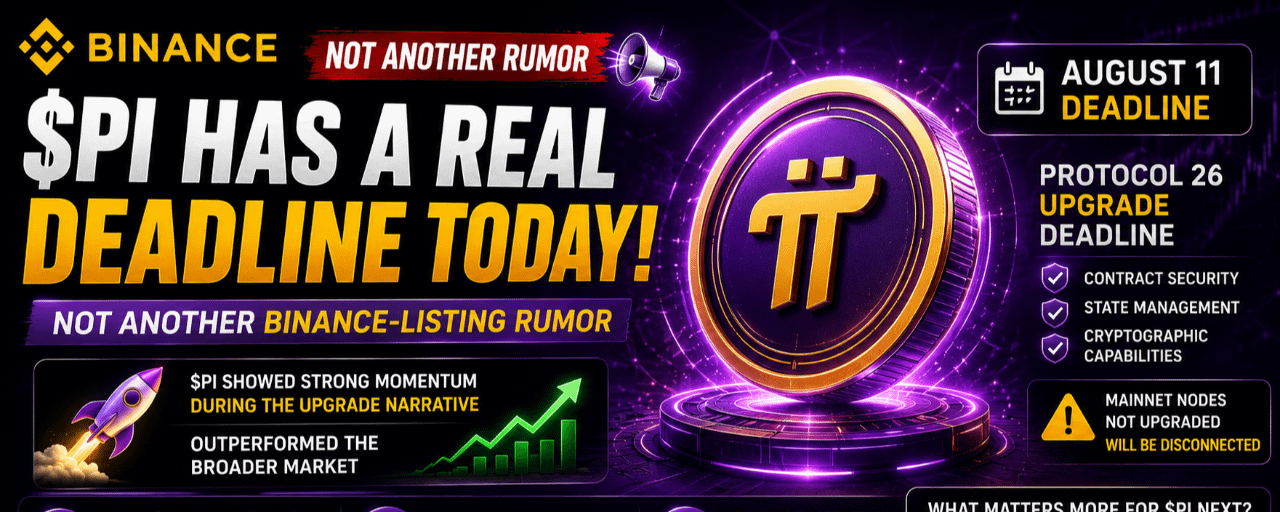
$PI HAS A REAL DEADLINE TODAY — NOT ANOTHER BINANCE-LISTING RUMORWhile everyone keeps asking “When Binance?”, the more important Pi Network event is happening today, August 11.
Pi Network’s Protocol 26 upgrade deadline has arrived. Mainnet node operators that haven’t completed the required upgrade risk being disconnected until they update. The upgrade focuses on areas including contract security, state management and cryptographic capabilities.
And here’s what makes this interesting:
$PI recently showed renewed momentum around the upgrade narrative, with reports of the token outperforming the broader market during the buildup.
But I’m not chasing the candle.
I’m watching what happens after today’s deadline.
If network progress keeps accelerating and attention survives after the event, $PI, could stay on traders’ radar.
If hype disappears immediately after the upgrade? Classic buy-the-rumor, sell-the-news setup.
👀 What matters more for $PI, next: Protocol 27 or a major exchange listing?
#PiNetworkMainnet #CryptoNews $PI
$BTC
{future}(BTCUSDT)
$PI HAS A REAL DEADLINE TODAY — NOT ANOTHER BINANCE-LISTING RUMOR
While everyone keeps asking “When Binance?”, the more important Pi Network event is happening today, August 11.
Pi Network’s Protocol 26 upgrade deadline has arrived. Mainnet node operators that haven’t completed the required upgrade risk being disconnected until they update. The upgrade focuses on areas including contract security, state management and cryptographic capabilities.
And here’s what makes this interesting:
$PI recently showed renewed momentum around the upgrade narrative, with reports of the token outperforming the broader market during the buildup.
But I’m not chasing the candle.
I’m watching what happens after today’s deadline.
If network progress keeps accelerating and attention survives after the event, $PI, could stay on traders’ radar.
If hype disappears immediately after the upgrade? Classic buy-the-rumor, sell-the-news setup.
👀 What matters more for $PI, next: Protocol 27 or a major exchange listing?
#PiNetworkMainnet #CryptoNews $PI
$BTC
Pi Network’s Protocol 26 upgrade deadline has arrived. Mainnet node operators that haven’t completed the required upgrade risk being disconnected until they update. The upgrade focuses on areas including contract security, state management and cryptographic capabilities.
And here’s what makes this interesting:
$PI recently showed renewed momentum around the upgrade narrative, with reports of the token outperforming the broader market during the buildup.
But I’m not chasing the candle.
I’m watching what happens after today’s deadline.
If network progress keeps accelerating and attention survives after the event, $PI, could stay on traders’ radar.
If hype disappears immediately after the upgrade? Classic buy-the-rumor, sell-the-news setup.
👀 What matters more for $PI, next: Protocol 27 or a major exchange listing?
#PiNetworkMainnet #CryptoNews $PI
$BTC
1
33

·
--
Dear Traders, What is your Opinion?
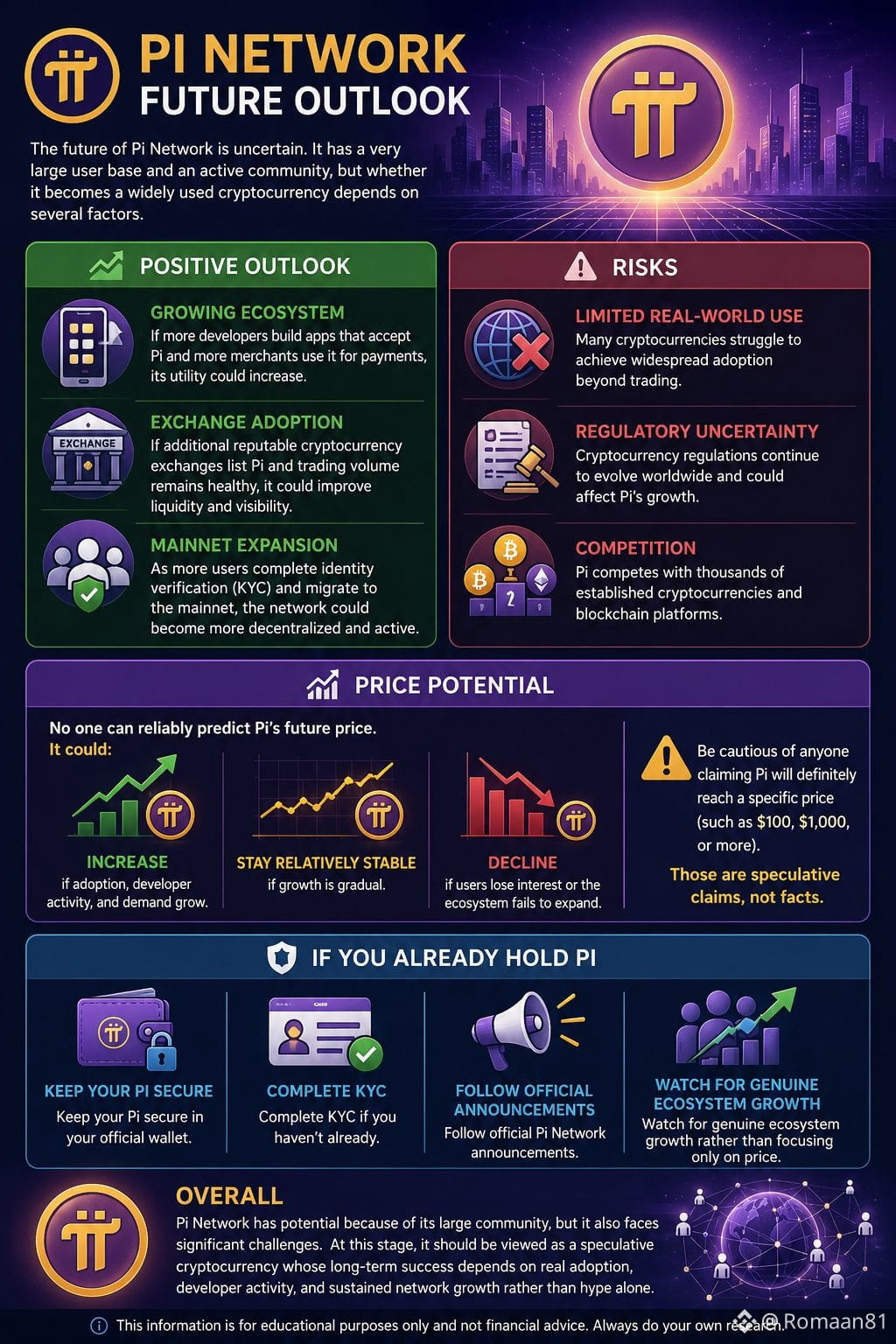
The future of Pi Network is uncertain. It has a very large user base and an active community, but whether it becomes a widely used cryptocurrency depends on several factors.
Here are the main possibilities:
Positive outlook
Growing ecosystem: If more developers build apps that accept Pi and more merchants use it for payments, its utility could increase.
Exchange adoption: If additional reputable cryptocurrency exchanges list Pi and trading volume remains healthy, it could improve liquidity and visibility.
Mainnet expansion: As more users complete identity verification (KYC) and migrate to the mainnet, the network could become more decentralized and active.
Risks
Limited real-world use: Many cryptocurrencies struggle to achieve widespread adoption beyond trading.
Regulatory uncertainty: Cryptocurrency regulations continue to evolve worldwide and could affect Pi's growth.
Competition: Pi competes with thousands of established cryptocurrencies and blockchain platforms.
Price potential
No one can reliably predict Pi's future price. It could:
Increase if adoption, developer activity, and demand grow.
Stay relatively stable if growth is gradual.
Decline if users lose interest or the ecosystem fails to expand.
Be cautious of anyone claiming Pi will definitely reach a specific price (such as $100, $1,000, or more). Those are speculative claims, not facts.
If you already hold Pi
A sensible approach is to:
Keep your Pi secure in your official wallet.
Complete KYC if you haven't already.
Follow official Pi Network announcements.
Watch for genuine ecosystem growth rather than focusing only on price.
Overall, Pi Network has potential because of its large community, but it also faces significant challenges. At this stage, it should be viewed as a speculative cryptocurrency whose long-term success depends on real adoption, developer activity, and sustained network growth rather than hype alone.
#PiNetwork #Pioneers👫great #pinetworknews #PiNetworkMainnet
Dear Traders, What is your Opinion?
The future of Pi Network is uncertain. It has a very large user base and an active community, but whether it becomes a widely used cryptocurrency depends on several factors.
Here are the main possibilities:
Positive outlook
Growing ecosystem: If more developers build apps that accept Pi and more merchants use it for payments, its utility could increase.
Exchange adoption: If additional reputable cryptocurrency exchanges list Pi and trading volume remains healthy, it could improve liquidity and visibility.
Mainnet expansion: As more users complete identity verification (KYC) and migrate to the mainnet, the network could become more decentralized and active.
Risks
Limited real-world use: Many cryptocurrencies struggle to achieve widespread adoption beyond trading.
Regulatory uncertainty: Cryptocurrency regulations continue to evolve worldwide and could affect Pi's growth.
Competition: Pi competes with thousands of established cryptocurrencies and blockchain platforms.
Price potential
No one can reliably predict Pi's future price. It could:
Increase if adoption, developer activity, and demand grow.
Stay relatively stable if growth is gradual.
Decline if users lose interest or the ecosystem fails to expand.
Be cautious of anyone claiming Pi will definitely reach a specific price (such as $100, $1,000, or more). Those are speculative claims, not facts.
If you already hold Pi
A sensible approach is to:
Keep your Pi secure in your official wallet.
Complete KYC if you haven't already.
Follow official Pi Network announcements.
Watch for genuine ecosystem growth rather than focusing only on price.
Overall, Pi Network has potential because of its large community, but it also faces significant challenges. At this stage, it should be viewed as a speculative cryptocurrency whose long-term success depends on real adoption, developer activity, and sustained network growth rather than hype alone.
#PiNetwork #Pioneers👫great #pinetworknews #PiNetworkMainnet
The future of Pi Network is uncertain. It has a very large user base and an active community, but whether it becomes a widely used cryptocurrency depends on several factors.
Here are the main possibilities:
Positive outlook
Growing ecosystem: If more developers build apps that accept Pi and more merchants use it for payments, its utility could increase.
Exchange adoption: If additional reputable cryptocurrency exchanges list Pi and trading volume remains healthy, it could improve liquidity and visibility.
Mainnet expansion: As more users complete identity verification (KYC) and migrate to the mainnet, the network could become more decentralized and active.
Risks
Limited real-world use: Many cryptocurrencies struggle to achieve widespread adoption beyond trading.
Regulatory uncertainty: Cryptocurrency regulations continue to evolve worldwide and could affect Pi's growth.
Competition: Pi competes with thousands of established cryptocurrencies and blockchain platforms.
Price potential
No one can reliably predict Pi's future price. It could:
Increase if adoption, developer activity, and demand grow.
Stay relatively stable if growth is gradual.
Decline if users lose interest or the ecosystem fails to expand.
Be cautious of anyone claiming Pi will definitely reach a specific price (such as $100, $1,000, or more). Those are speculative claims, not facts.
If you already hold Pi
A sensible approach is to:
Keep your Pi secure in your official wallet.
Complete KYC if you haven't already.
Follow official Pi Network announcements.
Watch for genuine ecosystem growth rather than focusing only on price.
Overall, Pi Network has potential because of its large community, but it also faces significant challenges. At this stage, it should be viewed as a speculative cryptocurrency whose long-term success depends on real adoption, developer activity, and sustained network growth rather than hype alone.
#PiNetwork #Pioneers👫great #pinetworknews #PiNetworkMainnet
PIUS-0,43%
174

It's actually quite funny that some people still associate the ecosystem launch with protocol upgrades. @PiCoreTeam only established Protocol 23 as the standard, no other requirements. So all we need to do is wait; the launch could happen anytime, without being tied to any other specific protocol.
#pi #PiCoreTeam #PiNetwork #PiNetworkMainnet
It's actually quite funny that some people still associate the ecosystem launch with protocol upgrades. @PiCoreTeam only established Protocol 23 as the standard, no other requirements. So all we need to do is wait; the launch could happen anytime, without being tied to any other specific protocol.
#pi #PiCoreTeam #PiNetwork #PiNetworkMainnet
#pi #PiCoreTeam #PiNetwork #PiNetworkMainnet
1
2
451

·
--
Article
Why the $PI Price crash is Hiding a Massive Tech ShiftPi Network at $0.11: Brutal Capitulation or a Masterclass in Web3 Re-Branding?
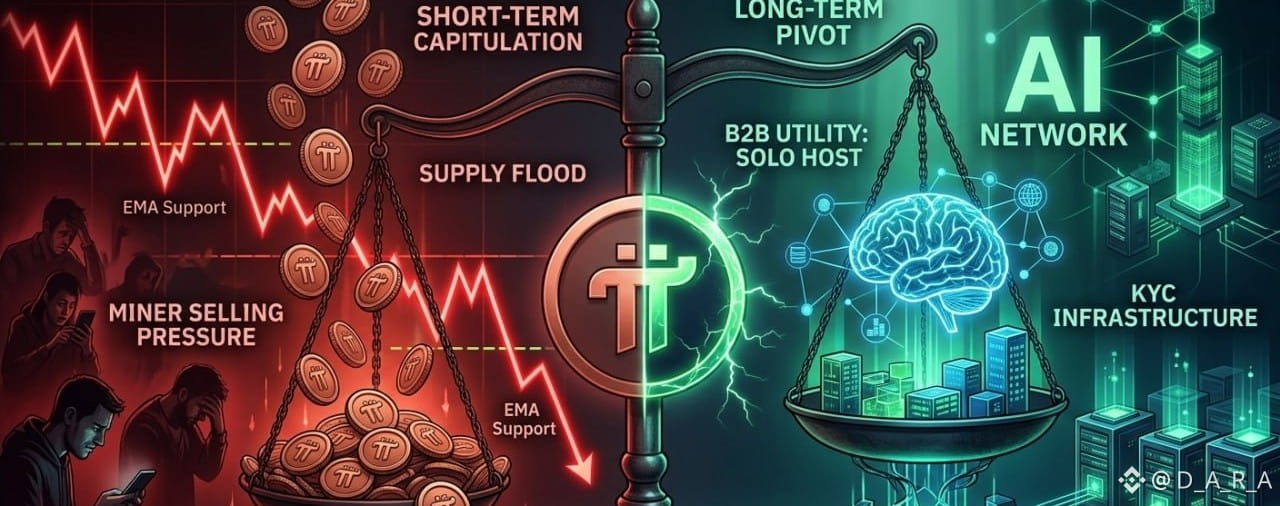
The charts don't lie. $PI is currently trapped in a ruthless downtrend, trading just pennies above its absolute all-time low of $0.1114. We are below the 20-day, 50-day, and 200-day EMAs, and sellers are clearly driving the steering wheel.
But if you are only looking at the price tickers on the exchanges, you are missing the real macro transition happening behind the scenes.
Here is the data-driven reality of what is playing out right now.
The Bearish Reality: The Token Flood
The core driver of this bleeding edge is pure tokenomics. Millions of tokens from the historic smartphone mining era are hitting the Open Mainnet daily. When you unlock massive token supplies for a retail crowd that has waited years to cash out, an aggressive sell-off is the natural market response.
Technically, the RSI has dipped into oversold territory (around 28). This indicates that while the trend is strictly bearish, the selling pressure is reaching an extreme, overextended limit.
The Pivot: From "Mining App" to AI Infrastructure
While retail users dump on the market, the Core Team is actively trying to build an artificial demand floor. Look at their latest architectural updates:
SoloHost: Turning Pi’s 420,000+ active desktop nodes into a distributed computing framework to handle complex AI workloads for third-party developers.
PiVerify: Commercializing their massive 18-million-user human KYC layer, forcing external corporate clients to buy and use $PI to combat bot spam.
The Objective Verdict
We are watching a high-stakes race against time. Can the structural demand generated by external tech firms using Pi for AI compute and identity verification grow fast enough to absorb the ongoing supply dump from millions of everyday miners?
If the $0.11 support zone breaks completely, we could see a final capitulation flush. However, an oversold RSI combined with a shift into B2B utility makes this one of the most unique charts to watch this quarter.
What's your take on this chart breakdown? Are you stepping aside until the EMAs flip bullish, or are you accumulating near these historic lows believing in the AI/KYC utility pivot? Let me know below!
#PiNetwork #CryptoAnalysis #Web3#DecentralizedAI $PI
#PiOnBinance #PiNetworkMainnet
⚠️ Disclaimer: Market trends and technical levels are volatile. This content is for educational purposes only and is not financial advice. Always DYOR.
Why the $PI Price crash is Hiding a Massive Tech Shift
Pi Network at $0.11: Brutal Capitulation or a Masterclass in Web3 Re-Branding?
The charts don't lie. $PI is currently trapped in a ruthless downtrend, trading just pennies above its absolute all-time low of $0.1114. We are below the 20-day, 50-day, and 200-day EMAs, and sellers are clearly driving the steering wheel.
But if you are only looking at the price tickers on the exchanges, you are missing the real macro transition happening behind the scenes.
Here is the data-driven reality of what is playing out right now.
The Bearish Reality: The Token Flood
The core driver of this bleeding edge is pure tokenomics. Millions of tokens from the historic smartphone mining era are hitting the Open Mainnet daily. When you unlock massive token supplies for a retail crowd that has waited years to cash out, an aggressive sell-off is the natural market response.
Technically, the RSI has dipped into oversold territory (around 28). This indicates that while the trend is strictly bearish, the selling pressure is reaching an extreme, overextended limit.
The Pivot: From "Mining App" to AI Infrastructure
While retail users dump on the market, the Core Team is actively trying to build an artificial demand floor. Look at their latest architectural updates:
SoloHost: Turning Pi’s 420,000+ active desktop nodes into a distributed computing framework to handle complex AI workloads for third-party developers.
PiVerify: Commercializing their massive 18-million-user human KYC layer, forcing external corporate clients to buy and use $PI to combat bot spam.
The Objective Verdict
We are watching a high-stakes race against time. Can the structural demand generated by external tech firms using Pi for AI compute and identity verification grow fast enough to absorb the ongoing supply dump from millions of everyday miners?
If the $0.11 support zone breaks completely, we could see a final capitulation flush. However, an oversold RSI combined with a shift into B2B utility makes this one of the most unique charts to watch this quarter.
What's your take on this chart breakdown? Are you stepping aside until the EMAs flip bullish, or are you accumulating near these historic lows believing in the AI/KYC utility pivot? Let me know below!
#PiNetwork #CryptoAnalysis #Web3#DecentralizedAI $PI
#PiOnBinance #PiNetworkMainnet
⚠️ Disclaimer: Market trends and technical levels are volatile. This content is for educational purposes only and is not financial advice. Always DYOR.
The charts don't lie. $PI is currently trapped in a ruthless downtrend, trading just pennies above its absolute all-time low of $0.1114. We are below the 20-day, 50-day, and 200-day EMAs, and sellers are clearly driving the steering wheel.
But if you are only looking at the price tickers on the exchanges, you are missing the real macro transition happening behind the scenes.
Here is the data-driven reality of what is playing out right now.
The Bearish Reality: The Token Flood
The core driver of this bleeding edge is pure tokenomics. Millions of tokens from the historic smartphone mining era are hitting the Open Mainnet daily. When you unlock massive token supplies for a retail crowd that has waited years to cash out, an aggressive sell-off is the natural market response.
Technically, the RSI has dipped into oversold territory (around 28). This indicates that while the trend is strictly bearish, the selling pressure is reaching an extreme, overextended limit.
The Pivot: From "Mining App" to AI Infrastructure
While retail users dump on the market, the Core Team is actively trying to build an artificial demand floor. Look at their latest architectural updates:
SoloHost: Turning Pi’s 420,000+ active desktop nodes into a distributed computing framework to handle complex AI workloads for third-party developers.
PiVerify: Commercializing their massive 18-million-user human KYC layer, forcing external corporate clients to buy and use $PI to combat bot spam.
The Objective Verdict
We are watching a high-stakes race against time. Can the structural demand generated by external tech firms using Pi for AI compute and identity verification grow fast enough to absorb the ongoing supply dump from millions of everyday miners?
If the $0.11 support zone breaks completely, we could see a final capitulation flush. However, an oversold RSI combined with a shift into B2B utility makes this one of the most unique charts to watch this quarter.
What's your take on this chart breakdown? Are you stepping aside until the EMAs flip bullish, or are you accumulating near these historic lows believing in the AI/KYC utility pivot? Let me know below!
#PiNetwork #CryptoAnalysis #Web3#DecentralizedAI $PI
#PiOnBinance #PiNetworkMainnet
⚠️ Disclaimer: Market trends and technical levels are volatile. This content is for educational purposes only and is not financial advice. Always DYOR.
173

·
--
#PiNetworkMainnet - Every big innovation starts with a community.
#PiNetwork has introduced millions of people to digital assets through mobile mining and continues working toward expanding its ecosystem and real-world utility.
The journey isn't over—it's still being written.
#PiNetworkMainnet - Every big innovation starts with a community.
#PiNetwork has introduced millions of people to digital assets through mobile mining and continues working toward expanding its ecosystem and real-world utility.
The journey isn't over—it's still being written.
#PiNetwork has introduced millions of people to digital assets through mobile mining and continues working toward expanding its ecosystem and real-world utility.
The journey isn't over—it's still being written.
130

·
--
🚨 D'après Dr. Chengdiao Fan et l'équipe principale de #Pi , Pi Network a terminé avec succès la mise à niveau Docker du protocole 23 sur 421 000+ nœuds principaux actifs du réseau principal les 19-20 mai 2026. La migration simultanée a mis à niveau quatre couches d’infrastructure : Ubuntu de 20.04 à 24.04 LTS, PostgreSQL de la version 12 à la version 16, Stellar Core vers la version 23.0.1, et la couche API vers la version 23.0.0.
La mise à niveau active pour la première fois les contrats intelligents Soroban sur le réseau principal de Pi, permettant aux développeurs de déployer des applications décentralisées et des instruments financiers programmables. Le protocole 23 permet également le traitement parallèle des transactions, introduit une mise en cache des modules Wasm en mémoire, et pose les bases d’une infrastructure native de DEX et de la tokenisation d’actifs du monde réel.
$XLM
{future}(XLMUSDT)
$ADA
{future}(ADAUSDT)
$LA
{future}(LAUSDT)
#PiNetworkMainnet #PiCoreTeam #PizzaDay
🚨 D'après Dr. Chengdiao Fan et l'équipe principale de #Pi , Pi Network a terminé avec succès la mise à niveau Docker du protocole 23 sur 421 000+ nœuds principaux actifs du réseau principal les 19-20 mai 2026. La migration simultanée a mis à niveau quatre couches d’infrastructure : Ubuntu de 20.04 à 24.04 LTS, PostgreSQL de la version 12 à la version 16, Stellar Core vers la version 23.0.1, et la couche API vers la version 23.0.0.
La mise à niveau active pour la première fois les contrats intelligents Soroban sur le réseau principal de Pi, permettant aux développeurs de déployer des applications décentralisées et des instruments financiers programmables. Le protocole 23 permet également le traitement parallèle des transactions, introduit une mise en cache des modules Wasm en mémoire, et pose les bases d’une infrastructure native de DEX et de la tokenisation d’actifs du monde réel.
$XLM
$ADA
$LA
#PiNetworkMainnet #PiCoreTeam #PizzaDay
La mise à niveau active pour la première fois les contrats intelligents Soroban sur le réseau principal de Pi, permettant aux développeurs de déployer des applications décentralisées et des instruments financiers programmables. Le protocole 23 permet également le traitement parallèle des transactions, introduit une mise en cache des modules Wasm en mémoire, et pose les bases d’une infrastructure native de DEX et de la tokenisation d’actifs du monde réel.
$XLM
$ADA
$LA
#PiNetworkMainnet #PiCoreTeam #PizzaDay
2
497
·
--
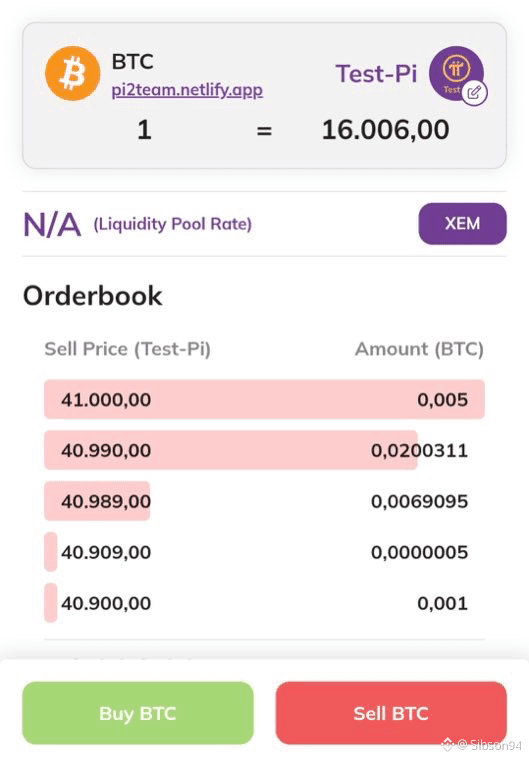
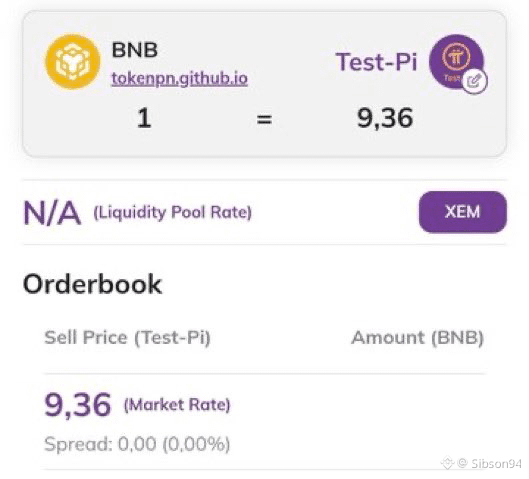
🚨 MISE À JOUR #Pi DEX
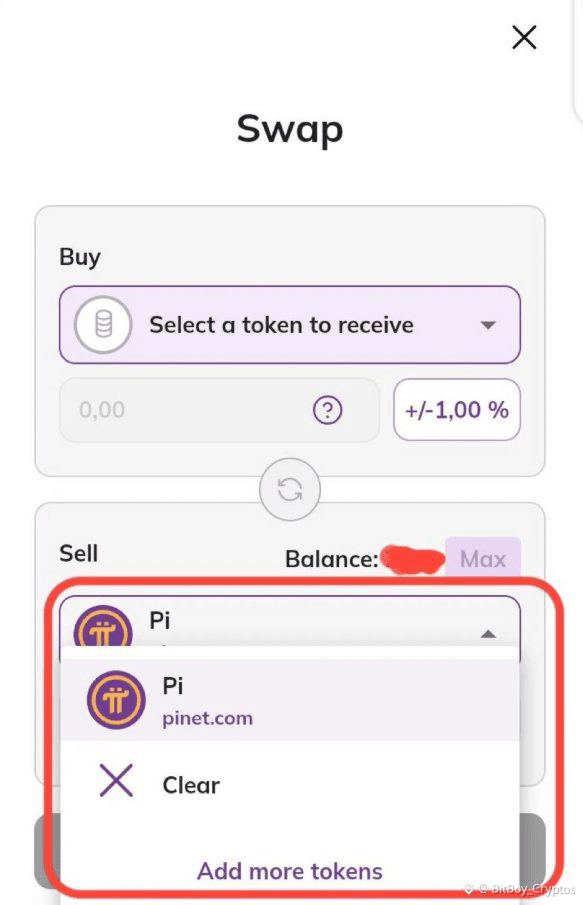
💥 L'interface Testnet de Pi DEX vient de mettre à jour une fonctionnalité permettant aux utilisateurs d'ajouter des tokens personnalisés et d'effectuer des échanges tests de Test,Pi vers d'autres cryptomonnaies majeures telles que BNB, BTC, USDT. Les Pionniers anticipent que cette fonctionnalité pourrait bientôt être appliquée au Pi réel sur le Mainnet avec un ratio équivalent.
Cette nouvelle mise à jour affiche clairement les statuts des transactions tels que les ajouts de tokens, les alertes d'erreur pour les transactions échouées, et surtout les montants détaillés ainsi que les noms des paires de tokens immédiatement après un échange réussi.
Cette initiative démontre que Pi DEX étend efficacement sa compatibilité cross-chain. Si cette fonctionnalité est déployée sans accroc sur le Mainnet, elle résoudra complètement le casse-tête de la liquidité et élèvera la position de Pi dans l'espace DeFi.
$FIDA
{future}(FIDAUSDT)
$PROMPT
{future}(PROMPTUSDT)
$ZEC
{future}(ZECUSDT)
#PiCoreTeam #PiNetworkMainnet #PiNetwork
🚨 MISE À JOUR #Pi DEX
💥 L'interface Testnet de Pi DEX vient de mettre à jour une fonctionnalité permettant aux utilisateurs d'ajouter des tokens personnalisés et d'effectuer des échanges tests de Test,Pi vers d'autres cryptomonnaies majeures telles que BNB, BTC, USDT. Les Pionniers anticipent que cette fonctionnalité pourrait bientôt être appliquée au Pi réel sur le Mainnet avec un ratio équivalent.
Cette nouvelle mise à jour affiche clairement les statuts des transactions tels que les ajouts de tokens, les alertes d'erreur pour les transactions échouées, et surtout les montants détaillés ainsi que les noms des paires de tokens immédiatement après un échange réussi.
Cette initiative démontre que Pi DEX étend efficacement sa compatibilité cross-chain. Si cette fonctionnalité est déployée sans accroc sur le Mainnet, elle résoudra complètement le casse-tête de la liquidité et élèvera la position de Pi dans l'espace DeFi.
$FIDA
$PROMPT
$ZEC
#PiCoreTeam #PiNetworkMainnet #PiNetwork
💥 L'interface Testnet de Pi DEX vient de mettre à jour une fonctionnalité permettant aux utilisateurs d'ajouter des tokens personnalisés et d'effectuer des échanges tests de Test,Pi vers d'autres cryptomonnaies majeures telles que BNB, BTC, USDT. Les Pionniers anticipent que cette fonctionnalité pourrait bientôt être appliquée au Pi réel sur le Mainnet avec un ratio équivalent.
Cette nouvelle mise à jour affiche clairement les statuts des transactions tels que les ajouts de tokens, les alertes d'erreur pour les transactions échouées, et surtout les montants détaillés ainsi que les noms des paires de tokens immédiatement après un échange réussi.
Cette initiative démontre que Pi DEX étend efficacement sa compatibilité cross-chain. Si cette fonctionnalité est déployée sans accroc sur le Mainnet, elle résoudra complètement le casse-tête de la liquidité et élèvera la position de Pi dans l'espace DeFi.
$FIDA
$PROMPT
$ZEC
#PiCoreTeam #PiNetworkMainnet #PiNetwork
3
668

·
--
Pi Network Partners with Open Standard to Expand Ecosystem Utility
Pi Network has announced a strategic collaboration with Open Standard (@openstandard), the entity driving Open USD (OUSD)—a partner-governed stablecoin built as open infrastructure.
Key Highlights of the Partnership:
Industry Support: Open Standard's network brings together over 200 key partners across fintech, global payments, technology, and crypto, including industry leaders like Visa, Google, and Stripe.
Incentives for Pioneers: Designed to drive sustainable ecosystem expansion, OUSD's structure allows Pi Network to explore new reward initiatives for Pioneers and integrate broader stablecoin utility across its ecosystem.
Further operational details and rollout plans will be shared soon.
#PiNetworkMainnet #USDT。
$USDT $NVDAB $BTC
{spot}(BTCUSDT)
Pi Network Partners with Open Standard to Expand Ecosystem Utility
Pi Network has announced a strategic collaboration with Open Standard (@openstandard), the entity driving Open USD (OUSD)—a partner-governed stablecoin built as open infrastructure.
Key Highlights of the Partnership:
Industry Support: Open Standard's network brings together over 200 key partners across fintech, global payments, technology, and crypto, including industry leaders like Visa, Google, and Stripe.
Incentives for Pioneers: Designed to drive sustainable ecosystem expansion, OUSD's structure allows Pi Network to explore new reward initiatives for Pioneers and integrate broader stablecoin utility across its ecosystem.
Further operational details and rollout plans will be shared soon.
#PiNetworkMainnet #USDT。
$USDT $NVDAB $BTC
Pi Network has announced a strategic collaboration with Open Standard (@openstandard), the entity driving Open USD (OUSD)—a partner-governed stablecoin built as open infrastructure.
Key Highlights of the Partnership:
Industry Support: Open Standard's network brings together over 200 key partners across fintech, global payments, technology, and crypto, including industry leaders like Visa, Google, and Stripe.
Incentives for Pioneers: Designed to drive sustainable ecosystem expansion, OUSD's structure allows Pi Network to explore new reward initiatives for Pioneers and integrate broader stablecoin utility across its ecosystem.
Further operational details and rollout plans will be shared soon.
#PiNetworkMainnet #USDT。
$USDT $NVDAB $BTC
88


·
--
Pi Network Price Forecast: PI pulls back despite Protocol v27 completing final testnet step
Pi Network edges lower on Tuesday, retreating from the day's high of $0.0947 and putting previous day’s gains at risk.
Protocol v27 completes its final step on the testnet, delivering 250 transactions per block with zero failures.
PI needs to reclaim its 50-day EMA at around $0.0923 and the $0.1000 psychological level to sustain an upward trend. #FedProposesRulesForBankIssuedStablecoins #BTC #solana #PiNetworkMainnet
Pi Network Price Forecast: PI pulls back despite Protocol v27 completing final testnet step
Pi Network edges lower on Tuesday, retreating from the day's high of $0.0947 and putting previous day’s gains at risk.
Protocol v27 completes its final step on the testnet, delivering 250 transactions per block with zero failures.
PI needs to reclaim its 50-day EMA at around $0.0923 and the $0.1000 psychological level to sustain an upward trend. #FedProposesRulesForBankIssuedStablecoins #BTC #solana #PiNetworkMainnet
Pi Network edges lower on Tuesday, retreating from the day's high of $0.0947 and putting previous day’s gains at risk.
Protocol v27 completes its final step on the testnet, delivering 250 transactions per block with zero failures.
PI needs to reclaim its 50-day EMA at around $0.0923 and the $0.1000 psychological level to sustain an upward trend. #FedProposesRulesForBankIssuedStablecoins #BTC #solana #PiNetworkMainnet

1
263

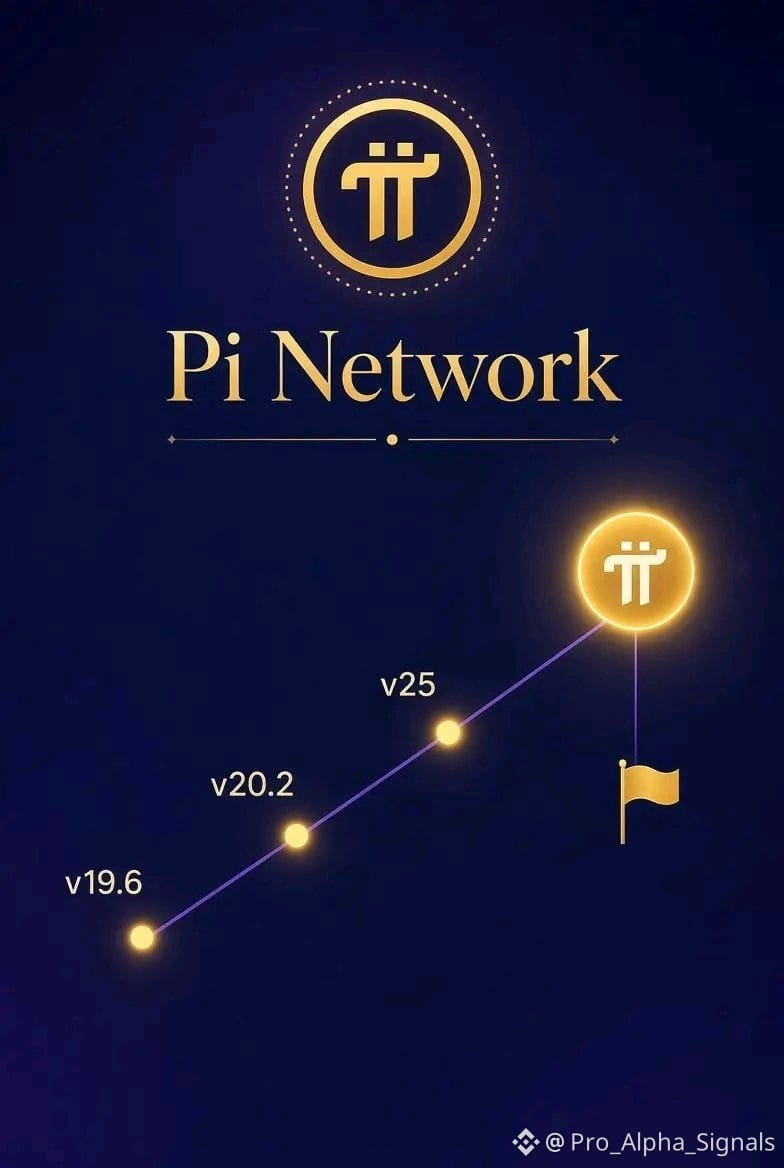
🟣 PI NETWORK — BIG DATES TO WATCH! 👀🚀
📅 15 Sept — Protocol 27
📅 24 Sept — Possible Mainnet announcement?
📅 7–8 Oct — TOKEN2049 🔥
⚠️ September 24 & TOKEN2049 announcements are not officially confirmed.
Which date are you watching? 👀🟣
#pi #PiCoinRate #PiNetworkMainnet
🟣 PI NETWORK — BIG DATES TO WATCH! 👀🚀
📅 15 Sept — Protocol 27
📅 24 Sept — Possible Mainnet announcement?
📅 7–8 Oct — TOKEN2049 🔥
⚠️ September 24 & TOKEN2049 announcements are not officially confirmed.
Which date are you watching? 👀🟣
#pi #PiCoinRate #PiNetworkMainnet
📅 15 Sept — Protocol 27
📅 24 Sept — Possible Mainnet announcement?
📅 7–8 Oct — TOKEN2049 🔥
⚠️ September 24 & TOKEN2049 announcements are not officially confirmed.
Which date are you watching? 👀🟣
#pi #PiCoinRate #PiNetworkMainnet
90

Pi Network on Binance? Your Vote is Crucial! 🔥
The cryptocurrency world is abuzz with anticipation! A community-driven vote is currently underway to determine if Pi Network ($PI) will be listed on Binance, the premier global cryptocurrency exchange.
✅ Why This Matters:
A Binance listing has the potential to significantly enhance Pi's adoption, liquidity, and market value.
It would grant global access to a wider range of traders for buying, selling, and trading Pi Coin.
This represents a significant stride towards achieving mainstream recognition for the Pi Network.
📢 How You Can Contribute:
Cast your vote "YES" to champion Pi's listing on Binance and ensure your voice is heard!
💬 What are your thoughts on Pi being listed on Binance? Share them in the comments below!#SideSwapSuspendsLiquidServices #USIranTradeTankerStrikesEscalate
#PiNetworkMainnet
Pi Network on Binance? Your Vote is Crucial! 🔥
The cryptocurrency world is abuzz with anticipation! A community-driven vote is currently underway to determine if Pi Network ($PI) will be listed on Binance, the premier global cryptocurrency exchange.
✅ Why This Matters:
A Binance listing has the potential to significantly enhance Pi's adoption, liquidity, and market value.
It would grant global access to a wider range of traders for buying, selling, and trading Pi Coin.
This represents a significant stride towards achieving mainstream recognition for the Pi Network.
📢 How You Can Contribute:
Cast your vote "YES" to champion Pi's listing on Binance and ensure your voice is heard!
💬 What are your thoughts on Pi being listed on Binance? Share them in the comments below!#SideSwapSuspendsLiquidServices #USIranTradeTankerStrikesEscalate
#PiNetworkMainnet
The cryptocurrency world is abuzz with anticipation! A community-driven vote is currently underway to determine if Pi Network ($PI) will be listed on Binance, the premier global cryptocurrency exchange.
✅ Why This Matters:
A Binance listing has the potential to significantly enhance Pi's adoption, liquidity, and market value.
It would grant global access to a wider range of traders for buying, selling, and trading Pi Coin.
This represents a significant stride towards achieving mainstream recognition for the Pi Network.
📢 How You Can Contribute:
Cast your vote "YES" to champion Pi's listing on Binance and ensure your voice is heard!
💬 What are your thoughts on Pi being listed on Binance? Share them in the comments below!#SideSwapSuspendsLiquidServices #USIranTradeTankerStrikesEscalate
#PiNetworkMainnet

1
67
🔥 شبكة باي ليست مجرد مشروع عملات رقمية، بل هي حركة تُشكّل مستقبل التمويل الرقمي. 🌍⚡ GCV 314159 المستقبل
ملايين الرواد يبنون معًا اقتصادًا عالميًا جديدًا. ⛏️💜
#PiNetworkMainnet $BNB
{future}(BNBUSDT)
$XAUT
{future}(XAUTUSDT)
$CL
{future}(CLUSDT)
🔥 شبكة باي ليست مجرد مشروع عملات رقمية، بل هي حركة تُشكّل مستقبل التمويل الرقمي. 🌍⚡ GCV 314159 المستقبل
ملايين الرواد يبنون معًا اقتصادًا عالميًا جديدًا. ⛏️💜
#PiNetworkMainnet $BNB
$XAUT
$CL
ملايين الرواد يبنون معًا اقتصادًا عالميًا جديدًا. ⛏️💜
#PiNetworkMainnet $BNB
$XAUT
$CL

1
70

·
--
A cuanto puede llegar a valer Pi Network #PiNetwork #PiNetworkMainnet
A cuanto puede llegar a valer Pi Network #PiNetwork #PiNetworkMainnet
177
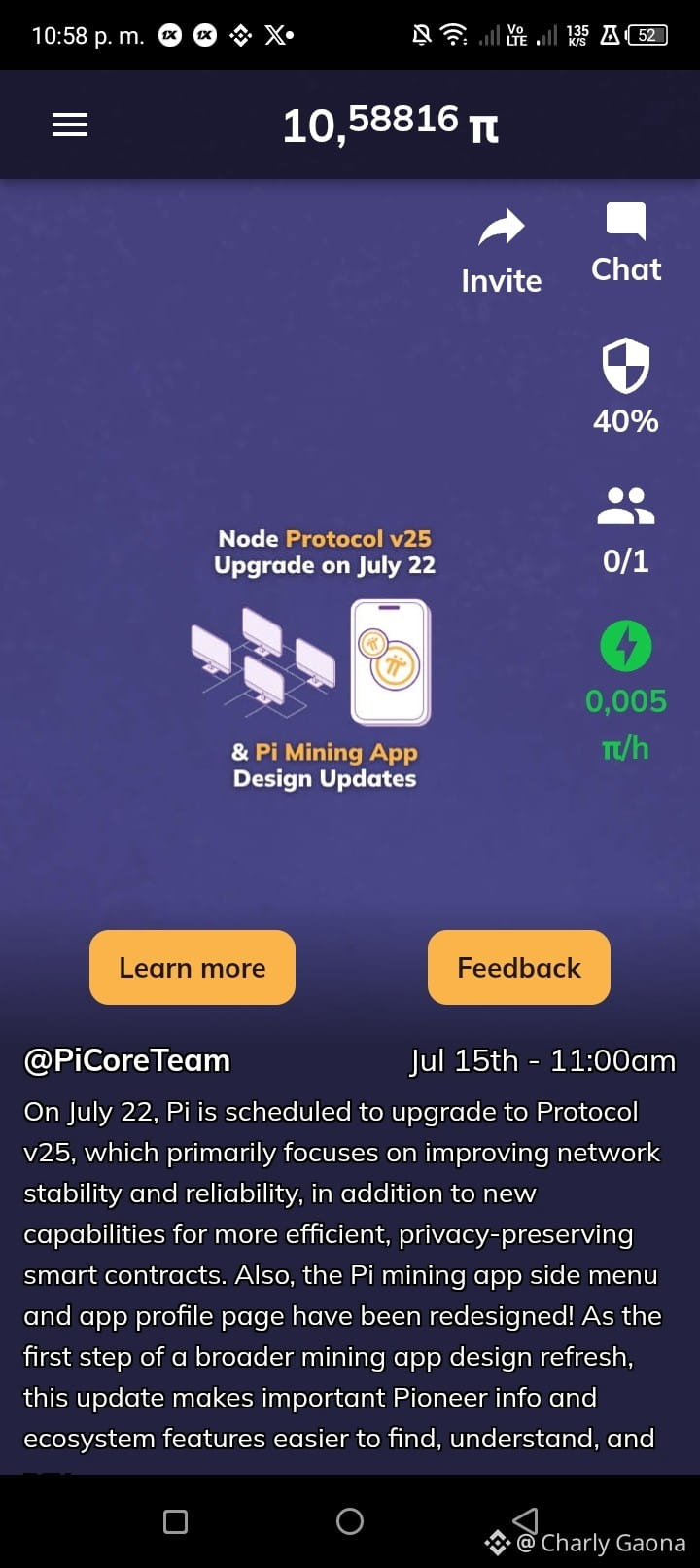
🚨 في 22 يوليو، من المقرر ترقية منصة Pi إلى البروتوكول v25، الذي يركز بشكل أساسي على تحسين استقرار الشبكة وموثوقيتها، ويدعم إمكانيات جديدة لعقود ذكية أكثر كفاءةً وتحافظ على الخصوصية.
انتقل إلى تطبيق تعدين Pi لمعرفة المزيد!
#pi #PiNetworkMainnet $XRP
{future}(XRPUSDT)
$SOL
{future}(SOLUSDT)
$ETH
{future}(ETHUSDT)
🚨 في 22 يوليو، من المقرر ترقية منصة Pi إلى البروتوكول v25، الذي يركز بشكل أساسي على تحسين استقرار الشبكة وموثوقيتها، ويدعم إمكانيات جديدة لعقود ذكية أكثر كفاءةً وتحافظ على الخصوصية.
انتقل إلى تطبيق تعدين Pi لمعرفة المزيد!
#pi #PiNetworkMainnet $XRP
$SOL
$ETH
انتقل إلى تطبيق تعدين Pi لمعرفة المزيد!
#pi #PiNetworkMainnet $XRP
$SOL
$ETH
238

Pi Network Sets Protocol 26 Upgrade Deadline as Mainnet Moves Closer to Final Protocol 27
#pi #PiCoreTeam #PIANNOUNCEMENT #PiNetworkMainnet
Read Here: https://altcoinsanalysis.com/pi-network-sets-protocol-26-upgrade-deadline-as-mainnet-moves-closer-to-final-protocol-27/
Pi Network Sets Protocol 26 Upgrade Deadline as Mainnet Moves Closer to Final Protocol 27
#pi #PiCoreTeam #PIANNOUNCEMENT #PiNetworkMainnet
Read Here: https://altcoinsanalysis.com/pi-network-sets-protocol-26-upgrade-deadline-as-mainnet-moves-closer-to-final-protocol-27/
#pi #PiCoreTeam #PIANNOUNCEMENT #PiNetworkMainnet
Read Here: https://altcoinsanalysis.com/pi-network-sets-protocol-26-upgrade-deadline-as-mainnet-moves-closer-to-final-protocol-27/
115
·
--
Haussier
Vérifié
🚨 Pionniers
#Pi vaut plus que les prix des CEX !!
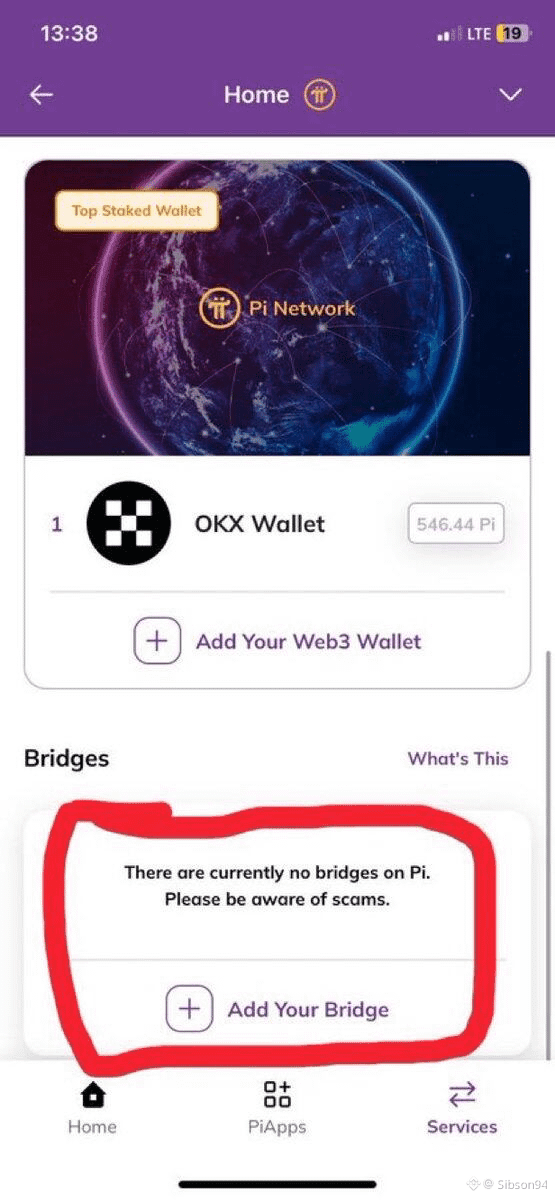
Alors que beaucoup se concentrent sur Pi Launchpad, ils ont oublié un autre géant endormi dans l'arsenal de Pi :
Pi Bridges.
Une fois en ligne, Pi pourrait se connecter à la liquidité de toutes les blockchains crypto.
C'est là que l'utilité rencontre la demande.
SUIVEZ-MOI TOUJOURS 👈
$H
{future}(HUSDT)
$UNI
{future}(UNIUSDT)
$LAB
{future}(LABUSDT)
#PiNetworkMainnet #PiCoreTeam #Pioneers👫great
🚨 Pionniers
#Pi vaut plus que les prix des CEX !!
Alors que beaucoup se concentrent sur Pi Launchpad, ils ont oublié un autre géant endormi dans l'arsenal de Pi :
Pi Bridges.
Une fois en ligne, Pi pourrait se connecter à la liquidité de toutes les blockchains crypto.
C'est là que l'utilité rencontre la demande.
SUIVEZ-MOI TOUJOURS 👈
$H
$UNI
$LAB
#PiNetworkMainnet #PiCoreTeam #Pioneers👫great
#Pi vaut plus que les prix des CEX !!
Alors que beaucoup se concentrent sur Pi Launchpad, ils ont oublié un autre géant endormi dans l'arsenal de Pi :
Pi Bridges.
Une fois en ligne, Pi pourrait se connecter à la liquidité de toutes les blockchains crypto.
C'est là que l'utilité rencontre la demande.
SUIVEZ-MOI TOUJOURS 👈
$H
$UNI
$LAB
#PiNetworkMainnet #PiCoreTeam #Pioneers👫great
1
5
3.2k
Pioneers, we are winning! 🔥
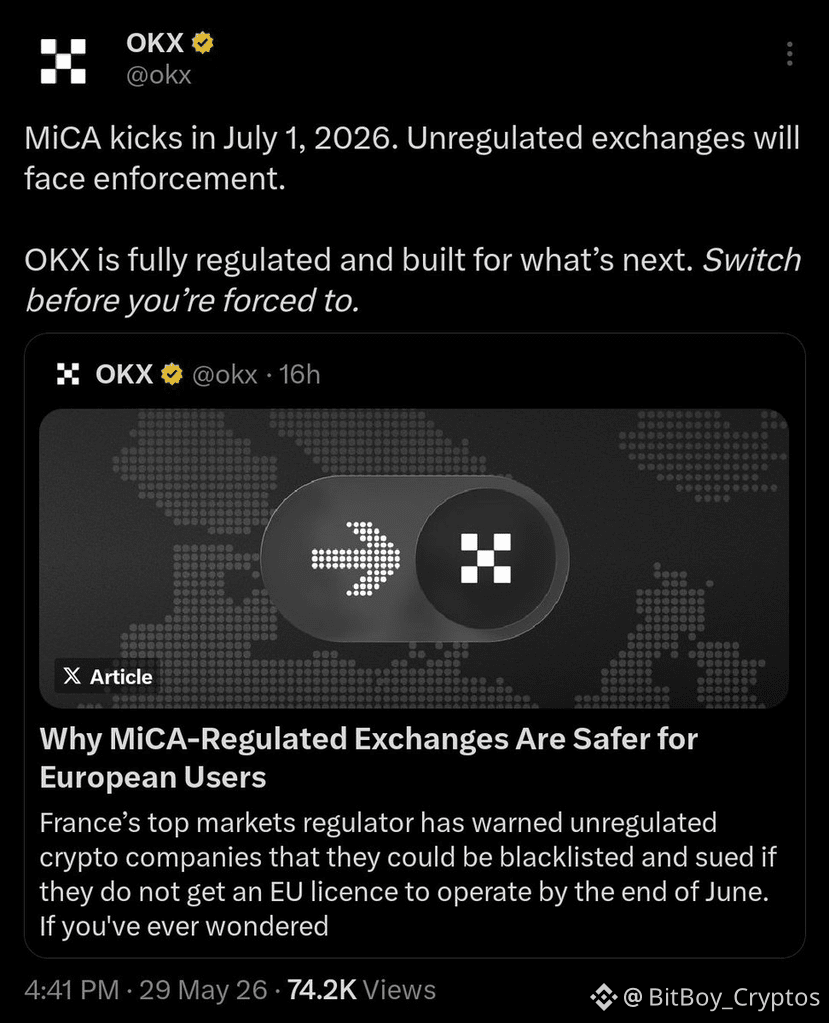
While many projects are still figuring out compliance, Pi Network has already applied for MiCA, positioning itself for the future of cryptocurrency in Europe.
Now, OKX is publicly warning that unregulated exchanges could face enforcement actions and restrictions if they want to continue serving European users.
Regulation is becoming a requirement, not an option.
The groundwork is being laid, and Pi Network continues to move in the right direction.
#pi #Pioneers👫great#PiNetworkMainnet #PiNetwork
Pioneers, we are winning! 🔥
While many projects are still figuring out compliance, Pi Network has already applied for MiCA, positioning itself for the future of cryptocurrency in Europe.
Now, OKX is publicly warning that unregulated exchanges could face enforcement actions and restrictions if they want to continue serving European users.
Regulation is becoming a requirement, not an option.
The groundwork is being laid, and Pi Network continues to move in the right direction.
#pi #Pioneers👫great#PiNetworkMainnet #PiNetwork
While many projects are still figuring out compliance, Pi Network has already applied for MiCA, positioning itself for the future of cryptocurrency in Europe.
Now, OKX is publicly warning that unregulated exchanges could face enforcement actions and restrictions if they want to continue serving European users.
Regulation is becoming a requirement, not an option.
The groundwork is being laid, and Pi Network continues to move in the right direction.
#pi #Pioneers👫great#PiNetworkMainnet #PiNetwork

2
366
Connectez-vous pour découvrir plus de contenu
Rejoignez la communauté mondiale des adeptes de cryptomonnaies sur Binance Square
⚡️ Suviez les dernières informations importantes sur les cryptomonnaies.
💬 Jugé digne de confiance par la plus grande plateforme d’échange de cryptomonnaies au monde.
👍 Découvrez les connaissances que partagent les créateurs vérifiés.
Adresse e-mail/Nº de téléphone
Sujets d’actualité
1
#BinanceLaunchesBinanceIntelligence
525,849 vues
3,439 mentions
2
#BitcoinTargets2026OpenAt$87570
4,101 vues
101 mentions
3
#BitcoinRejectedAt$87KThirdTime
3,419 vues
78 mentions
4
#StrategyMarketCapSurpassesRumble
24,433 vues
569 mentions
5
#StriveBuys2000BTCFor$169M
15,908 vues
149 mentions
6
#EvernorthXRPTreasuryCompletesSPACMerger
206,880 vues
1,780 mentions
7
#ADAGains10%Above$0.27
74,392 vues
263 mentions
8
#ETHUp70%InQ3ButLiquidityFalls
408,914 vues
2,748 mentions
9
#EthStakingExitQueueHits2026High
176,432 vues
1,789 mentions
10
#FedOctoberHoldOdds82.3%
199,759 vues
1,724 mentions