

#pixel
pixel
25M vues
155,862 mentions
Populaire
Récents

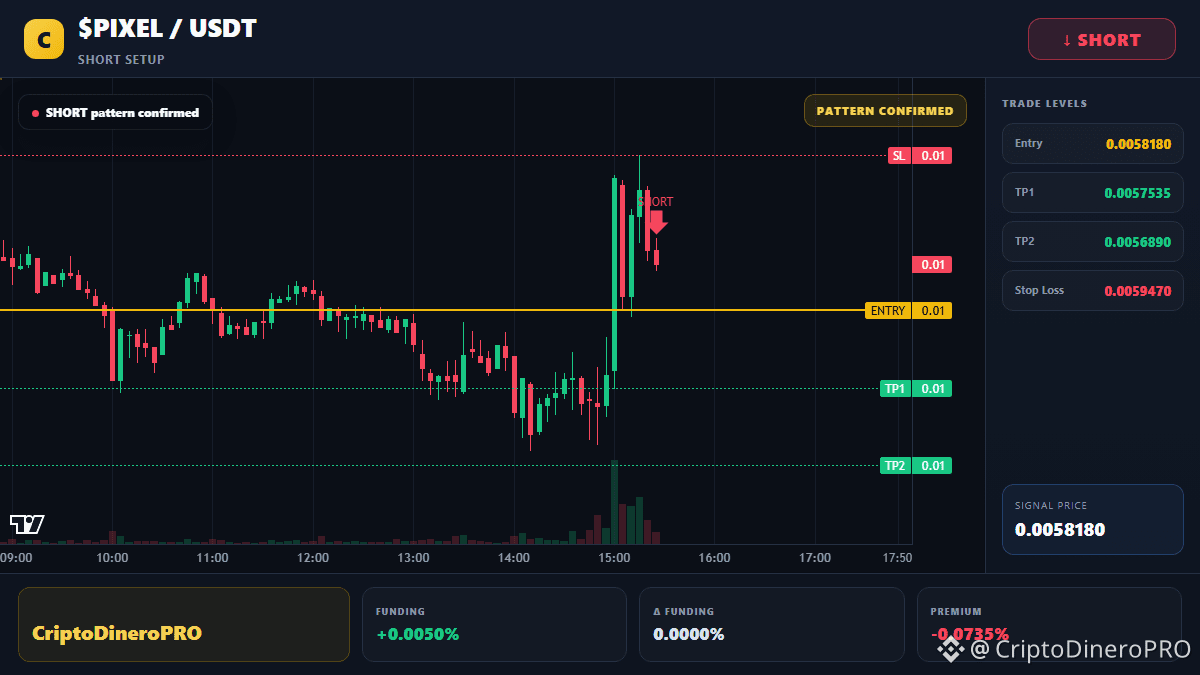
$PIXEL - Short Opportunity 💎
{future}(PIXELUSDT)
📍 Entry: 0.00581800
🛑 Stop Loss: Above 0.00594700
🎯 Targets:
• TP1: 0.00575350
• TP2: Below 0.00568900
DYOR.
#PIXEL #PIXELUSDT
$PIXEL - Short Opportunity 💎
📍 Entry: 0.00581800
🛑 Stop Loss: Above 0.00594700
🎯 Targets:
• TP1: 0.00575350
• TP2: Below 0.00568900
DYOR.
#PIXEL #PIXELUSDT
📍 Entry: 0.00581800
🛑 Stop Loss: Above 0.00594700
🎯 Targets:
• TP1: 0.00575350
• TP2: Below 0.00568900
DYOR.
#PIXEL #PIXELUSDT
30



·
--
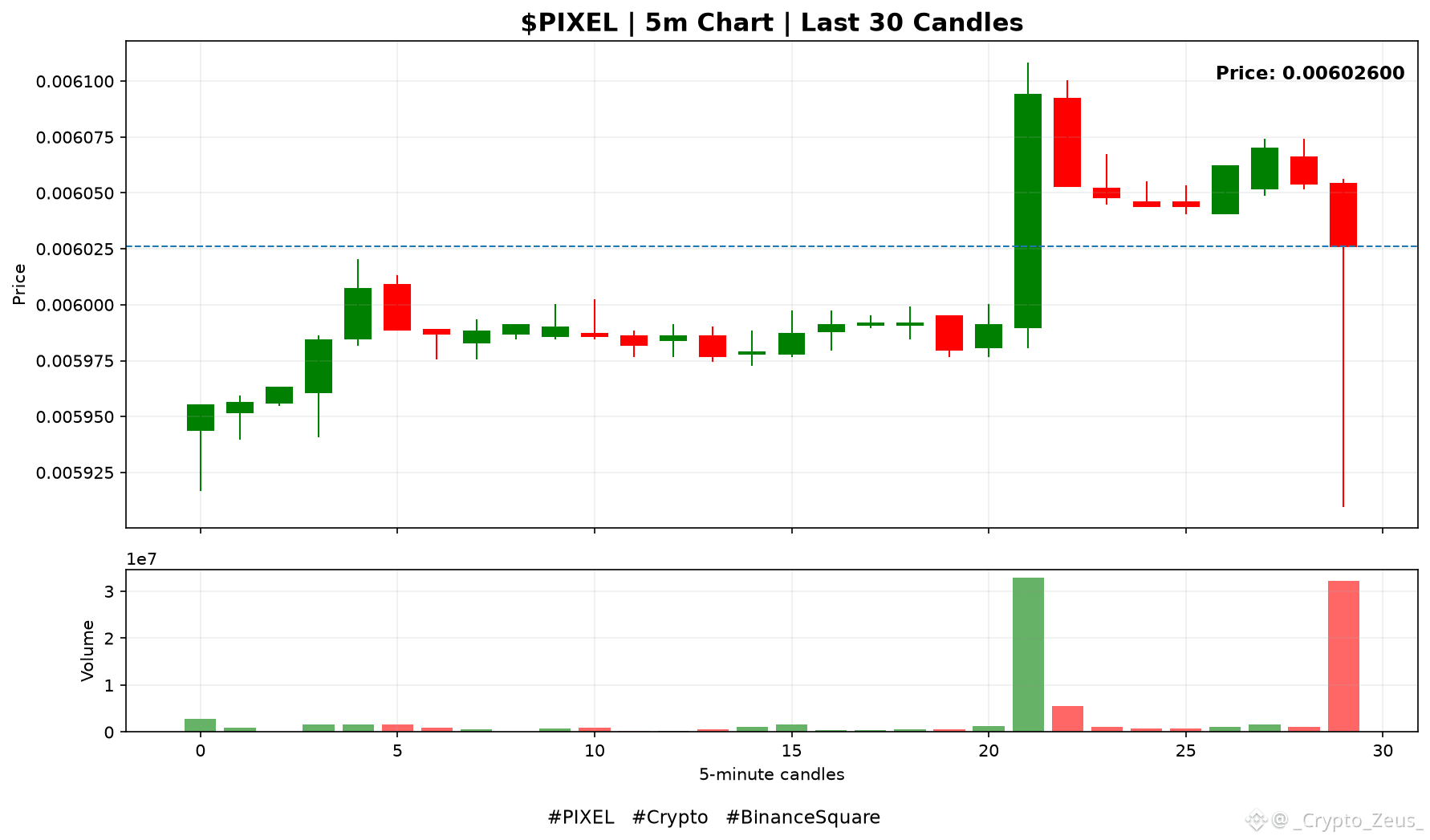
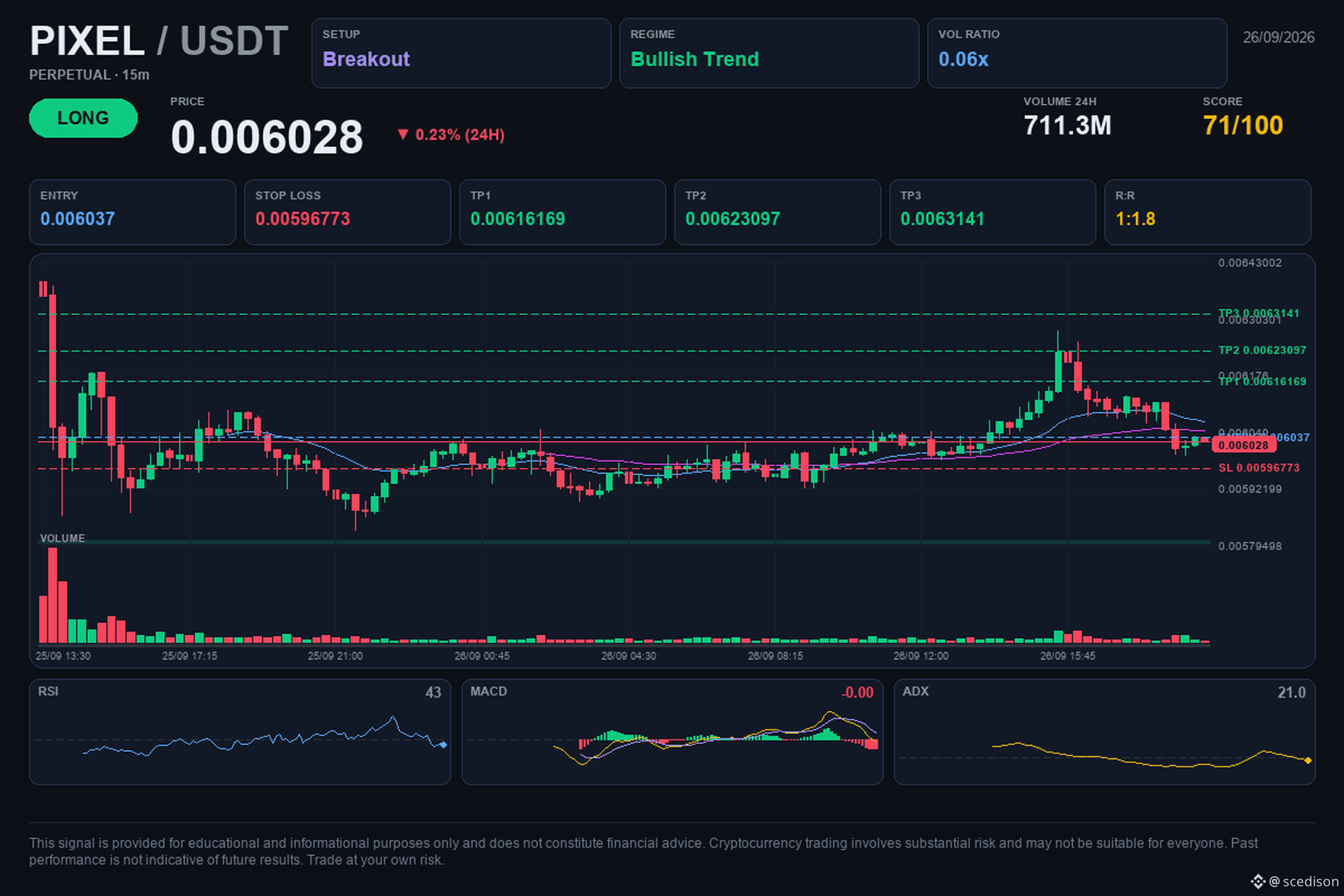
📢 $PIXEL / USDT | 🟢 LONG | ⭐ 71%
🎯 Objetivo: $0.00616169. ¿Lo logra?
🎯 Niveles de operación:
🟢 Entrada: $0.006037
🛑 Stop Loss: $0.00596773
🏁 TP1: $0.00616169
🏁 TP2: $0.00623097
🏁 TP3: $0.0063141
📈 Análisis:
El activo muestra una estructura alcista sólida con máximos y mínimos crecientes en temporalidades de 4 horas, respaldada por una tendencia positiva en el marco diario. Se observa una ruptura técnica con un incremento del 38% en el volumen de negociación, lo que sugiere un aumento en el interés de los compradores. A pesar de la reducción en el interés abierto, la presión compradora mantiene la estructura técnica vigente en busca de nuevos niveles.
⚖️ Riesgo/Beneficio: 1:1.8
⏱️ Timeframe: 15M
💭 El volumen relativo mide cuánto más se está negociando un activo en comparación con su promedio reciente; un valor superior a 1 indica una actividad inusualmente alta.
#crypto #PIXEL #trading #Bullish
💡 Este análisis es educativo y no constituye asesoramiento financiero. Investiga por su cuenta y decide con calma.
📢 $PIXEL / USDT | 🟢 LONG | ⭐ 71%
🎯 Objetivo: $0.00616169. ¿Lo logra?
🎯 Niveles de operación:
🟢 Entrada: $0.006037
🛑 Stop Loss: $0.00596773
🏁 TP1: $0.00616169
🏁 TP2: $0.00623097
🏁 TP3: $0.0063141
📈 Análisis:
El activo muestra una estructura alcista sólida con máximos y mínimos crecientes en temporalidades de 4 horas, respaldada por una tendencia positiva en el marco diario. Se observa una ruptura técnica con un incremento del 38% en el volumen de negociación, lo que sugiere un aumento en el interés de los compradores. A pesar de la reducción en el interés abierto, la presión compradora mantiene la estructura técnica vigente en busca de nuevos niveles.
⚖️ Riesgo/Beneficio: 1:1.8
⏱️ Timeframe: 15M
💭 El volumen relativo mide cuánto más se está negociando un activo en comparación con su promedio reciente; un valor superior a 1 indica una actividad inusualmente alta.
#crypto #PIXEL #trading #Bullish
💡 Este análisis es educativo y no constituye asesoramiento financiero. Investiga por su cuenta y decide con calma.
🎯 Objetivo: $0.00616169. ¿Lo logra?
🎯 Niveles de operación:
🟢 Entrada: $0.006037
🛑 Stop Loss: $0.00596773
🏁 TP1: $0.00616169
🏁 TP2: $0.00623097
🏁 TP3: $0.0063141
📈 Análisis:
El activo muestra una estructura alcista sólida con máximos y mínimos crecientes en temporalidades de 4 horas, respaldada por una tendencia positiva en el marco diario. Se observa una ruptura técnica con un incremento del 38% en el volumen de negociación, lo que sugiere un aumento en el interés de los compradores. A pesar de la reducción en el interés abierto, la presión compradora mantiene la estructura técnica vigente en busca de nuevos niveles.
⚖️ Riesgo/Beneficio: 1:1.8
⏱️ Timeframe: 15M
💭 El volumen relativo mide cuánto más se está negociando un activo en comparación con su promedio reciente; un valor superior a 1 indica una actividad inusualmente alta.
#crypto #PIXEL #trading #Bullish
💡 Este análisis es educativo y no constituye asesoramiento financiero. Investiga por su cuenta y decide con calma.
24

·
--
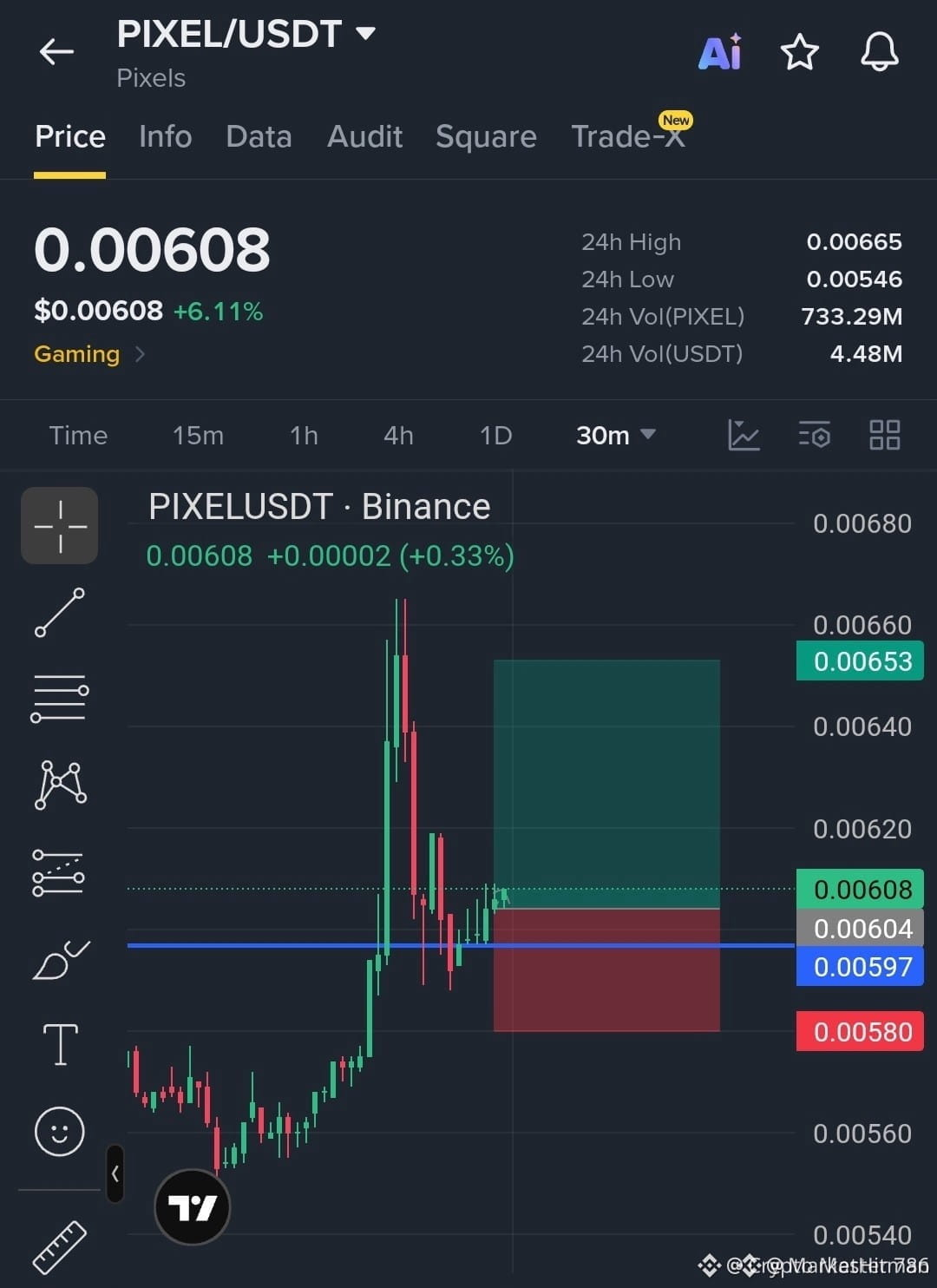
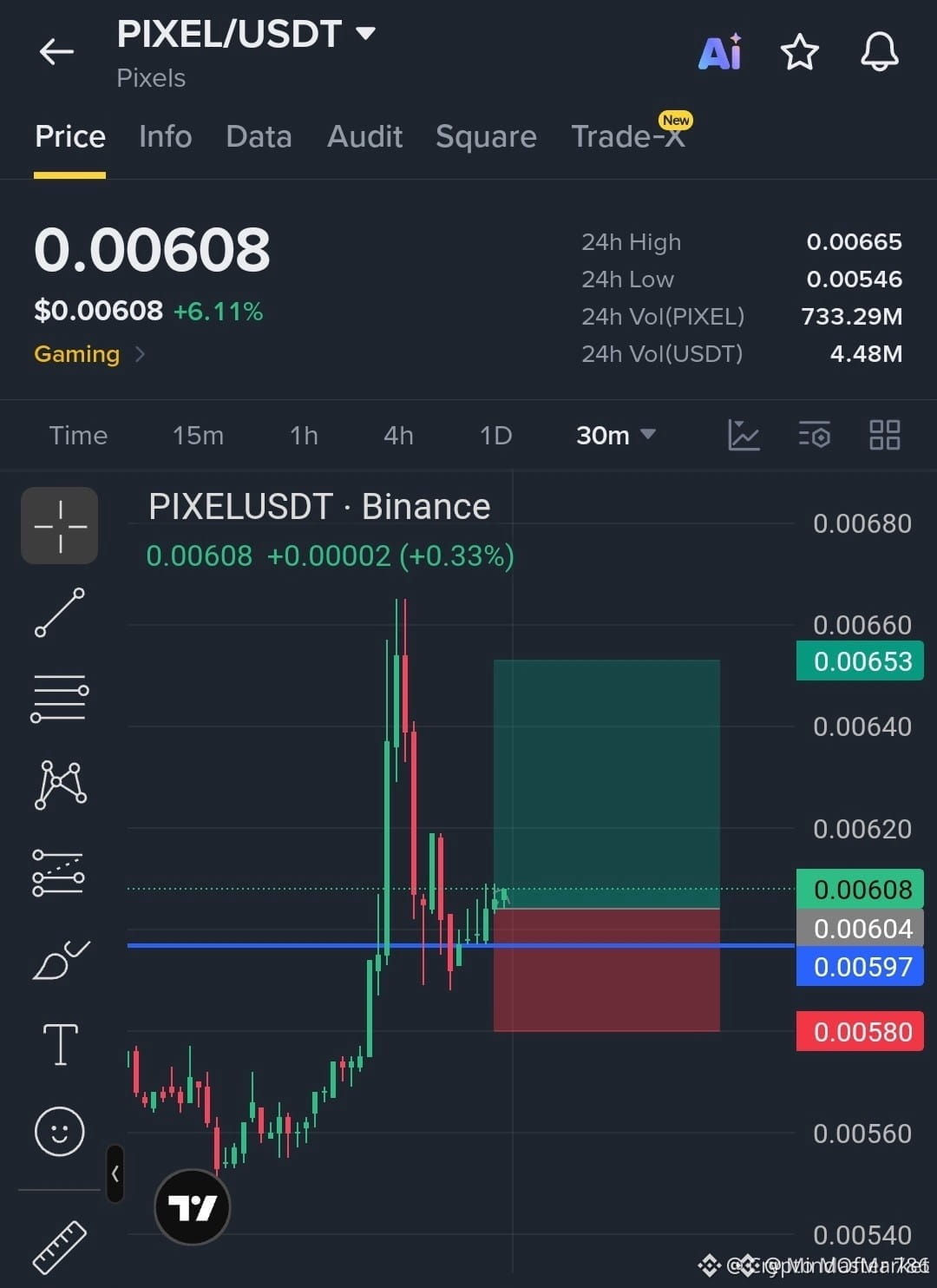
⚡ $PIXEL DEFENDS CRITICAL SUPPORT FOR A HIGH-CONVICTION CONTINUATION EXPANSION! 🎯
Entry: 0.00598 - 0.00608 ⚡
Target: 0.00620 / 0.00640 / 0.00653 🚀
Stop Loss: 0.00580 ⚠️
📌 Buyers are quietly defending the key demand floor at 0.00597 after a clean post-rally pullback. Instead of chasing green candles, smart capital is accumulating directly inside support where risk-to-reward works heavily in our favor. 📊
⚡ Downside momentum is fading fast as aggressive bid volume absorbs seller exhaustion. 💡 A patient DCA inside this retest range sets up a clean swing toward upper liquidity targets when continuation kicks in. 💬 Are you building your position on this demand retest or waiting for resistance to break first? 👇
⚠️ Not financial advice. Always manage your risk. 🛡️
🏷️ #PIXEL #Altcoins #Crypto #LongSetup
🔥 💎
⚡ $PIXEL DEFENDS CRITICAL SUPPORT FOR A HIGH-CONVICTION CONTINUATION EXPANSION! 🎯
Entry: 0.00598 - 0.00608 ⚡
Target: 0.00620 / 0.00640 / 0.00653 🚀
Stop Loss: 0.00580 ⚠️
📌 Buyers are quietly defending the key demand floor at 0.00597 after a clean post-rally pullback. Instead of chasing green candles, smart capital is accumulating directly inside support where risk-to-reward works heavily in our favor. 📊
⚡ Downside momentum is fading fast as aggressive bid volume absorbs seller exhaustion. 💡 A patient DCA inside this retest range sets up a clean swing toward upper liquidity targets when continuation kicks in. 💬 Are you building your position on this demand retest or waiting for resistance to break first? 👇
⚠️ Not financial advice. Always manage your risk. 🛡️
🏷️ #PIXEL #Altcoins #Crypto #LongSetup
🔥 💎
Entry: 0.00598 - 0.00608 ⚡
Target: 0.00620 / 0.00640 / 0.00653 🚀
Stop Loss: 0.00580 ⚠️
📌 Buyers are quietly defending the key demand floor at 0.00597 after a clean post-rally pullback. Instead of chasing green candles, smart capital is accumulating directly inside support where risk-to-reward works heavily in our favor. 📊
⚡ Downside momentum is fading fast as aggressive bid volume absorbs seller exhaustion. 💡 A patient DCA inside this retest range sets up a clean swing toward upper liquidity targets when continuation kicks in. 💬 Are you building your position on this demand retest or waiting for resistance to break first? 👇
⚠️ Not financial advice. Always manage your risk. 🛡️
🏷️ #PIXEL #Altcoins #Crypto #LongSetup
🔥 💎
26

·
--
🚨 $PIXEL HOLDS DEMAND ZONE AFTER RETRACEMENT SETTING UP LIQUIDITY EXPANSION 🟢
Entry: 0.00598 - 0.00608 ⚡
Target: 0.00620 - 0.00653 🚀
Stop Loss: 0.00580 ⚠️
The recent pullback cleared market inefficiency straight into the 0.00597 structural demand block, where institutional buyers are systematically absorbing supply under low volatility. 📊 Patient positioning inside this discount zone avoids chasing momentum while optimizing risk parameters ahead of the expected structural continuation.
💡 As key support holds firm, order flow points to quiet accumulation defending the pivot, targeting upper liquidity pools at higher resistance levels. 💬 Are you scaling into this demand block or waiting for a confirmed high-volume reclaim? 👇
⚠️ Not financial advice. Always manage your risk. 🛡️
🏷️ #PIXEL #Altcoins #TradingSetup #MarketStructure
🎯 🦈
🚨 $PIXEL HOLDS DEMAND ZONE AFTER RETRACEMENT SETTING UP LIQUIDITY EXPANSION 🟢
Entry: 0.00598 - 0.00608 ⚡
Target: 0.00620 - 0.00653 🚀
Stop Loss: 0.00580 ⚠️
The recent pullback cleared market inefficiency straight into the 0.00597 structural demand block, where institutional buyers are systematically absorbing supply under low volatility. 📊 Patient positioning inside this discount zone avoids chasing momentum while optimizing risk parameters ahead of the expected structural continuation.
💡 As key support holds firm, order flow points to quiet accumulation defending the pivot, targeting upper liquidity pools at higher resistance levels. 💬 Are you scaling into this demand block or waiting for a confirmed high-volume reclaim? 👇
⚠️ Not financial advice. Always manage your risk. 🛡️
🏷️ #PIXEL #Altcoins #TradingSetup #MarketStructure
🎯 🦈
Entry: 0.00598 - 0.00608 ⚡
Target: 0.00620 - 0.00653 🚀
Stop Loss: 0.00580 ⚠️
The recent pullback cleared market inefficiency straight into the 0.00597 structural demand block, where institutional buyers are systematically absorbing supply under low volatility. 📊 Patient positioning inside this discount zone avoids chasing momentum while optimizing risk parameters ahead of the expected structural continuation.
💡 As key support holds firm, order flow points to quiet accumulation defending the pivot, targeting upper liquidity pools at higher resistance levels. 💬 Are you scaling into this demand block or waiting for a confirmed high-volume reclaim? 👇
⚠️ Not financial advice. Always manage your risk. 🛡️
🏷️ #PIXEL #Altcoins #TradingSetup #MarketStructure
🎯 🦈
13

·
--
$PIXEL +7.54% | $MOVR +7.38% | $CHIP +7.34%
#PIXEL is trading at $0.00599000, up +7.54% with $6.1 M changing hands. Its open‑ended farming world feels a fresh burst of interest.
#MOVR sits at $0.9890, climbing +7.38% on $6.3 M volume. The Moonriver bridge activity may be nudging the token higher.
#CHIP reached $0.0490, gaining +7.34% while $7.1 M moved. The steady volume could give its rally a bit more depth.
A modest spread in volume suggests CHIP might hold its edge longer than the others.
#Write2Earn #Binance
$PIXEL +7.54% | $MOVR +7.38% | $CHIP +7.34%
#PIXEL is trading at $0.00599000, up +7.54% with $6.1 M changing hands. Its open‑ended farming world feels a fresh burst of interest.
#MOVR sits at $0.9890, climbing +7.38% on $6.3 M volume. The Moonriver bridge activity may be nudging the token higher.
#CHIP reached $0.0490, gaining +7.34% while $7.1 M moved. The steady volume could give its rally a bit more depth.
A modest spread in volume suggests CHIP might hold its edge longer than the others.
#Write2Earn #Binance
#PIXEL is trading at $0.00599000, up +7.54% with $6.1 M changing hands. Its open‑ended farming world feels a fresh burst of interest.
#MOVR sits at $0.9890, climbing +7.38% on $6.3 M volume. The Moonriver bridge activity may be nudging the token higher.
#CHIP reached $0.0490, gaining +7.34% while $7.1 M moved. The steady volume could give its rally a bit more depth.
A modest spread in volume suggests CHIP might hold its edge longer than the others.
#Write2Earn #Binance
37

·
--
Haussier
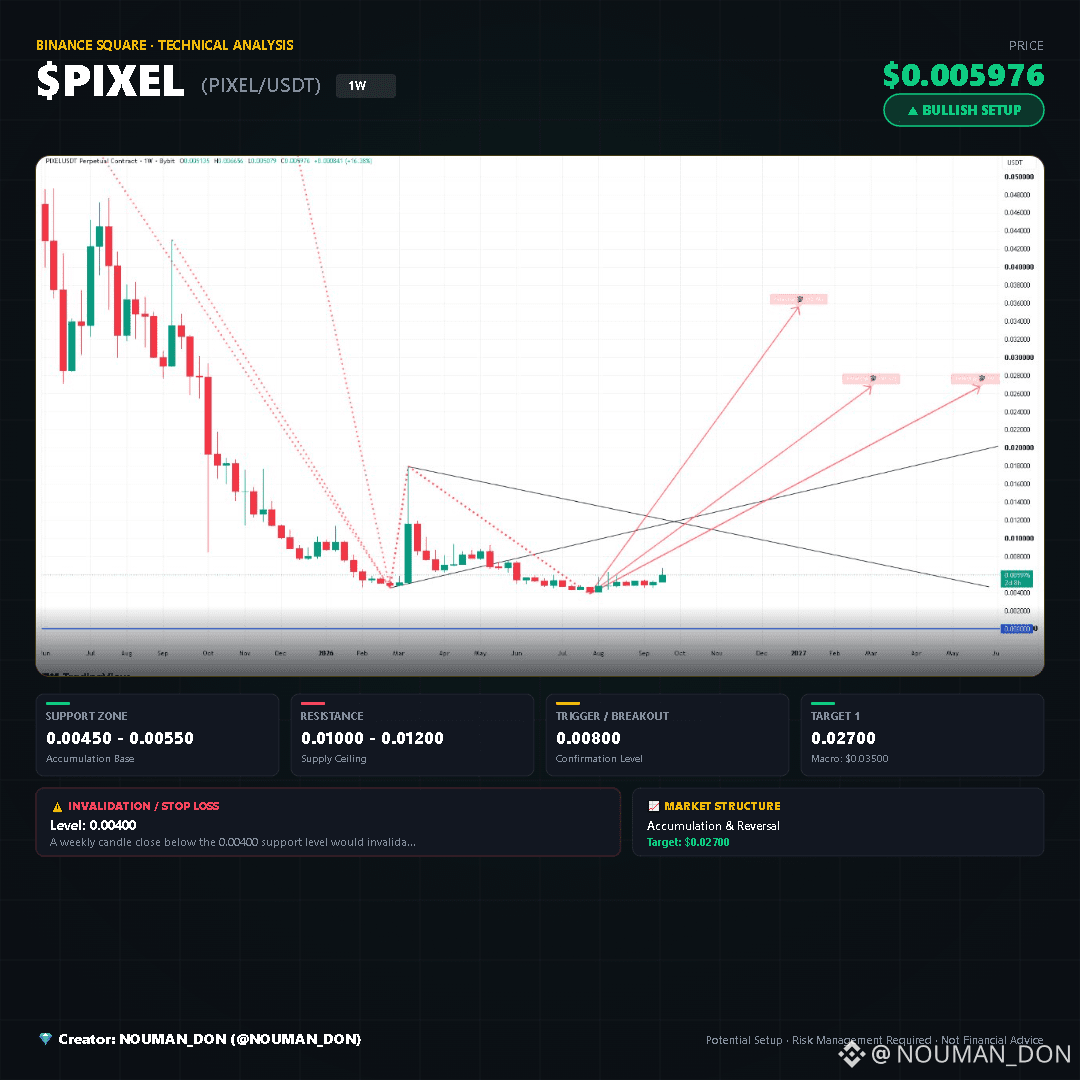
🚀 $PIXEL is showing a potential technical setup!
The weekly chart shows PIXEL/USDT consolidating near historic lows after a prolonged macro downtrend, forming a potential accumulation base with multiple upward targets projected for late 2026 and 2027.
📈 The Technical Setup:
• The Pattern: Descending Broadening Wedge / Falling Channel Reversal
• Short-term Target: 0.02700
• Macro Objective: 0.03500
• Market Structure: Accumulation & Reversal
🎯 Key Levels to Watch:
• Support / Accumulation Zone: 0.00450 - 0.00550
• Resistance: 0.01000 - 0.01200
• Breakout Level: 0.00800
• Stop Loss / Invalidation: 0.00400
📊 Confirmation:
• Volume: Neutral/standard volume building near lows
• Momentum: Stabilizing candle structure forming a higher low base
• Trend: Macro downtrend slowing down with potential bullish reversal structure forming
⚠️ Invalidation:
A weekly candle close below the 0.00400 support level would invalidate this setup and suggest further downside.
Price is testing historic lows and consolidating inside a potential reversal zone, keep a close eye on the breakout level for confirmation.
💎 Creator: NOUMAN_DON (@NOUMAN_DON)
#pixel #crypto #BinanceSquare #Binance #TechnicalAnalysis
{spot}(PIXELUSDT)
{future}(PIXELUSDT)
🚀 $PIXEL is showing a potential technical setup!
The weekly chart shows PIXEL/USDT consolidating near historic lows after a prolonged macro downtrend, forming a potential accumulation base with multiple upward targets projected for late 2026 and 2027.
📈 The Technical Setup:
• The Pattern: Descending Broadening Wedge / Falling Channel Reversal
• Short-term Target: 0.02700
• Macro Objective: 0.03500
• Market Structure: Accumulation & Reversal
🎯 Key Levels to Watch:
• Support / Accumulation Zone: 0.00450 - 0.00550
• Resistance: 0.01000 - 0.01200
• Breakout Level: 0.00800
• Stop Loss / Invalidation: 0.00400
📊 Confirmation:
• Volume: Neutral/standard volume building near lows
• Momentum: Stabilizing candle structure forming a higher low base
• Trend: Macro downtrend slowing down with potential bullish reversal structure forming
⚠️ Invalidation:
A weekly candle close below the 0.00400 support level would invalidate this setup and suggest further downside.
Price is testing historic lows and consolidating inside a potential reversal zone, keep a close eye on the breakout level for confirmation.
💎 Creator: NOUMAN_DON (@NOUMAN_DON)
#pixel #crypto #BinanceSquare #Binance #TechnicalAnalysis
The weekly chart shows PIXEL/USDT consolidating near historic lows after a prolonged macro downtrend, forming a potential accumulation base with multiple upward targets projected for late 2026 and 2027.
📈 The Technical Setup:
• The Pattern: Descending Broadening Wedge / Falling Channel Reversal
• Short-term Target: 0.02700
• Macro Objective: 0.03500
• Market Structure: Accumulation & Reversal
🎯 Key Levels to Watch:
• Support / Accumulation Zone: 0.00450 - 0.00550
• Resistance: 0.01000 - 0.01200
• Breakout Level: 0.00800
• Stop Loss / Invalidation: 0.00400
📊 Confirmation:
• Volume: Neutral/standard volume building near lows
• Momentum: Stabilizing candle structure forming a higher low base
• Trend: Macro downtrend slowing down with potential bullish reversal structure forming
⚠️ Invalidation:
A weekly candle close below the 0.00400 support level would invalidate this setup and suggest further downside.
Price is testing historic lows and consolidating inside a potential reversal zone, keep a close eye on the breakout level for confirmation.
💎 Creator: NOUMAN_DON (@NOUMAN_DON)
#pixel #crypto #BinanceSquare #Binance #TechnicalAnalysis
1
15
·
--
$PIXEL +12.91% | $NEAR +12.53% | $FET +11.65%
#PIXEL is up +12.91% at $0.00612000, trading $6.0M. Its pixel‑by‑pixel world of farming and exploration is gaining traction, though the niche appeal could limit broader momentum.
#NEAR rose +12.53% to $5.09 on $273.0M of volume. The protocol’s push to become the blockchain for AI is resonating, yet the sector’s volatility remains a factor.
#FET climbed +11.65% to $0.2424 with $38.6M changing hands. The ASI Alliance’s open‑source AGI push is sparking interest, though the roadmap is still early‑stage.
Watch how the volume ratios evolve—strong buying could signal a short‑term breakout.
#Write2Earn #Binance
$PIXEL +12.91% | $NEAR +12.53% | $FET +11.65%
#PIXEL is up +12.91% at $0.00612000, trading $6.0M. Its pixel‑by‑pixel world of farming and exploration is gaining traction, though the niche appeal could limit broader momentum.
#NEAR rose +12.53% to $5.09 on $273.0M of volume. The protocol’s push to become the blockchain for AI is resonating, yet the sector’s volatility remains a factor.
#FET climbed +11.65% to $0.2424 with $38.6M changing hands. The ASI Alliance’s open‑source AGI push is sparking interest, though the roadmap is still early‑stage.
Watch how the volume ratios evolve—strong buying could signal a short‑term breakout.
#Write2Earn #Binance
#PIXEL is up +12.91% at $0.00612000, trading $6.0M. Its pixel‑by‑pixel world of farming and exploration is gaining traction, though the niche appeal could limit broader momentum.
#NEAR rose +12.53% to $5.09 on $273.0M of volume. The protocol’s push to become the blockchain for AI is resonating, yet the sector’s volatility remains a factor.
#FET climbed +11.65% to $0.2424 with $38.6M changing hands. The ASI Alliance’s open‑source AGI push is sparking interest, though the roadmap is still early‑stage.
Watch how the volume ratios evolve—strong buying could signal a short‑term breakout.
#Write2Earn #Binance
60

·
--
⚡ High-Probability Long: $PIXEL (FUTURES) Structure Primed
📊 Market Context & Thesis:
A sudden surge in buy volume propelled $PIXEL above local resistance. This volume expansion indicates institutional accumulation, favoring continuation toward higher liquidity zones.
• Funding: 0.0050% (Neutral) • Next: 1h 03m
• Open Interest (OI): $2.70M
• 24h Volume: $21.02M
• 24h Range: 0.005369 — 0.00666 (+14.7%)
🎯 Entry: 0.006159
🛑 Stop-Loss: 0.005818 (-5.54%)
✅ Take-Profit: 0.006821 (+10.75%)
⚖️ Risk/Reward: 1:1.9
🚫 Invalidation Rule: If a 1-hour candle closes below $0.005818 (-5.54%), this bullish thesis is invalidated. Exit trade without holding into drawdowns.
⚖️ Risk Note: Moderate leverage recommended (3x–5x on Futures). Never risk more than 1–2% of total portfolio capital on a single setup.
📈 Strategy Track Record: WR 62% over 76 trades
#PIXEL #CryptoTrading #TechnicalAnalysis #BinanceSquare
⚠️ Not financial advice. Always manage your risk.
⚡ High-Probability Long: $PIXEL (FUTURES) Structure Primed
📊 Market Context & Thesis:
A sudden surge in buy volume propelled $PIXEL above local resistance. This volume expansion indicates institutional accumulation, favoring continuation toward higher liquidity zones.
• Funding: 0.0050% (Neutral) • Next: 1h 03m
• Open Interest (OI): $2.70M
• 24h Volume: $21.02M
• 24h Range: 0.005369 — 0.00666 (+14.7%)
🎯 Entry: 0.006159
🛑 Stop-Loss: 0.005818 (-5.54%)
✅ Take-Profit: 0.006821 (+10.75%)
⚖️ Risk/Reward: 1:1.9
🚫 Invalidation Rule: If a 1-hour candle closes below $0.005818 (-5.54%), this bullish thesis is invalidated. Exit trade without holding into drawdowns.
⚖️ Risk Note: Moderate leverage recommended (3x–5x on Futures). Never risk more than 1–2% of total portfolio capital on a single setup.
📈 Strategy Track Record: WR 62% over 76 trades
#PIXEL #CryptoTrading #TechnicalAnalysis #BinanceSquare
⚠️ Not financial advice. Always manage your risk.
📊 Market Context & Thesis:
A sudden surge in buy volume propelled $PIXEL above local resistance. This volume expansion indicates institutional accumulation, favoring continuation toward higher liquidity zones.
• Funding: 0.0050% (Neutral) • Next: 1h 03m
• Open Interest (OI): $2.70M
• 24h Volume: $21.02M
• 24h Range: 0.005369 — 0.00666 (+14.7%)
🎯 Entry: 0.006159
🛑 Stop-Loss: 0.005818 (-5.54%)
✅ Take-Profit: 0.006821 (+10.75%)
⚖️ Risk/Reward: 1:1.9
🚫 Invalidation Rule: If a 1-hour candle closes below $0.005818 (-5.54%), this bullish thesis is invalidated. Exit trade without holding into drawdowns.
⚖️ Risk Note: Moderate leverage recommended (3x–5x on Futures). Never risk more than 1–2% of total portfolio capital on a single setup.
📈 Strategy Track Record: WR 62% over 76 trades
#PIXEL #CryptoTrading #TechnicalAnalysis #BinanceSquare
⚠️ Not financial advice. Always manage your risk.
21
·
--
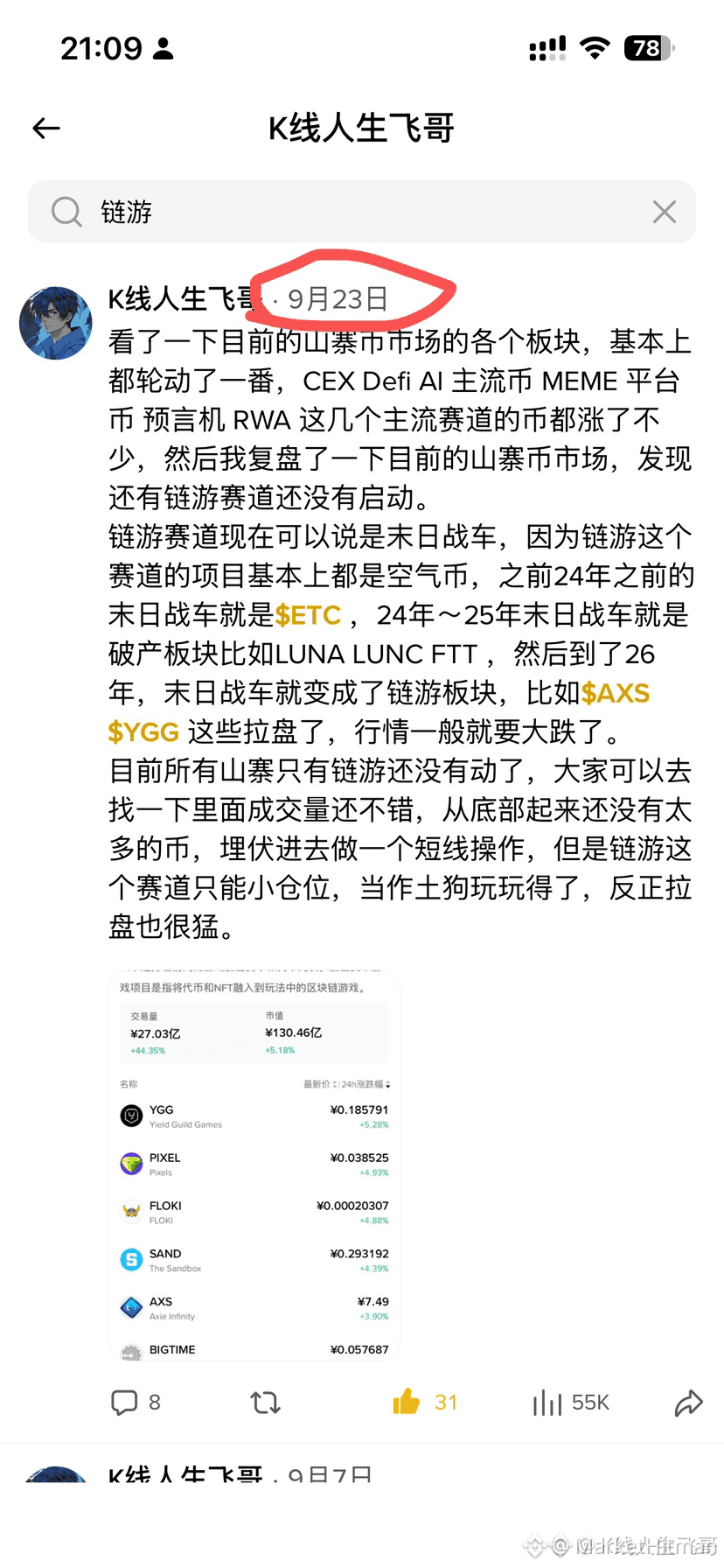
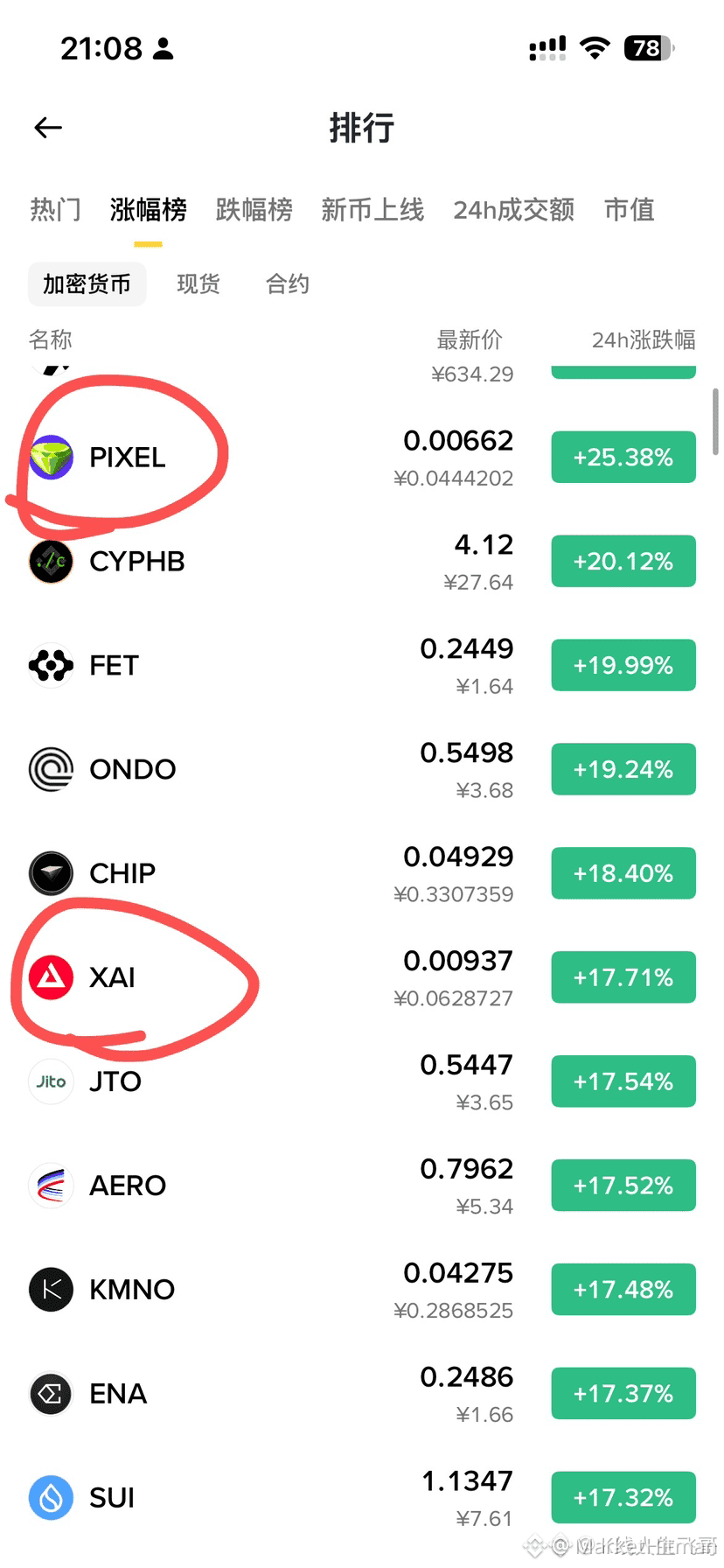
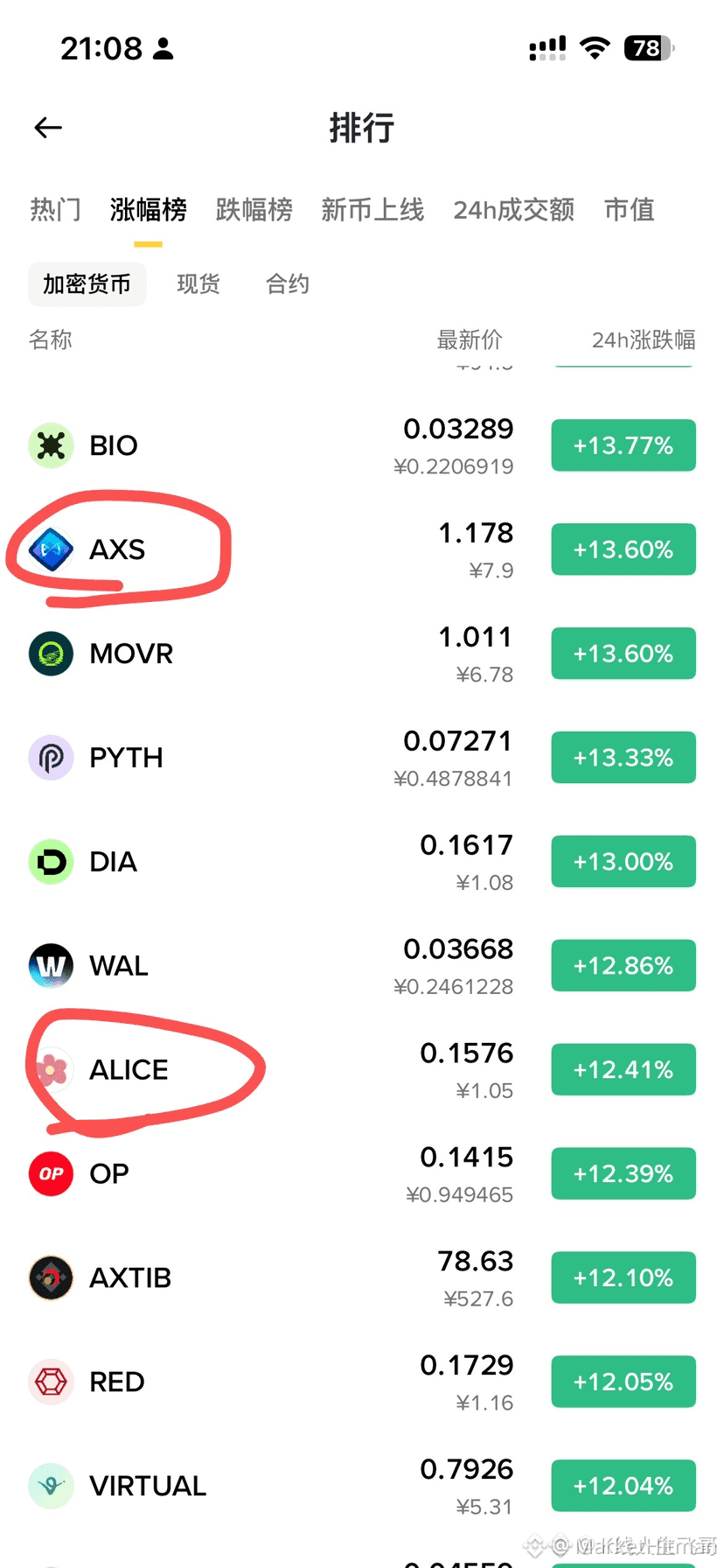
🚀 GAMEFI ROTATION INITIATED AS $PIXEL AND $MANA BREAK OUT OF COMPRESSION! 💥
Smart capital is cycling aggressively into GameFi momentum right on schedule. ⚡ Early stealth accumulation in $PIXEL and $AXS is already paying off as bids lift off multi-week consolidation lows. 📊
Remember, this sector moves on pure narrative momentum rather than structural utility, making quick execution essential. 💡 Keep tight stops and focus on fast swing targets, with eyes firmly locked on lagging setups like $MANA preparing for their own expansion leg. 🌊
💬 Are you riding this GameFi rotation for quick profits, or holding back for heavy layer-1 setups? 👇
⚠️ Not financial advice. Always manage your risk. 🛡️
🏷️ #PIXEL #GameFi #Altcoins #Crypto #Breakout
🔥 💎
🚀 GAMEFI ROTATION INITIATED AS $PIXEL AND $MANA BREAK OUT OF COMPRESSION! 💥
Smart capital is cycling aggressively into GameFi momentum right on schedule. ⚡ Early stealth accumulation in $PIXEL and $AXS is already paying off as bids lift off multi-week consolidation lows. 📊
Remember, this sector moves on pure narrative momentum rather than structural utility, making quick execution essential. 💡 Keep tight stops and focus on fast swing targets, with eyes firmly locked on lagging setups like $MANA preparing for their own expansion leg. 🌊
💬 Are you riding this GameFi rotation for quick profits, or holding back for heavy layer-1 setups? 👇
⚠️ Not financial advice. Always manage your risk. 🛡️
🏷️ #PIXEL #GameFi #Altcoins #Crypto #Breakout
🔥 💎
Smart capital is cycling aggressively into GameFi momentum right on schedule. ⚡ Early stealth accumulation in $PIXEL and $AXS is already paying off as bids lift off multi-week consolidation lows. 📊
Remember, this sector moves on pure narrative momentum rather than structural utility, making quick execution essential. 💡 Keep tight stops and focus on fast swing targets, with eyes firmly locked on lagging setups like $MANA preparing for their own expansion leg. 🌊
💬 Are you riding this GameFi rotation for quick profits, or holding back for heavy layer-1 setups? 👇
⚠️ Not financial advice. Always manage your risk. 🛡️
🏷️ #PIXEL #GameFi #Altcoins #Crypto #Breakout
🔥 💎
460

·
--
Haussier
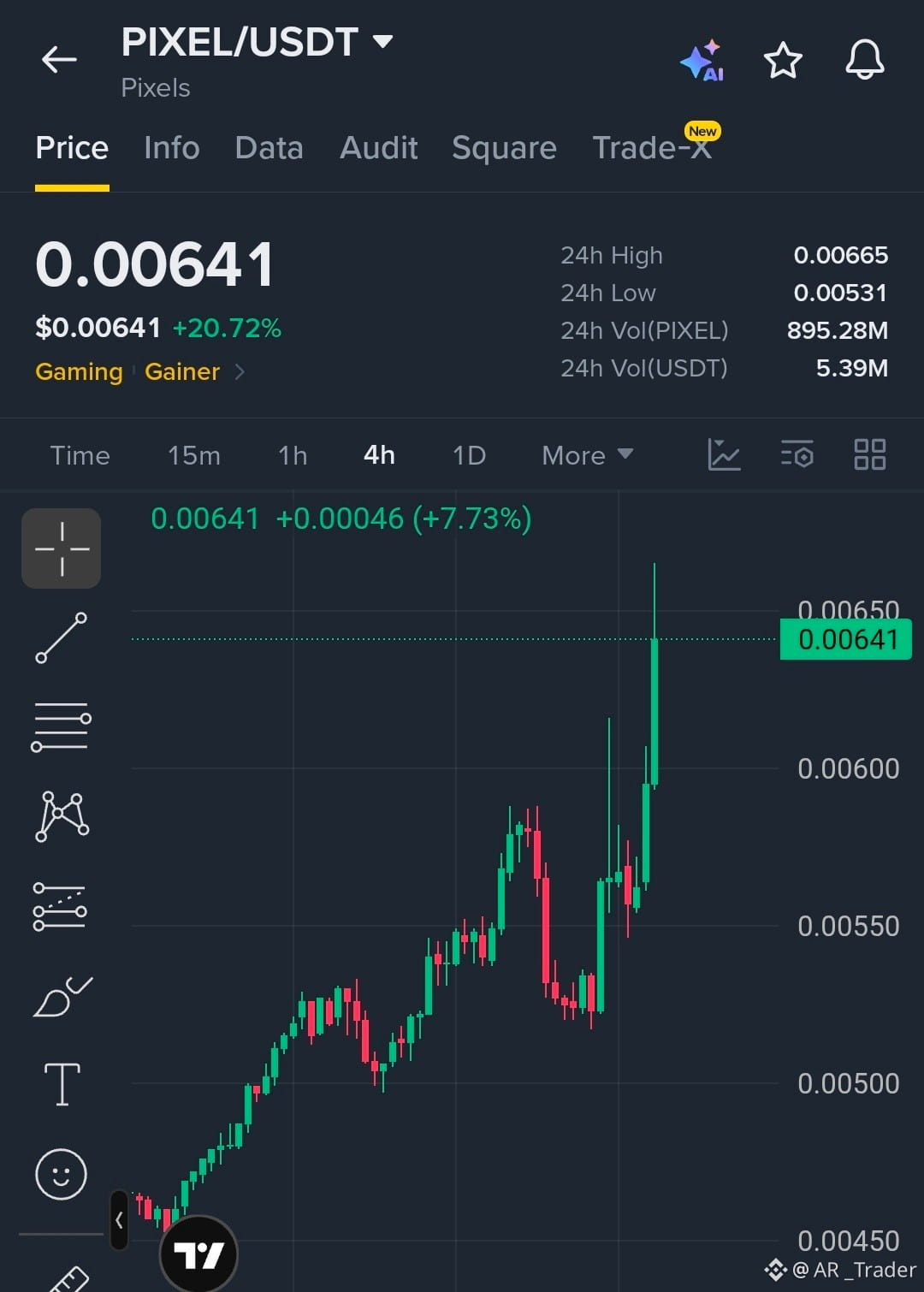
$PIXEL Is Building Pressure Near $0.00650 And The Next Move Could Be Sharp…!!
#PIXEL is showing strong bullish momentum after a 20% move with price holding above 0.00640 The key resistance is 0.00665 and a clean breakout could target 0.00700 and 0.00750 while 0.00600 remains the key support zone
{future}(PIXELUSDT)
$RE
{future}(REUSDT)
$QI
{spot}(QIUSDT)
$PIXEL Is Building Pressure Near $0.00650 And The Next Move Could Be Sharp…!!
#PIXEL is showing strong bullish momentum after a 20% move with price holding above 0.00640 The key resistance is 0.00665 and a clean breakout could target 0.00700 and 0.00750 while 0.00600 remains the key support zone
$RE
$QI
#PIXEL is showing strong bullish momentum after a 20% move with price holding above 0.00640 The key resistance is 0.00665 and a clean breakout could target 0.00700 and 0.00750 while 0.00600 remains the key support zone
$RE
$QI
99

·
--
Haussier
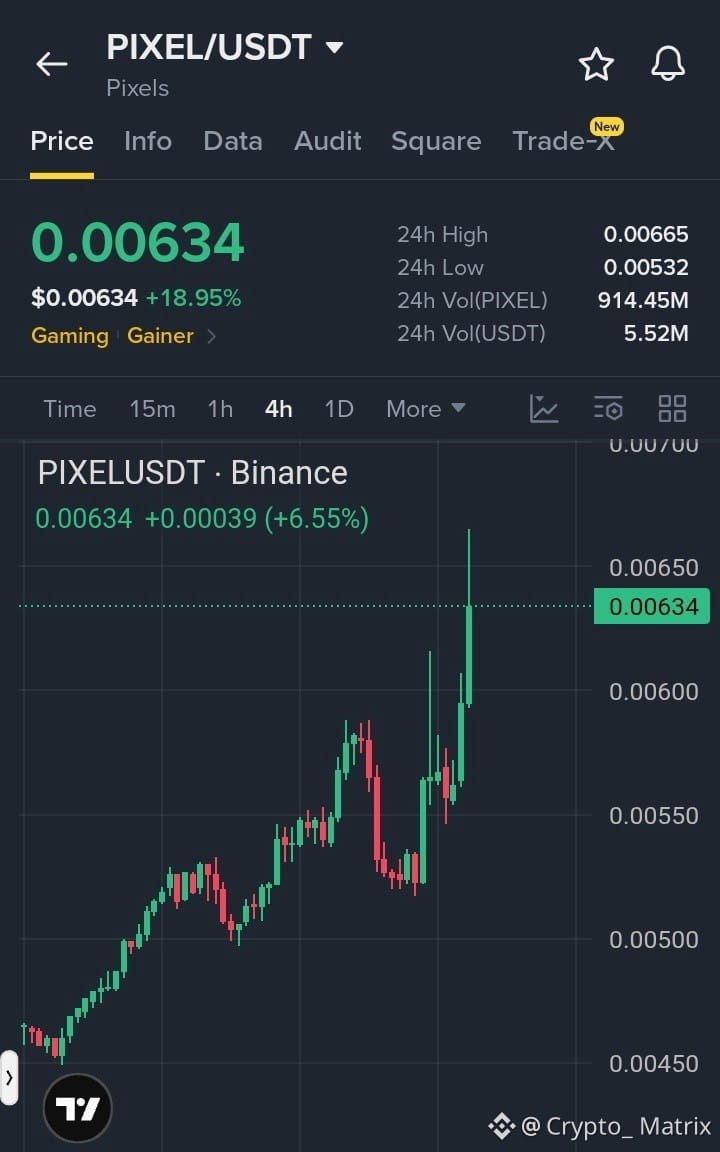
$PIXEL Is Testing A Key Breakout Zone Right Now…!!
#PIXEL is showing strong bullish momentum after the recent rally and is now pushing near the 0.00650 resistance zone A clean breakout could open the way toward 0.00665 and 0.00700 while 0.00600 remains the key support level for buyers
{future}(PIXELUSDT)
$ONE
{future}(ONEUSDT)
$SOLV
{future}(SOLVUSDT)
$PIXEL Is Testing A Key Breakout Zone Right Now…!!
#PIXEL is showing strong bullish momentum after the recent rally and is now pushing near the 0.00650 resistance zone A clean breakout could open the way toward 0.00665 and 0.00700 while 0.00600 remains the key support level for buyers
$ONE
$SOLV
#PIXEL is showing strong bullish momentum after the recent rally and is now pushing near the 0.00650 resistance zone A clean breakout could open the way toward 0.00665 and 0.00700 while 0.00600 remains the key support level for buyers
$ONE
$SOLV
1
68

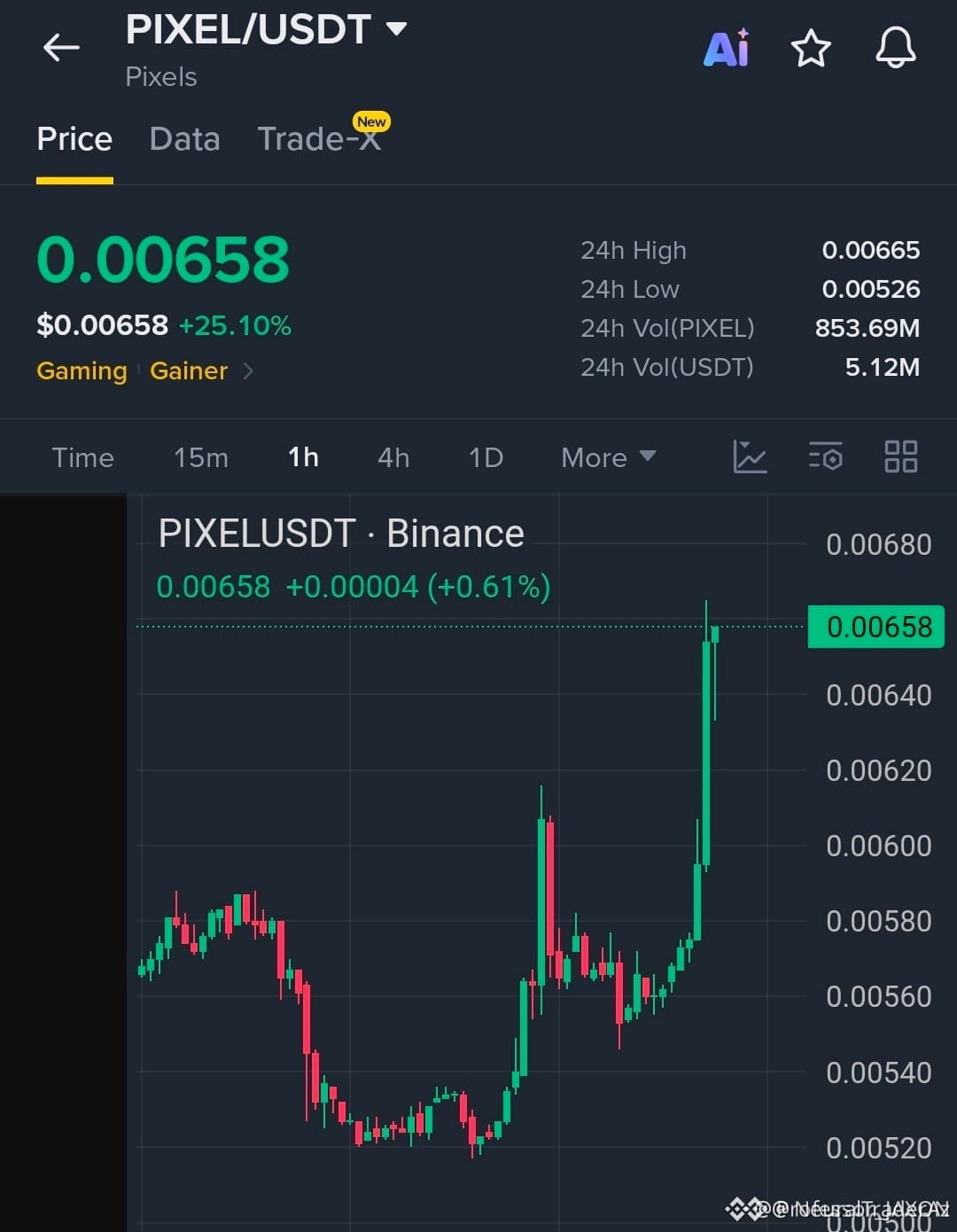
🚨 $PIXEL EXPANDS THROUGH LOCAL LIQUIDITY WITH HEAVY BUY-SIDE VOLUME ⚡
Entry: 0.00640 - 0.00660 🟢
Target: 0.00685 - 0.00750 🚀
Stop Loss: 0.00605 ⚠️
$PIXEL has cleared local micro-resistance, driven by a 25% daily expansion move with heavy order flow keeping price pinned to the upper range boundaries. 📊 The demand zone between 0.00640 and 0.00660 now serves as crucial structural support, absorbing short-term seller distribution efficiently.
💡 A sustained acceptance above 0.00665 signals further upside progression toward upper liquidity pools up to 0.00750, maintaining favorable risk parameters for systematic positioning. 💬 Are you anticipating a brief discount into the order block, or playing the immediate momentum extension? 👇
⚠️ Not financial advice. Always manage your risk. 🛡️
🏷️ #PIXEL #Breakout #Altcoins #Crypto
🎯 🦈
🚨 $PIXEL EXPANDS THROUGH LOCAL LIQUIDITY WITH HEAVY BUY-SIDE VOLUME ⚡
Entry: 0.00640 - 0.00660 🟢
Target: 0.00685 - 0.00750 🚀
Stop Loss: 0.00605 ⚠️
$PIXEL has cleared local micro-resistance, driven by a 25% daily expansion move with heavy order flow keeping price pinned to the upper range boundaries. 📊 The demand zone between 0.00640 and 0.00660 now serves as crucial structural support, absorbing short-term seller distribution efficiently.
💡 A sustained acceptance above 0.00665 signals further upside progression toward upper liquidity pools up to 0.00750, maintaining favorable risk parameters for systematic positioning. 💬 Are you anticipating a brief discount into the order block, or playing the immediate momentum extension? 👇
⚠️ Not financial advice. Always manage your risk. 🛡️
🏷️ #PIXEL #Breakout #Altcoins #Crypto
🎯 🦈
Entry: 0.00640 - 0.00660 🟢
Target: 0.00685 - 0.00750 🚀
Stop Loss: 0.00605 ⚠️
$PIXEL has cleared local micro-resistance, driven by a 25% daily expansion move with heavy order flow keeping price pinned to the upper range boundaries. 📊 The demand zone between 0.00640 and 0.00660 now serves as crucial structural support, absorbing short-term seller distribution efficiently.
💡 A sustained acceptance above 0.00665 signals further upside progression toward upper liquidity pools up to 0.00750, maintaining favorable risk parameters for systematic positioning. 💬 Are you anticipating a brief discount into the order block, or playing the immediate momentum extension? 👇
⚠️ Not financial advice. Always manage your risk. 🛡️
🏷️ #PIXEL #Breakout #Altcoins #Crypto
🎯 🦈
27

·
--
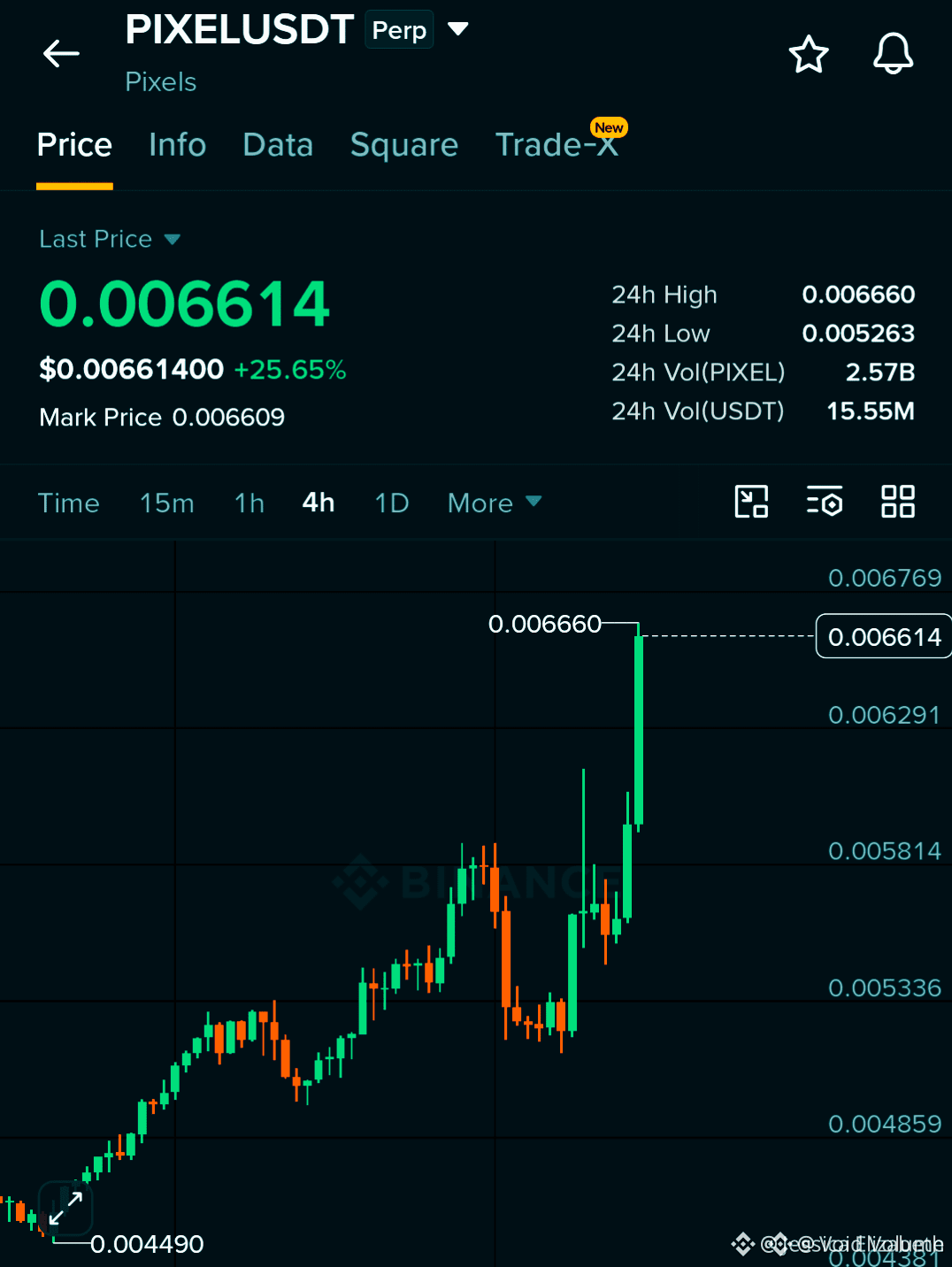
🦈 $PIXEL RECLAIMING DEMAND STRUCTURE AFTER SWEEPING RETAIL LIQUIDITY! ⚡
Entry: 0.0065 - 0.0066 ⚡
Target: 0.0069 - 0.0072 🚀
Stop Loss: 0.0057 ⚠️
📌 Smart money has successfully defended the local discount array, forming a high-probability demand cluster around the 0.0065 region. 📊 Order flow indicates steady institutional absorption as low-timeframe price inefficiencies are fully rebalanced.
💡 With sell-side liquidity engineered and swept, structural momentum favors an expansion toward key overhead buy-side liquidity pools. 💬 Are you positioning inside this order block or waiting for structural confirmation higher? 👇
⚠️ Not financial advice. Always manage your risk. 🛡️
🏷️ #PIXEL #LongSetup #Altcoins #Crypto #MarketStructure
🔥 🎯
🦈 $PIXEL RECLAIMING DEMAND STRUCTURE AFTER SWEEPING RETAIL LIQUIDITY! ⚡
Entry: 0.0065 - 0.0066 ⚡
Target: 0.0069 - 0.0072 🚀
Stop Loss: 0.0057 ⚠️
📌 Smart money has successfully defended the local discount array, forming a high-probability demand cluster around the 0.0065 region. 📊 Order flow indicates steady institutional absorption as low-timeframe price inefficiencies are fully rebalanced.
💡 With sell-side liquidity engineered and swept, structural momentum favors an expansion toward key overhead buy-side liquidity pools. 💬 Are you positioning inside this order block or waiting for structural confirmation higher? 👇
⚠️ Not financial advice. Always manage your risk. 🛡️
🏷️ #PIXEL #LongSetup #Altcoins #Crypto #MarketStructure
🔥 🎯
Entry: 0.0065 - 0.0066 ⚡
Target: 0.0069 - 0.0072 🚀
Stop Loss: 0.0057 ⚠️
📌 Smart money has successfully defended the local discount array, forming a high-probability demand cluster around the 0.0065 region. 📊 Order flow indicates steady institutional absorption as low-timeframe price inefficiencies are fully rebalanced.
💡 With sell-side liquidity engineered and swept, structural momentum favors an expansion toward key overhead buy-side liquidity pools. 💬 Are you positioning inside this order block or waiting for structural confirmation higher? 👇
⚠️ Not financial advice. Always manage your risk. 🛡️
🏷️ #PIXEL #LongSetup #Altcoins #Crypto #MarketStructure
🔥 🎯
31

·
--
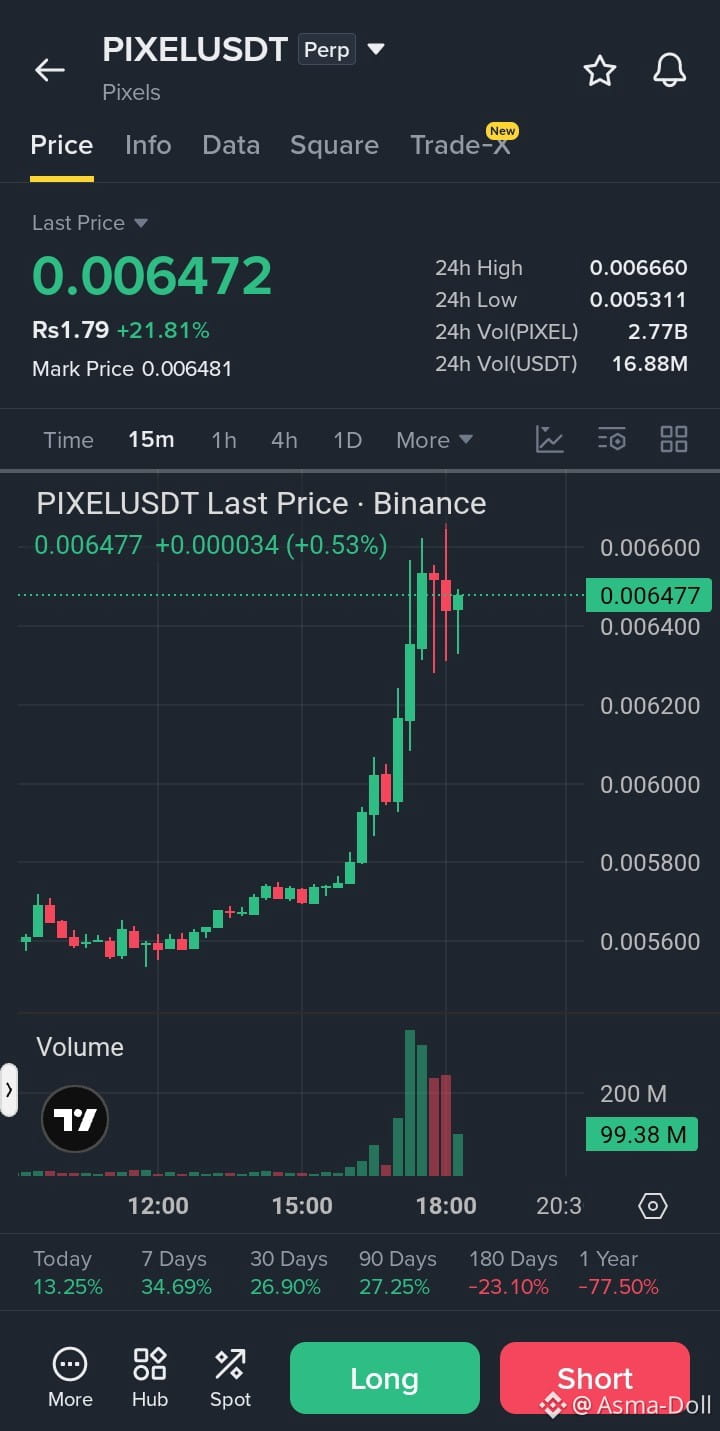
📉 $PIXEL /USDT Perp — SHORT Signal
Entry: 0.00645 – 0.00655
Stop Loss: 0.00672
Take Profits:
🎯 TP1: 0.00620
🎯 TP2: 0.00590
🎯 TP3: 0.00555
Trade here $PIXEL
{future}(PIXELUSDT)
Analysis:
PIXEL has made a strong +21.81% move and is trading close to the 24h high 0.006660. The setup is suitable for a pullback short only if rejection appears. Current perp data also shows elevated activity around the pair.
Confirmation:
Wait for a clean rejection around 0.00655–0.00666, then a break below 0.00640.
If price holds above 0.00666, avoid the short.
⚠️ High-volatility setup—use controlled leverage and risk.
#PIXEL #PIXELUSDT #BinanceFutures #CryptoTrading #ShortSignal
📉 $PIXEL /USDT Perp — SHORT Signal
Entry: 0.00645 – 0.00655
Stop Loss: 0.00672
Take Profits:
🎯 TP1: 0.00620
🎯 TP2: 0.00590
🎯 TP3: 0.00555
Trade here $PIXEL
Analysis:
PIXEL has made a strong +21.81% move and is trading close to the 24h high 0.006660. The setup is suitable for a pullback short only if rejection appears. Current perp data also shows elevated activity around the pair.
Confirmation:
Wait for a clean rejection around 0.00655–0.00666, then a break below 0.00640.
If price holds above 0.00666, avoid the short.
⚠️ High-volatility setup—use controlled leverage and risk.
#PIXEL #PIXELUSDT #BinanceFutures #CryptoTrading #ShortSignal
Entry: 0.00645 – 0.00655
Stop Loss: 0.00672
Take Profits:
🎯 TP1: 0.00620
🎯 TP2: 0.00590
🎯 TP3: 0.00555
Trade here $PIXEL
Analysis:
PIXEL has made a strong +21.81% move and is trading close to the 24h high 0.006660. The setup is suitable for a pullback short only if rejection appears. Current perp data also shows elevated activity around the pair.
Confirmation:
Wait for a clean rejection around 0.00655–0.00666, then a break below 0.00640.
If price holds above 0.00666, avoid the short.
⚠️ High-volatility setup—use controlled leverage and risk.
#PIXEL #PIXELUSDT #BinanceFutures #CryptoTrading #ShortSignal
1
72

·
--
Baissier
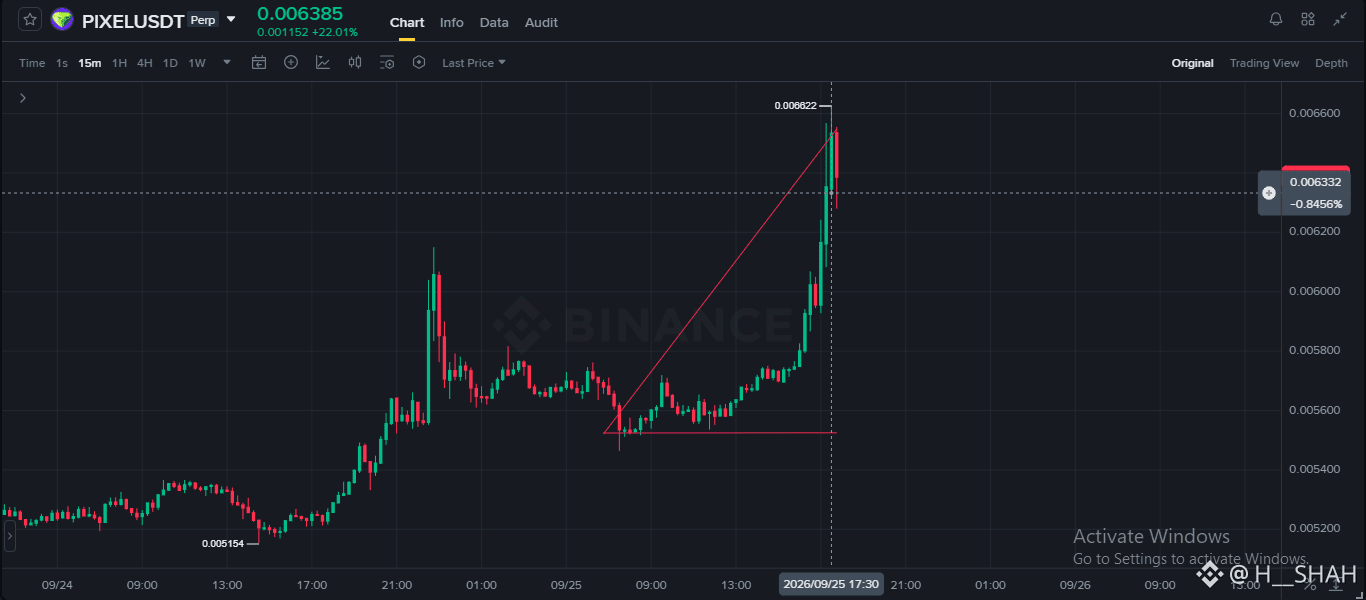
what do you think about $PIXEL
i think the seller are ready and now market go down from 0.006380 to 0.006231 or 0.006170
Am i right or not ?
plz comment
{spot}(PIXELUSDT)
{future}(PIXELUSDT)
#QNTRises39% #EthereumBreaksAbove$2700 #BitgetBreachForgedRequestsNotStolenKeys #BitcoinSpotETFsTurnNetPositiveYTD #PIXEL
what do you think about $PIXEL
i think the seller are ready and now market go down from 0.006380 to 0.006231 or 0.006170
Am i right or not ?
plz comment
#QNTRises39% #EthereumBreaksAbove$2700 #BitgetBreachForgedRequestsNotStolenKeys #BitcoinSpotETFsTurnNetPositiveYTD #PIXEL
i think the seller are ready and now market go down from 0.006380 to 0.006231 or 0.006170
Am i right or not ?
plz comment
#QNTRises39% #EthereumBreaksAbove$2700 #BitgetBreachForgedRequestsNotStolenKeys #BitcoinSpotETFsTurnNetPositiveYTD #PIXEL
4
687

·
--
$PIXEL looks ready to drop after big pump
Price is at 92 percent of today's high
RSI is 76 so buyers are exhausted
Volume is 10.9x normal so drop can be fast
🎯 Short $PIXEL 0.006515 to 0.006639
Stop loss 0.006732
Targets 0.006252 / 0.006060 / 0.005771
Tap $PIXEL to short it here
In or out
#PIXEL #TradingSignals
$PIXEL looks ready to drop after big pump
Price is at 92 percent of today's high
RSI is 76 so buyers are exhausted
Volume is 10.9x normal so drop can be fast
🎯 Short $PIXEL 0.006515 to 0.006639
Stop loss 0.006732
Targets 0.006252 / 0.006060 / 0.005771
Tap $PIXEL to short it here
In or out
#PIXEL #TradingSignals
Price is at 92 percent of today's high
RSI is 76 so buyers are exhausted
Volume is 10.9x normal so drop can be fast
🎯 Short $PIXEL 0.006515 to 0.006639
Stop loss 0.006732
Targets 0.006252 / 0.006060 / 0.005771
Tap $PIXEL to short it here
In or out
#PIXEL #TradingSignals
42

·
--
⚡ OVMARS SIGNAL ALERT ⚡
───────────────────────────────
🪙 Pair: $PIXEL USD
📈 Direction: LONG (BUY)
Timeframe: 15m – 1H (Intraday)
Rec. Leverage: 5x – 10x
🎯 Entry Zone: 0.0065 - 0.0065
💰 Take Profit Targets:
├ TP 1: $0.0066 [ 80% Hit Rate ]
├ TP 2: $0.0067 [ 50% Hit Rate ]
└ TP 3: $0.0067 [ 30% Hit Rate ]
🛑 Stop Loss: $0.0064
Risk / Reward: 1:3.2
───────────────────────────────
Tip: Move SL to Breakeven after TP 1.
⚠️ DYOR: Manage your risk strictly. Not financial advice.
#PIXEL #OVMARS
#WRITE2EARN
⚡ OVMARS SIGNAL ALERT ⚡
───────────────────────────────
🪙 Pair: $PIXEL USD
📈 Direction: LONG (BUY)
Timeframe: 15m – 1H (Intraday)
Rec. Leverage: 5x – 10x
🎯 Entry Zone: 0.0065 - 0.0065
💰 Take Profit Targets:
├ TP 1: $0.0066 [ 80% Hit Rate ]
├ TP 2: $0.0067 [ 50% Hit Rate ]
└ TP 3: $0.0067 [ 30% Hit Rate ]
🛑 Stop Loss: $0.0064
Risk / Reward: 1:3.2
───────────────────────────────
Tip: Move SL to Breakeven after TP 1.
⚠️ DYOR: Manage your risk strictly. Not financial advice.
#PIXEL #OVMARS
#WRITE2EARN
───────────────────────────────
🪙 Pair: $PIXEL USD
📈 Direction: LONG (BUY)
Timeframe: 15m – 1H (Intraday)
Rec. Leverage: 5x – 10x
🎯 Entry Zone: 0.0065 - 0.0065
💰 Take Profit Targets:
├ TP 1: $0.0066 [ 80% Hit Rate ]
├ TP 2: $0.0067 [ 50% Hit Rate ]
└ TP 3: $0.0067 [ 30% Hit Rate ]
🛑 Stop Loss: $0.0064
Risk / Reward: 1:3.2
───────────────────────────────
Tip: Move SL to Breakeven after TP 1.
⚠️ DYOR: Manage your risk strictly. Not financial advice.
#PIXEL #OVMARS
#WRITE2EARN
1
248

·
--
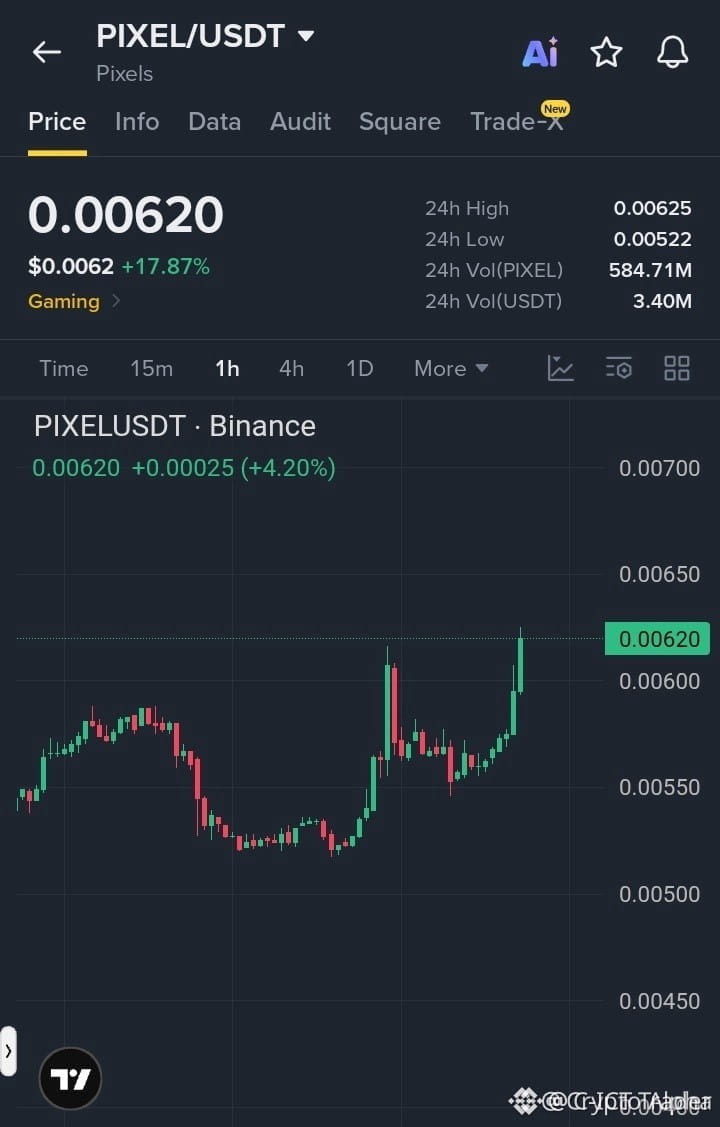
🚨 $PIXEL BREAKS KEY RESISTANCE AS INSTITUTIONAL MOMENTUM ACCELERATES TOWARD UNFILLED LIQUIDITY! 💥
Entry: 0.00605 - 0.00620 ⚡
Target: 0.00640 / 0.00670 / 0.00700 🚀
Stop Loss: 0.00580 ⚠️
$PIXEL is reclaiming structural highs above 0.0060, leaving a clear trail of aggressive buyer absorption across the 1H timeframe. 📊 The formation of consecutive higher lows indicates smart money defense, with the immediate key expansion zone resting at 0.00625.
💡 As order flow shifts heavily bullish, the upside liquidity pools between 0.00640 and 0.00700 serve as primary draw-on-liquidity targets before potential structure exhaustion. 🌊 Risk remains strictly controlled under the demand base at 0.00580. 💬 Are you taking position on this retest or waiting for a clean 0.00625 break print? 👇
⚠️ Not financial advice. Always manage your risk. 🛡️
🏷️ #PIXEL #LongSetup #Breakout #Crypto #SmartMoney
🎯 🦈
🚨 $PIXEL BREAKS KEY RESISTANCE AS INSTITUTIONAL MOMENTUM ACCELERATES TOWARD UNFILLED LIQUIDITY! 💥
Entry: 0.00605 - 0.00620 ⚡
Target: 0.00640 / 0.00670 / 0.00700 🚀
Stop Loss: 0.00580 ⚠️
$PIXEL is reclaiming structural highs above 0.0060, leaving a clear trail of aggressive buyer absorption across the 1H timeframe. 📊 The formation of consecutive higher lows indicates smart money defense, with the immediate key expansion zone resting at 0.00625.
💡 As order flow shifts heavily bullish, the upside liquidity pools between 0.00640 and 0.00700 serve as primary draw-on-liquidity targets before potential structure exhaustion. 🌊 Risk remains strictly controlled under the demand base at 0.00580. 💬 Are you taking position on this retest or waiting for a clean 0.00625 break print? 👇
⚠️ Not financial advice. Always manage your risk. 🛡️
🏷️ #PIXEL #LongSetup #Breakout #Crypto #SmartMoney
🎯 🦈
Entry: 0.00605 - 0.00620 ⚡
Target: 0.00640 / 0.00670 / 0.00700 🚀
Stop Loss: 0.00580 ⚠️
$PIXEL is reclaiming structural highs above 0.0060, leaving a clear trail of aggressive buyer absorption across the 1H timeframe. 📊 The formation of consecutive higher lows indicates smart money defense, with the immediate key expansion zone resting at 0.00625.
💡 As order flow shifts heavily bullish, the upside liquidity pools between 0.00640 and 0.00700 serve as primary draw-on-liquidity targets before potential structure exhaustion. 🌊 Risk remains strictly controlled under the demand base at 0.00580. 💬 Are you taking position on this retest or waiting for a clean 0.00625 break print? 👇
⚠️ Not financial advice. Always manage your risk. 🛡️
🏷️ #PIXEL #LongSetup #Breakout #Crypto #SmartMoney
🎯 🦈
42
Connectez-vous pour découvrir plus de contenu
Rejoignez la communauté mondiale des adeptes de cryptomonnaies sur Binance Square
⚡️ Suviez les dernières informations importantes sur les cryptomonnaies.
💬 Jugé digne de confiance par la plus grande plateforme d’échange de cryptomonnaies au monde.
👍 Découvrez les connaissances que partagent les créateurs vérifiés.
Adresse e-mail/Nº de téléphone
Sujets d’actualité
1
#NFPWatch
10.4M vues
16,955 mentions
2
#BitcoinRisesToward$85K
14,467 vues
50 mentions
3
#AmazonPlansToSell$8BNvidiaChips
1,164 vues
43 mentions
4
#NEARFallsToAround$4.70Down14%
31,292 vues
70 mentions
5
#EthereumFoundationLaunchesZkAPIOnMainnet
42,207 vues
621 mentions
6
#EvernorthPlansNasdaqListingOct8
65,368 vues
542 mentions
7
#SECProposesCryptoCustodyFramework
56,853 vues
473 mentions
8
#IMFApproves$139MDisbursementToElSalvador
29,467 vues
28 mentions
9
#AnthropicTargetsIPOAsSoonAsMidNovember
40,315 vues
405 mentions
10
#EtherGains70.9%InQ3
262,976 vues
1,764 mentions