

#newtonprotocol
newtonprotocol
158,976 vues
2,331 mentions
Populaire
Récents


·
--
$NEWT
{spot}(NEWTUSDT)
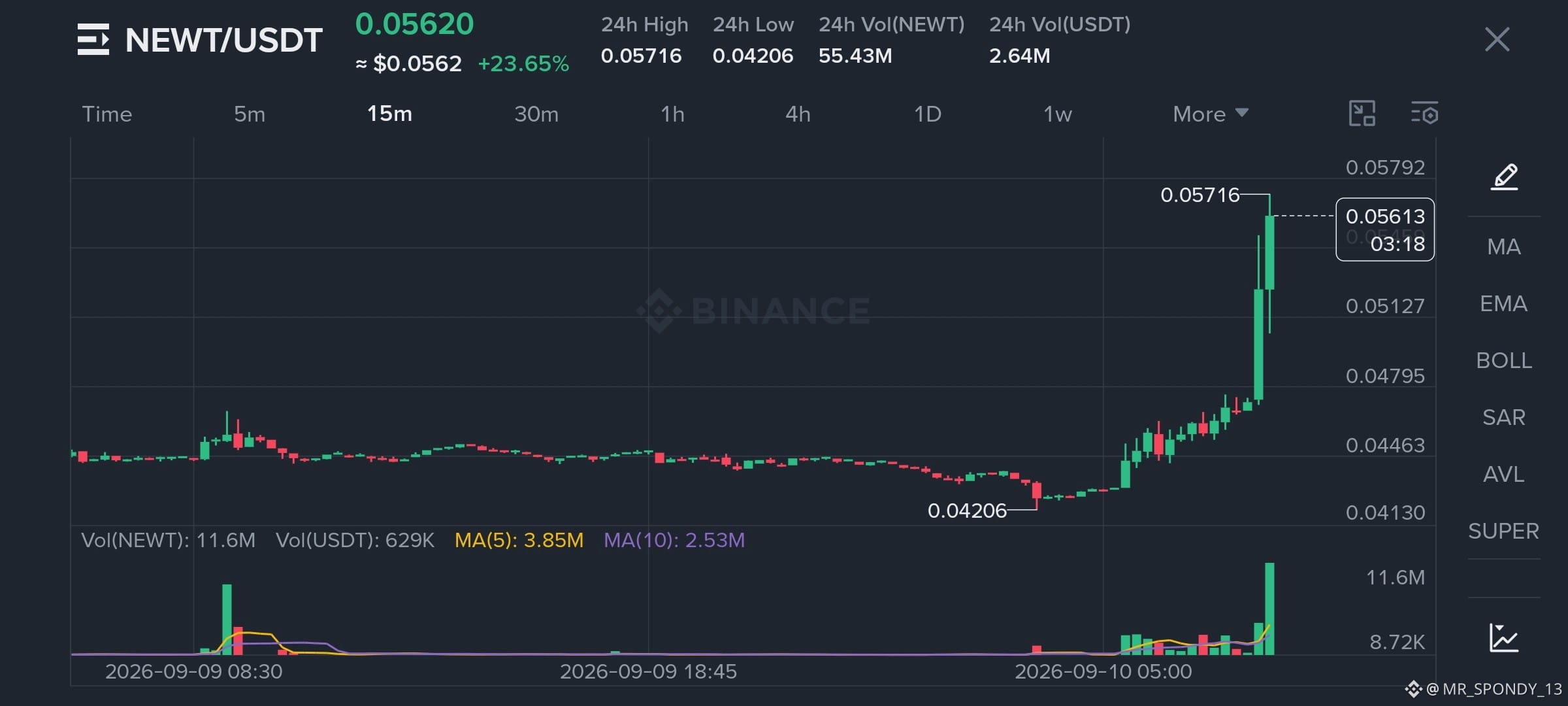
Newton Protocol is building an onchain authorization layer for DeFi, AI agents & compliance.
Support: $0.050–0.052
Resistance: $0.060 → $0.075
Breakout target: $0.09–0.10
Bullish case: $0.12+
Strong fundamentals, but DYOR.
#NEWT #NewtonProtocol
$NEWT
Newton Protocol is building an onchain authorization layer for DeFi, AI agents & compliance.
Support: $0.050–0.052
Resistance: $0.060 → $0.075
Breakout target: $0.09–0.10
Bullish case: $0.12+
Strong fundamentals, but DYOR.
#NEWT #NewtonProtocol
Newton Protocol is building an onchain authorization layer for DeFi, AI agents & compliance.
Support: $0.050–0.052
Resistance: $0.060 → $0.075
Breakout target: $0.09–0.10
Bullish case: $0.12+
Strong fundamentals, but DYOR.
#NEWT #NewtonProtocol
2
1
235

·
--
#newt $NEWT
@NewtonProtocol introduces a powerful pre-transaction authorization layer and policy engine. Instead of handling risks after the damage is done, it evaluates compliance, security, and risk parameters on-chain before execution.
This brings programmable transaction integrity directly to DeFi vaults and AI agents without requiring developers to rewrite their entire stack. Safe, decentralized automation is scaling up! 🔒💡
#newton #NewtonProtocol
$NEWT
{spot}(NEWTUSDT)
#newt $NEWT
@NewtonProtocol introduces a powerful pre-transaction authorization layer and policy engine. Instead of handling risks after the damage is done, it evaluates compliance, security, and risk parameters on-chain before execution.
This brings programmable transaction integrity directly to DeFi vaults and AI agents without requiring developers to rewrite their entire stack. Safe, decentralized automation is scaling up! 🔒💡
#newton #NewtonProtocol
$NEWT
@NewtonProtocol introduces a powerful pre-transaction authorization layer and policy engine. Instead of handling risks after the damage is done, it evaluates compliance, security, and risk parameters on-chain before execution.
This brings programmable transaction integrity directly to DeFi vaults and AI agents without requiring developers to rewrite their entire stack. Safe, decentralized automation is scaling up! 🔒💡
#newton #NewtonProtocol
$NEWT
100

·
--
#newt $NEWT
{future}(NEWTUSDT)
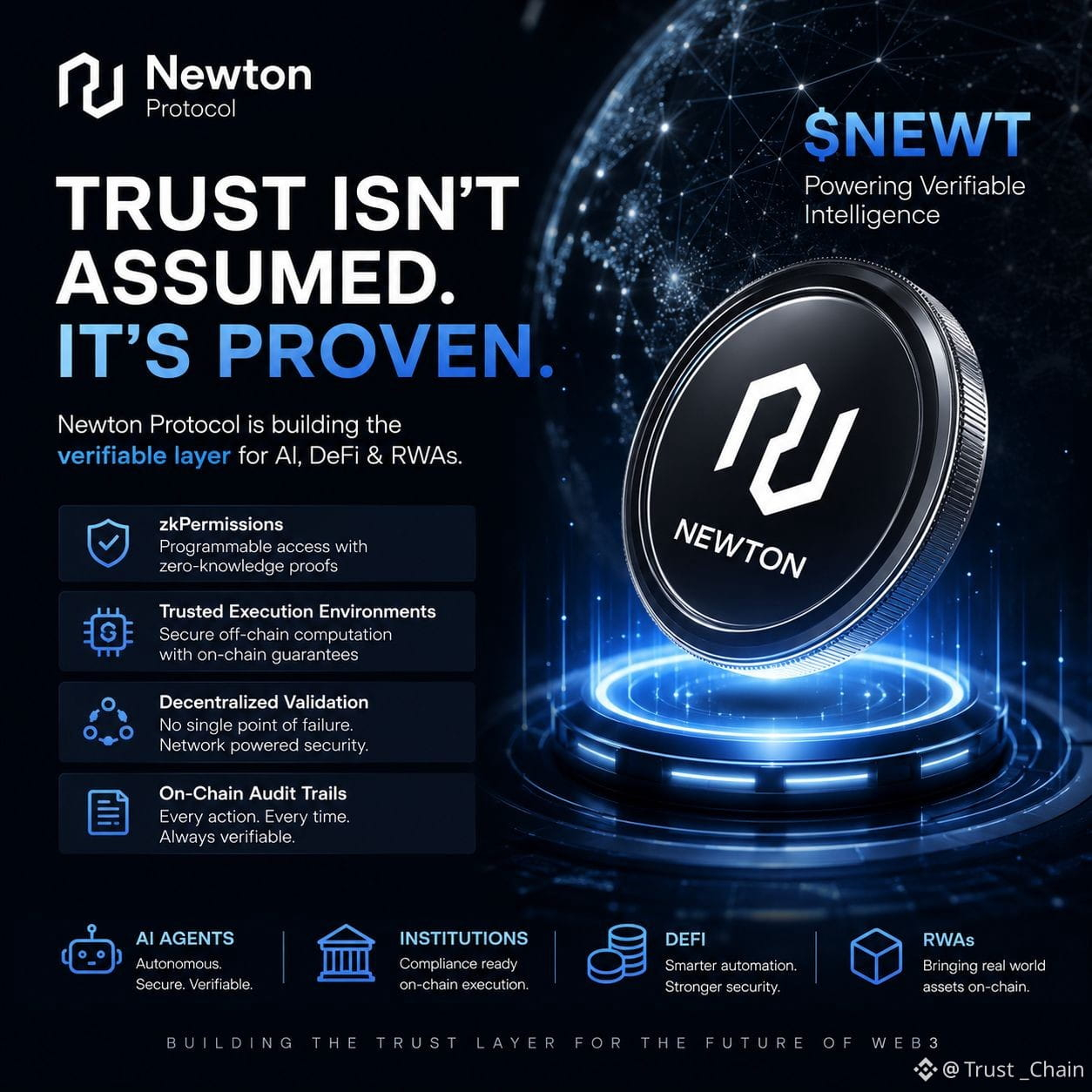
🚀 The next phase of Web3 won't be powered by AI alone. It will be powered by verifiable AI.
That's why I'm paying close attention to **Newton Protocol**.
$NEWT is building the decentralized policy layer that enables AI agents, RWAs, stablecoins, and institutions to execute on-chain actions with cryptographic proof, programmable permissions, and transparent auditability. Instead of asking users to trust automation, Newton makes every critical decision verifiable.
As the ecosystem continues to mature, the focus is clearly shifting from hype to infrastructure. Projects solving compliance, secure execution, and policy enforcement are becoming increasingly important, and Newton Protocol is positioning itself at the center of that evolution. Its architecture combines **zkPermissions, Trusted Execution Environments (TEEs), decentralized operators, and immutable on-chain audit trails** to make intelligent automation both secure and accountable.
I'm not just watching another token—I'm watching infrastructure that could help define the next generation of on-chain finance and autonomous AI.
The strongest narratives don't just follow the future.
**They build it.**
Bullish on the vision. 👀
$NEWT #Newt #NewtonProtocol @NewtonProtocol
#newt $NEWT
🚀 The next phase of Web3 won't be powered by AI alone. It will be powered by verifiable AI.
That's why I'm paying close attention to **Newton Protocol**.
$NEWT is building the decentralized policy layer that enables AI agents, RWAs, stablecoins, and institutions to execute on-chain actions with cryptographic proof, programmable permissions, and transparent auditability. Instead of asking users to trust automation, Newton makes every critical decision verifiable.
As the ecosystem continues to mature, the focus is clearly shifting from hype to infrastructure. Projects solving compliance, secure execution, and policy enforcement are becoming increasingly important, and Newton Protocol is positioning itself at the center of that evolution. Its architecture combines **zkPermissions, Trusted Execution Environments (TEEs), decentralized operators, and immutable on-chain audit trails** to make intelligent automation both secure and accountable.
I'm not just watching another token—I'm watching infrastructure that could help define the next generation of on-chain finance and autonomous AI.
The strongest narratives don't just follow the future.
**They build it.**
Bullish on the vision. 👀
$NEWT #Newt #NewtonProtocol @NewtonProtocol
🚀 The next phase of Web3 won't be powered by AI alone. It will be powered by verifiable AI.
That's why I'm paying close attention to **Newton Protocol**.
$NEWT is building the decentralized policy layer that enables AI agents, RWAs, stablecoins, and institutions to execute on-chain actions with cryptographic proof, programmable permissions, and transparent auditability. Instead of asking users to trust automation, Newton makes every critical decision verifiable.
As the ecosystem continues to mature, the focus is clearly shifting from hype to infrastructure. Projects solving compliance, secure execution, and policy enforcement are becoming increasingly important, and Newton Protocol is positioning itself at the center of that evolution. Its architecture combines **zkPermissions, Trusted Execution Environments (TEEs), decentralized operators, and immutable on-chain audit trails** to make intelligent automation both secure and accountable.
I'm not just watching another token—I'm watching infrastructure that could help define the next generation of on-chain finance and autonomous AI.
The strongest narratives don't just follow the future.
**They build it.**
Bullish on the vision. 👀
$NEWT #Newt #NewtonProtocol @NewtonProtocol
2
91

·
--
#newt $NEWT @NewtonProtocol
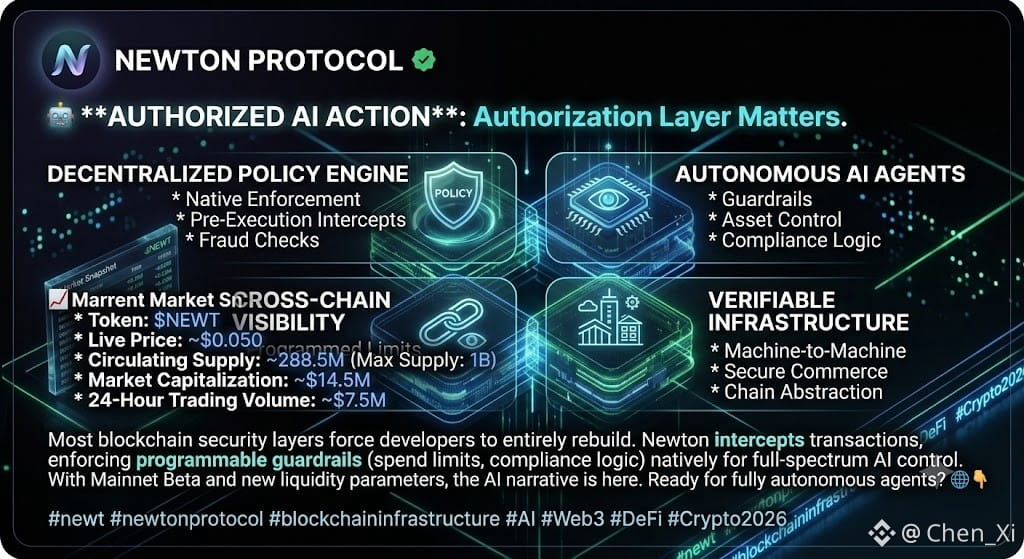
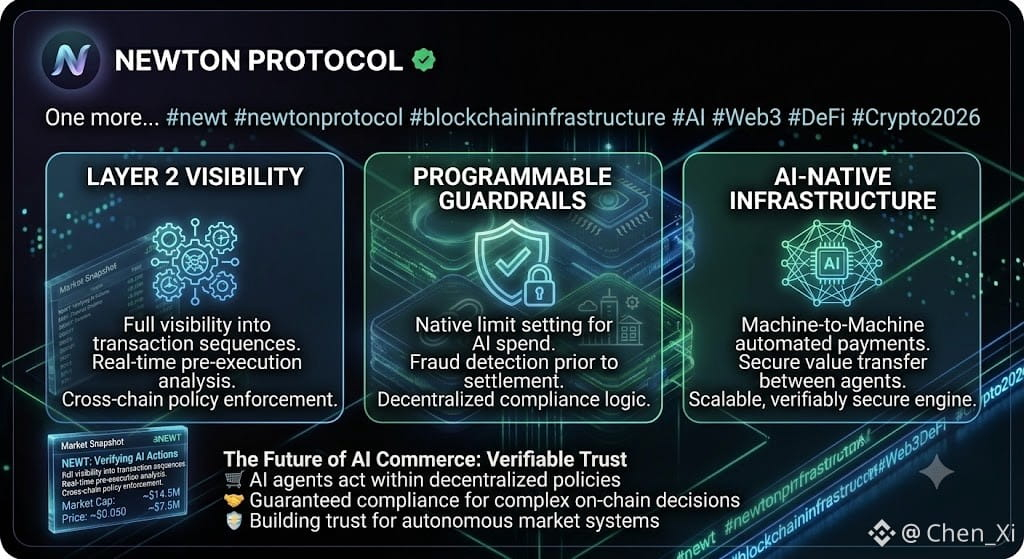
Most blockchain security layers force developers to entirely rebuild their stacks. Newton Protocol is tackling the infrastructure challenge differently: acting as a decentralized policy engine that intercepts transactions before execution.
Binance
As autonomous AI agents shift from managing simple portfolios to executing complex, cross-chain financial decisions, blind trust isn’t an option. Newton provides the programmable guardrails—enforcing spend limits, fraud checks, and compliance logic natively. It isn’t just about speed; it's about building verifiable infrastructure for machine-to-machine commerce.
Binance
+ 1
📈 Current Market Snapshot:
Token: $NEWT
Live Price: ~$0.050 USD
Binance
Circulating Supply: ~288.5M (Max Supply: 1B)
Binance
Market Capitalization: ~$14.5M
Binance
24-Hour Trading Volume: ~$7.5M
Binance
With its Mainnet Beta officially live and an upcoming collateral parameter adjustment scheduled for July 7 to boost protocol liquidity, the infrastructure narrative is heating up.
Binance
How do you view the future of AI-driven DeFi? Are we ready for fully autonomous on-chain agents? 🌐👇
#newt #newtonprotocol #BlockchainInfrastructure #AI
{future}(NEWTUSDT)
#newt $NEWT @NewtonProtocol
Most blockchain security layers force developers to entirely rebuild their stacks. Newton Protocol is tackling the infrastructure challenge differently: acting as a decentralized policy engine that intercepts transactions before execution.
Binance
As autonomous AI agents shift from managing simple portfolios to executing complex, cross-chain financial decisions, blind trust isn’t an option. Newton provides the programmable guardrails—enforcing spend limits, fraud checks, and compliance logic natively. It isn’t just about speed; it's about building verifiable infrastructure for machine-to-machine commerce.
Binance
+ 1
📈 Current Market Snapshot:
Token: $NEWT
Live Price: ~$0.050 USD
Binance
Circulating Supply: ~288.5M (Max Supply: 1B)
Binance
Market Capitalization: ~$14.5M
Binance
24-Hour Trading Volume: ~$7.5M
Binance
With its Mainnet Beta officially live and an upcoming collateral parameter adjustment scheduled for July 7 to boost protocol liquidity, the infrastructure narrative is heating up.
Binance
How do you view the future of AI-driven DeFi? Are we ready for fully autonomous on-chain agents? 🌐👇
#newt #newtonprotocol #BlockchainInfrastructure #AI
Most blockchain security layers force developers to entirely rebuild their stacks. Newton Protocol is tackling the infrastructure challenge differently: acting as a decentralized policy engine that intercepts transactions before execution.
Binance
As autonomous AI agents shift from managing simple portfolios to executing complex, cross-chain financial decisions, blind trust isn’t an option. Newton provides the programmable guardrails—enforcing spend limits, fraud checks, and compliance logic natively. It isn’t just about speed; it's about building verifiable infrastructure for machine-to-machine commerce.
Binance
+ 1
📈 Current Market Snapshot:
Token: $NEWT
Live Price: ~$0.050 USD
Binance
Circulating Supply: ~288.5M (Max Supply: 1B)
Binance
Market Capitalization: ~$14.5M
Binance
24-Hour Trading Volume: ~$7.5M
Binance
With its Mainnet Beta officially live and an upcoming collateral parameter adjustment scheduled for July 7 to boost protocol liquidity, the infrastructure narrative is heating up.
Binance
How do you view the future of AI-driven DeFi? Are we ready for fully autonomous on-chain agents? 🌐👇
#newt #newtonprotocol #BlockchainInfrastructure #AI
38
8
244

·
--
Newton Mainnet Beta 上线后一直在跑,最近看开发者频道讨论比较多的是它的链上授权逻辑。简单理解就是一个交易执行前的策略检查层——Vault 调策略链,Chainalysis 跑合规筛查、Hexagate 做安全检测、Credora 和 RedStone 对风险敞口,全部打包成链上可验证的 pass/fail 证明,结果直接上链存证。
这个思路其实跟传统清算所的 Pre-Trade Risk 很像,只是换到了链上跑。对 DeFi 金库来说,最大的痛点一直是风控碎片化——每个协议自己写一套规则、各自审计、各自维护,出了问题才追查。Newton 相当于把这一层标准化了,策略统一管理、执行留痕、链上公开可查。
团队是 Magic Labs 在做,57M+ 钱包、PayPal Ventures 背书,Polymarket 的钱包底层也是他们的。路线图从金库授权切入,后续往 RWA、稳定币、AI agent 方向扩展。$NEWT 是生态代币,主网 Beta 阶段,后续看市场怎么验证。
@NewtonProtocol
#NEWT #NewtonProtocol #AI
仅供信息参考,不构成投资建议。
Newton Mainnet Beta 上线后一直在跑,最近看开发者频道讨论比较多的是它的链上授权逻辑。简单理解就是一个交易执行前的策略检查层——Vault 调策略链,Chainalysis 跑合规筛查、Hexagate 做安全检测、Credora 和 RedStone 对风险敞口,全部打包成链上可验证的 pass/fail 证明,结果直接上链存证。
这个思路其实跟传统清算所的 Pre-Trade Risk 很像,只是换到了链上跑。对 DeFi 金库来说,最大的痛点一直是风控碎片化——每个协议自己写一套规则、各自审计、各自维护,出了问题才追查。Newton 相当于把这一层标准化了,策略统一管理、执行留痕、链上公开可查。
团队是 Magic Labs 在做,57M+ 钱包、PayPal Ventures 背书,Polymarket 的钱包底层也是他们的。路线图从金库授权切入,后续往 RWA、稳定币、AI agent 方向扩展。$NEWT 是生态代币,主网 Beta 阶段,后续看市场怎么验证。
@NewtonProtocol
#NEWT #NewtonProtocol #AI
仅供信息参考,不构成投资建议。
这个思路其实跟传统清算所的 Pre-Trade Risk 很像,只是换到了链上跑。对 DeFi 金库来说,最大的痛点一直是风控碎片化——每个协议自己写一套规则、各自审计、各自维护,出了问题才追查。Newton 相当于把这一层标准化了,策略统一管理、执行留痕、链上公开可查。
团队是 Magic Labs 在做,57M+ 钱包、PayPal Ventures 背书,Polymarket 的钱包底层也是他们的。路线图从金库授权切入,后续往 RWA、稳定币、AI agent 方向扩展。$NEWT 是生态代币,主网 Beta 阶段,后续看市场怎么验证。
@NewtonProtocol
#NEWT #NewtonProtocol #AI
仅供信息参考,不构成投资建议。
2
68
·
--
Vérifié
NEWT: supply, circulación inicial y utilidad en Newton ProtocolCon 1.000 millones de unidades en supply total y 215 millones en circulación inicial —el 21,5%—, $NEWT opera en un marco de oferta acotada dentro de un protocolo cuyo valor depende de la adopción de su capa de autorización onchain.
El token nativo de @NewtonProtocol , desarrollado por Magic Labs, reservó el 10% del supply para airdrop comunitario y cuenta con listado en Binance Alpha. Magic asegura la cuenta; Newton Protocol asegura la transacción: evalúa cada operación antes del settlement en Base y Ethereum con políticas programables y attestation BLS verificable.
El ecosistema Magic —más de 200.000 desarrolladores y 50 millones de wallets— distribuye la infraestructura; $NEWT articula governance e incentivos. Con Mainnet Beta operativa y VaultKit SDK para curators, la demanda de autorización onchain define la utilidad más allá del mercado secundario.
La Summer Earn Fiesta 2026 incluye NEWT Locked Products con hasta 29.9% APR como mecanismo de participación dentro de la campaña Binance vigente hasta diciembre.
#Newt #NewtonProtocol #Web3 #DeFi #CryptoAI
NEWT: supply, circulación inicial y utilidad en Newton Protocol
Con 1.000 millones de unidades en supply total y 215 millones en circulación inicial —el 21,5%—, $NEWT opera en un marco de oferta acotada dentro de un protocolo cuyo valor depende de la adopción de su capa de autorización onchain.
El token nativo de @NewtonProtocol , desarrollado por Magic Labs, reservó el 10% del supply para airdrop comunitario y cuenta con listado en Binance Alpha. Magic asegura la cuenta; Newton Protocol asegura la transacción: evalúa cada operación antes del settlement en Base y Ethereum con políticas programables y attestation BLS verificable.
El ecosistema Magic —más de 200.000 desarrolladores y 50 millones de wallets— distribuye la infraestructura; $NEWT articula governance e incentivos. Con Mainnet Beta operativa y VaultKit SDK para curators, la demanda de autorización onchain define la utilidad más allá del mercado secundario.
La Summer Earn Fiesta 2026 incluye NEWT Locked Products con hasta 29.9% APR como mecanismo de participación dentro de la campaña Binance vigente hasta diciembre.
#Newt #NewtonProtocol #Web3 #DeFi #CryptoAI
El token nativo de @NewtonProtocol , desarrollado por Magic Labs, reservó el 10% del supply para airdrop comunitario y cuenta con listado en Binance Alpha. Magic asegura la cuenta; Newton Protocol asegura la transacción: evalúa cada operación antes del settlement en Base y Ethereum con políticas programables y attestation BLS verificable.
El ecosistema Magic —más de 200.000 desarrolladores y 50 millones de wallets— distribuye la infraestructura; $NEWT articula governance e incentivos. Con Mainnet Beta operativa y VaultKit SDK para curators, la demanda de autorización onchain define la utilidad más allá del mercado secundario.
La Summer Earn Fiesta 2026 incluye NEWT Locked Products con hasta 29.9% APR como mecanismo de participación dentro de la campaña Binance vigente hasta diciembre.
#Newt #NewtonProtocol #Web3 #DeFi #CryptoAI
1
1
64
·
--
Haussier
En blockchain, los errores son permanentes. ¿Quién los previene antes de que ocurran?
Una de las realidades más duras de operar onchain es que las transacciones son irreversibles. No hay un botón de "deshacer". No hay un banco que te llame para confirmar si realmente querías mover esos fondos. Una vez ejecutada, la transacción existe para siempre en la cadena.
Esto funciona bien cuando el humano que aprieta el botón está atento y bien informado. Pero ¿qué pasa cuando quien ejecuta la transacción no es un humano, sino un agente automatizado o un bot de DeFi operando a velocidad de máquina, sin pausa, sin confirmación, sin verificación previa?
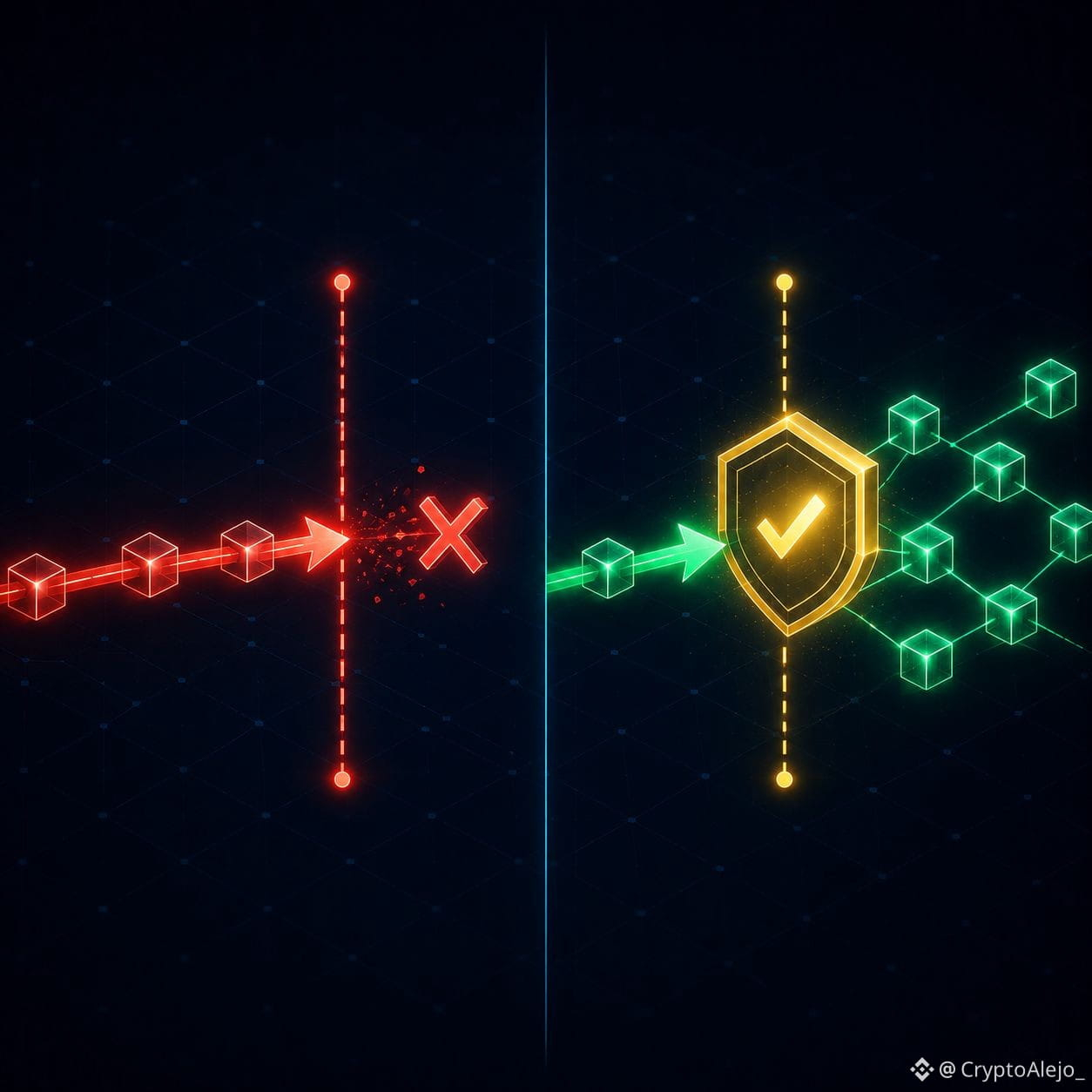
Ahí es exactamente donde @NewtonProtocol interviene con su Mainnet Beta: antes de que cualquier transacción automatizada se ejecute, una red descentralizada de operadores evalúa si esa acción cumple con las reglas que tú definiste. Si no cumple, la transacción no pasa. Sin excepción.
No se trata de ralentizar la automatización. Se trata de hacerla confiable. Porque en un sistema donde los errores son permanentes, la prevención no es opcional, es la única estrategia que tiene sentido.
$NEWT es el token que mantiene funcionando esta red de verificación descentralizada.
¿Alguna vez has visto una transacción automática salir mal onchain? ¿Cómo lo manejaste? Sígueme para más contenido como este. 🔔
@NewtonProtocol #Newt #NewtonProtocol #web3_binance #Binance
#newt $NEWT
En blockchain, los errores son permanentes. ¿Quién los previene antes de que ocurran?
Una de las realidades más duras de operar onchain es que las transacciones son irreversibles. No hay un botón de "deshacer". No hay un banco que te llame para confirmar si realmente querías mover esos fondos. Una vez ejecutada, la transacción existe para siempre en la cadena.
Esto funciona bien cuando el humano que aprieta el botón está atento y bien informado. Pero ¿qué pasa cuando quien ejecuta la transacción no es un humano, sino un agente automatizado o un bot de DeFi operando a velocidad de máquina, sin pausa, sin confirmación, sin verificación previa?
Ahí es exactamente donde @NewtonProtocol interviene con su Mainnet Beta: antes de que cualquier transacción automatizada se ejecute, una red descentralizada de operadores evalúa si esa acción cumple con las reglas que tú definiste. Si no cumple, la transacción no pasa. Sin excepción.
No se trata de ralentizar la automatización. Se trata de hacerla confiable. Porque en un sistema donde los errores son permanentes, la prevención no es opcional, es la única estrategia que tiene sentido.
$NEWT es el token que mantiene funcionando esta red de verificación descentralizada.
¿Alguna vez has visto una transacción automática salir mal onchain? ¿Cómo lo manejaste? Sígueme para más contenido como este. 🔔
@NewtonProtocol #Newt #NewtonProtocol #web3_binance #Binance
#newt $NEWT
Una de las realidades más duras de operar onchain es que las transacciones son irreversibles. No hay un botón de "deshacer". No hay un banco que te llame para confirmar si realmente querías mover esos fondos. Una vez ejecutada, la transacción existe para siempre en la cadena.
Esto funciona bien cuando el humano que aprieta el botón está atento y bien informado. Pero ¿qué pasa cuando quien ejecuta la transacción no es un humano, sino un agente automatizado o un bot de DeFi operando a velocidad de máquina, sin pausa, sin confirmación, sin verificación previa?
Ahí es exactamente donde @NewtonProtocol interviene con su Mainnet Beta: antes de que cualquier transacción automatizada se ejecute, una red descentralizada de operadores evalúa si esa acción cumple con las reglas que tú definiste. Si no cumple, la transacción no pasa. Sin excepción.
No se trata de ralentizar la automatización. Se trata de hacerla confiable. Porque en un sistema donde los errores son permanentes, la prevención no es opcional, es la única estrategia que tiene sentido.
$NEWT es el token que mantiene funcionando esta red de verificación descentralizada.
¿Alguna vez has visto una transacción automática salir mal onchain? ¿Cómo lo manejaste? Sígueme para más contenido como este. 🔔
@NewtonProtocol #Newt #NewtonProtocol #web3_binance #Binance
#newt $NEWT
2
83

·
--
#newt $NEWT
AI agents are already making financial decisions. Rebalancing portfolios. Executing recurring buys. Managing vault risk. Most of them run on centralized bots with no way to verify what actually happened or why.
That's the gap @NewtonProtocol sits in. Every agent action gets evaluated against programmable rules before it executes. Pass or fail there's a cryptographic receipt onchain either way.
Not "the agent said it followed the rules." Proof it did.
BeInCrypto just put Newton on their Institutional 100 list for Best On-Chain Finance Infrastructure. That's not a community vote. It's scored on institutional clientele and regulatory maturity.
The infrastructure for verifiable autonomous finance is being built right now. $NEWT is what powers it.
@NewtonProtocol
#Newt #NewtonProtocol
{spot}(NEWTUSDT)
#newt $NEWT
AI agents are already making financial decisions. Rebalancing portfolios. Executing recurring buys. Managing vault risk. Most of them run on centralized bots with no way to verify what actually happened or why.
That's the gap @NewtonProtocol sits in. Every agent action gets evaluated against programmable rules before it executes. Pass or fail there's a cryptographic receipt onchain either way.
Not "the agent said it followed the rules." Proof it did.
BeInCrypto just put Newton on their Institutional 100 list for Best On-Chain Finance Infrastructure. That's not a community vote. It's scored on institutional clientele and regulatory maturity.
The infrastructure for verifiable autonomous finance is being built right now. $NEWT is what powers it.
@NewtonProtocol
#Newt #NewtonProtocol
AI agents are already making financial decisions. Rebalancing portfolios. Executing recurring buys. Managing vault risk. Most of them run on centralized bots with no way to verify what actually happened or why.
That's the gap @NewtonProtocol sits in. Every agent action gets evaluated against programmable rules before it executes. Pass or fail there's a cryptographic receipt onchain either way.
Not "the agent said it followed the rules." Proof it did.
BeInCrypto just put Newton on their Institutional 100 list for Best On-Chain Finance Infrastructure. That's not a community vote. It's scored on institutional clientele and regulatory maturity.
The infrastructure for verifiable autonomous finance is being built right now. $NEWT is what powers it.
@NewtonProtocol
#Newt #NewtonProtocol
6
2
96
·
--
说一下 Newton Protocol 最近在 Dev 社区被讨论比较多的一点。
传统 DeFi 的风控基本上是这样:协议自己写规则、自己审计、自己维护,出了问题再追责。这种模式在 TVL 不高的时候问题不大,但当金库规模起来之后,全靠人工流程来跑合规和风控,效率和安全都跟不上。Newton 做的事情本质上就是把这一层标准化了——用一套链上执行的授权逻辑,在交易结算之前跑完合规筛查、安全检测、风险校验,输出一个链上可验证的 pass/fail 证明。@NewtonProtocol 把这个叫 onchain authorization layer,确实是一个被忽视的基建方向。
技术实现上,Newton 目前提供了 Vault SDK,把四个执行域(合规 Chainalysis、身份验证、安全 Hexagate、风险 Credora+RedStone)封装成标准化的策略接口。金库可以通过 SDK 直接集成,不需要自己写一遍风控逻辑。这种做法在 TradFi 里很常见——清算所和中央对手方就是做这事——但在链上确实是新东西。团队 Magic Labs 之前做了 5700 多万个嵌入式钱包,Polymarket 的钱包底层就是他们的,PayPal Ventures 也投了,工程能力有底。
从生态角度看,Newton 的第一个落地场景是 DeFi 金库授权,但路线图上的下一步是 RWA 和稳定币——这两个方向对合规审查的要求比 DeFi 更严,如果能跑通,增量空间是明显的。$NEWT 是代币,主网 Beta 阶段,后续看市场验证。
#NEWT #NewtonProtocol #AI
仅供信息参考,不构成投资建议。
说一下 Newton Protocol 最近在 Dev 社区被讨论比较多的一点。
传统 DeFi 的风控基本上是这样:协议自己写规则、自己审计、自己维护,出了问题再追责。这种模式在 TVL 不高的时候问题不大,但当金库规模起来之后,全靠人工流程来跑合规和风控,效率和安全都跟不上。Newton 做的事情本质上就是把这一层标准化了——用一套链上执行的授权逻辑,在交易结算之前跑完合规筛查、安全检测、风险校验,输出一个链上可验证的 pass/fail 证明。@NewtonProtocol 把这个叫 onchain authorization layer,确实是一个被忽视的基建方向。
技术实现上,Newton 目前提供了 Vault SDK,把四个执行域(合规 Chainalysis、身份验证、安全 Hexagate、风险 Credora+RedStone)封装成标准化的策略接口。金库可以通过 SDK 直接集成,不需要自己写一遍风控逻辑。这种做法在 TradFi 里很常见——清算所和中央对手方就是做这事——但在链上确实是新东西。团队 Magic Labs 之前做了 5700 多万个嵌入式钱包,Polymarket 的钱包底层就是他们的,PayPal Ventures 也投了,工程能力有底。
从生态角度看,Newton 的第一个落地场景是 DeFi 金库授权,但路线图上的下一步是 RWA 和稳定币——这两个方向对合规审查的要求比 DeFi 更严,如果能跑通,增量空间是明显的。$NEWT 是代币,主网 Beta 阶段,后续看市场验证。
#NEWT #NewtonProtocol #AI
仅供信息参考,不构成投资建议。
传统 DeFi 的风控基本上是这样:协议自己写规则、自己审计、自己维护,出了问题再追责。这种模式在 TVL 不高的时候问题不大,但当金库规模起来之后,全靠人工流程来跑合规和风控,效率和安全都跟不上。Newton 做的事情本质上就是把这一层标准化了——用一套链上执行的授权逻辑,在交易结算之前跑完合规筛查、安全检测、风险校验,输出一个链上可验证的 pass/fail 证明。@NewtonProtocol 把这个叫 onchain authorization layer,确实是一个被忽视的基建方向。
技术实现上,Newton 目前提供了 Vault SDK,把四个执行域(合规 Chainalysis、身份验证、安全 Hexagate、风险 Credora+RedStone)封装成标准化的策略接口。金库可以通过 SDK 直接集成,不需要自己写一遍风控逻辑。这种做法在 TradFi 里很常见——清算所和中央对手方就是做这事——但在链上确实是新东西。团队 Magic Labs 之前做了 5700 多万个嵌入式钱包,Polymarket 的钱包底层就是他们的,PayPal Ventures 也投了,工程能力有底。
从生态角度看,Newton 的第一个落地场景是 DeFi 金库授权,但路线图上的下一步是 RWA 和稳定币——这两个方向对合规审查的要求比 DeFi 更严,如果能跑通,增量空间是明显的。$NEWT 是代币,主网 Beta 阶段,后续看市场验证。
#NEWT #NewtonProtocol #AI
仅供信息参考,不构成投资建议。
36

🚀Découverte de Newton Protocol et de Newton Mainnet Beta !@NewtonProtocol NewtonProtocol construit une infrastructure Web3 innovante qui vise à rendre les applications décentralisées plus rapides, plus sécurisées et plus accessibles. Avec le lancement de Newton Mainnet Beta, le projet franchit une étape importante en offrant aux développeurs et aux utilisateurs un environnement performant pour explorer de nouvelles possibilités dans la blockchain.
Le token $NEWT joue un rôle essentiel dans l'écosystème en facilitant les interactions, la gouvernance et les récompenses. C'est un projet à suivre pour tous ceux qui s'intéressent à l'avenir de la finance décentralisée et des technologies blockchain.
Je suis impatient de découvrir les prochaines évolutions de @NewtonProtocol et de voir comment cette technologie contribuera à l'adoption du Web3 à grande échelle.
#Newt #NewtonProtocol #NEWT #Web3 #Blockchain #Crypto #DeFi
Tu peux copier ce texte et le publier sur Binance Square.
🚀Découverte de Newton Protocol et de Newton Mainnet Beta !
@NewtonProtocol NewtonProtocol construit une infrastructure Web3 innovante qui vise à rendre les applications décentralisées plus rapides, plus sécurisées et plus accessibles. Avec le lancement de Newton Mainnet Beta, le projet franchit une étape importante en offrant aux développeurs et aux utilisateurs un environnement performant pour explorer de nouvelles possibilités dans la blockchain.
Le token $NEWT joue un rôle essentiel dans l'écosystème en facilitant les interactions, la gouvernance et les récompenses. C'est un projet à suivre pour tous ceux qui s'intéressent à l'avenir de la finance décentralisée et des technologies blockchain.
Je suis impatient de découvrir les prochaines évolutions de @NewtonProtocol et de voir comment cette technologie contribuera à l'adoption du Web3 à grande échelle.
#Newt #NewtonProtocol #NEWT #Web3 #Blockchain #Crypto #DeFi
Tu peux copier ce texte et le publier sur Binance Square.
Le token $NEWT joue un rôle essentiel dans l'écosystème en facilitant les interactions, la gouvernance et les récompenses. C'est un projet à suivre pour tous ceux qui s'intéressent à l'avenir de la finance décentralisée et des technologies blockchain.
Je suis impatient de découvrir les prochaines évolutions de @NewtonProtocol et de voir comment cette technologie contribuera à l'adoption du Web3 à grande échelle.
#Newt #NewtonProtocol #NEWT #Web3 #Blockchain #Crypto #DeFi
Tu peux copier ce texte et le publier sur Binance Square.
57

·
--
Article
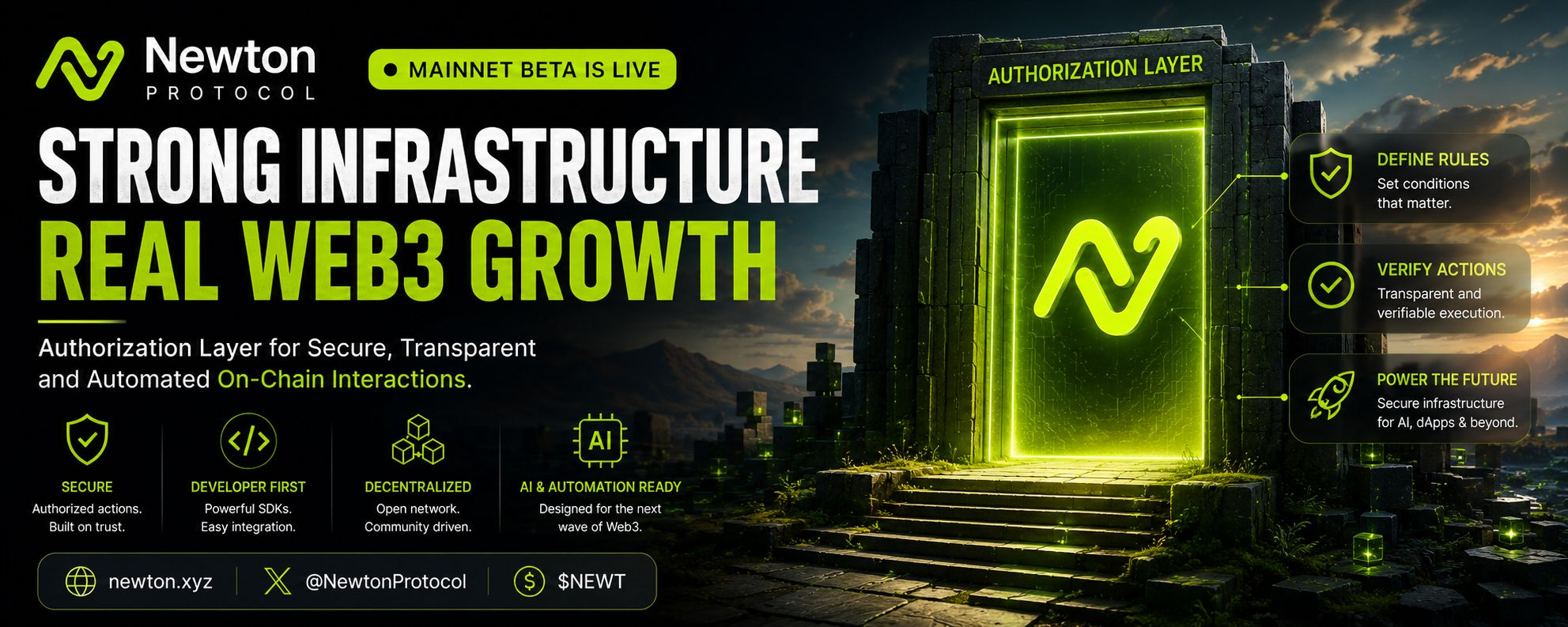
Why Infrastructure Projects Like Newton Protocol Deserve More AttentionWhen people talk about blockchain, the conversation usually revolves around token prices, market trends, or the latest narratives. While those topics are always interesting, I believe the real foundation of Web3 is the infrastructure that makes decentralized applications possible. Without strong infrastructure, even the best ideas struggle to scale.
This is one of the reasons I've been following @NewtonProtocol and its progress through the Newton Mainnet Beta.
For me, infrastructure is not the most exciting part of blockchain at first glance, but it is often the most important. Developers need reliable tools, secure frameworks, and flexible systems to build applications that people can trust. The stronger the foundation, the easier it becomes for innovation to happen on top of it.
What caught my attention about Newton Protocol is its focus on programmable authorization. As blockchain technology becomes more advanced and AI-powered applications become more common, defining how transactions and automated actions should be authorized could become increasingly valuable. Instead of thinking only about execution, it's interesting to see a project exploring how actions can be verified against predefined rules.
{spot}(NEWTUSDT)
The Newton Mainnet Beta is another reason I'm interested in following the ecosystem. A beta phase is where theory meets reality. Developers begin testing ideas, users provide valuable feedback, and the community helps identify improvements that strengthen the network over time. Every successful ecosystem goes through this stage before reaching broader adoption.
I also think that community participation is one of the biggest advantages of Web3. Builders, researchers, developers, and everyday users all contribute in different ways. Whether it's testing new features, sharing feedback, or creating useful applications, every contribution helps the ecosystem mature.
Another thing I appreciate is that long-term blockchain success usually comes from continuous development rather than short-term excitement. Projects that consistently improve their technology, listen to community feedback, and expand their developer ecosystem often create stronger foundations for the future.
As AI and blockchain continue moving closer together, secure infrastructure will likely become even more important. Automation creates exciting opportunities, but it also requires reliable systems that can define permissions, verify actions, and support transparent execution. Watching how Newton Protocol approaches these challenges will be interesting as the ecosystem continues to evolve.
I'm looking forward to following the next stage of the Newton Mainnet Beta and seeing how developers use the protocol to build new ideas. It will also be exciting to watch how community feedback shapes future updates and improvements.
What are your thoughts on infrastructure-focused blockchain projects? Do you think authorization layers could become an important part of the next generation of Web3?
@NewtonProtocol $NEWT #Newt #NewtonProtocol #MainnetBeta #Web3
Why Infrastructure Projects Like Newton Protocol Deserve More Attention
When people talk about blockchain, the conversation usually revolves around token prices, market trends, or the latest narratives. While those topics are always interesting, I believe the real foundation of Web3 is the infrastructure that makes decentralized applications possible. Without strong infrastructure, even the best ideas struggle to scale.
This is one of the reasons I've been following @NewtonProtocol and its progress through the Newton Mainnet Beta.
For me, infrastructure is not the most exciting part of blockchain at first glance, but it is often the most important. Developers need reliable tools, secure frameworks, and flexible systems to build applications that people can trust. The stronger the foundation, the easier it becomes for innovation to happen on top of it.
What caught my attention about Newton Protocol is its focus on programmable authorization. As blockchain technology becomes more advanced and AI-powered applications become more common, defining how transactions and automated actions should be authorized could become increasingly valuable. Instead of thinking only about execution, it's interesting to see a project exploring how actions can be verified against predefined rules.
The Newton Mainnet Beta is another reason I'm interested in following the ecosystem. A beta phase is where theory meets reality. Developers begin testing ideas, users provide valuable feedback, and the community helps identify improvements that strengthen the network over time. Every successful ecosystem goes through this stage before reaching broader adoption.
I also think that community participation is one of the biggest advantages of Web3. Builders, researchers, developers, and everyday users all contribute in different ways. Whether it's testing new features, sharing feedback, or creating useful applications, every contribution helps the ecosystem mature.
Another thing I appreciate is that long-term blockchain success usually comes from continuous development rather than short-term excitement. Projects that consistently improve their technology, listen to community feedback, and expand their developer ecosystem often create stronger foundations for the future.
As AI and blockchain continue moving closer together, secure infrastructure will likely become even more important. Automation creates exciting opportunities, but it also requires reliable systems that can define permissions, verify actions, and support transparent execution. Watching how Newton Protocol approaches these challenges will be interesting as the ecosystem continues to evolve.
I'm looking forward to following the next stage of the Newton Mainnet Beta and seeing how developers use the protocol to build new ideas. It will also be exciting to watch how community feedback shapes future updates and improvements.
What are your thoughts on infrastructure-focused blockchain projects? Do you think authorization layers could become an important part of the next generation of Web3?
@NewtonProtocol $NEWT #Newt #NewtonProtocol #MainnetBeta #Web3
This is one of the reasons I've been following @NewtonProtocol and its progress through the Newton Mainnet Beta.
For me, infrastructure is not the most exciting part of blockchain at first glance, but it is often the most important. Developers need reliable tools, secure frameworks, and flexible systems to build applications that people can trust. The stronger the foundation, the easier it becomes for innovation to happen on top of it.
What caught my attention about Newton Protocol is its focus on programmable authorization. As blockchain technology becomes more advanced and AI-powered applications become more common, defining how transactions and automated actions should be authorized could become increasingly valuable. Instead of thinking only about execution, it's interesting to see a project exploring how actions can be verified against predefined rules.
The Newton Mainnet Beta is another reason I'm interested in following the ecosystem. A beta phase is where theory meets reality. Developers begin testing ideas, users provide valuable feedback, and the community helps identify improvements that strengthen the network over time. Every successful ecosystem goes through this stage before reaching broader adoption.
I also think that community participation is one of the biggest advantages of Web3. Builders, researchers, developers, and everyday users all contribute in different ways. Whether it's testing new features, sharing feedback, or creating useful applications, every contribution helps the ecosystem mature.
Another thing I appreciate is that long-term blockchain success usually comes from continuous development rather than short-term excitement. Projects that consistently improve their technology, listen to community feedback, and expand their developer ecosystem often create stronger foundations for the future.
As AI and blockchain continue moving closer together, secure infrastructure will likely become even more important. Automation creates exciting opportunities, but it also requires reliable systems that can define permissions, verify actions, and support transparent execution. Watching how Newton Protocol approaches these challenges will be interesting as the ecosystem continues to evolve.
I'm looking forward to following the next stage of the Newton Mainnet Beta and seeing how developers use the protocol to build new ideas. It will also be exciting to watch how community feedback shapes future updates and improvements.
What are your thoughts on infrastructure-focused blockchain projects? Do you think authorization layers could become an important part of the next generation of Web3?
@NewtonProtocol $NEWT #Newt #NewtonProtocol #MainnetBeta #Web3
11
2
92
Article
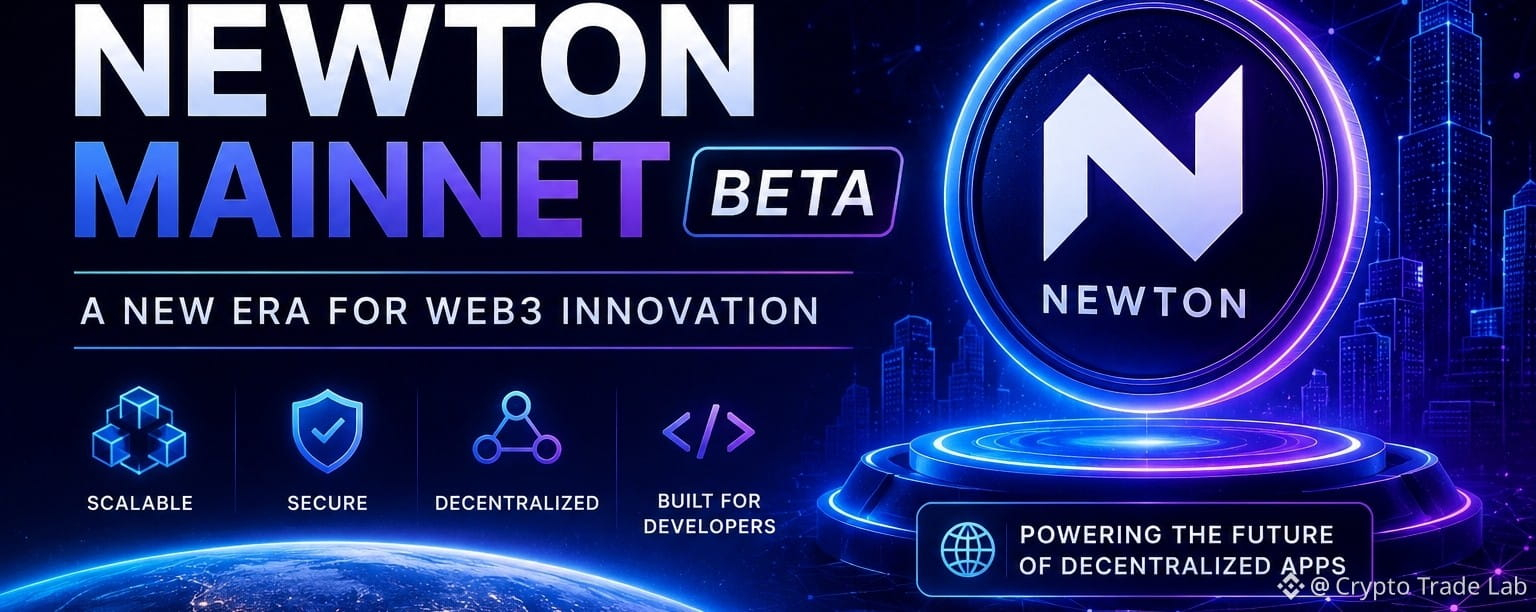
Newton Mainnet Beta: A New Chapter for Web3 InnovationThe launch of the Newton Mainnet Beta marks an exciting step forward for the Web3 ecosystem. I believe @NewtonProtocol is building a blockchain network that focuses on scalability, security, and decentralization while creating better opportunities for developers and users. A successful Mainnet Beta is more than just a technical upgrade—it allows the community to test the network, provide valuable feedback, and help strengthen the ecosystem before the full release.
One of the most interesting aspects of the Newton ecosystem is its commitment to continuous innovation. As more developers build decentralized applications and more users explore the network, the ecosystem has the potential to grow into a strong platform for real-world blockchain adoption. Community participation during the beta phase can also help improve network performance and reliability.
I look forward to seeing more innovation, partnerships, and developer activity around Newton Protocol in the future. Congratulations to the entire @NewtonProtocol team on reaching this important milestone. I wish continued success for the project and hope the $NEWT ecosystem continues to expand with more real-world use cases and a growing global community.
$NEWT
#Newt #NewtonProtocol #Web3 #Blockchain #BinanceSquare
Newton Mainnet Beta: A New Chapter for Web3 Innovation
The launch of the Newton Mainnet Beta marks an exciting step forward for the Web3 ecosystem. I believe @NewtonProtocol is building a blockchain network that focuses on scalability, security, and decentralization while creating better opportunities for developers and users. A successful Mainnet Beta is more than just a technical upgrade—it allows the community to test the network, provide valuable feedback, and help strengthen the ecosystem before the full release.
One of the most interesting aspects of the Newton ecosystem is its commitment to continuous innovation. As more developers build decentralized applications and more users explore the network, the ecosystem has the potential to grow into a strong platform for real-world blockchain adoption. Community participation during the beta phase can also help improve network performance and reliability.
I look forward to seeing more innovation, partnerships, and developer activity around Newton Protocol in the future. Congratulations to the entire @NewtonProtocol team on reaching this important milestone. I wish continued success for the project and hope the $NEWT ecosystem continues to expand with more real-world use cases and a growing global community.
$NEWT
#Newt #NewtonProtocol #Web3 #Blockchain #BinanceSquare
One of the most interesting aspects of the Newton ecosystem is its commitment to continuous innovation. As more developers build decentralized applications and more users explore the network, the ecosystem has the potential to grow into a strong platform for real-world blockchain adoption. Community participation during the beta phase can also help improve network performance and reliability.
I look forward to seeing more innovation, partnerships, and developer activity around Newton Protocol in the future. Congratulations to the entire @NewtonProtocol team on reaching this important milestone. I wish continued success for the project and hope the $NEWT ecosystem continues to expand with more real-world use cases and a growing global community.
$NEWT
#Newt #NewtonProtocol #Web3 #Blockchain #BinanceSquare
45

·
--
刺穿 $NEWT 的技术幻象:TEE硬件漏洞与崩盘的经济模型如何联手摧毁AI代理叙事作为一个在底层基础设施和量化高频交易领域摸爬滚打了十几年的老兵,我见过太多凭借新奇名词堆砌出来的“叙事级”白皮书。近期,Newton Protocol ($NEWT) 凭借“TEE加上ZKP实现可验证AI代理”的概念在二级市场备受追捧。官方宣发极具迷惑性:声称AI代理的每一步动作都在硬件飞地中执行,并生成零知识证明供链上智能合约独立验证。表面上看,这套逻辑严丝合缝,似乎完美解决了链下计算的信任问题。但只要你真正接触过工业级的节点运维,或者在真实商业环境中部署过基于密码学的共识系统,你就会发现,这套金玉其外的架构背后,掩盖着一个根本性的系统死角。
Newton协议的核心安全假设,完全建立在“TEE绝对安全”这一虚妄的前提之上。
首先,我们需要撕开TEE(可信执行环境)的“黑盒”伪装。Newton的AI代理运行在项目方或节点运营商的物理服务器上,而非去中心化的区块链状态机中。这种架构本质上是把安全命脉交给了硬件厂商的芯片隔离技术。然而,历史和学术界的真实数据早就把TEE的底裤扒得一干二净。以企业级机密计算架构为例,过去几年中,从利用微架构侧信道泄露数据的Foreshadow攻击,到通过控制处理器电压注入错误的Plundervolt攻击,再到近期直接从DDR5内存总线中嗅探并提取受保护私钥的物理级硬件破解(如TEE.fail),TEE的防线可以说是千疮百孔。
在Newton的架构下,一旦节点运营商的服务器遭到上述任何一种侧信道攻击,或者运营商本身就是内鬼,他们完全可以直接提取出硬件飞地中AI代理的最高控制权及钱包私钥。而在纯链上环境(如SVM或优化的EVM虚拟机)中,所有状态转换都是通过全网节点共识进行密码学确定性验证的,这种物理层面的单点故障根本不可能发生。
这就引出了第二个更为致命的逻辑陷阱:ZKP(零知识证明)在这里沦为了粉饰太平的工具。Newton宣称链上合约会验证ZKP,确保代理没有作恶。但从密码学原理来看,ZKP只能证明“特定的计算过程严格按照预设的电路逻辑执行了”,它绝对无法验证“输入系统的数据是否真实”,更无法验证“执行环境是否已经被底层劫持”。
换句话说,如果黑客攻破了TEE硬件,并在操作系统底层篡改了AI代理的输入指令或喂价数据,受污染的AI代理依然会在飞地内完成运算,并利用提取出的合法凭证,顺理成章地生成一份在数学上绝对正确、完美无缺的零知识证明。链上的验证合约只会像个瞎子一样,机械地核验通过。ZKP变成了伪造交易的帮凶,因为整个验证层对TEE黑盒内部发生的代码注入完全失明。这与真正将模型权重和计算过程全部进行哈希承诺并链上验证的纯粹zkML(零知识机器学习)方案有着云泥之别,Newton的方案充其量只是一个粗糙的硬件证明外壳。
技术防线的溃败往往伴随着经济模型的崩塌。去中心化协议的最后一道防线是加密经济学中的博弈机制,即作恶成本必须远大于作恶收益。Newton要求代理运营商抵押NEWT代币作为违规罚没的保证金。但残酷的市场数据直接宣判了这一机制的死刑。$BTC
回顾历史盘面,NEWT代币在2025年7月曾触及0.717美元的高点,而到了2026年6月,价格已经断崖式暴跌至0.049美元附近,整体跌幅超过百分之九十三。这种流动性枯竭带来的价值毁灭,彻底摧毁了抵押机制的威慑力。我们可以做一个简单的沙盘推演:一名在去年高点抵押了十万美元等值NEWT的节点运营商,如今其手中的保证金价值仅剩不到七千美元。如果该节点运行的AI代理掌握着一个价值五万美元的资金池或者高频交易权限,游戏规则就彻底改变了。在巨大的利益剪刀差面前,理性的经济人完全有强烈的动机去主动“攻破”自己的TEE服务器,劫持AI代理卷走五万美元,并坦然接受那区区七千美元的违约罚没。当保证金连用户潜在损失的零头都覆盖不住时,所谓的经济担保不过是一纸空文。
最令人毛骨悚然的细节,隐藏在安全审计报告的缺失中。作为一个立志于处理自动化金融和跨链资产调度的协议,Newton在CertiK平台上的代码安全评分仅为极为可怜的55分,更令人触目心惊的是,其安全审计状态明晃晃地标注着“None”(无审计)。在当今工业级的Web3安全标准下,任何承载真实商业价值的DeFi协议,其安全评分普遍维持在八十五分以上,并且必须配备多家具备顶级声誉的安全机构出具的详尽审计报告,甚至需要经过严苛的形式化验证。55分且无审计,通常意味着该协议的代码库中存在大量未被舍弃的管理员高权限后门、可随意篡改的代理合约,或者极为脆弱的中心化组件。将真金白银交给这样一个连基本代码安全底线都不愿遵守的草台班子,无异于在雷区中闭眼狂奔。
综上所述,Newton Protocol试图用一层华丽的AI与ZKP外衣,掩盖其将核心信任根茎建立在脆弱硬件之上的本质。物理级漏洞频发的TEE黑盒、形同虚设的单向ZKP验证、因代币暴跌而彻底失效的经济惩罚机制,以及毫无底线的代码安全标准,这四大致命缺陷共同构成了一个随时可能被引爆的火药桶。对于追求确定性与合规安全的量化机构和散户而言,必须认清一个常识:如果一个系统底层无法实现百分之百的密码学自证,那么它描绘的去中心化AI未来再宏大,也终究只是随时可能崩塌的空中楼阁。不要被伪极客叙事蒙蔽了双眼,在技术和资本的绞肉机里,黑盒里藏着的永远不是奇迹,而是待宰的镰刀。$NEWT
#Newt @NewtonProtocol #NewtonProtocol
刺穿 $NEWT 的技术幻象:TEE硬件漏洞与崩盘的经济模型如何联手摧毁AI代理叙事
作为一个在底层基础设施和量化高频交易领域摸爬滚打了十几年的老兵,我见过太多凭借新奇名词堆砌出来的“叙事级”白皮书。近期,Newton Protocol ($NEWT ) 凭借“TEE加上ZKP实现可验证AI代理”的概念在二级市场备受追捧。官方宣发极具迷惑性:声称AI代理的每一步动作都在硬件飞地中执行,并生成零知识证明供链上智能合约独立验证。表面上看,这套逻辑严丝合缝,似乎完美解决了链下计算的信任问题。但只要你真正接触过工业级的节点运维,或者在真实商业环境中部署过基于密码学的共识系统,你就会发现,这套金玉其外的架构背后,掩盖着一个根本性的系统死角。
Newton协议的核心安全假设,完全建立在“TEE绝对安全”这一虚妄的前提之上。
首先,我们需要撕开TEE(可信执行环境)的“黑盒”伪装。Newton的AI代理运行在项目方或节点运营商的物理服务器上,而非去中心化的区块链状态机中。这种架构本质上是把安全命脉交给了硬件厂商的芯片隔离技术。然而,历史和学术界的真实数据早就把TEE的底裤扒得一干二净。以企业级机密计算架构为例,过去几年中,从利用微架构侧信道泄露数据的Foreshadow攻击,到通过控制处理器电压注入错误的Plundervolt攻击,再到近期直接从DDR5内存总线中嗅探并提取受保护私钥的物理级硬件破解(如TEE.fail),TEE的防线可以说是千疮百孔。
在Newton的架构下,一旦节点运营商的服务器遭到上述任何一种侧信道攻击,或者运营商本身就是内鬼,他们完全可以直接提取出硬件飞地中AI代理的最高控制权及钱包私钥。而在纯链上环境(如SVM或优化的EVM虚拟机)中,所有状态转换都是通过全网节点共识进行密码学确定性验证的,这种物理层面的单点故障根本不可能发生。
这就引出了第二个更为致命的逻辑陷阱:ZKP(零知识证明)在这里沦为了粉饰太平的工具。Newton宣称链上合约会验证ZKP,确保代理没有作恶。但从密码学原理来看,ZKP只能证明“特定的计算过程严格按照预设的电路逻辑执行了”,它绝对无法验证“输入系统的数据是否真实”,更无法验证“执行环境是否已经被底层劫持”。
换句话说,如果黑客攻破了TEE硬件,并在操作系统底层篡改了AI代理的输入指令或喂价数据,受污染的AI代理依然会在飞地内完成运算,并利用提取出的合法凭证,顺理成章地生成一份在数学上绝对正确、完美无缺的零知识证明。链上的验证合约只会像个瞎子一样,机械地核验通过。ZKP变成了伪造交易的帮凶,因为整个验证层对TEE黑盒内部发生的代码注入完全失明。这与真正将模型权重和计算过程全部进行哈希承诺并链上验证的纯粹zkML(零知识机器学习)方案有着云泥之别,Newton的方案充其量只是一个粗糙的硬件证明外壳。
技术防线的溃败往往伴随着经济模型的崩塌。去中心化协议的最后一道防线是加密经济学中的博弈机制,即作恶成本必须远大于作恶收益。Newton要求代理运营商抵押NEWT代币作为违规罚没的保证金。但残酷的市场数据直接宣判了这一机制的死刑。$BTC
回顾历史盘面,NEWT代币在2025年7月曾触及0.717美元的高点,而到了2026年6月,价格已经断崖式暴跌至0.049美元附近,整体跌幅超过百分之九十三。这种流动性枯竭带来的价值毁灭,彻底摧毁了抵押机制的威慑力。我们可以做一个简单的沙盘推演:一名在去年高点抵押了十万美元等值NEWT的节点运营商,如今其手中的保证金价值仅剩不到七千美元。如果该节点运行的AI代理掌握着一个价值五万美元的资金池或者高频交易权限,游戏规则就彻底改变了。在巨大的利益剪刀差面前,理性的经济人完全有强烈的动机去主动“攻破”自己的TEE服务器,劫持AI代理卷走五万美元,并坦然接受那区区七千美元的违约罚没。当保证金连用户潜在损失的零头都覆盖不住时,所谓的经济担保不过是一纸空文。
最令人毛骨悚然的细节,隐藏在安全审计报告的缺失中。作为一个立志于处理自动化金融和跨链资产调度的协议,Newton在CertiK平台上的代码安全评分仅为极为可怜的55分,更令人触目心惊的是,其安全审计状态明晃晃地标注着“None”(无审计)。在当今工业级的Web3安全标准下,任何承载真实商业价值的DeFi协议,其安全评分普遍维持在八十五分以上,并且必须配备多家具备顶级声誉的安全机构出具的详尽审计报告,甚至需要经过严苛的形式化验证。55分且无审计,通常意味着该协议的代码库中存在大量未被舍弃的管理员高权限后门、可随意篡改的代理合约,或者极为脆弱的中心化组件。将真金白银交给这样一个连基本代码安全底线都不愿遵守的草台班子,无异于在雷区中闭眼狂奔。
综上所述,Newton Protocol试图用一层华丽的AI与ZKP外衣,掩盖其将核心信任根茎建立在脆弱硬件之上的本质。物理级漏洞频发的TEE黑盒、形同虚设的单向ZKP验证、因代币暴跌而彻底失效的经济惩罚机制,以及毫无底线的代码安全标准,这四大致命缺陷共同构成了一个随时可能被引爆的火药桶。对于追求确定性与合规安全的量化机构和散户而言,必须认清一个常识:如果一个系统底层无法实现百分之百的密码学自证,那么它描绘的去中心化AI未来再宏大,也终究只是随时可能崩塌的空中楼阁。不要被伪极客叙事蒙蔽了双眼,在技术和资本的绞肉机里,黑盒里藏着的永远不是奇迹,而是待宰的镰刀。$NEWT
#Newt @NewtonProtocol #NewtonProtocol
Newton协议的核心安全假设,完全建立在“TEE绝对安全”这一虚妄的前提之上。
首先,我们需要撕开TEE(可信执行环境)的“黑盒”伪装。Newton的AI代理运行在项目方或节点运营商的物理服务器上,而非去中心化的区块链状态机中。这种架构本质上是把安全命脉交给了硬件厂商的芯片隔离技术。然而,历史和学术界的真实数据早就把TEE的底裤扒得一干二净。以企业级机密计算架构为例,过去几年中,从利用微架构侧信道泄露数据的Foreshadow攻击,到通过控制处理器电压注入错误的Plundervolt攻击,再到近期直接从DDR5内存总线中嗅探并提取受保护私钥的物理级硬件破解(如TEE.fail),TEE的防线可以说是千疮百孔。
在Newton的架构下,一旦节点运营商的服务器遭到上述任何一种侧信道攻击,或者运营商本身就是内鬼,他们完全可以直接提取出硬件飞地中AI代理的最高控制权及钱包私钥。而在纯链上环境(如SVM或优化的EVM虚拟机)中,所有状态转换都是通过全网节点共识进行密码学确定性验证的,这种物理层面的单点故障根本不可能发生。
这就引出了第二个更为致命的逻辑陷阱:ZKP(零知识证明)在这里沦为了粉饰太平的工具。Newton宣称链上合约会验证ZKP,确保代理没有作恶。但从密码学原理来看,ZKP只能证明“特定的计算过程严格按照预设的电路逻辑执行了”,它绝对无法验证“输入系统的数据是否真实”,更无法验证“执行环境是否已经被底层劫持”。
换句话说,如果黑客攻破了TEE硬件,并在操作系统底层篡改了AI代理的输入指令或喂价数据,受污染的AI代理依然会在飞地内完成运算,并利用提取出的合法凭证,顺理成章地生成一份在数学上绝对正确、完美无缺的零知识证明。链上的验证合约只会像个瞎子一样,机械地核验通过。ZKP变成了伪造交易的帮凶,因为整个验证层对TEE黑盒内部发生的代码注入完全失明。这与真正将模型权重和计算过程全部进行哈希承诺并链上验证的纯粹zkML(零知识机器学习)方案有着云泥之别,Newton的方案充其量只是一个粗糙的硬件证明外壳。
技术防线的溃败往往伴随着经济模型的崩塌。去中心化协议的最后一道防线是加密经济学中的博弈机制,即作恶成本必须远大于作恶收益。Newton要求代理运营商抵押NEWT代币作为违规罚没的保证金。但残酷的市场数据直接宣判了这一机制的死刑。$BTC
回顾历史盘面,NEWT代币在2025年7月曾触及0.717美元的高点,而到了2026年6月,价格已经断崖式暴跌至0.049美元附近,整体跌幅超过百分之九十三。这种流动性枯竭带来的价值毁灭,彻底摧毁了抵押机制的威慑力。我们可以做一个简单的沙盘推演:一名在去年高点抵押了十万美元等值NEWT的节点运营商,如今其手中的保证金价值仅剩不到七千美元。如果该节点运行的AI代理掌握着一个价值五万美元的资金池或者高频交易权限,游戏规则就彻底改变了。在巨大的利益剪刀差面前,理性的经济人完全有强烈的动机去主动“攻破”自己的TEE服务器,劫持AI代理卷走五万美元,并坦然接受那区区七千美元的违约罚没。当保证金连用户潜在损失的零头都覆盖不住时,所谓的经济担保不过是一纸空文。
最令人毛骨悚然的细节,隐藏在安全审计报告的缺失中。作为一个立志于处理自动化金融和跨链资产调度的协议,Newton在CertiK平台上的代码安全评分仅为极为可怜的55分,更令人触目心惊的是,其安全审计状态明晃晃地标注着“None”(无审计)。在当今工业级的Web3安全标准下,任何承载真实商业价值的DeFi协议,其安全评分普遍维持在八十五分以上,并且必须配备多家具备顶级声誉的安全机构出具的详尽审计报告,甚至需要经过严苛的形式化验证。55分且无审计,通常意味着该协议的代码库中存在大量未被舍弃的管理员高权限后门、可随意篡改的代理合约,或者极为脆弱的中心化组件。将真金白银交给这样一个连基本代码安全底线都不愿遵守的草台班子,无异于在雷区中闭眼狂奔。
综上所述,Newton Protocol试图用一层华丽的AI与ZKP外衣,掩盖其将核心信任根茎建立在脆弱硬件之上的本质。物理级漏洞频发的TEE黑盒、形同虚设的单向ZKP验证、因代币暴跌而彻底失效的经济惩罚机制,以及毫无底线的代码安全标准,这四大致命缺陷共同构成了一个随时可能被引爆的火药桶。对于追求确定性与合规安全的量化机构和散户而言,必须认清一个常识:如果一个系统底层无法实现百分之百的密码学自证,那么它描绘的去中心化AI未来再宏大,也终究只是随时可能崩塌的空中楼阁。不要被伪极客叙事蒙蔽了双眼,在技术和资本的绞肉机里,黑盒里藏着的永远不是奇迹,而是待宰的镰刀。$NEWT
#Newt @NewtonProtocol #NewtonProtocol
134

·
--
Haussier
#newt $NEWT What is Newton Protocol?
Newton Protocol $NEWT is a Web3 infrastructure project focused on decentralized automation, smart account execution, and AI-powered on-chain actions. It aims to make blockchain interactions simpler, faster, and more secure.
#Newtonprotocol $NEWT
#newt $NEWT What is Newton Protocol?
Newton Protocol $NEWT is a Web3 infrastructure project focused on decentralized automation, smart account execution, and AI-powered on-chain actions. It aims to make blockchain interactions simpler, faster, and more secure.
#Newtonprotocol $NEWT
Newton Protocol $NEWT is a Web3 infrastructure project focused on decentralized automation, smart account execution, and AI-powered on-chain actions. It aims to make blockchain interactions simpler, faster, and more secure.
#Newtonprotocol $NEWT
84

Newton Mainnet Beta: A Major Step Toward Smarter Web3 AutomationThe launch of the Newton Mainnet Beta is an exciting development for the blockchain ecosystem and a meaningful step toward making decentralized technology easier to use. @NewtonProtocol is focused on building an infrastructure that enables secure, transparent, and intelligent on-chain automation. Rather than requiring users to manually perform every blockchain action, the protocol aims to simplify interactions while keeping users in control of their assets and permissions.
One of the most promising aspects of Newton Mainnet Beta is the opportunity for developers and community members to test real-world applications, identify improvements, and help shape the future of the network. This collaborative approach is essential for building a reliable and scalable ecosystem that can support next-generation decentralized applications.
The $NEWT token is an important part of the Newton ecosystem, supporting participation and long-term ecosystem development. As the network continues to evolve, community feedback and active engagement during the beta phase will play a key role in strengthening the protocol.
I believe projects that focus on practical blockchain automation have the potential to improve the overall Web3 experience. Newton Protocol's vision of combining automation with transparency and user security makes it a project worth following. I'm looking forward to seeing how the Mainnet Beta grows and how the community contributes to its success.#NewtonProtocol
#NEWT
#Newt
Newton Mainnet Beta: A Major Step Toward Smarter Web3 Automation
The launch of the Newton Mainnet Beta is an exciting development for the blockchain ecosystem and a meaningful step toward making decentralized technology easier to use. @NewtonProtocol is focused on building an infrastructure that enables secure, transparent, and intelligent on-chain automation. Rather than requiring users to manually perform every blockchain action, the protocol aims to simplify interactions while keeping users in control of their assets and permissions.
One of the most promising aspects of Newton Mainnet Beta is the opportunity for developers and community members to test real-world applications, identify improvements, and help shape the future of the network. This collaborative approach is essential for building a reliable and scalable ecosystem that can support next-generation decentralized applications.
The $NEWT token is an important part of the Newton ecosystem, supporting participation and long-term ecosystem development. As the network continues to evolve, community feedback and active engagement during the beta phase will play a key role in strengthening the protocol.
I believe projects that focus on practical blockchain automation have the potential to improve the overall Web3 experience. Newton Protocol's vision of combining automation with transparency and user security makes it a project worth following. I'm looking forward to seeing how the Mainnet Beta grows and how the community contributes to its success.#NewtonProtocol
#NEWT
#Newt
One of the most promising aspects of Newton Mainnet Beta is the opportunity for developers and community members to test real-world applications, identify improvements, and help shape the future of the network. This collaborative approach is essential for building a reliable and scalable ecosystem that can support next-generation decentralized applications.
The $NEWT token is an important part of the Newton ecosystem, supporting participation and long-term ecosystem development. As the network continues to evolve, community feedback and active engagement during the beta phase will play a key role in strengthening the protocol.
I believe projects that focus on practical blockchain automation have the potential to improve the overall Web3 experience. Newton Protocol's vision of combining automation with transparency and user security makes it a project worth following. I'm looking forward to seeing how the Mainnet Beta grows and how the community contributes to its success.#NewtonProtocol
#NEWT
#Newt
47

用心构建Web3未来:为什么牛顿主网 Newton Mainnet Beta 值得关注在如今这个快节奏、动辄拼机构叙事和高估值的加密市场中,我们见过太多冷冰冰的代码和高高在上的技术白皮书。但在深入研究了 @NewtonProtocol 之后,我真切地感受到了一种久违的、以人为本的“人情味”。这种独特的温度和社区凝聚力,不仅体现在他们扎实的生态建设上,更全面体现在近期备受瞩目的 Newton Mainnet Beta(牛顿主网 Beta版)的重磅上线中。投资一个项目,过去大家总是在看冰冷的K线,而忽略了技术落地后真正能给普通用户带来什么。Newton Protocol 从诞生之初,其核心愿景就是打造一个人人皆可参与、人人跨界受益的价值网络。这次的 Newton Mainnet Beta 上线,绝非单纯的技术代码迭代,而是将宏大的 Web3 愿景真正变成了散户和社区家人们看得见、摸得着的实际交互体验。在亲自参与测试和网络交互的过程中,你能明显感觉到网络的丝滑程度以及项目方对生态用户的诚意,这种踏实做事的风格在如今浮躁的币圈显得尤为珍贵。正如其生态代币 $NEWT 所承载的期待一样,它不仅仅是一个在交易所闪烁的交易代码,更是凝聚全球牛顿社区共识的纽带。当一个项目方愿意把高高在上的技术拉平,用最接地气、最重视社区反馈的态度去推进主网建设时,这就是最核心的长期利好。#Newt 的核心魅力在于,它打破了传统区块链项目由机构和VC独大、普通散户只能被动接盘的内卷僵局。在这里,每一个自发做宣发、深夜参与交互测试、在社区提出中肯建议的普通投资者,都是主网生态的共同建设者。这种纯粹的散户抱团与高度的社区共识,才是推动代币长期价值爆发的最强发动机。如果你也厌倦了市场上那些只靠热度炒作、割一把就走的短线项目,不妨现在就打开钱包,把视线投向正在蓄势待发的 @NewtonProtocol 。让我们一起陪伴 Newton Mainnet Beta 的后续成长,拿一份能承受的闲钱埋伏 $NEWT ,在这个充满温度的社区里,共同见证属于我们普通人的共识奇迹!#Newt Newt $NEWT #NewtonProtocol #NewtonMainnetBeta #BinanceSquare
用心构建Web3未来:为什么牛顿主网 Newton Mainnet Beta 值得关注
在如今这个快节奏、动辄拼机构叙事和高估值的加密市场中,我们见过太多冷冰冰的代码和高高在上的技术白皮书。但在深入研究了 @NewtonProtocol 之后,我真切地感受到了一种久违的、以人为本的“人情味”。这种独特的温度和社区凝聚力,不仅体现在他们扎实的生态建设上,更全面体现在近期备受瞩目的 Newton Mainnet Beta(牛顿主网 Beta版)的重磅上线中。投资一个项目,过去大家总是在看冰冷的K线,而忽略了技术落地后真正能给普通用户带来什么。Newton Protocol 从诞生之初,其核心愿景就是打造一个人人皆可参与、人人跨界受益的价值网络。这次的 Newton Mainnet Beta 上线,绝非单纯的技术代码迭代,而是将宏大的 Web3 愿景真正变成了散户和社区家人们看得见、摸得着的实际交互体验。在亲自参与测试和网络交互的过程中,你能明显感觉到网络的丝滑程度以及项目方对生态用户的诚意,这种踏实做事的风格在如今浮躁的币圈显得尤为珍贵。正如其生态代币 $NEWT 所承载的期待一样,它不仅仅是一个在交易所闪烁的交易代码,更是凝聚全球牛顿社区共识的纽带。当一个项目方愿意把高高在上的技术拉平,用最接地气、最重视社区反馈的态度去推进主网建设时,这就是最核心的长期利好。#Newt 的核心魅力在于,它打破了传统区块链项目由机构和VC独大、普通散户只能被动接盘的内卷僵局。在这里,每一个自发做宣发、深夜参与交互测试、在社区提出中肯建议的普通投资者,都是主网生态的共同建设者。这种纯粹的散户抱团与高度的社区共识,才是推动代币长期价值爆发的最强发动机。如果你也厌倦了市场上那些只靠热度炒作、割一把就走的短线项目,不妨现在就打开钱包,把视线投向正在蓄势待发的 @NewtonProtocol 。让我们一起陪伴 Newton Mainnet Beta 的后续成长,拿一份能承受的闲钱埋伏 $NEWT ,在这个充满温度的社区里,共同见证属于我们普通人的共识奇迹!#Newt Newt $NEWT #NewtonProtocol #NewtonMainnetBeta #BinanceSquare
1
42

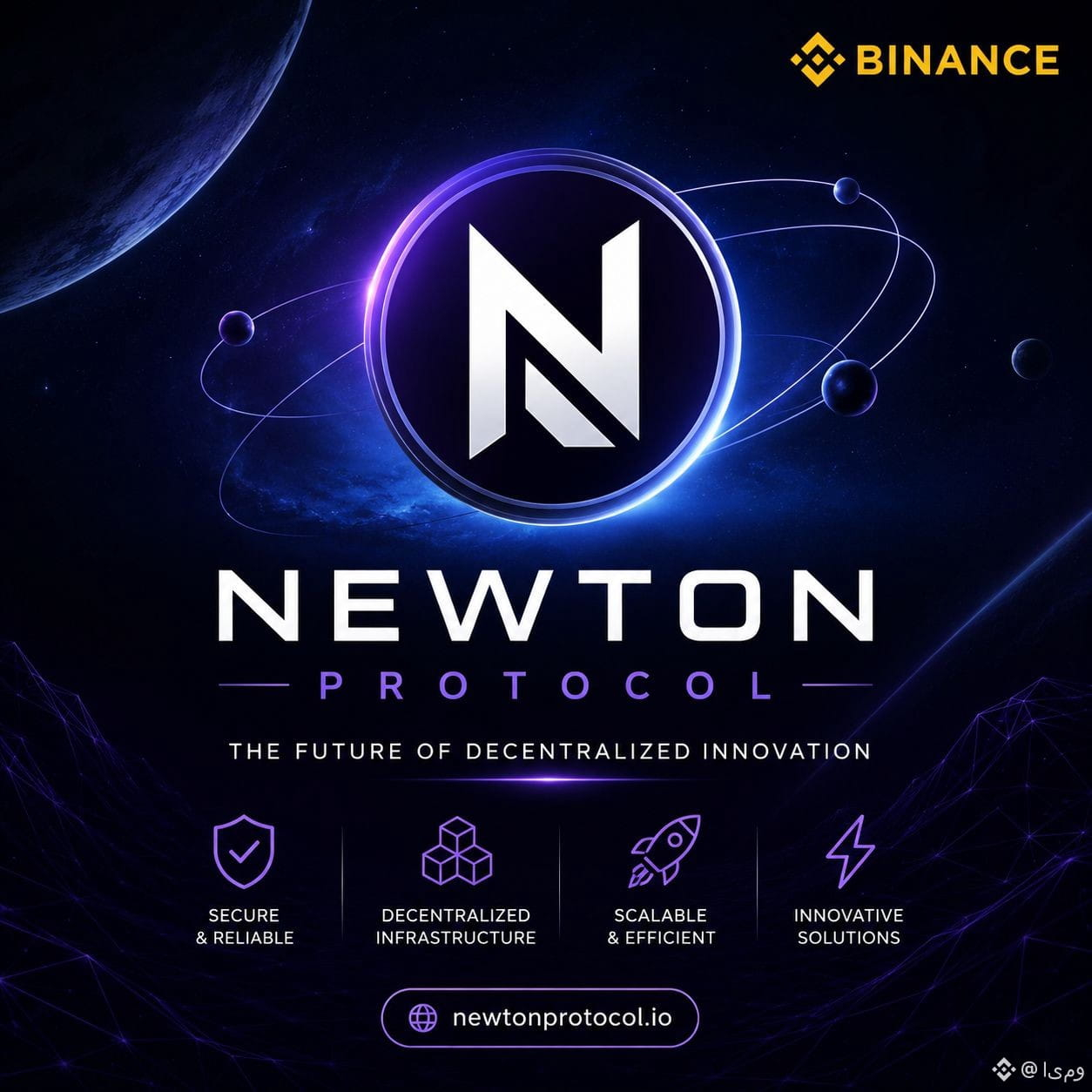
🚀 Newton Protocol is gaining strong momentum in the crypto market
As blockchain innovation continues to evolve, Newton Protocol is attracting increasing attention from traders and investors looking for promising opportunities. With growing community support, expanding ecosystem development, and rising market interest, this project is becoming one to watch. Always stay updated with the latest market trends, manage your risk wisely, and make informed trading decisions. Whether you're a beginner or an experienced trader, keeping an eye on emerging projects like Newton Protocol can help you stay ahead in the fast-moving crypto space. 📈
#NewtonProtocol #BİNANCE #blockchain #Trading #web3兼职
🚀 Newton Protocol is gaining strong momentum in the crypto market
As blockchain innovation continues to evolve, Newton Protocol is attracting increasing attention from traders and investors looking for promising opportunities. With growing community support, expanding ecosystem development, and rising market interest, this project is becoming one to watch. Always stay updated with the latest market trends, manage your risk wisely, and make informed trading decisions. Whether you're a beginner or an experienced trader, keeping an eye on emerging projects like Newton Protocol can help you stay ahead in the fast-moving crypto space. 📈
#NewtonProtocol #BİNANCE #blockchain #Trading #web3兼职
As blockchain innovation continues to evolve, Newton Protocol is attracting increasing attention from traders and investors looking for promising opportunities. With growing community support, expanding ecosystem development, and rising market interest, this project is becoming one to watch. Always stay updated with the latest market trends, manage your risk wisely, and make informed trading decisions. Whether you're a beginner or an experienced trader, keeping an eye on emerging projects like Newton Protocol can help you stay ahead in the fast-moving crypto space. 📈
#NewtonProtocol #BİNANCE #blockchain #Trading #web3兼职
31

·
--
Exploring Newton Mainnet Beta: How @NewtonProtocol Is Strengthening Blockchain Innovation, CommunityThe launch and continued development of the Newton Mainnet Beta represent an important milestone for @NewtonProtocol and its growing community. A successful mainnet beta is more than just a technical release—it is an opportunity to test network performance, improve stability, gather valuable user feedback, and strengthen the overall ecosystem before wider adoption.
One of the most exciting aspects of the Newton Mainnet Beta is the chance for developers, validators, and community members to actively participate in building the future of the network. Community testing helps identify potential improvements, while developer engagement can lead to innovative applications that showcase the capabilities of the protocol.
As the ecosystem continues to evolve, transparency, collaboration, and continuous improvement will play a key role in long-term success. Every contribution, whether through testing, feedback, or ecosystem development, helps make the network stronger and more reliable.
I'm looking forward to following the progress of @NewtonProtocol as the Mainnet Beta expands and new features become available. Wishing the team continued success in building a secure, scalable, and community-driven blockchain ecosystem. The future looks promising, and I'm excited to watch the project continue to grow alongside its community.
$NEWT #NewtonProtocol
Exploring Newton Mainnet Beta: How @NewtonProtocol Is Strengthening Blockchain Innovation, Community
The launch and continued development of the Newton Mainnet Beta represent an important milestone for @NewtonProtocol and its growing community. A successful mainnet beta is more than just a technical release—it is an opportunity to test network performance, improve stability, gather valuable user feedback, and strengthen the overall ecosystem before wider adoption.
One of the most exciting aspects of the Newton Mainnet Beta is the chance for developers, validators, and community members to actively participate in building the future of the network. Community testing helps identify potential improvements, while developer engagement can lead to innovative applications that showcase the capabilities of the protocol.
As the ecosystem continues to evolve, transparency, collaboration, and continuous improvement will play a key role in long-term success. Every contribution, whether through testing, feedback, or ecosystem development, helps make the network stronger and more reliable.
I'm looking forward to following the progress of @NewtonProtocol as the Mainnet Beta expands and new features become available. Wishing the team continued success in building a secure, scalable, and community-driven blockchain ecosystem. The future looks promising, and I'm excited to watch the project continue to grow alongside its community.
$NEWT #NewtonProtocol
One of the most exciting aspects of the Newton Mainnet Beta is the chance for developers, validators, and community members to actively participate in building the future of the network. Community testing helps identify potential improvements, while developer engagement can lead to innovative applications that showcase the capabilities of the protocol.
As the ecosystem continues to evolve, transparency, collaboration, and continuous improvement will play a key role in long-term success. Every contribution, whether through testing, feedback, or ecosystem development, helps make the network stronger and more reliable.
I'm looking forward to following the progress of @NewtonProtocol as the Mainnet Beta expands and new features become available. Wishing the team continued success in building a secure, scalable, and community-driven blockchain ecosystem. The future looks promising, and I'm excited to watch the project continue to grow alongside its community.
$NEWT #NewtonProtocol
65

·
--
Article
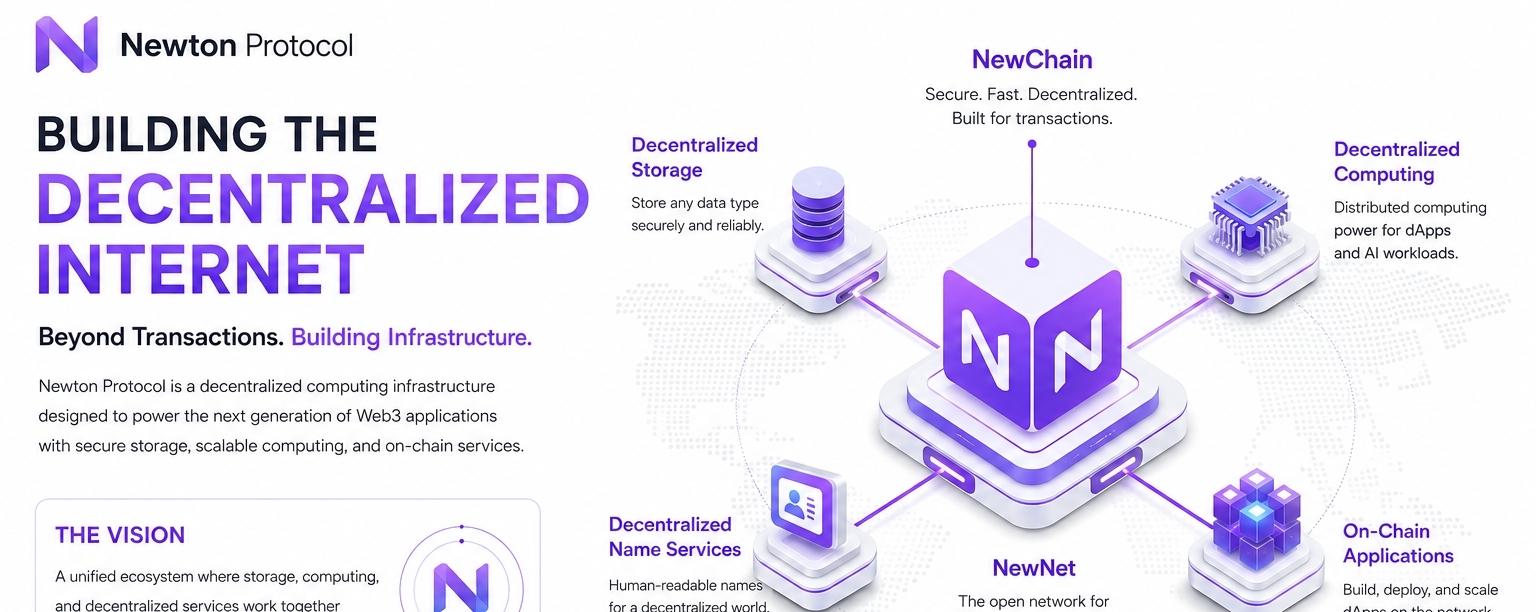
Why Infrastructure Will Define the Next Phase of Web3: My Thoughts on @Newton protocolThe more I study blockchain infrastructure, the more I believe the next wave of innovation won't be driven by faster transactions alone. Real adoption requires networks that can also handle storage, computation, and decentralized services without relying on centralized providers. That's one of the reasons @NewtonProtocol has caught my attention.
Most blockchains were designed primarily to record transactions and maintain consensus. While this has enabled decentralized finance and digital asset ownership, modern applications demand much more. They need reliable data storage, scalable computing resources, decentralized identity, and seamless user experiences. These are the building blocks required for truly decentralized applications.
What I find interesting about Newton Protocol is its broader architectural vision. Instead of treating the blockchain as only a settlement layer, the protocol aims to integrate decentralized storage, distributed computing, and network services into a unified ecosystem. This approach has the potential to reduce dependence on centralized cloud infrastructure while giving developers a more complete environment for building Web3 applications.
Another aspect worth watching is the incentive model. By allowing network participants to contribute computing resources and earn rewards, the protocol encourages a decentralized marketplace for computation. If implemented efficiently, this could improve scalability while aligning the interests of developers, node operators, and users.
Equally important is the emphasis on decentralized network services. Features such as decentralized naming and easier access to applications can help lower the technical barriers that often prevent mainstream users from engaging with blockchain technology. Infrastructure that is both powerful and user-friendly is likely to play a major role in driving adoption.
Of course, every ambitious blockchain project must prove itself through execution, security, and real-world developer adoption. A strong vision alone isn't enough. The ecosystem, tooling, performance, and community participation will ultimately determine long-term success.
From my perspective, Newton Protocol is worth following because it focuses on solving infrastructure challenges rather than simply competing on transaction speed. If the protocol delivers on its technical roadmap, it could become an important foundation for the next generation of decentralized applications and on-chain services.
I'm looking forward to seeing how the ecosystem evolves and how developers leverage its capabilities in the months ahead.
@NewtonProtocol
$NEWT #NewtonProtocol #newt #BinanceSquareTalks
Why Infrastructure Will Define the Next Phase of Web3: My Thoughts on @Newton protocol
The more I study blockchain infrastructure, the more I believe the next wave of innovation won't be driven by faster transactions alone. Real adoption requires networks that can also handle storage, computation, and decentralized services without relying on centralized providers. That's one of the reasons @NewtonProtocol has caught my attention.
Most blockchains were designed primarily to record transactions and maintain consensus. While this has enabled decentralized finance and digital asset ownership, modern applications demand much more. They need reliable data storage, scalable computing resources, decentralized identity, and seamless user experiences. These are the building blocks required for truly decentralized applications.
What I find interesting about Newton Protocol is its broader architectural vision. Instead of treating the blockchain as only a settlement layer, the protocol aims to integrate decentralized storage, distributed computing, and network services into a unified ecosystem. This approach has the potential to reduce dependence on centralized cloud infrastructure while giving developers a more complete environment for building Web3 applications.
Another aspect worth watching is the incentive model. By allowing network participants to contribute computing resources and earn rewards, the protocol encourages a decentralized marketplace for computation. If implemented efficiently, this could improve scalability while aligning the interests of developers, node operators, and users.
Equally important is the emphasis on decentralized network services. Features such as decentralized naming and easier access to applications can help lower the technical barriers that often prevent mainstream users from engaging with blockchain technology. Infrastructure that is both powerful and user-friendly is likely to play a major role in driving adoption.
Of course, every ambitious blockchain project must prove itself through execution, security, and real-world developer adoption. A strong vision alone isn't enough. The ecosystem, tooling, performance, and community participation will ultimately determine long-term success.
From my perspective, Newton Protocol is worth following because it focuses on solving infrastructure challenges rather than simply competing on transaction speed. If the protocol delivers on its technical roadmap, it could become an important foundation for the next generation of decentralized applications and on-chain services.
I'm looking forward to seeing how the ecosystem evolves and how developers leverage its capabilities in the months ahead.
@NewtonProtocol
$NEWT #NewtonProtocol #newt #BinanceSquareTalks
Most blockchains were designed primarily to record transactions and maintain consensus. While this has enabled decentralized finance and digital asset ownership, modern applications demand much more. They need reliable data storage, scalable computing resources, decentralized identity, and seamless user experiences. These are the building blocks required for truly decentralized applications.
What I find interesting about Newton Protocol is its broader architectural vision. Instead of treating the blockchain as only a settlement layer, the protocol aims to integrate decentralized storage, distributed computing, and network services into a unified ecosystem. This approach has the potential to reduce dependence on centralized cloud infrastructure while giving developers a more complete environment for building Web3 applications.
Another aspect worth watching is the incentive model. By allowing network participants to contribute computing resources and earn rewards, the protocol encourages a decentralized marketplace for computation. If implemented efficiently, this could improve scalability while aligning the interests of developers, node operators, and users.
Equally important is the emphasis on decentralized network services. Features such as decentralized naming and easier access to applications can help lower the technical barriers that often prevent mainstream users from engaging with blockchain technology. Infrastructure that is both powerful and user-friendly is likely to play a major role in driving adoption.
Of course, every ambitious blockchain project must prove itself through execution, security, and real-world developer adoption. A strong vision alone isn't enough. The ecosystem, tooling, performance, and community participation will ultimately determine long-term success.
From my perspective, Newton Protocol is worth following because it focuses on solving infrastructure challenges rather than simply competing on transaction speed. If the protocol delivers on its technical roadmap, it could become an important foundation for the next generation of decentralized applications and on-chain services.
I'm looking forward to seeing how the ecosystem evolves and how developers leverage its capabilities in the months ahead.
@NewtonProtocol
$NEWT #NewtonProtocol #newt #BinanceSquareTalks
20
35
107

·
--
{spot}(NEWTUSDT)
for scalable and decentralized infrastructure.
I'm incredibly thrilled to see how this ecosystem evolves and empowers the next generation of Web3 applications. The architecture looks incredibly solid, offering the efficiency and speed the community has been waiting for.
Let's keep a close eye on this groundbreaking journey! 🌐✨
Tagging token: $NEWT
#Newt #NewtonProtocol #MainnetBeta
for scalable and decentralized infrastructure.
I'm incredibly thrilled to see how this ecosystem evolves and empowers the next generation of Web3 applications. The architecture looks incredibly solid, offering the efficiency and speed the community has been waiting for.
Let's keep a close eye on this groundbreaking journey! 🌐✨
Tagging token: $NEWT
#Newt #NewtonProtocol #MainnetBeta
I'm incredibly thrilled to see how this ecosystem evolves and empowers the next generation of Web3 applications. The architecture looks incredibly solid, offering the efficiency and speed the community has been waiting for.
Let's keep a close eye on this groundbreaking journey! 🌐✨
Tagging token: $NEWT
#Newt #NewtonProtocol #MainnetBeta
2
19
Connectez-vous pour découvrir plus de contenu
Rejoignez la communauté mondiale des adeptes de cryptomonnaies sur Binance Square
⚡️ Suviez les dernières informations importantes sur les cryptomonnaies.
💬 Jugé digne de confiance par la plus grande plateforme d’échange de cryptomonnaies au monde.
👍 Découvrez les connaissances que partagent les créateurs vérifiés.
Adresse e-mail/Nº de téléphone
Sujets d’actualité
1
#NFPWatch
10.7M vues
18,912 mentions
2
#BitcoinFundingRateTriplesTo10%
99,349 vues
945 mentions
3
#BitcoinSurpasses$86KUp2.99%
29,347 vues
92 mentions
4
#ZcashFalls21%FromSeptemberPeak
60,400 vues
730 mentions
5
#USSeptemberPayrollsAdd29KUnemploymentRises4.2%
50,337 vues
434 mentions
6
#XRPPostsFirstThreeGreenMonthsInQ3
40,970 vues
615 mentions
7
#BNBChainTokenizedStocksTop$1BAt30%Share
16,970 vues
32 mentions
8
#BitcoinRisesToward$85K
95,583 vues
143 mentions
9
#AmazonPlansToSell$8BNvidiaChips
7,166 vues
87 mentions
10
#NEARFallsToAround$4.70Down14%
45,945 vues
114 mentions