
#cryptoresearch
cryptoresearch
292,212 vues
1,122 mentions
Populaire
Récents

·
--
Voir la traduction
🚨 3 projets Crypto/Web3 que je viens de découvrir 👀
Le Web3 avance tellement vite qu’il est impossible de tout connaître.
Ces derniers jours, j’ai découvert 3 projets qui m’ont donné envie de creuser davantage :
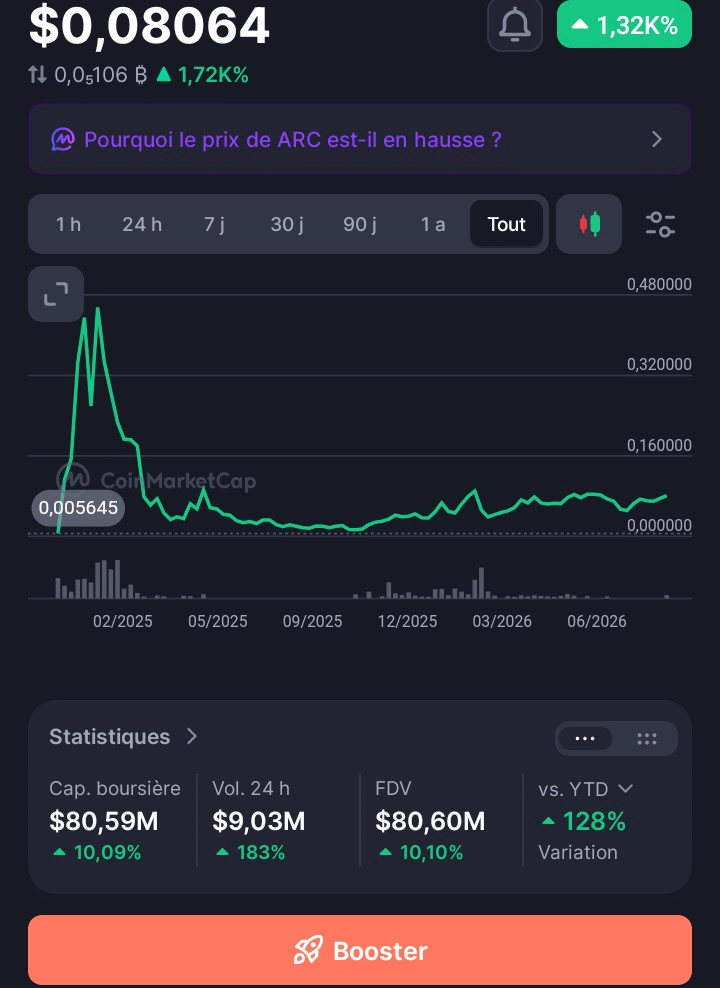
1️⃣ $ARC
Un projet orienté infrastructure et stablecoins.
👉 Ce qui m’a attiré : son ambition autour des usages financiers on-chain.
2️⃣ $Canopy
Un projet qui explore la rencontre entre IA et blockchain.
👉 Ce qui m’intéresse : voir comment l’IA peut simplifier l’accès au développement Web3.
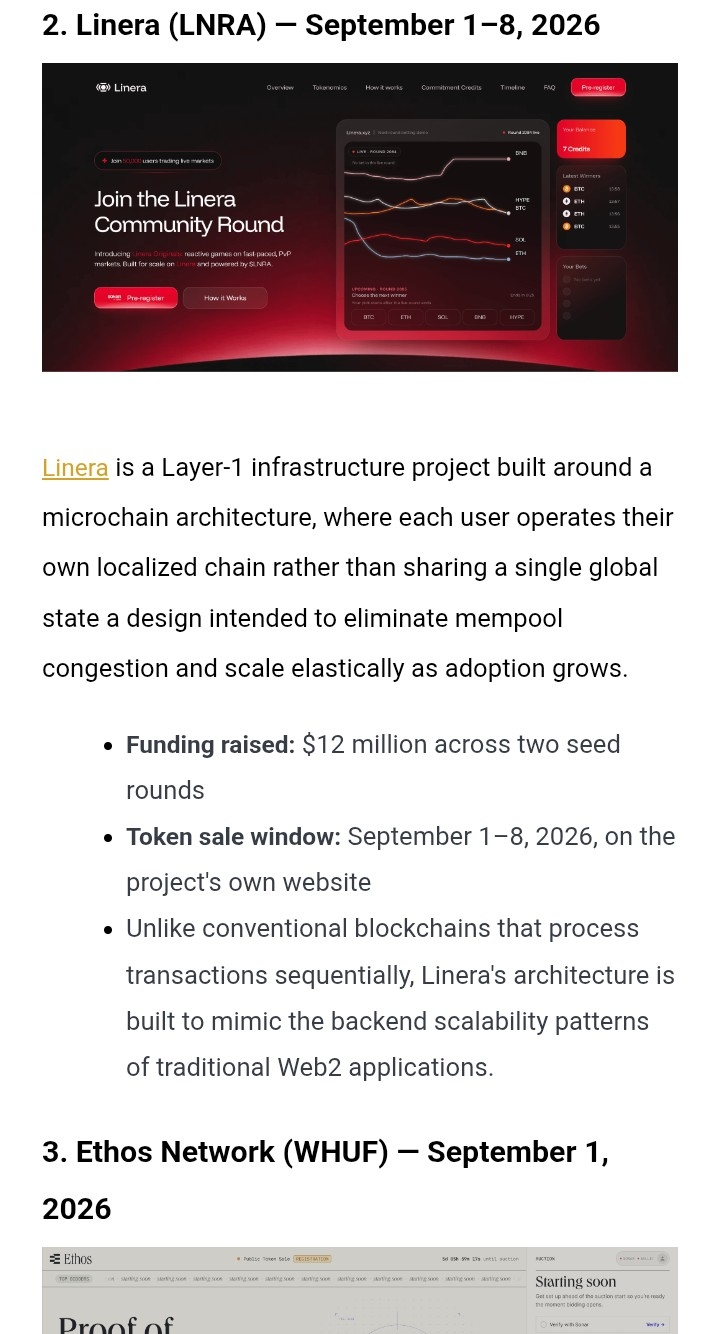
3️⃣ Linera
Une infrastructure Layer-1 avec une approche particulière de la scalabilité.
👉 Ce qui m’a donné envie d’explorer : leur vision différente pour construire des applications Web3 plus performantes.
💡 Mais découvrir un projet ≠ investir dans le projet.
Avant de mettre mon argent sur un actif, je veux comprendre ce que j’achète :
🔎 le produit
🔎 l’équipe
🔎 les tokenomics
🔎 les investisseurs
🔎 les risques
🔎 et surtout… le problème réellement résolu.
Cela me rappelle une leçon de L’Homme le plus riche de Babylone : la 4ᵉ loi de l’or.
👉 L’or s’échappe de celui qui l’investit dans des choses qu’il ne connaît pas ou qu’il ne comprend pas.
C’est exactement pourquoi je préfère faire mes propres recherches (DYOR) avant de passer à l’action.
Je ne partage pas ces projets comme des recommandations financières.
Je les partage parce que je les explore moi-même.
Et vous ? 👇
Quel projet Crypto/Web3 avez-vous découvert récemment et qui vous a donné envie de faire vos propres recherches ?
#Crypto_Jobs🎯 #Web3 #Blockchain #dyor #CryptoResearch
🚨 3 projets Crypto/Web3 que je viens de découvrir 👀
Le Web3 avance tellement vite qu’il est impossible de tout connaître.
Ces derniers jours, j’ai découvert 3 projets qui m’ont donné envie de creuser davantage :
1️⃣ $ARC
Un projet orienté infrastructure et stablecoins.
👉 Ce qui m’a attiré : son ambition autour des usages financiers on-chain.
2️⃣ $Canopy
Un projet qui explore la rencontre entre IA et blockchain.
👉 Ce qui m’intéresse : voir comment l’IA peut simplifier l’accès au développement Web3.
3️⃣ Linera
Une infrastructure Layer-1 avec une approche particulière de la scalabilité.
👉 Ce qui m’a donné envie d’explorer : leur vision différente pour construire des applications Web3 plus performantes.
💡 Mais découvrir un projet ≠ investir dans le projet.
Avant de mettre mon argent sur un actif, je veux comprendre ce que j’achète :
🔎 le produit
🔎 l’équipe
🔎 les tokenomics
🔎 les investisseurs
🔎 les risques
🔎 et surtout… le problème réellement résolu.
Cela me rappelle une leçon de L’Homme le plus riche de Babylone : la 4ᵉ loi de l’or.
👉 L’or s’échappe de celui qui l’investit dans des choses qu’il ne connaît pas ou qu’il ne comprend pas.
C’est exactement pourquoi je préfère faire mes propres recherches (DYOR) avant de passer à l’action.
Je ne partage pas ces projets comme des recommandations financières.
Je les partage parce que je les explore moi-même.
Et vous ? 👇
Quel projet Crypto/Web3 avez-vous découvert récemment et qui vous a donné envie de faire vos propres recherches ?
#Crypto_Jobs🎯 #Web3 #Blockchain #dyor #CryptoResearch
Le Web3 avance tellement vite qu’il est impossible de tout connaître.
Ces derniers jours, j’ai découvert 3 projets qui m’ont donné envie de creuser davantage :
1️⃣ $ARC
Un projet orienté infrastructure et stablecoins.
👉 Ce qui m’a attiré : son ambition autour des usages financiers on-chain.
2️⃣ $Canopy
Un projet qui explore la rencontre entre IA et blockchain.
👉 Ce qui m’intéresse : voir comment l’IA peut simplifier l’accès au développement Web3.
3️⃣ Linera
Une infrastructure Layer-1 avec une approche particulière de la scalabilité.
👉 Ce qui m’a donné envie d’explorer : leur vision différente pour construire des applications Web3 plus performantes.
💡 Mais découvrir un projet ≠ investir dans le projet.
Avant de mettre mon argent sur un actif, je veux comprendre ce que j’achète :
🔎 le produit
🔎 l’équipe
🔎 les tokenomics
🔎 les investisseurs
🔎 les risques
🔎 et surtout… le problème réellement résolu.
Cela me rappelle une leçon de L’Homme le plus riche de Babylone : la 4ᵉ loi de l’or.
👉 L’or s’échappe de celui qui l’investit dans des choses qu’il ne connaît pas ou qu’il ne comprend pas.
C’est exactement pourquoi je préfère faire mes propres recherches (DYOR) avant de passer à l’action.
Je ne partage pas ces projets comme des recommandations financières.
Je les partage parce que je les explore moi-même.
Et vous ? 👇
Quel projet Crypto/Web3 avez-vous découvert récemment et qui vous a donné envie de faire vos propres recherches ?
#Crypto_Jobs🎯 #Web3 #Blockchain #dyor #CryptoResearch
103
🚀 Toutes les bonnes opportunités crypto ne sont pas les plus bruyantes.
Parfois, les projets les plus intéressants sont ceux qui construisent, testent et résolvent de vrais problèmes en silence.
C’est pourquoi la recherche ne consiste pas seulement à repérer des signaux d’alarme. 🚩
Il s’agit aussi d’apprendre à reconnaître la vraie substance.
Quand je fais des recherches sur un projet crypto, je veux aller au-delà du prix et me demander :
🔎 1. Quel problème est-il censé résoudre ?
Si vous ne pouvez pas expliquer clairement le problème, ça mérite d’être examiné.
🛠️ 2. Y a-t-il un vrai produit ou une technologie fonctionnelle ?
Un roadmap est une promesse.
Un produit qui fonctionne est la preuve d’une progression.
👥 3. L’équipe construit-elle vraiment ?
Cherchez une activité de développement vérifiable, des mises à jour, des partenariats, des releases et des progrès mesurables — pas seulement de grandes annonces.
🪙 4. Le token a-t-il un but réel ?
Un token ne devrait pas exister uniquement parce qu’un projet veut en créer un.
Demandez : quel rôle le token joue-t-il réellement ?
🌐 5. Y a-t-il une activité réelle d’écosystème ?
Les gens utilisent-ils vraiment le produit ?
Les développeurs construisent-ils ?
Y a-t-il une adoption significative ?
📈 6. La croissance est-elle durable ?
Une croissance rapide peut être excitante, mais une croissance durable est généralement plus intéressante que de l’emballement temporaire.
Et voici la leçon la plus importante :
Un projet ne devient pas précieux simplement parce que les gens en parlent.
La recherche doit nous aider à distinguer :
🔥 LE HYPE
de
🧱 LA CONSTRUCTION RÉELLE
Bien sûr, aucun de ces contrôles ne garantit qu’un projet réussira ni que le prix de son token augmentera.
La crypto reste risquée.
Mais une meilleure recherche peut nous aider à prendre des décisions mieux informées.
Votre avis ?
Si vous deviez choisir UNE chose qui vous rendrait plus intéressé par un projet crypto, qu’est-ce que ce serait ?
A👉 Utilité dans le monde réel
B👉 Produit qui fonctionne
C👉 Forte activité de développement
D👉 Adoption en hausse
E👉 Tokenomics solides
🧠 Pensée crypto de la semaine :
"Ne vous contentez pas de chercher des projets qui sont tendances. Cherchez des projets qui construisent."
— Blessing | Toujours en apprentissage, toujours en construction
#Write2Earn #BinanceSquare #CryptoResearch
🚀 Toutes les bonnes opportunités crypto ne sont pas les plus bruyantes.
Parfois, les projets les plus intéressants sont ceux qui construisent, testent et résolvent de vrais problèmes en silence.
C’est pourquoi la recherche ne consiste pas seulement à repérer des signaux d’alarme. 🚩
Il s’agit aussi d’apprendre à reconnaître la vraie substance.
Quand je fais des recherches sur un projet crypto, je veux aller au-delà du prix et me demander :
🔎 1. Quel problème est-il censé résoudre ?
Si vous ne pouvez pas expliquer clairement le problème, ça mérite d’être examiné.
🛠️ 2. Y a-t-il un vrai produit ou une technologie fonctionnelle ?
Un roadmap est une promesse.
Un produit qui fonctionne est la preuve d’une progression.
👥 3. L’équipe construit-elle vraiment ?
Cherchez une activité de développement vérifiable, des mises à jour, des partenariats, des releases et des progrès mesurables — pas seulement de grandes annonces.
🪙 4. Le token a-t-il un but réel ?
Un token ne devrait pas exister uniquement parce qu’un projet veut en créer un.
Demandez : quel rôle le token joue-t-il réellement ?
🌐 5. Y a-t-il une activité réelle d’écosystème ?
Les gens utilisent-ils vraiment le produit ?
Les développeurs construisent-ils ?
Y a-t-il une adoption significative ?
📈 6. La croissance est-elle durable ?
Une croissance rapide peut être excitante, mais une croissance durable est généralement plus intéressante que de l’emballement temporaire.
Et voici la leçon la plus importante :
Un projet ne devient pas précieux simplement parce que les gens en parlent.
La recherche doit nous aider à distinguer :
🔥 LE HYPE
de
🧱 LA CONSTRUCTION RÉELLE
Bien sûr, aucun de ces contrôles ne garantit qu’un projet réussira ni que le prix de son token augmentera.
La crypto reste risquée.
Mais une meilleure recherche peut nous aider à prendre des décisions mieux informées.
Votre avis ?
Si vous deviez choisir UNE chose qui vous rendrait plus intéressé par un projet crypto, qu’est-ce que ce serait ?
A👉 Utilité dans le monde réel
B👉 Produit qui fonctionne
C👉 Forte activité de développement
D👉 Adoption en hausse
E👉 Tokenomics solides
🧠 Pensée crypto de la semaine :
"Ne vous contentez pas de chercher des projets qui sont tendances. Cherchez des projets qui construisent."
— Blessing | Toujours en apprentissage, toujours en construction
#Write2Earn #BinanceSquare #CryptoResearch
Parfois, les projets les plus intéressants sont ceux qui construisent, testent et résolvent de vrais problèmes en silence.
C’est pourquoi la recherche ne consiste pas seulement à repérer des signaux d’alarme. 🚩
Il s’agit aussi d’apprendre à reconnaître la vraie substance.
Quand je fais des recherches sur un projet crypto, je veux aller au-delà du prix et me demander :
🔎 1. Quel problème est-il censé résoudre ?
Si vous ne pouvez pas expliquer clairement le problème, ça mérite d’être examiné.
🛠️ 2. Y a-t-il un vrai produit ou une technologie fonctionnelle ?
Un roadmap est une promesse.
Un produit qui fonctionne est la preuve d’une progression.
👥 3. L’équipe construit-elle vraiment ?
Cherchez une activité de développement vérifiable, des mises à jour, des partenariats, des releases et des progrès mesurables — pas seulement de grandes annonces.
🪙 4. Le token a-t-il un but réel ?
Un token ne devrait pas exister uniquement parce qu’un projet veut en créer un.
Demandez : quel rôle le token joue-t-il réellement ?
🌐 5. Y a-t-il une activité réelle d’écosystème ?
Les gens utilisent-ils vraiment le produit ?
Les développeurs construisent-ils ?
Y a-t-il une adoption significative ?
📈 6. La croissance est-elle durable ?
Une croissance rapide peut être excitante, mais une croissance durable est généralement plus intéressante que de l’emballement temporaire.
Et voici la leçon la plus importante :
Un projet ne devient pas précieux simplement parce que les gens en parlent.
La recherche doit nous aider à distinguer :
🔥 LE HYPE
de
🧱 LA CONSTRUCTION RÉELLE
Bien sûr, aucun de ces contrôles ne garantit qu’un projet réussira ni que le prix de son token augmentera.
La crypto reste risquée.
Mais une meilleure recherche peut nous aider à prendre des décisions mieux informées.
Votre avis ?
Si vous deviez choisir UNE chose qui vous rendrait plus intéressé par un projet crypto, qu’est-ce que ce serait ?
A👉 Utilité dans le monde réel
B👉 Produit qui fonctionne
C👉 Forte activité de développement
D👉 Adoption en hausse
E👉 Tokenomics solides
🧠 Pensée crypto de la semaine :
"Ne vous contentez pas de chercher des projets qui sont tendances. Cherchez des projets qui construisent."
— Blessing | Toujours en apprentissage, toujours en construction
#Write2Earn #BinanceSquare #CryptoResearch
63

·
--
DYOR MISE À JOUR ! BINANCE AJOUTE DES MÉTRIQUES ON-CHAIN EN DIRECT POUR LES TOKENS D’ALPHA !
•Binance a introduit une nouvelle mise à niveau de sa plateforme de recherche dédiée, le DYOR Hub. Les utilisateurs peuvent désormais accéder à une analyse de marché plus approfondie et à une transparence on-chain en direct pour les tokens Binance Alpha directement dans le hub. Cela aide les traders à effectuer des recherches complètes sans avoir besoin de plateformes tierces externes.
•« 🎯 Si vous avez trouvé cette mise à jour utile, cliquez sur le bouton [Follow] pour des infos crypto quotidiennes ! »
$BNB
{spot}(BNBUSDT)
#BinanceUpgrade #DYOR!! #AlphaTokens #CryptoResearch
DYOR MISE À JOUR ! BINANCE AJOUTE DES MÉTRIQUES ON-CHAIN EN DIRECT POUR LES TOKENS D’ALPHA !
•Binance a introduit une nouvelle mise à niveau de sa plateforme de recherche dédiée, le DYOR Hub. Les utilisateurs peuvent désormais accéder à une analyse de marché plus approfondie et à une transparence on-chain en direct pour les tokens Binance Alpha directement dans le hub. Cela aide les traders à effectuer des recherches complètes sans avoir besoin de plateformes tierces externes.
•« 🎯 Si vous avez trouvé cette mise à jour utile, cliquez sur le bouton [Follow] pour des infos crypto quotidiennes ! »
$BNB
#BinanceUpgrade #DYOR!! #AlphaTokens #CryptoResearch
•Binance a introduit une nouvelle mise à niveau de sa plateforme de recherche dédiée, le DYOR Hub. Les utilisateurs peuvent désormais accéder à une analyse de marché plus approfondie et à une transparence on-chain en direct pour les tokens Binance Alpha directement dans le hub. Cela aide les traders à effectuer des recherches complètes sans avoir besoin de plateformes tierces externes.
•« 🎯 Si vous avez trouvé cette mise à jour utile, cliquez sur le bouton [Follow] pour des infos crypto quotidiennes ! »
$BNB
#BinanceUpgrade #DYOR!! #AlphaTokens #CryptoResearch
54
·
--
Je fais maintenant de la recherche sur la Crypto avec l’IA. Je me concentre principalement sur ces 4 choses
① Trier les ressources du secteur
② Résumer les livres blancs des projets
③ Traduire les informations provenant de l’étranger
④ Clarifier sa propre logique d’investissement
Avant, il fallait quelques heures.
Désormais, cela permet de réduire considérablement le temps de tri des informations.
Mais au final :
c’est quand même à soi de décider.
#AI #CryptoResearch #AITools
Je fais maintenant de la recherche sur la Crypto avec l’IA. Je me concentre principalement sur ces 4 choses
① Trier les ressources du secteur
② Résumer les livres blancs des projets
③ Traduire les informations provenant de l’étranger
④ Clarifier sa propre logique d’investissement
Avant, il fallait quelques heures.
Désormais, cela permet de réduire considérablement le temps de tri des informations.
Mais au final :
c’est quand même à soi de décider.
#AI #CryptoResearch #AITools
① Trier les ressources du secteur
② Résumer les livres blancs des projets
③ Traduire les informations provenant de l’étranger
④ Clarifier sa propre logique d’investissement
Avant, il fallait quelques heures.
Désormais, cela permet de réduire considérablement le temps de tri des informations.
Mais au final :
c’est quand même à soi de décider.
#AI #CryptoResearch #AITools

261
🚨 Un site web magnifique ne veut pas dire qu’un projet crypto est bon.
Et une communauté massive ne rend pas automatiquement le projet légitime.
C’est quelque chose que je creuse davantage dans mon parcours crypto. 🧠
Parfois, on voit un projet tendance et on se dit immédiatement :
🔥 « Tout le monde l’achète. »
🔥 « La communauté est énorme. »
🔥 « Le prix monte. »
🔥 « Peut-être que je devrais entrer avant qu’il ne soit trop tard. »
Mais il y a une autre question qu’on devrait se poser :
« Qu’est-ce que j’ai réellement recherché sur ce projet ? »
C’est là que DYOR : Faites vos propres recherches (Do Your Own Research) devient essentiel.
Faire de la recherche ne veut pas dire essayer de prédire l’avenir.
Cela signifie réunir assez d’informations pour comprendre à quoi vous avez affaire avant d’y mettre votre argent ou votre confiance.
Cette semaine, je veux qu’on aille au-delà du buzz et qu’on apprenne comment enquêter sur un projet crypto.
On va examiner :
🔎 Jour 1 : Par quoi faut-il commencer ses recherches ?
📄 Jour 2 : Comment analyser le livre blanc d’un projet
👥 Jour 3 : Comment rechercher l’équipe et les personnes derrière le projet
💰 Jour 4 : Comment repérer les signaux d’alerte financiers et de tokenomics
🌐 Jour 5 : Comment étudier l’écosystème du projet et son utilité réelle
🧠 Jour 6 : Ce que j’ai appris en recherchant des projets crypto
🔄 Jour 7 : Bilan hebdomadaire, construction d’une checklist personnelle DYOR
Parce que voici l’état d’esprit que je veux développer :
Ne laissez pas l’enthousiasme du marché remplacer vos recherches.
Faites un pas en arrière.
Posez des questions.
Vérifiez les informations.
Comprenez les risques.
Puis, prenez votre propre décision.
Dites-moi :
Quand vous découvrez un nouveau projet crypto, qu’est-ce que vous vérifiez d’abord d’habitude ?
A👉 Prix / graphique 📈
B👉 Capitalisation boursière & tokenomics 🪙
C👉 Équipe 👥
D👉 Communauté / réseaux sociaux 📱
E👉 Utilité / cas d’usage 🛠️
F👉 Je ne sais pas vraiment par où commencer pour l’instant 🤔
Laissez votre lettre ci-dessous. 👇
Pas de mauvaise réponse, on apprend tous.
🧠 Pensée crypto de la semaine :
« Avant de demander combien un projet peut vous rapporter, demandez ce que vous pouvez apprendre à son sujet. »
— Blessing | Encore en apprentissage, encore en construction
#Write2Earn #BinanceSquare #DYOR #CryptoResearch
🚨 Un site web magnifique ne veut pas dire qu’un projet crypto est bon.
Et une communauté massive ne rend pas automatiquement le projet légitime.
C’est quelque chose que je creuse davantage dans mon parcours crypto. 🧠
Parfois, on voit un projet tendance et on se dit immédiatement :
🔥 « Tout le monde l’achète. »
🔥 « La communauté est énorme. »
🔥 « Le prix monte. »
🔥 « Peut-être que je devrais entrer avant qu’il ne soit trop tard. »
Mais il y a une autre question qu’on devrait se poser :
« Qu’est-ce que j’ai réellement recherché sur ce projet ? »
C’est là que DYOR : Faites vos propres recherches (Do Your Own Research) devient essentiel.
Faire de la recherche ne veut pas dire essayer de prédire l’avenir.
Cela signifie réunir assez d’informations pour comprendre à quoi vous avez affaire avant d’y mettre votre argent ou votre confiance.
Cette semaine, je veux qu’on aille au-delà du buzz et qu’on apprenne comment enquêter sur un projet crypto.
On va examiner :
🔎 Jour 1 : Par quoi faut-il commencer ses recherches ?
📄 Jour 2 : Comment analyser le livre blanc d’un projet
👥 Jour 3 : Comment rechercher l’équipe et les personnes derrière le projet
💰 Jour 4 : Comment repérer les signaux d’alerte financiers et de tokenomics
🌐 Jour 5 : Comment étudier l’écosystème du projet et son utilité réelle
🧠 Jour 6 : Ce que j’ai appris en recherchant des projets crypto
🔄 Jour 7 : Bilan hebdomadaire, construction d’une checklist personnelle DYOR
Parce que voici l’état d’esprit que je veux développer :
Ne laissez pas l’enthousiasme du marché remplacer vos recherches.
Faites un pas en arrière.
Posez des questions.
Vérifiez les informations.
Comprenez les risques.
Puis, prenez votre propre décision.
Dites-moi :
Quand vous découvrez un nouveau projet crypto, qu’est-ce que vous vérifiez d’abord d’habitude ?
A👉 Prix / graphique 📈
B👉 Capitalisation boursière & tokenomics 🪙
C👉 Équipe 👥
D👉 Communauté / réseaux sociaux 📱
E👉 Utilité / cas d’usage 🛠️
F👉 Je ne sais pas vraiment par où commencer pour l’instant 🤔
Laissez votre lettre ci-dessous. 👇
Pas de mauvaise réponse, on apprend tous.
🧠 Pensée crypto de la semaine :
« Avant de demander combien un projet peut vous rapporter, demandez ce que vous pouvez apprendre à son sujet. »
— Blessing | Encore en apprentissage, encore en construction
#Write2Earn #BinanceSquare #DYOR #CryptoResearch
Et une communauté massive ne rend pas automatiquement le projet légitime.
C’est quelque chose que je creuse davantage dans mon parcours crypto. 🧠
Parfois, on voit un projet tendance et on se dit immédiatement :
🔥 « Tout le monde l’achète. »
🔥 « La communauté est énorme. »
🔥 « Le prix monte. »
🔥 « Peut-être que je devrais entrer avant qu’il ne soit trop tard. »
Mais il y a une autre question qu’on devrait se poser :
« Qu’est-ce que j’ai réellement recherché sur ce projet ? »
C’est là que DYOR : Faites vos propres recherches (Do Your Own Research) devient essentiel.
Faire de la recherche ne veut pas dire essayer de prédire l’avenir.
Cela signifie réunir assez d’informations pour comprendre à quoi vous avez affaire avant d’y mettre votre argent ou votre confiance.
Cette semaine, je veux qu’on aille au-delà du buzz et qu’on apprenne comment enquêter sur un projet crypto.
On va examiner :
🔎 Jour 1 : Par quoi faut-il commencer ses recherches ?
📄 Jour 2 : Comment analyser le livre blanc d’un projet
👥 Jour 3 : Comment rechercher l’équipe et les personnes derrière le projet
💰 Jour 4 : Comment repérer les signaux d’alerte financiers et de tokenomics
🌐 Jour 5 : Comment étudier l’écosystème du projet et son utilité réelle
🧠 Jour 6 : Ce que j’ai appris en recherchant des projets crypto
🔄 Jour 7 : Bilan hebdomadaire, construction d’une checklist personnelle DYOR
Parce que voici l’état d’esprit que je veux développer :
Ne laissez pas l’enthousiasme du marché remplacer vos recherches.
Faites un pas en arrière.
Posez des questions.
Vérifiez les informations.
Comprenez les risques.
Puis, prenez votre propre décision.
Dites-moi :
Quand vous découvrez un nouveau projet crypto, qu’est-ce que vous vérifiez d’abord d’habitude ?
A👉 Prix / graphique 📈
B👉 Capitalisation boursière & tokenomics 🪙
C👉 Équipe 👥
D👉 Communauté / réseaux sociaux 📱
E👉 Utilité / cas d’usage 🛠️
F👉 Je ne sais pas vraiment par où commencer pour l’instant 🤔
Laissez votre lettre ci-dessous. 👇
Pas de mauvaise réponse, on apprend tous.
🧠 Pensée crypto de la semaine :
« Avant de demander combien un projet peut vous rapporter, demandez ce que vous pouvez apprendre à son sujet. »
— Blessing | Encore en apprentissage, encore en construction
#Write2Earn #BinanceSquare #DYOR #CryptoResearch
79

Vérifié
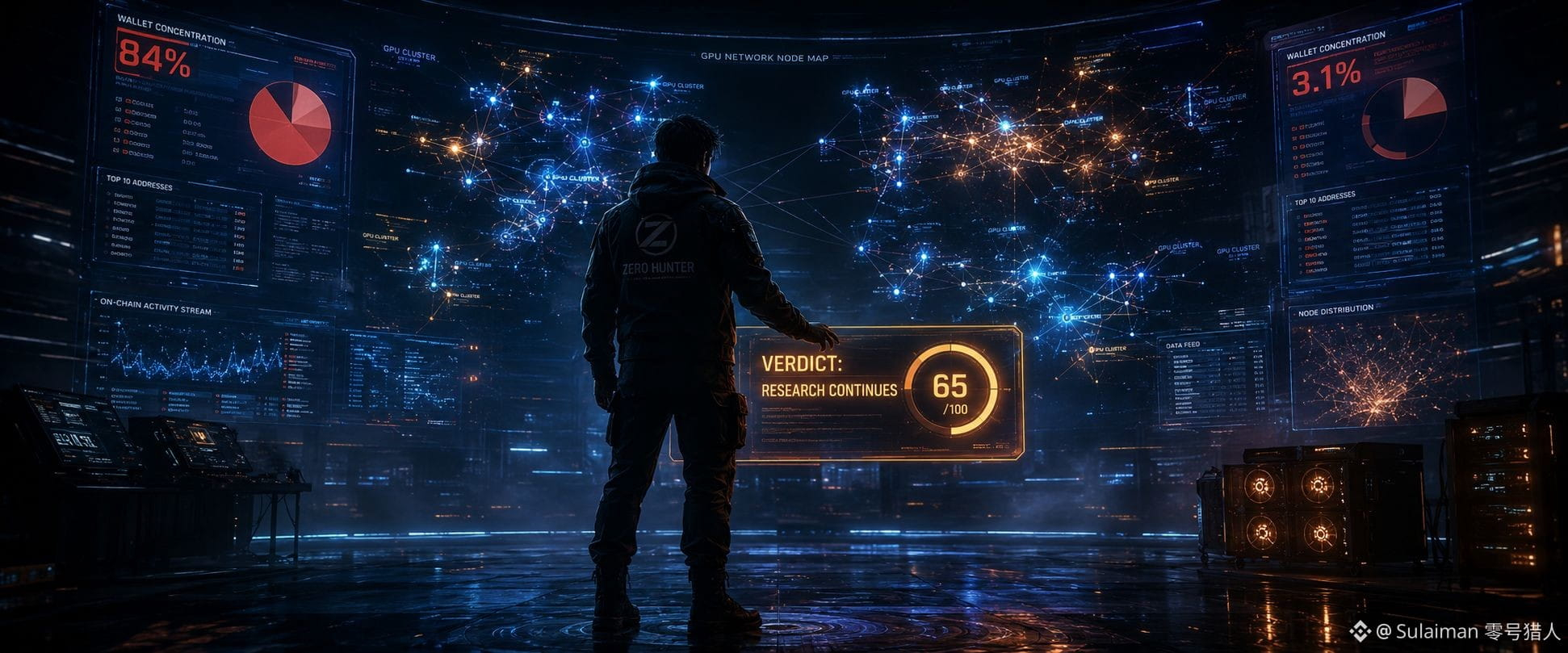
RECHERCHE ZERO HUNTER — EN COURS
$RENDER — jeton GPU mort, ou le play d’infrastructure IA le plus sous-estimé en ce moment ?
Je ne suis pas là pour faire la promo d’un coin x10. Je suis là pour suspendre le verdict jusqu’à ce que les preuves soient verrouillées.
C’est la règle Zero Hunter : pas de preuve verrouillée, pas de score final. Pas de score, pas de PASS. Pas de PASS, pas de Watchlist.
La recherche à 7 piliers de $RENDER est en cours. Pour l’instant, il reste en “Research Continues”, pas en “Watchlist Pass”.
JUSQU’ICI CONFIRMÉ :
Narratif — calcul IA + DePIN. RNP-023 approuvé à RenderCon 2026, Salad Network rejoint en tant que sous-réseau, ajoutant environ 60 000 GPU.
Produit — Render.com, Dispersed.com et le sous-réseau Salad, tous actifs.
Tokenomics — plus de 80 % de l’offre déjà déverrouillée, vesting linéaire, aucun déblocage en falaise à venir, le modèle burn-mint capte désormais les revenus de Salad.
Équipe — Jules Urbach a fondé OTOY, le conseil consultatif inclut Ari Emmanuel, JJ Abrams, Brendan Eich.
ENCORE NON RÉSOLU :
Les données de concentration des holders divergent selon les sources — l’une montre le wallet principal à 84 %, une autre montre les 10 principaux holders hors exchanges à seulement 3 %. Le score reste plafonné tant que cela n’est pas éclairci.
La liquidité DEX n’a pas été vérifiée en live.
Un incident de sécurité en 2025 sur l’ancien contrat Polygon, avant la migration — on le divulgue, on ne le cache pas.
SCORE ACTUEL : 65/100
Verdict : Recherche en cours, pas encore Watchlist.
À garder en tête : avec l’offre actuelle, la capitalisation boursière de $RENDER est d’environ 750 M$. Un x10 complet le ramène à nouveau près de son ancien plus haut historique autour de 13,53 $. Pas un nouveau territoire, un simple retour.
Est-ce réaliste, ou juste une autre histoire narrative ?
Le vrai verdict arrive quand les preuves se verrouillent. Pas avant.
Passeriez-vous ce coin ?
#CryptoResearch #RENDER #DePIN #AICompute #ZeroResearch
RECHERCHE ZERO HUNTER — EN COURS
$RENDER — jeton GPU mort, ou le play d’infrastructure IA le plus sous-estimé en ce moment ?
Je ne suis pas là pour faire la promo d’un coin x10. Je suis là pour suspendre le verdict jusqu’à ce que les preuves soient verrouillées.
C’est la règle Zero Hunter : pas de preuve verrouillée, pas de score final. Pas de score, pas de PASS. Pas de PASS, pas de Watchlist.
La recherche à 7 piliers de $RENDER est en cours. Pour l’instant, il reste en “Research Continues”, pas en “Watchlist Pass”.
JUSQU’ICI CONFIRMÉ :
Narratif — calcul IA + DePIN. RNP-023 approuvé à RenderCon 2026, Salad Network rejoint en tant que sous-réseau, ajoutant environ 60 000 GPU.
Produit — Render.com, Dispersed.com et le sous-réseau Salad, tous actifs.
Tokenomics — plus de 80 % de l’offre déjà déverrouillée, vesting linéaire, aucun déblocage en falaise à venir, le modèle burn-mint capte désormais les revenus de Salad.
Équipe — Jules Urbach a fondé OTOY, le conseil consultatif inclut Ari Emmanuel, JJ Abrams, Brendan Eich.
ENCORE NON RÉSOLU :
Les données de concentration des holders divergent selon les sources — l’une montre le wallet principal à 84 %, une autre montre les 10 principaux holders hors exchanges à seulement 3 %. Le score reste plafonné tant que cela n’est pas éclairci.
La liquidité DEX n’a pas été vérifiée en live.
Un incident de sécurité en 2025 sur l’ancien contrat Polygon, avant la migration — on le divulgue, on ne le cache pas.
SCORE ACTUEL : 65/100
Verdict : Recherche en cours, pas encore Watchlist.
À garder en tête : avec l’offre actuelle, la capitalisation boursière de $RENDER est d’environ 750 M$. Un x10 complet le ramène à nouveau près de son ancien plus haut historique autour de 13,53 $. Pas un nouveau territoire, un simple retour.
Est-ce réaliste, ou juste une autre histoire narrative ?
Le vrai verdict arrive quand les preuves se verrouillent. Pas avant.
Passeriez-vous ce coin ?
#CryptoResearch #RENDER #DePIN #AICompute #ZeroResearch
$RENDER — jeton GPU mort, ou le play d’infrastructure IA le plus sous-estimé en ce moment ?
Je ne suis pas là pour faire la promo d’un coin x10. Je suis là pour suspendre le verdict jusqu’à ce que les preuves soient verrouillées.
C’est la règle Zero Hunter : pas de preuve verrouillée, pas de score final. Pas de score, pas de PASS. Pas de PASS, pas de Watchlist.
La recherche à 7 piliers de $RENDER est en cours. Pour l’instant, il reste en “Research Continues”, pas en “Watchlist Pass”.
JUSQU’ICI CONFIRMÉ :
Narratif — calcul IA + DePIN. RNP-023 approuvé à RenderCon 2026, Salad Network rejoint en tant que sous-réseau, ajoutant environ 60 000 GPU.
Produit — Render.com, Dispersed.com et le sous-réseau Salad, tous actifs.
Tokenomics — plus de 80 % de l’offre déjà déverrouillée, vesting linéaire, aucun déblocage en falaise à venir, le modèle burn-mint capte désormais les revenus de Salad.
Équipe — Jules Urbach a fondé OTOY, le conseil consultatif inclut Ari Emmanuel, JJ Abrams, Brendan Eich.
ENCORE NON RÉSOLU :
Les données de concentration des holders divergent selon les sources — l’une montre le wallet principal à 84 %, une autre montre les 10 principaux holders hors exchanges à seulement 3 %. Le score reste plafonné tant que cela n’est pas éclairci.
La liquidité DEX n’a pas été vérifiée en live.
Un incident de sécurité en 2025 sur l’ancien contrat Polygon, avant la migration — on le divulgue, on ne le cache pas.
SCORE ACTUEL : 65/100
Verdict : Recherche en cours, pas encore Watchlist.
À garder en tête : avec l’offre actuelle, la capitalisation boursière de $RENDER est d’environ 750 M$. Un x10 complet le ramène à nouveau près de son ancien plus haut historique autour de 13,53 $. Pas un nouveau territoire, un simple retour.
Est-ce réaliste, ou juste une autre histoire narrative ?
Le vrai verdict arrive quand les preuves se verrouillent. Pas avant.
Passeriez-vous ce coin ?
#CryptoResearch #RENDER #DePIN #AICompute #ZeroResearch
2
109
·
--
🔎 "DYOR" — MAIS QU’EST-CE QUE CELA VEUT DIRE VRAIMENT ?
DYOR = Faites vos propres recherches.
Avant d’acheter un projet, regardez :
📌 Quel problème résout-il ?
📌 Qui se cache derrière ?
📌 La tokenomique
📌 L’offre et la distribution
📌 L’activité de développement
📌 La liquidité
📌 Les risques de sécurité
📌 L’activité de la communauté
Un post viral n’est pas une recherche.
Un livre blanc n’est pas automatiquement la preuve d’un bon investissement non plus.
Pensez de manière critique.
#DYOR #CryptoResearch #BinanceSquare
🔎 "DYOR" — MAIS QU’EST-CE QUE CELA VEUT DIRE VRAIMENT ?
DYOR = Faites vos propres recherches.
Avant d’acheter un projet, regardez :
📌 Quel problème résout-il ?
📌 Qui se cache derrière ?
📌 La tokenomique
📌 L’offre et la distribution
📌 L’activité de développement
📌 La liquidité
📌 Les risques de sécurité
📌 L’activité de la communauté
Un post viral n’est pas une recherche.
Un livre blanc n’est pas automatiquement la preuve d’un bon investissement non plus.
Pensez de manière critique.
#DYOR #CryptoResearch #BinanceSquare
DYOR = Faites vos propres recherches.
Avant d’acheter un projet, regardez :
📌 Quel problème résout-il ?
📌 Qui se cache derrière ?
📌 La tokenomique
📌 L’offre et la distribution
📌 L’activité de développement
📌 La liquidité
📌 Les risques de sécurité
📌 L’activité de la communauté
Un post viral n’est pas une recherche.
Un livre blanc n’est pas automatiquement la preuve d’un bon investissement non plus.
Pensez de manière critique.
#DYOR #CryptoResearch #BinanceSquare
33

🔬 Nouveau outil de recherche pour Bitcoin : analyse facile pour des expérimentations de cryptomonnaies
Vaquum-Limen 5.6.1 a été lancé. Il s’agit d’un outil logiciel piloté par les données, conçu pour simplifier la recherche sur le Bitcoin. Il permet aux développeurs et aux chercheurs d’organiser des expériences, de comparer les résultats et d’analyser des données historiques à l’aide de fichiers YAML, ce qui facilite les investigations et la découverte dans l’univers du Bitcoin.
━━━━━━━━━━━━━━
📊 Impact : 📊 Moyen
🏷️ BITCOIN
#Bitcoin #CryptoResearch #Blockchain #OpenSource #DevTools
🔗 Source : https://pypi.org/project/vaquum-limen/5.6.1/
🔬 Nouveau outil de recherche pour Bitcoin : analyse facile pour des expérimentations de cryptomonnaies
Vaquum-Limen 5.6.1 a été lancé. Il s’agit d’un outil logiciel piloté par les données, conçu pour simplifier la recherche sur le Bitcoin. Il permet aux développeurs et aux chercheurs d’organiser des expériences, de comparer les résultats et d’analyser des données historiques à l’aide de fichiers YAML, ce qui facilite les investigations et la découverte dans l’univers du Bitcoin.
━━━━━━━━━━━━━━
📊 Impact : 📊 Moyen
🏷️ BITCOIN
#Bitcoin #CryptoResearch #Blockchain #OpenSource #DevTools
🔗 Source : https://pypi.org/project/vaquum-limen/5.6.1/
Vaquum-Limen 5.6.1 a été lancé. Il s’agit d’un outil logiciel piloté par les données, conçu pour simplifier la recherche sur le Bitcoin. Il permet aux développeurs et aux chercheurs d’organiser des expériences, de comparer les résultats et d’analyser des données historiques à l’aide de fichiers YAML, ce qui facilite les investigations et la découverte dans l’univers du Bitcoin.
━━━━━━━━━━━━━━
📊 Impact : 📊 Moyen
🏷️ BITCOIN
#Bitcoin #CryptoResearch #Blockchain #OpenSource #DevTools
🔗 Source : https://pypi.org/project/vaquum-limen/5.6.1/
54
·
--
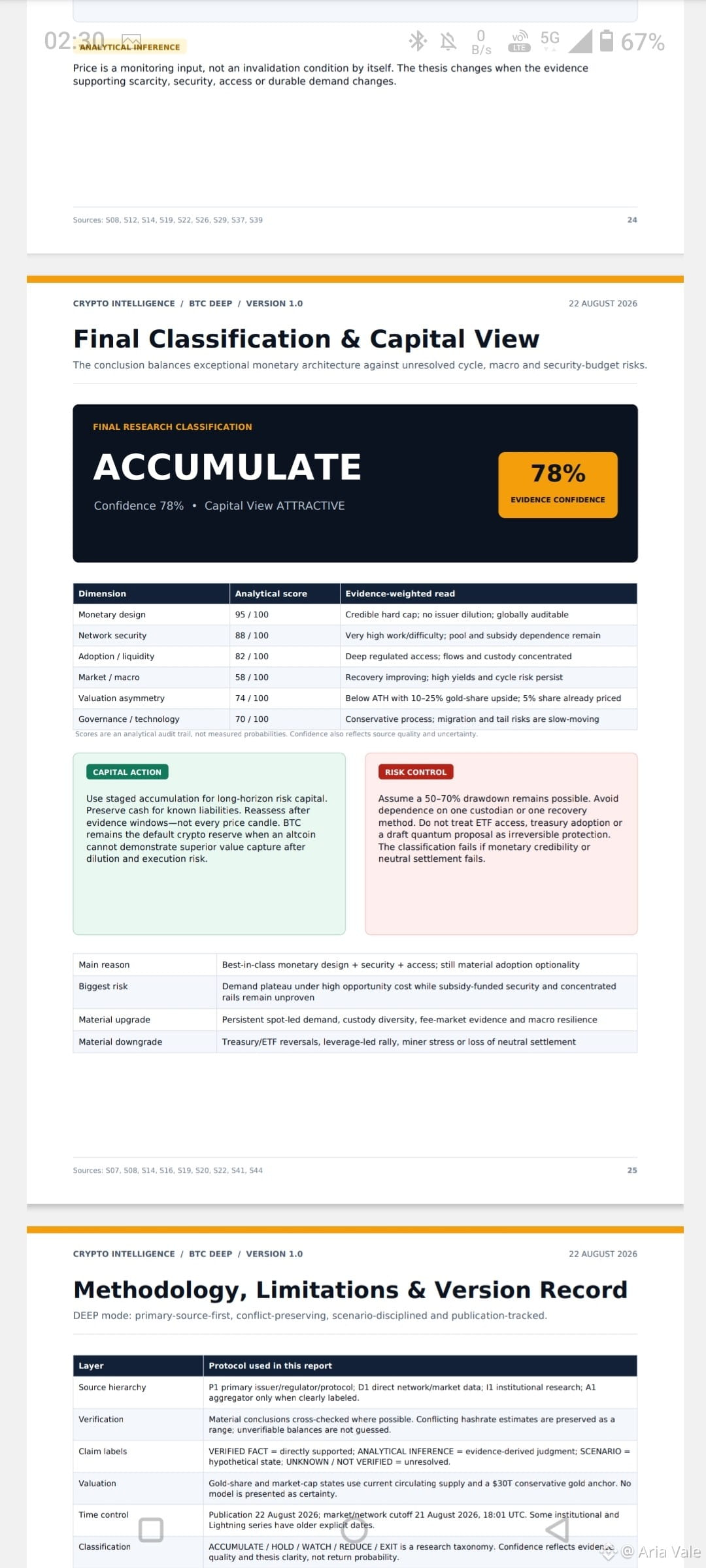
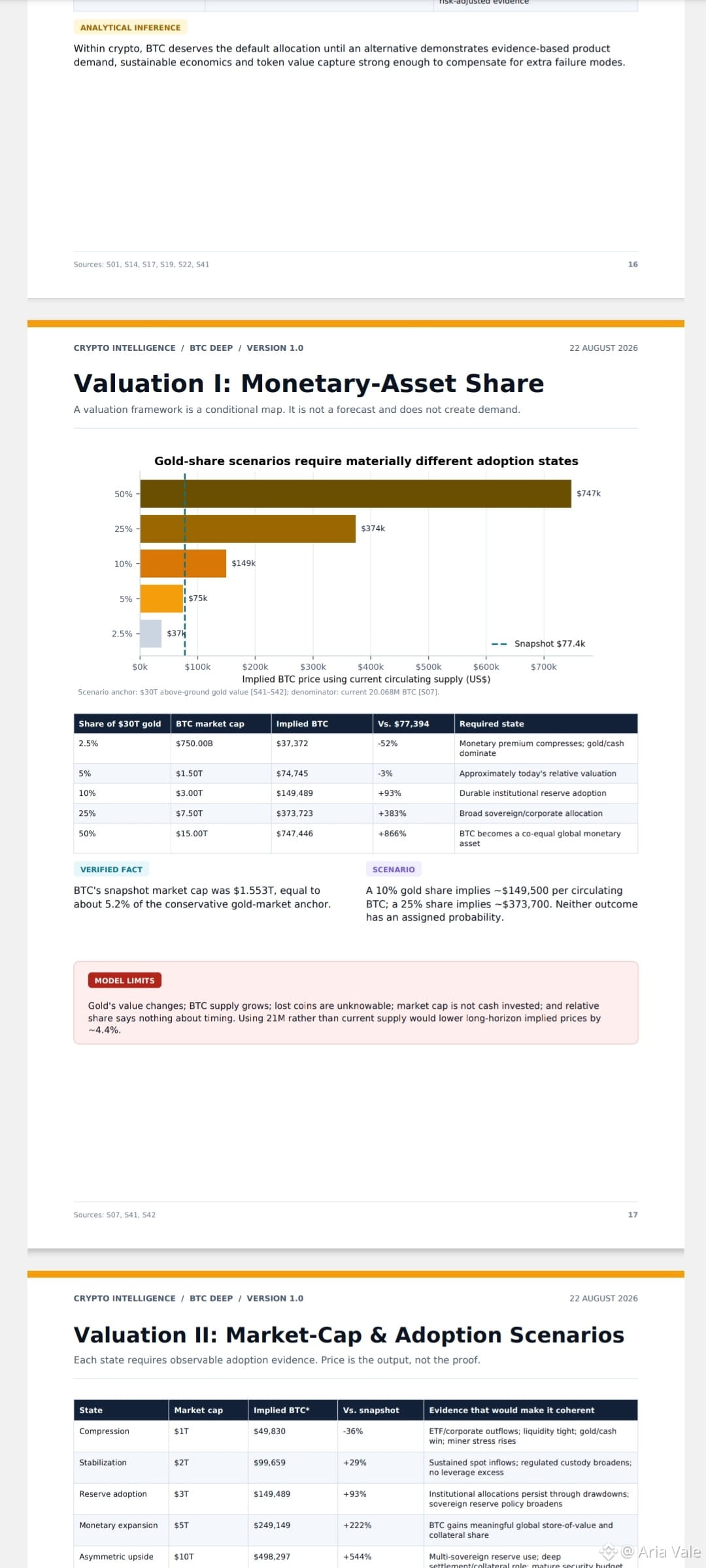
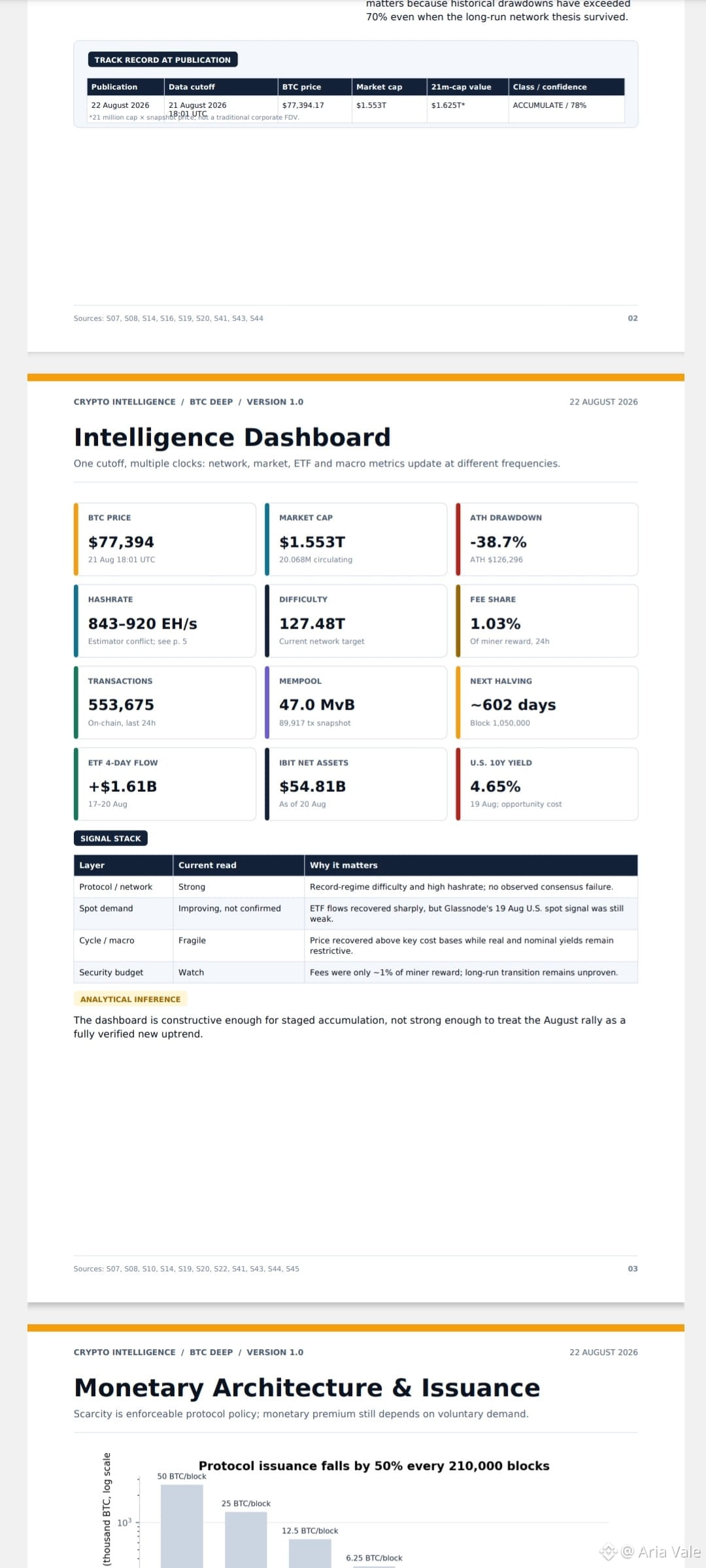
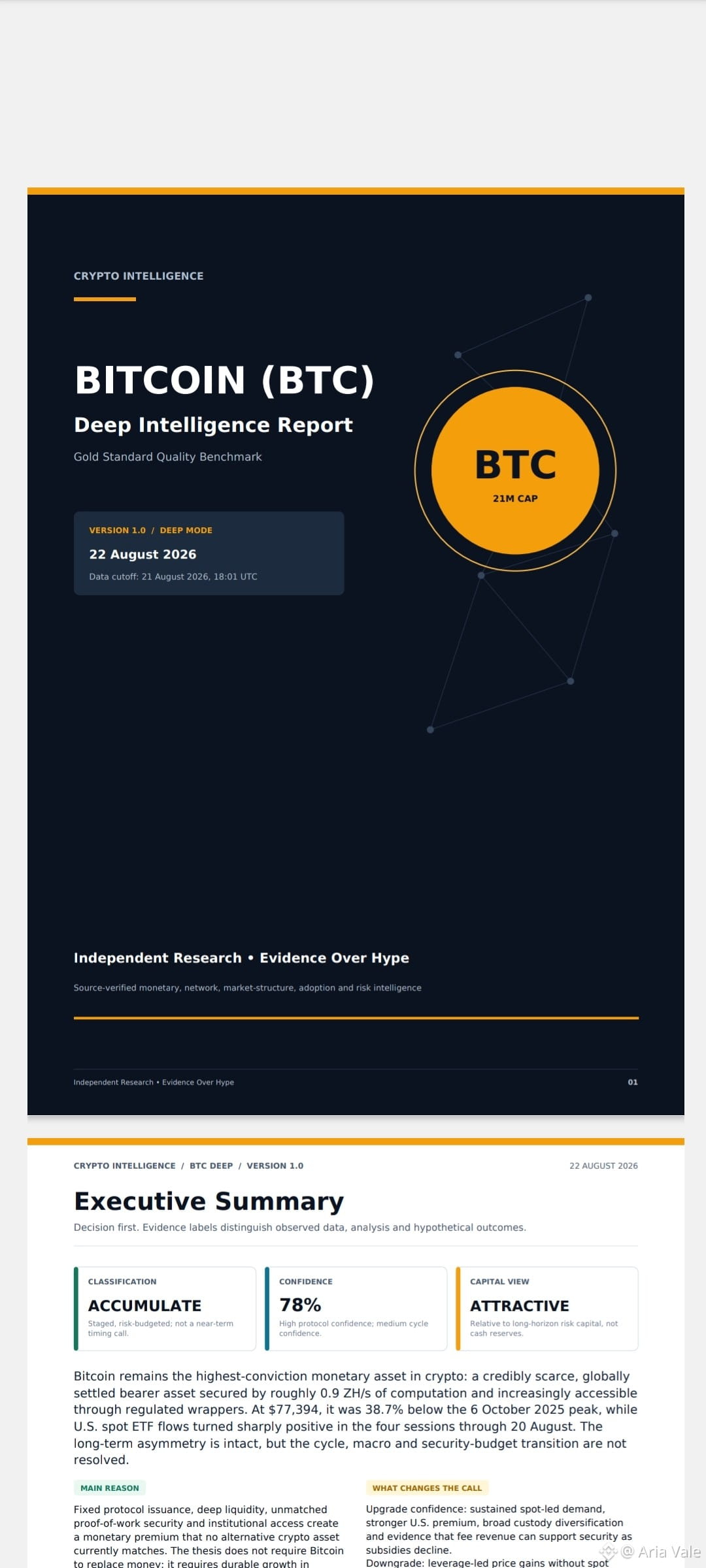
Bitcoin à 77 K$ : Toujours un ACCUMULER ? | Rapport d’intelligence approfondie
Le Bitcoin est en baisse de 38,7 % par rapport à son sommet d’octobre 2025. Mais le prix seul nous apprend presque rien sur le fait que le BTC soit attractif ici.
J’ai construit un rapport d’intelligence approfondie sur le Bitcoin de 28 pages pour examiner la thèse au-delà de l’évolution des prix.
La recherche couvre l’architecture monétaire, la sécurité du réseau, l’économie de l’exploitation minière, l’activité en chaîne, la demande institutionnelle et les ETF, les conditions macroéconomiques, des scénarios de valorisation, l’adoption et les risques clés de la thèse.
Classification finale de la recherche : ACCUMULATE
Confiance dans les preuves : 78%
Point de vue sur le capital : ATTRACTIVE
Ceci n’est pas une prédiction de prix. Le rapport identifie aussi ce qui pourrait faire voler en éclats la thèse — notamment une faiblesse de la demande, la pression sur le budget des mineurs/sécurité et le coût d’opportunité macro.
Ces 4 pages ne sont qu’un aperçu de la recherche complète de 28 pages.
Je publie le rapport complet GRATUITEMENT.
Recherche indépendante. Des preuves plutôt que le buzz.
$BTC
#bitcoin #CryptoResearch #Onchain #BitcoinETFs
Bitcoin à 77 K$ : Toujours un ACCUMULER ? | Rapport d’intelligence approfondie
Le Bitcoin est en baisse de 38,7 % par rapport à son sommet d’octobre 2025. Mais le prix seul nous apprend presque rien sur le fait que le BTC soit attractif ici.
J’ai construit un rapport d’intelligence approfondie sur le Bitcoin de 28 pages pour examiner la thèse au-delà de l’évolution des prix.
La recherche couvre l’architecture monétaire, la sécurité du réseau, l’économie de l’exploitation minière, l’activité en chaîne, la demande institutionnelle et les ETF, les conditions macroéconomiques, des scénarios de valorisation, l’adoption et les risques clés de la thèse.
Classification finale de la recherche : ACCUMULATE
Confiance dans les preuves : 78%
Point de vue sur le capital : ATTRACTIVE
Ceci n’est pas une prédiction de prix. Le rapport identifie aussi ce qui pourrait faire voler en éclats la thèse — notamment une faiblesse de la demande, la pression sur le budget des mineurs/sécurité et le coût d’opportunité macro.
Ces 4 pages ne sont qu’un aperçu de la recherche complète de 28 pages.
Je publie le rapport complet GRATUITEMENT.
Recherche indépendante. Des preuves plutôt que le buzz.
$BTC
#bitcoin #CryptoResearch #Onchain #BitcoinETFs
Le Bitcoin est en baisse de 38,7 % par rapport à son sommet d’octobre 2025. Mais le prix seul nous apprend presque rien sur le fait que le BTC soit attractif ici.
J’ai construit un rapport d’intelligence approfondie sur le Bitcoin de 28 pages pour examiner la thèse au-delà de l’évolution des prix.
La recherche couvre l’architecture monétaire, la sécurité du réseau, l’économie de l’exploitation minière, l’activité en chaîne, la demande institutionnelle et les ETF, les conditions macroéconomiques, des scénarios de valorisation, l’adoption et les risques clés de la thèse.
Classification finale de la recherche : ACCUMULATE
Confiance dans les preuves : 78%
Point de vue sur le capital : ATTRACTIVE
Ceci n’est pas une prédiction de prix. Le rapport identifie aussi ce qui pourrait faire voler en éclats la thèse — notamment une faiblesse de la demande, la pression sur le budget des mineurs/sécurité et le coût d’opportunité macro.
Ces 4 pages ne sont qu’un aperçu de la recherche complète de 28 pages.
Je publie le rapport complet GRATUITEMENT.
Recherche indépendante. Des preuves plutôt que le buzz.
$BTC
#bitcoin #CryptoResearch #Onchain #BitcoinETFs
1
134

·
--
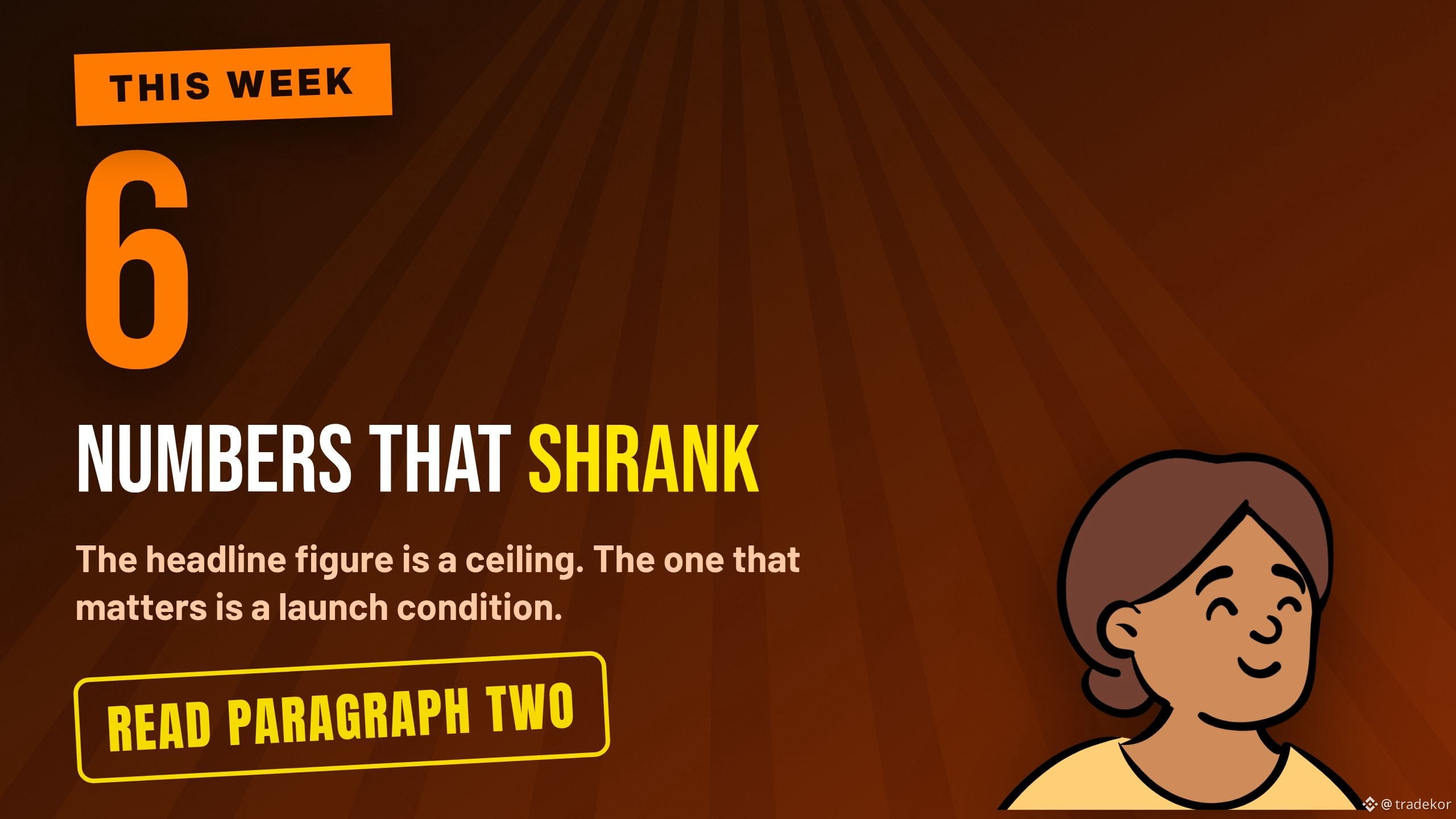
$33T est devenu $390B. 65x est devenu 2-5x. 3,000 BTC est devenu 200. Six titres cette semaine, six chiffres qui ont rétréci au premier contact.
Le schéma : le chiffre des gros titres dans la crypto est presque toujours un plafond, et le chiffre qui compte est presque toujours une condition de lancement, dissimulée deux paragraphes plus bas. Aucun de ceux-ci n’était un mensonge. Tous ont été rapportés correctement et compris à tort.
Les stablecoins ont atteint un niveau record de $33T en 2025. Les paiements réels destinés aux utilisateurs finaux représentaient environ $390B.
L’Ouroboros Leios de Cardano vise une capacité de 65x. Le déploiement initial du mainnet est attendu entre 2x et 5x.
Stacks a construit 3,000 BTC de capacité de staking. Le premier Genesis Bond vise 100-200 BTC, uniquement via liste blanche.
Hyperliquid continue de battre des records de volume. Son rachat est passé d’environ $290M à $149M.
Glamsterdam est présenté comme une mise à niveau prévue d’ici fin août. Aucune date de mainnet n’est verrouillée ; les indications de la testnet orientent vers le T4.
Ether.fi a lancé des actions tokenisées pour 500,000 membres. Non disponible aux États-Unis.
Pourquoi cela arrive : les objectifs de conception, la capacité totale et le volume brut sont des mesures réelles, et ce sont celles qu’une équipe peut annoncer avant que quoi que ce soit ne soit livré. Le débit effectif, la taille de la première tranche et le revenu net n’existent qu’ensuite. Les annonces se font sur le premier jeu de chiffres. Les positions doivent se réaliser sur le second.
L’habitude à construire : pour n’importe quel chiffre que vous voyez, demandez-vous ce qui doit être vrai pour qu’il soit atteint, et si cela s’est déjà produit. Si la réponse est une testnet, une liste blanche ou une note de conception, alors vous regardez un plafond.
Ce n’est pas un conseil financier. Faites vos propres recherches (DYOR).
$ETH $ADA $HYPE
#CryptoResearch #DYOR #CryptoNews #Analysis
$33T est devenu $390B. 65x est devenu 2-5x. 3,000 BTC est devenu 200. Six titres cette semaine, six chiffres qui ont rétréci au premier contact.
Le schéma : le chiffre des gros titres dans la crypto est presque toujours un plafond, et le chiffre qui compte est presque toujours une condition de lancement, dissimulée deux paragraphes plus bas. Aucun de ceux-ci n’était un mensonge. Tous ont été rapportés correctement et compris à tort.
Les stablecoins ont atteint un niveau record de $33T en 2025. Les paiements réels destinés aux utilisateurs finaux représentaient environ $390B.
L’Ouroboros Leios de Cardano vise une capacité de 65x. Le déploiement initial du mainnet est attendu entre 2x et 5x.
Stacks a construit 3,000 BTC de capacité de staking. Le premier Genesis Bond vise 100-200 BTC, uniquement via liste blanche.
Hyperliquid continue de battre des records de volume. Son rachat est passé d’environ $290M à $149M.
Glamsterdam est présenté comme une mise à niveau prévue d’ici fin août. Aucune date de mainnet n’est verrouillée ; les indications de la testnet orientent vers le T4.
Ether.fi a lancé des actions tokenisées pour 500,000 membres. Non disponible aux États-Unis.
Pourquoi cela arrive : les objectifs de conception, la capacité totale et le volume brut sont des mesures réelles, et ce sont celles qu’une équipe peut annoncer avant que quoi que ce soit ne soit livré. Le débit effectif, la taille de la première tranche et le revenu net n’existent qu’ensuite. Les annonces se font sur le premier jeu de chiffres. Les positions doivent se réaliser sur le second.
L’habitude à construire : pour n’importe quel chiffre que vous voyez, demandez-vous ce qui doit être vrai pour qu’il soit atteint, et si cela s’est déjà produit. Si la réponse est une testnet, une liste blanche ou une note de conception, alors vous regardez un plafond.
Ce n’est pas un conseil financier. Faites vos propres recherches (DYOR).
$ETH $ADA $HYPE
#CryptoResearch #DYOR #CryptoNews #Analysis
Le schéma : le chiffre des gros titres dans la crypto est presque toujours un plafond, et le chiffre qui compte est presque toujours une condition de lancement, dissimulée deux paragraphes plus bas. Aucun de ceux-ci n’était un mensonge. Tous ont été rapportés correctement et compris à tort.
Les stablecoins ont atteint un niveau record de $33T en 2025. Les paiements réels destinés aux utilisateurs finaux représentaient environ $390B.
L’Ouroboros Leios de Cardano vise une capacité de 65x. Le déploiement initial du mainnet est attendu entre 2x et 5x.
Stacks a construit 3,000 BTC de capacité de staking. Le premier Genesis Bond vise 100-200 BTC, uniquement via liste blanche.
Hyperliquid continue de battre des records de volume. Son rachat est passé d’environ $290M à $149M.
Glamsterdam est présenté comme une mise à niveau prévue d’ici fin août. Aucune date de mainnet n’est verrouillée ; les indications de la testnet orientent vers le T4.
Ether.fi a lancé des actions tokenisées pour 500,000 membres. Non disponible aux États-Unis.
Pourquoi cela arrive : les objectifs de conception, la capacité totale et le volume brut sont des mesures réelles, et ce sont celles qu’une équipe peut annoncer avant que quoi que ce soit ne soit livré. Le débit effectif, la taille de la première tranche et le revenu net n’existent qu’ensuite. Les annonces se font sur le premier jeu de chiffres. Les positions doivent se réaliser sur le second.
L’habitude à construire : pour n’importe quel chiffre que vous voyez, demandez-vous ce qui doit être vrai pour qu’il soit atteint, et si cela s’est déjà produit. Si la réponse est une testnet, une liste blanche ou une note de conception, alors vous regardez un plafond.
Ce n’est pas un conseil financier. Faites vos propres recherches (DYOR).
$ETH $ADA $HYPE
#CryptoResearch #DYOR #CryptoNews #Analysis
75
·
--
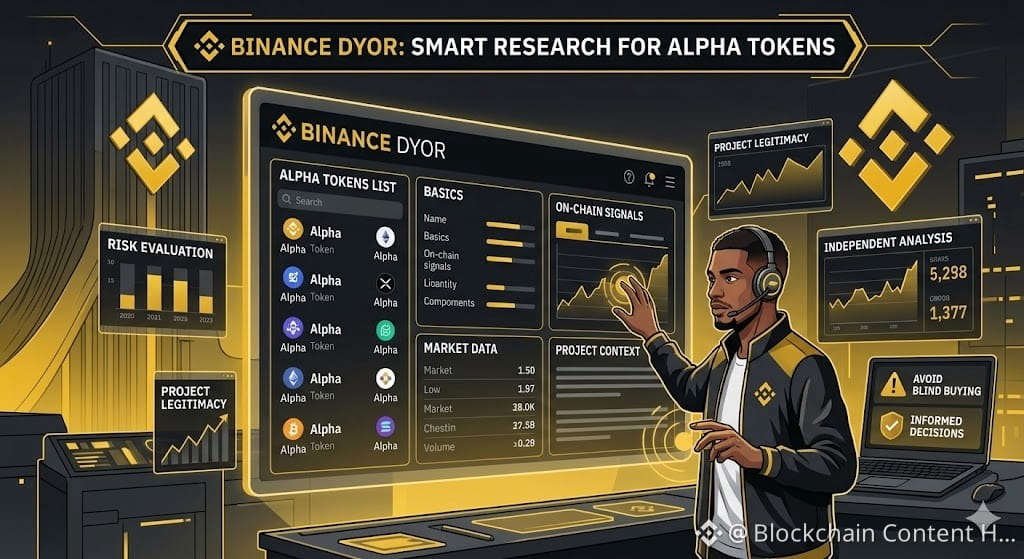
Binance a lancé DYOR, un hub de recherche intégré dédié aux tokens Binance Alpha. Il centralise les informations clés sur les tokens — y compris les bases, les signaux on-chain, les données de marché, et le contexte du projet — le tout au même endroit. Conçu pour aider les utilisateurs à prendre des décisions plus éclairées avant de trader des tokens en phase de démarrage, DYOR vise à réduire les achats à l'aveugle en fournissant aux traders un moyen rapide et fiable d'évaluer le risque et la légitimité du projet.
#DYOR #BinanceAlpha #CryptoResearch #InformedTrading
Binance a lancé DYOR, un hub de recherche intégré dédié aux tokens Binance Alpha. Il centralise les informations clés sur les tokens — y compris les bases, les signaux on-chain, les données de marché, et le contexte du projet — le tout au même endroit. Conçu pour aider les utilisateurs à prendre des décisions plus éclairées avant de trader des tokens en phase de démarrage, DYOR vise à réduire les achats à l'aveugle en fournissant aux traders un moyen rapide et fiable d'évaluer le risque et la légitimité du projet.
#DYOR #BinanceAlpha #CryptoResearch #InformedTrading
#DYOR #BinanceAlpha #CryptoResearch #InformedTrading
135

·
--
JPMorgan renforce sa recherche crypto en recrutant un analyste de niveau Vice-Président pour son équipe de recherche mondiale à New York. Le poste offre un salaire compris entre 200 000 $ et 285 000 $ et exige 4 à 7 ans d'expérience sur le marché crypto, avec une forte préférence pour une expertise en dérivés.
Ce mouvement indique que la finance de premier plan ne traite plus les actifs numériques comme une niche—ils les intègrent dans des stratégies multi-actifs aux côtés de la recherche en devises et macroéconomie. Le nouvel employé remettra en question les narrations existantes, rédigera des rapports de qualité institutionnelle et fera le lien entre les insights crypto et les parties prenantes senior.
La spéculation est révélatrice : ils recherchent quelqu'un qui comprend à la fois le marché au comptant et les dérivés, capable de tester la hype et d'appliquer la rigueur de la finance traditionnelle au crypto. Pour le marché, cela renforce le passage vers une analyse professionnelle et une gestion des risques, et pas seulement de la spéculation.
$BTC $ETH #CryptoResearch #AdoptionInstitutionnelle
JPMorgan renforce sa recherche crypto en recrutant un analyste de niveau Vice-Président pour son équipe de recherche mondiale à New York. Le poste offre un salaire compris entre 200 000 $ et 285 000 $ et exige 4 à 7 ans d'expérience sur le marché crypto, avec une forte préférence pour une expertise en dérivés.
Ce mouvement indique que la finance de premier plan ne traite plus les actifs numériques comme une niche—ils les intègrent dans des stratégies multi-actifs aux côtés de la recherche en devises et macroéconomie. Le nouvel employé remettra en question les narrations existantes, rédigera des rapports de qualité institutionnelle et fera le lien entre les insights crypto et les parties prenantes senior.
La spéculation est révélatrice : ils recherchent quelqu'un qui comprend à la fois le marché au comptant et les dérivés, capable de tester la hype et d'appliquer la rigueur de la finance traditionnelle au crypto. Pour le marché, cela renforce le passage vers une analyse professionnelle et une gestion des risques, et pas seulement de la spéculation.
$BTC $ETH #CryptoResearch #AdoptionInstitutionnelle
Ce mouvement indique que la finance de premier plan ne traite plus les actifs numériques comme une niche—ils les intègrent dans des stratégies multi-actifs aux côtés de la recherche en devises et macroéconomie. Le nouvel employé remettra en question les narrations existantes, rédigera des rapports de qualité institutionnelle et fera le lien entre les insights crypto et les parties prenantes senior.
La spéculation est révélatrice : ils recherchent quelqu'un qui comprend à la fois le marché au comptant et les dérivés, capable de tester la hype et d'appliquer la rigueur de la finance traditionnelle au crypto. Pour le marché, cela renforce le passage vers une analyse professionnelle et une gestion des risques, et pas seulement de la spéculation.
$BTC $ETH #CryptoResearch #AdoptionInstitutionnelle
103

📋 Guide DYOR : cinq étapes pour évaluer n’importe quel projet crypto
Le 30 juin 2026, avec 17 419 cryptomonnaies actives, la recherche est essentielle. Étape 1 : lisez le livre blanc — le problème a-t-il du sens ? Étape 2 : vérifiez l’équipe — est-elle publique et crédible ? Étape 3 : analysez la tokenomics — offre totale, taux d’inflation, répartition.
Étape 4 : évaluez la communauté et l’écosystème — développement actif, utilisation réelle. Étape 5 : vérifiez les données de marché — volume, liquidité, bourses répertoriées. En suivant ce cadre, on parvient à distinguer les vrais projets des tokens alimentés par le battage médiatique.
📌 Point clé :
Cadre de recherche en cinq étapes — livre blanc, équipe, tokenomics, écosystème, données de marché — aide à filtrer les projets de qualité du bruit dans un marché de 17 419 pièces.
#DYOR #CryptoResearch #Education
#BinanceAlphaAlert
📋 Guide DYOR : cinq étapes pour évaluer n’importe quel projet crypto
Le 30 juin 2026, avec 17 419 cryptomonnaies actives, la recherche est essentielle. Étape 1 : lisez le livre blanc — le problème a-t-il du sens ? Étape 2 : vérifiez l’équipe — est-elle publique et crédible ? Étape 3 : analysez la tokenomics — offre totale, taux d’inflation, répartition.
Étape 4 : évaluez la communauté et l’écosystème — développement actif, utilisation réelle. Étape 5 : vérifiez les données de marché — volume, liquidité, bourses répertoriées. En suivant ce cadre, on parvient à distinguer les vrais projets des tokens alimentés par le battage médiatique.
📌 Point clé :
Cadre de recherche en cinq étapes — livre blanc, équipe, tokenomics, écosystème, données de marché — aide à filtrer les projets de qualité du bruit dans un marché de 17 419 pièces.
#DYOR #CryptoResearch #Education
#BinanceAlphaAlert
Le 30 juin 2026, avec 17 419 cryptomonnaies actives, la recherche est essentielle. Étape 1 : lisez le livre blanc — le problème a-t-il du sens ? Étape 2 : vérifiez l’équipe — est-elle publique et crédible ? Étape 3 : analysez la tokenomics — offre totale, taux d’inflation, répartition.
Étape 4 : évaluez la communauté et l’écosystème — développement actif, utilisation réelle. Étape 5 : vérifiez les données de marché — volume, liquidité, bourses répertoriées. En suivant ce cadre, on parvient à distinguer les vrais projets des tokens alimentés par le battage médiatique.
📌 Point clé :
Cadre de recherche en cinq étapes — livre blanc, équipe, tokenomics, écosystème, données de marché — aide à filtrer les projets de qualité du bruit dans un marché de 17 419 pièces.
#DYOR #CryptoResearch #Education
#BinanceAlphaAlert
39

·
--
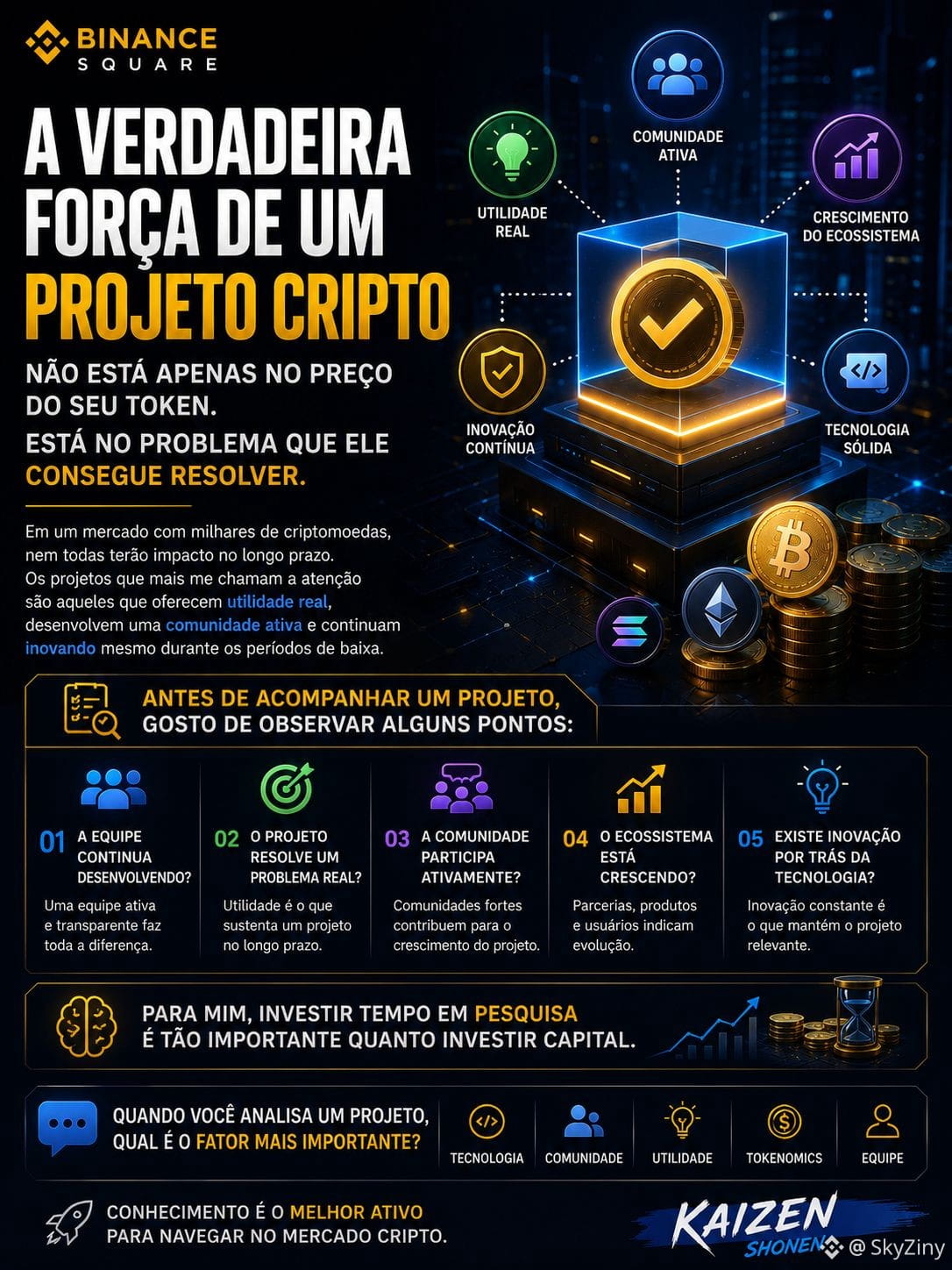
🚀 La véritable force d’un projet crypto ne réside pas seulement dans le prix de son token. Elle se trouve dans le problème qu’il est capable de résoudre.
Dans un marché comptant des milliers de cryptomonnaies, toutes n’auront pas un impact durable. Les projets qui attirent le plus mon attention sont ceux qui offrent une utilité réelle, développent une communauté active et continuent d’innover même pendant les périodes de baisse.
Avant de suivre un projet, j’aime observer quelques points :
🔍 L’équipe continue-t-elle de développer ? 🌍 Le projet résout-il un problème réel ? 🤝 La communauté participe-t-elle activement ? 📈 L’écosystème grandit-il ? 💡 Y a-t-il une innovation derrière la technologie ?
Pour moi, investir du temps dans la recherche est aussi important que d’investir du capital.
Au final, le savoir reste le meilleur actif pour naviguer sur le marché crypto avec plus de confiance.
💬 Quand vous analysez un projet, quel est le facteur le plus important : la technologie, la communauté, l’utilité, la tokenomics ou l’équipe ?
#crypto #blockchain #Web3 #CryptoResearch #SkyZinyJourney
🚀 La véritable force d’un projet crypto ne réside pas seulement dans le prix de son token. Elle se trouve dans le problème qu’il est capable de résoudre.
Dans un marché comptant des milliers de cryptomonnaies, toutes n’auront pas un impact durable. Les projets qui attirent le plus mon attention sont ceux qui offrent une utilité réelle, développent une communauté active et continuent d’innover même pendant les périodes de baisse.
Avant de suivre un projet, j’aime observer quelques points :
🔍 L’équipe continue-t-elle de développer ? 🌍 Le projet résout-il un problème réel ? 🤝 La communauté participe-t-elle activement ? 📈 L’écosystème grandit-il ? 💡 Y a-t-il une innovation derrière la technologie ?
Pour moi, investir du temps dans la recherche est aussi important que d’investir du capital.
Au final, le savoir reste le meilleur actif pour naviguer sur le marché crypto avec plus de confiance.
💬 Quand vous analysez un projet, quel est le facteur le plus important : la technologie, la communauté, l’utilité, la tokenomics ou l’équipe ?
#crypto #blockchain #Web3 #CryptoResearch #SkyZinyJourney
Dans un marché comptant des milliers de cryptomonnaies, toutes n’auront pas un impact durable. Les projets qui attirent le plus mon attention sont ceux qui offrent une utilité réelle, développent une communauté active et continuent d’innover même pendant les périodes de baisse.
Avant de suivre un projet, j’aime observer quelques points :
🔍 L’équipe continue-t-elle de développer ? 🌍 Le projet résout-il un problème réel ? 🤝 La communauté participe-t-elle activement ? 📈 L’écosystème grandit-il ? 💡 Y a-t-il une innovation derrière la technologie ?
Pour moi, investir du temps dans la recherche est aussi important que d’investir du capital.
Au final, le savoir reste le meilleur actif pour naviguer sur le marché crypto avec plus de confiance.
💬 Quand vous analysez un projet, quel est le facteur le plus important : la technologie, la communauté, l’utilité, la tokenomics ou l’équipe ?
#crypto #blockchain #Web3 #CryptoResearch #SkyZinyJourney
2
161

💎 Recherche de joyau caché #002 | RE
La plupart des investisseurs demandent :
Le prix a-t-il suffisamment baissé pour acheter ?
Moi, je pose une question différente :
« Le projet a-t-il encore une raison d’exister ? »
📊 Aperçu du projet
• Projet : RE
• Capitalisation boursière : ~123 M$
• Volume sur 24 h : ~127 M$
• ATH : 1,08$
• Prix actuel : ~0,60 $ (environ 45 % sous son ATH)
✅ Pourquoi il est dans ma watchlist
🔹 Un volume de trading solide montre que le marché y prête attention.
🔹 Le secteur **Real World Asset (RWA)** reste l’un des récits les plus discutés dans la crypto.
🔹 Le projet a encore une marge de progression si le sentiment du marché s’améliore.
⚠️ Plus grand risque
L’offre en circulation actuelle ne représente qu’une partie de l’offre maximale.
Les déblocages futurs de tokens pourraient accroître la pression vendeuse, donc c’est un facteur important à surveiller.
📌 Mon avis
Je ne dis pas que RE est un gagnant garanti.
Je l’ajoute à ma watchlist parce que le ratio risque/rendement me semble intéressant aux niveaux actuels.
Les prochaines semaines seront plus importantes que les derniers mois.
Faites toujours vos propres recherches avant d’investir.
━━━━━━━━━━━━━━
📊 Score HiddenGemAlpha
🟢 Récit : **8/10**
🟢 Liquidité : **8,5/10**
🟡 Niveau de risque : **Moyen**
⭐ Score global de watchlist : **7,9/10**
Suivez @HiddenGemAlpha pour des analyses crypto basées sur la recherche—pas sur le battage médiatique.
#REZ #RWA #altcoins #BinanceSquare #CryptoResearch
💎 Recherche de joyau caché #002 | RE
La plupart des investisseurs demandent :
Le prix a-t-il suffisamment baissé pour acheter ?
Moi, je pose une question différente :
« Le projet a-t-il encore une raison d’exister ? »
📊 Aperçu du projet
• Projet : RE
• Capitalisation boursière : ~123 M$
• Volume sur 24 h : ~127 M$
• ATH : 1,08$
• Prix actuel : ~0,60 $ (environ 45 % sous son ATH)
✅ Pourquoi il est dans ma watchlist
🔹 Un volume de trading solide montre que le marché y prête attention.
🔹 Le secteur **Real World Asset (RWA)** reste l’un des récits les plus discutés dans la crypto.
🔹 Le projet a encore une marge de progression si le sentiment du marché s’améliore.
⚠️ Plus grand risque
L’offre en circulation actuelle ne représente qu’une partie de l’offre maximale.
Les déblocages futurs de tokens pourraient accroître la pression vendeuse, donc c’est un facteur important à surveiller.
📌 Mon avis
Je ne dis pas que RE est un gagnant garanti.
Je l’ajoute à ma watchlist parce que le ratio risque/rendement me semble intéressant aux niveaux actuels.
Les prochaines semaines seront plus importantes que les derniers mois.
Faites toujours vos propres recherches avant d’investir.
━━━━━━━━━━━━━━
📊 Score HiddenGemAlpha
🟢 Récit : **8/10**
🟢 Liquidité : **8,5/10**
🟡 Niveau de risque : **Moyen**
⭐ Score global de watchlist : **7,9/10**
Suivez @HiddenGemAlpha pour des analyses crypto basées sur la recherche—pas sur le battage médiatique.
#REZ #RWA #altcoins #BinanceSquare #CryptoResearch
La plupart des investisseurs demandent :
Le prix a-t-il suffisamment baissé pour acheter ?
Moi, je pose une question différente :
« Le projet a-t-il encore une raison d’exister ? »
📊 Aperçu du projet
• Projet : RE
• Capitalisation boursière : ~123 M$
• Volume sur 24 h : ~127 M$
• ATH : 1,08$
• Prix actuel : ~0,60 $ (environ 45 % sous son ATH)
✅ Pourquoi il est dans ma watchlist
🔹 Un volume de trading solide montre que le marché y prête attention.
🔹 Le secteur **Real World Asset (RWA)** reste l’un des récits les plus discutés dans la crypto.
🔹 Le projet a encore une marge de progression si le sentiment du marché s’améliore.
⚠️ Plus grand risque
L’offre en circulation actuelle ne représente qu’une partie de l’offre maximale.
Les déblocages futurs de tokens pourraient accroître la pression vendeuse, donc c’est un facteur important à surveiller.
📌 Mon avis
Je ne dis pas que RE est un gagnant garanti.
Je l’ajoute à ma watchlist parce que le ratio risque/rendement me semble intéressant aux niveaux actuels.
Les prochaines semaines seront plus importantes que les derniers mois.
Faites toujours vos propres recherches avant d’investir.
━━━━━━━━━━━━━━
📊 Score HiddenGemAlpha
🟢 Récit : **8/10**
🟢 Liquidité : **8,5/10**
🟡 Niveau de risque : **Moyen**
⭐ Score global de watchlist : **7,9/10**
Suivez @HiddenGemAlpha pour des analyses crypto basées sur la recherche—pas sur le battage médiatique.
#REZ #RWA #altcoins #BinanceSquare #CryptoResearch
218
📚 Comment rechercher un projet crypto : checklist de due diligence pour les nouveaux investisseurs
Le 4 juillet 2026, avec 17 387 coins suivis, savoir comment rechercher des projets est essentiel. Commencez par le livre blanc — est-ce qu’il résout un problème réel ? Ensuite, vérifiez l’équipe, la tokenomics et la communauté.
Des sources de données comme CoinGecko fournissent des métriques clés : capitalisation boursière (2,26 T$), volume (64,58 Md$) et évolution des prix. Pour Bitcoin $BTC at à 62 612 $, les fondamentaux sont bien établis. Pour les projets plus modestes, il faut creuser davantage.
Regardez : l’activité sur GitHub (les développeurs construisent-ils ?), la répartition des tokens (est-ce centralisé ?), et les utilisateurs réels (pas seulement des bots). Si le seul discours d’un projet est « le prix monte », c’est une spéculation, pas un investissement.
📌 Point clé :
La due diligence distingue les investisseurs informés des parieurs. Livre blanc + équipe + tokenomics + communauté + usage = les cinq piliers de la recherche crypto.
#CryptoResearch #DYOR #Educational
#BinanceAlphaAlert
📚 Comment rechercher un projet crypto : checklist de due diligence pour les nouveaux investisseurs
Le 4 juillet 2026, avec 17 387 coins suivis, savoir comment rechercher des projets est essentiel. Commencez par le livre blanc — est-ce qu’il résout un problème réel ? Ensuite, vérifiez l’équipe, la tokenomics et la communauté.
Des sources de données comme CoinGecko fournissent des métriques clés : capitalisation boursière (2,26 T$), volume (64,58 Md$) et évolution des prix. Pour Bitcoin $BTC at à 62 612 $, les fondamentaux sont bien établis. Pour les projets plus modestes, il faut creuser davantage.
Regardez : l’activité sur GitHub (les développeurs construisent-ils ?), la répartition des tokens (est-ce centralisé ?), et les utilisateurs réels (pas seulement des bots). Si le seul discours d’un projet est « le prix monte », c’est une spéculation, pas un investissement.
📌 Point clé :
La due diligence distingue les investisseurs informés des parieurs. Livre blanc + équipe + tokenomics + communauté + usage = les cinq piliers de la recherche crypto.
#CryptoResearch #DYOR #Educational
#BinanceAlphaAlert
Le 4 juillet 2026, avec 17 387 coins suivis, savoir comment rechercher des projets est essentiel. Commencez par le livre blanc — est-ce qu’il résout un problème réel ? Ensuite, vérifiez l’équipe, la tokenomics et la communauté.
Des sources de données comme CoinGecko fournissent des métriques clés : capitalisation boursière (2,26 T$), volume (64,58 Md$) et évolution des prix. Pour Bitcoin $BTC at à 62 612 $, les fondamentaux sont bien établis. Pour les projets plus modestes, il faut creuser davantage.
Regardez : l’activité sur GitHub (les développeurs construisent-ils ?), la répartition des tokens (est-ce centralisé ?), et les utilisateurs réels (pas seulement des bots). Si le seul discours d’un projet est « le prix monte », c’est une spéculation, pas un investissement.
📌 Point clé :
La due diligence distingue les investisseurs informés des parieurs. Livre blanc + équipe + tokenomics + communauté + usage = les cinq piliers de la recherche crypto.
#CryptoResearch #DYOR #Educational
#BinanceAlphaAlert
85
💡 18,090 pièces est un problème de recherche : la largeur est une opportunité, mais uniquement avec de la discipline
Le 1er août 2026, le marché suit 18 090 crypto-monnaies actives réparties sur 1 508 marchés. En 2026, la ressource rare n’est pas l’offre de tokens — c’est l’attention et l’analyse.
Bitcoin $BTC at 56.21% de dominance et Ethereum $ETH at 10.02% montrent où se situe la conviction, tandis que la longue traîne se dispute le reste.
📌 À retenir :
Dans un domaine de 18 090 projets, l’avantage revient aux chercheurs. Les outils, les données et la discipline comptent davantage que la chasse aux rumeurs dans un écosystème aussi saturé.
#CryptoResearch #Altcoins
#BinanceAlphaAlert
💡 18,090 pièces est un problème de recherche : la largeur est une opportunité, mais uniquement avec de la discipline
Le 1er août 2026, le marché suit 18 090 crypto-monnaies actives réparties sur 1 508 marchés. En 2026, la ressource rare n’est pas l’offre de tokens — c’est l’attention et l’analyse.
Bitcoin $BTC at 56.21% de dominance et Ethereum $ETH at 10.02% montrent où se situe la conviction, tandis que la longue traîne se dispute le reste.
📌 À retenir :
Dans un domaine de 18 090 projets, l’avantage revient aux chercheurs. Les outils, les données et la discipline comptent davantage que la chasse aux rumeurs dans un écosystème aussi saturé.
#CryptoResearch #Altcoins
#BinanceAlphaAlert
Le 1er août 2026, le marché suit 18 090 crypto-monnaies actives réparties sur 1 508 marchés. En 2026, la ressource rare n’est pas l’offre de tokens — c’est l’attention et l’analyse.
Bitcoin $BTC at 56.21% de dominance et Ethereum $ETH at 10.02% montrent où se situe la conviction, tandis que la longue traîne se dispute le reste.
📌 À retenir :
Dans un domaine de 18 090 projets, l’avantage revient aux chercheurs. Les outils, les données et la discipline comptent davantage que la chasse aux rumeurs dans un écosystème aussi saturé.
#CryptoResearch #Altcoins
#BinanceAlphaAlert
37

·
--
$ANALYSE DU PROJET CRYPTO : QUE DEVEZ-VOUS VÉRIFIER AVANT DE FAIRE CONFIANCE À UN PROJET ?
Avant de croire à toute promotion d’un projet $crypto, demandez :
1️⃣ Quel problème le projet résout-il ?
2️⃣ La technologie est-elle réellement utile ?
3️⃣ Qui le construit ?
4️⃣ Quelle est l’offre de jetons ?
5️⃣ Existe-t-il des calendriers de déblocage ?
6️⃣ La communauté est-elle active ?
7️⃣ Les risques sont-ils clairement expliqués ?
Une grande communauté ne signifie pas automatiquement qu’un projet est un succès.
La recherche vaut plus que l’emballement.
Pensez-vous que l’écosystème de contrats intelligents de $Ethereum lui donne un avantage à long terme face à $Bitcoin, ou bien que $Bitcoin restera dominant ?
#CryptoNews🚀🔥 #CryptoResearch #blockchain #DYOR* R
$ANALYSE DU PROJET CRYPTO : QUE DEVEZ-VOUS VÉRIFIER AVANT DE FAIRE CONFIANCE À UN PROJET ?
Avant de croire à toute promotion d’un projet $crypto, demandez :
1️⃣ Quel problème le projet résout-il ?
2️⃣ La technologie est-elle réellement utile ?
3️⃣ Qui le construit ?
4️⃣ Quelle est l’offre de jetons ?
5️⃣ Existe-t-il des calendriers de déblocage ?
6️⃣ La communauté est-elle active ?
7️⃣ Les risques sont-ils clairement expliqués ?
Une grande communauté ne signifie pas automatiquement qu’un projet est un succès.
La recherche vaut plus que l’emballement.
Pensez-vous que l’écosystème de contrats intelligents de $Ethereum lui donne un avantage à long terme face à $Bitcoin, ou bien que $Bitcoin restera dominant ?
#CryptoNews🚀🔥 #CryptoResearch #blockchain #DYOR* R
Avant de croire à toute promotion d’un projet $crypto, demandez :
1️⃣ Quel problème le projet résout-il ?
2️⃣ La technologie est-elle réellement utile ?
3️⃣ Qui le construit ?
4️⃣ Quelle est l’offre de jetons ?
5️⃣ Existe-t-il des calendriers de déblocage ?
6️⃣ La communauté est-elle active ?
7️⃣ Les risques sont-ils clairement expliqués ?
Une grande communauté ne signifie pas automatiquement qu’un projet est un succès.
La recherche vaut plus que l’emballement.
Pensez-vous que l’écosystème de contrats intelligents de $Ethereum lui donne un avantage à long terme face à $Bitcoin, ou bien que $Bitcoin restera dominant ?
#CryptoNews🚀🔥 #CryptoResearch #blockchain #DYOR* R
92

·
--
J’achetais des pièces sans faire les recherches nécessaires. Certaines des pièces, comme $APE $RE $SOL and et beaucoup d’autres coinz
Je me fiait au battage médiatique plutôt qu’à la compréhension du projet.
Maintenant, je demande :
• Quel problème ce projet résout ?
• L’équipe est-elle active ?
• Y a-t-il une adoption réelle ?
Renseignez-vous d’abord. Décidez ensuite.
#Binance #CryptoResearch #DYOR #CryptoEducation #Altcoins
J’achetais des pièces sans faire les recherches nécessaires. Certaines des pièces, comme $APE $RE $SOL and et beaucoup d’autres coinz
Je me fiait au battage médiatique plutôt qu’à la compréhension du projet.
Maintenant, je demande :
• Quel problème ce projet résout ?
• L’équipe est-elle active ?
• Y a-t-il une adoption réelle ?
Renseignez-vous d’abord. Décidez ensuite.
#Binance #CryptoResearch #DYOR #CryptoEducation #Altcoins
Je me fiait au battage médiatique plutôt qu’à la compréhension du projet.
Maintenant, je demande :
• Quel problème ce projet résout ?
• L’équipe est-elle active ?
• Y a-t-il une adoption réelle ?
Renseignez-vous d’abord. Décidez ensuite.
#Binance #CryptoResearch #DYOR #CryptoEducation #Altcoins
In fundamental we trust!
88%
Long live gamble!
12%
8 Votes • Vote fermé
2
1.4k
·
--
UNE SIMPLE LISTE DE CONTRÔLE POUR LA RECHERCHE DE PROJETS CRYPTO
Avant de rechercher un projet, regardez :
📌 Site web
📌 Livre blanc
📌 Équipe
📌 Technologie
📌 Tokenomics
📌 Feuille de route
📌 Partenariats
📌 Sécurité
📌 Communauté
📌 Risques
Ne jugez jamais un projet uniquement par son prix de token.
Un token au prix de 0,001 $ n’est pas automatiquement moins cher qu’un token à 100 $.
La capitalisation boursière et l’offre comptent.
Pensez-vous que les projets crypto ayant une utilité réelle dépasseront, à terme, les projets portés principalement par le battage médiatique ?
#CryptoResearch #Tokenomics #Blockchain #dyor
UNE SIMPLE LISTE DE CONTRÔLE POUR LA RECHERCHE DE PROJETS CRYPTO
Avant de rechercher un projet, regardez :
📌 Site web
📌 Livre blanc
📌 Équipe
📌 Technologie
📌 Tokenomics
📌 Feuille de route
📌 Partenariats
📌 Sécurité
📌 Communauté
📌 Risques
Ne jugez jamais un projet uniquement par son prix de token.
Un token au prix de 0,001 $ n’est pas automatiquement moins cher qu’un token à 100 $.
La capitalisation boursière et l’offre comptent.
Pensez-vous que les projets crypto ayant une utilité réelle dépasseront, à terme, les projets portés principalement par le battage médiatique ?
#CryptoResearch #Tokenomics #Blockchain #dyor
Avant de rechercher un projet, regardez :
📌 Site web
📌 Livre blanc
📌 Équipe
📌 Technologie
📌 Tokenomics
📌 Feuille de route
📌 Partenariats
📌 Sécurité
📌 Communauté
📌 Risques
Ne jugez jamais un projet uniquement par son prix de token.
Un token au prix de 0,001 $ n’est pas automatiquement moins cher qu’un token à 100 $.
La capitalisation boursière et l’offre comptent.
Pensez-vous que les projets crypto ayant une utilité réelle dépasseront, à terme, les projets portés principalement par le battage médiatique ?
#CryptoResearch #Tokenomics #Blockchain #dyor
52
Connectez-vous pour découvrir plus de contenu
Rejoignez la communauté mondiale des adeptes de cryptomonnaies sur Binance Square
⚡️ Suviez les dernières informations importantes sur les cryptomonnaies.
💬 Jugé digne de confiance par la plus grande plateforme d’échange de cryptomonnaies au monde.
👍 Découvrez les connaissances que partagent les créateurs vérifiés.
Adresse e-mail/Nº de téléphone
Sujets d’actualité
1
#FedRateWatch
1.2M vues
5,642 mentions
2
#ZcashRises6%
9,169 vues
199 mentions
3
#XRPSinks10%
5,093 vues
133 mentions
4
#BitcoinETFsShed$450M
835 vues
33 mentions
5
#CircleOpensArcMainnet
3,286 vues
81 mentions
6
#ZcashHoldersBackNU7Upgrade
12,002 vues
248 mentions
7
#MSTRTradingVolumeSurpassesMorganStanley
14,634 vues
438 mentions
8
#BitcoinFalls4%
32,516 vues
731 mentions
9
#SKHynixInTalksToMakeMemoryChipsInUS
14,832 vues
299 mentions
10
#OpenAIDiscussesNewFundingAt$1.2TValuation
3,443 vues
49 mentions