

#beginnertrader
beginnertrader
862,227 vues
1,022 mentions
Populaire
Récents
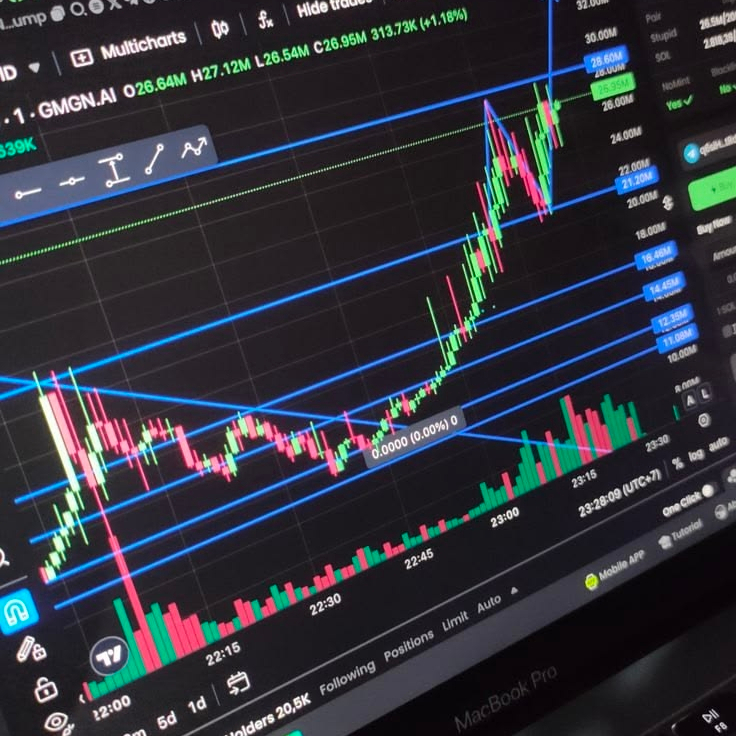
For beginners The hardest part of trading isn't finding a setup.
It's waiting.
No setup = no trade.
No confirmation = no trade.
Patience is a position too.
#Beginnersguide #BeginnerTrader #UltimateTrade #MillionaireJourney
For beginners The hardest part of trading isn't finding a setup.
It's waiting.
No setup = no trade.
No confirmation = no trade.
Patience is a position too.
#Beginnersguide #BeginnerTrader #UltimateTrade #MillionaireJourney
It's waiting.
No setup = no trade.
No confirmation = no trade.
Patience is a position too.
#Beginnersguide #BeginnerTrader #UltimateTrade #MillionaireJourney
41

😔 $TUT — I Lost More Than $100
I’m still a beginner trader, and I lost more than $100 trading TUT/USDT. 😒💔
Now I want to learn properly instead of chasing random moves.
🥺 Which coin would you recommend for a beginner?
Please share your suggestions and some advice for a new trader. 🙏🥹
#Crypto #BinanceHerYerde #TuT2025 #BeginnerTrader #CryptoCommunity
😔 $TUT — I Lost More Than $100
I’m still a beginner trader, and I lost more than $100 trading TUT/USDT. 😒💔
Now I want to learn properly instead of chasing random moves.
🥺 Which coin would you recommend for a beginner?
Please share your suggestions and some advice for a new trader. 🙏🥹
#Crypto #BinanceHerYerde #TuT2025 #BeginnerTrader #CryptoCommunity
I’m still a beginner trader, and I lost more than $100 trading TUT/USDT. 😒💔
Now I want to learn properly instead of chasing random moves.
🥺 Which coin would you recommend for a beginner?
Please share your suggestions and some advice for a new trader. 🙏🥹
#Crypto #BinanceHerYerde #TuT2025 #BeginnerTrader #CryptoCommunity
215

·
--
Estoy intentando entender dos conceptos básicos de los gráficos: soporte y resistencia.
Por lo que comprendo, el soporte sería una zona donde el precio ha encontrado compradores anteriormente.
La resistencia sería una zona donde el precio ha encontrado vendedores.
Todavía trato de identificar estas zonas correctamente. También estoy aprendiendo que no son paredes exactas ni garantizan que el precio vaya a rebotar.
Por ahora las veo como referencias que pueden ayudarme a observar mejor el comportamiento del mercado.
Esto es lo que yo estoy haciendo, no es un consejo financiero.
#trading #BeginnerTrader #EducationalContent
Estoy intentando entender dos conceptos básicos de los gráficos: soporte y resistencia.
Por lo que comprendo, el soporte sería una zona donde el precio ha encontrado compradores anteriormente.
La resistencia sería una zona donde el precio ha encontrado vendedores.
Todavía trato de identificar estas zonas correctamente. También estoy aprendiendo que no son paredes exactas ni garantizan que el precio vaya a rebotar.
Por ahora las veo como referencias que pueden ayudarme a observar mejor el comportamiento del mercado.
Esto es lo que yo estoy haciendo, no es un consejo financiero.
#trading #BeginnerTrader #EducationalContent
Por lo que comprendo, el soporte sería una zona donde el precio ha encontrado compradores anteriormente.
La resistencia sería una zona donde el precio ha encontrado vendedores.
Todavía trato de identificar estas zonas correctamente. También estoy aprendiendo que no son paredes exactas ni garantizan que el precio vaya a rebotar.
Por ahora las veo como referencias que pueden ayudarme a observar mejor el comportamiento del mercado.
Esto es lo que yo estoy haciendo, no es un consejo financiero.
#trading #BeginnerTrader #EducationalContent
137

·
--
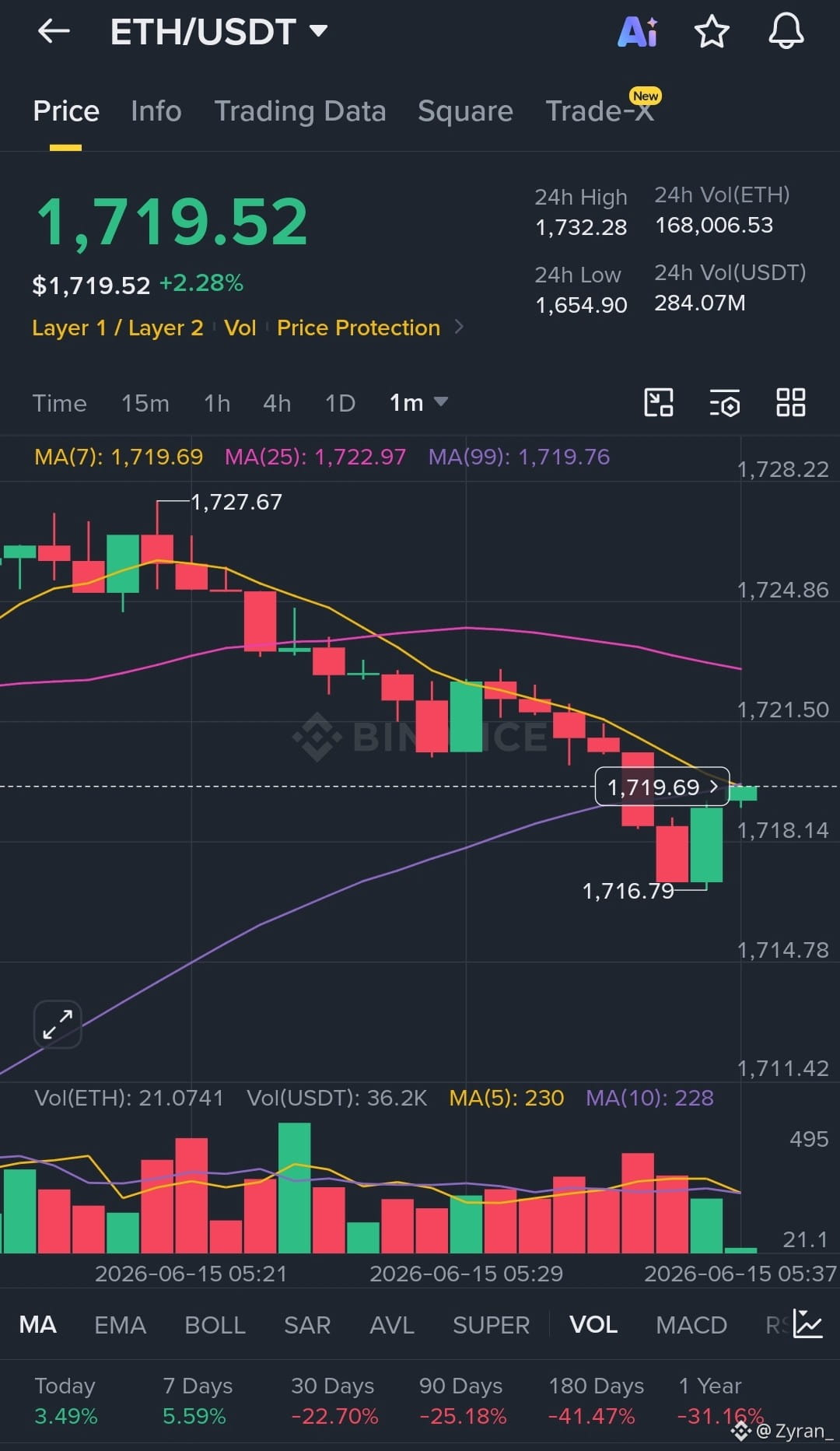
📊 ETH/USDT Update – Beginner View
ETH is currently trading around $1,719 with a small bounce after touching the $1,716 support.
From what I see (still learning 👀):
• Short-term trend looks slightly bearish
• Price is below MA(25), showing weak momentum
• Small green candle could mean a short bounce
I think ETH might either:
➡️ Continue ranging around $1,710–$1,730
➡️ Or drop more if support breaks
As a beginner, I’m just observing and learning how charts move before making big decisions.
My goal is to improve step by step and earn my first $250 from writing and crypto 💰
What do you think about ETH right now? 🤔
#WriteToEarn #ETH🔥🔥🔥🔥🔥🔥 #CryptoAnalysisUpdate #BeginnerTrader #BinanceSquare $BTC $NVDAB $TSLAB
{spot}(ETHUSDT)
📊 ETH/USDT Update – Beginner View
ETH is currently trading around $1,719 with a small bounce after touching the $1,716 support.
From what I see (still learning 👀):
• Short-term trend looks slightly bearish
• Price is below MA(25), showing weak momentum
• Small green candle could mean a short bounce
I think ETH might either:
➡️ Continue ranging around $1,710–$1,730
➡️ Or drop more if support breaks
As a beginner, I’m just observing and learning how charts move before making big decisions.
My goal is to improve step by step and earn my first $250 from writing and crypto 💰
What do you think about ETH right now? 🤔
#WriteToEarn #ETH🔥🔥🔥🔥🔥🔥 #CryptoAnalysisUpdate #BeginnerTrader #BinanceSquare $BTC $NVDAB $TSLAB
ETH is currently trading around $1,719 with a small bounce after touching the $1,716 support.
From what I see (still learning 👀):
• Short-term trend looks slightly bearish
• Price is below MA(25), showing weak momentum
• Small green candle could mean a short bounce
I think ETH might either:
➡️ Continue ranging around $1,710–$1,730
➡️ Or drop more if support breaks
As a beginner, I’m just observing and learning how charts move before making big decisions.
My goal is to improve step by step and earn my first $250 from writing and crypto 💰
What do you think about ETH right now? 🤔
#WriteToEarn #ETH🔥🔥🔥🔥🔥🔥 #CryptoAnalysisUpdate #BeginnerTrader #BinanceSquare $BTC $NVDAB $TSLAB
73

Short Position Kya Hoti Hai?
Jab aap expect karte hain ke price neeche jayegi, usay Short Position kehte hain.
📊 Example: BTC = $100,000
Aap Short karte ho aur price $95,000 ho jati hai.
✅ Profit
💡 Short = Sell & Expect Price Down
⚠️ Beginners ko pehle Long trading samajhni chahiye.
$BTC
#position #ShortPosition #Bitcoin❗ #BeginnerTrader
{spot}(BTCUSDT)
Short Position Kya Hoti Hai?
Jab aap expect karte hain ke price neeche jayegi, usay Short Position kehte hain.
📊 Example: BTC = $100,000
Aap Short karte ho aur price $95,000 ho jati hai.
✅ Profit
💡 Short = Sell & Expect Price Down
⚠️ Beginners ko pehle Long trading samajhni chahiye.
$BTC
#position #ShortPosition #Bitcoin❗ #BeginnerTrader
Jab aap expect karte hain ke price neeche jayegi, usay Short Position kehte hain.
📊 Example: BTC = $100,000
Aap Short karte ho aur price $95,000 ho jati hai.
✅ Profit
💡 Short = Sell & Expect Price Down
⚠️ Beginners ko pehle Long trading samajhni chahiye.
$BTC
#position #ShortPosition #Bitcoin❗ #BeginnerTrader
81

Top Trading Ideas for Beginners in 2026 🚀
Success in trading isn't about finding a secret coin—it's about building smart habits. Start by focusing on risk management, trend analysis, and patience. Never invest more than you can afford to lose, and always use a trading plan.
💎 Beginner Tips:
✅ Follow market trends, not emotions
✅ Use stop-loss protection
✅ Learn technical analysis basics
✅ Diversify your portfolio
✅ Focus on long-term consistency
The best traders aren't the ones who win every trade—they're the ones who protect their capital and stay in the game. Start small, learn daily, and let knowledge become your greatest asset.
#Binance #CryptoTrading #BTC #BeginnerTrader #tradingtips
$BTC
{spot}(BTCUSDT)
$ENA
{spot}(ENAUSDT)
$HYPE
{future}(HYPEUSDT)
Top Trading Ideas for Beginners in 2026 🚀
Success in trading isn't about finding a secret coin—it's about building smart habits. Start by focusing on risk management, trend analysis, and patience. Never invest more than you can afford to lose, and always use a trading plan.
💎 Beginner Tips:
✅ Follow market trends, not emotions
✅ Use stop-loss protection
✅ Learn technical analysis basics
✅ Diversify your portfolio
✅ Focus on long-term consistency
The best traders aren't the ones who win every trade—they're the ones who protect their capital and stay in the game. Start small, learn daily, and let knowledge become your greatest asset.
#Binance #CryptoTrading #BTC #BeginnerTrader #tradingtips
$BTC
$ENA
$HYPE
Success in trading isn't about finding a secret coin—it's about building smart habits. Start by focusing on risk management, trend analysis, and patience. Never invest more than you can afford to lose, and always use a trading plan.
💎 Beginner Tips:
✅ Follow market trends, not emotions
✅ Use stop-loss protection
✅ Learn technical analysis basics
✅ Diversify your portfolio
✅ Focus on long-term consistency
The best traders aren't the ones who win every trade—they're the ones who protect their capital and stay in the game. Start small, learn daily, and let knowledge become your greatest asset.
#Binance #CryptoTrading #BTC #BeginnerTrader #tradingtips
$BTC
$ENA
$HYPE
203

·
--
BTC $75K se $62K... Market laal. Ek beginner kya seekh rahi hai? 😬
Assalamualaikum Crypto family!
Kal tak khush thi - BTC $75,000 cross kar gaya.
Aaj subha utha to market laal 🔴 BTC $62,396 -4.16% gir gaya
Sach bataun? Dil dar gaya tha 😅
"Ab kya hoga? Portfolio khatam?" wale thoughts aa gaye
Phir yaad aya jo kal post me likha tha: DCA + Fomo nahi karna
Ek beginner ke 3 sawal aaj:
1. Market laal ho to dar lagta hai ya khushi hoti hai?
2. Dip = Discount sale ya Danger signal?
3. Aap log dip me kya karte ho? Buy karte ho ya side pe baith jate ho?
Meri seekh aaj ki:
Crypto me 10% up, 10% down normal hai.
Green me khush, red me dar - ye beginner wali galti hai.
Seekh rahi hun sabr karna.
Me expert nahi hun. Bas apni feelings share kar rahi hun.
Aap logon ka experience kya kehta hai dip ke bare me?
Comment me batao 👇 Me padh kar seekhun gi
#BinanceSquare #BTC #CryptoPakistan #MarketSentimentToday #BeginnerTrader #DCR #RedMarket
BTC $75K se $62K... Market laal. Ek beginner kya seekh rahi hai? 😬
Assalamualaikum Crypto family!
Kal tak khush thi - BTC $75,000 cross kar gaya.
Aaj subha utha to market laal 🔴 BTC $62,396 -4.16% gir gaya
Sach bataun? Dil dar gaya tha 😅
"Ab kya hoga? Portfolio khatam?" wale thoughts aa gaye
Phir yaad aya jo kal post me likha tha: DCA + Fomo nahi karna
Ek beginner ke 3 sawal aaj:
1. Market laal ho to dar lagta hai ya khushi hoti hai?
2. Dip = Discount sale ya Danger signal?
3. Aap log dip me kya karte ho? Buy karte ho ya side pe baith jate ho?
Meri seekh aaj ki:
Crypto me 10% up, 10% down normal hai.
Green me khush, red me dar - ye beginner wali galti hai.
Seekh rahi hun sabr karna.
Me expert nahi hun. Bas apni feelings share kar rahi hun.
Aap logon ka experience kya kehta hai dip ke bare me?
Comment me batao 👇 Me padh kar seekhun gi
#BinanceSquare #BTC #CryptoPakistan #MarketSentimentToday #BeginnerTrader #DCR #RedMarket
Assalamualaikum Crypto family!
Kal tak khush thi - BTC $75,000 cross kar gaya.
Aaj subha utha to market laal 🔴 BTC $62,396 -4.16% gir gaya
Sach bataun? Dil dar gaya tha 😅
"Ab kya hoga? Portfolio khatam?" wale thoughts aa gaye
Phir yaad aya jo kal post me likha tha: DCA + Fomo nahi karna
Ek beginner ke 3 sawal aaj:
1. Market laal ho to dar lagta hai ya khushi hoti hai?
2. Dip = Discount sale ya Danger signal?
3. Aap log dip me kya karte ho? Buy karte ho ya side pe baith jate ho?
Meri seekh aaj ki:
Crypto me 10% up, 10% down normal hai.
Green me khush, red me dar - ye beginner wali galti hai.
Seekh rahi hun sabr karna.
Me expert nahi hun. Bas apni feelings share kar rahi hun.
Aap logon ka experience kya kehta hai dip ke bare me?
Comment me batao 👇 Me padh kar seekhun gi
#BinanceSquare #BTC #CryptoPakistan #MarketSentimentToday #BeginnerTrader #DCR #RedMarket
1
75

·
--
The number one lesson a #beginnertrader must learn is to know when to cut their losses. Currently focusing on $ETH
{spot}(ETHUSDT)
The number one lesson a #beginnertrader must learn is to know when to cut their losses. Currently focusing on $ETH
AngelOfCrypto_-:
nice
1
278

Day 2 of learning Binance 😅📈
Today I finally understood what those green and red candles are about 😂🕯️
Green means the price went up, red means it went down.
Still learning, still confused sometimes 😂 but we move. One step at a time.
#BTC☀️ #CryptoKenya #LearningTrading #BeginnerTrader
Day 2 of learning Binance 😅📈
Today I finally understood what those green and red candles are about 😂🕯️
Green means the price went up, red means it went down.
Still learning, still confused sometimes 😂 but we move. One step at a time.
#BTC☀️ #CryptoKenya #LearningTrading #BeginnerTrader
Today I finally understood what those green and red candles are about 😂🕯️
Green means the price went up, red means it went down.
Still learning, still confused sometimes 😂 but we move. One step at a time.
#BTC☀️ #CryptoKenya #LearningTrading #BeginnerTrader
1
108

·
--
One of the biggest trading mistakes:
Entering a trade without knowing where you will exit.
Before entering, know:
Entry ✅
Invalidation/stop-loss ✅
Target ✅
Risk amount ✅
If you only think about profit before entering a trade, you’re gambling with your emotions.
Risk management isn’t boring.
It’s what keeps you in the game.
#Trading #BeginnerTrader #Saminakhan
One of the biggest trading mistakes:
Entering a trade without knowing where you will exit.
Before entering, know:
Entry ✅
Invalidation/stop-loss ✅
Target ✅
Risk amount ✅
If you only think about profit before entering a trade, you’re gambling with your emotions.
Risk management isn’t boring.
It’s what keeps you in the game.
#Trading #BeginnerTrader #Saminakhan
Entering a trade without knowing where you will exit.
Before entering, know:
Entry ✅
Invalidation/stop-loss ✅
Target ✅
Risk amount ✅
If you only think about profit before entering a trade, you’re gambling with your emotions.
Risk management isn’t boring.
It’s what keeps you in the game.
#Trading #BeginnerTrader #Saminakhan
1
492

When I started with just $1, I used to panic at every 1% move 😂
Now I realize patience is the real strategy.
What's your first trading story? Share below 👇
#CryptoJourney2025 #BeginnerTrader
When I started with just $1, I used to panic at every 1% move 😂
Now I realize patience is the real strategy.
What's your first trading story? Share below 👇
#CryptoJourney2025 #BeginnerTrader
Now I realize patience is the real strategy.
What's your first trading story? Share below 👇
#CryptoJourney2025 #BeginnerTrader
1
89

$GOOGL.US #beginners #BeginnerTrader I'm a beginner, join me on learning, trading and earning together. I believe everyone has a dream. May the dreams come true 😉
$GOOGL.US #beginners #BeginnerTrader I'm a beginner, join me on learning, trading and earning together. I believe everyone has a dream. May the dreams come true 😉
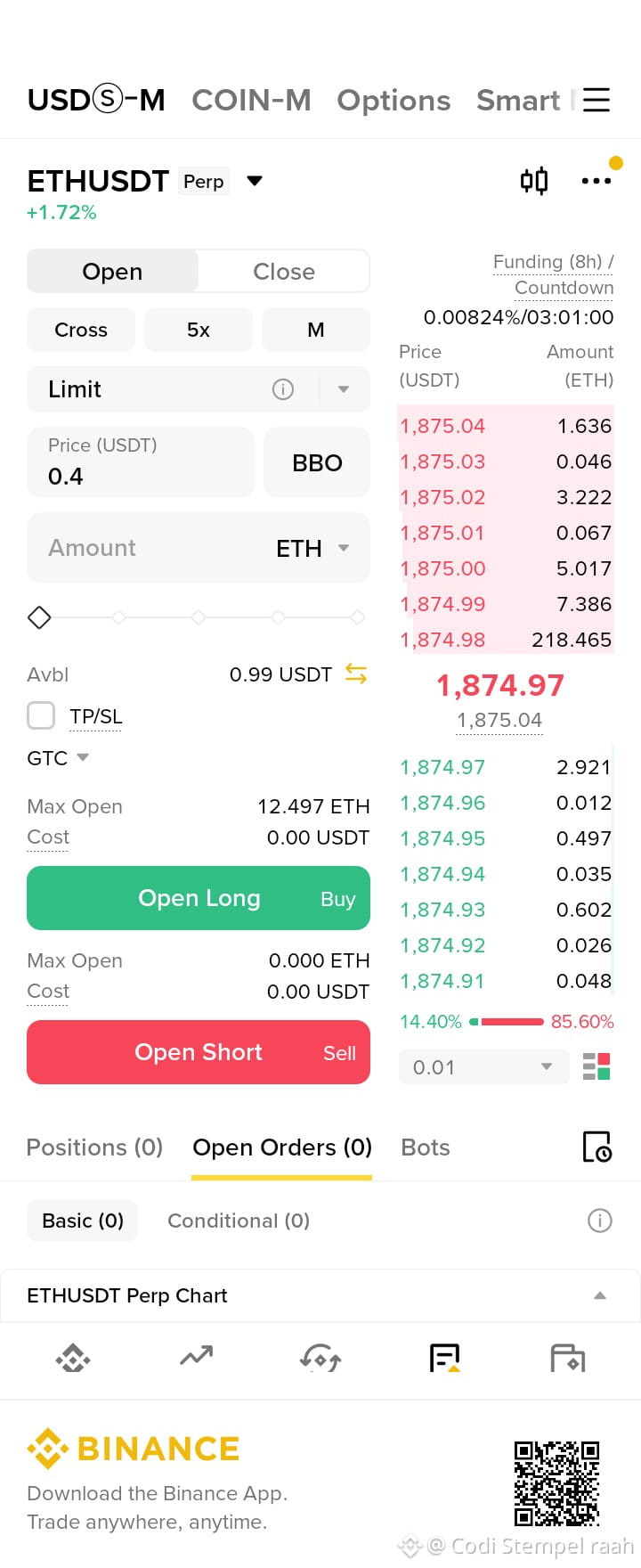
ETH+0,55%
GOOGLUS+0,03%
22

My first ever future trade please dont judge need some more tips from the experts for next trade.
#btc #newbie #BeginnerTrader #GOLD
My first ever future trade please dont judge need some more tips from the experts for next trade.
#btc #newbie #BeginnerTrader #GOLD
#btc #newbie #BeginnerTrader #GOLD
86

#BitcoinTradesLower #BeginnerTrader $BTC
{spot}(BTCUSDT)
new here, wonderful how one can gain small earnings on this app.
#BitcoinTradesLower #BeginnerTrader $BTC
new here, wonderful how one can gain small earnings on this app.
new here, wonderful how one can gain small earnings on this app.
1
94

🚨 99% of People Buy Bitcoin at the Wrong Time…
Have you noticed something?
When Bitcoin is making headlines and everyone is excited, many people rush to buy.
But when prices fall and fear takes over, they disappear.
The market has a funny way of testing patience.
The biggest gains often come to those who stay calm while everyone else is emotional.
I’m not here to tell you what to buy.
I’m here to share what I learn every day as I grow in crypto.
❤️ Follow me if you want honest crypto insights without the hype.
👇 Would you buy Bitcoin today? Why or why not? $BTC
#btc #usdt #BeginnerTrader
{future}(BTCUSDT)
🚨 99% of People Buy Bitcoin at the Wrong Time…
Have you noticed something?
When Bitcoin is making headlines and everyone is excited, many people rush to buy.
But when prices fall and fear takes over, they disappear.
The market has a funny way of testing patience.
The biggest gains often come to those who stay calm while everyone else is emotional.
I’m not here to tell you what to buy.
I’m here to share what I learn every day as I grow in crypto.
❤️ Follow me if you want honest crypto insights without the hype.
👇 Would you buy Bitcoin today? Why or why not? $BTC
#btc #usdt #BeginnerTrader
Have you noticed something?
When Bitcoin is making headlines and everyone is excited, many people rush to buy.
But when prices fall and fear takes over, they disappear.
The market has a funny way of testing patience.
The biggest gains often come to those who stay calm while everyone else is emotional.
I’m not here to tell you what to buy.
I’m here to share what I learn every day as I grow in crypto.
❤️ Follow me if you want honest crypto insights without the hype.
👇 Would you buy Bitcoin today? Why or why not? $BTC
#btc #usdt #BeginnerTrader
103

·
--
If you are a beginner:
• Avoid futures at the start
• Learn spot trading first
• Understand risk management
Slow learning = Long-term survival 📚
#BeginnerTrader #Crypto
If you are a beginner:
• Avoid futures at the start
• Learn spot trading first
• Understand risk management
Slow learning = Long-term survival 📚
#BeginnerTrader #Crypto
• Avoid futures at the start
• Learn spot trading first
• Understand risk management
Slow learning = Long-term survival 📚
#BeginnerTrader #Crypto
100
$1.5 Coupon to $10 - When My Gut Feeling Beat AI 🔥
Got a free $1.5 futures coupon from Binance the other day.
Asked Gemini AI to analyze the chart - it said "High chance this will go Long".😹$SOL
But when I looked at the chart, I thought "Nah man, this looks like it's going down". Trusted my gut and took a Short.
Result? That coupon turned into $10 😎
*3 things I learned:*
1. AI tools are just helpers. You make the final call.
2. Listen to the chart. When everyone says Long, think about Short too.
3. When you get free/coupon money, don't go all-in with high leverage. Start small.
I'm still a new trader. I lose, I win. But I learn something from every trade.
_This is just my personal experience. Not financial advice. Always DYOR and use Stop Loss when trading._
#Binance #futures #tradingtips #BeginnerTrader
{future}(SOLUSDT)
$1.5 Coupon to $10 - When My Gut Feeling Beat AI 🔥
Got a free $1.5 futures coupon from Binance the other day.
Asked Gemini AI to analyze the chart - it said "High chance this will go Long".😹$SOL
But when I looked at the chart, I thought "Nah man, this looks like it's going down". Trusted my gut and took a Short.
Result? That coupon turned into $10 😎
*3 things I learned:*
1. AI tools are just helpers. You make the final call.
2. Listen to the chart. When everyone says Long, think about Short too.
3. When you get free/coupon money, don't go all-in with high leverage. Start small.
I'm still a new trader. I lose, I win. But I learn something from every trade.
_This is just my personal experience. Not financial advice. Always DYOR and use Stop Loss when trading._
#Binance #futures #tradingtips #BeginnerTrader
Got a free $1.5 futures coupon from Binance the other day.
Asked Gemini AI to analyze the chart - it said "High chance this will go Long".😹$SOL
But when I looked at the chart, I thought "Nah man, this looks like it's going down". Trusted my gut and took a Short.
Result? That coupon turned into $10 😎
*3 things I learned:*
1. AI tools are just helpers. You make the final call.
2. Listen to the chart. When everyone says Long, think about Short too.
3. When you get free/coupon money, don't go all-in with high leverage. Start small.
I'm still a new trader. I lose, I win. But I learn something from every trade.
_This is just my personal experience. Not financial advice. Always DYOR and use Stop Loss when trading._
#Binance #futures #tradingtips #BeginnerTrader
134

Most traders do not lose because they picked the wrong coin.
They lose because they ignore risk management.
A bad entry with no stop loss can destroy even a good idea.
In crypto, protecting your money is just as important as growing it.
What is your number one rule for managing risk?#RiskManagement #beginnertrader
Most traders do not lose because they picked the wrong coin.
They lose because they ignore risk management.
A bad entry with no stop loss can destroy even a good idea.
In crypto, protecting your money is just as important as growing it.
What is your number one rule for managing risk?#RiskManagement #beginnertrader
They lose because they ignore risk management.
A bad entry with no stop loss can destroy even a good idea.
In crypto, protecting your money is just as important as growing it.
What is your number one rule for managing risk?#RiskManagement #beginnertrader
1
139

·
--
$MINA 👀
Is Mina gearing up for its next move?
Price breakout loading… or another fakeout? 📈📉
What do you think — bullish or bearish on $MINA?
Drop your prediction below 👇$MINA Does it's value will increase?
#mina #crypto #BeginnerTrader
{spot}(MINAUSDT)
$MINA 👀
Is Mina gearing up for its next move?
Price breakout loading… or another fakeout? 📈📉
What do you think — bullish or bearish on $MINA ?
Drop your prediction below 👇$MINA Does it's value will increase?
#mina #crypto #BeginnerTrader
Is Mina gearing up for its next move?
Price breakout loading… or another fakeout? 📈📉
What do you think — bullish or bearish on $MINA ?
Drop your prediction below 👇$MINA Does it's value will increase?
#mina #crypto #BeginnerTrader

1
550
Connectez-vous pour découvrir plus de contenu
Rejoignez la communauté mondiale des adeptes de cryptomonnaies sur Binance Square
⚡️ Suviez les dernières informations importantes sur les cryptomonnaies.
💬 Jugé digne de confiance par la plus grande plateforme d’échange de cryptomonnaies au monde.
👍 Découvrez les connaissances que partagent les créateurs vérifiés.
Adresse e-mail/Nº de téléphone
Sujets d’actualité
1
#Nikkei225Jumps2.5%ToThreeMonthHigh
15,705 vues
319 mentions
2
#DriftHackVictimsBeginClaims
91,746 vues
1,006 mentions
3
#SolanaTokenizedStockVolumeTops$4.4BInSeptember
8,748 vues
98 mentions
4
#BitcoinSpotETFsDraw$6.34BInflowsInQ3
30,609 vues
212 mentions
5
#EthereumValidatorExitQueueJumps392%
235,089 vues
2,020 mentions
6
#IMFApprovesElSalvador$138MWithBitcoinWaiver
21,909 vues
124 mentions
7
#SECHaltsCryptoETFReviewsAmidFundingLapse
355,236 vues
2,698 mentions
8
#ZcashETFPostsFirstWeeklyOutflow$93.6M
107,848 vues
286 mentions
9
#GreekPoliceBustCryptoScamRingArrest17
485,484 vues
3,251 mentions
10
#BitcoinRejectedAt$87K
246,350 vues
368 mentions