
Crypto Pulse Media
1.9k Publicaciones
Crypto Pulse Media
Denunciar
Bloquear usuario
Real-Time Crypto Market Intelligence Bitcoin • Altcoins • Web3 • Blockchain Global Coverage | Data-Driven Insights Crypto Pulse Media – Stay Ahead of the Market
834 Siguiendo
523 Seguidores
609 Me gusta
Publicaciones
Artículo
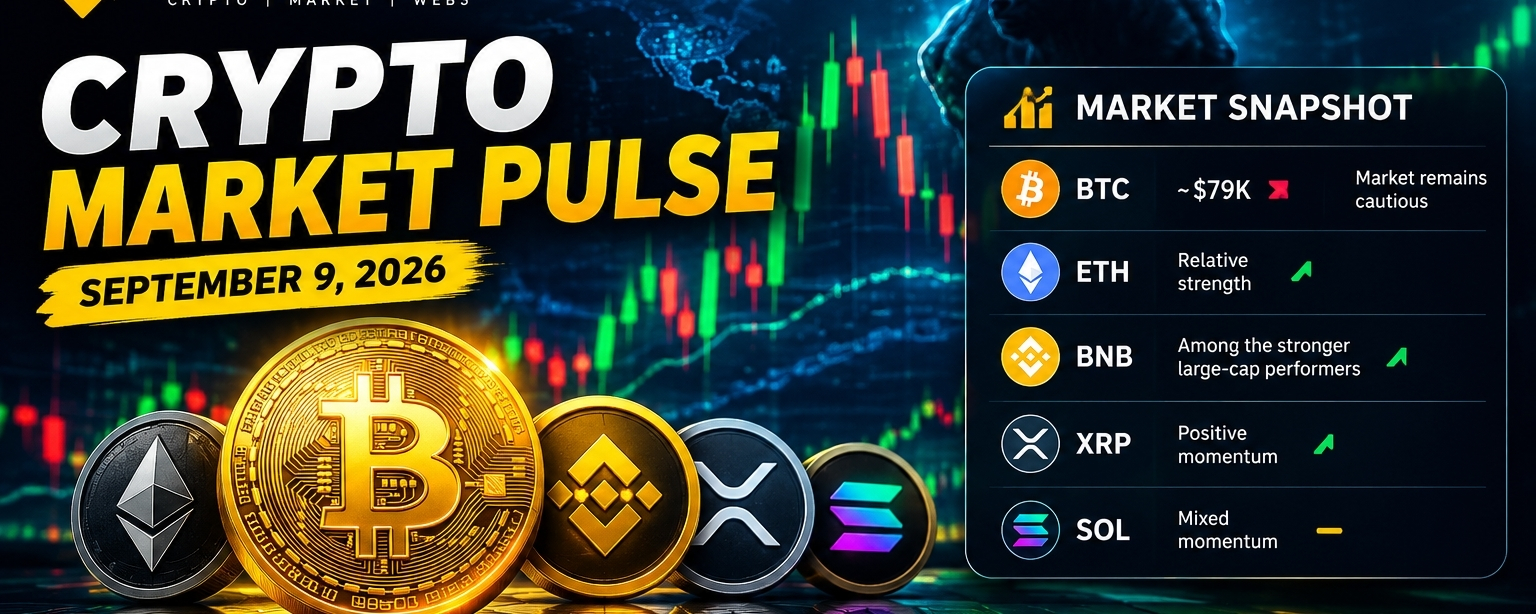
Bitcoin muestra resiliencia tras la reciente volatilidad, con BTC operando alrededor de la zona de **$79K** tod🚨 **PULSO DEL MERCADO CRIPTO — 9 DE SEPTIEMBRE DE 2026**
📈 **Resumen del mercado**
• **BTC:** alrededor de $79K — el mercado sigue siendo cauteloso
• **ETH:** mostrando fortaleza relativa
• **BNB:** entre los mejores valores de gran capitalización
• **XRP:** también registrando impulso positivo
• **SOL:** operando con impulso mixto
🔥 **¿Qué está impulsando el mercado?**
Los mercados globales están atentos al aumento de las tensiones geopolíticas y a los precios más altos del petróleo, mientras que los inversores también miran hacia la próxima **decisión de la Reserva Federal de EE. UU.** y los próximos datos de inflación.
Bitcoin muestra resiliencia tras la reciente volatilidad, con BTC operando alrededor de la zona de **$79K** tod
🚨 **PULSO DEL MERCADO CRIPTO — 9 DE SEPTIEMBRE DE 2026**
📈 **Resumen del mercado**
• **BTC:** alrededor de $79K — el mercado sigue siendo cauteloso
• **ETH:** mostrando fortaleza relativa
• **BNB:** entre los mejores valores de gran capitalización
• **XRP:** también registrando impulso positivo
• **SOL:** operando con impulso mixto
🔥 **¿Qué está impulsando el mercado?**
Los mercados globales están atentos al aumento de las tensiones geopolíticas y a los precios más altos del petróleo, mientras que los inversores también miran hacia la próxima **decisión de la Reserva Federal de EE. UU.** y los próximos datos de inflación.
📈 **Resumen del mercado**
• **BTC:** alrededor de $79K — el mercado sigue siendo cauteloso
• **ETH:** mostrando fortaleza relativa
• **BNB:** entre los mejores valores de gran capitalización
• **XRP:** también registrando impulso positivo
• **SOL:** operando con impulso mixto
🔥 **¿Qué está impulsando el mercado?**
Los mercados globales están atentos al aumento de las tensiones geopolíticas y a los precios más altos del petróleo, mientras que los inversores también miran hacia la próxima **decisión de la Reserva Federal de EE. UU.** y los próximos datos de inflación.
2
298
Artículo
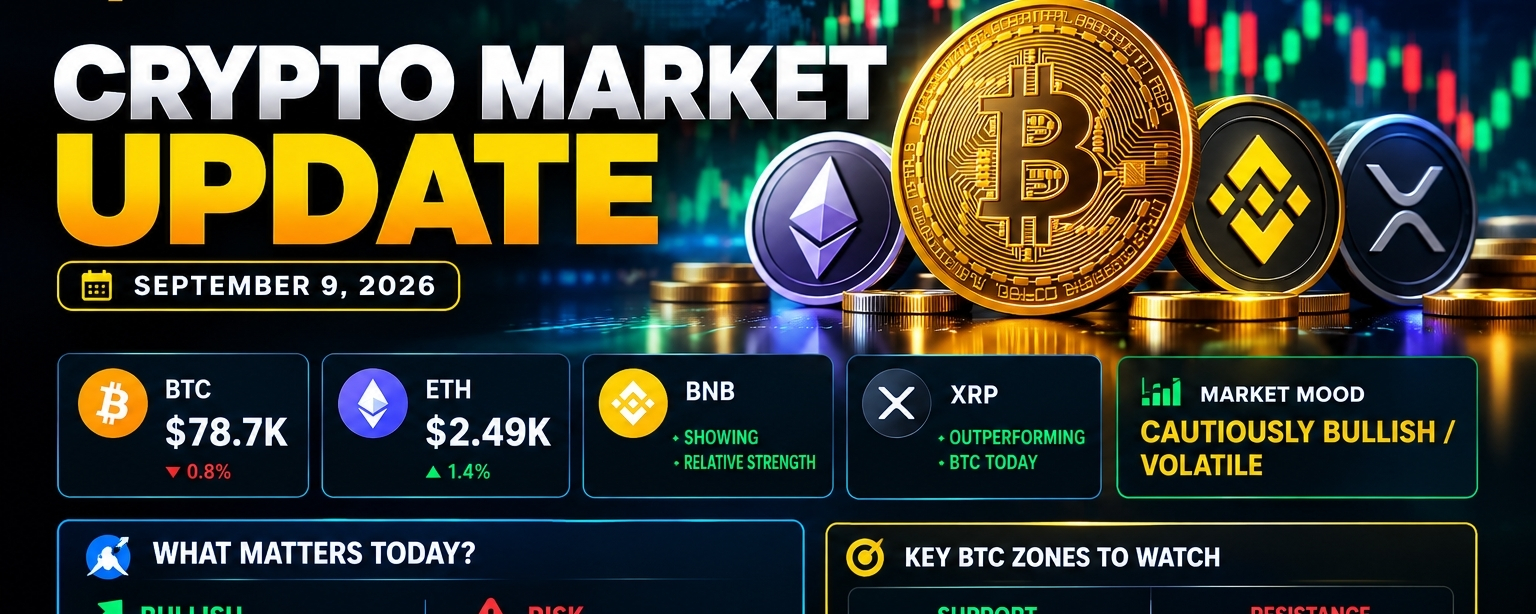
Bitcoin cotiza alrededor de **$78.5K–$78.8K**, manteniéndose por debajo del máximo reciente de $82K+ mientras los traders siguen c🚨 **ACTUALIZACIÓN DEL MERCADO CRIPTO — 9 DE SEPTIEMBRE DE 2026**
🔹 **BTC:** ~$78.7K
🔹 **ETH:** ~$2.49K
🔹 **BNB:** mostrando fortaleza relativa
🔹 **XRP:** también superando a BTC hoy
🔹 **Sentimiento del mercado:** Cautelosamente alcista / volátil
📌 **¿Qué importa hoy?**
El mercado cripto está siendo arrastrado en dos direcciones:
➡️ **Alcista:** Bitcoin sigue muy por encima de los niveles que respaldaron su reciente repunte, mientras que los flujos del ETF institucional de BTC han mostrado recientemente una demanda fuerte. ([The Wall Street Journal][2])
➡️ **Riesgo:** Precios del petróleo más altos y tensiones geopolíticas renovadas están aumentando las preocupaciones por la inflación, lo que podría presionar los activos de riesgo si los mercados esperan una política monetaria más restrictiva.
Bitcoin cotiza alrededor de **$78.5K–$78.8K**, manteniéndose por debajo del máximo reciente de $82K+ mientras los traders siguen c
🚨 **ACTUALIZACIÓN DEL MERCADO CRIPTO — 9 DE SEPTIEMBRE DE 2026**
🔹 **BTC:** ~$78.7K
🔹 **ETH:** ~$2.49K
🔹 **BNB:** mostrando fortaleza relativa
🔹 **XRP:** también superando a BTC hoy
🔹 **Sentimiento del mercado:** Cautelosamente alcista / volátil
📌 **¿Qué importa hoy?**
El mercado cripto está siendo arrastrado en dos direcciones:
➡️ **Alcista:** Bitcoin sigue muy por encima de los niveles que respaldaron su reciente repunte, mientras que los flujos del ETF institucional de BTC han mostrado recientemente una demanda fuerte. ([The Wall Street Journal][2])
➡️ **Riesgo:** Precios del petróleo más altos y tensiones geopolíticas renovadas están aumentando las preocupaciones por la inflación, lo que podría presionar los activos de riesgo si los mercados esperan una política monetaria más restrictiva.
🔹 **BTC:** ~$78.7K
🔹 **ETH:** ~$2.49K
🔹 **BNB:** mostrando fortaleza relativa
🔹 **XRP:** también superando a BTC hoy
🔹 **Sentimiento del mercado:** Cautelosamente alcista / volátil
📌 **¿Qué importa hoy?**
El mercado cripto está siendo arrastrado en dos direcciones:
➡️ **Alcista:** Bitcoin sigue muy por encima de los niveles que respaldaron su reciente repunte, mientras que los flujos del ETF institucional de BTC han mostrado recientemente una demanda fuerte. ([The Wall Street Journal][2])
➡️ **Riesgo:** Precios del petróleo más altos y tensiones geopolíticas renovadas están aumentando las preocupaciones por la inflación, lo que podría presionar los activos de riesgo si los mercados esperan una política monetaria más restrictiva.
274
Artículo
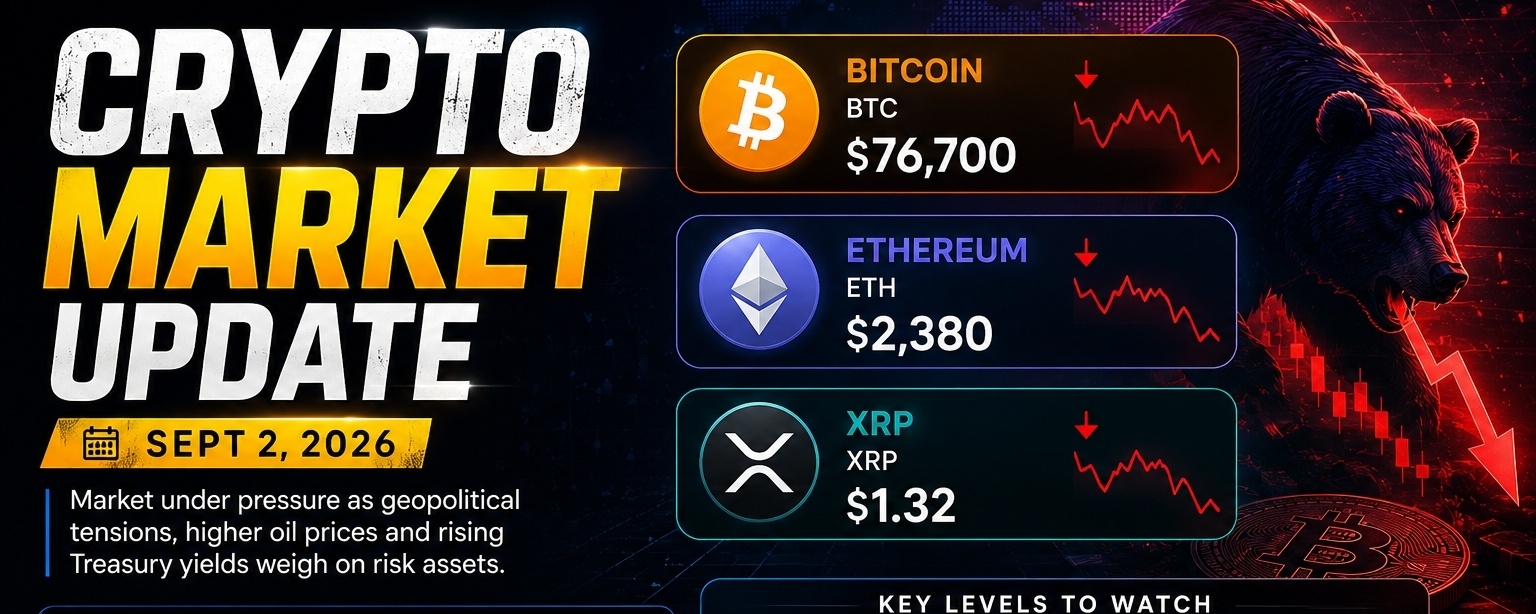
Bitcoin se enfrenta a una nueva presión vendedora tras su fuerte rally de agosto.BTC: ~$76.7K
🔷 ETH: ~$2.38K
💵 XRP: ~$1.32
El mercado está reaccionando a las tensiones geopolíticas renovadas, el aumento de los precios del petróleo y el alza de los rendimientos de los bonos del Tesoro. Los activos de riesgo están bajo presión mientras los traders reevalúan las expectativas sobre las tasas de interés.
📌 Niveles clave a vigilar:
• BTC: zona de soporte $76K–$77K
• $79K–$80K sigue siendo una resistencia importante
• ETH necesita recuperar $2.4K+ para un impulso más fuerte
La volatilidad de septiembre ya está aquí. Mantén la calma, gestiona el riesgo y observa los datos macro. 👀
#Bitcoin #BTC #Ethereum #ETH #Cripto #MercadoCripto #Altcoins #Web3
Bitcoin se enfrenta a una nueva presión vendedora tras su fuerte rally de agosto.
BTC: ~$76.7K
🔷 ETH: ~$2.38K
💵 XRP: ~$1.32
El mercado está reaccionando a las tensiones geopolíticas renovadas, el aumento de los precios del petróleo y el alza de los rendimientos de los bonos del Tesoro. Los activos de riesgo están bajo presión mientras los traders reevalúan las expectativas sobre las tasas de interés.
📌 Niveles clave a vigilar:
• BTC: zona de soporte $76K–$77K
• $79K–$80K sigue siendo una resistencia importante
• ETH necesita recuperar $2.4K+ para un impulso más fuerte
La volatilidad de septiembre ya está aquí. Mantén la calma, gestiona el riesgo y observa los datos macro. 👀
#Bitcoin #BTC #Ethereum #ETH #Cripto #MercadoCripto #Altcoins #Web3
🔷 ETH: ~$2.38K
💵 XRP: ~$1.32
El mercado está reaccionando a las tensiones geopolíticas renovadas, el aumento de los precios del petróleo y el alza de los rendimientos de los bonos del Tesoro. Los activos de riesgo están bajo presión mientras los traders reevalúan las expectativas sobre las tasas de interés.
📌 Niveles clave a vigilar:
• BTC: zona de soporte $76K–$77K
• $79K–$80K sigue siendo una resistencia importante
• ETH necesita recuperar $2.4K+ para un impulso más fuerte
La volatilidad de septiembre ya está aquí. Mantén la calma, gestiona el riesgo y observa los datos macro. 👀
#Bitcoin #BTC #Ethereum #ETH #Cripto #MercadoCripto #Altcoins #Web3
1
60
Artículo
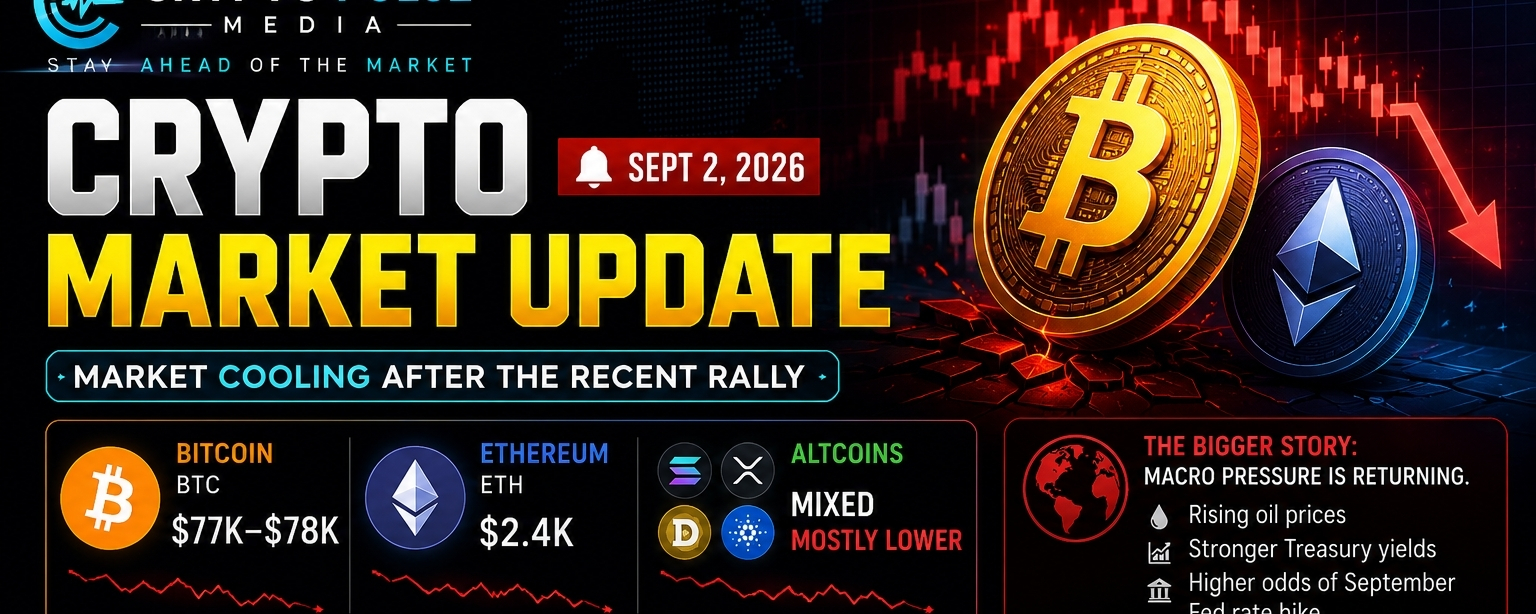
Las condiciones actuales del mercado muestran cierta debilidad después del reciente rally. Bitcoin cotiza alrededorEl riesgo macro también vuelve al centro de atención: el aumento de los precios del petróleo, los rendimientos más sólidos del Tesoro y una mayor expectativa de una subida de tasas de la Reserva Federal en septiembre están presionando a los activos de riesgo, incluido el cripto. ([Reuters][2])
🚨 ACTUALIZACIÓN DEL MERCADO CRIPTO — 2 DE SEPTIEMBRE DE 2026
Bitcoin se está enfriando cerca de la zona de $77K–$78K tras su reciente rally. Ethereum se mantiene alrededor de $2.4K, mientras que varias altcoins importantes están registrando retrocesos más profundos.
🌍 La historia más grande: la presión macro está regresando.
• BTC: ~$77K–$78K
• ETH: ~$2.4K
• Altcoins: Mixto → en su mayoría a la baja
Las condiciones actuales del mercado muestran cierta debilidad después del reciente rally. Bitcoin cotiza alrededor
El riesgo macro también vuelve al centro de atención: el aumento de los precios del petróleo, los rendimientos más sólidos del Tesoro y una mayor expectativa de una subida de tasas de la Reserva Federal en septiembre están presionando a los activos de riesgo, incluido el cripto. ([Reuters][2])
🚨 ACTUALIZACIÓN DEL MERCADO CRIPTO — 2 DE SEPTIEMBRE DE 2026
Bitcoin se está enfriando cerca de la zona de $77K–$78K tras su reciente rally. Ethereum se mantiene alrededor de $2.4K, mientras que varias altcoins importantes están registrando retrocesos más profundos.
🌍 La historia más grande: la presión macro está regresando.
• BTC: ~$77K–$78K
• ETH: ~$2.4K
• Altcoins: Mixto → en su mayoría a la baja
🚨 ACTUALIZACIÓN DEL MERCADO CRIPTO — 2 DE SEPTIEMBRE DE 2026
Bitcoin se está enfriando cerca de la zona de $77K–$78K tras su reciente rally. Ethereum se mantiene alrededor de $2.4K, mientras que varias altcoins importantes están registrando retrocesos más profundos.
🌍 La historia más grande: la presión macro está regresando.
• BTC: ~$77K–$78K
• ETH: ~$2.4K
• Altcoins: Mixto → en su mayoría a la baja
84
Artículo
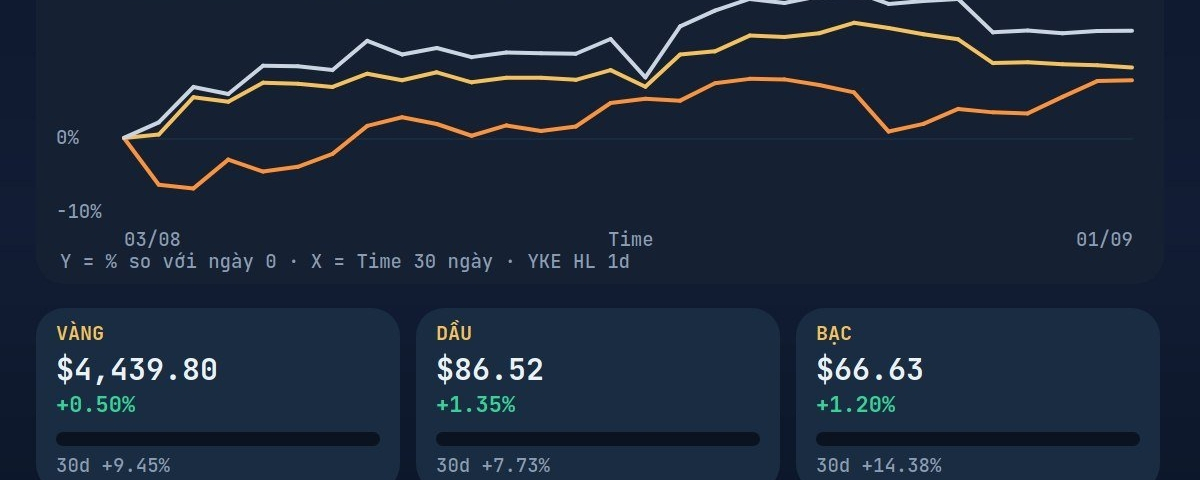
El mercado de hoy muestra debilidad: Bitcoin está alrededor de **$77K–$78K**, mientras que Ethereum está alrededor de **$2.4Bitcoin está enfrentando una presión vendedora renovada mientras el BTC tiene dificultades para mantener la zona de $78K.
📉 BTC: ~$77K–$78K
📉 ETH: ~$2.4K
📉 SOL: ~$99
📉 XRP: ~$1.35
La historia más grande: los activos de riesgo están sintiendo presión mientras los mercados reevaluan el camino de las tasas de interés de EE. UU.
Septiembre históricamente ha sido un mes difícil para Bitcoin, por lo que la volatilidad podría seguir elevada.
👀 Puntos clave a vigilar:
• BTC recuperando los $80K
• ETH manteniendo la zona de $2.4K
• Expectativas sobre las tasas de EE. UU.
• Flujos de cripto institucionales
• Fortaleza de las altcoins frente a BTC
El mercado de hoy muestra debilidad: Bitcoin está alrededor de **$77K–$78K**, mientras que Ethereum está alrededor de **$2.4
Bitcoin está enfrentando una presión vendedora renovada mientras el BTC tiene dificultades para mantener la zona de $78K.
📉 BTC: ~$77K–$78K
📉 ETH: ~$2.4K
📉 SOL: ~$99
📉 XRP: ~$1.35
La historia más grande: los activos de riesgo están sintiendo presión mientras los mercados reevaluan el camino de las tasas de interés de EE. UU.
Septiembre históricamente ha sido un mes difícil para Bitcoin, por lo que la volatilidad podría seguir elevada.
👀 Puntos clave a vigilar:
• BTC recuperando los $80K
• ETH manteniendo la zona de $2.4K
• Expectativas sobre las tasas de EE. UU.
• Flujos de cripto institucionales
• Fortaleza de las altcoins frente a BTC
📉 BTC: ~$77K–$78K
📉 ETH: ~$2.4K
📉 SOL: ~$99
📉 XRP: ~$1.35
La historia más grande: los activos de riesgo están sintiendo presión mientras los mercados reevaluan el camino de las tasas de interés de EE. UU.
Septiembre históricamente ha sido un mes difícil para Bitcoin, por lo que la volatilidad podría seguir elevada.
👀 Puntos clave a vigilar:
• BTC recuperando los $80K
• ETH manteniendo la zona de $2.4K
• Expectativas sobre las tasas de EE. UU.
• Flujos de cripto institucionales
• Fortaleza de las altcoins frente a BTC
88
Artículo
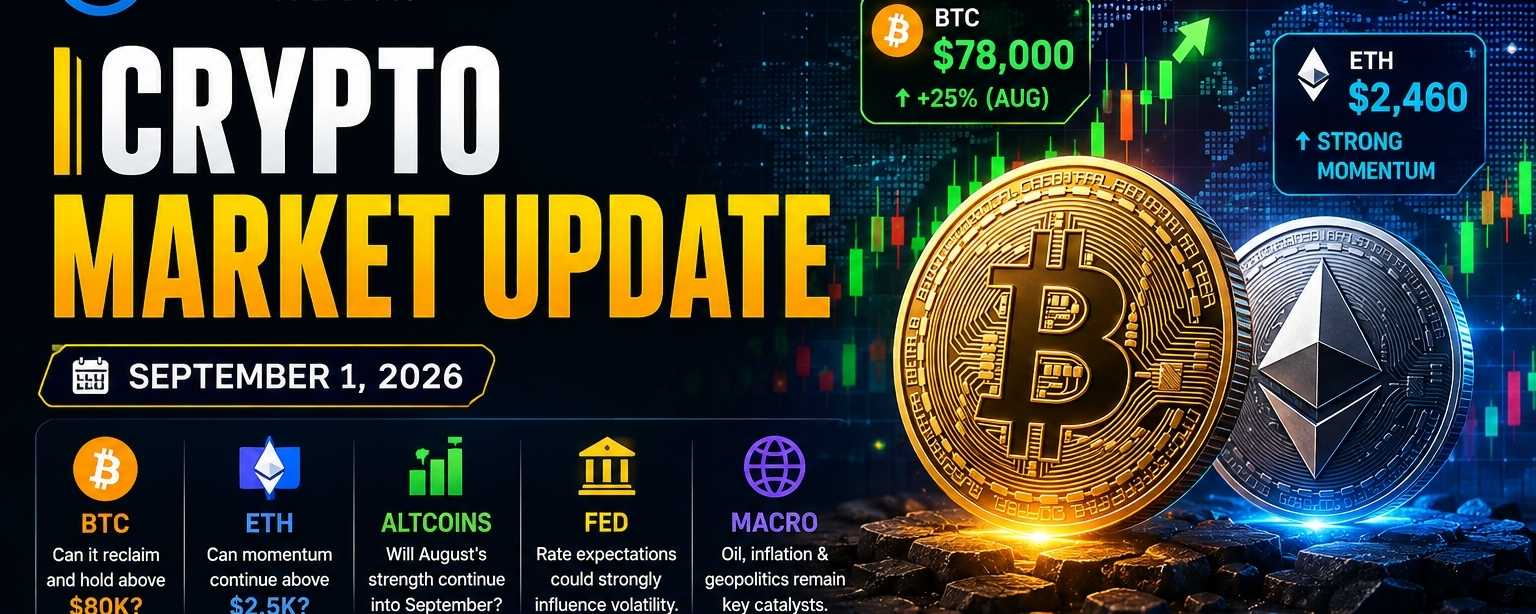
Bitcoin se mantiene alrededor de **$78K** tras una poderosa subida en agosto. BTC ganó aproximadamente **25% en agosto**thereum está operando alrededor de **$2.45K–$2.46K**, mientras que ETH también ha registrado una fuerte recuperación mensual. ([Fortune][2])
Pero septiembre comienza con un nuevo desafío: **el alza de los precios del petróleo, las preocupaciones por la inflación y las crecientes expectativas de una subida de tasas de la Reserva Federal** están generando presión en todo el mercado de activos de riesgo. Las expectativas actuales del mercado sitúan la probabilidad de una subida en septiembre en torno a **65–66%**.
**Lo que los traders deberían vigilar 👀**
* 🟠 BTC: ¿Puede recuperarse y mantenerse por encima de **$80K**?
* 🔵 ETH: ¿Puede continuar el impulso por encima de **$2.5K**?
Bitcoin se mantiene alrededor de **$78K** tras una poderosa subida en agosto. BTC ganó aproximadamente **25% en agosto**
thereum está operando alrededor de **$2.45K–$2.46K**, mientras que ETH también ha registrado una fuerte recuperación mensual. ([Fortune][2])
Pero septiembre comienza con un nuevo desafío: **el alza de los precios del petróleo, las preocupaciones por la inflación y las crecientes expectativas de una subida de tasas de la Reserva Federal** están generando presión en todo el mercado de activos de riesgo. Las expectativas actuales del mercado sitúan la probabilidad de una subida en septiembre en torno a **65–66%**.
**Lo que los traders deberían vigilar 👀**
* 🟠 BTC: ¿Puede recuperarse y mantenerse por encima de **$80K**?
* 🔵 ETH: ¿Puede continuar el impulso por encima de **$2.5K**?
Pero septiembre comienza con un nuevo desafío: **el alza de los precios del petróleo, las preocupaciones por la inflación y las crecientes expectativas de una subida de tasas de la Reserva Federal** están generando presión en todo el mercado de activos de riesgo. Las expectativas actuales del mercado sitúan la probabilidad de una subida en septiembre en torno a **65–66%**.
**Lo que los traders deberían vigilar 👀**
* 🟠 BTC: ¿Puede recuperarse y mantenerse por encima de **$80K**?
* 🔵 ETH: ¿Puede continuar el impulso por encima de **$2.5K**?
20
Artículo
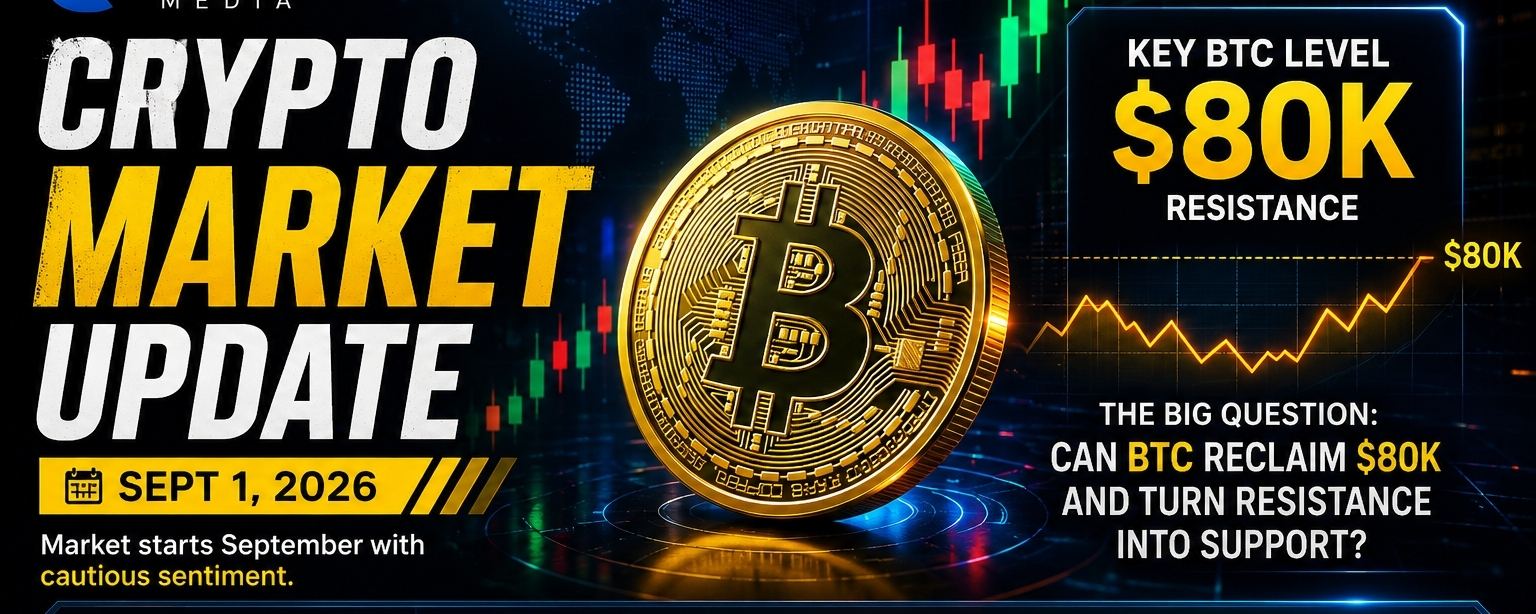
Los datos actuales muestran BTC alrededor de **$78K**, con ETH alrededor de **$2.45K**. Bitcoin se mantiene por debajo de la clave ACTUALIZACIÓN DEL MERCADO CRIPTO — 1 SEP 2026
Bitcoin se mantiene cerca de la zona de $78K mientras el mercado inicia septiembre con un sentimiento cauteloso.
📉 BTC: ~$78K
⚡ ETH: ~$2.45K
🎯 Nivel clave de BTC: $80K
🌍 Las expectativas macro + de la Fed siguen siendo catalizadores principales
La gran pregunta: ¿puede BTC recuperar $80K y convertir la resistencia en soporte?
Septiembre podría traer una volatilidad seria. Mantente alerta. 👀
#Bitcoin #BTC #Ethereum #ETH #Crypto #CryptoMarket #Altcoins
Los datos actuales muestran BTC alrededor de **$78K**, con ETH alrededor de **$2.45K**. Bitcoin se mantiene por debajo de la clave
ACTUALIZACIÓN DEL MERCADO CRIPTO — 1 SEP 2026
Bitcoin se mantiene cerca de la zona de $78K mientras el mercado inicia septiembre con un sentimiento cauteloso.
📉 BTC: ~$78K
⚡ ETH: ~$2.45K
🎯 Nivel clave de BTC: $80K
🌍 Las expectativas macro + de la Fed siguen siendo catalizadores principales
La gran pregunta: ¿puede BTC recuperar $80K y convertir la resistencia en soporte?
Septiembre podría traer una volatilidad seria. Mantente alerta. 👀
#Bitcoin #BTC #Ethereum #ETH #Crypto #CryptoMarket #Altcoins
Bitcoin se mantiene cerca de la zona de $78K mientras el mercado inicia septiembre con un sentimiento cauteloso.
📉 BTC: ~$78K
⚡ ETH: ~$2.45K
🎯 Nivel clave de BTC: $80K
🌍 Las expectativas macro + de la Fed siguen siendo catalizadores principales
La gran pregunta: ¿puede BTC recuperar $80K y convertir la resistencia en soporte?
Septiembre podría traer una volatilidad seria. Mantente alerta. 👀
#Bitcoin #BTC #Ethereum #ETH #Crypto #CryptoMarket #Altcoins
4
Artículo
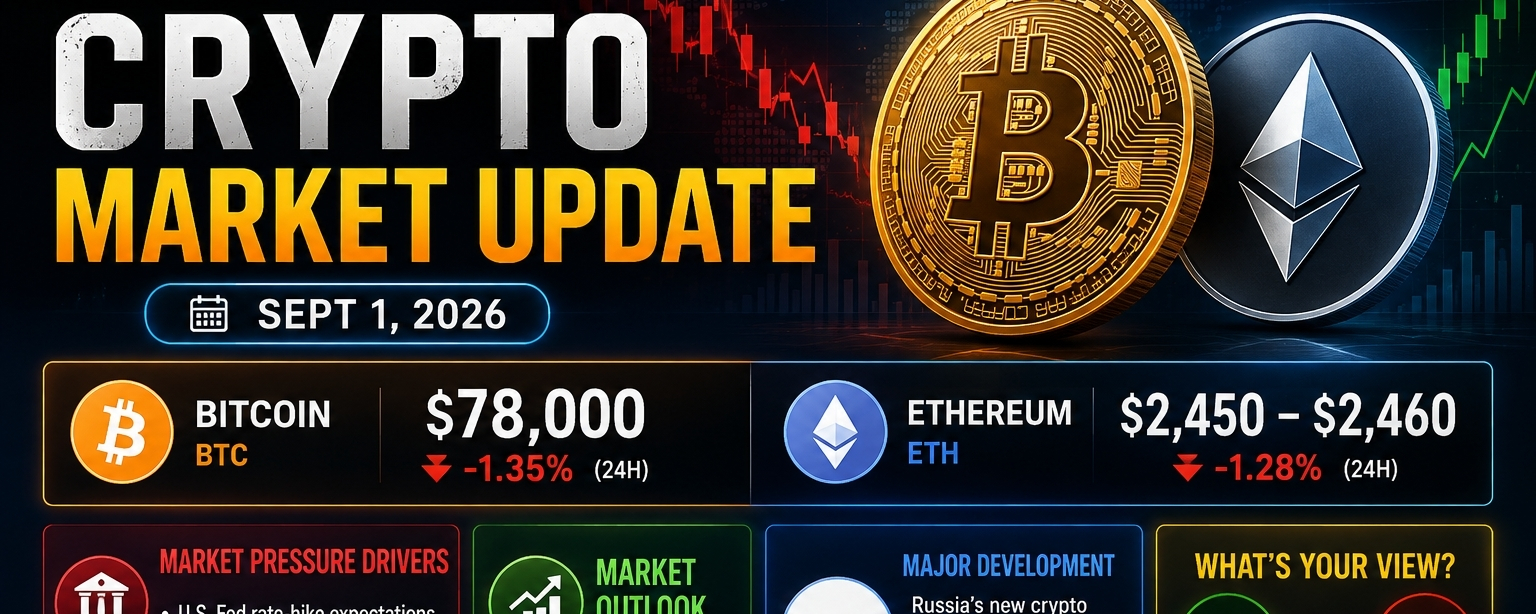
Bitcoin está cotizando cerca de la zona de **78K dólares**, mientras que Ethereum está alrededor de **2.45K–2.46K**. El mercadoUn gran desarrollo hoy: **entran en vigor las nuevas reglas de cripto de Rusia**, que permiten que BTC, ETH y USDT desempeñen un papel en su mercado regulado de activos digitales.
🚨 ACTUALIZACIÓN DEL MERCADO CRIPTO | 1 DE SEPT.
Bitcoin se mantiene cerca de la zona de 78K dólares, mientras que Ethereum cotiza alrededor de 2.45K–2.46K dólares.
📉 La presión del mercado está aumentando mientras los traders observan:
• Expectativas de subidas de tipos de la Reserva Federal de EE. UU.
• Inflación y precios del petróleo
• Tensiones geopolíticas
• Próximos datos económicos clave
🇷🇺 Mientras tanto, el nuevo marco de cripto de Rusia ya está en vigor y lleva a BTC, ETH y USDT a integrarse aún más en su mercado regulado de activos digitales.
Bitcoin está cotizando cerca de la zona de **78K dólares**, mientras que Ethereum está alrededor de **2.45K–2.46K**. El mercado
Un gran desarrollo hoy: **entran en vigor las nuevas reglas de cripto de Rusia**, que permiten que BTC, ETH y USDT desempeñen un papel en su mercado regulado de activos digitales.
🚨 ACTUALIZACIÓN DEL MERCADO CRIPTO | 1 DE SEPT.
Bitcoin se mantiene cerca de la zona de 78K dólares, mientras que Ethereum cotiza alrededor de 2.45K–2.46K dólares.
📉 La presión del mercado está aumentando mientras los traders observan:
• Expectativas de subidas de tipos de la Reserva Federal de EE. UU.
• Inflación y precios del petróleo
• Tensiones geopolíticas
• Próximos datos económicos clave
🇷🇺 Mientras tanto, el nuevo marco de cripto de Rusia ya está en vigor y lleva a BTC, ETH y USDT a integrarse aún más en su mercado regulado de activos digitales.
🚨 ACTUALIZACIÓN DEL MERCADO CRIPTO | 1 DE SEPT.
Bitcoin se mantiene cerca de la zona de 78K dólares, mientras que Ethereum cotiza alrededor de 2.45K–2.46K dólares.
📉 La presión del mercado está aumentando mientras los traders observan:
• Expectativas de subidas de tipos de la Reserva Federal de EE. UU.
• Inflación y precios del petróleo
• Tensiones geopolíticas
• Próximos datos económicos clave
🇷🇺 Mientras tanto, el nuevo marco de cripto de Rusia ya está en vigor y lleva a BTC, ETH y USDT a integrarse aún más en su mercado regulado de activos digitales.
6
Artículo
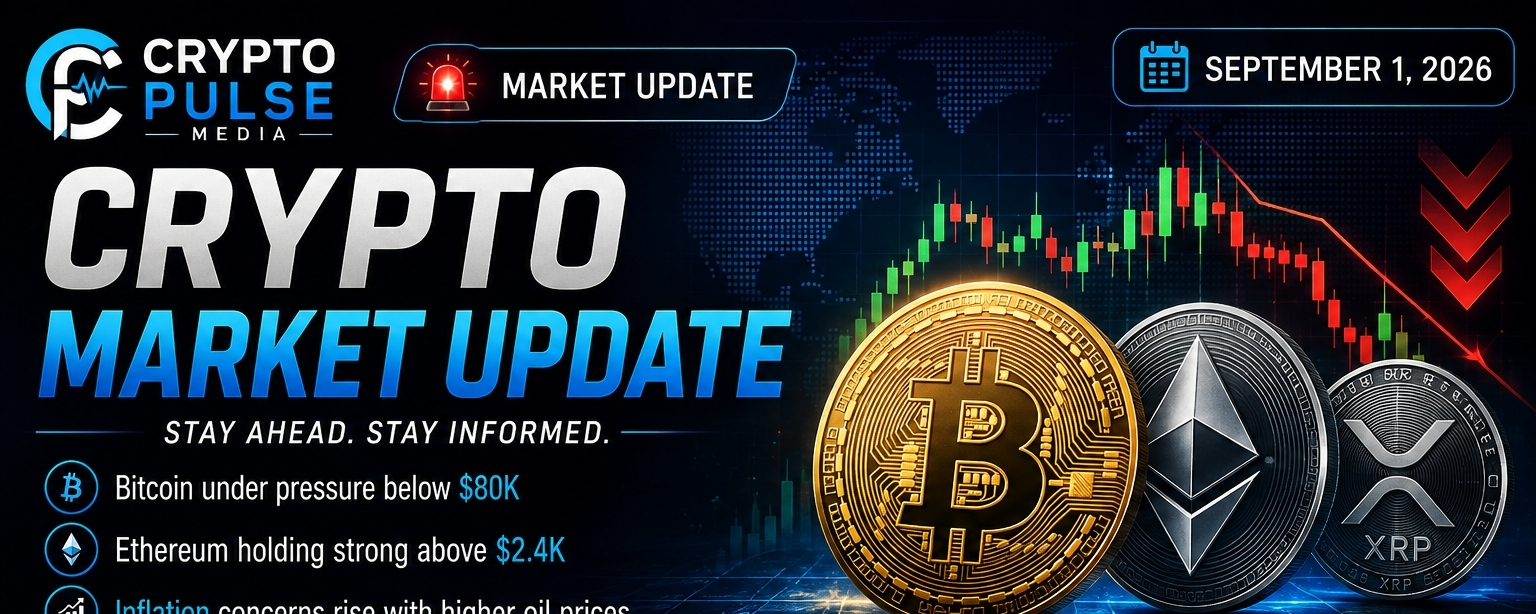
Bitcoin está comenzando septiembre bajo presión mientras la incertidumbre macroeconómica pesa sobre los activos de riesgo.₿ **BTC:** alrededor de $78K
🔷 **ETH:** alrededor de $2.45K
💵 **XRP:** alrededor de $1.38
📉 **¿Qué está moviendo el mercado?**
• Bitcoin sigue por debajo del importante nivel psicológico de $80K.
• Ethereum se mantiene por encima de $2.4K tras una fuerte recuperación mensual.
• El aumento de los precios del petróleo está incrementando las preocupaciones por la inflación.
• Los mercados están prestando cada vez más atención a la posibilidad de una subida de tasas en EE. UU. este mes.
• Los traders de cripto están esperando más señales macroeconómicas antes de realizar movimientos agresivos.
🌍 **Un gran desarrollo regulatorio:** hoy entra en vigor el nuevo marco de criptomonedas de Rusia, que permite el acceso regulado a BTC, ETH y USDT bajo condiciones estrictas.
Bitcoin está comenzando septiembre bajo presión mientras la incertidumbre macroeconómica pesa sobre los activos de riesgo.
₿ **BTC:** alrededor de $78K
🔷 **ETH:** alrededor de $2.45K
💵 **XRP:** alrededor de $1.38
📉 **¿Qué está moviendo el mercado?**
• Bitcoin sigue por debajo del importante nivel psicológico de $80K.
• Ethereum se mantiene por encima de $2.4K tras una fuerte recuperación mensual.
• El aumento de los precios del petróleo está incrementando las preocupaciones por la inflación.
• Los mercados están prestando cada vez más atención a la posibilidad de una subida de tasas en EE. UU. este mes.
• Los traders de cripto están esperando más señales macroeconómicas antes de realizar movimientos agresivos.
🌍 **Un gran desarrollo regulatorio:** hoy entra en vigor el nuevo marco de criptomonedas de Rusia, que permite el acceso regulado a BTC, ETH y USDT bajo condiciones estrictas.
🔷 **ETH:** alrededor de $2.45K
💵 **XRP:** alrededor de $1.38
📉 **¿Qué está moviendo el mercado?**
• Bitcoin sigue por debajo del importante nivel psicológico de $80K.
• Ethereum se mantiene por encima de $2.4K tras una fuerte recuperación mensual.
• El aumento de los precios del petróleo está incrementando las preocupaciones por la inflación.
• Los mercados están prestando cada vez más atención a la posibilidad de una subida de tasas en EE. UU. este mes.
• Los traders de cripto están esperando más señales macroeconómicas antes de realizar movimientos agresivos.
🌍 **Un gran desarrollo regulatorio:** hoy entra en vigor el nuevo marco de criptomonedas de Rusia, que permite el acceso regulado a BTC, ETH y USDT bajo condiciones estrictas.
15
Artículo
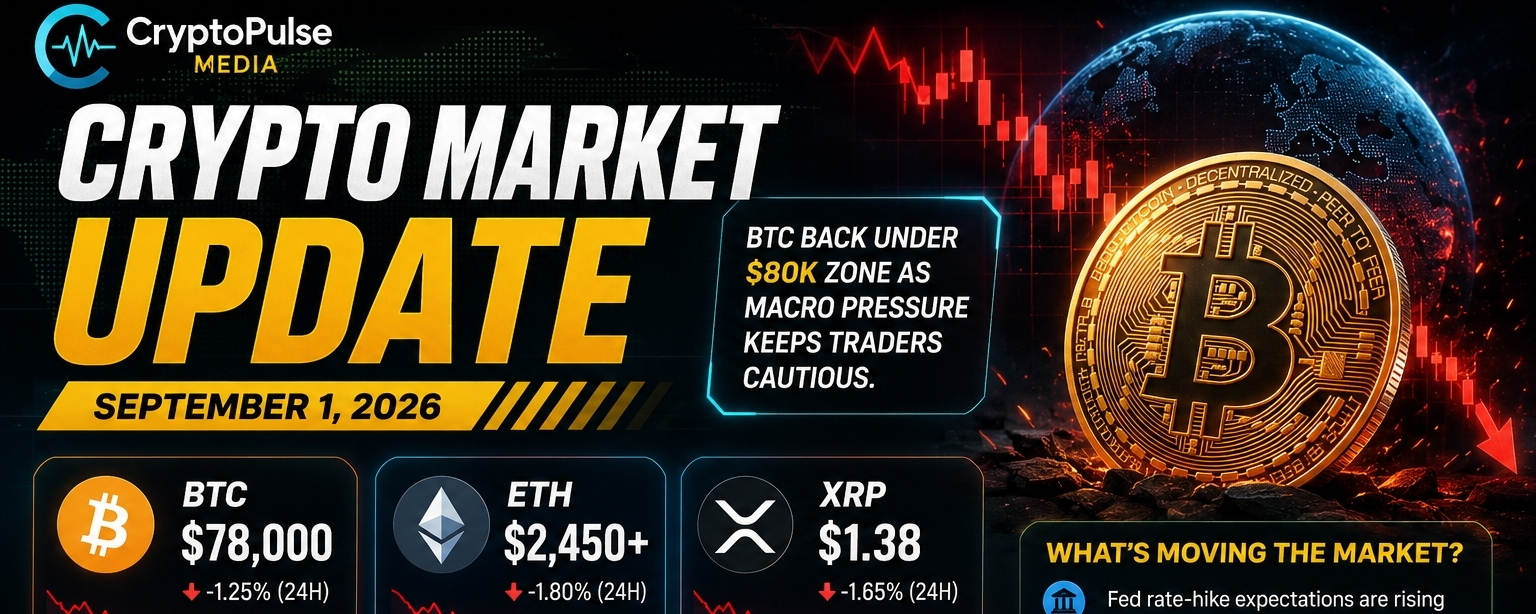
Bitcoin cotiza alrededor de **$78K**, mientras que Ethereum está alrededor de **$2.45K–$2.46K**. BTC sigue por debajo de thLa historia principal de hoy es **la expectativa de tasas de interés**. Los mercados están cada vez más descontando una posible subida de tasas de la Fed de EE. UU. este mes, mientras que el aumento de los precios del petróleo y las tensiones geopolíticas están sumando preocupación por la inflación.
Al mismo tiempo, **entra en vigor hoy el nuevo marco regulatorio de criptomonedas de Rusia**, con Bitcoin, Ethereum y USDT recibiendo un papel definido bajo el nuevo marco.
🚨 ACTUALIZACIÓN DEL MERCADO CRIPTO | 1 de septiembre de 2026
Bitcoin vuelve a estar por debajo de la zona de $80K, cotizando alrededor de $78K mientras la presión macro mantiene cautelosos a los traders de criptomonedas.
Bitcoin cotiza alrededor de **$78K**, mientras que Ethereum está alrededor de **$2.45K–$2.46K**. BTC sigue por debajo de th
La historia principal de hoy es **la expectativa de tasas de interés**. Los mercados están cada vez más descontando una posible subida de tasas de la Fed de EE. UU. este mes, mientras que el aumento de los precios del petróleo y las tensiones geopolíticas están sumando preocupación por la inflación.
Al mismo tiempo, **entra en vigor hoy el nuevo marco regulatorio de criptomonedas de Rusia**, con Bitcoin, Ethereum y USDT recibiendo un papel definido bajo el nuevo marco.
🚨 ACTUALIZACIÓN DEL MERCADO CRIPTO | 1 de septiembre de 2026
Bitcoin vuelve a estar por debajo de la zona de $80K, cotizando alrededor de $78K mientras la presión macro mantiene cautelosos a los traders de criptomonedas.
Al mismo tiempo, **entra en vigor hoy el nuevo marco regulatorio de criptomonedas de Rusia**, con Bitcoin, Ethereum y USDT recibiendo un papel definido bajo el nuevo marco.
🚨 ACTUALIZACIÓN DEL MERCADO CRIPTO | 1 de septiembre de 2026
Bitcoin vuelve a estar por debajo de la zona de $80K, cotizando alrededor de $78K mientras la presión macro mantiene cautelosos a los traders de criptomonedas.
46
Artículo
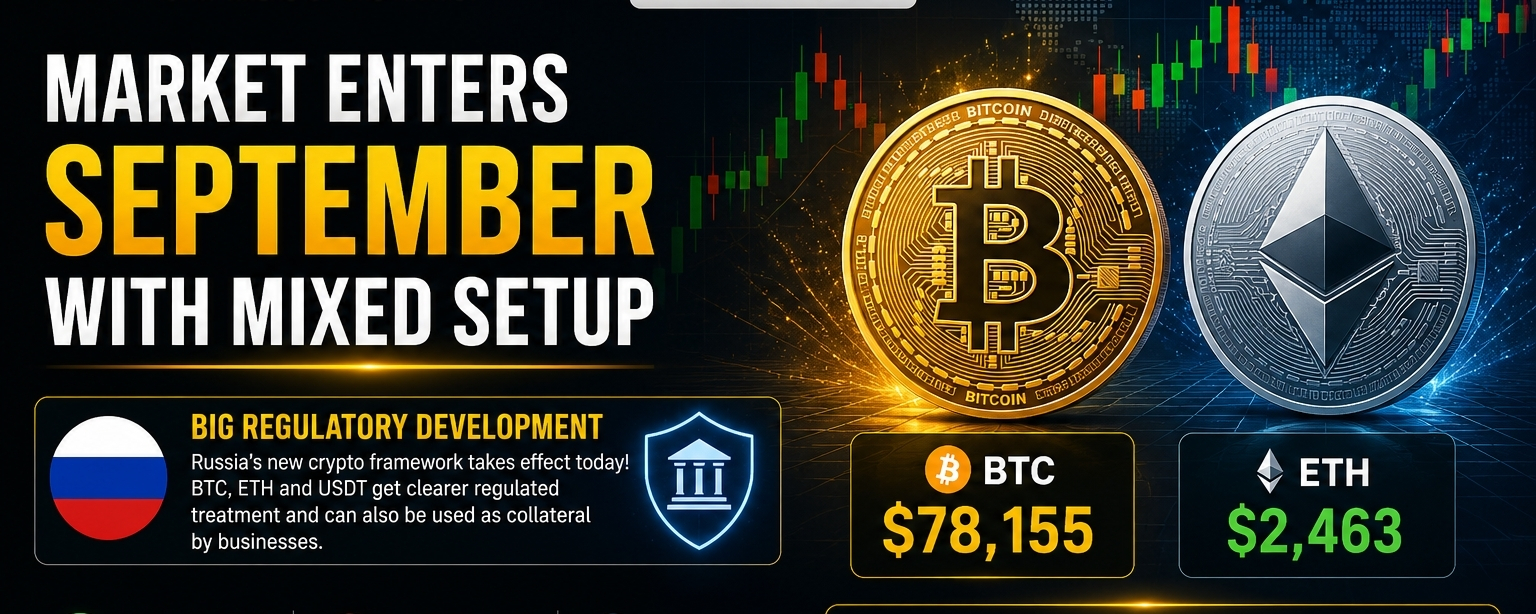
Bitcoin está comenzando septiembre alrededor de **$78K**, mientras que Ethereum cotiza cerca de **$2.46K**. BTC está **Gran desarrollo regulatorio:** El nuevo marco cripto de Rusia entra en vigor hoy, con **BTC, ETH y USDT** recibiendo un tratamiento de mercado regulado más claro. BTC, ETH y USDT también pueden usarse como garantía por empresas bajo el nuevo marco.
📈 **Observatorio del mercado**
* ₿ BTC: ~$78,155
* Ξ ETH: ~$2,463
* 🔥 ETH ha ganado con fuerza en el último mes
* ⚠️ Siguen las preocupaciones por la inflación, que permanecen como un riesgo clave para el mercado
* 👀 Septiembre podría traer una volatilidad mayor
**Toma CryptoPulse:**
El mercado entra en septiembre con un escenario mixto: Bitcoin necesita defender la zona de $78K mientras que Ethereum sigue atrayendo la atención. Los avances regulatorios también podrían convertirse en un catalizador importante para el mercado.
Bitcoin está comenzando septiembre alrededor de **$78K**, mientras que Ethereum cotiza cerca de **$2.46K**. BTC está
**Gran desarrollo regulatorio:** El nuevo marco cripto de Rusia entra en vigor hoy, con **BTC, ETH y USDT** recibiendo un tratamiento de mercado regulado más claro. BTC, ETH y USDT también pueden usarse como garantía por empresas bajo el nuevo marco.
📈 **Observatorio del mercado**
* ₿ BTC: ~$78,155
* Ξ ETH: ~$2,463
* 🔥 ETH ha ganado con fuerza en el último mes
* ⚠️ Siguen las preocupaciones por la inflación, que permanecen como un riesgo clave para el mercado
* 👀 Septiembre podría traer una volatilidad mayor
**Toma CryptoPulse:**
El mercado entra en septiembre con un escenario mixto: Bitcoin necesita defender la zona de $78K mientras que Ethereum sigue atrayendo la atención. Los avances regulatorios también podrían convertirse en un catalizador importante para el mercado.
📈 **Observatorio del mercado**
* ₿ BTC: ~$78,155
* Ξ ETH: ~$2,463
* 🔥 ETH ha ganado con fuerza en el último mes
* ⚠️ Siguen las preocupaciones por la inflación, que permanecen como un riesgo clave para el mercado
* 👀 Septiembre podría traer una volatilidad mayor
**Toma CryptoPulse:**
El mercado entra en septiembre con un escenario mixto: Bitcoin necesita defender la zona de $78K mientras que Ethereum sigue atrayendo la atención. Los avances regulatorios también podrían convertirse en un catalizador importante para el mercado.
4
Artículo
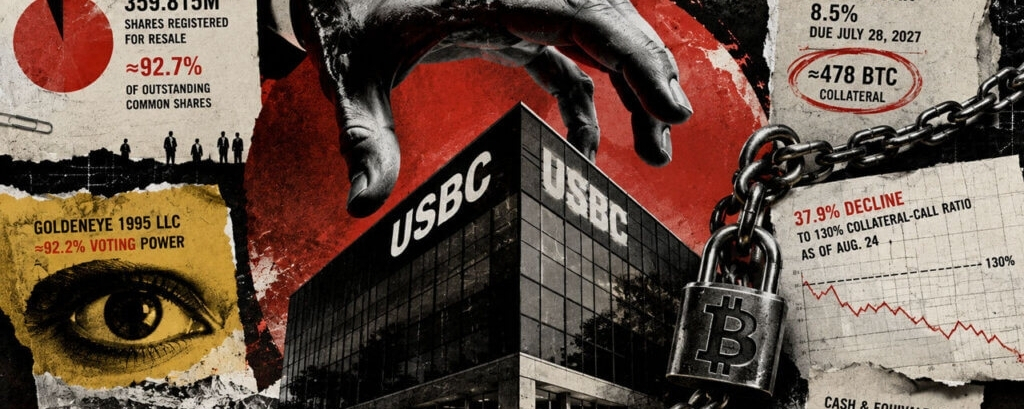
La empresa de tesorería de Bitcoin registra el 93% de las acciones para su reventa y destina un tercio de su cripto a una opciónLas acciones ya han sido emitidas y nunca pueden venderse, mientras que los riesgos de préstamos, tesorería y efectivo permanecen.
SBC ha registrado un bloque de acciones ya emitidas por un valor de casi la totalidad de su capital social común en circulación, para una posible reventa, creando un posible exceso de oferta en el mercado junto con un balance que depende en gran medida de Bitcoin.
El prospecto preliminar enmendado de la compañía del 27 de agosto cubre hasta 359.815.000 acciones en poder de los accionistas vendedores. Eso equivale aproximadamente al 92,7% de las 388.144.429 acciones ordinarias en circulación a 24 de agosto. USBC no recibiría ingresos de ninguna venta u otra disposición por parte de esos tenedores.
La empresa de tesorería de Bitcoin registra el 93% de las acciones para su reventa y destina un tercio de su cripto a una opción
Las acciones ya han sido emitidas y nunca pueden venderse, mientras que los riesgos de préstamos, tesorería y efectivo permanecen.
SBC ha registrado un bloque de acciones ya emitidas por un valor de casi la totalidad de su capital social común en circulación, para una posible reventa, creando un posible exceso de oferta en el mercado junto con un balance que depende en gran medida de Bitcoin.
El prospecto preliminar enmendado de la compañía del 27 de agosto cubre hasta 359.815.000 acciones en poder de los accionistas vendedores. Eso equivale aproximadamente al 92,7% de las 388.144.429 acciones ordinarias en circulación a 24 de agosto. USBC no recibiría ingresos de ninguna venta u otra disposición por parte de esos tenedores.
SBC ha registrado un bloque de acciones ya emitidas por un valor de casi la totalidad de su capital social común en circulación, para una posible reventa, creando un posible exceso de oferta en el mercado junto con un balance que depende en gran medida de Bitcoin.
El prospecto preliminar enmendado de la compañía del 27 de agosto cubre hasta 359.815.000 acciones en poder de los accionistas vendedores. Eso equivale aproximadamente al 92,7% de las 388.144.429 acciones ordinarias en circulación a 24 de agosto. USBC no recibiría ingresos de ninguna venta u otra disposición por parte de esos tenedores.
21
Artículo
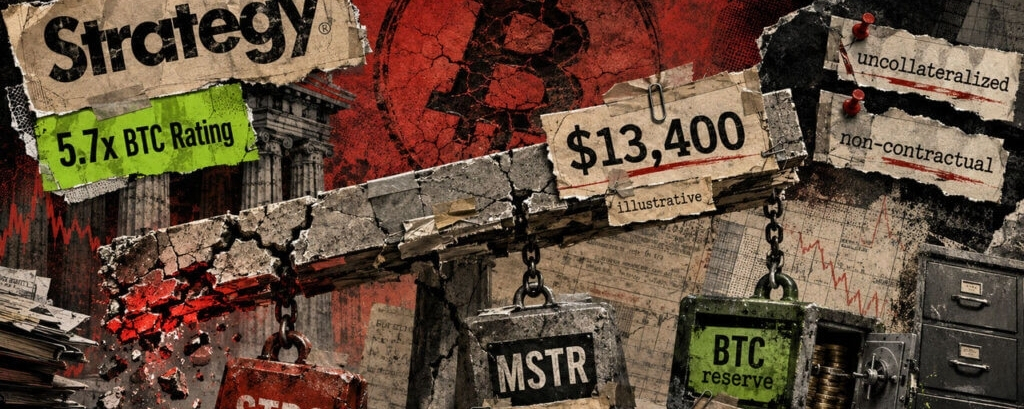
El “piso” de Bitcoin de $13,400 de Michael Saylor expone el orden exacto de las pérdidas dentro de la deuda de StrategyEl ratio presentado se mueve con el efectivo y las reclamaciones, mientras que la dilución de MSTR y la prioridad legal determinan pérdidas reales.
strategy, la empresa de tesorería de Bitcoin, está comercializando un “BTC Floor” de aproximadamente $13,400 para STRC, su acción preferente perpetua acumulativa de tasa variable. Con Bitcoin cerca de $78,000, la etiqueta suena como un colchón enorme. El informe presentado ante la SEC define algo más acotado: el precio de Bitcoin en el que el ratio de cobertura ilustrativo de STRC de Strategy alcanza 1.0x.
La métrica no hace ningún reclamo sobre el Bitcoin de Strategy y no tiene significado de solvencia ni de recuperación. STRC cerró en $97.33 el 28 de agosto, lo que ofrece a los tenedores un rendimiento efectivo simple del 12.33% en el dividendo anualizado actual de $12. El panel presentado usó un precio del 21 de agosto de $96.18 y mostró un rendimiento del 12.48%, $9.972 mil millones de nocional, 59 puntos básicos de Crédito de BTC, 4.68% de Riesgo de BTC y un -14.61% de ARR de Piso de BTC.
El “piso” de Bitcoin de $13,400 de Michael Saylor expone el orden exacto de las pérdidas dentro de la deuda de Strategy
El ratio presentado se mueve con el efectivo y las reclamaciones, mientras que la dilución de MSTR y la prioridad legal determinan pérdidas reales.
strategy, la empresa de tesorería de Bitcoin, está comercializando un “BTC Floor” de aproximadamente $13,400 para STRC, su acción preferente perpetua acumulativa de tasa variable. Con Bitcoin cerca de $78,000, la etiqueta suena como un colchón enorme. El informe presentado ante la SEC define algo más acotado: el precio de Bitcoin en el que el ratio de cobertura ilustrativo de STRC de Strategy alcanza 1.0x.
La métrica no hace ningún reclamo sobre el Bitcoin de Strategy y no tiene significado de solvencia ni de recuperación. STRC cerró en $97.33 el 28 de agosto, lo que ofrece a los tenedores un rendimiento efectivo simple del 12.33% en el dividendo anualizado actual de $12. El panel presentado usó un precio del 21 de agosto de $96.18 y mostró un rendimiento del 12.48%, $9.972 mil millones de nocional, 59 puntos básicos de Crédito de BTC, 4.68% de Riesgo de BTC y un -14.61% de ARR de Piso de BTC.
strategy, la empresa de tesorería de Bitcoin, está comercializando un “BTC Floor” de aproximadamente $13,400 para STRC, su acción preferente perpetua acumulativa de tasa variable. Con Bitcoin cerca de $78,000, la etiqueta suena como un colchón enorme. El informe presentado ante la SEC define algo más acotado: el precio de Bitcoin en el que el ratio de cobertura ilustrativo de STRC de Strategy alcanza 1.0x.
La métrica no hace ningún reclamo sobre el Bitcoin de Strategy y no tiene significado de solvencia ni de recuperación. STRC cerró en $97.33 el 28 de agosto, lo que ofrece a los tenedores un rendimiento efectivo simple del 12.33% en el dividendo anualizado actual de $12. El panel presentado usó un precio del 21 de agosto de $96.18 y mostró un rendimiento del 12.48%, $9.972 mil millones de nocional, 59 puntos básicos de Crédito de BTC, 4.68% de Riesgo de BTC y un -14.61% de ARR de Piso de BTC.
28
Artículo
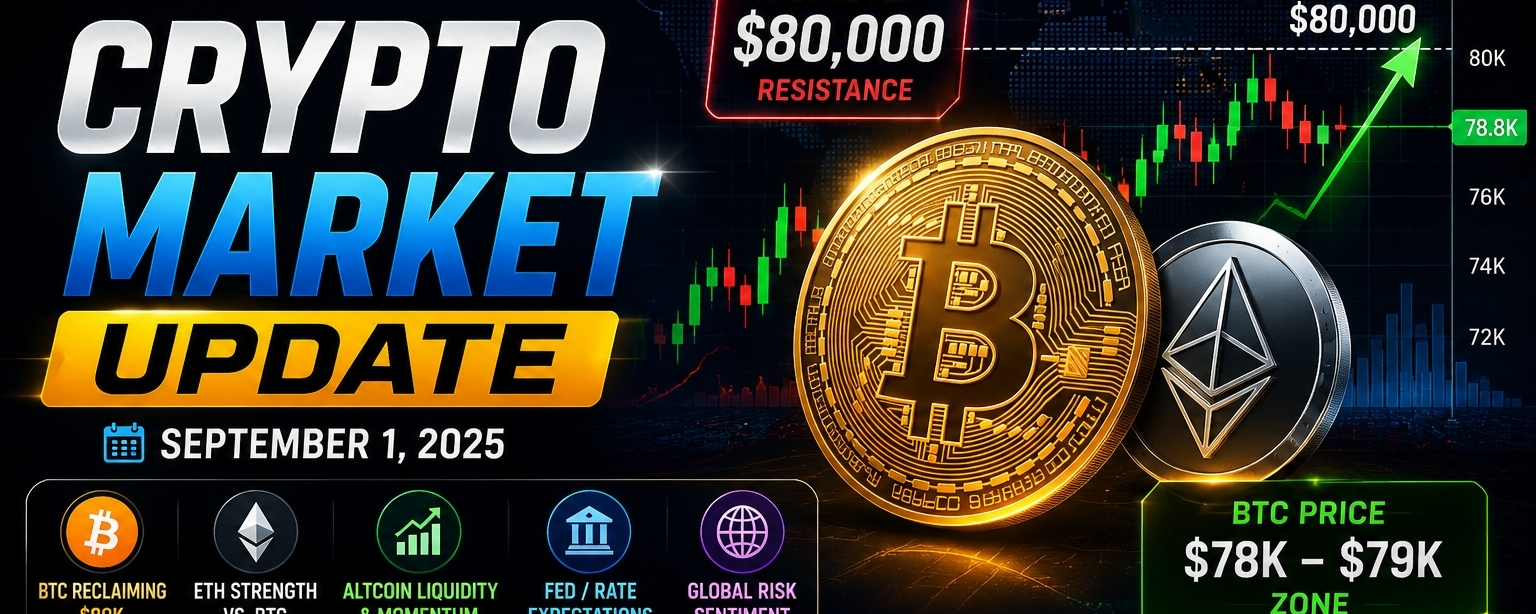
El contexto del mercado de hoy: el BTC cotiza alrededor del área de **$78K–$79K**, mientras el mercado está atentoBitcoin entra en septiembre con los traders observando de cerca un nivel: **$80,000**. 👀
El BTC se mantiene alrededor de la zona de **$78K–$79K**, mientras aumenta la presión macro a medida que suben los rendimientos globales de los bonos y los precios del petróleo.
📌 Puntos clave a vigilar:
• BTC recuperando $80K
• Fortaleza de ETH frente a BTC
• Liquidez y momentum en altcoins
• Expectativas de la Fed/tipos de interés
• Sentimiento global de riesgo
Septiembre podría traer **alta volatilidad**. No persigas las velas verdes: observa la acción del precio, el volumen y la estructura del mercado.
El siguiente gran movimiento podría comenzar con Bitcoin. ⚡️
El contexto del mercado de hoy: el BTC cotiza alrededor del área de **$78K–$79K**, mientras el mercado está atento
Bitcoin entra en septiembre con los traders observando de cerca un nivel: **$80,000**. 👀
El BTC se mantiene alrededor de la zona de **$78K–$79K**, mientras aumenta la presión macro a medida que suben los rendimientos globales de los bonos y los precios del petróleo.
📌 Puntos clave a vigilar:
• BTC recuperando $80K
• Fortaleza de ETH frente a BTC
• Liquidez y momentum en altcoins
• Expectativas de la Fed/tipos de interés
• Sentimiento global de riesgo
Septiembre podría traer **alta volatilidad**. No persigas las velas verdes: observa la acción del precio, el volumen y la estructura del mercado.
El siguiente gran movimiento podría comenzar con Bitcoin. ⚡️
El BTC se mantiene alrededor de la zona de **$78K–$79K**, mientras aumenta la presión macro a medida que suben los rendimientos globales de los bonos y los precios del petróleo.
📌 Puntos clave a vigilar:
• BTC recuperando $80K
• Fortaleza de ETH frente a BTC
• Liquidez y momentum en altcoins
• Expectativas de la Fed/tipos de interés
• Sentimiento global de riesgo
Septiembre podría traer **alta volatilidad**. No persigas las velas verdes: observa la acción del precio, el volumen y la estructura del mercado.
El siguiente gran movimiento podría comenzar con Bitcoin. ⚡️
63
Artículo
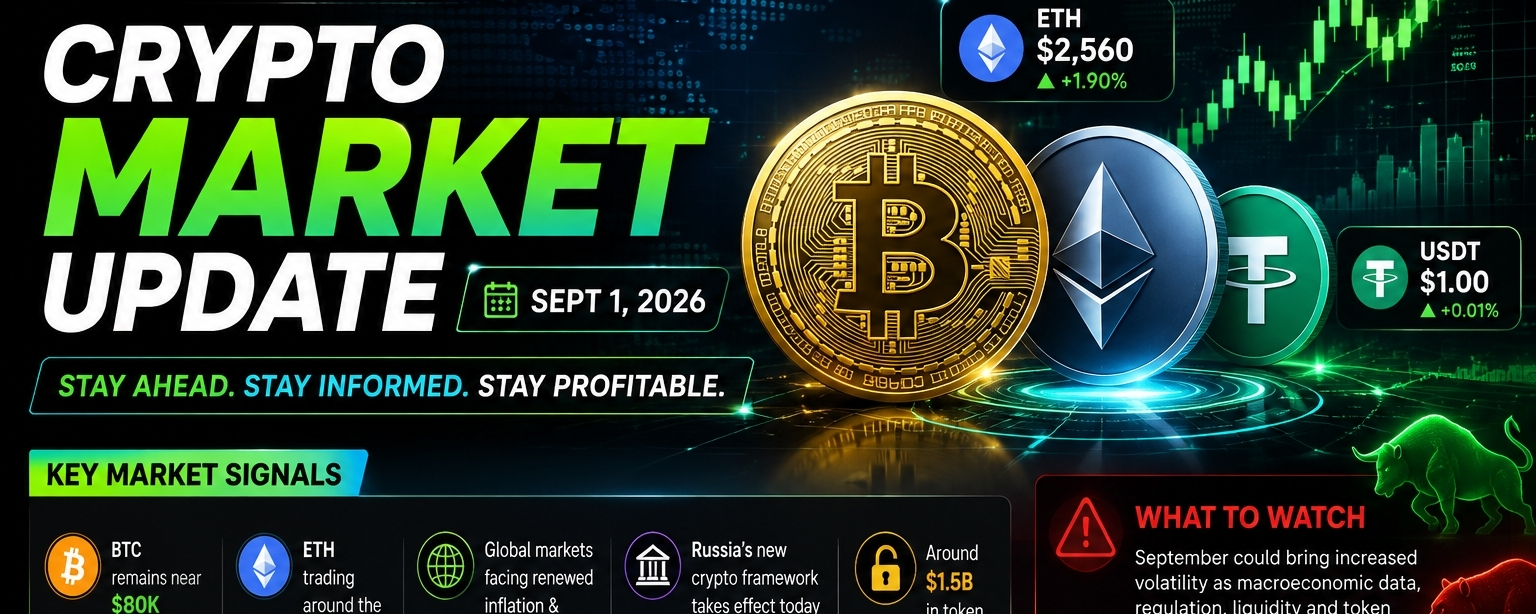
Bitcoin está comenzando septiembre en la zona de $78K–$80K, manteniendo a los traders enfocados en si BTC puede📊 SEÑALES CLAVE DEL MERCADO:
• BTC se mantiene cerca del nivel psicológico de $80K
• ETH cotiza en el rango de los $2K medios
• Los mercados globales enfrentan una inflación renovada y presión geopolítica
• El nuevo marco cripto de Rusia entra en vigor hoy, con BTC, ETH y USDT recibiendo un papel central
• Se esperan alrededor de $1.5B en desbloqueos de tokens durante la primera semana de septiembre
⚠️ QUÉ VER:
Septiembre podría traer una mayor volatilidad a medida que se cruzan los datos macroeconómicos, la regulación, la liquidez y los eventos de oferta de tokens.
Bitcoin está comenzando septiembre en la zona de $78K–$80K, manteniendo a los traders enfocados en si BTC puede
📊 SEÑALES CLAVE DEL MERCADO:
• BTC se mantiene cerca del nivel psicológico de $80K
• ETH cotiza en el rango de los $2K medios
• Los mercados globales enfrentan una inflación renovada y presión geopolítica
• El nuevo marco cripto de Rusia entra en vigor hoy, con BTC, ETH y USDT recibiendo un papel central
• Se esperan alrededor de $1.5B en desbloqueos de tokens durante la primera semana de septiembre
⚠️ QUÉ VER:
Septiembre podría traer una mayor volatilidad a medida que se cruzan los datos macroeconómicos, la regulación, la liquidez y los eventos de oferta de tokens.
• BTC se mantiene cerca del nivel psicológico de $80K
• ETH cotiza en el rango de los $2K medios
• Los mercados globales enfrentan una inflación renovada y presión geopolítica
• El nuevo marco cripto de Rusia entra en vigor hoy, con BTC, ETH y USDT recibiendo un papel central
• Se esperan alrededor de $1.5B en desbloqueos de tokens durante la primera semana de septiembre
⚠️ QUÉ VER:
Septiembre podría traer una mayor volatilidad a medida que se cruzan los datos macroeconómicos, la regulación, la liquidez y los eventos de oferta de tokens.
41
Artículo
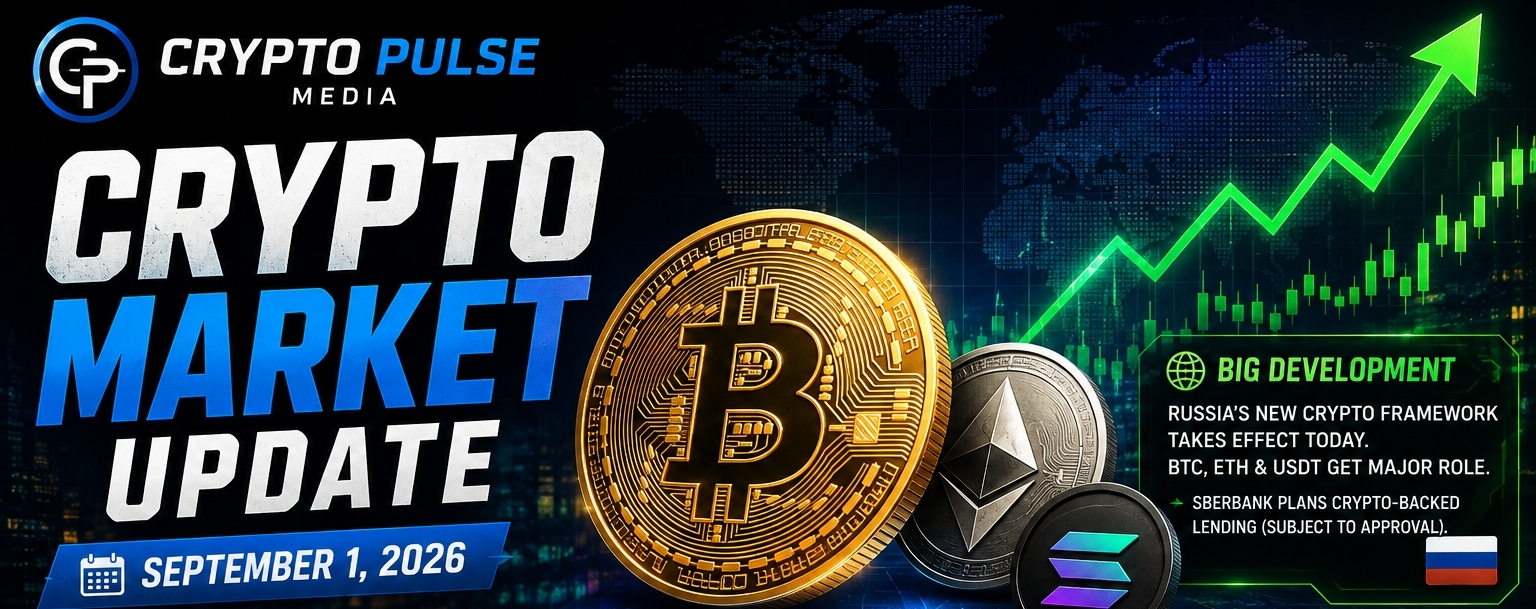
Bitcoin entra en septiembre con un fuerte impulso tras una gran subida de agosto, pero el mercado ahora📊 Resumen del mercado:
₿ BTC: zona de ~$78K–$80K
◆ ETH: muestra fuerza renovada
◎ SOL: sigue siendo una de las altcoins de gran capitalización más fuertes
📈 BTC ganó aproximadamente 24% durante agosto
🔥 GRAN DESARROLLO:
El nuevo marco de cripto de Rusia entra en vigor hoy, con BTC, ETH y USDT desempeñando un papel importante en el mercado regulado. Sberbank también planea ofrecer préstamos respaldados por cripto, sujeto a la aprobación regulatoria.
⚠️ Mientras tanto, los mercados globales lidian con el aumento de los rendimientos de los bonos, el petróleo por encima de $91 y renovadas preocupaciones por la inflación/subida de tasas. Eso podría mantener la volatilidad alta en los activos de riesgo, incluida la cripto.
Bitcoin entra en septiembre con un fuerte impulso tras una gran subida de agosto, pero el mercado ahora
📊 Resumen del mercado:
₿ BTC: zona de ~$78K–$80K
◆ ETH: muestra fuerza renovada
◎ SOL: sigue siendo una de las altcoins de gran capitalización más fuertes
📈 BTC ganó aproximadamente 24% durante agosto
🔥 GRAN DESARROLLO:
El nuevo marco de cripto de Rusia entra en vigor hoy, con BTC, ETH y USDT desempeñando un papel importante en el mercado regulado. Sberbank también planea ofrecer préstamos respaldados por cripto, sujeto a la aprobación regulatoria.
⚠️ Mientras tanto, los mercados globales lidian con el aumento de los rendimientos de los bonos, el petróleo por encima de $91 y renovadas preocupaciones por la inflación/subida de tasas. Eso podría mantener la volatilidad alta en los activos de riesgo, incluida la cripto.
₿ BTC: zona de ~$78K–$80K
◆ ETH: muestra fuerza renovada
◎ SOL: sigue siendo una de las altcoins de gran capitalización más fuertes
📈 BTC ganó aproximadamente 24% durante agosto
🔥 GRAN DESARROLLO:
El nuevo marco de cripto de Rusia entra en vigor hoy, con BTC, ETH y USDT desempeñando un papel importante en el mercado regulado. Sberbank también planea ofrecer préstamos respaldados por cripto, sujeto a la aprobación regulatoria.
⚠️ Mientras tanto, los mercados globales lidian con el aumento de los rendimientos de los bonos, el petróleo por encima de $91 y renovadas preocupaciones por la inflación/subida de tasas. Eso podría mantener la volatilidad alta en los activos de riesgo, incluida la cripto.
72
Artículo
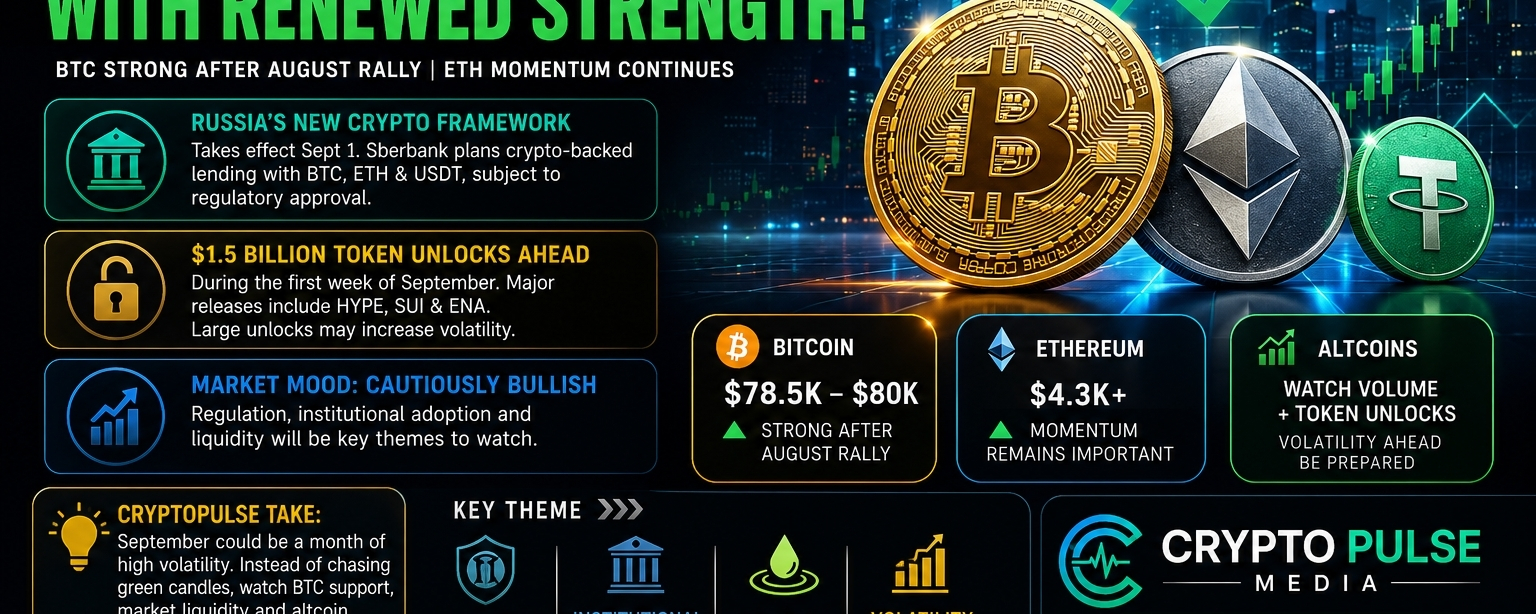
Hagamos de esto una **serie original diaria de Binance Square** para CryptoPulse Media—basada en o### 📊 CryptoPulse Media — Resumen diario del mercado
**1 de septiembre de 2026**
Bitcoin comienza septiembre con renovada fuerza tras una potente racha alcista en agosto. Los datos recientes del mercado muestran BTC alrededor de **$78,5K–$80K**, mientras que Ethereum también muestra un impulso positivo.
Un gran desarrollo a seguir hoy es el **nuevo marco cripto de Rusia**, que entra en vigor el 1 de septiembre. Sberbank planea ofrecer préstamos respaldados por cripto que incluyen **BTC, ETH y USDT**, sujeto a la aprobación regulatoria.
Mientras tanto, los traders deberían estar atentos al mercado de altcoins. Se espera alrededor de **$1,5 mil millones en liberaciones de tokens** durante la primera semana de septiembre, con lanzamientos importantes que incluyen HYPE, SUI y ENA. Las liberaciones grandes pueden aumentar la presión vendedora a corto plazo y la volatilidad.
Hagamos de esto una **serie original diaria de Binance Square** para CryptoPulse Media—basada en o
### 📊 CryptoPulse Media — Resumen diario del mercado
**1 de septiembre de 2026**
Bitcoin comienza septiembre con renovada fuerza tras una potente racha alcista en agosto. Los datos recientes del mercado muestran BTC alrededor de **$78,5K–$80K**, mientras que Ethereum también muestra un impulso positivo.
Un gran desarrollo a seguir hoy es el **nuevo marco cripto de Rusia**, que entra en vigor el 1 de septiembre. Sberbank planea ofrecer préstamos respaldados por cripto que incluyen **BTC, ETH y USDT**, sujeto a la aprobación regulatoria.
Mientras tanto, los traders deberían estar atentos al mercado de altcoins. Se espera alrededor de **$1,5 mil millones en liberaciones de tokens** durante la primera semana de septiembre, con lanzamientos importantes que incluyen HYPE, SUI y ENA. Las liberaciones grandes pueden aumentar la presión vendedora a corto plazo y la volatilidad.
**1 de septiembre de 2026**
Bitcoin comienza septiembre con renovada fuerza tras una potente racha alcista en agosto. Los datos recientes del mercado muestran BTC alrededor de **$78,5K–$80K**, mientras que Ethereum también muestra un impulso positivo.
Un gran desarrollo a seguir hoy es el **nuevo marco cripto de Rusia**, que entra en vigor el 1 de septiembre. Sberbank planea ofrecer préstamos respaldados por cripto que incluyen **BTC, ETH y USDT**, sujeto a la aprobación regulatoria.
Mientras tanto, los traders deberían estar atentos al mercado de altcoins. Se espera alrededor de **$1,5 mil millones en liberaciones de tokens** durante la primera semana de septiembre, con lanzamientos importantes que incluyen HYPE, SUI y ENA. Las liberaciones grandes pueden aumentar la presión vendedora a corto plazo y la volatilidad.
92

Artículo
El consenso de XRPL se congela tras eliminar solo el 12% de los nodos centrales, pero un ajuste simple triplica el XRP deCon una participación del 60%, dos enlaces aleatorios elevaron los umbrales simulados de fallo de quórum de 11% a 38% y de 12% a 33%.
un nuevo estudio de la XRP Ledger afirma que dos o tres conexiones adicionales de pares por nodo participante pueden aumentar de forma marcada la cantidad de nodos que un ataque dirigido debe eliminar para interrumpir el consenso modelado.
El consenso de XRPL depende de que suficientes validadores confiables reciban los mensajes de los demás. Una red peer-to-peer separada transporta esos mensajes entre servidores, de modo que rutas adicionales podrían mantener el tráfico de validadores en movimiento si un ataque elimina los centros más activos de la red.
El consenso de XRPL se congela tras eliminar solo el 12% de los nodos centrales, pero un ajuste simple triplica el XRP de
Con una participación del 60%, dos enlaces aleatorios elevaron los umbrales simulados de fallo de quórum de 11% a 38% y de 12% a 33%.
un nuevo estudio de la XRP Ledger afirma que dos o tres conexiones adicionales de pares por nodo participante pueden aumentar de forma marcada la cantidad de nodos que un ataque dirigido debe eliminar para interrumpir el consenso modelado.
El consenso de XRPL depende de que suficientes validadores confiables reciban los mensajes de los demás. Una red peer-to-peer separada transporta esos mensajes entre servidores, de modo que rutas adicionales podrían mantener el tráfico de validadores en movimiento si un ataque elimina los centros más activos de la red.
un nuevo estudio de la XRP Ledger afirma que dos o tres conexiones adicionales de pares por nodo participante pueden aumentar de forma marcada la cantidad de nodos que un ataque dirigido debe eliminar para interrumpir el consenso modelado.
El consenso de XRPL depende de que suficientes validadores confiables reciban los mensajes de los demás. Una red peer-to-peer separada transporta esos mensajes entre servidores, de modo que rutas adicionales podrían mantener el tráfico de validadores en movimiento si un ataque elimina los centros más activos de la red.
93
Artículo
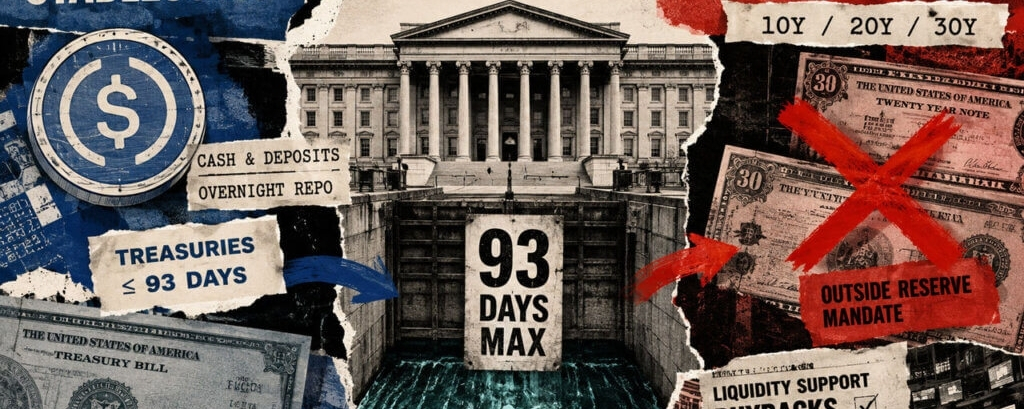
El Tesoro de EE. UU. recurre a las stablecoins para financiar deuda de corto plazo, pero no pueden arreglar su bono largo de $28BLas reservas GENIUS se detienen en 93 días mientras el Tesoro amplía las recompras de liquidez en la deuda de 10 a 30 años.
la demanda de tablecoin se está volviendo significativa en el mercado de deuda del gobierno de EE. UU., pero la madurez de esa demanda importa más que el total del titular.
Washington ahora tiene dos historias de mercado de deuda en marcha al mismo tiempo. El marco federal para las stablecoins de pago permitido canaliza reservas hacia instrumentos similares a efectivo y Treasuries con no más de 93 días restantes. Más adelante en la curva, el Departamento del Tesoro dijo el 19 de agosto que al menos duplicaría el tamaño máximo de las recompras de apoyo de liquidez en los sectores nominales de 10 a 20 años y de 20 a 30 años a partir del 9 de septiembre.
El Tesoro de EE. UU. recurre a las stablecoins para financiar deuda de corto plazo, pero no pueden arreglar su bono largo de $28B
Las reservas GENIUS se detienen en 93 días mientras el Tesoro amplía las recompras de liquidez en la deuda de 10 a 30 años.
la demanda de tablecoin se está volviendo significativa en el mercado de deuda del gobierno de EE. UU., pero la madurez de esa demanda importa más que el total del titular.
Washington ahora tiene dos historias de mercado de deuda en marcha al mismo tiempo. El marco federal para las stablecoins de pago permitido canaliza reservas hacia instrumentos similares a efectivo y Treasuries con no más de 93 días restantes. Más adelante en la curva, el Departamento del Tesoro dijo el 19 de agosto que al menos duplicaría el tamaño máximo de las recompras de apoyo de liquidez en los sectores nominales de 10 a 20 años y de 20 a 30 años a partir del 9 de septiembre.
la demanda de tablecoin se está volviendo significativa en el mercado de deuda del gobierno de EE. UU., pero la madurez de esa demanda importa más que el total del titular.
Washington ahora tiene dos historias de mercado de deuda en marcha al mismo tiempo. El marco federal para las stablecoins de pago permitido canaliza reservas hacia instrumentos similares a efectivo y Treasuries con no más de 93 días restantes. Más adelante en la curva, el Departamento del Tesoro dijo el 19 de agosto que al menos duplicaría el tamaño máximo de las recompras de apoyo de liquidez en los sectores nominales de 10 a 20 años y de 20 a 30 años a partir del 9 de septiembre.
5

Artículo
Noticias
BitGo y NYDIG tiran de extremos opuestos de una cuerda alrededor de Bitcoin, contrastando los obstáculos de ingresos con aEl acuerdo de BitGo NYDIG sitúa aproximadamente 42,5 millones de dólares de forma anticipada frente a la huella de potencia y cómputo de 3+ GW que afirma NYDIG, sin que la rentabilidad esté demostrada en ninguno de los dos casos.
El acuerdo de NYDIG de itGo transfiere su negocio de operaciones institucionales al proveedor de infraestructura de custodia y operaciones con criptoactivos, mientras NYDIG afirma que está concentrando recursos en potencia, minería de Bitcoin y centros de datos de alto rendimiento para cómputo.
Los términos de cierre divulgados por BitGo establecen aproximadamente 42,5 millones de dólares en contraprestación de forma anticipada. BitGo está incorporando un equipo institucional, relaciones con clientes y productos financieros en torno a su plataforma de custodia y liquidación. NYDIG está dirigiendo la atención hacia una huella de potencia y cómputo descrita por la empresa que supera los 3 GW.
Noticias BitGo y NYDIG tiran de extremos opuestos de una cuerda alrededor de Bitcoin, contrastando los obstáculos de ingresos con a
El acuerdo de BitGo NYDIG sitúa aproximadamente 42,5 millones de dólares de forma anticipada frente a la huella de potencia y cómputo de 3+ GW que afirma NYDIG, sin que la rentabilidad esté demostrada en ninguno de los dos casos.
El acuerdo de NYDIG de itGo transfiere su negocio de operaciones institucionales al proveedor de infraestructura de custodia y operaciones con criptoactivos, mientras NYDIG afirma que está concentrando recursos en potencia, minería de Bitcoin y centros de datos de alto rendimiento para cómputo.
Los términos de cierre divulgados por BitGo establecen aproximadamente 42,5 millones de dólares en contraprestación de forma anticipada. BitGo está incorporando un equipo institucional, relaciones con clientes y productos financieros en torno a su plataforma de custodia y liquidación. NYDIG está dirigiendo la atención hacia una huella de potencia y cómputo descrita por la empresa que supera los 3 GW.
El acuerdo de NYDIG de itGo transfiere su negocio de operaciones institucionales al proveedor de infraestructura de custodia y operaciones con criptoactivos, mientras NYDIG afirma que está concentrando recursos en potencia, minería de Bitcoin y centros de datos de alto rendimiento para cómputo.
Los términos de cierre divulgados por BitGo establecen aproximadamente 42,5 millones de dólares en contraprestación de forma anticipada. BitGo está incorporando un equipo institucional, relaciones con clientes y productos financieros en torno a su plataforma de custodia y liquidación. NYDIG está dirigiendo la atención hacia una huella de potencia y cómputo descrita por la empresa que supera los 3 GW.
29
Inicia sesión para explorar más contenidos
Únete a usuarios de criptomonedas de todo el mundo en Binance Square
⚡️ Obtén la información más reciente y útil sobre criptomonedas.
💬 Confía en el mayor exchange de criptomonedas del mundo.
👍 Descubre opiniones reales de creadores verificados.
Correo electrónico/número de teléfono
Temas en tendencia
BitcoinReboundsTo$79K
18,860 visualizaciones
158 participa(n) en el debate
Hoy importantes definiciones para BTC, la tensión aumenta porque hoy coinciden importantes catalizadores para el mercado cripto: la votación del CLARITY Act en EE. UU. y las expectativas sobre la próxima decisión de la Reserva Federal.
En otras palabras: BTC está en una zona de decisión. Si pierde soporte de 77.000$ short para nueva corrección y si sube a 79.000$ posible subida hasta $82.000
#BitcoinReboundsTo$79K #SECChairUrgesCongressToAdvanceClarityAct #Bitcoin
Rina Boudreau piyL
·0 «Me gusta»
·77 visualizaciones
BitcoinSpotETFsNetInflow$160M
0 visualizaciones
18 participa(n) en el debate
SouthKoreaCryptoTaxDelayPetitionTops50000
6,240 visualizaciones
175 participa(n) en el debate