Oil flows through the Strait of Hormuz are bouncing back hard.
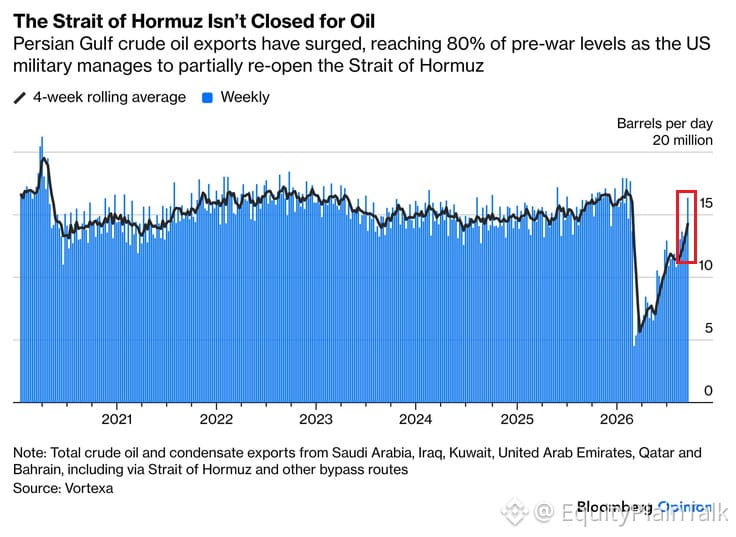
Persian Gulf crude exports just hit 14 million barrels/day last week—first time since the Iran War kicked off on Feb 28. That's a 210% jump from the March low of ~4.5M barrels/day.
The 4-week average is now at 14M barrels/day, highest in 6 months. Exports have recovered to roughly 80% of pre-war levels.
The US military has been securing the strait and set up a two-way shipping corridor along Oman's coast, letting oil convoys move again.
But here's the catch: refined fuels (gasoline, diesel, jet fuel) are still at only 50% of pre-war levels. They're pricier to ship than crude, and some Gulf refineries damaged early in the war haven't fully restarted.
Crude is flowing. Fuel markets are still tight. That gap matters for prices at the pump and industrial costs downstream.
Persian Gulf crude exports just hit 14 million barrels/day last week—first time since the Iran War kicked off on Feb 28. That's a 210% jump from the March low of ~4.5M barrels/day.
The 4-week average is now at 14M barrels/day, highest in 6 months. Exports have recovered to roughly 80% of pre-war levels.
The US military has been securing the strait and set up a two-way shipping corridor along Oman's coast, letting oil convoys move again.
But here's the catch: refined fuels (gasoline, diesel, jet fuel) are still at only 50% of pre-war levels. They're pricier to ship than crude, and some Gulf refineries damaged early in the war haven't fully restarted.
Crude is flowing. Fuel markets are still tight. That gap matters for prices at the pump and industrial costs downstream.