
During the 2020 bear market, at one point Bitcoin might have only moved less than $100 in a day—almost no trading opportunities. It was boring, extremely boring. So I had to sign up on a Forex platform, open an account, and start trading gold and crude oil.
Recent Bitcoin price action over the last one or two months has reminded me of that time. Bitcoin’s volatility has decreased, and there are fewer opportunities for short-term trades. I haven’t done futures trading for about a month—boring. And with the recent stretch of high temperatures in Chengdu, it’s been boring... very, very boring!
So once again, I had no choice but to explore markets beyond crypto. Luckily, today Binance has already rolled out multiple products related to traditional financial assets. Compared to that, Forex platforms and MT4 are products that should have been phased out by the times—terrible user interaction, a complex account system, and withdrawals taking 3–5 business days... Back to the topic: over the past week or so, boredom has driven me to keep an eye on intraday movements in U.S. stocks on Binance, and I tried two symbols: MU and SNDK. For me, the biggest change is this: when Bitcoin’s price action is relatively flat, I no longer need to leave my existing trading platform. I can continue observing and participating in other markets right on Binance.
Now, Binance is no longer just a cryptocurrency trading platform.
In addition to crypto assets like BTC and ETH, the platform also offers U.S. stock spot markets, as well as contract products tied to the prices of traditional financial assets such as U.S. stocks, gold, silver, and crude oil.
In terms of product format, markets that used to be spread across different platforms are gradually appearing within a single trading ecosystem.
And these products themselves are also becoming a new growth direction for crypto trading platforms.
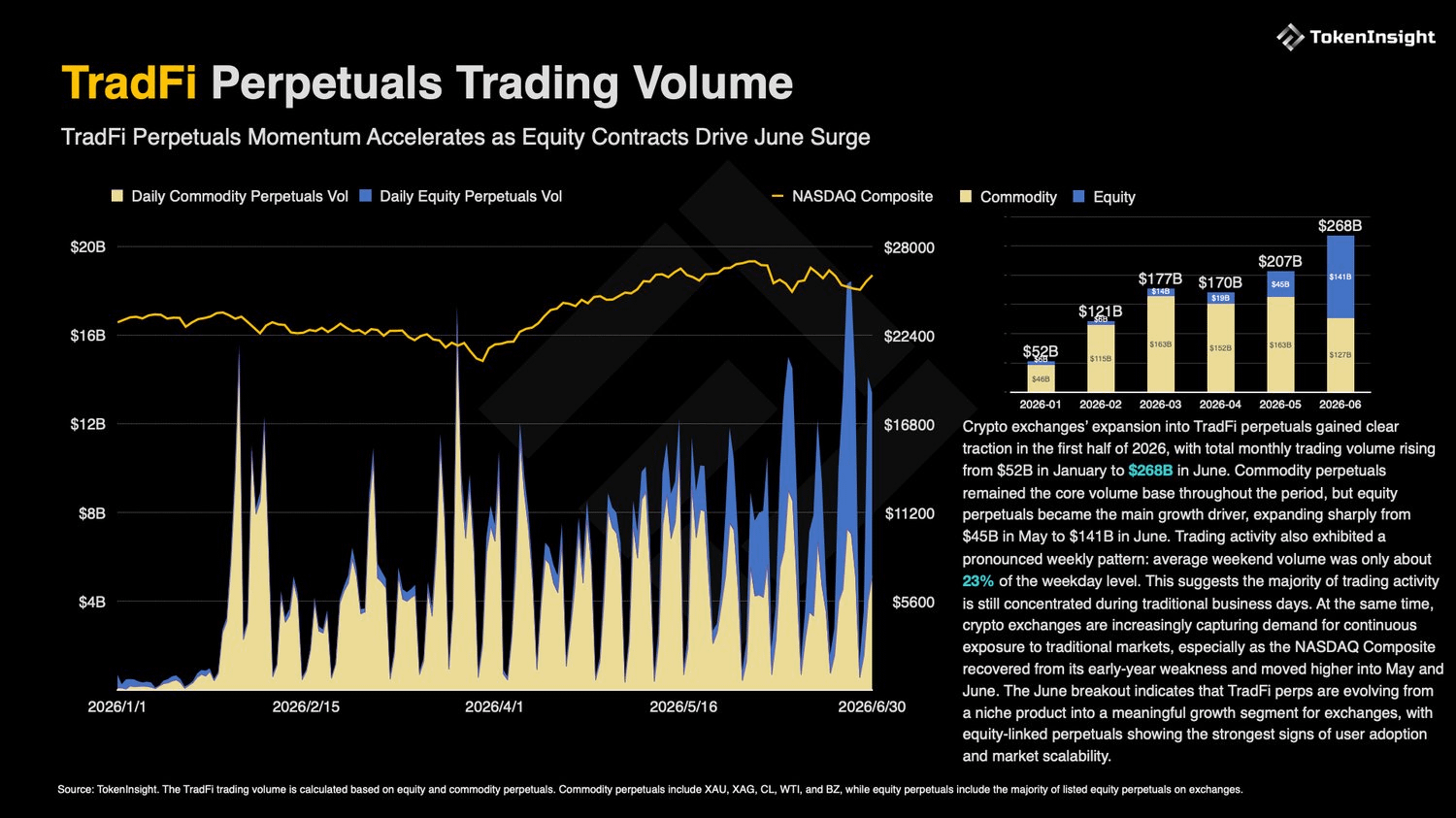
According to the TokenInsight report (Crypto Exchange Report Q2 2026), in the first half of 2026, the monthly trading volume of the TradFi perpetual contracts market grew from $52 billion in January to $268 billion in June, increasing by more than 5 times.
Among them, stock perpetual contracts have become the fastest-growing sub-segment.
In Q2 2026, Binance’s TradFi perpetual contracts trading volume was about $380 billion, with a market share of 59.96%, approaching about six-tenths of the entire market.
Bitget ranks second with a market share of 11.01%, OKX is third at 10.97%, and MEXC is fourth at 10.85%.
The last three platforms’ quarterly trading volumes are all around $69 billion, with each platform’s volume at roughly one-fifth of Binance’s.
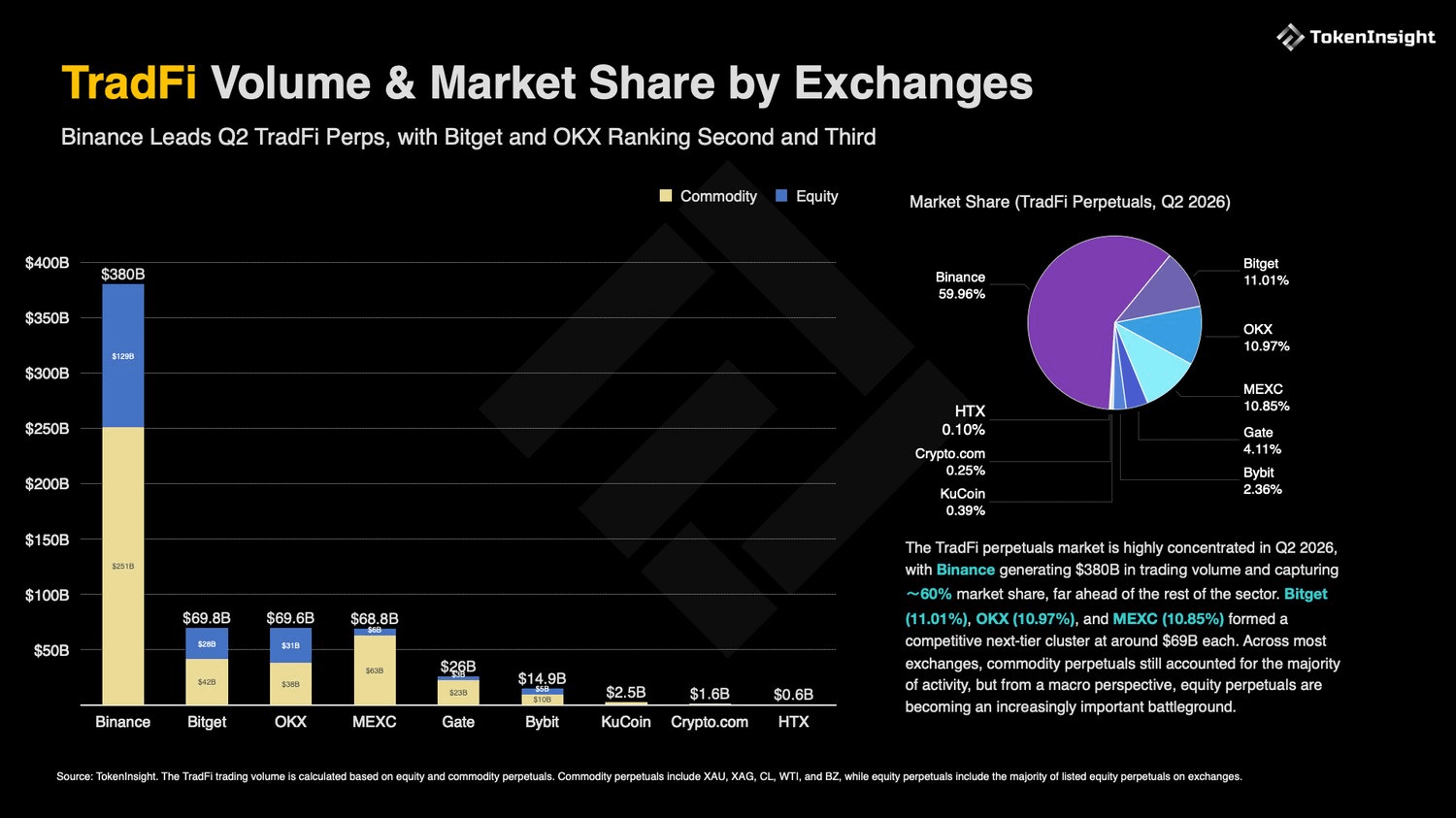
In the TradFi perpetual contracts segment, a fairly clear gap has formed between Binance and other platforms.
Based on these data, traditional financial assets such as gold, silver, crude oil, and U.S. stocks have begun to enter the crypto trading ecosystem.
The market itself hasn’t become easier because of this, but the range of markets that can be observed and traded has indeed expanded—choices have increased.
This may be the most intuitive change after TradFi enters Crypto:
When a particular market lacks volatility, users don’t necessarily need to switch to another entirely unfamiliar platform—they can continue within the same trading ecosystem to look for opportunities in other markets.
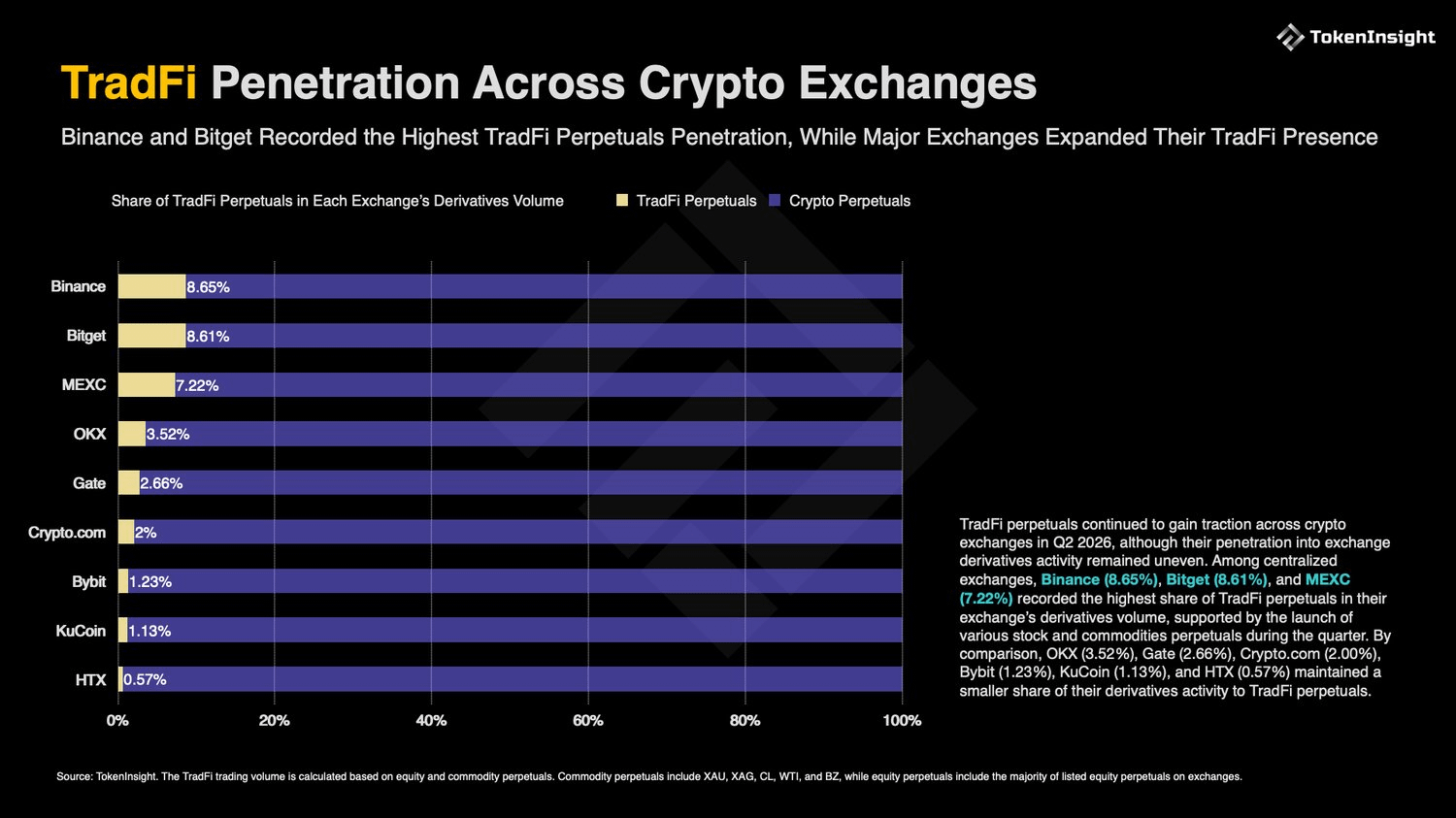
Data source: TokenInsight (Crypto Exchange Report Q2 2026)