
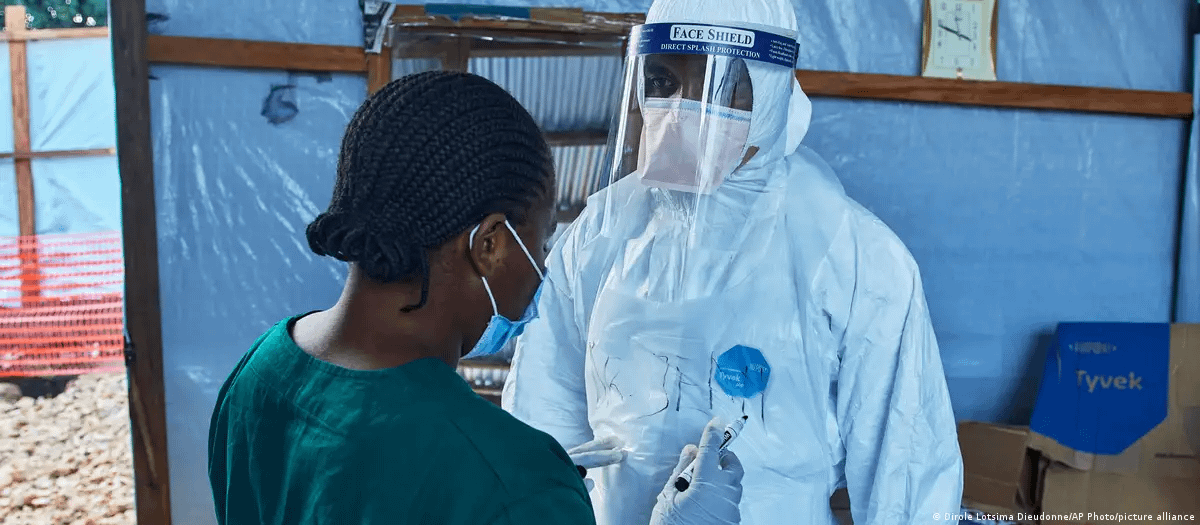
The number of laboratory-confirmed deaths from Ebola hemorrhagic fever in the Democratic Republic of the Congo (DRC) has risen to nearly 1,000. This was reported on Wednesday, July 22, by the World Health Organization (WHO) and the National Institute of Public Health of the DRC.
A total of 999 deaths have been recorded; the diagnosis has been confirmed in 2,473 people. In all, 737 patients are receiving treatment in isolation conditions.
According to the agency, 82 percent of all contacts with confirmed cases are being tracked. To stop the spread, it is necessary to identify and monitor 90 percent of all people who have been in contact with infected individuals, WHO уточнили.
Infections have been recorded in 5 of 26 provinces of the DRC.
Infections have been recorded in 5 of 26 provinces of the country, home to 116 million people. The outbreak epicenter is the north-eastern province of Ituri, bordering Uganda and South Sudan.
Because of poverty and fighting between armed groups, containing the outbreak in Ituri requires "enormous resources," Trish Newport from Doctors Without Borders (MSF) explained. Relatives bury some of the Ebola victims without following protective measures, which speeds up the spread of infection. "A single death can lead to transmission to up to 17 people," Newport added.
In Uganda, 20 confirmed cases of infection have been registered; two people died, the AFP agency уточнила.
The outbreak is caused by a rare strain.
An Ebola hemorrhagic fever outbreak was registered on May 15 in the province of Ituri, where attacks by armed groups regularly occur, including those fighting for control of mineral resources. According to WHO estimates, at that time the virus was likely already spreading unnoticed for several months.
The virus is transmitted through direct contact with the infected person's biological fluids; the incubation period may last up to three weeks. The current outbreak is caused by the rare Bundibugyo (Bundibudzhio) strain, first identified in 2007; there is no vaccine or specific treatment for it. The mortality rate for this strain is usually about 30–50%.
Due to the epidemic, the WHO has declared a "public health emergency of international concern"—the second level on the risk scale.
The current outbreak is the 17th in the DRC since the Ebola virus was discovered in 1976. Before that, the Kasai province was affected, but there it was announced that the situation had normalized on December 1, 2025. At that time, 45 out of 64 people who fell ill died, and 19 recovered.
#EpidemiologicalThreat , #EMERGENCY
In our group, we try to promptly familiarize our readers with the latest news in the field of: politics, macroeconomics, the world of cryptocurrencies, commodity markets, and sometimes even the human psychology of the financial world! For this reason, we strive to choose and leave in the feed only relevant news from this deeply interconnected world.
If you want to broaden your personal horizons and stay constantly informed about changes in the world news agenda—Welcome!!