
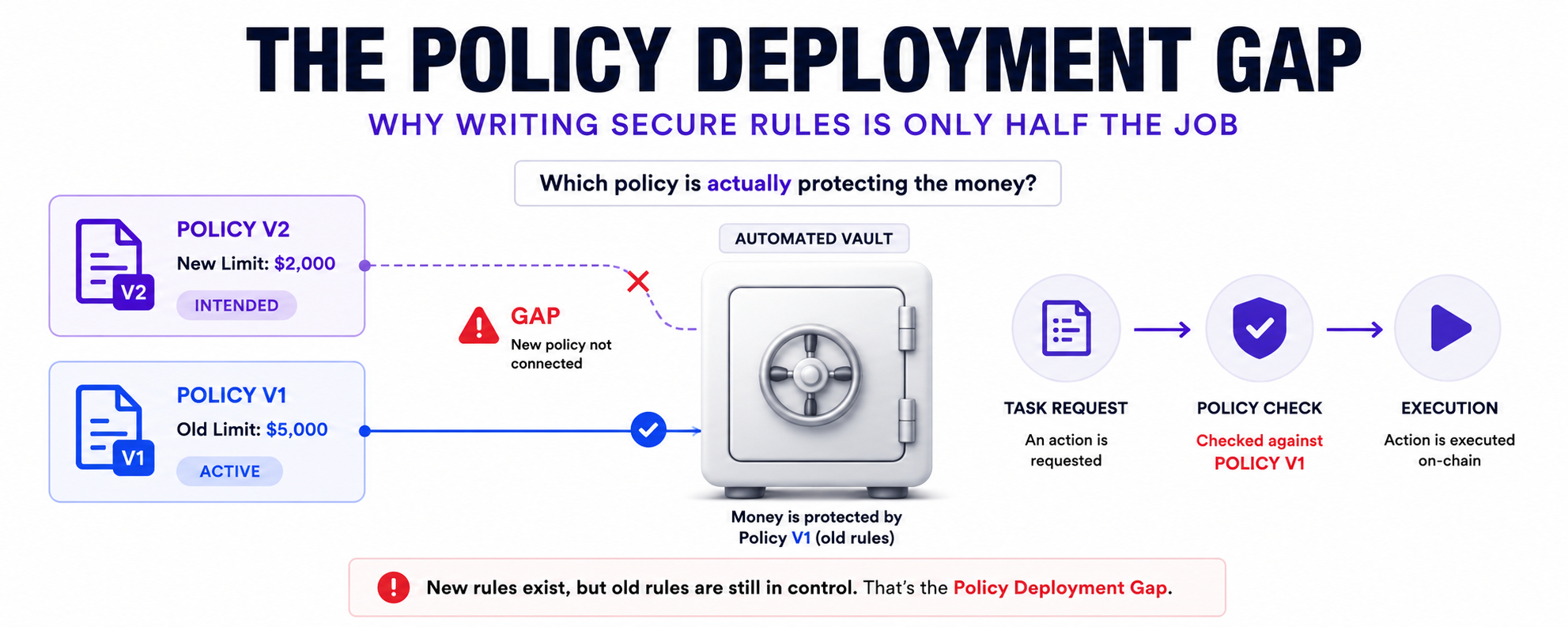

A secure rule means little if the wrong version is protecting the money.
Looking through Newton’s policy deployment flow, I noticed most discussions focus on writing better rules. Set a spending limit, block unsafe apps, define a price range, and the problem seems solved.
But what if the rule is perfectly written, yet the system is not using the rule everyone thinks it is?
A rule on a developer’s computer cannot stop anything. It must be published, connected to the right place, used during checks, and respected before an action goes through. The question is whether it survives the journey from writing to enforcement.
Imagine employees can spend up to $5,000, but only with approved suppliers. Later, the company lowers the limit to $2,000. The new rule is published, So everyone assumes the change is complete.
But the payment system is still following the old version.
Nothing looks broken. Payments work. Yet the company is protected by an unwanted rule.
Now apply the same problem to an automated vault. Its rules limit exposure to one market, allow only approved markets, and set a price range. The team publishes a safer version, but the vault remains connected to the earlier one. Every request is checked against yesterday’s limits.
This is the policy deployment gap. Security discussions ask whether a rule is good or bad. But is the intended rule actually the one standing in front of the money?
Newton’s flow makes this easier to see. A policy is deployed and connected to the protected system. An action is submitted, operators evaluate it, and the final contract checks the result.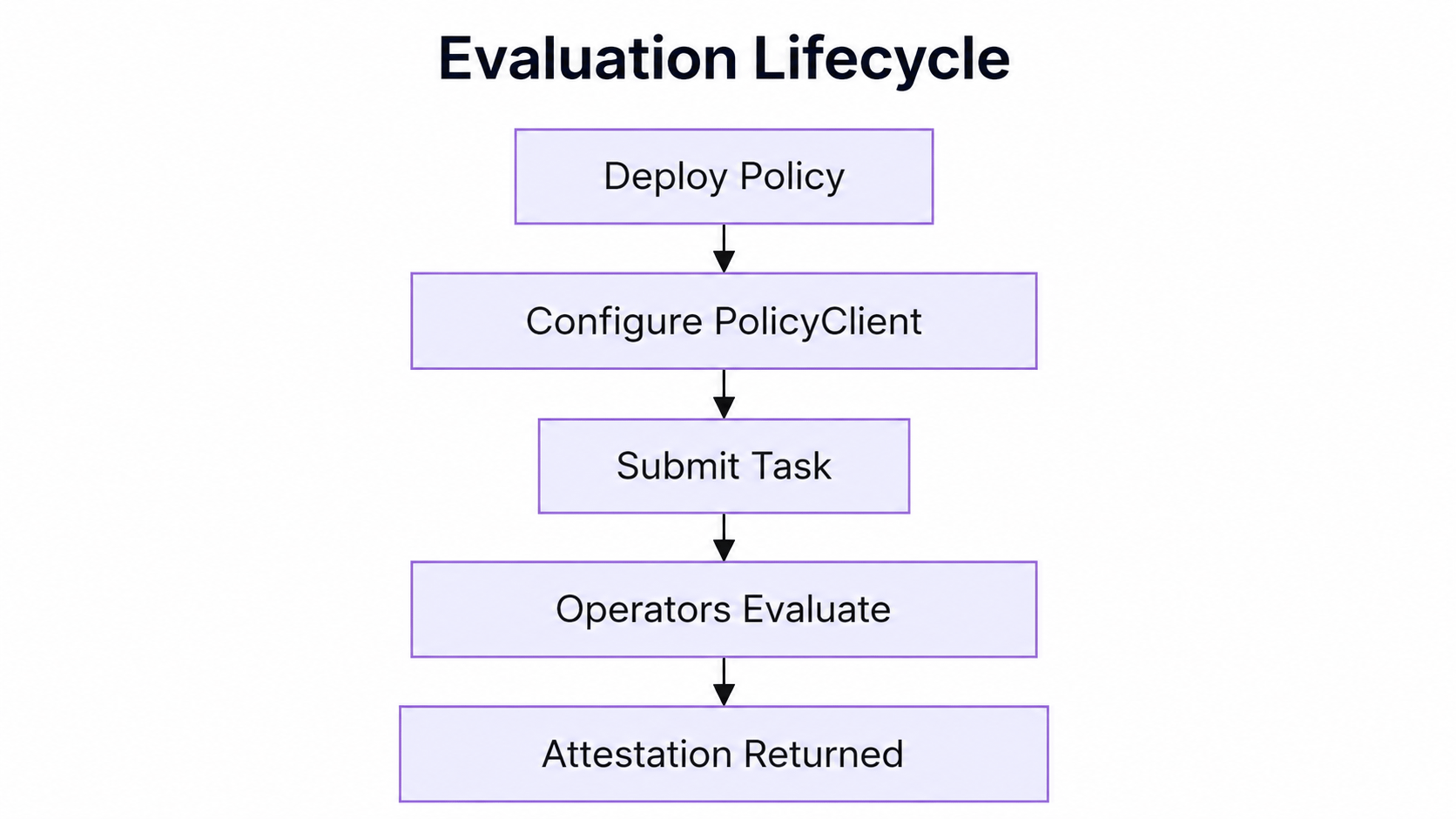
Defining a rule, checking it, and enforcing the result are separate jobs. That makes every connection matter.
A good rule connected to the wrong place cannot protect the intended action. Reliable rules can fail with unreliable information, and a valid result means little if the final contract never checks it.
Live information makes the problem harder. “Do not spend more than $5,000” is simple. “Only buy below $100” is not.
One operator may receive $99.98 while another receives $100.02 because the market moved between requests. Both readings may be genuine, yet one allows the action and the other blocks it.
Newton’s two-step process has operators first fetch time-sensitive information, then use a shared result for the policy check. Only after checking the same agreed information do they sign the result.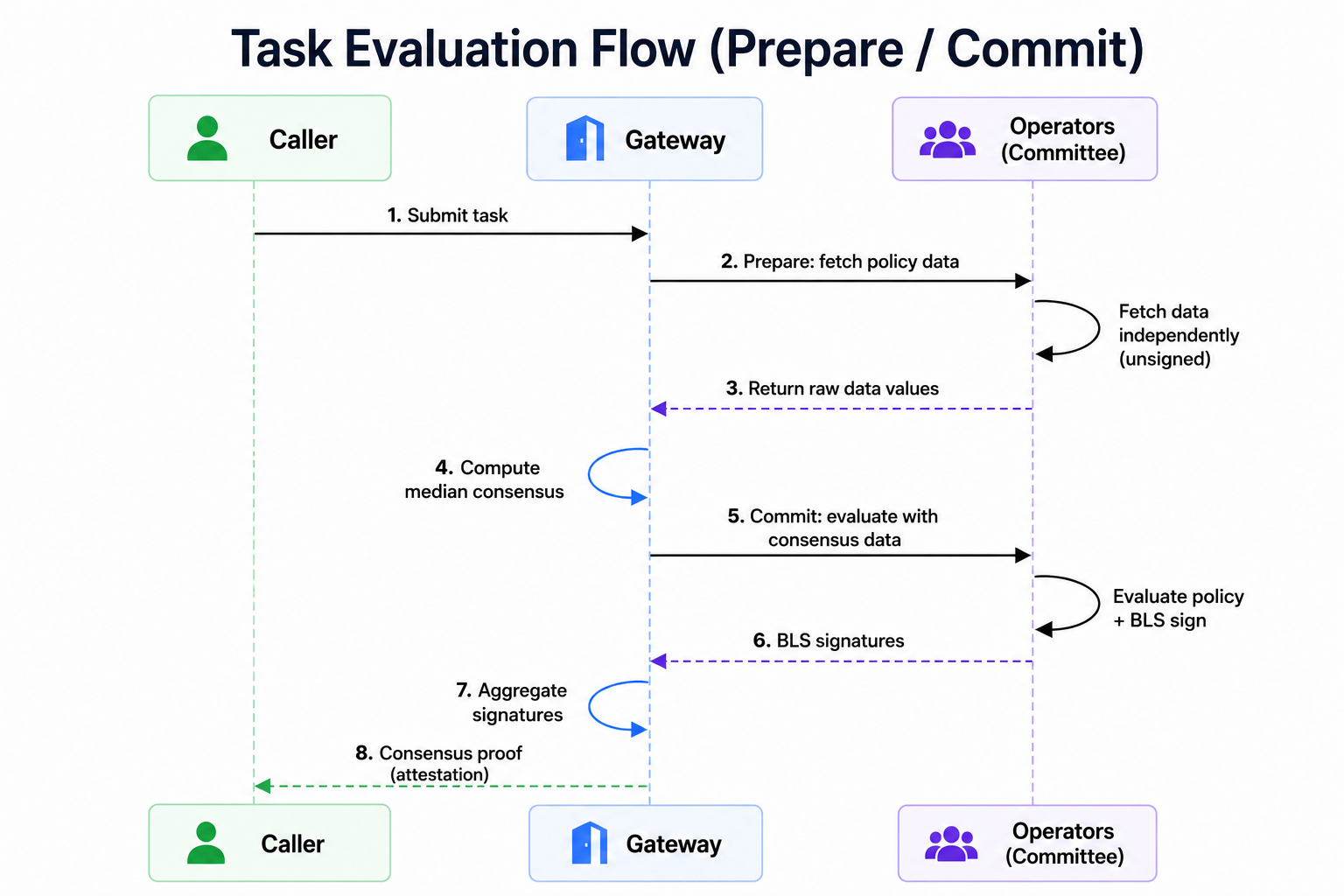
Before a group can agree on whether an action follows a rule, it may first need to agree on what information the rule should see.
I do not see Newton’s CLI as simply a faster deployment tool. Deployment is not the finish line. Protection depends on the correct policy being connected, seeing the right information, and being enforced before funds move.
This matters as automation grows. A person can review a few wallet actions. A team can discuss a large transfer before signing it. But that becomes harder when software requests actions all day without waiting for meetings or human clicks.
Manual approval then becomes a bottleneck. Blind approval creates the opposite problem.
Automation is usually presented as a way to remove steps. Newton’s flow keeps deliberate checkpoints between a request and its final execution. Reliable automation may instead mean removing human waiting while keeping agreed rules in the path of every action.
The biggest failure may not be an AI making a wild decision. A quieter one is everyone believing one set of rules protects the system while another is used.
That failure is hard to notice because everything appears normal. Requests are processed, checks return results, and transactions continue.
The system works.
Not under the rules everyone thinks are active.
For me, that makes the deployment flow more interesting than the CLI command. Writing a secure rule is the first promise. Publishing the right version, connecting it correctly, checking agreed information, and enforcing the result make it real.
As more money moves at software speed, the important question may not be only how smart the decision was.
It may be this: can we prove the right rules were actually there when the money moved?