I think this will be one of the biggest questions of the next few years.
Isn’t it that AI is not intelligent enough to replace humans?
Rather, when AI has enough capability to act on its own, who will decide the limits of it?
Previously, AI mainly played a support role.
It analyzes data.
Provide suggestions.
Write content.
Answer the questions.
The final decision still belongs to human beings.
But everything is changing quite quickly.
AI is starting to be assigned more tasks.
Not just respond.
and also place orders.
Payment.
Portfolio management.
Monitor the market.
It can even interact with onchain protocols on its own.
This sounds very appealing.
Because AI can work continuously, process massive amounts of data, and respond faster than humans
a lot.
But I’m thinking about another issue.
If AI is granted authority to act, where do the boundaries lie?
An AI can be allowed to invest.
But should it be allowed to use all the assets in the wallet?
An AI can pay on its own.
But should it be allowed to send assets to any address it deems appropriate?
An AI can optimize profits.
But who will ensure it doesn’t take risks the owner has never agreed to?
This is no longer a story about AI capability.
It’s a story about authority.
Humans have always done this in finance.
An employee cannot approve every expense.
An accountant cannot move all of the company’s money on their own.
A director must also comply with certain regulations.
Not because they lack capability.
But because authority always needs to come before action.
In my opinion, AI will also need a rule like that.
Not to limit its capabilities.
So that every decision remains within the scope the owner has approved.
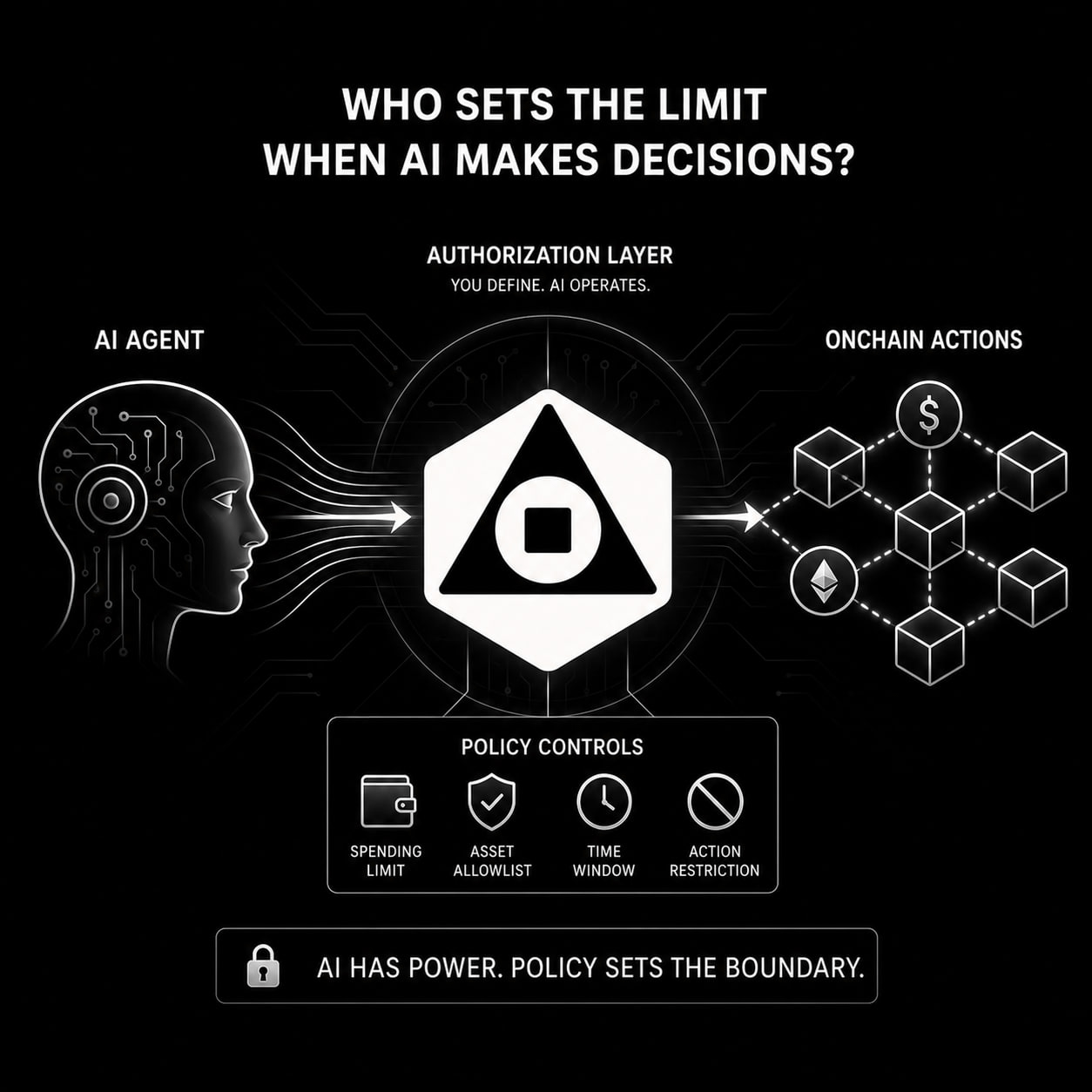
That’s the interesting point I see in @NewtonProtocol.
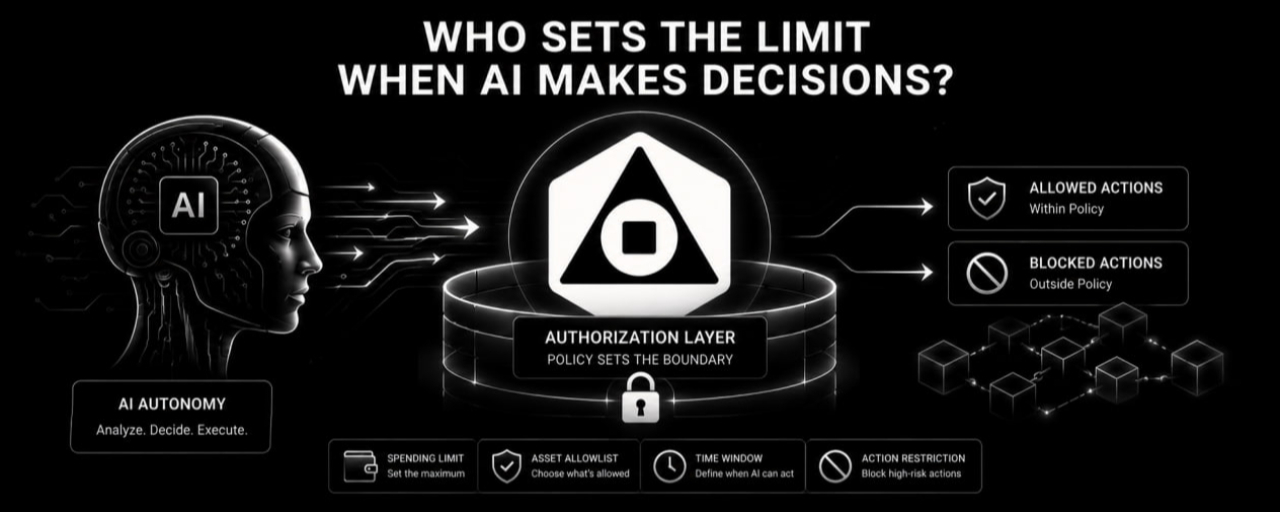
Instead of letting AI freely carry out every transaction that the blockchain allows, Newton builds a
The Authorization Layer stands in front of the execution process.
Users can define policies in advance.
What is AI allowed to do.
How many assets can be used.
Which protocols can it interact with.
In what situations must the transaction be rejected.
What I like is that this approach doesn’t require AI to be smarter.
It only requires the AI to know when to stop.
Perhaps that’s the foundation for AI to truly enter the financial world.
Because in a system where assets are managed automatically, what creates trust wouldn’t be
How many decisions the AI makes.
But every AI decision is operating within the limits that humans have set
from earlier.
In my view, as AI increasingly becomes part of the onchain economy, the infrastructure layers for
Powers are just as important as the blockchain itself.
And that’s also why I will keep tracking the direction of @NewtonProtocol over time
to.