
Azu is increasingly reluctant to treat Falcon as the 'hot topic of the week.' The idea of a hot topic is to change the narrative, the pool, and the emotions each week; but what you really want to extract from USDf / sUSDf is not a momentary thrill, but a system that can run long-term, explain itself, review, and retreat. So, I provide you with a 'monthly routine SOP,' which has a clear goal: to have you focus on only a few planned tasks each month, leave the profits to the mechanism, the safety to the structure, and the compound interest to discipline.

The first step is to conduct a fixed monthly audit, and what you’re auditing is not the 'feeling,' but the structure. Choose a fixed date each month (like the 1st of each month or the first weekend) to look at those few core breakdowns in the transparent panel: Total Reserves, Protocol Backing Ratio, third-party custody ratio, centralized exchange ratio, on-chain LP reserve ratio, and on-chain Staking reserve ratio. You don’t need to monitor every day, but you must 'align your perspective once' at the same time each month; otherwise, you’ll always be making decisions with fragmented information. The key here is not the high or low numbers, but how the structure changes: if a certain category's ratio continues to rise and the concentration increases, you need to ask yourself, 'Is the systemic risk piling up in the same bucket?'

The second step is to decide whether to adjust positions, but you must clearly write down the triggering conditions and not act on impulse. Adjusting positions is not about reacting to who is shouting the loudest; it is your response to structural changes. You can set three types of triggers for yourself: one type is structural triggers, such as noticeable deviations in custody distribution or CEX/on-chain ratios that you dislike; another type is rhythm triggers, such as noticing that you were too active last month, incurring too much friction cost, so you enforce a reduction in actions for the next month; and the last type is demand triggers, such as having a clear plan for spending money in the next 30–60 days, in which case you should consider exit paths and time costs in advance, rather than waiting until the day you need the money to think about it. The significance of the transparent panel updating data daily is to replace "emotional guessing" with "verifiable changes."
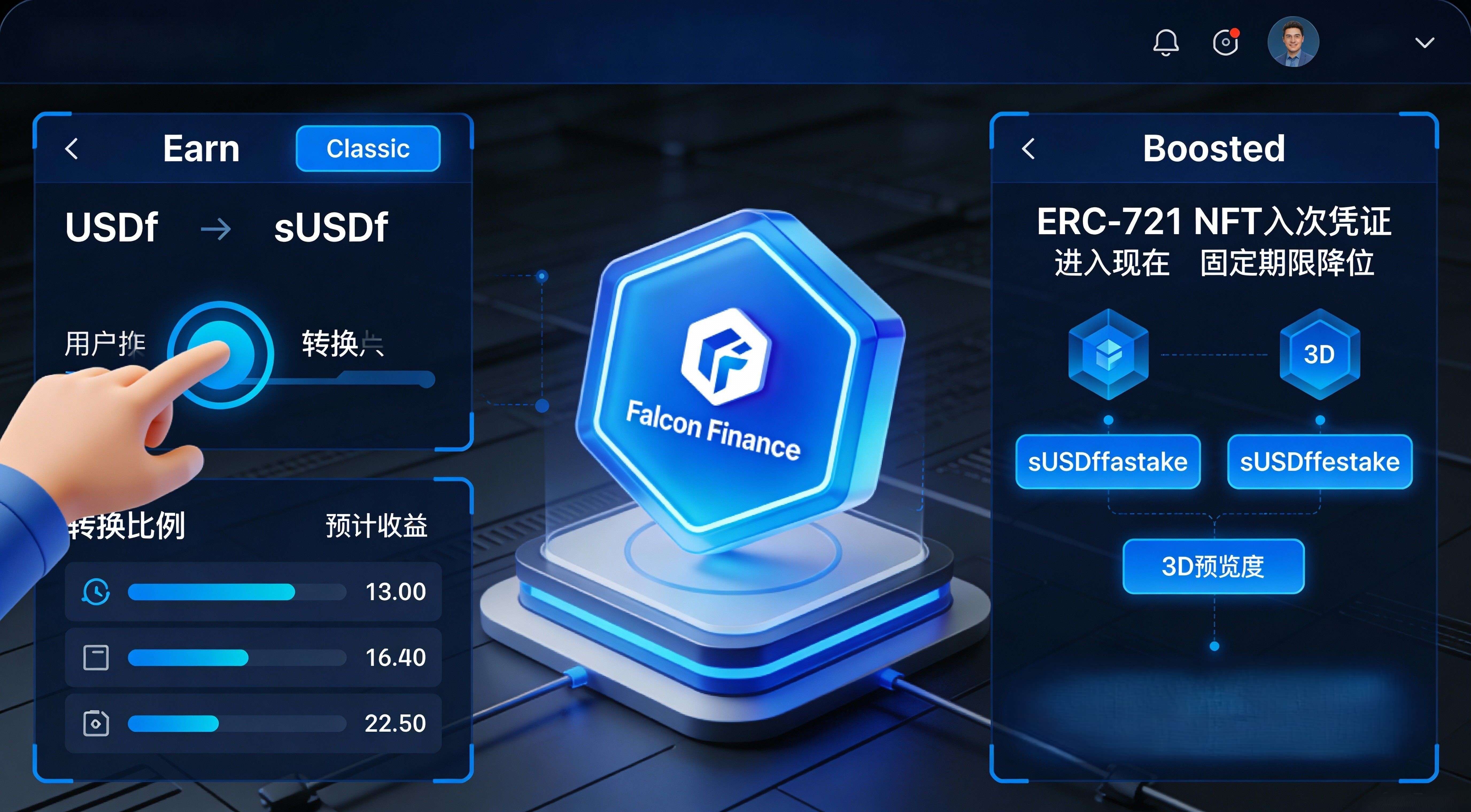
The third step is execution, and only planned actions should be taken. Once you decide to act, limit your actions to the clear path outlined in the Falcon official App Guide: stake where appropriate to Earn Classic, converting USDf to sUSDf; if locking is necessary, use Boosted to restake sUSDf into fixed-term positions, and remember that it is an ERC-721 NFT position certificate, meaning you are purchasing time and certainty, not the freedom to withdraw at any moment. If you did not write down "why you are locking, how long you will lock, and that this money will absolutely not be touched before maturity" for that month, you should not touch any fixed terms. As for products like Staking Vaults, the official description is very straightforward: there are clear lockup periods (e.g., 180 days) and unstake cooldowns (e.g., 3 days) to allow strategies time to unload positions. Treat it as a long-term component rather than a short-term parking lot.
The fourth step is to record, and what you record is the "reason," not the "result." Each time you stake, lock, or adjust ratios, write down a sentence: why you are doing this, what the triggering conditions are, and how you plan to withdraw if the opposite happens. This step may seem clumsy, but it is the watershed that pushes you from "playing products" to "managing systems." Many people lose money not due to strategies, but because they do not keep records, leading to repeated mistakes while feeling that the "market is targeting them."
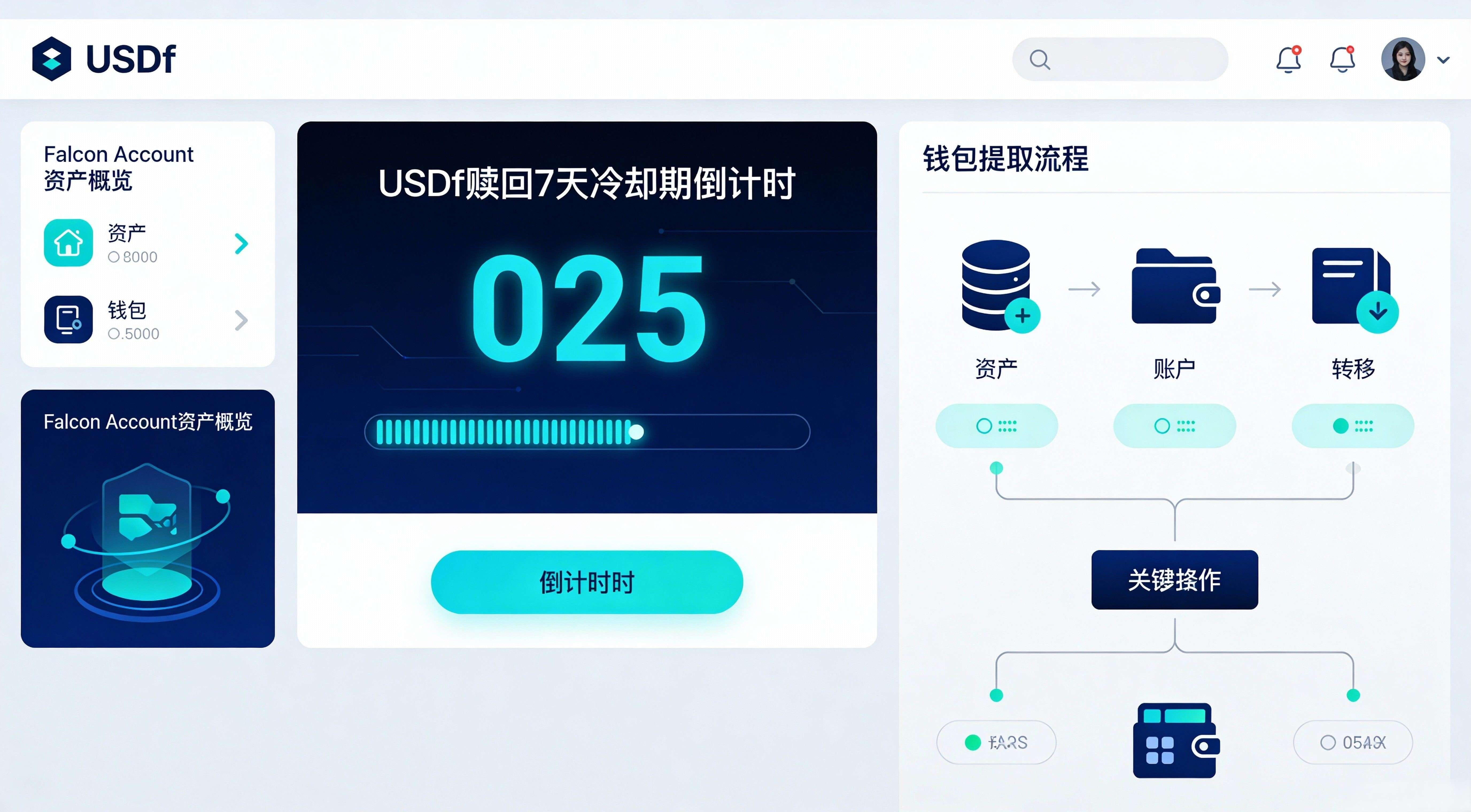
The fifth step is to exit the rehearsal. This step is the easiest to overlook, but it is actually the safety valve of the entire SOP. You should conduct a "small exit rehearsal" at least once a month, not to withdraw funds, but to confirm that your exit path is intact and that the time cost is manageable. Falcon's documentation clearly states that the redemption of USDf has a 7-day cooling period, and the assets will enter your Falcon Account after the cooling period ends, after which you can withdraw them to your wallet. The documentation also explains the motivation behind this cooling period: to give the system time to withdraw assets from active yield strategies and ensure reserve health. At the same time, you must also consider real-world constraints: the official FAQ mentions that minting/redeeming through the Falcon App requires completing KYC, which is part of the friction in your "exit process." Therefore, during the rehearsal, you should deliberately test three things: the feeling from the moment you click redeem to when the assets are credited; whether you can smoothly withdraw from the Falcon Account to your wallet; and whether you need to keep reconciliation vouchers in your jurisdiction and whether there are compliance reporting considerations. Running through this once in a small amount can reduce fear more than reading ten interpretations.

Running through these five steps once a month, you will find that what you start compounding is not a certain APY, but discipline: you are no longer led by "hot today, cold tomorrow"; you begin to have an executable, reviewable, and retreatable asset operating system. Finally, I hope you really write down three hard rules; only when written down do they count: what your position limit is, what your position adjustment triggering conditions are, and how frequently you will conduct exit rehearsals. As long as these three can be executed in the long term, Falcon will no longer be a hot topic for you, but rather a component.

