

When Binance announced that it would list @Lorenzo Protocol native token, BANK, on its spot market in mid-November 2025, it stirred a wave of fresh attention across the crypto world. For most observers this wasn’t just another ticker addition on a major exchange; it was a moment that forced people to ask: what exactly is this project, why does its token showing up on Binance matter, and what are the real ripples if any beneath the headlines?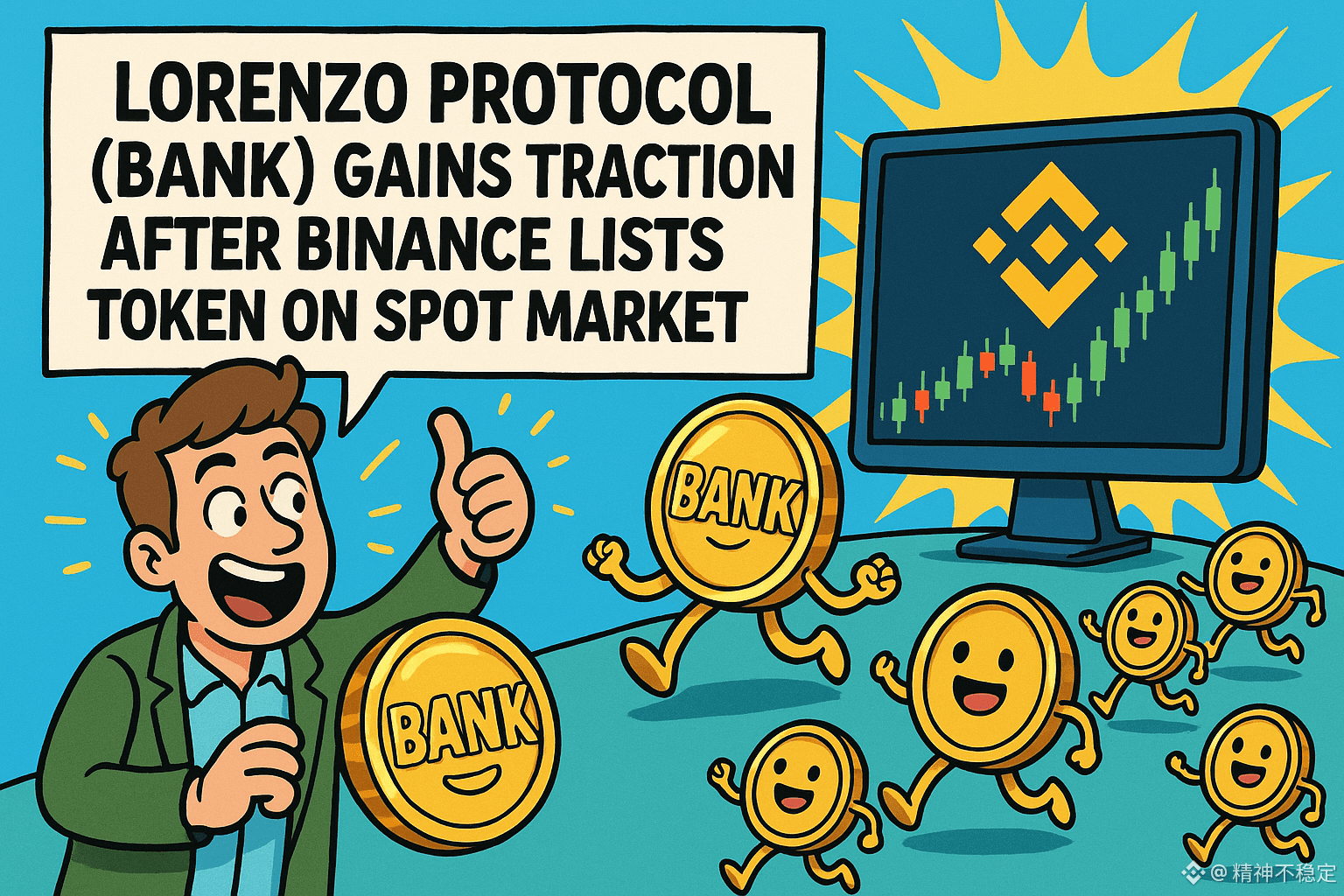
I remember the first time I noticed Lorenzo Protocol in my own crypto feeds earlier this year. It wasn’t flashy. There were no viral memes or “to the moon” hype posts. Instead, what caught my eye was the project’s emphasis on on-chain asset management and Bitcoin liquidity a concept that, on paper, seemed more structural than speculative. Lorenzo isn’t chasing quick yield farms or trendy memecoins; it’s proposing a way to make Bitcoin and other assets more productive on the blockchain. That’s a subtler proposition, and subtle things don’t always capture immediate attention.
The Binance listing changed the conversation. Announced on November 13, 2025, the exchange opened trading for BANK pairs against USDT, USDC, and even TRY. That’s noteworthy because Binance isn’t a passive service provider; it’s often a de facto gatekeeper of liquidity and legitimacy in crypto markets. When Binance lists a token especially on its spot market without charging a listing fee it signals confidence in the project’s infrastructure, compliance, and perceived demand. That in itself can alter how investors, institutions, and even other exchange platforms view an asset.
In the hours leading up to the listing, BANK’s price didn’t just climb modestly — it surged. Reports from the day show its price jumping 60–80 percent before trading even began, a very human reminder that markets frequently react to expectations rather than fundamentals. Price movement isn’t the same thing as adoption, but it does reveal sentiment. Traders reacted to the Binance announcement with enthusiasm, perhaps betting on inflows from new markets and increased arbitrage opportunities.
Yet the story didn’t stay in that initial spike. If price alone were the measure of success, BANK might look like a classic “pump then settle” narrative. Some data suggests that after the extravagant climb, volatility returned — and in some cases, the token even retraced significantly after the initial euphoria. That pattern isn’t unique to BANK; it’s a common feature when a token shifts from being known only to early adopters to being priced on a global exchange with 24/7 market access.
Why does this matter beyond price charts? Because the listing on Binance brought Lorenzo Protocol into a new realm of visibility. Up until then, its narrative had been mostly confined to early-stage crypto circles, Telegram groups, and DeFi enthusiasts who read beyond the surface. Now, it’s part of exchange order books watched by everyday traders, institutional bots, and algorithmic strategies, all of which broaden the scope of who engages with the token.
But let’s step back and talk about what Lorenzo Protocol is trying to do — not just the price. At its core, Lorenzo aims to blend traditional and decentralized finance by tokenizing asset management strategies. It creates vaults where capital gets allocated to strategies like quantitative trading or structured yield products, and then tokenizes users’ shares in those strategies. That’s a mouthful in jargon terms, but in simpler language it’s trying to bring legible, scalable investment infrastructure to crypto in a way that feels less chaotic than many DeFi products.
There’s also a narrative here about Bitcoin — the grandparent of the crypto ecosystem. Lorenzo’s platform builds tools to make Bitcoin work harder in decentralized finance: staking it in ways that earn yield while keeping it liquid through tokenized representations. That idea resonates with certain corners of the market tired of simply holding BTC without earning anything on it aside from speculative price moves.
From a personal perspective, this blend of structural ambition and exchange validation is what makes the current moment interesting. A Binance listing doesn’t create utility, but it amplifies visibility.
It gets more people examining whether the project’s core ideas and future goals are solid. And if the project has been exaggerating, this kind of public attention can expose it quickly.
There’s a reason to stay cautious. A lot of tokens look great on day one but lose steam quickly. Long-term success depends on real use: are wallets actually doing things with these vaults?
Are institutions experimenting with Lorenzo’s strategies? Are developers building integrations? None of that happens overnight, and none of it is guaranteed by a spot listing.
So why is this trending now? In part, it’s timing. Crypto markets in late 2025 are more discerning. People aren’t just chasing quick flips; there’s a growing appetite for infrastructure that might stick. Binance’s listing — under the so-called Seed Tag that denotes newer tokens — brought Lorenzo Protocol into that conversation. Suddenly it’s not just a niche DeFi experiment; it’s a token people can trade easily, with exposure to global liquidity pools and the psychological backing that comes with one of the world’s largest exchanges.
In the end, what’s unfolding with Lorenzo Protocol is a broader question about crypto’s evolution. Are we moving toward systems that genuinely integrate traditional financial concepts like asset management into decentralized frameworks? Or are we merely re-skinning old ideas with blockchain labels? The answer isn’t obvious, and the BANK token’s story — its spikes, retracements, and now wider access — is just a chapter in that unfolding narrative.
What’s clear is that the Binance listing has made Lorenzo Protocol more than a footnote.
This project has become something to follow closely. What matters isn’t just the price, but whether its big plans turn into real use. These developments could end up being quiet turning points that slowly move crypto toward becoming more mature.
@Lorenzo Protocol #lorenzoprotocol $BANK

