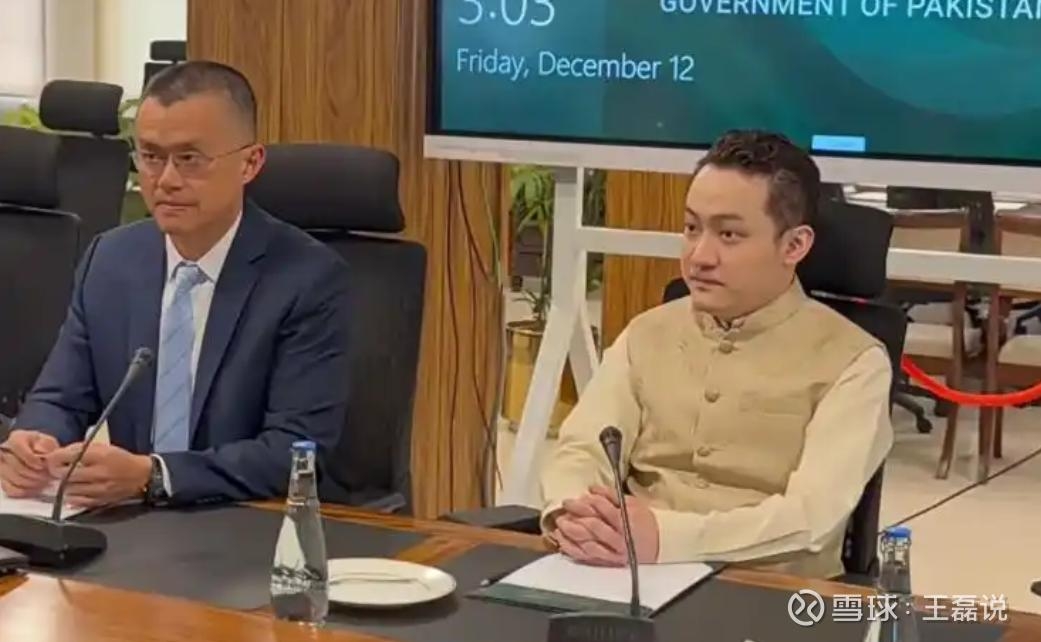
#CZ会见亚洲领导人推动RWA代币化 CZ is intensively meeting with political leaders across Asia, driving the implementation of RWA tokenization.
1. Core Background: CZ's collaboration with multiple Asian governments to layout RWA strategies
Binance founder Zhao Changpeng (CZ) has been touring high-level officials in Central Asia, South Asia, and Southeast Asia since 2025. At the Davos Forum, he publicly disclosed that he is negotiating the tokenization of state-owned real-world assets (RWA) with over ten Asian governments. Key partner countries include Pakistan, Kyrgyzstan, and Malaysia, while also deeply engaging in discussions on RWA policies in the two major Asian financial hubs of Hong Kong and Singapore.
Overall Cooperation Logic: As an official advisor, provide a blockchain regulatory framework, build RWA compliant infrastructure, and promote the tokenization of government bonds, gold reserves, real estate, infrastructure, and commodities on-chain, addressing pain points such as cross-border remittance difficulties, poor asset liquidity, and high financing thresholds in emerging markets.
1. Pakistan (Core Deployment Country in South Asia)
By the end of 2025, CZ will meet with the Finance Minister of Pakistan, central bank, and senior securities regulators, being appointed as a strategic advisor for the country's crypto committee to sign a memorandum of cooperation on RWA and stablecoins:
1. Core RWA Directions: Tokenization of national foreign exchange reserves, government bonds, and agricultural commodities;
2. Supporting Plan: Issue local fiat stablecoins to reduce the cost of cross-border remittances for overseas workers;
3. Achievements: Regulatory bodies have granted Binance compliance qualifications, establishing a local RWA trading sandbox that allows the general public to invest in small token assets.
2. Kyrgyzstan (Benchmark RWA Country in Central Asia)
In April 2025, CZ signed an official cooperation memorandum with the President of Kyrgyzstan, becoming the Chief Blockchain Advisor of the country, which is the first in Asia to launch a national-level gold reserve RWA project.
1. Major Project: $300 million gold reserve backing for a dollar stablecoin, simultaneously advancing the tokenization of state-owned mineral and infrastructure assets;
2. Policy Support: Implement comprehensive RWA ownership, asset division, and cross-border circulation regulations;
3. Industry Support: Build a local Web3 talent training system to attract global RWA institutions.
3. Malaysia and Southeast Asian countries
CZ has met multiple times with senior officials from Malaysia's financial sector, focusing on the tokenization of commodities like palm oil and rubber; simultaneously communicating with officials from various Southeast Asian countries on real estate REITs and supply chain debt RWA schemes, emphasizing fragmented small investments to lower entry barriers for traditional large assets.
4. Hong Kong and Singapore (Policy Recommendations for Financial Centers)
In August 2025, CZ will attend the Hong Kong Crypto Finance Forum to systematically explain the RWA development pathway to regulatory bodies, while providing recommendations for aligning with Singapore's Project Guardian tokenization framework:
1. Highlighting the three major pain points of RWA: insufficient asset liquidity, inconsistent cross-regional regulatory standards, and the decoupling of on-chain assets from physical prices;
2. Clarify the priority order for implementation: standardized financial RWAs like bonds and stocks first, followed by non-standard assets like real estate and art.
3. Suggest creating a unified compliant trading platform to bridge traditional licensed institutions and on-chain markets, promoting cross-border RWA connectivity in Asia.
2. CZ's Core Demands and Value Propositions for RWA
1. For Sovereign Nations
Tokenization of state-owned assets enables asset fragmentation and 24-hour global circulation, broadening financing channels; leveraging stablecoins optimizes cross-border payments, alleviating foreign exchange and inclusive finance challenges, while establishing localized digital financial sovereignty to reduce reliance on a single dollar stablecoin.
2. On Industry Development
CZ believes stablecoins are currently the only viable RWA product, verifying the feasibility of asset tokenization on-chain; in the future, exchanges will uniformly support crypto-native assets + tokenized real-world assets, forming a complete TradFi + DeFi integrated ecosystem.
3. For Market Investors
RWA tokens achieve the fragmentation of large assets, allowing ordinary people to invest small amounts in gold, government bonds, and overseas real estate, breaking down geographical and financial barriers.
3. Current Implementation Difficulties (CZ Publicly Warns of Risks)
1. Liquidity Bottleneck: Non-standard assets like real estate and art have low trading frequency; after tokenization, the depth is insufficient, making it susceptible to price manipulation;
2. Regulatory Fragmentation: Different countries have varying standards for classifying tokenized assets (securities/commodities), making cross-border RWA compliance costs extremely high;
3. Mechanism Defects: Some on-chain stock tokens have price discrepancies with underlying spot prices, rendering arbitrage mechanisms ineffective, while the legal framework for underlying asset ownership is incomplete.
4. Industry Impact Summary
Asia is the fastest region for RWA implementation globally. CZ is connecting with high-level officials from various countries, forming a dual-line layout of sovereign asset tokenization in emerging markets + standardized RWA in mature financial centers: on one hand, helping Central and South Asian countries revitalize state-owned resources through blockchain, and on the other hand, improving the compliance framework in Hong Kong to promote the establishment of independent RWA regulatory and trading standards in Asia, accelerating the industry's progress towards comprehensive on-chain asset integration.
Risk Warning
Virtual assets and RWA tokenization face strict regulatory restrictions in many areas, with related projects encountering multiple risks regarding legality, pricing, and liquidity. This article only objectively outlines industry dynamics and does not constitute any investment advice.