The more I work with appchains, the more I realize one thing: the sequencer is the real “power bottleneck” of blockchain infrastructure. Most centralized sequencer models are optimized for speed, but they always come with predictable risks single-point-of-failure, potential censorship, unpredictable fees, and, most importantly, dependency on a single operator.
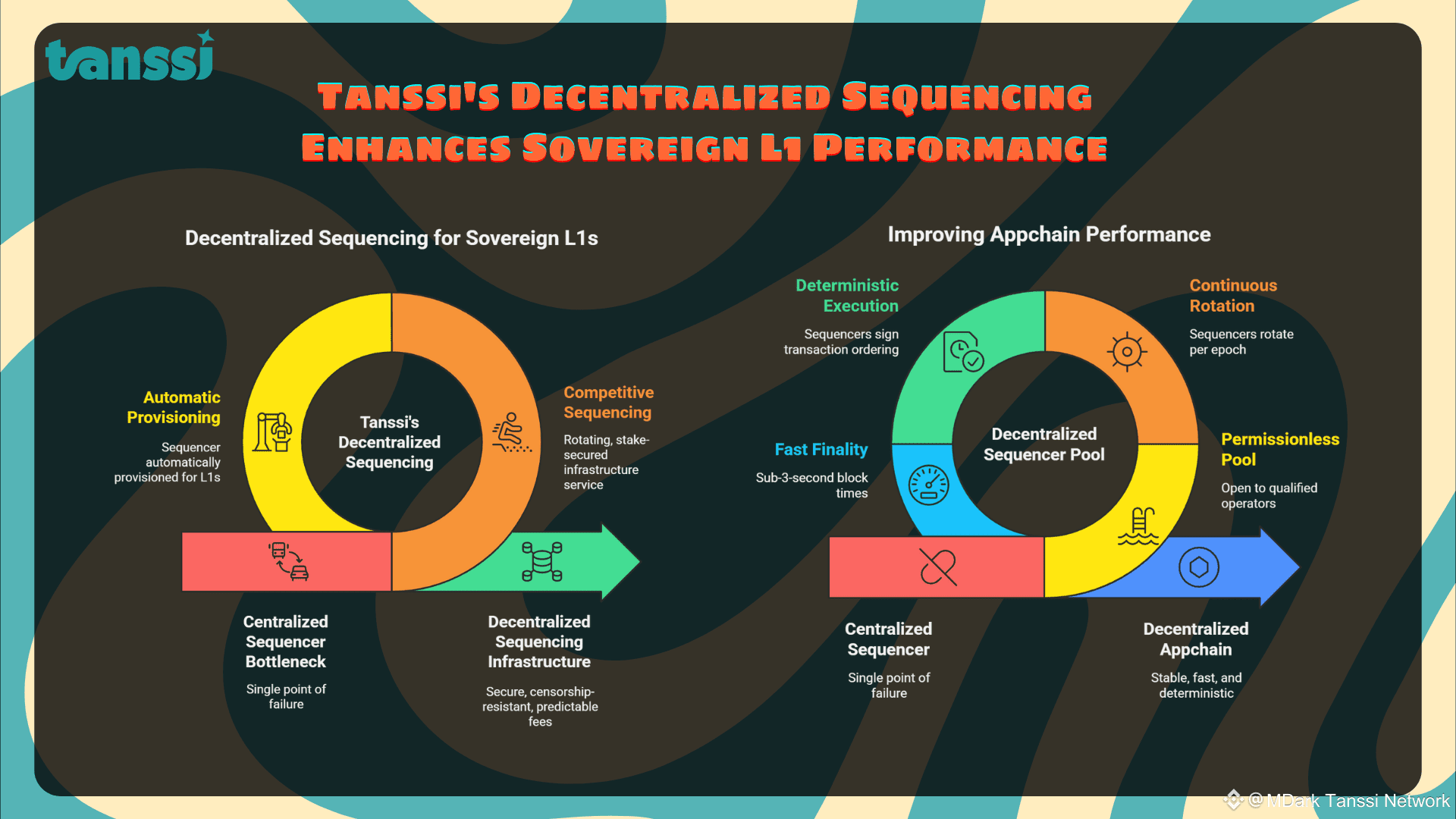
What caught my attention about Tanssi is that they don’t just “decentralize a sequencer.” They turn sequencing into a competitive, rotating, stake-secured infrastructure service that is automatically provisioned for each sovereign L1. That’s a big shift compared to traditional centralized models.
1. 𝑴𝒚 𝒑𝒆𝒓𝒔𝒐𝒏𝒂𝒍 𝒆𝒙𝒑𝒆𝒓𝒊𝒆𝒏𝒄𝒆 𝒆𝒗𝒂𝒍𝒖𝒂𝒕𝒊𝒏𝒈 𝑻𝒂𝒏𝒔𝒔𝒊’𝒔 𝒂𝒓𝒄𝒉𝒊𝒕𝒆𝒄𝒕𝒖𝒓𝒆.
Digging deeper into the system, three things stood out:
(1) Permissionless sequencer pool with continuous rotation
Any operator that meets requirements can join the pool, and each appchain gets a rotating set of sequencers per epoch. In practice, this significantly reduces the risk of “one node fails → chain halts,” because there’s always redundancy to keep liveness healthy.
(2) Clear deterministic execution
Transaction ordering is signed and committed by a group of sequencers, making execution deterministic. When testing an appchain, the most noticeable impact was the absence of the small, annoying rollbacks that often happen when a centralized sequencer glitches.
(3) Fast and stable finality
Sub-3-second block times and near-instant finality at the appchain layer make a huge difference. This translates directly into smoother UX for payments, trading, onboarding, and especially enterprise use cases that require immediate finality.
2. 𝑭𝒆𝒆 𝒑𝒓𝒆𝒅𝒊𝒄𝒕𝒂𝒃𝒊𝒍𝒊𝒕𝒚 𝒔𝒐𝒎𝒆𝒕𝒉𝒊𝒏𝒈 𝒕𝒆𝒂𝒎𝒔 𝒐𝒇𝒕𝒆𝒏 𝒖𝒏𝒅𝒆𝒓𝒆𝒔𝒕𝒊𝒎𝒂𝒕𝒆.
One thing I appreciate in Tanssi is predictable fees.
Centralized sequencers rarely excel here because maximizing MEV or priority fees aligns with their economic incentives.
In Tanssi’s model, sequencing is competitive and each appchain can define its own fee policy. This gives businesses and dApps much more stable cost expectations.
For real product development, this is a massive advantage.
3. 𝑾𝒉𝒚 𝑰 𝒃𝒆𝒍𝒊𝒆𝒗𝒆 𝑻𝒂𝒏𝒔𝒔𝒊 𝒐𝒖𝒕𝒑𝒆𝒓𝒇𝒐𝒓𝒎𝒔 𝒄𝒆𝒏𝒕𝒓𝒂𝒍𝒊𝒛𝒆𝒅 𝒔𝒆𝒒𝒖𝒆𝒏𝒄𝒆𝒓 𝒎𝒐𝒅𝒆𝒍𝒔.
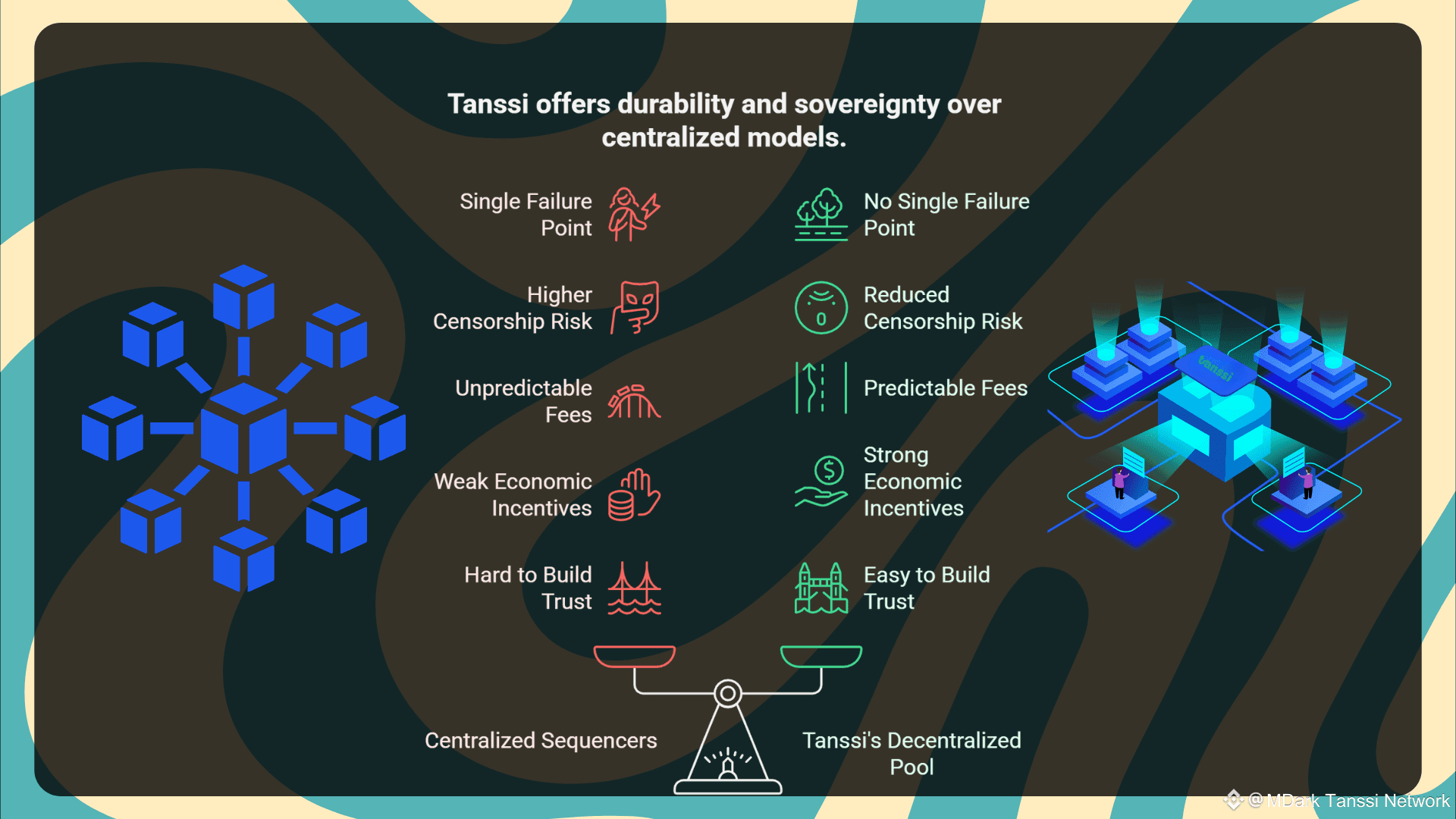
Centralized sequencers great for MVPs, risky for long-term systems
Pros: low latency, easy setup, simple operations.
Cons (which I’ve faced many times):
- one operator failure → chain outage,
- higher risk of censorship or transaction favoritism,
- unpredictable fee spikes,
- weak economic incentives for good behavior,
- hard to build trust for financial or enterprise ecosystems.
Tanssi’s decentralized sequencer pool ideal for teams needing true sovereignty.
From my perspective, Tanssi provides a balanced blend of sovereignty and performance:
- no single point of failure,
- staking + slashing reduce bad behavior,
- rotation reduces collusion and censorship risk,
- stable sub-3-second block times + fast finality,
- predictable fee structures,
- fully provisioned infra (RPC, indexer, DA, etc.) out of the box.
Yes, coordination among multiple sequencers introduces some complexity. But to me, this is the right trade-off for teams building for durability, not just for a demo.
𝑴𝒚 𝒄𝒐𝒏𝒄𝒍𝒖𝒔𝒊𝒐𝒏
If you’re deciding between:
- using a centralized sequencer to move fast,
- or running your entire stack for sovereignty,
Tanssi feels like a smart middle ground:
- you keep sovereignty,
- you don’t carry all the infrastructure risk,
- and you get true decentralized sequencing something I believe will become an industry standard in the next few years.
If I were a CTO or founder preparing to launch an appchain, I’d start with a small pilot to measure latency, finality, and fee stability. But based on everything I’ve seen so far, Tanssi’s decentralized sequencing model is setting a new benchmark worth watching closely.