
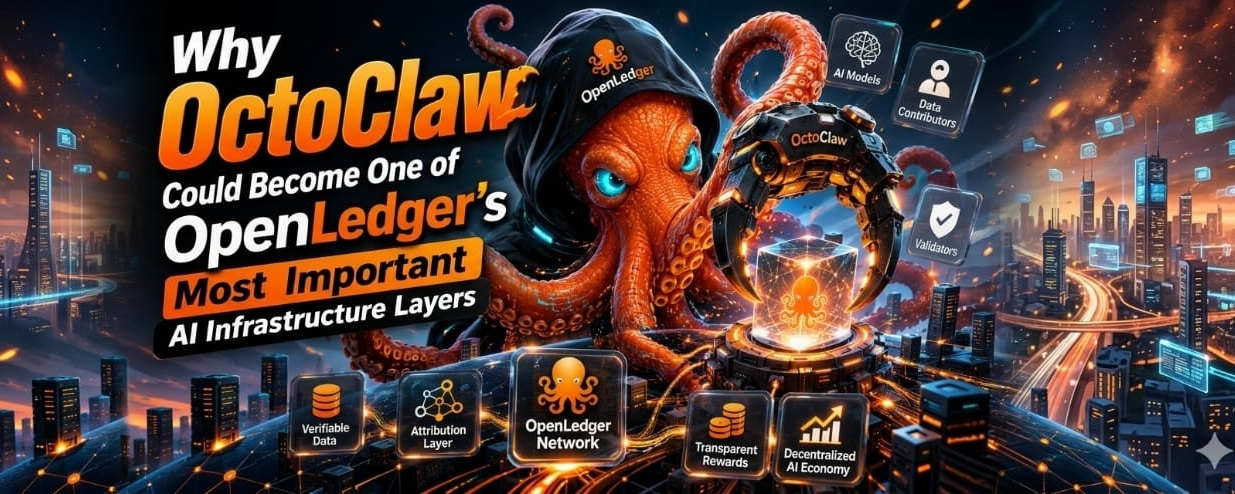
🧠 Most People Still Think AI Automation In Crypto Is Simple
Right now, when people hear “AI + crypto”…
they usually imagine:
⚡ trading bots
⚡ automated swaps
⚡ yield farming assistants
⚡ portfolio management tools
But honestly?
That’s probably just the beginning.
Because the real shift starts when AI agents become capable of operating across entire on-chain ecosystems autonomously.
And that’s where OctoClaw starts becoming interesting.
---
⚡ OctoClaw Feels Bigger Than Just Another OpenLedger Upgrade
At first glance, people may think OctoClaw is simply an infrastructure expansion.
But the bigger picture could be much deeper.
The direction suggests a future where AI agents may eventually handle:
🌍 cross-chain coordination
⚡ liquidity routing
⚡ autonomous execution
⚡ protocol interaction
⚡ treasury allocation
⚡ machine-to-machine finance
And honestly?
That changes how crypto infrastructure needs to be designed.
Because once AI systems begin interacting with multiple chains automatically…
execution quality becomes EVERYTHING.
---
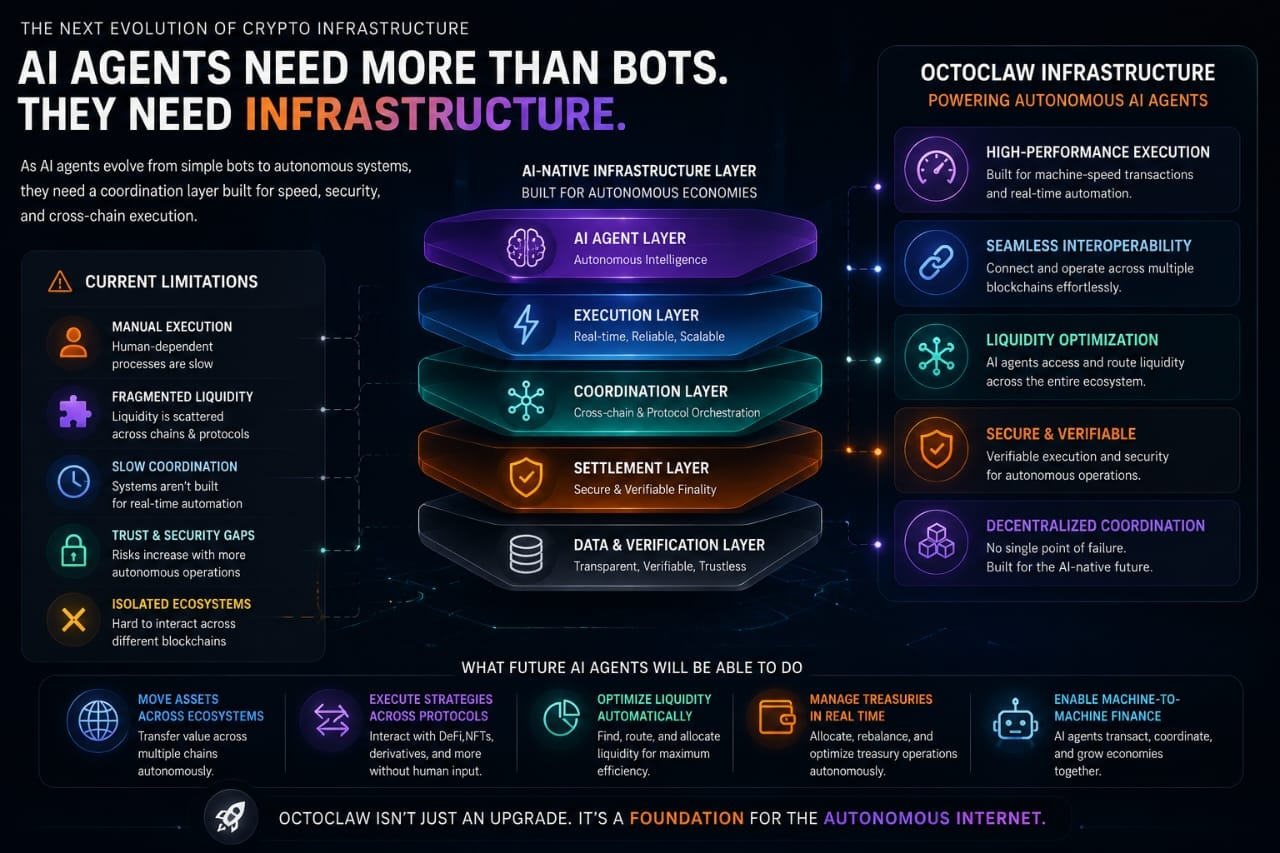
🤖 Why AI Automation Needs Better Infrastructure
Today, most blockchain systems still rely heavily on:
👤 manual execution
👤 human approvals
👤 fragmented liquidity
👤 isolated ecosystems
👤 slow coordination between networks
But autonomous AI agents operate differently.
They need:
⚡ real-time execution
⚡ secure interoperability
⚡ reliable settlement layers
⚡ programmable coordination systems
⚡ scalable transaction environments
Without that…
AI automation stays limited.
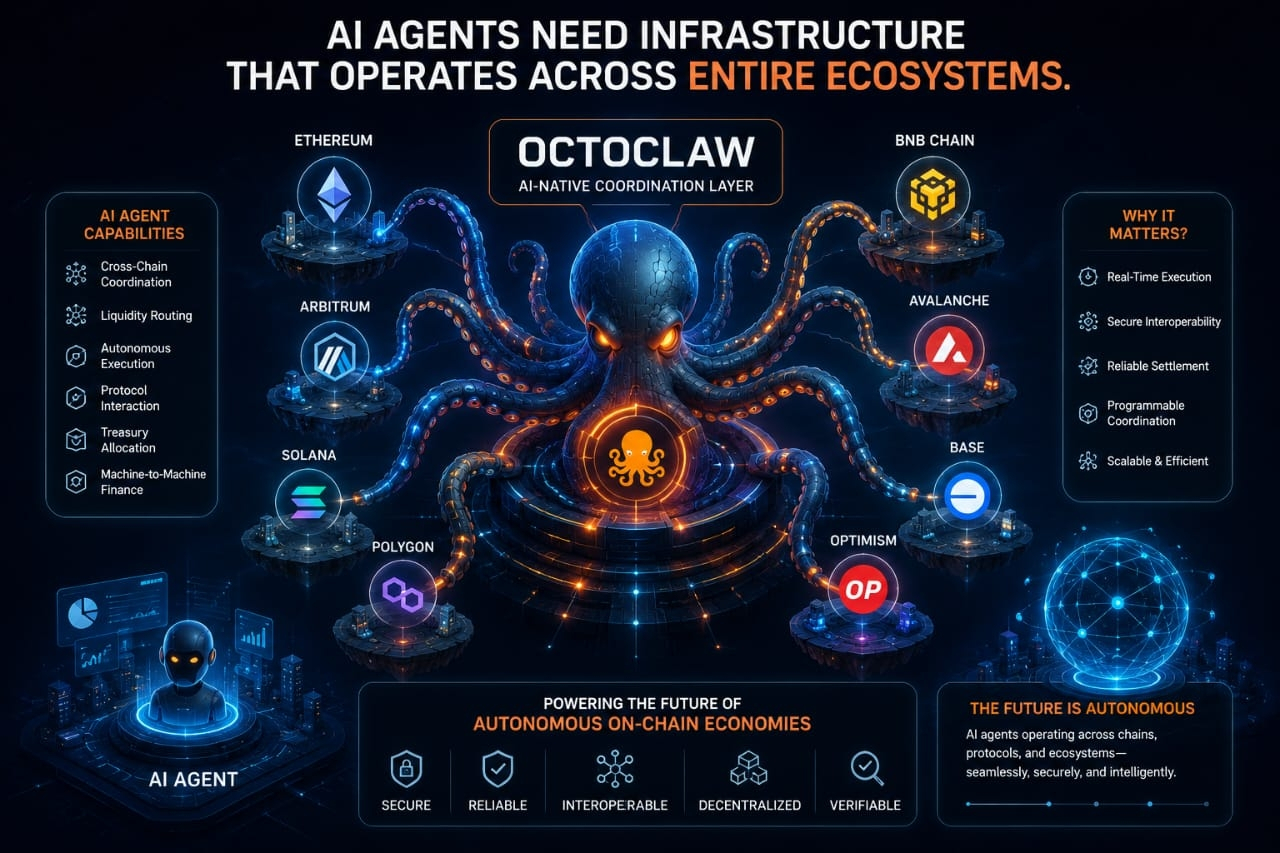
🌍 This Is Why OctoClaw Could Matter Later
If OpenLedger is truly building toward AI-native infrastructure…
then OctoClaw may eventually become more than a feature.
It could become part of the coordination layer for autonomous economic systems.
Think about what future AI agents may eventually need to do:
⚡ move assets between ecosystems
⚡ optimize liquidity automatically
⚡ execute strategies across chains
⚡ interact with decentralized protocols
⚡ manage on-chain operations in real time
That requires infrastructure capable of handling machine-speed execution securely.
And honestly?
Very few projects are positioning around that reality yet.
---
⚠️ The Bigger Risk Nobody Talks About
As AI automation grows…
the risks also grow.
Because if autonomous agents eventually control:
💰 wallets
💰 liquidity
💰 vaults
💰 treasury systems
💰 execution environments
…then weak infrastructure becomes a systemic threat.
A single failure point could affect entire autonomous systems.
That’s why future AI economies may require infrastructure focused on:
🔐 security
⚡ reliability
🌍 interoperability
🧠 verifiable execution
📡 decentralized coordination
Not just speed or hype.
🧩 OpenLedger’s Bigger Vision May Be AI-Native Economies
This is what makes the OctoClaw narrative interesting.
It doesn’t feel focused only on crypto users.
It feels aligned with a future where:
🤖 AI agents interact autonomously
🌍 economies become machine-coordinated
⚡ execution becomes fully programmable
🔐 trust infrastructure becomes essential
And in that world…
projects building coordination layers for AI systems may become incredibly important.
🎯 Final Thoughts
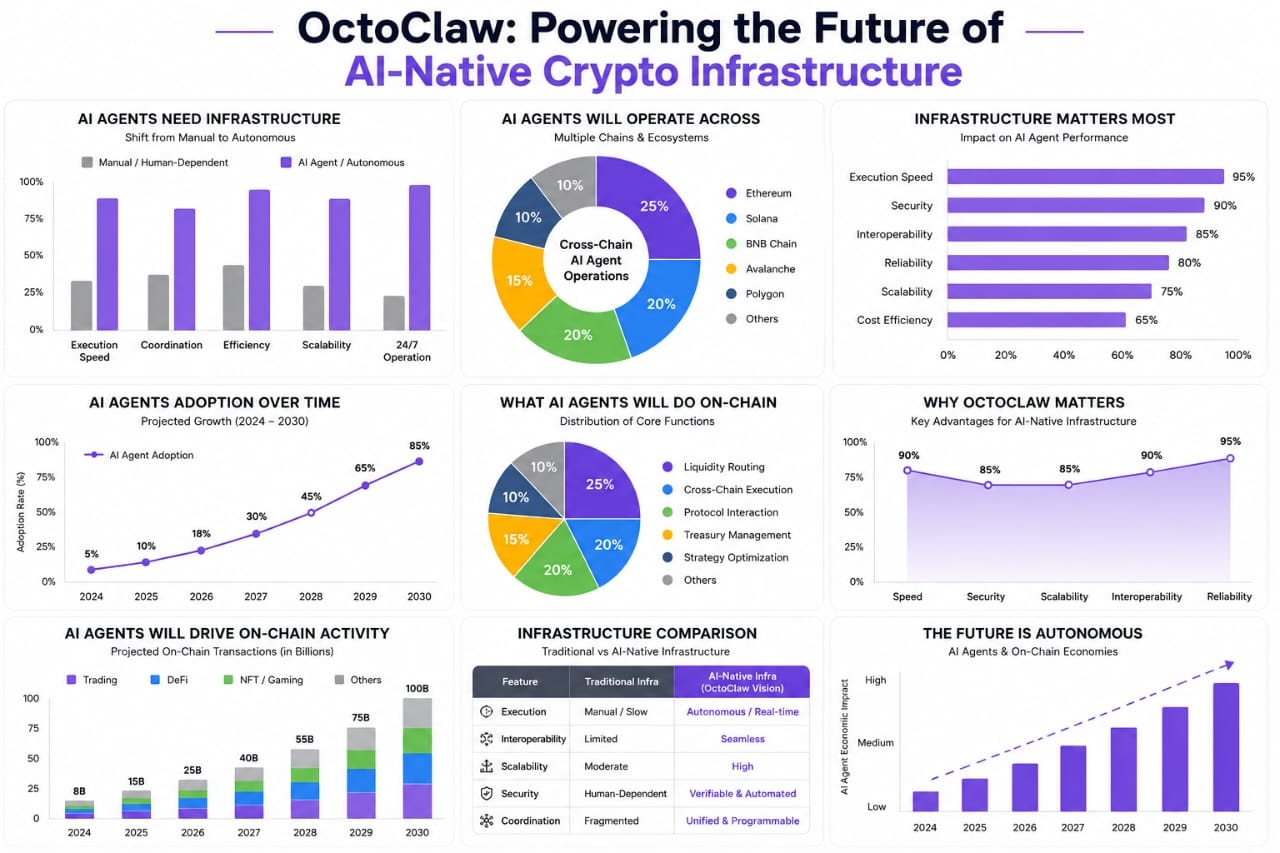
Most people still look at AI automation through the lens of simple bots.
But the future may look far bigger than that.
The next generation of AI systems may eventually operate:
⚡ across multiple chains
⚡ across decentralized protocols
⚡ across autonomous financial systems
⚡ across machine-driven economies
And if that future actually arrives…
then infrastructure projects like OpenLedger — and upgrades like OctoClaw — could become foundational layers underneath the autonomous internet.
