
#IA #CreadorPad #ARKInvestReducedPositionsinCircleandBullish
🏃♂️ From setbacks to glory in just one year
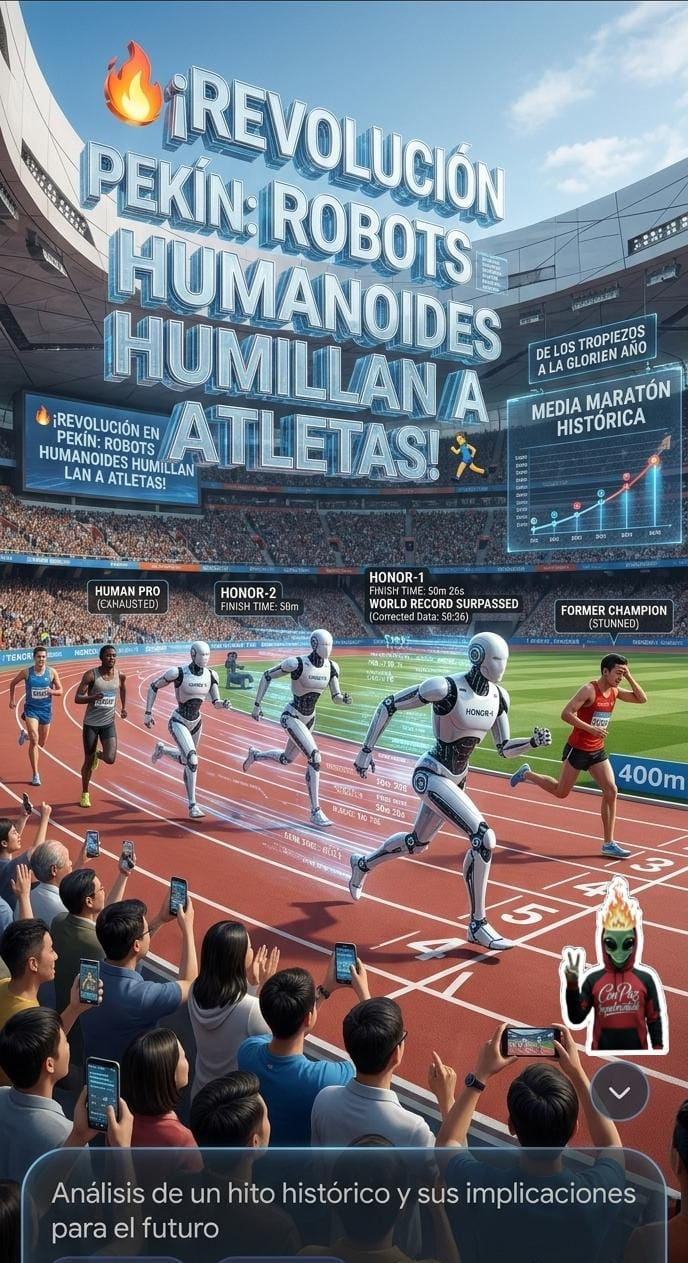
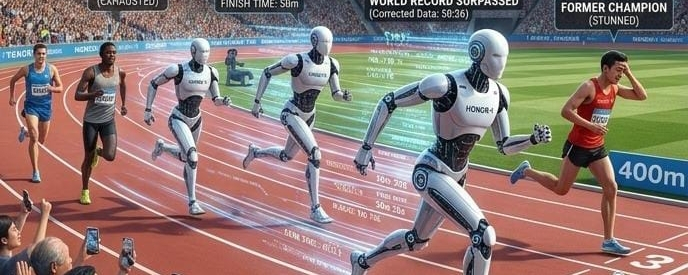
🔸Last Sunday, Beijing witnessed a historic milestone: a fleet of Chinese-manufactured humanoid robots outpaced and outlasted professional human athletes during a half marathon. The winning unit, developed by the tech giant Honor, crossed the finish line in 50 minutes and 26 seconds, a time well below the current world record for the distance.
The most surprising thing is the contrast with the inaugural edition, just a year ago, when many machines couldn't even complete the start due to technical failures. In 2026, more than 100 robots participated showing amazing stability and speed.
⚙️ China's strategic momentum
🔸Behind the sports spectacle lies an ambitious national policy. Beijing has deployed massive industrial subsidies and infrastructure projects to transform China into the dominant power in humanoid robotics. The CCTV Spring Festival gala, the most-watched program in the country, had already showcased advancements in controlled environments; now the technology demonstrates its maturity in real physical conditions.
🔍 Intriguing fact
🔸The winning robot required human assistance after crashing into a railing in the last stretch of the race. Despite that mishap, its time was so overwhelming that it still shattered the record of the world's best runners. Are we witnessing athletes of the future… or competitors who still need someone to lift them off the ground?
🌍 Global implications
🔸The rapid evolution of this industry is not just a technological curiosity. Governments and companies around the world are watching closely: what began as a playful race in Beijing could foreshadow a future where humanoids perform complex physical tasks, from rescues to military or space logistics. The question is no longer whether robots will surpass us, but when they will stop needing our help to get up.