
Today, the cryptocurrency market is not just a struggle of capitals; it is a war of algorithms and anonymity. While previously it was enough to subscribe to 'Whale Alert' on Twitter for successful trading, today large players have learned to hide their traces in thousands of transactions.
To find the true 'smart money', we need to move from simply tracking addresses to analyzing clusters and social graphs.

1. The death of simple monitoring: Why 'whale hunters' are wrong
Classic wallet analysis typically focuses on large balances. However, market makers and insiders haven't kept all assets in one 'golden' wallet for a long time. They use splitting tactics:
• Asset distribution across hundreds of sub-wallets of 5-10 ETH.
• Use of 'temporary' addresses that exist for only one transaction.
• Running through decentralized protocols (Lending, LP pools) to 'confuse' the origin of funds.
🛡️ Triumvirate of Analysis: Why the 'clean chart' no longer works?
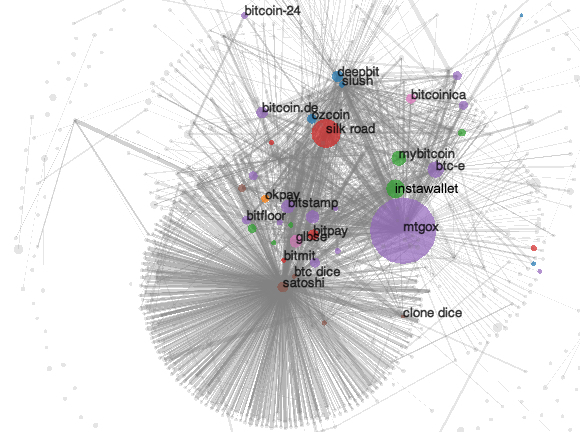
2. Clustering: The art of seeing the network, not the node
Insiders rarely act alone. It is usually a group of wallets that share a common source of funding or execute transactions synchronously.
How cluster analysis works:
1. Common Funding (Common Spenders): If 50 different wallets received initial funds from one source (e.g., from one wallet on Binance or through a specific bridge), they automatically cluster together.
2. Synchrony (Temporal Correlation): If 20 wallets buy an obscure token within 5 minutes with a difference of seconds — this is not a coincidence. This is one algorithm or one group of people.
3. Behavioral identity: Same 'gas price' settings, use of the same DEX aggregators, and identical timing for exiting positions.

3. Social graphs: Who 'friends' whom in the blockchain
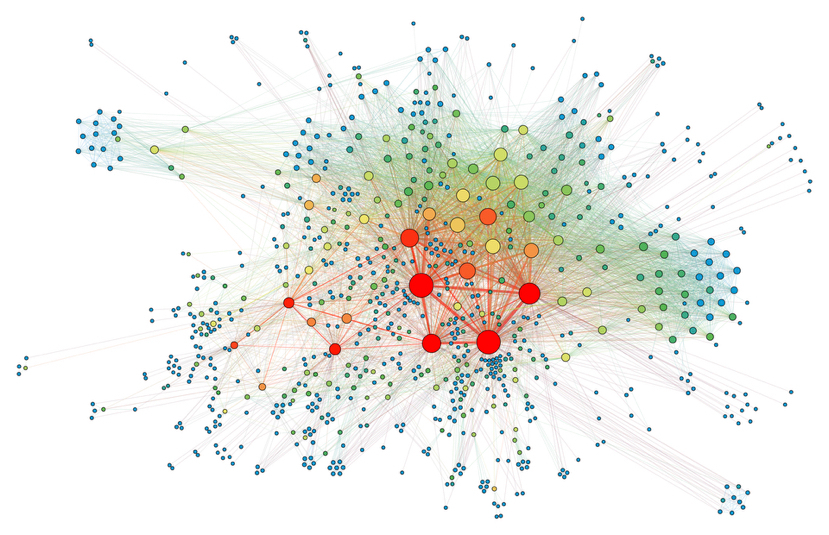
Social graph analysis in the blockchain is a visualization of connections. Using tools like Bubblemaps, Arkham Intelligence, or Nansen, we can see the structure of token ownership.
• 'Bubble' cluster: When a large core is visible on the chart, from which hundreds of small lines extend to small wallets — this is a sign of insider distribution (Sybil attack or Team allocation).
• Hidden concentration: The project team may claim that 80% of tokens are in the community, but the chart will show that these 80% belong to 5 clusters funded from one 'master wallet'.
📊 Order Flow: Reading the 'tape' (Time & Sales) and the 'order book' (DOM).
4. Fund masking: Sub-wallets and mixers
Large funds (Tier-1 VC) do not want you to buy alongside them because it disrupts their average entry price.
Masking techniques:
• Layering: Transferring funds through 5-10 intermediary wallets before the main purchase.
• Liquidity Provision: Instead of direct purchase, the fund can 'inject' liquidity into the pool, effectively controlling supply without directly holding tokens on the balance.
• OTC deals through smart contracts: Buying assets directly from the project through custom contracts that do not appear in regular DEX trackers.
How to calculate this?
Look for the 'donor wallet'. Usually, 24-48 hours before a big pump, there is activity on wallets that have not shown it for months but were activated by a transaction from a large known hub.


5. 'Detective' Algorithm: How to find an insider in 3 steps
Step 1: Analysis of 'Early Buyers' (Early Holders)
When a new token is released, check the first 10-20 addresses that bought it on DEX. Use DEXScreener or Birdeye.
Step 2: Verification through Arkham/Nansen
Insert these addresses into the analytical platform. Look at the 'Visualizer' tab. If these addresses are connected by transaction threads — you are looking at an insider network.
Step 3: Searching for 'Agile Money'
Check the history of these wallets. If this cluster previously bought tokens that later did 10x-50x — you have found 'Smart Money'.
Conclusion: A new era of on-chain analysis
Today, a blockchain analyst is not the one who looks at the balance but the one who builds a map of connections. To get ahead of the market, you should stop looking for 'whales' and start looking for patterns.
‼️Tip: If you see that 30% of the new token's issuance is scattered across wallets created in one day and funded through a bridge in small portions — this is not 'organic interest'. Insiders are setting up the game. Be ready to act quickly, but cautiously.‼️
📊On-chain analysis: How to 'read' the movements of whales and cash flows in the blockchain