

#tradfi
tradfi
2.1M views
18,892 Discussing
Hot
Latest

·
--
What happens when a crypto platform starts becoming much more than a crypto platform? 👀
Binance started with digital assets.
Today, its ecosystem is expanding into traditional-market products too — including direct U.S.-listed stocks and ETFs for eligible users in supported jurisdictions.
So what’s changing?
It’s not just about adding another product.
It’s about bringing different financial experiences closer together.
One Binance account can now connect eligible users to crypto, stocks, ETFs, tokenized securities, and TradFi perpetuals — depending on what’s available in their region.
That’s the idea behind Binance’s Financial Super App vision: a broader, multi-asset financial ecosystem rather than a platform focused on one asset class.
But there’s an important detail:
One account ≠ everything is available to everyone.
Product availability, features, and eligibility vary by jurisdiction and regulatory requirements.
So before using any product, always check what is actually available in your region.
What matters more to you in a financial app:
More products — or a more connected experience? 👀
Educational content only. Not financial advice.
Product availability varies by region and eligibility. DYOR.
#SuperFinancialApp #TradFi #stocks #ETH
What happens when a crypto platform starts becoming much more than a crypto platform? 👀
Binance started with digital assets.
Today, its ecosystem is expanding into traditional-market products too — including direct U.S.-listed stocks and ETFs for eligible users in supported jurisdictions.
So what’s changing?
It’s not just about adding another product.
It’s about bringing different financial experiences closer together.
One Binance account can now connect eligible users to crypto, stocks, ETFs, tokenized securities, and TradFi perpetuals — depending on what’s available in their region.
That’s the idea behind Binance’s Financial Super App vision: a broader, multi-asset financial ecosystem rather than a platform focused on one asset class.
But there’s an important detail:
One account ≠ everything is available to everyone.
Product availability, features, and eligibility vary by jurisdiction and regulatory requirements.
So before using any product, always check what is actually available in your region.
What matters more to you in a financial app:
More products — or a more connected experience? 👀
Educational content only. Not financial advice.
Product availability varies by region and eligibility. DYOR.
#SuperFinancialApp #TradFi #stocks #ETH
Binance started with digital assets.
Today, its ecosystem is expanding into traditional-market products too — including direct U.S.-listed stocks and ETFs for eligible users in supported jurisdictions.
So what’s changing?
It’s not just about adding another product.
It’s about bringing different financial experiences closer together.
One Binance account can now connect eligible users to crypto, stocks, ETFs, tokenized securities, and TradFi perpetuals — depending on what’s available in their region.
That’s the idea behind Binance’s Financial Super App vision: a broader, multi-asset financial ecosystem rather than a platform focused on one asset class.
But there’s an important detail:
One account ≠ everything is available to everyone.
Product availability, features, and eligibility vary by jurisdiction and regulatory requirements.
So before using any product, always check what is actually available in your region.
What matters more to you in a financial app:
More products — or a more connected experience? 👀
Educational content only. Not financial advice.
Product availability varies by region and eligibility. DYOR.
#SuperFinancialApp #TradFi #stocks #ETH

1
79

·
--
INSTITUTIONAL HEAVYWEIGHTS UNITE TO BRIDGE ON-CHAIN STOCKS WITH TRADFI INFRASTRUCTURE FOR $RWA 🏦 ⚡
TradFi heavyweights are laying the structural architecture to connect official corporate registries directly to the blockchain. 🔍 This move signals a major evolution in smart money rails, enabling token holders to claim authentic shareholder voting rights and dividends.
With key players convening at the New York Stock Exchange this October to finalize tokenization standards, institutional settlement infrastructure is quietly positioning for capital migration. 📊
💬 Will direct equity tokenization trigger the next wave of institutional liquidity into the RWA sector? 👇
⚠️ Not financial advice. Always manage your risk. 🛡️
🏷️ #RWA #Tokenization #TradFi #Institutional
🏦 👁️
INSTITUTIONAL HEAVYWEIGHTS UNITE TO BRIDGE ON-CHAIN STOCKS WITH TRADFI INFRASTRUCTURE FOR $RWA 🏦 ⚡
TradFi heavyweights are laying the structural architecture to connect official corporate registries directly to the blockchain. 🔍 This move signals a major evolution in smart money rails, enabling token holders to claim authentic shareholder voting rights and dividends.
With key players convening at the New York Stock Exchange this October to finalize tokenization standards, institutional settlement infrastructure is quietly positioning for capital migration. 📊
💬 Will direct equity tokenization trigger the next wave of institutional liquidity into the RWA sector? 👇
⚠️ Not financial advice. Always manage your risk. 🛡️
🏷️ #RWA #Tokenization #TradFi #Institutional
🏦 👁️
TradFi heavyweights are laying the structural architecture to connect official corporate registries directly to the blockchain. 🔍 This move signals a major evolution in smart money rails, enabling token holders to claim authentic shareholder voting rights and dividends.
With key players convening at the New York Stock Exchange this October to finalize tokenization standards, institutional settlement infrastructure is quietly positioning for capital migration. 📊
💬 Will direct equity tokenization trigger the next wave of institutional liquidity into the RWA sector? 👇
⚠️ Not financial advice. Always manage your risk. 🛡️
🏷️ #RWA #Tokenization #TradFi #Institutional
🏦 👁️
18

🚀🚀🚀 TradFi Focus 🚀🚀🚀
TradFi perpetuals can move sharply around earnings, market opens and macro news. Use modest leverage, predefined exits and enough margin for sudden volatility.
$TSLA $NVDA $MSTR
#TradFi #RWA #StockMarket #TokenizedStocks #BinanceFutures
🚀🚀🚀 TradFi Focus 🚀🚀🚀
TradFi perpetuals can move sharply around earnings, market opens and macro news. Use modest leverage, predefined exits and enough margin for sudden volatility.
$TSLA $NVDA $MSTR
#TradFi #RWA #StockMarket #TokenizedStocks #BinanceFutures
TradFi perpetuals can move sharply around earnings, market opens and macro news. Use modest leverage, predefined exits and enough margin for sudden volatility.
$TSLA $NVDA $MSTR
#TradFi #RWA #StockMarket #TokenizedStocks #BinanceFutures
1

·
--
🚨 INSTITUTIONAL LIQUIDITY SHIFTS AS TOP-TIER PLATFORMS INTEGRATE TRADFI BEYOND $BTC ! 💥
Institutional order flow is no longer confined to isolated crypto order books. Top-tier platforms are orchestrating a massive structural shift, unifying digital assets with traditional forex, gold, and equity derivatives into a single execution layer. 🏦
This multi-asset convergence signals smart money preparing for seamless cross-market capital rotation. 📊 As automated AI execution and tokenized real-world assets merge under one roof, market efficiency increases and structural liquidity footprints across traditional and digital venues become deeply interconnected. 🔍
Smart money builds infrastructure ahead of retail demand, positioning for total financial integration. 💡 Will unified multi-asset access accelerate the next major liquidity expansion for $BTC , or will capital split across asset classes? 👇
⚠️ Not financial advice. Always manage your risk. 🛡️
🏷️ #BTC #TradFi #RWA #Macro #Crypto
🎯 🦈
🚨 INSTITUTIONAL LIQUIDITY SHIFTS AS TOP-TIER PLATFORMS INTEGRATE TRADFI BEYOND $BTC ! 💥
Institutional order flow is no longer confined to isolated crypto order books. Top-tier platforms are orchestrating a massive structural shift, unifying digital assets with traditional forex, gold, and equity derivatives into a single execution layer. 🏦
This multi-asset convergence signals smart money preparing for seamless cross-market capital rotation. 📊 As automated AI execution and tokenized real-world assets merge under one roof, market efficiency increases and structural liquidity footprints across traditional and digital venues become deeply interconnected. 🔍
Smart money builds infrastructure ahead of retail demand, positioning for total financial integration. 💡 Will unified multi-asset access accelerate the next major liquidity expansion for $BTC , or will capital split across asset classes? 👇
⚠️ Not financial advice. Always manage your risk. 🛡️
🏷️ #BTC #TradFi #RWA #Macro #Crypto
🎯 🦈
Institutional order flow is no longer confined to isolated crypto order books. Top-tier platforms are orchestrating a massive structural shift, unifying digital assets with traditional forex, gold, and equity derivatives into a single execution layer. 🏦
This multi-asset convergence signals smart money preparing for seamless cross-market capital rotation. 📊 As automated AI execution and tokenized real-world assets merge under one roof, market efficiency increases and structural liquidity footprints across traditional and digital venues become deeply interconnected. 🔍
Smart money builds infrastructure ahead of retail demand, positioning for total financial integration. 💡 Will unified multi-asset access accelerate the next major liquidity expansion for $BTC , or will capital split across asset classes? 👇
⚠️ Not financial advice. Always manage your risk. 🛡️
🏷️ #BTC #TradFi #RWA #Macro #Crypto
🎯 🦈
8
🚀🚀🚀 TradFi Focus 🚀🚀🚀
Spot shares represent ownership, while TradFi perpetuals provide leveraged price exposure without ownership. Funding and liquidation make their risk profile very different.
$TSLA $NVDA $MSTR
#TradFi #RWA #StockMarket #TokenizedStocks #BinanceFutures
🚀🚀🚀 TradFi Focus 🚀🚀🚀
Spot shares represent ownership, while TradFi perpetuals provide leveraged price exposure without ownership. Funding and liquidation make their risk profile very different.
$TSLA $NVDA $MSTR
#TradFi #RWA #StockMarket #TokenizedStocks #BinanceFutures
Spot shares represent ownership, while TradFi perpetuals provide leveraged price exposure without ownership. Funding and liquidation make their risk profile very different.
$TSLA $NVDA $MSTR
#TradFi #RWA #StockMarket #TokenizedStocks #BinanceFutures
167
·
--
Crypto, TradFi, DeFi.
3 financial worlds — but why do we still treat them as completely separate? 👀
Think about it:
🪙 Crypto — digital assets like Bitcoin.
📈 TradFi — traditional markets and assets such as stocks and commodities.
🔗 DeFi — financial applications built on blockchain-based infrastructure.
And this is where TriFi comes in.
The idea is simple:
Crypto ↔️ TradFi ↔️ DeFi
Instead of looking at these as isolated worlds, TriFi is about how they can become increasingly connected within one financial ecosystem.
That’s also part of the idea behind the Super Financial App concept: bringing access to different financial products and markets into one ecosystem, where available.
Of course, availability isn’t the same for everyone — products and services can vary depending on your country of residence and eligibility.
If you had one app connecting all three worlds, which one would you explore first? 👀
🪙 Crypto
📈 TradFi
🔗 DeFi
Educational content only. Not financial advice.
Product availability varies by region and eligibility. Always DYOR.
#Binance #TradFi #crypto #Blockchain
Crypto, TradFi, DeFi.
3 financial worlds — but why do we still treat them as completely separate? 👀
Think about it:
🪙 Crypto — digital assets like Bitcoin.
📈 TradFi — traditional markets and assets such as stocks and commodities.
🔗 DeFi — financial applications built on blockchain-based infrastructure.
And this is where TriFi comes in.
The idea is simple:
Crypto ↔️ TradFi ↔️ DeFi
Instead of looking at these as isolated worlds, TriFi is about how they can become increasingly connected within one financial ecosystem.
That’s also part of the idea behind the Super Financial App concept: bringing access to different financial products and markets into one ecosystem, where available.
Of course, availability isn’t the same for everyone — products and services can vary depending on your country of residence and eligibility.
If you had one app connecting all three worlds, which one would you explore first? 👀
🪙 Crypto
📈 TradFi
🔗 DeFi
Educational content only. Not financial advice.
Product availability varies by region and eligibility. Always DYOR.
#Binance #TradFi #crypto #Blockchain
3 financial worlds — but why do we still treat them as completely separate? 👀
Think about it:
🪙 Crypto — digital assets like Bitcoin.
📈 TradFi — traditional markets and assets such as stocks and commodities.
🔗 DeFi — financial applications built on blockchain-based infrastructure.
And this is where TriFi comes in.
The idea is simple:
Crypto ↔️ TradFi ↔️ DeFi
Instead of looking at these as isolated worlds, TriFi is about how they can become increasingly connected within one financial ecosystem.
That’s also part of the idea behind the Super Financial App concept: bringing access to different financial products and markets into one ecosystem, where available.
Of course, availability isn’t the same for everyone — products and services can vary depending on your country of residence and eligibility.
If you had one app connecting all three worlds, which one would you explore first? 👀
🪙 Crypto
📈 TradFi
🔗 DeFi
Educational content only. Not financial advice.
Product availability varies by region and eligibility. Always DYOR.
#Binance #TradFi #crypto #Blockchain
1
55


·
--
Verified
📉 Slight Pullback Across US Markets & Tech Stocks
US equity markets experienced a slight dip during recent trading sessions, with major indices and megacap stocks recording modest declines:
🔻 Dow Jones Industrial Average: Down ~0.6%
🔻 S&P 500: Down ~0.7%
🔻 Apple (AAPL): Down ~0.9%
Market participants remain cautious as they evaluate economic indicators and macroeconomic shifts. 📊
$SPYX.ETF $SPSK.ETF $AAPL.US
#TradFi #USStockMarket #CPIWatch .
📉 Slight Pullback Across US Markets & Tech Stocks
US equity markets experienced a slight dip during recent trading sessions, with major indices and megacap stocks recording modest declines:
🔻 Dow Jones Industrial Average: Down ~0.6%
🔻 S&P 500: Down ~0.7%
🔻 Apple (AAPL): Down ~0.9%
Market participants remain cautious as they evaluate economic indicators and macroeconomic shifts. 📊
$SPYX.ETF $SPSK.ETF $AAPL.US
#TradFi #USStockMarket #CPIWatch .
US equity markets experienced a slight dip during recent trading sessions, with major indices and megacap stocks recording modest declines:
🔻 Dow Jones Industrial Average: Down ~0.6%
🔻 S&P 500: Down ~0.7%
🔻 Apple (AAPL): Down ~0.9%
Market participants remain cautious as they evaluate economic indicators and macroeconomic shifts. 📊
$SPYX.ETF $SPSK.ETF $AAPL.US
#TradFi #USStockMarket #CPIWatch .
AAPLUS+1.44%
1
204

·
--
🚨 UNINTENDED TRADFI LEAK REVEALS INSTITUTIONAL FLOWS AS $BTC ASSESSES SYSTEMIC EXPOSURE 🔍
A major Morgan Stanley internal document breach has exposed over 100 confidential investment banking deal structures across global markets. 🏦 Smart money desks closely track these private deal flows, as sudden operational oversights in high-tier investment banking often signal broader institutional friction. 🔍
When institutional underwriters leak sensitive valuation pricing, market makers adjust their risk exposure across cross-asset derivatives. 📊 As capital allocation strategies shift in response, order flow imbalances can easily spill over into liquid macro assets like $BTC . ⚡
💬 Do you expect institutional deal disclosures to trigger volatility across crypto liquidity pools, or is this just noise? 👇
⚠️ Not financial advice. Always manage your risk. 🛡️
🏷️ #BTC #TradFi #Institutional #Macro #OrderFlow
🎯 🦈
🚨 UNINTENDED TRADFI LEAK REVEALS INSTITUTIONAL FLOWS AS $BTC ASSESSES SYSTEMIC EXPOSURE 🔍
A major Morgan Stanley internal document breach has exposed over 100 confidential investment banking deal structures across global markets. 🏦 Smart money desks closely track these private deal flows, as sudden operational oversights in high-tier investment banking often signal broader institutional friction. 🔍
When institutional underwriters leak sensitive valuation pricing, market makers adjust their risk exposure across cross-asset derivatives. 📊 As capital allocation strategies shift in response, order flow imbalances can easily spill over into liquid macro assets like $BTC . ⚡
💬 Do you expect institutional deal disclosures to trigger volatility across crypto liquidity pools, or is this just noise? 👇
⚠️ Not financial advice. Always manage your risk. 🛡️
🏷️ #BTC #TradFi #Institutional #Macro #OrderFlow
🎯 🦈
A major Morgan Stanley internal document breach has exposed over 100 confidential investment banking deal structures across global markets. 🏦 Smart money desks closely track these private deal flows, as sudden operational oversights in high-tier investment banking often signal broader institutional friction. 🔍
When institutional underwriters leak sensitive valuation pricing, market makers adjust their risk exposure across cross-asset derivatives. 📊 As capital allocation strategies shift in response, order flow imbalances can easily spill over into liquid macro assets like $BTC . ⚡
💬 Do you expect institutional deal disclosures to trigger volatility across crypto liquidity pools, or is this just noise? 👇
⚠️ Not financial advice. Always manage your risk. 🛡️
🏷️ #BTC #TradFi #Institutional #Macro #OrderFlow
🎯 🦈
38

·
--
Verified

Article
Inside Re’s Reinsurance StrategySo how is Re’s insurance strategy structured to keep that yield flowing? What goes into deciding which opportunities depositor capital will back?
Re’s value equation is fairly simple: depositors either provide capital and mint assets (reUSD or reUSDe) or acquire those assets on the secondary market. Those assets earn yield: for reUSD, a blended yield of SOFR and the seven-day trailing average of the sUSDe yield rate, plus a protocol-determined spread; for reUSDe, SOFR plus a protocol-determined spread.
That spread (2.5% for reUSD and 8.5% for reUSDe, as of August 2026) is provided by Re’s yield source: real reinsurance activity. Depositor capital provides collateral with which Cover Re, Re’s licensed reinsurance partner, signs new reinsurance contracts. The yield from those contracts flows back to Re, and thence to holders of reUSD and reUSDe.
Returning that yield depends, of course, upon the performance of those contracts. So how is Re’s insurance strategy structured to keep that yield flowing? What goes into deciding which opportunities depositor capital will back? Let’s explore.
How Reinsurance Works
From a financial perspective, reinsurance is simple: primary insurers (those who sell insurance directly to customers) pass on a portion of the risk they’re taking on to reinsurers. They do so for multiple reasons [1]: to smooth out earnings, to protect themselves from extreme outcomes, and to provide themselves with capital relief.
Insurers charge premiums to customers; in exchange for taking on that portion of risk, a reinsurer will inherit some of those premiums. Provided that those premiums exceed the costs incurred on the policy (payouts plus business expenses), the reinsurer will walk away with a profit.
Whether or not that happens depends in substantial part on a reinsurer’s strategy. And a substantial portion of reinsurer strategy is choosing its mix of risk.
Choose Your Risk
Reinsurance risk profiles exist across a spectrum between two poles: everyday stuff on one end, and catastrophes on the other.
Everyday losses cover events like car accidents, workers’ compensation, damage to a home, and so on. Across a given policy, such occurrences can be expected to happen frequently, but the claims are relatively small, they carry little or no correlation with each other (for example, a single car crash typically won’t generate a rash of other car crashes), and decades of loss data make them relatively predictable. Lower magnitude of risk often means lower premiums for the reinsurer, but it also means more predictable and more consistent results.
Catastrophe losses cover events like hurricanes, earthquakes, or wildfires, and they behave in a near-opposite way. Whereas everyday losses may happen every day (it’s in the name!), catastrophes happen rarely. But when they happen, losses are huge, and they’re inherently concentrated: the same event hits large geographical areas all at once. The premiums to be earned are greater than those from safer policies, but the results are more volatile, and the worst-case outcome is far worse.
Every reinsurance contract a reinsurer writes is a calculated bet. The closer the contract sits to the catastrophe end of the spectrum, the less safe the bet, and a bet on a catastrophe policy can land a stiff fiscal punch on a reinsurer if the covered event comes.
Indeed, the direction of the entire reinsurance market - how much reinsurance capacity is available, how much reinsurers charge, and the supply-demand balance - can reverse itself based on a single bad catastrophe year.
The Importance of Diversification
Reinsurers rarely hold only a single reinsurance contract at a given time. They almost invariably bundle together numerous contracts into their overall portfolio. A critical subcategory of the aforementioned risk profiles, when applied across a reinsurer’s overall portfolio, is diversification.
The diversification of a given portfolio answers a simple question: if a given event hits, what degree of impact will it have on the portfolio as a whole?
Take everyday losses, for example. These tend to be small in magnitude. A reinsurer can write a lot of them, and it can vary them: by line of business, and by geography. A given US reinsurer could (and often does) write contracts across any number of insurance categories in dozens of states.
The benefit of doing so: losses will rarely be correlated with each other. An extreme winter that causes an unusually bad auto insurance year in Maine won’t impact auto insurance losses in California, and it won’t correlate with workers’ compensation losses anywhere. If a reinsurer were to have concentrated heavily on auto policies in Maine, however, then that one bad winter would have had a much greater impact upon its portfolio (and balance sheet) as a whole. Risks are less concentrated.
Catastrophe losses are, again, the opposite. They’re inherently concentrated. Hurricane policies, for example, will cover large areas. If an area gets hit, that means a great deal of losses at the same time. Geographic diversification offers less protection; bad hurricane seasons often impact vast areas of hurricane-prone coastline (say, the US eastern seaboard), and a dry summer can increase the fire risk across wide swathes of territory.
And because catastrophe policies come with an inherently high ceiling on losses, each constitutes a larger slice of the portfolio pie. A single catastrophe may have a major impact upon a reinsurer’s financial big picture.
Re’s Strategy
Re’s goal is to deliver consistent yield to its holders. That means pursuing a strategy which prioritizes steadier, lower-volatility returns and consistent results: a focus upon low-volatility, everyday policies, diversified across a range of business lines and a wide geographical area, with minimal exposure to catastrophe risk.
Re’s portfolio has been consistently spread across five different categories of business: homeowners, commercial auto, small business, workers’ compensation, and personal auto. All are distinct from one another; unexpectedly high losses in any one are unlikely to correlate with high losses in any other. And these policies are spread across nearly every US state, reducing the likelihood a single loss event in any one, or two, or five locations will have an outsized impact upon the overall portfolio.
That’s the goal of building the book this way. Because no single event can swing the portfolio, results are more predictable and don’t lurch from year to year. The payoff of that strategy has been clear: profitability in every year of the protocol’s operation, and consistent yield delivered to holders as a result.1
Full details on Re’s portfolio and strategy can always be found on the Re App [2].
1 As of August 2026. Past performance is not a reliable indicator of future results.
Originally published on re.xyz: https://re.xyz/insights/inside-res-reinsurance-strategy
Consistent yield, by design.
Re’s strategy prioritizes steadier, lower-volatility returns - diversified across business lines and geography, with minimal exposure to catastrophe risk.
Explore Re: https://re.xyz
#reinsurance #RWA #TradFi
Sources
https://blog.re.xyz/why-insurers-buy-reinsurancehttps://app.re.xyz/capital-strategy
Disclosures: This blog post is for informational and educational purposes only and does not constitute investment, legal, tax, or financial advice. Nothing in this article should be construed as an offer or solicitation to buy or sell any security, token, or financial product.Affiliate disclosure. The "re" brand, the re protocol, and re.xyz are operated by Resilience Foundation Cayman LLC ("Resilience Foundation"), an Exempted Limited Guarantee Foundation Company incorporated in the Cayman Islands with Limited Liability with registered number IC-414560, together with its affiliate Resilience (BVI) Ltd and Resilience Inv SPC. Resilience Foundation, Resilience BVI, and Resilience Inv do not provide insurance or reinsurance services, do not act as insurance broker or agent, and do not hold an insurance license. All regulated reinsurance activities are conducted exclusively by Cover Reinsurance SPC Ltd. ("Cover Re SPC"), a Class B(iii) licensed exempted segregated portfolio company in the Cayman Islands, operating under the "Cover Re" brand at coverre.com.Access and eligibility. reUSD and reUSDe are not registered or qualified for public offer or sale in the United States or to U.S. persons, and are offered only in reliance on exemptions from registration, including under Regulation S. Access may be restricted based on jurisdiction, and prospective holders are responsible for determining whether they are eligible to acquire or hold these assets under applicable law.Yield. Any yield generated by reUSD/reUSDe is variable, is not guaranteed, and depends on the performance of underlying reinsurance and other strategies. Yield may fluctuate significantly, may be reduced to zero, and past yield is not indicative of future results.Risk disclosure. Digital assets and blockchain-based products involve significant risk, including the potential loss of principal, smart contract vulnerabilities, liquidity constraints, and regulatory uncertainty. Any references to APR, returns, or performance are not guaranteed, and past performance is not a reliable indicator of future results.Regulatory environment. The regulatory environment for digital assets, stablecoins, tokenized real-world assets, and onchain financial products is dynamic and continues to evolve across jurisdictions. The information in this post reflects the understanding as of the date of publication and may not reflect subsequent legal or regulatory developments. Readers should consult qualified legal, tax, and financial professionals before making any decisions.Terms apply. For full terms, disclosures, and risk disclaimers, please see the Re website at https://re.xyz, Terms of Service (https://re.xyz/terms), and Disclaimers (https://docs.re.xyz/disclaimers).
Inside Re’s Reinsurance Strategy
So how is Re’s insurance strategy structured to keep that yield flowing? What goes into deciding which opportunities depositor capital will back?
Re’s value equation is fairly simple: depositors either provide capital and mint assets (reUSD or reUSDe) or acquire those assets on the secondary market. Those assets earn yield: for reUSD, a blended yield of SOFR and the seven-day trailing average of the sUSDe yield rate, plus a protocol-determined spread; for reUSDe, SOFR plus a protocol-determined spread.
That spread (2.5% for reUSD and 8.5% for reUSDe, as of August 2026) is provided by Re’s yield source: real reinsurance activity. Depositor capital provides collateral with which Cover Re, Re’s licensed reinsurance partner, signs new reinsurance contracts. The yield from those contracts flows back to Re, and thence to holders of reUSD and reUSDe.
Returning that yield depends, of course, upon the performance of those contracts. So how is Re’s insurance strategy structured to keep that yield flowing? What goes into deciding which opportunities depositor capital will back? Let’s explore.
How Reinsurance Works
From a financial perspective, reinsurance is simple: primary insurers (those who sell insurance directly to customers) pass on a portion of the risk they’re taking on to reinsurers. They do so for multiple reasons [1]: to smooth out earnings, to protect themselves from extreme outcomes, and to provide themselves with capital relief.
Insurers charge premiums to customers; in exchange for taking on that portion of risk, a reinsurer will inherit some of those premiums. Provided that those premiums exceed the costs incurred on the policy (payouts plus business expenses), the reinsurer will walk away with a profit.
Whether or not that happens depends in substantial part on a reinsurer’s strategy. And a substantial portion of reinsurer strategy is choosing its mix of risk.
Choose Your Risk
Reinsurance risk profiles exist across a spectrum between two poles: everyday stuff on one end, and catastrophes on the other.
Everyday losses cover events like car accidents, workers’ compensation, damage to a home, and so on. Across a given policy, such occurrences can be expected to happen frequently, but the claims are relatively small, they carry little or no correlation with each other (for example, a single car crash typically won’t generate a rash of other car crashes), and decades of loss data make them relatively predictable. Lower magnitude of risk often means lower premiums for the reinsurer, but it also means more predictable and more consistent results.
Catastrophe losses cover events like hurricanes, earthquakes, or wildfires, and they behave in a near-opposite way. Whereas everyday losses may happen every day (it’s in the name!), catastrophes happen rarely. But when they happen, losses are huge, and they’re inherently concentrated: the same event hits large geographical areas all at once. The premiums to be earned are greater than those from safer policies, but the results are more volatile, and the worst-case outcome is far worse.
Every reinsurance contract a reinsurer writes is a calculated bet. The closer the contract sits to the catastrophe end of the spectrum, the less safe the bet, and a bet on a catastrophe policy can land a stiff fiscal punch on a reinsurer if the covered event comes.
Indeed, the direction of the entire reinsurance market - how much reinsurance capacity is available, how much reinsurers charge, and the supply-demand balance - can reverse itself based on a single bad catastrophe year.
The Importance of Diversification
Reinsurers rarely hold only a single reinsurance contract at a given time. They almost invariably bundle together numerous contracts into their overall portfolio. A critical subcategory of the aforementioned risk profiles, when applied across a reinsurer’s overall portfolio, is diversification.
The diversification of a given portfolio answers a simple question: if a given event hits, what degree of impact will it have on the portfolio as a whole?
Take everyday losses, for example. These tend to be small in magnitude. A reinsurer can write a lot of them, and it can vary them: by line of business, and by geography. A given US reinsurer could (and often does) write contracts across any number of insurance categories in dozens of states.
The benefit of doing so: losses will rarely be correlated with each other. An extreme winter that causes an unusually bad auto insurance year in Maine won’t impact auto insurance losses in California, and it won’t correlate with workers’ compensation losses anywhere. If a reinsurer were to have concentrated heavily on auto policies in Maine, however, then that one bad winter would have had a much greater impact upon its portfolio (and balance sheet) as a whole. Risks are less concentrated.
Catastrophe losses are, again, the opposite. They’re inherently concentrated. Hurricane policies, for example, will cover large areas. If an area gets hit, that means a great deal of losses at the same time. Geographic diversification offers less protection; bad hurricane seasons often impact vast areas of hurricane-prone coastline (say, the US eastern seaboard), and a dry summer can increase the fire risk across wide swathes of territory.
And because catastrophe policies come with an inherently high ceiling on losses, each constitutes a larger slice of the portfolio pie. A single catastrophe may have a major impact upon a reinsurer’s financial big picture.
Re’s Strategy
Re’s goal is to deliver consistent yield to its holders. That means pursuing a strategy which prioritizes steadier, lower-volatility returns and consistent results: a focus upon low-volatility, everyday policies, diversified across a range of business lines and a wide geographical area, with minimal exposure to catastrophe risk.
Re’s portfolio has been consistently spread across five different categories of business: homeowners, commercial auto, small business, workers’ compensation, and personal auto. All are distinct from one another; unexpectedly high losses in any one are unlikely to correlate with high losses in any other. And these policies are spread across nearly every US state, reducing the likelihood a single loss event in any one, or two, or five locations will have an outsized impact upon the overall portfolio.
That’s the goal of building the book this way. Because no single event can swing the portfolio, results are more predictable and don’t lurch from year to year. The payoff of that strategy has been clear: profitability in every year of the protocol’s operation, and consistent yield delivered to holders as a result.1
Full details on Re’s portfolio and strategy can always be found on the Re App [2].
1 As of August 2026. Past performance is not a reliable indicator of future results.
Originally published on re.xyz: https://re.xyz/insights/inside-res-reinsurance-strategy
Consistent yield, by design.
Re’s strategy prioritizes steadier, lower-volatility returns - diversified across business lines and geography, with minimal exposure to catastrophe risk.
Explore Re: https://re.xyz
#reinsurance #RWA #TradFi
Sources
https://blog.re.xyz/why-insurers-buy-reinsurancehttps://app.re.xyz/capital-strategy
Disclosures: This blog post is for informational and educational purposes only and does not constitute investment, legal, tax, or financial advice. Nothing in this article should be construed as an offer or solicitation to buy or sell any security, token, or financial product.Affiliate disclosure. The "re" brand, the re protocol, and re.xyz are operated by Resilience Foundation Cayman LLC ("Resilience Foundation"), an Exempted Limited Guarantee Foundation Company incorporated in the Cayman Islands with Limited Liability with registered number IC-414560, together with its affiliate Resilience (BVI) Ltd and Resilience Inv SPC. Resilience Foundation, Resilience BVI, and Resilience Inv do not provide insurance or reinsurance services, do not act as insurance broker or agent, and do not hold an insurance license. All regulated reinsurance activities are conducted exclusively by Cover Reinsurance SPC Ltd. ("Cover Re SPC"), a Class B(iii) licensed exempted segregated portfolio company in the Cayman Islands, operating under the "Cover Re" brand at coverre.com.Access and eligibility. reUSD and reUSDe are not registered or qualified for public offer or sale in the United States or to U.S. persons, and are offered only in reliance on exemptions from registration, including under Regulation S. Access may be restricted based on jurisdiction, and prospective holders are responsible for determining whether they are eligible to acquire or hold these assets under applicable law.Yield. Any yield generated by reUSD/reUSDe is variable, is not guaranteed, and depends on the performance of underlying reinsurance and other strategies. Yield may fluctuate significantly, may be reduced to zero, and past yield is not indicative of future results.Risk disclosure. Digital assets and blockchain-based products involve significant risk, including the potential loss of principal, smart contract vulnerabilities, liquidity constraints, and regulatory uncertainty. Any references to APR, returns, or performance are not guaranteed, and past performance is not a reliable indicator of future results.Regulatory environment. The regulatory environment for digital assets, stablecoins, tokenized real-world assets, and onchain financial products is dynamic and continues to evolve across jurisdictions. The information in this post reflects the understanding as of the date of publication and may not reflect subsequent legal or regulatory developments. Readers should consult qualified legal, tax, and financial professionals before making any decisions.Terms apply. For full terms, disclosures, and risk disclaimers, please see the Re website at https://re.xyz, Terms of Service (https://re.xyz/terms), and Disclaimers (https://docs.re.xyz/disclaimers).
Re’s value equation is fairly simple: depositors either provide capital and mint assets (reUSD or reUSDe) or acquire those assets on the secondary market. Those assets earn yield: for reUSD, a blended yield of SOFR and the seven-day trailing average of the sUSDe yield rate, plus a protocol-determined spread; for reUSDe, SOFR plus a protocol-determined spread.
That spread (2.5% for reUSD and 8.5% for reUSDe, as of August 2026) is provided by Re’s yield source: real reinsurance activity. Depositor capital provides collateral with which Cover Re, Re’s licensed reinsurance partner, signs new reinsurance contracts. The yield from those contracts flows back to Re, and thence to holders of reUSD and reUSDe.
Returning that yield depends, of course, upon the performance of those contracts. So how is Re’s insurance strategy structured to keep that yield flowing? What goes into deciding which opportunities depositor capital will back? Let’s explore.
How Reinsurance Works
From a financial perspective, reinsurance is simple: primary insurers (those who sell insurance directly to customers) pass on a portion of the risk they’re taking on to reinsurers. They do so for multiple reasons [1]: to smooth out earnings, to protect themselves from extreme outcomes, and to provide themselves with capital relief.
Insurers charge premiums to customers; in exchange for taking on that portion of risk, a reinsurer will inherit some of those premiums. Provided that those premiums exceed the costs incurred on the policy (payouts plus business expenses), the reinsurer will walk away with a profit.
Whether or not that happens depends in substantial part on a reinsurer’s strategy. And a substantial portion of reinsurer strategy is choosing its mix of risk.
Choose Your Risk
Reinsurance risk profiles exist across a spectrum between two poles: everyday stuff on one end, and catastrophes on the other.
Everyday losses cover events like car accidents, workers’ compensation, damage to a home, and so on. Across a given policy, such occurrences can be expected to happen frequently, but the claims are relatively small, they carry little or no correlation with each other (for example, a single car crash typically won’t generate a rash of other car crashes), and decades of loss data make them relatively predictable. Lower magnitude of risk often means lower premiums for the reinsurer, but it also means more predictable and more consistent results.
Catastrophe losses cover events like hurricanes, earthquakes, or wildfires, and they behave in a near-opposite way. Whereas everyday losses may happen every day (it’s in the name!), catastrophes happen rarely. But when they happen, losses are huge, and they’re inherently concentrated: the same event hits large geographical areas all at once. The premiums to be earned are greater than those from safer policies, but the results are more volatile, and the worst-case outcome is far worse.
Every reinsurance contract a reinsurer writes is a calculated bet. The closer the contract sits to the catastrophe end of the spectrum, the less safe the bet, and a bet on a catastrophe policy can land a stiff fiscal punch on a reinsurer if the covered event comes.
Indeed, the direction of the entire reinsurance market - how much reinsurance capacity is available, how much reinsurers charge, and the supply-demand balance - can reverse itself based on a single bad catastrophe year.
The Importance of Diversification
Reinsurers rarely hold only a single reinsurance contract at a given time. They almost invariably bundle together numerous contracts into their overall portfolio. A critical subcategory of the aforementioned risk profiles, when applied across a reinsurer’s overall portfolio, is diversification.
The diversification of a given portfolio answers a simple question: if a given event hits, what degree of impact will it have on the portfolio as a whole?
Take everyday losses, for example. These tend to be small in magnitude. A reinsurer can write a lot of them, and it can vary them: by line of business, and by geography. A given US reinsurer could (and often does) write contracts across any number of insurance categories in dozens of states.
The benefit of doing so: losses will rarely be correlated with each other. An extreme winter that causes an unusually bad auto insurance year in Maine won’t impact auto insurance losses in California, and it won’t correlate with workers’ compensation losses anywhere. If a reinsurer were to have concentrated heavily on auto policies in Maine, however, then that one bad winter would have had a much greater impact upon its portfolio (and balance sheet) as a whole. Risks are less concentrated.
Catastrophe losses are, again, the opposite. They’re inherently concentrated. Hurricane policies, for example, will cover large areas. If an area gets hit, that means a great deal of losses at the same time. Geographic diversification offers less protection; bad hurricane seasons often impact vast areas of hurricane-prone coastline (say, the US eastern seaboard), and a dry summer can increase the fire risk across wide swathes of territory.
And because catastrophe policies come with an inherently high ceiling on losses, each constitutes a larger slice of the portfolio pie. A single catastrophe may have a major impact upon a reinsurer’s financial big picture.
Re’s Strategy
Re’s goal is to deliver consistent yield to its holders. That means pursuing a strategy which prioritizes steadier, lower-volatility returns and consistent results: a focus upon low-volatility, everyday policies, diversified across a range of business lines and a wide geographical area, with minimal exposure to catastrophe risk.
Re’s portfolio has been consistently spread across five different categories of business: homeowners, commercial auto, small business, workers’ compensation, and personal auto. All are distinct from one another; unexpectedly high losses in any one are unlikely to correlate with high losses in any other. And these policies are spread across nearly every US state, reducing the likelihood a single loss event in any one, or two, or five locations will have an outsized impact upon the overall portfolio.
That’s the goal of building the book this way. Because no single event can swing the portfolio, results are more predictable and don’t lurch from year to year. The payoff of that strategy has been clear: profitability in every year of the protocol’s operation, and consistent yield delivered to holders as a result.1
Full details on Re’s portfolio and strategy can always be found on the Re App [2].
1 As of August 2026. Past performance is not a reliable indicator of future results.
Originally published on re.xyz: https://re.xyz/insights/inside-res-reinsurance-strategy
Consistent yield, by design.
Re’s strategy prioritizes steadier, lower-volatility returns - diversified across business lines and geography, with minimal exposure to catastrophe risk.
Explore Re: https://re.xyz
#reinsurance #RWA #TradFi
Sources
https://blog.re.xyz/why-insurers-buy-reinsurancehttps://app.re.xyz/capital-strategy
Disclosures: This blog post is for informational and educational purposes only and does not constitute investment, legal, tax, or financial advice. Nothing in this article should be construed as an offer or solicitation to buy or sell any security, token, or financial product.Affiliate disclosure. The "re" brand, the re protocol, and re.xyz are operated by Resilience Foundation Cayman LLC ("Resilience Foundation"), an Exempted Limited Guarantee Foundation Company incorporated in the Cayman Islands with Limited Liability with registered number IC-414560, together with its affiliate Resilience (BVI) Ltd and Resilience Inv SPC. Resilience Foundation, Resilience BVI, and Resilience Inv do not provide insurance or reinsurance services, do not act as insurance broker or agent, and do not hold an insurance license. All regulated reinsurance activities are conducted exclusively by Cover Reinsurance SPC Ltd. ("Cover Re SPC"), a Class B(iii) licensed exempted segregated portfolio company in the Cayman Islands, operating under the "Cover Re" brand at coverre.com.Access and eligibility. reUSD and reUSDe are not registered or qualified for public offer or sale in the United States or to U.S. persons, and are offered only in reliance on exemptions from registration, including under Regulation S. Access may be restricted based on jurisdiction, and prospective holders are responsible for determining whether they are eligible to acquire or hold these assets under applicable law.Yield. Any yield generated by reUSD/reUSDe is variable, is not guaranteed, and depends on the performance of underlying reinsurance and other strategies. Yield may fluctuate significantly, may be reduced to zero, and past yield is not indicative of future results.Risk disclosure. Digital assets and blockchain-based products involve significant risk, including the potential loss of principal, smart contract vulnerabilities, liquidity constraints, and regulatory uncertainty. Any references to APR, returns, or performance are not guaranteed, and past performance is not a reliable indicator of future results.Regulatory environment. The regulatory environment for digital assets, stablecoins, tokenized real-world assets, and onchain financial products is dynamic and continues to evolve across jurisdictions. The information in this post reflects the understanding as of the date of publication and may not reflect subsequent legal or regulatory developments. Readers should consult qualified legal, tax, and financial professionals before making any decisions.Terms apply. For full terms, disclosures, and risk disclaimers, please see the Re website at https://re.xyz, Terms of Service (https://re.xyz/terms), and Disclaimers (https://docs.re.xyz/disclaimers).
1
2
726
·
--
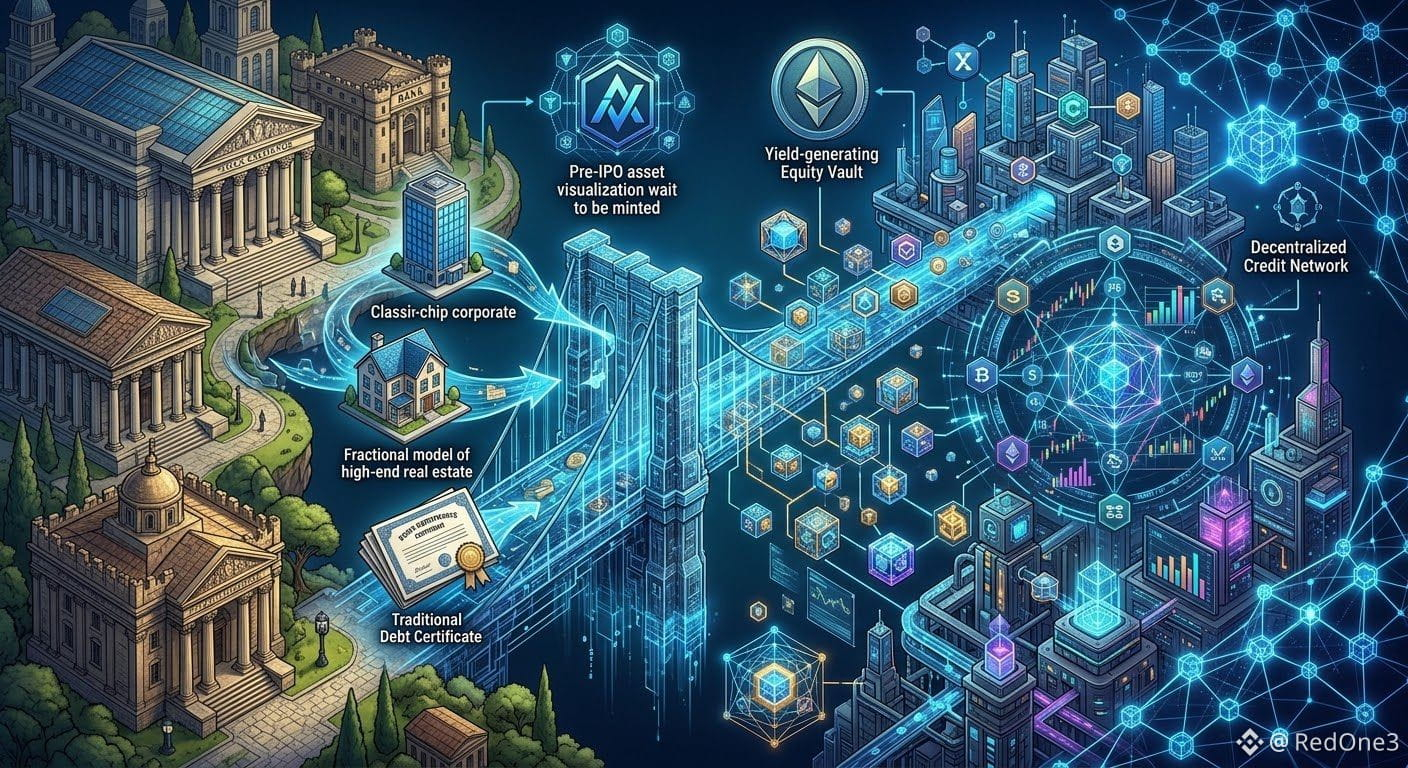
🌐 Real-World Assets (RWA) & Tokenized Equities: Bridging TradFi & DeFi
The tokenization of Real-World Assets is accelerating, transforming traditional financial instruments into programmable, liquid on-chain assets.
Key developments shaping the RWA ecosystem:
* Pre-IPO Perpetual Contracts: Emerging platforms now allow traders to gain exposure to high-value tech startups and non-public equities before their official stock exchange listing.
* Tokenized Equities & Vaults: Integration of traditional stocks into DeFi smart contracts enables yield-generating strategies, automated rollover vaults, and fractional ownership.
* On-Chain Credit & Debt Markets: Decentralized credit protocols are issuing loans backed by real-world collateral, offering institutional-grade yields to Web3 participants.
* Regulatory Standardisation: Financial institutions are increasingly adopting unified smart contract standards for compliance, identity verification, and asset settlement.
As capital efficiency improves and TradFi integration deepens, RWA continues to solidify its role as a key driver of institutional DeFi adoption.
What are your thoughts on tokenized equities and Pre-IPO markets?
#RWA #Tokenization #IPO #DeFi #TradFi .
🌐 Real-World Assets (RWA) & Tokenized Equities: Bridging TradFi & DeFi
The tokenization of Real-World Assets is accelerating, transforming traditional financial instruments into programmable, liquid on-chain assets.
Key developments shaping the RWA ecosystem:
* Pre-IPO Perpetual Contracts: Emerging platforms now allow traders to gain exposure to high-value tech startups and non-public equities before their official stock exchange listing.
* Tokenized Equities & Vaults: Integration of traditional stocks into DeFi smart contracts enables yield-generating strategies, automated rollover vaults, and fractional ownership.
* On-Chain Credit & Debt Markets: Decentralized credit protocols are issuing loans backed by real-world collateral, offering institutional-grade yields to Web3 participants.
* Regulatory Standardisation: Financial institutions are increasingly adopting unified smart contract standards for compliance, identity verification, and asset settlement.
As capital efficiency improves and TradFi integration deepens, RWA continues to solidify its role as a key driver of institutional DeFi adoption.
What are your thoughts on tokenized equities and Pre-IPO markets?
#RWA #Tokenization #IPO #DeFi #TradFi .
The tokenization of Real-World Assets is accelerating, transforming traditional financial instruments into programmable, liquid on-chain assets.
Key developments shaping the RWA ecosystem:
* Pre-IPO Perpetual Contracts: Emerging platforms now allow traders to gain exposure to high-value tech startups and non-public equities before their official stock exchange listing.
* Tokenized Equities & Vaults: Integration of traditional stocks into DeFi smart contracts enables yield-generating strategies, automated rollover vaults, and fractional ownership.
* On-Chain Credit & Debt Markets: Decentralized credit protocols are issuing loans backed by real-world collateral, offering institutional-grade yields to Web3 participants.
* Regulatory Standardisation: Financial institutions are increasingly adopting unified smart contract standards for compliance, identity verification, and asset settlement.
As capital efficiency improves and TradFi integration deepens, RWA continues to solidify its role as a key driver of institutional DeFi adoption.
What are your thoughts on tokenized equities and Pre-IPO markets?
#RWA #Tokenization #IPO #DeFi #TradFi .
194

·
--
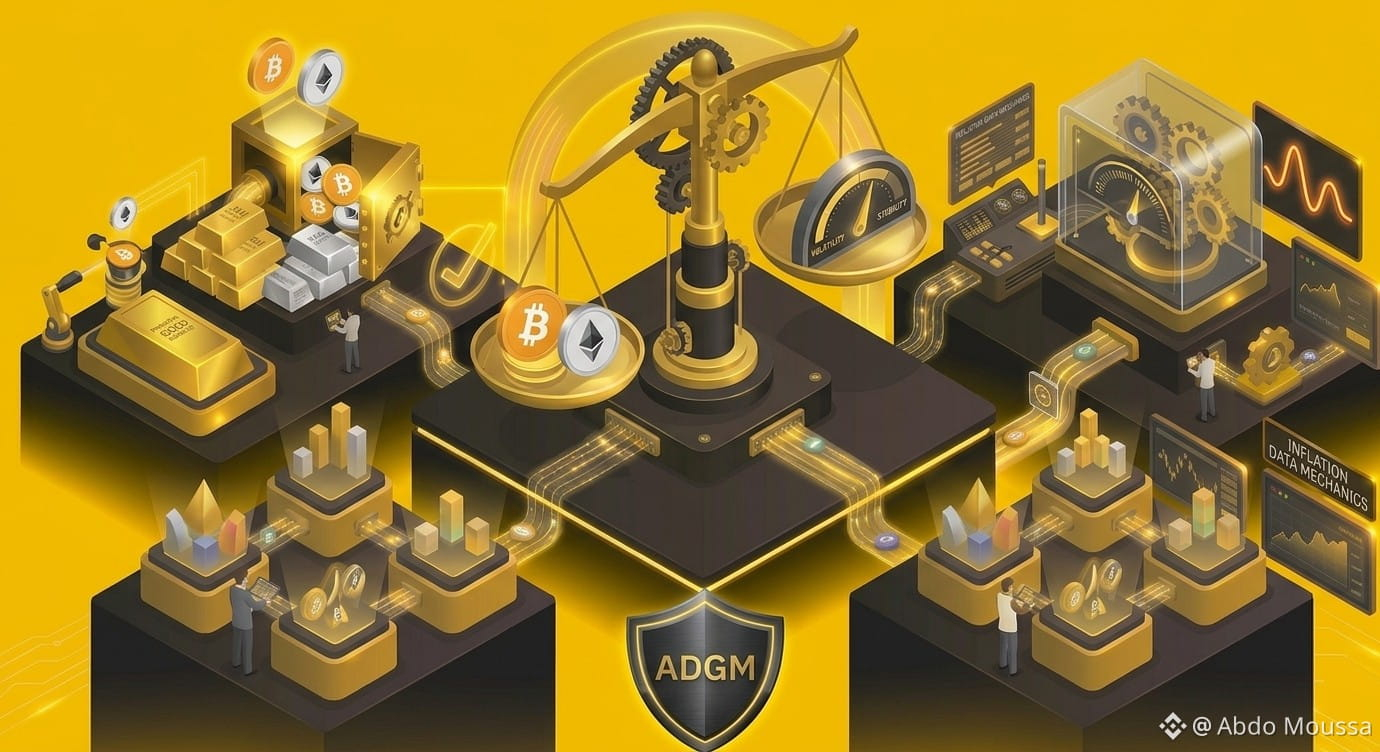
🥇 Gold Trading & Inflation Hedging: Multi-Asset Risk Balancing
Integrating precious metals alongside digital assets allows traders to build balanced, multi-asset portfolios designed to navigate macro uncertainty, Binance enables direct price exposure to Gold and Silver contracts.
💡 Bridging Digital and Physical Safe Havens
Digital vs. Physical Gold: Combines the borderless velocity of Bitcoin ($BTC) with the traditional macro stability of physical Gold within a unified portfolio framework.
Streamlined Commodity Exposure: Trade gold and silver contract exposures directly alongside cryptocurrency positions without managing disparate commodity broker accounts.
Risk Mitigation: Facilitates real-time portfolio rebalancing during periods of high crypto volatility or broader macroeconomic shifts.
🔑 Understanding Commodity Contract Dynamics
Trading gold contracts on the platform operates via standardized derivative instruments:
Exposure Type: Users capture pure price tracking exposure relative to global spot commodity prices.
No Physical Delivery: Contracts are settled digitally, they do not involve physical metal vault delivery or bullion storage receipts.
⚠️ Essential Compliance & Risk Disclaimers
Jurisdictional Restrictions: Commodity contracts and TradFi derivative products are not available to all users, Access depends strictly on geographic location and compliance verification.
UAE Entity Mandate: For users in the United Arab Emirates, these products are offered specifically through the Binance ADGM entity.
Risk Warning: Futures and derivative trading carries a high risk of capital loss due to leverage and market swings, This publication is strictly for educational purposes and does not constitute financial advice.
Master asset correlation and commodity risk management on Binance Academy.
https://www.binance.com/en/academy/articles/how-to-trade-gold-and-silver-on-binance-futures
Diversify intelligently, control leverage, and always DYOR (Do Your Own Research) 💡
#BTC #bitcoin #ETH #crypto #TradFi
🥇 Gold Trading & Inflation Hedging: Multi-Asset Risk Balancing
Integrating precious metals alongside digital assets allows traders to build balanced, multi-asset portfolios designed to navigate macro uncertainty, Binance enables direct price exposure to Gold and Silver contracts.
💡 Bridging Digital and Physical Safe Havens
Digital vs. Physical Gold: Combines the borderless velocity of Bitcoin ($BTC) with the traditional macro stability of physical Gold within a unified portfolio framework.
Streamlined Commodity Exposure: Trade gold and silver contract exposures directly alongside cryptocurrency positions without managing disparate commodity broker accounts.
Risk Mitigation: Facilitates real-time portfolio rebalancing during periods of high crypto volatility or broader macroeconomic shifts.
🔑 Understanding Commodity Contract Dynamics
Trading gold contracts on the platform operates via standardized derivative instruments:
Exposure Type: Users capture pure price tracking exposure relative to global spot commodity prices.
No Physical Delivery: Contracts are settled digitally, they do not involve physical metal vault delivery or bullion storage receipts.
⚠️ Essential Compliance & Risk Disclaimers
Jurisdictional Restrictions: Commodity contracts and TradFi derivative products are not available to all users, Access depends strictly on geographic location and compliance verification.
UAE Entity Mandate: For users in the United Arab Emirates, these products are offered specifically through the Binance ADGM entity.
Risk Warning: Futures and derivative trading carries a high risk of capital loss due to leverage and market swings, This publication is strictly for educational purposes and does not constitute financial advice.
Master asset correlation and commodity risk management on Binance Academy.
https://www.binance.com/en/academy/articles/how-to-trade-gold-and-silver-on-binance-futures
Diversify intelligently, control leverage, and always DYOR (Do Your Own Research) 💡
#BTC #bitcoin #ETH #crypto #TradFi
Integrating precious metals alongside digital assets allows traders to build balanced, multi-asset portfolios designed to navigate macro uncertainty, Binance enables direct price exposure to Gold and Silver contracts.
💡 Bridging Digital and Physical Safe Havens
Digital vs. Physical Gold: Combines the borderless velocity of Bitcoin ($BTC) with the traditional macro stability of physical Gold within a unified portfolio framework.
Streamlined Commodity Exposure: Trade gold and silver contract exposures directly alongside cryptocurrency positions without managing disparate commodity broker accounts.
Risk Mitigation: Facilitates real-time portfolio rebalancing during periods of high crypto volatility or broader macroeconomic shifts.
🔑 Understanding Commodity Contract Dynamics
Trading gold contracts on the platform operates via standardized derivative instruments:
Exposure Type: Users capture pure price tracking exposure relative to global spot commodity prices.
No Physical Delivery: Contracts are settled digitally, they do not involve physical metal vault delivery or bullion storage receipts.
⚠️ Essential Compliance & Risk Disclaimers
Jurisdictional Restrictions: Commodity contracts and TradFi derivative products are not available to all users, Access depends strictly on geographic location and compliance verification.
UAE Entity Mandate: For users in the United Arab Emirates, these products are offered specifically through the Binance ADGM entity.
Risk Warning: Futures and derivative trading carries a high risk of capital loss due to leverage and market swings, This publication is strictly for educational purposes and does not constitute financial advice.
Master asset correlation and commodity risk management on Binance Academy.
https://www.binance.com/en/academy/articles/how-to-trade-gold-and-silver-on-binance-futures
Diversify intelligently, control leverage, and always DYOR (Do Your Own Research) 💡
#BTC #bitcoin #ETH #crypto #TradFi
4
296

Verified
REAL US STOCKS ARE FINALLY COMING ON-CHAIN UNDER SEC REGULATION
The SEC is officially opening a regulated US pathway for tokenized stocks, marking a massive bridge between traditional finance and public blockchains. While this is huge, the regulators are keeping a very tight grip on trading volumes, user access, and issuer rights to maintain control.
🚀 Traditional equities will now live on the same ledger tech powering $BTC and $ETH
🔒 Access will be highly regulated with strict limits on who can trade them initially
📈 This could pave the way for massive institutional capital flowing into Web3 infrastructure
Honestly, this is the regulatory clarity we have been waiting for even if it comes with strings attached.
#Tokenization #TradFi #SEC #Write2Earn
REAL US STOCKS ARE FINALLY COMING ON-CHAIN UNDER SEC REGULATION
The SEC is officially opening a regulated US pathway for tokenized stocks, marking a massive bridge between traditional finance and public blockchains. While this is huge, the regulators are keeping a very tight grip on trading volumes, user access, and issuer rights to maintain control.
🚀 Traditional equities will now live on the same ledger tech powering $BTC and $ETH
🔒 Access will be highly regulated with strict limits on who can trade them initially
📈 This could pave the way for massive institutional capital flowing into Web3 infrastructure
Honestly, this is the regulatory clarity we have been waiting for even if it comes with strings attached.
#Tokenization #TradFi #SEC #Write2Earn
The SEC is officially opening a regulated US pathway for tokenized stocks, marking a massive bridge between traditional finance and public blockchains. While this is huge, the regulators are keeping a very tight grip on trading volumes, user access, and issuer rights to maintain control.
🚀 Traditional equities will now live on the same ledger tech powering $BTC and $ETH
🔒 Access will be highly regulated with strict limits on who can trade them initially
📈 This could pave the way for massive institutional capital flowing into Web3 infrastructure
Honestly, this is the regulatory clarity we have been waiting for even if it comes with strings attached.
#Tokenization #TradFi #SEC #Write2Earn

1
1.2k
·
--
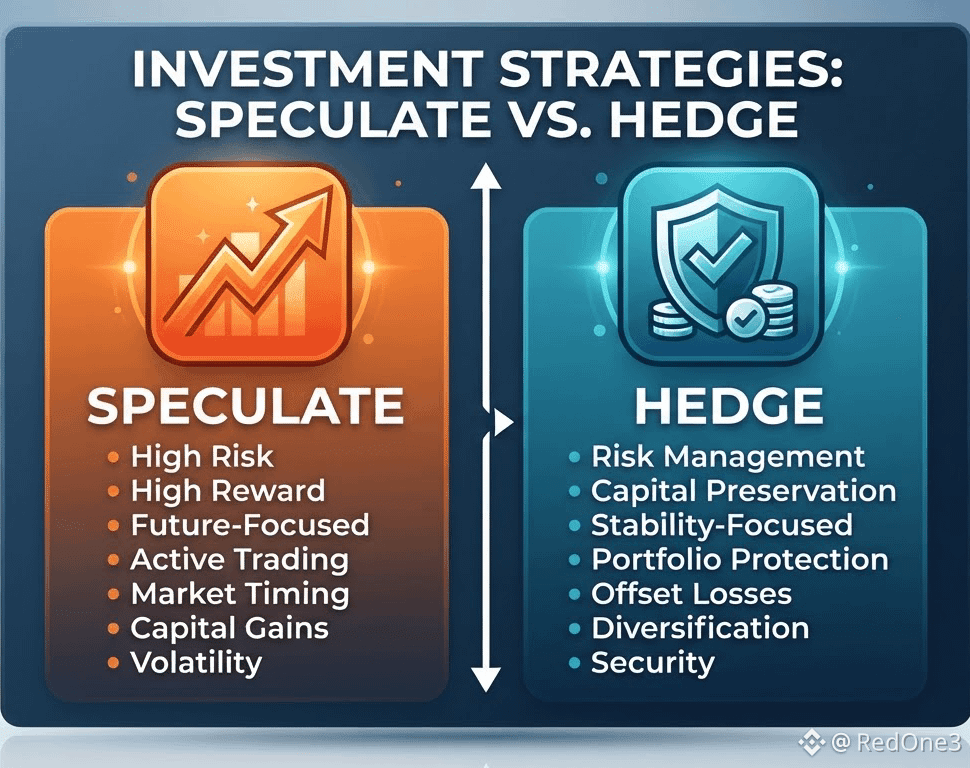
Directional Speculation vs Hedging Use Cases
Some traders use TradFi Perpetuals purely for directional speculation on price moves; others use small positions to hedge existing exposure elsewhere in their portfolio. The same product can serve very different purposes depending on the trader's existing holdings and objective.
#ᴰʸᴼᴿ #TradFi .
Directional Speculation vs Hedging Use Cases
Some traders use TradFi Perpetuals purely for directional speculation on price moves; others use small positions to hedge existing exposure elsewhere in their portfolio. The same product can serve very different purposes depending on the trader's existing holdings and objective.
#ᴰʸᴼᴿ #TradFi .
Some traders use TradFi Perpetuals purely for directional speculation on price moves; others use small positions to hedge existing exposure elsewhere in their portfolio. The same product can serve very different purposes depending on the trader's existing holdings and objective.
#ᴰʸᴼᴿ #TradFi .
106

·
--
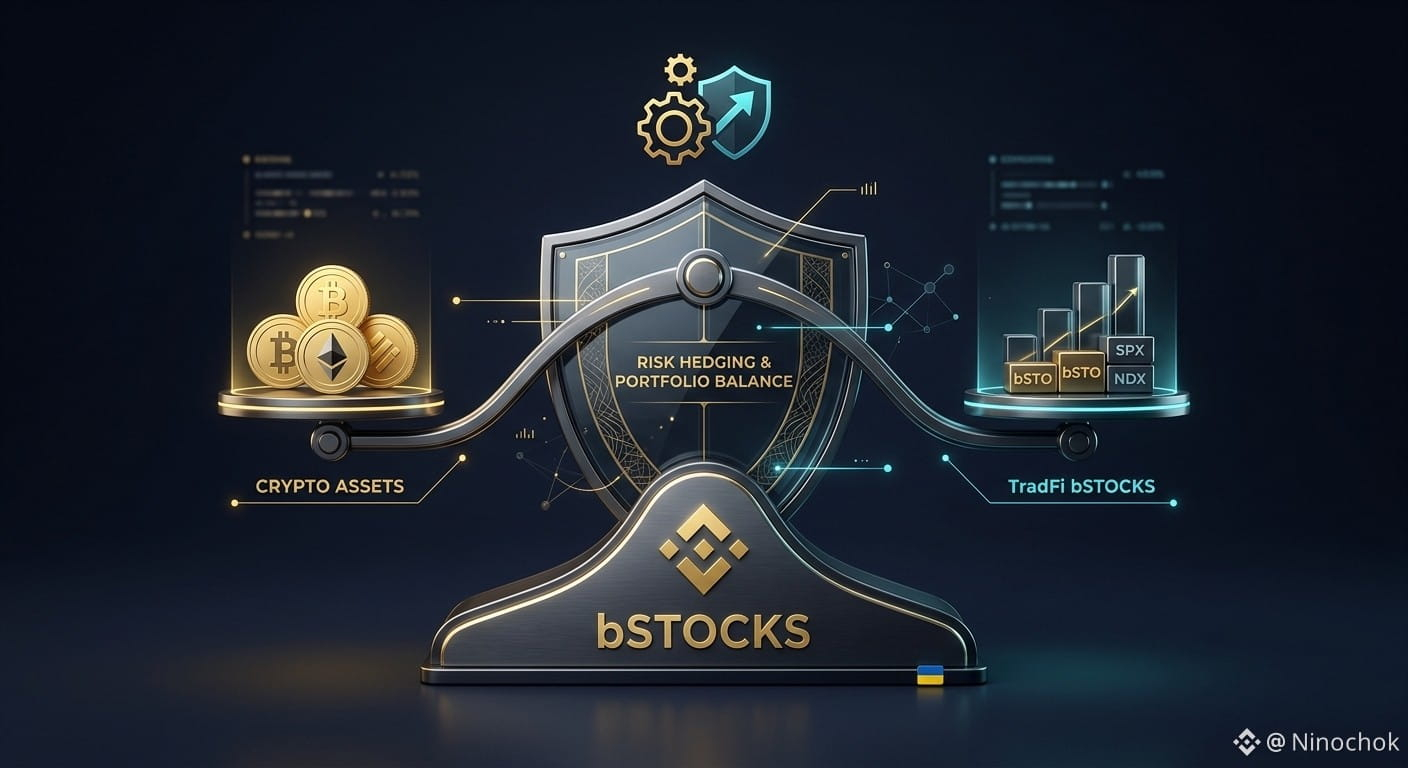
How to Protect Capital During a Crypto Market Storm: TradFi + Crypto
When volatility goes through the roof, stablecoins are no longer the only safe haven. The development of bStocks (tokenized stocks) has introduced a flexible tool for risk management.
Why you should add bStocks to your strategy:
🔹 Lower volatility: Stock market shares are less impulsive than altcoins, which helps stabilize your portfolio.
🔹 Instant rebalancing: Switching between crypto and tokenized stocks takes seconds without withdrawing funds to the bank.
🔹 Full synergy: Combine base crypto, passive income in Binance Earn, and TradFi shares in one app.
The investor’s main rule is not only to earn, but also to preserve capital in any market phase.
And how do you hedge your risks: do you move into stables or diversify into TradFi assets? 👇
#BinanceSquare #TradFi #bStocks
How to Protect Capital During a Crypto Market Storm: TradFi + Crypto
When volatility goes through the roof, stablecoins are no longer the only safe haven. The development of bStocks (tokenized stocks) has introduced a flexible tool for risk management.
Why you should add bStocks to your strategy:
🔹 Lower volatility: Stock market shares are less impulsive than altcoins, which helps stabilize your portfolio.
🔹 Instant rebalancing: Switching between crypto and tokenized stocks takes seconds without withdrawing funds to the bank.
🔹 Full synergy: Combine base crypto, passive income in Binance Earn, and TradFi shares in one app.
The investor’s main rule is not only to earn, but also to preserve capital in any market phase.
And how do you hedge your risks: do you move into stables or diversify into TradFi assets? 👇
#BinanceSquare #TradFi #bStocks
When volatility goes through the roof, stablecoins are no longer the only safe haven. The development of bStocks (tokenized stocks) has introduced a flexible tool for risk management.
Why you should add bStocks to your strategy:
🔹 Lower volatility: Stock market shares are less impulsive than altcoins, which helps stabilize your portfolio.
🔹 Instant rebalancing: Switching between crypto and tokenized stocks takes seconds without withdrawing funds to the bank.
🔹 Full synergy: Combine base crypto, passive income in Binance Earn, and TradFi shares in one app.
The investor’s main rule is not only to earn, but also to preserve capital in any market phase.
And how do you hedge your risks: do you move into stables or diversify into TradFi assets? 👇
#BinanceSquare #TradFi #bStocks
25

📊 Overnight Token Magic: Traders Are Beating the Stock Market! 🤯 This important Reed to full 🌕
✅Have you ever seen the future before it actually happens? That is exactly what crypto traders did last week when the US Federal Reserve raised interest rates to fight inflation! 💸
✅Normally, the entire stock market has to wait until the opening bell rings the next day to react to Fed news. But this time, crypto traders used stock-linked tokens to trade all through the night! 🌙
🚀 The Overnight Numbers 🔢 :
1) SPY Tokens: Rose 1.11% overnight, predicting exactly how the S&P 500 would bounce!
2) Fear Gauge Tokens: Dropped 5.94%, showing that market panic was quickly disappearing.
3)Massive Volume: A whopping $1.02 Billion USD was traded entirely overnight!
🔮 Predicting the Future :
By the time the actual traditional stock market opened the next morning, crypto traders had already priced in 97% of the entire day's move! Crypto isn't just matching the real world anymore—it is running ahead of it.👀
🙂Do you think crypto markets are now smarter than Wall Street? Drop your thoughts below! 👇 Like, Follow, and Share! 🔥
#MacroNews #TradFi #CryptoTrading #S&P500 #FedRateCut #BinanceSquare #SmartTrading
📊 Overnight Token Magic: Traders Are Beating the Stock Market! 🤯 This important Reed to full 🌕
✅Have you ever seen the future before it actually happens? That is exactly what crypto traders did last week when the US Federal Reserve raised interest rates to fight inflation! 💸
✅Normally, the entire stock market has to wait until the opening bell rings the next day to react to Fed news. But this time, crypto traders used stock-linked tokens to trade all through the night! 🌙
🚀 The Overnight Numbers 🔢 :
1) SPY Tokens: Rose 1.11% overnight, predicting exactly how the S&P 500 would bounce!
2) Fear Gauge Tokens: Dropped 5.94%, showing that market panic was quickly disappearing.
3)Massive Volume: A whopping $1.02 Billion USD was traded entirely overnight!
🔮 Predicting the Future :
By the time the actual traditional stock market opened the next morning, crypto traders had already priced in 97% of the entire day's move! Crypto isn't just matching the real world anymore—it is running ahead of it.👀
🙂Do you think crypto markets are now smarter than Wall Street? Drop your thoughts below! 👇 Like, Follow, and Share! 🔥
#MacroNews #TradFi #CryptoTrading #S&P500 #FedRateCut #BinanceSquare #SmartTrading
✅Have you ever seen the future before it actually happens? That is exactly what crypto traders did last week when the US Federal Reserve raised interest rates to fight inflation! 💸
✅Normally, the entire stock market has to wait until the opening bell rings the next day to react to Fed news. But this time, crypto traders used stock-linked tokens to trade all through the night! 🌙
🚀 The Overnight Numbers 🔢 :
1) SPY Tokens: Rose 1.11% overnight, predicting exactly how the S&P 500 would bounce!
2) Fear Gauge Tokens: Dropped 5.94%, showing that market panic was quickly disappearing.
3)Massive Volume: A whopping $1.02 Billion USD was traded entirely overnight!
🔮 Predicting the Future :
By the time the actual traditional stock market opened the next morning, crypto traders had already priced in 97% of the entire day's move! Crypto isn't just matching the real world anymore—it is running ahead of it.👀
🙂Do you think crypto markets are now smarter than Wall Street? Drop your thoughts below! 👇 Like, Follow, and Share! 🔥
#MacroNews #TradFi #CryptoTrading #S&P500 #FedRateCut #BinanceSquare #SmartTrading
1
53

·
--
TRADFI & Stocks in Crypto: Is the real liquidity revolution here? 🚀🏛️
The convergence between traditional finance (TradFi) and the digital asset market continues to gain massive ground. The ability to gain exposure to stocks or indices from the traditional market using crypto/stablecoins directly from the ecosystem ushers in a new era for investors.
🔹 Structure and Impact: Tokenization and 24/7 access to liquidity remove the operational barriers of traditional stock markets, enabling portfolio diversification without leaving the chain.
🔹 10-second Takeaway: Tokenized TradFi isn’t a fad: it represents the direct bridge for institutional liquidity to flow into the crypto space—and vice versa—optimizing capital management.
💡 Technical Decision: ACCUMULATE / HOLD (Maintain strategic exposure to RWA/TradFi sector projects ahead of institutional adoption).
❓ Question for the community:
Do you prefer to trade traditional stocks in a tokenized way with crypto, or do you prefer to keep your investments 100% in the traditional stock market?
👇 Leave your choice in the comments:
A) Tokenized with Crypto (More flexibility and 24/7 access).
B) Traditional Market (Traditional brokers).
#tradfi $AAPLB
{spot}(AAPLBUSDT)
TRADFI & Stocks in Crypto: Is the real liquidity revolution here? 🚀🏛️
The convergence between traditional finance (TradFi) and the digital asset market continues to gain massive ground. The ability to gain exposure to stocks or indices from the traditional market using crypto/stablecoins directly from the ecosystem ushers in a new era for investors.
🔹 Structure and Impact: Tokenization and 24/7 access to liquidity remove the operational barriers of traditional stock markets, enabling portfolio diversification without leaving the chain.
🔹 10-second Takeaway: Tokenized TradFi isn’t a fad: it represents the direct bridge for institutional liquidity to flow into the crypto space—and vice versa—optimizing capital management.
💡 Technical Decision: ACCUMULATE / HOLD (Maintain strategic exposure to RWA/TradFi sector projects ahead of institutional adoption).
❓ Question for the community:
Do you prefer to trade traditional stocks in a tokenized way with crypto, or do you prefer to keep your investments 100% in the traditional stock market?
👇 Leave your choice in the comments:
A) Tokenized with Crypto (More flexibility and 24/7 access).
B) Traditional Market (Traditional brokers).
#tradfi $AAPLB
The convergence between traditional finance (TradFi) and the digital asset market continues to gain massive ground. The ability to gain exposure to stocks or indices from the traditional market using crypto/stablecoins directly from the ecosystem ushers in a new era for investors.
🔹 Structure and Impact: Tokenization and 24/7 access to liquidity remove the operational barriers of traditional stock markets, enabling portfolio diversification without leaving the chain.
🔹 10-second Takeaway: Tokenized TradFi isn’t a fad: it represents the direct bridge for institutional liquidity to flow into the crypto space—and vice versa—optimizing capital management.
💡 Technical Decision: ACCUMULATE / HOLD (Maintain strategic exposure to RWA/TradFi sector projects ahead of institutional adoption).
❓ Question for the community:
Do you prefer to trade traditional stocks in a tokenized way with crypto, or do you prefer to keep your investments 100% in the traditional stock market?
👇 Leave your choice in the comments:
A) Tokenized with Crypto (More flexibility and 24/7 access).
B) Traditional Market (Traditional brokers).
#tradfi $AAPLB
1
67

·
--
While the weather outside is unusually warm and you absolutely don’t want to sit in front of a monitor, you catch yourself thinking that managing finances should take up a minimum of time.
I decided to compare classic trading with TradFi opportunities on Binance, just to understand the difference in approaches. If the usual crypto trading requires constant strain, setting limit orders, and checking charts every five minutes, then working with TradFi tools feels like a more measured classic investing approach. You simply choose assets, look at the overall picture of the market, make a bet on the medium-term horizon, and go for a walk in the sun instead of sticking to a smartphone screen.
Of course, there’s more adrenaline in classic trading, but on nice days TradFi wins by a mile for a calm life. And how do you balance between active trading and normal rest outdoors?
#TradFi #BinanceSquare #CryptoUkraine #PortfolioManagement
While the weather outside is unusually warm and you absolutely don’t want to sit in front of a monitor, you catch yourself thinking that managing finances should take up a minimum of time.
I decided to compare classic trading with TradFi opportunities on Binance, just to understand the difference in approaches. If the usual crypto trading requires constant strain, setting limit orders, and checking charts every five minutes, then working with TradFi tools feels like a more measured classic investing approach. You simply choose assets, look at the overall picture of the market, make a bet on the medium-term horizon, and go for a walk in the sun instead of sticking to a smartphone screen.
Of course, there’s more adrenaline in classic trading, but on nice days TradFi wins by a mile for a calm life. And how do you balance between active trading and normal rest outdoors?
#TradFi #BinanceSquare #CryptoUkraine #PortfolioManagement
I decided to compare classic trading with TradFi opportunities on Binance, just to understand the difference in approaches. If the usual crypto trading requires constant strain, setting limit orders, and checking charts every five minutes, then working with TradFi tools feels like a more measured classic investing approach. You simply choose assets, look at the overall picture of the market, make a bet on the medium-term horizon, and go for a walk in the sun instead of sticking to a smartphone screen.
Of course, there’s more adrenaline in classic trading, but on nice days TradFi wins by a mile for a calm life. And how do you balance between active trading and normal rest outdoors?
#TradFi #BinanceSquare #CryptoUkraine #PortfolioManagement
109

·
--
Bullish
When you buy tokenized stocks bStocks or enter TradFi products directly via a crypto exchange, it’s easy to relax and forget that there are specific rules in effect here. Many people mistakenly perceive stock instruments as a completely risk-free haven, but from my own experience, I’ve identified a few important nuances that everyone should keep in mind.
The biggest hidden pitfall is the different nature of trading hours. The crypto market is active around the clock, seven days a week, while traditional platforms follow a clear schedule and close on weekends and holidays. If an important geopolitical or corporate event happens on the weekend, you won’t be able to close your TradFi position promptly, and on Monday you may encounter an unpleasant price gap (gap) when trading resumes. Also, you should consider the synthetic nature of tokenized assets: bStocks track the price chart of the underlying stock, but you do not receive voting rights at shareholders’ meetings. On top of that, corporate reports and central bank decisions regarding interest rates sometimes cause volatility—no less aggressive than the swings of popular altcoins.
Do you take weekends in TradFi into account when holding such positions?
#BStocks #TradFi #BinanceSquare
When you buy tokenized stocks bStocks or enter TradFi products directly via a crypto exchange, it’s easy to relax and forget that there are specific rules in effect here. Many people mistakenly perceive stock instruments as a completely risk-free haven, but from my own experience, I’ve identified a few important nuances that everyone should keep in mind.
The biggest hidden pitfall is the different nature of trading hours. The crypto market is active around the clock, seven days a week, while traditional platforms follow a clear schedule and close on weekends and holidays. If an important geopolitical or corporate event happens on the weekend, you won’t be able to close your TradFi position promptly, and on Monday you may encounter an unpleasant price gap (gap) when trading resumes. Also, you should consider the synthetic nature of tokenized assets: bStocks track the price chart of the underlying stock, but you do not receive voting rights at shareholders’ meetings. On top of that, corporate reports and central bank decisions regarding interest rates sometimes cause volatility—no less aggressive than the swings of popular altcoins.
Do you take weekends in TradFi into account when holding such positions?
#BStocks #TradFi #BinanceSquare
The biggest hidden pitfall is the different nature of trading hours. The crypto market is active around the clock, seven days a week, while traditional platforms follow a clear schedule and close on weekends and holidays. If an important geopolitical or corporate event happens on the weekend, you won’t be able to close your TradFi position promptly, and on Monday you may encounter an unpleasant price gap (gap) when trading resumes. Also, you should consider the synthetic nature of tokenized assets: bStocks track the price chart of the underlying stock, but you do not receive voting rights at shareholders’ meetings. On top of that, corporate reports and central bank decisions regarding interest rates sometimes cause volatility—no less aggressive than the swings of popular altcoins.
Do you take weekends in TradFi into account when holding such positions?
#BStocks #TradFi #BinanceSquare
1
98

·
--
Bullish
CAN YOU USE PROMOTED TOKENS (bStocks) AS COLLATERAL FOR TRADING? 👀
Binance is gradually expanding the functionality of bStocks: some tokenized stocks are already available to be used as collateral in Margin products.
For example, in September, names were added to the list including CrowdStrike, Moderna, and Seagate, and on September 23 — Cypherpunk Technologies, AMC Entertainment, and Axe Compute.
The idea is interesting: an asset that mirrors exposure to a traditional stock becomes part of the cryptocurrency margin infrastructure.
But there’s a catch: this option is available only to eligible users in permitted jurisdictions, and the collateral parameters may change depending on the market.
How do you like this model: holding bStocks not just as an investment, but using them for trading? 👇
#Binance $AAPLB #BStocks #MarginTrading #TradFi
{spot}(AAPLBUSDT)
CAN YOU USE PROMOTED TOKENS (bStocks) AS COLLATERAL FOR TRADING? 👀
Binance is gradually expanding the functionality of bStocks: some tokenized stocks are already available to be used as collateral in Margin products.
For example, in September, names were added to the list including CrowdStrike, Moderna, and Seagate, and on September 23 — Cypherpunk Technologies, AMC Entertainment, and Axe Compute.
The idea is interesting: an asset that mirrors exposure to a traditional stock becomes part of the cryptocurrency margin infrastructure.
But there’s a catch: this option is available only to eligible users in permitted jurisdictions, and the collateral parameters may change depending on the market.
How do you like this model: holding bStocks not just as an investment, but using them for trading? 👇
#Binance $AAPLB #BStocks #MarginTrading #TradFi
Binance is gradually expanding the functionality of bStocks: some tokenized stocks are already available to be used as collateral in Margin products.
For example, in September, names were added to the list including CrowdStrike, Moderna, and Seagate, and on September 23 — Cypherpunk Technologies, AMC Entertainment, and Axe Compute.
The idea is interesting: an asset that mirrors exposure to a traditional stock becomes part of the cryptocurrency margin infrastructure.
But there’s a catch: this option is available only to eligible users in permitted jurisdictions, and the collateral parameters may change depending on the market.
How do you like this model: holding bStocks not just as an investment, but using them for trading? 👇
#Binance $AAPLB #BStocks #MarginTrading #TradFi
114

·
--
#TradFi - market overview🏪⚖️💱
TradFi — the traditional financial system, which includes banks, stock exchanges, bonds, stocks, and other classic financial instruments. It’s interesting to watch how TradFi is increasingly intersecting with the crypto market: investors get new ways to interact with traditional assets, and blockchain is gradually being used in financial infrastructure. For the market, this means the two ecosystems will continue to grow closer. ▶️🔄◀️
#TradFi - market overview🏪⚖️💱
TradFi — the traditional financial system, which includes banks, stock exchanges, bonds, stocks, and other classic financial instruments. It’s interesting to watch how TradFi is increasingly intersecting with the crypto market: investors get new ways to interact with traditional assets, and blockchain is gradually being used in financial infrastructure. For the market, this means the two ecosystems will continue to grow closer. ▶️🔄◀️
TradFi — the traditional financial system, which includes banks, stock exchanges, bonds, stocks, and other classic financial instruments. It’s interesting to watch how TradFi is increasingly intersecting with the crypto market: investors get new ways to interact with traditional assets, and blockchain is gradually being used in financial infrastructure. For the market, this means the two ecosystems will continue to grow closer. ▶️🔄◀️
74
Log in to explore more content
Join global crypto users on Binance Square
⚡️ Get latest and useful information about crypto.
💬 Trusted by the world’s largest crypto exchange.
👍 Discover real insights from verified creators.
Email / Phone number
Trending Topics
1
#CircleMints500MUSDCOnSolana
73,220 views
1,702 Discussing
2
#PolymarketBankFailureBetsDrawFDICConcern
81,217 views
1,613 Discussing
3
#BlackRockBuildsTokenizedPortfoliosForOndo
70,470 views
1,144 Discussing
4
#BitwiseFilesToListNEARETFOnNYSEArca
60,623 views
939 Discussing
5
#SECCommissionerPeirceToLeaveOct2
58,497 views
768 Discussing
6
#SECSaysBuybacksUpgradesDontMakeTokenSecurity
49,026 views
584 Discussing
7
#StrategyProposesDailyDividendsForPreferreds
10,411 views
212 Discussing
8
#CircleTetherFreezeBitgetHackerWallet
11,493 views
129 Discussing
9
#CoinMarketCapCompletesCoinglassAcquisition
12,053 views
159 Discussing
10
#QNTRises39%
110,163 views
1,650 Discussing