
#ethena
ethena
8.2M views
4,962 Discussing
Hot
Latest

🔥 $ENA (Ethena) is waking up!
🚀The backbone of the $4.4B stablecoin USDe is up +80% in 30 days, driven by the launch of Ethena Pay and a new 95% revenue buyback proposal.
📊 Market Snapshot
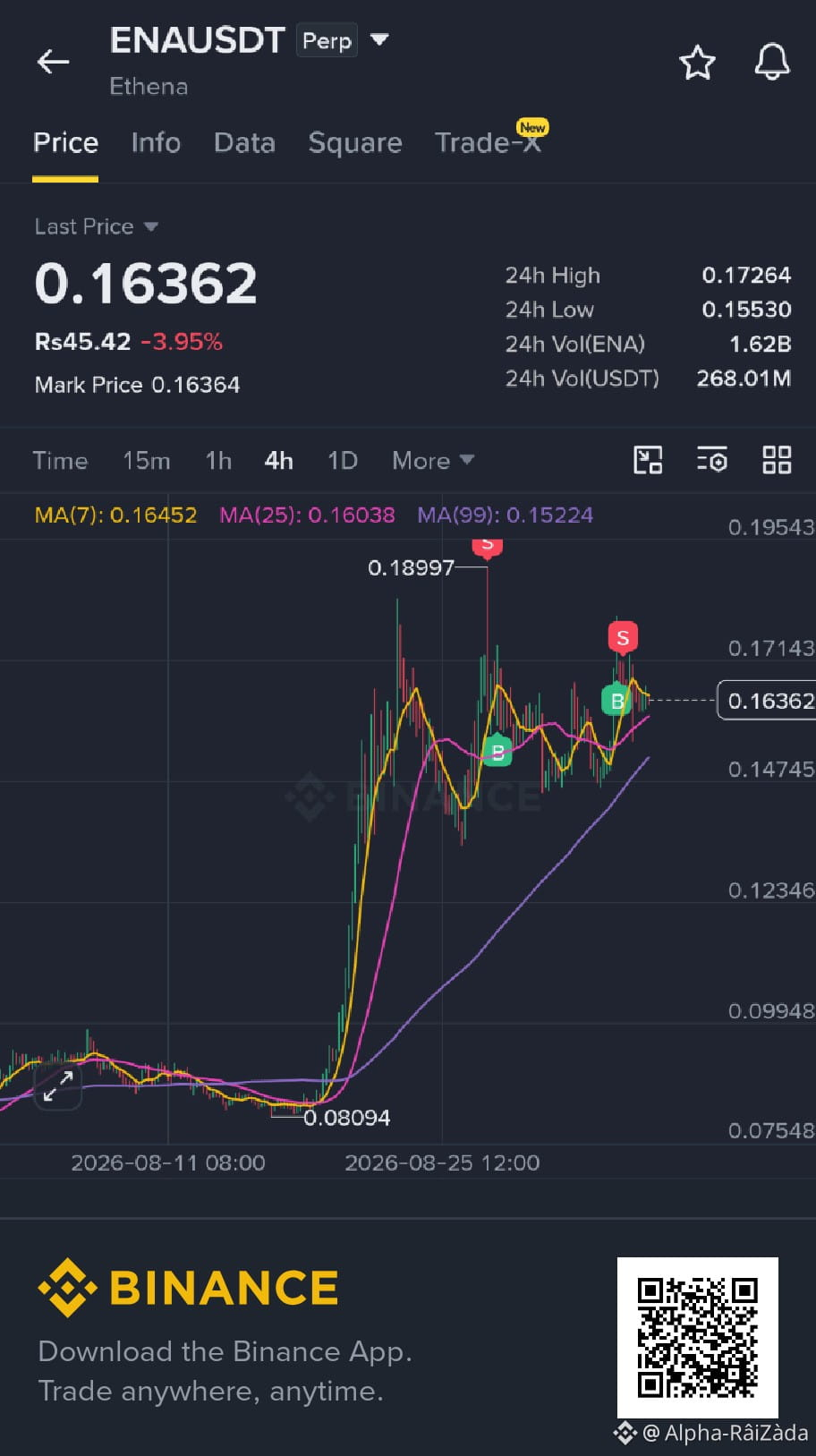
Price: $0.164
Market Cap: $1.66B (Rank #46)
24h Volume: $473M
🚨 The Trade Verdict: Buy or Pass?Short-Term Day Trading? YES 🟢
High liquidity and $473M volume make it perfect for trading the $0.145 to $0.20 range. Watch for short-term team profit-taking.
Long-Term Investing? WAIT 🔴A massive 1.41 billion token investor unlock hits on October 5, 2026. Wait for the supply shock to settle before buying the dip.
⚠️ High volatility. Trade the momentum, manage your risk!
🔥 Are you buying this ENA pump or waiting for the October unlock? Let me know your targets below! 👇
#ENAUSDT🚨 #ethena #USDe #DeFi #CryptoNews
🚀The backbone of the $4.4B stablecoin USDe is up +80% in 30 days, driven by the launch of Ethena Pay and a new 95% revenue buyback proposal.
📊 Market Snapshot
Price: $0.164
Market Cap: $1.66B (Rank #46)
24h Volume: $473M
🚨 The Trade Verdict: Buy or Pass?Short-Term Day Trading? YES 🟢
High liquidity and $473M volume make it perfect for trading the $0.145 to $0.20 range. Watch for short-term team profit-taking.
Long-Term Investing? WAIT 🔴A massive 1.41 billion token investor unlock hits on October 5, 2026. Wait for the supply shock to settle before buying the dip.
⚠️ High volatility. Trade the momentum, manage your risk!
🔥 Are you buying this ENA pump or waiting for the October unlock? Let me know your targets below! 👇
#ENAUSDT🚨 #ethena #USDe #DeFi #CryptoNews


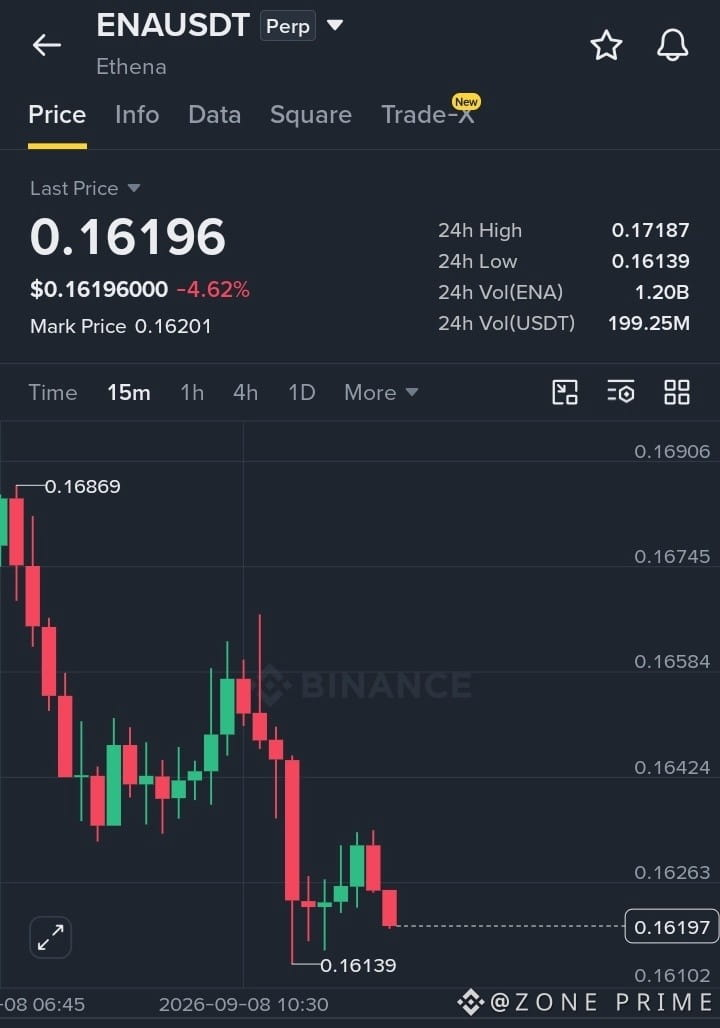
$ENA /USDT — SHORT SETUP 📉 💯 ✨
Entry: 0.16263 - 0.16424
TP1: 0.16196
TP2: 0.16139
TP3: 0.16102
Stop: 0.16584
Overhead supply zone holding firm near the 0.16424 structural resistance level.
Upper-wick exhaustion during relief attempts indicates sustained seller control offering a clean risk-to-reward entry expecting trend continuation. 📉
#ena #enausdt #ethena #crypto #Write2Earn $ENA
Entry: 0.16263 - 0.16424
TP1: 0.16196
TP2: 0.16139
TP3: 0.16102
Stop: 0.16584
Overhead supply zone holding firm near the 0.16424 structural resistance level.
Upper-wick exhaustion during relief attempts indicates sustained seller control offering a clean risk-to-reward entry expecting trend continuation. 📉
#ena #enausdt #ethena #crypto #Write2Earn $ENA

Verified
Ethena Just Removed Its Biggest Problem. Then Launched A Neobank. Then Passed A Historic Vote. 🎯
Three things happened at Ethena this week that matter.
$ETH
One — the monthly investor selling that markets had learned to expect every single month is cancelled. The Foundation bought out the sellers. Remaining tokens unlock once on October 5 then never again. That October 5 unlock is real and still coming — but the recurring monthly pressure is gone after that.
Two — the fee switch passed with zero votes against. Protocol revenue will eventually buy ENA from the open market. Buybacks only start when USDe supply reaches $7.5 billion. Not there yet.
Three — Ethena Pay launched in early September. A spending card and savings app with up to 5% cashback. Higher reward tiers require holding ENA. Whether that drives real demand depends entirely on how many people actually use it.
Three real structural changes in one week. The impact on price is uncertain — but the changes themselves are real.
Click $ENA below and check the live price right now.
$ENA
#Ethena #Write2Earn
---
Not financial advice. DYOR.
Three things happened at Ethena this week that matter.
$ETH
One — the monthly investor selling that markets had learned to expect every single month is cancelled. The Foundation bought out the sellers. Remaining tokens unlock once on October 5 then never again. That October 5 unlock is real and still coming — but the recurring monthly pressure is gone after that.
Two — the fee switch passed with zero votes against. Protocol revenue will eventually buy ENA from the open market. Buybacks only start when USDe supply reaches $7.5 billion. Not there yet.
Three — Ethena Pay launched in early September. A spending card and savings app with up to 5% cashback. Higher reward tiers require holding ENA. Whether that drives real demand depends entirely on how many people actually use it.
Three real structural changes in one week. The impact on price is uncertain — but the changes themselves are real.
Click $ENA below and check the live price right now.
$ENA
#Ethena #Write2Earn
---
Not financial advice. DYOR.



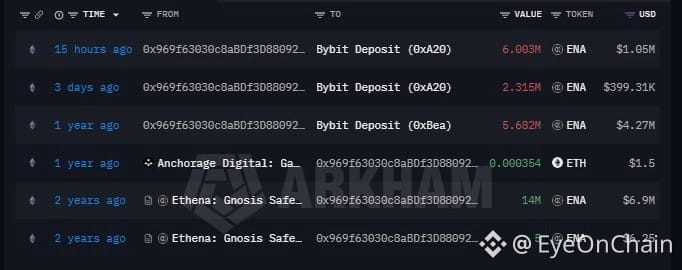
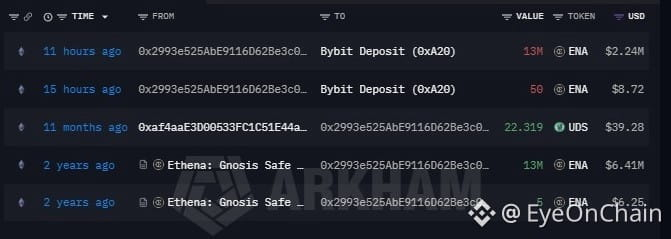
Two more Ethena-Linked wallets are moving $ENA to exchanges.
These two addresses apparently associated with the Ethena project are now suspected of taking profits, after collectively moving around $6.75M worth of ENA to exchanges since September 3.
The latest move is pretty interesting: the two wallets deposited a combined 19M ENA, worth roughly $3.29M, to Bybit over the past 15 hours. Both addresses reportedly received their #ENA from an #ethena multisig wallet around two years ago, then stayed completely inactive during that period.
Now, after ENA’s recent sharp price surge, they’ve suddenly started sending tokens to exchanges in batches. That timing definitely stands out.
PLEASE NOTE: Exchange deposits don’t automatically mean an immediate sell, but with the long dormancy and sudden transfers after the price run-up, these wallets are definitely worth watching.
Addresses:
0x969f63030c8aBDf3D88092EC3818A3A09AB16aF5
0x2993e525AbE9116D62Be3c06E71d9EDfd3507383
These two addresses apparently associated with the Ethena project are now suspected of taking profits, after collectively moving around $6.75M worth of ENA to exchanges since September 3.
The latest move is pretty interesting: the two wallets deposited a combined 19M ENA, worth roughly $3.29M, to Bybit over the past 15 hours. Both addresses reportedly received their #ENA from an #ethena multisig wallet around two years ago, then stayed completely inactive during that period.
Now, after ENA’s recent sharp price surge, they’ve suddenly started sending tokens to exchanges in batches. That timing definitely stands out.
PLEASE NOTE: Exchange deposits don’t automatically mean an immediate sell, but with the long dormancy and sudden transfers after the price run-up, these wallets are definitely worth watching.
Addresses:
0x969f63030c8aBDf3D88092EC3818A3A09AB16aF5
0x2993e525AbE9116D62Be3c06E71d9EDfd3507383
Mishal Ahmed 43:
Good analysis

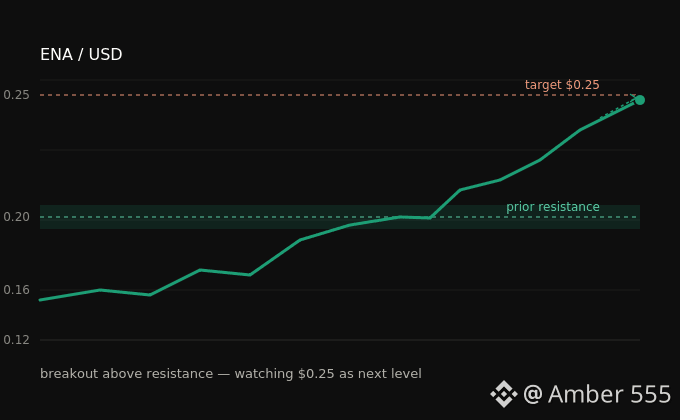
$ENA is showing a strong technical breakout, with buyers stepping in and momentum improving.
The key level to watch now is **$0.25**. If the breakout holds and price continues to build above the previous resistance, I’ll be watching this area as the next potential target.
No chasing—confirmation and risk management remain important.
**$ENA — breakout in progress. Let’s see if $0.25 comes next.
#ENA #Ethena #altcoins #Trading
$ENA
The key level to watch now is **$0.25**. If the breakout holds and price continues to build above the previous resistance, I’ll be watching this area as the next potential target.
No chasing—confirmation and risk management remain important.
**$ENA — breakout in progress. Let’s see if $0.25 comes next.
#ENA #Ethena #altcoins #Trading
$ENA

Have you noticed nobody is talking about the $ENA break while 30-day top traders are already sitting in profit?
Most traders keep getting wrecked chasing late pumps or holding bags with no exit. That FOMO loop is exactly how accounts bleed out instead of compounding.
Top traders by 30D profit already have $ENA on the board. One perp long is showing +2,149 USDT unrealized PNL on a 2.29% move, with 0.25 as the next clear target. The break happened. Now it is about not overtrading it.
Confirm the level holds, keep size reasonable, and scale out into 0.25. If $ETH stays constructive and $BTC does not dump, the setup has room. Follow the wallets that are actually printing instead of the usual noise.
Where do you think $ENA goes from here if 0.25 gets taken out?
#ENA #Ethena #CryptoTrading
Most traders keep getting wrecked chasing late pumps or holding bags with no exit. That FOMO loop is exactly how accounts bleed out instead of compounding.
Top traders by 30D profit already have $ENA on the board. One perp long is showing +2,149 USDT unrealized PNL on a 2.29% move, with 0.25 as the next clear target. The break happened. Now it is about not overtrading it.
Confirm the level holds, keep size reasonable, and scale out into 0.25. If $ETH stays constructive and $BTC does not dump, the setup has room. Follow the wallets that are actually printing instead of the usual noise.
Where do you think $ENA goes from here if 0.25 gets taken out?
#ENA #Ethena #CryptoTrading


🚀 ENA (Ethena) — Bulls Are Taking Control? 👀📈
ENA is currently around $0.173, up 5.77% today 🔥
📊 Key Levels:
🟢 Resistance: $0.189–$0.190
🟡 Current Price: $0.173
🔴 Support: $0.161–$0.162
The price is trading above the 7, 25 & 99-day moving averages, showing strong momentum.
🔥 If ENA breaks and holds above $0.190, the next move could get interesting.
But remember—rejection at resistance can trigger a pullback. Trade smart. ⚠️
Is ENA ready for $0.20+? 👀🚀
#ENA $ #ethena a #Crypto_Jobs🎯 to #Altcoins #CryptoTrading #Binance ce #bullis h #Web3
ENA is currently around $0.173, up 5.77% today 🔥
📊 Key Levels:
🟢 Resistance: $0.189–$0.190
🟡 Current Price: $0.173
🔴 Support: $0.161–$0.162
The price is trading above the 7, 25 & 99-day moving averages, showing strong momentum.
🔥 If ENA breaks and holds above $0.190, the next move could get interesting.
But remember—rejection at resistance can trigger a pullback. Trade smart. ⚠️
Is ENA ready for $0.20+? 👀🚀
#ENA $ #ethena a #Crypto_Jobs🎯 to #Altcoins #CryptoTrading #Binance ce #bullis h #Web3
Bandook:
yes
Verified
Ethena Just Rewrote Its Token Economics. The Fee Switch Passed Unanimously. Here Is The Honest Picture. 🎯
Three things happened at Ethena between August 27 and September 4.
The Foundation bought out its largest seed investors — the ones selling ENA every month. Those monthly investor unlocks are cancelled permanently. One final batch releases October 5. After that the recurring sell pressure from investors is gone.
The fee switch governance vote passed unanimously September 4. Zero votes against. 95% of net protocol revenue will go directly to buying ENA from the open market automatically.
Here is the honest catch nobody is saying clearly.
The buyback does not start yet. It activates when USDe supply reaches $7.5 billion. USDe currently sits at $4.1 billion. Supply needs to grow 82% before the first dollar of buyback is spent.
The investor unlock pressure is removed immediately. The buyback is real but conditional on future growth.
Both things are true at the same time.
Click $ENA below and check the live price right now.
$ENA
#Ethena #Write2Earn
---
Not financial advice. DYOR.
Three things happened at Ethena between August 27 and September 4.
The Foundation bought out its largest seed investors — the ones selling ENA every month. Those monthly investor unlocks are cancelled permanently. One final batch releases October 5. After that the recurring sell pressure from investors is gone.
The fee switch governance vote passed unanimously September 4. Zero votes against. 95% of net protocol revenue will go directly to buying ENA from the open market automatically.
Here is the honest catch nobody is saying clearly.
The buyback does not start yet. It activates when USDe supply reaches $7.5 billion. USDe currently sits at $4.1 billion. Supply needs to grow 82% before the first dollar of buyback is spent.
The investor unlock pressure is removed immediately. The buyback is real but conditional on future growth.
Both things are true at the same time.
Click $ENA below and check the live price right now.
$ENA
#Ethena #Write2Earn
---
Not financial advice. DYOR.


🏦 "Ethena" launches "Ethena Pay" digital banking service backed by crypto
The crypto company "Ethena" has announced the launch of its new digital banking service, "Ethena Pay". The service aims to provide online-based financial solutions, including card spending, U.S. dollar savings options, and international transfers, expanding the use of cryptocurrencies in everyday transactions.
━━━━━━━━━━━━━━
📊 Impact: 📊 Average
🏷️ DEFI
#Ethena #DeFi #FinTech #CryptoPayments #DigitalFinance
📰 Source: pymnts.com
The crypto company "Ethena" has announced the launch of its new digital banking service, "Ethena Pay". The service aims to provide online-based financial solutions, including card spending, U.S. dollar savings options, and international transfers, expanding the use of cryptocurrencies in everyday transactions.
━━━━━━━━━━━━━━
📊 Impact: 📊 Average
🏷️ DEFI
#Ethena #DeFi #FinTech #CryptoPayments #DigitalFinance
📰 Source: pymnts.com

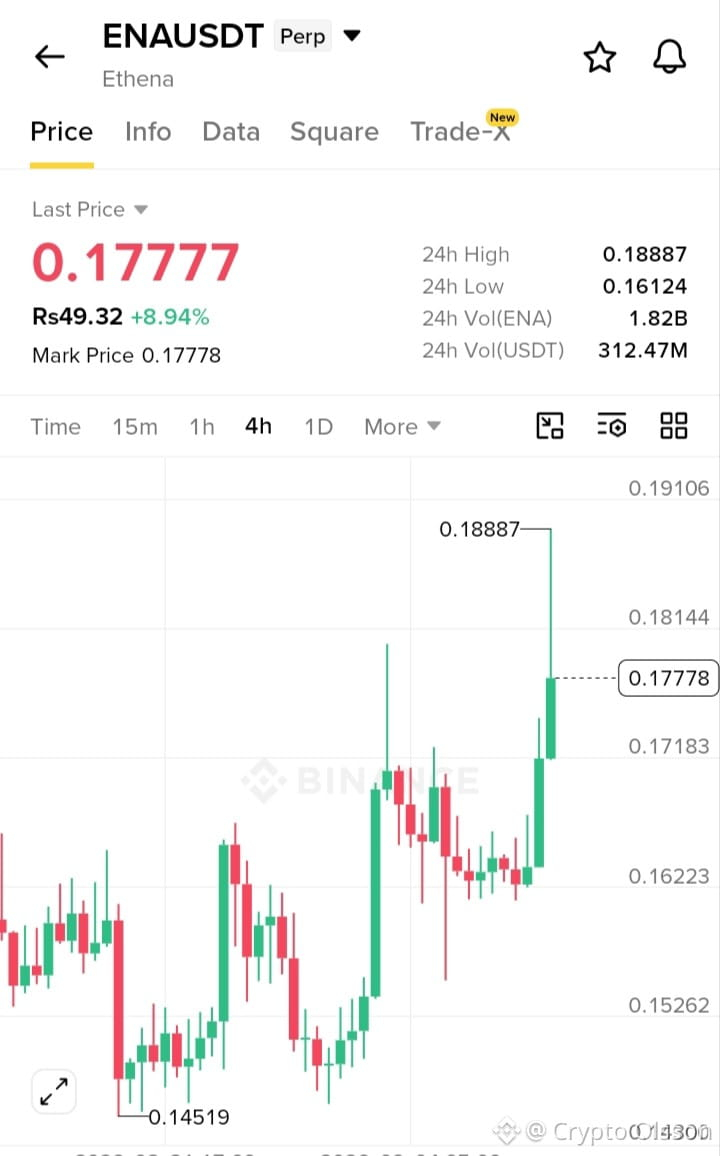

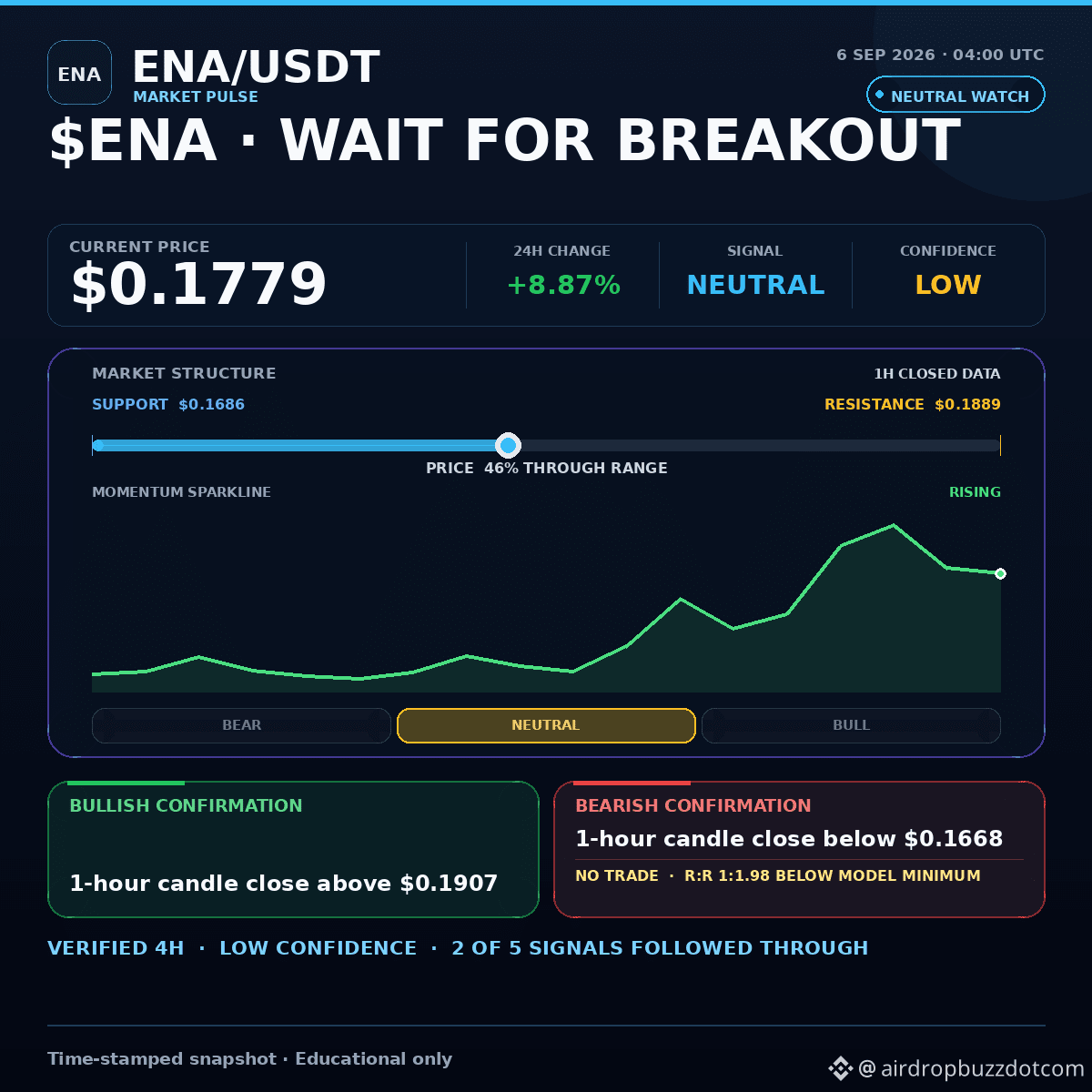
Forget the first $ENA wick—the confirmed close carries more information.
📊 Snapshot
• Price: $0.1779
• 24H: +8.87%
• Bias: Neutral
📈 Bull Trigger
1-hour close above $0.1907 with open interest confirmation
📉 Bear Trigger
1-hour close below $0.1668 with open interest confirmation
🎯 Signal Read
Conflicting evidence keeps this conditional, so the close matters more than predicting the direction early.
📌 Confidence
Low · Low historical confidence · 2 of 5 directional moves were favorable
Signal Quality
- OI: Flat (-0.39%)
- 4H: Bullish | 1D: Bullish (Aligned)
- ATR filter: 0.50 ATR ($0.003529)
A trigger marks confirmation, not a guaranteed entry, outcome, or price destination.
Front-run it or wait? Reply FRONT-RUN or WAIT.
#ENA #Ethena #CryptoTrading #MarketPulse
Educational only. Time-stamped market snapshot, not financial advice.
📊 Snapshot
• Price: $0.1779
• 24H: +8.87%
• Bias: Neutral
📈 Bull Trigger
1-hour close above $0.1907 with open interest confirmation
📉 Bear Trigger
1-hour close below $0.1668 with open interest confirmation
🎯 Signal Read
Conflicting evidence keeps this conditional, so the close matters more than predicting the direction early.
📌 Confidence
Low · Low historical confidence · 2 of 5 directional moves were favorable
Signal Quality
- OI: Flat (-0.39%)
- 4H: Bullish | 1D: Bullish (Aligned)
- ATR filter: 0.50 ATR ($0.003529)
A trigger marks confirmation, not a guaranteed entry, outcome, or price destination.
Front-run it or wait? Reply FRONT-RUN or WAIT.
#ENA #Ethena #CryptoTrading #MarketPulse
Educational only. Time-stamped market snapshot, not financial advice.

🚨 $ENA CLEARS 0.1750 TARGET WITH EXPANDING INSTITUTIONAL MOMENTUM TOWARD HIGHER LIQUIDITY! 🚀
Target: 0.1880 🚀
The structural expansion on $ENA played out precisely as anticipated, sweeping through the initial liquidity pool at 0.1750 with conviction. 📊 Aggressive buying pressure confirms that smart money is actively defending higher lows and engineering a clean breakout structure.
With the lower inefficiency now fully rebalanced, order flow points directly toward the next major liquidity cluster near 0.1880. 🔍 As long as local market structure holds above recent reclaimed levels, expansion velocity remains heavily tilted upward. 💬 Are you holding positions for the 0.1880 objective or trailing stops along the structural low? 👇
⚠️ Not financial advice. Always manage your risk. 🛡️
🏷️ #ENA #Ethena #MarketStructure #Crypto
🎯 🦈
Target: 0.1880 🚀
The structural expansion on $ENA played out precisely as anticipated, sweeping through the initial liquidity pool at 0.1750 with conviction. 📊 Aggressive buying pressure confirms that smart money is actively defending higher lows and engineering a clean breakout structure.
With the lower inefficiency now fully rebalanced, order flow points directly toward the next major liquidity cluster near 0.1880. 🔍 As long as local market structure holds above recent reclaimed levels, expansion velocity remains heavily tilted upward. 💬 Are you holding positions for the 0.1880 objective or trailing stops along the structural low? 👇
⚠️ Not financial advice. Always manage your risk. 🛡️
🏷️ #ENA #Ethena #MarketStructure #Crypto
🎯 🦈

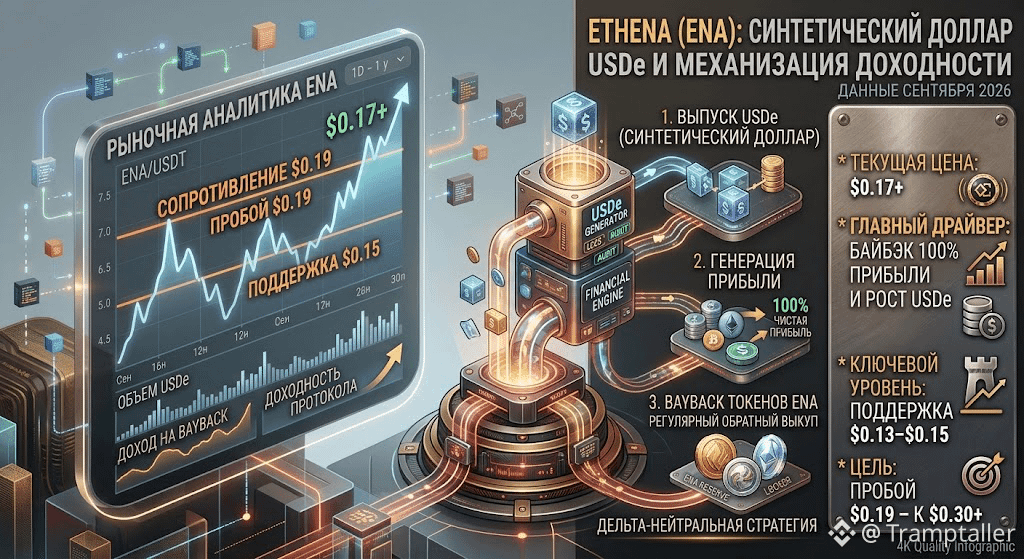
Ethena $ENA : Synthetic dollar #USDe and yield-mechanization
#Ethena continues to strengthen the position of the key decentralized synthetic-dollar protocol (USDe) with an algorithmic delta-neutral strategy. The initiative to allocate the protocol’s income to a programmable ENA token buyback creates additional momentum for investors.
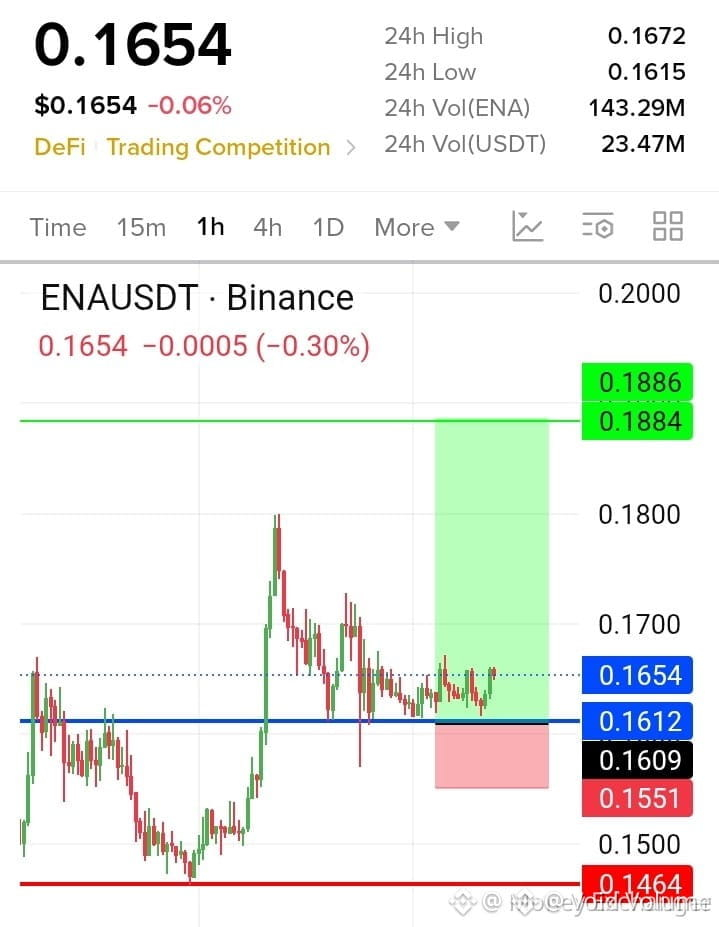
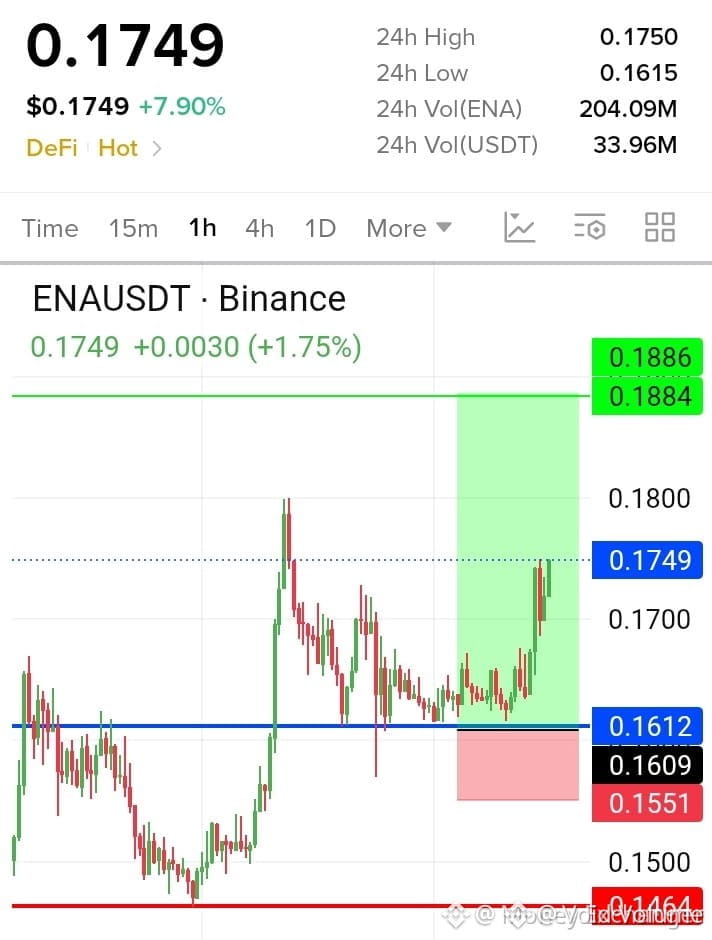
Current trend: The token is recovering after testing a local bottom and is trading in the $0.15–$0.17 range, attempting to break through the first resistance level at $0.19.
Main driver: Growth in USDe supply (around $4B+) and the reallocation of 100% of the protocol’s net profits to regular ENA buybacks from the open market.
Key level: The support zone is at $0.13–$0.15. A break and hold above $0.19 will open up medium-term potential for a move to $0.25–$0.30.
#Ethena continues to strengthen the position of the key decentralized synthetic-dollar protocol (USDe) with an algorithmic delta-neutral strategy. The initiative to allocate the protocol’s income to a programmable ENA token buyback creates additional momentum for investors.
Current trend: The token is recovering after testing a local bottom and is trading in the $0.15–$0.17 range, attempting to break through the first resistance level at $0.19.
Main driver: Growth in USDe supply (around $4B+) and the reallocation of 100% of the protocol’s net profits to regular ENA buybacks from the open market.
Key level: The support zone is at $0.13–$0.15. A break and hold above $0.19 will open up medium-term potential for a move to $0.25–$0.30.

Verified
📰 Two addresses suspected to be related to the Ethena project team have deposited 19 million ENA, worth about $3.29 million, into Bybit over the past 15 hours.
According to on-chain monitoring, these two addresses have cumulatively transferred about $6.75 million worth of ENA to centralized exchanges since September 3. They are now described as having “possibly fully exited,” so it’s not surprising that the group is getting nervous.
🔥 More importantly, these tokens were not acquired recently. They were transferred from an Ethena multisig address two years ago, then remained unmoved until recently, when the price started rising significantly, after which they began depositing them in batches.
Honestly, when addresses linked to the project team suddenly move tokens to exchanges after two years of dormancy, it’s easy to think of cashing out or preparing to sell. Of course, an on-chain transfer alone does not directly mean a sale has already been completed; whether they ultimately sell still depends on subsequent actions.
🤔 Do you think this is concentrated cashing out by project-related addresses, or just moving tokens to an exchange in advance for other arrangements?
#ENA #Ethena #链上数据 #CryptoMarket
According to on-chain monitoring, these two addresses have cumulatively transferred about $6.75 million worth of ENA to centralized exchanges since September 3. They are now described as having “possibly fully exited,” so it’s not surprising that the group is getting nervous.
🔥 More importantly, these tokens were not acquired recently. They were transferred from an Ethena multisig address two years ago, then remained unmoved until recently, when the price started rising significantly, after which they began depositing them in batches.
Honestly, when addresses linked to the project team suddenly move tokens to exchanges after two years of dormancy, it’s easy to think of cashing out or preparing to sell. Of course, an on-chain transfer alone does not directly mean a sale has already been completed; whether they ultimately sell still depends on subsequent actions.
🤔 Do you think this is concentrated cashing out by project-related addresses, or just moving tokens to an exchange in advance for other arrangements?
#ENA #Ethena #链上数据 #CryptoMarket

📱 Ethena launches a new payments app powered by its USDe stablecoin
Ethena (Ethena) announced the launch of the "Ethena Pay" app, which aims to simplify the use of USDe in everyday transactions, savings, and global transfers. The app is currently available in beta in 48 countries.
━━━━━━━━━━━━━━
📊 Impact: 📈 High
🏷️ DEFI
#Ethena #USDe #DeFi #Payments #CryptoNews
📰 Source: cointelegraph.com
Ethena (Ethena) announced the launch of the "Ethena Pay" app, which aims to simplify the use of USDe in everyday transactions, savings, and global transfers. The app is currently available in beta in 48 countries.
━━━━━━━━━━━━━━
📊 Impact: 📈 High
🏷️ DEFI
#Ethena #USDe #DeFi #Payments #CryptoNews
📰 Source: cointelegraph.com

🚨 $ENA
— NEXT MOVE LOADING 🔥
Listen guys… $ENA is defending the $0.161–$0.164 support zone, keeping a recovery move toward the higher levels in focus. Recent market action has also shown strong volatility around ENA.
📍 ENTRY: $0.1620–$0.1640
🎯 TP1: $0.1670
🎯 TP2: $0.1700
🎯 TP3: $0.1728
🛑 SL: $0.1604
🔑 Key: Hold $0.161–$0.164 → recovery setup remains active.
⚠️ Wait for confirmation and avoid chasing. Manage risk carefully. DYOR • NFA
#ENA #Ethena #LongSetup #CryptoTrading
— NEXT MOVE LOADING 🔥
Listen guys… $ENA is defending the $0.161–$0.164 support zone, keeping a recovery move toward the higher levels in focus. Recent market action has also shown strong volatility around ENA.
📍 ENTRY: $0.1620–$0.1640
🎯 TP1: $0.1670
🎯 TP2: $0.1700
🎯 TP3: $0.1728
🛑 SL: $0.1604
🔑 Key: Hold $0.161–$0.164 → recovery setup remains active.
⚠️ Wait for confirmation and avoid chasing. Manage risk carefully. DYOR • NFA
#ENA #Ethena #LongSetup #CryptoTrading

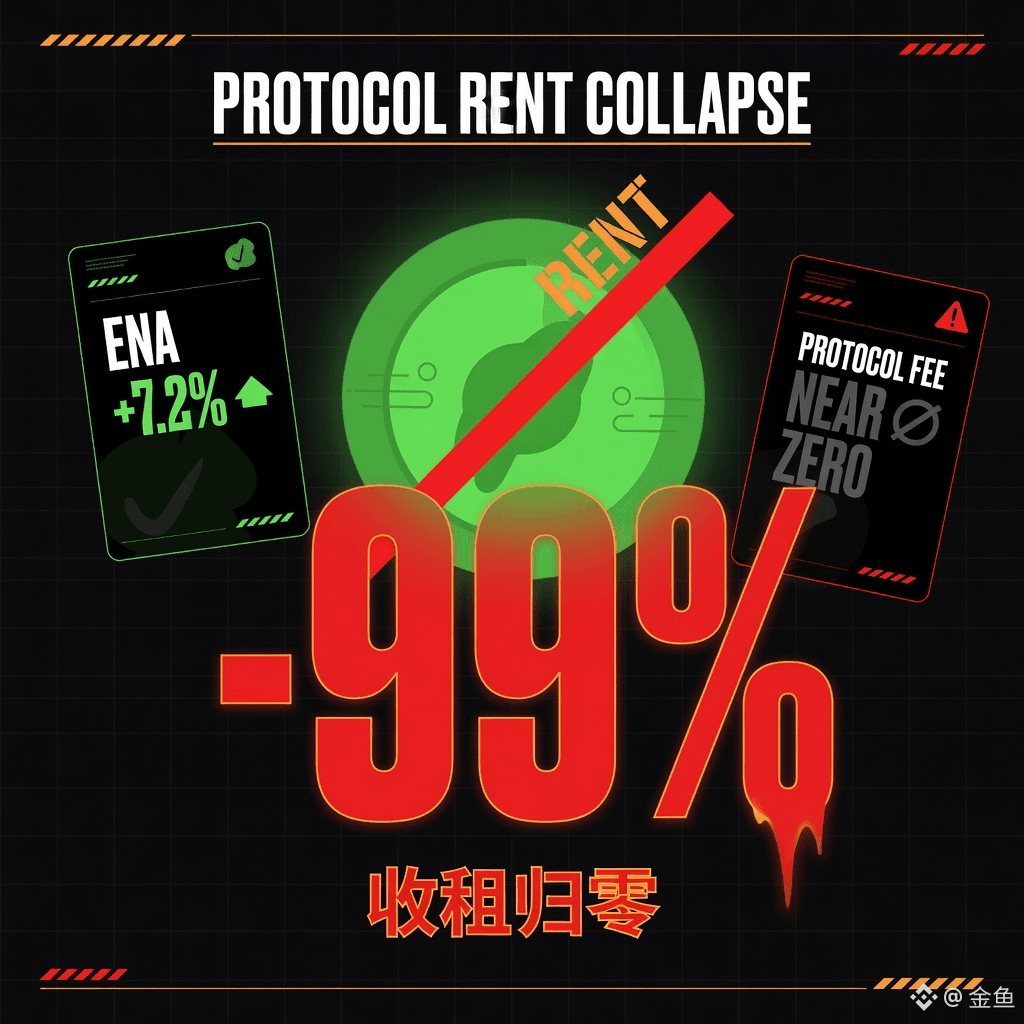
Rental income dropped from 1.19 million to 710,000.
$ENA 0.176, daily +7.2%, spot about 61 million, about 6.8% below the high.
Ethena daily fees are about 71, month-over-month about -99.99%; perpetual long taxes are still being held up.
$BTC about 79,820, basically flat day over day.
Rent evaporated, tax still remains — this is not stablecoin business validation.
#Ethena #stablecoin
$ENA 0.176, daily +7.2%, spot about 61 million, about 6.8% below the high.
Ethena daily fees are about 71, month-over-month about -99.99%; perpetual long taxes are still being held up.
$BTC about 79,820, basically flat day over day.
Rent evaporated, tax still remains — this is not stablecoin business validation.
#Ethena #stablecoin


30D trade $ENA 3K USDT
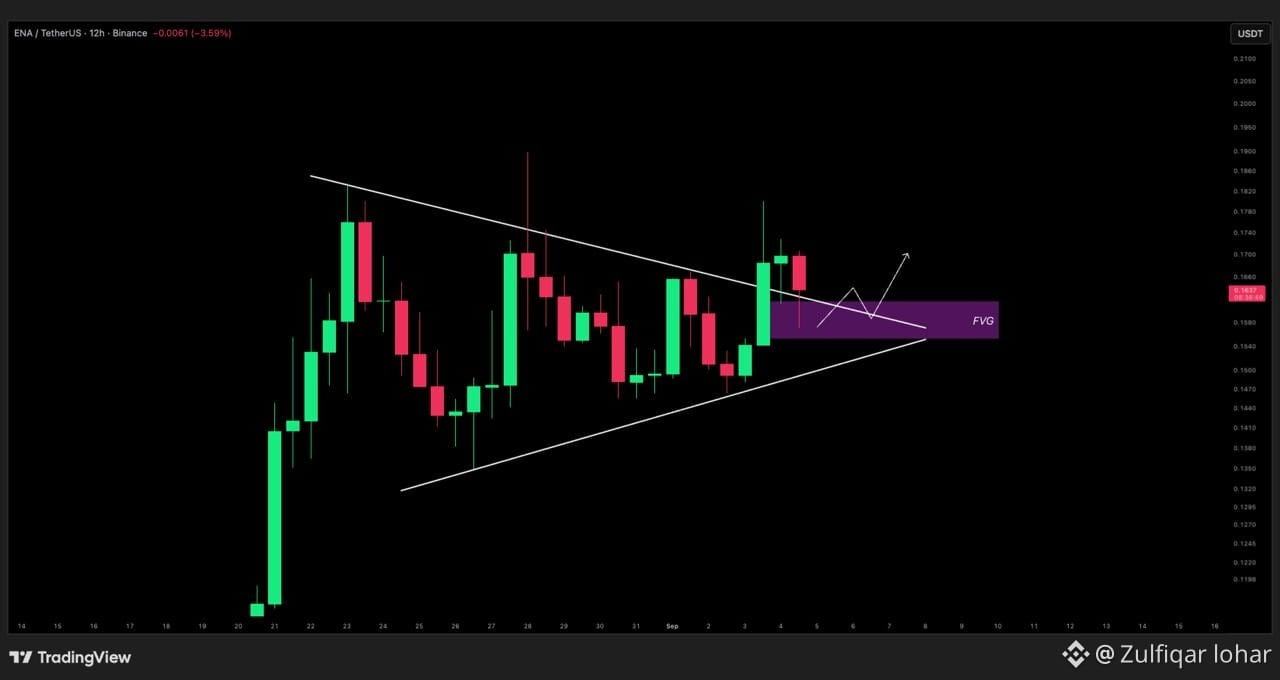
🔥 $ENA — TRADE IDEA
ENA is looking interesting here 👀
📈 A clean bullish pennant appears to be forming, with the breakout already confirmed.
🟢 Entry: Current area can be considered if price holds the breakout zone.
🎯 Upside continuation is possible if momentum stays strong.
⚠️ However, BTC has shown volatility around the NFP reaction, so keep the SL tight and manage risk carefully.
ENA has also been showing strong momentum recently, but today’s token unlock adds another short-term volatility factor.
Breakout + BTC stability = bullish setup 📈
Breakout failure = exit quickly 🛑
#ENA #Ethena #crypto #Trading #BinanceSquare
ENA is looking interesting here 👀
📈 A clean bullish pennant appears to be forming, with the breakout already confirmed.
🟢 Entry: Current area can be considered if price holds the breakout zone.
🎯 Upside continuation is possible if momentum stays strong.
⚠️ However, BTC has shown volatility around the NFP reaction, so keep the SL tight and manage risk carefully.
ENA has also been showing strong momentum recently, but today’s token unlock adds another short-term volatility factor.
Breakout + BTC stability = bullish setup 📈
Breakout failure = exit quickly 🛑
#ENA #Ethena #crypto #Trading #BinanceSquare
Log in to explore more content