

#usweeklyjoblessclaimsfallto197000
usweeklyjoblessclaimsfallto197000
Hot
Latest

·
--
🚨 THE U.S. LABOR MARKET JUST REFUSED TO BREAK.
Weekly jobless claims fell to 197,000, down 1,000 from the prior week, while the 4-week average dropped to 200,000. Continuing claims also eased to 1.701M.
That’s the awkward part for the Fed.
Inflation data has been cooling…
but layoffs are still extremely low.
So the macro setup now looks like:
Inflation softer.
Hiring slower.
But companies still aren’t firing people.
That makes the “hard landing” call harder to defend — and gives the Fed less reason to rush into aggressive easing.
For markets, this keeps the tug-of-war alive:
Lower inflation is bullish.
A resilient labor market can keep rates higher for longer.
$BTC $QQQ $SPX $XAU
#usweeklyjoblessclaimsfallto197000 #US10YearYieldNears5.3% #BitcoinETFsTake$6.34BillionInQ3 #KoreaProposesTokenizingStocksAndBonds #MetaMaskExitsLidoValidatorsAfterSecurityIncident
🚨 THE U.S. LABOR MARKET JUST REFUSED TO BREAK.
Weekly jobless claims fell to 197,000, down 1,000 from the prior week, while the 4-week average dropped to 200,000. Continuing claims also eased to 1.701M.
That’s the awkward part for the Fed.
Inflation data has been cooling…
but layoffs are still extremely low.
So the macro setup now looks like:
Inflation softer.
Hiring slower.
But companies still aren’t firing people.
That makes the “hard landing” call harder to defend — and gives the Fed less reason to rush into aggressive easing.
For markets, this keeps the tug-of-war alive:
Lower inflation is bullish.
A resilient labor market can keep rates higher for longer.
$BTC $QQQ $SPX $XAU
#usweeklyjoblessclaimsfallto197000 #US10YearYieldNears5.3% #BitcoinETFsTake$6.34BillionInQ3 #KoreaProposesTokenizingStocksAndBonds #MetaMaskExitsLidoValidatorsAfterSecurityIncident
Weekly jobless claims fell to 197,000, down 1,000 from the prior week, while the 4-week average dropped to 200,000. Continuing claims also eased to 1.701M.
That’s the awkward part for the Fed.
Inflation data has been cooling…
but layoffs are still extremely low.
So the macro setup now looks like:
Inflation softer.
Hiring slower.
But companies still aren’t firing people.
That makes the “hard landing” call harder to defend — and gives the Fed less reason to rush into aggressive easing.
For markets, this keeps the tug-of-war alive:
Lower inflation is bullish.
A resilient labor market can keep rates higher for longer.
$BTC $QQQ $SPX $XAU
#usweeklyjoblessclaimsfallto197000 #US10YearYieldNears5.3% #BitcoinETFsTake$6.34BillionInQ3 #KoreaProposesTokenizingStocksAndBonds #MetaMaskExitsLidoValidatorsAfterSecurityIncident

2
560

·
--
#usweeklyjoblessclaimsfallto197000
🚨 Macro Economic Update: US Weekly Jobless Claims Fall to 197,000!
The Market Update: Labor market resilience continues to defy expectations as US initial jobless claims drop significantly down to 197,000, signaling stronger-than-anticipated employment stability. As tracked by our macro economic analytics dashboard, lower jobless claims point to persistent economic strength, directly influencing Federal Reserve interest rate projections and overall risk sentiment across global financial markets. 📊
What This Means for Traders:
Stronger employment data reduces immediate pressure for aggressive monetary easing, impacting bond yields, currency valuations, and liquidity flows into high-beta risk assets. Market participants are closely watching order book depth and macro correlations to gauge how employment sustainability affects broader market momentum.
Highlighted Tradeable Coins to Watch (Macro & High-Beta Sectors):
$BTC (Bitcoin): The premier institutional asset; tracking how labor market strength and shifting liquidity expectations influence broader digital asset store-of-value demand.
$ETH (Ethereum): Leading smart contract settlement layer; monitoring decentralized finance capital flows and network activity during macro economic data releases.
$SOL (Solana): High-throughput layer-1 network; observing high-velocity trading volume and ecosystem liquidity shifts amid macro-driven volatility.
How do you view the impact of stronger employment figures and falling jobless claims on overall market sentiment and crypto momentum this quarter? Let's discuss your strategy in the comments below! 👇
{spot}(BTCUSDT)
{spot}(ETHUSDT)
{spot}(SOLUSDT)
#LaborMarket #FederalReserve #cryptotrading #MarketUpdate
#usweeklyjoblessclaimsfallto197000
🚨 Macro Economic Update: US Weekly Jobless Claims Fall to 197,000!
The Market Update: Labor market resilience continues to defy expectations as US initial jobless claims drop significantly down to 197,000, signaling stronger-than-anticipated employment stability. As tracked by our macro economic analytics dashboard, lower jobless claims point to persistent economic strength, directly influencing Federal Reserve interest rate projections and overall risk sentiment across global financial markets. 📊
What This Means for Traders:
Stronger employment data reduces immediate pressure for aggressive monetary easing, impacting bond yields, currency valuations, and liquidity flows into high-beta risk assets. Market participants are closely watching order book depth and macro correlations to gauge how employment sustainability affects broader market momentum.
Highlighted Tradeable Coins to Watch (Macro & High-Beta Sectors):
$BTC (Bitcoin): The premier institutional asset; tracking how labor market strength and shifting liquidity expectations influence broader digital asset store-of-value demand.
$ETH (Ethereum): Leading smart contract settlement layer; monitoring decentralized finance capital flows and network activity during macro economic data releases.
$SOL (Solana): High-throughput layer-1 network; observing high-velocity trading volume and ecosystem liquidity shifts amid macro-driven volatility.
How do you view the impact of stronger employment figures and falling jobless claims on overall market sentiment and crypto momentum this quarter? Let's discuss your strategy in the comments below! 👇
#LaborMarket #FederalReserve #cryptotrading #MarketUpdate
🚨 Macro Economic Update: US Weekly Jobless Claims Fall to 197,000!
The Market Update: Labor market resilience continues to defy expectations as US initial jobless claims drop significantly down to 197,000, signaling stronger-than-anticipated employment stability. As tracked by our macro economic analytics dashboard, lower jobless claims point to persistent economic strength, directly influencing Federal Reserve interest rate projections and overall risk sentiment across global financial markets. 📊
What This Means for Traders:
Stronger employment data reduces immediate pressure for aggressive monetary easing, impacting bond yields, currency valuations, and liquidity flows into high-beta risk assets. Market participants are closely watching order book depth and macro correlations to gauge how employment sustainability affects broader market momentum.
Highlighted Tradeable Coins to Watch (Macro & High-Beta Sectors):
$BTC (Bitcoin): The premier institutional asset; tracking how labor market strength and shifting liquidity expectations influence broader digital asset store-of-value demand.
$ETH (Ethereum): Leading smart contract settlement layer; monitoring decentralized finance capital flows and network activity during macro economic data releases.
$SOL (Solana): High-throughput layer-1 network; observing high-velocity trading volume and ecosystem liquidity shifts amid macro-driven volatility.
How do you view the impact of stronger employment figures and falling jobless claims on overall market sentiment and crypto momentum this quarter? Let's discuss your strategy in the comments below! 👇
#LaborMarket #FederalReserve #cryptotrading #MarketUpdate

150

·
--
Bullish
#USWeeklyJoblessClaimsFallTo197000
My unique perspective: The most interesting part of this report is not just the drop to 197,000 claims, but what it reveals about the balance between job security and economic growth. Layoffs remain low, yet hiring is still relatively modest. This creates an unusual situation where workers are holding on to their jobs while the broader economy faces uncertainty.
For the crypto market, the key question is how the Federal Reserve interprets this resilience. Strong employment could influence interest-rate expectations, while upcoming inflation and jobs data may add another layer to market sentiment.
The real story isn't simply fewer unemployment claims—it's whether a stable labor market can coexist with sustainable economic growth.
#USWeeklyJoblessClaimsFallTo197000
My unique perspective: The most interesting part of this report is not just the drop to 197,000 claims, but what it reveals about the balance between job security and economic growth. Layoffs remain low, yet hiring is still relatively modest. This creates an unusual situation where workers are holding on to their jobs while the broader economy faces uncertainty.
For the crypto market, the key question is how the Federal Reserve interprets this resilience. Strong employment could influence interest-rate expectations, while upcoming inflation and jobs data may add another layer to market sentiment.
The real story isn't simply fewer unemployment claims—it's whether a stable labor market can coexist with sustainable economic growth.
My unique perspective: The most interesting part of this report is not just the drop to 197,000 claims, but what it reveals about the balance between job security and economic growth. Layoffs remain low, yet hiring is still relatively modest. This creates an unusual situation where workers are holding on to their jobs while the broader economy faces uncertainty.
For the crypto market, the key question is how the Federal Reserve interprets this resilience. Strong employment could influence interest-rate expectations, while upcoming inflation and jobs data may add another layer to market sentiment.
The real story isn't simply fewer unemployment claims—it's whether a stable labor market can coexist with sustainable economic growth.
1
164

·
--
#usweeklyjoblessclaimsfallto197000 🇺🇸 BREAKING: US Weekly Jobless Claims Fall to 197,000!
US labor market remains super strong! Initial jobless claims slipped to 197,000 in week ended Sep 19, down 1,000 from 198,000 previous week.
Economists had expected 204,000 - so this is a big beat! This is the lowest reading since July and one of the lowest since 1969.
Key Points:
• Claims down 1,000 WoW
• 4-week average 202,250
• Continuing claims 1.71M
• Labor hoarding trend continues
Strong jobs = Fed may hold rates steady. Bullish or Bearish for $BTC? Comment!
#USJobs #Economy #TrendingTopic #CryptoNews
#usweeklyjoblessclaimsfallto197000 🇺🇸 BREAKING: US Weekly Jobless Claims Fall to 197,000!
US labor market remains super strong! Initial jobless claims slipped to 197,000 in week ended Sep 19, down 1,000 from 198,000 previous week.
Economists had expected 204,000 - so this is a big beat! This is the lowest reading since July and one of the lowest since 1969.
Key Points:
• Claims down 1,000 WoW
• 4-week average 202,250
• Continuing claims 1.71M
• Labor hoarding trend continues
Strong jobs = Fed may hold rates steady. Bullish or Bearish for $BTC? Comment!
#USJobs #Economy #TrendingTopic #CryptoNews
US labor market remains super strong! Initial jobless claims slipped to 197,000 in week ended Sep 19, down 1,000 from 198,000 previous week.
Economists had expected 204,000 - so this is a big beat! This is the lowest reading since July and one of the lowest since 1969.
Key Points:
• Claims down 1,000 WoW
• 4-week average 202,250
• Continuing claims 1.71M
• Labor hoarding trend continues
Strong jobs = Fed may hold rates steady. Bullish or Bearish for $BTC? Comment!
#USJobs #Economy #TrendingTopic #CryptoNews

5

·
--
#usweeklyjoblessclaimsfallto197000
🇺🇸 US jobless claims slipped to 197K.
Initial jobless claims fell by 1K last week, keeping the labor market firmly on the macro radar. 📊
For traders, labor-market data remains an important signal for Fed expectations and risk assets, including crypto.
With $BTC and $ETH sensitive to shifts in the broader macro backdrop, even small changes in employment data can matter for market sentiment.
The latest number: 197,000 claims.
$BTC
{spot}(BTCUSDT)
{spot}(ETHUSDT)
#USJoblessClaims #LaborMarket #Bitcoin #Ethereum #CryptoMarket
#usweeklyjoblessclaimsfallto197000
🇺🇸 US jobless claims slipped to 197K.
Initial jobless claims fell by 1K last week, keeping the labor market firmly on the macro radar. 📊
For traders, labor-market data remains an important signal for Fed expectations and risk assets, including crypto.
With $BTC and $ETH sensitive to shifts in the broader macro backdrop, even small changes in employment data can matter for market sentiment.
The latest number: 197,000 claims.
$BTC
#USJoblessClaims #LaborMarket #Bitcoin #Ethereum #CryptoMarket
🇺🇸 US jobless claims slipped to 197K.
Initial jobless claims fell by 1K last week, keeping the labor market firmly on the macro radar. 📊
For traders, labor-market data remains an important signal for Fed expectations and risk assets, including crypto.
With $BTC and $ETH sensitive to shifts in the broader macro backdrop, even small changes in employment data can matter for market sentiment.
The latest number: 197,000 claims.
$BTC
#USJoblessClaims #LaborMarket #Bitcoin #Ethereum #CryptoMarket

5

·
--
Bullish
#usweeklyjoblessclaimsfallto197000 📊 US Weekly Jobless Claims Drop to 197,000: Macro Implications for Crypto
The latest US macroeconomic data is in, revealing a remarkably resilient labor market. Here’s a breakdown of what this key indicator means for the broader crypto ecosystem. 🌐
📉 Core News
• US initial jobless claims fell to a seasonally adjusted 197,000 for the recent reporting week [[9]].
• This figure came in below economist forecasts, indicating that layoffs remain rare and job security is broadly intact [[13]].
• The data continues to highlight a historically tight and stable US labor market [[15]].
📈 Market Impact
• Monetary Policy Outlook A strong labor market signals economic health, but it may also prompt the Federal Reserve to maintain a cautious stance on interest rate cuts if wage-driven inflationary pressures persist.
• Crypto & Risk Assets In the short term, economic stability can support risk-on sentiment and steady liquidity. However, if the labor market remains too strong, it could delay anticipated rate cuts. This may temporarily strengthen the US Dollar (DXY), creating typical headwinds for Bitcoin and altcoins.
• Institutional Lens As institutional adoption grows, crypto markets are increasingly tied to traditional macro liquidity cycles. Traders are watching these employment data points closely to gauge future market volatility and capital rotation.
💬 Join the Discussion
How do you think a resilient US labor market will influence the Fed’s next monetary policy move and Bitcoin’s trajectory this quarter? Drop your analysis in the comments below! 👇
#Bitcoin #CryptoMarket #Macroeconomics #FederalReserve #BinanceSquare
This is for educational purposes only. Not Financial Advice (NFA). Always Do Your Own Research (DYOR).
$STX $OPN $JASMY
{future}(JASMYUSDT)
{future}(OPNUSDT)
{future}(STXUSDT)
#usweeklyjoblessclaimsfallto197000 📊 US Weekly Jobless Claims Drop to 197,000: Macro Implications for Crypto
The latest US macroeconomic data is in, revealing a remarkably resilient labor market. Here’s a breakdown of what this key indicator means for the broader crypto ecosystem. 🌐
📉 Core News
• US initial jobless claims fell to a seasonally adjusted 197,000 for the recent reporting week [[9]].
• This figure came in below economist forecasts, indicating that layoffs remain rare and job security is broadly intact [[13]].
• The data continues to highlight a historically tight and stable US labor market [[15]].
📈 Market Impact
• Monetary Policy Outlook A strong labor market signals economic health, but it may also prompt the Federal Reserve to maintain a cautious stance on interest rate cuts if wage-driven inflationary pressures persist.
• Crypto & Risk Assets In the short term, economic stability can support risk-on sentiment and steady liquidity. However, if the labor market remains too strong, it could delay anticipated rate cuts. This may temporarily strengthen the US Dollar (DXY), creating typical headwinds for Bitcoin and altcoins.
• Institutional Lens As institutional adoption grows, crypto markets are increasingly tied to traditional macro liquidity cycles. Traders are watching these employment data points closely to gauge future market volatility and capital rotation.
💬 Join the Discussion
How do you think a resilient US labor market will influence the Fed’s next monetary policy move and Bitcoin’s trajectory this quarter? Drop your analysis in the comments below! 👇
#Bitcoin #CryptoMarket #Macroeconomics #FederalReserve #BinanceSquare
This is for educational purposes only. Not Financial Advice (NFA). Always Do Your Own Research (DYOR).
$STX $OPN $JASMY
The latest US macroeconomic data is in, revealing a remarkably resilient labor market. Here’s a breakdown of what this key indicator means for the broader crypto ecosystem. 🌐
📉 Core News
• US initial jobless claims fell to a seasonally adjusted 197,000 for the recent reporting week [[9]].
• This figure came in below economist forecasts, indicating that layoffs remain rare and job security is broadly intact [[13]].
• The data continues to highlight a historically tight and stable US labor market [[15]].
📈 Market Impact
• Monetary Policy Outlook A strong labor market signals economic health, but it may also prompt the Federal Reserve to maintain a cautious stance on interest rate cuts if wage-driven inflationary pressures persist.
• Crypto & Risk Assets In the short term, economic stability can support risk-on sentiment and steady liquidity. However, if the labor market remains too strong, it could delay anticipated rate cuts. This may temporarily strengthen the US Dollar (DXY), creating typical headwinds for Bitcoin and altcoins.
• Institutional Lens As institutional adoption grows, crypto markets are increasingly tied to traditional macro liquidity cycles. Traders are watching these employment data points closely to gauge future market volatility and capital rotation.
💬 Join the Discussion
How do you think a resilient US labor market will influence the Fed’s next monetary policy move and Bitcoin’s trajectory this quarter? Drop your analysis in the comments below! 👇
#Bitcoin #CryptoMarket #Macroeconomics #FederalReserve #BinanceSquare
This is for educational purposes only. Not Financial Advice (NFA). Always Do Your Own Research (DYOR).
$STX $OPN $JASMY

57

🇺🇸 197K — THAT'S THE NUMBER
U.S. initial jobless claims slipped by 1K last week.
The labor market continues to deliver important signals for the Fed and risk assets. 📊
$BTC $ETH
#usweeklyjoblessclaimsfallto197000
🇺🇸 197K — THAT'S THE NUMBER
U.S. initial jobless claims slipped by 1K last week.
The labor market continues to deliver important signals for the Fed and risk assets. 📊
$BTC $ETH
#usweeklyjoblessclaimsfallto197000
U.S. initial jobless claims slipped by 1K last week.
The labor market continues to deliver important signals for the Fed and risk assets. 📊
$BTC $ETH
#usweeklyjoblessclaimsfallto197000
16
🚨 197K JOBLESS CLAIMS
U.S. unemployment claims came in at 197,000, below expectations and near recent lows. 📊
Markets are watching the labor data closely.
$BTC
#usweeklyjoblessclaimsfallto197000
🚨 197K JOBLESS CLAIMS
U.S. unemployment claims came in at 197,000, below expectations and near recent lows. 📊
Markets are watching the labor data closely.
$BTC
#usweeklyjoblessclaimsfallto197000
U.S. unemployment claims came in at 197,000, below expectations and near recent lows. 📊
Markets are watching the labor data closely.
$BTC
#usweeklyjoblessclaimsfallto197000
8

·
--
#USWeeklyJoblessClaimsFallTo197000
Initial applications for US unemployment benefits fell to a seasonally adjusted 197,000 for the week ended September 26, 2026. Data released by the U.S. Department of Labor on October 1, 2026, shows a slight drop of 1,000 from the previous week's revised level of 198,000. This unexpected dip places weekly jobless claims at their lowest level since mid-July 2026, underscoring a highly resilient and stable labor market. [1, 2, 3, 4]
$HOT
{future}(HOTUSDT)
$LTC
{future}(LTCUSDT)
$NMR
{future}(NMRUSDT)
#USWeeklyJoblessClaimsFallTo197000
Initial applications for US unemployment benefits fell to a seasonally adjusted 197,000 for the week ended September 26, 2026. Data released by the U.S. Department of Labor on October 1, 2026, shows a slight drop of 1,000 from the previous week's revised level of 198,000. This unexpected dip places weekly jobless claims at their lowest level since mid-July 2026, underscoring a highly resilient and stable labor market. [1, 2, 3, 4]
$HOT
$LTC
$NMR
Initial applications for US unemployment benefits fell to a seasonally adjusted 197,000 for the week ended September 26, 2026. Data released by the U.S. Department of Labor on October 1, 2026, shows a slight drop of 1,000 from the previous week's revised level of 198,000. This unexpected dip places weekly jobless claims at their lowest level since mid-July 2026, underscoring a highly resilient and stable labor market. [1, 2, 3, 4]
$HOT
$LTC
$NMR

89
🔥 U.S. LABOR MARKET UPDATE
Weekly jobless claims: 197K
Previous: 198K
Small move, but every jobs-data release matters for rates and liquidity. 👀
$BTC $SOL
#usweeklyjoblessclaimsfallto197000
🔥 U.S. LABOR MARKET UPDATE
Weekly jobless claims: 197K
Previous: 198K
Small move, but every jobs-data release matters for rates and liquidity. 👀
$BTC $SOL
#usweeklyjoblessclaimsfallto197000
Weekly jobless claims: 197K
Previous: 198K
Small move, but every jobs-data release matters for rates and liquidity. 👀
$BTC $SOL
#usweeklyjoblessclaimsfallto197000
32
📉 FEWER AMERICANS FILED FOR BENEFITS
Weekly U.S. jobless claims dropped to 197K.
Another data point showing layoffs remain relatively low. 👀
$BTC $BNB
#usweeklyjoblessclaimsfallto197000
📉 FEWER AMERICANS FILED FOR BENEFITS
Weekly U.S. jobless claims dropped to 197K.
Another data point showing layoffs remain relatively low. 👀
$BTC $BNB
#usweeklyjoblessclaimsfallto197000
Weekly U.S. jobless claims dropped to 197K.
Another data point showing layoffs remain relatively low. 👀
$BTC $BNB
#usweeklyjoblessclaimsfallto197000
6
🇺🇸 JOBLESS CLAIMS DROP
U.S. weekly initial jobless claims fell to 197K, down from 198K previously. 📉
Labor-market resilience remains in focus. 👀
$BTC $ETH
#usweeklyjoblessclaimsfallto197000
🇺🇸 JOBLESS CLAIMS DROP
U.S. weekly initial jobless claims fell to 197K, down from 198K previously. 📉
Labor-market resilience remains in focus. 👀
$BTC $ETH
#usweeklyjoblessclaimsfallto197000
U.S. weekly initial jobless claims fell to 197K, down from 198K previously. 📉
Labor-market resilience remains in focus. 👀
$BTC $ETH
#usweeklyjoblessclaimsfallto197000
4

·
--
US weekly initial jobless claims come in at 197,000 as it hits the hot list|Fewer layoffs doesn’t necessarily mean stronger hiring|ETH around 2,697—I'll wait for the Non-Farm
My stance is that even after the data comes out, I won’t chase a direction. The accurate topic rising on Binance Square is #USWeeklyJoblessClaimsFallTo197000; this time it’s a firsthand report from the U.S. Department of Labor you can verify, so there’s no need to rely only on the hot list. The Department of Labor reported on October 1: for the week ending September 26, seasonally adjusted initial claims for unemployment insurance were 197,000, down by 1,000 from the previously revised 198,000; the four-week average was 200,000, down by 2,500 from the prior revised figure. Continuing claims for the week ending September 19 were 1.701 million, down by 110,000 from the previously revised 1.712 million. Note that initial and continuing claims are reported for different weeks, and the prior values were also revised—so you can’t simply add the two series together.
For the crypto market, what matters most is not the “down by 1,000” direction, but how the labor market affects rate expectations. Lower initial claims often mean firms aren’t cutting jobs at large scale, which may reduce the market’s bets on imminent easing; but initial claims reflect applications for unemployment insurance, not new hires, and they can’t prove that wage pressure is accelerating. ETH has no bond coupon; if the cost of capital stays high, it can suppress valuations for parts of risk assets. On the other hand, if employment resilience supports economic growth, it may improve risk appetite. This is two-way transmission—so you can’t write 197,000 as “ETH must fall” or “ETH must rise.” The U.S. Bureau of Labor Statistics plans to release the September employment report at 8:30 a.m. ET on October 2; Beijing time is 8:30 p.m. on October 2. That’s when you’ll get a more complete puzzle—non-farm payrolls, unemployment rate, and more. Nothing has been published yet.
The current price reaction isn’t very pronounced. When I was writing, Binance ETH/USDT was around 2,697.32, about -0.05% over the past 24 hours, with a range from 2,667.94 to 2,722.00, and close to the 24-hour open of 2,698.79. This kind of basically flat behavior isn’t enough to prove the market has already priced the claims data into a one-way move, nor can all intraday swings be attributed to macro news. I’m watching the top at 2,722 and the bottom at 2,668: if before the employment data is released neither side effectively breaks through, it looks more like waiting. If price first breaks below 2,668 and the retest can’t reclaim it, a cautious assessment would turn into a stronger defensive bias. If rate expectations cool and price holds above 2,722, then that would be evidence invalidating my earlier wait-and-see judgment.
If I were trading myself, I wouldn’t enter now—directional waiting, position size 0%. Only if there’s an hourly close above 2,722 and a pullback to 2,712–2,722 that holds, and BTC doesn’t simultaneously dump sharply, I would use up to 0.75% of total funds to take a spot long. First target 2,750 (taking half off), second target 2,780 (closing the remaining position). After entry, if there’s an hourly close back below 2,705, I’ll cut half; hard stop at 2,690 and close everything. If price first breaks 2,668 or if the spread around the time of the Non-Farm release becomes abnormally wide, I’ll cancel this plan and stay in cash with no position. No high leverage, and I won’t try to guess tomorrow night’s official Non-Farm outcome just from one weekly initial claims number.
Source: U.S. Department of Labor Oct 1 Unemployment Insurance Weekly Report; U.S. Bureau of Labor Statistics employment report schedule; Binance ETH/USDT real-time quotes.#USWeeklyJoblessClaimsFallTo197000 #ETH
The above is only my personal market observation and does not constitute investment advice.
US weekly initial jobless claims come in at 197,000 as it hits the hot list|Fewer layoffs doesn’t necessarily mean stronger hiring|ETH around 2,697—I'll wait for the Non-Farm
My stance is that even after the data comes out, I won’t chase a direction. The accurate topic rising on Binance Square is #USWeeklyJoblessClaimsFallTo197000; this time it’s a firsthand report from the U.S. Department of Labor you can verify, so there’s no need to rely only on the hot list. The Department of Labor reported on October 1: for the week ending September 26, seasonally adjusted initial claims for unemployment insurance were 197,000, down by 1,000 from the previously revised 198,000; the four-week average was 200,000, down by 2,500 from the prior revised figure. Continuing claims for the week ending September 19 were 1.701 million, down by 110,000 from the previously revised 1.712 million. Note that initial and continuing claims are reported for different weeks, and the prior values were also revised—so you can’t simply add the two series together.
For the crypto market, what matters most is not the “down by 1,000” direction, but how the labor market affects rate expectations. Lower initial claims often mean firms aren’t cutting jobs at large scale, which may reduce the market’s bets on imminent easing; but initial claims reflect applications for unemployment insurance, not new hires, and they can’t prove that wage pressure is accelerating. ETH has no bond coupon; if the cost of capital stays high, it can suppress valuations for parts of risk assets. On the other hand, if employment resilience supports economic growth, it may improve risk appetite. This is two-way transmission—so you can’t write 197,000 as “ETH must fall” or “ETH must rise.” The U.S. Bureau of Labor Statistics plans to release the September employment report at 8:30 a.m. ET on October 2; Beijing time is 8:30 p.m. on October 2. That’s when you’ll get a more complete puzzle—non-farm payrolls, unemployment rate, and more. Nothing has been published yet.
The current price reaction isn’t very pronounced. When I was writing, Binance ETH/USDT was around 2,697.32, about -0.05% over the past 24 hours, with a range from 2,667.94 to 2,722.00, and close to the 24-hour open of 2,698.79. This kind of basically flat behavior isn’t enough to prove the market has already priced the claims data into a one-way move, nor can all intraday swings be attributed to macro news. I’m watching the top at 2,722 and the bottom at 2,668: if before the employment data is released neither side effectively breaks through, it looks more like waiting. If price first breaks below 2,668 and the retest can’t reclaim it, a cautious assessment would turn into a stronger defensive bias. If rate expectations cool and price holds above 2,722, then that would be evidence invalidating my earlier wait-and-see judgment.
If I were trading myself, I wouldn’t enter now—directional waiting, position size 0%. Only if there’s an hourly close above 2,722 and a pullback to 2,712–2,722 that holds, and BTC doesn’t simultaneously dump sharply, I would use up to 0.75% of total funds to take a spot long. First target 2,750 (taking half off), second target 2,780 (closing the remaining position). After entry, if there’s an hourly close back below 2,705, I’ll cut half; hard stop at 2,690 and close everything. If price first breaks 2,668 or if the spread around the time of the Non-Farm release becomes abnormally wide, I’ll cancel this plan and stay in cash with no position. No high leverage, and I won’t try to guess tomorrow night’s official Non-Farm outcome just from one weekly initial claims number.
Source: U.S. Department of Labor Oct 1 Unemployment Insurance Weekly Report; U.S. Bureau of Labor Statistics employment report schedule; Binance ETH/USDT real-time quotes.#USWeeklyJoblessClaimsFallTo197000 #ETH
The above is only my personal market observation and does not constitute investment advice.
My stance is that even after the data comes out, I won’t chase a direction. The accurate topic rising on Binance Square is #USWeeklyJoblessClaimsFallTo197000; this time it’s a firsthand report from the U.S. Department of Labor you can verify, so there’s no need to rely only on the hot list. The Department of Labor reported on October 1: for the week ending September 26, seasonally adjusted initial claims for unemployment insurance were 197,000, down by 1,000 from the previously revised 198,000; the four-week average was 200,000, down by 2,500 from the prior revised figure. Continuing claims for the week ending September 19 were 1.701 million, down by 110,000 from the previously revised 1.712 million. Note that initial and continuing claims are reported for different weeks, and the prior values were also revised—so you can’t simply add the two series together.
For the crypto market, what matters most is not the “down by 1,000” direction, but how the labor market affects rate expectations. Lower initial claims often mean firms aren’t cutting jobs at large scale, which may reduce the market’s bets on imminent easing; but initial claims reflect applications for unemployment insurance, not new hires, and they can’t prove that wage pressure is accelerating. ETH has no bond coupon; if the cost of capital stays high, it can suppress valuations for parts of risk assets. On the other hand, if employment resilience supports economic growth, it may improve risk appetite. This is two-way transmission—so you can’t write 197,000 as “ETH must fall” or “ETH must rise.” The U.S. Bureau of Labor Statistics plans to release the September employment report at 8:30 a.m. ET on October 2; Beijing time is 8:30 p.m. on October 2. That’s when you’ll get a more complete puzzle—non-farm payrolls, unemployment rate, and more. Nothing has been published yet.
The current price reaction isn’t very pronounced. When I was writing, Binance ETH/USDT was around 2,697.32, about -0.05% over the past 24 hours, with a range from 2,667.94 to 2,722.00, and close to the 24-hour open of 2,698.79. This kind of basically flat behavior isn’t enough to prove the market has already priced the claims data into a one-way move, nor can all intraday swings be attributed to macro news. I’m watching the top at 2,722 and the bottom at 2,668: if before the employment data is released neither side effectively breaks through, it looks more like waiting. If price first breaks below 2,668 and the retest can’t reclaim it, a cautious assessment would turn into a stronger defensive bias. If rate expectations cool and price holds above 2,722, then that would be evidence invalidating my earlier wait-and-see judgment.
If I were trading myself, I wouldn’t enter now—directional waiting, position size 0%. Only if there’s an hourly close above 2,722 and a pullback to 2,712–2,722 that holds, and BTC doesn’t simultaneously dump sharply, I would use up to 0.75% of total funds to take a spot long. First target 2,750 (taking half off), second target 2,780 (closing the remaining position). After entry, if there’s an hourly close back below 2,705, I’ll cut half; hard stop at 2,690 and close everything. If price first breaks 2,668 or if the spread around the time of the Non-Farm release becomes abnormally wide, I’ll cancel this plan and stay in cash with no position. No high leverage, and I won’t try to guess tomorrow night’s official Non-Farm outcome just from one weekly initial claims number.
Source: U.S. Department of Labor Oct 1 Unemployment Insurance Weekly Report; U.S. Bureau of Labor Statistics employment report schedule; Binance ETH/USDT real-time quotes.#USWeeklyJoblessClaimsFallTo197000 #ETH
The above is only my personal market observation and does not constitute investment advice.

81

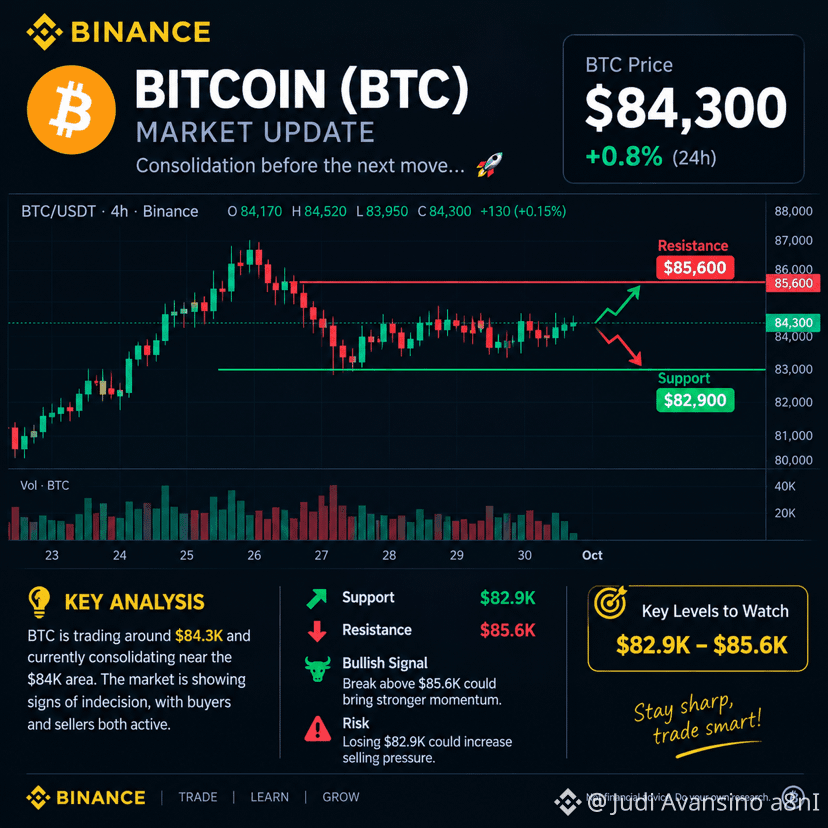
📊 Bitcoin (BTC) — Latest Market Update
$BTC is trading around $84.3K and currently consolidating near the $84K area.
🔹 Support: $82.9K
🔹 Resistance: $85.6K
🔹 Bullish signal: Break above $85.6K could bring stronger momentum.
🔹 Risk: Losing $82.9K could increase selling pressure.
👀 Key levels to watch: $82.9K – $85.6K
#BitcoinETFsTake$6.34BillionInQ3 #USWeeklyJoblessClaimsFallTo197000 #EtherGains70.9%InQ3 #US10YearYieldNears5.3%
{spot}(BTCUSDT)
📊 Bitcoin (BTC) — Latest Market Update
$BTC is trading around $84.3K and currently consolidating near the $84K area.
🔹 Support: $82.9K
🔹 Resistance: $85.6K
🔹 Bullish signal: Break above $85.6K could bring stronger momentum.
🔹 Risk: Losing $82.9K could increase selling pressure.
👀 Key levels to watch: $82.9K – $85.6K
#BitcoinETFsTake$6.34BillionInQ3 #USWeeklyJoblessClaimsFallTo197000 #EtherGains70.9%InQ3 #US10YearYieldNears5.3%
$BTC is trading around $84.3K and currently consolidating near the $84K area.
🔹 Support: $82.9K
🔹 Resistance: $85.6K
🔹 Bullish signal: Break above $85.6K could bring stronger momentum.
🔹 Risk: Losing $82.9K could increase selling pressure.
👀 Key levels to watch: $82.9K – $85.6K
#BitcoinETFsTake$6.34BillionInQ3 #USWeeklyJoblessClaimsFallTo197000 #EtherGains70.9%InQ3 #US10YearYieldNears5.3%
28
·
--
🚨 $XAU — FEES ARE JUST THE APPETIZER. THE REAL PAIN STARTS WHEN THE LIQUIDATION CANDLE HITS.
Gold is looking seriously stretched up here.
Everyone’s comfy chasing the move…
until one ugly red candle starts clearing out the late longs.
Overextended price.
Crowded positioning.
Too much confidence.
That’s usually when the market decides to humble people.
I’m not saying the trend is dead.
I’m saying one liquidation flush could get violent fast.
{future}(XAUUSDT)
#EtherGains70.9%InQ3 #US10YearYieldNears5.3% #DollarIndexHitsHighestSinceMay2025 #USWeeklyJoblessClaimsFallTo197000 #BitcoinETFsTake$6.34BillionInQ3
🚨 $XAU — FEES ARE JUST THE APPETIZER. THE REAL PAIN STARTS WHEN THE LIQUIDATION CANDLE HITS.
Gold is looking seriously stretched up here.
Everyone’s comfy chasing the move…
until one ugly red candle starts clearing out the late longs.
Overextended price.
Crowded positioning.
Too much confidence.
That’s usually when the market decides to humble people.
I’m not saying the trend is dead.
I’m saying one liquidation flush could get violent fast.
#EtherGains70.9%InQ3 #US10YearYieldNears5.3% #DollarIndexHitsHighestSinceMay2025 #USWeeklyJoblessClaimsFallTo197000 #BitcoinETFsTake$6.34BillionInQ3
Gold is looking seriously stretched up here.
Everyone’s comfy chasing the move…
until one ugly red candle starts clearing out the late longs.
Overextended price.
Crowded positioning.
Too much confidence.
That’s usually when the market decides to humble people.
I’m not saying the trend is dead.
I’m saying one liquidation flush could get violent fast.
#EtherGains70.9%InQ3 #US10YearYieldNears5.3% #DollarIndexHitsHighestSinceMay2025 #USWeeklyJoblessClaimsFallTo197000 #BitcoinETFsTake$6.34BillionInQ3
47


·
--
Bullish
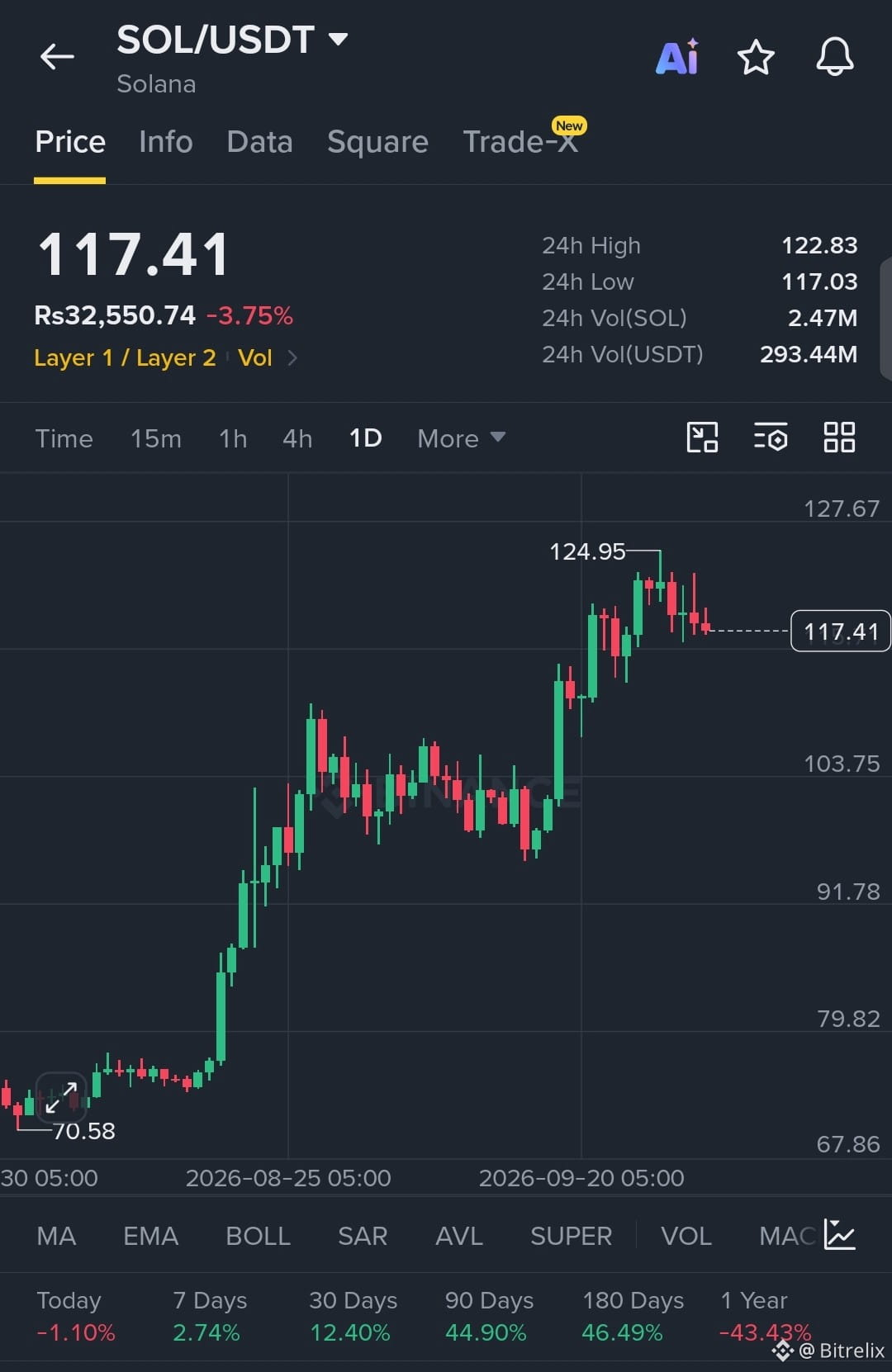
🔥 $SOL at $117.41 — the pullback is getting interesting.
Solana just slipped 3.75% today, but zoom out and the bigger picture still looks strong. 👀
SOL pushed from around $70 to $124.95, and now it’s sitting near $117, right after testing the $124–125 zone.
The key area I’m watching now? $117–$115 support.
If buyers defend it, another attempt toward $125+ could get interesting. If support breaks, volatility could pick up quickly.
Not saying it’s guaranteed—but SOL is definitely on my watchlist here. 🚀
Are you holding SOL, buying the dip, or waiting for confirmation?
Tip me if you're in profit. Thanks 🙏
{spot}(SOLUSDT)
#US10YearYieldNears5.3% #USADPAdds90000JobsInSeptember #MetaMaskExitsLidoValidatorsAfterSecurityIncident #USWeeklyJoblessClaimsFallTo197000 #AltcoinSeasonIndexHoldsAbove60For5Days
🔥 $SOL at $117.41 — the pullback is getting interesting.
Solana just slipped 3.75% today, but zoom out and the bigger picture still looks strong. 👀
SOL pushed from around $70 to $124.95, and now it’s sitting near $117, right after testing the $124–125 zone.
The key area I’m watching now? $117–$115 support.
If buyers defend it, another attempt toward $125+ could get interesting. If support breaks, volatility could pick up quickly.
Not saying it’s guaranteed—but SOL is definitely on my watchlist here. 🚀
Are you holding SOL, buying the dip, or waiting for confirmation?
Tip me if you're in profit. Thanks 🙏
#US10YearYieldNears5.3% #USADPAdds90000JobsInSeptember #MetaMaskExitsLidoValidatorsAfterSecurityIncident #USWeeklyJoblessClaimsFallTo197000 #AltcoinSeasonIndexHoldsAbove60For5Days
Solana just slipped 3.75% today, but zoom out and the bigger picture still looks strong. 👀
SOL pushed from around $70 to $124.95, and now it’s sitting near $117, right after testing the $124–125 zone.
The key area I’m watching now? $117–$115 support.
If buyers defend it, another attempt toward $125+ could get interesting. If support breaks, volatility could pick up quickly.
Not saying it’s guaranteed—but SOL is definitely on my watchlist here. 🚀
Are you holding SOL, buying the dip, or waiting for confirmation?
Tip me if you're in profit. Thanks 🙏
#US10YearYieldNears5.3% #USADPAdds90000JobsInSeptember #MetaMaskExitsLidoValidatorsAfterSecurityIncident #USWeeklyJoblessClaimsFallTo197000 #AltcoinSeasonIndexHoldsAbove60For5Days
104
·
--
Bullish
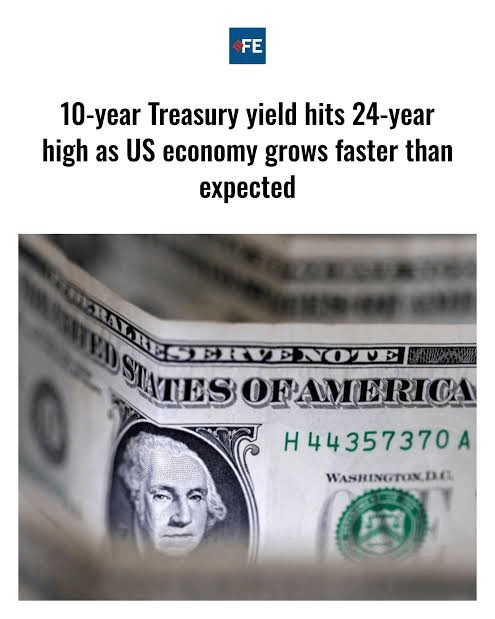
🚨 THE U.S. 10-YEAR JUST PUNCHED ABOVE 5.3% — THE BOND MARKET IS THE REAL PROBLEM NOW.
The 10-year Treasury yield briefly hit 5.34%, its highest level since 2002, before easing back near 5.27%.
And here’s the weird part:
PCE inflation came in softer than expected… but yields still exploded higher.
Why?
Because markets are still fighting:
Heavy government borrowing.
Sticky inflation risks.
Huge AI/data-center capital demand.
Weak appetite for long-duration bonds.
That creates a brutal setup:
10Y yield ↑ → mortgage rates ↑ → valuations compress → financing gets more expensive → risk assets feel the squeeze.
This is why everyone watching $BTC, $QQQ, $SPX and even $XAU should care.
The Fed can pause.
Inflation can cool.
But if the bond market keeps demanding 5%+ yields, financial conditions stay tight anyway.
The biggest macro risk may no longer be the next Fed hike.
It may be the bond market refusing to calm down. 👀
$BTC $QQQ $SPX $XAU
{future}(BTCUSDT)
{future}(QQQUSDT)
{future}(XAUUSDT)
#us10yearyieldnears5.3% #USWeeklyJoblessClaimsFallTo197000 #BitcoinETFsTake$6.34BillionInQ3 #MicronBeatsEarningsLiftsGuidance #MetaMaskExitsLidoValidatorsAfterSecurityIncident
🚨 THE U.S. 10-YEAR JUST PUNCHED ABOVE 5.3% — THE BOND MARKET IS THE REAL PROBLEM NOW.
The 10-year Treasury yield briefly hit 5.34%, its highest level since 2002, before easing back near 5.27%.
And here’s the weird part:
PCE inflation came in softer than expected… but yields still exploded higher.
Why?
Because markets are still fighting:
Heavy government borrowing.
Sticky inflation risks.
Huge AI/data-center capital demand.
Weak appetite for long-duration bonds.
That creates a brutal setup:
10Y yield ↑ → mortgage rates ↑ → valuations compress → financing gets more expensive → risk assets feel the squeeze.
This is why everyone watching $BTC, $QQQ, $SPX and even $XAU should care.
The Fed can pause.
Inflation can cool.
But if the bond market keeps demanding 5%+ yields, financial conditions stay tight anyway.
The biggest macro risk may no longer be the next Fed hike.
It may be the bond market refusing to calm down. 👀
$BTC $QQQ $SPX $XAU
#us10yearyieldnears5.3% #USWeeklyJoblessClaimsFallTo197000 #BitcoinETFsTake$6.34BillionInQ3 #MicronBeatsEarningsLiftsGuidance #MetaMaskExitsLidoValidatorsAfterSecurityIncident
The 10-year Treasury yield briefly hit 5.34%, its highest level since 2002, before easing back near 5.27%.
And here’s the weird part:
PCE inflation came in softer than expected… but yields still exploded higher.
Why?
Because markets are still fighting:
Heavy government borrowing.
Sticky inflation risks.
Huge AI/data-center capital demand.
Weak appetite for long-duration bonds.
That creates a brutal setup:
10Y yield ↑ → mortgage rates ↑ → valuations compress → financing gets more expensive → risk assets feel the squeeze.
This is why everyone watching $BTC, $QQQ, $SPX and even $XAU should care.
The Fed can pause.
Inflation can cool.
But if the bond market keeps demanding 5%+ yields, financial conditions stay tight anyway.
The biggest macro risk may no longer be the next Fed hike.
It may be the bond market refusing to calm down. 👀
$BTC $QQQ $SPX $XAU
#us10yearyieldnears5.3% #USWeeklyJoblessClaimsFallTo197000 #BitcoinETFsTake$6.34BillionInQ3 #MicronBeatsEarningsLiftsGuidance #MetaMaskExitsLidoValidatorsAfterSecurityIncident

397

·
--
⚠️ $BTC Traders: Watch Out for the $83K–$85K Range Trap! 🪤
With open interest spiking near the $84,000 resistance zone, market makers are hunting leverage on both sides:
🛑 Step 1: Push above $84k to trap breakout buyers.
🛑 Step 2: Flush down to sweep stop-losses near $80.8k.
🛑 Step 3: Send the REAL move toward the target.
💡 Smart Strategy: Avoid heavy leverage in the middle of a range. Wait for clear confirmation!
Are you trading Spot 🛡️ or taking the leverage risk Futures ⚡ today?
#EtherGains70.9%InQ3 #US10YearYieldNears5.3% #DollarIndexHitsHighestSinceMay2025 #USWeeklyJoblessClaimsFallTo197000 #KoreaProposesTokenizingStocksAndBonds
{spot}(BTCUSDT)
{spot}(USDCUSDT)
⚠️ $BTC Traders: Watch Out for the $83K–$85K Range Trap! 🪤
With open interest spiking near the $84,000 resistance zone, market makers are hunting leverage on both sides:
🛑 Step 1: Push above $84k to trap breakout buyers.
🛑 Step 2: Flush down to sweep stop-losses near $80.8k.
🛑 Step 3: Send the REAL move toward the target.
💡 Smart Strategy: Avoid heavy leverage in the middle of a range. Wait for clear confirmation!
Are you trading Spot 🛡️ or taking the leverage risk Futures ⚡ today?
#EtherGains70.9%InQ3 #US10YearYieldNears5.3% #DollarIndexHitsHighestSinceMay2025 #USWeeklyJoblessClaimsFallTo197000 #KoreaProposesTokenizingStocksAndBonds
With open interest spiking near the $84,000 resistance zone, market makers are hunting leverage on both sides:
🛑 Step 1: Push above $84k to trap breakout buyers.
🛑 Step 2: Flush down to sweep stop-losses near $80.8k.
🛑 Step 3: Send the REAL move toward the target.
💡 Smart Strategy: Avoid heavy leverage in the middle of a range. Wait for clear confirmation!
Are you trading Spot 🛡️ or taking the leverage risk Futures ⚡ today?
#EtherGains70.9%InQ3 #US10YearYieldNears5.3% #DollarIndexHitsHighestSinceMay2025 #USWeeklyJoblessClaimsFallTo197000 #KoreaProposesTokenizingStocksAndBonds
1
3

·
--
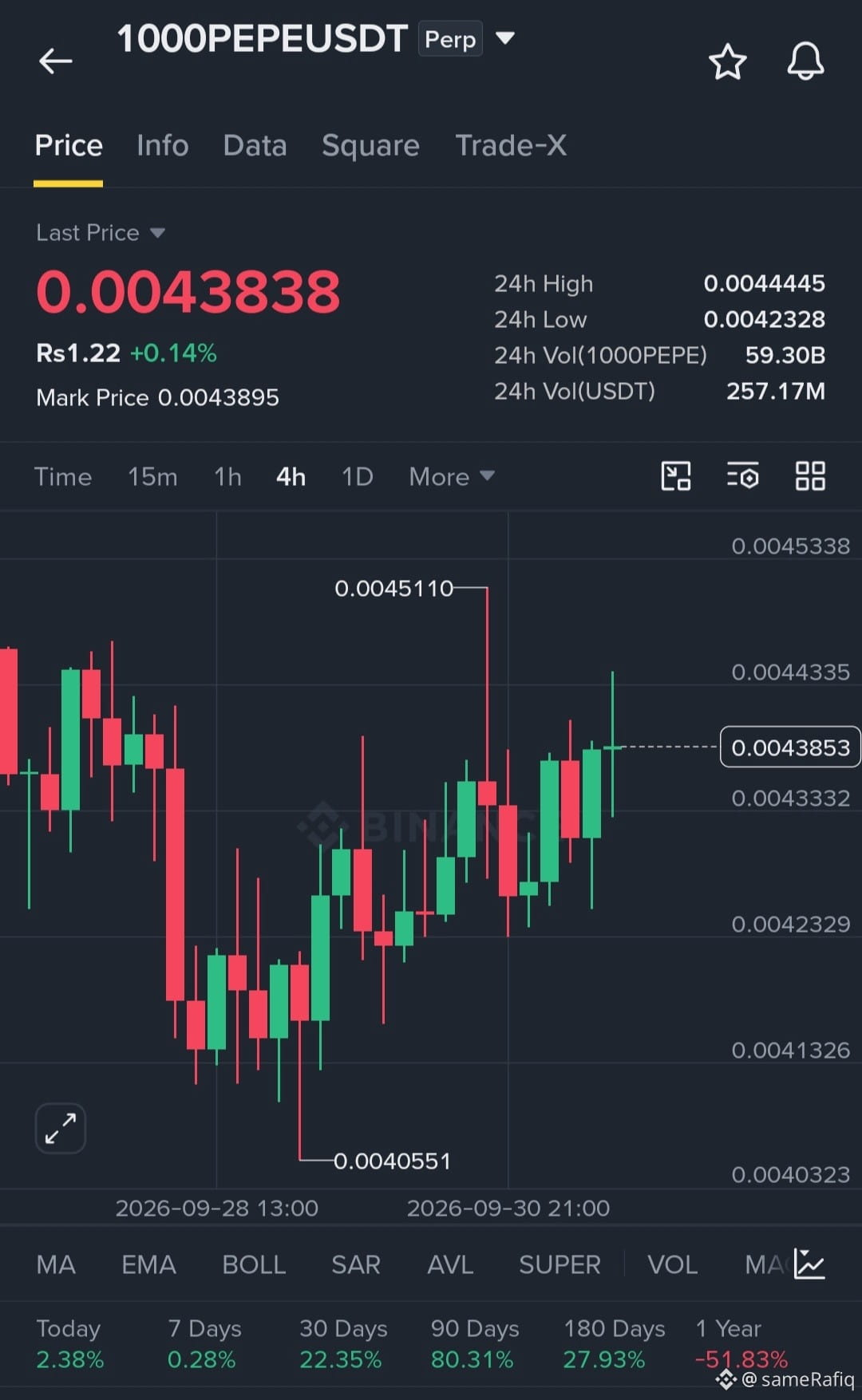
$1000PEPE Long Setup: Bulls Eyeing a Breakout!
LONG $1000PEPE /USDT
Entry: 0.004364 – 0.004386
TP1: 0.004587
TP2: 0.004757
SL: 0.004233
Strong buying volume is fueling bullish momentum, with a potential breakout ahead.
Watch resistance closely. Lagging OI could signal a pullback if buyers lose momentum.
$1000PEPE
{future}(1000PEPEUSDT)
#EtherGains70.9%InQ3 #US10YearYieldNears5.3% #DollarIndexHitsHighestSinceMay2025 #USWeeklyJoblessClaimsFallTo197000 #KoreaProposesTokenizingStocksAndBonds
$1000PEPE Long Setup: Bulls Eyeing a Breakout!
LONG $1000PEPE /USDT
Entry: 0.004364 – 0.004386
TP1: 0.004587
TP2: 0.004757
SL: 0.004233
Strong buying volume is fueling bullish momentum, with a potential breakout ahead.
Watch resistance closely. Lagging OI could signal a pullback if buyers lose momentum.
$1000PEPE
#EtherGains70.9%InQ3 #US10YearYieldNears5.3% #DollarIndexHitsHighestSinceMay2025 #USWeeklyJoblessClaimsFallTo197000 #KoreaProposesTokenizingStocksAndBonds
LONG $1000PEPE /USDT
Entry: 0.004364 – 0.004386
TP1: 0.004587
TP2: 0.004757
SL: 0.004233
Strong buying volume is fueling bullish momentum, with a potential breakout ahead.
Watch resistance closely. Lagging OI could signal a pullback if buyers lose momentum.
$1000PEPE
#EtherGains70.9%InQ3 #US10YearYieldNears5.3% #DollarIndexHitsHighestSinceMay2025 #USWeeklyJoblessClaimsFallTo197000 #KoreaProposesTokenizingStocksAndBonds
1
5

·
--
Bullish
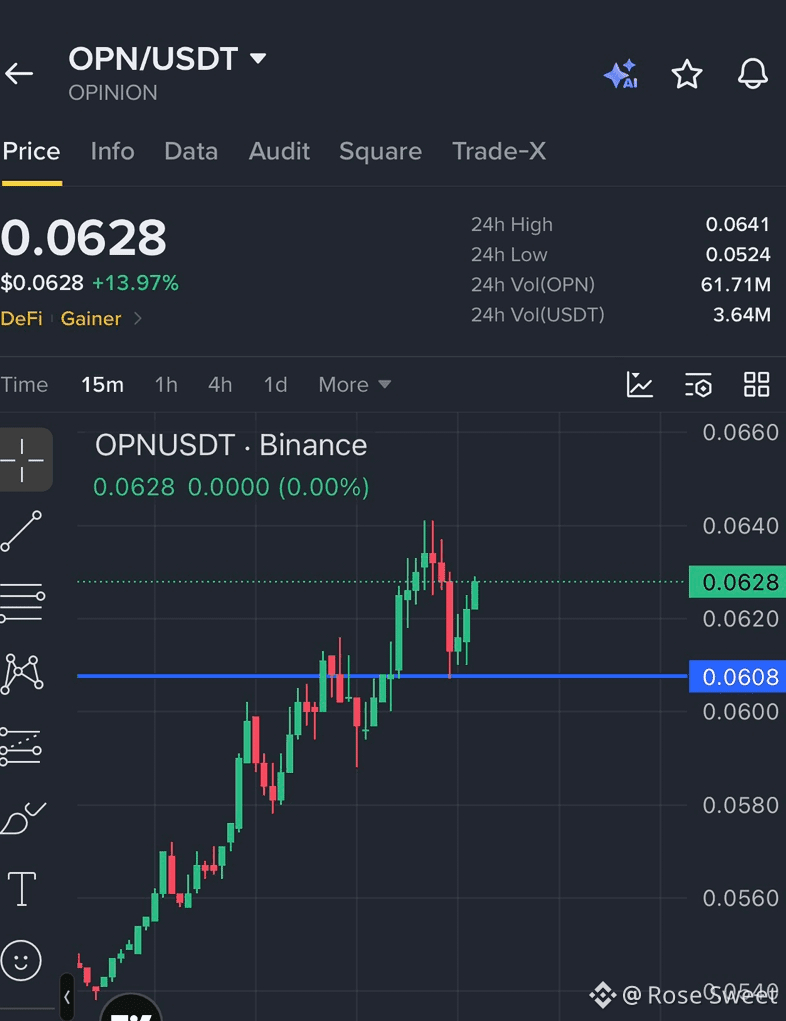
Hey everyone, looking to go long on $OPN right here.
• Entry zone: $0.0620 – $0.0628
• Take-Profit targets: $0.0640 | $0.0655 | $0.0670
• Stop-Loss: $0.0608
$OPN
{future}(OPNUSDT)
$VVV
{future}(VVVUSDT)
#US10YearYieldNears5.3% #USWeeklyJoblessClaimsFallTo197000
Hey everyone, looking to go long on $OPN right here.
• Entry zone: $0.0620 – $0.0628
• Take-Profit targets: $0.0640 | $0.0655 | $0.0670
• Stop-Loss: $0.0608
$OPN
$VVV
#US10YearYieldNears5.3% #USWeeklyJoblessClaimsFallTo197000
• Entry zone: $0.0620 – $0.0628
• Take-Profit targets: $0.0640 | $0.0655 | $0.0670
• Stop-Loss: $0.0608
$OPN
$VVV
#US10YearYieldNears5.3% #USWeeklyJoblessClaimsFallTo197000
29
Log in to explore more content
Join global crypto users on Binance Square
⚡️ Get latest and useful information about crypto.
💬 Trusted by the world’s largest crypto exchange.
👍 Discover real insights from verified creators.
Email / Phone number
Trending Topics
1
#EtherGains70.9%InQ3
405 views
53 Discussing
2
#US10YearYieldNears5.3%
20,263 views
274 Discussing
3
#DollarIndexHitsHighestSinceMay2025
87 views
27 Discussing
4
#USWeeklyJoblessClaimsFallTo197000
1,429 views
90 Discussing
5
#BitcoinETFsTake$6.34BillionInQ3
827 views
37 Discussing
6
#KoreaProposesTokenizingStocksAndBonds
28,206 views
457 Discussing
7
#MetaMaskExitsLidoValidatorsAfterSecurityIncident
102,929 views
1,176 Discussing
8
#MicronBeatsEarningsLiftsGuidance
58,203 views
893 Discussing
9
#CFTCSubmitsTwoEventContractRulesToWhiteHouse
40,374 views
706 Discussing
10
#BitcoinClears$85200
42,584 views
372 Discussing