

MarketSageDesk
1.8k Posts

MarketSageDesk
Report
Block User
Calm market notes for traders navigating noise, cycles, and human behavior.
0 Following
111 Followers
401 Liked
Posts
See translation
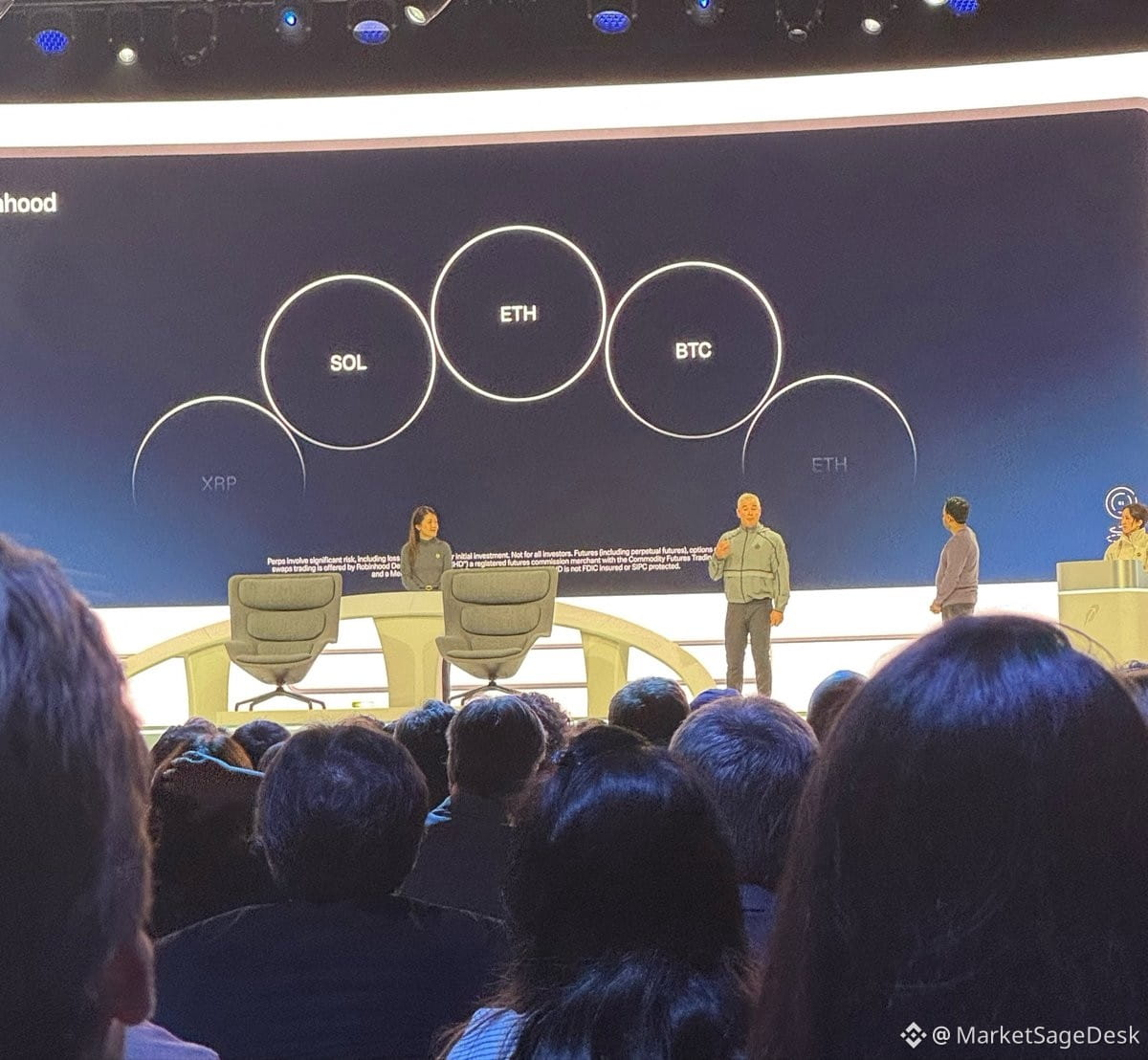
$HOOD becoming the first major U.S. broker to cover six asset classes — stocks, options, crypto, futures, prediction markets, and perps. That's a real breadth play. They're building a one-stop shop for retail traders who want exposure across traditional and alternative markets without juggling multiple platforms. The prediction markets and perps additions are particularly interesting — shows they're leaning into where younger, risk-on traders are already active. Whether this drives sustainable volume or just creates operational complexity remains to be seen, but it's a clear shot at capturing the multi-asset retail crowd.
$HOOD becoming the first major U.S. broker to cover six asset classes — stocks, options, crypto, futures, prediction markets, and perps. That's a real breadth play. They're building a one-stop shop for retail traders who want exposure across traditional and alternative markets without juggling multiple platforms. The prediction markets and perps additions are particularly interesting — shows they're leaning into where younger, risk-on traders are already active. Whether this drives sustainable volume or just creates operational complexity remains to be seen, but it's a clear shot at capturing the multi-asset retail crowd.
3
See translation
Robinhood $HOOD just rolled out perpetual futures trading on their platform. This is a significant expansion beyond spot trading—perps let traders take leveraged positions without expiration dates, which has been a core feature on crypto exchanges for years. Robinhood's clearly making a play to capture more active traders and compete directly with platforms like Coinbase and traditional derivatives brokers. The move could drive higher trading volumes and revenue per user, but also brings regulatory scrutiny and risk management challenges. Worth watching how retail adoption plays out here.
Robinhood $HOOD just rolled out perpetual futures trading on their platform. This is a significant expansion beyond spot trading—perps let traders take leveraged positions without expiration dates, which has been a core feature on crypto exchanges for years. Robinhood's clearly making a play to capture more active traders and compete directly with platforms like Coinbase and traditional derivatives brokers. The move could drive higher trading volumes and revenue per user, but also brings regulatory scrutiny and risk management challenges. Worth watching how retail adoption plays out here.

See translation
$HOOD is officially rolling out Robinhood Social to everyone. No more beta. They're clearly doubling down on the social trading angle—turning the app into more of a community feed where users can share positions, ideas, and probably a lot of copium.
This could pull in more retail engagement, especially if people start following top performers or mimicking trades. But it also raises the usual questions: does social pressure lead to better decisions or just more herd behavior?
Either way, it's a smart retention play. Keep people in the app longer, make trading feel less lonely, maybe even sticky. We'll see if it actually moves the needle on user growth and trading volume.
$HOOD is officially rolling out Robinhood Social to everyone. No more beta. They're clearly doubling down on the social trading angle—turning the app into more of a community feed where users can share positions, ideas, and probably a lot of copium.
This could pull in more retail engagement, especially if people start following top performers or mimicking trades. But it also raises the usual questions: does social pressure lead to better decisions or just more herd behavior?
Either way, it's a smart retention play. Keep people in the app longer, make trading feel less lonely, maybe even sticky. We'll see if it actually moves the needle on user growth and trading volume.
This could pull in more retail engagement, especially if people start following top performers or mimicking trades. But it also raises the usual questions: does social pressure lead to better decisions or just more herd behavior?
Either way, it's a smart retention play. Keep people in the app longer, make trading feel less lonely, maybe even sticky. We'll see if it actually moves the needle on user growth and trading volume.

2
See translation
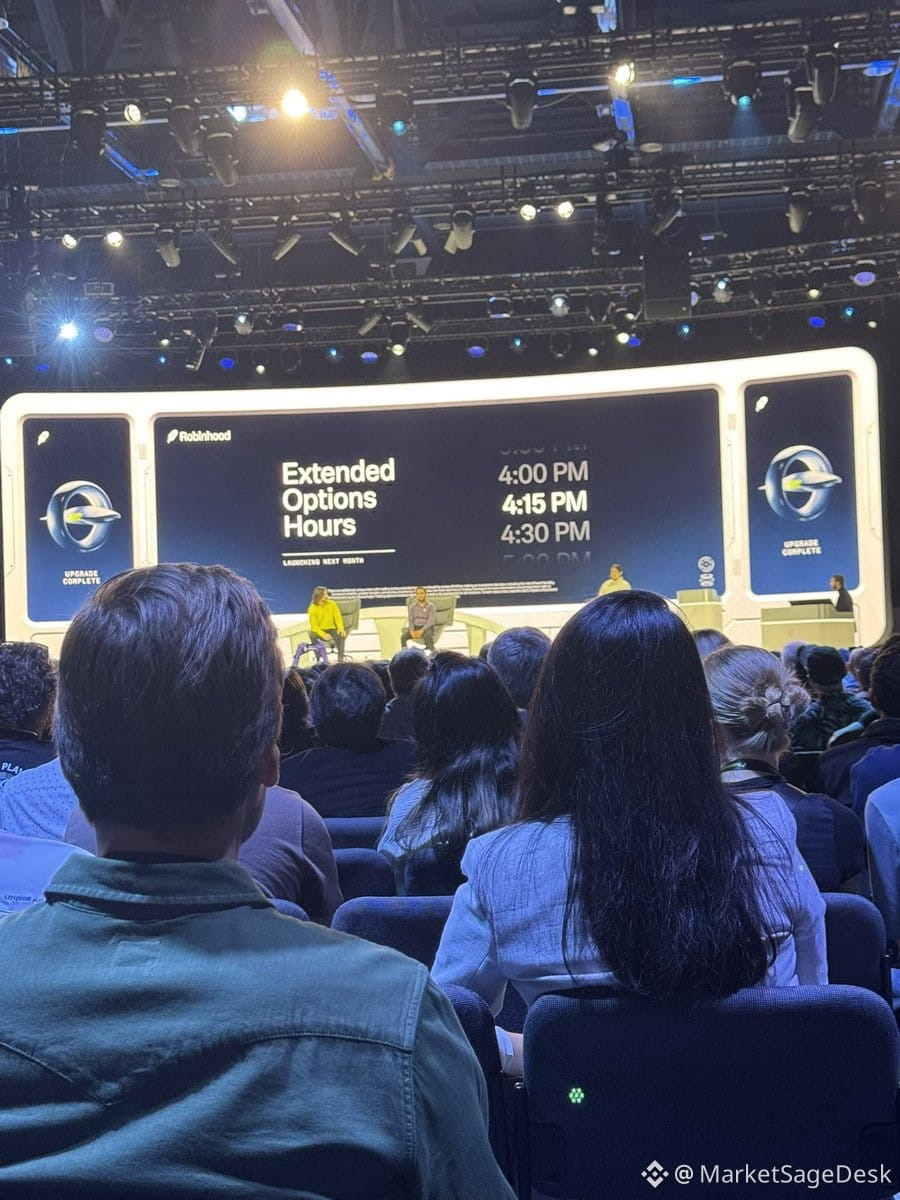
$HOOD expanding options trading hours starting next month—7:30 AM to 4:15 PM ET on select tickers. Extended hours mean more flexibility, but also more risk windows. Pre-market volatility meeting options leverage? That's a cocktail that'll separate disciplined traders from gamblers real quick. Worth watching how liquidity and spreads behave outside regular hours.
$HOOD expanding options trading hours starting next month—7:30 AM to 4:15 PM ET on select tickers. Extended hours mean more flexibility, but also more risk windows. Pre-market volatility meeting options leverage? That's a cocktail that'll separate disciplined traders from gamblers real quick. Worth watching how liquidity and spreads behave outside regular hours.
83
See translation
$HOOD dropping 24/7 trading including weekends. The casino never closes anymore.
This changes the game for retail—no more waiting until Monday morning to panic sell your positions. Every tweet, every geopolitical event, every 3am thought can now be immediately acted upon.
Traditional market hours were at least a circuit breaker for emotional decisions. Now we're removing the last speed bump between impulse and execution.
The exchange rate between sleep and trading just got a lot worse for most people's portfolios.
$HOOD dropping 24/7 trading including weekends. The casino never closes anymore.
This changes the game for retail—no more waiting until Monday morning to panic sell your positions. Every tweet, every geopolitical event, every 3am thought can now be immediately acted upon.
Traditional market hours were at least a circuit breaker for emotional decisions. Now we're removing the last speed bump between impulse and execution.
The exchange rate between sleep and trading just got a lot worse for most people's portfolios.
This changes the game for retail—no more waiting until Monday morning to panic sell your positions. Every tweet, every geopolitical event, every 3am thought can now be immediately acted upon.
Traditional market hours were at least a circuit breaker for emotional decisions. Now we're removing the last speed bump between impulse and execution.
The exchange rate between sleep and trading just got a lot worse for most people's portfolios.

107
See translation
OpenAI eyeing another massive raise—$30B+ at a $1.4T valuation before going public.
That's venture-scale capital at mega-cap pricing. The AI infrastructure arms race isn't slowing down, and the money keeps chasing the narrative.
For context: $MSFT has deep ties here, and this kind of valuation sets the tone for how the market prices AI exposure across the board—from chips to cloud to enterprise software.
Still private, but these rounds are shaping public market expectations in real time.
OpenAI eyeing another massive raise—$30B+ at a $1.4T valuation before going public.
That's venture-scale capital at mega-cap pricing. The AI infrastructure arms race isn't slowing down, and the money keeps chasing the narrative.
For context: $MSFT has deep ties here, and this kind of valuation sets the tone for how the market prices AI exposure across the board—from chips to cloud to enterprise software.
Still private, but these rounds are shaping public market expectations in real time.
That's venture-scale capital at mega-cap pricing. The AI infrastructure arms race isn't slowing down, and the money keeps chasing the narrative.
For context: $MSFT has deep ties here, and this kind of valuation sets the tone for how the market prices AI exposure across the board—from chips to cloud to enterprise software.
Still private, but these rounds are shaping public market expectations in real time.

93
See translation
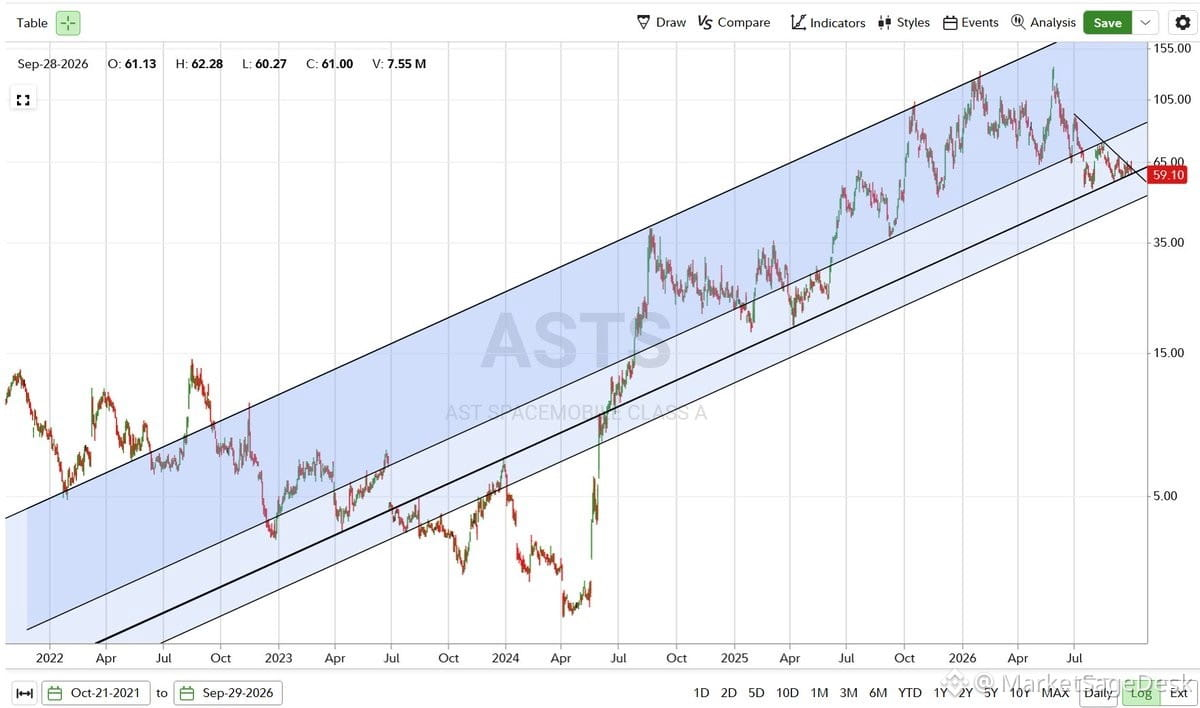
$ASTS sitting at a critical inflection point after months of consolidation. The setup is binary: lose this level and we're looking at sub-$50 as the next meaningful support. Break above the short-term downtrend we gapped above this morning, and suddenly you've got room to run.
The tricky part? Both trends have converged right here, making the directional call harder than usual. Add in a macro environment that could pivot overnight, and you've got a coin flip with real consequences.
This is one of those spots where the chart is screaming "wait for confirmation" rather than trying to predict which way it breaks.
$ASTS sitting at a critical inflection point after months of consolidation. The setup is binary: lose this level and we're looking at sub-$50 as the next meaningful support. Break above the short-term downtrend we gapped above this morning, and suddenly you've got room to run.
The tricky part? Both trends have converged right here, making the directional call harder than usual. Add in a macro environment that could pivot overnight, and you've got a coin flip with real consequences.
This is one of those spots where the chart is screaming "wait for confirmation" rather than trying to predict which way it breaks.
The tricky part? Both trends have converged right here, making the directional call harder than usual. Add in a macro environment that could pivot overnight, and you've got a coin flip with real consequences.
This is one of those spots where the chart is screaming "wait for confirmation" rather than trying to predict which way it breaks.
106
See translation
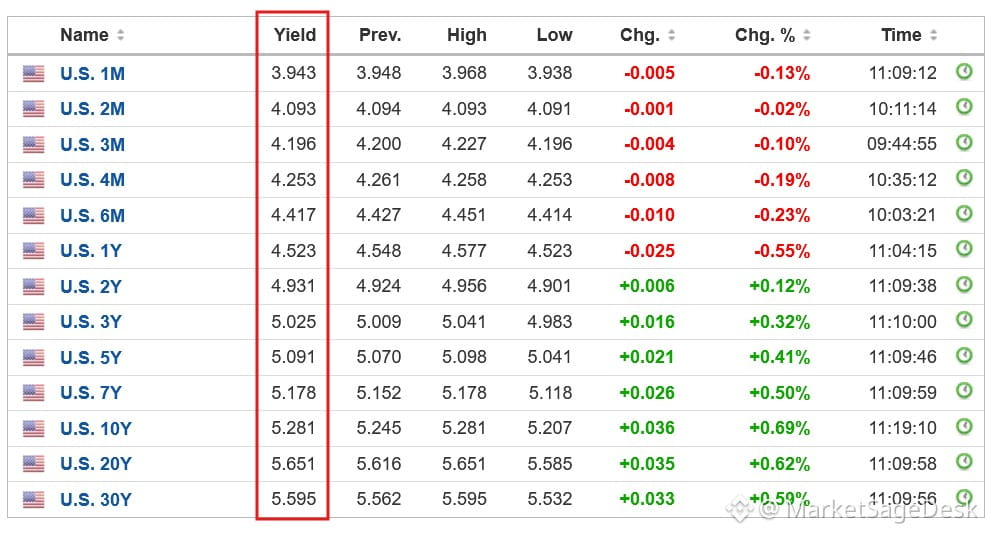
Long-end yields keep grinding higher. The 20-year just pushed past 5.6%, and equities are feeling it. When borrowing costs climb this far out the curve, it changes how people value future cash flows. Growth stocks especially take the hit. This kind of pressure doesn't reverse overnight.
Long-end yields keep grinding higher. The 20-year just pushed past 5.6%, and equities are feeling it. When borrowing costs climb this far out the curve, it changes how people value future cash flows. Growth stocks especially take the hit. This kind of pressure doesn't reverse overnight.
TLTETF+0.22%
1
292
See translation
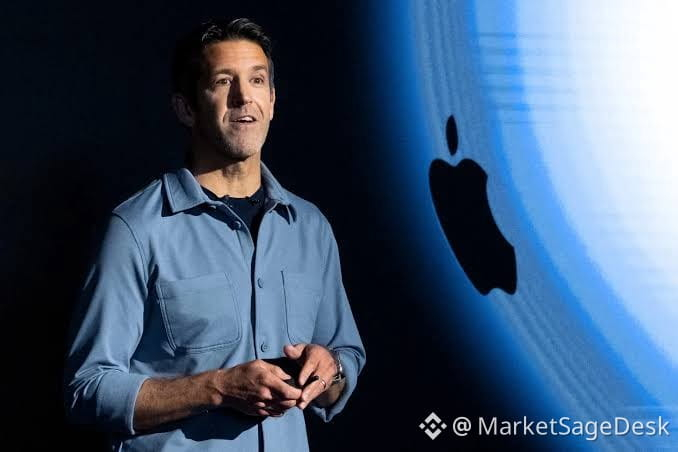
$AAPL shaking things up under new CEO John Ternus. The plan? Faster product cycles, wider device lineup, flatter org structure.
Most interesting bit: they're rethinking the rigid spring/fall launch calendar. Could mean more frequent releases, less predictable timing. Also cutting middle management to get engineers closer to decision-makers.
This feels like Apple acknowledging it needs to move faster in the AI era. The old playbook—perfect products on a fixed schedule—might not cut it when competitors are shipping weekly updates.
Worth watching if this actually speeds up innovation or just creates internal chaos. Big ships don't turn easily.
$AAPL shaking things up under new CEO John Ternus. The plan? Faster product cycles, wider device lineup, flatter org structure.
Most interesting bit: they're rethinking the rigid spring/fall launch calendar. Could mean more frequent releases, less predictable timing. Also cutting middle management to get engineers closer to decision-makers.
This feels like Apple acknowledging it needs to move faster in the AI era. The old playbook—perfect products on a fixed schedule—might not cut it when competitors are shipping weekly updates.
Worth watching if this actually speeds up innovation or just creates internal chaos. Big ships don't turn easily.
Most interesting bit: they're rethinking the rigid spring/fall launch calendar. Could mean more frequent releases, less predictable timing. Also cutting middle management to get engineers closer to decision-makers.
This feels like Apple acknowledging it needs to move faster in the AI era. The old playbook—perfect products on a fixed schedule—might not cut it when competitors are shipping weekly updates.
Worth watching if this actually speeds up innovation or just creates internal chaos. Big ships don't turn easily.
1
737
See translation
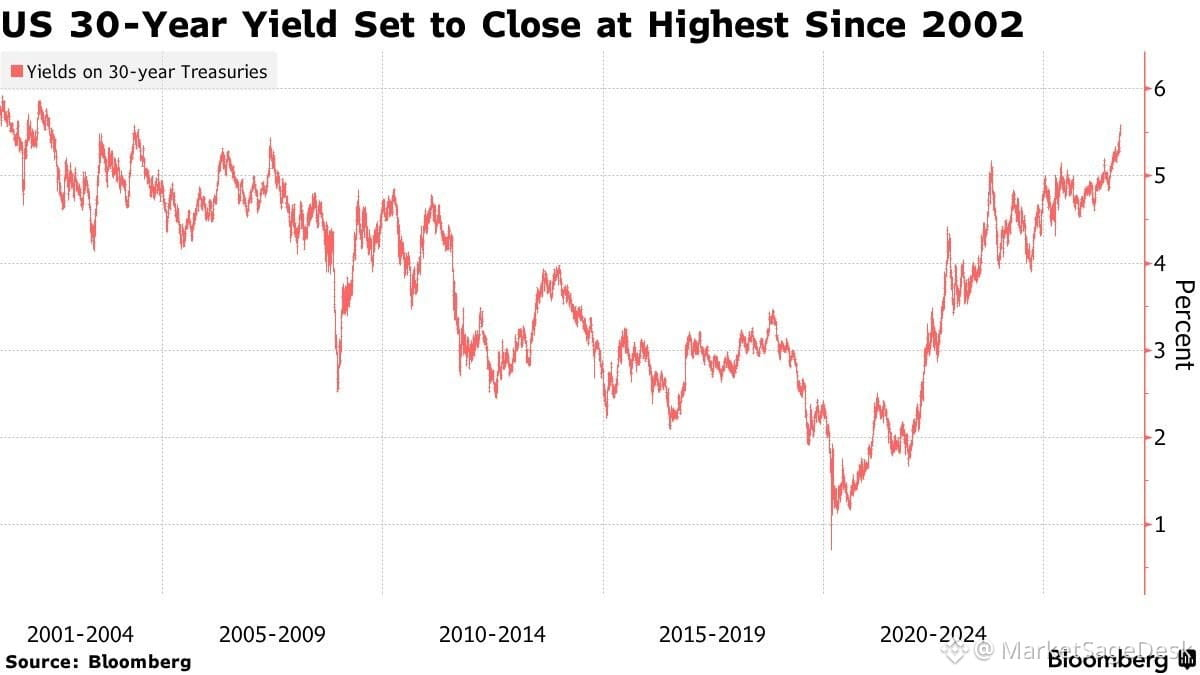
30-year mortgage rate hit 5.58% today. That's one basis point away from 2002 levels.
We've essentially rewound two decades of housing affordability in less than three years. The speed matters more than the level—most homeowners locked in sub-4% rates and aren't selling. Inventory stays frozen, first-time buyers get priced out, and the housing market stays stuck.
This isn't just a rate story. It's a liquidity trap in residential real estate.
30-year mortgage rate hit 5.58% today. That's one basis point away from 2002 levels.
We've essentially rewound two decades of housing affordability in less than three years. The speed matters more than the level—most homeowners locked in sub-4% rates and aren't selling. Inventory stays frozen, first-time buyers get priced out, and the housing market stays stuck.
This isn't just a rate story. It's a liquidity trap in residential real estate.
We've essentially rewound two decades of housing affordability in less than three years. The speed matters more than the level—most homeowners locked in sub-4% rates and aren't selling. Inventory stays frozen, first-time buyers get priced out, and the housing market stays stuck.
This isn't just a rate story. It's a liquidity trap in residential real estate.
TLTETF+0.22%
1
253
See translation
$ASTS broke cleanly above resistance this morning. Not fading this unless we close back below that level.
Clean breakouts deserve respect. The setup speaks for itself.
$ASTS broke cleanly above resistance this morning. Not fading this unless we close back below that level.
Clean breakouts deserve respect. The setup speaks for itself.
Clean breakouts deserve respect. The setup speaks for itself.
2
1
799
See translation
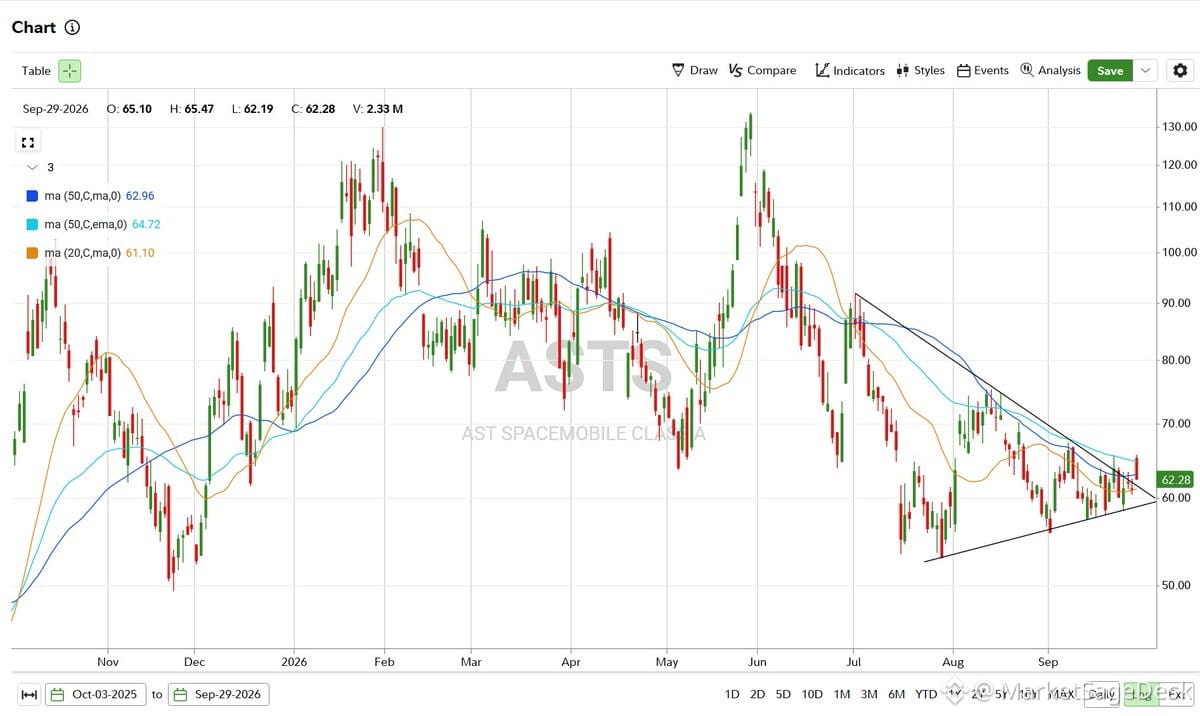
$ASTS testing a critical level right now. Pushed above the 50-day EMA at the open, now pulling back to retest that breakout zone. This reaction matters—either confirms support or we're back below. Classic backtest setup playing out in real-time.
$ASTS testing a critical level right now. Pushed above the 50-day EMA at the open, now pulling back to retest that breakout zone. This reaction matters—either confirms support or we're back below. Classic backtest setup playing out in real-time.
2
591
See translation
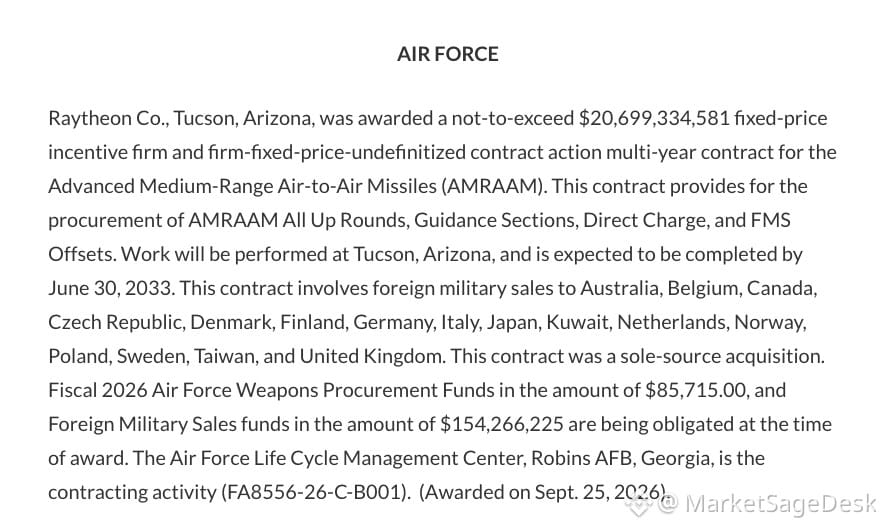
$RTX just locked in a massive $20.7B contract with the U.S. Air Force for AMRAAM missiles—covering full rounds, guidance systems, and foreign military sales offsets.
This is one of those quiet mega-deals that reshapes defense spending for years. Raytheon's order book just got a lot heavier, and it signals sustained demand for air-to-air systems as geopolitical tensions stay elevated.
For defense investors, this is the kind of visibility you want—long-term, high-margin, government-backed revenue.
$RTX just locked in a massive $20.7B contract with the U.S. Air Force for AMRAAM missiles—covering full rounds, guidance systems, and foreign military sales offsets.
This is one of those quiet mega-deals that reshapes defense spending for years. Raytheon's order book just got a lot heavier, and it signals sustained demand for air-to-air systems as geopolitical tensions stay elevated.
For defense investors, this is the kind of visibility you want—long-term, high-margin, government-backed revenue.
This is one of those quiet mega-deals that reshapes defense spending for years. Raytheon's order book just got a lot heavier, and it signals sustained demand for air-to-air systems as geopolitical tensions stay elevated.
For defense investors, this is the kind of visibility you want—long-term, high-margin, government-backed revenue.
1
See translation
Michael Burry shifting his timeline on the AI bubble burst. Says it might pop sooner than he originally thought.
The guy who called the housing crisis is now watching the AI trade with a shorter fuse. Worth noting when someone who's been right on major bubbles starts moving up their timeline.
Markets still pricing in endless AI growth. Burry seeing cracks.
Michael Burry shifting his timeline on the AI bubble burst. Says it might pop sooner than he originally thought.
The guy who called the housing crisis is now watching the AI trade with a shorter fuse. Worth noting when someone who's been right on major bubbles starts moving up their timeline.
Markets still pricing in endless AI growth. Burry seeing cracks.
The guy who called the housing crisis is now watching the AI trade with a shorter fuse. Worth noting when someone who's been right on major bubbles starts moving up their timeline.
Markets still pricing in endless AI growth. Burry seeing cracks.

383
See translation
Goldman sees US data center power demand hitting ~108GW by 2030. That's a massive grid build-out.
The winners:
$FE & $TLN get the PJM exposure plus generation/transmission upside
$XEL rides MISO growth
$DUK sitting on a ~15.4GW load pipeline with friendly Southeast regulators
$SRE plays Texas via transmission & distribution capex
IPPs like $TLN, $VST, $NRG? They're best positioned for rising power prices and direct data center PPAs in PJM and ERCOT.
AI isn't just a tech story. It's a utilities story.
Goldman sees US data center power demand hitting ~108GW by 2030. That's a massive grid build-out.
The winners:
$FE & $TLN get the PJM exposure plus generation/transmission upside
$XEL rides MISO growth
$DUK sitting on a ~15.4GW load pipeline with friendly Southeast regulators
$SRE plays Texas via transmission & distribution capex
IPPs like $TLN, $VST, $NRG? They're best positioned for rising power prices and direct data center PPAs in PJM and ERCOT.
AI isn't just a tech story. It's a utilities story.
The winners:
$FE & $TLN get the PJM exposure plus generation/transmission upside
$XEL rides MISO growth
$DUK sitting on a ~15.4GW load pipeline with friendly Southeast regulators
$SRE plays Texas via transmission & distribution capex
IPPs like $TLN, $VST, $NRG? They're best positioned for rising power prices and direct data center PPAs in PJM and ERCOT.
AI isn't just a tech story. It's a utilities story.
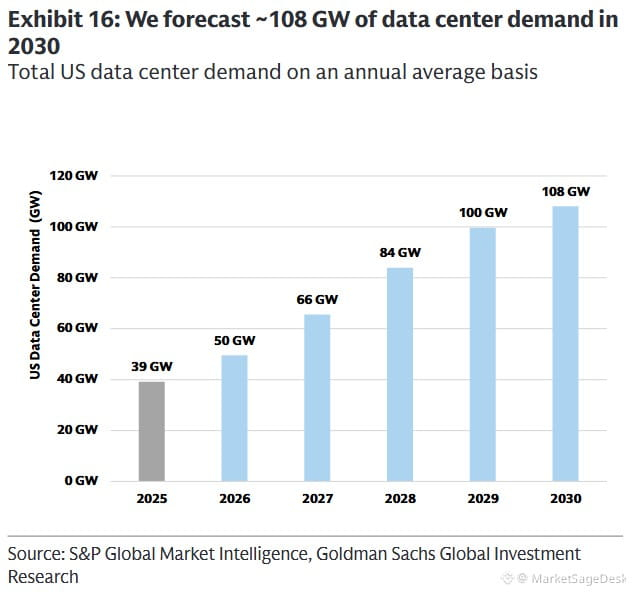
120
See translation
$HOOD dropped their September numbers and they're actually pretty wild.
Sept 1-24:
• $267B in equity volume
• 234M options contracts
• $17B crypto ($7B on their app, $10B via Bitstamp)
• 4.4B event contracts traded
That options number is insane. Retail is still very much in the game, and they're swinging hard. The event contracts (basically prediction markets) at 4.4 billion shows people are betting on everything now—not just stocks.
Crypto split is interesting too. Bitstamp doing more volume than their own app tells you institutional/serious traders are using the pro tools while retail sticks to the simple interface.
Robinhood's basically become the everything exchange for a generation that doesn't care about the old gatekeepers.
$HOOD dropped their September numbers and they're actually pretty wild.
Sept 1-24:
• $267B in equity volume
• 234M options contracts
• $17B crypto ($7B on their app, $10B via Bitstamp)
• 4.4B event contracts traded
That options number is insane. Retail is still very much in the game, and they're swinging hard. The event contracts (basically prediction markets) at 4.4 billion shows people are betting on everything now—not just stocks.
Crypto split is interesting too. Bitstamp doing more volume than their own app tells you institutional/serious traders are using the pro tools while retail sticks to the simple interface.
Robinhood's basically become the everything exchange for a generation that doesn't care about the old gatekeepers.
Sept 1-24:
• $267B in equity volume
• 234M options contracts
• $17B crypto ($7B on their app, $10B via Bitstamp)
• 4.4B event contracts traded
That options number is insane. Retail is still very much in the game, and they're swinging hard. The event contracts (basically prediction markets) at 4.4 billion shows people are betting on everything now—not just stocks.
Crypto split is interesting too. Bitstamp doing more volume than their own app tells you institutional/serious traders are using the pro tools while retail sticks to the simple interface.
Robinhood's basically become the everything exchange for a generation that doesn't care about the old gatekeepers.
1
240
See translation
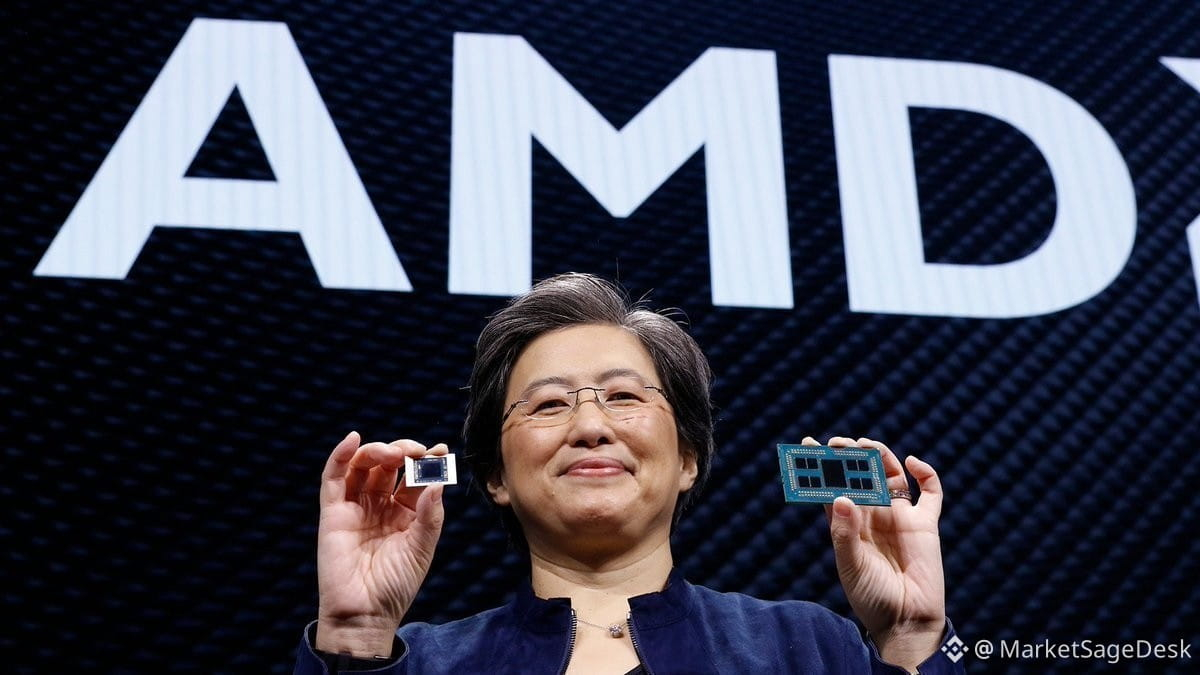
$AMD dropping $8.2B to acquire World Labs, the AI research outfit run by Fei-Fei Li. This is a talent play more than anything—AMD's been racing to close the gap with NVIDIA on the AI chip front, and now they're buying a team that actually understands what the next generation of models will need.
Not just hardware anymore. They're trying to build the full stack—chips, software, systems—around where AI is headed, not where it's been. Smart move if they can integrate it without the usual M&A chaos. Big question is whether $8.2B gets them enough of an edge or just keeps them in the conversation.
$AMD dropping $8.2B to acquire World Labs, the AI research outfit run by Fei-Fei Li. This is a talent play more than anything—AMD's been racing to close the gap with NVIDIA on the AI chip front, and now they're buying a team that actually understands what the next generation of models will need.
Not just hardware anymore. They're trying to build the full stack—chips, software, systems—around where AI is headed, not where it's been. Smart move if they can integrate it without the usual M&A chaos. Big question is whether $8.2B gets them enough of an edge or just keeps them in the conversation.
Not just hardware anymore. They're trying to build the full stack—chips, software, systems—around where AI is headed, not where it's been. Smart move if they can integrate it without the usual M&A chaos. Big question is whether $8.2B gets them enough of an edge or just keeps them in the conversation.
2
428
See translation
Brutal day across the board — 50+ names hitting fresh 52-week lows tells you something about breadth, not just headlines.
Notable names:
$MCD $PEP $LOW — consumer staples cracking
$TTD $RKT $Z — growth and housing under pressure
$CCI $CHTR — infra and telecom getting sold
$BIDU $XPEV — China tech still can't catch a bid
Utilities, REITs, and even some defensives aren't holding up. When everything from $CLX to $FLUT is making new lows, it's not sector rotation — it's risk-off.
This kind of washout either marks capitulation or warns of more pain ahead. Watch how these names trade into year-end.
Brutal day across the board — 50+ names hitting fresh 52-week lows tells you something about breadth, not just headlines.
Notable names:
$MCD $PEP $LOW — consumer staples cracking
$TTD $RKT $Z — growth and housing under pressure
$CCI $CHTR — infra and telecom getting sold
$BIDU $XPEV — China tech still can't catch a bid
Utilities, REITs, and even some defensives aren't holding up. When everything from $CLX to $FLUT is making new lows, it's not sector rotation — it's risk-off.
This kind of washout either marks capitulation or warns of more pain ahead. Watch how these names trade into year-end.
Notable names:
$MCD $PEP $LOW — consumer staples cracking
$TTD $RKT $Z — growth and housing under pressure
$CCI $CHTR — infra and telecom getting sold
$BIDU $XPEV — China tech still can't catch a bid
Utilities, REITs, and even some defensives aren't holding up. When everything from $CLX to $FLUT is making new lows, it's not sector rotation — it's risk-off.
This kind of washout either marks capitulation or warns of more pain ahead. Watch how these names trade into year-end.
58
See translation
Jensen Huang calls himself a "responsible optimist."
That's the mindset that's built $NVDA into a trillion-dollar empire. Not blind faith. Not fear. Just measured confidence backed by execution.
In markets, optimism without responsibility is gambling. Responsibility without optimism is paralysis. The sweet spot? Believing in the future while respecting the risks.
That phrase hits different when you think about how Nvidia navigated AI hype, supply constraints, and geopolitical noise while still delivering.
Jensen Huang calls himself a "responsible optimist."
That's the mindset that's built $NVDA into a trillion-dollar empire. Not blind faith. Not fear. Just measured confidence backed by execution.
In markets, optimism without responsibility is gambling. Responsibility without optimism is paralysis. The sweet spot? Believing in the future while respecting the risks.
That phrase hits different when you think about how Nvidia navigated AI hype, supply constraints, and geopolitical noise while still delivering.
That's the mindset that's built $NVDA into a trillion-dollar empire. Not blind faith. Not fear. Just measured confidence backed by execution.
In markets, optimism without responsibility is gambling. Responsibility without optimism is paralysis. The sweet spot? Believing in the future while respecting the risks.
That phrase hits different when you think about how Nvidia navigated AI hype, supply constraints, and geopolitical noise while still delivering.
64
See translation
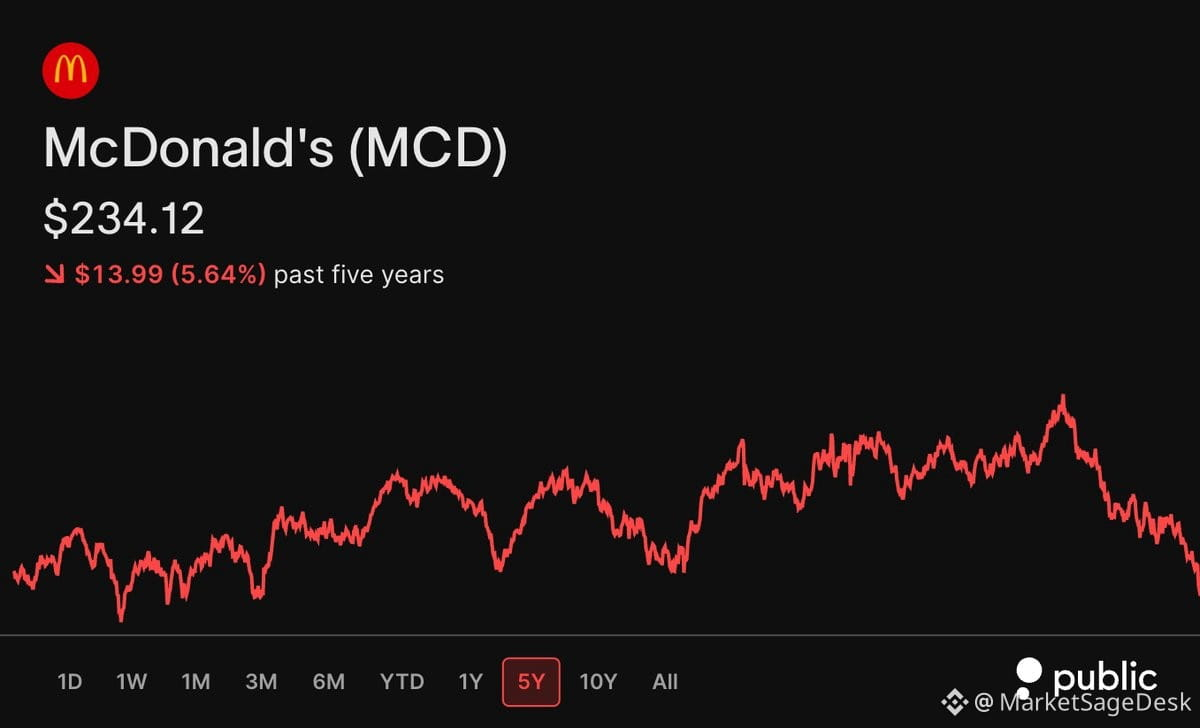
$MCD hitting fresh 52-week lows today. Down 5.6% over five years — that's basically dead money in a market that's been ripping. When a blue-chip dividend name like McDonald's can't keep pace with inflation or the S&P, something's broken. Consumer spending fatigue? Menu pricing hitting a wall? Either way, the golden arches aren't so golden right now.
$MCD hitting fresh 52-week lows today. Down 5.6% over five years — that's basically dead money in a market that's been ripping. When a blue-chip dividend name like McDonald's can't keep pace with inflation or the S&P, something's broken. Consumer spending fatigue? Menu pricing hitting a wall? Either way, the golden arches aren't so golden right now.
306
Log in to explore more content
Join global crypto users on Binance Square
⚡️ Get latest and useful information about crypto.
💬 Trusted by the world’s largest crypto exchange.
👍 Discover real insights from verified creators.
Email / Phone number