
There’s something intoxicating about Injective (INJ) these days — dazai felt that pull when dazai first read about its latest moves. On paper, Injective isn’t just another altcoin sampling random hype. It’s a full-blown Layer-1 blockchain purpose-built for finance and Web3, with ambitions that stretch far beyond the typical token dreams.
From its roots, Injective was designed to power decentralized spot and derivatives exchanges, prediction markets, real-world asset (RWA) issuance and more. That alone sets it apart — while many chains scramble to copy Ethereum or chase random DeFi trends, Injective builds with financial infrastructure in mind, offering on-chain order books, negligible fees, high throughput, cross-chain interoperability, and a full set of tools for DeFi builders.
But dazai isn’t naive. Crypto is notoriously brutal — and in that light, safety and long-term potential must go hand in hand. So is Injective the “safe” bet for someone holding (or buying) for the next several years? Dazai wants to walk through the signs, the warnings, and ultimately share whether dazai himself is placing faith here.
Why Injective Looks Like It’s Built for the Long Game
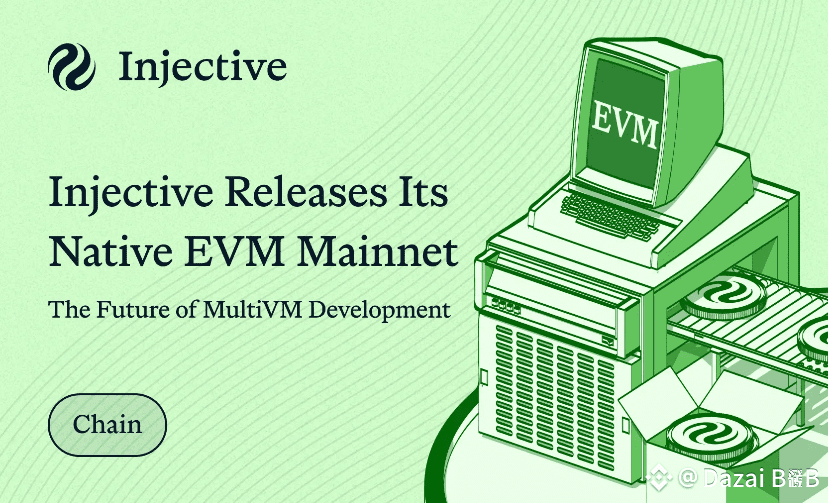
Late 2025 has been a busy period for Injective. One of the most important developments: the launch of a native EVM layer and full Ethereum compatibility. This means dApp developers familiar with Solidity or Ethereum tooling can now build on Injective — combining their Ethereum-style code with Injective’s speed, low fees, and Cosmos-IBC interoperability.
Add to that the release of a “no-code / low-code” platform (sometimes called “iBuild” / “Vibe Coding”), enabling people — even without formal programming chops — to spin up on-chain apps. That’s huge. It means lower barrier to entry, more innovation, more experimentation. It means the ecosystem could grow — not just with hardcore devs, but with regular folks able to build.
These moves collectively signal that Injective sees itself — not just as a flashy altcoin — but as financial infrastructure. If that vision plays out, INJ isn’t just a gamble on “hype,” it’s a stake in the foundation of a new wave of DeFi applications. From stablecoins to tokenized real-world assets to derivatives markets, Injective aims to offer the plumbing.
In short: for a long-term holder, Injective offers something closer to “building equity in a financial rails company” than “buying speculation tokens.” Dazai believes that’s a more defensible bet.
Signs That the Market, Institutions and Real Money Are Lending Weight to INJ
It’s one thing to build infrastructure; it’s another when institutions start backing up that belief with capital. Recently, Pineapple Financial Inc. — a publicly traded fintech firm — launched a $100 million Injective Digital Asset Treasury strategy. Their first open-market purchase acquired ~678,353 INJ tokens (≈ US$8.9 million). That’s real capital, real commitment.
What’s more: all those tokens are planned to be staked on-chain. Pineapple expects ~12.75 % annual yield — nearly double what some competing networks currently offer. That effectively treats INJ as a yield-generating asset, not just a “price-go-up coin.
Combine that institutional interest with Injective’s recent supply reduction initiatives — buybacks + burns — as part of their tokenomics model, and you get a picture of a project actively trying to manage supply, incentivize holders, and offer value beyond mere speculation.
When big money gives INJ a home in the balance sheet, dazai takes notice. It suggests someone out there signals confidence, and if more follow, the tailwinds could matter — especially over years, not days.
⚠️ But It’s Not Without Risk — Volatility, Market Cycles, And The Unknowns
It would be irresponsible to call Injective “safe” without acknowledging just how volatile and punishing crypto can be. The token’s history shows this clearly: after all-time highs near ~ $52–$53 in March 2024, INJ slid dramatically — leaving current prices deep in the shadow of that peak.
Even with all its fundamentals, INJ remains tied to macro crypto cycles. Bearish sentiment, crypto market-wide sell-offs, macroeconomic pressures — all these affect INJ just like any other token. And history warns of price drafts that can wipe out huge gains in short order. Dazai wouldn’t be surprised if such swings repeat.
More importantly: while technical upgrades (EVM compatibility, no-code tools, buybacks) can attract developers and investors, none guarantee mass adoption. Competition in the Layer-1 / DeFi-infrastructure space is brutal. Other chains, other protocols, other ideas — one misstep, or a stronger rival, and the narrative could shift quickly
And we must remember: crypto is uncertain. Regulatory pressures, macroeconomics, changing investor tastes — these loom as much over Injective as over the rest. So for a “safe bet,” INJ is safer than many, but far from risk-free.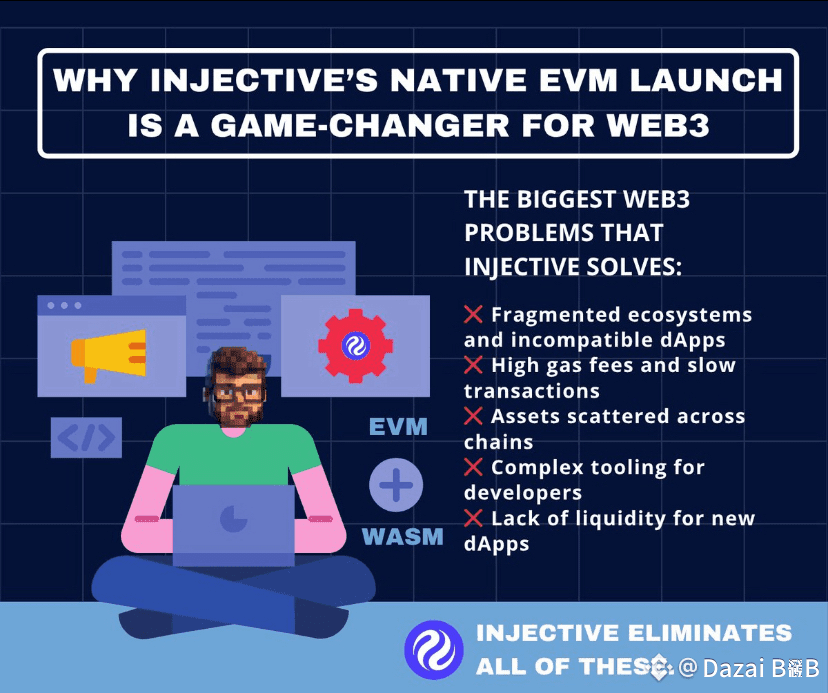
Why Injective Could Emerge as a “Blue Chip” Crypto for Long-Term Holders
Dazai sees a path for Injective becoming a sort of “blue chip” in crypto — a core holding, rather than a speculative punt. Its strengths lie in infrastructure, real utility, and growing institutional backing. Building a DeFi stack is one thing; building one that’s decentralized, fast, interoperable and open to developers with minimal friction is another. Injective seems to aim for the latter.
If over the next 2–5 years more developers build serious apps on Injective — trading platforms, tokenized real-world assets, derivatives markets, stablecoins, cross-chain bridges — the network effect could be powerful. With Ethereum compatibility (thanks to EVM) plus Cosmos-style cross-chain bridges, Injective sits at a sweet spot of versatility.
Add to that the yield-based staking incentives (as shown by institutional interest like Pineapple) and supply management (buybacks, burns), and you get a token that offers more than “hoping price goes up.” It offers yield, potential long-term scarcity, and real usage. For someone who thinks long — that could be very attractive.
In the world of crypto’s countless “moonshots,” Injective might be one of the few with a shot at staying relevant — and useful — for years to come.
Dazai’s Verdict: Safe-ish — but Only With Patience, Conviction, and Eyes Open
So is Injective the “safest long-term bet in crypto right now”? Dazai would say: it’s among the safer picks — in a space where “safe” is always relative. It has real architecture, real backing, real ambition. It’s not just noise and marketing — there’s substance.
But “safe-ish” doesn’t mean “guaranteed.” The volatility is real, competition is fierce, and nothing ensures that adoption will scale. If you hold INJ, be ready for swings. Invest what you can afford to see through bearish storms.
If you’re looking for a long-term hold, are comfortable with some risk, and believe in decentralized Web3 finance and institutional adoption of crypto, Injective is a compelling bet. Dazai knows — because dazai is holding.
Let’s see where the road takes us.
