

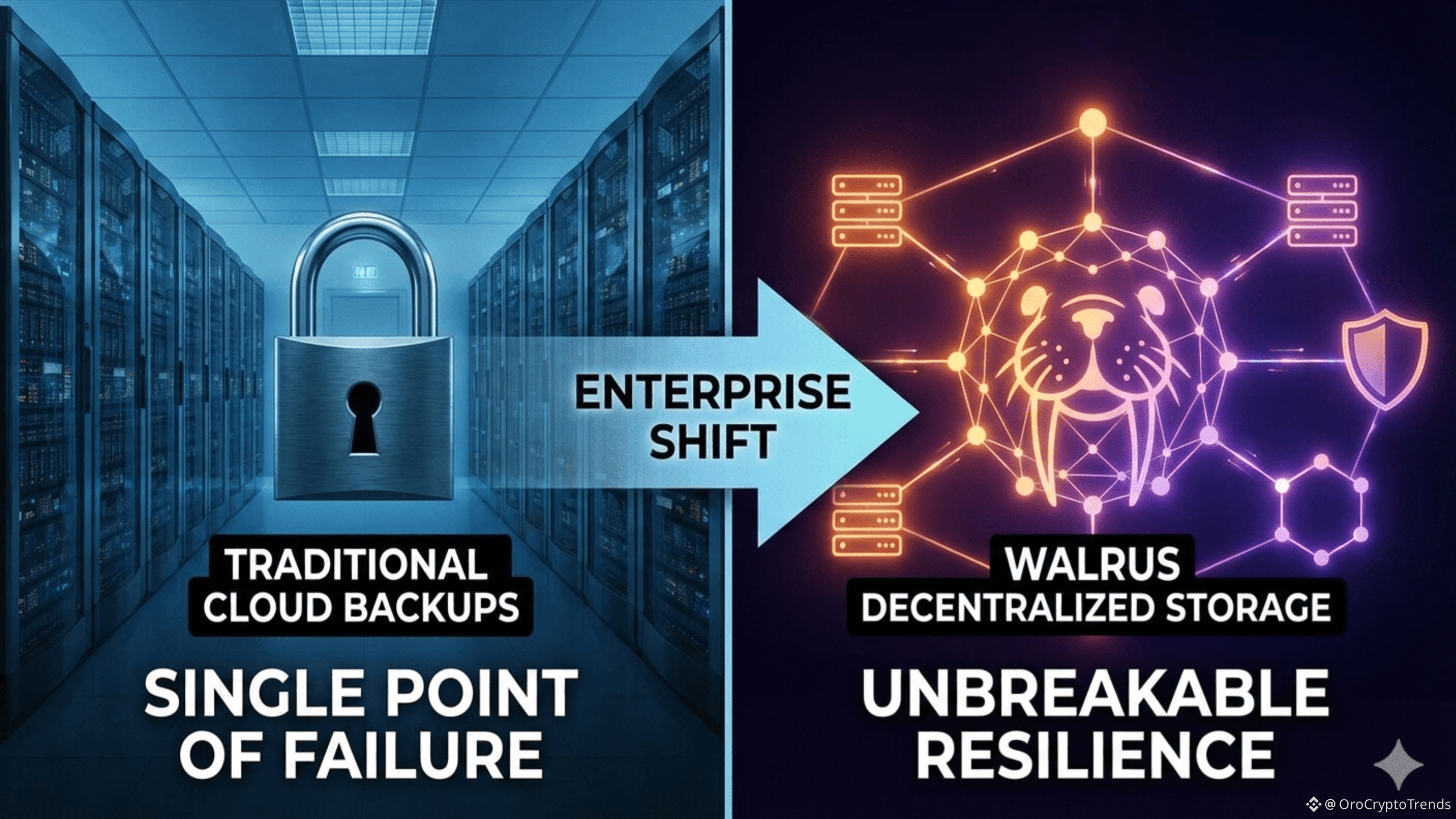
 Not long ago, “the cloud” seemed like the ultimate solution for safeguarding business data. But the landscape has shifted. As digital infrastructure becomes more complex and interconnected, organizations are starting to recognize a hidden vulnerability: relying on a single provider or region for all your backups means your business could be just one unexpected event away from catastrophic data loss.
Let’s explore how some leading enterprises are getting ahead of this risk. They’re moving beyond traditional cloud backups and adopting the Walrus Protocol, a next-generation approach designed to make data backups virtually disaster-proof—something that conventional cloud solutions simply can’t match.
The Problem with One-Stop “Vaults”
The reality is, most businesses still concentrate all their backup data in a single geographic area or with a single vendor. That might feel secure until the unexpected strikes—a natural disaster like a flood, a sophisticated cyberattack, or even a simple misconfiguration. Suddenly, all the safety nets fail at once, and the consequences can be business-ending.
Walrus disrupts this paradigm by rejecting the notion of a single, impenetrable vault. Instead, it embraces a model of global fragmentation—distributing risk and resilience on an unprecedented scale.
A Better Way: The Digital Puzzle
Think of your most crucial backup as an irreplaceable photograph.
* With a traditional cloud provider, you’re essentially locking that photo in a high-security building. If the building is compromised or destroyed, the photo is gone for good.
* With Walrus, you divide the photo into 100 tiny, unique fragments—each one indecipherable on its own—and entrust each fragment to an individual in a different city, perhaps even in a different country.
Here’s the real innovation: Walrus uses advanced technology called RedStuff (2D Erasure Coding). You don’t need to recover every single one of those 100 pieces to reconstruct your photo. As long as you can retrieve a certain subset—sometimes just a fraction—you can instantly and perfectly restore the original file. This ensures that even in the face of widespread outages or targeted attacks, your data remains accessible and whole.
Why Enterprises Are Making the Jump
It’s not about chasing the latest crypto trend. Enterprises are adopting Walrus because it delivers tangible, strategic benefits—and addresses real business concerns.
1. Real Resilience: With Walrus, your data is scattered across the globe, immune to any single point of failure. Even if an entire region’s infrastructure goes down—whether from geopolitical turmoil, natural disaster, or technical malfunction—your backups remain safe and accessible from elsewhere.
2. Lower Storage Costs: Traditional “safe” backup strategies require duplicating data three, five, or even more times, vastly increasing storage needs and costs. Walrus’s erasure coding achieves the same or greater durability and redundancy, but with a fraction of the storage overhead—often reducing costs by an order of magnitude or more.
3. Built-In Integrity: Centralized cloud storage demands a leap of faith that your provider is maintaining data accuracy and security. With Walrus, every fragment—or sliver—is continuously verified with cryptographic checks. If tampering or corruption occurs, the network automatically detects and repairs it, ensuring data integrity without manual intervention.
Quick Q&A for Tech Leaders
Does this replace our current cloud setup?
For most organizations, Walrus is used as “Immutable Cold Storage”—a secure, long-term archive for data that doesn’t require frequent access. Active data and day-to-day operations typically remain on-premises or in the public cloud, while critical archives and backups are shifted to Walrus for robust, decentralized protection.
Is it compliant with GDPR, SOC2, and other regulations?
Absolutely. Walrus empowers businesses to choose where their data lives—by region, by jurisdiction, or by security profile. This flexibility means you can easily align your storage strategy with regulatory requirements and internal policies.
How do we pay for it?
Walrus uses the WAL token for storage payments. You can pre-purchase storage capacity for 10, 20, or even more years, locking in costs and shielding your organization from unpredictable, ever-increasing monthly cloud bills.
One Last Thought
We’re witnessing a major shift in digital infrastructure strategy—what some call “Infrastructure Repatriation.” After years of centralizing everything in a handful of massive cloud platforms, enterprises are reclaiming control over their most sensitive and vital backups by adopting decentralized protocols. This transition isn’t just about new technology—it’s about gaining true ownership, operational resilience, and peace of mind.
Here’s a practical step: review your disaster recovery plan. If your backups are stored alongside your primary applications, you’re facing a critical single point of failure. By layering in a decentralized backup solution like Walrus, you create a genuine safety net—one that stands up to the unexpected.

Disclaimer Not Financial Advice