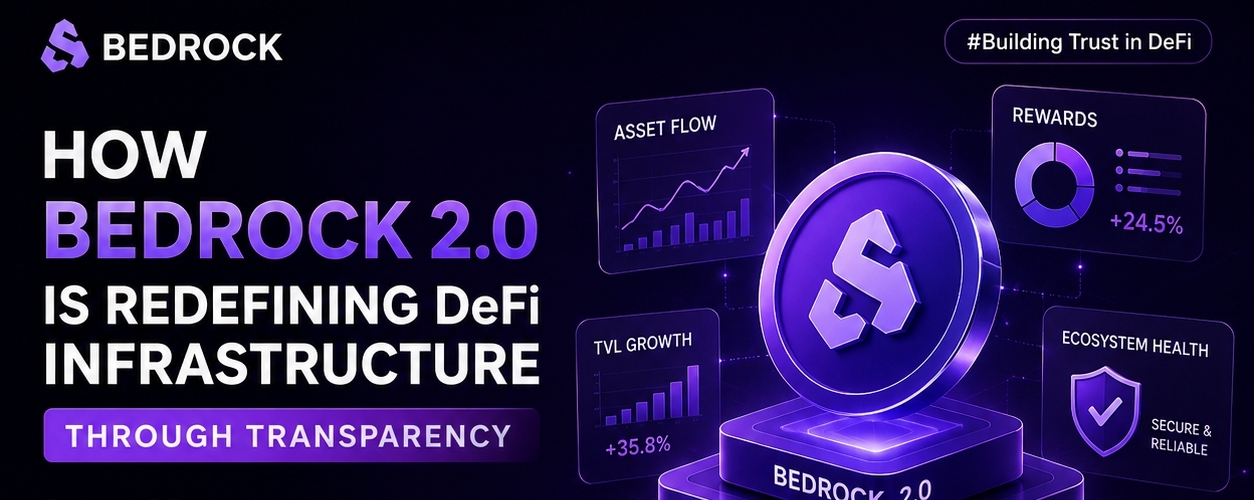
The decentralized finance (DeFi) ecosystem has evolved rapidly over the past few years, introducing innovative solutions that unlock capital efficiency and expand opportunities for users. Among these innovations, liquid restaking has emerged as a powerful mechanism for maximizing the utility of staked assets. However, as the sector grows, challenges related to transparency, complexity, and sustainable infrastructure have become increasingly important. Bedrock 2.0 aims to address these challenges by introducing a new approach that prioritizes clarity, efficiency, and long-term ecosystem growth.
At the heart of Bedrock 2.0 is the belief that DeFi infrastructure should be both powerful and accessible. Traditional restaking systems often require users to navigate complicated strategies, fragmented liquidity, and multiple layers of risk. This complexity can create barriers to adoption and make it difficult for participants to fully understand how their assets are being utilized. Bedrock 2.0 seeks to simplify this experience through its dynamic asset router, an innovative mechanism designed to optimize capital allocation while reducing operational friction.
The dynamic asset router acts as an intelligent coordination layer, directing assets toward the most effective opportunities within the ecosystem. Instead of requiring users to manually manage complex strategies, the system streamlines capital deployment and improves overall efficiency. This approach not only enhances user experience but also contributes to a more resilient and scalable DeFi infrastructure.
Transparency is another defining feature of Bedrock 2.0. In an industry where trust is often established through code rather than institutions, visibility into system operations is essential. Bedrock's infrastructure is designed to provide users with a clearer understanding of how assets are managed, how rewards are generated, and how risks are distributed. By emphasizing transparency, the protocol helps participants make informed decisions while fostering greater confidence in the broader DeFi ecosystem.
The $BR token plays a central role in this framework. More than just a governance asset, $BR functions as a key component of the Bedrock ecosystem, enabling access to premium features and infrastructure benefits. Token holders can participate in governance processes, gain access to priority vault opportunities, and leverage advanced analytics that provide deeper insights into ecosystem performance. This utility-driven model aligns incentives between users and the protocol, creating a foundation for sustainable growth.
What sets Bedrock 2.0 apart is its focus on long-term infrastructure rather than short-term trends. While many DeFi projects compete by offering temporary incentives or speculative opportunities, Bedrock emphasizes building durable systems that can support future innovation. By combining efficient capital coordination, transparent operations, and meaningful token utility, the protocol is establishing a framework that addresses many of the structural challenges facing decentralized finance today.
As DeFi continues to mature, projects that prioritize transparency and sustainable infrastructure are likely to play a significant role in shaping the industry's future. Bedrock 2.0 represents a step in that direction, demonstrating how thoughtful design and clear incentives can help create a more efficient, trustworthy, and scalable financial ecosystem for all participants. :::
This version is written in a professional, educational style suitable for a blog, Medium article, or project community publication.#BR #SPCXxIPOCampaignOnBinanceWallet #USCPISurgesToThreeYearHighOf4.2% #HongKongRegulatedStablecoinMidYearLaunch $BR