
When I analyzed the changing role of players inside the Yield Guild Games network. I realized that the shift isn’t just cosmetic. it's structural. YGG started as a guild model where players borrowed in-game assets and participated in early play to earn economies but the modern network looks nothing like that original version. My research over the past several months suggests that YGG's player community is gradually transforming from passive beneficiaries into active network participants who help shape discovery, liquidity, and even early traction for emerging Web3 titles. This change is happening at the same time that the gaming industry as a whole is changing: The 2024 Global Games Market Report from Newzoo showed that there are now more than 3.38 billion gamers around the world, and this group is becoming more diverse in terms of habits and expectations.
I think that the changes happening at YGG are also being supported by larger trends in how people use blockchain. The most recent DappRadar report says that blockchain gaming has always made up 30 to 40% of all on-chain activity. This shows that user behavior is still very game-driven, even when the market is less busy. Players are no longer just interacting with single game structures they are moving, earning, sharing and accumulating cross platform reputation. That shift mirrors YGG's evolving design philosophy: instead of treating players as isolated actors the guild is nurturing them as long term network stakeholders.
Another data point that caught my attention came from Immutable's public ecosystem reporting which noted that active on-chain users in Web3 games increased over 60% year over year. Even more telling is that player retention is gradually improving across interoperable and cross game systems. That is where YGG fits naturally the guild is positioning itself as a connective layer that helps players navigate this new era where participation carries more weight than simply owning assets.
As Web3 gaming grows in complexity and sophistication, the players role is evolving from user to network contributor and that shift is exactly what YGG seems to be leaning into.
From borrowers to stakeholders the evolving player identity
When I look back at YGG's early model, most players entered to borrow assets and complete tasks. Their contributions were primarily measurable through earnings and time spent. Now, players increasingly act as curators, network routers, testers, loyalty contributors and early liquidity anchors. In my assessment, this is one of the most significant cultural shifts happening in decentralized gaming: participation is no longer about extracting value but generating it.
Several recent developments from YGG reinforce this trend. Their community data in 2024 highlighted persistent engagement across multiple game partnerships with over 70+ partnered titles integrating quests, reputation or early user funnels through YGG aligned player paths. On top of that Questing models which used to be simple task based systems have evolved into layered progression loops where players earn reputation, unlock higher tier collaborations and even influence which games gain community traction.
The network effects here remind me of early YouTube creator collectives. Back then, creators were not just entertainers; they organically built discovery layers that made certain formats, creators, and genres visible. YGG players today are doing something similar. Through quests, feedback, social sharing and progression systems, they help give shape to the early traction of Web3 games that are still trying to find identity and liquidity. They are players, yes but also promoters, early testers, social validators, and economic participants.
One long term metric I found compelling came from Messari’s 2024 crypto gaming sector analysis: blockchain games that reach meaningful retention thresholds within their first 90 days have a 4 to 5x higher chance of sustaining active user bases after a full year. That number matters because YGG’s emerging player layers are effectively designed to accelerate those early 90-day windows for new titles. If a game enters the YGG ecosystem with a structured progression loop, it may secure the user density needed for sustainable in game economies.
It's worth asking: Are players turning into decentralized distribution engines? In my assessment, yes and YGG’s evolving structure hints that this is becoming the new normal. Even though I’m convinced the player evolution within YGG signals real structural maturity, this doesn’t eliminate risk. The biggest variable remains game quality. If a game fails to deliver, no amount of player engagement, quest mechanics, or guild-driven funneling can compensate. We’ve seen this across the industry: Axie Infinity’s active player count fell from its 2021 peak of 2.7 million to under 400,000 within months once gameplay quality and rewards fell out of balance.
Another source of uncertainty lies in tokenomics. YGG’s large total supply and multi-year unlock schedule mean that supply pressure can still weigh over the token’s price action, especially during weak market conditions. If the guild scales user participation faster than it scales economic utility, token dilution becomes a real risk. In my assessment, this challenge becomes sharper during periods when new game launches stall or quest participation declines.
The onboarding friction for non crypto native players is also nontrivial. Even with social support, many newcomers still struggle with wallets, signing, and early asset management. If Web3 UX doesn’t meaningfully improve, some of YGG’s ambitions around mass participation might remain partially unrealized.
And like all crypto sectors, macro conditions also loom over the ecosystem. Regulatory tightening or liquidity contraction could quickly slow down the momentum of on-chain gaming activity.
A trading approach based on participation dynamics
If I had to craft a trading strategy around this evolution in the player role, I would focus on two core price regions. In my view, the $0.078 to $0.095 zone has repeatedly acted as a liquidity pivot and tends to attract accumulation during periods of sideways market activity. If YGG continues strengthening player reputation systems and onboarding funnels, this zone could remain a structurally sound entry range.
On the upside, I see potential reactions around $0.165 to $0.19, where historical resistance and earlier unlock-related selloffs converged. If YGG delivers high-quality game pipelines and sustained quest engagement, this region may become the next important test. In a more aggressive bullish scenario supported by broader crypto momentum I could envision attempts toward the $0.24 to $0.28 band, though only if player metrics and cross-game activity meaningfully improve.
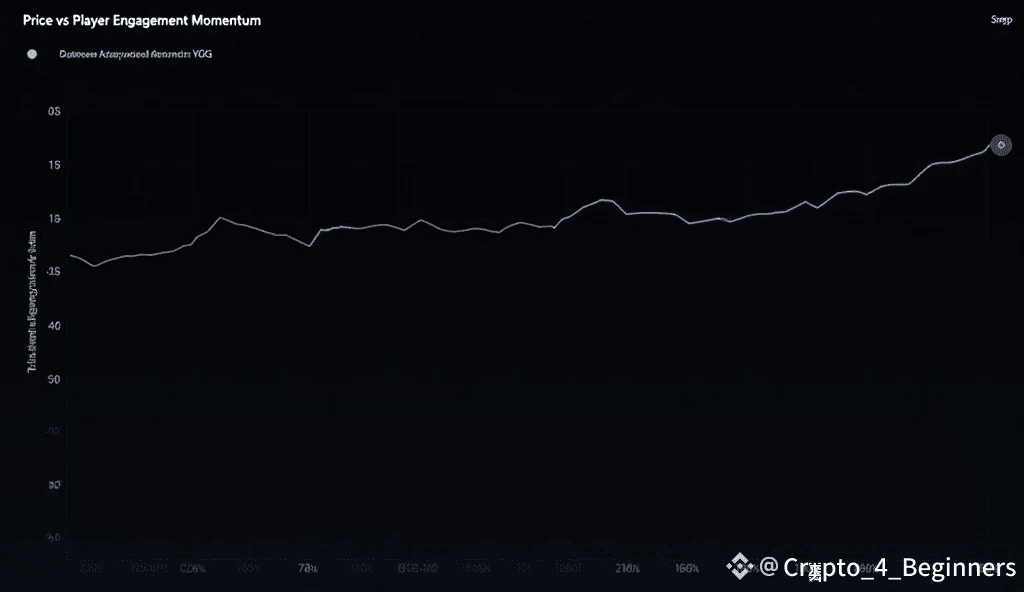
A conceptual chart that would help readers visualize this is a Price vs Player Engagement Momentum line chart mapping YGG's user participation metrics against token volatility. Another useful visual could be a Guild Influence vs Game Launch Success Probability scatter chart showing correlations between YGG driven onboarding flows and early game economy stability.
To add more depth, I imagine a conceptual table comparing Player Layer Contribution Types e.g., discovery, liquidity, retention, social traction with the Expected Impact on Partner Games helping readers map how each behavior influences game models.
How YGG’s player driven model compares with technical scaling solutions
Whenever people analyze Web3 gaming, they often compare guilds like YGG with Layer-2 solutions such as Polygon, Immutable, Arbitrum Nova, or specialized gaming chains. But in my assessment, these comparisons miss the point: technical scaling and social scaling solve entirely different problems.
Layer-2s solve throughput, fees, and execution constraints. Public data from Polygon’s 2024 network metrics show billions of monthly transactions, making it clear that blockchains have already solved the scalability bottleneck. But what they haven’t solved is the user bottleneck. Even with high throughput, most Web3 games struggle to attract their first 10,000 active players. That’s where YGG’s players come in.
YGG acts as a liquidity artery and a human-onboarding layer at the same time. Instead of competing with scaling solutions, the guild complements them by filling the last mile gap between the infrastructure and the actual user base. This is like comparing a high speed train network to a community bus system the trains provide the rails but the buses bring people to the stations. YGG players are the buses.
For this reason, I believe that the maturation of player roles inside YGG represents an early blueprint for how decentralized gaming ecosystems will scale socially not just technically.
The new identity of Web3 players
As I look at everything YGG is building, the biggest shift isn’t in token mechanics or new quest designs; it’s in how players themselves are becoming network accelerators. Their behavior shapes discovery, stabilizes early economies, validates gameplay quality, and funnels new users into ecosystems that need momentum to survive. In my assessment, the line between player, tester, promoter, and economic participant is blurring and YGG is crafting a structure that embraces this hybrid identity.
If the guild continues to refine progression, reputation, discovery funnels, and cross-game identity layers, then players may soon become one of the most important growth vectors for Web3 gaming. And in a crypto market preparing for its next maturity cycle, the networks that understand how to channel user behavior not just user speculation may ultimately define the future of decentralized play.
