Fogo’s use of the Solana Virtual Machine positions it well as a high performance Layer 1 particularly for latency sensitive DeFi and trading applications.
saturno V
·
--
FOGO
Hoy quiero compartir mi opinión sobre el potencial de @fogo y su token $FOGO 🔥 Este proyecto está llamando la atención por su enfoque en construir una comunidad activa y por su visión de crecimiento dentro del ecosistema cripto Me parece interesante cómo buscan incentivar la participación de los usuarios y crear utilidad real para el token, algo clave para que un proyecto pueda sostenerse a largo plazo Además, creo que iniciativas como las campañas y misiones ayudan a que más personas conozcan el proyecto y aprendan mientras participan Personalmente, estoy siguiendo de cerca las actualizaciones y el desarrollo porque considero que los proyectos con comunidad fuerte y objetivos claros tienen más probabilidades de crecer con el tiempo Siempre es importante investigar y entender bien cada proyecto antes de invertir, pero sin duda @fogo es uno que vale la pena observar por su propuesta y por el entusiasmo que está generando entre los usuarios. ¿Ustedes qué opinan sobre el futuro de $FOGO Los leo 👇
@Fogo Official From a trader’s lens Fogo stands out as a serious contender in the next wave of high-performance Layer 1s. Built on the Solana Virtual Machine (SVM), Fogo combines ultra-low latency, high throughput, and predictable execution—exactly what active traders and DeFi builders demand. Having traded across congested L1s, performance bottlenecks are real alpha killers. Fogo’s architecture is clearly optimized for speed-sensitive use cases like on-chain trading, perp DEXs, and real-time DeFi strategies. If SVM ecosystems continue to expand beyond Solana itself, Fogo could capture meaningful liquidity and developer attention early. Definitely a chain worth keeping on radar as infrastructure narratives heat up.
$pippin is grinding higher with a steady +9% move, now trading around $0.47 after bouncing from the $0.43–$0.44 demand zone. Market cap and FDV are perfectly aligned, which removes dilution risk and makes price action cleaner. Liquidity at nearly $14M supports healthier moves, while almost 39k holders shows strong distribution. Volume is still below recent moving averages, so a real breakout needs participation to pick up. Holding above $0.46 keeps the structure bullish. A reclaim of $0.50 could trigger momentum toward the $0.53–$0.57 range. Stay disciplined.
$POWER is showing renewed momentum after reclaiming the $0.35 area with strong volume expansion. The +13% move suggests buyers are stepping in ahead of key resistance near $0.36–$0.38, where previous rejection occurred. Market cap at $82M still leaves room for upside if sentiment holds, but FDV remains something to watch. On-chain holders are relatively low, meaning volatility can stay high. As long as price holds above the $0.33 support zone, the short-term trend favors continuation. A clean break above $0.36 could open the door for the next leg up. Trade with risk management.
$DGRAM (Datagram Network) is showing renewed momentum after a strong +16.75% move, pushing price to the $0.0000834 zone. What stands out is the steady increase in volume alongside improving short-term MAs, suggesting real participation rather than a thin spike. With a modest market cap and FDV still under $1M, volatility is expected—but that’s where opportunity lives. Liquidity looks healthy relative to size, and holder count continues to grow, which reduces downside risk over time. Key resistance sits near $0.00010, while dips toward $0.000073 could offer structured entries. Risk management is essential, but DGRAM is worth keeping on the radar.
$BTC $ETH $BNB President Trump highlighted progress on crypto regulation at the World Economic Forum a signal markets have been waiting for. From my trading experience, regulatory clarity often acts as a volatility compressor first then a catalyst. Clear rules reduce institutional hesitation, which is why Bitcoin tends to front-run these narratives as a macro hedge and regulatory bellwether. Ethereum usually follows as smart-contract adoption benefits from legal certainty, especially around DeFi and tokenized assets. Short term, I’d expect choppy price action as traders fade headlines. Medium term, clearer U.S. policy could unlock sidelined capital and strengthen market structure. This isn’t hype—it’s groundwork.
$LISA (AgentLISA AI) is showing explosive momentum after a +200% surge, now trading near $0.015. Price has pulled back from the 0.022 high, which is healthy after a sharp expansion. The 0.011–0.012 zone is a key support area to watch, as it previously acted as a launch level. Volume has cooled compared to the spike, signaling short-term consolidation rather than reversal. With a relatively low market cap and strong holder growth, volatility will remain high. Manage risk carefully and avoid chasing green candles.
$BTC USDT is trading near 66,700, showing clear hesitation after failing to hold above the 68,000–68,400 resistance zone. Strong dollar pressure and declining short-term volume are limiting upside momentum. The 65,800–66,000 area remains a critical support—buyers must defend this zone to avoid a deeper pullback toward 64,500. Moving averages on lower timeframes suggest consolidation rather than continuation. A decisive breakout above 68,500 with volume could restart bullish momentum toward new highs, but until then, caution is advised. Trade the range, not the hype.
$BNB USDT is trading around 606, showing short-term weakness after rejecting the 626–628 resistance zone. Price is still holding above the psychological 600 support, which is key for bulls. On lower timeframes, momentum looks neutral to bearish as volume fades, suggesting consolidation before the next move. A clean break below 600 could open downside toward 585–590, while reclaiming 616–620 with strong volume may trigger a relief bounce toward 630. Risk management is crucial here—wait for confirmation rather than chasing volatility. Patience during ranges often pays more than impulsive entries.
Vanar: Building the Blockchain Infrastructure for Real-World Web3 Adoption.
Vanar is an L1 blockchain built with a very clear mission: make Web3 usable for real people, not just crypto natives. In my experience working around exchanges, communities, and Web3 campaigns, I have seen a common problem. Many blockchains promise scalability, low fees, and decentralization, but very few are designed with mainstream users in mind. Most networks are still complicated for gamers, brands, and everyday consumers. Vanar approaches the market differently. Instead of asking users to adapt to blockchain, it adapts blockchain to real-world behavior.
What makes Vanar interesting is not just its technical foundation as a Layer 1 chain, but its product-first strategy. Many L1 projects focus heavily on infrastructure but fail to build meaningful consumer-facing applications. Vanar integrates technology with practical ecosystems such as gaming, metaverse experiences, AI-driven solutions, environmental initiatives, and brand partnerships. This combination signals a strategic understanding of how mass adoption actually happens.
From my research and trading experience, successful blockchain ecosystems usually share three characteristics. First, they solve a clear user problem. Second, they integrate with industries that already have large audiences. Third, they reduce friction in onboarding. Vanar appears to be structured around these principles.
The team behind Vanar has strong roots in gaming, entertainment, and brand collaborations. This background is important. Gaming and entertainment are two of the most powerful entry points into Web3. People may not wake up wanting to use blockchain technology, but they do wake up wanting to play games, consume content, and engage with digital experiences. If blockchain can enhance those experiences without overwhelming users, adoption becomes natural.
Vanar’s product ecosystem reflects this understanding. One of its well-known products is Virtua Metaverse. Unlike many metaverse projects that remain conceptual or limited to small crypto communities, Virtua focuses on immersive digital experiences connected with brands and entertainment. In practical terms, this means digital collectibles, interactive environments, and brand-driven virtual assets that feel familiar to mainstream audiences. The key insight here is that people already value digital identity and ownership, whether through skins in games or digital collectibles on social platforms. Blockchain simply provides verifiable ownership and interoperability.
Another major component is the VGN games network. Gaming has consistently been one of the strongest drivers of blockchain activity. However, many play-to-earn models failed in previous cycles because they were overly financialized. The gameplay was weak, and the tokenomics were unsustainable. From my analysis of those cycles, the projects that survive are those that prioritize fun first and token incentives second. If the core product is not engaging, users leave once rewards decline.
Vanar’s approach seems to emphasize real gaming infrastructure and partnerships rather than purely speculative token mechanics. A games network built on an L1 blockchain can offer fast transactions, low fees, and seamless asset ownership. This matters for in-game economies, NFT integration, and cross-game interoperability. If implemented correctly, it allows developers to build games where digital assets are not locked inside a single ecosystem but can move across platforms.
The VANRY token powers the Vanar ecosystem. In any L1 blockchain, the native token plays multiple roles: transaction fees, staking, governance, and ecosystem incentives. From a trader’s perspective, understanding token utility is critical. A token that exists only for speculation usually struggles in the long term. A token that secures the network, incentivizes developers, and facilitates real transactions has stronger structural demand.
In Vanar’s case, VANRY is designed to fuel network activity. As more games, metaverse assets, and AI-powered solutions run on Vanar, transaction volume and staking participation could increase. This creates a direct link between ecosystem growth and token utility. However, sustainability depends on real usage, not just announcements. As someone who evaluates projects both fundamentally and from a market perspective, I always look for on-chain activity, developer engagement, and user growth rather than marketing hype.
One area where Vanar stands out is its multi-vertical strategy. Many blockchains choose a single niche: DeFi, NFTs, gaming, or enterprise solutions. Vanar spans gaming, metaverse, AI, eco initiatives, and brand solutions. This diversification can be powerful if executed well. It allows cross-sector synergies. For example, AI tools can enhance gaming experiences. Eco initiatives can align brands with sustainability narratives. Brand solutions can introduce non-crypto audiences to digital ownership.
The focus on brands is especially important. In Web2, brands control distribution and consumer trust. If major brands adopt blockchain for loyalty programs, digital collectibles, or immersive marketing, they bring millions of users with them. From my research into brand adoption trends, companies are more likely to adopt blockchain when the infrastructure is simple, scalable, and secure. They need predictable costs, high throughput, and strong support. An L1 built specifically to serve brand integration can create a competitive advantage.
Security is another essential pillar. Real-world adoption cannot happen without strong network security and reliability. Although technical details can vary, any serious L1 must ensure robust consensus mechanisms, resistance to attacks, and transparent governance. For mainstream users, security often means something simple: their assets should not disappear, and transactions should not fail. For developers and enterprises, it means predictable performance and compliance-friendly structures.
Scalability also plays a central role. If the goal is to bring the next three billion consumers to Web3, the network must handle large volumes of transactions without congestion or extreme fees. One of the biggest lessons from previous bull markets is that network congestion destroys user experience. High gas fees and slow confirmations discourage newcomers. A successful L1 for mass adoption must balance decentralization with performance.
From a practical standpoint, onboarding is often underestimated. In my experience interacting with new users, the biggest barrier is wallet complexity and private key management. If Vanar integrates simplified onboarding tools, social logins, or embedded wallets within gaming and metaverse platforms, it significantly lowers friction. Users may not even realize they are interacting with blockchain, which is often the best outcome for adoption.
The AI integration angle is another forward-looking component. AI and blockchain together create new possibilities. AI can analyze user behavior, personalize in-game experiences, optimize economies, and enhance security monitoring. Blockchain, on the other hand, can provide transparent data and verifiable ownership. Combining these technologies within a single ecosystem can create unique user experiences that go beyond speculation.
The eco and sustainability dimension also reflects modern consumer expectations. Environmental concerns have historically been a criticism of blockchain networks. If Vanar incorporates energy-efficient mechanisms or supports eco-driven initiatives, it can position itself as a responsible infrastructure provider. For brands, aligning with environmentally conscious blockchain solutions can improve public perception and regulatory comfort.
From a trading perspective, I always separate narrative from execution. The narrative of onboarding the next three billion users is strong. Gaming, metaverse, AI, and brands are powerful sectors. However, long-term success depends on measurable growth: active users, partnerships that translate into real usage, developer ecosystem expansion, and consistent network performance.
When evaluating VANRY as an investment, I focus on a few practical indicators. First, staking participation rates. High staking can indicate confidence in the network and reduce circulating supply pressure. Second, transaction growth trends. Third, ecosystem announcements that lead to actual product launches, not just memorandums of understanding. Fourth, community strength and developer activity.
Risk management is essential. Even strong L1 projects face competition from established networks. The Layer 1 space includes many high-performance chains. Differentiation must come from real product integration and brand execution. As a trader, I avoid overexposure to any single ecosystem, but I monitor projects like Vanar for structural growth patterns rather than short-term price movements.
What excites me most about Vanar is its practical orientation. Instead of focusing purely on decentralized finance or abstract blockchain use cases, it connects with industries that already have billions of users. Gaming alone has a massive global audience. Entertainment and brands amplify that reach. If blockchain infrastructure can be embedded into experiences people already enjoy, adoption becomes organic.
For developers, Vanar presents an opportunity to build within a consumer-focused ecosystem. For brands, it offers a pathway into Web3 without navigating overly complex infrastructure. For users, it promises immersive digital ownership integrated into familiar environments. For investors and traders, it represents a bet on the convergence of entertainment, technology, and decentralized infrastructure.
The next phase of Web3 will likely be defined not by speculation but by usability. Networks that simplify the user journey, integrate with mainstream industries, and deliver consistent performance will have a competitive edge. Vanar’s strategy appears aligned with that direction.
The key lesson is simple: real adoption does not happen through technology alone. It happens when technology aligns with human behavior. Vanar’s focus on gaming, metaverse, AI, eco initiatives, and brand solutions reflects an understanding that blockchain must serve existing industries rather than replace them overnight. For anyone evaluating Web3 opportunities, the smartest approach is to look beyond hype and focus on ecosystems that build practical bridges between blockchain and everyday life.#Vanar $VANRY @Vanar
$BNB The recent passage of the crypto regulation bill by a Senate panel represents a significant development for the U.S. digital asset market. From my experience in trading and analyzing cryptocurrencies, clear regulation is crucial for both individual traders and institutional participants. This bill expands the Commodity Futures Trading Commission’s (CFTC) authority over digital assets, providing much-needed clarity on which tokens fall under its jurisdiction. Historically, uncertainty over whether a token is a commodity or security created legal and trading risks. With these guidelines, traders can adjust strategies confidently, and institutions may enter the market with reduced compliance concerns.
Regulation often triggers short-term volatility. In my own trading, announcements like this tend to cause swift price reactions in mid-cap tokens as participants recalibrate for potential compliance impacts. However, long-term effects are generally positive. A transparent and structured regulatory framework attracts capital, enhances market trust, and reduces systemic risk. The bill also emphasizes consumer protection, which means platforms will need to improve security, custody, and reporting practices, safeguarding both assets and data.
The key takeaway is that staying informed and adapting to regulatory changes is essential. By understanding the CFTC’s expanded role and aligning strategies accordingly, traders can operate safely, mitigate risk, and benefit from a more mature, transparent crypto ecosystem.#ETH #BtC #BNB
$BNB $BTC Fireblocks CEO Michael Shaulov recently warned about a sophisticated job recruitment scam allegedly linked to North Korean threat actors that targeted professionals through LinkedIn. The attackers reportedly created convincing fake recruiter profiles and approached engineers and developers working in the crypto and blockchain sector. What makes this campaign concerning is not just the impersonation, but the level of detail and patience involved in the social engineering process.
According to reports shared publicly, candidates were invited to participate in what appeared to be legitimate interview processes. These included technical discussions, coding tests, and requests to review or execute sample projects hosted on GitHub. However, the code provided during these “interviews” allegedly contained malicious components designed to compromise the victim’s system. Once executed, the malware could potentially give attackers access to sensitive corporate credentials, private keys, or internal infrastructure.
From a security perspective, this tactic is highly strategic. Instead of attacking company systems directly, threat actors target individuals who already have trusted access. Developers are particularly attractive targets because running code is a routine part of their job. By disguising malware as a technical assignment, attackers exploit professional habits rather than technical vulnerabilities.
There are practical lessons here for both individuals and organizations. First, always verify recruiter identities through official company websites or direct HR contacts. Second, avoid executing unknown code on your primary work machine. Use sandboxed or isolated environments for testing unfamiliar repositories. Third, organizations should regularly train employees on modern social engineering threats, especially those that appear professional and well-structured.
The Solana Virtual Machine compatibility is a strong advantage for developers. Lower barriers to deployment can really accelerate ecosystem growth. Curious to see what tooling .
Crypto Expert BNB
·
--
Bullisch
$FOGO Fogo: Ein schnelleres und zuverlässigeres Layer 1 bauen Fogo betritt den Layer 1-Bereich mit dem Ziel, einen bedeutenden Einfluss auszuüben. Entwickelt mit Fokus auf hohe Durchsatzraten und niedrige Latenz ist Fogo ganz auf echte Skalierbarkeit aus, nicht nur auf Hype. Durch die Nutzung der Solana Virtual Machine bietet Fogo eine vertraute Plattform für Entwickler, die auf bessere Leistung und Ausführung hoffen.
Einer der wichtigsten Aspekte des Netzwerks ist, wie es mit Staus in Zeiten hoher Nutzung umgeht. Während Geschwindigkeit wichtig ist, ist Zuverlässigkeit in Zeiten hoher Nutzung sogar noch wichtiger. Das Design des Konsensalgorithmus, das Engagement der Validatoren und die Hardwareoptimierung fließen alle ein, um das Netzwerk sicher und dezentral zu halten.
Aus der Entwicklungsperspektive ist die Kompatibilität ein großer Gewinn. Anwendungen, die bereits auf der Solana-Plattform erstellt wurden, können leicht mit wenig bis gar keiner Unterbrechung der Entwicklungszeit und -kosten migriert werden. Wenn Fogo weiterhin sein Netzwerk sichern kann, während es Gebühren und Leistung verbessert, wird es nicht lange dauern, bis es zu einem bevorzugten Ziel für ernsthafte Web3-Anwendungen wird.$FOGO {future}(FOGOUSDT) #fogo @Fogo Official
Fogo: Revolutionizing Blockchain Performance with Solana Virtual Machine Integration.
In the rapidly evolving landscape of blockchain technology, the demand for high-performance networks that can handle large volumes of transactions efficiently is growing at an unprecedented pace. Many existing blockchains face limitations in scalability, transaction speed, and developer flexibility, which have created a significant bottleneck for mainstream adoption. Fogo, a new high-performance Layer 1 blockchain, seeks to address these challenges by leveraging the Solana Virtual Machine (SVM) to create a robust and highly scalable network capable of meeting the needs of both developers and end-users. At its core, Fogo is designed to deliver speed, security, and usability without compromising on decentralization. By integrating the Solana Virtual Machine, the platform inherits Solana’s renowned throughput capabilities while introducing its own innovations to enhance compatibility and ecosystem development. For blockchain enthusiasts, developers, and enterprise users alike, this combination offers an attractive proposition: a network that is not only technically powerful but also accessible and adaptable. One of the most significant challenges in blockchain infrastructure today is the tradeoff between speed and security. Many Layer 1 blockchains achieve scalability by centralizing certain processes or by implementing restrictive consensus mechanisms, which can compromise the core principles of decentralization. Fogo addresses this by utilizing a consensus mechanism that is optimized for speed but retains a strong security model. This ensures that high-frequency transactions, such as micro-payments or in-game asset transfers, can occur without risking the integrity of the network. The result is a blockchain capable of processing thousands of transactions per second while maintaining a decentralized architecture. The Solana Virtual Machine is central to Fogo’s performance. SVM is known for its ability to execute smart contracts with remarkable efficiency, allowing developers to build sophisticated decentralized applications (dApps) that operate seamlessly under heavy network load. Fogo’s adaptation of SVM provides developers with a familiar environment while also incorporating enhancements to improve compatibility with traditional development tools. This approach lowers the barrier to entry for developers transitioning from other blockchain ecosystems, enabling them to deploy projects quickly and with minimal friction. Additionally, Fogo supports multiple programming languages commonly used in blockchain development, further broadening its appeal and fostering a diverse developer community. Beyond raw performance, Fogo emphasizes usability for both developers and end-users. Many high-performance blockchains struggle with adoption because the tools and interfaces for building and interacting with the network are overly complex. Fogo prioritizes simplicity without sacrificing functionality. Its development framework includes well-documented APIs, intuitive software development kits (SDKs), and user-friendly dashboards that allow developers to monitor network performance and manage assets efficiently. For end-users, wallet integrations, transaction tracking, and governance participation are streamlined to create an experience comparable to interacting with traditional financial platforms. By focusing on usability, Fogo increases the likelihood that developers will create impactful applications and that users will engage with them consistently. One area where Fogo stands out is in its approach to cost efficiency. Network fees are a significant consideration for both developers and users, particularly in high-volume environments such as gaming, decentralized finance (DeFi), and digital marketplaces. Fogo’s architecture is designed to minimize transaction fees without sacrificing network speed or reliability. By optimizing how smart contracts are executed and how transactions are validated, Fogo ensures that operating costs remain predictable and manageable. This financial efficiency not only attracts developers but also encourages broader adoption by users who may be sensitive to high transaction fees on other networks. Interoperability is another critical component of Fogo’s strategy. Modern blockchain ecosystems are increasingly interconnected, and the ability for assets and data to move freely between networks is essential. Fogo includes mechanisms for cross-chain communication, allowing assets to be transferred between Fogo and other leading networks with minimal friction. This interoperability supports a wide range of use cases, from cross-platform gaming economies to integrated DeFi protocols. By building bridges to existing ecosystems, Fogo positions itself as a flexible and forward-looking platform that does not operate in isolation. Security remains a foundational focus for Fogo. While many blockchains prioritize speed and low fees, security lapses can have devastating consequences, including loss of funds, compromised data, and diminished trust. Fogo employs a multi-layered security model that combines cryptographic techniques, rigorous node validation, and continuous monitoring to protect the integrity of the network. Developers are also provided with tools to audit their smart contracts, ensuring that applications deployed on Fogo meet high-security standards. This attention to security helps build confidence among enterprise users, institutional investors, and everyday participants who require reliable, tamper-proof systems. Fogo’s approach to governance reflects its commitment to decentralization and community engagement. Token holders have the ability to participate in decision-making processes that influence network parameters, protocol upgrades, and ecosystem development priorities. This democratic model incentivizes active participation and aligns the interests of developers, investors, and users. Governance is facilitated through secure, transparent mechanisms that are easy to understand and execute, providing an inclusive framework for shaping the future of the network. From a strategic perspective, Fogo’s adoption of the Solana Virtual Machine also opens doors to innovative use cases that were previously constrained by technical limitations. For example, high-frequency trading applications, real-time data feeds, and gaming platforms that require instant state updates can now be built directly on Fogo without relying on secondary scaling solutions. This direct integration of high-performance virtual machine capabilities into the Layer 1 layer reduces latency, simplifies development, and enhances the overall user experience. It allows creators to experiment with new business models and interactive experiences that were previously impractical due to network constraints. The ecosystem potential of Fogo is further strengthened by its focus on developer support and community engagement. Unlike many high-performance blockchains that are primarily marketed to technical audiences, Fogo actively invests in education, developer grants, and incubation programs. By nurturing talent and providing resources, the platform encourages innovation and accelerates the growth of meaningful applications. The combination of technical capability and community investment creates a virtuous cycle: as developers build compelling projects, more users engage with the network, which in turn attracts additional developers and investors. In addition to technical and community considerations, Fogo also addresses sustainability concerns, which are increasingly important for modern blockchain networks. High-performance blockchains often require significant energy consumption, which can lead to environmental criticism. Fogo’s architecture is optimized to reduce resource usage while maintaining throughput and reliability. By minimizing computational waste and improving energy efficiency, Fogo positions itself as a more responsible alternative to less efficient networks, appealing to environmentally conscious developers and users. For enterprises and institutional users, Fogo presents unique advantages. Its combination of speed, low fees, and security makes it suitable for supply chain management, financial services, and other data-intensive applications. The platform’s support for complex smart contracts and interoperability further enables organizations to integrate blockchain solutions into existing workflows without major disruptions. For companies exploring blockchain adoption, Fogo offers a practical and future-proof foundation that can scale with their needs. Looking at the competitive landscape, Fogo differentiates itself by combining technical excellence with a user-centric approach. Many blockchains achieve high throughput but fail to attract a developer community or end-user adoption due to complexity or cost. Others emphasize usability but sacrifice performance. Fogo’s strategy of integrating the Solana Virtual Machine, optimizing cost efficiency, and prioritizing developer and user experience creates a unique value proposition. It is not simply a faster blockchain; it is a platform designed to enable meaningful applications and sustainable ecosystem growth. In conclusion, Fogo represents a significant step forward in the evolution of blockchain technology. By leveraging the Solana Virtual Machine, the platform delivers high throughput, low latency, and cost-efficient transaction processing. Its focus on usability, security, interoperability, and governance creates an ecosystem that is accessible to both developers and end-users. Fogo’s commitment to community support and sustainability further enhances its long-term viability. For anyone exploring blockchain development or seeking scalable, reliable solutions, Fogo offers a practical and innovative foundation. The key takeaway is that high-performance blockchains do not have to compromise usability, security, or ecosystem growth. Fogo demonstrates that by combining technical innovation with thoughtful design and community engagement, it is possible to create a Layer 1 network that is both powerful and practical. For developers, enterprises, and users looking to participate in the next generation of blockchain applications, understanding and leveraging Fogo’s capabilities could provide a strategic advantage in a highly competitive landscape. Its integration of Solana Virtual Machine technology is not just a technical choice—it is a deliberate effort to redefine what high-performance blockchain infrastructure can achieve. #fogo $FOGO @fogo
$HANA is trading near $0.0347, down around 3.5%, showing short-term weakness after testing the $0.037 area. Market cap sits near $23.6M with FDV slightly higher, suggesting moderate token unlock risk but not extreme dilution pressure. Volume is close to short-term moving averages, which signals consolidation rather than panic selling.
From my trading perspective, key support rests near $0.0340, while reclaiming $0.036–$0.037 could restore bullish momentum. With liquidity above $1.5M and over 6K holders, stability exists, but continuation depends on broader market sentiment. I’d focus on disciplined entries, clear stop levels, and confirmation through rising volume before scaling positions.#HANA $BTC #SOL
$AICell is trading near $0.00144 with a slight pullback of around 3%, while market cap and FDV remain closely aligned — a sign of limited inflation risk at current levels. Liquidity is relatively strong compared to market cap, which reduces extreme slippage but doesn’t remove volatility. With over 50K holders, community interest is clear, yet volume needs to recover above short-term moving averages for bullish continuation. Personally, I would wait for stabilization above $0.00150 before considering momentum entries. In small-cap BSC tokens, patience, tight risk control, and tracking real development updates matter more than chasing short-term spikes.#aicell #BTC☀ #Ethereum
CharacterX $CAI is trading near $0.0407 with market cap around $686K, showing relatively stable price action despite low short-term volume. Liquidity remains modest, so sudden moves are possible if buying pressure increases. From a trader’s perspective, price consolidation between $0.0399 and $0.042 suggests accumulation, but confirmation requires stronger volume above moving averages. I’d watch support levels carefully and avoid chasing small pumps. For speculative tokens like CAI, position sizing and patience are critical. Monitoring holder growth and ecosystem development can help identify whether momentum can build or if sideways movement continues in coming sessions.#cai #BTC #TradeCryptosOnX
$BNB Attestation Service $BAS zeigt erneuertes Momentum, da der Preis um $0.0066 gehandelt wird, mit einem Gewinn von über zehn Prozent bei starker On-Chain-Beteiligung und nahezu 184k Inhabern. Die Liquidität bleibt gesund, was darauf hindeutet, dass Händler aktiv auf Fortsetzung positionieren, wenn das Volumen über den gleitenden Durchschnitten bleibt. Meine Handelsansicht bevorzugt vorsichtige Dip-Einstiege, während ich den Widerstand nahe $0.0071 und die Unterstützung um $0.0061 überwache. Kurzfristige Volatilität wird erwartet, daher sind Risikomanagement und teilweise Gewinnmitnahmen unerlässlich. Projekte mit wachsender Ökosystemnützlichkeit belohnen oft geduldige Händler, aber Disziplin ist wichtiger als Hype. Verfolgen Sie immer Volumenschwankungen, Wallet-Wachstum und die breitere Marktsentiment, bevor Sie Kapital in sich schnell bewegenden globalen Bedingungen investieren.#BNB #BAS #BTC
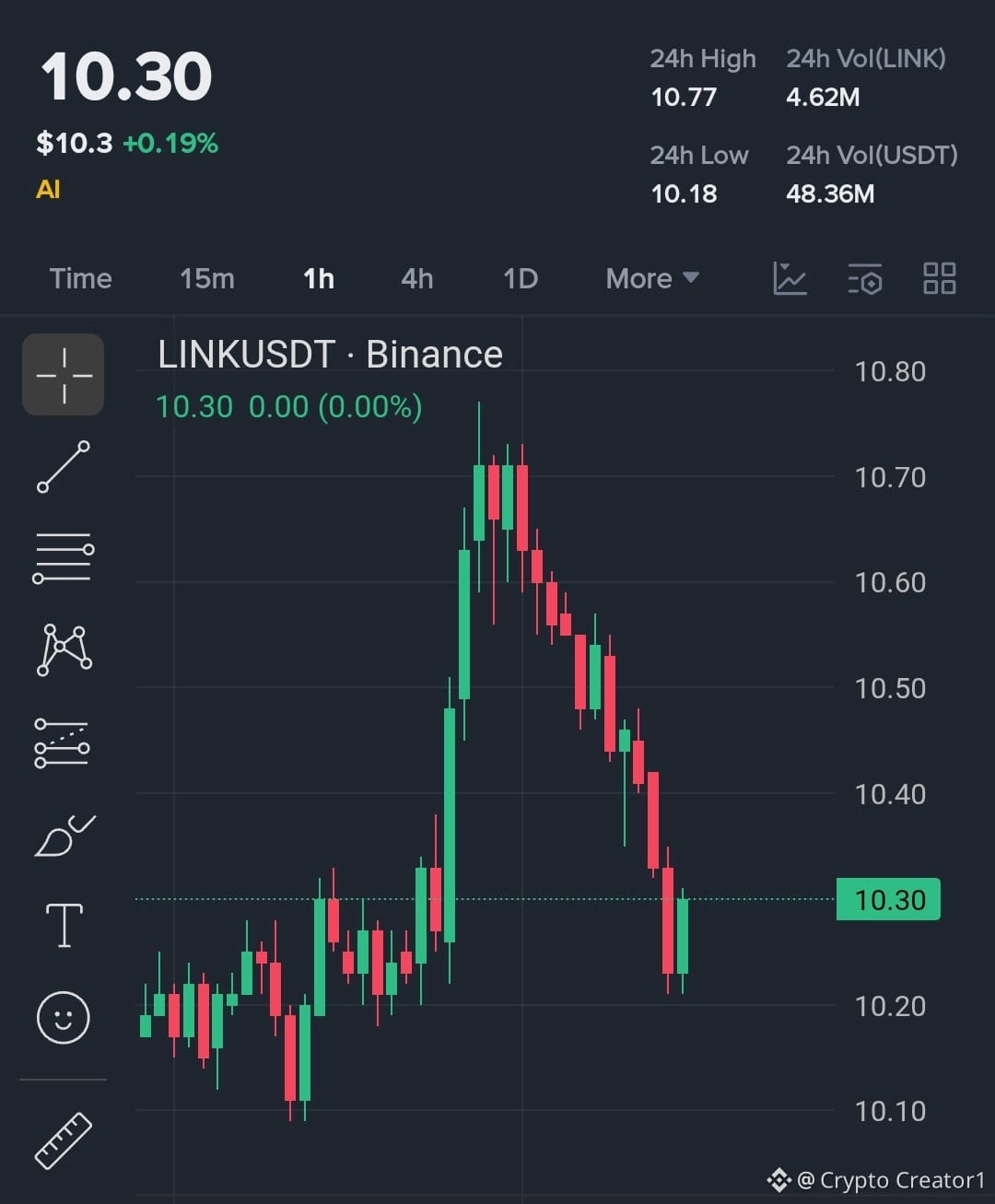
Marktbeobachtungsupdate $SUI Handelsgeschäfte nahe $0.94, zeigen milden Druck, während das breitere Krypto-Sentiment abkühlt. $TRX bleibt relativ stabil und spiegelt starke Netzwerkaktivität trotz kleiner Rückgänge wider. LTC sieht sich weiterhin Widerstand gegenüber, doch langfristige Anleger sehen Wert auf den aktuellen Niveaus. $ZEC Volatilität erinnert Händler daran, Risiken sorgfältig zu managen, während der Rückgang von LINK Möglichkeiten zur Akkumulation für geduldige Investoren bieten könnte. Mein Ansatz ist vorsichtiges Kaufen bei Rückgängen, strikte Stop-Loss-Platzierung und Fokussierung auf Projekte mit echtem Nutzen. Kurzfristige Schwankungen sind normal, aber eine disziplinierte Strategie und angemessene Recherche helfen Händlern, Unsicherheiten zu navigieren und sich auf die nächste Erholungsphase auf den globalen Märkten bald vorzubereiten.#SUİ #TRX #ZEC
Heute zeigt $VANRY USDT Volatilität, da der Preis nahe der Unterstützung nach einem jüngsten Rückgang handelt, was kurzfristige Möglichkeiten für disziplinierte Händler schafft. Mein Ansatz besteht darin, das Volumen zu beobachten und über der 0,0056-Zone zu halten, bevor ich Einstiege in Betracht ziehe, während ich den Stop-Loss eng halte, falls sich die Dynamik abschwächt. Ausbrüche über den Widerstand könnten schnelle Erholungsbewegungen auslösen, aber Geduld bleibt der Schlüssel, da die Marktstimmung weiterhin schwankt. Kluges Risikomanagement und klare Gewinnziele helfen den Händlern, Rückgänge zu überstehen und Aufwärtsbewegungen zu erfassen, wenn das Vertrauen auf den Kryptomärkten zurückkehrt, was ein stetiges Portfolio-Wachstum durch konsistente Strategieumsetzung in den kommenden Sitzungen für selbstbewusste und vorbereitete Teilnehmer unterstützt, die weltweit nach nachhaltigem langfristigen Handelserfolg streben.#vanry #BTC #ETH