
HooRain_522
6.1k Beiträge

HooRain_522
I'm CrypTo learner & Binance Square creater. I'll try to break the obstacles that's my way. On X "@hoorainwasee"
731 Following
14.5K+ Follower
13.8K+ Like gegeben
Beiträge
Alle
Zitierungen
Live
Übersetzung ansehen
Last night, unable to sleep, I found myself digging through the August 16 bridge-wallet incident report. I turned it over for a long while and once the house went quiet, I sat down to trace where the actual funding came from. Calmly, without unnecessary noise.
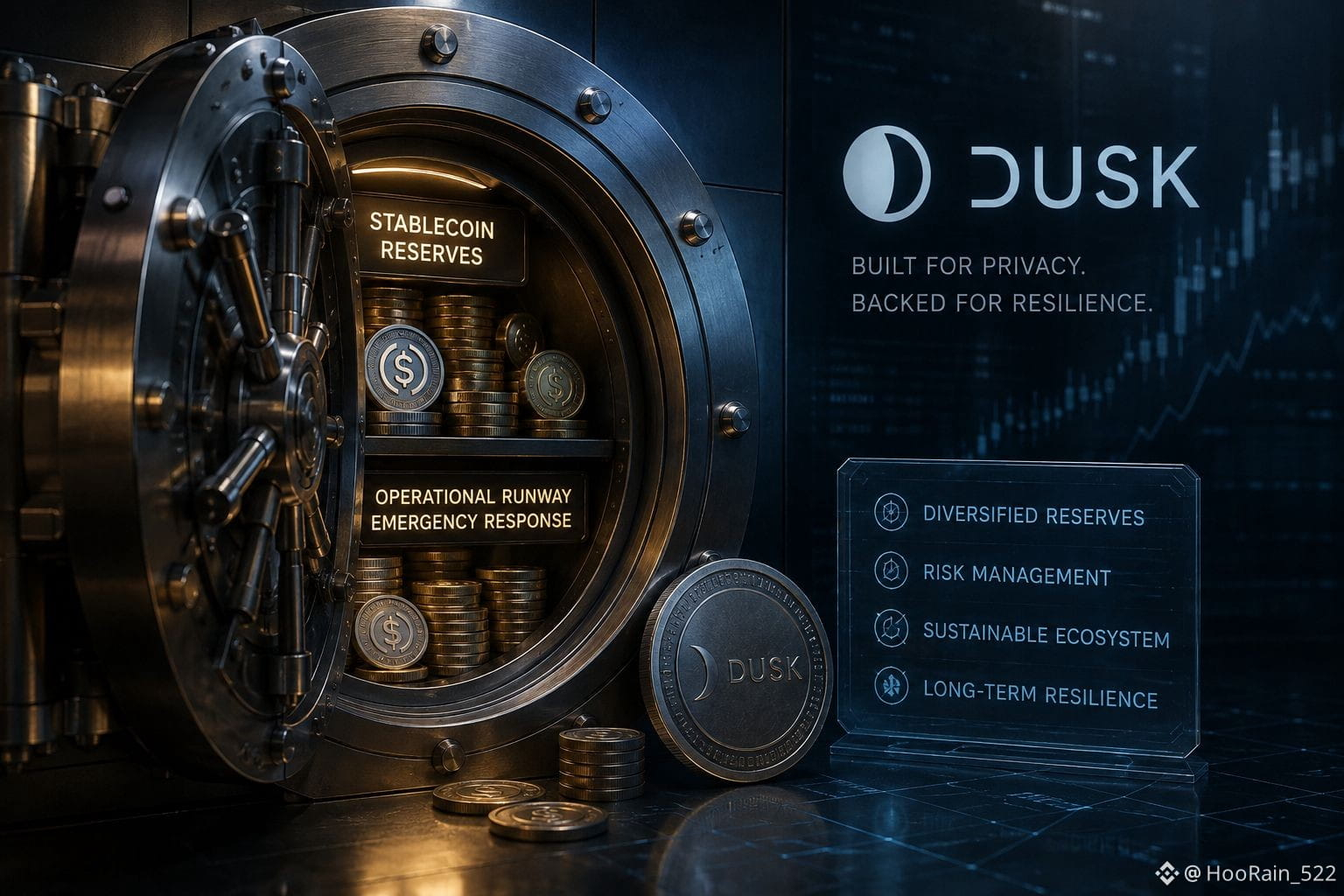
The natural assumption is that a foundation treasury should hold DUSK it signals conviction, alignment with holders. But here lies the misconception. When the incident hit, the response wasn't funded by the DUSK treasury at all. It came from stablecoin reserves, while addresses were frozen and the Web Wallet blocklist absorbed the shock.
That distinction matters more than it looks. DUSK exposure isn't operational runway. With the token trading near $0.06 and a market cap around $31M, liquidating a large treasury position under stress would be slow and costly.
So maybe diversification isn't bearish it's survival infrastructure.
My question: should a foundation optimize for maximum DUSK alignment or for the ability to operate through the next unexpected event without touching the asset it's building around?
#dusk $DUSK @Dusk
$BMT
The natural assumption is that a foundation treasury should hold DUSK it signals conviction, alignment with holders. But here lies the misconception. When the incident hit, the response wasn't funded by the DUSK treasury at all. It came from stablecoin reserves, while addresses were frozen and the Web Wallet blocklist absorbed the shock.
That distinction matters more than it looks. DUSK exposure isn't operational runway. With the token trading near $0.06 and a market cap around $31M, liquidating a large treasury position under stress would be slow and costly.
So maybe diversification isn't bearish it's survival infrastructure.
My question: should a foundation optimize for maximum DUSK alignment or for the ability to operate through the next unexpected event without touching the asset it's building around?
#dusk $DUSK @Dusk
$BMT
#dusk $DUSK @Dusk
Gestern Abend, als ich einige alte Sicherheitsberichte durchging, fiel mir ein Gedanke besonders auf. Ich dachte stundenlang darüber nach, und als die Wohnung schließlich ruhig wurde, setzte ich mich hin, um die Compliance-These von Dusk mit einem aktuellen Zwischenfall an einer Brücke zu vergleichen. Ruhig, ohne unnötigen Lärm.
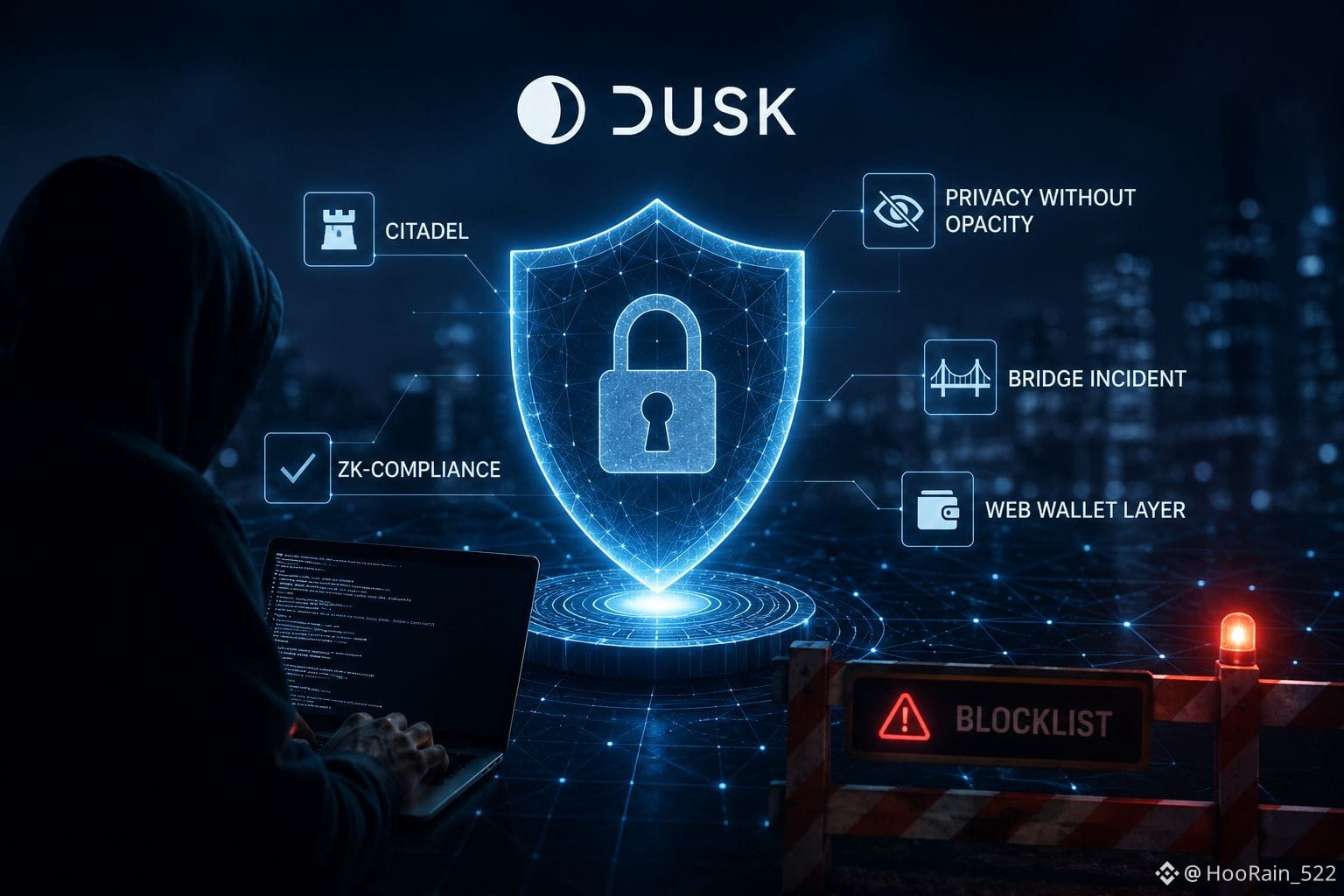
Ganz ehrlich: Dusk hat seine Geschichte immer um Kryptografie herum aufgebaut – Citadel, ZK-Compliance und Datenschutz ohne Intransparenz. Aber hier gibt es einen wichtigen Punkt. Als an der Brücke ungewöhnliche Aktivitäten auftauchten, produzierte DuskDS weiterhin Blöcke, wie es vorgesehen war. Die eigentliche Abmilderung – eine Empfänger-Blockliste und ein Warnsystem – erschien auf der Ebene der Web Wallet, nicht auf Protokoll-Ebene.
Das ist kein Versagen. Aber es wirft eine kleine Frage zur Erzählung auf. Eine Frontend-Schutzmaßnahme kann Einzelhandelsnutzer sofort schützen, aber jeder, der CLI-Tools oder benutzerdefinierte Infrastruktur verwendet, ist völlig außerhalb dieses Schutzes.
Also fragt mein innerer Skeptiker weiter: Können Institutionen sich allein auf Kryptografie verlassen, oder werden sie auch wollen, dass die Sicherheitsgrenze selbst On-Chain existiert? Sollte Dusk diese Garantien irgendwann auf Protokoll-Ebene nach unten verlagern – und falls ja, wie viel könnte das in Bezug auf Geschwindigkeit kosten?
$TUT $PROM
Gestern Abend, als ich einige alte Sicherheitsberichte durchging, fiel mir ein Gedanke besonders auf. Ich dachte stundenlang darüber nach, und als die Wohnung schließlich ruhig wurde, setzte ich mich hin, um die Compliance-These von Dusk mit einem aktuellen Zwischenfall an einer Brücke zu vergleichen. Ruhig, ohne unnötigen Lärm.
Ganz ehrlich: Dusk hat seine Geschichte immer um Kryptografie herum aufgebaut – Citadel, ZK-Compliance und Datenschutz ohne Intransparenz. Aber hier gibt es einen wichtigen Punkt. Als an der Brücke ungewöhnliche Aktivitäten auftauchten, produzierte DuskDS weiterhin Blöcke, wie es vorgesehen war. Die eigentliche Abmilderung – eine Empfänger-Blockliste und ein Warnsystem – erschien auf der Ebene der Web Wallet, nicht auf Protokoll-Ebene.
Das ist kein Versagen. Aber es wirft eine kleine Frage zur Erzählung auf. Eine Frontend-Schutzmaßnahme kann Einzelhandelsnutzer sofort schützen, aber jeder, der CLI-Tools oder benutzerdefinierte Infrastruktur verwendet, ist völlig außerhalb dieses Schutzes.
Also fragt mein innerer Skeptiker weiter: Können Institutionen sich allein auf Kryptografie verlassen, oder werden sie auch wollen, dass die Sicherheitsgrenze selbst On-Chain existiert? Sollte Dusk diese Garantien irgendwann auf Protokoll-Ebene nach unten verlagern – und falls ja, wie viel könnte das in Bezug auf Geschwindigkeit kosten?
$TUT $PROM
#dusk $DUSK @Dusk
Ich bin heute Abend immer wieder zu einem Wort zurückgekehrt, während ich über Konsensmechanismen gelesen habe: "probabilistisch." Die meisten Ketten versprechen nie wirklich Finalität, sondern nur eine mit der Zeit sinkende Risikohöhe. Dieser Unterschied ist mir länger nachgegangen, als ich erwartet hatte.
Für den Retail-Bereich ist probabilistische Finalität völlig in Ordnung. Warte ein paar Blöcke, mache weiter. Aber für Institutionen, die Millionenbeträge in tokenisierten Assets ausgleichen, ist "wahrscheinlich final" keine echte Antwort. Schon das Re-Org-Risiko allein ist ein Dealbreaker.
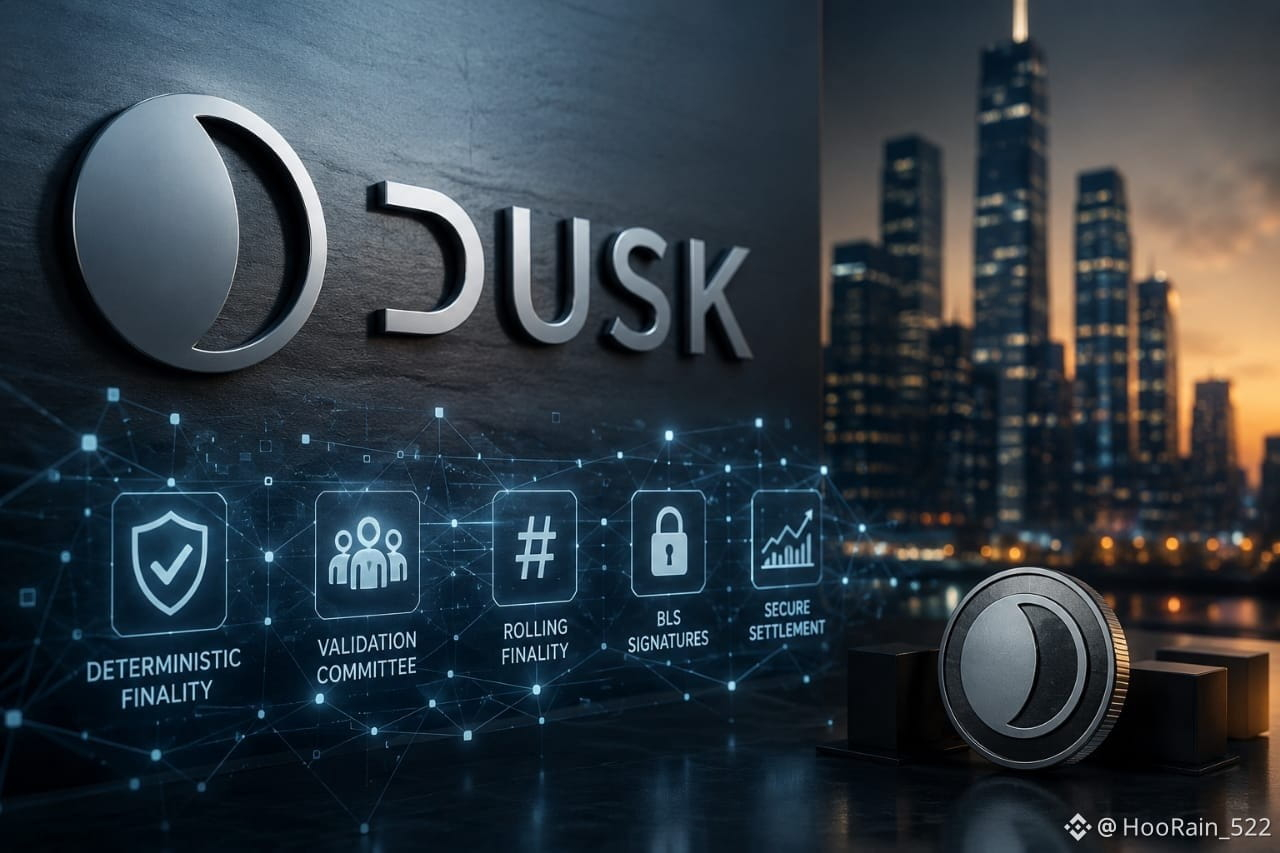
Dusk geht das anders an: Durch Succinct Attestation trifft deterministisches Sortition-Verfahren die Auswahl der Provisioner über BLS-Signaturen, wodurch Validierungs- und Ratifizierungs-Komitees gebildet werden – ohne irgendetwas zu minen. Zusammen mit rollierender Finalität wird ein Block in Sekunden wirklich unveränderbar, nicht erst irgendwann endgültig.
Das beendet außerdem still und leise Long-Range-Angriffe und das MEV-Umsortieren bei ausstehenden Trades – etwas, das ich bis zu diesem engen Lesen nicht miteinander verbunden hatte.
Der Trade-off ist die Verfügbarkeit. Offline-Provisioner verlangsamen das Voting, und ein Notfall-Fallback greift ein. Geschwindigkeit ist hier also nicht wirklich die harte Herausforderung.
Der eigentliche Test ist, ob diese strikten Komitees dezentral bleiben, sobald das globale Volumen tatsächlich skaliert.
Ich bin heute Abend immer wieder zu einem Wort zurückgekehrt, während ich über Konsensmechanismen gelesen habe: "probabilistisch." Die meisten Ketten versprechen nie wirklich Finalität, sondern nur eine mit der Zeit sinkende Risikohöhe. Dieser Unterschied ist mir länger nachgegangen, als ich erwartet hatte.
Für den Retail-Bereich ist probabilistische Finalität völlig in Ordnung. Warte ein paar Blöcke, mache weiter. Aber für Institutionen, die Millionenbeträge in tokenisierten Assets ausgleichen, ist "wahrscheinlich final" keine echte Antwort. Schon das Re-Org-Risiko allein ist ein Dealbreaker.
Dusk geht das anders an: Durch Succinct Attestation trifft deterministisches Sortition-Verfahren die Auswahl der Provisioner über BLS-Signaturen, wodurch Validierungs- und Ratifizierungs-Komitees gebildet werden – ohne irgendetwas zu minen. Zusammen mit rollierender Finalität wird ein Block in Sekunden wirklich unveränderbar, nicht erst irgendwann endgültig.
Das beendet außerdem still und leise Long-Range-Angriffe und das MEV-Umsortieren bei ausstehenden Trades – etwas, das ich bis zu diesem engen Lesen nicht miteinander verbunden hatte.
Der Trade-off ist die Verfügbarkeit. Offline-Provisioner verlangsamen das Voting, und ein Notfall-Fallback greift ein. Geschwindigkeit ist hier also nicht wirklich die harte Herausforderung.
Der eigentliche Test ist, ob diese strikten Komitees dezentral bleiben, sobald das globale Volumen tatsächlich skaliert.
Wenn ich auf die Dämmerung blicke, komme ich immer wieder zu einer Frage: Welches echte Problem würde jemanden dazu bringen, sein bestehendes System zu verlassen und zu Dusk zu wechseln?
Es reicht nicht zu sagen, dass reguliertes Finanzwesen möglicherweise Privatsphäre, Compliance und Onchain-Abwicklung braucht. Die eigentliche Frage lautet: Was wird für Menschen, die bereits in diesem Markt tätig sind, tatsächlich besser, wenn sie Dusk nutzen?
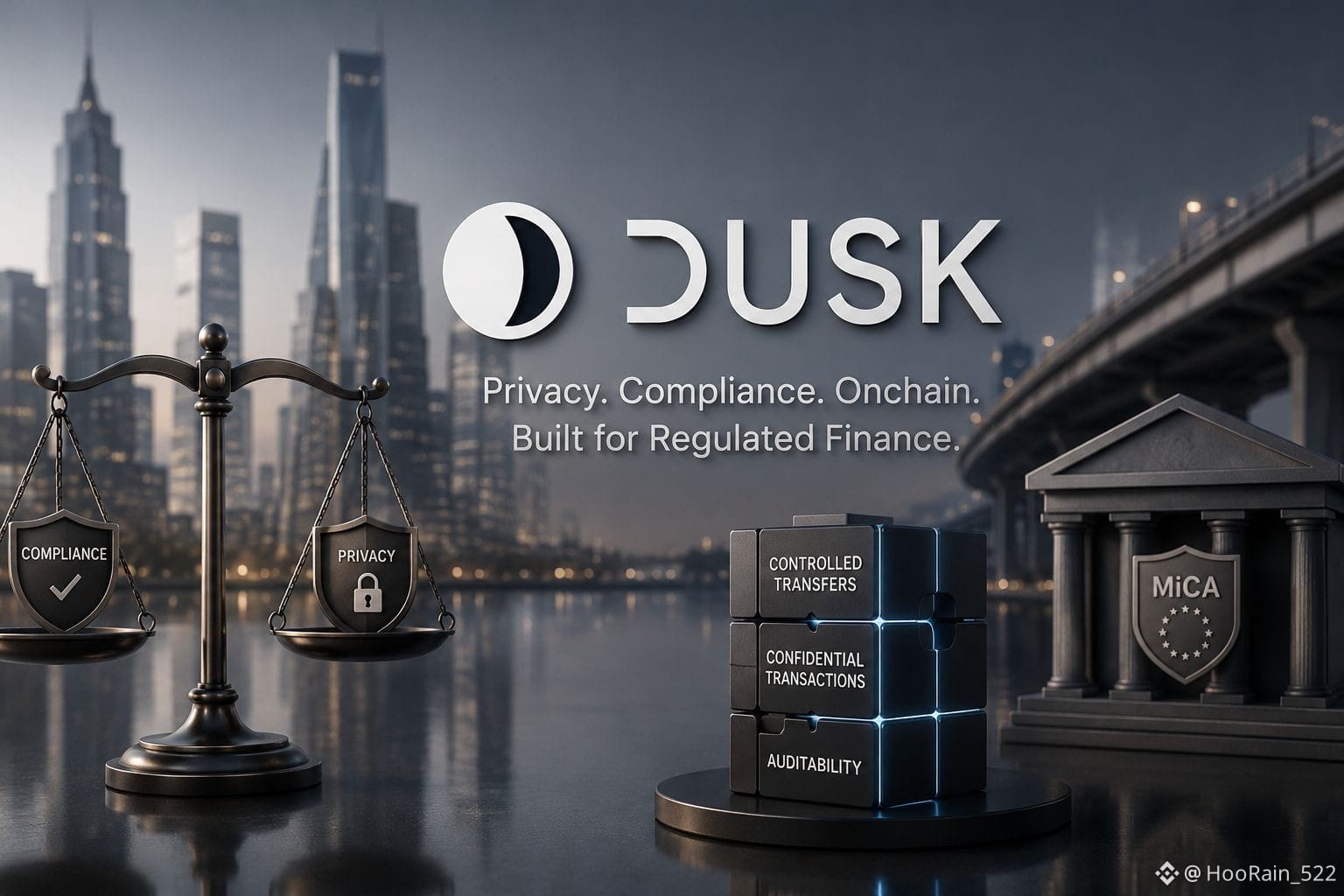
Dusk geht nicht darauf aus, sich mit Regulierern anzulegen, sondern innerhalb ihrer Regeln zu bauen. Während sich Frameworks wie MiCA weiterentwickeln, könnte vertrauliche Compliance an Bedeutung gewinnen. Das ist eine solide Prämisse. Aber technisch beeindruckende Onchain-Emission bedeutet nicht automatisch, dass ein Emittent sein bestehendes System verlässt und zu Dusk wechselt.
Der Punkt, der bei mir hängen blieb, ist: NPEX zeigt bereits, dass regulierte Märkte heute existieren—mit echten Nutzern und echtem Kapital. Dusk muss also keine Nachfrage von Grund auf schaffen. Die Aufgabe besteht darin, zu erklären, was sich für die Menschen verbessert, die bereits in diesem Markt arbeiten.
Privatsphäre + Compliance, kontrollierte Übertragungen, Vertraulichkeit auf Transaktionsebene—während die Dinge trotzdem weiterhin nachprüfbar bleiben. Vielleicht ist genau das der entscheidende Vorteil.
Wenn Dusk tatsächlich Reibung bei Kosten, Geschwindigkeit oder Fragmentierung reduzieren kann, dann wird es relevant. Binances Aufmerksamkeit ist zwar nett. Aber diese Aufmerksamkeit in echte DuskTrade-Liquidität zu verwandeln, ist ein völlig anderer Test.
Also ganz ehrlich: Welche Reibung löst Dusk, die die bestehenden Schienen einfach nicht lösen können?
#dusk $DUSK @Dusk
Es reicht nicht zu sagen, dass reguliertes Finanzwesen möglicherweise Privatsphäre, Compliance und Onchain-Abwicklung braucht. Die eigentliche Frage lautet: Was wird für Menschen, die bereits in diesem Markt tätig sind, tatsächlich besser, wenn sie Dusk nutzen?
Dusk geht nicht darauf aus, sich mit Regulierern anzulegen, sondern innerhalb ihrer Regeln zu bauen. Während sich Frameworks wie MiCA weiterentwickeln, könnte vertrauliche Compliance an Bedeutung gewinnen. Das ist eine solide Prämisse. Aber technisch beeindruckende Onchain-Emission bedeutet nicht automatisch, dass ein Emittent sein bestehendes System verlässt und zu Dusk wechselt.
Der Punkt, der bei mir hängen blieb, ist: NPEX zeigt bereits, dass regulierte Märkte heute existieren—mit echten Nutzern und echtem Kapital. Dusk muss also keine Nachfrage von Grund auf schaffen. Die Aufgabe besteht darin, zu erklären, was sich für die Menschen verbessert, die bereits in diesem Markt arbeiten.
Privatsphäre + Compliance, kontrollierte Übertragungen, Vertraulichkeit auf Transaktionsebene—während die Dinge trotzdem weiterhin nachprüfbar bleiben. Vielleicht ist genau das der entscheidende Vorteil.
Wenn Dusk tatsächlich Reibung bei Kosten, Geschwindigkeit oder Fragmentierung reduzieren kann, dann wird es relevant. Binances Aufmerksamkeit ist zwar nett. Aber diese Aufmerksamkeit in echte DuskTrade-Liquidität zu verwandeln, ist ein völlig anderer Test.
Also ganz ehrlich: Welche Reibung löst Dusk, die die bestehenden Schienen einfach nicht lösen können?
#dusk $DUSK @Dusk
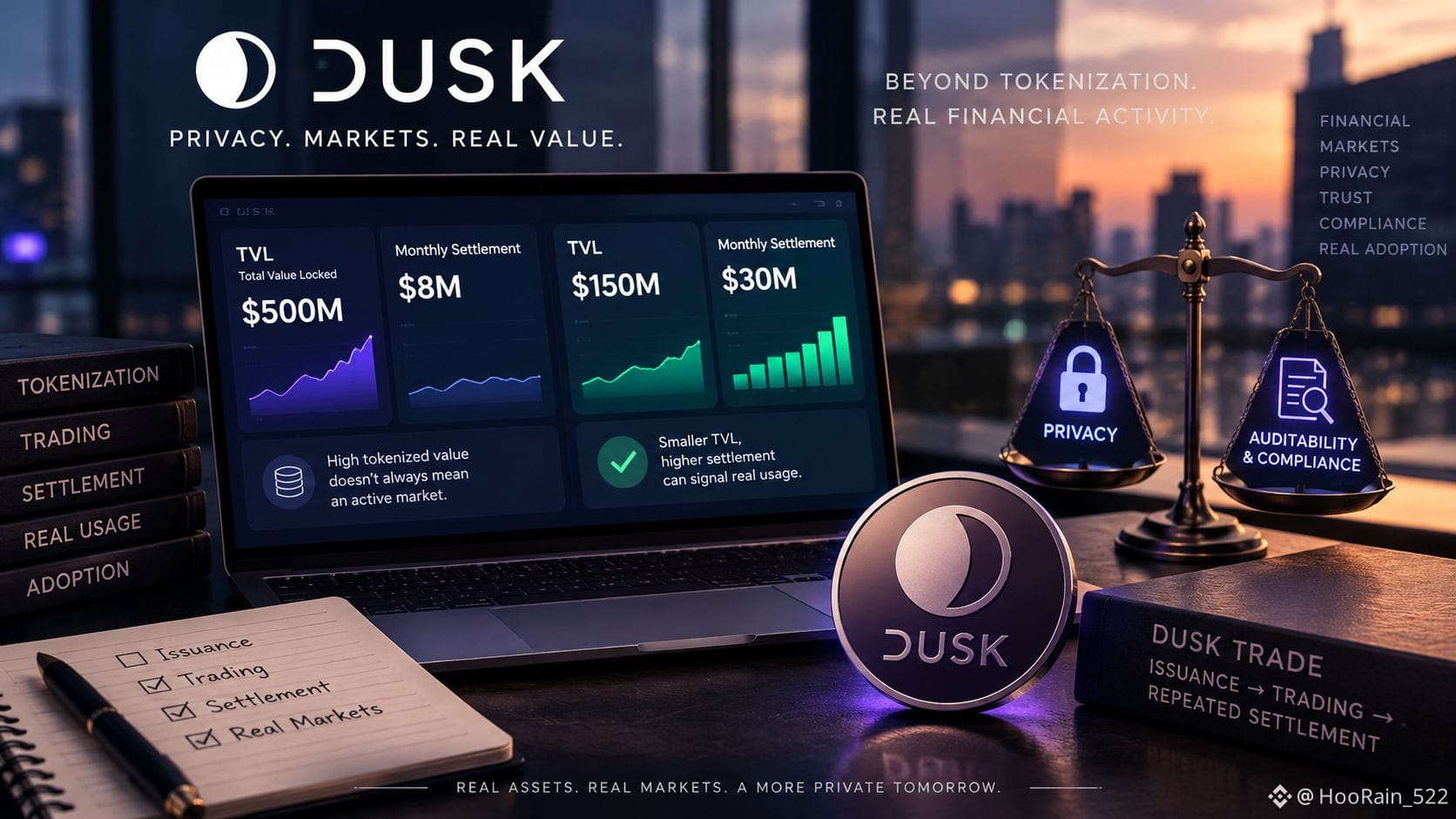
Ich habe den Abend damit verbracht, verschiedene Dashboards zu vergleichen, statt die TVL-Daten auf einer Registerkarte und die Settlement-Daten auf einer anderen zu entspannen. Die Lücke zwischen den beiden Zahlen ließ mir keine Ruhe.
TVL zeigt nur, wie viel Wert oder wie viele Assets gesperrt oder tokenisiert sind. Es sagt uns nicht, ob sich diese Assets tatsächlich bewegen oder genutzt werden. Wenn ein Projekt $500 Mio. in tokenisierten Assets hat, aber nur $8 Mio. im monatlichen Settlement, kann das ziemlich still wirken, fast inaktiv. Andererseits könnten $150 Mio. an Assets mit $30 Mio. im wiederkehrenden Settlement ein stärkeres Zeichen für echte Nutzung sein – auch wenn das Volumen kleiner ist.
Hier wird Dusk Trade wichtiger als nur die Emissionszahlen. Jeder kann Assets prägen. Das entscheidende Signal ist, ob diese Assets tatsächlich wiederholt gehandelt und anschließend abgerechnet werden.
Dann gibt es noch die Datenschutzseite. Früher dachte ich, Dusk funktioniere wie Monero, mit vollständiger Anonymität. Aber Hedgers ZK-Ansatz scheint anders zu sein: Sensible Informationen können privat bleiben, während das System dennoch prüfbar (auditable) ist. Der Vorfall mit der Bridge und das Blockieren von Adressen hat mich darüber nachdenken lassen, ob markierte Adressen weiterhin identifiziert werden können – ist Dusk’s Datenschutz so gestaltet, dass er gezielt (selektiv) ist?
Vielleicht sollten wir also weniger darauf achten, wie viel Wert gesperrt ist, und mehr darauf, was tatsächlich abgerechnet wird: wie oft es sich bewegt und wer es sehen oder bei Bedarf eingreifen kann.
#dusk $DUSK @Dusk
TVL zeigt nur, wie viel Wert oder wie viele Assets gesperrt oder tokenisiert sind. Es sagt uns nicht, ob sich diese Assets tatsächlich bewegen oder genutzt werden. Wenn ein Projekt $500 Mio. in tokenisierten Assets hat, aber nur $8 Mio. im monatlichen Settlement, kann das ziemlich still wirken, fast inaktiv. Andererseits könnten $150 Mio. an Assets mit $30 Mio. im wiederkehrenden Settlement ein stärkeres Zeichen für echte Nutzung sein – auch wenn das Volumen kleiner ist.
Hier wird Dusk Trade wichtiger als nur die Emissionszahlen. Jeder kann Assets prägen. Das entscheidende Signal ist, ob diese Assets tatsächlich wiederholt gehandelt und anschließend abgerechnet werden.
Dann gibt es noch die Datenschutzseite. Früher dachte ich, Dusk funktioniere wie Monero, mit vollständiger Anonymität. Aber Hedgers ZK-Ansatz scheint anders zu sein: Sensible Informationen können privat bleiben, während das System dennoch prüfbar (auditable) ist. Der Vorfall mit der Bridge und das Blockieren von Adressen hat mich darüber nachdenken lassen, ob markierte Adressen weiterhin identifiziert werden können – ist Dusk’s Datenschutz so gestaltet, dass er gezielt (selektiv) ist?
Vielleicht sollten wir also weniger darauf achten, wie viel Wert gesperrt ist, und mehr darauf, was tatsächlich abgerechnet wird: wie oft es sich bewegt und wer es sehen oder bei Bedarf eingreifen kann.
#dusk $DUSK @Dusk
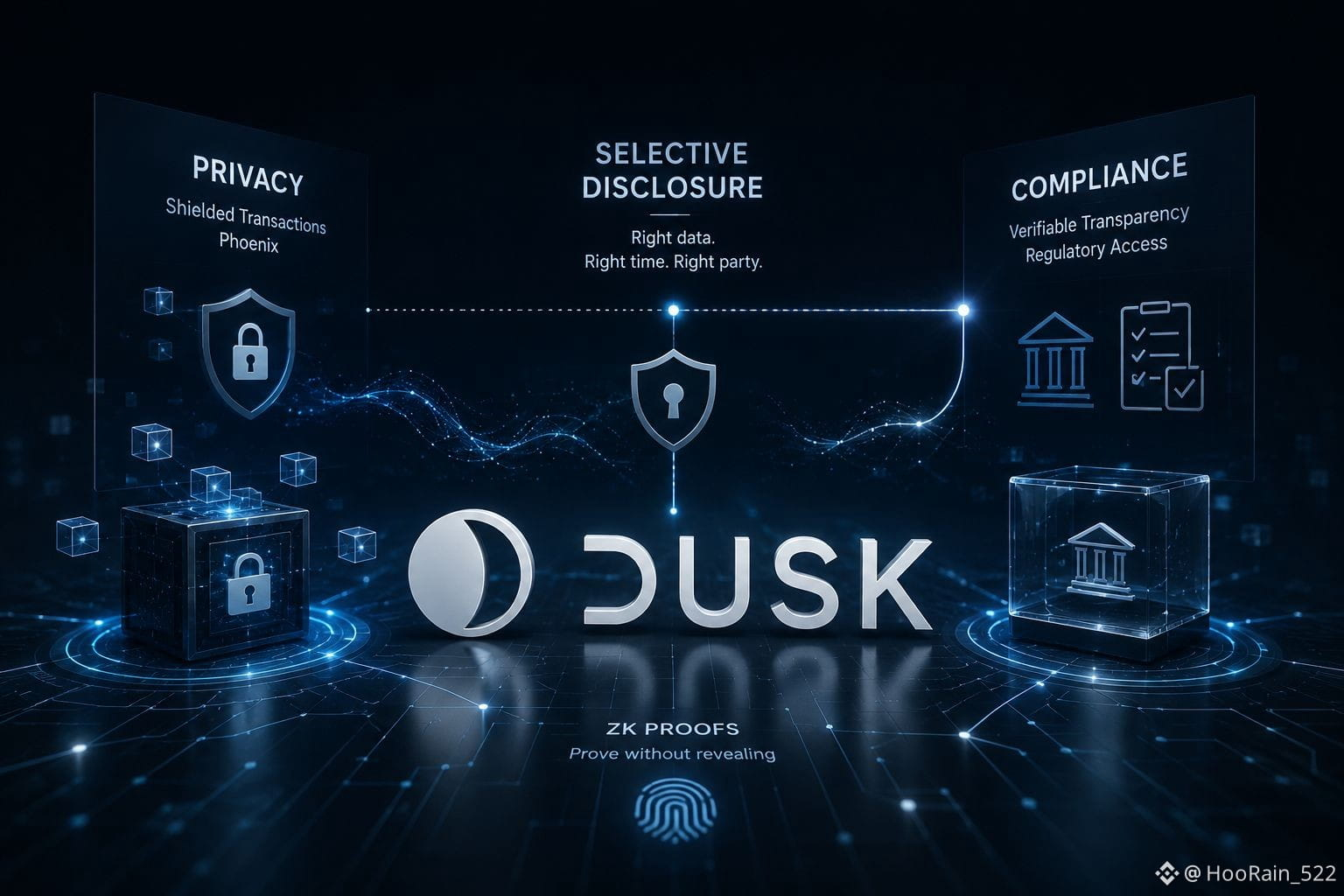
Ich habe mir heute stattdessen die Aufgabe genommen, über diese Spannung nachzudenken, statt den üblichen Explorer-Dive zumindest auf Papier zu machen—Datenschutz und Compliance scheinen in entgegengesetzte Richtungen zu ziehen.
Wenn man darüber nachdenkt, werden die Grenzen vollständiger Transparenz ziemlich klar. Jede einzelne Abwägung und jeder einzelne Geschäftspartner offenzulegen funktioniert nicht wirklich für Institutionen, die echtes Geld bewegen. Aber komplette Anonymität hat auch ihre eigenen Probleme: Wie sollen Aufsichtsbehörden etwas genehmigen, das sie niemals sehen oder prüfen können?
Was bei mir hängen geblieben ist, ist, dass Dusk keine Seite auswählt. Es sind Selective-Disclosure-Transaktionen, die standardmäßig durch Phoenix abgeschirmt bleiben können, während die richtige Partei die Informationen, die sie benötigen, bei Bedarf weiterhin verifizieren kann.
Genau hier leisten ZK-Proofs im Verborgenen die wichtige Arbeit. Sie können beweisen, dass eine Transaktion die Regeln einhält, ohne die zugrunde liegenden Daten allen offenzulegen.
Hmm... aber das lässt noch die schwierigere Frage offen: Wer darf sehen, was, und wer entscheidet das?
So wie ich es verstanden habe, geht Dusk’s Designphilosophie darum, Privatsphäre zusammen mit Compliance aufzubauen—nicht darum, sie als Gegensätze zu behandeln.
Also bin ich wirklich neugierig: Erfüllt Selective Disclosure in der Praxis tatsächlich die Anforderungen von Aufsichtsbehörden, oder ist es immer noch weitgehend ungetestet im realen institutionellen Maßstab?
#dusk $DUSK @Dusk
Wenn man darüber nachdenkt, werden die Grenzen vollständiger Transparenz ziemlich klar. Jede einzelne Abwägung und jeder einzelne Geschäftspartner offenzulegen funktioniert nicht wirklich für Institutionen, die echtes Geld bewegen. Aber komplette Anonymität hat auch ihre eigenen Probleme: Wie sollen Aufsichtsbehörden etwas genehmigen, das sie niemals sehen oder prüfen können?
Was bei mir hängen geblieben ist, ist, dass Dusk keine Seite auswählt. Es sind Selective-Disclosure-Transaktionen, die standardmäßig durch Phoenix abgeschirmt bleiben können, während die richtige Partei die Informationen, die sie benötigen, bei Bedarf weiterhin verifizieren kann.
Genau hier leisten ZK-Proofs im Verborgenen die wichtige Arbeit. Sie können beweisen, dass eine Transaktion die Regeln einhält, ohne die zugrunde liegenden Daten allen offenzulegen.
Hmm... aber das lässt noch die schwierigere Frage offen: Wer darf sehen, was, und wer entscheidet das?
So wie ich es verstanden habe, geht Dusk’s Designphilosophie darum, Privatsphäre zusammen mit Compliance aufzubauen—nicht darum, sie als Gegensätze zu behandeln.
Also bin ich wirklich neugierig: Erfüllt Selective Disclosure in der Praxis tatsächlich die Anforderungen von Aufsichtsbehörden, oder ist es immer noch weitgehend ungetestet im realen institutionellen Maßstab?
#dusk $DUSK @Dusk
#dusk $DUSK @Dusk Still thinking about this: was passiert eigentlich nach der Tokenisierung?
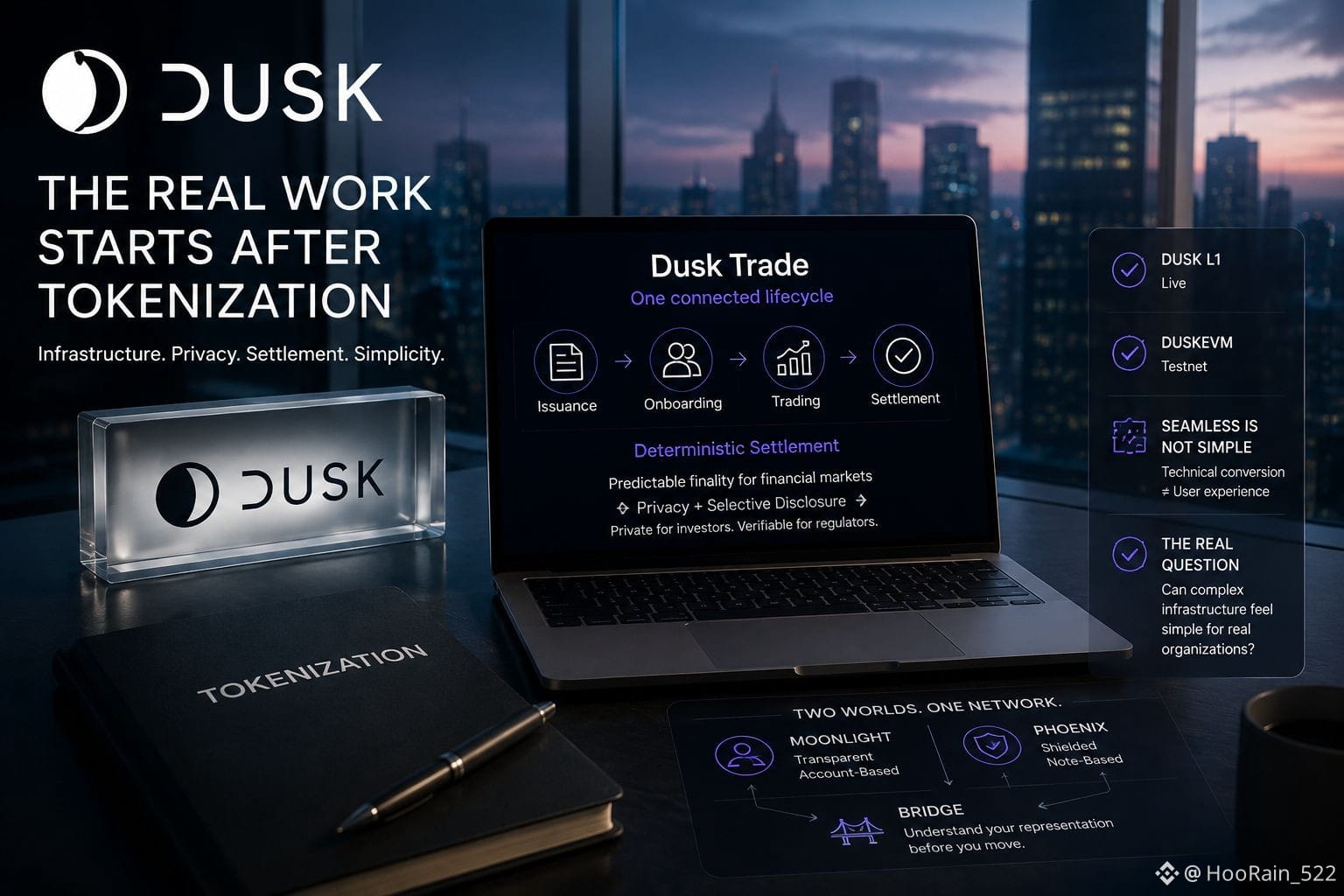
Ich ging früher davon aus, dass die eigentliche Schwierigkeit darin besteht, ein Asset überhaupt erst auf die Blockchain zu bringen. Aber je mehr ich in Dusk eintauche, desto mehr erkenne ich, dass die echte Arbeit erst danach beginnt.
Tokenisierung ist nur der erste Schritt. Die eigentliche Herausforderung ist die Infrastruktur drumherum. Mit Dusk Trade wird es viel spannender: Investor Onboarding, Wallet-Verknüpfung, Transfer-Controls, Payment-Koordination…
Es ist kein Bündel separater Systeme, das einfach nur zusammengeschraubt wurde. Emission, Onboarding, Trading, Settlement – das alles ist Teil eines verbundenen Lebenszyklus.
Am meisten hängen geblieben ist mir das deterministische Settlement. Finanzmärkte wollen nicht nur Endgültigkeit, sie wollen Endgültigkeit, auf die man sich verlassen kann – nicht etwas Wahrscheinliches. Kombiniert man dazu noch Privatsphäre und selektive Offenlegung, entsteht ein System, in dem die Daten eines Investors privat bleiben können, aber ein Regulator sie trotzdem verifizieren kann, wenn er es braucht. Klingt auf dem Papier großartig, ehrlich.
Aber hier kommt der Haken: Dusk L1 ist live, DuskEVM ist noch im Testnet. Und weil Moonlight und Phoenix unterschiedliche Transaktionsmodelle verwenden, muss jeder, der Gelder bridge’t, tatsächlich verstehen, welche Darstellung er hält – transparent oder geschirmt –, bevor er irgendetwas damit macht.
Damit komme ich zum eigentlichen Punkt: Ein Umwandlungsprozess, der technisch nahtlos ist, und eine Nutzererfahrung, die sich wirklich einfach anfühlt, sind nicht dasselbe.
Die Frage, auf die ich immer wieder zurückkomme, ist also: Kann Dusk all diese Komplexität für Organisationen, die einfach ein Asset tokenisieren und loslegen wollen, so einfach wirken lassen?
$MUBARAK
$HEMI
Ich ging früher davon aus, dass die eigentliche Schwierigkeit darin besteht, ein Asset überhaupt erst auf die Blockchain zu bringen. Aber je mehr ich in Dusk eintauche, desto mehr erkenne ich, dass die echte Arbeit erst danach beginnt.
Tokenisierung ist nur der erste Schritt. Die eigentliche Herausforderung ist die Infrastruktur drumherum. Mit Dusk Trade wird es viel spannender: Investor Onboarding, Wallet-Verknüpfung, Transfer-Controls, Payment-Koordination…
Es ist kein Bündel separater Systeme, das einfach nur zusammengeschraubt wurde. Emission, Onboarding, Trading, Settlement – das alles ist Teil eines verbundenen Lebenszyklus.
Am meisten hängen geblieben ist mir das deterministische Settlement. Finanzmärkte wollen nicht nur Endgültigkeit, sie wollen Endgültigkeit, auf die man sich verlassen kann – nicht etwas Wahrscheinliches. Kombiniert man dazu noch Privatsphäre und selektive Offenlegung, entsteht ein System, in dem die Daten eines Investors privat bleiben können, aber ein Regulator sie trotzdem verifizieren kann, wenn er es braucht. Klingt auf dem Papier großartig, ehrlich.
Aber hier kommt der Haken: Dusk L1 ist live, DuskEVM ist noch im Testnet. Und weil Moonlight und Phoenix unterschiedliche Transaktionsmodelle verwenden, muss jeder, der Gelder bridge’t, tatsächlich verstehen, welche Darstellung er hält – transparent oder geschirmt –, bevor er irgendetwas damit macht.
Damit komme ich zum eigentlichen Punkt: Ein Umwandlungsprozess, der technisch nahtlos ist, und eine Nutzererfahrung, die sich wirklich einfach anfühlt, sind nicht dasselbe.
Die Frage, auf die ich immer wieder zurückkomme, ist also: Kann Dusk all diese Komplexität für Organisationen, die einfach ein Asset tokenisieren und loslegen wollen, so einfach wirken lassen?
$MUBARAK
$HEMI
#dusk $DUSK @Dusk Disclosure gap, immer noch mit diesem hier ....
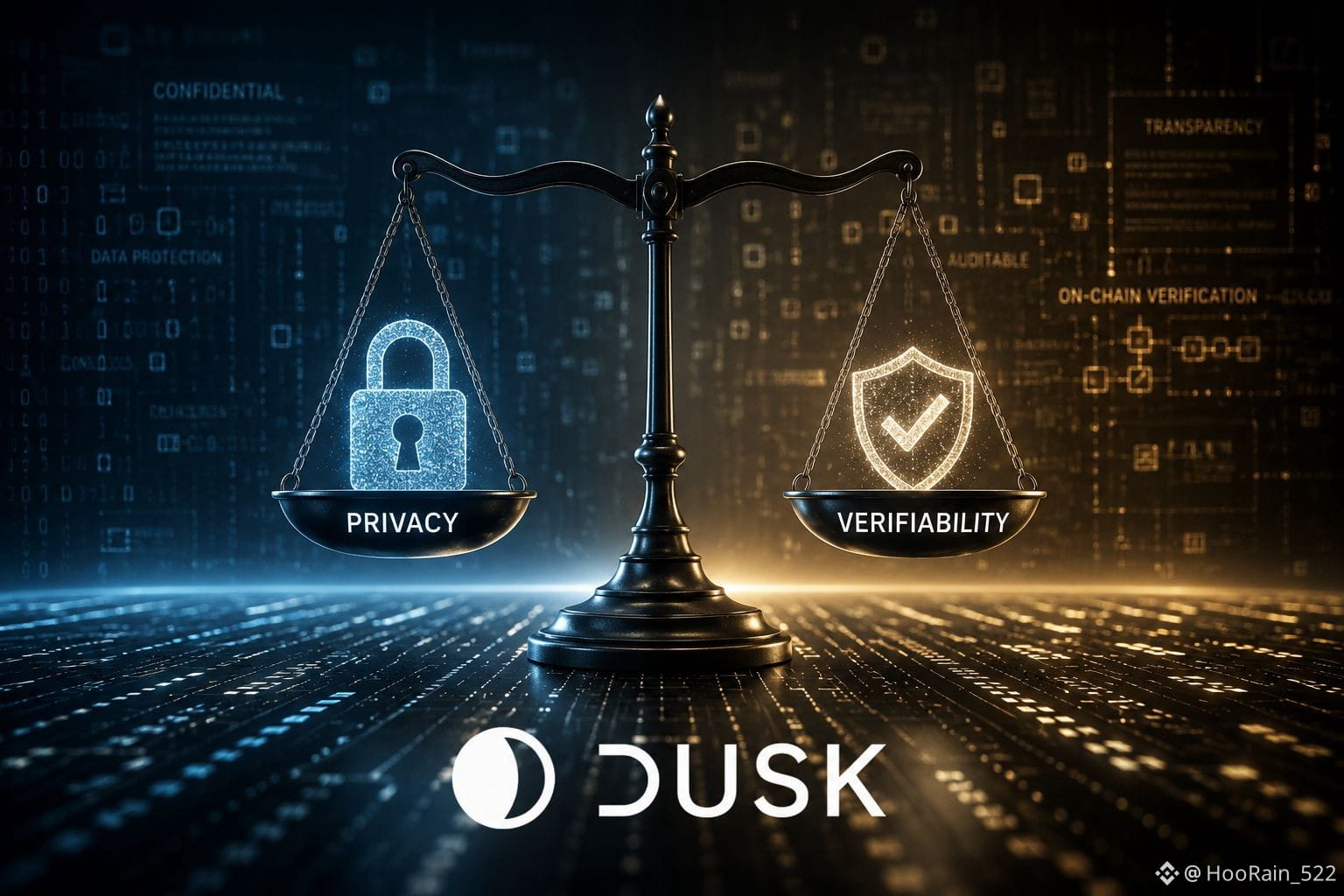
Früher habe ich Dusk's Datenschutzargument so verstanden, dass es einfach nur darum geht, „Transaktionsdetails zu verbergen.“ Aber genauer betrachtet wurde mir klar: Der eigentliche Punkt sind vertrauliche Smart Contracts.
XSC hält sensible Finanzlogik privat, während das Netzwerk sie weiterhin durchsetzt. Klingt einfach, ist aber tatsächlich ein viel schwierigeres Problem: Datenschutz und Nachvollziehbarkeit ziehen in entgegengesetzte Richtungen.
Der Brückeneinbruch vom 16. Januar hat mir das klarer gemacht. Dusk hat den Vorfall am 17. Januar offengelegt. Laut der anfänglichen Mitteilung von Dusk wurde eine ungewöhnliche Aktivität festgestellt, die ein teamverwaltetes Wallet betraf; die Bridges wurden angehalten, und sie erklärten, dass die Gelder der Nutzer nicht betroffen seien.
Später lieferte Dusk in seinem Post-Mortem mehr Details: Ein Angreifer hatte unbefugten Zugriff auf ein Bridge-Signing-Wallet erlangt und DUSK über die Bridge abgezogen. Der Vorfall war ein operatives Problem der Bridge-Sicherheit, nicht eine Kompromittierung von DuskDS selbst.
Was jedoch bei mir hängen blieb, war die Lücke zwischen der ersten Kommunikation und dem vollständigen Bild, das später folgte.
Also „wurde Dusk gehackt?“ ist nicht die interessanteste Frage.
Die entscheidende Frage ist, wie ein Netzwerk, das um Vertraulichkeit herum gebaut ist, kommunizieren und Informationen offenlegen sollte, wenn etwas außerhalb des Kernprotokolls schiefgeht.
Wenn der ganze Pitch eine „vertrauenswürdige“ Privatsphäre im großen Maßstab ist, dann kann die Offenlegung genauso wichtig sein wie die Kryptografie.
Ich weiß immer noch nicht, wie viele Informationen vertraulich bleiben können, bevor die Verifizierung einfach zu „vertraut uns“ wird.
$ALPINE
$ACE
Früher habe ich Dusk's Datenschutzargument so verstanden, dass es einfach nur darum geht, „Transaktionsdetails zu verbergen.“ Aber genauer betrachtet wurde mir klar: Der eigentliche Punkt sind vertrauliche Smart Contracts.
XSC hält sensible Finanzlogik privat, während das Netzwerk sie weiterhin durchsetzt. Klingt einfach, ist aber tatsächlich ein viel schwierigeres Problem: Datenschutz und Nachvollziehbarkeit ziehen in entgegengesetzte Richtungen.
Der Brückeneinbruch vom 16. Januar hat mir das klarer gemacht. Dusk hat den Vorfall am 17. Januar offengelegt. Laut der anfänglichen Mitteilung von Dusk wurde eine ungewöhnliche Aktivität festgestellt, die ein teamverwaltetes Wallet betraf; die Bridges wurden angehalten, und sie erklärten, dass die Gelder der Nutzer nicht betroffen seien.
Später lieferte Dusk in seinem Post-Mortem mehr Details: Ein Angreifer hatte unbefugten Zugriff auf ein Bridge-Signing-Wallet erlangt und DUSK über die Bridge abgezogen. Der Vorfall war ein operatives Problem der Bridge-Sicherheit, nicht eine Kompromittierung von DuskDS selbst.
Was jedoch bei mir hängen blieb, war die Lücke zwischen der ersten Kommunikation und dem vollständigen Bild, das später folgte.
Also „wurde Dusk gehackt?“ ist nicht die interessanteste Frage.
Die entscheidende Frage ist, wie ein Netzwerk, das um Vertraulichkeit herum gebaut ist, kommunizieren und Informationen offenlegen sollte, wenn etwas außerhalb des Kernprotokolls schiefgeht.
Wenn der ganze Pitch eine „vertrauenswürdige“ Privatsphäre im großen Maßstab ist, dann kann die Offenlegung genauso wichtig sein wie die Kryptografie.
Ich weiß immer noch nicht, wie viele Informationen vertraulich bleiben können, bevor die Verifizierung einfach zu „vertraut uns“ wird.
$ALPINE
$ACE
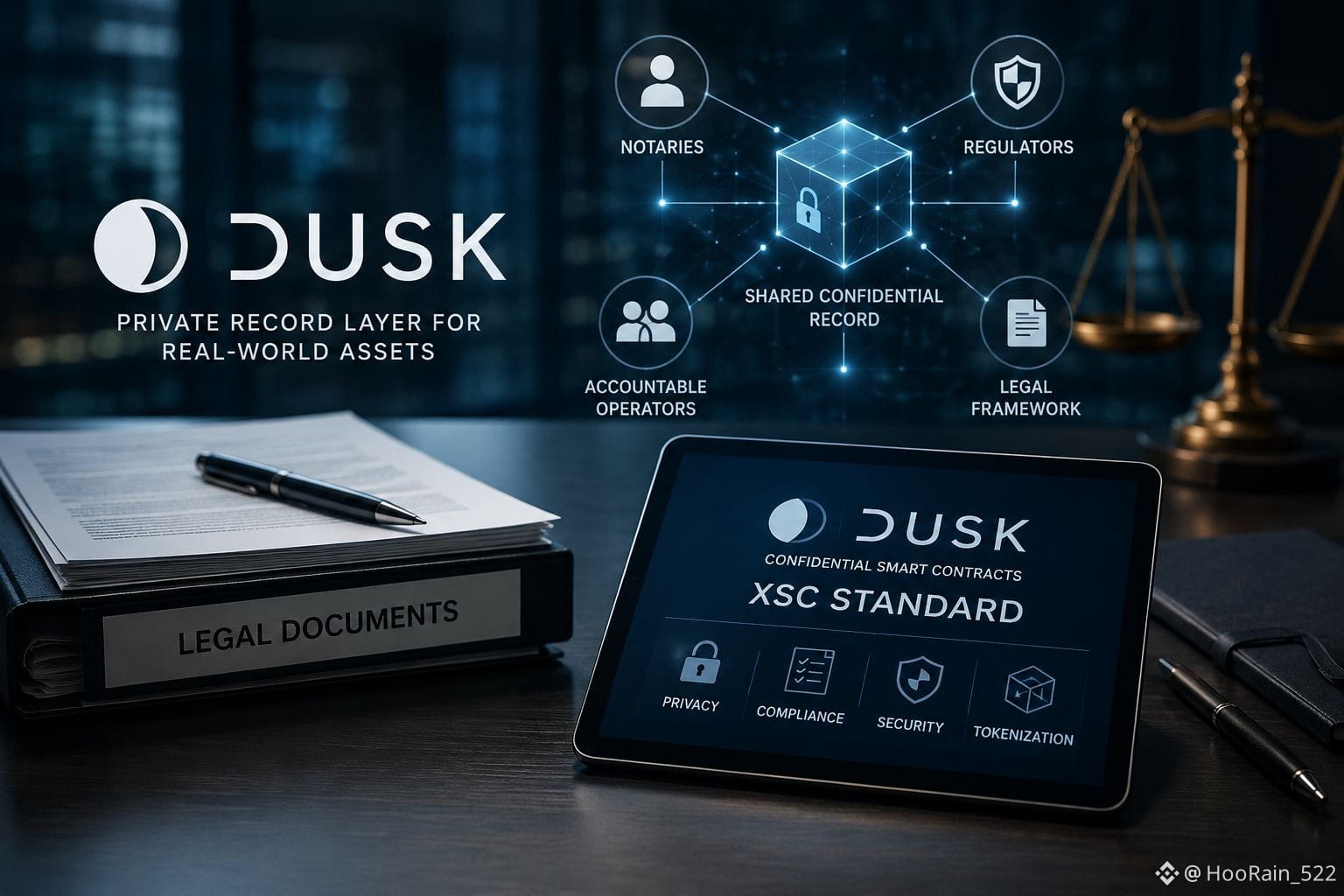
Private Record-Layer, immer noch am Nachdenken darüber... Ich habe ständig echte Vermögenswerte in der realen Welt überall on-chain gesehen, fast so, als würde Tokenisierung irgendwie die ganze darunterliegende juristische Arbeit eliminieren. Also habe ich mir angesehen, was nach der Tokenisierung tatsächlich off-chain bleibt.
Was dabei mein Interesse geweckt hat, ist, wie Dusk auf vertrauliche Smart Contracts und den XSC-Standard fokussiert. Privatsphäre geht hier nicht nur darum, einen Betrag zu verstecken. Es geht darum, Privatsphäre in die finanzielle Infrastruktur einzubauen.
Der Tokenisierungs-Lebenszyklus für KMU war der Punkt, an dem es für mich richtig spannend wurde. Strukturierung kann weiterhin unternehmensinterne Freigaben erfordern. Übertragungen können weiterhin eine notariell beglaubigte Urkunde verlangen. das Servicing kann weiterhin menschliche Entscheidungen über die steuerliche Behandlung beinhalten. Nur weil etwas tokenisiert ist, heißt das nicht, dass alles automatisiert wird.
NPEX hat mir das noch klarer gemacht. Die Tokenisierung von Anteilen an einer niederländischen BV ersetzt den bestehenden Rechtsprozess nicht einfach. Es scheint eher daneben zu sitzen.
Also vielleicht ist Dusk gar nicht die Ersetzungsebene. Vielleicht ist es eher ein gemeinsam genutzter vertraulicher Datensatz, der neben Notaren, Regulierungsbehörden und verantwortlichen Betreibern funktioniert – weil diese Menschen und Prozesse nicht einfach verschwinden.
Dass Dusk Trade immer noch auf einer Warteliste steht, hat mich ebenfalls anders darüber nachdenken lassen. Vielleicht wird die institutionelle Infrastruktur schon lange gebaut, bevor überhaupt tatsächlich gehandelt wird.
Ich versuche allerdings immer noch, eine Sache zu klären: Wenn diese Strukturen komplexer werden, wie funktionieren dann Vertraulichkeit und rechtliche Durchsetzung tatsächlich zusammen?
@Dusk #dusk $DUSK
$TUT
$GPS
Was dabei mein Interesse geweckt hat, ist, wie Dusk auf vertrauliche Smart Contracts und den XSC-Standard fokussiert. Privatsphäre geht hier nicht nur darum, einen Betrag zu verstecken. Es geht darum, Privatsphäre in die finanzielle Infrastruktur einzubauen.
Der Tokenisierungs-Lebenszyklus für KMU war der Punkt, an dem es für mich richtig spannend wurde. Strukturierung kann weiterhin unternehmensinterne Freigaben erfordern. Übertragungen können weiterhin eine notariell beglaubigte Urkunde verlangen. das Servicing kann weiterhin menschliche Entscheidungen über die steuerliche Behandlung beinhalten. Nur weil etwas tokenisiert ist, heißt das nicht, dass alles automatisiert wird.
NPEX hat mir das noch klarer gemacht. Die Tokenisierung von Anteilen an einer niederländischen BV ersetzt den bestehenden Rechtsprozess nicht einfach. Es scheint eher daneben zu sitzen.
Also vielleicht ist Dusk gar nicht die Ersetzungsebene. Vielleicht ist es eher ein gemeinsam genutzter vertraulicher Datensatz, der neben Notaren, Regulierungsbehörden und verantwortlichen Betreibern funktioniert – weil diese Menschen und Prozesse nicht einfach verschwinden.
Dass Dusk Trade immer noch auf einer Warteliste steht, hat mich ebenfalls anders darüber nachdenken lassen. Vielleicht wird die institutionelle Infrastruktur schon lange gebaut, bevor überhaupt tatsächlich gehandelt wird.
Ich versuche allerdings immer noch, eine Sache zu klären: Wenn diese Strukturen komplexer werden, wie funktionieren dann Vertraulichkeit und rechtliche Durchsetzung tatsächlich zusammen?
@Dusk #dusk $DUSK
$TUT
$GPS
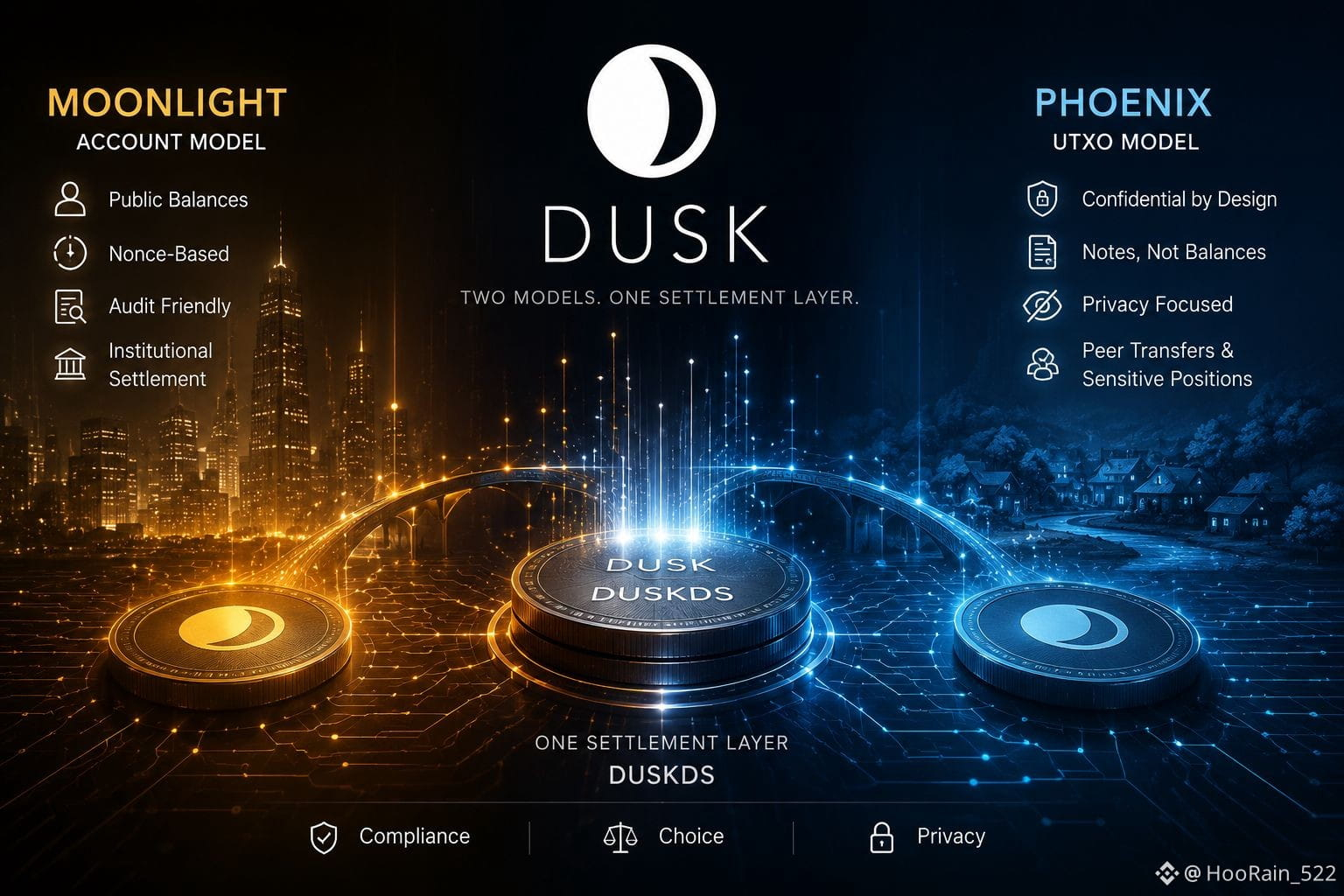
Mondlicht vs. Phönix, ich denke immer noch über dieses Thema nach... Die Frage, die mich überhaupt erst ins Rollen gebracht hat, war: Warum sollte man jede Transaktion öffentlich machen oder jede Transaktion privat, wenn das Finanzwesen beides wirklich braucht?
Moonlight verwendet ein Kontomodell mit öffentlichen Salden und Nonces, im Grunde ähnlich wie Ethereum. Das passt für Dinge, die standardmäßig einen Audit-Trail benötigen.
Phoenix nutzt ein UTXO-ähnliches Modell mit Notizen statt Salden, und die Privatsphäre ist in das Design eingebaut. Es ist für Überweisungen gedacht, bei denen es das eigentliche Risiko ist, wenn der Betrag oder die andere Partei offengelegt werden.
Am meisten hängen geblieben ist mir, dass die Dokumentation nicht versucht, diese beiden Modelle miteinander zu vermischen. Sie werden klar getrennt gehalten: zwei verschiedene Transaktionstypen, die auf derselben DuskDS-Schicht laufen, statt ein einziges Modell, dem später ein Privacy-Toggle hinzugefügt wird.
Der institutionelle Settlement-Teil dürfte eher Richtung Moonlight tendieren, weil Compliance häufig verlangt, dass Transaktionen sichtbar und nachverfolgbar sind. Peer-to-Peer-Überweisungen und sensible Positionen hingegen scheinen besser zu Phoenix zu passen.
Dusk einfach als Privacy-Chain zu bezeichnen, greift aber zu kurz. Es wirkt so, als würde Dusk darauf setzen, dass weder Transparenz noch Privatsphäre allein ausreichen.
Jetzt bin ich neugierig, welches Modell langfristig am Ende mehr echte Transaktionsvolumen abwickelt.
@Dusk #dusk $DUSK
$DOLO
$AIO
Moonlight verwendet ein Kontomodell mit öffentlichen Salden und Nonces, im Grunde ähnlich wie Ethereum. Das passt für Dinge, die standardmäßig einen Audit-Trail benötigen.
Phoenix nutzt ein UTXO-ähnliches Modell mit Notizen statt Salden, und die Privatsphäre ist in das Design eingebaut. Es ist für Überweisungen gedacht, bei denen es das eigentliche Risiko ist, wenn der Betrag oder die andere Partei offengelegt werden.
Am meisten hängen geblieben ist mir, dass die Dokumentation nicht versucht, diese beiden Modelle miteinander zu vermischen. Sie werden klar getrennt gehalten: zwei verschiedene Transaktionstypen, die auf derselben DuskDS-Schicht laufen, statt ein einziges Modell, dem später ein Privacy-Toggle hinzugefügt wird.
Der institutionelle Settlement-Teil dürfte eher Richtung Moonlight tendieren, weil Compliance häufig verlangt, dass Transaktionen sichtbar und nachverfolgbar sind. Peer-to-Peer-Überweisungen und sensible Positionen hingegen scheinen besser zu Phoenix zu passen.
Dusk einfach als Privacy-Chain zu bezeichnen, greift aber zu kurz. Es wirkt so, als würde Dusk darauf setzen, dass weder Transparenz noch Privatsphäre allein ausreichen.
Jetzt bin ich neugierig, welches Modell langfristig am Ende mehr echte Transaktionsvolumen abwickelt.
@Dusk #dusk $DUSK
$DOLO
$AIO
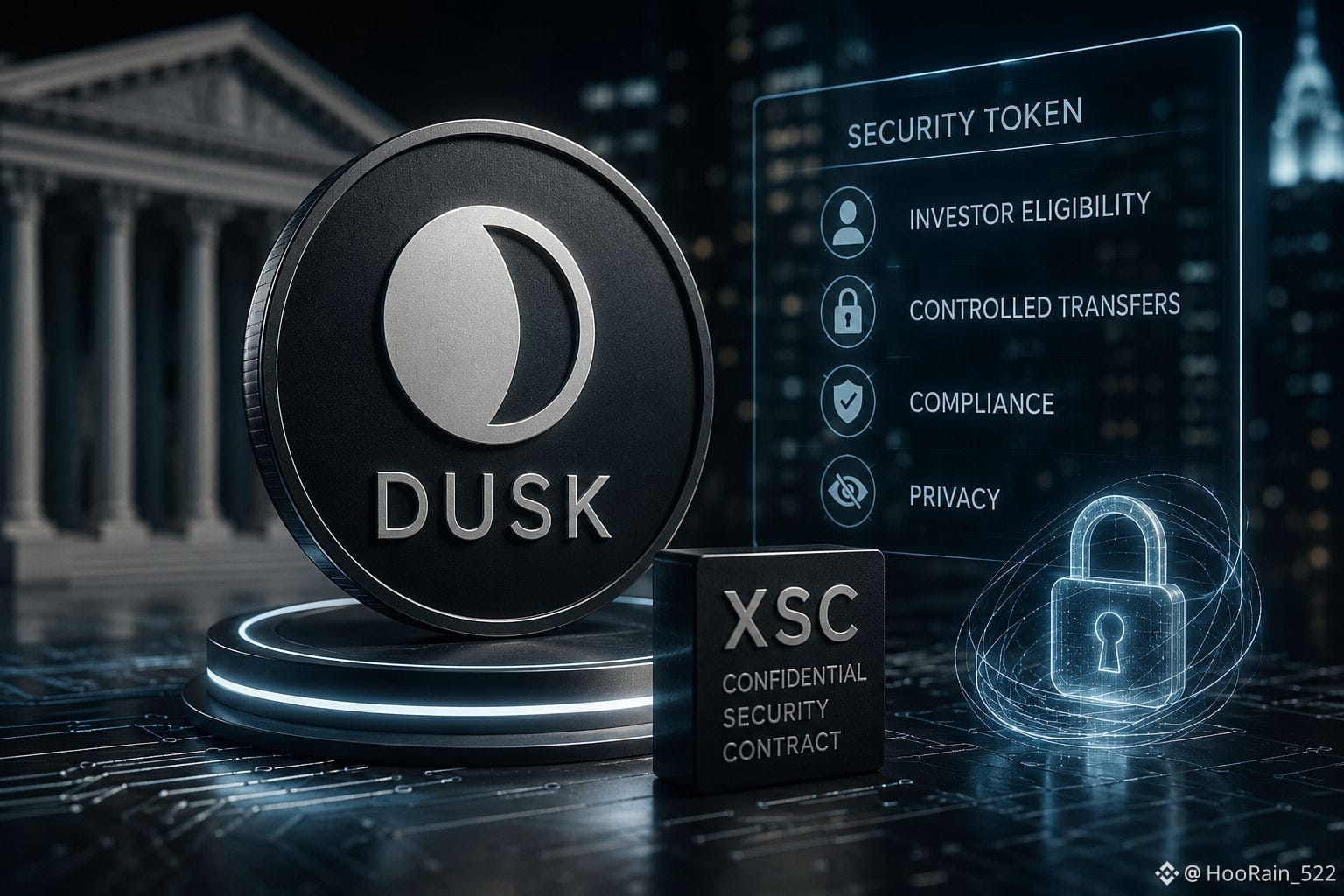
Ich dachte früher, dass ein Security-Token im Grunde ein ERC-20-Vertrag mit zusätzlicher Bürokratie ist: gleiche Übertragungslogik, gleicher offener Zugang, nur anders benannt – aus rechtlichen Gründen.
Je tiefer ich jedoch in das sah, was regulierte Wertpapiere tatsächlich verlangen, desto weniger ergab diese Annahme Sinn. Ein Finanzwertpapier trägt Einschränkungen in sich, die nichts mit Code zu tun haben, sondern alles damit, wer es halten darf.
Wie sich das Eigentum übertragen kann und welche Offenlegungen diese Übertragung begleiten. Anlegerberechtigung, territoriale Grenzen und kontrollierte Übertragungsbedingungen sind keine Funktionen, die man nachträglich an einen Token „dranbolt“; sie sind das tatsächliche Verhalten des Vermögenswerts.
Dort scheint Dusk mit seinem XSC-Konzept, dem Confidential Security Contract, seine Logik herzuleiten. Statt Compliance als externe Checkliste zu behandeln, die von Intermediären durchgesetzt wird, betrachtet es Eignung und Übertragungsbeschränkungen als Teil der eigenen Vertragsregeln – und nutzt dabei dennoch Mechanismen für den Datenschutz, sodass Eigentumsdetails nicht vollständig on-chain offengelegt werden.
Dusk positioniert XSC als Standard für datenschutzaktivierte tokenisierte Wertpapiere. Das verlagert Verantwortung weg von Custodians, die manuell jeden Handel prüfen, hin zu Infrastruktur, die die Regel automatisch durchsetzt. Der Preis dafür ist, dass das Kodieren juristischer Feinheiten in einen Vertrag komplexer ist als das Kodieren einer einfachen Überweisung des Saldos.
Reduziert die Automatisierung von Compliance tatsächlich das Risiko – oder verlagert sie nur, wo Fehler passieren können?
@Dusk #dusk $DUSK
Je tiefer ich jedoch in das sah, was regulierte Wertpapiere tatsächlich verlangen, desto weniger ergab diese Annahme Sinn. Ein Finanzwertpapier trägt Einschränkungen in sich, die nichts mit Code zu tun haben, sondern alles damit, wer es halten darf.
Wie sich das Eigentum übertragen kann und welche Offenlegungen diese Übertragung begleiten. Anlegerberechtigung, territoriale Grenzen und kontrollierte Übertragungsbedingungen sind keine Funktionen, die man nachträglich an einen Token „dranbolt“; sie sind das tatsächliche Verhalten des Vermögenswerts.
Dort scheint Dusk mit seinem XSC-Konzept, dem Confidential Security Contract, seine Logik herzuleiten. Statt Compliance als externe Checkliste zu behandeln, die von Intermediären durchgesetzt wird, betrachtet es Eignung und Übertragungsbeschränkungen als Teil der eigenen Vertragsregeln – und nutzt dabei dennoch Mechanismen für den Datenschutz, sodass Eigentumsdetails nicht vollständig on-chain offengelegt werden.
Dusk positioniert XSC als Standard für datenschutzaktivierte tokenisierte Wertpapiere. Das verlagert Verantwortung weg von Custodians, die manuell jeden Handel prüfen, hin zu Infrastruktur, die die Regel automatisch durchsetzt. Der Preis dafür ist, dass das Kodieren juristischer Feinheiten in einen Vertrag komplexer ist als das Kodieren einer einfachen Überweisung des Saldos.
Reduziert die Automatisierung von Compliance tatsächlich das Risiko – oder verlagert sie nur, wo Fehler passieren können?
@Dusk #dusk $DUSK
Verifiziert
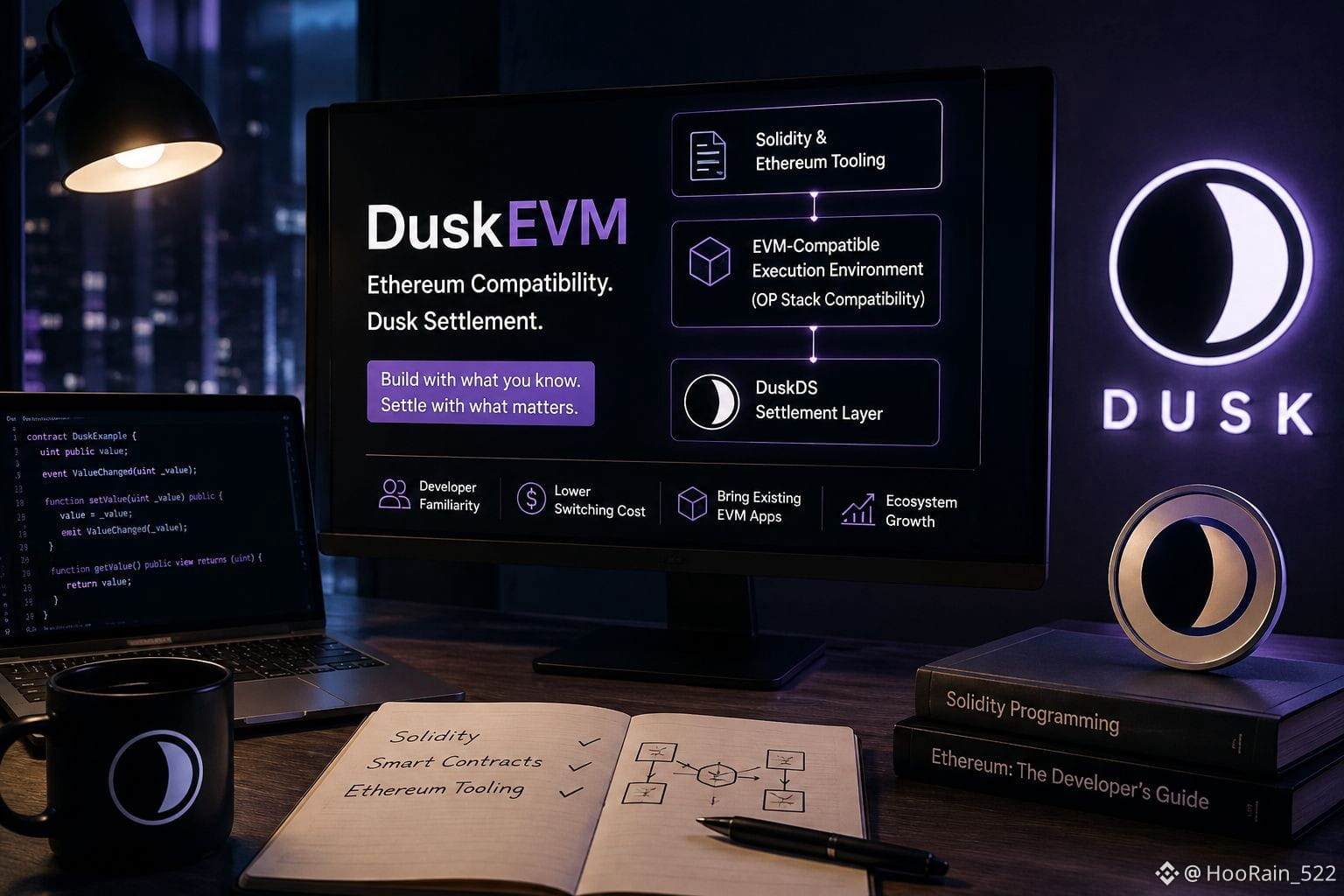
Für eine lange Zeit hielt ich EVM-Kompatibilität für weitgehend ein Marketing-Häkchen – etwas, das Chains ankreuzen, um zugänglich zu wirken, ohne dass sich darunter viel ändert. Je mehr ich mir DuskEVM jedoch ansah, desto weniger hielt diese Erklärung stand.
DuskEVM ermöglicht es Entwicklern, Solidity zu schreiben und vertraute Ethereum-Tools zu nutzen, und stellt dabei eine EVM-kompatible Ausführungsumgebung mit OP-Stack-Kompatibilität bereit. Unter dieser vertrauten Entwicklererfahrung liefert DuskDS die zugrunde liegende Settlement- bzw. Abrechnungsschicht.
Dieser Unterschied ist wichtiger, als er zunächst erscheint. Die Ausführungsumgebung fühlt sich für Ethereum-Entwickler vertraut an, aber das zugrunde liegende Settlement und die Finalität sind an die eigene Infrastruktur von Dusk gebunden – nicht an die Basisschicht von Ethereum.
Was das in der Praxis bewirkt, ist: Es senkt die Kosten, etwas Neues auszuprobieren. Ein Entwickler muss sich keine Sprache neu aneignen oder keine Infrastruktur neu aufbauen, nur um zu testen, ob Dusk’s Privacy- und Compliance-Funktionen zu seinem Use Case passen. Das verlagert den Anreiz von „überzeuge mich zum Wechsel“ hin zu „lass mich das mitbringen, was ich bereits habe, und sehen, was sich darunter verändert“.
Der Nachteil ist, dass Vertrautheit reale Unterschiede im Settlement-Verhalten verschleiern kann, wenn Menschen davon ausgehen, EVM-Kompatibilität bedeute, dass alles identisch funktioniert.
Die Frage ist also: Senkt das Senken der Wechselkosten tatsächlich die Zeit bis zur Akzeptanz, oder verschiebt es nur den Punkt nach hinten, an dem Entwickler sich mit den Unterschieden darunter auseinandersetzen müssen?
@Dusk #dusk $DUSK
DuskEVM ermöglicht es Entwicklern, Solidity zu schreiben und vertraute Ethereum-Tools zu nutzen, und stellt dabei eine EVM-kompatible Ausführungsumgebung mit OP-Stack-Kompatibilität bereit. Unter dieser vertrauten Entwicklererfahrung liefert DuskDS die zugrunde liegende Settlement- bzw. Abrechnungsschicht.
Dieser Unterschied ist wichtiger, als er zunächst erscheint. Die Ausführungsumgebung fühlt sich für Ethereum-Entwickler vertraut an, aber das zugrunde liegende Settlement und die Finalität sind an die eigene Infrastruktur von Dusk gebunden – nicht an die Basisschicht von Ethereum.
Was das in der Praxis bewirkt, ist: Es senkt die Kosten, etwas Neues auszuprobieren. Ein Entwickler muss sich keine Sprache neu aneignen oder keine Infrastruktur neu aufbauen, nur um zu testen, ob Dusk’s Privacy- und Compliance-Funktionen zu seinem Use Case passen. Das verlagert den Anreiz von „überzeuge mich zum Wechsel“ hin zu „lass mich das mitbringen, was ich bereits habe, und sehen, was sich darunter verändert“.
Der Nachteil ist, dass Vertrautheit reale Unterschiede im Settlement-Verhalten verschleiern kann, wenn Menschen davon ausgehen, EVM-Kompatibilität bedeute, dass alles identisch funktioniert.
Die Frage ist also: Senkt das Senken der Wechselkosten tatsächlich die Zeit bis zur Akzeptanz, oder verschiebt es nur den Punkt nach hinten, an dem Entwickler sich mit den Unterschieden darunter auseinandersetzen müssen?
@Dusk #dusk $DUSK
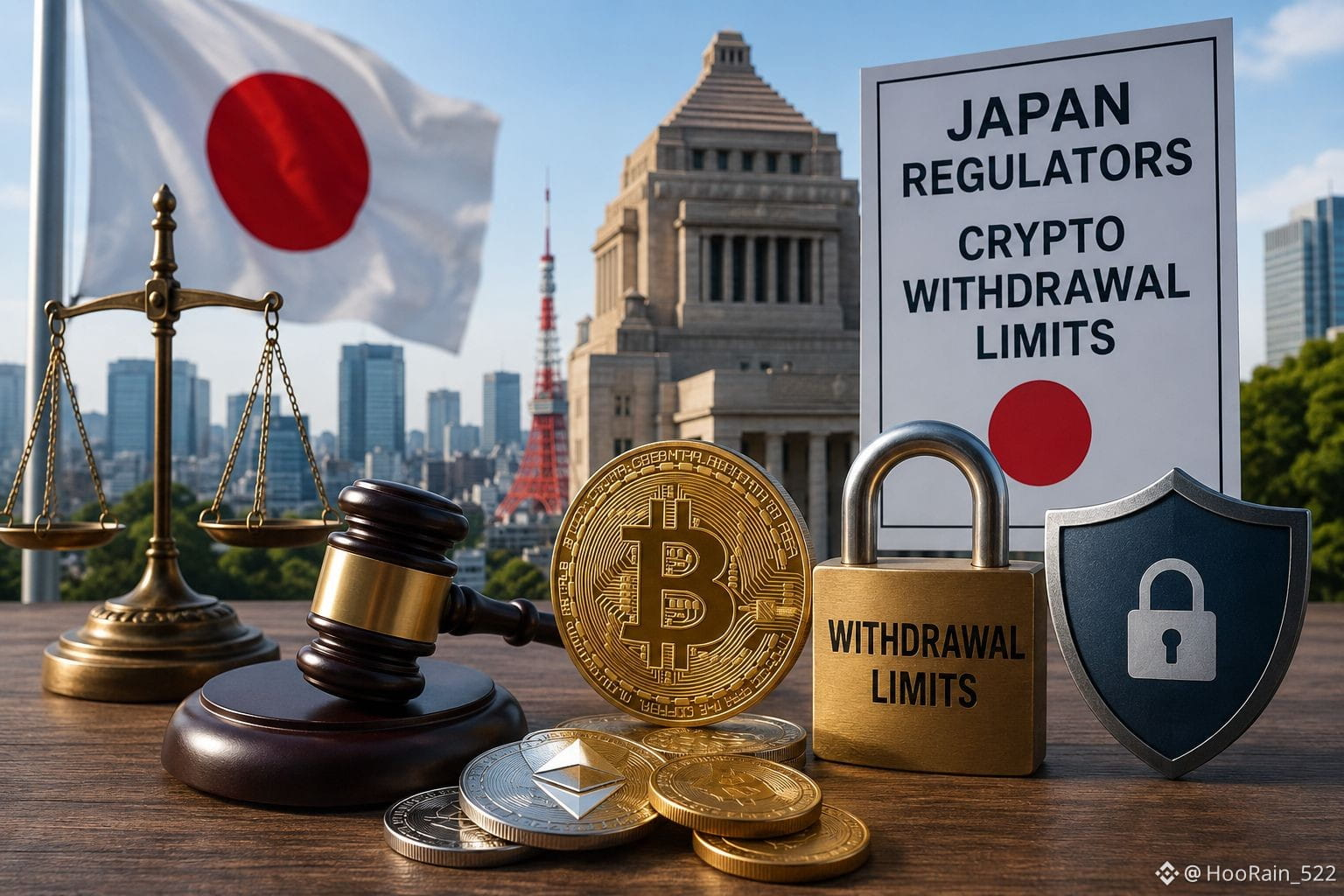
Japans Aufsichtsbehörden sollen Berichten zufolge dazu ermutigen, Obergrenzen für Krypto-Auszahlungen einzuführen, um Betrugsfälle und Betrug zu reduzieren. Auf den ersten Blick klingt die Idee plausibel. Wenn Nutzer besser geschützt sind und unautorisierte Auszahlungen seltener werden, könnte das auch das Vertrauen in die Nutzung von Krypto stärken.
Allerdings denke ich, dass jede Regulierung einen Preis hat. Mehr Kontrolle kann die Sicherheit verbessern, kann aber mit der Zeit auch die finanzielle Freiheit verringern. Schließlich ist eines der Kernprinzipien von Krypto, dass Nutzer die Kontrolle über ihr eigenes Vermögen haben.
Für mich geht es dabei nicht nur um Auszahlungsgrenzen. Die größere Frage ist, wie Aufsichtsbehörden und Nutzer das richtige Gleichgewicht finden können: eines, das Betrug und Betrügereien reduziert, ohne die Werte zu beeinträchtigen, die Krypto einzigartig machen.
Sicherheit und finanzielle Freiheit sind beides wichtig. Die eigentliche Herausforderung besteht darin, ein Gleichgewicht zu finden, das Nutzer schützt, während die Kernprinzipien von Krypto erhalten bleiben.
Was denkst du: Sollte die Sicherheit an erster Stelle stehen oder die finanzielle Freiheit?
#JapanRegulatorsUrgeCryptoWithdrawalLimits
$BTC #bitcoin @Bitcoin
$ACT
$HFT
Allerdings denke ich, dass jede Regulierung einen Preis hat. Mehr Kontrolle kann die Sicherheit verbessern, kann aber mit der Zeit auch die finanzielle Freiheit verringern. Schließlich ist eines der Kernprinzipien von Krypto, dass Nutzer die Kontrolle über ihr eigenes Vermögen haben.
Für mich geht es dabei nicht nur um Auszahlungsgrenzen. Die größere Frage ist, wie Aufsichtsbehörden und Nutzer das richtige Gleichgewicht finden können: eines, das Betrug und Betrügereien reduziert, ohne die Werte zu beeinträchtigen, die Krypto einzigartig machen.
Sicherheit und finanzielle Freiheit sind beides wichtig. Die eigentliche Herausforderung besteht darin, ein Gleichgewicht zu finden, das Nutzer schützt, während die Kernprinzipien von Krypto erhalten bleiben.
Was denkst du: Sollte die Sicherheit an erster Stelle stehen oder die finanzielle Freiheit?
#JapanRegulatorsUrgeCryptoWithdrawalLimits
$BTC #bitcoin @Bitcoin
$ACT
$HFT
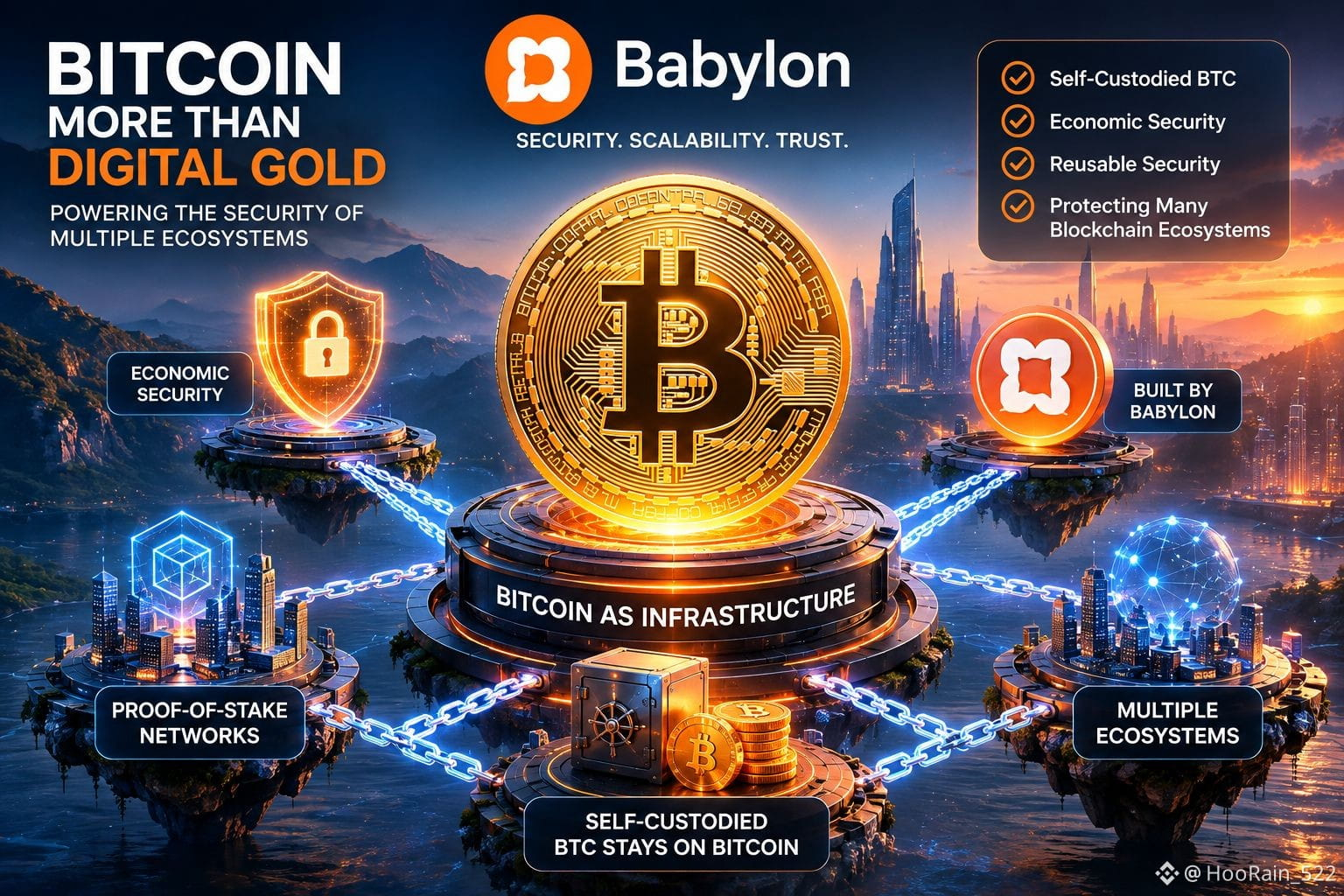
Seit Jahren dachte ich, dass Bitcoins größte Stärke darin besteht, einfach still als Wertaufbewahrungsmittel zu existieren – sicher, gerade weil es nicht viel anderes tut. Je mehr ich mir Babylons Design ansah, desto unvollständiger fühlte sich diese Vorstellung an. Selbstverwahrtes BTC kann jetzt direkt dazu beitragen, andere Netzwerke abzusichern, ohne Bitcoin selbst jemals zu verlassen.
Während Staking-Belohnungen ein Anreiz für Teilnehmer sind, verfolgt Babylons übergeordnetes Ziel, Bitcoin zu nutzen, um externen Proof-of-Stake-Netzwerken wirtschaftliche Sicherheit zu bieten.
Hier beginnt Sicherheit wiederverwendbar zu werden: Anstatt dass jede neue Blockchain ihr eigenes Validator-Set und ihre eigenen Vertrauensannahmen aufbaut, können mehrere Ökosysteme gleichzeitig auf dieselbe, mit Bitcoin abgesicherte Sicherheit zurückgreifen.
Was das funktioniert, ist, dass Bitcoin sich nie bewegt: kein Wrapping, keine Verwahrung, die an eine Bridge übergeben wird. Die Sicherheit wird exportiert, während der Vermögenswert exakt an seinem Platz bleibt, an dem er immer war.
Babylon verändert nicht, was Bitcoin ist – es erweitert, was Bitcoin schützen kann. Wenn dieses Modell erfolgreich skaliert und die Akzeptanz weiter wächst, könnte Bitcoin zu grundlegender Infrastruktur unter vielen Blockchain-Ökosystemen werden, statt nur ein einzelner, passiver Vermögenswert zu sein, der allein dasteht.
Wenn Bitcoin am Ende Dutzende von Ökosystemen auf diese Weise absichert – könnte das dann zu einem seiner größten Use Cases werden, sogar größer als die reine Wertaufbewahrung?
@BabylonLabs_io #baby $BABY
$BTC
Während Staking-Belohnungen ein Anreiz für Teilnehmer sind, verfolgt Babylons übergeordnetes Ziel, Bitcoin zu nutzen, um externen Proof-of-Stake-Netzwerken wirtschaftliche Sicherheit zu bieten.
Hier beginnt Sicherheit wiederverwendbar zu werden: Anstatt dass jede neue Blockchain ihr eigenes Validator-Set und ihre eigenen Vertrauensannahmen aufbaut, können mehrere Ökosysteme gleichzeitig auf dieselbe, mit Bitcoin abgesicherte Sicherheit zurückgreifen.
Was das funktioniert, ist, dass Bitcoin sich nie bewegt: kein Wrapping, keine Verwahrung, die an eine Bridge übergeben wird. Die Sicherheit wird exportiert, während der Vermögenswert exakt an seinem Platz bleibt, an dem er immer war.
Babylon verändert nicht, was Bitcoin ist – es erweitert, was Bitcoin schützen kann. Wenn dieses Modell erfolgreich skaliert und die Akzeptanz weiter wächst, könnte Bitcoin zu grundlegender Infrastruktur unter vielen Blockchain-Ökosystemen werden, statt nur ein einzelner, passiver Vermögenswert zu sein, der allein dasteht.
Wenn Bitcoin am Ende Dutzende von Ökosystemen auf diese Weise absichert – könnte das dann zu einem seiner größten Use Cases werden, sogar größer als die reine Wertaufbewahrung?
@BabylonLabs_io #baby $BABY
$BTC
Zuerst ging ich davon aus, dass allein Bitcoin-gestützte Sicherheit ausreicht, um Entwickler in ein Ökosystem zu ziehen; starke Sicherheit schien wie das gesamte Verkaufsargument.
Je mehr ich mir jedoch ansah, wie Ökosysteme tatsächlich wachsen, desto unvollständiger wirkte diese Annahme. Entwickler entscheiden sich für sichere Infrastruktur, statt Sicherheit von Grund auf neu aufzubauen, und Babylon senkt diese Kosten spürbar, indem Chains sich eine gemeinsam genutzte Bitcoin-gestützte wirtschaftliche Sicherheit ausleihen können, anstatt ihr eigenes Validator-Set zu bootstrappen.
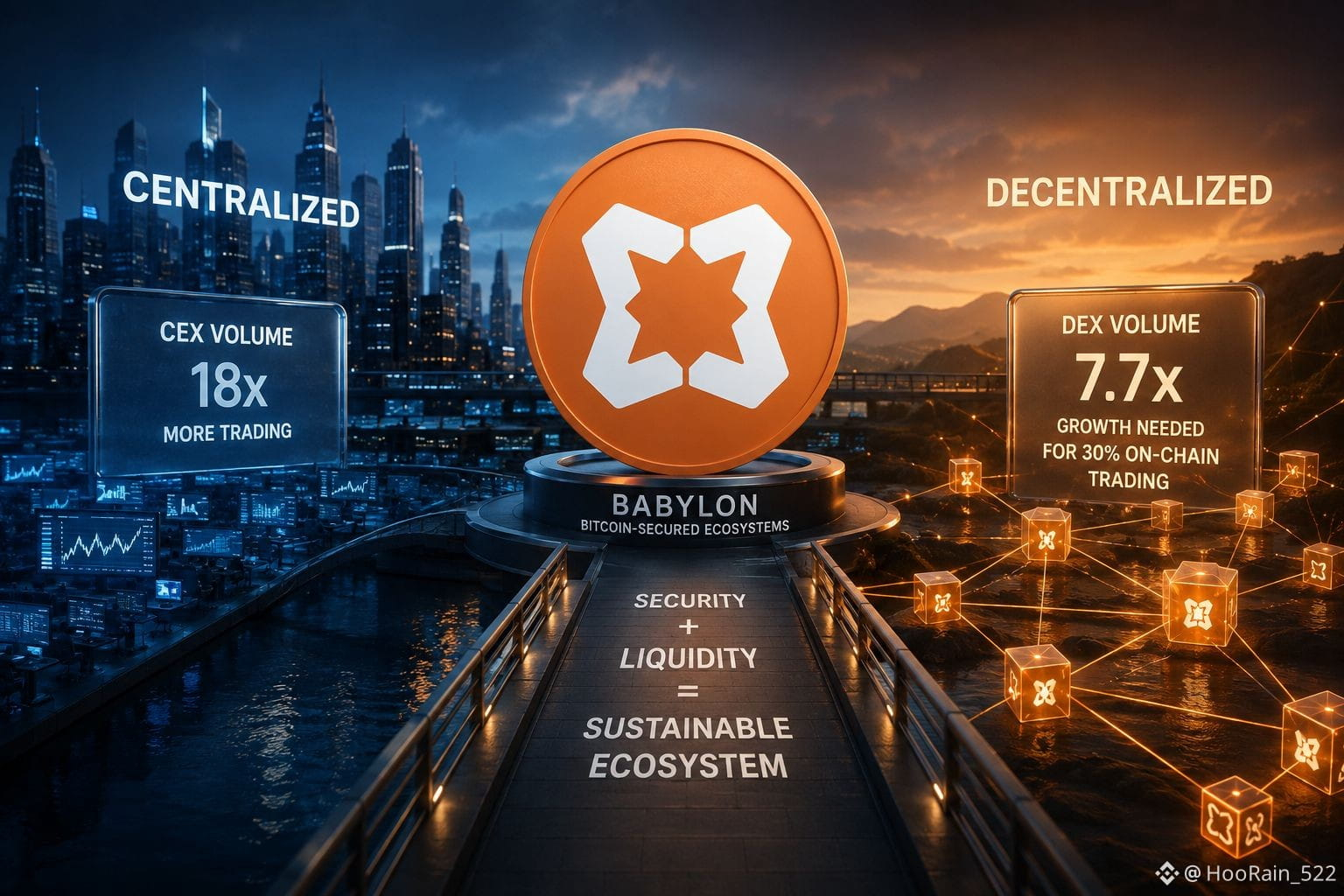
Aber Sicherheit löst nur die halbe Aufgabe. Wenn die meisten Handelsaktivitäten weiterhin auf zentralisierten Börsen stattfinden, bleibt das Ökosystem stark von Infrastruktur außerhalb seiner eigenen On-Chain-Märkte abhängig.
Genau diese Lücke lohnt sich zu beobachten: Wenn das CEX-Volumen die DEX-Aktivität dominiert, sagt das etwas Unbequemes darüber aus, wie dezentrale Einführung derzeit tatsächlich aussieht. Die aktuellen Zahlen machen diese Herausforderung leichter zu erkennen.
Anders gesagt: Wenn der zentrale Handel auf dem aktuellen Niveau bliebe, müsste die DEX-Aktivität um etwa 7,7× wachsen, bevor ungefähr 30% des gesamten Handels on-chain stattfinden. Das zeigt, wie früh dezentralisierte Liquidität noch ist.
Tiefgreifende On-Chain-Liquidität verändert dieses Bild: geringere Slippage, bessere Preisfindung und ein Nutzererlebnis, bei dem man die Chain nicht verlassen muss. Und Liquidität dient nicht nur Nutzern; sie macht auch das gesamte Umfeld für Builder attraktiver, denn Anwendungen brauchen verlässliche Liquidität, um gut zu funktionieren.
Sicherheit und Liquidität verstärken sich am Ende gegenseitig: Entwickleradoption speist Liquidität, Liquidität zieht mehr Builder an.
Vielleicht ist das eigentliche Meilensteinziel von Babylon also nicht die Anzahl der Chains oder die Volumenkennzahlen, sondern ob die Bitcoin-gestützte Sicherheit künftig in der Lage sein wird, seine eigene On-Chain-Ökonomie dauerhaft zu tragen.
Kann Bitcoin-gestützte Sicherheit irgendwann selbsterhaltende Liquidität schaffen, oder werden tiefe Märkte immer von Anreizen abhängen?
@BabylonLabs_io #baby $BABY
Je mehr ich mir jedoch ansah, wie Ökosysteme tatsächlich wachsen, desto unvollständiger wirkte diese Annahme. Entwickler entscheiden sich für sichere Infrastruktur, statt Sicherheit von Grund auf neu aufzubauen, und Babylon senkt diese Kosten spürbar, indem Chains sich eine gemeinsam genutzte Bitcoin-gestützte wirtschaftliche Sicherheit ausleihen können, anstatt ihr eigenes Validator-Set zu bootstrappen.
Aber Sicherheit löst nur die halbe Aufgabe. Wenn die meisten Handelsaktivitäten weiterhin auf zentralisierten Börsen stattfinden, bleibt das Ökosystem stark von Infrastruktur außerhalb seiner eigenen On-Chain-Märkte abhängig.
Genau diese Lücke lohnt sich zu beobachten: Wenn das CEX-Volumen die DEX-Aktivität dominiert, sagt das etwas Unbequemes darüber aus, wie dezentrale Einführung derzeit tatsächlich aussieht. Die aktuellen Zahlen machen diese Herausforderung leichter zu erkennen.
Anders gesagt: Wenn der zentrale Handel auf dem aktuellen Niveau bliebe, müsste die DEX-Aktivität um etwa 7,7× wachsen, bevor ungefähr 30% des gesamten Handels on-chain stattfinden. Das zeigt, wie früh dezentralisierte Liquidität noch ist.
Tiefgreifende On-Chain-Liquidität verändert dieses Bild: geringere Slippage, bessere Preisfindung und ein Nutzererlebnis, bei dem man die Chain nicht verlassen muss. Und Liquidität dient nicht nur Nutzern; sie macht auch das gesamte Umfeld für Builder attraktiver, denn Anwendungen brauchen verlässliche Liquidität, um gut zu funktionieren.
Sicherheit und Liquidität verstärken sich am Ende gegenseitig: Entwickleradoption speist Liquidität, Liquidität zieht mehr Builder an.
Vielleicht ist das eigentliche Meilensteinziel von Babylon also nicht die Anzahl der Chains oder die Volumenkennzahlen, sondern ob die Bitcoin-gestützte Sicherheit künftig in der Lage sein wird, seine eigene On-Chain-Ökonomie dauerhaft zu tragen.
Kann Bitcoin-gestützte Sicherheit irgendwann selbsterhaltende Liquidität schaffen, oder werden tiefe Märkte immer von Anreizen abhängen?
@BabylonLabs_io #baby $BABY
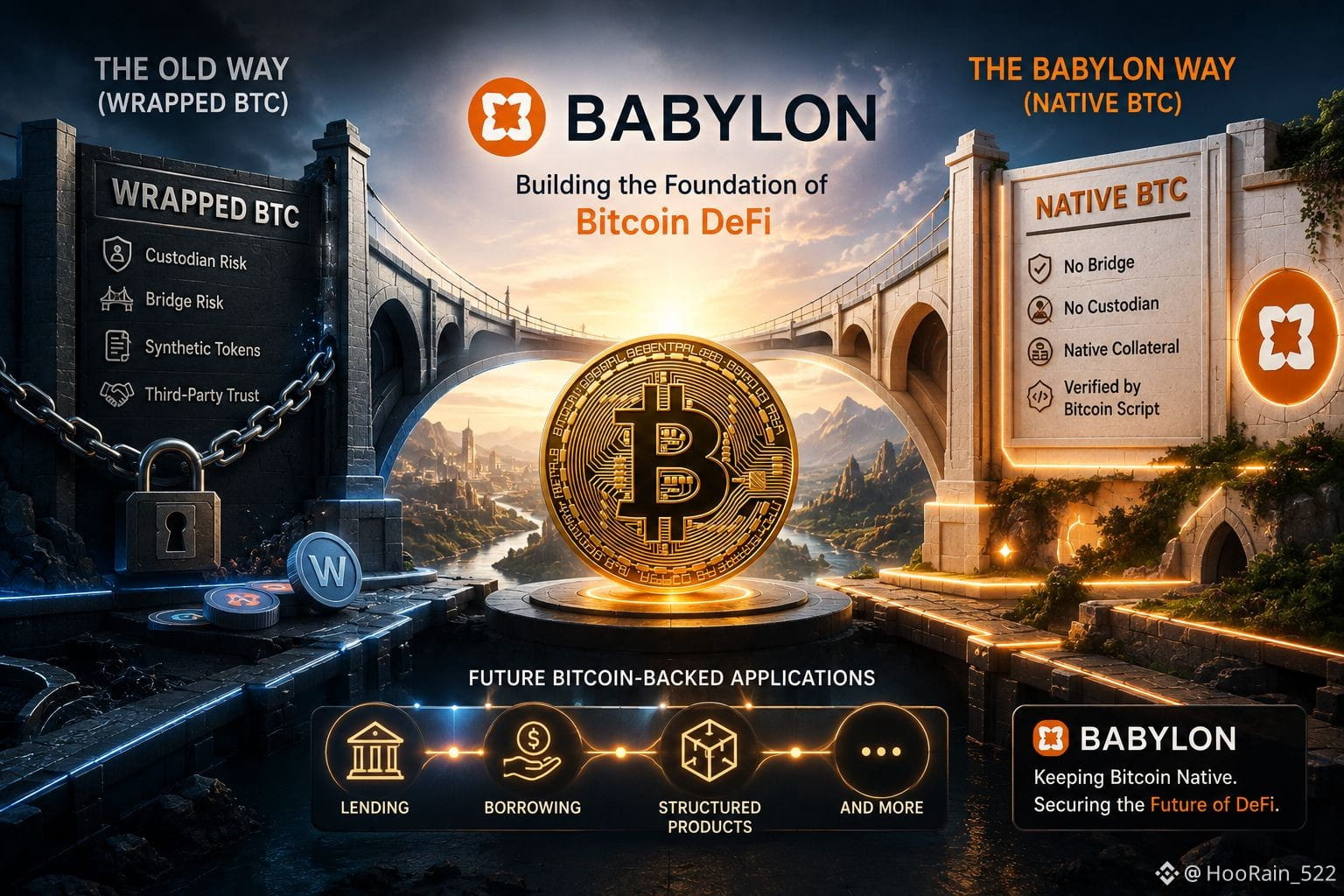
Zunächst dachte ich, dass Bitcoin-DeFi im Grunde bedeutet, BTC fast standardmäßig einzupacken; das schien der einzige Weg zu sein, es anderswo nutzbar zu machen. Je mehr ich mir Babylons Ansatz angesehen habe, desto weniger sinnvoll wurde diese Annahme. Beim Wrapping musst du darauf vertrauen, dass ein Custodian echtes BTC verwahrt, während eine synthetische Version irgendwo anders im Umlauf ist – das verlagert das Risiko nur, statt es zu entfernen.
Babylon stellt stattdessen eine ganz andere Frage: Was wäre, wenn natives Bitcoin gar nicht erst hätte weggehen müssen? Genau darauf basieren die Trustless Bitcoin Vaults – sie lassen BTC nativ bleiben, ermöglichen aber dennoch die Nutzung als verwertbares Sicherheitenmittel, verifiziert durch Bitcoins eigene Skripting-Mechanismen statt durch einen Bridge-Contract. Keine Bridge bedeutet keine zusätzliche Angriffsfläche zwischen den Chains und keinen synthetischen Token, dessen Wert von der Zahlungsfähigkeit anderer abhängt.
So entsteht die Grundlage für künftige Bitcoin-Backed-Anwendungen wie Lending, Borrowing und strukturierte Finanzprodukte – alles direkt auf der tatsächlichen Sicherheit von BTC aufbauend, statt auf einem verpackten Derivat. Das fühlt sich nach einer deutlich anderen Grundlage an, von der aus sich BTCFi entwickeln kann. Wenn dieses Modell skalierbar ist, könnte sich BTCFi darum weiterentwickeln, direkt um natives Bitcoin herum zu wachsen, statt auf verpackte Repräsentationen angewiesen zu sein.
Wenn natives Bitcoin DeFi also ganz ohne Wrapping unterstützen kann: Hat dann Wrapped BTC noch einen echten Zweck – oder könnte sich Bablyons Ansatz nach und nach durchsetzen?
@BabylonLabs_io #baby $BABY
$BTC
Babylon stellt stattdessen eine ganz andere Frage: Was wäre, wenn natives Bitcoin gar nicht erst hätte weggehen müssen? Genau darauf basieren die Trustless Bitcoin Vaults – sie lassen BTC nativ bleiben, ermöglichen aber dennoch die Nutzung als verwertbares Sicherheitenmittel, verifiziert durch Bitcoins eigene Skripting-Mechanismen statt durch einen Bridge-Contract. Keine Bridge bedeutet keine zusätzliche Angriffsfläche zwischen den Chains und keinen synthetischen Token, dessen Wert von der Zahlungsfähigkeit anderer abhängt.
So entsteht die Grundlage für künftige Bitcoin-Backed-Anwendungen wie Lending, Borrowing und strukturierte Finanzprodukte – alles direkt auf der tatsächlichen Sicherheit von BTC aufbauend, statt auf einem verpackten Derivat. Das fühlt sich nach einer deutlich anderen Grundlage an, von der aus sich BTCFi entwickeln kann. Wenn dieses Modell skalierbar ist, könnte sich BTCFi darum weiterentwickeln, direkt um natives Bitcoin herum zu wachsen, statt auf verpackte Repräsentationen angewiesen zu sein.
Wenn natives Bitcoin DeFi also ganz ohne Wrapping unterstützen kann: Hat dann Wrapped BTC noch einen echten Zweck – oder könnte sich Bablyons Ansatz nach und nach durchsetzen?
@BabylonLabs_io #baby $BABY
$BTC
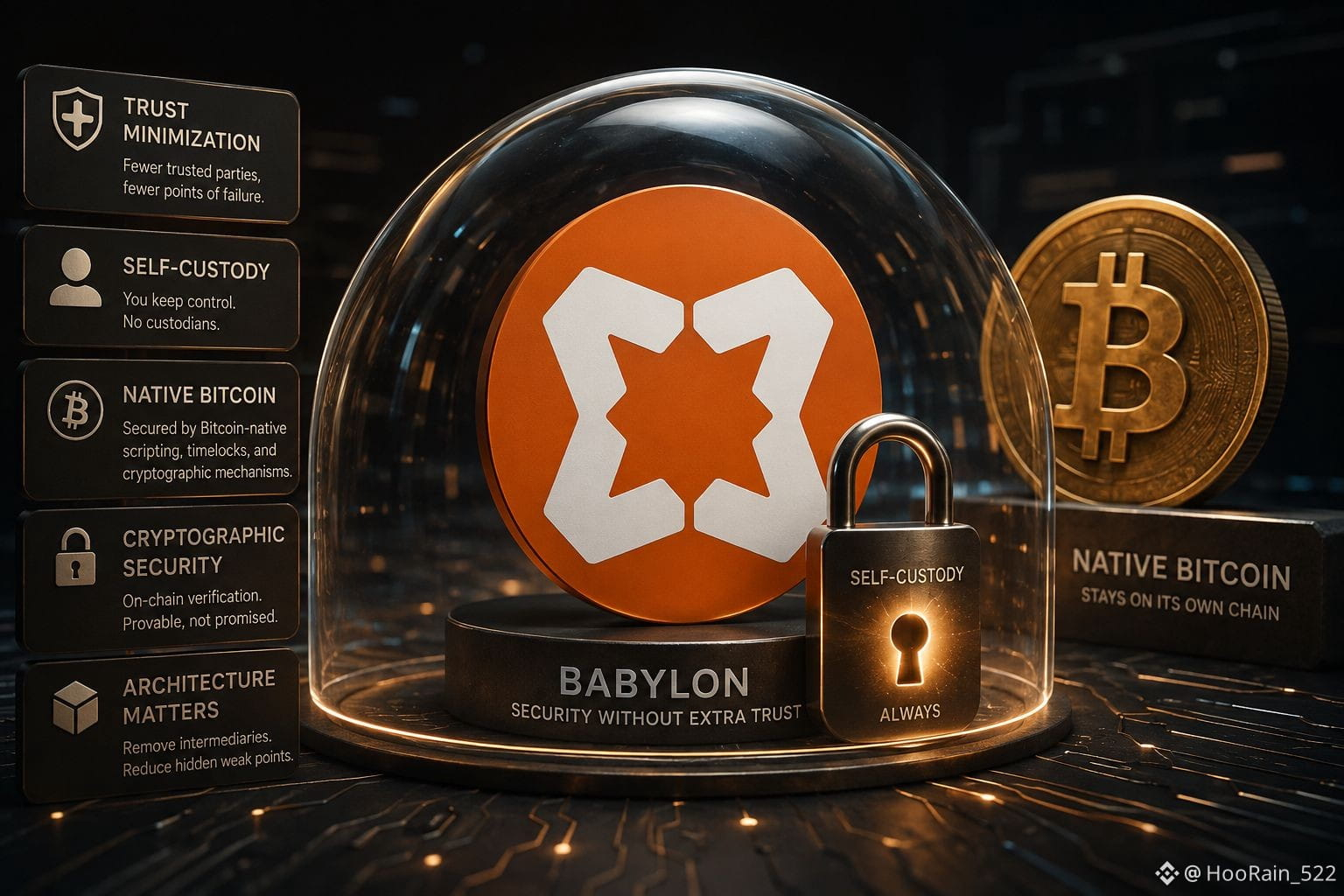
Ich dachte früher, das Vertrauen in Krypto zu reduzieren bedeutet einfach, mehr Validatoren hinzuzufügen oder noch eine weitere geprüfte Brücke zu bauen – die Idee dahinter war, dass mehr Augen, die das System beobachten, mehr Sicherheit bedeutet. Je mehr ich mir angesehen habe, wie Babylon das angeht, desto mehr wirkte diese Perspektive rückwärts.
Validatoren oder Brücken hinzuzufügen entfernt kein Vertrauen, sondern verteilt es lediglich auf mehr Parteien, die weiterhin scheitern oder sich zusammenschließen können. Babylon geht stattdessen einen anderen Weg. In seinem Design bleibt BTC die ganze Zeit in Selbstverwahrung. Nutzer müssen ihre Coins nie an einen Custodian oder an einen Brückenvertrag abgeben, der ausgebeutet werden könnte.
Native Bitcoin bleibt auf seiner eigenen Kette, mit bitcoin-nativem Scripting, Timelocks und kryptografischen Mechanismen, die Babylons Sicherheitsmodell unterstützen – anstatt sich auf das Versprechen oder die Verwahrung einer dritten Partei zu verlassen.
Hier leistet kryptografische Sicherheit die eigentliche Arbeit, nicht Vertrauen in ein Institut oder eine Person. Die Verifikation erfolgt on-chain, auf nachweisbare Weise, ohne dass irgendjemand einfach nur das Wort von jemand anderem nehmen muss.
Meiner Ansicht nach ist das nicht nur ein Feature, sondern eine architektonische Entscheidung. Wenn man Vermittler aus dem Design selbst entfernt, geht es nicht nur darum, wer verantwortlich ist – es reduziert auch die versteckten Schwachstellen, in denen sich Probleme still und heimlich aufbauen können.
Weniger vertrauenswürdige Parteien bedeutet weniger Stellen, an denen das System still und ohne Vorwarnung auseinanderbrechen kann.
Wenn also die Vertrauensminimierung wirklich das Ziel ist: Müsste Architektur dann nicht sogar noch wichtiger sein als der Ruf derjenigen, die das System betreiben.?
@BabylonLabs_io #baby $BABY
$BTC
Validatoren oder Brücken hinzuzufügen entfernt kein Vertrauen, sondern verteilt es lediglich auf mehr Parteien, die weiterhin scheitern oder sich zusammenschließen können. Babylon geht stattdessen einen anderen Weg. In seinem Design bleibt BTC die ganze Zeit in Selbstverwahrung. Nutzer müssen ihre Coins nie an einen Custodian oder an einen Brückenvertrag abgeben, der ausgebeutet werden könnte.
Native Bitcoin bleibt auf seiner eigenen Kette, mit bitcoin-nativem Scripting, Timelocks und kryptografischen Mechanismen, die Babylons Sicherheitsmodell unterstützen – anstatt sich auf das Versprechen oder die Verwahrung einer dritten Partei zu verlassen.
Hier leistet kryptografische Sicherheit die eigentliche Arbeit, nicht Vertrauen in ein Institut oder eine Person. Die Verifikation erfolgt on-chain, auf nachweisbare Weise, ohne dass irgendjemand einfach nur das Wort von jemand anderem nehmen muss.
Meiner Ansicht nach ist das nicht nur ein Feature, sondern eine architektonische Entscheidung. Wenn man Vermittler aus dem Design selbst entfernt, geht es nicht nur darum, wer verantwortlich ist – es reduziert auch die versteckten Schwachstellen, in denen sich Probleme still und heimlich aufbauen können.
Weniger vertrauenswürdige Parteien bedeutet weniger Stellen, an denen das System still und ohne Vorwarnung auseinanderbrechen kann.
Wenn also die Vertrauensminimierung wirklich das Ziel ist: Müsste Architektur dann nicht sogar noch wichtiger sein als der Ruf derjenigen, die das System betreiben.?
@BabylonLabs_io #baby $BABY
$BTC
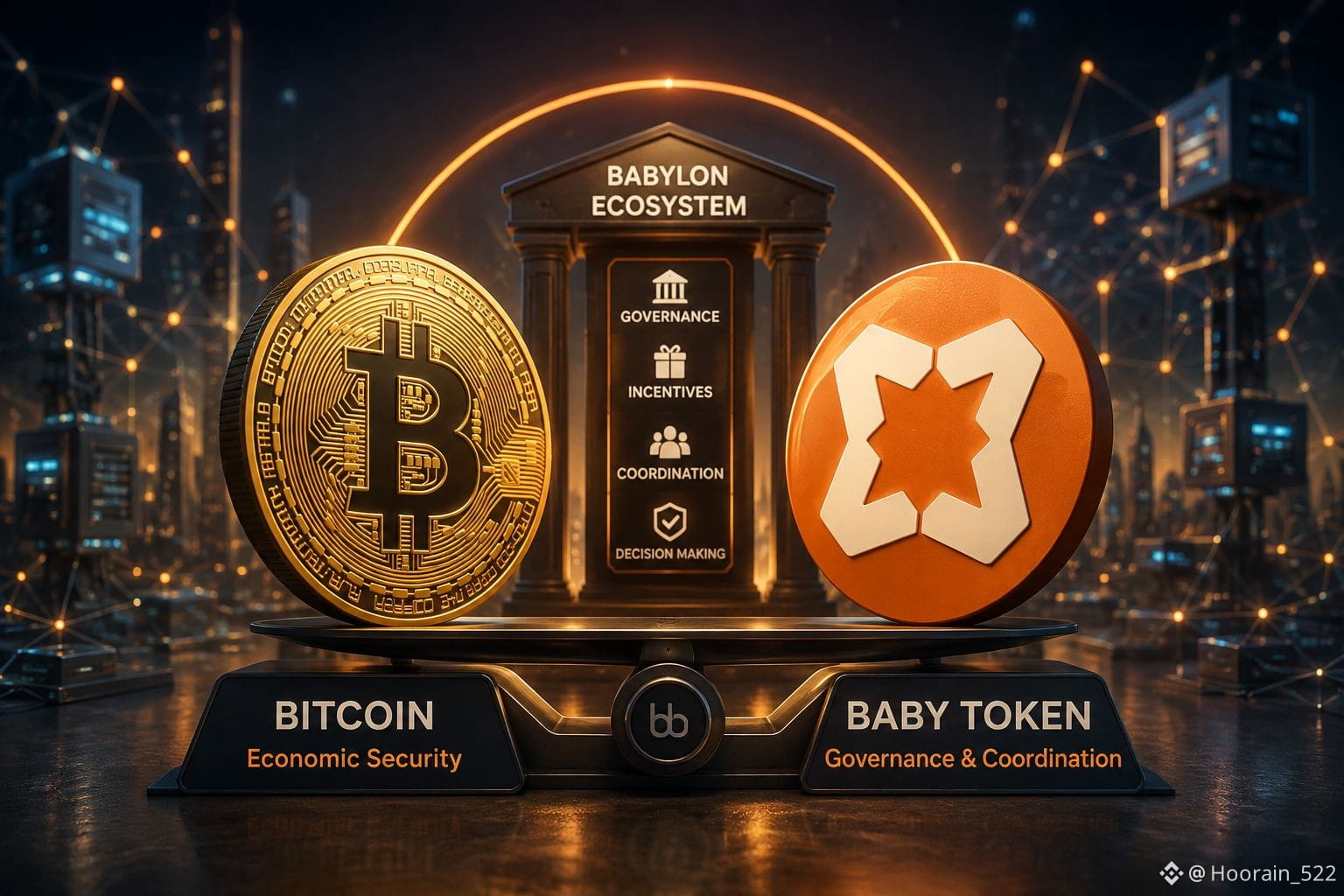
Zunächst dachte ich, dass es fast unnötig sei, ein neues Token hinzuzufügen, wenn Bitcoin bereits wirtschaftliche Sicherheit bereitstellt—so, als würde Babylon ein Problem lösen, das in Wirklichkeit gar nicht existiert. Aber als ich genauer betrachtete, was das BABY-Token tatsächlich tut, änderte sich diese Ansicht.
Die Realität ist, dass $BTC and $BABY nicht dieselbe Aufgabe erfüllen. Bitcoins Rolle besteht ausschließlich darin, wirtschaftliche Sicherheit zu bieten. Es ist das eigentliche Kapital, das das Netzwerk schützt. Und wenn ein Angreifer den Konsens korrumpieren will, muss er genau dieses Kapital einem Risiko aussetzen.
$BABY hingegen übernimmt Aufgaben, für die Bitcoin nie ausgelegt war—insbesondere die Governance. Protokoll-Updates, Änderungen an verschiedenen Parametern und Entscheidungen im Zusammenhang mit Finality Providern müssen auf irgendeine Weise getroffen werden. Dafür braucht es ein Token, das nicht nur als Sicherheit dient, sondern als Werkzeug für die Abstimmung und Entscheidungsfindung im Netzwerk.
Die Netzwerk-Incentives laufen auf die gleiche Weise über #Baby. Dieses Token belohnt das Staking, die Teilnahme und die laufenden operativen Kosten, um dieses System über mehrere Blockchains hinweg zu betreiben. Gleichzeitig sorgt es dafür, dass die unterschiedlichen Teilnehmer des Ökosystems über ein gemeinsames Governance- und Incentive-Framework miteinander ausgerichtet bleiben.
Wenn es das nicht gäbe, wäre die starke wirtschaftliche Absicherung durch Bitcoin zwar weiterhin vorhanden, aber es gäbe keinen wirksamen Weg, sie zu organisieren, Entscheidungen zu treffen oder das Ökosystem koordiniert zu halten.
Der entscheidende Unterschied ist: Bitcoin liefert Stärke und wirtschaftliche Sicherheit, während Baby die Verantwortung für Governance, Koordination und Entscheidungsfindung trägt. Ihre Rollen sind unterschiedlich, und im Babylon-Modell ergänzen sie sich.
Wenn also BTC das System absichert und BABY es steuert, dann stellt sich die Frage: Wenn etwas schiefgeht, wo liegt dann die tatsächliche Verantwortlichkeit?
@BabylonLabs_io #baby
$BTC
Die Realität ist, dass $BTC and $BABY nicht dieselbe Aufgabe erfüllen. Bitcoins Rolle besteht ausschließlich darin, wirtschaftliche Sicherheit zu bieten. Es ist das eigentliche Kapital, das das Netzwerk schützt. Und wenn ein Angreifer den Konsens korrumpieren will, muss er genau dieses Kapital einem Risiko aussetzen.
$BABY hingegen übernimmt Aufgaben, für die Bitcoin nie ausgelegt war—insbesondere die Governance. Protokoll-Updates, Änderungen an verschiedenen Parametern und Entscheidungen im Zusammenhang mit Finality Providern müssen auf irgendeine Weise getroffen werden. Dafür braucht es ein Token, das nicht nur als Sicherheit dient, sondern als Werkzeug für die Abstimmung und Entscheidungsfindung im Netzwerk.
Die Netzwerk-Incentives laufen auf die gleiche Weise über #Baby. Dieses Token belohnt das Staking, die Teilnahme und die laufenden operativen Kosten, um dieses System über mehrere Blockchains hinweg zu betreiben. Gleichzeitig sorgt es dafür, dass die unterschiedlichen Teilnehmer des Ökosystems über ein gemeinsames Governance- und Incentive-Framework miteinander ausgerichtet bleiben.
Wenn es das nicht gäbe, wäre die starke wirtschaftliche Absicherung durch Bitcoin zwar weiterhin vorhanden, aber es gäbe keinen wirksamen Weg, sie zu organisieren, Entscheidungen zu treffen oder das Ökosystem koordiniert zu halten.
Der entscheidende Unterschied ist: Bitcoin liefert Stärke und wirtschaftliche Sicherheit, während Baby die Verantwortung für Governance, Koordination und Entscheidungsfindung trägt. Ihre Rollen sind unterschiedlich, und im Babylon-Modell ergänzen sie sich.
Wenn also BTC das System absichert und BABY es steuert, dann stellt sich die Frage: Wenn etwas schiefgeht, wo liegt dann die tatsächliche Verantwortlichkeit?
@BabylonLabs_io #baby
$BTC
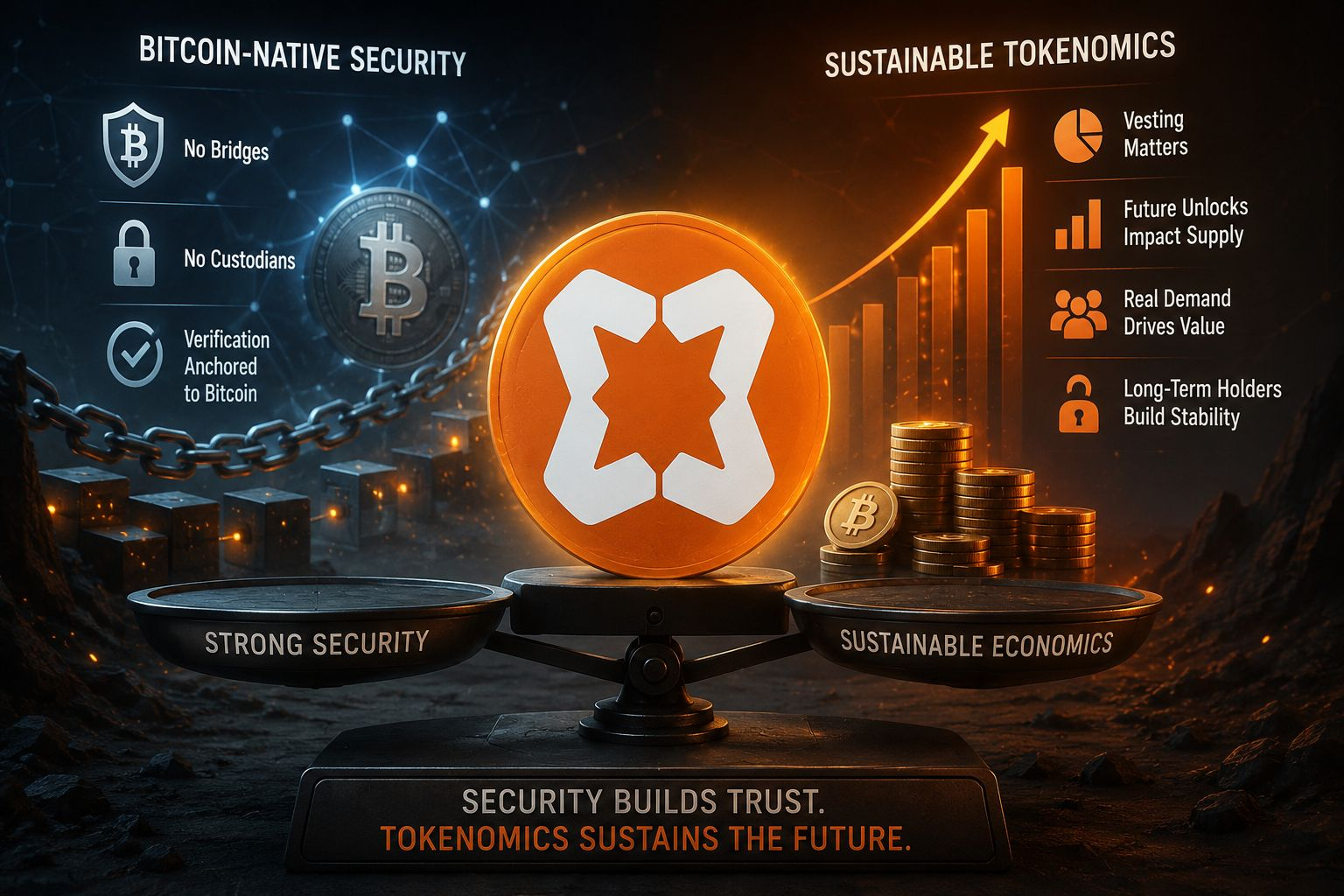
Zuerst dachte ich, Babylons Geschichte beginne und ende mit nativer Bitcoin-Sicherheit: keine Brücken, keine Custodians, Verifikation direkt auf Bitcoin verankert, statt einem verpackten Asset zu vertrauen.
Je mehr ich hineinschaute, desto deutlicher wurde mir, dass das nur die halbe Geschichte ist. Stärkere Verifikation kommt mit einem echten Trade-off: Bestätigungsverzögerungen, die alles langsamer machen, Sicherheit erkauft auf Kosten von Tempo und einer reibungslosen UX. Das ist eine bewusste Entscheidung, kein Fehler, aber das bedeutet, dass das Protokoll noch etwas braucht, das allein durch Sicherheit nicht abgedeckt wird: nachhaltige Tokenomics.
Prozentuale Allokationen erzählen selten die ganze Geschichte; wichtiger ist der Vesting-Verlauf, denn eine kleine Allokation, die langsam freigegeben wird, verhält sich ganz anders als eine große, die schnell freigibt. Künftige Unlocks formen die zirkulierende Versorgung und den Verkaufsdruck schon lange, bevor die gesamte Supply überhaupt erreicht ist. Und der Token-Wert kommt letztlich aus echter Nachfrage: Staking-Beteiligung, Governance-Aktivität, tatsächliche Nutzung – nicht allein aus Knappheit.
Langfristige Halter spielen hier ebenfalls eine Rolle: Überzeugung reduziert reflexartiges Verkaufen und unterstützt ein stabileres Marktverhalten, während das Ökosystem heranreift.
Wenn Babylon also bei der nativen Bitcoin-Sicherheit liefert: Halten die Tokenomics stark genug durch, um diese Vision zu tragen, oder werden die zukünftigen Angebotsdynamiken am Ende das schwierigere Problem sein, das zu lösen bleibt?
@BabylonLabs_io #baby $BABY
$BTC
Je mehr ich hineinschaute, desto deutlicher wurde mir, dass das nur die halbe Geschichte ist. Stärkere Verifikation kommt mit einem echten Trade-off: Bestätigungsverzögerungen, die alles langsamer machen, Sicherheit erkauft auf Kosten von Tempo und einer reibungslosen UX. Das ist eine bewusste Entscheidung, kein Fehler, aber das bedeutet, dass das Protokoll noch etwas braucht, das allein durch Sicherheit nicht abgedeckt wird: nachhaltige Tokenomics.
Prozentuale Allokationen erzählen selten die ganze Geschichte; wichtiger ist der Vesting-Verlauf, denn eine kleine Allokation, die langsam freigegeben wird, verhält sich ganz anders als eine große, die schnell freigibt. Künftige Unlocks formen die zirkulierende Versorgung und den Verkaufsdruck schon lange, bevor die gesamte Supply überhaupt erreicht ist. Und der Token-Wert kommt letztlich aus echter Nachfrage: Staking-Beteiligung, Governance-Aktivität, tatsächliche Nutzung – nicht allein aus Knappheit.
Langfristige Halter spielen hier ebenfalls eine Rolle: Überzeugung reduziert reflexartiges Verkaufen und unterstützt ein stabileres Marktverhalten, während das Ökosystem heranreift.
Wenn Babylon also bei der nativen Bitcoin-Sicherheit liefert: Halten die Tokenomics stark genug durch, um diese Vision zu tragen, oder werden die zukünftigen Angebotsdynamiken am Ende das schwierigere Problem sein, das zu lösen bleibt?
@BabylonLabs_io #baby $BABY
$BTC
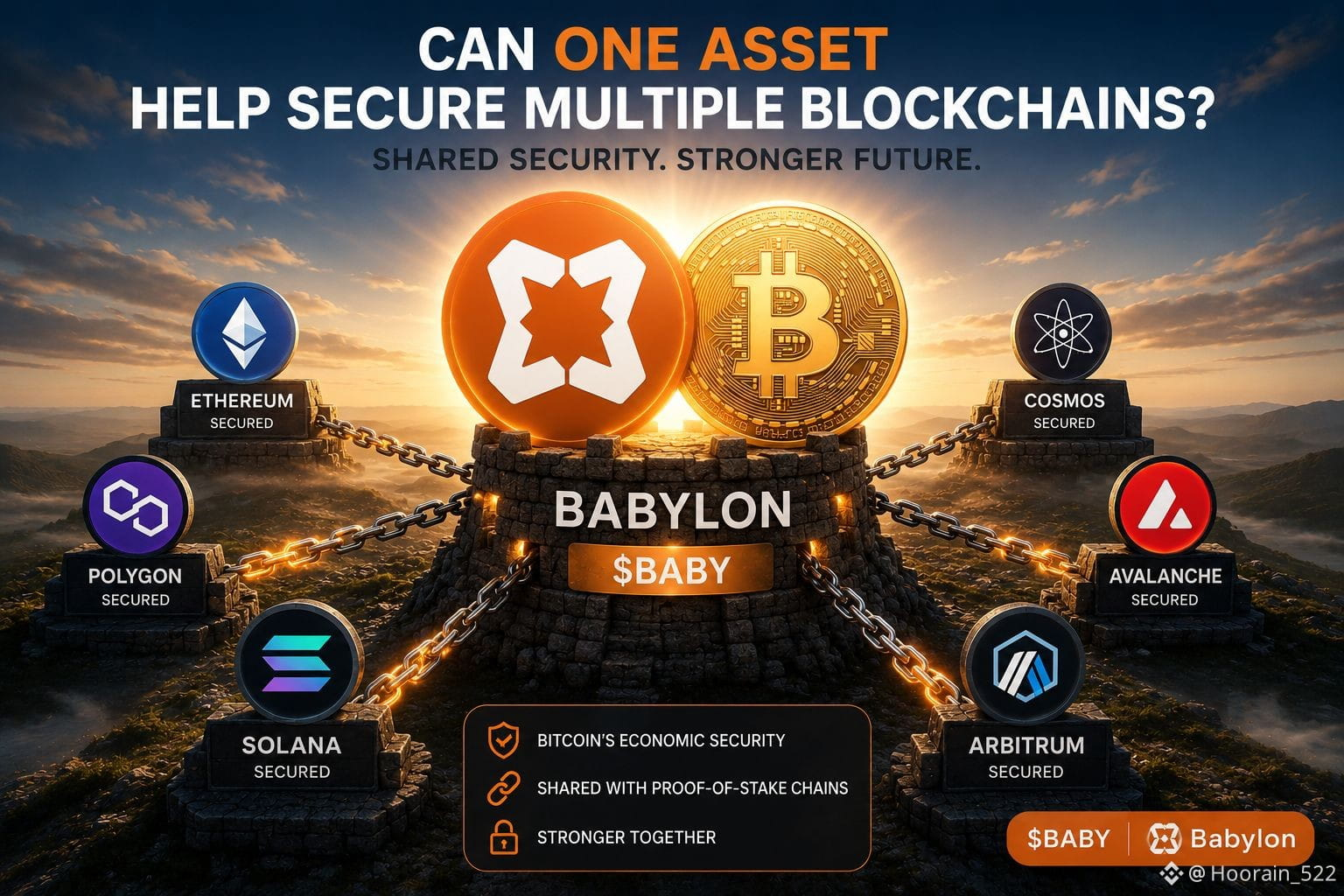
Zunächst dachte ich, dass jede Blockchain ihre eigene Sicherheit von Grund auf aufbauen muss. Das schien einfach die Kosten zu sein, die mit dem Start eines neuen Netzwerks verbunden sind. Je mehr ich mir jedoch ansah, wie fragmentiert die Blockchain-Sicherheit tatsächlich ist, desto komplizierter wurde das Bild.
Hunderte von Ketten bauen getrennte Validator-Sets auf, konkurrieren jeweils um neues Kapital und bitten Nutzer, Systemen zu vertrauen, die kaum oder gar keine nachvollziehbare Erfolgsbilanz haben. Als ich dieses Muster erkannte, begann ich mich zu fragen, ob jedes neue Netzwerk wirklich das gleiche Sicherheitsproblem in Eigenregie lösen muss.
An dem Punkt wurde Babylon für mich interessant. Sein Ansatz besteht nicht darin, zu fordern, dass Bitcoin zu etwas anderem gemacht wird. Statt Bitcoin als reinen Vermögenswert zu betrachten, der einfach in kalter Aufbewahrung liegt, erforscht Babylon, wie die wirtschaftliche Sicherheit von Bitcoin dabei helfen kann, mehrere Proof-of-Stake-Ketten zu stärken.
Bitcoin sichert bereits eines der größten und am stärksten erprobten wirtschaftlichen Netzwerke in Krypto ab. Babylons Idee ist einfach: Wenn diese Sicherheit ohnehin da ist, warum sollte man sie nicht aus ihrer Isolation herausnehmen und anderen Proof-of-Stake-Netzwerken davon profitieren lassen?
Die Idee ist überzeugend, weil sie das Starten und Absichern neuer Netzwerke möglicherweise kapitaleffizienter machen kann. Gleichzeitig wirft geteilte Sicherheit auch wichtige Fragen auf: Wenn mehrere Ketten von derselben Quelle wirtschaftlicher Sicherheit abhängen, verringert das dann insgesamt das Risiko durch stärkere Sicherheit – oder konzentriert es das Risiko nur an einem anderen Ort?
Ich erkunde die Idee noch weiter, aber sie gehört zu den interessantesten Ansätzen, die ich bisher gesehen habe, um die Blockchain-Sicherheit neu zu denken.
#baby @BabylonLabs_io #BABY $BABY
$BTC
Hunderte von Ketten bauen getrennte Validator-Sets auf, konkurrieren jeweils um neues Kapital und bitten Nutzer, Systemen zu vertrauen, die kaum oder gar keine nachvollziehbare Erfolgsbilanz haben. Als ich dieses Muster erkannte, begann ich mich zu fragen, ob jedes neue Netzwerk wirklich das gleiche Sicherheitsproblem in Eigenregie lösen muss.
An dem Punkt wurde Babylon für mich interessant. Sein Ansatz besteht nicht darin, zu fordern, dass Bitcoin zu etwas anderem gemacht wird. Statt Bitcoin als reinen Vermögenswert zu betrachten, der einfach in kalter Aufbewahrung liegt, erforscht Babylon, wie die wirtschaftliche Sicherheit von Bitcoin dabei helfen kann, mehrere Proof-of-Stake-Ketten zu stärken.
Bitcoin sichert bereits eines der größten und am stärksten erprobten wirtschaftlichen Netzwerke in Krypto ab. Babylons Idee ist einfach: Wenn diese Sicherheit ohnehin da ist, warum sollte man sie nicht aus ihrer Isolation herausnehmen und anderen Proof-of-Stake-Netzwerken davon profitieren lassen?
Die Idee ist überzeugend, weil sie das Starten und Absichern neuer Netzwerke möglicherweise kapitaleffizienter machen kann. Gleichzeitig wirft geteilte Sicherheit auch wichtige Fragen auf: Wenn mehrere Ketten von derselben Quelle wirtschaftlicher Sicherheit abhängen, verringert das dann insgesamt das Risiko durch stärkere Sicherheit – oder konzentriert es das Risiko nur an einem anderen Ort?
Ich erkunde die Idee noch weiter, aber sie gehört zu den interessantesten Ansätzen, die ich bisher gesehen habe, um die Blockchain-Sicherheit neu zu denken.
#baby @BabylonLabs_io #BABY $BABY
$BTC
Anmelden und weiter Inhalte entdecken