
VOGs_X1
1.5k Beiträge

VOGs_X1
Melden
Nutzer blockieren
Decoding Crypto,Curating Signals & Quietly Ahead. | Strategy. Insight. No Noise.|| Lets collab
Trade eröffnen
Hochfrequenz-Trader
2.5 Jahre
162 Following
5.7K+ Follower
4.3K+ Like gegeben
Beiträge
Portfolio
Alle
Zitierungen
Live
PINNED
·
--
Was ist dein bevorstehendes Ziel für $BTC
{spot}(BTCUSDT)
Beantworte es und schnapp dir das rote Paket.
Nur gültig für 24 Stunden.
Was ist dein bevorstehendes Ziel für $BTC
Beantworte es und schnapp dir das rote Paket.
Nur gültig für 24 Stunden.
Beantworte es und schnapp dir das rote Paket.
Nur gültig für 24 Stunden.
$110k
39%
$120k
61%
51 Stimmen • Abstimmung beendet
1.2k
589
94
1.2k
·
--
Privatsphäre allein ist nicht die schwierige Aufgabe; Privatsphäre in regulierten Finanzumgebungen zum Laufen zu bringen, ist der Teil, der @Dusk_Foundation gets interessant macht.
Private Finance On-Chain klingt zunächst unkompliziert, bis regulierte Märkte ins Spiel kommen. Anleger benötigen möglicherweise Transaktions-Privatsphäre, während Emittenten weiterhin Eignungsprüfungen, Übertragungsbeschränkungen, Berichterstattung und Wiederherstellungsmechanismen benötigen.
Das ist es, was Dusk interessanter macht als eine typische Privacy-Chain. Verhüllte Aktivitäten und selektive Offenlegung können mit Regeln auf Ebene der Assets koexistieren, die festlegen, wer ein Asset halten oder übertragen darf.
Die größere Frage lautet jetzt nicht, ob die Infrastruktur funktioniert. NPEX und regulierte Emissionen liefern bereits Hinweise auf echte Marktdurchdringung.
Es ist die Frage, ob Institutionen und Märkte es auch im großen Maßstab nutzen werden.
Für mich ist das der eigentliche Test für $DUSK: Aus ausgefeilter Infrastruktur anhaltende On-Chain-Nachfrage machen.
#dusk $DUSK @Dusk
Privatsphäre allein ist nicht die schwierige Aufgabe; Privatsphäre in regulierten Finanzumgebungen zum Laufen zu bringen, ist der Teil, der @Dusk gets interessant macht.
Private Finance On-Chain klingt zunächst unkompliziert, bis regulierte Märkte ins Spiel kommen. Anleger benötigen möglicherweise Transaktions-Privatsphäre, während Emittenten weiterhin Eignungsprüfungen, Übertragungsbeschränkungen, Berichterstattung und Wiederherstellungsmechanismen benötigen.
Das ist es, was Dusk interessanter macht als eine typische Privacy-Chain. Verhüllte Aktivitäten und selektive Offenlegung können mit Regeln auf Ebene der Assets koexistieren, die festlegen, wer ein Asset halten oder übertragen darf.
Die größere Frage lautet jetzt nicht, ob die Infrastruktur funktioniert. NPEX und regulierte Emissionen liefern bereits Hinweise auf echte Marktdurchdringung.
Es ist die Frage, ob Institutionen und Märkte es auch im großen Maßstab nutzen werden.
Für mich ist das der eigentliche Test für $DUSK : Aus ausgefeilter Infrastruktur anhaltende On-Chain-Nachfrage machen.
#dusk $DUSK @Dusk
Private Finance On-Chain klingt zunächst unkompliziert, bis regulierte Märkte ins Spiel kommen. Anleger benötigen möglicherweise Transaktions-Privatsphäre, während Emittenten weiterhin Eignungsprüfungen, Übertragungsbeschränkungen, Berichterstattung und Wiederherstellungsmechanismen benötigen.
Das ist es, was Dusk interessanter macht als eine typische Privacy-Chain. Verhüllte Aktivitäten und selektive Offenlegung können mit Regeln auf Ebene der Assets koexistieren, die festlegen, wer ein Asset halten oder übertragen darf.
Die größere Frage lautet jetzt nicht, ob die Infrastruktur funktioniert. NPEX und regulierte Emissionen liefern bereits Hinweise auf echte Marktdurchdringung.
Es ist die Frage, ob Institutionen und Märkte es auch im großen Maßstab nutzen werden.
Für mich ist das der eigentliche Test für $DUSK : Aus ausgefeilter Infrastruktur anhaltende On-Chain-Nachfrage machen.
#dusk $DUSK @Dusk
126
·
--
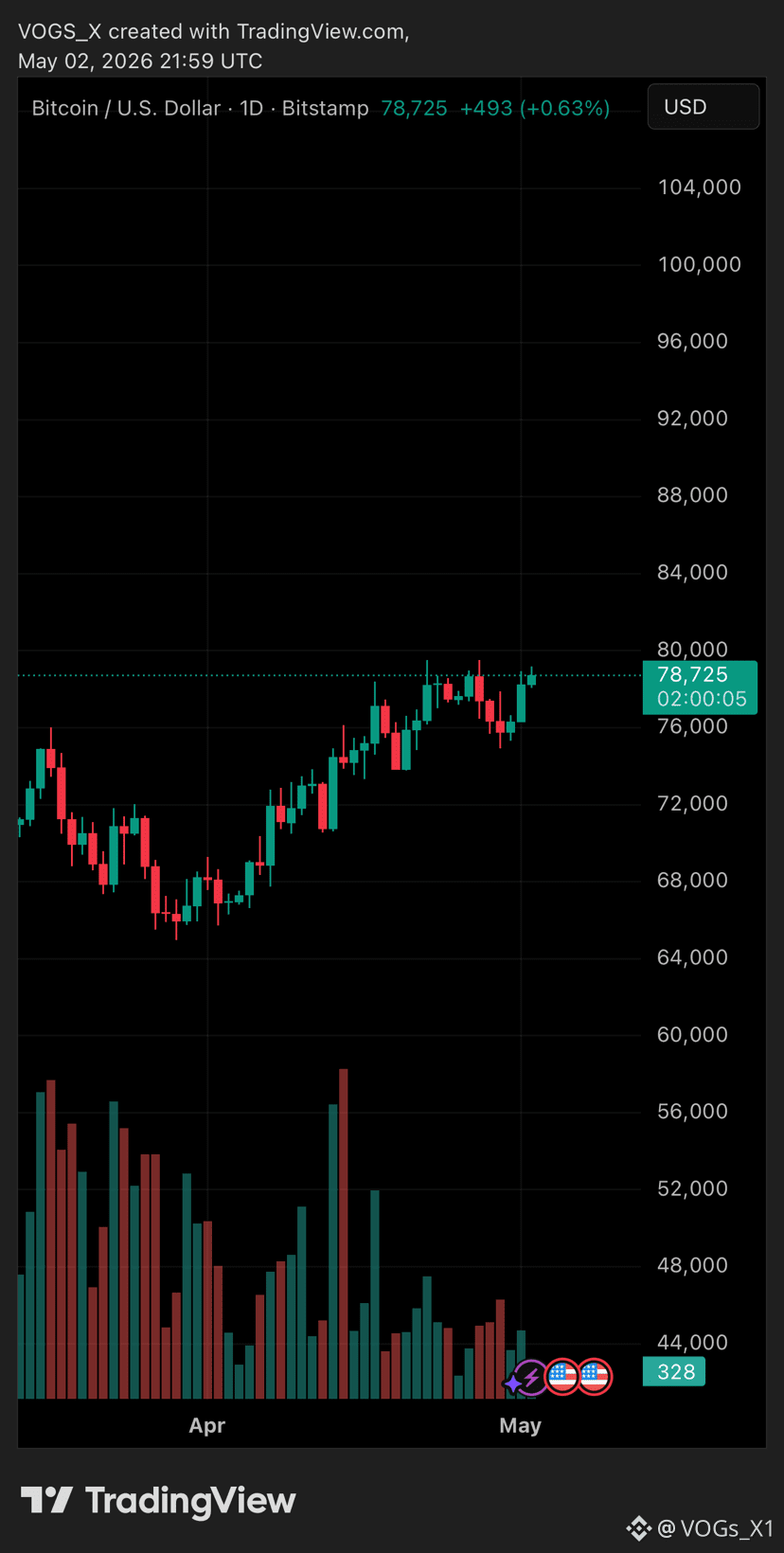
$BTC befindet sich an einem kritischen Punkt. Der nächste Ausbruch oder Rückgang wird wahrscheinlich die kurzfristige Richtung bestimmen, daher ist es smarter, reaktiv statt vorausschauend zu bleiben.#EthereumFoundationSellsETHtoBitmineAgain #BankofEnglandMayPauseDigitalPound
$BTC befindet sich an einem kritischen Punkt. Der nächste Ausbruch oder Rückgang wird wahrscheinlich die kurzfristige Richtung bestimmen, daher ist es smarter, reaktiv statt vorausschauend zu bleiben.#EthereumFoundationSellsETHtoBitmineAgain #BankofEnglandMayPauseDigitalPound
1
133
·
--
$BTC Marktupdate Konsolidierung vor Expansion?
Bitcoin handelt derzeit in einem engen Konsolidierungsbereich, was eine Phase der Unentschlossenheit nach der jüngsten Volatilität widerspiegelt. Die Preisbewegung zeigt ein Gleichgewicht zwischen Käufern, die wichtige Unterstützungsniveaus verteidigen, und Verkäufern, die den Aufwärtsmomentum begrenzen.
Wichtige Beobachtungen:
* Unterstützungszone: Hält stabil, was auf starkes Käuferinteresse bei Rücksetzern hinweist
* Widerstandsniveau: Wirkt als kurzfristige Decke, die die Fortsetzung des Ausbruchs verhindert
* Volumen: Relativ gedämpft, ein Zeichen dafür, dass eine größere Bewegung im Aufbau sein könnte
Marktstruktur:
Der breitere Trend bleibt intakt, aber kurzfristig bewegt sich $BTC in einer Range. Diese Art von Preisverhalten geht oft einem Ausbruch mit hoher Volatilität voraus, während sich die Liquidität auf beiden Seiten aufbaut.
Zu beobachtende Szenarien:
* Bullishes Szenario: Ein entscheidender Ausbruch über den Widerstand mit starkem Volumen könnte eine Fortsetzung in Richtung höherer Niveaus auslösen
* Bärisches Szenario: Verlust der Unterstützung könnte zu einem tieferen Rücksetzer und einer Liquiditätsabholung führen
Einblick:
Märkte bewegen sich nicht in geraden Linien. Konsolidierungsphasen sind entscheidend für die Fortsetzung oder Umkehr des Trends. Geduld ist hier der Schlüssel, da das Verfolgen von Bewegungen innerhalb der Range riskant sein kann.
$BTC Marktupdate Konsolidierung vor Expansion?
Bitcoin handelt derzeit in einem engen Konsolidierungsbereich, was eine Phase der Unentschlossenheit nach der jüngsten Volatilität widerspiegelt. Die Preisbewegung zeigt ein Gleichgewicht zwischen Käufern, die wichtige Unterstützungsniveaus verteidigen, und Verkäufern, die den Aufwärtsmomentum begrenzen.
Wichtige Beobachtungen:
* Unterstützungszone: Hält stabil, was auf starkes Käuferinteresse bei Rücksetzern hinweist
* Widerstandsniveau: Wirkt als kurzfristige Decke, die die Fortsetzung des Ausbruchs verhindert
* Volumen: Relativ gedämpft, ein Zeichen dafür, dass eine größere Bewegung im Aufbau sein könnte
Marktstruktur:
Der breitere Trend bleibt intakt, aber kurzfristig bewegt sich $BTC in einer Range. Diese Art von Preisverhalten geht oft einem Ausbruch mit hoher Volatilität voraus, während sich die Liquidität auf beiden Seiten aufbaut.
Zu beobachtende Szenarien:
* Bullishes Szenario: Ein entscheidender Ausbruch über den Widerstand mit starkem Volumen könnte eine Fortsetzung in Richtung höherer Niveaus auslösen
* Bärisches Szenario: Verlust der Unterstützung könnte zu einem tieferen Rücksetzer und einer Liquiditätsabholung führen
Einblick:
Märkte bewegen sich nicht in geraden Linien. Konsolidierungsphasen sind entscheidend für die Fortsetzung oder Umkehr des Trends. Geduld ist hier der Schlüssel, da das Verfolgen von Bewegungen innerhalb der Range riskant sein kann.
Bitcoin handelt derzeit in einem engen Konsolidierungsbereich, was eine Phase der Unentschlossenheit nach der jüngsten Volatilität widerspiegelt. Die Preisbewegung zeigt ein Gleichgewicht zwischen Käufern, die wichtige Unterstützungsniveaus verteidigen, und Verkäufern, die den Aufwärtsmomentum begrenzen.
Wichtige Beobachtungen:
* Unterstützungszone: Hält stabil, was auf starkes Käuferinteresse bei Rücksetzern hinweist
* Widerstandsniveau: Wirkt als kurzfristige Decke, die die Fortsetzung des Ausbruchs verhindert
* Volumen: Relativ gedämpft, ein Zeichen dafür, dass eine größere Bewegung im Aufbau sein könnte
Marktstruktur:
Der breitere Trend bleibt intakt, aber kurzfristig bewegt sich $BTC in einer Range. Diese Art von Preisverhalten geht oft einem Ausbruch mit hoher Volatilität voraus, während sich die Liquidität auf beiden Seiten aufbaut.
Zu beobachtende Szenarien:
* Bullishes Szenario: Ein entscheidender Ausbruch über den Widerstand mit starkem Volumen könnte eine Fortsetzung in Richtung höherer Niveaus auslösen
* Bärisches Szenario: Verlust der Unterstützung könnte zu einem tieferen Rücksetzer und einer Liquiditätsabholung führen
Einblick:
Märkte bewegen sich nicht in geraden Linien. Konsolidierungsphasen sind entscheidend für die Fortsetzung oder Umkehr des Trends. Geduld ist hier der Schlüssel, da das Verfolgen von Bewegungen innerhalb der Range riskant sein kann.
1
126
·
--
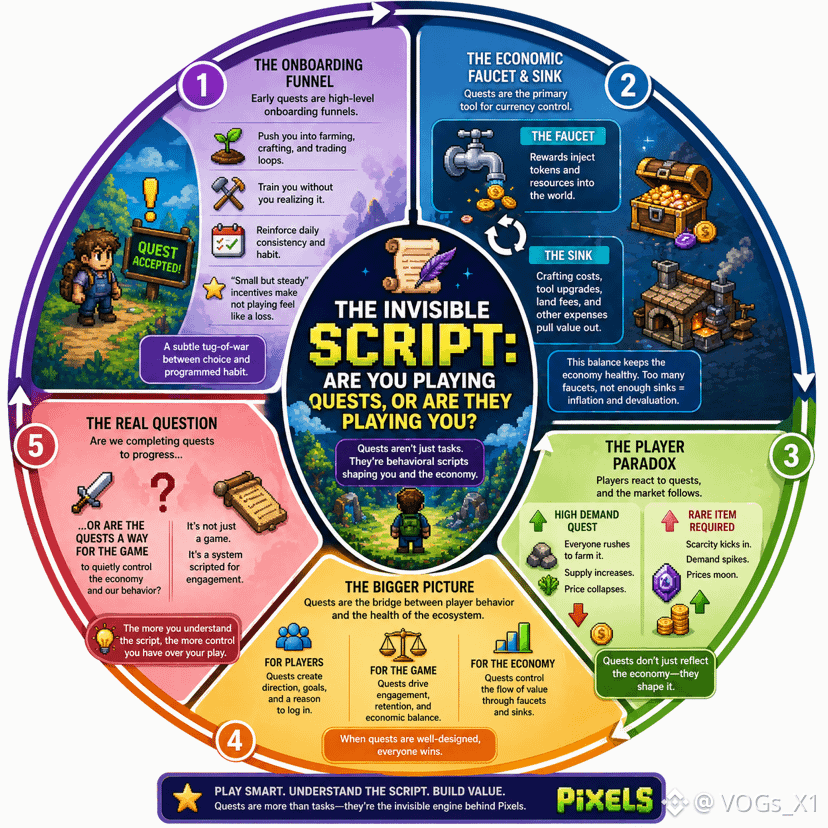
Das unsichtbare Skript: Spielst du Quests oder spielen sie mit dir?
Ich habe darüber nachgedacht, wie Quests in Pixels tatsächlich funktionieren, und ehrlich? Sie sind viel mehr als nur "Aufgaben für Belohnungen."
Während die meisten Spieler sie als einfache Möglichkeit sehen, XP und $PIXEL zu sammeln, habe ich erkannt, dass sie tatsächlich Verhaltensskripte sind, die leise steuern, wie wir mit dem gesamten Ökosystem interagieren.
Der Onboarding-Trichter
Frühe Quests sind nicht nur Tutorials; sie sind hochgradige Onboarding-Trichter. Sie drängen dich so geschmeidig in Farming-, Crafting- und Trading-Loops, dass du nicht einmal merkst, dass du trainiert wirst. Bis du im Mid-Game angekommen bist, haben diese täglichen Aufgaben eine Konsistenzgewohnheit verstärkt. Das Spiel zwingt dich nicht, dich einzuloggen – es bietet einfach einen "kleinen, aber stetigen" Anreiz, der es so erscheinen lässt, als wäre es ein Verlust, nicht zu spielen.
Es ist ein subtiler Wettstreit zwischen echter Wahl und programmiertem Habit.
Der wirtschaftliche Wasserhahn & Abfluss
Auf Makroebene sind Quests das primäre Werkzeug zur Währungskontrolle.
• Der Wasserhahn: Belohnungen spritzen Tokens und Ressourcen in die Welt.
• Der Abfluss: Crafting-Anforderungen, Werkzeug-Upgrades und landbezogene Kosten ziehen diesen Wert wieder heraus.
Dieses Gleichgewicht ist das einzige, was zwischen einer gesunden Wirtschaft und galoppierender Inflation steht. Wenn die "Abflüsse" nicht stark genug sind, um die "Wasserhähne" zu schlucken, verlieren die Tokens in deinem Wallet ihren Biss.
Das Spieler-Paradoxon
Was verrückt ist, ist, wie das Verhalten der Spieler auf diese Skripte reagiert. Wenn eine Quest eine bestimmte Ressource beliebt macht, stürzen sich alle darauf, sie zu farmen, und der Marktpreis bricht zusammen. Wenn eine Quest plötzlich einen seltenen Gegenstand erfordert, tritt Knappheit ein und die Preise steigen ins Unermessliche.
Die wirkliche Frage, die wir uns stellen sollten, ist: Vervollständigen wir Quests, um voranzukommen, oder sind die Quests nur ein Weg für das Spiel, die Wirtschaft selbst leise zu kontrollieren?
#pixel $PIXEL @pixels
Das unsichtbare Skript: Spielst du Quests oder spielen sie mit dir?
Ich habe darüber nachgedacht, wie Quests in Pixels tatsächlich funktionieren, und ehrlich? Sie sind viel mehr als nur "Aufgaben für Belohnungen."
Während die meisten Spieler sie als einfache Möglichkeit sehen, XP und $PIXEL zu sammeln, habe ich erkannt, dass sie tatsächlich Verhaltensskripte sind, die leise steuern, wie wir mit dem gesamten Ökosystem interagieren.
Der Onboarding-Trichter
Frühe Quests sind nicht nur Tutorials; sie sind hochgradige Onboarding-Trichter. Sie drängen dich so geschmeidig in Farming-, Crafting- und Trading-Loops, dass du nicht einmal merkst, dass du trainiert wirst. Bis du im Mid-Game angekommen bist, haben diese täglichen Aufgaben eine Konsistenzgewohnheit verstärkt. Das Spiel zwingt dich nicht, dich einzuloggen – es bietet einfach einen "kleinen, aber stetigen" Anreiz, der es so erscheinen lässt, als wäre es ein Verlust, nicht zu spielen.
Es ist ein subtiler Wettstreit zwischen echter Wahl und programmiertem Habit.
Der wirtschaftliche Wasserhahn & Abfluss
Auf Makroebene sind Quests das primäre Werkzeug zur Währungskontrolle.
• Der Wasserhahn: Belohnungen spritzen Tokens und Ressourcen in die Welt.
• Der Abfluss: Crafting-Anforderungen, Werkzeug-Upgrades und landbezogene Kosten ziehen diesen Wert wieder heraus.
Dieses Gleichgewicht ist das einzige, was zwischen einer gesunden Wirtschaft und galoppierender Inflation steht. Wenn die "Abflüsse" nicht stark genug sind, um die "Wasserhähne" zu schlucken, verlieren die Tokens in deinem Wallet ihren Biss.
Das Spieler-Paradoxon
Was verrückt ist, ist, wie das Verhalten der Spieler auf diese Skripte reagiert. Wenn eine Quest eine bestimmte Ressource beliebt macht, stürzen sich alle darauf, sie zu farmen, und der Marktpreis bricht zusammen. Wenn eine Quest plötzlich einen seltenen Gegenstand erfordert, tritt Knappheit ein und die Preise steigen ins Unermessliche.
Die wirkliche Frage, die wir uns stellen sollten, ist: Vervollständigen wir Quests, um voranzukommen, oder sind die Quests nur ein Weg für das Spiel, die Wirtschaft selbst leise zu kontrollieren?
#pixel $PIXEL @Pixels
Ich habe darüber nachgedacht, wie Quests in Pixels tatsächlich funktionieren, und ehrlich? Sie sind viel mehr als nur "Aufgaben für Belohnungen."
Während die meisten Spieler sie als einfache Möglichkeit sehen, XP und $PIXEL zu sammeln, habe ich erkannt, dass sie tatsächlich Verhaltensskripte sind, die leise steuern, wie wir mit dem gesamten Ökosystem interagieren.
Der Onboarding-Trichter
Frühe Quests sind nicht nur Tutorials; sie sind hochgradige Onboarding-Trichter. Sie drängen dich so geschmeidig in Farming-, Crafting- und Trading-Loops, dass du nicht einmal merkst, dass du trainiert wirst. Bis du im Mid-Game angekommen bist, haben diese täglichen Aufgaben eine Konsistenzgewohnheit verstärkt. Das Spiel zwingt dich nicht, dich einzuloggen – es bietet einfach einen "kleinen, aber stetigen" Anreiz, der es so erscheinen lässt, als wäre es ein Verlust, nicht zu spielen.
Es ist ein subtiler Wettstreit zwischen echter Wahl und programmiertem Habit.
Der wirtschaftliche Wasserhahn & Abfluss
Auf Makroebene sind Quests das primäre Werkzeug zur Währungskontrolle.
• Der Wasserhahn: Belohnungen spritzen Tokens und Ressourcen in die Welt.
• Der Abfluss: Crafting-Anforderungen, Werkzeug-Upgrades und landbezogene Kosten ziehen diesen Wert wieder heraus.
Dieses Gleichgewicht ist das einzige, was zwischen einer gesunden Wirtschaft und galoppierender Inflation steht. Wenn die "Abflüsse" nicht stark genug sind, um die "Wasserhähne" zu schlucken, verlieren die Tokens in deinem Wallet ihren Biss.
Das Spieler-Paradoxon
Was verrückt ist, ist, wie das Verhalten der Spieler auf diese Skripte reagiert. Wenn eine Quest eine bestimmte Ressource beliebt macht, stürzen sich alle darauf, sie zu farmen, und der Marktpreis bricht zusammen. Wenn eine Quest plötzlich einen seltenen Gegenstand erfordert, tritt Knappheit ein und die Preise steigen ins Unermessliche.
Die wirkliche Frage, die wir uns stellen sollten, ist: Vervollständigen wir Quests, um voranzukommen, oder sind die Quests nur ein Weg für das Spiel, die Wirtschaft selbst leise zu kontrollieren?
#pixel $PIXEL @Pixels
2
157
·
--
Artikel
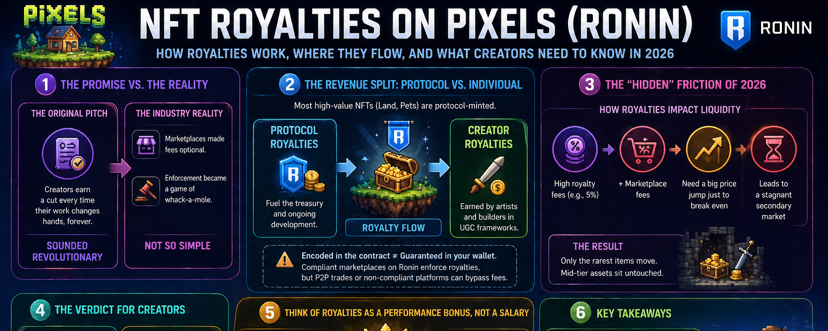
Verständnis der NFT-Royalties in Pixels: Struktur, Risiken und Ergebnisse für CreatorIch bin dem Thema NFT-Royalties mit einer gesunden Portion Skepsis begegnet. Der ursprüngliche Pitch war einfach: Creator würden jedes Mal einen Anteil bekommen, wenn ihre Werke den Besitzer wechseln, für immer. Es klang revolutionär, bis die Realität der Branche eintraf: Märkte machten Gebühren optional, und die Durchsetzung wurde zu einem Spiel von Whack-a-Mole.
Wenn ich mir die Pixels im Ronin-Netzwerk ansehe, ist die Situation etwas nuancierter. Da Ronin ein "kuratiertes" Ökosystem im Vergleich zum Wilden Westen von Ethereum ist, haben Royalties hier tatsächlich mehr Biss, aber es gibt immer noch Lücken, auf die man achten muss.
Verständnis der NFT-Royalties in Pixels: Struktur, Risiken und Ergebnisse für Creator
Ich bin dem Thema NFT-Royalties mit einer gesunden Portion Skepsis begegnet. Der ursprüngliche Pitch war einfach: Creator würden jedes Mal einen Anteil bekommen, wenn ihre Werke den Besitzer wechseln, für immer. Es klang revolutionär, bis die Realität der Branche eintraf: Märkte machten Gebühren optional, und die Durchsetzung wurde zu einem Spiel von Whack-a-Mole.
Wenn ich mir die Pixels im Ronin-Netzwerk ansehe, ist die Situation etwas nuancierter. Da Ronin ein "kuratiertes" Ökosystem im Vergleich zum Wilden Westen von Ethereum ist, haben Royalties hier tatsächlich mehr Biss, aber es gibt immer noch Lücken, auf die man achten muss.
Wenn ich mir die Pixels im Ronin-Netzwerk ansehe, ist die Situation etwas nuancierter. Da Ronin ein "kuratiertes" Ökosystem im Vergleich zum Wilden Westen von Ethereum ist, haben Royalties hier tatsächlich mehr Biss, aber es gibt immer noch Lücken, auf die man achten muss.
1
150
·
--
Der Preis der Reibung: Entschlüsselung der Zeitwirtschaft in $PIXEL**Früher habe ich $PIXEL beobachtet und angenommen, dass es dem Standard-Skript für In-Game-Währungen folgen würde: mehr Spieler gleich mehr Ausgaben, was zu einer stabilen Nachfrage führt. Aber als ich tiefer grub, wurde mir klar, dass der wahre Wert nicht wirklich darin besteht, was du kaufst – sondern darin, was du dir ersparen kannst.
$PIXEL bewertet nicht nur Artikel; es bewertet die Beseitigung von Reibung. Es sind die Kosten, um die Wartezeiten, das Grinden und die schwere Koordination zu umgehen, die das Tempo aller anderen bestimmen.
⏳ Der Kompressionsloop
Das schafft einen grundlegenden Wandel im Gameplay. Spieler nutzen das Token nicht nur zum Fortschritt; sie verwenden es, um Zeit und Aufwand zu komprimieren. Die Gefahr hier ist, dass wenn alle auf Geschwindigkeit optimieren, das Spiel sich verengt. Man verliert die Erkundung und die "glücklichen Zufälle" eines langsameren Tempos, und es wird zu einem Wettlauf auf wenigen dominanten, sich wiederholenden Pfaden.
Der Preis der Reibung: Entschlüsselung der Zeitwirtschaft in $PIXEL**
Früher habe ich $PIXEL beobachtet und angenommen, dass es dem Standard-Skript für In-Game-Währungen folgen würde: mehr Spieler gleich mehr Ausgaben, was zu einer stabilen Nachfrage führt. Aber als ich tiefer grub, wurde mir klar, dass der wahre Wert nicht wirklich darin besteht, was du kaufst – sondern darin, was du dir ersparen kannst.
$PIXEL bewertet nicht nur Artikel; es bewertet die Beseitigung von Reibung. Es sind die Kosten, um die Wartezeiten, das Grinden und die schwere Koordination zu umgehen, die das Tempo aller anderen bestimmen.
⏳ Der Kompressionsloop
Das schafft einen grundlegenden Wandel im Gameplay. Spieler nutzen das Token nicht nur zum Fortschritt; sie verwenden es, um Zeit und Aufwand zu komprimieren. Die Gefahr hier ist, dass wenn alle auf Geschwindigkeit optimieren, das Spiel sich verengt. Man verliert die Erkundung und die "glücklichen Zufälle" eines langsameren Tempos, und es wird zu einem Wettlauf auf wenigen dominanten, sich wiederholenden Pfaden.
$PIXEL bewertet nicht nur Artikel; es bewertet die Beseitigung von Reibung. Es sind die Kosten, um die Wartezeiten, das Grinden und die schwere Koordination zu umgehen, die das Tempo aller anderen bestimmen.
⏳ Der Kompressionsloop
Das schafft einen grundlegenden Wandel im Gameplay. Spieler nutzen das Token nicht nur zum Fortschritt; sie verwenden es, um Zeit und Aufwand zu komprimieren. Die Gefahr hier ist, dass wenn alle auf Geschwindigkeit optimieren, das Spiel sich verengt. Man verliert die Erkundung und die "glücklichen Zufälle" eines langsameren Tempos, und es wird zu einem Wettlauf auf wenigen dominanten, sich wiederholenden Pfaden.
137
·
--
Ich war überrascht, eine Seite der Pixels-Community zu entdecken, die normalerweise nicht in den "Play-to-Earn"-Broschüren auftaucht: Menschen, die sich tatsächlich gegenseitig helfen, einfach so.
Ob es nun Gilden sind, die Ressourcen bündeln, um landlosen Mitgliedern eine Chance zu geben, Veteranen, die Stunden damit verbringen, Neulinge einzuarbeiten, oder gemeinschaftlich genutzte Grundstücke, die auf Beitrag statt nur auf Eigentum basieren – hier gibt es ein Niveau an echter Zusammenarbeit, das ich nicht erwartet hatte. Natürlich summen die finanziellen Anreize immer im Hintergrund, aber die sozialen Strukturen, die hier aufgebaut werden, fühlen sich überraschend echt an.
Meine einzige wirkliche Sorge ist die Nachhaltigkeit dieser "digitalen Freundlichkeit." Kooperatives Verhalten in jeder Wirtschaft hält normalerweise bis zu dem Punkt an, an dem der individuelle Profit zu stark in die entgegengesetzte Richtung zieht. In einer tokengetriebenen Welt geschehen diese Ziehungen jeden Tag. Wir haben noch nicht gesehen, was mit diesem Gemeinschaftsgeist passiert, in dem Moment, in dem der Markt ihn wirklich auf die Probe stellt.
🌐 Die soziale Infrastruktur
Es ist einfach, diese Bemühungen als "kleinmaßstäblich" abzutun, aber im Jahr 2026 sehen wir, dass Informationen ein unterschätzter Vorteil sind. Im Discord zu chatten oder Strategien zu teilen, ist nicht nur "Zeitverschwendung" – es ist, wie Spieler "teure Isolation" vermeiden. Durch Zusammenarbeit überwinden kleinere Spieler die Grenzen, die Kapital normalerweise setzt.
⚖️ Die Anreizspannung
Der echte Test für Pixels im Jahr 2026 besteht darin, von einem "spekulativen Extraktions"-Modell zu einem "nachhaltigen Nutzen"-Modell überzugehen. Das Spiel versucht, diese kooperativen sozialen Dynamiken mit einer harten ökonomischen Kennzahl in Einklang zu bringen: RORS (Return on Reward Spend). Das Ziel ist sicherzustellen, dass für jede gegebene Belohnung das Spiel genug Umsatz generiert, um gesund zu bleiben.
🏁 Die letzte Frage
Da Gilden zum Kern des Erlebnisses werden, geht es nicht mehr nur darum, wer das meiste Kapital hat, sondern wer die beste Strategie und Community hat. Werden diese gemeinschaftlichen Grundstücke und Neulings-Sessions eine große Preiskorrektur überstehen? Oder wird das "Kooperative" im Moment, in dem es eng wird, wieder zu einem "Wettbewerb" werden?
#pixel $PIXEL @pixels
Ich war überrascht, eine Seite der Pixels-Community zu entdecken, die normalerweise nicht in den "Play-to-Earn"-Broschüren auftaucht: Menschen, die sich tatsächlich gegenseitig helfen, einfach so.
Ob es nun Gilden sind, die Ressourcen bündeln, um landlosen Mitgliedern eine Chance zu geben, Veteranen, die Stunden damit verbringen, Neulinge einzuarbeiten, oder gemeinschaftlich genutzte Grundstücke, die auf Beitrag statt nur auf Eigentum basieren – hier gibt es ein Niveau an echter Zusammenarbeit, das ich nicht erwartet hatte. Natürlich summen die finanziellen Anreize immer im Hintergrund, aber die sozialen Strukturen, die hier aufgebaut werden, fühlen sich überraschend echt an.
Meine einzige wirkliche Sorge ist die Nachhaltigkeit dieser "digitalen Freundlichkeit." Kooperatives Verhalten in jeder Wirtschaft hält normalerweise bis zu dem Punkt an, an dem der individuelle Profit zu stark in die entgegengesetzte Richtung zieht. In einer tokengetriebenen Welt geschehen diese Ziehungen jeden Tag. Wir haben noch nicht gesehen, was mit diesem Gemeinschaftsgeist passiert, in dem Moment, in dem der Markt ihn wirklich auf die Probe stellt.
🌐 Die soziale Infrastruktur
Es ist einfach, diese Bemühungen als "kleinmaßstäblich" abzutun, aber im Jahr 2026 sehen wir, dass Informationen ein unterschätzter Vorteil sind. Im Discord zu chatten oder Strategien zu teilen, ist nicht nur "Zeitverschwendung" – es ist, wie Spieler "teure Isolation" vermeiden. Durch Zusammenarbeit überwinden kleinere Spieler die Grenzen, die Kapital normalerweise setzt.
⚖️ Die Anreizspannung
Der echte Test für Pixels im Jahr 2026 besteht darin, von einem "spekulativen Extraktions"-Modell zu einem "nachhaltigen Nutzen"-Modell überzugehen. Das Spiel versucht, diese kooperativen sozialen Dynamiken mit einer harten ökonomischen Kennzahl in Einklang zu bringen: RORS (Return on Reward Spend). Das Ziel ist sicherzustellen, dass für jede gegebene Belohnung das Spiel genug Umsatz generiert, um gesund zu bleiben.
🏁 Die letzte Frage
Da Gilden zum Kern des Erlebnisses werden, geht es nicht mehr nur darum, wer das meiste Kapital hat, sondern wer die beste Strategie und Community hat. Werden diese gemeinschaftlichen Grundstücke und Neulings-Sessions eine große Preiskorrektur überstehen? Oder wird das "Kooperative" im Moment, in dem es eng wird, wieder zu einem "Wettbewerb" werden?
#pixel $PIXEL @Pixels
Ob es nun Gilden sind, die Ressourcen bündeln, um landlosen Mitgliedern eine Chance zu geben, Veteranen, die Stunden damit verbringen, Neulinge einzuarbeiten, oder gemeinschaftlich genutzte Grundstücke, die auf Beitrag statt nur auf Eigentum basieren – hier gibt es ein Niveau an echter Zusammenarbeit, das ich nicht erwartet hatte. Natürlich summen die finanziellen Anreize immer im Hintergrund, aber die sozialen Strukturen, die hier aufgebaut werden, fühlen sich überraschend echt an.
Meine einzige wirkliche Sorge ist die Nachhaltigkeit dieser "digitalen Freundlichkeit." Kooperatives Verhalten in jeder Wirtschaft hält normalerweise bis zu dem Punkt an, an dem der individuelle Profit zu stark in die entgegengesetzte Richtung zieht. In einer tokengetriebenen Welt geschehen diese Ziehungen jeden Tag. Wir haben noch nicht gesehen, was mit diesem Gemeinschaftsgeist passiert, in dem Moment, in dem der Markt ihn wirklich auf die Probe stellt.
🌐 Die soziale Infrastruktur
Es ist einfach, diese Bemühungen als "kleinmaßstäblich" abzutun, aber im Jahr 2026 sehen wir, dass Informationen ein unterschätzter Vorteil sind. Im Discord zu chatten oder Strategien zu teilen, ist nicht nur "Zeitverschwendung" – es ist, wie Spieler "teure Isolation" vermeiden. Durch Zusammenarbeit überwinden kleinere Spieler die Grenzen, die Kapital normalerweise setzt.
⚖️ Die Anreizspannung
Der echte Test für Pixels im Jahr 2026 besteht darin, von einem "spekulativen Extraktions"-Modell zu einem "nachhaltigen Nutzen"-Modell überzugehen. Das Spiel versucht, diese kooperativen sozialen Dynamiken mit einer harten ökonomischen Kennzahl in Einklang zu bringen: RORS (Return on Reward Spend). Das Ziel ist sicherzustellen, dass für jede gegebene Belohnung das Spiel genug Umsatz generiert, um gesund zu bleiben.
🏁 Die letzte Frage
Da Gilden zum Kern des Erlebnisses werden, geht es nicht mehr nur darum, wer das meiste Kapital hat, sondern wer die beste Strategie und Community hat. Werden diese gemeinschaftlichen Grundstücke und Neulings-Sessions eine große Preiskorrektur überstehen? Oder wird das "Kooperative" im Moment, in dem es eng wird, wieder zu einem "Wettbewerb" werden?
#pixel $PIXEL @Pixels
161
·
--

Artikel
Die rechtlichen und steuerlichen Implikationen des Besitzes von virtuellem Immobilien in PixelsDas Konzept, virtuelles Immobilienbesitz zu haben, hat in den letzten Jahren erheblich an Fahrt gewonnen, angetrieben durch den Aufstieg der Blockchain-Technologie und immersiver digitaler Plattformen, die oft als Metaverse bezeichnet werden. Im Kern besteht virtuelles Immobilienbesitz aus Parzellen digitaler Grundstücke, die durch Non-Fungible Tokens (NFTs) repräsentiert werden, welche den Nutzern bestimmte Rechte innerhalb einer spezifischen virtuellen Umgebung gewähren. Obwohl die Idee innovativ erscheinen mag, wirft sie komplexe rechtliche und steuerliche Überlegungen auf, die weltweit von den Regulierungsbehörden noch definiert werden.
Die rechtlichen und steuerlichen Implikationen des Besitzes von virtuellem Immobilien in Pixels
Das Konzept, virtuelles Immobilienbesitz zu haben, hat in den letzten Jahren erheblich an Fahrt gewonnen, angetrieben durch den Aufstieg der Blockchain-Technologie und immersiver digitaler Plattformen, die oft als Metaverse bezeichnet werden. Im Kern besteht virtuelles Immobilienbesitz aus Parzellen digitaler Grundstücke, die durch Non-Fungible Tokens (NFTs) repräsentiert werden, welche den Nutzern bestimmte Rechte innerhalb einer spezifischen virtuellen Umgebung gewähren. Obwohl die Idee innovativ erscheinen mag, wirft sie komplexe rechtliche und steuerliche Überlegungen auf, die weltweit von den Regulierungsbehörden noch definiert werden.
2
142
·
--
Wie man den wahren Wert eines unveröffentlichten Pixels NFT bewertet
Um den Wert eines unveröffentlichten Pixels NFT zu bewerten, ist eine sorgfältige Analyse jenseits des Hypes erforderlich. Käufer bewerten oft Trends des Bodenpreises, Seltenheitserwartungen und den Fahrplan des Projekts. Da die Merkmale verborgen sind, werden die historische Performance der Kollektion und die Glaubwürdigkeit ihrer Schöpfer zu kritischen Indikatoren. Das Engagement der Community, Versprechen über den Nutzen und die Nachfrage auf dem Marktplatz beeinflussen ebenfalls den wahrgenommenen Wert, selbst bevor das NFT enthüllt wird.
Ich zögere immer noch, wenn ich mir unveröffentlichte NFTs anschaue. Es fühlt sich an, als würde ich für eine Mystery-Box bezahlen, die als Investition verkleidet ist. Ich frage mich, ob ich das Potenzial bewerte oder einfach nur in Spekulation investiere, die sich möglicherweise nicht verwirklicht.
#pixel $PIXEL @pixels
Wie man den wahren Wert eines unveröffentlichten Pixels NFT bewertet
Um den Wert eines unveröffentlichten Pixels NFT zu bewerten, ist eine sorgfältige Analyse jenseits des Hypes erforderlich. Käufer bewerten oft Trends des Bodenpreises, Seltenheitserwartungen und den Fahrplan des Projekts. Da die Merkmale verborgen sind, werden die historische Performance der Kollektion und die Glaubwürdigkeit ihrer Schöpfer zu kritischen Indikatoren. Das Engagement der Community, Versprechen über den Nutzen und die Nachfrage auf dem Marktplatz beeinflussen ebenfalls den wahrgenommenen Wert, selbst bevor das NFT enthüllt wird.
Ich zögere immer noch, wenn ich mir unveröffentlichte NFTs anschaue. Es fühlt sich an, als würde ich für eine Mystery-Box bezahlen, die als Investition verkleidet ist. Ich frage mich, ob ich das Potenzial bewerte oder einfach nur in Spekulation investiere, die sich möglicherweise nicht verwirklicht.
#pixel $PIXEL @Pixels
Um den Wert eines unveröffentlichten Pixels NFT zu bewerten, ist eine sorgfältige Analyse jenseits des Hypes erforderlich. Käufer bewerten oft Trends des Bodenpreises, Seltenheitserwartungen und den Fahrplan des Projekts. Da die Merkmale verborgen sind, werden die historische Performance der Kollektion und die Glaubwürdigkeit ihrer Schöpfer zu kritischen Indikatoren. Das Engagement der Community, Versprechen über den Nutzen und die Nachfrage auf dem Marktplatz beeinflussen ebenfalls den wahrgenommenen Wert, selbst bevor das NFT enthüllt wird.
Ich zögere immer noch, wenn ich mir unveröffentlichte NFTs anschaue. Es fühlt sich an, als würde ich für eine Mystery-Box bezahlen, die als Investition verkleidet ist. Ich frage mich, ob ich das Potenzial bewerte oder einfach nur in Spekulation investiere, die sich möglicherweise nicht verwirklicht.
#pixel $PIXEL @Pixels
162
·
--
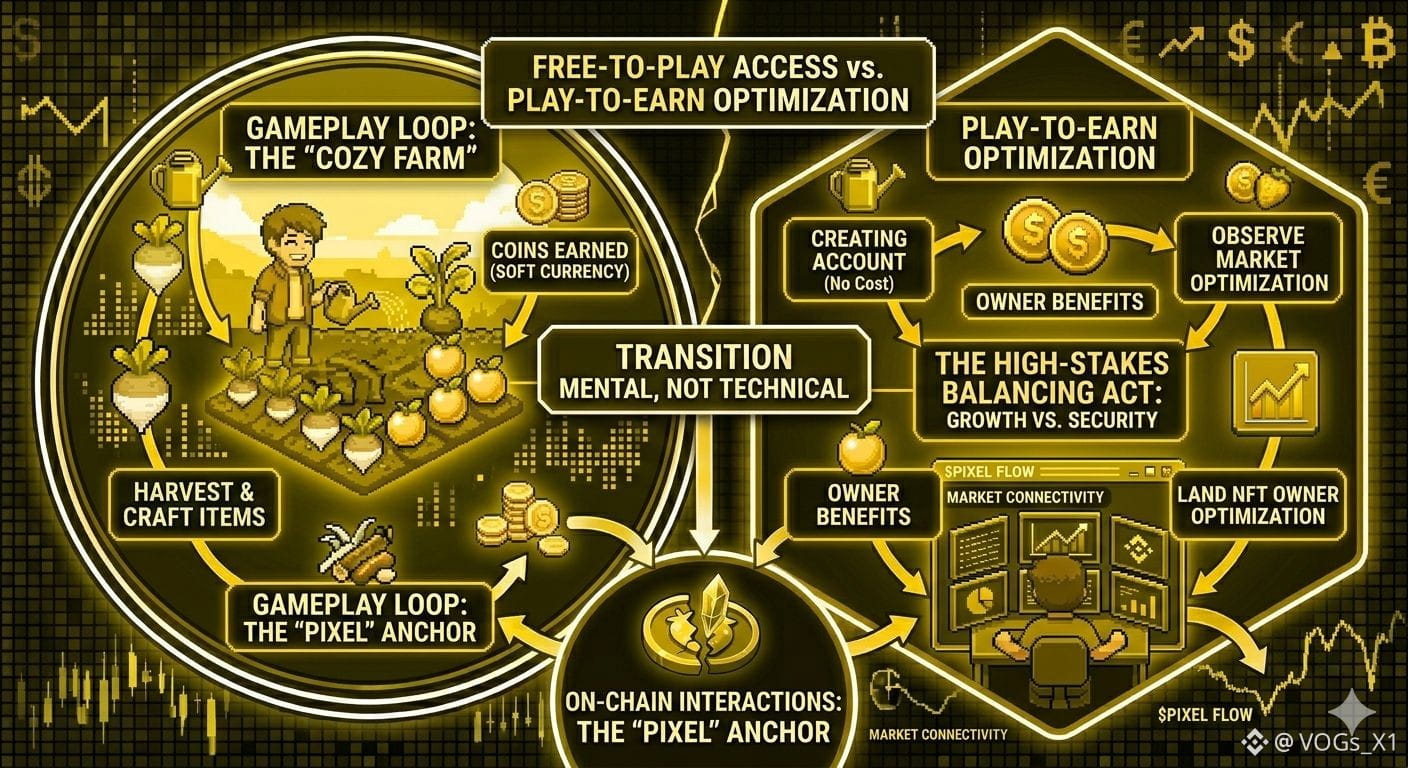
Ich habe lange Zeit kostenlose Spiele unter die Lupe genommen, und sie folgen normalerweise einem ziemlich vorhersehbaren Skript. Du steigst ein, alles fühlt sich offen an, der Fortschritt ist schnell... und dann, unvermeidlich, stößt du an die Wand. Die Dinge verlangsamen sich, die Belohnungen versiegen, und plötzlich ist die "bezahlte" Option die einzige, die Sinn macht. Wir sind alle daran gewöhnt.
Aber Pixels macht etwas anderes, und es hat mich tatsächlich zum Nachdenken gebracht.
#
🧩 Die "unsichtbare" Teilung
Du kannst stundenlang spielen und berührst $PIXEL nicht einmal. Die Farming-Loops funktionieren, die In-Game-Coins zirkulieren, und der Rhythmus fühlt sich völlig selbstgenügsam an. Es ist angenehm. Aber je mehr ich zusah, desto mehr bemerkte ich eine seltsame Diskrepanz: Der Aufwand, den du investierst, entspricht nicht immer dem, was tatsächlich "hängen bleibt."
Coins kümmern sich um die sichtbaren, alltäglichen Dinge. Du verdienst sie, gibst sie aus und wiederholst das Ganze. Aber sie reisen nicht wirklich. Sie haben kein Gedächtnis außerhalb des Moments, in dem du sie verwendest. $PIXEL hingegen ist überraschend abwesend in den Teilen, wo die meisten Spieler ihre Zeit verbringen. Es taucht nur bei den dauerhaften Dingen auf—Prägung, spezifische Upgrades oder Gildenmechaniken.
Es geht nicht darum, schneller zu bewegen; es geht darum, zu entscheiden, wo deine Zeit tatsächlich landet.
⚖️ Ausführung vs. Abrechnung
Es erinnert mich daran, wie einige Blockchain-Systeme funktionieren—"Ausführung" (die schnellen, täglichen Aktionen) von "Abrechnung" (dem endgültigen, permanenten Protokoll) zu trennen.
• Coins sind die Ausführung: Der Großteil des Spiels passiert hier. Es ist aktiv, aber es wird zurückgesetzt.
• $PIXEL ist die Abrechnung: Hier werden die Dinge finalisiert. Hier verankert sich dein Fortschritt tatsächlich in etwas, das bleibt.
#pixel $PIXEL @pixels
Ich habe lange Zeit kostenlose Spiele unter die Lupe genommen, und sie folgen normalerweise einem ziemlich vorhersehbaren Skript. Du steigst ein, alles fühlt sich offen an, der Fortschritt ist schnell... und dann, unvermeidlich, stößt du an die Wand. Die Dinge verlangsamen sich, die Belohnungen versiegen, und plötzlich ist die "bezahlte" Option die einzige, die Sinn macht. Wir sind alle daran gewöhnt.
Aber Pixels macht etwas anderes, und es hat mich tatsächlich zum Nachdenken gebracht.
#
🧩 Die "unsichtbare" Teilung
Du kannst stundenlang spielen und berührst $PIXEL nicht einmal. Die Farming-Loops funktionieren, die In-Game-Coins zirkulieren, und der Rhythmus fühlt sich völlig selbstgenügsam an. Es ist angenehm. Aber je mehr ich zusah, desto mehr bemerkte ich eine seltsame Diskrepanz: Der Aufwand, den du investierst, entspricht nicht immer dem, was tatsächlich "hängen bleibt."
Coins kümmern sich um die sichtbaren, alltäglichen Dinge. Du verdienst sie, gibst sie aus und wiederholst das Ganze. Aber sie reisen nicht wirklich. Sie haben kein Gedächtnis außerhalb des Moments, in dem du sie verwendest. $PIXEL hingegen ist überraschend abwesend in den Teilen, wo die meisten Spieler ihre Zeit verbringen. Es taucht nur bei den dauerhaften Dingen auf—Prägung, spezifische Upgrades oder Gildenmechaniken.
Es geht nicht darum, schneller zu bewegen; es geht darum, zu entscheiden, wo deine Zeit tatsächlich landet.
⚖️ Ausführung vs. Abrechnung
Es erinnert mich daran, wie einige Blockchain-Systeme funktionieren—"Ausführung" (die schnellen, täglichen Aktionen) von "Abrechnung" (dem endgültigen, permanenten Protokoll) zu trennen.
• Coins sind die Ausführung: Der Großteil des Spiels passiert hier. Es ist aktiv, aber es wird zurückgesetzt.
• $PIXEL ist die Abrechnung: Hier werden die Dinge finalisiert. Hier verankert sich dein Fortschritt tatsächlich in etwas, das bleibt.
#pixel $PIXEL @Pixels
Aber Pixels macht etwas anderes, und es hat mich tatsächlich zum Nachdenken gebracht.
#
🧩 Die "unsichtbare" Teilung
Du kannst stundenlang spielen und berührst $PIXEL nicht einmal. Die Farming-Loops funktionieren, die In-Game-Coins zirkulieren, und der Rhythmus fühlt sich völlig selbstgenügsam an. Es ist angenehm. Aber je mehr ich zusah, desto mehr bemerkte ich eine seltsame Diskrepanz: Der Aufwand, den du investierst, entspricht nicht immer dem, was tatsächlich "hängen bleibt."
Coins kümmern sich um die sichtbaren, alltäglichen Dinge. Du verdienst sie, gibst sie aus und wiederholst das Ganze. Aber sie reisen nicht wirklich. Sie haben kein Gedächtnis außerhalb des Moments, in dem du sie verwendest. $PIXEL hingegen ist überraschend abwesend in den Teilen, wo die meisten Spieler ihre Zeit verbringen. Es taucht nur bei den dauerhaften Dingen auf—Prägung, spezifische Upgrades oder Gildenmechaniken.
Es geht nicht darum, schneller zu bewegen; es geht darum, zu entscheiden, wo deine Zeit tatsächlich landet.
⚖️ Ausführung vs. Abrechnung
Es erinnert mich daran, wie einige Blockchain-Systeme funktionieren—"Ausführung" (die schnellen, täglichen Aktionen) von "Abrechnung" (dem endgültigen, permanenten Protokoll) zu trennen.
• Coins sind die Ausführung: Der Großteil des Spiels passiert hier. Es ist aktiv, aber es wird zurückgesetzt.
• $PIXEL ist die Abrechnung: Hier werden die Dinge finalisiert. Hier verankert sich dein Fortschritt tatsächlich in etwas, das bleibt.
#pixel $PIXEL @Pixels
144
·
--
Artikel
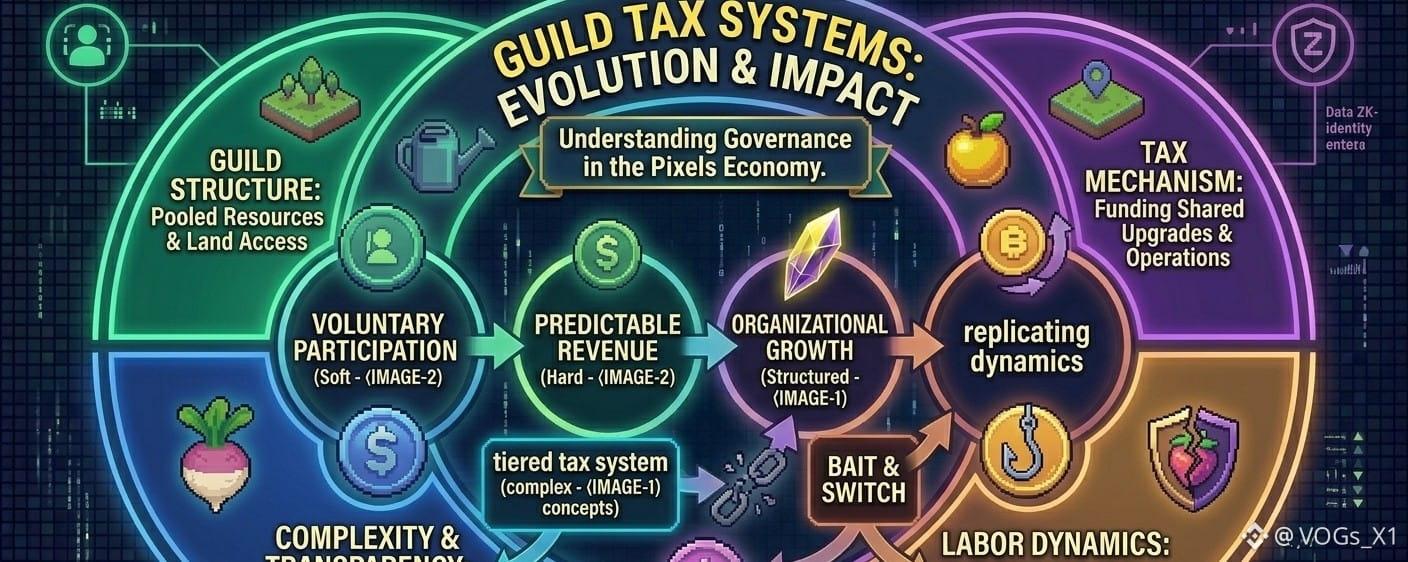
Der digitale Gesellschaftsvertrag: Arbeitsdynamik und Besteuerung in Pixels-Gilden.Ich werde ehrlich sein: Als ich zum ersten Mal den Begriff "Gildensteuern" in einem Farming-Spiel auf einer Blockchain hörte, musste ich innehalten und mit den Augen rollen. Es fühlte sich an, als würden wir nur Bürokratie-Ebenen hinzufügen, nur um es zu tun. Aber nachdem ich einige Zeit damit verbracht habe, zu beobachten, wie diese Organisationen tatsächlich funktionieren, wurde mir klar, dass diese Steuersysteme versuchen, ein sehr reales Problem zu lösen. Ob sie das tatsächlich gut machen, ist eine ganz andere Debatte.
🏛️ Die Struktur der digitalen Governance
In Pixels sind Gilden mehr als nur soziale Clubs; sie sind wirtschaftliche Motoren. Sie bündeln Ressourcen, koordinieren das Farming und teilen den Zugang zu Premium-Land. Um diesen Motor am Laufen zu halten, nehmen die Gildenleiter einen kleinen Prozentsatz von dem, was die Mitglieder durch Gildenaktivitäten verdienen. Theoretisch finanziert das gemeinsame Upgrades und hält die Gruppe selbsttragend.
Der digitale Gesellschaftsvertrag: Arbeitsdynamik und Besteuerung in Pixels-Gilden.
Ich werde ehrlich sein: Als ich zum ersten Mal den Begriff "Gildensteuern" in einem Farming-Spiel auf einer Blockchain hörte, musste ich innehalten und mit den Augen rollen. Es fühlte sich an, als würden wir nur Bürokratie-Ebenen hinzufügen, nur um es zu tun. Aber nachdem ich einige Zeit damit verbracht habe, zu beobachten, wie diese Organisationen tatsächlich funktionieren, wurde mir klar, dass diese Steuersysteme versuchen, ein sehr reales Problem zu lösen. Ob sie das tatsächlich gut machen, ist eine ganz andere Debatte.
🏛️ Die Struktur der digitalen Governance
In Pixels sind Gilden mehr als nur soziale Clubs; sie sind wirtschaftliche Motoren. Sie bündeln Ressourcen, koordinieren das Farming und teilen den Zugang zu Premium-Land. Um diesen Motor am Laufen zu halten, nehmen die Gildenleiter einen kleinen Prozentsatz von dem, was die Mitglieder durch Gildenaktivitäten verdienen. Theoretisch finanziert das gemeinsame Upgrades und hält die Gruppe selbsttragend.
🏛️ Die Struktur der digitalen Governance
In Pixels sind Gilden mehr als nur soziale Clubs; sie sind wirtschaftliche Motoren. Sie bündeln Ressourcen, koordinieren das Farming und teilen den Zugang zu Premium-Land. Um diesen Motor am Laufen zu halten, nehmen die Gildenleiter einen kleinen Prozentsatz von dem, was die Mitglieder durch Gildenaktivitäten verdienen. Theoretisch finanziert das gemeinsame Upgrades und hält die Gruppe selbsttragend.
136
·
--
Artikel
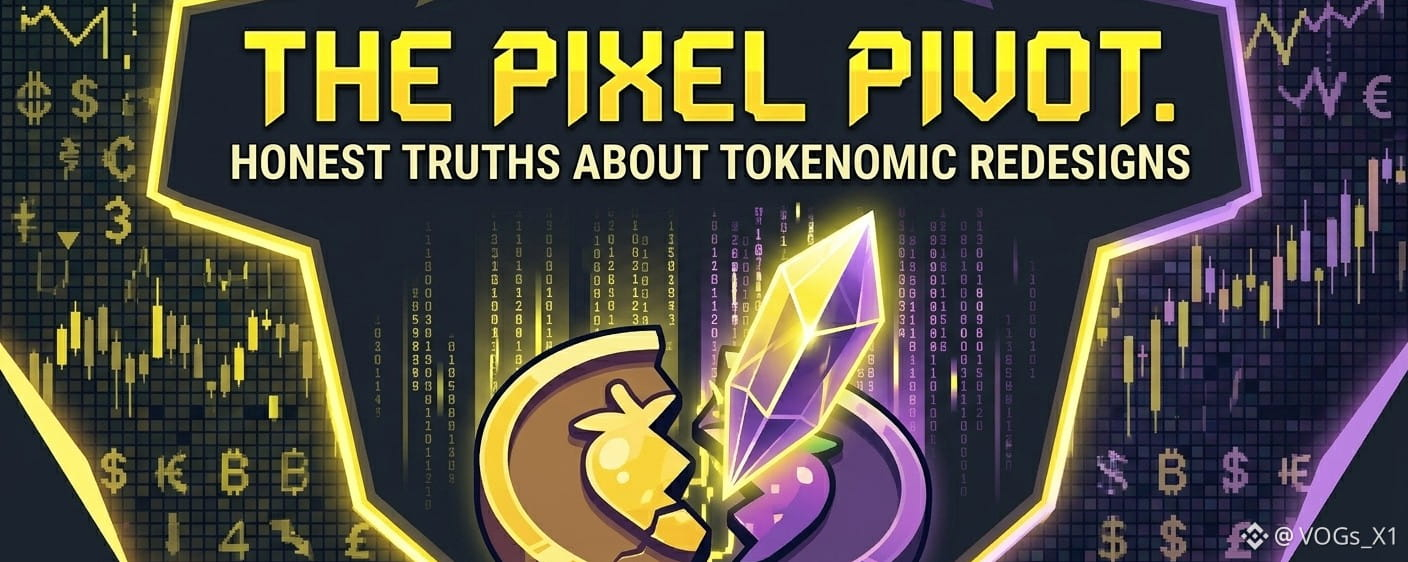
Wenn die Mathematik versagt: Warum Pixels sein wirtschaftliches Herz getauscht hatWir müssen viel ehrlicher darüber sein, warum tokenomische Überholungen in Web3 tatsächlich stattfinden. Normalerweise ist es, wenn ein Projekt seine Primärwährung tauscht, eine höfliche Art zu sagen, dass die ursprüngliche Rechnung nicht aufgegangen ist.
Es ist nicht immer eine Katastrophe, aber es ist ein Eingeständnis, dass die Zahlen nicht mehr aufgegangen sind. Im Fall von Pixels erfordert das Verständnis des Übergangs von BERRY zu PIXEL, dass man über das Marketing hinausblickt und es für das sieht, was es war: ein notwendiger Überlebensschritt.
📉 Die BERRY-Inflationsfalle
Ursprünglich war BERRY das Lebenselixier des Spiels. Es wurde als "weiche Währung" entwickelt – etwas, das man leicht verdient und ständig für grundlegende Farming-Aufgaben ausgibt. Dieses Modell ist ein Grundpfeiler im traditionellen Gaming, wo man eine Währung benötigt, die frei fließt, um die Leute am Spielen zu halten.
Wenn die Mathematik versagt: Warum Pixels sein wirtschaftliches Herz getauscht hat
Wir müssen viel ehrlicher darüber sein, warum tokenomische Überholungen in Web3 tatsächlich stattfinden. Normalerweise ist es, wenn ein Projekt seine Primärwährung tauscht, eine höfliche Art zu sagen, dass die ursprüngliche Rechnung nicht aufgegangen ist.
Es ist nicht immer eine Katastrophe, aber es ist ein Eingeständnis, dass die Zahlen nicht mehr aufgegangen sind. Im Fall von Pixels erfordert das Verständnis des Übergangs von BERRY zu PIXEL, dass man über das Marketing hinausblickt und es für das sieht, was es war: ein notwendiger Überlebensschritt.
📉 Die BERRY-Inflationsfalle
Ursprünglich war BERRY das Lebenselixier des Spiels. Es wurde als "weiche Währung" entwickelt – etwas, das man leicht verdient und ständig für grundlegende Farming-Aufgaben ausgibt. Dieses Modell ist ein Grundpfeiler im traditionellen Gaming, wo man eine Währung benötigt, die frei fließt, um die Leute am Spielen zu halten.
Es ist nicht immer eine Katastrophe, aber es ist ein Eingeständnis, dass die Zahlen nicht mehr aufgegangen sind. Im Fall von Pixels erfordert das Verständnis des Übergangs von BERRY zu PIXEL, dass man über das Marketing hinausblickt und es für das sieht, was es war: ein notwendiger Überlebensschritt.
📉 Die BERRY-Inflationsfalle
Ursprünglich war BERRY das Lebenselixier des Spiels. Es wurde als "weiche Währung" entwickelt – etwas, das man leicht verdient und ständig für grundlegende Farming-Aufgaben ausgibt. Dieses Modell ist ein Grundpfeiler im traditionellen Gaming, wo man eine Währung benötigt, die frei fließt, um die Leute am Spielen zu halten.
73
·
--
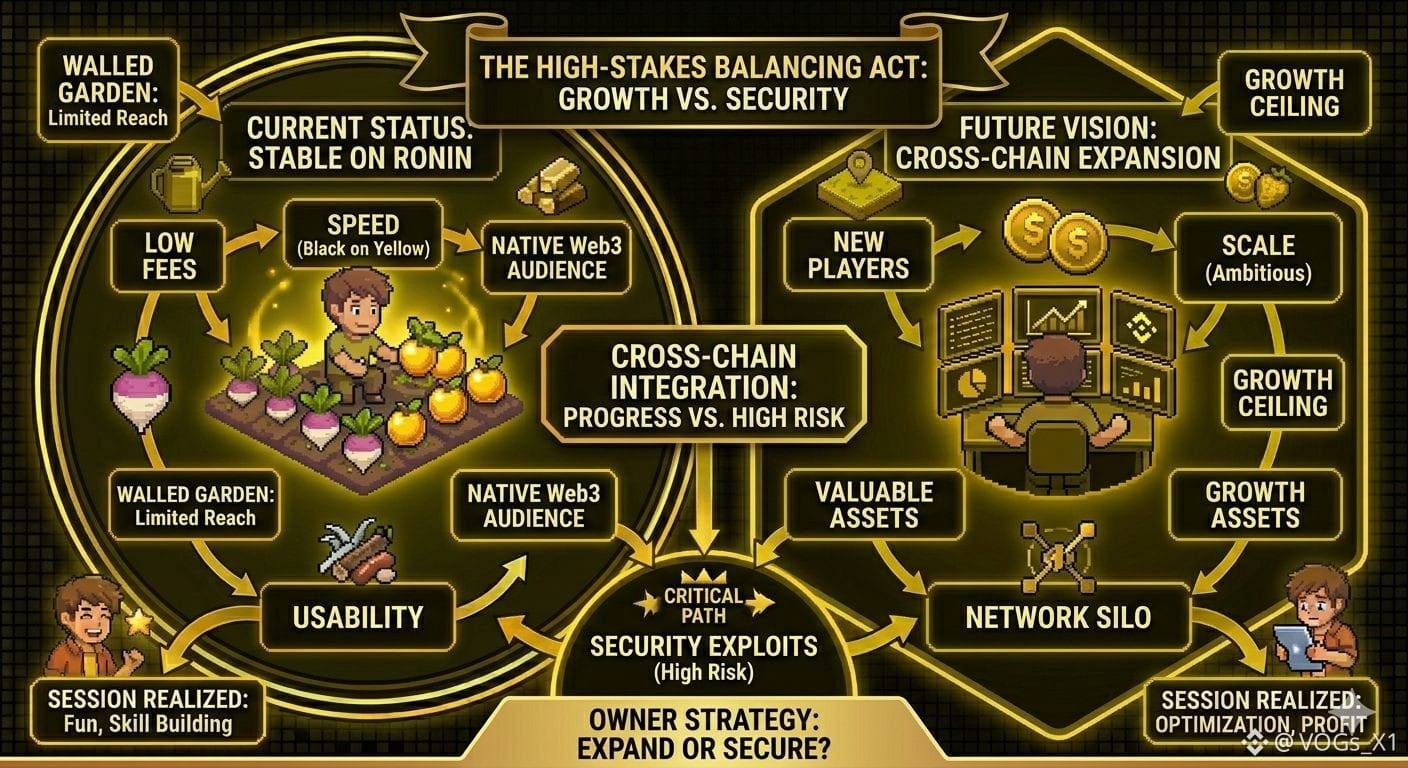
In der Blockchain-Welt sprechen wir oft von der Integration zwischen verschiedenen Chains als einem unvermeidlichen Gewinn, aber die Realität ist, dass es ein riskantes Balanceakt ist. Für **Pixels** war es nicht nur ein Standard, auf **Ronin** verankert zu bleiben; es war ein taktisches Spiel für ein reibungsloses Gaming und ein einheimisches Web3-Publikum, das bereits die Sprache spricht. Es löst das unmittelbare Problem der Benutzerfreundlichkeit, schafft aber auch einen geschlossenen Garten.
Die echte Herausforderung ist die Wachstumsgrenze. Wir müssen den "Netzwerksilo"-Effekt ansprechen – wertvolle Spieler und Vermögenswerte sind effektiv ausgeschlossen, nur weil sie auf einer anderen Chain existieren. Während Brücken die offensichtliche Lösung sind, um diese Wände zu senken, bleiben sie der anfälligste Punkt im gesamten Ökosystem. Wir haben genug Ausnutzungen gesehen, um zu wissen, dass eine Brücke oft nur ein Ziel ist.
Ich stehe voll hinter der Vision von Pixels, seinen Fußabdruck über die Multi-Chain-Landschaft auszudehnen. Es ist notwendig für langfristige Dominanz. Aber die Sicherheitsebene muss ebenso ehrgeizig sein wie die Expansionsziele. Skalierung ist großartig, aber nicht, wenn sie die Sicherheit der Vermögenswerte der Spieler überholt. Wir müssen sicherstellen, dass die "Sicherheitsgeschwindigkeit" mit der "Wachstumspeed" Schritt hält, bevor wir die Tore zu weit öffnen.
#pixel $PIXEL @pixels
In der Blockchain-Welt sprechen wir oft von der Integration zwischen verschiedenen Chains als einem unvermeidlichen Gewinn, aber die Realität ist, dass es ein riskantes Balanceakt ist. Für **Pixels** war es nicht nur ein Standard, auf **Ronin** verankert zu bleiben; es war ein taktisches Spiel für ein reibungsloses Gaming und ein einheimisches Web3-Publikum, das bereits die Sprache spricht. Es löst das unmittelbare Problem der Benutzerfreundlichkeit, schafft aber auch einen geschlossenen Garten.
Die echte Herausforderung ist die Wachstumsgrenze. Wir müssen den "Netzwerksilo"-Effekt ansprechen – wertvolle Spieler und Vermögenswerte sind effektiv ausgeschlossen, nur weil sie auf einer anderen Chain existieren. Während Brücken die offensichtliche Lösung sind, um diese Wände zu senken, bleiben sie der anfälligste Punkt im gesamten Ökosystem. Wir haben genug Ausnutzungen gesehen, um zu wissen, dass eine Brücke oft nur ein Ziel ist.
Ich stehe voll hinter der Vision von Pixels, seinen Fußabdruck über die Multi-Chain-Landschaft auszudehnen. Es ist notwendig für langfristige Dominanz. Aber die Sicherheitsebene muss ebenso ehrgeizig sein wie die Expansionsziele. Skalierung ist großartig, aber nicht, wenn sie die Sicherheit der Vermögenswerte der Spieler überholt. Wir müssen sicherstellen, dass die "Sicherheitsgeschwindigkeit" mit der "Wachstumspeed" Schritt hält, bevor wir die Tore zu weit öffnen.
#pixel $PIXEL @Pixels
Die echte Herausforderung ist die Wachstumsgrenze. Wir müssen den "Netzwerksilo"-Effekt ansprechen – wertvolle Spieler und Vermögenswerte sind effektiv ausgeschlossen, nur weil sie auf einer anderen Chain existieren. Während Brücken die offensichtliche Lösung sind, um diese Wände zu senken, bleiben sie der anfälligste Punkt im gesamten Ökosystem. Wir haben genug Ausnutzungen gesehen, um zu wissen, dass eine Brücke oft nur ein Ziel ist.
Ich stehe voll hinter der Vision von Pixels, seinen Fußabdruck über die Multi-Chain-Landschaft auszudehnen. Es ist notwendig für langfristige Dominanz. Aber die Sicherheitsebene muss ebenso ehrgeizig sein wie die Expansionsziele. Skalierung ist großartig, aber nicht, wenn sie die Sicherheit der Vermögenswerte der Spieler überholt. Wir müssen sicherstellen, dass die "Sicherheitsgeschwindigkeit" mit der "Wachstumspeed" Schritt hält, bevor wir die Tore zu weit öffnen.
#pixel $PIXEL @Pixels
5
6
221
·
--
Von Gameplay zu Gewinn: Ein vollständiger Leitfaden zu Pixels (PIXEL) Coin und dem Pixels-Ökosystem
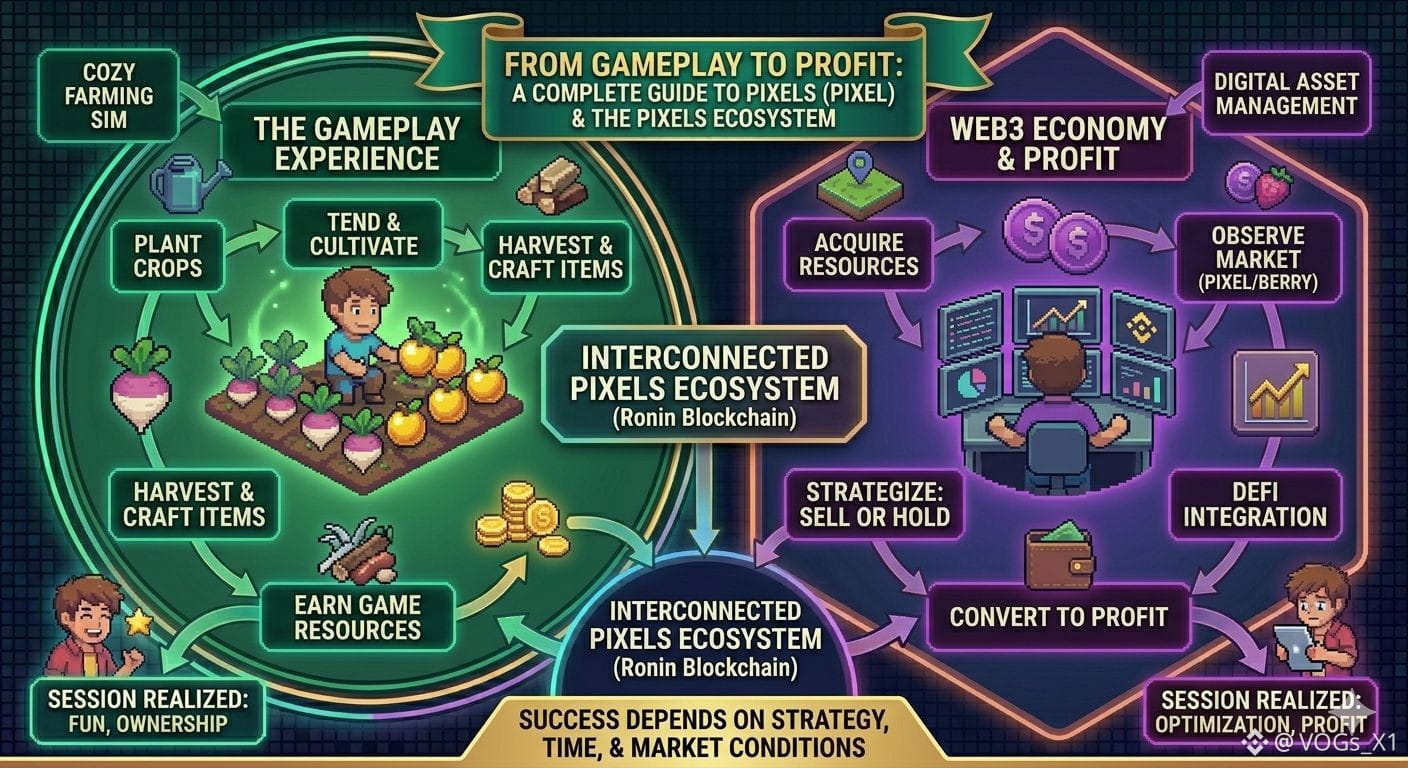
Pixels (PIXEL) ist ein Web3-Farming-Spiel, in dem Spieler durch Gameplay echten Wert verdienen können. Es basiert auf der Ronin-Blockchain und ermöglicht es den Nutzern, Pflanzen anzubauen, Gegenstände zu handeln und digitales Land als NFTs zu besitzen. Der PIXEL-Token treibt das Ökosystem an und ermöglicht Käufe und Belohnungen im Spiel. Im Gegensatz zu traditionellen Spielen können Spieler ihre Einnahmen über Börsen wie Binance in echtes Geld umwandeln. Während es Verdienstmöglichkeiten bietet, hängt der Erfolg von Strategie, Zeitinvestition und Marktbedingungen ab, was es sowohl spannend als auch riskant für die Spieler macht.
#pixel $PIXEL @pixels
Von Gameplay zu Gewinn: Ein vollständiger Leitfaden zu Pixels (PIXEL) Coin und dem Pixels-Ökosystem
Pixels (PIXEL) ist ein Web3-Farming-Spiel, in dem Spieler durch Gameplay echten Wert verdienen können. Es basiert auf der Ronin-Blockchain und ermöglicht es den Nutzern, Pflanzen anzubauen, Gegenstände zu handeln und digitales Land als NFTs zu besitzen. Der PIXEL-Token treibt das Ökosystem an und ermöglicht Käufe und Belohnungen im Spiel. Im Gegensatz zu traditionellen Spielen können Spieler ihre Einnahmen über Börsen wie Binance in echtes Geld umwandeln. Während es Verdienstmöglichkeiten bietet, hängt der Erfolg von Strategie, Zeitinvestition und Marktbedingungen ab, was es sowohl spannend als auch riskant für die Spieler macht.
#pixel $PIXEL @Pixels
Pixels (PIXEL) ist ein Web3-Farming-Spiel, in dem Spieler durch Gameplay echten Wert verdienen können. Es basiert auf der Ronin-Blockchain und ermöglicht es den Nutzern, Pflanzen anzubauen, Gegenstände zu handeln und digitales Land als NFTs zu besitzen. Der PIXEL-Token treibt das Ökosystem an und ermöglicht Käufe und Belohnungen im Spiel. Im Gegensatz zu traditionellen Spielen können Spieler ihre Einnahmen über Börsen wie Binance in echtes Geld umwandeln. Während es Verdienstmöglichkeiten bietet, hängt der Erfolg von Strategie, Zeitinvestition und Marktbedingungen ab, was es sowohl spannend als auch riskant für die Spieler macht.
#pixel $PIXEL @Pixels
251
·
--
🎙️ Der Vertrag ist wie Tee, den man langsam genießen muss, der Markt fließt wie Wasser immer nach Osten.
Beenden
04 h 14 m 45 s
11.3k
30
27
·
--
Artikel
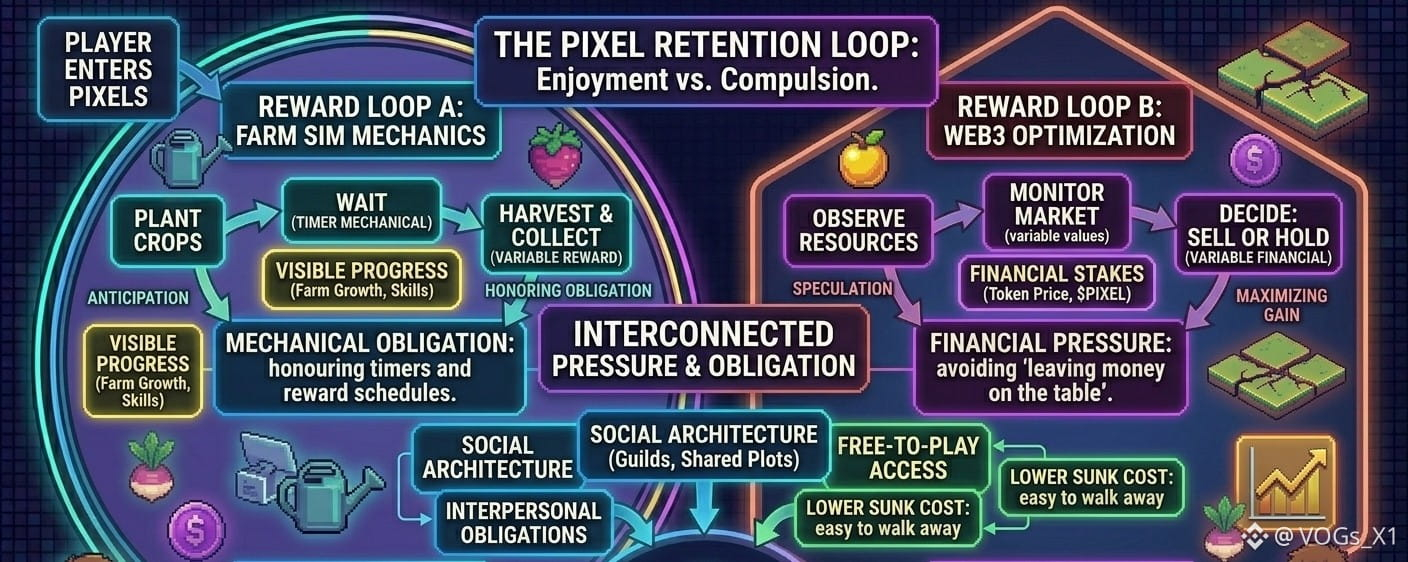
Der Hook: Warum wir nicht aufhören können, Pixels zu erntenIch habe neulich einen Schritt zurück gemacht, um herauszufinden, warum ich mich ständig in Pixels einlogge, und ehrlich gesagt, die Antwort war ein bisschen beunruhigend.
Es ging nicht darum, den Tokenpreis zu checken—ich habe tatsächlich aufgehört, darüber obsessiv nachzudenken, nachdem die erste Woche vorbei war. Es war nicht einmal die soziale Szene, obwohl die Community viel aktiver ist, als ich gedacht hätte. Es war etwas viel Ruhigeres. Ich habe mich eingeloggt, weil meine Ernte bereit war. Weil ein Timer auf Null gefallen ist. Ich habe diese kleinen, digitalen Verpflichtungen eingelöst, ohne sogar eine bewusste Entscheidung dafür zu treffen.
Der Hook: Warum wir nicht aufhören können, Pixels zu ernten
Ich habe neulich einen Schritt zurück gemacht, um herauszufinden, warum ich mich ständig in Pixels einlogge, und ehrlich gesagt, die Antwort war ein bisschen beunruhigend.
Es ging nicht darum, den Tokenpreis zu checken—ich habe tatsächlich aufgehört, darüber obsessiv nachzudenken, nachdem die erste Woche vorbei war. Es war nicht einmal die soziale Szene, obwohl die Community viel aktiver ist, als ich gedacht hätte. Es war etwas viel Ruhigeres. Ich habe mich eingeloggt, weil meine Ernte bereit war. Weil ein Timer auf Null gefallen ist. Ich habe diese kleinen, digitalen Verpflichtungen eingelöst, ohne sogar eine bewusste Entscheidung dafür zu treffen.
Es ging nicht darum, den Tokenpreis zu checken—ich habe tatsächlich aufgehört, darüber obsessiv nachzudenken, nachdem die erste Woche vorbei war. Es war nicht einmal die soziale Szene, obwohl die Community viel aktiver ist, als ich gedacht hätte. Es war etwas viel Ruhigeres. Ich habe mich eingeloggt, weil meine Ernte bereit war. Weil ein Timer auf Null gefallen ist. Ich habe diese kleinen, digitalen Verpflichtungen eingelöst, ohne sogar eine bewusste Entscheidung dafür zu treffen.
4
138
·
--
Der ehemalige US-Finanzminister Henry Paulson fordert die Behörden auf, einen Notfallplan für einen möglichen Zusammenbruch des Staatsanleihemarktes vorzubereiten.#IranRejectsSecondRoundTalks
Der ehemalige US-Finanzminister Henry Paulson fordert die Behörden auf, einen Notfallplan für einen möglichen Zusammenbruch des Staatsanleihemarktes vorzubereiten.#IranRejectsSecondRoundTalks

555
·
--
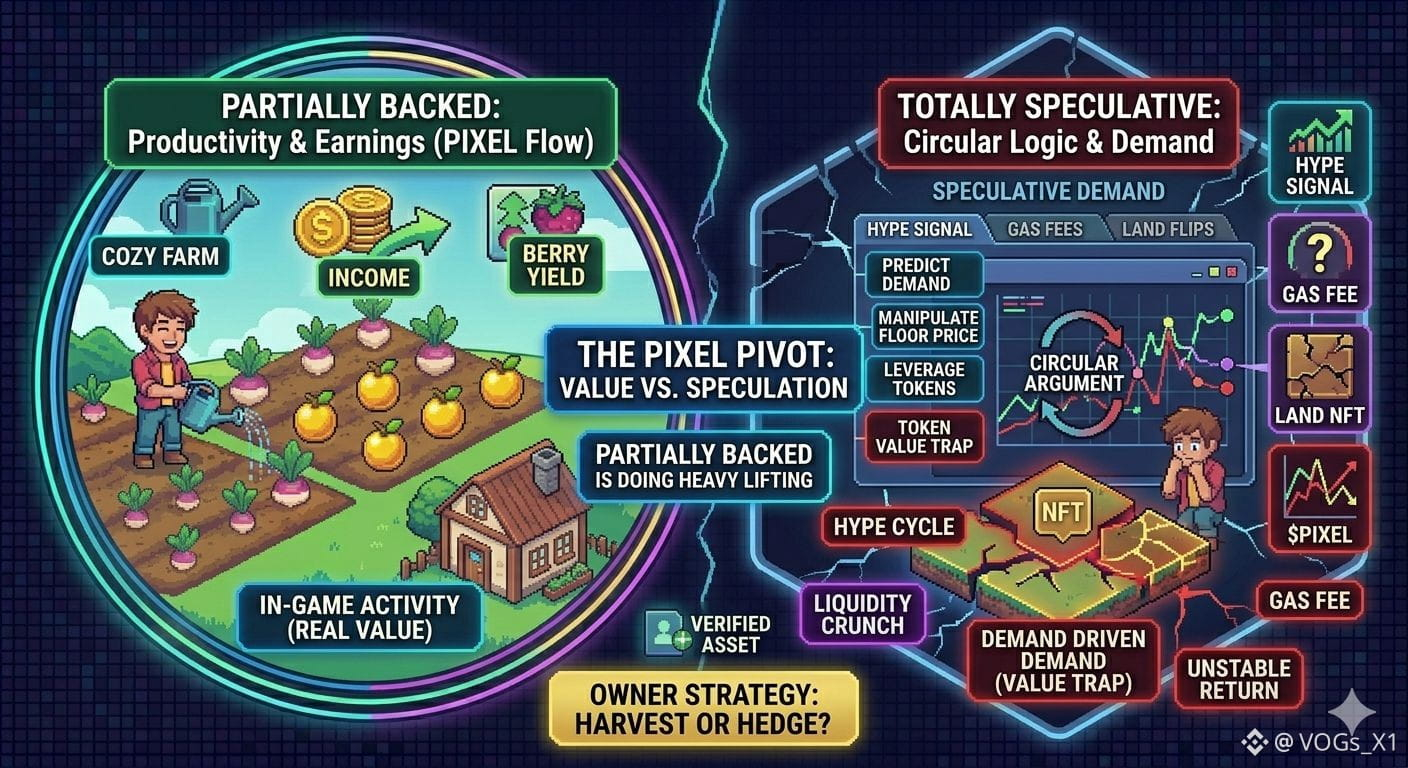
Besitz von Land in Pixels geht nicht nur darum, einen Platz zum Anbau von Pflanzen zu haben; es ist das zentrale Argument dafür, warum der PIXEL-Token überhaupt einen Wert haben sollte. Und ich wollte wirklich wissen, ob dieses Argument tatsächlich Sinn macht.
So haben sie es eingerichtet: Wenn Sie ein Grundstückseigentümer sind, ist Ihr Grundstück ein NFT auf Ronin. Andere Spieler können auf Ihrem Land farmen, und im Gegenzug erhalten Sie einen Anteil an ihren Einnahmen in PIXEL-Token. Die grundlegende Logik ist, dass die Nachfrage nach dem Land die Nachfrage nach dem Token antreiben sollte. Aber wenn Sie innehalten und darüber nachdenken, ist diese Logik fast perfekt zirkulär. Nachfrage treibt Nachfrage an. Das sollte Sie zögern lassen, bevor Sie es einfach akzeptieren.
Aber was diese ganze Sache interessanter macht als nur eine zirkuläre Falle, ist, dass das Land tatsächlich etwas tut. Dort findet echte Produktivität statt. Die Spieler erzielen echte Einnahmen. Der Wert ist also nicht vollständig spekulativ, er ist zumindest teilweise durch all diese In-Game-Aktivitäten gedeckt. Das Schlüsselwort in diesem Satz ist jedoch "teilweise." Es übernimmt hier eine Menge schwere Arbeit, und ich habe das Gefühl, dass die meisten Menschen, die Land kaufen, völlig unterschätzen, wie viel des Wertes davon abhängt.
#pixel $PIXEL @pixels
Besitz von Land in Pixels geht nicht nur darum, einen Platz zum Anbau von Pflanzen zu haben; es ist das zentrale Argument dafür, warum der PIXEL-Token überhaupt einen Wert haben sollte. Und ich wollte wirklich wissen, ob dieses Argument tatsächlich Sinn macht.
So haben sie es eingerichtet: Wenn Sie ein Grundstückseigentümer sind, ist Ihr Grundstück ein NFT auf Ronin. Andere Spieler können auf Ihrem Land farmen, und im Gegenzug erhalten Sie einen Anteil an ihren Einnahmen in PIXEL-Token. Die grundlegende Logik ist, dass die Nachfrage nach dem Land die Nachfrage nach dem Token antreiben sollte. Aber wenn Sie innehalten und darüber nachdenken, ist diese Logik fast perfekt zirkulär. Nachfrage treibt Nachfrage an. Das sollte Sie zögern lassen, bevor Sie es einfach akzeptieren.
Aber was diese ganze Sache interessanter macht als nur eine zirkuläre Falle, ist, dass das Land tatsächlich etwas tut. Dort findet echte Produktivität statt. Die Spieler erzielen echte Einnahmen. Der Wert ist also nicht vollständig spekulativ, er ist zumindest teilweise durch all diese In-Game-Aktivitäten gedeckt. Das Schlüsselwort in diesem Satz ist jedoch "teilweise." Es übernimmt hier eine Menge schwere Arbeit, und ich habe das Gefühl, dass die meisten Menschen, die Land kaufen, völlig unterschätzen, wie viel des Wertes davon abhängt.
#pixel $PIXEL @Pixels
So haben sie es eingerichtet: Wenn Sie ein Grundstückseigentümer sind, ist Ihr Grundstück ein NFT auf Ronin. Andere Spieler können auf Ihrem Land farmen, und im Gegenzug erhalten Sie einen Anteil an ihren Einnahmen in PIXEL-Token. Die grundlegende Logik ist, dass die Nachfrage nach dem Land die Nachfrage nach dem Token antreiben sollte. Aber wenn Sie innehalten und darüber nachdenken, ist diese Logik fast perfekt zirkulär. Nachfrage treibt Nachfrage an. Das sollte Sie zögern lassen, bevor Sie es einfach akzeptieren.
Aber was diese ganze Sache interessanter macht als nur eine zirkuläre Falle, ist, dass das Land tatsächlich etwas tut. Dort findet echte Produktivität statt. Die Spieler erzielen echte Einnahmen. Der Wert ist also nicht vollständig spekulativ, er ist zumindest teilweise durch all diese In-Game-Aktivitäten gedeckt. Das Schlüsselwort in diesem Satz ist jedoch "teilweise." Es übernimmt hier eine Menge schwere Arbeit, und ich habe das Gefühl, dass die meisten Menschen, die Land kaufen, völlig unterschätzen, wie viel des Wertes davon abhängt.
#pixel $PIXEL @Pixels
2
4
141
Anmelden und weiter Inhalte entdecken
Krypto-Nutzer weltweit auf Binance Square kennenlernen
⚡️ Bleib in Sachen Krypto stets am Puls.
💬 Die weltgrößte Kryptobörse vertraut darauf.
👍 Erhalte verlässliche Einblicke von verifizierten Creators.
E-Mail-Adresse/Telefonnummer
Trendthemen
BTCBreaks80K
125,137 Aufrufe
1,943 Kommentare
Überraschende Abrechnungen oder Jagd auf Liquidität? Die Wahrheit hinter den $80K von Bitcoin 📉🚀
Wenn du Positionen im Short nahe bei den $80.000 hattest, hast du sehr wahrscheinlich den Druck der letzten Stunden gespürt. Viele bezeichnen diesen plötzlichen Anstieg als „Manipulation ohne Volumen“, aber die Mechanik des Futures-Markts erzählt eine ganz andere Geschichte.
Das ist wirklich passiert hinter der wöchentlichen Kerze:
1️⃣ Dünnes Orderbuch: Wenn sich der Großteil des Marktes auf die Abwärtsbewegung positioniert (Short), werden die Limit-Verkaufsaufträge oberhalb des Preises sehr selten. Ein moderates Kaufvolumen reicht aus, um die Stops abzufahren.
2️⃣ Dominoeffekt (Short Squeeze): Sobald die Liquidationsniveaus der Short-Positionen erreicht werden, führt die Börse automatisch Market-Buy-Orders aus, um diese Positionen mit Verlust zu schließen. Das war kein „geheimer Manipulator“, der den Kurs nach oben drückt; es waren die eigenen Stop-Losses der Verkäufer, die den Pump finanzierten.
3️⃣ Abschluss der Wochenkerze: Algorithmen und Institutionen suchen oft nach einem Close oberhalb wichtiger gleitender Durchschnitte vor dem Kerzenwechsel, um den Trend zu stützen.
Lektion fürs Risikomanagement: Operiere nie mit Hebel ohne einen sauber platzierten technischen Stop und vermeide den Einstieg in einen Short, wenn der Markt bereits überladen mit Verkäufen ist.
Was meinst du? Glaubst du, wir konsolidieren über $80K, um neue Hochs zu suchen, oder kommt ein Re-Test in Richtung der Zone bei $78.000? Schreib es mir in den Kommentaren!
$BTC #BTC #BTCBreaks80K #BinanceSquar
Angelo_Coin
·0 Likes
·1.1k Aufrufe
比特币突破8万
96,019 Aufrufe
272 Kommentare
SOLJumpsAbout10%
246 Aufrufe
45 Kommentare