
HUNTER 09
9.8k Beiträge

HUNTER 09
 Square Verified
Top crypto trader | Binance KOL | Web 3.0 visionary | Mastering market analysis | Uncovering crypto gems | Driving Blockchain innovation
Trade eröffnen
Hochfrequenz-Trader
1.8 Jahre
960 Following
31.0K+ Follower
25.0K+ Like gegeben
Beiträge
Portfolio
Alle
Zitierungen
Live


Ich habe mir in letzter Zeit Dusk aus einem etwas anderen Blickwinkel angesehen.
Das Interessante ist nicht wirklich, ob Dusk datenschutzorientierte Infrastruktur bauen kann. Das kann es offensichtlich. Die größere Frage ist, ob die Menschen tatsächlich einen Grund haben, sie zu nutzen.
Dusk baut seit jeher rund um private Transaktionen, Smart Contracts und Finanzanwendungen, was bei Dingen wie tokenisierten Assets durchaus Sinn ergibt – wo man wahrscheinlich nicht möchte, dass jedes Detail öffentlich herumliegt.
Aber gute Infrastruktur bedeutet nicht automatisch echte Akzeptanz.
Was ich mir jetzt anschaue, ist das eher Langweilige: Nutzen die Leute die Contracts tatsächlich? Wachsen die Transaktionen stetig? Bauen Entwickler, weil es eine echte Nachfrage gibt – oder weil die Anreize attraktiv sind? Und bleiben Nutzer auch dann noch, wenn diese Anreize weniger wichtig werden?
Darin, glaube ich, liegt das Spannende an Dusk.
Technologie ist inzwischen weniger die Frage. Nutzung ist es.
Wenn wir gleichzeitig einen konsistenten Zuwachs bei Nutzern, Contracts und aussagekräftigen Transaktionen sehen, würde mir das zeigen, dass das Netzwerk mehr wird als nur technisch leistungsfähig.
Bis dahin würde ich die These offen lassen.
Dusk hat vielleicht die richtigen Werkzeuge gebaut. Jetzt muss es zeigen, dass die Menschen sie wirklich brauchen.
$DUSK @Dusk #dusk
Das Interessante ist nicht wirklich, ob Dusk datenschutzorientierte Infrastruktur bauen kann. Das kann es offensichtlich. Die größere Frage ist, ob die Menschen tatsächlich einen Grund haben, sie zu nutzen.
Dusk baut seit jeher rund um private Transaktionen, Smart Contracts und Finanzanwendungen, was bei Dingen wie tokenisierten Assets durchaus Sinn ergibt – wo man wahrscheinlich nicht möchte, dass jedes Detail öffentlich herumliegt.
Aber gute Infrastruktur bedeutet nicht automatisch echte Akzeptanz.
Was ich mir jetzt anschaue, ist das eher Langweilige: Nutzen die Leute die Contracts tatsächlich? Wachsen die Transaktionen stetig? Bauen Entwickler, weil es eine echte Nachfrage gibt – oder weil die Anreize attraktiv sind? Und bleiben Nutzer auch dann noch, wenn diese Anreize weniger wichtig werden?
Darin, glaube ich, liegt das Spannende an Dusk.
Technologie ist inzwischen weniger die Frage. Nutzung ist es.
Wenn wir gleichzeitig einen konsistenten Zuwachs bei Nutzern, Contracts und aussagekräftigen Transaktionen sehen, würde mir das zeigen, dass das Netzwerk mehr wird als nur technisch leistungsfähig.
Bis dahin würde ich die These offen lassen.
Dusk hat vielleicht die richtigen Werkzeuge gebaut. Jetzt muss es zeigen, dass die Menschen sie wirklich brauchen.
$DUSK @Dusk #dusk
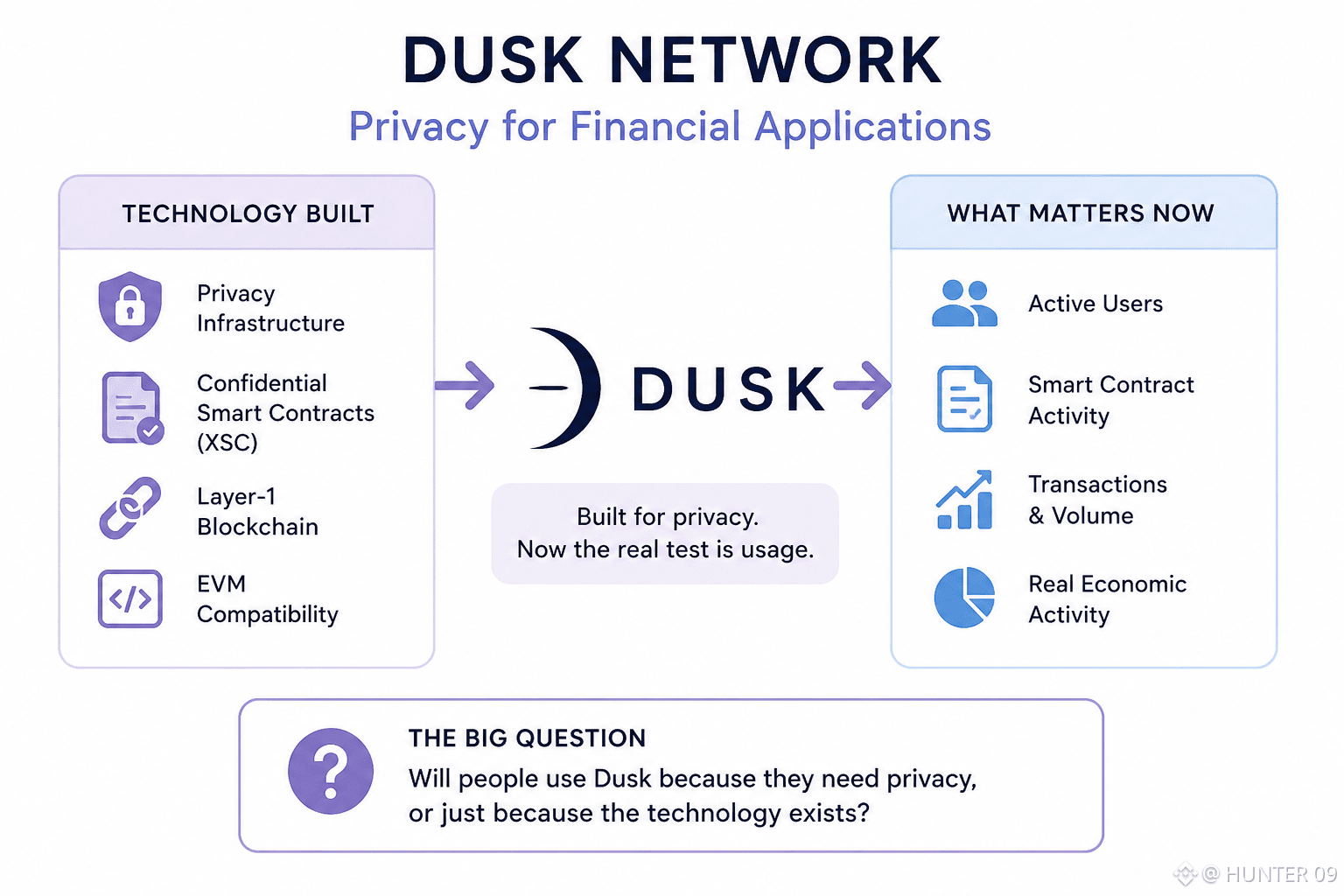
Über Krypto-Privatsphäre wird zwar viel gesprochen, aber ehrlich gesagt finde ich den Finanz-Use-Case viel spannender.
Deshalb wirkt DUSK auf mich nicht wie einfach nur ein weiteres Projekt, das sich auf Privatsphäre fokussiert.
@Dusk
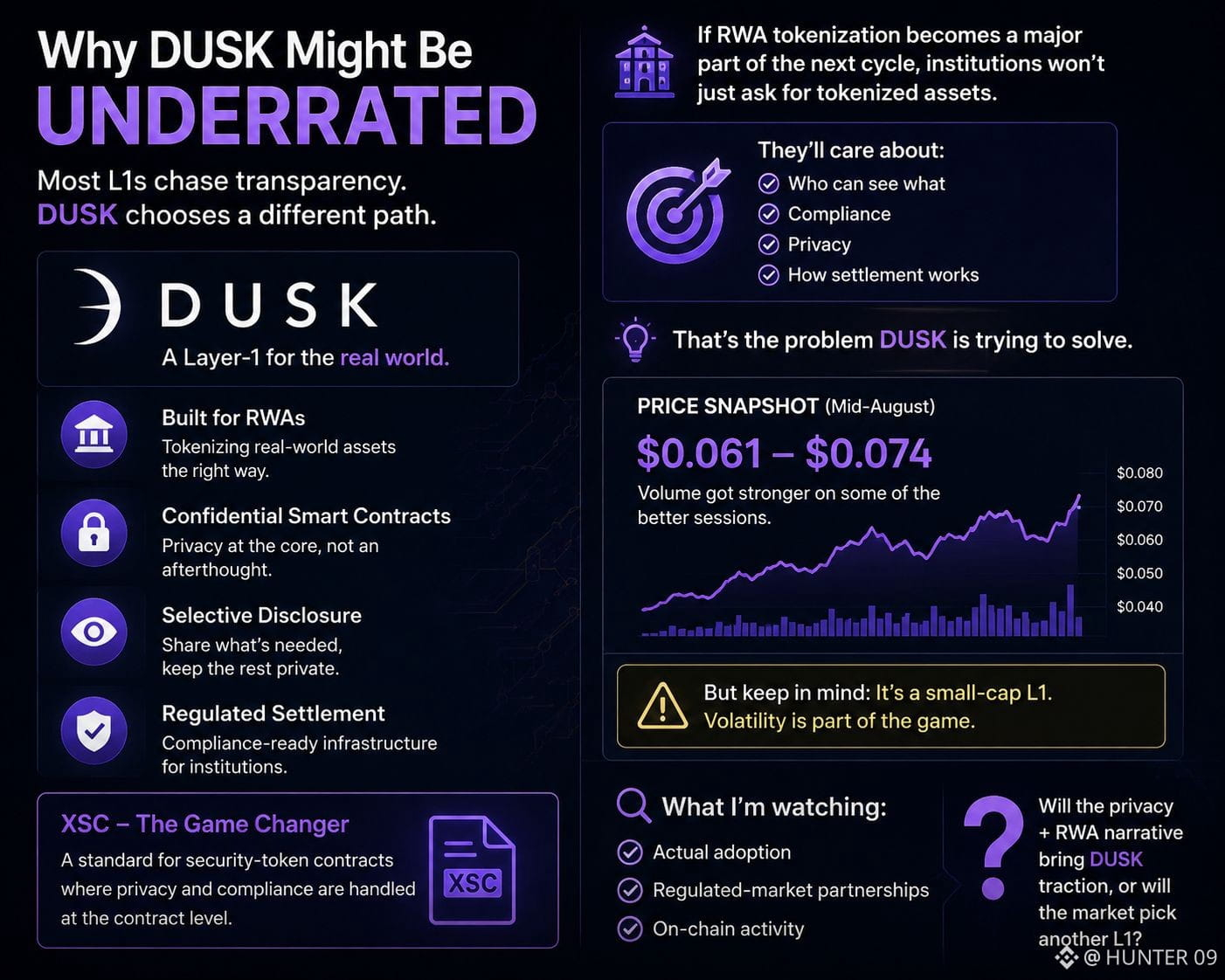
DUSK Network ist eine Layer-1-Plattform zum Aufbau von Privacy-Infrastruktur für Finanzanwendungen. Der Confidential Security Contract (XSC)-Standard unterstützt vertrauliche Smart Contracts – sodass du Blockchain nutzen kannst, ohne sensible Finanzdaten vollständig ungeschützt offenzulegen.
Und hier wird es interessant.
Für RWAs, Wertpapiere und institutionelles Finanzwesen brauchen Institutionen zwar Transparenz, aber auch Vertraulichkeit. Es ist nicht wirklich praktikabel, jedes Detail jeder Transaktion öffentlich zu machen.
Für mich ist das die zentrale DUSK-Erzählung: Blockchain näher an das traditionelle Finanzwesen heranzubringen, indem man Privatsphäre mit Compliance verbindet.
Aber da ist ein Haken.
Gute Technik bedeutet nicht automatisch, dass der Token auch gut performt. Annahme, Ökosystem, Liquidität und die allgemeinen Marktbedingungen werden weiterhin entscheiden, wie stark diese Erzählung werden kann.
Der Teil, den ich im Moment beobachte, ist der, wo DUSK den größten Schub bekommt.
RWA? Institutionelle Akzeptanz? Oder die breitere Privatsphäre-Erzählung?
#dusk $DUSK
Deshalb wirkt DUSK auf mich nicht wie einfach nur ein weiteres Projekt, das sich auf Privatsphäre fokussiert.
@Dusk
DUSK Network ist eine Layer-1-Plattform zum Aufbau von Privacy-Infrastruktur für Finanzanwendungen. Der Confidential Security Contract (XSC)-Standard unterstützt vertrauliche Smart Contracts – sodass du Blockchain nutzen kannst, ohne sensible Finanzdaten vollständig ungeschützt offenzulegen.
Und hier wird es interessant.
Für RWAs, Wertpapiere und institutionelles Finanzwesen brauchen Institutionen zwar Transparenz, aber auch Vertraulichkeit. Es ist nicht wirklich praktikabel, jedes Detail jeder Transaktion öffentlich zu machen.
Für mich ist das die zentrale DUSK-Erzählung: Blockchain näher an das traditionelle Finanzwesen heranzubringen, indem man Privatsphäre mit Compliance verbindet.
Aber da ist ein Haken.
Gute Technik bedeutet nicht automatisch, dass der Token auch gut performt. Annahme, Ökosystem, Liquidität und die allgemeinen Marktbedingungen werden weiterhin entscheiden, wie stark diese Erzählung werden kann.
Der Teil, den ich im Moment beobachte, ist der, wo DUSK den größten Schub bekommt.
RWA? Institutionelle Akzeptanz? Oder die breitere Privatsphäre-Erzählung?
#dusk $DUSK
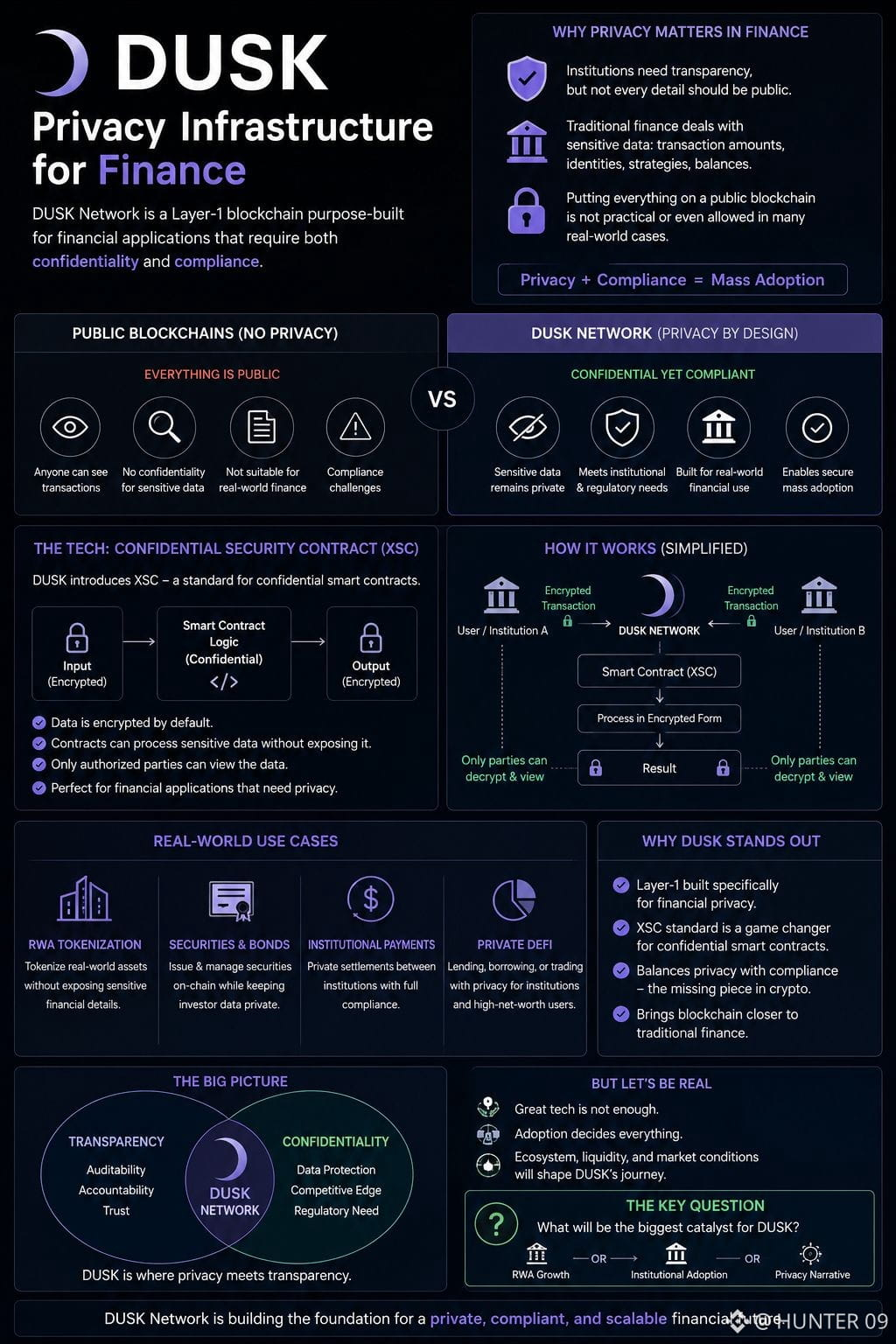
DUSK ist für mich interessant, weil die RWA-Story wahrscheinlich nicht nur daraus bestehen kann, reale Vermögenswerte einfach on-chain zu bringen.
Auch Privatsphäre ist wichtig.
Denk an Banken, Fonds oder regulierte Institutionen, die Blockchain nutzen, während gleichzeitig jede Transaktion und jede sensible Finanzinformation öffentlich auf einem Ledger liegt. Du bekommst zwar Effizienz, aber es gibt weiterhin ein praktisches Problem.
Genau hier wird Dusk Network interessant.
Dusk Network ist eine auf Finanzanwendungen und Privatsphäre fokussierte Layer 1, und sein XSC (Confidential Security Contract)-Standard ist dafür ausgelegt, vertrauliche Smart Contracts zu unterstützen.
Die Idee ist ziemlich simpel: die Vorteile von Blockchain erhalten, ohne sensible Finanzinformationen unnötig öffentlich zu machen.
Für mich ist das der Teil, den es sich lohnt, im Blick zu behalten.
Wenn die RWA-Übernahme im nächsten Zyklus wirklich wächst, könnte Privatsphäre viel mehr werden als nur eine nette Zusatzfunktion. Sie könnte zu einer Anforderung werden.
Aber es gibt einen Haken.
Eine starke Story bedeutet nicht automatisch starke Kursbewegungen. DUSK muss sich weiterhin durch echte Adoption, Wachstum des Ökosystems, Liquidität und die Nutzung des Netzwerks beweisen.
Die größere Frage für mich ist daher:
Kann private Finanzinfrastruktur im nächsten Zyklus zu einer großen Crypto-Story werden?
Oder ist DUSK weiterhin nur eine frühe Wette, die erst noch sehr viel mehr Adoption braucht?
#dusk @Dusk
$DUSK
Auch Privatsphäre ist wichtig.
Denk an Banken, Fonds oder regulierte Institutionen, die Blockchain nutzen, während gleichzeitig jede Transaktion und jede sensible Finanzinformation öffentlich auf einem Ledger liegt. Du bekommst zwar Effizienz, aber es gibt weiterhin ein praktisches Problem.
Genau hier wird Dusk Network interessant.
Dusk Network ist eine auf Finanzanwendungen und Privatsphäre fokussierte Layer 1, und sein XSC (Confidential Security Contract)-Standard ist dafür ausgelegt, vertrauliche Smart Contracts zu unterstützen.
Die Idee ist ziemlich simpel: die Vorteile von Blockchain erhalten, ohne sensible Finanzinformationen unnötig öffentlich zu machen.
Für mich ist das der Teil, den es sich lohnt, im Blick zu behalten.
Wenn die RWA-Übernahme im nächsten Zyklus wirklich wächst, könnte Privatsphäre viel mehr werden als nur eine nette Zusatzfunktion. Sie könnte zu einer Anforderung werden.
Aber es gibt einen Haken.
Eine starke Story bedeutet nicht automatisch starke Kursbewegungen. DUSK muss sich weiterhin durch echte Adoption, Wachstum des Ökosystems, Liquidität und die Nutzung des Netzwerks beweisen.
Die größere Frage für mich ist daher:
Kann private Finanzinfrastruktur im nächsten Zyklus zu einer großen Crypto-Story werden?
Oder ist DUSK weiterhin nur eine frühe Wette, die erst noch sehr viel mehr Adoption braucht?
#dusk @Dusk
$DUSK
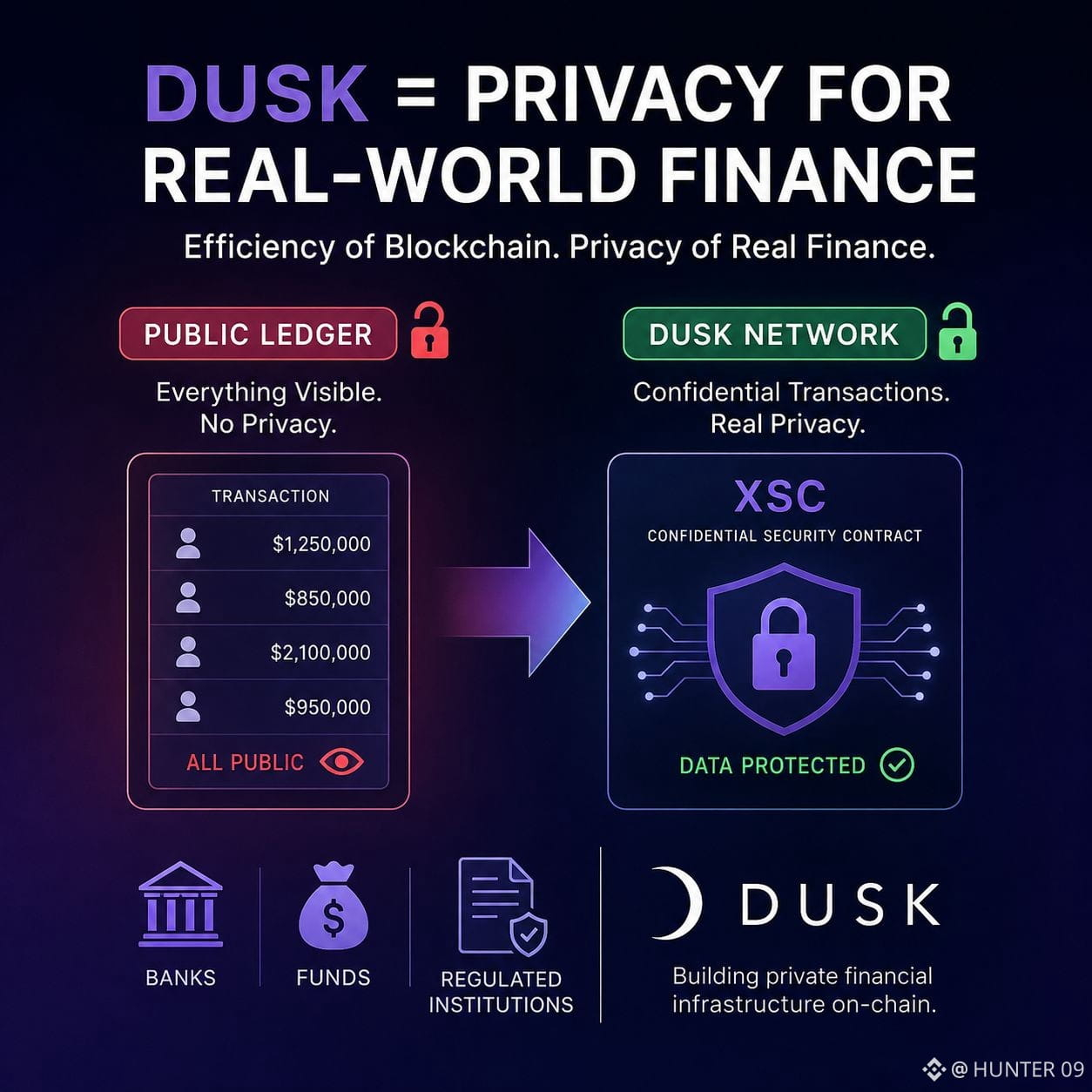
Es gibt eine Sache an Dusk, die ich glaube, dass der Markt übersieht.
Die meisten L1s sind darauf ausgelegt, alles transparent zu machen. Aber bei regulierten Vermögenswerten funktioniert das nicht immer. Man kann nicht einfach jede Einzelheit on-chain für alle sichtbar machen.
Hier wird DUSK interessant.
Es ist eine Layer-1, die sich auf RWAs, vertrauliche Smart Contracts, selektive Offenlegung und regulierte Abwicklung konzentriert.
Und dann gibt es XSC.
Kurz gesagt: Es ist ein Standard für Security-Token-Contracts, bei dem Datenschutz und Compliance auf Vertragsebene gehandhabt werden können – statt später als zusätzliche Schicht nachträglich ergänzt zu werden.
Ehrlich gesagt, das ergibt Sinn.
Wenn die Tokenisierung von RWAs wirklich ein großer Teil des nächsten Zyklus wird, werden Institutionen nicht nur darauf achten, Vermögenswerte on-chain zu bringen. Sie werden auch darauf achten, wer was sehen darf, Compliance, Datenschutz und wie die Abwicklung tatsächlich funktioniert.
Das ist das Problem, das DUSK lösen will.
Preislich wurde DUSK Mitte August ungefähr zwischen 0,061 und 0,074 US-Dollar gehandelt, wobei das Volumen in einigen der besseren Sessions an Schwung gewonnen hat.
Aber da ist ein Haken.
Es ist immer noch ein Small-Cap-L1, also ist Volatilität etwas, das man nicht ignorieren kann.
Eine gute Story bedeutet nicht automatisch, dass sich der Token gut entwickelt.
Für mich sind die wichtigeren Dinge, auf die man achten sollte, die tatsächliche Akzeptanz, Partnerschaften auf regulierten Märkten und die On-Chain-Aktivität.
Die große Frage ist jetzt, ob die Privacy- + RWA-Story tatsächlich Zugkraft für DUSK bringt – oder ob der Markt am Ende eine andere L1 auswählt.
#dusk @Dusk $DUSK
Die meisten L1s sind darauf ausgelegt, alles transparent zu machen. Aber bei regulierten Vermögenswerten funktioniert das nicht immer. Man kann nicht einfach jede Einzelheit on-chain für alle sichtbar machen.
Hier wird DUSK interessant.
Es ist eine Layer-1, die sich auf RWAs, vertrauliche Smart Contracts, selektive Offenlegung und regulierte Abwicklung konzentriert.
Und dann gibt es XSC.
Kurz gesagt: Es ist ein Standard für Security-Token-Contracts, bei dem Datenschutz und Compliance auf Vertragsebene gehandhabt werden können – statt später als zusätzliche Schicht nachträglich ergänzt zu werden.
Ehrlich gesagt, das ergibt Sinn.
Wenn die Tokenisierung von RWAs wirklich ein großer Teil des nächsten Zyklus wird, werden Institutionen nicht nur darauf achten, Vermögenswerte on-chain zu bringen. Sie werden auch darauf achten, wer was sehen darf, Compliance, Datenschutz und wie die Abwicklung tatsächlich funktioniert.
Das ist das Problem, das DUSK lösen will.
Preislich wurde DUSK Mitte August ungefähr zwischen 0,061 und 0,074 US-Dollar gehandelt, wobei das Volumen in einigen der besseren Sessions an Schwung gewonnen hat.
Aber da ist ein Haken.
Es ist immer noch ein Small-Cap-L1, also ist Volatilität etwas, das man nicht ignorieren kann.
Eine gute Story bedeutet nicht automatisch, dass sich der Token gut entwickelt.
Für mich sind die wichtigeren Dinge, auf die man achten sollte, die tatsächliche Akzeptanz, Partnerschaften auf regulierten Märkten und die On-Chain-Aktivität.
Die große Frage ist jetzt, ob die Privacy- + RWA-Story tatsächlich Zugkraft für DUSK bringt – oder ob der Markt am Ende eine andere L1 auswählt.
#dusk @Dusk $DUSK
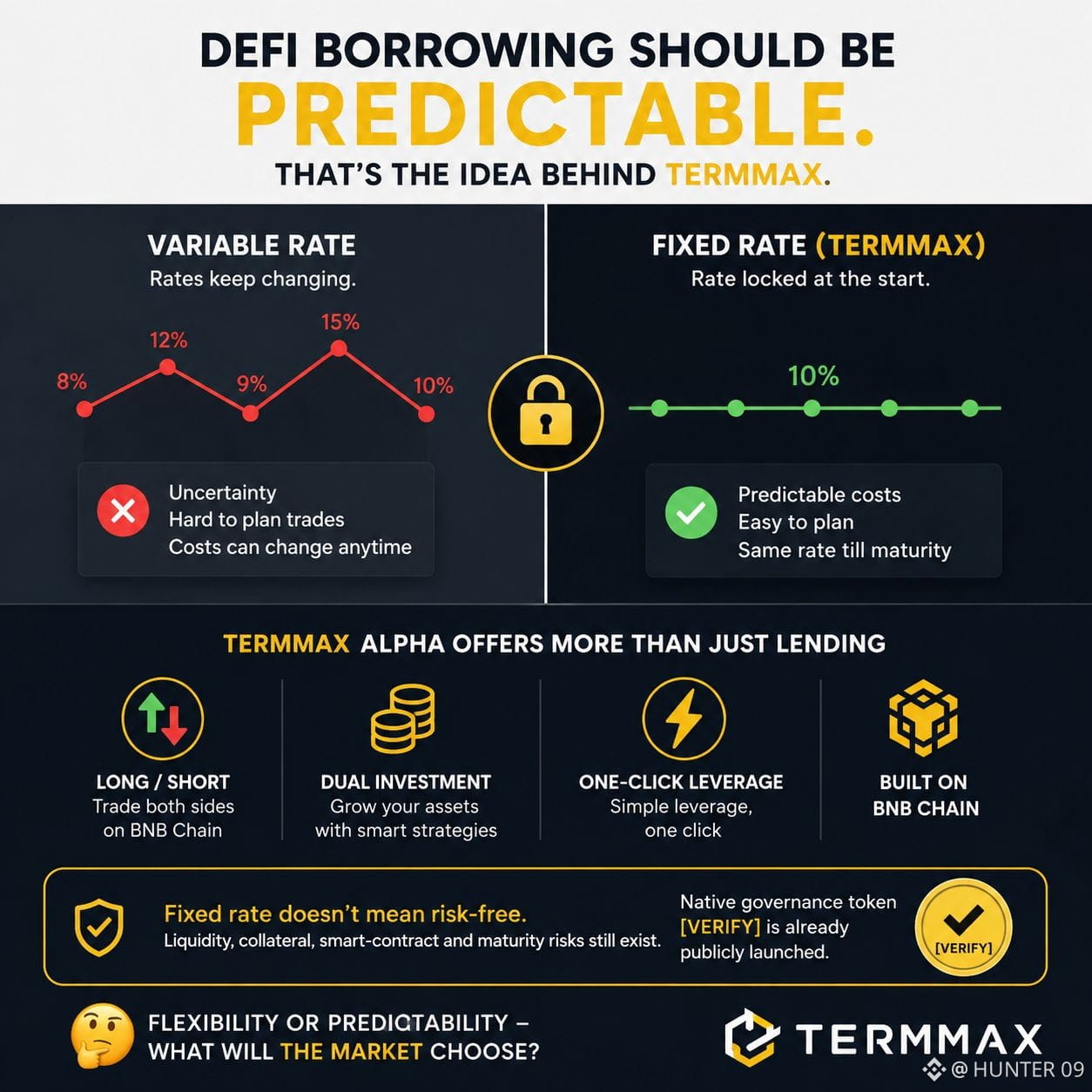
Kreditaufnahme-Zinsen gehören zu diesen DeFi-Themen, die einen kompletten Trade still und leise durcheinanderbringen können.
Vielleicht hast du den Trade heute noch im Griff – aber wenn sich die Kosten für die Kreditaufnahme morgen ändern, sehen die Zahlen plötzlich ganz anders aus.
Deshalb ist TermMax für mich interessant.
Die Grundidee ist ziemlich einfach: Der Kreditaufnahme-/Kreditgebührenzins wird zum Zeitpunkt der Transaktion festgelegt und bleibt für die vereinbarte Laufzeit fix. Im Gegensatz zu Protokollen mit variablem Zinssatz musst du also nicht ständig darum bangen, dass APY oder die Kosten für die Kreditaufnahme sich bewegen.
Du kennst den Zinssatz.
Du kennst die Laufzeit.
Du hast im Voraus eine deutlich klarere Vorstellung von den Kosten.
Und hier wird es noch ein bisschen spannender.
TermMax geht nicht nur ums Verleihen. Auf der Alpha-Seite bietet es Long-/Short-Produkte, Dual Investments und One-Click-Hebelwirkung auf der BNB Chain.
Also das einfach als „ein weiteres DeFi-Lending-Protokoll“ zu bezeichnen, ist für mich ein wenig zu simpel.
Wenn RWA und institutionelles Kapital wirklich tiefer in DeFi vordringen, kann ich mir vorstellen, dass vorhersehbare Kreditaufnahme-Zinsen immer wichtiger werden. Institutionen möchten ihren Finanzierungskosten häufig lieber verlässlich einschätzen können, statt mit Zinssätzen umgehen zu müssen, die sich ständig ändern.
Aber da gibt es einen Haken.
Ein Fixzins bedeutet nicht automatisch ein geringes Risiko. Liquiditätsrisiko, Sicherheitenrisiko, Smart-Contract-Risiko und Laufzeitrisiko sind weiterhin vorhanden.
Außerdem hat TermMax bereits einen öffentlich gestarteten nativen Governance-Token [VERIFY], daher würde ich XP/AP-Belohnungen nicht als automatisch positives Zeichen für einen bevorstehenden Token-Launch betrachten.
Für mich ist die spannende Frage ziemlich simpel:
Bevorzugt der Markt die Flexibilität variabler Zinssätze oder die Planbarkeit fester Zinssätze?
#TermMax @TermMax
Vielleicht hast du den Trade heute noch im Griff – aber wenn sich die Kosten für die Kreditaufnahme morgen ändern, sehen die Zahlen plötzlich ganz anders aus.
Deshalb ist TermMax für mich interessant.
Die Grundidee ist ziemlich einfach: Der Kreditaufnahme-/Kreditgebührenzins wird zum Zeitpunkt der Transaktion festgelegt und bleibt für die vereinbarte Laufzeit fix. Im Gegensatz zu Protokollen mit variablem Zinssatz musst du also nicht ständig darum bangen, dass APY oder die Kosten für die Kreditaufnahme sich bewegen.
Du kennst den Zinssatz.
Du kennst die Laufzeit.
Du hast im Voraus eine deutlich klarere Vorstellung von den Kosten.
Und hier wird es noch ein bisschen spannender.
TermMax geht nicht nur ums Verleihen. Auf der Alpha-Seite bietet es Long-/Short-Produkte, Dual Investments und One-Click-Hebelwirkung auf der BNB Chain.
Also das einfach als „ein weiteres DeFi-Lending-Protokoll“ zu bezeichnen, ist für mich ein wenig zu simpel.
Wenn RWA und institutionelles Kapital wirklich tiefer in DeFi vordringen, kann ich mir vorstellen, dass vorhersehbare Kreditaufnahme-Zinsen immer wichtiger werden. Institutionen möchten ihren Finanzierungskosten häufig lieber verlässlich einschätzen können, statt mit Zinssätzen umgehen zu müssen, die sich ständig ändern.
Aber da gibt es einen Haken.
Ein Fixzins bedeutet nicht automatisch ein geringes Risiko. Liquiditätsrisiko, Sicherheitenrisiko, Smart-Contract-Risiko und Laufzeitrisiko sind weiterhin vorhanden.
Außerdem hat TermMax bereits einen öffentlich gestarteten nativen Governance-Token [VERIFY], daher würde ich XP/AP-Belohnungen nicht als automatisch positives Zeichen für einen bevorstehenden Token-Launch betrachten.
Für mich ist die spannende Frage ziemlich simpel:
Bevorzugt der Markt die Flexibilität variabler Zinssätze oder die Planbarkeit fester Zinssätze?
#TermMax @TermMax
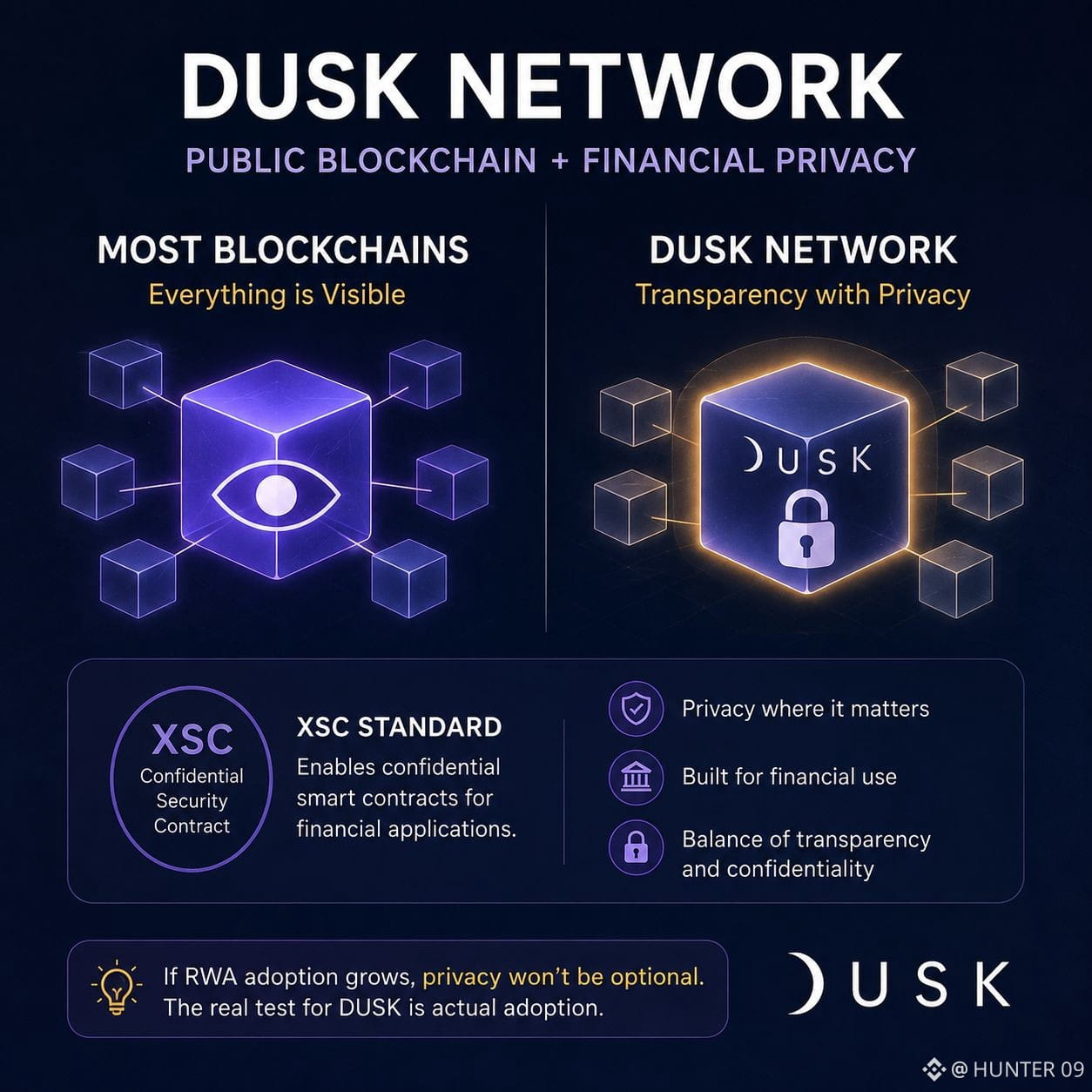
DUSK ist ein Projekt, das ich vor allem deshalb beobachte, weil die Datenschutz-Seite tatsächlich Sinn ergibt, wenn man sich das Finanzwesen anschaut.
Die meisten Blockchains sind auf vollständige Transparenz aufgebaut. Das ist großartig zur Verifikation, aber stellen Sie sich vor, eine Bank oder ein Finanzinstitut würde jede Transaktion und sensible Details auf ein öffentliches Register setzen. Das kann ziemlich schnell zu einem Problem werden.
Hier wird DUSK interessant.
DUSK ist eine Layer-1, die für Finanzanwendungen gebaut ist, und sein Confidential Security Contract (XSC)-Standard ist für vertrauliche Smart Contracts ausgelegt.
Im Grunde geht es darum, nicht die gesamte Blockchain zu verbergen. Es geht darum, Finanz-Apps etwas Privatsphäre zu geben und gleichzeitig die Vorteile der Blockchain-Transparenz beizubehalten.
Und wenn RWAs wirklich weiter wachsen, glaube ich, dass das eine größere Diskussion wird.
Institutionen haben Compliance-Anforderungen, Identitätsdaten und Transaktionen, die sie wahrscheinlich nicht vollständig offenlegen möchten. Privatsphäre kann in diesem Setup nicht einfach ein optionales Extra sein.
Aber da gibt es einen Haken.
Eine gute Story allein macht eine Kette nicht erfolgreich. Worauf ich mit DUSK achten werde, ist, ob Entwickler und Finanzinstitutionen tatsächlich anfangen, XSC-basierte Anwendungen zu bauen und zu nutzen.
Das ist der Teil, der für mich zählt.
Datenschutz + RWA klingt auf dem Papier gut. Die echte Übernahme ist eine andere Geschichte.
Würden Sie DUSK als ernsthaftes Infrastrukturprojekt betrachten, oder glauben Sie, dass gerade die Datenschutz-Story den Großteil der Arbeit übernimmt?
#dusk @Dusk $DUSK
Die meisten Blockchains sind auf vollständige Transparenz aufgebaut. Das ist großartig zur Verifikation, aber stellen Sie sich vor, eine Bank oder ein Finanzinstitut würde jede Transaktion und sensible Details auf ein öffentliches Register setzen. Das kann ziemlich schnell zu einem Problem werden.
Hier wird DUSK interessant.
DUSK ist eine Layer-1, die für Finanzanwendungen gebaut ist, und sein Confidential Security Contract (XSC)-Standard ist für vertrauliche Smart Contracts ausgelegt.
Im Grunde geht es darum, nicht die gesamte Blockchain zu verbergen. Es geht darum, Finanz-Apps etwas Privatsphäre zu geben und gleichzeitig die Vorteile der Blockchain-Transparenz beizubehalten.
Und wenn RWAs wirklich weiter wachsen, glaube ich, dass das eine größere Diskussion wird.
Institutionen haben Compliance-Anforderungen, Identitätsdaten und Transaktionen, die sie wahrscheinlich nicht vollständig offenlegen möchten. Privatsphäre kann in diesem Setup nicht einfach ein optionales Extra sein.
Aber da gibt es einen Haken.
Eine gute Story allein macht eine Kette nicht erfolgreich. Worauf ich mit DUSK achten werde, ist, ob Entwickler und Finanzinstitutionen tatsächlich anfangen, XSC-basierte Anwendungen zu bauen und zu nutzen.
Das ist der Teil, der für mich zählt.
Datenschutz + RWA klingt auf dem Papier gut. Die echte Übernahme ist eine andere Geschichte.
Würden Sie DUSK als ernsthaftes Infrastrukturprojekt betrachten, oder glauben Sie, dass gerade die Datenschutz-Story den Großteil der Arbeit übernimmt?
#dusk @Dusk $DUSK
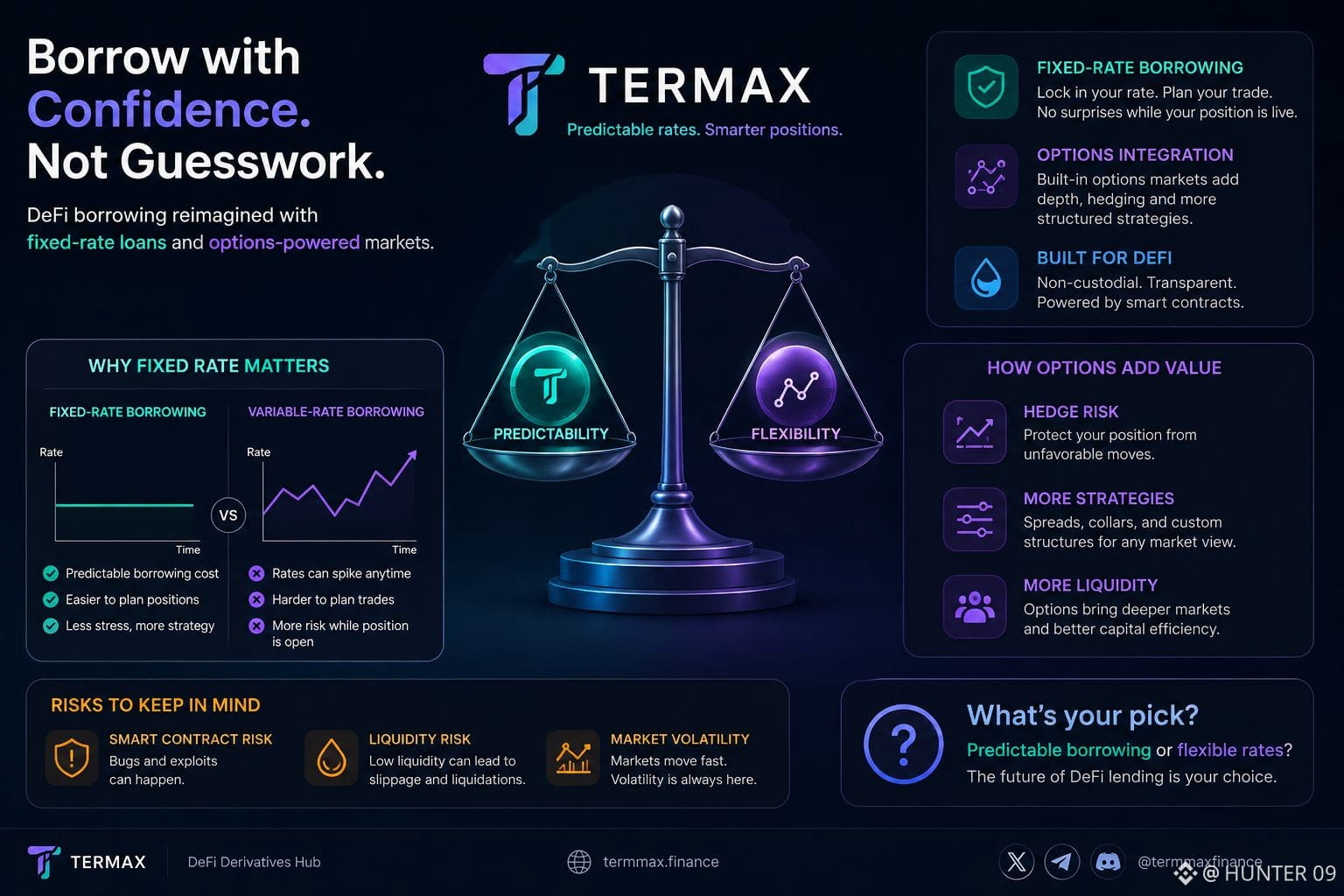
Ein Punkt über DeFi-Kredite, über den nicht genug gesprochen wird: Der Zinssatz kann sich weiter ändern, während du die Position noch hältst.
Genau deshalb hat mich TermMax aufmerksam gemacht.
Das ist ein dezentraler Protokollansatz, der auf Festzins-Kreditvergabe und -verleihung basiert – und bei dem auch Optionshandel Teil des Setups ist.
Denk mal darüber nach: Wenn die Kosten für dein Darlehen besser vorhersehbar sind, wird das Planen einer Position ein wenig einfacher. Du hast eine bessere Vorstellung davon, wie die Kosten aussehen, statt ständig besorgt zu sein, dass sich der Zinssatz gegen dich bewegt.
Und der Optionsbereich ist ebenfalls interessant. Er gibt dem Protokoll eine strukturiertere Handelsausrichtung – nicht nur den üblichen Zyklus aus verleihen, leihen und APY hinterherjagen.
Ich persönlich finde, genau dieser Teil ist es wert, beobachtet zu werden.
DeFi hat bereits viele Lending-Protokolle. Die größere Frage ist, ob Trader tatsächlich mehr vorhersehbare Kredite wollen und ob sich dafür ausreichend Liquidität bereitstellen lässt.
Natürlich gibt es weiterhin Smart-Contract-Risiken, Liquiditätsrisiken und die übliche Marktvolatilität. Deshalb würde ich die Idee nicht nur anhand des Produktkonzepts beurteilen.
Aber die Richtung ergibt für mich Sinn.
Würdest du lieber zu einem Zinssatz leihen, den du einplanen kannst, oder willst du weiterhin die Flexibilität variabler Zinssätze?
#termmax @TermMax
Genau deshalb hat mich TermMax aufmerksam gemacht.
Das ist ein dezentraler Protokollansatz, der auf Festzins-Kreditvergabe und -verleihung basiert – und bei dem auch Optionshandel Teil des Setups ist.
Denk mal darüber nach: Wenn die Kosten für dein Darlehen besser vorhersehbar sind, wird das Planen einer Position ein wenig einfacher. Du hast eine bessere Vorstellung davon, wie die Kosten aussehen, statt ständig besorgt zu sein, dass sich der Zinssatz gegen dich bewegt.
Und der Optionsbereich ist ebenfalls interessant. Er gibt dem Protokoll eine strukturiertere Handelsausrichtung – nicht nur den üblichen Zyklus aus verleihen, leihen und APY hinterherjagen.
Ich persönlich finde, genau dieser Teil ist es wert, beobachtet zu werden.
DeFi hat bereits viele Lending-Protokolle. Die größere Frage ist, ob Trader tatsächlich mehr vorhersehbare Kredite wollen und ob sich dafür ausreichend Liquidität bereitstellen lässt.
Natürlich gibt es weiterhin Smart-Contract-Risiken, Liquiditätsrisiken und die übliche Marktvolatilität. Deshalb würde ich die Idee nicht nur anhand des Produktkonzepts beurteilen.
Aber die Richtung ergibt für mich Sinn.
Würdest du lieber zu einem Zinssatz leihen, den du einplanen kannst, oder willst du weiterhin die Flexibilität variabler Zinssätze?
#termmax @TermMax
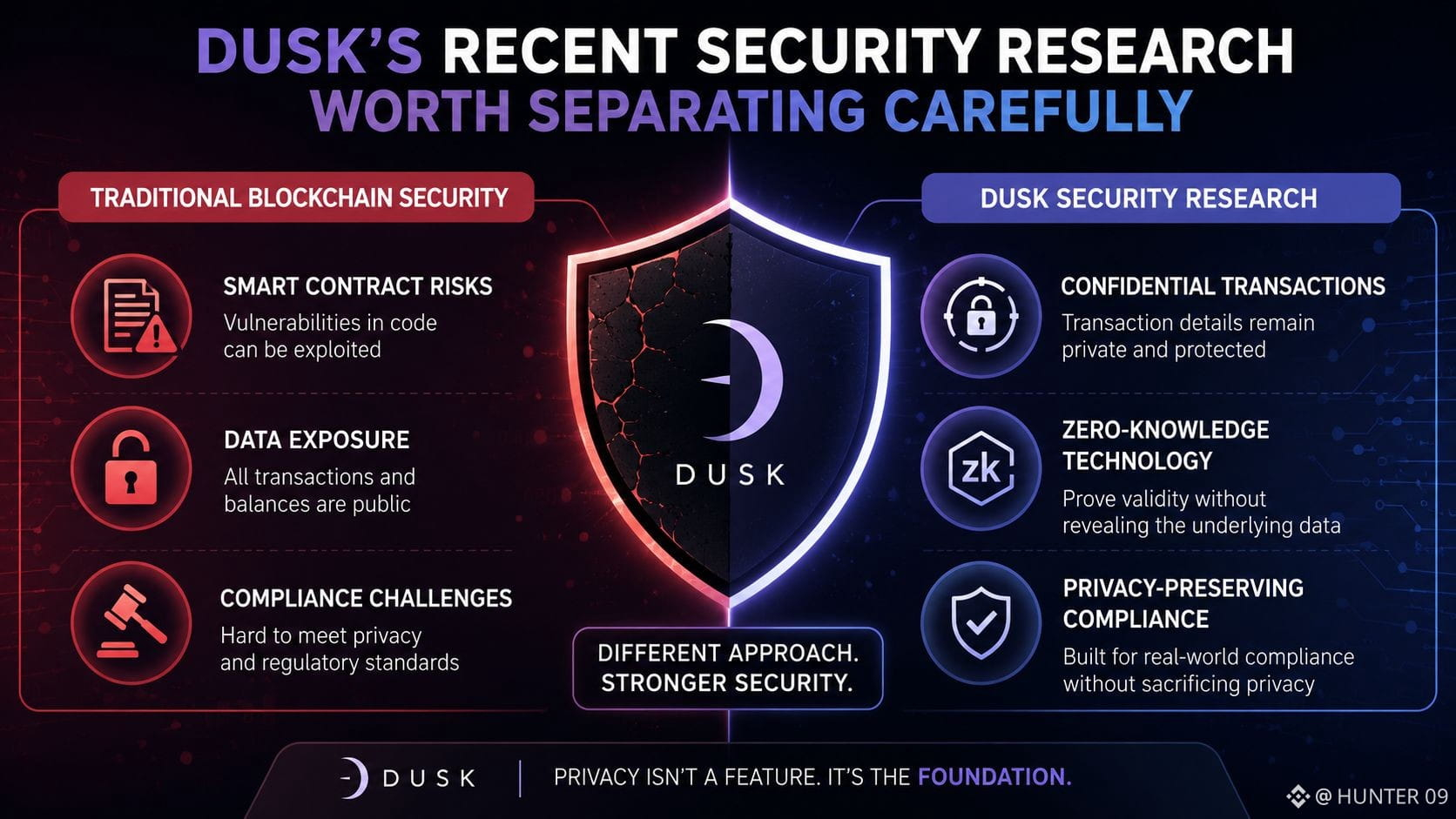
Ich stoße beim Eintauchen in Dusk immer wieder auf eine Frage: Kann tokenisierte Finanzwirtschaft wirklich skalieren, wenn jede Transaktion vollständig transparent ist?
Darum haben mich Confidential Security Contracts (XSC) besonders interessiert. Anstatt Institutionen zu zwingen, zwischen Compliance und Privatsphäre zu wählen, versucht Dusk, beides in derselben Umgebung zu vereinen.
Was mir auffiel, war nicht nur die Technologie. Es war die Idee, dass regulierte Vermögenswerte sich vielleicht endlich onchain bewegen können, ohne sensible Daten für alle offenzulegen.
Privatsphäre klingt in der Theorie großartig, aber entscheidend ist die Akzeptanz. Können Entwickler damit arbeiten? Werden Finanzinstitute einer neuen Blockchain-Architektur vertrauen? Und kann Vertraulichkeit mit Prüf- und Nachvollziehbarkeit (Auditability) koexistieren, ohne unnötige Komplexität zu erzeugen?
Das Konzept wirkt stärker als die meisten Tokenisierungserzählungen, denen ich in letzter Zeit gefolgt bin, aber die Umsetzung wird alles entscheiden.
#dusk @Dusk $DUSK
Darum haben mich Confidential Security Contracts (XSC) besonders interessiert. Anstatt Institutionen zu zwingen, zwischen Compliance und Privatsphäre zu wählen, versucht Dusk, beides in derselben Umgebung zu vereinen.
Was mir auffiel, war nicht nur die Technologie. Es war die Idee, dass regulierte Vermögenswerte sich vielleicht endlich onchain bewegen können, ohne sensible Daten für alle offenzulegen.
Privatsphäre klingt in der Theorie großartig, aber entscheidend ist die Akzeptanz. Können Entwickler damit arbeiten? Werden Finanzinstitute einer neuen Blockchain-Architektur vertrauen? Und kann Vertraulichkeit mit Prüf- und Nachvollziehbarkeit (Auditability) koexistieren, ohne unnötige Komplexität zu erzeugen?
Das Konzept wirkt stärker als die meisten Tokenisierungserzählungen, denen ich in letzter Zeit gefolgt bin, aber die Umsetzung wird alles entscheiden.
#dusk @Dusk $DUSK
Ich habe mit TermMax angefangen, weil ich es leid war, dass sich die Finanzierungskosten alle paar Stunden änderten. Festverzinsliche Sätze in DeFi sind nicht wirklich neu, aber sie sind immer noch überraschend wenig erforscht.
Nachdem ich etwas Zeit mit dem Protokoll verbracht habe, denke ich, dass das Spannende nicht nur der Kreditmarkt ist. Die Kombination aus festverzinslichem Kredit und Optionshandel schafft ein anderes Risikomanagement-Modell als die meisten Geldmärkte.
Die Zahlen haben mich zwar interessiert, aber ich habe mehr Zeit damit verbracht, mir die tatsächliche Aktivität anzusehen als die TVL. Liquidität ist nur dann relevant, wenn Trader die Plattform dauerhaft nutzen.
Allerdings bringen festverzinsliche Systeme ihre eigenen Herausforderungen mit. Liquiditätsfragmentierung, Preisbildungs-Effizienz und Markttiefe werden viel wichtiger, sobald Laufzeiten ins Spiel kommen.
Meine wichtigste Frage ist ganz einfach: Werden Trader vorhersehbare Zinssätze den Flexibilitäten vorziehen, an die sie im traditionellen DeFi-Kreditwesen gewöhnt sind?
#TermMax @TermMax
Nachdem ich etwas Zeit mit dem Protokoll verbracht habe, denke ich, dass das Spannende nicht nur der Kreditmarkt ist. Die Kombination aus festverzinslichem Kredit und Optionshandel schafft ein anderes Risikomanagement-Modell als die meisten Geldmärkte.
Die Zahlen haben mich zwar interessiert, aber ich habe mehr Zeit damit verbracht, mir die tatsächliche Aktivität anzusehen als die TVL. Liquidität ist nur dann relevant, wenn Trader die Plattform dauerhaft nutzen.
Allerdings bringen festverzinsliche Systeme ihre eigenen Herausforderungen mit. Liquiditätsfragmentierung, Preisbildungs-Effizienz und Markttiefe werden viel wichtiger, sobald Laufzeiten ins Spiel kommen.
Meine wichtigste Frage ist ganz einfach: Werden Trader vorhersehbare Zinssätze den Flexibilitäten vorziehen, an die sie im traditionellen DeFi-Kreditwesen gewöhnt sind?
#TermMax @TermMax
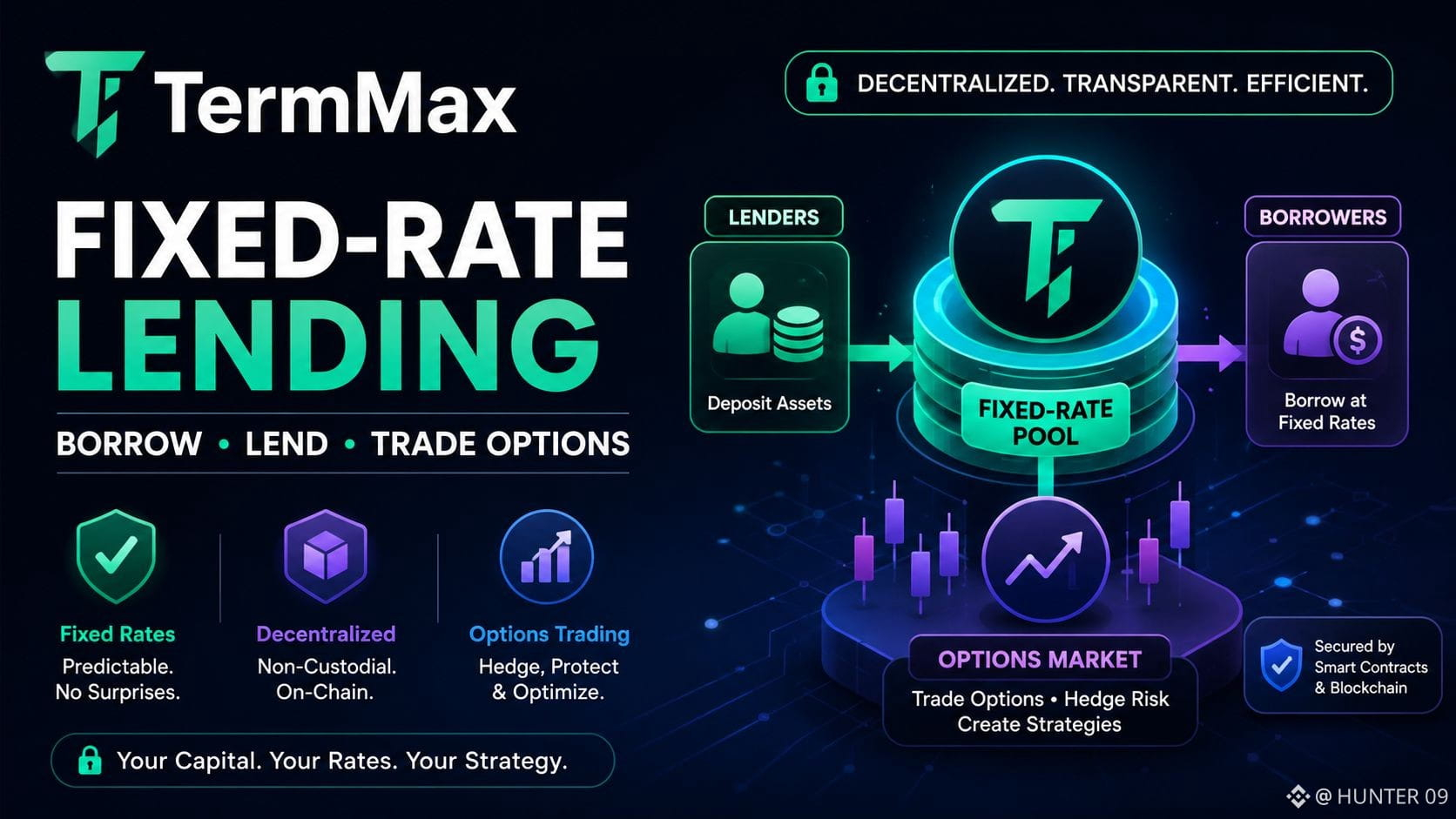
Ich habe über TermMax aus einem etwas anderen Blickwinkel nachgedacht.
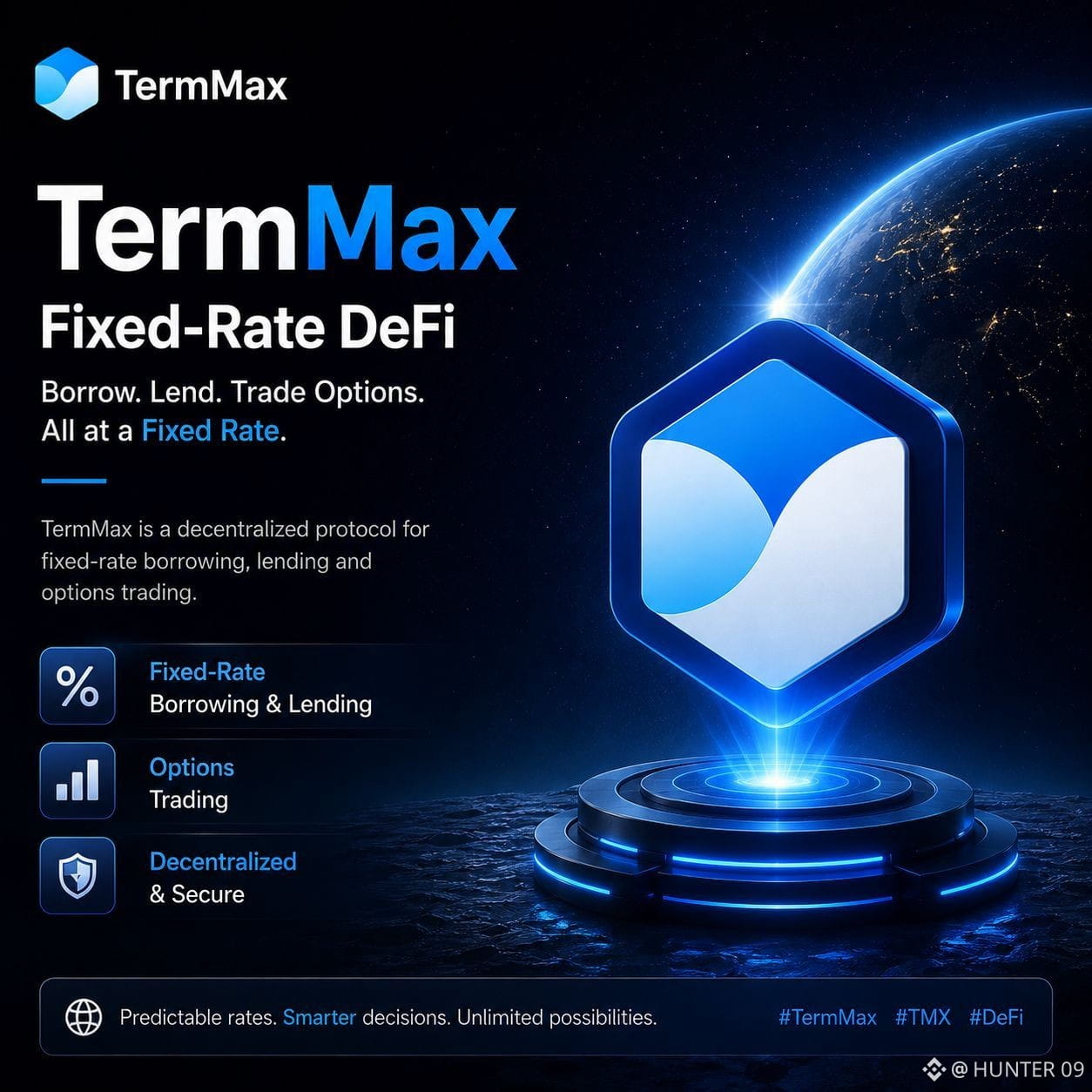
Kredite mit festem Zinssatz klingen einfach, aber sie in DeFi zum Laufen zu bringen, ist keineswegs einfach. Im traditionellen Finanzwesen hängen feste Zinsen von tiefer Liquidität, einem funktionierenden Risikomanagement und von Teilnehmern ab, die bereit sind, die Gegenseite zu übernehmen. TermMax versucht, diese Art von Struktur On-Chain über Kredite mit festem Zinssatz, Lending und Optionen bereitzustellen.
Was für mich zählt, ist nicht, wie viele Funktionen das Protokoll hat. Mich interessiert mehr, was passiert, wenn die Märkte unruhig werden.
Kann die Liquidität auch während Volatilität standhalten? Können Nutzer ihre Positionen tatsächlich zu angemessenen Preisen aussteigen? Erzielen Kreditgeber nachhaltige Renditen, oder leisten Incentives den Großteil der Arbeit? Und vor allem: Kommen echte Nutzer wegen des finanziellen Nutzens – oder nur wegen kurzfristiger Belohnungen?
Daran wird TermMax meiner Meinung nach letztlich gemessen.
Meine Ansicht: Die Idee ist wirklich interessant, aber der echte Nachweis kommt durch die Akzeptanz, die Widerstandsfähigkeit und die Performance unter Druck. In DeFi sagt es mir viel mehr, ob man schwierige Bedingungen überlebt, als ob man in einfachen Phasen gut aussieht.
#termmax @TermMax
Kredite mit festem Zinssatz klingen einfach, aber sie in DeFi zum Laufen zu bringen, ist keineswegs einfach. Im traditionellen Finanzwesen hängen feste Zinsen von tiefer Liquidität, einem funktionierenden Risikomanagement und von Teilnehmern ab, die bereit sind, die Gegenseite zu übernehmen. TermMax versucht, diese Art von Struktur On-Chain über Kredite mit festem Zinssatz, Lending und Optionen bereitzustellen.
Was für mich zählt, ist nicht, wie viele Funktionen das Protokoll hat. Mich interessiert mehr, was passiert, wenn die Märkte unruhig werden.
Kann die Liquidität auch während Volatilität standhalten? Können Nutzer ihre Positionen tatsächlich zu angemessenen Preisen aussteigen? Erzielen Kreditgeber nachhaltige Renditen, oder leisten Incentives den Großteil der Arbeit? Und vor allem: Kommen echte Nutzer wegen des finanziellen Nutzens – oder nur wegen kurzfristiger Belohnungen?
Daran wird TermMax meiner Meinung nach letztlich gemessen.
Meine Ansicht: Die Idee ist wirklich interessant, aber der echte Nachweis kommt durch die Akzeptanz, die Widerstandsfähigkeit und die Performance unter Druck. In DeFi sagt es mir viel mehr, ob man schwierige Bedingungen überlebt, als ob man in einfachen Phasen gut aussieht.
#termmax @TermMax
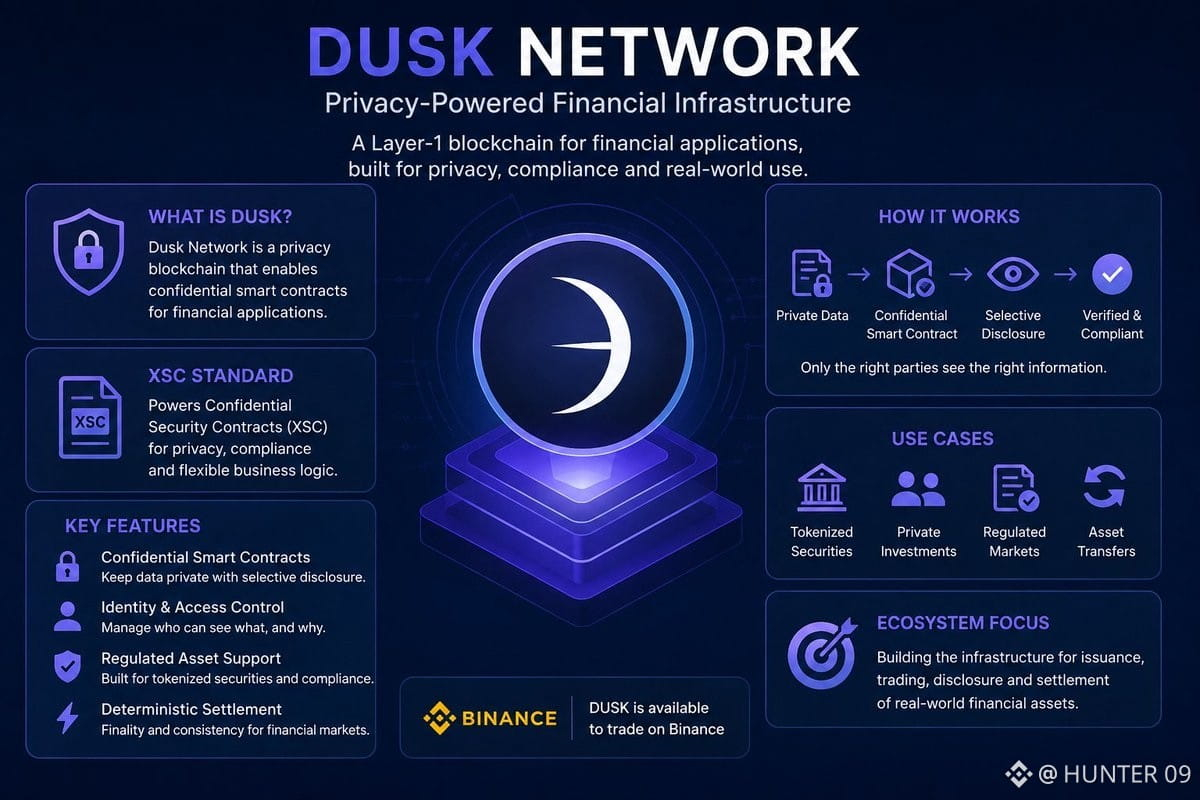
@Dusk Dusk-Netzwerk ist aus einem Grund interessant, der über die übliche Bezeichnung „Privacy-Blockchain“ hinausgeht.
Die meisten Blockchains wurden zuerst auf Transparenz ausgelegt. Das funktioniert gut für offene Krypto-Aktivitäten, aber Finanzmärkte brauchen häufig etwas anderes: die Möglichkeit, zu verifizieren, dass etwas gültig ist, ohne jede vertrauliche Einzelheit offenzulegen.
Genau hier beginnt Dusk’s Ansatz Sinn zu ergeben.
Es handelt sich um eine auf Finanzanwendungen fokussierte Layer-1 mit dem Standard für Confidential Security Contracts (XSC) und vertraulichen Smart Contracts, die in das Ökosystem integriert sind.
Die große Idee dahinter ist nicht nur das Verbergen von Transaktionen.
Es geht darum, eine Blockchain-Umgebung zu schaffen, in der Institutionen potenziell die On-Chain-Infrastruktur nutzen können, während kommerziell sensible Informationen privat bleiben.
Das ist ein deutlich schwierigeres Problem, als Transaktionen nur anonym zu machen.
Und wenn die Einführung von Blockchain im Finanzwesen wirklich weiter wächst, könnte Privatsphäre von einer Nischenfunktion zu einer grundlegenden Anforderung werden.
Dusk setzt auf diesen Wandel.
Die spannende Frage ist, ob echte Finanzanwendungen irgendwann die These tatsächlich belegen.
#dusk $DUSK
Die meisten Blockchains wurden zuerst auf Transparenz ausgelegt. Das funktioniert gut für offene Krypto-Aktivitäten, aber Finanzmärkte brauchen häufig etwas anderes: die Möglichkeit, zu verifizieren, dass etwas gültig ist, ohne jede vertrauliche Einzelheit offenzulegen.
Genau hier beginnt Dusk’s Ansatz Sinn zu ergeben.
Es handelt sich um eine auf Finanzanwendungen fokussierte Layer-1 mit dem Standard für Confidential Security Contracts (XSC) und vertraulichen Smart Contracts, die in das Ökosystem integriert sind.
Die große Idee dahinter ist nicht nur das Verbergen von Transaktionen.
Es geht darum, eine Blockchain-Umgebung zu schaffen, in der Institutionen potenziell die On-Chain-Infrastruktur nutzen können, während kommerziell sensible Informationen privat bleiben.
Das ist ein deutlich schwierigeres Problem, als Transaktionen nur anonym zu machen.
Und wenn die Einführung von Blockchain im Finanzwesen wirklich weiter wächst, könnte Privatsphäre von einer Nischenfunktion zu einer grundlegenden Anforderung werden.
Dusk setzt auf diesen Wandel.
Die spannende Frage ist, ob echte Finanzanwendungen irgendwann die These tatsächlich belegen.
#dusk $DUSK
Stell dir vor, ein Unternehmen möchte Blockchain für eine Finanztransaktion nutzen.
Es braucht eine Transaktion, die überprüfbar ist, möchte aber auch nicht, dass jedes sensible Detail dem gesamten Netzwerk offengelegt wird.
Genau darauf ist Dusk Network in meiner Aufmerksamkeit geraten.
Dusk behandelt Privatsphäre nicht nur als reines Verbergen von Informationen. Stattdessen versucht Dusk, ein System aufzubauen, in dem finanzielle Aktivitäten vertraulich bleiben können, aber dennoch über vertrauliche Smart Contracts und seinen XSC-Standard verifizierbar sind.
Doch da gibt es eine größere Frage.
Technologie zu bauen ist das eine. Aber echte Unternehmen dazu zu bringen, sich darauf zu verlassen, ist etwas anderes.
Kann Dusk unter Druck sicher bleiben? Können seine Ökonomie und sein Wirtschaftssystem das Netzwerk langfristig tragen? Und vor allem: Werden tatsächliche Finanznutzer es gegenüber bestehenden Systemen wirklich vorziehen?
Das werde ich beobachten.
Privatsphäre gibt Dusk einen Grund zu existieren.
Die reale Einführung in der Praxis wird entscheiden, ob es überhaupt von Bedeutung sein sollte.
$DUSK
#dusk @Dusk
Es braucht eine Transaktion, die überprüfbar ist, möchte aber auch nicht, dass jedes sensible Detail dem gesamten Netzwerk offengelegt wird.
Genau darauf ist Dusk Network in meiner Aufmerksamkeit geraten.
Dusk behandelt Privatsphäre nicht nur als reines Verbergen von Informationen. Stattdessen versucht Dusk, ein System aufzubauen, in dem finanzielle Aktivitäten vertraulich bleiben können, aber dennoch über vertrauliche Smart Contracts und seinen XSC-Standard verifizierbar sind.
Doch da gibt es eine größere Frage.
Technologie zu bauen ist das eine. Aber echte Unternehmen dazu zu bringen, sich darauf zu verlassen, ist etwas anderes.
Kann Dusk unter Druck sicher bleiben? Können seine Ökonomie und sein Wirtschaftssystem das Netzwerk langfristig tragen? Und vor allem: Werden tatsächliche Finanznutzer es gegenüber bestehenden Systemen wirklich vorziehen?
Das werde ich beobachten.
Privatsphäre gibt Dusk einen Grund zu existieren.
Die reale Einführung in der Praxis wird entscheiden, ob es überhaupt von Bedeutung sein sollte.
$DUSK
#dusk @Dusk
Das Dusk Network wird interessant, wenn du nicht mehr über Privatsphäre als Feature nachdenkst, sondern als Infrastruktur.
Die meisten Finanzanwendungen können nicht einfach alle Details in ein öffentliches Ledger eintragen. Trades, Identitäten, Transaktionslogik und sensible Geschäftsdaten benötigen oft ein gewisses Maß an Vertraulichkeit.
Genau hier sticht Dusk heraus.
Dusk ist eine Layer-1, die für Finanzanwendungen entwickelt wurde—mit dem Standard für den Confidential Security Contract (XSC) und Unterstützung für vertrauliche Smart Contracts. Die Idee ist ziemlich einfach: die Vorteile von Blockchain beibehalten, aber Anwendungen mehr Kontrolle darüber geben, welche Informationen öffentlich sichtbar werden.
Ich glaube, das ist eine wichtige Richtung für Web3.
Die größere Frage ist nicht, ob Privatsphäre nützlich klingt. Das tut sie offensichtlich.
Der echte Test ist, ob Entwickler und Finanzinstitute Dusk tatsächlich für praktisch genug halten, um darauf aufzubauen.
Wenn das passiert, hört Privatsphäre auf, ein Nischenfeature zu sein, und beginnt, Teil der Basisinfrastruktur für Onchain-Finanzierung zu werden.
@Dusk #dusk $DUSK
Die meisten Finanzanwendungen können nicht einfach alle Details in ein öffentliches Ledger eintragen. Trades, Identitäten, Transaktionslogik und sensible Geschäftsdaten benötigen oft ein gewisses Maß an Vertraulichkeit.
Genau hier sticht Dusk heraus.
Dusk ist eine Layer-1, die für Finanzanwendungen entwickelt wurde—mit dem Standard für den Confidential Security Contract (XSC) und Unterstützung für vertrauliche Smart Contracts. Die Idee ist ziemlich einfach: die Vorteile von Blockchain beibehalten, aber Anwendungen mehr Kontrolle darüber geben, welche Informationen öffentlich sichtbar werden.
Ich glaube, das ist eine wichtige Richtung für Web3.
Die größere Frage ist nicht, ob Privatsphäre nützlich klingt. Das tut sie offensichtlich.
Der echte Test ist, ob Entwickler und Finanzinstitute Dusk tatsächlich für praktisch genug halten, um darauf aufzubauen.
Wenn das passiert, hört Privatsphäre auf, ein Nischenfeature zu sein, und beginnt, Teil der Basisinfrastruktur für Onchain-Finanzierung zu werden.
@Dusk #dusk $DUSK
Dusk Network ist interessant, weil es nicht nur versucht, Blockchain-Transaktionen privat zu machen. Es versucht, ein echtes Problem im Finanzwesen zu lösen: Wie kann man sensible Informationen vertraulich halten, während Transaktionen weiterhin überprüfbar bleiben?
Am spannendsten finde ich seinen Fokus auf vertrauliche Smart Contracts und den XSC-Standard.
Aber die größere Frage ist die Einführung. Banken und Finanzinstitute haben bereits komplexe Systeme, daher reicht bessere Technologie allein nicht aus.
Für mich geht es bei Dusk weniger um Hype und mehr darum, ob datenschutzorientierte Blockchain-Infrastruktur tatsächlich in reale finanzielle Arbeitsabläufe passen kann.
@Dusk #dusk
$DUSK
$COW
$CAP
Was ist die größte Herausforderung von Dusk Network?
Am spannendsten finde ich seinen Fokus auf vertrauliche Smart Contracts und den XSC-Standard.
Aber die größere Frage ist die Einführung. Banken und Finanzinstitute haben bereits komplexe Systeme, daher reicht bessere Technologie allein nicht aus.
Für mich geht es bei Dusk weniger um Hype und mehr darum, ob datenschutzorientierte Blockchain-Infrastruktur tatsächlich in reale finanzielle Arbeitsabläufe passen kann.
@Dusk #dusk
$DUSK
$COW
$CAP
Was ist die größte Herausforderung von Dusk Network?
🏦 Adoption
100%
🔒 Privacy at scale
0%
⚙️ Real-world integration
0%
🌐 L1 competition
0%
1 Stimmen • Abstimmung beendet
Anmelden und weiter Inhalte entdecken