
SA 战士 - SILENT SPARK
9.8k Beiträge

SA 战士 - SILENT SPARK
Skilled in content writing, influencer and trader...
Regelmäßiger Trader
11.6 Monate
930 Following
7.0K+ Follower
7.5K+ Like gegeben
Beiträge
Alle
Zitierungen
Live
Ich habe angefangen, einer Frage nachzugehen: Warum schaffen es Krypto-Privacy-Projekte nie in den Bereich der ernsthaften Finanzen? Und es läuft auf eine einzige sture Annahme hinaus. Alle gingen davon aus, dass man sich entscheiden müsse. Entweder bleibt das Ledger vollständig offen und jede Bilanz sowie jeder Handel ist für alle sichtbar oder es bleibt vollständig verborgen und kein Regulierer wird jemals damit in Berührung kommen. Diese binäre Denkweise hat still und leise viele gute Ideen abgewürgt.
Dann habe ich in Hedger gelesen – das vertrauliche Transaktionssystem von Dusk Network für DuskEVM – und es geht das Problem auf eine andere Art an. Statt Offenheit oder Geheimhaltung zu wählen, verschlüsselt es standardmäßig Kontostände und Transaktionsbeträge mittels homomorpher Verschlüsselung auf Basis von ElGamal über elliptischen Kurven. Das bedeutet, dass Berechnungen direkt auf verschlüsselten Daten stattfinden können, ohne dass sie vorher entschlüsselt werden. In Kombination dazu liegen Zero-Knowledge-Proofs bereit, die belegen, dass eine Transaktion gültig ist, ohne offenzulegen, was genau darin enthalten ist.
Das hat mich überrascht: In Dusk’ eigener Forschung wird beschrieben, dass optionale Compliance-„Hooks“ direkt in dasselbe System integriert sind, sodass bestimmte Auditoren Transaktionsbeträge abrufen oder eingreifen können, wenn es rechtlich erforderlich ist. Standardmäßig wird nichts offengelegt, aber es bleibt auch nicht dauerhaft unerreichbar. Berichten zufolge werden die Proofs clientseitig in unter zwei Sekunden generiert – und das ist tatsächlich entscheidend, wenn es in normalen EVM-Tools laufen soll, statt in einer separaten, abgeschlossenen Umgebung.
Das hat für mich die gesamte Debatte neu gerahmt. Datenschutz und Compliance waren nie wirklich Gegensätze. Man brauchte einfach ein System, das beides gleichzeitig tragen kann, statt eine Entscheidung zwischen ihnen zu erzwingen.
#dusk $DUSK @Dusk
Was ist für dich wichtiger, wenn echtes Geld anfängt, on-chain in Bewegung zu geraten? ??
Dann habe ich in Hedger gelesen – das vertrauliche Transaktionssystem von Dusk Network für DuskEVM – und es geht das Problem auf eine andere Art an. Statt Offenheit oder Geheimhaltung zu wählen, verschlüsselt es standardmäßig Kontostände und Transaktionsbeträge mittels homomorpher Verschlüsselung auf Basis von ElGamal über elliptischen Kurven. Das bedeutet, dass Berechnungen direkt auf verschlüsselten Daten stattfinden können, ohne dass sie vorher entschlüsselt werden. In Kombination dazu liegen Zero-Knowledge-Proofs bereit, die belegen, dass eine Transaktion gültig ist, ohne offenzulegen, was genau darin enthalten ist.
Das hat mich überrascht: In Dusk’ eigener Forschung wird beschrieben, dass optionale Compliance-„Hooks“ direkt in dasselbe System integriert sind, sodass bestimmte Auditoren Transaktionsbeträge abrufen oder eingreifen können, wenn es rechtlich erforderlich ist. Standardmäßig wird nichts offengelegt, aber es bleibt auch nicht dauerhaft unerreichbar. Berichten zufolge werden die Proofs clientseitig in unter zwei Sekunden generiert – und das ist tatsächlich entscheidend, wenn es in normalen EVM-Tools laufen soll, statt in einer separaten, abgeschlossenen Umgebung.
Das hat für mich die gesamte Debatte neu gerahmt. Datenschutz und Compliance waren nie wirklich Gegensätze. Man brauchte einfach ein System, das beides gleichzeitig tragen kann, statt eine Entscheidung zwischen ihnen zu erzwingen.
#dusk $DUSK @Dusk
Was ist für dich wichtiger, wenn echtes Geld anfängt, on-chain in Bewegung zu geraten? ??
Full transparency
Full anonymity
Reviewable privacy
6 Stunde(n) übrig
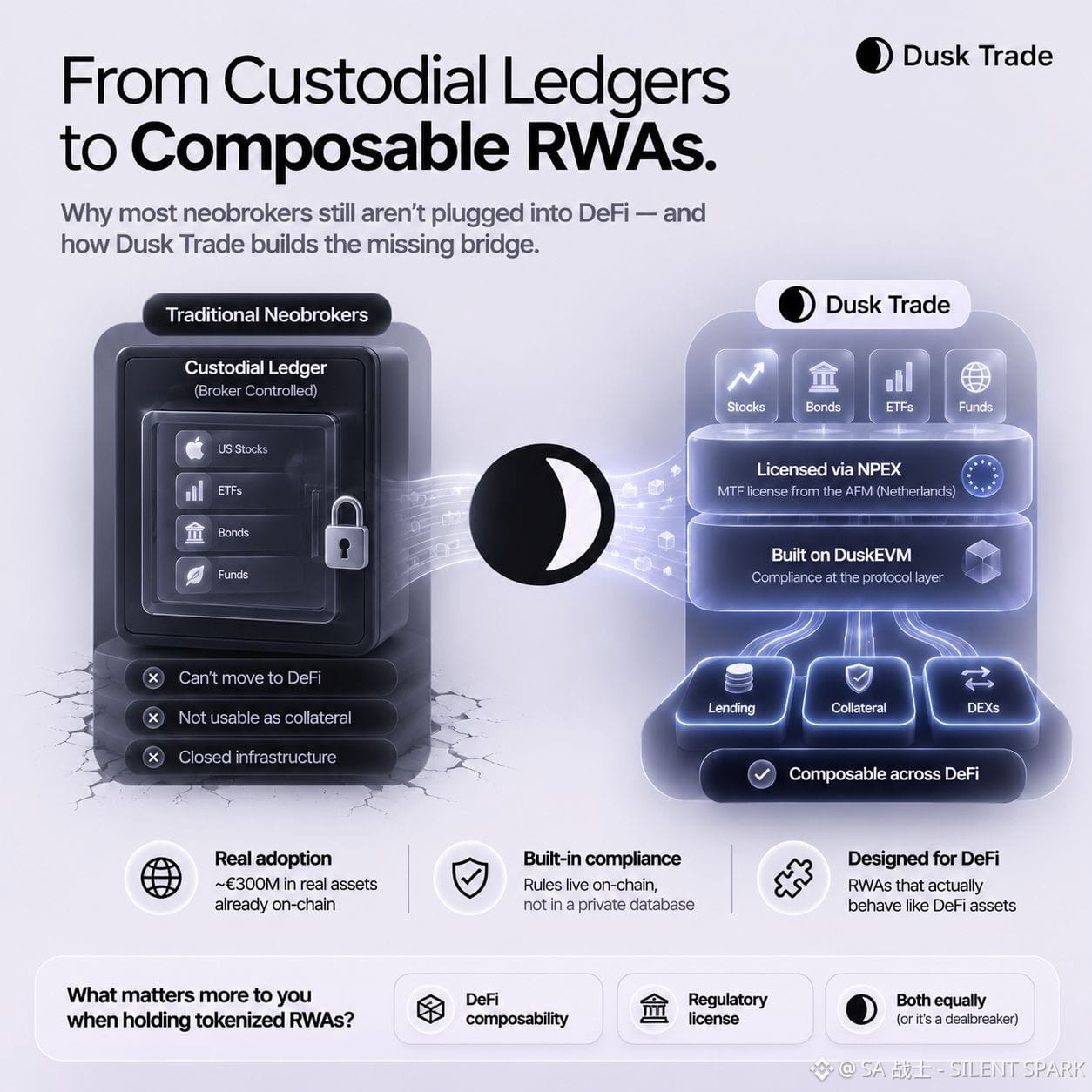
Ich bin in ein Kaninchenloch hinabgestiegen, warum Neobroker auch nach Jahren des Tokenisierung-Hypes immer noch nicht nahtlos in DeFi einsteigen können. Wie sich herausstellte, liegt das Problem nicht in der Frontend-App. Sondern darin, dass die Anteile, die man „besitzt“ – zum Beispiel über Robinhood oder Trade Republic – in einem verwahrenden (custodial) Ledger liegen, das der Broker kontrolliert. Dieser Eintrag kann nicht auf ein Lending-Protokoll umziehen oder als Sicherheit verwendet werden, weil die Compliance nachträglich auf alte Infrastruktur aufgesetzt wurde.
Das war es, was Dusk Trade für mich interessant gemacht hat. Das Unternehmen positioniert sich zwar als Neobroker, hat das Ganze aber als Anwendungsschicht auf DuskEVM aufgebaut – statt eine Legacy-Backend-Umgebung nur zu kapseln. Der regulatorische Teil läuft über NPEX, eine lizenzierte Börse in den Niederlanden, die bereits unter einer MTF-Lizenz der AFM operiert. Und das ist kein Roadmap-Versprechen. NPEX hat Berichten zufolge bereits rund 300 Mio. € an realen Vermögenswerten auf die Infrastruktur von Dusk gebracht.
So ist bei mir der Groschen gefallen: Damit sich ein tokenisierter Fonds oder eine tokenisierte Anleihe tatsächlich wie ein DeFi-Asset verhalten kann, müssen die Compliance-Regeln direkt im Protokoll selbst verankert sein. Wer es halten darf. Wohin es sich bewegen kann. Diese Logik kann nicht in einer privaten Broker-Datenbank leben, wenn man das Asset zwischen Wallets und Protokollen komposierbar machen will. Sie muss von Tag eins an auf der Infrastruktur-Ebene verankert sein.
Das ist der echte Unterschied zwischen dem Anspruch, ein regulierter MTF zu sein, und der tatsächlichen Rolle als Infrastruktur für einen.
#dusk $DUSK @Dusk
Das war es, was Dusk Trade für mich interessant gemacht hat. Das Unternehmen positioniert sich zwar als Neobroker, hat das Ganze aber als Anwendungsschicht auf DuskEVM aufgebaut – statt eine Legacy-Backend-Umgebung nur zu kapseln. Der regulatorische Teil läuft über NPEX, eine lizenzierte Börse in den Niederlanden, die bereits unter einer MTF-Lizenz der AFM operiert. Und das ist kein Roadmap-Versprechen. NPEX hat Berichten zufolge bereits rund 300 Mio. € an realen Vermögenswerten auf die Infrastruktur von Dusk gebracht.
So ist bei mir der Groschen gefallen: Damit sich ein tokenisierter Fonds oder eine tokenisierte Anleihe tatsächlich wie ein DeFi-Asset verhalten kann, müssen die Compliance-Regeln direkt im Protokoll selbst verankert sein. Wer es halten darf. Wohin es sich bewegen kann. Diese Logik kann nicht in einer privaten Broker-Datenbank leben, wenn man das Asset zwischen Wallets und Protokollen komposierbar machen will. Sie muss von Tag eins an auf der Infrastruktur-Ebene verankert sein.
Das ist der echte Unterschied zwischen dem Anspruch, ein regulierter MTF zu sein, und der tatsächlichen Rolle als Infrastruktur für einen.
#dusk $DUSK @Dusk
Ich hörte immer wieder, dass tokenisierte Geldmarktfonds wie etwas Einfaches herumgereicht werden, bis ich mir tatsächlich angesehen habe, was passiert, wenn man einen kauft. Wie sich herausstellt, funktionieren die meisten von ihnen auf die gleiche Weise. Ein verwahrender Fonds hält die echten Anteile außerhalb der Kette (off chain) und es wird ein Token geprägt, der lediglich auf diese off-chain-Position verweist. Du besitzt nicht den Fonds. Du besitzt einen Anspruch auf das Versprechen, dass der Fonds existiert und die Rücknahme (Redemption) erfüllt.
Diese Unterscheidung klingt klein, bis man darüber nachdenkt, was in Stresssituationen passiert. Wenn der Verwahrer Rücknahmen einfriert, oder die Brücke (bridge) bricht, oder das off-chain-Register hinter der on-chain-Token-Bereitstellung zurückfällt, ist dein Eigentum nur so gut wie die Bereitschaft und Fähigkeit dieses Zwischenpartners, es auch tatsächlich einzulösen.
Was mich an Dusk neugierig gemacht hat, ist das gegenteilige Design. Die Idee ist, dass der Token selbst als die tatsächliche On-Chain-Aufzeichnung des Eigentums gedacht ist. Es gibt kein separates Off-Chain-Register, das synchron bleiben soll. Wenn eine Übertragung stattfindet, wird sie atomar abgewickelt – und diese Abwicklung ist die Eigentumsänderung selbst, statt nur eine Anweisung an einen anderen Ort zu schicken, um ein privates Buch zu aktualisieren.
Das ist der eigentliche Unterschied zwischen dem Halten eines IOU und dem Halten des Assets selbst. Sofortige Abwicklung ist hier nicht nur ein Geschwindigkeitsmerkmal. Sie ist das, was das Eigentum tatsächlich real macht – statt nur versprochen.
#dusk $DUSK @Dusk
Umfrage: Wem würdest du mehr vertrauen, wenn es um echtes Geld geht?
Diese Unterscheidung klingt klein, bis man darüber nachdenkt, was in Stresssituationen passiert. Wenn der Verwahrer Rücknahmen einfriert, oder die Brücke (bridge) bricht, oder das off-chain-Register hinter der on-chain-Token-Bereitstellung zurückfällt, ist dein Eigentum nur so gut wie die Bereitschaft und Fähigkeit dieses Zwischenpartners, es auch tatsächlich einzulösen.
Was mich an Dusk neugierig gemacht hat, ist das gegenteilige Design. Die Idee ist, dass der Token selbst als die tatsächliche On-Chain-Aufzeichnung des Eigentums gedacht ist. Es gibt kein separates Off-Chain-Register, das synchron bleiben soll. Wenn eine Übertragung stattfindet, wird sie atomar abgewickelt – und diese Abwicklung ist die Eigentumsänderung selbst, statt nur eine Anweisung an einen anderen Ort zu schicken, um ein privates Buch zu aktualisieren.
Das ist der eigentliche Unterschied zwischen dem Halten eines IOU und dem Halten des Assets selbst. Sofortige Abwicklung ist hier nicht nur ein Geschwindigkeitsmerkmal. Sie ist das, was das Eigentum tatsächlich real macht – statt nur versprochen.
#dusk $DUSK @Dusk
Umfrage: Wem würdest du mehr vertrauen, wenn es um echtes Geld geht?
Wrapped custodial token
0%
Native on chain ownership
0%
Depends entirely on the issuer
0%
0 Stimmen • Abstimmung beendet
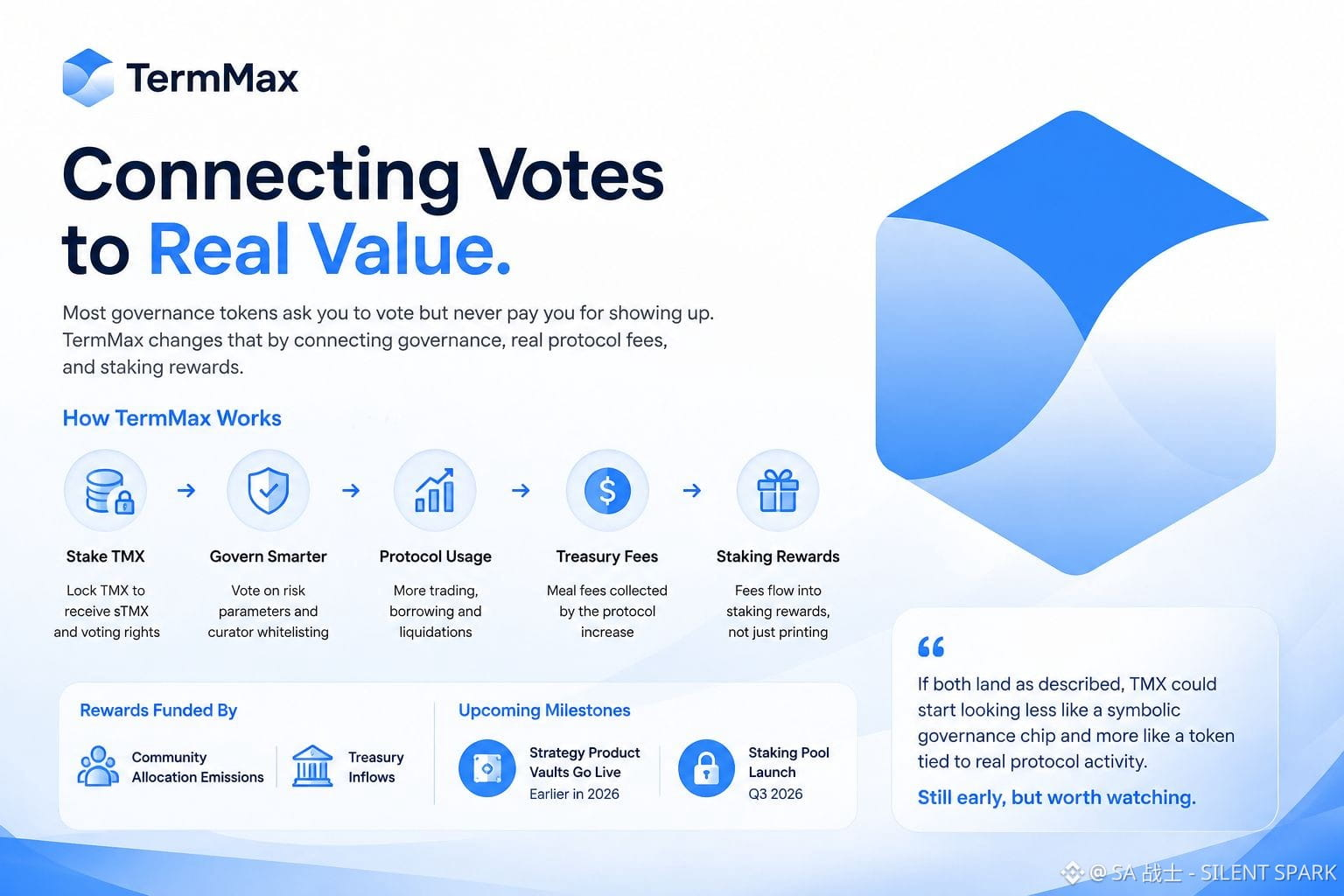
Die meisten Governance-Token verlangen von dir, abzustimmen, aber zahlen dir nichts dafür, dass du auftauchst. Du sperrst einen Token. Du erhältst Stimmrechte. Dann passiert nichts. Es gibt keinen echten Zusammenhang zwischen dieser Abstimmung und dem Geld, das das Protokoll tatsächlich verdient. Das ist eines der ältesten ungelösten Probleme im DeFi.
Das ist wichtig, weil Token-Inhaber am Ende raten müssen, ob sie frühe Unterstützer eines echten Geschäfts sind oder nur unbezahlte Wähler für Parameter, die außerhalb des Protokolls niemanden interessieren. Es ist schwer, dauerhafte Anreize rund um eine Abstimmung aufzubauen, die möglicherweise nie genutzt wird.
TermMax führt einen alternativen Ansatz ein. Es ist ein Kredit- und Fixed-Rate-Trading-Protokoll, das auf FT- und XT-Tokens basiert. TMX kann für sTMX gestaket werden; die Belohnungen werden aus zwei Quellen finanziert: Community-Allokations-Emissionen und Zuflüsse aus dem Treasury. Das Treasury sammelt echte Gebühren aus dem FT- und XT-Trading, also aus Kreditaufnahme und Liquidationen. Wenn die Nutzung des Protokolls steigt, steigen auch diese Gebühren – und sie fließen direkt in die Staking-Belohnungen, statt nur Token auszudrucken.
Staking bringt außerdem eine schärfere Governance-Kraft über Risiko-Parameter und Entscheidungen zur Curator-Whitelisting, die mit darüber bestimmen, wie das gesamte System läuft.
Was mir aufgefallen ist, ist der Zeitplan. Ein Start eines Staking-Pools ist für Q3 2026 geplant, direkt nachdem die Strategy Product Vaults noch in diesem Jahr früher an den Start gehen. Wenn beides wie beschrieben eintrifft, könnte TMX weniger wie ein symbolischer Governance-Chip wirken und mehr wie ein Token, der an echte Protokollaktivität gekoppelt ist. Noch ist es früh, aber es lohnt sich, das im Blick zu behalten.
#termmax @TermMax
Das ist wichtig, weil Token-Inhaber am Ende raten müssen, ob sie frühe Unterstützer eines echten Geschäfts sind oder nur unbezahlte Wähler für Parameter, die außerhalb des Protokolls niemanden interessieren. Es ist schwer, dauerhafte Anreize rund um eine Abstimmung aufzubauen, die möglicherweise nie genutzt wird.
TermMax führt einen alternativen Ansatz ein. Es ist ein Kredit- und Fixed-Rate-Trading-Protokoll, das auf FT- und XT-Tokens basiert. TMX kann für sTMX gestaket werden; die Belohnungen werden aus zwei Quellen finanziert: Community-Allokations-Emissionen und Zuflüsse aus dem Treasury. Das Treasury sammelt echte Gebühren aus dem FT- und XT-Trading, also aus Kreditaufnahme und Liquidationen. Wenn die Nutzung des Protokolls steigt, steigen auch diese Gebühren – und sie fließen direkt in die Staking-Belohnungen, statt nur Token auszudrucken.
Staking bringt außerdem eine schärfere Governance-Kraft über Risiko-Parameter und Entscheidungen zur Curator-Whitelisting, die mit darüber bestimmen, wie das gesamte System läuft.
Was mir aufgefallen ist, ist der Zeitplan. Ein Start eines Staking-Pools ist für Q3 2026 geplant, direkt nachdem die Strategy Product Vaults noch in diesem Jahr früher an den Start gehen. Wenn beides wie beschrieben eintrifft, könnte TMX weniger wie ein symbolischer Governance-Chip wirken und mehr wie ein Token, der an echte Protokollaktivität gekoppelt ist. Noch ist es früh, aber es lohnt sich, das im Blick zu behalten.
#termmax @TermMax
Verifiziert
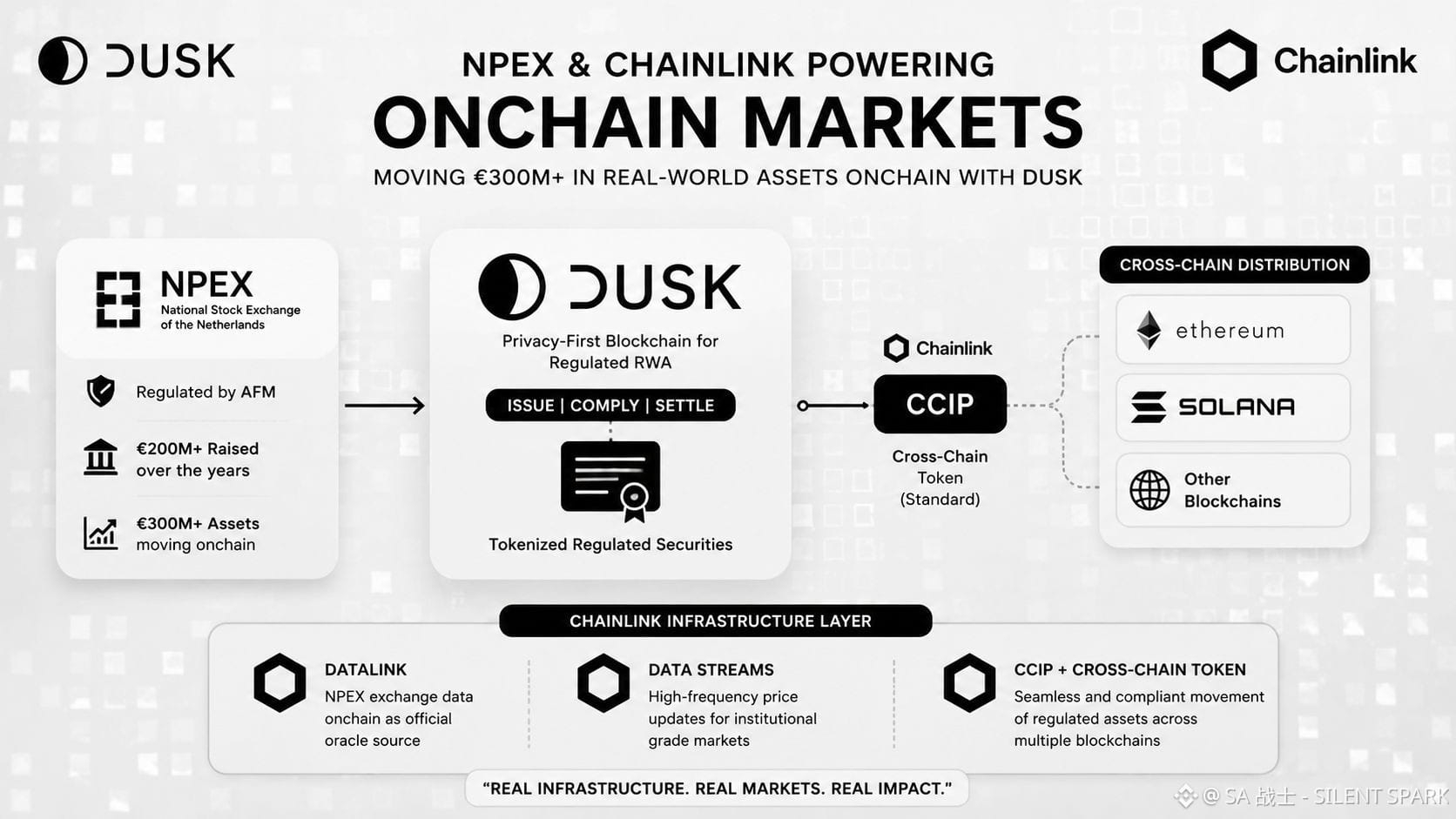
Ich sah immer wieder, dass NPEX und Chainlink zusammen erwähnt wurden, und ich wäre fast darüber hinweggegangen, bis ich mir tatsächlich angesehen habe, was NPEX eigentlich ist. Das ist keine Startup-Börse. Es ist eine niederländische Börse, die von der AFM reguliert wird und über die Jahre bereits mehr als 200 Millionen Euro für echte Unternehmen eingesammelt hat. Jetzt planen sie, über Dusk mehr als 300 Millionen Euro an Vermögenswerten onchain zu verlagern – diese Zahl hat mich innehalten lassen und die Details wirklich gelesen.
Hier ist, was mich überrascht hat. Eine regulierte Wertpapier-Transaktion onchain zu bringen ist nicht einfach nur das Prägen eines Tokens und dann „fertig“. Die Börse braucht weiterhin offizielle verifizierte Kursdaten, die in Smart Contracts einspeisen. Außerdem braucht sie eine Möglichkeit, damit sich dieser Token über verschiedene Blockchains bewegen kann, ohne die rechtliche Hülle darum zu beschädigen. Genau hier passt Chainlink. CCIP wird zur Interoperabilitätsschicht, sodass von NPEX auf Dusk ausgegebene Assets über Chains hinweg – wie Ethereum und Solana – mithilfe des Cross-Chain-Token-Standards bewegt werden können. DataLink führt die eigenen Börsendaten von NPEX onchain als offizieller Orakel-Quellquelle. Data Streams übernimmt die hochfrequenten Kurs-Updates, die Institutionen tatsächlich benötigen.
Grundsätzlich ist die Blockchain nur eine Ebene davon. Das Orakel- und das Settlement-Infrastruktur darunter sind es, die ein gelistetes Wertpapier onchain wirklich sicher zum Handel machen, ohne seinen regulatorischen Status zu verlieren.
Das ist das erste RWA-Setup, das ich gesehen habe und das weniger nach einem Experiment klingt und mehr nach echter Marktinfrastruktur.
#dusk $DUSK @Dusk
Hier ist, was mich überrascht hat. Eine regulierte Wertpapier-Transaktion onchain zu bringen ist nicht einfach nur das Prägen eines Tokens und dann „fertig“. Die Börse braucht weiterhin offizielle verifizierte Kursdaten, die in Smart Contracts einspeisen. Außerdem braucht sie eine Möglichkeit, damit sich dieser Token über verschiedene Blockchains bewegen kann, ohne die rechtliche Hülle darum zu beschädigen. Genau hier passt Chainlink. CCIP wird zur Interoperabilitätsschicht, sodass von NPEX auf Dusk ausgegebene Assets über Chains hinweg – wie Ethereum und Solana – mithilfe des Cross-Chain-Token-Standards bewegt werden können. DataLink führt die eigenen Börsendaten von NPEX onchain als offizieller Orakel-Quellquelle. Data Streams übernimmt die hochfrequenten Kurs-Updates, die Institutionen tatsächlich benötigen.
Grundsätzlich ist die Blockchain nur eine Ebene davon. Das Orakel- und das Settlement-Infrastruktur darunter sind es, die ein gelistetes Wertpapier onchain wirklich sicher zum Handel machen, ohne seinen regulatorischen Status zu verlieren.
Das ist das erste RWA-Setup, das ich gesehen habe und das weniger nach einem Experiment klingt und mehr nach echter Marktinfrastruktur.
#dusk $DUSK @Dusk
Die meisten schätzen einen Token, indem sie kurz auf die Gesamtmenge schauen und es dabei belassen. Das ist ein Fehler. Zwei Tokens können beide eine Milliarde Einheiten haben und sich trotzdem völlig unterschiedlich verhalten – je nachdem, wie viel direkt freigeschaltet wird und wie viel gesperrt bleibt.
Das ist nicht nur für Trader relevant. Langfristige Inhaber müssen wissen, ob sie einen Token mit stetiger Verwässerung kaufen oder ob der Token bereits weitgehend im Umlauf ist. Die meisten überraschenden Unlock-Dumps waren nie wirklich Überraschungen. Jemand hat einfach den Zeitplan übersehen.
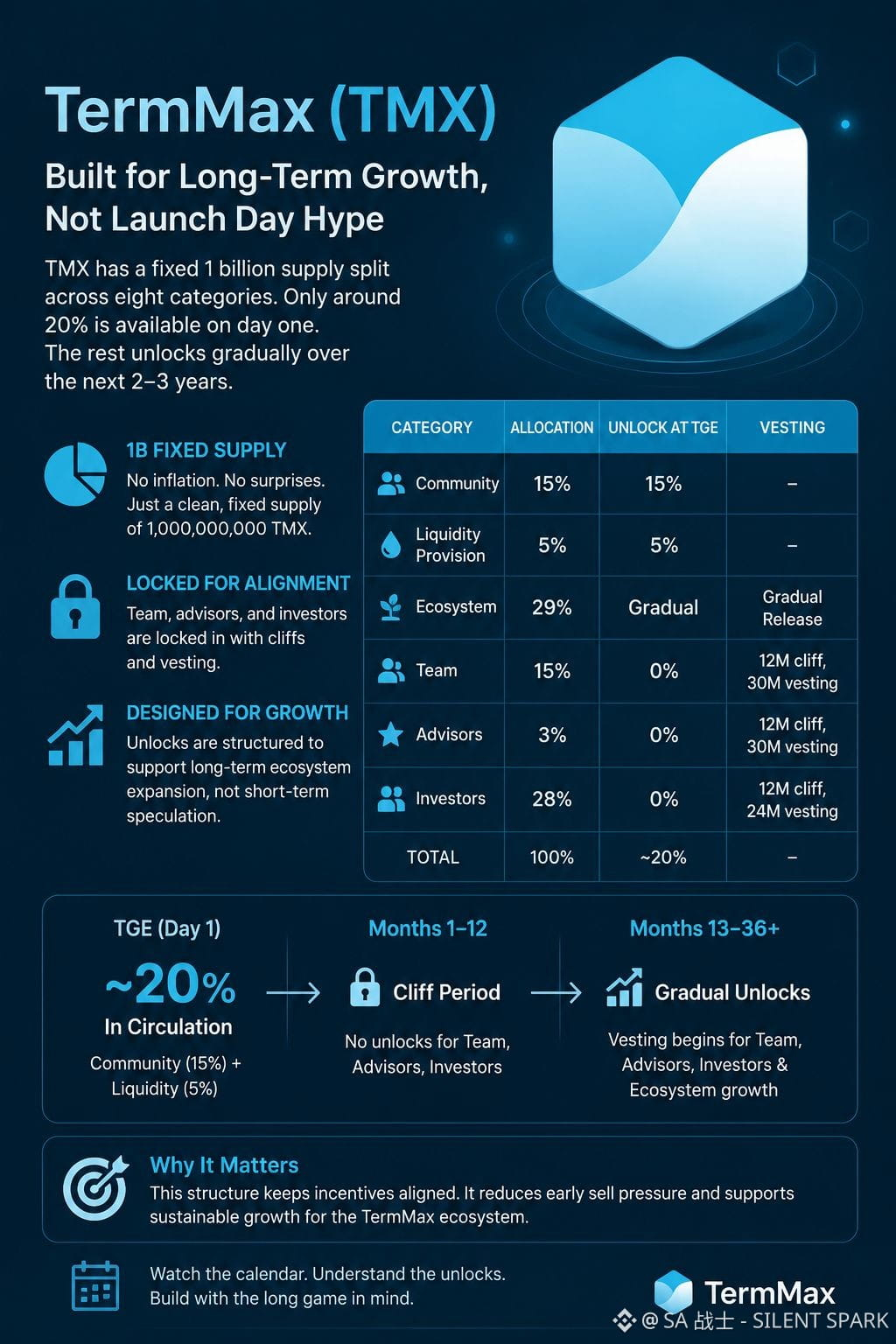
Ich habe mir die Zuteilungstabelle von TermMax angesehen und das ist ein gutes Beispiel. TMX hat eine feste 1 Milliarde Supply, aufgeteilt in acht Kategorien. Die Community hält 15 % und die Liquiditätsbereitstellung hält 5 %, und beide werden bei TGE freigeschaltet. Das Ökosystem erhält den größten Anteil von 29 %, der schrittweise freigegeben wird, um Wachstum zu finanzieren. Das Team hält 15 % und die Advisors halten 3 %, beides hinter einer 12-monatigen Sperrfrist, gefolgt von 30 Monaten Vesting. Investoren halten 28 % hinter einer 12-monatigen Sperrfrist und 24 Monate Vesting danach.
Wenn man alles addiert, liegen am ersten Tag nur rund 20 % von TMX im offenen Markt. Der Rest kommt langsam in den nächsten zwei bis drei Jahren dazu. Wer ein Modell für Verkaufsdruck erstellt, sollte den Kalender vielleicht genauso genau im Blick behalten wie das Diagramm.
Was mir aufgefallen ist: Dadurch bleiben Team- und Investor-Incentives an das Wachstum des Protokolls gekoppelt – statt an Launch-Day-Hype. Das verspricht nichts über den Preis. Aber es deutet darauf hin, dass der Token so gestaltet sein könnte, dass er eher abbildet, wie TermMax heranreift, statt ihm vorauszulaufen.
#termmax @TermMax
Das ist nicht nur für Trader relevant. Langfristige Inhaber müssen wissen, ob sie einen Token mit stetiger Verwässerung kaufen oder ob der Token bereits weitgehend im Umlauf ist. Die meisten überraschenden Unlock-Dumps waren nie wirklich Überraschungen. Jemand hat einfach den Zeitplan übersehen.
Ich habe mir die Zuteilungstabelle von TermMax angesehen und das ist ein gutes Beispiel. TMX hat eine feste 1 Milliarde Supply, aufgeteilt in acht Kategorien. Die Community hält 15 % und die Liquiditätsbereitstellung hält 5 %, und beide werden bei TGE freigeschaltet. Das Ökosystem erhält den größten Anteil von 29 %, der schrittweise freigegeben wird, um Wachstum zu finanzieren. Das Team hält 15 % und die Advisors halten 3 %, beides hinter einer 12-monatigen Sperrfrist, gefolgt von 30 Monaten Vesting. Investoren halten 28 % hinter einer 12-monatigen Sperrfrist und 24 Monate Vesting danach.
Wenn man alles addiert, liegen am ersten Tag nur rund 20 % von TMX im offenen Markt. Der Rest kommt langsam in den nächsten zwei bis drei Jahren dazu. Wer ein Modell für Verkaufsdruck erstellt, sollte den Kalender vielleicht genauso genau im Blick behalten wie das Diagramm.
Was mir aufgefallen ist: Dadurch bleiben Team- und Investor-Incentives an das Wachstum des Protokolls gekoppelt – statt an Launch-Day-Hype. Das verspricht nichts über den Preis. Aber es deutet darauf hin, dass der Token so gestaltet sein könnte, dass er eher abbildet, wie TermMax heranreift, statt ihm vorauszulaufen.
#termmax @TermMax
Ich sah überall den Satz „compliant DeFi“ und ehrlich gesagt habe ich ihm nicht vertraut. Meist bedeutet das einfach ein KYC-Formular und eine Geofence-Klausel, die an eine Kette angeheftet werden, die darunter jedoch keinerlei echte regulatorische Stellung hat. Also habe ich mir angeschaut, wie die NPEX-Partnerschaft von Dusk tatsächlich funktioniert – und das ist ein völlig anderes Setup, als ich erwartet hatte.
NPEX ist nicht einfach nur ein Krypto-freundlicher Partner. Es ist eine echte niederländische Börse, gegründet 2008 und durch die AFM reguliert. Sie verfügt über eine MTF-Lizenz, eine Broker-Lizenz und eine ECSP-Lizenz. Durch diese Partnerschaft leben diese Lizenzen jetzt in der Protokollschicht von Dusk, statt in einer einzelnen App zu sitzen.
Das hat mich überrascht: Das bedeutet, dass jede Anwendung, die auf Dusk aufbaut, standardmäßig denselben regulierten Rahmen übernimmt. Du musst nicht jede neue App dazu bringen, sich ihre eigene Lizenz selbst zu besorgen und zu hoffen, dass sie einer Prüfung standhält. Die Compliance ist direkt in der Basisschicht integriert.
So denke ich es mir inzwischen am einfachsten: Compliance auf Anwendungsebene ist ein Aufkleber auf der Schachtel. Compliance auf Protokollebene ist das Material, aus dem die Schachtel besteht. Das eine lässt sich abziehen. Das andere nicht.
Das gibt mir jetzt einen echten Filter dafür, welche Chains tatsächlich reguliertes Finanzwesen beherbergen können und welche nur sehr oft das Wort „compliant“ wiederholen.
#dusk $DUSK @Dusk
Was ist für dich wichtiger, wenn du Infrastruktur für regulierte Assets auswählst?
NPEX ist nicht einfach nur ein Krypto-freundlicher Partner. Es ist eine echte niederländische Börse, gegründet 2008 und durch die AFM reguliert. Sie verfügt über eine MTF-Lizenz, eine Broker-Lizenz und eine ECSP-Lizenz. Durch diese Partnerschaft leben diese Lizenzen jetzt in der Protokollschicht von Dusk, statt in einer einzelnen App zu sitzen.
Das hat mich überrascht: Das bedeutet, dass jede Anwendung, die auf Dusk aufbaut, standardmäßig denselben regulierten Rahmen übernimmt. Du musst nicht jede neue App dazu bringen, sich ihre eigene Lizenz selbst zu besorgen und zu hoffen, dass sie einer Prüfung standhält. Die Compliance ist direkt in der Basisschicht integriert.
So denke ich es mir inzwischen am einfachsten: Compliance auf Anwendungsebene ist ein Aufkleber auf der Schachtel. Compliance auf Protokollebene ist das Material, aus dem die Schachtel besteht. Das eine lässt sich abziehen. Das andere nicht.
Das gibt mir jetzt einen echten Filter dafür, welche Chains tatsächlich reguliertes Finanzwesen beherbergen können und welche nur sehr oft das Wort „compliant“ wiederholen.
#dusk $DUSK @Dusk
Was ist für dich wichtiger, wenn du Infrastruktur für regulierte Assets auswählst?
Protocol level licensing
100%
App layer KYC checks
0%
Doesn't matter if it works
0%
4 Stimmen • Abstimmung beendet
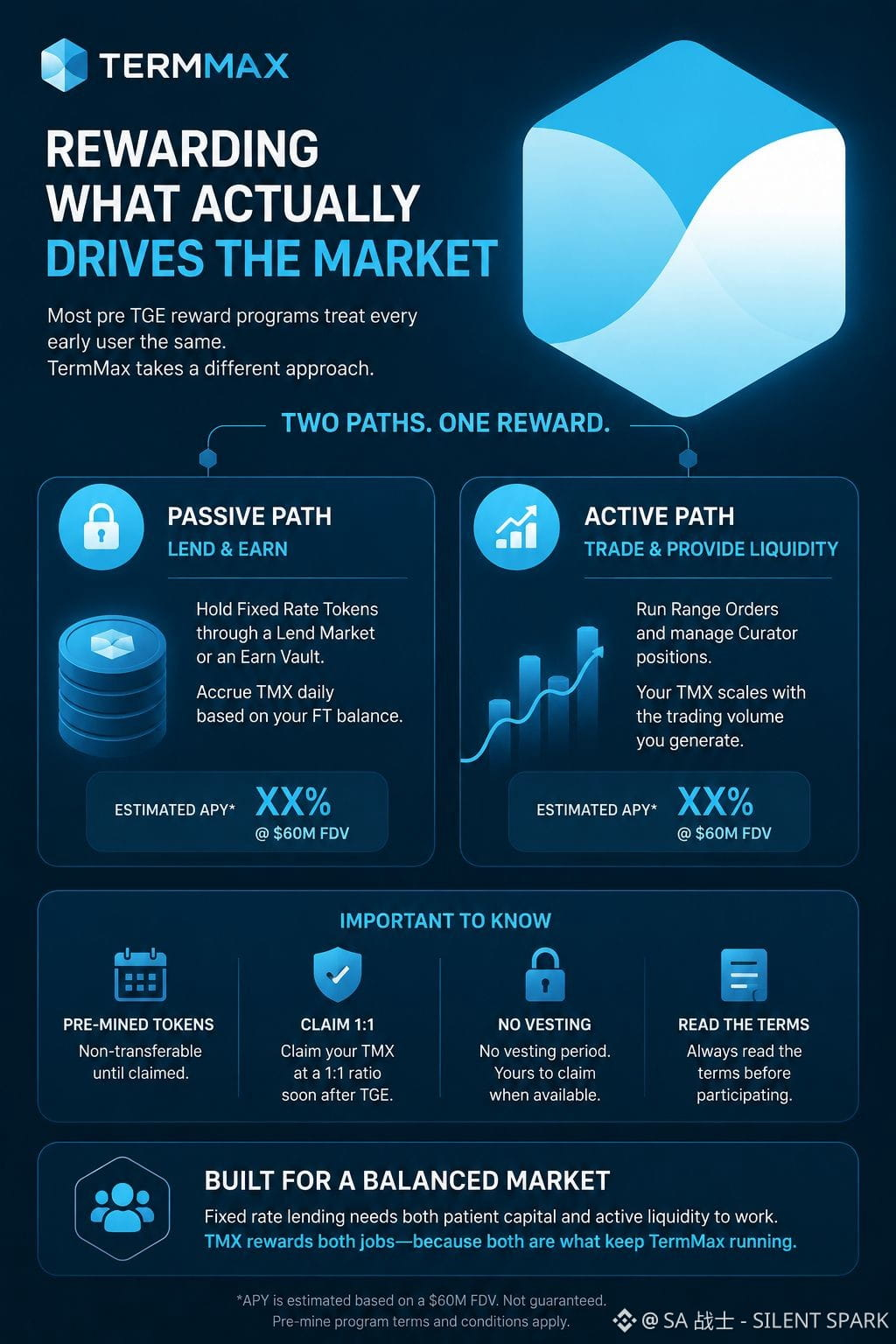
Die meisten Pre-TGE-Reward-Programme behandeln jeden frühen Nutzer gleich. Kapital einzahlen und abwarten. Punkte sammeln. Egal, ob du ein passiver Inhaber oder ein aktiver Liquiditätsanbieter bist – du wirst in einen einzigen, nicht differenzierten Farming-Topf gesteckt.
Das ist eine echte Unstimmigkeit. Wer Gelder für Monate als Kredit bereitstellt, geht ein anderes Risiko ein als jemand, der aktiv Kurse stellt und Volumen absorbiert. Beides identisch zu behandeln ignoriert, welchen Beitrag jede Seite tatsächlich leistet.
TermMax ist ein Fixed-Rate-Lending-Protocol, das sich seinem TGE nähert. Sein Pre-Mine-Programm trennt diese beiden Verhaltensweisen, statt sie zusammenzuwerfen. Halte Fixed Rate Tokens über ein Lend Market oder eine Earn Vault und du erhältst TMX täglich basierend auf deinem FT-Bestand. Das ist der passive Weg. Oder führe Range Orders aus und verwalte Curator-Positionen – dann skaliert dein TMX mit dem Handelsvolumen, das du erzeugst. Das ist der aktive Weg.
Was mir aufgefallen ist: Die APY auf beiden Wegen wird anhand eines FDV von 60 Mio. US-Dollar geschätzt, sodass Einleger eine grobe Vorstellung davon bekommen, was die tägliche Ausschüttung bedeuten könnte, sobald TMX gehandelt wird. Allerdings wird hier nichts versprochen. Pre-Mined Tokens bleiben nicht übertragbar, bis sie nach dem TGE zeitnah in einem 1:1-Verhältnis beansprucht werden – ohne Vesting. Lies also zuerst die Bedingungen.
So wie ich es sehe, sagt diese Aufteilung etwas darüber aus, wie TermMax seinen eigenen Markt wahrnimmt. Fixed-Rate-Lending braucht sowohl geduldiges Kapital als auch aktive Liquidität, um zu funktionieren. TMX, das an beide Aufgaben gekoppelt ist, deutet darauf hin, dass der Token abbilden soll, was das Protokoll tatsächlich am Laufen hält.
#termmax @TermMax
Das ist eine echte Unstimmigkeit. Wer Gelder für Monate als Kredit bereitstellt, geht ein anderes Risiko ein als jemand, der aktiv Kurse stellt und Volumen absorbiert. Beides identisch zu behandeln ignoriert, welchen Beitrag jede Seite tatsächlich leistet.
TermMax ist ein Fixed-Rate-Lending-Protocol, das sich seinem TGE nähert. Sein Pre-Mine-Programm trennt diese beiden Verhaltensweisen, statt sie zusammenzuwerfen. Halte Fixed Rate Tokens über ein Lend Market oder eine Earn Vault und du erhältst TMX täglich basierend auf deinem FT-Bestand. Das ist der passive Weg. Oder führe Range Orders aus und verwalte Curator-Positionen – dann skaliert dein TMX mit dem Handelsvolumen, das du erzeugst. Das ist der aktive Weg.
Was mir aufgefallen ist: Die APY auf beiden Wegen wird anhand eines FDV von 60 Mio. US-Dollar geschätzt, sodass Einleger eine grobe Vorstellung davon bekommen, was die tägliche Ausschüttung bedeuten könnte, sobald TMX gehandelt wird. Allerdings wird hier nichts versprochen. Pre-Mined Tokens bleiben nicht übertragbar, bis sie nach dem TGE zeitnah in einem 1:1-Verhältnis beansprucht werden – ohne Vesting. Lies also zuerst die Bedingungen.
So wie ich es sehe, sagt diese Aufteilung etwas darüber aus, wie TermMax seinen eigenen Markt wahrnimmt. Fixed-Rate-Lending braucht sowohl geduldiges Kapital als auch aktive Liquidität, um zu funktionieren. TMX, das an beide Aufgaben gekoppelt ist, deutet darauf hin, dass der Token abbilden soll, was das Protokoll tatsächlich am Laufen hält.
#termmax @TermMax
Verifiziert
Dusk macht heute um 15:00 CEST ein Binance Square AMA und es lohnt sich, deinen Kalender freizuhalten. Du bekommst sowohl Emanuele Francioni (CEO) als auch Hein Dauven (CTO) in derselben Session – das ist selten, normalerweise ist es entweder der eine oder der andere. Wenn du den DuskDS-, DuskEVM- und DuskVM-Aufbau verfolgst und noch Fragen hast, ist das der richtige Ort, um sie mitzubringen.
Lass mich für den Anfang erklären, was ich gelernt habe: Ich habe immer wieder „privacy“ von verschiedenen Chains gehört und ehrlich gesagt war ich skeptisch, weil es in der Regel einfach bedeutet, dass nur ein einzelner privater Pool an eine ansonsten öffentliche Kette „angeflanscht“ wird. Also habe ich genauer nachgeforscht, wie Dusk das in seinem Stack tatsächlich strukturiert – und es war nicht das, was ich erwartet hatte.
Grundsätzlich teilt Dusk die Aufgabe in drei Ebenen auf, statt alles in eine zu quetschen. Unten sitzt DuskDS und kümmert sich um Settlement-Consensus und Data Availability. Es betreibt ein Proof-of-Stake-System namens Succinct Attestation, das deterministische Finalität liefert – das ist wichtig, wenn man regulierte Assets abwickelt und sich keine probabilistische Bestätigung leisten kann.
Das hat mich überrascht: Darauf sitzt DuskEVM. Es ist als OP-Stack-Rollup gebaut, sodass Solidity-Entwickler ganz normales EVM-Tooling nutzen können. Die Privacy kommt dort über etwas namens Hedger, das homomorphe Verschlüsselung mit Zero-Knowledge-Proofs kombiniert – statt sich nur auf ZK allein zu verlassen.
Dann gibt es noch DuskVM: die native Rust- und WASM-Umgebung, in der Contracts von Anfang an privacy-aware sind, statt dass man die Privacy erst später „draufpackt“.
Da hat es bei mir Klick gemacht: Die gleichen Settlement-Garantien gelten im Hintergrund die ganze Zeit, aber jede Ebene bekommt Privacy auf eine Art, die wirklich zu dem passt, wie Entwickler dort arbeiten – statt einen einzigen Ansatz überall aufzuzwingen.
#dusk $DUSK @Dusk
Auf welcher Ebene würdest du tatsächlich aufbauen?
Lass mich für den Anfang erklären, was ich gelernt habe: Ich habe immer wieder „privacy“ von verschiedenen Chains gehört und ehrlich gesagt war ich skeptisch, weil es in der Regel einfach bedeutet, dass nur ein einzelner privater Pool an eine ansonsten öffentliche Kette „angeflanscht“ wird. Also habe ich genauer nachgeforscht, wie Dusk das in seinem Stack tatsächlich strukturiert – und es war nicht das, was ich erwartet hatte.
Grundsätzlich teilt Dusk die Aufgabe in drei Ebenen auf, statt alles in eine zu quetschen. Unten sitzt DuskDS und kümmert sich um Settlement-Consensus und Data Availability. Es betreibt ein Proof-of-Stake-System namens Succinct Attestation, das deterministische Finalität liefert – das ist wichtig, wenn man regulierte Assets abwickelt und sich keine probabilistische Bestätigung leisten kann.
Das hat mich überrascht: Darauf sitzt DuskEVM. Es ist als OP-Stack-Rollup gebaut, sodass Solidity-Entwickler ganz normales EVM-Tooling nutzen können. Die Privacy kommt dort über etwas namens Hedger, das homomorphe Verschlüsselung mit Zero-Knowledge-Proofs kombiniert – statt sich nur auf ZK allein zu verlassen.
Dann gibt es noch DuskVM: die native Rust- und WASM-Umgebung, in der Contracts von Anfang an privacy-aware sind, statt dass man die Privacy erst später „draufpackt“.
Da hat es bei mir Klick gemacht: Die gleichen Settlement-Garantien gelten im Hintergrund die ganze Zeit, aber jede Ebene bekommt Privacy auf eine Art, die wirklich zu dem passt, wie Entwickler dort arbeiten – statt einen einzigen Ansatz überall aufzuzwingen.
#dusk $DUSK @Dusk
Auf welcher Ebene würdest du tatsächlich aufbauen?
DuskEVM for familiar tooling
67%
DuskVM for native privacy
0%
Still deciding
33%
3 Stimmen • Abstimmung beendet
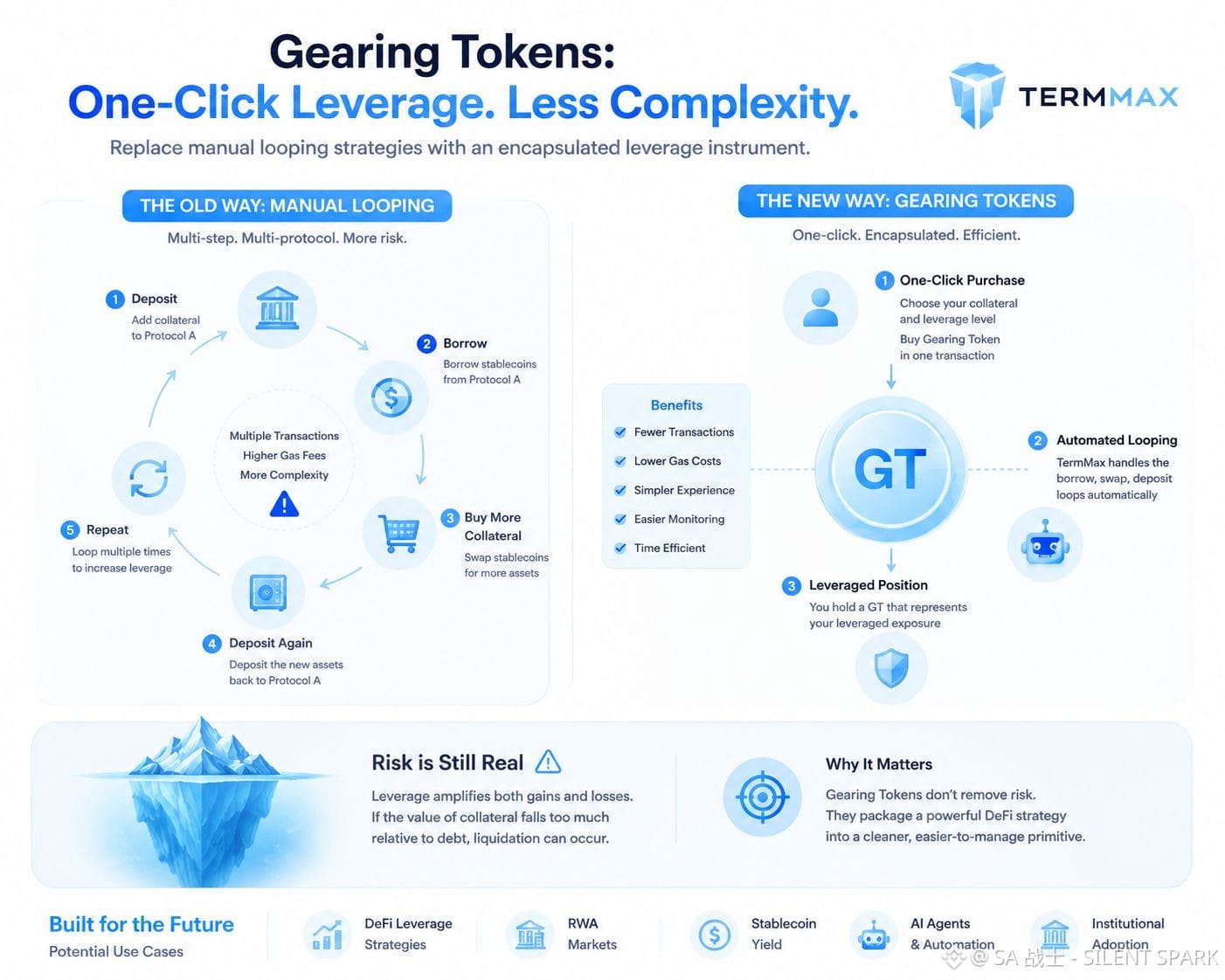
DeFi-Leverage hat oft bedeutet, dieselbe Schleife immer wieder zu wiederholen.
Sicherheit hinterlegen. Gegen sie leihen. Mehr Sicherheit kaufen. Erneut hinterlegen. Wiederholen.
Die Strategie selbst ist nicht besonders kompliziert. Das Problem ist die Umsetzung. Mehr Transaktionen bedeuten mehr Gas. Mehr bewegliche Teile bedeuten mehr Chancen für Slippage oder Fehler. Und wenn mehrere Protokolle beteiligt sind, kann die Position schwerer zu überwachen werden.
Darauf hat mich TermMax mit seinen Gearing Tokens aufmerksam gemacht.
Ein GT bündelt eine gehebelte Position in einem einzigen Token. Anstatt den Borrow-and-Buy-Zyklus manuell zu wiederholen, kann der Nutzer ein GT kaufen und das Protokoll übernimmt die Looping-Mechanik innerhalb der Transaktion.
Nehmen wir an, ich starte mit ETH und möchte eine 3-fache Exposure. Ein traditioneller Ansatz könnte erfordern, Stablecoins auszuleihen, dann mehr ETH zu kaufen und diese ETH als Sicherheit zu verwenden. Der Zyklus kann wiederholt werden, bis das Ziel-Leverage erreicht ist.
Mit einem GT ist dieselbe grundlegende Idee direkt in der Position selbst gebündelt. Der Token erfasst das mit dieser gehebelten Position verbundene Sicherheiten- und Schuldenprofil.
Aber die Vereinfachung nimmt das zentrale Risiko nicht weg.
Wenn die Sicherheit im Verhältnis zur Schuld stark genug fällt, kann die Position dennoch einer Liquidation unterliegen. So kann die Benutzeroberfläche zwar einfacher werden, während das zugrunde liegende Leverage weiterhin sehr real bleibt.
So wie ich es sehe, geht es bei GTs weniger darum, Leverage neu zu erfinden, sondern darum, eine alte DeFi-Strategie in eine sauberere Grundbaustein-Form zu verpacken.
Das ist wichtig, weil der native Token von TermMax letztlich mit einem Ökosystem verbunden ist, in dem das Erstellen und Verwalten von Positionen die Kernaktivität ist.
#termmax @TermMax
Sicherheit hinterlegen. Gegen sie leihen. Mehr Sicherheit kaufen. Erneut hinterlegen. Wiederholen.
Die Strategie selbst ist nicht besonders kompliziert. Das Problem ist die Umsetzung. Mehr Transaktionen bedeuten mehr Gas. Mehr bewegliche Teile bedeuten mehr Chancen für Slippage oder Fehler. Und wenn mehrere Protokolle beteiligt sind, kann die Position schwerer zu überwachen werden.
Darauf hat mich TermMax mit seinen Gearing Tokens aufmerksam gemacht.
Ein GT bündelt eine gehebelte Position in einem einzigen Token. Anstatt den Borrow-and-Buy-Zyklus manuell zu wiederholen, kann der Nutzer ein GT kaufen und das Protokoll übernimmt die Looping-Mechanik innerhalb der Transaktion.
Nehmen wir an, ich starte mit ETH und möchte eine 3-fache Exposure. Ein traditioneller Ansatz könnte erfordern, Stablecoins auszuleihen, dann mehr ETH zu kaufen und diese ETH als Sicherheit zu verwenden. Der Zyklus kann wiederholt werden, bis das Ziel-Leverage erreicht ist.
Mit einem GT ist dieselbe grundlegende Idee direkt in der Position selbst gebündelt. Der Token erfasst das mit dieser gehebelten Position verbundene Sicherheiten- und Schuldenprofil.
Aber die Vereinfachung nimmt das zentrale Risiko nicht weg.
Wenn die Sicherheit im Verhältnis zur Schuld stark genug fällt, kann die Position dennoch einer Liquidation unterliegen. So kann die Benutzeroberfläche zwar einfacher werden, während das zugrunde liegende Leverage weiterhin sehr real bleibt.
So wie ich es sehe, geht es bei GTs weniger darum, Leverage neu zu erfinden, sondern darum, eine alte DeFi-Strategie in eine sauberere Grundbaustein-Form zu verpacken.
Das ist wichtig, weil der native Token von TermMax letztlich mit einem Ökosystem verbunden ist, in dem das Erstellen und Verwalten von Positionen die Kernaktivität ist.
#termmax @TermMax
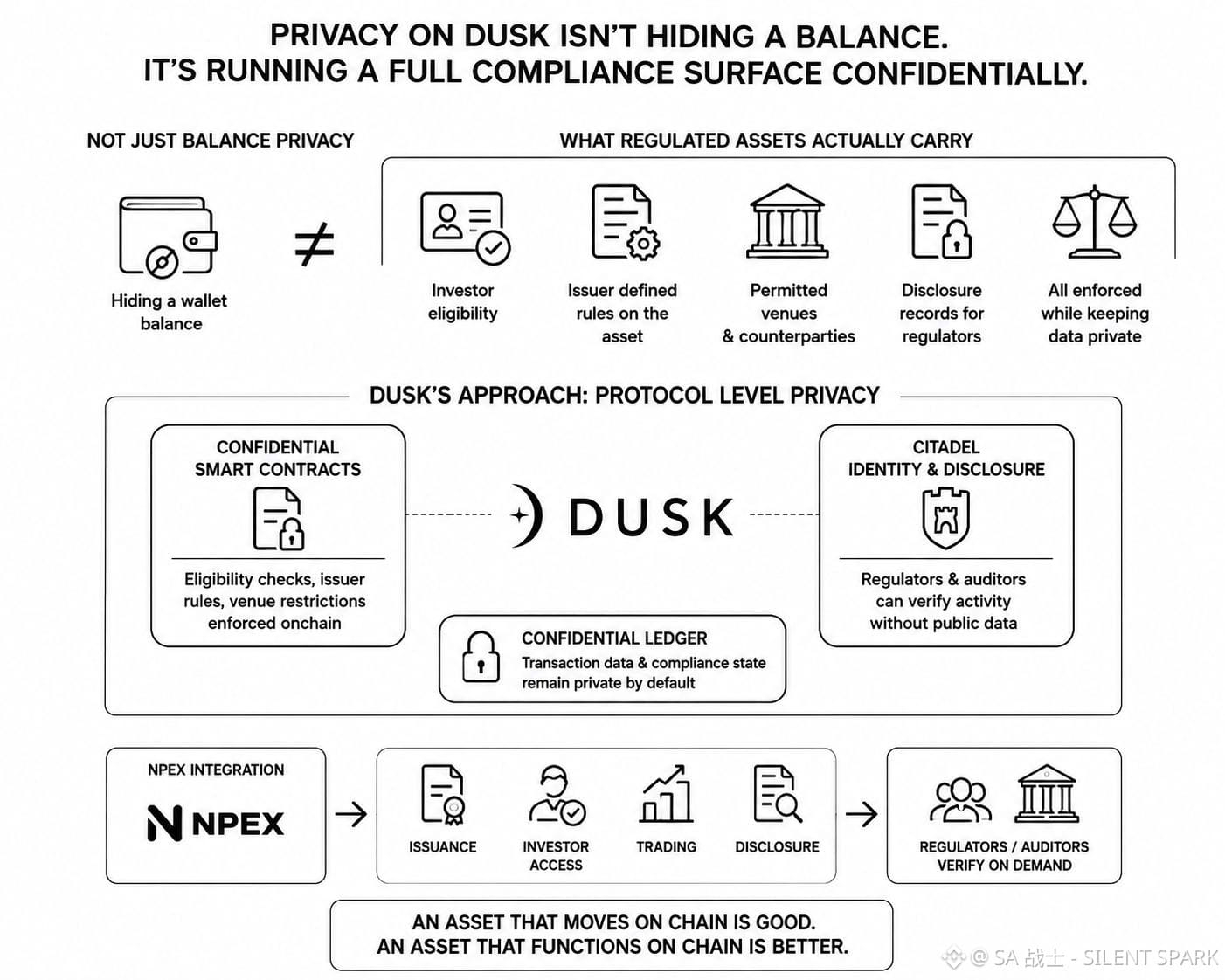
Ich dachte früher, On-Chain-Privatsphäre für ein tokenisiertes Asset bedeute lediglich, einen Wallet-Saldo zu verbergen. Dann bin ich auf Dusk in ein tiefes Thema hineingeraten und habe gemerkt, wie weit diese Annahme daneben lag.
Dusk schafft Infrastruktur für regulierte Assets wie tokenisierte Anleihen, Fonds und Aktien. Wenn man sich anschaut, was diese tatsächlich mitbringen, wird klar, warum allein die Privatsphäre des Kontostands nie ausreichen konnte. Anlegerberechtigung. Vom Emittenten definierte Regeln für das Asset selbst. Welche Handelsplattformen überhaupt berechtigt sind, es zu handeln. Offenlegungsnachweise, wenn ein Regulator etwas prüfen muss. All das gehört nicht in die öffentliche Ansicht, muss aber dennoch jedes einzelne Mal, wenn sich das Asset bewegt, durchgesetzt werden.
Was für mich den entscheidenden Klick gebracht hat: Dusk behandelt das als ein Problem auf Protokollebene – nicht als Wallet-Feature. Berechtigungs- und Emittentenregeln werden über vertrauliche Smart Contracts umgesetzt. Identität und Offenlegung laufen über Citadel, sodass ein Regulator oder Auditor die Aktivität verifizieren kann, ohne dass diese Daten für alle anderen auf der On-Chain-Ledger öffentlich ausgestrahlt werden. Ihre Zusammenarbeit mit NPEX koordiniert Emission, Investorenzugang, Handel und Offenlegung onchain – statt in getrennten Systemen zu leben, die eine manuelle Abstimmung erfordern.
Das war der Teil, den ich nicht erwartet hatte. Privatsphäre auf Dusk geht nicht darum, einen Saldo zu verstecken. Es geht darum, eine vollständige Compliance-Oberfläche vertraulich auszuführen und gleichzeitig in der Lage zu sein, sie im richtigen Moment nachzuweisen – sobald jemand mit dem tatsächlichen Recht zu fragen kommt.
Das ist der Unterschied zwischen einem Asset, das sich einfach nur on chain bewegt, und einem Asset, das tatsächlich on chain funktionieren kann.
#dusk $DUSK @Dusk
Dusk schafft Infrastruktur für regulierte Assets wie tokenisierte Anleihen, Fonds und Aktien. Wenn man sich anschaut, was diese tatsächlich mitbringen, wird klar, warum allein die Privatsphäre des Kontostands nie ausreichen konnte. Anlegerberechtigung. Vom Emittenten definierte Regeln für das Asset selbst. Welche Handelsplattformen überhaupt berechtigt sind, es zu handeln. Offenlegungsnachweise, wenn ein Regulator etwas prüfen muss. All das gehört nicht in die öffentliche Ansicht, muss aber dennoch jedes einzelne Mal, wenn sich das Asset bewegt, durchgesetzt werden.
Was für mich den entscheidenden Klick gebracht hat: Dusk behandelt das als ein Problem auf Protokollebene – nicht als Wallet-Feature. Berechtigungs- und Emittentenregeln werden über vertrauliche Smart Contracts umgesetzt. Identität und Offenlegung laufen über Citadel, sodass ein Regulator oder Auditor die Aktivität verifizieren kann, ohne dass diese Daten für alle anderen auf der On-Chain-Ledger öffentlich ausgestrahlt werden. Ihre Zusammenarbeit mit NPEX koordiniert Emission, Investorenzugang, Handel und Offenlegung onchain – statt in getrennten Systemen zu leben, die eine manuelle Abstimmung erfordern.
Das war der Teil, den ich nicht erwartet hatte. Privatsphäre auf Dusk geht nicht darum, einen Saldo zu verstecken. Es geht darum, eine vollständige Compliance-Oberfläche vertraulich auszuführen und gleichzeitig in der Lage zu sein, sie im richtigen Moment nachzuweisen – sobald jemand mit dem tatsächlichen Recht zu fragen kommt.
Das ist der Unterschied zwischen einem Asset, das sich einfach nur on chain bewegt, und einem Asset, das tatsächlich on chain funktionieren kann.
#dusk $DUSK @Dusk
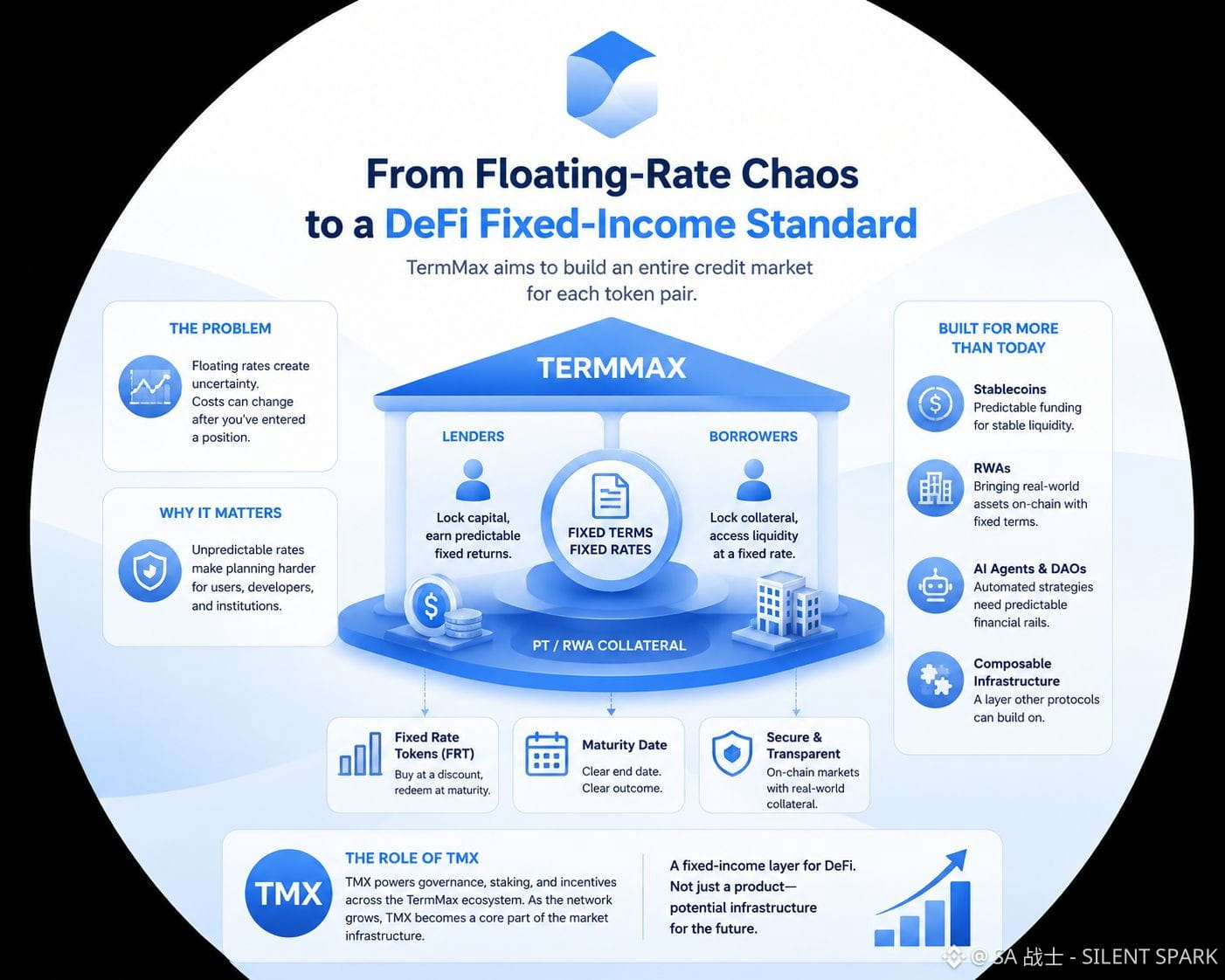
DeFi hat das Leihen vereinfacht. Vorhersehbares Leihen ist jedoch eine andere Geschichte.
Variable Zinssätze können die Wirtschaftlichkeit einer Position verändern, nachdem man sie eingegangen ist. Das erzeugt Reibung für Trader und macht die Kapitalplanung für größere Nutzer schwieriger.
Was mir an TermMax auffiel, ist, dass es nicht nur versucht, einen weiteren Kreditmarkt anzubieten. Sein erklärtes Ziel ist es, für jedes Token-Paar einen vollständigen Kreditmarkt aufzubauen.
Die Grundidee ist aus dem Bereich des Fixed Income bekannt. Ein Markt hat einen Schuldtitel. Sicherheiten. Einen festen Zinssatz. Und ein Fälligkeitsdatum. Kreditgeber können Fixed Rate Tokens mit Abschlag kaufen und bei Fälligkeit einlösen. Kreditnehmer können Sicherheiten verpfänden und Liquidität erhalten – die Kosten werden im Voraus festgelegt.
Diese Struktur wird noch spannender, wenn die Sicherheiten auch renditeerzeugende Assets wie PTs und potenziell RWAs umfassen können. So entsteht ein Rahmen, in dem unterschiedliche Formen von Sicherheiten ihre eigenen Term-Märkte unterstützen können, statt dass alles auf einen einzigen variablen Zinspool angewiesen ist.
Aus meiner Sicht ist die größere Frage die Infrastruktur. Wenn DeFi beginnt, für Stablecoins, RWAs oder institutionelle Strategien vorhersehbare Zinssätze zu benötigen, könnte eine wiederverwendbare Fixed-Income-Schicht auch dann nützlich werden, wenn sie nicht allein auf TermMax beschränkt ist.
TMX ist strategisch an dieses Ökosystem gekoppelt – über Governance-Staking und Anreize. Wenn sich die Marktinfrastruktur des Netzwerks erweitert, geben diese Funktionen dem Token eine Rolle über bloße Spekulation hinaus.
Die These ist interessant. Umsetzung, Adoptionsgrad und Risikomanagement werden bestimmen, wie weit sie tatsächlich reicht.
#termmax @TermMax
Variable Zinssätze können die Wirtschaftlichkeit einer Position verändern, nachdem man sie eingegangen ist. Das erzeugt Reibung für Trader und macht die Kapitalplanung für größere Nutzer schwieriger.
Was mir an TermMax auffiel, ist, dass es nicht nur versucht, einen weiteren Kreditmarkt anzubieten. Sein erklärtes Ziel ist es, für jedes Token-Paar einen vollständigen Kreditmarkt aufzubauen.
Die Grundidee ist aus dem Bereich des Fixed Income bekannt. Ein Markt hat einen Schuldtitel. Sicherheiten. Einen festen Zinssatz. Und ein Fälligkeitsdatum. Kreditgeber können Fixed Rate Tokens mit Abschlag kaufen und bei Fälligkeit einlösen. Kreditnehmer können Sicherheiten verpfänden und Liquidität erhalten – die Kosten werden im Voraus festgelegt.
Diese Struktur wird noch spannender, wenn die Sicherheiten auch renditeerzeugende Assets wie PTs und potenziell RWAs umfassen können. So entsteht ein Rahmen, in dem unterschiedliche Formen von Sicherheiten ihre eigenen Term-Märkte unterstützen können, statt dass alles auf einen einzigen variablen Zinspool angewiesen ist.
Aus meiner Sicht ist die größere Frage die Infrastruktur. Wenn DeFi beginnt, für Stablecoins, RWAs oder institutionelle Strategien vorhersehbare Zinssätze zu benötigen, könnte eine wiederverwendbare Fixed-Income-Schicht auch dann nützlich werden, wenn sie nicht allein auf TermMax beschränkt ist.
TMX ist strategisch an dieses Ökosystem gekoppelt – über Governance-Staking und Anreize. Wenn sich die Marktinfrastruktur des Netzwerks erweitert, geben diese Funktionen dem Token eine Rolle über bloße Spekulation hinaus.
Die These ist interessant. Umsetzung, Adoptionsgrad und Risikomanagement werden bestimmen, wie weit sie tatsächlich reicht.
#termmax @TermMax
#dusk $DUSK @Dusk
Ich bin beim Lesen über RWAs auf Binance Square immer wieder auf dieselbe Annahme gestoßen. Onchain bedeutet standardmäßig öffentlich. Jeder Wallet-Stand ist sichtbar. Jede Transaktion ist nachvollziehbar. Vollständige Transparenz wird als Beweis für Vertrauen behandelt. Das ergab Sinn für einen Token-Swap. Null Sinn ergab es, sobald ich an echte Wertpapiere dachte.
Eine Bank kann nicht jede Position und jeden Geschäftspartner in ein öffentliches Ledger posten. Nicht weil sie etwas versteckt, sondern weil die Offenlegung dieser Daten gegenüber Wettbewerbern und dem offenen Internet selbst ein Compliance-Fehlverhalten ist. Also suchte ich nach Projekten, die angeblich dieses Problem lösen, und landete bei Dusk.
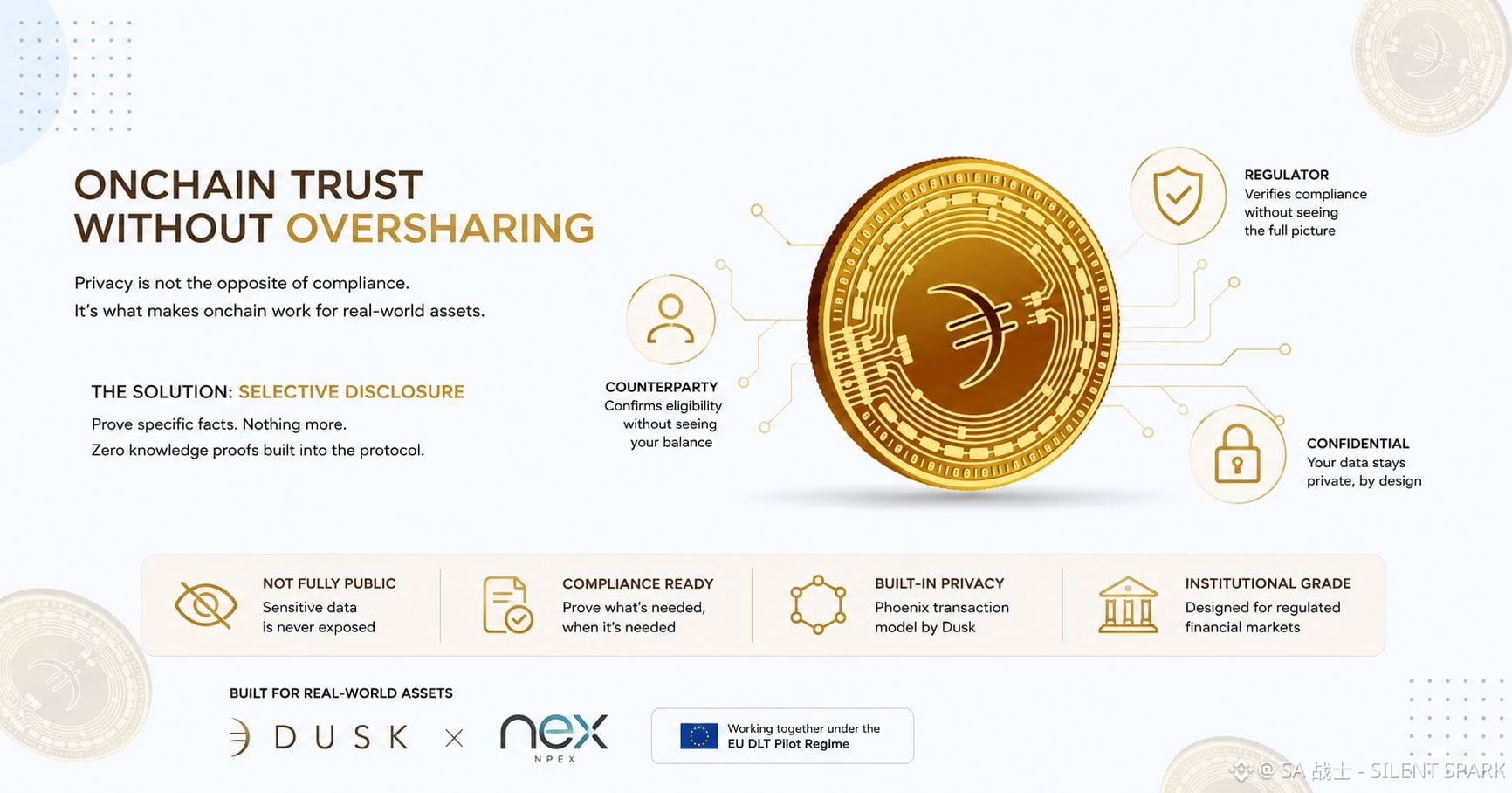
Der Gedanke, der für mich klickte, ist selektive Offenlegung. Anstatt sich zwischen vollständig öffentlicher oder vollständig geschlossener Kommunikation zu entscheiden, belegen Sie konkrete Fakten bei Bedarf mit Zero-Knowledge-Proofs. Ein Regulierer kann verifizieren, dass Sie compliant sind, ohne Ihr gesamtes Orderbuch zu sehen. Ein Geschäftspartner kann Ihre Berechtigung bestätigen, ohne Ihren Kontostand einzusehen. Dusk baut das in das Protokoll selbst ein – über sein Phoenix-Transaktionsmodell – statt Privatsphäre einfach auf eine transparente Kette aufzusetzen.
Das war der Teil, den ich vorher nicht bedacht hatte. Privatsphäre ist hier nicht das Gegenteil von Compliance. Sie ist es, was ermöglicht, dass Abrechnungsberichte und Eignungsprüfungen onchain stattfinden können, ohne die Vertraulichkeit zu brechen, die die regulierten Märkte bereits verlangen. Dusk arbeitet mit NPEX im Rahmen des EU DLT Pilot Regime daran, dies für reale Wertpapier-Workflows zu testen.
Noch ist es früh, aber es hat meine Sicht darauf verändert, was Onchain für Institutionen tatsächlich bedeuten muss.
Ich bin beim Lesen über RWAs auf Binance Square immer wieder auf dieselbe Annahme gestoßen. Onchain bedeutet standardmäßig öffentlich. Jeder Wallet-Stand ist sichtbar. Jede Transaktion ist nachvollziehbar. Vollständige Transparenz wird als Beweis für Vertrauen behandelt. Das ergab Sinn für einen Token-Swap. Null Sinn ergab es, sobald ich an echte Wertpapiere dachte.
Eine Bank kann nicht jede Position und jeden Geschäftspartner in ein öffentliches Ledger posten. Nicht weil sie etwas versteckt, sondern weil die Offenlegung dieser Daten gegenüber Wettbewerbern und dem offenen Internet selbst ein Compliance-Fehlverhalten ist. Also suchte ich nach Projekten, die angeblich dieses Problem lösen, und landete bei Dusk.
Der Gedanke, der für mich klickte, ist selektive Offenlegung. Anstatt sich zwischen vollständig öffentlicher oder vollständig geschlossener Kommunikation zu entscheiden, belegen Sie konkrete Fakten bei Bedarf mit Zero-Knowledge-Proofs. Ein Regulierer kann verifizieren, dass Sie compliant sind, ohne Ihr gesamtes Orderbuch zu sehen. Ein Geschäftspartner kann Ihre Berechtigung bestätigen, ohne Ihren Kontostand einzusehen. Dusk baut das in das Protokoll selbst ein – über sein Phoenix-Transaktionsmodell – statt Privatsphäre einfach auf eine transparente Kette aufzusetzen.
Das war der Teil, den ich vorher nicht bedacht hatte. Privatsphäre ist hier nicht das Gegenteil von Compliance. Sie ist es, was ermöglicht, dass Abrechnungsberichte und Eignungsprüfungen onchain stattfinden können, ohne die Vertraulichkeit zu brechen, die die regulierten Märkte bereits verlangen. Dusk arbeitet mit NPEX im Rahmen des EU DLT Pilot Regime daran, dies für reale Wertpapier-Workflows zu testen.
Noch ist es früh, aber es hat meine Sicht darauf verändert, was Onchain für Institutionen tatsächlich bedeuten muss.
Lass mich etwas erklären, was viele über Dusk verwechseln.
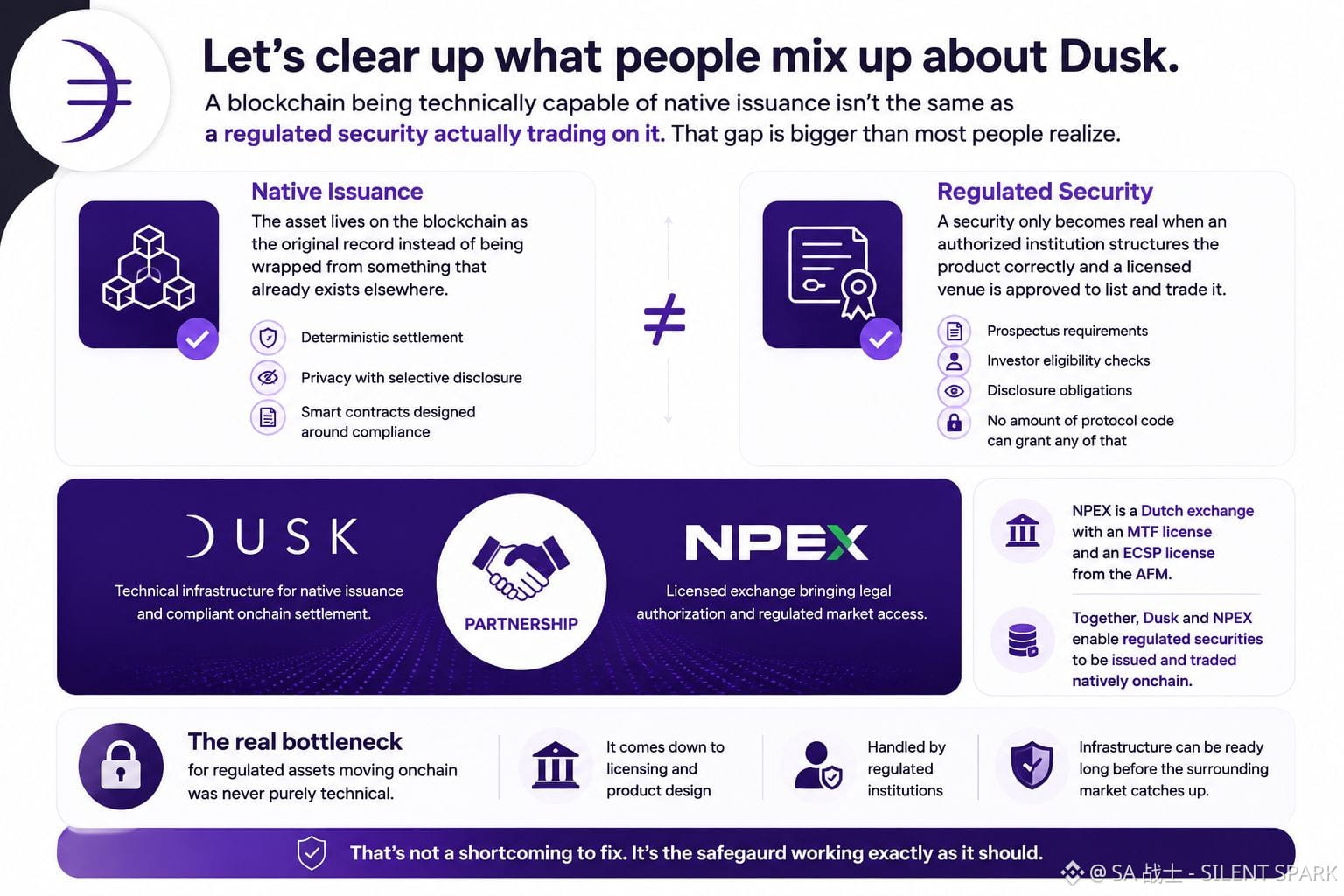
Dass eine Blockchain technisch in der Lage ist, eine native Emission durchzuführen, ist nicht dasselbe wie ein reguliertes Wertpapier, das tatsächlich darauf gehandelt wird. Diese Lücke ist größer, als die meisten Menschen realisieren.
Native Emission bedeutet, dass das Asset auf der Blockchain als ursprünglicher Datensatz lebt und nicht von etwas ummantelt wird, das bereits woanders existiert. Dusk hat dafür echte Infrastruktur geschaffen. Deterministische Abwicklung. Datenschutz mit selektiver Offenlegung. Smart Contracts, die auf Compliance ausgelegt sind – statt sie zu ignorieren.
Doch hier wird es spannend. All das macht aus einem Token noch kein rechtliches Wertpapier. Ein Wertpapier wird erst dann real, wenn eine autorisierte Institution das Produkt korrekt strukturiert und ein zugelassenes Handelsumfeld genehmigt wird, um es zu listen und zu handeln. Das bedeutet Prospektanforderungen. Checks zur Anlegereignung. Offenlegungspflichten. Kein noch so guter Protokollcode kann irgendetwas davon ersetzen.
Darum ist die NPEX-Partnerschaft so wichtig, um Dusk zu verstehen. NPEX ist eine niederländische Börse, die bereits über eine MTF-Lizenz sowie eine ECSP-Lizenz der AFM verfügt. NPEX bringt die rechtliche Autorisierung. Dusk liefert die technischen Schienen, mit denen Emissionen nativ onchain abgewickelt werden können – statt über einen umhüllten Token zu laufen, der an ein altes System „angedockt“ wurde.
Der eigentliche Engpass für regulierte Assets, die onchain gehen, war also nie rein technisch. Es läuft auf Lizenzierung und Produktausgestaltung hinaus, die von regulierten Institutionen übernommen werden. Die Infrastruktur kann bereit sein, lange bevor der umgebende Markt nachzieht. Das ist kein Mangel, den man beheben muss. Es ist die Absicherung, die genau so funktioniert, wie sie funktionieren soll.
#dusk $DUSK @Dusk
Dass eine Blockchain technisch in der Lage ist, eine native Emission durchzuführen, ist nicht dasselbe wie ein reguliertes Wertpapier, das tatsächlich darauf gehandelt wird. Diese Lücke ist größer, als die meisten Menschen realisieren.
Native Emission bedeutet, dass das Asset auf der Blockchain als ursprünglicher Datensatz lebt und nicht von etwas ummantelt wird, das bereits woanders existiert. Dusk hat dafür echte Infrastruktur geschaffen. Deterministische Abwicklung. Datenschutz mit selektiver Offenlegung. Smart Contracts, die auf Compliance ausgelegt sind – statt sie zu ignorieren.
Doch hier wird es spannend. All das macht aus einem Token noch kein rechtliches Wertpapier. Ein Wertpapier wird erst dann real, wenn eine autorisierte Institution das Produkt korrekt strukturiert und ein zugelassenes Handelsumfeld genehmigt wird, um es zu listen und zu handeln. Das bedeutet Prospektanforderungen. Checks zur Anlegereignung. Offenlegungspflichten. Kein noch so guter Protokollcode kann irgendetwas davon ersetzen.
Darum ist die NPEX-Partnerschaft so wichtig, um Dusk zu verstehen. NPEX ist eine niederländische Börse, die bereits über eine MTF-Lizenz sowie eine ECSP-Lizenz der AFM verfügt. NPEX bringt die rechtliche Autorisierung. Dusk liefert die technischen Schienen, mit denen Emissionen nativ onchain abgewickelt werden können – statt über einen umhüllten Token zu laufen, der an ein altes System „angedockt“ wurde.
Der eigentliche Engpass für regulierte Assets, die onchain gehen, war also nie rein technisch. Es läuft auf Lizenzierung und Produktausgestaltung hinaus, die von regulierten Institutionen übernommen werden. Die Infrastruktur kann bereit sein, lange bevor der umgebende Markt nachzieht. Das ist kein Mangel, den man beheben muss. Es ist die Absicherung, die genau so funktioniert, wie sie funktionieren soll.
#dusk $DUSK @Dusk
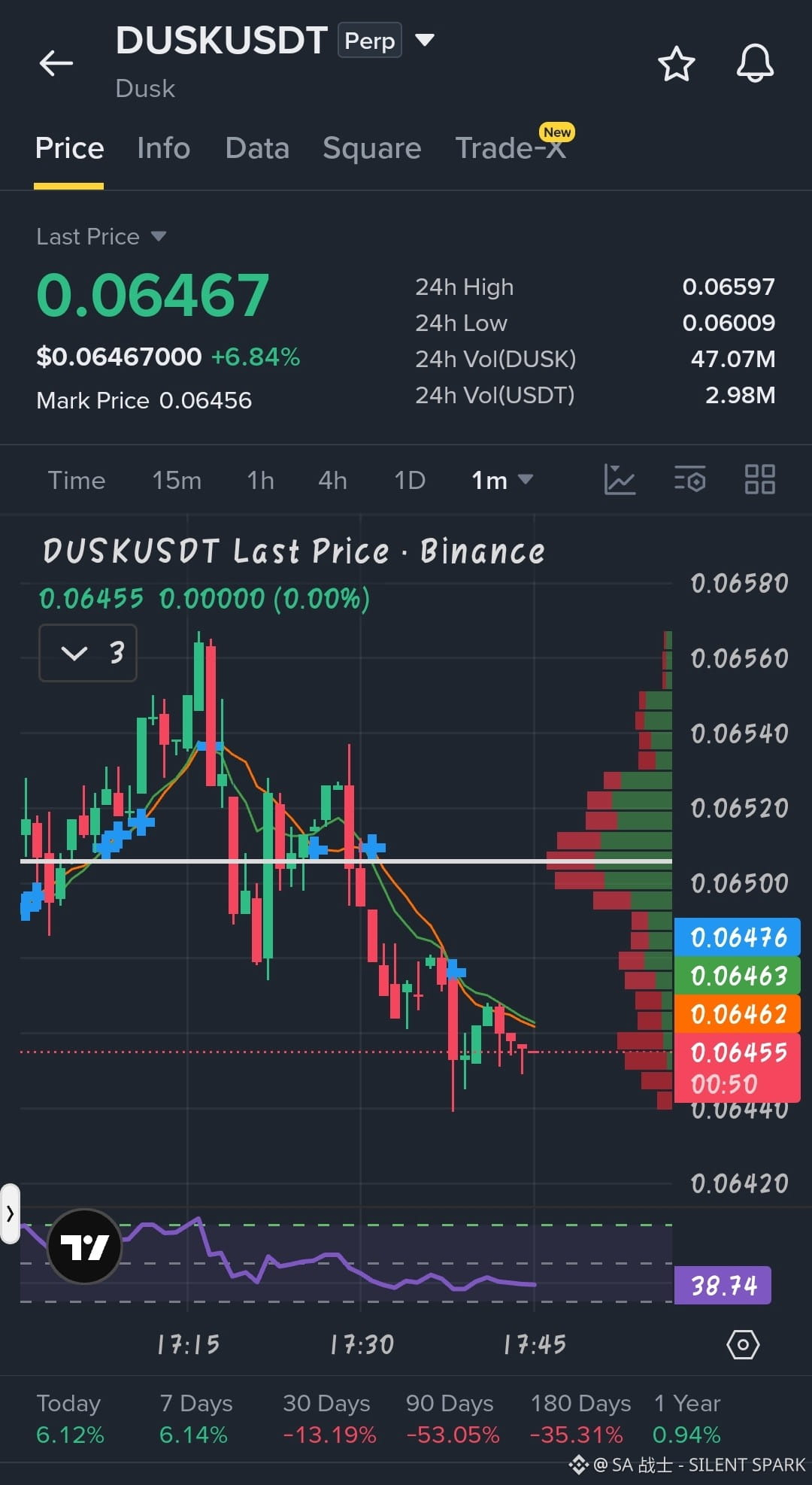
Also könnt ihr vorhersagen, ob $DUSK sich in einem bullischen oder bärischen Zustand befindet??
Für mich ist es ROT 🔴 Bitte macht DYOR und dann tradet ihr..
#tradingtechnique #dusk
Für mich ist es ROT 🔴 Bitte macht DYOR und dann tradet ihr..
#tradingtechnique #dusk
Jeder in RWA redet davon, „Vermögenswerte onchain zu bringen“. Kaum jemand fragt, welcher Teil des Vermögenswerts tatsächlich die Reise angetreten hat.
Schau dir die meisten tokenisierten RWAs genau an, und du findest einen Beleg – nicht den Vermögenswert. Die Anleihe, die T-Bill, der Eigentumstitel: Sie liegen immer noch in einem Legacy-Register bei einem Verwahrer, der die Akte wirklich führt – das ist der Ort, den die Regulierungsbehörden tatsächlich anerkennen. Das Token zeigt nur auf das Register. Du kannst den Token den ganzen Tag handeln, und rechtlich ist nichts in Bewegung gesetzt, bis jemand außerhalb der Kette die beiden Systeme miteinander abgleicht.
Genau das wird dabei oft übergangen. Regulierte Märkte bepreisen nicht wirklich Komfort, sondern Counterparty-Risk und Settlement-Finalität. Ein „Wrapped Asset“ erbt die UX der Blockchain (schnell, komponierbar, 24/7), aber nicht das Kernversprechen, denn die „Wahrheit“ lebt immer noch irgendwo, was ein Smart Contract nicht sehen kann. Du hast eine Abgleichsschicht hinzugefügt, nicht eine entfernt.
Nativer Emissionsbetrieb ist dagegen eine ganz andere Wette. Wenn Emission, Transfer und Servicing alle onchain passieren, gibt es kein Schatten-Register mehr, gegen das geprüft werden müsste – die Kette ist der alleinige Maßstab. Weniger Stellen, an denen zwei Versionen der Realität auseinanderlaufen können, ist strukturell ein anderes Risikoprofil, als es die Tokenisierung für dich liefert.
Genau diese Unterscheidung ist das Fundament von Dusk: Die Architektur ist darauf aufgebaut, „wie viel vom Lebenszyklus onchain abgebildet ist“ als die eigentliche Frage zu behandeln – nicht „gibt es ein Token“.
Ehrlich neugierig, wo die Leute damit landen:
#dusk $DUSK @Dusk
Für regulierte Wertpapiere: Welche Phase des Lebenszyklus ist am wichtigsten, um als Erstes onchain zu gehen?
Schau dir die meisten tokenisierten RWAs genau an, und du findest einen Beleg – nicht den Vermögenswert. Die Anleihe, die T-Bill, der Eigentumstitel: Sie liegen immer noch in einem Legacy-Register bei einem Verwahrer, der die Akte wirklich führt – das ist der Ort, den die Regulierungsbehörden tatsächlich anerkennen. Das Token zeigt nur auf das Register. Du kannst den Token den ganzen Tag handeln, und rechtlich ist nichts in Bewegung gesetzt, bis jemand außerhalb der Kette die beiden Systeme miteinander abgleicht.
Genau das wird dabei oft übergangen. Regulierte Märkte bepreisen nicht wirklich Komfort, sondern Counterparty-Risk und Settlement-Finalität. Ein „Wrapped Asset“ erbt die UX der Blockchain (schnell, komponierbar, 24/7), aber nicht das Kernversprechen, denn die „Wahrheit“ lebt immer noch irgendwo, was ein Smart Contract nicht sehen kann. Du hast eine Abgleichsschicht hinzugefügt, nicht eine entfernt.
Nativer Emissionsbetrieb ist dagegen eine ganz andere Wette. Wenn Emission, Transfer und Servicing alle onchain passieren, gibt es kein Schatten-Register mehr, gegen das geprüft werden müsste – die Kette ist der alleinige Maßstab. Weniger Stellen, an denen zwei Versionen der Realität auseinanderlaufen können, ist strukturell ein anderes Risikoprofil, als es die Tokenisierung für dich liefert.
Genau diese Unterscheidung ist das Fundament von Dusk: Die Architektur ist darauf aufgebaut, „wie viel vom Lebenszyklus onchain abgebildet ist“ als die eigentliche Frage zu behandeln – nicht „gibt es ein Token“.
Ehrlich neugierig, wo die Leute damit landen:
#dusk $DUSK @Dusk
Für regulierte Wertpapiere: Welche Phase des Lebenszyklus ist am wichtigsten, um als Erstes onchain zu gehen?
Issuance
100%
Transfer & custody
0%
Servicing & settlement
0%
5 Stimmen • Abstimmung beendet
Stellen Sie sich vor, Sie kaufen eine Anleihe und erfahren Tage später, dass der Handel möglicherweise nicht vollständig abgeschlossen wurde. Regulierte Märkte funktionieren nicht so. Sobald ein Wertpapier gehandelt wurde, ist es gehandelt. Keine Rückabwicklungen. Kein „wahrscheinlich bestätigt“. Diese Gewissheit ist die stille Grundlage hinter jeder Börse und jeder Clearingstelle weltweit.
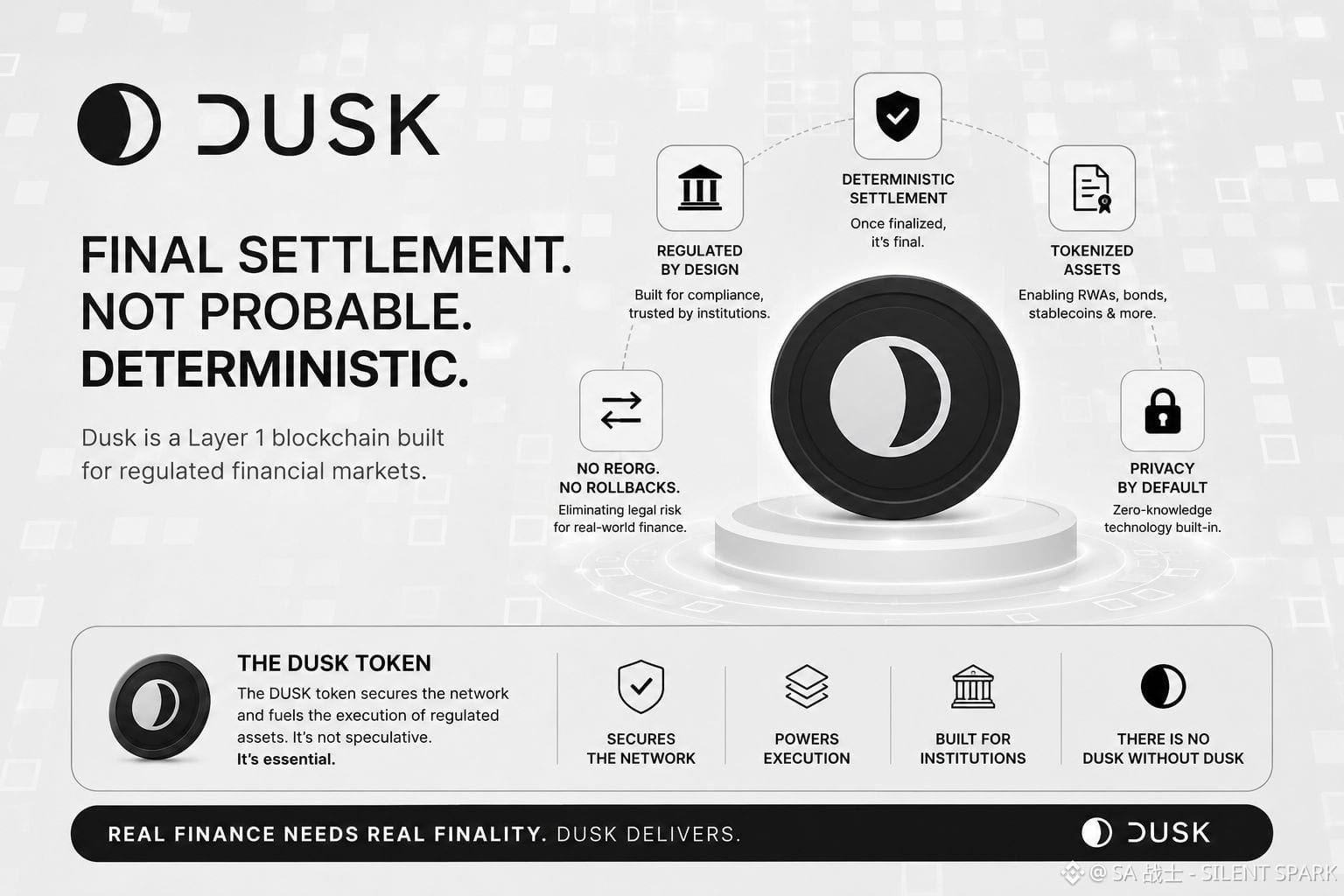
Die meisten öffentlichen Blockchains können das nicht versprechen. Sie basieren auf probabilistischer Finalität, bei der ein Block theoretisch später erneut reorganisiert werden könnte, falls sich genug der Netzwerkteilnehmer dagegenstellen. In der Praxis passiert das auf großen Chains selten. Aber „selten“ ist für Regulierer oder Custodians nicht gut genug. Wenn eine tokenisierte Anleihe jemals selbst in einem extremen Sonderfall zurückgerollt werden könnte, wäre das ein rechtliches Risiko, das Institutionen nicht akzeptieren.
Diese Lücke hat Dusk geschlossen. Es ist eine Layer-1, die für regulierte Finanzmärkte entwickelt wurde – nicht für allgemeine Apps. Die zentrale Idee ist deterministisches Settlement. Sobald eine Transaktion auf Dusk finalisiert ist, ist sie final. Nicht wahrscheinlich final. Tatsächlich final. Denken Sie weniger an eine typische Blockchain-Bestätigung und mehr an die Abwicklung eines Banküberweisungs-Clearings. Kein Warten-Fenster.
Was mir auffiel, ist, wie diese eine Designentscheidung alles andere prägt, was Dusk tut. Deterministisches Settlement ist kein später hinzugefügtes Feature. Es ist die Voraussetzung dafür, dass tokenisierte RWAs Stablecoins und regulierte Wertpapiere überhaupt rechtlich auf der Kette existieren können.
Der DUSK-Token liegt unter dieser Struktur. Er sichert das Netzwerk und bezahlt die Ausführung der regulierten Assets, von der das System abhängt. Seine Rolle ist nicht spekulativ. Sie ist funktional, und das System läuft ohne ihn nicht.
#dusk $DUSK @Dusk
Die meisten öffentlichen Blockchains können das nicht versprechen. Sie basieren auf probabilistischer Finalität, bei der ein Block theoretisch später erneut reorganisiert werden könnte, falls sich genug der Netzwerkteilnehmer dagegenstellen. In der Praxis passiert das auf großen Chains selten. Aber „selten“ ist für Regulierer oder Custodians nicht gut genug. Wenn eine tokenisierte Anleihe jemals selbst in einem extremen Sonderfall zurückgerollt werden könnte, wäre das ein rechtliches Risiko, das Institutionen nicht akzeptieren.
Diese Lücke hat Dusk geschlossen. Es ist eine Layer-1, die für regulierte Finanzmärkte entwickelt wurde – nicht für allgemeine Apps. Die zentrale Idee ist deterministisches Settlement. Sobald eine Transaktion auf Dusk finalisiert ist, ist sie final. Nicht wahrscheinlich final. Tatsächlich final. Denken Sie weniger an eine typische Blockchain-Bestätigung und mehr an die Abwicklung eines Banküberweisungs-Clearings. Kein Warten-Fenster.
Was mir auffiel, ist, wie diese eine Designentscheidung alles andere prägt, was Dusk tut. Deterministisches Settlement ist kein später hinzugefügtes Feature. Es ist die Voraussetzung dafür, dass tokenisierte RWAs Stablecoins und regulierte Wertpapiere überhaupt rechtlich auf der Kette existieren können.
Der DUSK-Token liegt unter dieser Struktur. Er sichert das Netzwerk und bezahlt die Ausführung der regulierten Assets, von der das System abhängt. Seine Rolle ist nicht spekulativ. Sie ist funktional, und das System läuft ohne ihn nicht.
#dusk $DUSK @Dusk
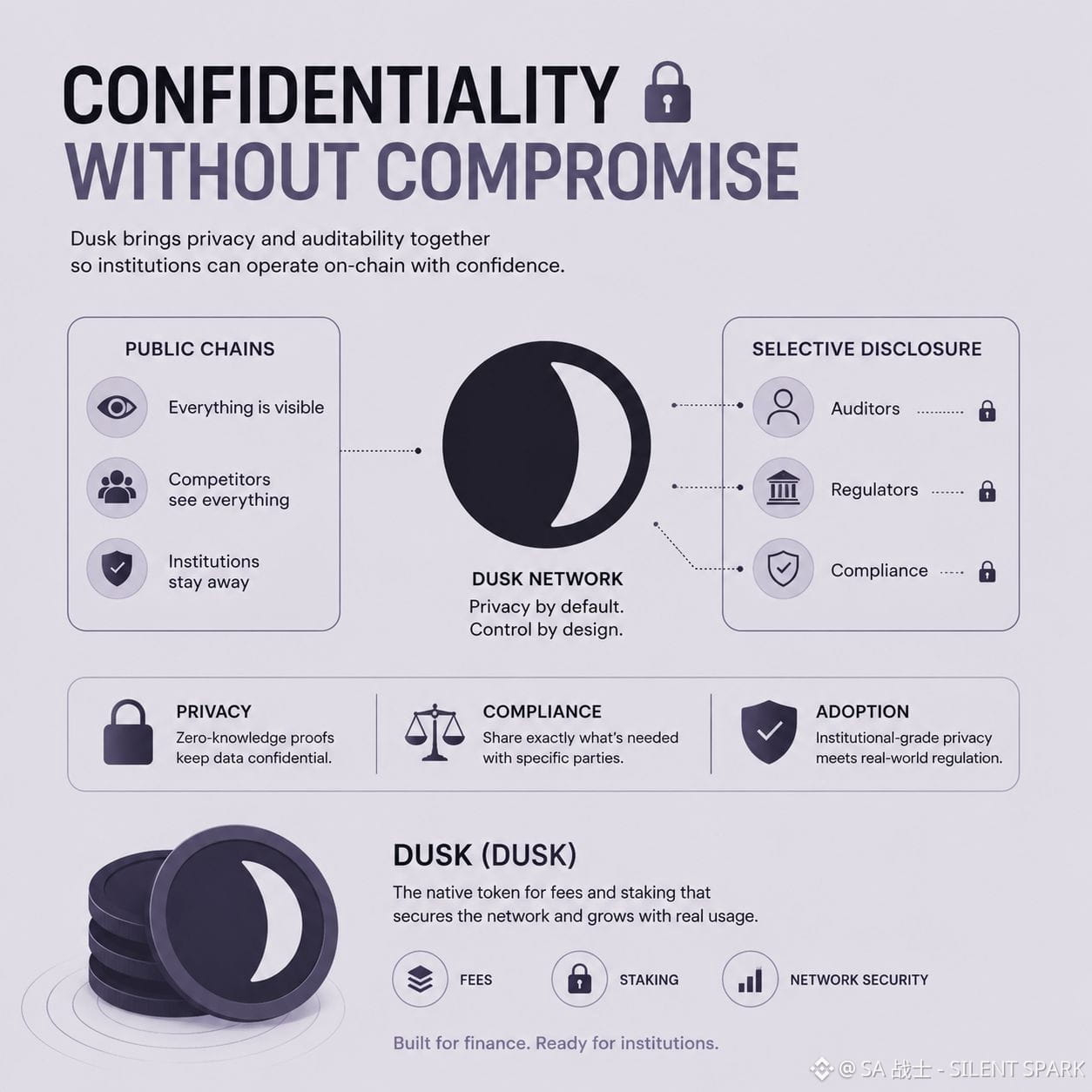
Seit Jahren hat Krypto eine merkwürdige blinde Stelle. Alle wollen Institutionen und reale Vermögenswerte on-chain bringen, aber fast dieses Kapital taucht nie wirklich auf. Der Grund ist kein Desinteresse. Es liegt daran, dass öffentliche Chains alles offenlegen. Handelsgrößen, Gegenparteien und Portfolio-Bewegungen liegen dort und können von Wettbewerbern eingesehen werden. Kein seriöser Fonds macht das mit. Daher überspringen sie öffentliche Chains komplett oder nutzen „private“ Varianten, die Regulierer nicht einsehen können. Das schafft jedoch ein anderes Problem, weil dann niemand irgendetwas verifizieren kann.
Genau in dieses Dilemma läuft die institutionelle Adoption immer wieder hinein. Man braucht Vertraulichkeit, um die Strategie zu schützen, aber man braucht auch Nachvollziehbarkeit, um KYC-, AML- und Wertpapierregeln zu erfüllen. Die meisten Chains bieten dir nur eines.
Was mir bei meinen Recherchen zu Dusk besonders aufgefallen ist: Das Projekt behandelt das als Designproblem und nicht als Zielkonflikt. Privatsphäre ist standardmäßig gegeben. Es nutzt Zero-Knowledge-Proofs, sodass Transaktionsdetails vertraulich bleiben. Aber bestimmten Parteien wie einem Auditor oder einem Regulator kann genau die Einsicht gewährt werden, die sie brauchen, ohne dass es an alle anderen broadcastet wird. Das ist näher daran, deinen Kontoauszug mit deinem Steuerberater zu teilen, als ihn öffentlich zu posten.
Diese Art der selektiven Offenlegung könnte tokenisierte Wertpapiere oder regulierte Stablecoins deutlich besser on-chain umsetzbar machen, weil Compliance dann keinen Transparenz-Zielkonflikt mehr erzwingt.
DUSK liegt unter allem. Das Token wird für Gebühren und Staking genutzt und sichert das Netzwerk – seine Rolle wächst mit der tatsächlichen Nutzung statt nur mit Aufmerksamkeit.
#dusk $DUSK @Dusk
Genau in dieses Dilemma läuft die institutionelle Adoption immer wieder hinein. Man braucht Vertraulichkeit, um die Strategie zu schützen, aber man braucht auch Nachvollziehbarkeit, um KYC-, AML- und Wertpapierregeln zu erfüllen. Die meisten Chains bieten dir nur eines.
Was mir bei meinen Recherchen zu Dusk besonders aufgefallen ist: Das Projekt behandelt das als Designproblem und nicht als Zielkonflikt. Privatsphäre ist standardmäßig gegeben. Es nutzt Zero-Knowledge-Proofs, sodass Transaktionsdetails vertraulich bleiben. Aber bestimmten Parteien wie einem Auditor oder einem Regulator kann genau die Einsicht gewährt werden, die sie brauchen, ohne dass es an alle anderen broadcastet wird. Das ist näher daran, deinen Kontoauszug mit deinem Steuerberater zu teilen, als ihn öffentlich zu posten.
Diese Art der selektiven Offenlegung könnte tokenisierte Wertpapiere oder regulierte Stablecoins deutlich besser on-chain umsetzbar machen, weil Compliance dann keinen Transparenz-Zielkonflikt mehr erzwingt.
DUSK liegt unter allem. Das Token wird für Gebühren und Staking genutzt und sichert das Netzwerk – seine Rolle wächst mit der tatsächlichen Nutzung statt nur mit Aufmerksamkeit.
#dusk $DUSK @Dusk
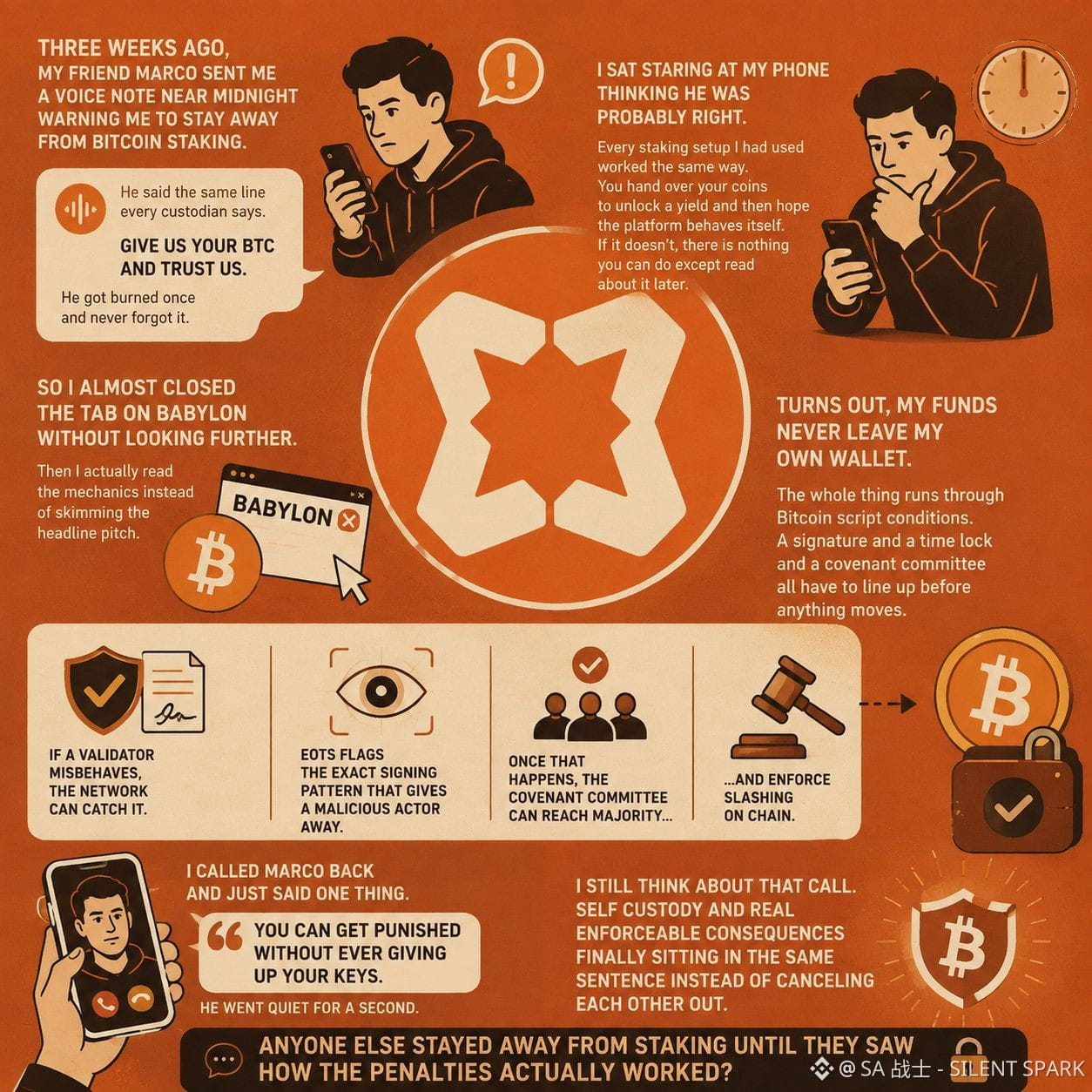
Vor drei Wochen schickte mir mein Freund Marco gegen Mitternacht eine Sprachnachricht und warnte mich, die Finger vom Bitcoin-Staking zu lassen. Er sagte denselben Satz, den jeder Custodian sagt: „Gebt uns euer BTC und vertraut uns.“ Einmal ist er darauf reingefallen und hat es nie vergessen.
Ich starrte auf mein Handy und dachte, er könnte wohl recht haben. Jedes Staking-Setup, das ich je benutzt hatte, funktionierte nach demselben Muster: Man übergibt seine Coins, um eine Rendite freizuschalten, und hofft dann, dass die Plattform sich anständig verhält. Wenn nicht, bleibt einem nichts anderes übrig, als später darüber zu lesen.
Also hätte ich den Tab zu Babylon fast geschlossen, ohne weiterzulesen. Dann habe ich mir die Mechanik tatsächlich durchgelesen, statt nur den Headline-Pitch zu überfliegen.
Und heraus kam: Meine Gelder verlassen nie meine eigene Wallet. Das Ganze läuft über Bitcoin-Script-Bedingungen. Eine Signatur, ein Time Lock und ein Covenant-Komitee müssen alle zusammenpassen, bevor sich überhaupt etwas bewegt. Wenn ein Validator sich falsch verhält, kann das Netzwerk ihn erwischen. EOTS markiert genau das Signatur-Muster, das einen böswilligen Akteur verrät. Danach kann das Covenant-Komitee die Mehrheit erreichen und ein Slashing on-Chain durchsetzen.
Ich rief Marco zurück und sagte nur ein Ding: „Man kann bestraft werden, ohne jemals seine Keys herzugeben.“ Er wurde für eine Sekunde still.
Ich denke noch immer an dieses Gespräch. Self Custody und echte, tatsächlich durchsetzbare Konsequenzen stehen endlich gleichzeitig im selben Satz – statt sich gegenseitig aufzuheben.
Sind sonst noch welche vom Staking weggeblieben, bis sie gesehen haben, wie die Strafen wirklich funktionieren?
#baby @BabylonLabs_io
$BABY
Ich starrte auf mein Handy und dachte, er könnte wohl recht haben. Jedes Staking-Setup, das ich je benutzt hatte, funktionierte nach demselben Muster: Man übergibt seine Coins, um eine Rendite freizuschalten, und hofft dann, dass die Plattform sich anständig verhält. Wenn nicht, bleibt einem nichts anderes übrig, als später darüber zu lesen.
Also hätte ich den Tab zu Babylon fast geschlossen, ohne weiterzulesen. Dann habe ich mir die Mechanik tatsächlich durchgelesen, statt nur den Headline-Pitch zu überfliegen.
Und heraus kam: Meine Gelder verlassen nie meine eigene Wallet. Das Ganze läuft über Bitcoin-Script-Bedingungen. Eine Signatur, ein Time Lock und ein Covenant-Komitee müssen alle zusammenpassen, bevor sich überhaupt etwas bewegt. Wenn ein Validator sich falsch verhält, kann das Netzwerk ihn erwischen. EOTS markiert genau das Signatur-Muster, das einen böswilligen Akteur verrät. Danach kann das Covenant-Komitee die Mehrheit erreichen und ein Slashing on-Chain durchsetzen.
Ich rief Marco zurück und sagte nur ein Ding: „Man kann bestraft werden, ohne jemals seine Keys herzugeben.“ Er wurde für eine Sekunde still.
Ich denke noch immer an dieses Gespräch. Self Custody und echte, tatsächlich durchsetzbare Konsequenzen stehen endlich gleichzeitig im selben Satz – statt sich gegenseitig aufzuheben.
Sind sonst noch welche vom Staking weggeblieben, bis sie gesehen haben, wie die Strafen wirklich funktionieren?
#baby @BabylonLabs_io
$BABY
Vor ein paar Wochen habe ich nachts um ungefähr Mitternacht in einem Testnet-Explorer gescrollt, nur um etwas Kleines nachzusehen, als ich auf eine Liste von Integrationen für Babylon gestoßen bin.
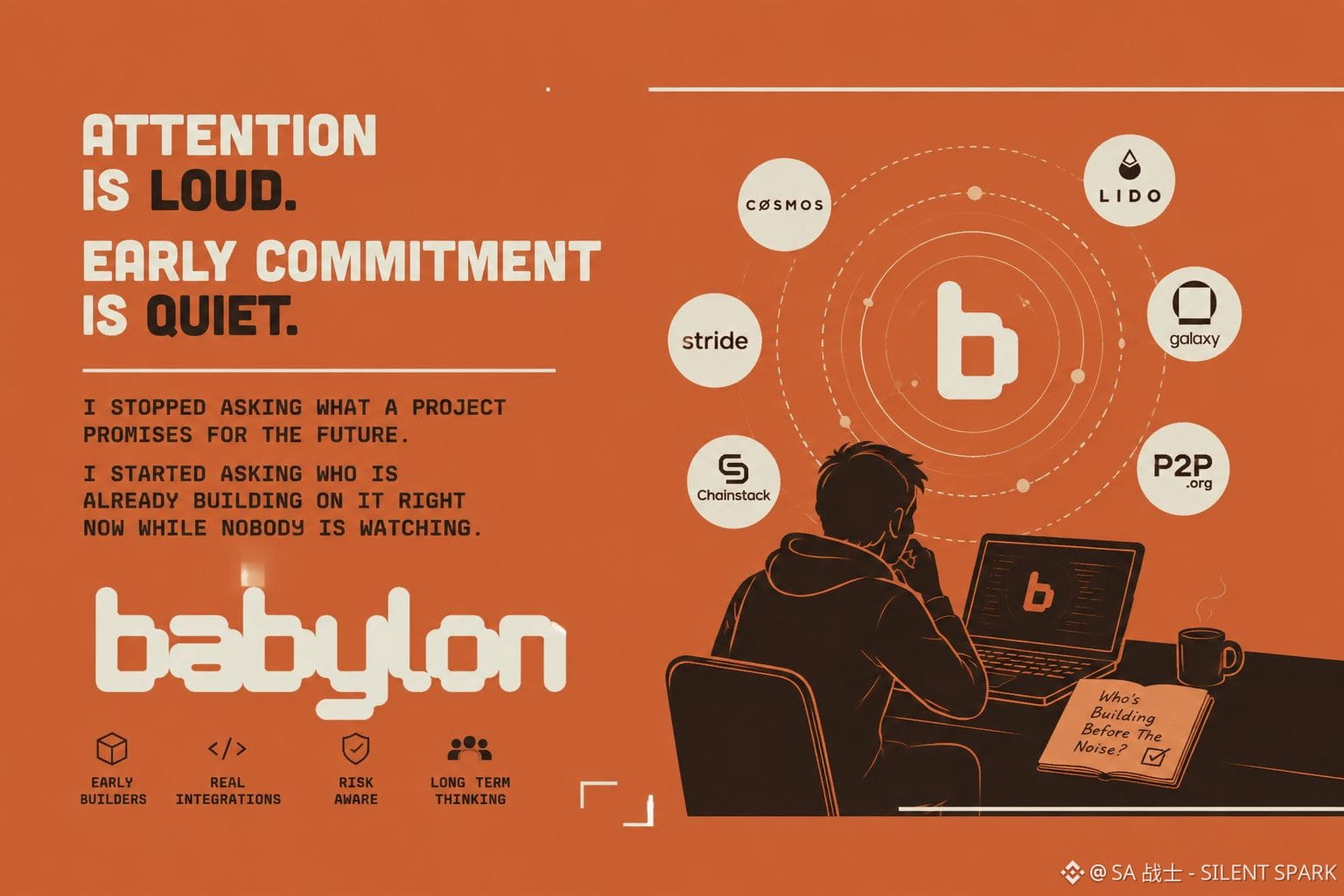
Ich hatte nicht damit gerechnet, irgendwelche Namen wiederzuerkennen. Testnets fühlen sich normalerweise wie ein Friedhof vergessener Adressen und unfertiger Dashboards an, aber dort waren sie. Protokolle, die ich wirklich nutze. Teams, denen ich schon seit einiger Zeit folge. Früh dabei. Ressourcen gebunden, noch bevor es Mainnet gab und bevor es überhaupt einen Token gab, den man farmen könnte.
Ich erinnere mich daran, wie ich dort saß und dachte: Warum würde sich jemand jetzt damit beschäftigen? Es gibt noch keine Belohnung. Kein garantierter Airdrop. Kein Marketing-Schub, der sie dazu zwingt, dort zu sein.
Da hat sich dann mein Filter verändert.
Was an dieser Sache auffiel, war nicht nur, dass ich Namen sah, die ich kannte, sondern dass sie bereits in der Testnet-Phase auftauchten, bevor sich die Aufmerksamkeit des breiteren Marktes überhaupt richtig gebildet hatte. Das beweist nicht, warum jedes Team dort aufgetaucht ist, aber es deutet meistens darauf hin, dass einige Builder genug Potenzial gesehen haben, um früh mit der Integration zu starten, statt auf die Crowd zu warten.
Etablierte Protokolle tauchen nicht wegen Aufmerksamkeit auf. Sie tauchen auf, weil jemand in ihrem Team die Zahlen schon gerechnet und entschieden hat, dass das Risiko, eine frühe Integration zu verpassen, größer ist als das Risiko, ein paar Wochen mit Tests zu verschwenden.
Das ist kein Hype. Das ist Überzeugung, die als langweilige technische Arbeit verkleidet ist.
An diesem Abend habe ich meinen Laptop geschlossen – mit einem anderen Filter im Kopf. Ich habe aufgehört zu fragen, was ein Projekt für die Zukunft verspricht. Ich habe angefangen zu fragen, wer gerade jetzt schon daran baut, während niemand hinsieht.
Aufmerksamkeit ist laut. Frühes Commitment ist leise. Ich habe gelernt, der leisen Seite mehr zu vertrauen.
Hast du jemals bemerkt, wer auftaucht, bevor überhaupt das Lärmgeschehen beginnt?
#baby @BabylonLabs_io
$BABY
Ich hatte nicht damit gerechnet, irgendwelche Namen wiederzuerkennen. Testnets fühlen sich normalerweise wie ein Friedhof vergessener Adressen und unfertiger Dashboards an, aber dort waren sie. Protokolle, die ich wirklich nutze. Teams, denen ich schon seit einiger Zeit folge. Früh dabei. Ressourcen gebunden, noch bevor es Mainnet gab und bevor es überhaupt einen Token gab, den man farmen könnte.
Ich erinnere mich daran, wie ich dort saß und dachte: Warum würde sich jemand jetzt damit beschäftigen? Es gibt noch keine Belohnung. Kein garantierter Airdrop. Kein Marketing-Schub, der sie dazu zwingt, dort zu sein.
Da hat sich dann mein Filter verändert.
Was an dieser Sache auffiel, war nicht nur, dass ich Namen sah, die ich kannte, sondern dass sie bereits in der Testnet-Phase auftauchten, bevor sich die Aufmerksamkeit des breiteren Marktes überhaupt richtig gebildet hatte. Das beweist nicht, warum jedes Team dort aufgetaucht ist, aber es deutet meistens darauf hin, dass einige Builder genug Potenzial gesehen haben, um früh mit der Integration zu starten, statt auf die Crowd zu warten.
Etablierte Protokolle tauchen nicht wegen Aufmerksamkeit auf. Sie tauchen auf, weil jemand in ihrem Team die Zahlen schon gerechnet und entschieden hat, dass das Risiko, eine frühe Integration zu verpassen, größer ist als das Risiko, ein paar Wochen mit Tests zu verschwenden.
Das ist kein Hype. Das ist Überzeugung, die als langweilige technische Arbeit verkleidet ist.
An diesem Abend habe ich meinen Laptop geschlossen – mit einem anderen Filter im Kopf. Ich habe aufgehört zu fragen, was ein Projekt für die Zukunft verspricht. Ich habe angefangen zu fragen, wer gerade jetzt schon daran baut, während niemand hinsieht.
Aufmerksamkeit ist laut. Frühes Commitment ist leise. Ich habe gelernt, der leisen Seite mehr zu vertrauen.
Hast du jemals bemerkt, wer auftaucht, bevor überhaupt das Lärmgeschehen beginnt?
#baby @BabylonLabs_io
$BABY
Anmelden und weiter Inhalte entdecken