
RUMI CRYPTO107
16.9k Beiträge

RUMI CRYPTO107
Crypto Trader, Learning Daily, Risk Managed
1.2K+ Following
17.1K+ Follower
7.4K+ Like gegeben
Beiträge
Alle
Live
PINNED
Übersetzung ansehen
#dusk $DUSK @Dusk
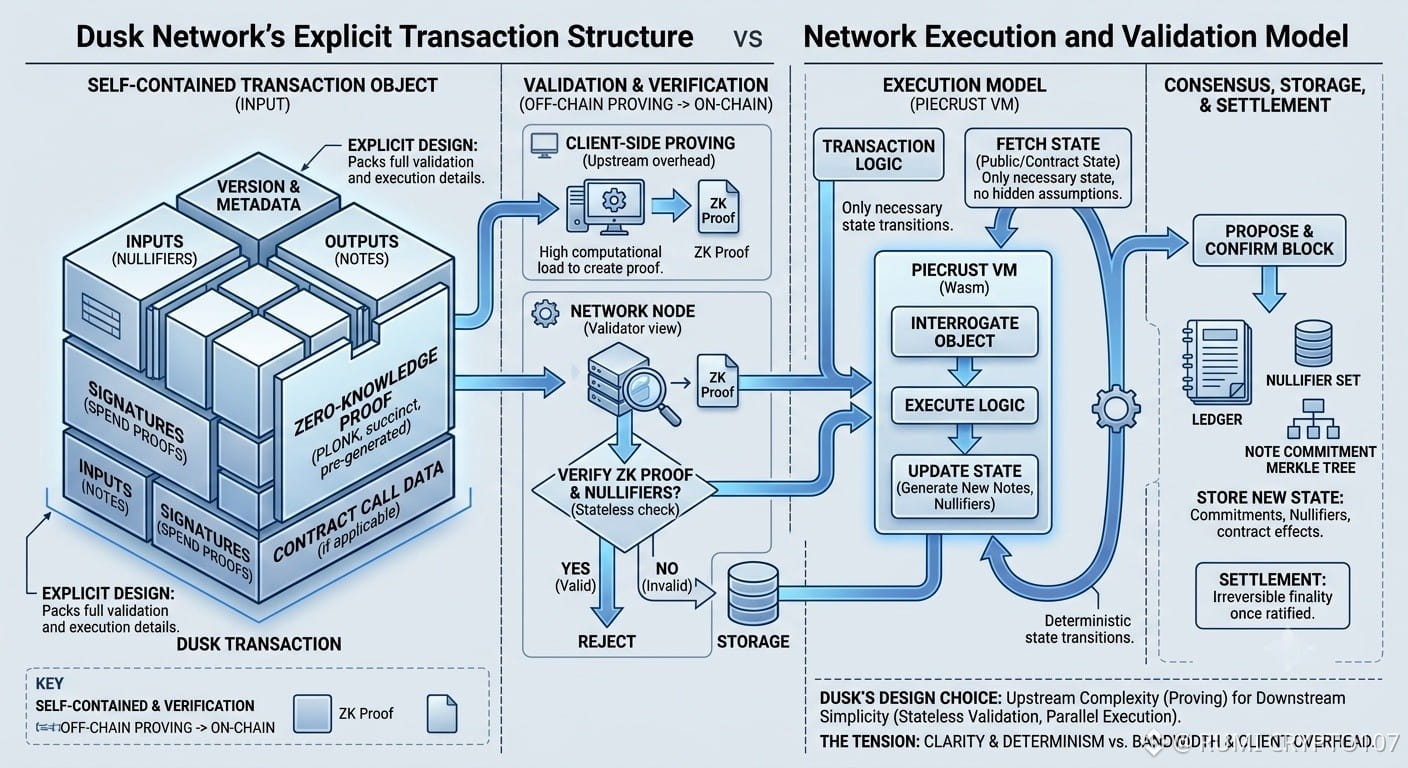
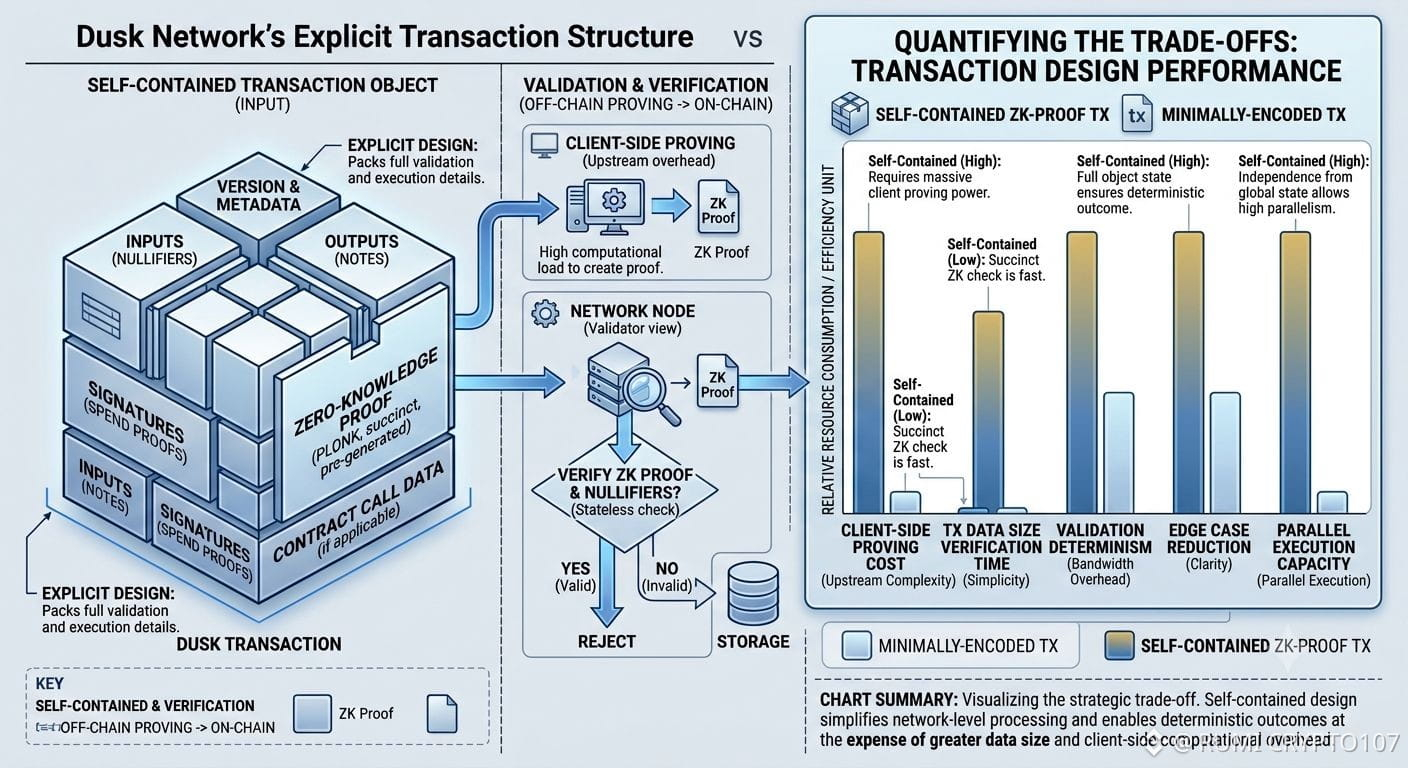
I keep circling back to how much of any blockchain’s real behavior is locked in by the shape of its transactions. In Dusk a transaction is never just a simple instruction to move value. The format itself packs the full set of details the network needs for both validation and execution—inputs, outputs, signatures, and all the accompanying metadata. That design choice feels deeper than pure implementation detail.
When the structure is this explicit, the network receives a complete, self-contained object it can interrogate before anything else happens. The rules become easier to follow because the transaction already carries every piece the protocol requires to process it. You no longer have to hunt through scattered assumptions; the object itself declares what must be checked.
The trade-off is real. Every field exists for a reason, and every extra slice of transaction state becomes something the entire network has to validate, store, and maintain over time. Surface area grows. Versioning gets harder. Edge cases multiply.
So the open question remains: does this more explicit transaction structure genuinely make Dusk’s execution model easier to reason about, or does the act of carrying so much protocol state inside every transaction simply introduce unnecessary complexity? The answer sits somewhere in the tension between clarity and overhead.
I keep circling back to how much of any blockchain’s real behavior is locked in by the shape of its transactions. In Dusk a transaction is never just a simple instruction to move value. The format itself packs the full set of details the network needs for both validation and execution—inputs, outputs, signatures, and all the accompanying metadata. That design choice feels deeper than pure implementation detail.
When the structure is this explicit, the network receives a complete, self-contained object it can interrogate before anything else happens. The rules become easier to follow because the transaction already carries every piece the protocol requires to process it. You no longer have to hunt through scattered assumptions; the object itself declares what must be checked.
The trade-off is real. Every field exists for a reason, and every extra slice of transaction state becomes something the entire network has to validate, store, and maintain over time. Surface area grows. Versioning gets harder. Edge cases multiply.
So the open question remains: does this more explicit transaction structure genuinely make Dusk’s execution model easier to reason about, or does the act of carrying so much protocol state inside every transaction simply introduce unnecessary complexity? The answer sits somewhere in the tension between clarity and overhead.
Übersetzung ansehen
$ZAMA
🚀 ZAMA is quietly climbing!
Price: $0.06149 | +10.99%
Not the biggest pump—but steady momentum can become interesting.
🎯 Target zone: $0.0676–$0.0738
💡 Pro tip: Watch whether volume expands with the next breakout.#BitcoinOpenInterestFallsToTwoMonthLow #BitcoinRises23.6%Weekly #AIHardwareStocksFallPreMarketAAOIDown11.66% #SP500FuturesFall #BrentDrops1.87%
🚀 ZAMA is quietly climbing!
Price: $0.06149 | +10.99%
Not the biggest pump—but steady momentum can become interesting.
🎯 Target zone: $0.0676–$0.0738
💡 Pro tip: Watch whether volume expands with the next breakout.#BitcoinOpenInterestFallsToTwoMonthLow #BitcoinRises23.6%Weekly #AIHardwareStocksFallPreMarketAAOIDown11.66% #SP500FuturesFall #BrentDrops1.87%
Übersetzung ansehen
$SOXSB
🔥 SOXSB joins the gainers list!
Price: $52.25 | +10.89%
Double-digit strength puts it firmly on the momentum watchlist.
🎯 Target zone: $57.5–$62.7
💡 Pro tip: Avoid chasing; wait for a clean confirmation candle.
#SOXSB #Trading #BitcoinOpenInterestFallsToTwoMonthLow #BitcoinRises23.6%Weekly #AIHardwareStocksFallPreMarketAAOIDown11.66%
🔥 SOXSB joins the gainers list!
Price: $52.25 | +10.89%
Double-digit strength puts it firmly on the momentum watchlist.
🎯 Target zone: $57.5–$62.7
💡 Pro tip: Avoid chasing; wait for a clean confirmation candle.
#SOXSB #Trading #BitcoinOpenInterestFallsToTwoMonthLow #BitcoinRises23.6%Weekly #AIHardwareStocksFallPreMarketAAOIDown11.66%
Übersetzung ansehen
$VELODROME
⚡ VELODROME is moving!
Price: $0.02176 | +10.18%
A fresh push could become interesting if buyers maintain pressure.
🎯 Target zone: $0.0239–$0.0261
💡 Pro tip: Support is more important than prediction—protect your entry.
#VELODROME #DeFi #Altcoins #BitcoinOpenInterestFallsToTwoMonthLow #BitcoinRises23.6%Weekly
⚡ VELODROME is moving!
Price: $0.02176 | +10.18%
A fresh push could become interesting if buyers maintain pressure.
🎯 Target zone: $0.0239–$0.0261
💡 Pro tip: Support is more important than prediction—protect your entry.
#VELODROME #DeFi #Altcoins #BitcoinOpenInterestFallsToTwoMonthLow #BitcoinRises23.6%Weekly
Übersetzung ansehen
$PENGU
🐧 PENGU is making noise again!
Price: $0.009540 | +12.37%
Meme momentum can move fast—and reverse even faster.
🎯 Target zone: $0.0105–$0.0114
💡 Pro tip: Keep position size controlled; volatility is the game.
#PENGU #MemeCoin #BitcoinOpenInterestFallsToTwoMonthLow #BitcoinRises23.6%Weekly #AIHardwareStocksFallPreMarketAAOIDown11.66%
🐧 PENGU is making noise again!
Price: $0.009540 | +12.37%
Meme momentum can move fast—and reverse even faster.
🎯 Target zone: $0.0105–$0.0114
💡 Pro tip: Keep position size controlled; volatility is the game.
#PENGU #MemeCoin #BitcoinOpenInterestFallsToTwoMonthLow #BitcoinRises23.6%Weekly #AIHardwareStocksFallPreMarketAAOIDown11.66%
Übersetzung ansehen
$INJ
💥 INJ is back with double-digit momentum!
Price: $5.721 | +11.65%
A strong move that could attract more buyers if the trend holds.
🎯 Target zone: $6.29–$6.87
💡 Pro tip: Look for higher highs and higher lows before adding.
#INJ #CryptoTrading #BitcoinOpenInterestFallsToTwoMonthLow #BitcoinRises23.6%Weekly #AIHardwareStocksFallPreMarketAAOIDown11.66%
💥 INJ is back with double-digit momentum!
Price: $5.721 | +11.65%
A strong move that could attract more buyers if the trend holds.
🎯 Target zone: $6.29–$6.87
💡 Pro tip: Look for higher highs and higher lows before adding.
#INJ #CryptoTrading #BitcoinOpenInterestFallsToTwoMonthLow #BitcoinRises23.6%Weekly #AIHardwareStocksFallPreMarketAAOIDown11.66%
Übersetzung ansehen
$VIRTUAL
⚡ VIRTUAL is back on the radar!
Price: $0.7968 | +12.46%
Momentum traders are starting to notice.
🎯 Target zone: $0.88–$0.96
💡 Pro tip: Let price prove strength above resistance before chasing.
#VIRTUAL #Altcoins #BitcoinOpenInterestFallsToTwoMonthLow #BitcoinRises23.6%Weekly #AIHardwareStocksFallPreMarketAAOIDown11.66%
⚡ VIRTUAL is back on the radar!
Price: $0.7968 | +12.46%
Momentum traders are starting to notice.
🎯 Target zone: $0.88–$0.96
💡 Pro tip: Let price prove strength above resistance before chasing.
#VIRTUAL #Altcoins #BitcoinOpenInterestFallsToTwoMonthLow #BitcoinRises23.6%Weekly #AIHardwareStocksFallPreMarketAAOIDown11.66%
Übersetzung ansehen
$STORJ
📈 STORJ is pushing higher!
Price: $0.0469 | +14.95%
Momentum is building, but the next move needs confirmation.
🎯 Target zone: $0.0515–$0.056
💡 Pro tip: Don’t enter after a vertical candle—wait for consolidation.
#STORJ #Trading #BitcoinOpenInterestFallsToTwoMonthLow #BitcoinRises23.6%Weekly #AIHardwareStocksFallPreMarketAAOIDown11.66%
📈 STORJ is pushing higher!
Price: $0.0469 | +14.95%
Momentum is building, but the next move needs confirmation.
🎯 Target zone: $0.0515–$0.056
💡 Pro tip: Don’t enter after a vertical candle—wait for consolidation.
#STORJ #Trading #BitcoinOpenInterestFallsToTwoMonthLow #BitcoinRises23.6%Weekly #AIHardwareStocksFallPreMarketAAOIDown11.66%
Übersetzung ansehen
$AERO
🔥 AERO is gaining serious momentum!
Price: $0.5326 | +12.89%
Buyers are clearly active.
🎯 Target zone: $0.586–$0.639
💡 Pro tip: Watch volume + higher lows for continuation.
#AERO #DeFi #Crypto #BitcoinOpenInterestFallsToTwoMonthLow #BitcoinOpenInterestFallsToTwoMonthLow
🔥 AERO is gaining serious momentum!
Price: $0.5326 | +12.89%
Buyers are clearly active.
🎯 Target zone: $0.586–$0.639
💡 Pro tip: Watch volume + higher lows for continuation.
#AERO #DeFi #Crypto #BitcoinOpenInterestFallsToTwoMonthLow #BitcoinOpenInterestFallsToTwoMonthLow
Übersetzung ansehen
$PORTAL
⚡ PORTAL is waking up!
Price: $0.01602 | +17.62%
A strong move with room for continuation if buyers stay active.
🎯 Target zone: $0.0176–$0.0192
💡 Pro tip: Watch the previous breakout area as support.
#PORTAL #Altcoins #BitcoinOpenInterestFallsToTwoMonthLow #BitcoinRises23.6%Weekly #AIHardwareStocksFallPreMarketAAOIDown11.66%
⚡ PORTAL is waking up!
Price: $0.01602 | +17.62%
A strong move with room for continuation if buyers stay active.
🎯 Target zone: $0.0176–$0.0192
💡 Pro tip: Watch the previous breakout area as support.
#PORTAL #Altcoins #BitcoinOpenInterestFallsToTwoMonthLow #BitcoinRises23.6%Weekly #AIHardwareStocksFallPreMarketAAOIDown11.66%
Übersetzung ansehen
$COTI
🚀 COTI joins the momentum wave!
Price: $0.01384 | +16.01%
Double-digit gains show buyers are stepping in aggressively.
🎯 Target zone: $0.0152–$0.0166
💡 Pro tip: A volume-backed retest could offer a cleaner setup.
#COTI #Crypto #BitcoinOpenInterestFallsToTwoMonthLow #BitcoinRises23.6%Weekly #AIHardwareStocksFallPreMarketAAOIDown11.66%
🚀 COTI joins the momentum wave!
Price: $0.01384 | +16.01%
Double-digit gains show buyers are stepping in aggressively.
🎯 Target zone: $0.0152–$0.0166
💡 Pro tip: A volume-backed retest could offer a cleaner setup.
#COTI #Crypto #BitcoinOpenInterestFallsToTwoMonthLow #BitcoinRises23.6%Weekly #AIHardwareStocksFallPreMarketAAOIDown11.66%
Übersetzung ansehen
$SUPER
🚀 SUPER is leading the charge!
Price: $0.1305 | +29.34%
Strong momentum, but after a 29% move chasing can be risky.
🎯 Target zone: $0.143–$0.156
💡 Pro tip: Wait for a breakout/retest instead of buying the green candle.
#SUPER #Crypto #Altcoins #BitcoinOpenInterestFallsToTwoMonthLow #BitcoinRises23.6%Weekly
🚀 SUPER is leading the charge!
Price: $0.1305 | +29.34%
Strong momentum, but after a 29% move chasing can be risky.
🎯 Target zone: $0.143–$0.156
💡 Pro tip: Wait for a breakout/retest instead of buying the green candle.
#SUPER #Crypto #Altcoins #BitcoinOpenInterestFallsToTwoMonthLow #BitcoinRises23.6%Weekly
Übersetzung ansehen
$PROM
🔥 PROM just exploded!
Price: $3.686 | +28.39%
Momentum is hot and attention is increasing.
🎯 Target zone: $4.05–$4.40
💡 Pro tip: Volume confirmation matters more than FOMO.
#PROM #CryptoTrading #BitcoinOpenInterestFallsToTwoMonthLow #BitcoinRises23.6%Weekly #AIHardwareStocksFallPreMarketAAOIDown11.66%
🔥 PROM just exploded!
Price: $3.686 | +28.39%
Momentum is hot and attention is increasing.
🎯 Target zone: $4.05–$4.40
💡 Pro tip: Volume confirmation matters more than FOMO.
#PROM #CryptoTrading #BitcoinOpenInterestFallsToTwoMonthLow #BitcoinRises23.6%Weekly #AIHardwareStocksFallPreMarketAAOIDown11.66%
Übersetzung ansehen
$MORPHO 🟢
MORPHO gaining +18.17% — DeFi momentum is heating up.
🎯 Target: Retest breakout → continuation
💡 Pro tip: Watch volume; price without volume can fake you out.#BitcoinStrongestWeekSinceMarch2023 #AnthropicIPOCouldTopSpaceXRecordReportsSay #NvidiaAIServerPricesRiseOver15% #BSTREndsCantorSPACGoPublicPlan #USCanadaTradeTalksCollapseCanadaVowsRetaliation
MORPHO gaining +18.17% — DeFi momentum is heating up.
🎯 Target: Retest breakout → continuation
💡 Pro tip: Watch volume; price without volume can fake you out.#BitcoinStrongestWeekSinceMarch2023 #AnthropicIPOCouldTopSpaceXRecordReportsSay #NvidiaAIServerPricesRiseOver15% #BSTREndsCantorSPACGoPublicPlan #USCanadaTradeTalksCollapseCanadaVowsRetaliation
Übersetzung ansehen
$TRUMP 🔥
TRUMP is up +21.63%, showing strong speculative momentum.
With crypto sentiment currently improving, volatility remains the main game. �
🎯 Target: Break recent resistance
💡 Pro tip: Small position, strict risk management.#BitcoinStrongestWeekSinceMarch2023 #AnthropicIPOCouldTopSpaceXRecordReportsSay #NvidiaAIServerPricesRiseOver15% #BSTREndsCantorSPACGoPublicPlan #USCanadaTradeTalksCollapseCanadaVowsRetaliation
TRUMP is up +21.63%, showing strong speculative momentum.
With crypto sentiment currently improving, volatility remains the main game. �
🎯 Target: Break recent resistance
💡 Pro tip: Small position, strict risk management.#BitcoinStrongestWeekSinceMarch2023 #AnthropicIPOCouldTopSpaceXRecordReportsSay #NvidiaAIServerPricesRiseOver15% #BSTREndsCantorSPACGoPublicPlan #USCanadaTradeTalksCollapseCanadaVowsRetaliation
Übersetzung ansehen
$ZRO ⚡
ZRO is moving hard with +24.04%.
This kind of momentum can continue if buyers defend the current breakout.
🎯 Target: Previous resistance → new high
💡 Pro tip: Protect profits with a trailing stop.
#BitcoinStrongestWeekSinceMarch2023 #AnthropicIPOCouldTopSpaceXRecordReportsSay #NvidiaAIServerPricesRiseOver15% #BSTREndsCantorSPACGoPublicPlan #USCanadaTradeTalksCollapseCanadaVowsRetaliation
ZRO is moving hard with +24.04%.
This kind of momentum can continue if buyers defend the current breakout.
🎯 Target: Previous resistance → new high
💡 Pro tip: Protect profits with a trailing stop.
#BitcoinStrongestWeekSinceMarch2023 #AnthropicIPOCouldTopSpaceXRecordReportsSay #NvidiaAIServerPricesRiseOver15% #BSTREndsCantorSPACGoPublicPlan #USCanadaTradeTalksCollapseCanadaVowsRetaliation
Übersetzung ansehen
$TUT 🚀
TUT is leading the gainers with +45.71% 🔥
Momentum is clearly strong, but after such a sharp move, chasing can be risky.
🎯 Target: Hold above the breakout zone
💡 Pro tip: Wait for a pullback + volume confirmation before entry#BitcoinStrongestWeekSinceMarch2023 #AnthropicIPOCouldTopSpaceXRecordReportsSay #NvidiaAIServerPricesRiseOver15% #BSTREndsCantorSPACGoPublicPlan #USCanadaTradeTalksCollapseCanadaVowsRetaliation
TUT is leading the gainers with +45.71% 🔥
Momentum is clearly strong, but after such a sharp move, chasing can be risky.
🎯 Target: Hold above the breakout zone
💡 Pro tip: Wait for a pullback + volume confirmation before entry#BitcoinStrongestWeekSinceMarch2023 #AnthropicIPOCouldTopSpaceXRecordReportsSay #NvidiaAIServerPricesRiseOver15% #BSTREndsCantorSPACGoPublicPlan #USCanadaTradeTalksCollapseCanadaVowsRetaliation
Übersetzung ansehen
$EIGEN 📈
EIGEN pushing +14.18% shows buyers are returning to higher-beta alts.
🎯 Target: Previous resistance → breakout
💡 Pro tip: Confirmation first, FOMO later#BitcoinStrongestWeekSinceMarch2023 #AnthropicIPOCouldTopSpaceXRecordReportsSay #NvidiaAIServerPricesRiseOver15% #BSTREndsCantorSPACGoPublicPlan #BSTREndsCantorSPACGoPublicPlan
EIGEN pushing +14.18% shows buyers are returning to higher-beta alts.
🎯 Target: Previous resistance → breakout
💡 Pro tip: Confirmation first, FOMO later#BitcoinStrongestWeekSinceMarch2023 #AnthropicIPOCouldTopSpaceXRecordReportsSay #NvidiaAIServerPricesRiseOver15% #BSTREndsCantorSPACGoPublicPlan #BSTREndsCantorSPACGoPublicPlan
Übersetzung ansehen
$PENDLE 🔥
PENDLE is up +17.66% — one of the strongest names on the board.
🎯 Target: Break and hold above resistance
💡 Pro tip: Scale out instead of waiting for the perfect top.#BitcoinStrongestWeekSinceMarch2023 #AnthropicIPOCouldTopSpaceXRecordReportsSay #NvidiaAIServerPricesRiseOver15% #BSTREndsCantorSPACGoPublicPlan #USCanadaTradeTalksCollapseCanadaVowsRetaliation
PENDLE is up +17.66% — one of the strongest names on the board.
🎯 Target: Break and hold above resistance
💡 Pro tip: Scale out instead of waiting for the perfect top.#BitcoinStrongestWeekSinceMarch2023 #AnthropicIPOCouldTopSpaceXRecordReportsSay #NvidiaAIServerPricesRiseOver15% #BSTREndsCantorSPACGoPublicPlan #USCanadaTradeTalksCollapseCanadaVowsRetaliation
#dusk $DUSK @Dusk
Ja, hab’s verstanden—diesmal die konkreten Stellen rausgenommen.
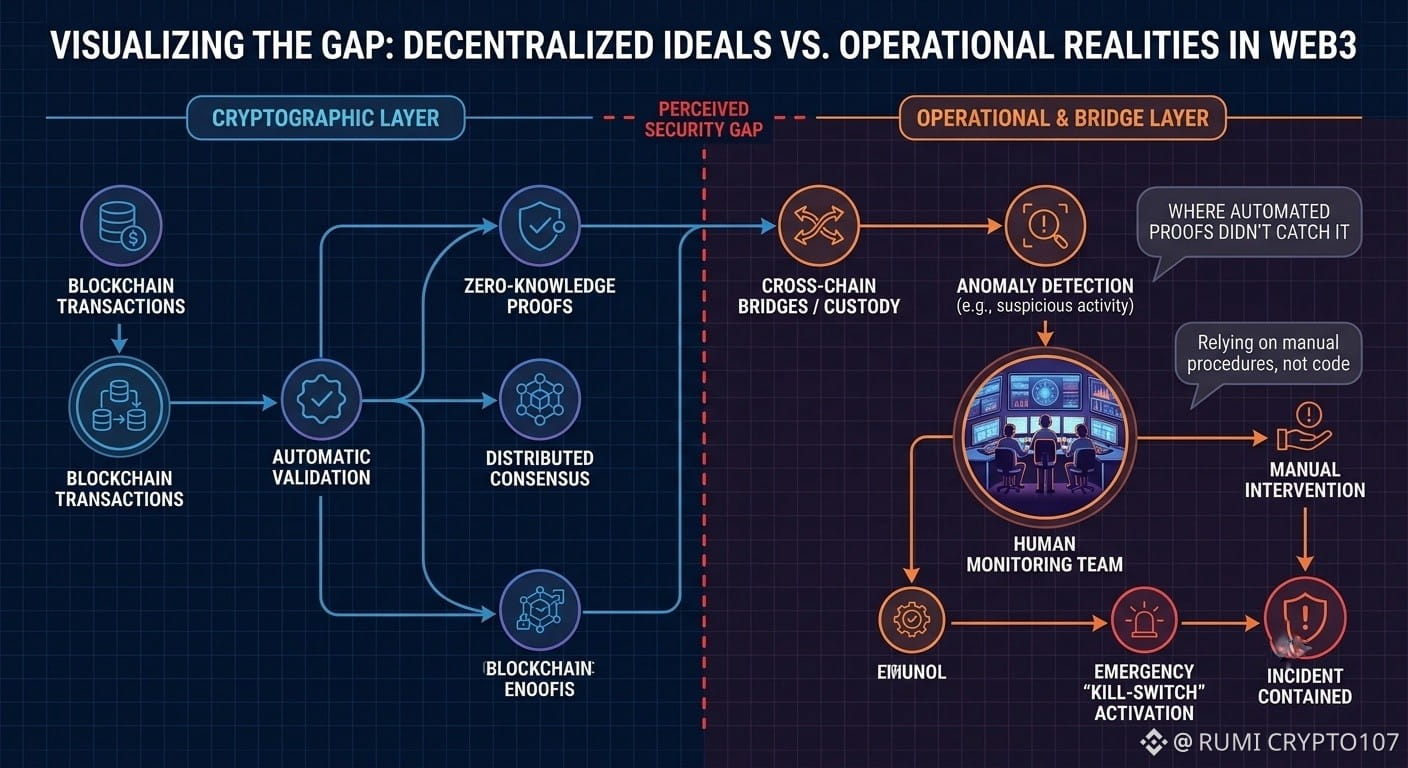
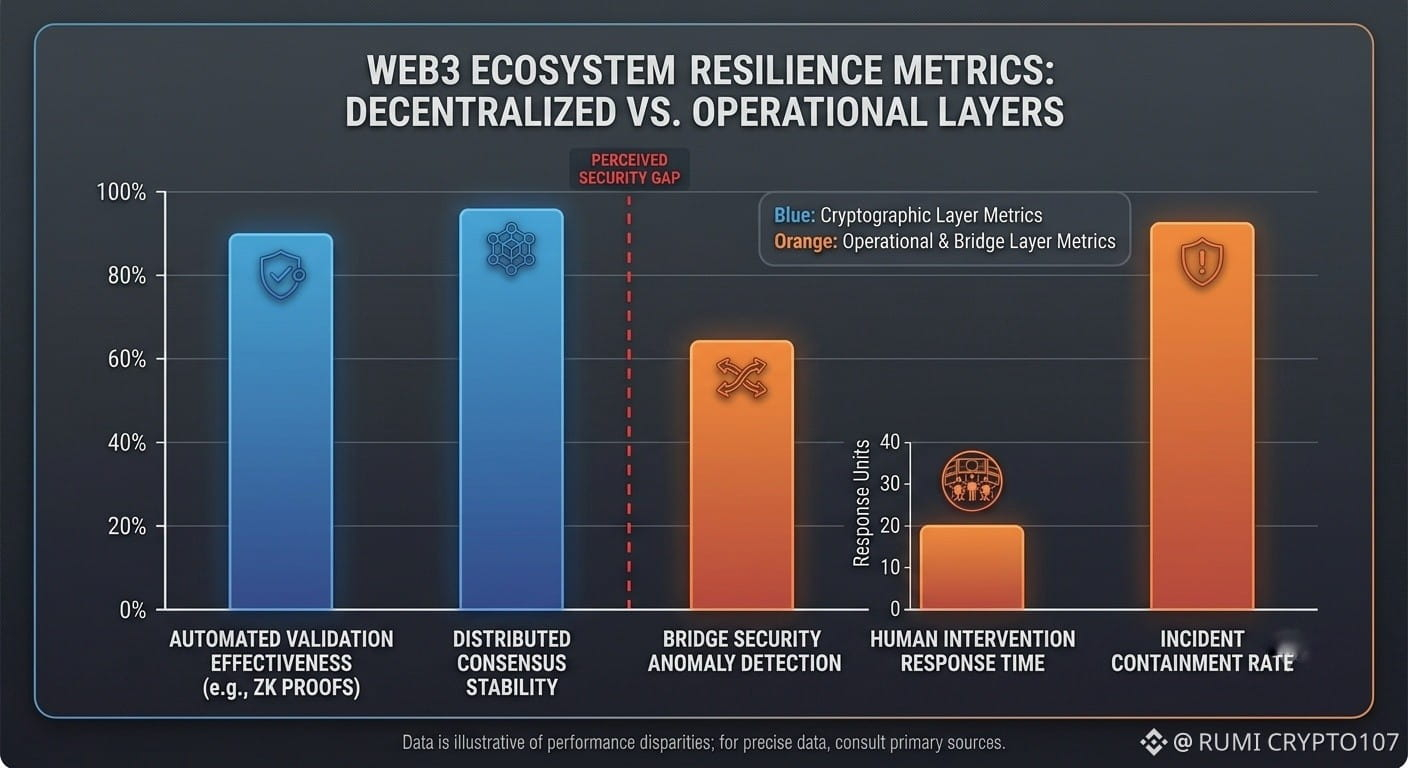
Was mich beim Scrollen tatsächlich erwischt hat, waren nicht die üblichen Performance-Gehversuche. Es war zu sehen, wie eine privacy-first-Chain, die sich mit kryptografischen Voreinstellungen und vertrauensloser Abwicklung verkauft, doch auf dasselbe, von Menschen überwachte Kill-Switch-Spielbuch zurückfällt, das jeder zentralisierte Betreiber nutzt, wenn an den Rändern etwas nach Problemen aussieht.
Kein automatisches Beweis-„Machinery“ hat es abgefangen. Nur Leute, die überwachen, eingreifen, eindämmen. Gutes Ergebnis, nichts Katastrophales. Aber die Naht zwischen der Ebene, die wirklich dezentral ist, und der Ebene, die es eben noch nicht ist—Custody, Brücken, die weichen Teile—wirkte plötzlich sehr sichtbar.
Kein Seitenhieb. Nur die Lücke, die da in aller Offenheit liegt. Spannend, wie lange sie so offensichtlich bleibt.
Ja, hab’s verstanden—diesmal die konkreten Stellen rausgenommen.
Was mich beim Scrollen tatsächlich erwischt hat, waren nicht die üblichen Performance-Gehversuche. Es war zu sehen, wie eine privacy-first-Chain, die sich mit kryptografischen Voreinstellungen und vertrauensloser Abwicklung verkauft, doch auf dasselbe, von Menschen überwachte Kill-Switch-Spielbuch zurückfällt, das jeder zentralisierte Betreiber nutzt, wenn an den Rändern etwas nach Problemen aussieht.
Kein automatisches Beweis-„Machinery“ hat es abgefangen. Nur Leute, die überwachen, eingreifen, eindämmen. Gutes Ergebnis, nichts Katastrophales. Aber die Naht zwischen der Ebene, die wirklich dezentral ist, und der Ebene, die es eben noch nicht ist—Custody, Brücken, die weichen Teile—wirkte plötzlich sehr sichtbar.
Kein Seitenhieb. Nur die Lücke, die da in aller Offenheit liegt. Spannend, wie lange sie so offensichtlich bleibt.
Anmelden und weiter Inhalte entdecken