
AzraCiv
8k Beiträge

AzraCiv
Melden
Nutzer blockieren
✊✨🦋Every action has a direct and opposite reaction

#BinanceTurns7 task 2

#BinanceTurns7
Trade eröffnen
Hochfrequenz-Trader
2.9 Jahre
4.0K+ Following
25.6K+ Follower
26.9K+ Like gegeben
2 Abzeichen
Beiträge
Portfolio
Alle
Zitierungen
Videos
Live
·
--
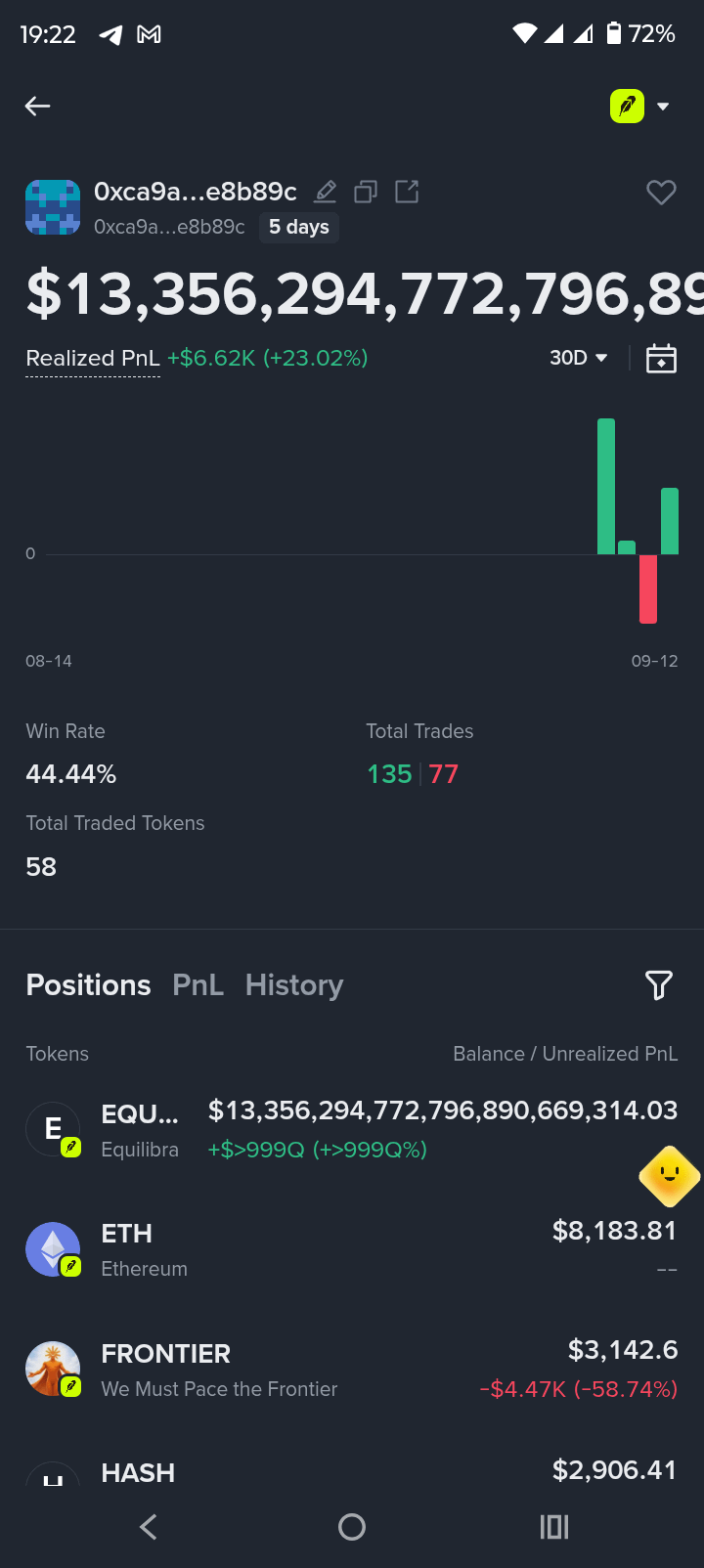
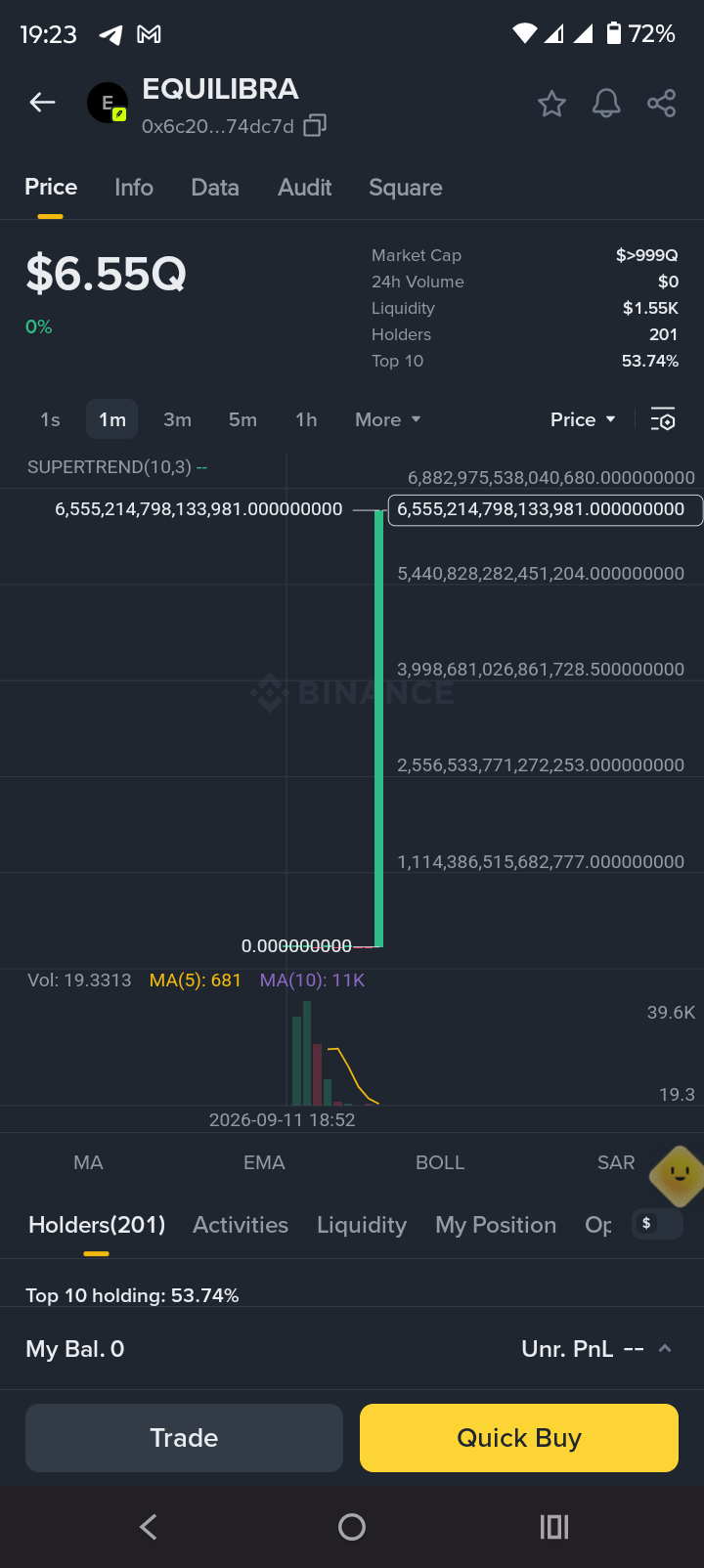
🔥😂🫣 $EQUILIBRA Was zum Teufel passiert mit dieser Coin?
Schau dir einfach ihren Wert an!
Und schau dir auch dieses zufällige Wallet an, das ungefähr
13 000 000 000 000 000 000 000 $ an dieser Coin hält!
Das sind 13 Sextillionen! 13 gefolgt von 21 Nullen!
Memes sind unglaublich, die von Robinhood hören nie auf mich zu überraschen 😂 Was zum Teufel ist das ????
WTF ??? 🔥🔥🔥
#Robinhood #memecoin🚀🚀🚀
🔥😂🫣 $EQUILIBRA Was zum Teufel passiert mit dieser Coin?
Schau dir einfach ihren Wert an!
Und schau dir auch dieses zufällige Wallet an, das ungefähr
13 000 000 000 000 000 000 000 $ an dieser Coin hält!
Das sind 13 Sextillionen! 13 gefolgt von 21 Nullen!
Memes sind unglaublich, die von Robinhood hören nie auf mich zu überraschen 😂 Was zum Teufel ist das ????
WTF ??? 🔥🔥🔥
#Robinhood #memecoin🚀🚀🚀
Schau dir einfach ihren Wert an!
Und schau dir auch dieses zufällige Wallet an, das ungefähr
13 000 000 000 000 000 000 000 $ an dieser Coin hält!
Das sind 13 Sextillionen! 13 gefolgt von 21 Nullen!
Memes sind unglaublich, die von Robinhood hören nie auf mich zu überraschen 😂 Was zum Teufel ist das ????
WTF ??? 🔥🔥🔥
#Robinhood #memecoin🚀🚀🚀
3
2
405
·
--
{spot}(USDPUSDT)
$USDP
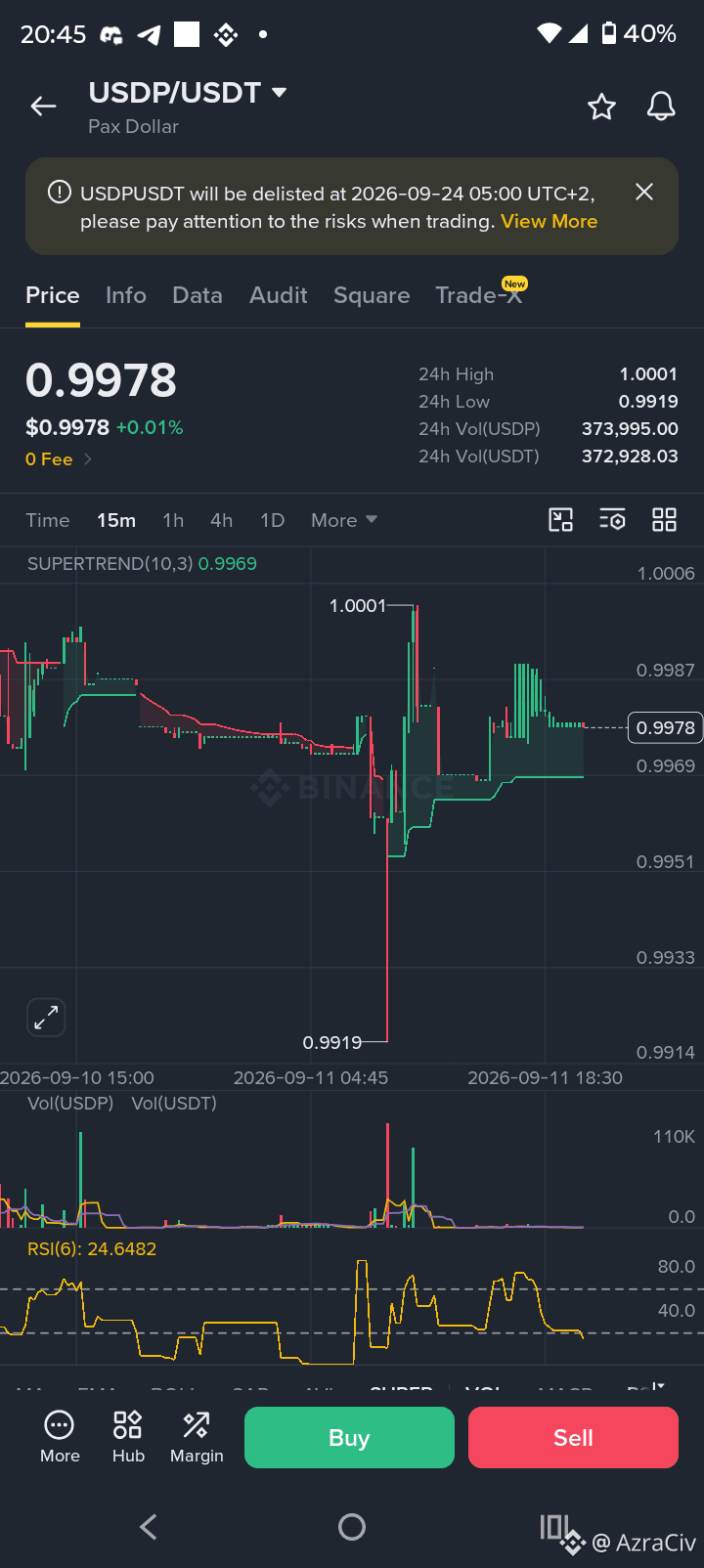
Der Pax-Dollar wird von Binance gestrichen ....
Gelistet seit dem 10. September 2021, mit 0 Gebühren für Trades ist der Pax-Dollar an seinem Datum für die Streichung bei Binance angekommen.
Am 24. September 2026 werden alle Ein- und Auszahlungen sowie Trades mit $USDP kurz davor beendet zu werden,
also falls du noch irgendwelche Bestände hast, handle entsprechend, solange du noch kannst.
Pax ist immer noch unter uns mit seinem bekanntesten Token, dem Pax Gold 🪙 stark wie immer .
$PAXG
{future}(PAXGUSDT)
$USDP
Der Pax-Dollar wird von Binance gestrichen ....
Gelistet seit dem 10. September 2021, mit 0 Gebühren für Trades ist der Pax-Dollar an seinem Datum für die Streichung bei Binance angekommen.
Am 24. September 2026 werden alle Ein- und Auszahlungen sowie Trades mit $USDP kurz davor beendet zu werden,
also falls du noch irgendwelche Bestände hast, handle entsprechend, solange du noch kannst.
Pax ist immer noch unter uns mit seinem bekanntesten Token, dem Pax Gold 🪙 stark wie immer .
$PAXG
Der Pax-Dollar wird von Binance gestrichen ....
Gelistet seit dem 10. September 2021, mit 0 Gebühren für Trades ist der Pax-Dollar an seinem Datum für die Streichung bei Binance angekommen.
Am 24. September 2026 werden alle Ein- und Auszahlungen sowie Trades mit $USDP kurz davor beendet zu werden,
also falls du noch irgendwelche Bestände hast, handle entsprechend, solange du noch kannst.
Pax ist immer noch unter uns mit seinem bekanntesten Token, dem Pax Gold 🪙 stark wie immer .
$PAXG
2
379
·
--
⚠️ Die heutigen Nachrichten 🗞️ zum CPI-Index sehen ein bisschen aus wie eine „Doomsday-Prophezeiung“ 💢🗣️🔊
Der Titel sagt im Grunde Folgendes:
⛽🛢️Öl ist teuer.
Die Fed wird vielleicht (höchstwahrscheinlich) die Zinsen anheben.
$BTC kommt ins Straucheln.
Altcoins werden regelrecht zerdrückt.
Sogar der angeblich bullische Bitcoin-Golden-Cross scheitert bereits im ersten Test.
Irgendwie sehe ich aber trotzdem keinen Grund zur Panik.
Das CPI-Ergebnis war insgesamt ziemlich genau das, was erwartet wurde. Ja, darin steckt eine heißere Zahl, und das macht einen Zinsanstieg im September deutlich wahrscheinlicher.
👀 Aber schau dir alles an, was gleichzeitig passiert. Es sieht aus, als würde Murphys Gesetz Wirklichkeit
👉 „Alles, was schiefgehen kann, wird schiefgehen – und zwar alles auf einmal“ 🤷
Es ist September – historisch gesehen einer der schlechtesten Monate für Krypto.
Wir haben den laufenden Krieg rund um den Iran und Öl;
Was sich wie ein nie endender Krieg in Russland-Ukraine anfühlt;
Die anstehenden US-Wahlen;
Das Clarity Act wird immer noch hin- und hergeschoben;
Europa wird strenger bei Krypto;
🌪️und ein ganzes Bündel kleiner Schlachten, eine nach der anderen...
Also ja: Alle bärischen Signale sind da. Alle auf einmal.
Aber wir haben auch, dass BTC immer noch bei etwa 77.000 $ hält.
Wir Löwen sehen, wie die US-Aktien direkt nach den CPI-News 📰 nach oben gehen.
Wir haben Öl, das rund um die 100 $ tanzt.
Silber und Gold an seinem Platz
Und genau das beobachte ich. 👀
Die Fed wird wahrscheinlich nächste Woche anheben. Die Frage für mich ist,
ob der Markt die Angst davon bereits größtenteils eingepreist hat.
Wenn die Fed-Erhöhung kommt – wird das ein Ereignis auf dem Niveau einer Katastrophe sein oder haben wir den Preis schon bezahlt? {future}(BTCUSDT)
Wenn sich das als eine einzige Anhebung herausstellt und nicht als der Beginn einer viel größeren Straffungsrunde, glaube ich nicht, dass die Reaktion so schlimm sein muss, wie die Schlagzeilen es klingen lassen.
Ich bleibe bullisch genug, um meine Position zu halten, aber nicht bullisch genug, um die Risiken zu ignorieren. Vorsichtig bullisch, wenn man so will... Krypto hat Schlimmeres überlebt, wir brechen nicht so leicht ein.
Was denkt ihr: Fed-Anhebung und noch mehr Schmerzen – oder ist die Anhebung schon eingepreist?
#CPIWatch
⚠️ Die heutigen Nachrichten 🗞️ zum CPI-Index sehen ein bisschen aus wie eine „Doomsday-Prophezeiung“ 💢🗣️🔊
Der Titel sagt im Grunde Folgendes:
⛽🛢️Öl ist teuer.
Die Fed wird vielleicht (höchstwahrscheinlich) die Zinsen anheben.
$BTC kommt ins Straucheln.
Altcoins werden regelrecht zerdrückt.
Sogar der angeblich bullische Bitcoin-Golden-Cross scheitert bereits im ersten Test.
Irgendwie sehe ich aber trotzdem keinen Grund zur Panik.
Das CPI-Ergebnis war insgesamt ziemlich genau das, was erwartet wurde. Ja, darin steckt eine heißere Zahl, und das macht einen Zinsanstieg im September deutlich wahrscheinlicher.
👀 Aber schau dir alles an, was gleichzeitig passiert. Es sieht aus, als würde Murphys Gesetz Wirklichkeit
👉 „Alles, was schiefgehen kann, wird schiefgehen – und zwar alles auf einmal“ 🤷
Es ist September – historisch gesehen einer der schlechtesten Monate für Krypto.
Wir haben den laufenden Krieg rund um den Iran und Öl;
Was sich wie ein nie endender Krieg in Russland-Ukraine anfühlt;
Die anstehenden US-Wahlen;
Das Clarity Act wird immer noch hin- und hergeschoben;
Europa wird strenger bei Krypto;
🌪️und ein ganzes Bündel kleiner Schlachten, eine nach der anderen...
Also ja: Alle bärischen Signale sind da. Alle auf einmal.
Aber wir haben auch, dass BTC immer noch bei etwa 77.000 $ hält.
Wir Löwen sehen, wie die US-Aktien direkt nach den CPI-News 📰 nach oben gehen.
Wir haben Öl, das rund um die 100 $ tanzt.
Silber und Gold an seinem Platz
Und genau das beobachte ich. 👀
Die Fed wird wahrscheinlich nächste Woche anheben. Die Frage für mich ist,
ob der Markt die Angst davon bereits größtenteils eingepreist hat.
Wenn die Fed-Erhöhung kommt – wird das ein Ereignis auf dem Niveau einer Katastrophe sein oder haben wir den Preis schon bezahlt?
Wenn sich das als eine einzige Anhebung herausstellt und nicht als der Beginn einer viel größeren Straffungsrunde, glaube ich nicht, dass die Reaktion so schlimm sein muss, wie die Schlagzeilen es klingen lassen.
Ich bleibe bullisch genug, um meine Position zu halten, aber nicht bullisch genug, um die Risiken zu ignorieren. Vorsichtig bullisch, wenn man so will... Krypto hat Schlimmeres überlebt, wir brechen nicht so leicht ein.
Was denkt ihr: Fed-Anhebung und noch mehr Schmerzen – oder ist die Anhebung schon eingepreist?
#CPIWatch
Der Titel sagt im Grunde Folgendes:
⛽🛢️Öl ist teuer.
Die Fed wird vielleicht (höchstwahrscheinlich) die Zinsen anheben.
$BTC kommt ins Straucheln.
Altcoins werden regelrecht zerdrückt.
Sogar der angeblich bullische Bitcoin-Golden-Cross scheitert bereits im ersten Test.
Irgendwie sehe ich aber trotzdem keinen Grund zur Panik.
Das CPI-Ergebnis war insgesamt ziemlich genau das, was erwartet wurde. Ja, darin steckt eine heißere Zahl, und das macht einen Zinsanstieg im September deutlich wahrscheinlicher.
👀 Aber schau dir alles an, was gleichzeitig passiert. Es sieht aus, als würde Murphys Gesetz Wirklichkeit
👉 „Alles, was schiefgehen kann, wird schiefgehen – und zwar alles auf einmal“ 🤷
Es ist September – historisch gesehen einer der schlechtesten Monate für Krypto.
Wir haben den laufenden Krieg rund um den Iran und Öl;
Was sich wie ein nie endender Krieg in Russland-Ukraine anfühlt;
Die anstehenden US-Wahlen;
Das Clarity Act wird immer noch hin- und hergeschoben;
Europa wird strenger bei Krypto;
🌪️und ein ganzes Bündel kleiner Schlachten, eine nach der anderen...
Also ja: Alle bärischen Signale sind da. Alle auf einmal.
Aber wir haben auch, dass BTC immer noch bei etwa 77.000 $ hält.
Wir Löwen sehen, wie die US-Aktien direkt nach den CPI-News 📰 nach oben gehen.
Wir haben Öl, das rund um die 100 $ tanzt.
Silber und Gold an seinem Platz
Und genau das beobachte ich. 👀
Die Fed wird wahrscheinlich nächste Woche anheben. Die Frage für mich ist,
ob der Markt die Angst davon bereits größtenteils eingepreist hat.
Wenn die Fed-Erhöhung kommt – wird das ein Ereignis auf dem Niveau einer Katastrophe sein oder haben wir den Preis schon bezahlt?
Wenn sich das als eine einzige Anhebung herausstellt und nicht als der Beginn einer viel größeren Straffungsrunde, glaube ich nicht, dass die Reaktion so schlimm sein muss, wie die Schlagzeilen es klingen lassen.
Ich bleibe bullisch genug, um meine Position zu halten, aber nicht bullisch genug, um die Risiken zu ignorieren. Vorsichtig bullisch, wenn man so will... Krypto hat Schlimmeres überlebt, wir brechen nicht so leicht ein.
Was denkt ihr: Fed-Anhebung und noch mehr Schmerzen – oder ist die Anhebung schon eingepreist?
#CPIWatch

4
469
·
--
🔥 Neues kleines Spiel auf Binance genannt
🖇️👉 [The BinanceAI Delights](https://www.binance.com/activity/chance/nvdabGOC?ref=AZRACIV23)
Bei dem du 🫵 bStocks handeln musst – $NVDAB – und du kannst den Rewards Circle drehen.
Dieses Mal – keine POOL-Option !
Was musst du tun ?
Geh auf den Link und LIES die Aufgaben – sie unterscheiden sich je nachdem, ob du zum ersten Mal bStocks handelst oder nicht.
👉 Neue Nutzer müssen: $500 BUY-Volumen auf Spot für die berechtigten bStocks haben (es zählt nur das Buy-Volumen ! )
👉 Während Nutzer, die bereits bStock-Trades haben, mindestens $300 Buy-Volumen auf Spot benötigen.
Die zweite Aufgabe ist: 10k-Volumen erreichen.
👉 Für BESTIMMTE Regionen ist diese Aufgabe im Reward Hub und bringt auch tägliche Punkte – also schau in deinen Reward Hubs nach. Ich bin mir nicht sicher, für welche Regionen das funktioniert; bei mir funktioniert es nicht.
⚠️Das ist NFA !
Handel NICHT 🚫 nur wegen der Aufgabe – du könntest am Ende mehr an Gebühren verlieren, als ich dadurch bekomme !
Handel klug !
Öffne zuerst den Link und prüfe, ob du für die Aufgabe berechtigt bist, dann handeln !
Denk daran – für diese eine zählt nur das Buy-Volumen !
Viel Glück 🤞
$NVDAB #BStocks #NVIDIA
🔥 Neues kleines Spiel auf Binance genannt
🖇️👉 The BinanceAI Delights
Bei dem du 🫵 bStocks handeln musst – $NVDAB – und du kannst den Rewards Circle drehen.
Dieses Mal – keine POOL-Option !
Was musst du tun ?
Geh auf den Link und LIES die Aufgaben – sie unterscheiden sich je nachdem, ob du zum ersten Mal bStocks handelst oder nicht.
👉 Neue Nutzer müssen: $500 BUY-Volumen auf Spot für die berechtigten bStocks haben (es zählt nur das Buy-Volumen ! )
👉 Während Nutzer, die bereits bStock-Trades haben, mindestens $300 Buy-Volumen auf Spot benötigen.
Die zweite Aufgabe ist: 10k-Volumen erreichen.
👉 Für BESTIMMTE Regionen ist diese Aufgabe im Reward Hub und bringt auch tägliche Punkte – also schau in deinen Reward Hubs nach. Ich bin mir nicht sicher, für welche Regionen das funktioniert; bei mir funktioniert es nicht.
⚠️Das ist NFA !
Handel NICHT 🚫 nur wegen der Aufgabe – du könntest am Ende mehr an Gebühren verlieren, als ich dadurch bekomme !
Handel klug !
Öffne zuerst den Link und prüfe, ob du für die Aufgabe berechtigt bist, dann handeln !
Denk daran – für diese eine zählt nur das Buy-Volumen !
Viel Glück 🤞
$NVDAB #BStocks #NVIDIA
🖇️👉 The BinanceAI Delights
Bei dem du 🫵 bStocks handeln musst – $NVDAB – und du kannst den Rewards Circle drehen.
Dieses Mal – keine POOL-Option !
Was musst du tun ?
Geh auf den Link und LIES die Aufgaben – sie unterscheiden sich je nachdem, ob du zum ersten Mal bStocks handelst oder nicht.
👉 Neue Nutzer müssen: $500 BUY-Volumen auf Spot für die berechtigten bStocks haben (es zählt nur das Buy-Volumen ! )
👉 Während Nutzer, die bereits bStock-Trades haben, mindestens $300 Buy-Volumen auf Spot benötigen.
Die zweite Aufgabe ist: 10k-Volumen erreichen.
👉 Für BESTIMMTE Regionen ist diese Aufgabe im Reward Hub und bringt auch tägliche Punkte – also schau in deinen Reward Hubs nach. Ich bin mir nicht sicher, für welche Regionen das funktioniert; bei mir funktioniert es nicht.
⚠️Das ist NFA !
Handel NICHT 🚫 nur wegen der Aufgabe – du könntest am Ende mehr an Gebühren verlieren, als ich dadurch bekomme !
Handel klug !
Öffne zuerst den Link und prüfe, ob du für die Aufgabe berechtigt bist, dann handeln !
Denk daran – für diese eine zählt nur das Buy-Volumen !
Viel Glück 🤞
$NVDAB #BStocks #NVIDIA


3
3
113
·
--
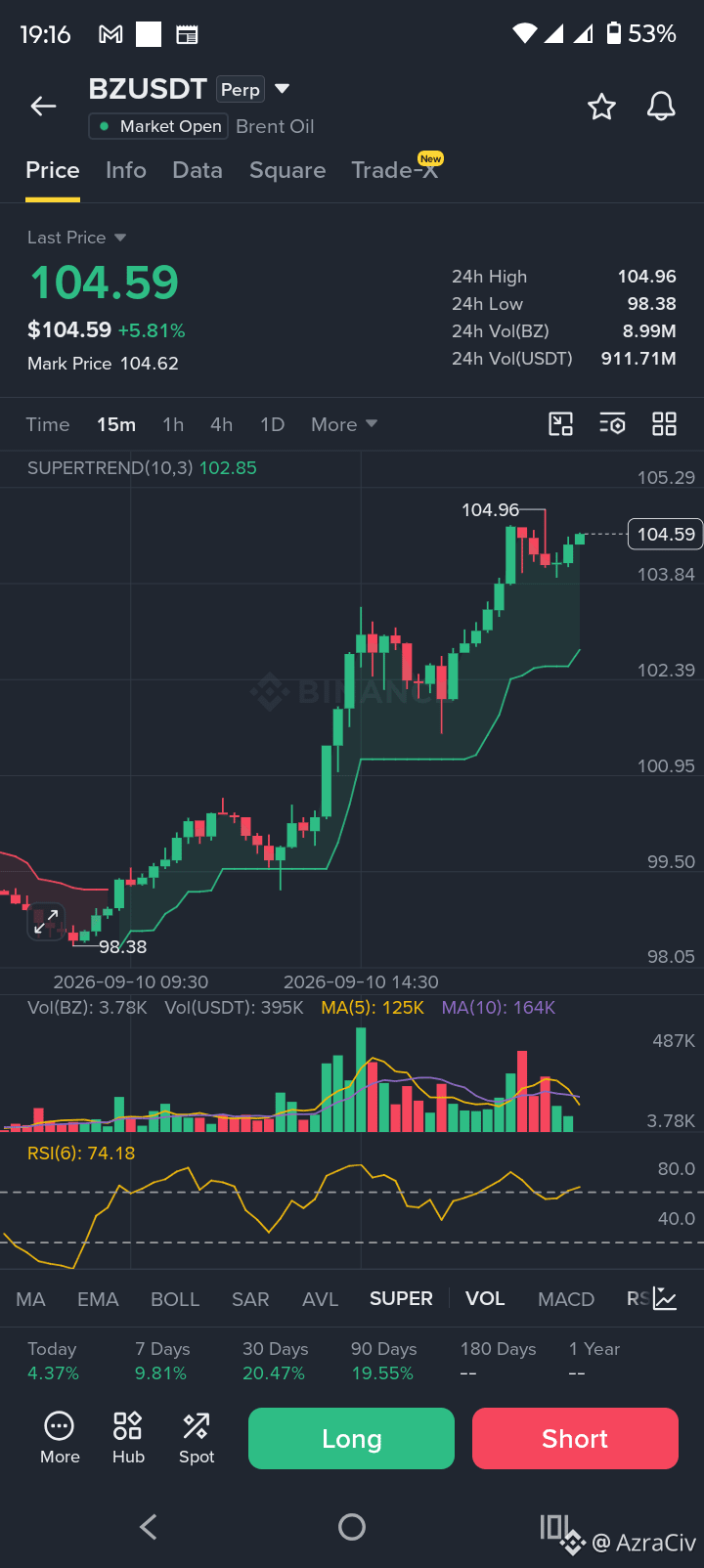
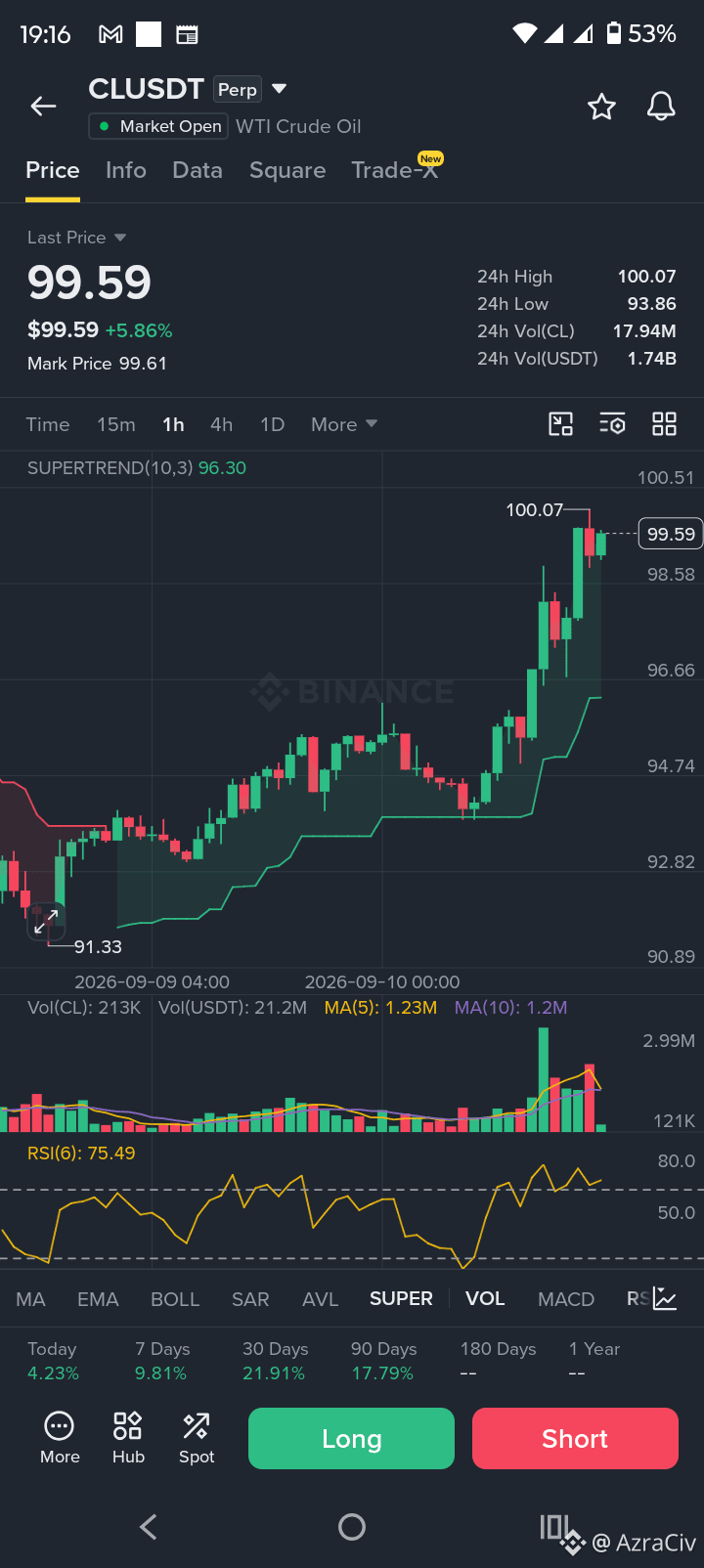
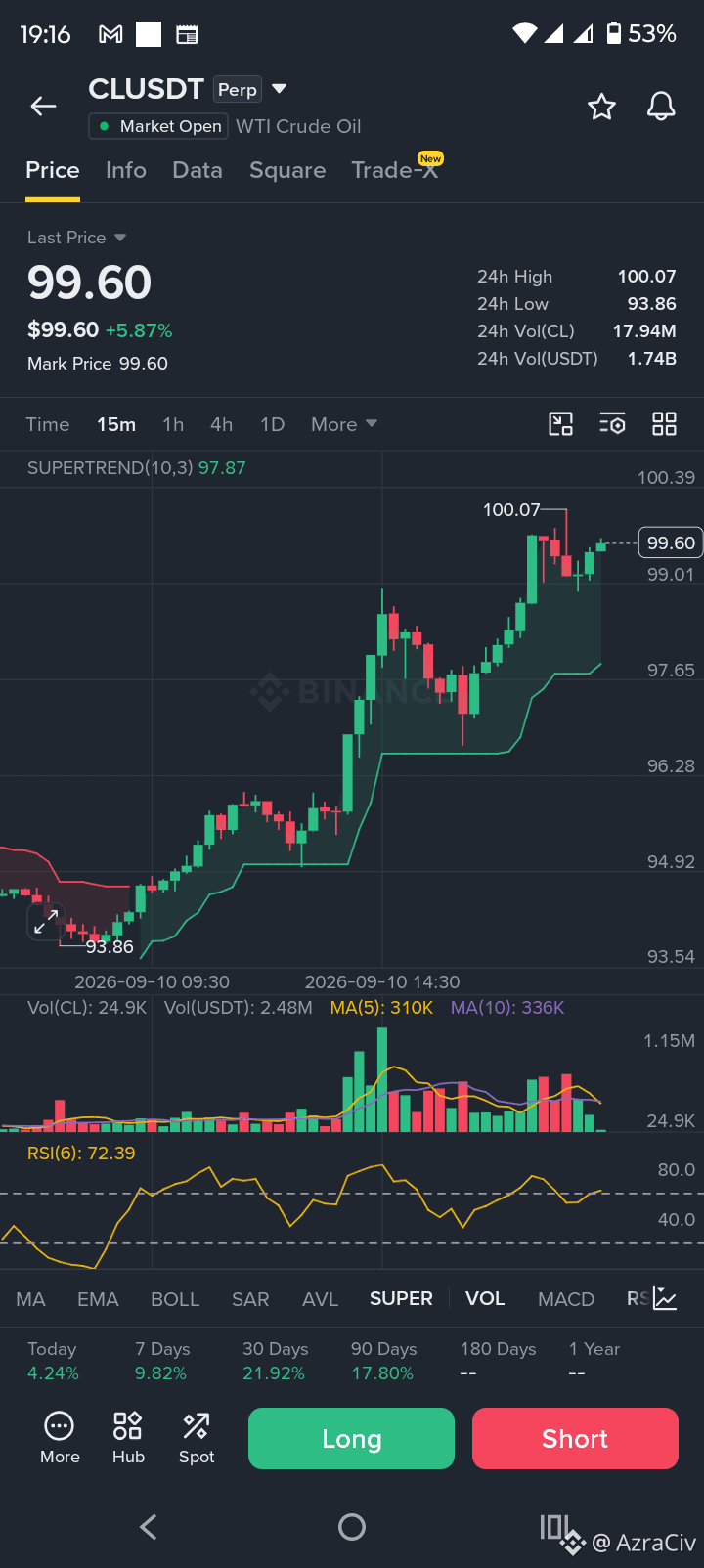
💥🛢️⛽
$CL
{future}(CLUSDT)
$BZ
{future}(BZUSDT)
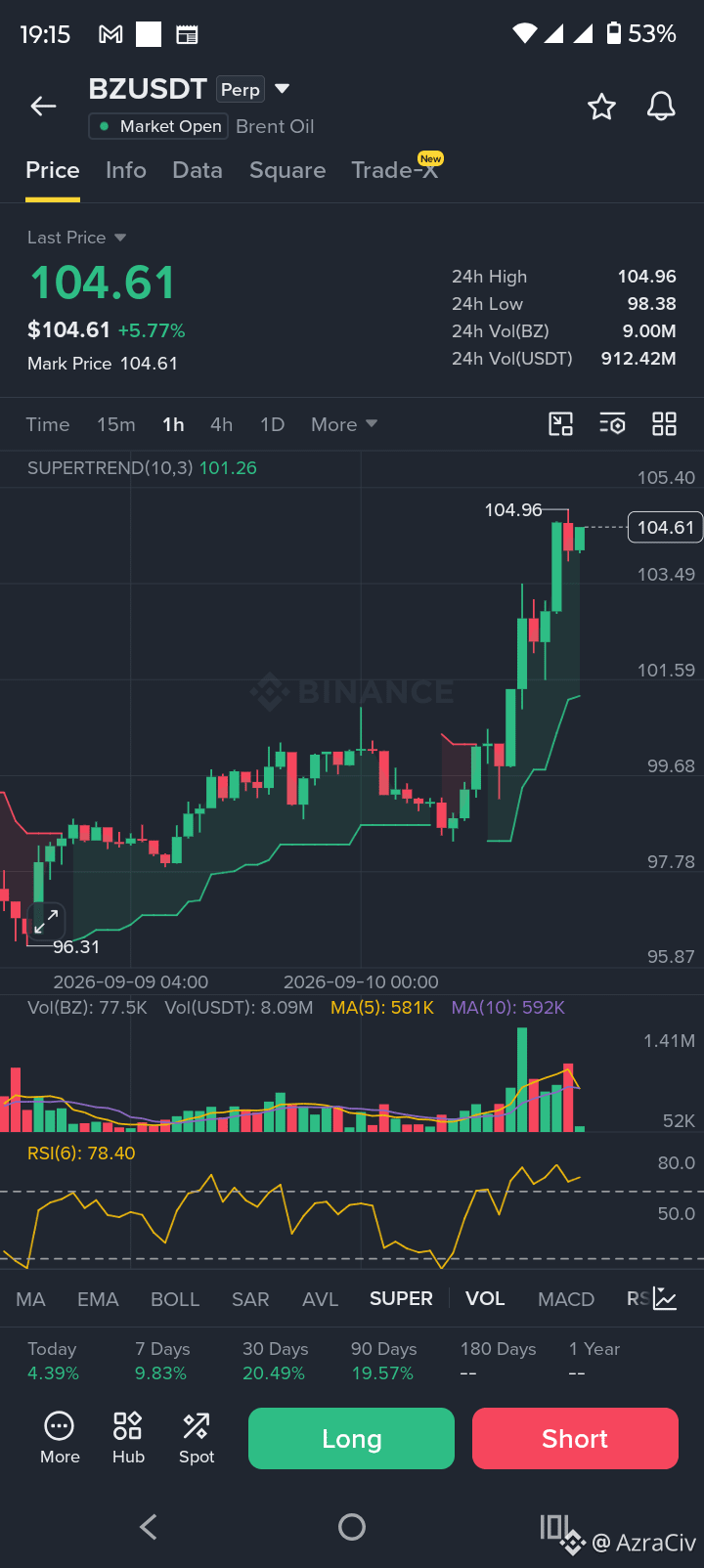
Mit dem Krieg gegen ÖL 🛢️🪔 läuft immer noch
das ständige
wir haben es uns ausgedacht -/nein haben wir nicht - Krieg an /Krieg aus
News 🗞️
und der Ölpreis 🛢️🪔 dreht weltweit durch bis in verrückte Höhen 🌎
( In meinem Land zumindest wird es teurer, während ich das tippe), mein bester Tipp ist, dass es überall dasselbe Bild ist)
Es ist überhaupt nicht verwunderlich, dass diese Tokens auch bullisch sind.
Wir sehen $CL , die um die psychologische $100-Marke herumtanzt und sein Widerstand genau auf demselben Preisniveau anschiebt ,
und wie immer führt Brant bereits die Show mit dem Preis über $100...
Also ist das gute Nachrichten oder schlechte—ist angesichts der Umstände ziemlich schwer zu sagen 🤷
#IranSaysReadyToEscalateWarWithUS
💥🛢️⛽
$CL
$BZ
Mit dem Krieg gegen ÖL 🛢️🪔 läuft immer noch
das ständige
wir haben es uns ausgedacht -/nein haben wir nicht - Krieg an /Krieg aus
News 🗞️
und der Ölpreis 🛢️🪔 dreht weltweit durch bis in verrückte Höhen 🌎
( In meinem Land zumindest wird es teurer, während ich das tippe), mein bester Tipp ist, dass es überall dasselbe Bild ist)
Es ist überhaupt nicht verwunderlich, dass diese Tokens auch bullisch sind.
Wir sehen $CL , die um die psychologische $100-Marke herumtanzt und sein Widerstand genau auf demselben Preisniveau anschiebt ,
und wie immer führt Brant bereits die Show mit dem Preis über $100...
Also ist das gute Nachrichten oder schlechte—ist angesichts der Umstände ziemlich schwer zu sagen 🤷
#IranSaysReadyToEscalateWarWithUS
$CL
$BZ
Mit dem Krieg gegen ÖL 🛢️🪔 läuft immer noch
das ständige
wir haben es uns ausgedacht -/nein haben wir nicht - Krieg an /Krieg aus
News 🗞️
und der Ölpreis 🛢️🪔 dreht weltweit durch bis in verrückte Höhen 🌎
( In meinem Land zumindest wird es teurer, während ich das tippe), mein bester Tipp ist, dass es überall dasselbe Bild ist)
Es ist überhaupt nicht verwunderlich, dass diese Tokens auch bullisch sind.
Wir sehen $CL , die um die psychologische $100-Marke herumtanzt und sein Widerstand genau auf demselben Preisniveau anschiebt ,
und wie immer führt Brant bereits die Show mit dem Preis über $100...
Also ist das gute Nachrichten oder schlechte—ist angesichts der Umstände ziemlich schwer zu sagen 🤷
#IranSaysReadyToEscalateWarWithUS
3
4
871
·
--
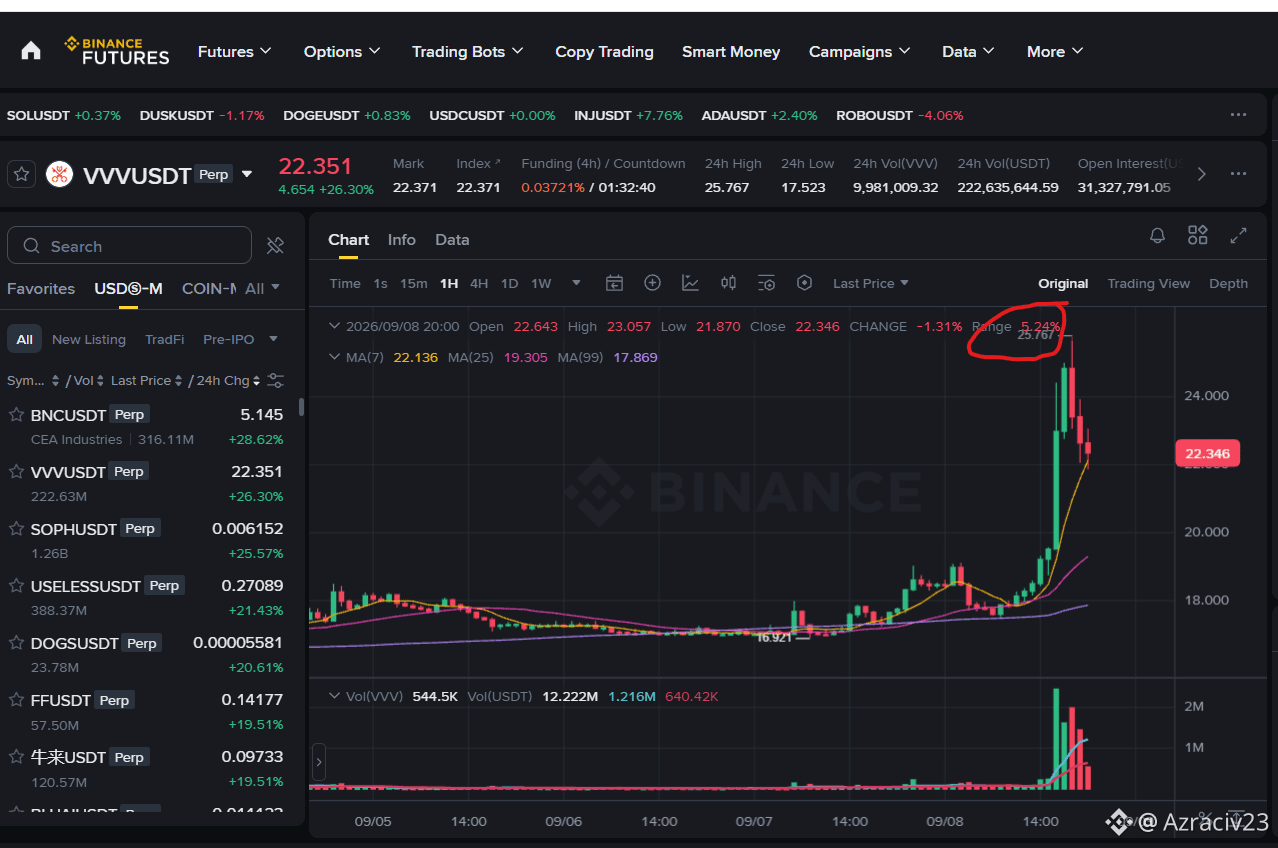
😅 Unglaublich, gerade als ich das gepostet habe, hat die Coin einen Kurs von 25 $ erreicht und diese unglaubliche Short-Position gestartet, von der ich dir erzählt habe 😅 Warum ich das nicht überprüft habe, weiß ich nicht, ich war mit ein paar Dingen zu Hause beschäftigt 😭.
$VVV ytou, diesmal läufst du weg, aber es wird bald ein Duell geben 😂
{future}(VVVUSDT)
😅 Unglaublich, gerade als ich das gepostet habe, hat die Coin einen Kurs von 25 $ erreicht und diese unglaubliche Short-Position gestartet, von der ich dir erzählt habe 😅 Warum ich das nicht überprüft habe, weiß ich nicht, ich war mit ein paar Dingen zu Hause beschäftigt 😭.
$VVV ytou, diesmal läufst du weg, aber es wird bald ein Duell geben 😂
$VVV ytou, diesmal läufst du weg, aber es wird bald ein Duell geben 😂

AzraCiv
·
--
💥 $VVV
Der Venecian Token dreht heute komplett durch 🐂 !
Er hat sein ATH schon ein paar Mal gebrochen und macht immer noch weiter!
Schau dir einfach diese riesige grüne Kerze an, die aussieht, als würde sie nie nachgeben!
Aber wahrscheinlich wird sie das doch – ganz am Ende ...
Dann wird es ein großartiger Short, wenn es soweit ist 🔥
Der Venecian Token dreht heute komplett durch 🐂 !
Er hat sein ATH schon ein paar Mal gebrochen und macht immer noch weiter!
Schau dir einfach diese riesige grüne Kerze an, die aussieht, als würde sie nie nachgeben!
Aber wahrscheinlich wird sie das doch – ganz am Ende ...
Dann wird es ein großartiger Short, wenn es soweit ist 🔥
2
237
·
--
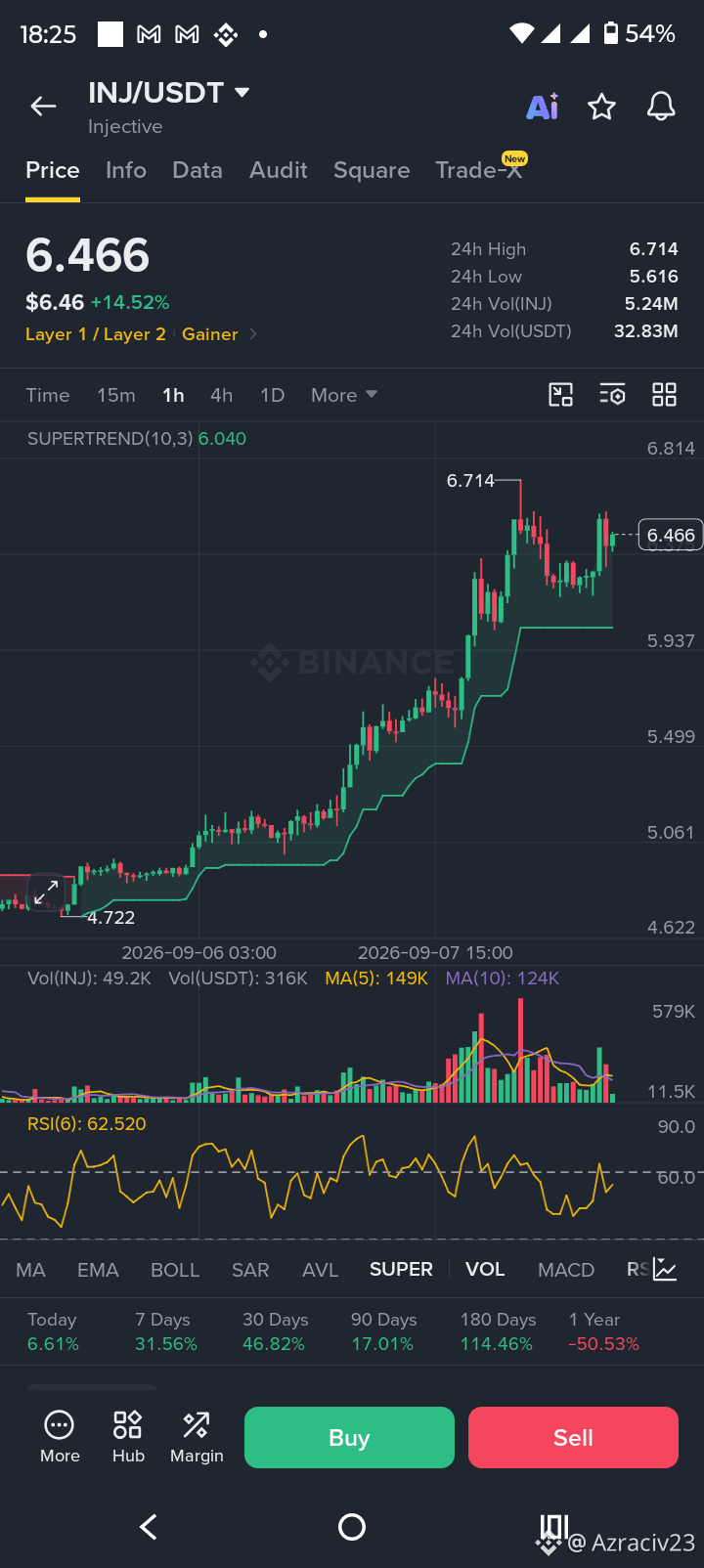
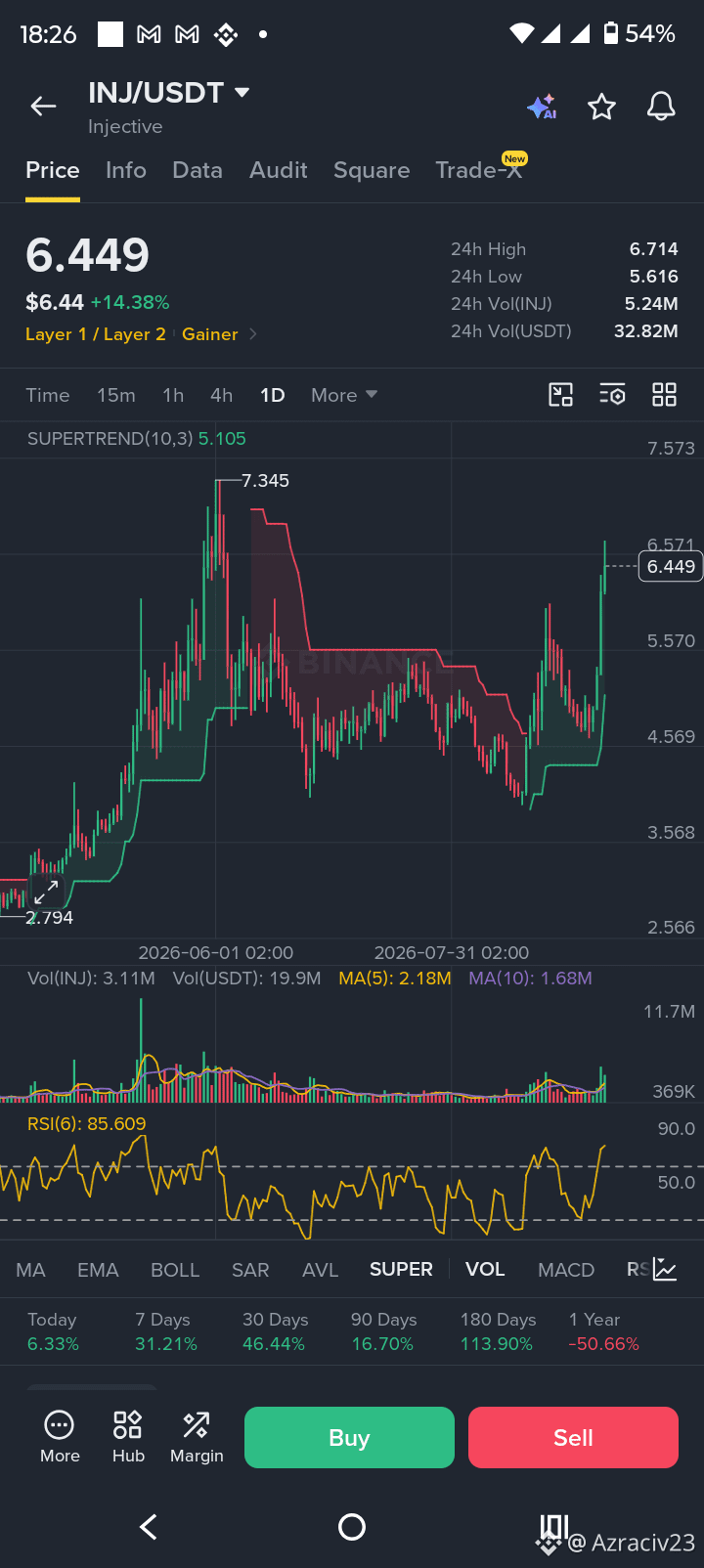
30D-Trade $INJ 117.7 USDT
$INJ Ich habe das mehrfach wiederholt – behalte etwas $INJ für dein Spot-Portfolio für „wenn die Bullen kommen“.
🫴🐂 nun ... sie kommen! 💥🔥🧑🩰
$INJ Ich habe das mehrfach wiederholt – behalte etwas $INJ für dein Spot-Portfolio für „wenn die Bullen kommen“.
🫴🐂 nun ... sie kommen! 💥🔥🧑🩰
🫴🐂 nun ... sie kommen! 💥🔥🧑🩰
3
252
·
--
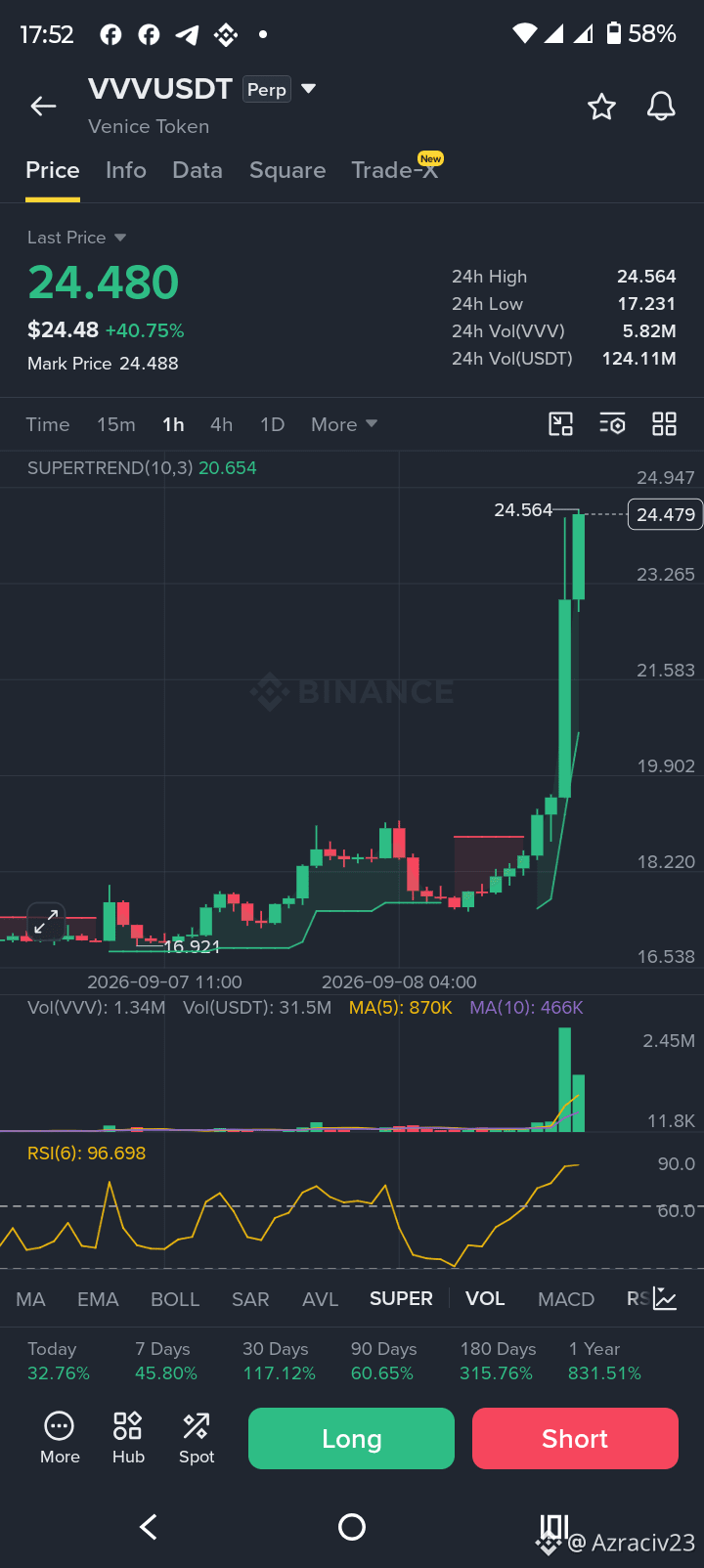
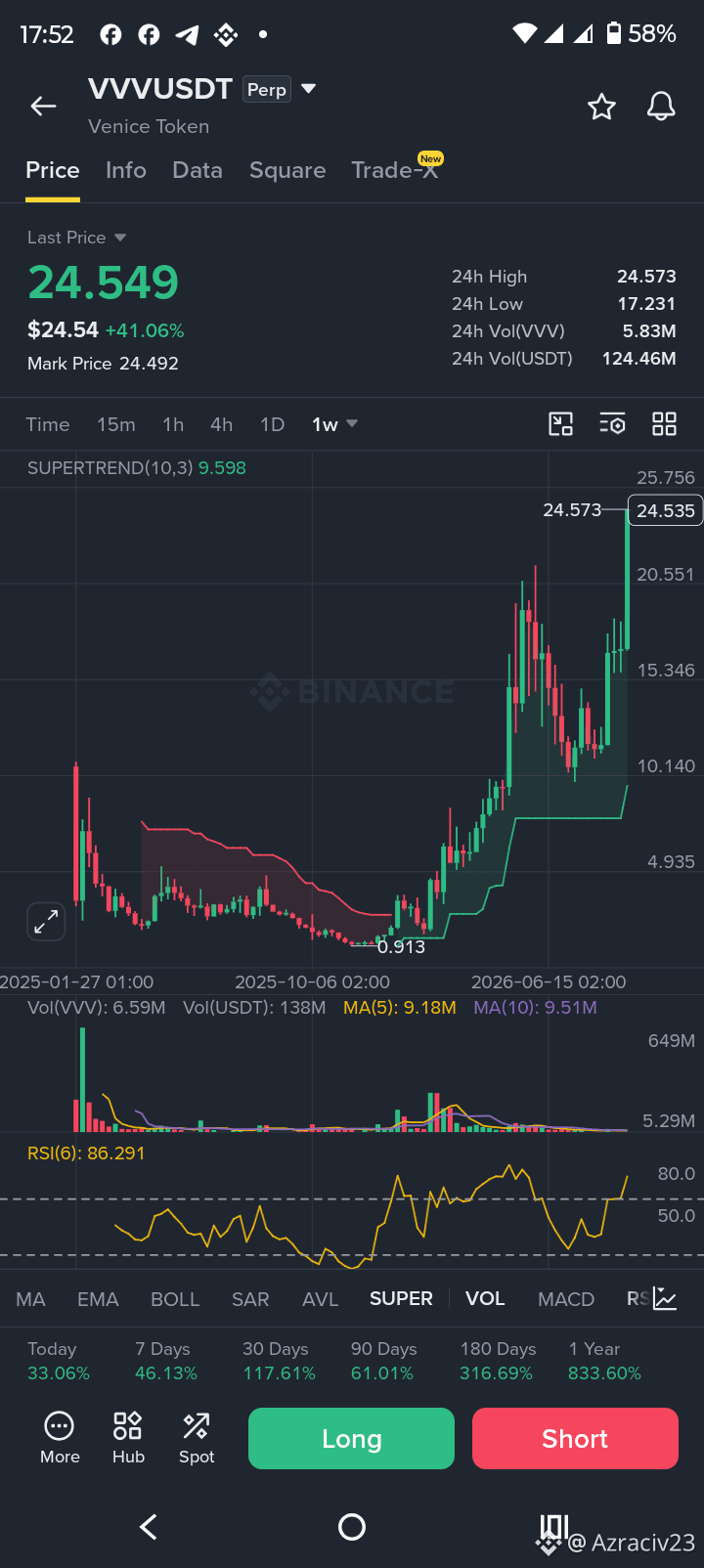
💥 $VVV
Der Venecian Token dreht heute komplett durch 🐂 !
Er hat sein ATH schon ein paar Mal gebrochen und macht immer noch weiter!
Schau dir einfach diese riesige grüne Kerze an, die aussieht, als würde sie nie nachgeben!
Aber wahrscheinlich wird sie das doch – ganz am Ende ...
Dann wird es ein großartiger Short, wenn es soweit ist 🔥
{future}(VVVUSDT)
💥 $VVV
Der Venecian Token dreht heute komplett durch 🐂 !
Er hat sein ATH schon ein paar Mal gebrochen und macht immer noch weiter!
Schau dir einfach diese riesige grüne Kerze an, die aussieht, als würde sie nie nachgeben!
Aber wahrscheinlich wird sie das doch – ganz am Ende ...
Dann wird es ein großartiger Short, wenn es soweit ist 🔥
Der Venecian Token dreht heute komplett durch 🐂 !
Er hat sein ATH schon ein paar Mal gebrochen und macht immer noch weiter!
Schau dir einfach diese riesige grüne Kerze an, die aussieht, als würde sie nie nachgeben!
Aber wahrscheinlich wird sie das doch – ganz am Ende ...
Dann wird es ein großartiger Short, wenn es soweit ist 🔥
1
2
279
·
--
Schau dir das neueste Video an und die Kraft der Community – egal, was du tust, es ist besser, wenn du es zusammen machst
#StarLineTeam (●'◡'●)
Schau dir das neueste Video an und die Kraft der Community – egal, was du tust, es ist besser, wenn du es zusammen machst
#StarLineTeam (●'◡'●)
#StarLineTeam (●'◡'●)


will win 张
·
--
Wenn es gerade keinen Kurs gibt, dann genieße doch einfach die Musik aus der Krypto-Szene 😄$ETH ,$DOGE ,$ZEC
1
2
179
·
--
Haben Sie nicht bemerkt, dass wir jetzt einen neuen Tab haben
➡️ ✨ Stocks ✨
In der Binance-App?
Lesen Sie alles darüber 👇
$SNDKB
{spot}(SNDKBUSDT)
Haben Sie nicht bemerkt, dass wir jetzt einen neuen Tab haben
➡️ ✨ Stocks ✨
In der Binance-App?
Lesen Sie alles darüber 👇
$SNDKB
➡️ ✨ Stocks ✨
In der Binance-App?
Lesen Sie alles darüber 👇
$SNDKB


Binance Square Official
·
--
Der Tab „Aktien“ ist jetzt auf Binance Square live.
Alles an einem Ort für Marktnachrichten, Micro- und Makro-Einblicke sowie Aktien-Diskussionen.
Teile deine Gedanken zum Tab „Aktien“ in den Kommentaren. Wir wählen 3 Kommentatoren aus, die ein 20-USD-Rotpacket erhalten 👇
Web: Besuche https://www.binance.com/en/square/stock
App: Aktualisiere die Binance-App auf v3.19 oder höher, um den Tab „Aktien“ in der oberen Navigationsleiste zu sehen, oder gehe zu „Navigation bearbeiten“, um den Tab „Aktien“ zu aktivieren.
Alles an einem Ort für Marktnachrichten, Micro- und Makro-Einblicke sowie Aktien-Diskussionen.
Teile deine Gedanken zum Tab „Aktien“ in den Kommentaren. Wir wählen 3 Kommentatoren aus, die ein 20-USD-Rotpacket erhalten 👇
Web: Besuche https://www.binance.com/en/square/stock
App: Aktualisiere die Binance-App auf v3.19 oder höher, um den Tab „Aktien“ in der oberen Navigationsleiste zu sehen, oder gehe zu „Navigation bearbeiten“, um den Tab „Aktien“ zu aktivieren.

2
2
296
·
--
💥🥧🔥
$PIEVERSE
{future}(PIEVERSEUSDT)
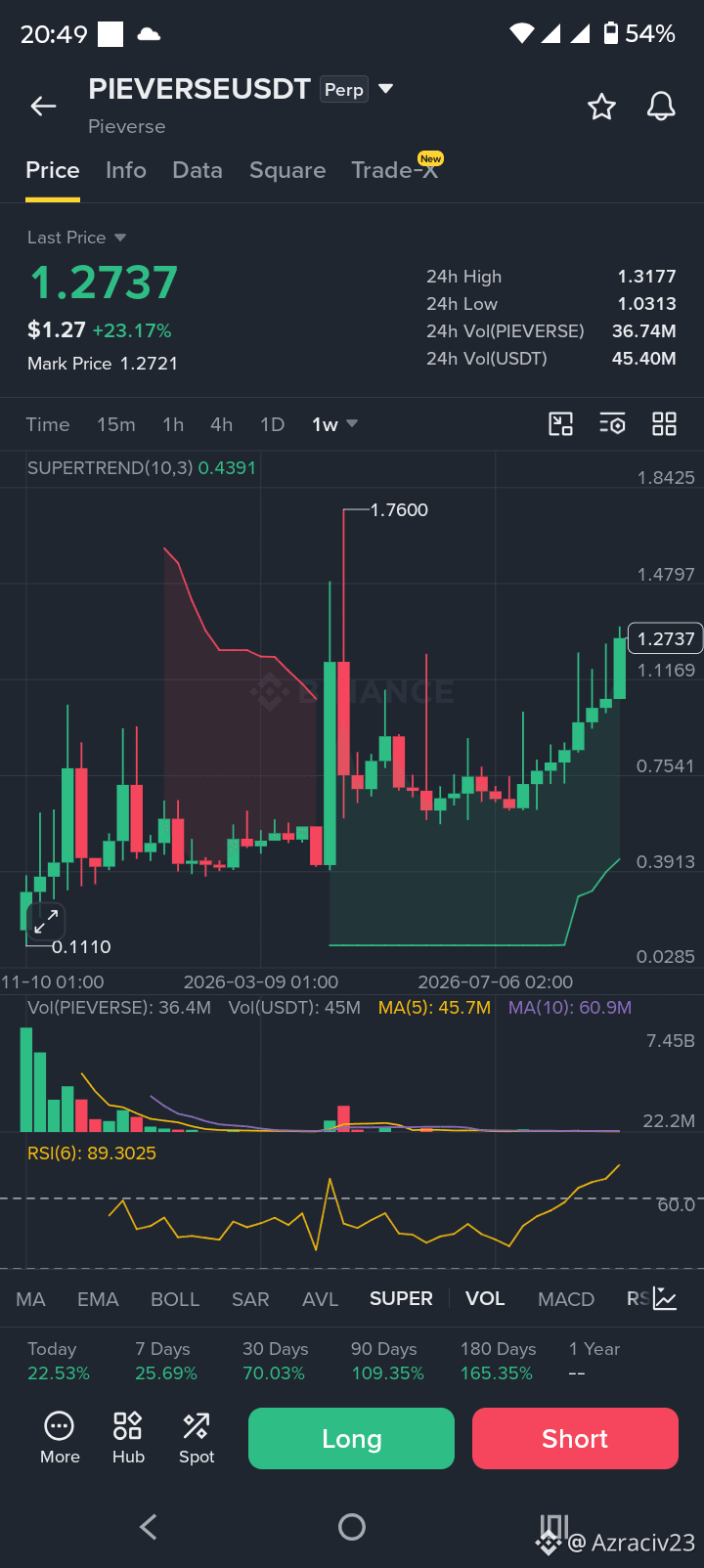
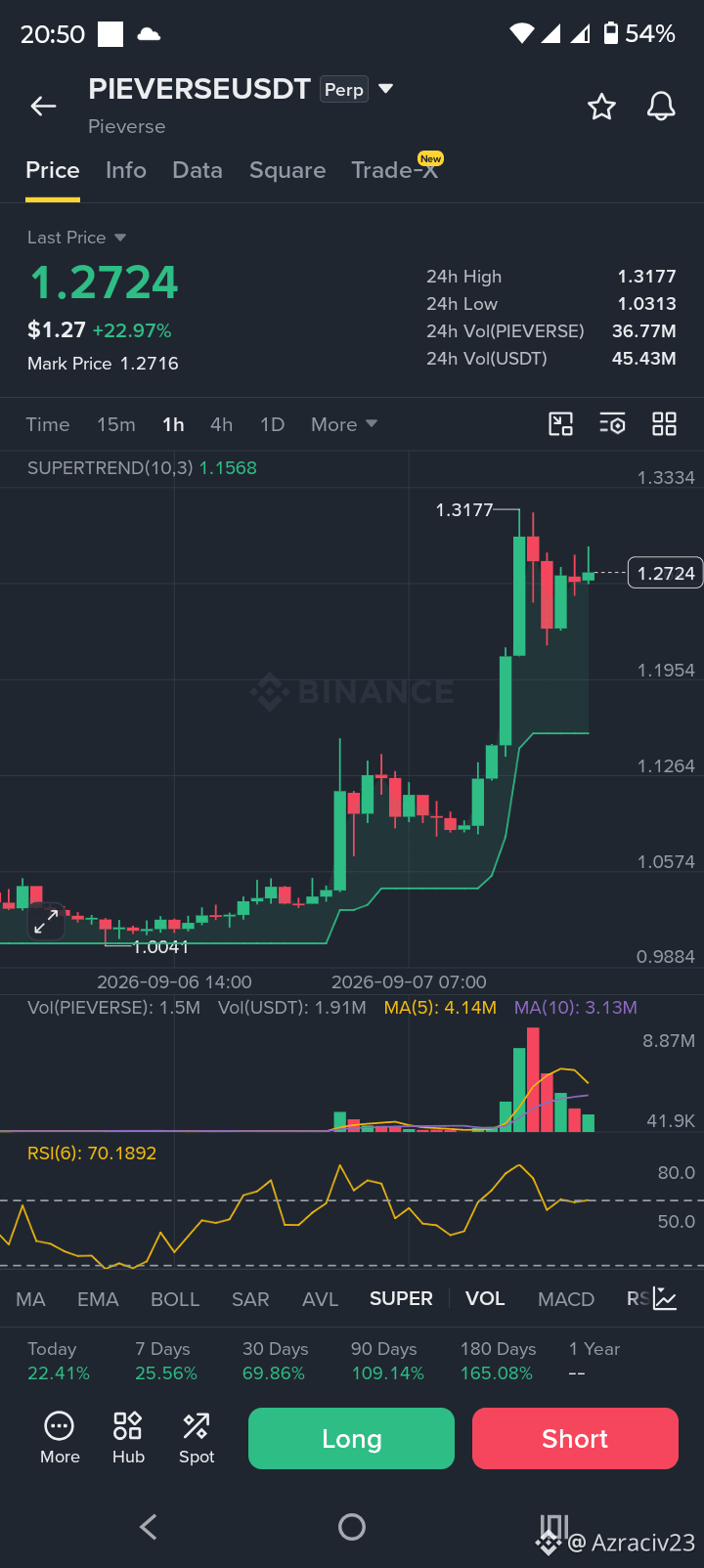
Sieht wirklich so aus, als würde es auf ein neues Allzeithoch zusteuern.
Sein ATH ist 1,6 $, aber wir haben es schon seit LAAANGER Zeit nicht mehr zu dem heutigen Preis gesehen: 1,27 $.
Schau dir den 1-Wochen-Chart an!
ᕦ(ಠ_ಠ)ᕤ
Die Shorts wollten es runterdrücken, aber es blieb stark. 💪
Werden wir ein neues ATH von $PIEVERSE sehen?
Ich hoffe es jedenfalls! π|¢√¢®§¢
🧑🩰🤸🏻✌️
💥🥧🔥
$PIEVERSE
Sieht wirklich so aus, als würde es auf ein neues Allzeithoch zusteuern.
Sein ATH ist 1,6 $, aber wir haben es schon seit LAAANGER Zeit nicht mehr zu dem heutigen Preis gesehen: 1,27 $.
Schau dir den 1-Wochen-Chart an!
ᕦ(ಠ_ಠ)ᕤ
Die Shorts wollten es runterdrücken, aber es blieb stark. 💪
Werden wir ein neues ATH von $PIEVERSE sehen?
Ich hoffe es jedenfalls! π|¢√¢®§¢
🧑🩰🤸🏻✌️
$PIEVERSE
Sieht wirklich so aus, als würde es auf ein neues Allzeithoch zusteuern.
Sein ATH ist 1,6 $, aber wir haben es schon seit LAAANGER Zeit nicht mehr zu dem heutigen Preis gesehen: 1,27 $.
Schau dir den 1-Wochen-Chart an!
ᕦ(ಠ_ಠ)ᕤ
Die Shorts wollten es runterdrücken, aber es blieb stark. 💪
Werden wir ein neues ATH von $PIEVERSE sehen?
Ich hoffe es jedenfalls! π|¢√¢®§¢
🧑🩰🤸🏻✌️
289
·
--
🤯 ( ͝° ͜ʖ͡°)ᕤ 🏋️
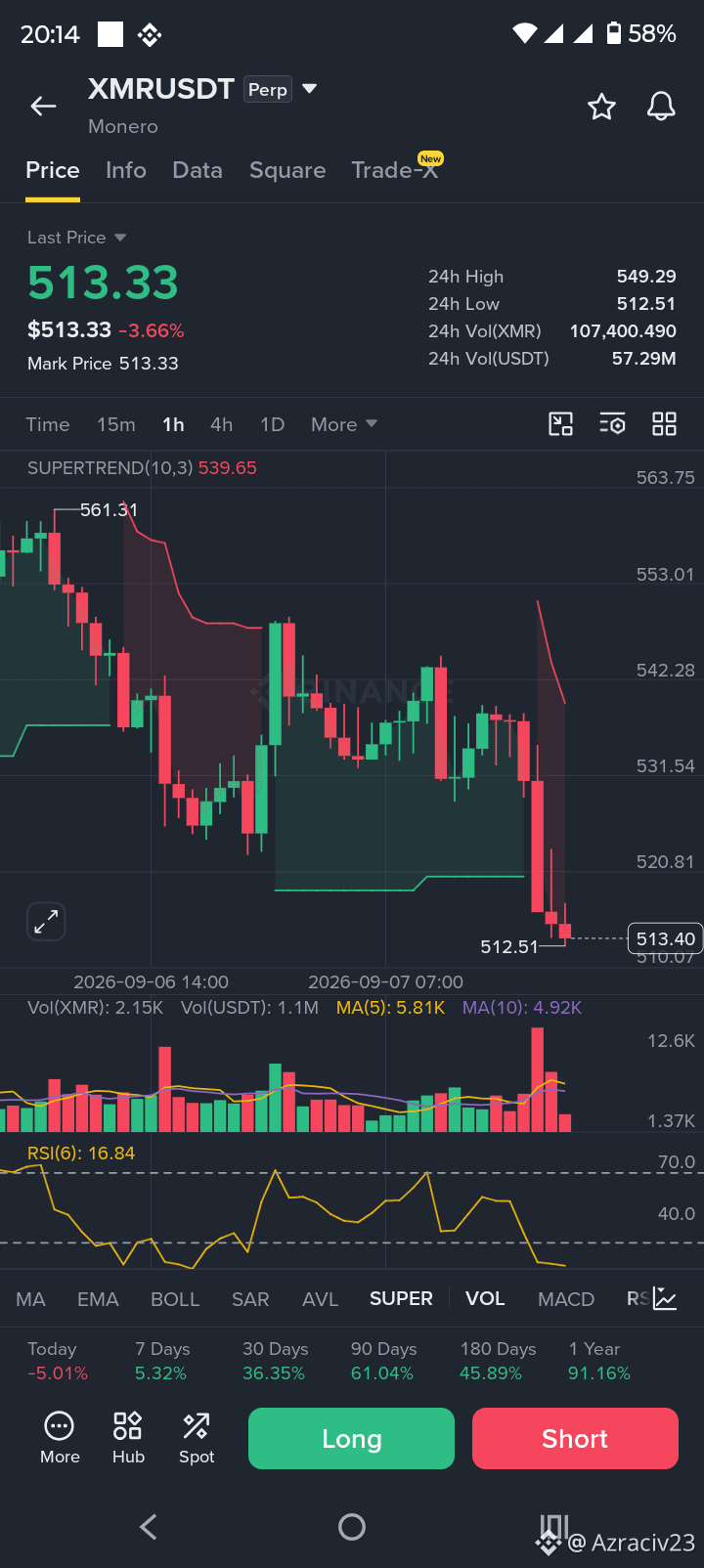
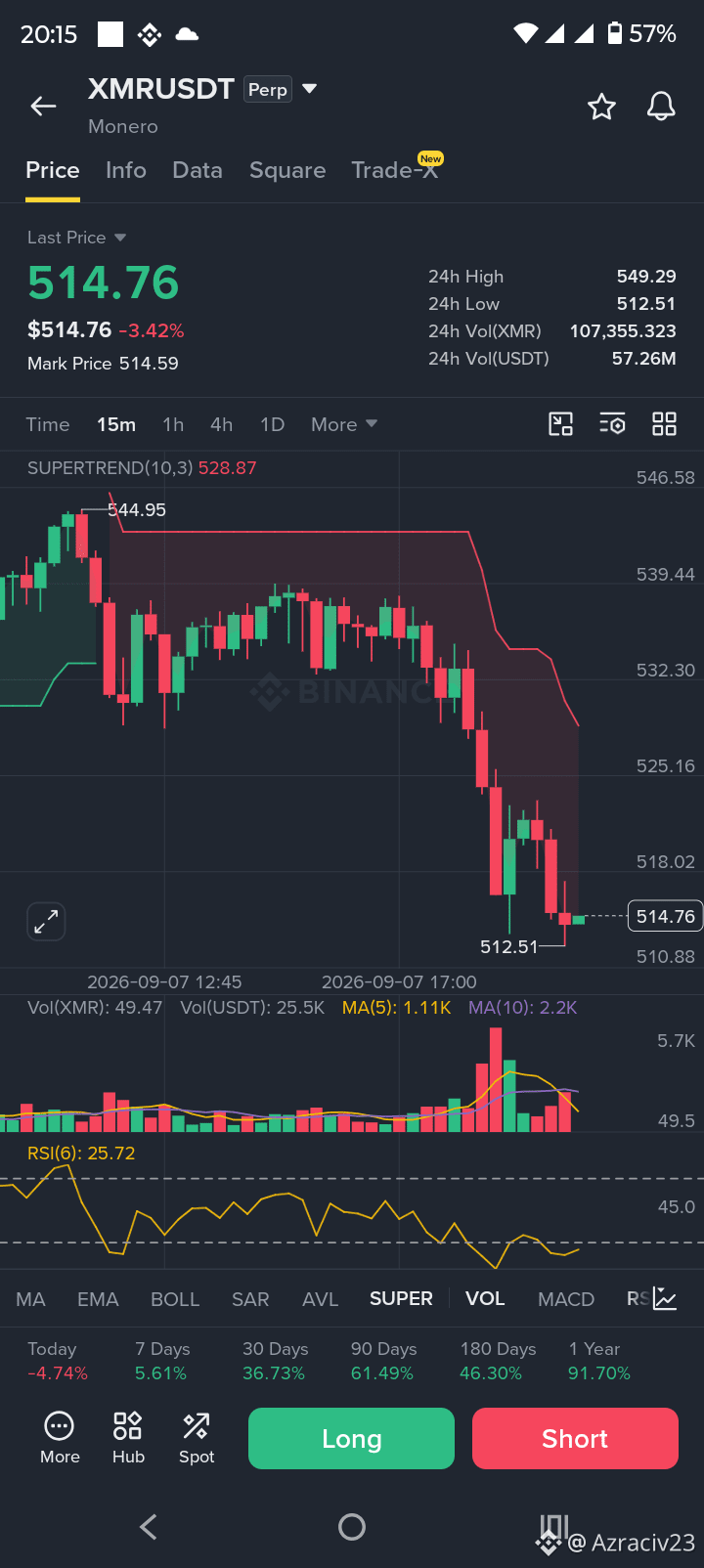
Rutscht Monero ab oder ist das einfach wieder ein typischer Fall von Montagen? 👀
(☞ ͡° ͜ʖ ͡°)☞ Wenn $XMR unter $513 fällt, könnte es noch weiter runter gehen
fürs Erste hält es sich noch immer über 500 und sieht gut aus. Das Problem mit XMR ist, dass ich es mit keiner anderen Münze vergleichen kann – es läuft einfach ganz allein 😅🙌🔥
Wir sehen
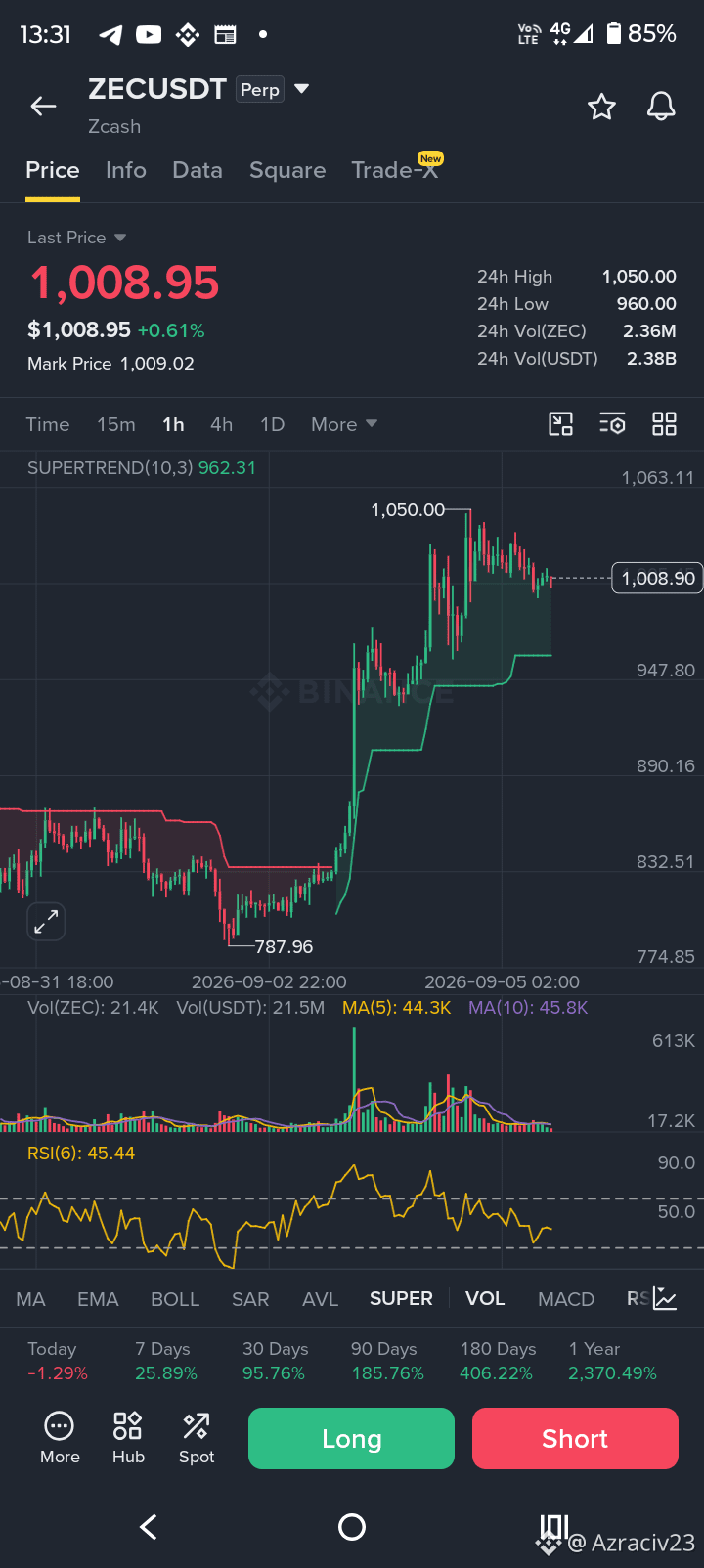
$ZEC steht stark über dem $1000-Preis. Warum sagen sie, es hätte sein ATH gebrochen, und gleichzeitig sehen wir sein ATH bei 5400 im Jahr 2016? Ich bin mir nicht sicher
Aber wenn wir die Geschichte der letzten Jahre betrachten, ja: Es hat seine „Fast All Time“-Historie durchbrochen 😅
Ganz sicher ist sein kleiner Bruder ihm gefolgt, wie immer:
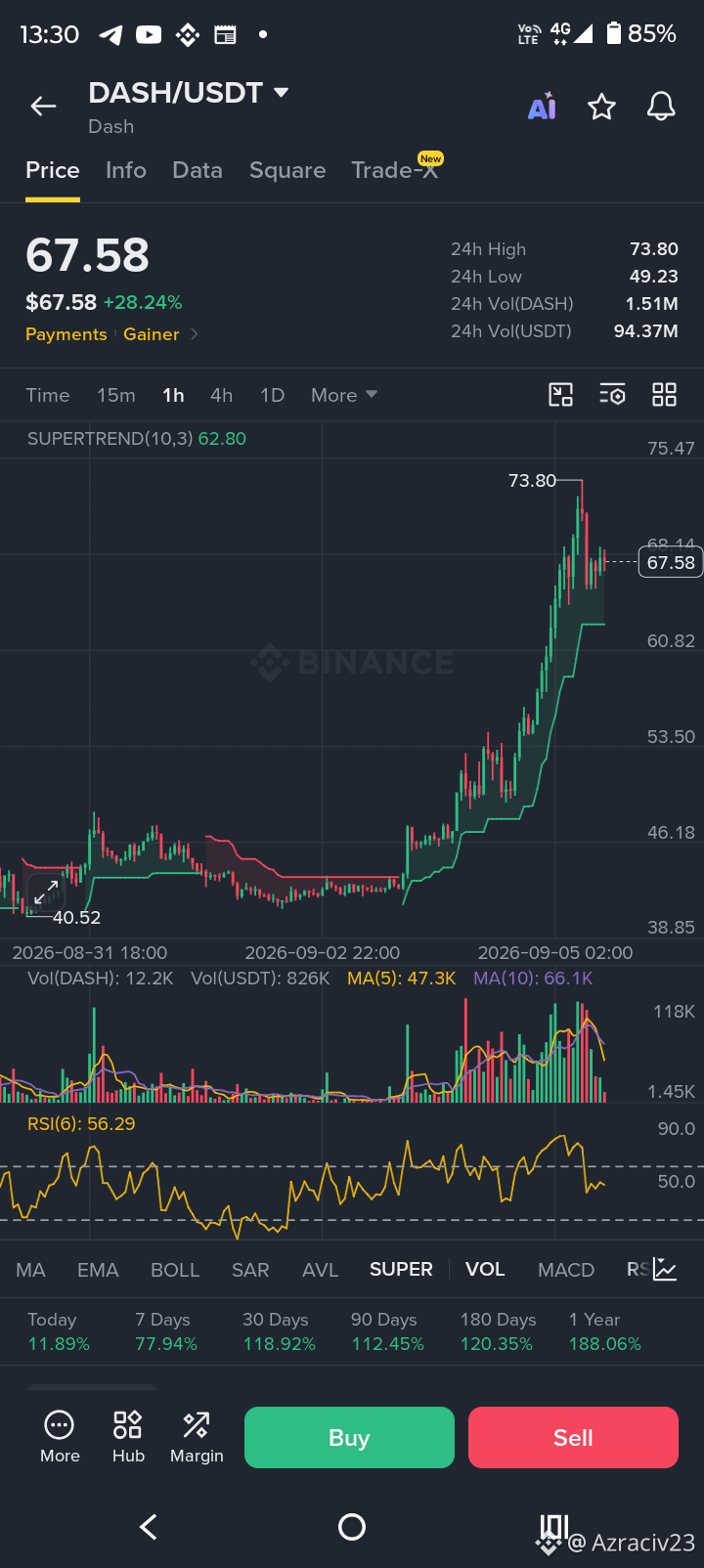
$DASH bei $65 jetzt! ☜ (↼_↼)
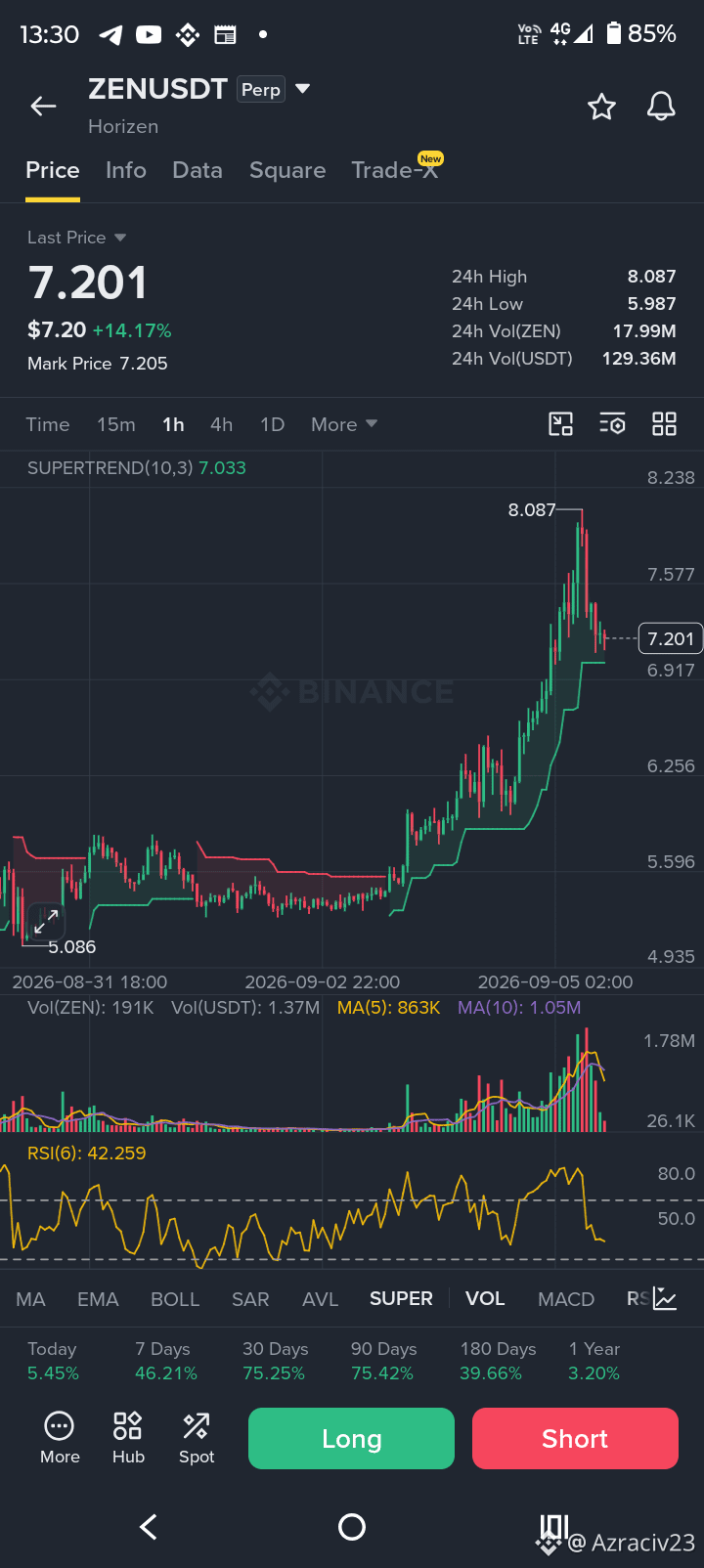
Ich sehe viele Leute sagen, sie erwarten, dass Zec bei 2k liegt, DASH bei $100 und ZEN bei $10. Ich muss sagen: Von all dem wirkt für mich nur ZEN realistisch ⟵(o_O)
Aber das ist eben Krypto – da gehen Coins jeden Tag TTM und zurück, also ist grundsätzlich alles möglich, denke ich...
🚀🧑🩰🦸💥🔥
(◠‿◕)
{future}(DASHUSDT)
{future}(ZECUSDT)
{future}(XMRUSDT)
🤯 ( ͝° ͜ʖ͡°)ᕤ 🏋️
Rutscht Monero ab oder ist das einfach wieder ein typischer Fall von Montagen? 👀
(☞ ͡° ͜ʖ ͡°)☞ Wenn $XMR unter $513 fällt, könnte es noch weiter runter gehen
fürs Erste hält es sich noch immer über 500 und sieht gut aus. Das Problem mit XMR ist, dass ich es mit keiner anderen Münze vergleichen kann – es läuft einfach ganz allein 😅🙌🔥
Wir sehen
$ZEC steht stark über dem $1000-Preis. Warum sagen sie, es hätte sein ATH gebrochen, und gleichzeitig sehen wir sein ATH bei 5400 im Jahr 2016? Ich bin mir nicht sicher
Aber wenn wir die Geschichte der letzten Jahre betrachten, ja: Es hat seine „Fast All Time“-Historie durchbrochen 😅
Ganz sicher ist sein kleiner Bruder ihm gefolgt, wie immer:
$DASH bei $65 jetzt! ☜ (↼_↼)
Ich sehe viele Leute sagen, sie erwarten, dass Zec bei 2k liegt, DASH bei $100 und ZEN bei $10. Ich muss sagen: Von all dem wirkt für mich nur ZEN realistisch ⟵(o_O)
Aber das ist eben Krypto – da gehen Coins jeden Tag TTM und zurück, also ist grundsätzlich alles möglich, denke ich...
🚀🧑🩰🦸💥🔥
(◠‿◕)
Rutscht Monero ab oder ist das einfach wieder ein typischer Fall von Montagen? 👀
(☞ ͡° ͜ʖ ͡°)☞ Wenn $XMR unter $513 fällt, könnte es noch weiter runter gehen
fürs Erste hält es sich noch immer über 500 und sieht gut aus. Das Problem mit XMR ist, dass ich es mit keiner anderen Münze vergleichen kann – es läuft einfach ganz allein 😅🙌🔥
Wir sehen
$ZEC steht stark über dem $1000-Preis. Warum sagen sie, es hätte sein ATH gebrochen, und gleichzeitig sehen wir sein ATH bei 5400 im Jahr 2016? Ich bin mir nicht sicher
Aber wenn wir die Geschichte der letzten Jahre betrachten, ja: Es hat seine „Fast All Time“-Historie durchbrochen 😅
Ganz sicher ist sein kleiner Bruder ihm gefolgt, wie immer:
$DASH bei $65 jetzt! ☜ (↼_↼)
Ich sehe viele Leute sagen, sie erwarten, dass Zec bei 2k liegt, DASH bei $100 und ZEN bei $10. Ich muss sagen: Von all dem wirkt für mich nur ZEN realistisch ⟵(o_O)
Aber das ist eben Krypto – da gehen Coins jeden Tag TTM und zurück, also ist grundsätzlich alles möglich, denke ich...
🚀🧑🩰🦸💥🔥
(◠‿◕)
843
·
--
$ARB
{future}(ARBUSDT)
$PONS
{future}(PONSUSDT)
$ZEC
{future}(ZECUSDT)
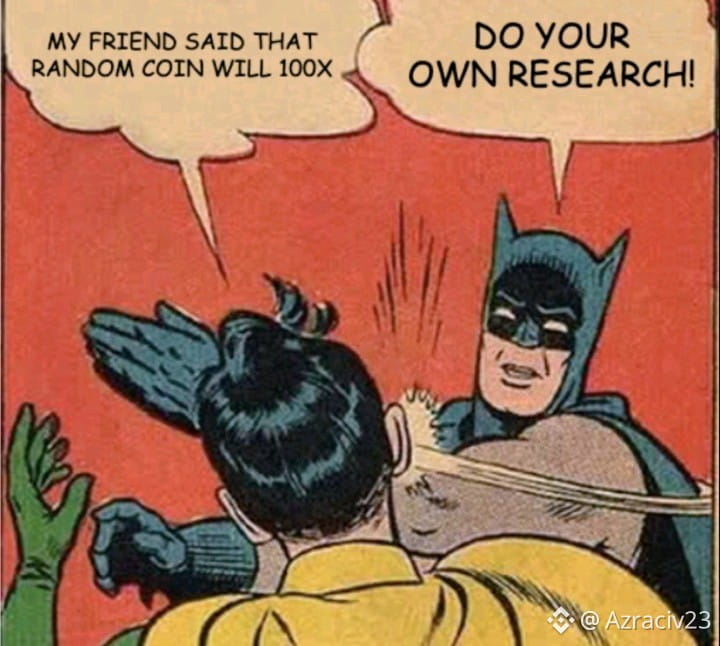
Immer DYOR !
$ARB
$PONS
$ZEC
Immer DYOR !
$PONS
$ZEC
Immer DYOR !
688
26
715
·
--
💥🧑🩰🔥🎉🤸🏻🦄
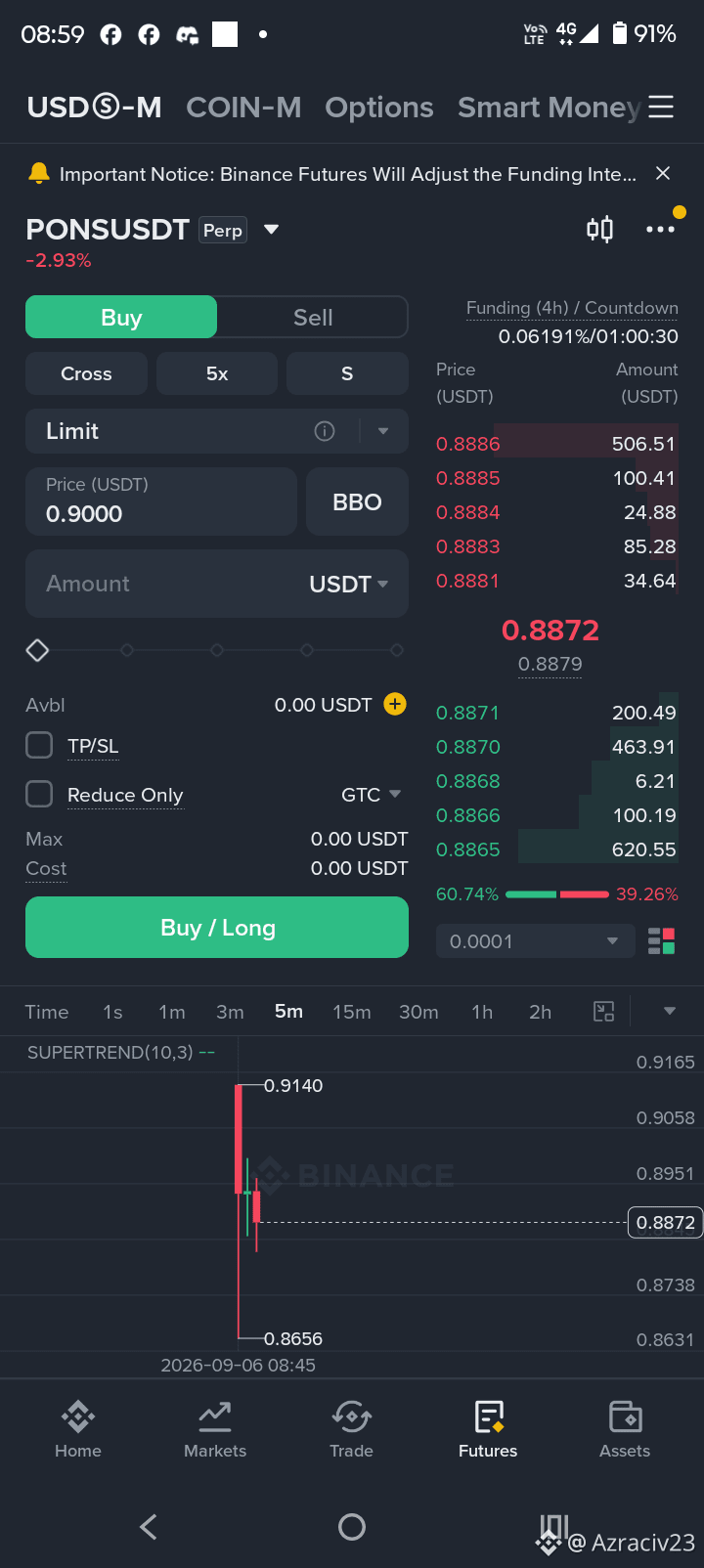
Wir haben jetzt endlich $PONS bei Perpetuals, und das sind großartige, großartige Neuigkeiten 🗞️ !
👉 Warum bin ich begeistert und rede ständig über diese Coin ?
$PONS
{future}(PONSUSDT)
Sie wurde erst vor ein paar Monaten im Robinhood-Netzwerk geboren.
$HOOD
{future}(HOODUSDT)
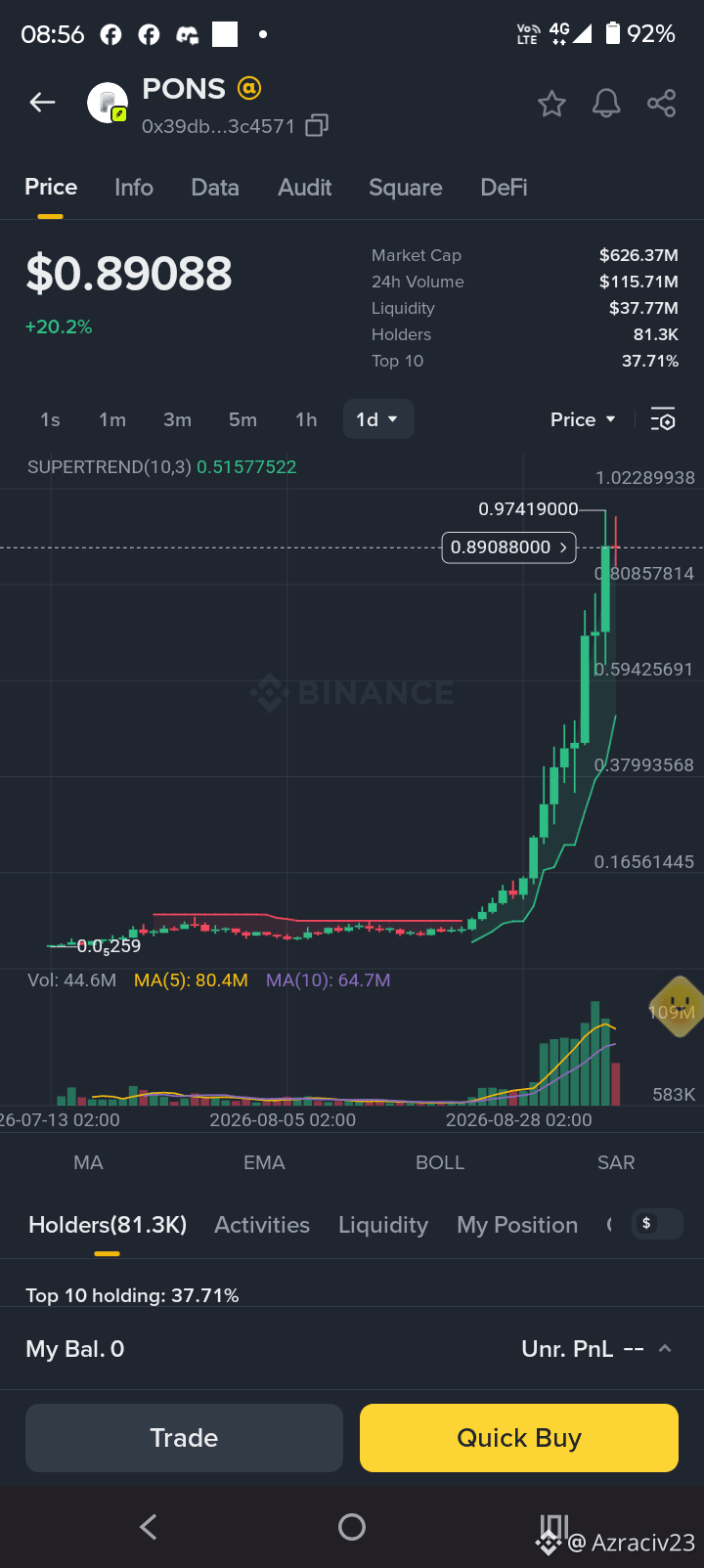
Seitdem hat es geschafft, seinen Preis von :
$0.00000025 auf $ 0.9 heute zu steigern !
Das ist von 0. ⁶025 auf fast $ 1 ...
👉 Es wurde bei Binance als Alpha gelistet!
Es hat den Rekord bei den täglichen Gebühren erreicht :
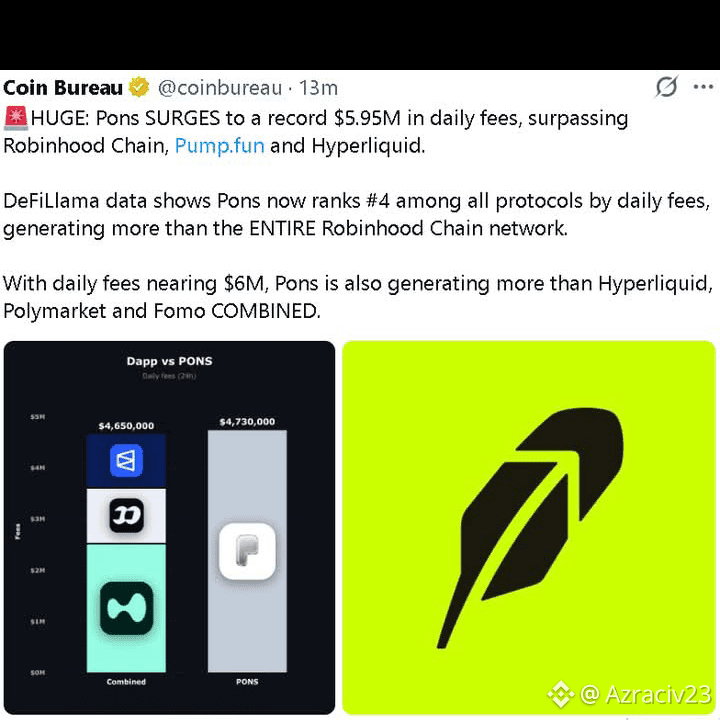
👉 Wie Coin Bureau hervorgehoben hat, hat Pons gerade einen Rekord von $5.95M an täglichen Gebühren erreicht und liegt damit auf Platz #4 unter allen Protokollen auf DeFiLlama.
Es hat sogar das
gesamte Robinhood-Chain-Netzwerk selbst übertroffen !
Es hat das Gebührenvolumen von Hyperliquid + Polymarket + Fomo zusammen übertroffen 🔥
Die Meme-Coin-Launchpad auf Robinhood Chain druckt gerade ernsthaftes Volumen!
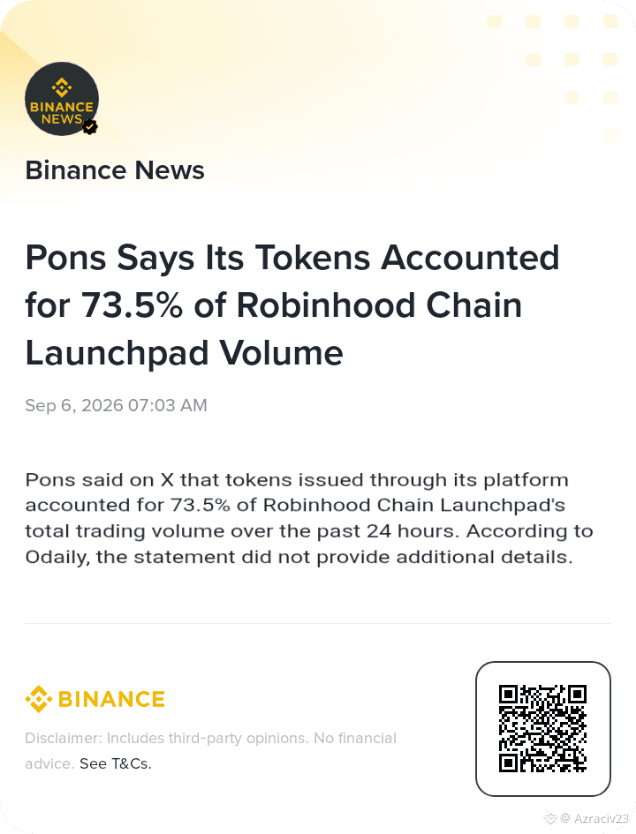
👉 Es macht 73.5÷ des gesamten Robinhood-Chain-Launchpad-Volumens aus !
👉 Uniswap hat einen Schritt gemacht und es gekauft.
Ab heute auf Binance Perpetuals verfügbar - ich glaube, das wird einer der realistischsten Tests für PONS...
Wenn es sich auf Binance gut schlägt, dann ist meine Vermutung, dass der Himmel die Grenze für dieses hier ist ... Es gibt etwas an diesem Ding, das mich einfach daran glauben und es anfeuern lässt .
DYOR !
NFA!
💥🧑🩰🔥🎉🤸🏻🦄
Wir haben jetzt endlich $PONS bei Perpetuals, und das sind großartige, großartige Neuigkeiten 🗞️ !
👉 Warum bin ich begeistert und rede ständig über diese Coin ?
$PONS
Sie wurde erst vor ein paar Monaten im Robinhood-Netzwerk geboren.
$HOOD
Seitdem hat es geschafft, seinen Preis von :
$0.00000025 auf $ 0.9 heute zu steigern !
Das ist von 0. ⁶025 auf fast $ 1 ...
👉 Es wurde bei Binance als Alpha gelistet!
Es hat den Rekord bei den täglichen Gebühren erreicht :
👉 Wie Coin Bureau hervorgehoben hat, hat Pons gerade einen Rekord von $5.95M an täglichen Gebühren erreicht und liegt damit auf Platz #4 unter allen Protokollen auf DeFiLlama.
Es hat sogar das
gesamte Robinhood-Chain-Netzwerk selbst übertroffen !
Es hat das Gebührenvolumen von Hyperliquid + Polymarket + Fomo zusammen übertroffen 🔥
Die Meme-Coin-Launchpad auf Robinhood Chain druckt gerade ernsthaftes Volumen!
👉 Es macht 73.5÷ des gesamten Robinhood-Chain-Launchpad-Volumens aus !
👉 Uniswap hat einen Schritt gemacht und es gekauft.
Ab heute auf Binance Perpetuals verfügbar - ich glaube, das wird einer der realistischsten Tests für PONS...
Wenn es sich auf Binance gut schlägt, dann ist meine Vermutung, dass der Himmel die Grenze für dieses hier ist ... Es gibt etwas an diesem Ding, das mich einfach daran glauben und es anfeuern lässt .
DYOR !
NFA!
Wir haben jetzt endlich $PONS bei Perpetuals, und das sind großartige, großartige Neuigkeiten 🗞️ !
👉 Warum bin ich begeistert und rede ständig über diese Coin ?
$PONS
Sie wurde erst vor ein paar Monaten im Robinhood-Netzwerk geboren.
$HOOD
Seitdem hat es geschafft, seinen Preis von :
$0.00000025 auf $ 0.9 heute zu steigern !
Das ist von 0. ⁶025 auf fast $ 1 ...
👉 Es wurde bei Binance als Alpha gelistet!
Es hat den Rekord bei den täglichen Gebühren erreicht :
👉 Wie Coin Bureau hervorgehoben hat, hat Pons gerade einen Rekord von $5.95M an täglichen Gebühren erreicht und liegt damit auf Platz #4 unter allen Protokollen auf DeFiLlama.
Es hat sogar das
gesamte Robinhood-Chain-Netzwerk selbst übertroffen !
Es hat das Gebührenvolumen von Hyperliquid + Polymarket + Fomo zusammen übertroffen 🔥
Die Meme-Coin-Launchpad auf Robinhood Chain druckt gerade ernsthaftes Volumen!
👉 Es macht 73.5÷ des gesamten Robinhood-Chain-Launchpad-Volumens aus !
👉 Uniswap hat einen Schritt gemacht und es gekauft.
Ab heute auf Binance Perpetuals verfügbar - ich glaube, das wird einer der realistischsten Tests für PONS...
Wenn es sich auf Binance gut schlägt, dann ist meine Vermutung, dass der Himmel die Grenze für dieses hier ist ... Es gibt etwas an diesem Ding, das mich einfach daran glauben und es anfeuern lässt .
DYOR !
NFA!
AzraCiv
·
--
$PONS – dieses Token, das auf Robinhood gelaunched wurde, ist absolut 🔥 am Durchstarten!
💥
Gerade hat es sein ATH erreicht, gestartet bei $0.009 und vor nur einem Tag 0.49 berührt. 🔥
Trade Perpetuals auf Binance Wallet oder kaufen und halten. Ich habe gesehen, dass manche verwirrt sind
wie man es kauft und fragen: ist es jetzt zu spät?
Kaufen in Wallet – und ob es zu spät ist, darauf kann niemand eine Antwort geben. Ich denke, es fängt gerade erst an 🤷♀️
DYOR, keine Finanzberatung!
Schau es dir selbst an 👇
💥
Gerade hat es sein ATH erreicht, gestartet bei $0.009 und vor nur einem Tag 0.49 berührt. 🔥
Trade Perpetuals auf Binance Wallet oder kaufen und halten. Ich habe gesehen, dass manche verwirrt sind
wie man es kauft und fragen: ist es jetzt zu spät?
Kaufen in Wallet – und ob es zu spät ist, darauf kann niemand eine Antwort geben. Ich denke, es fängt gerade erst an 🤷♀️
DYOR, keine Finanzberatung!
Schau es dir selbst an 👇
2
577
·
--
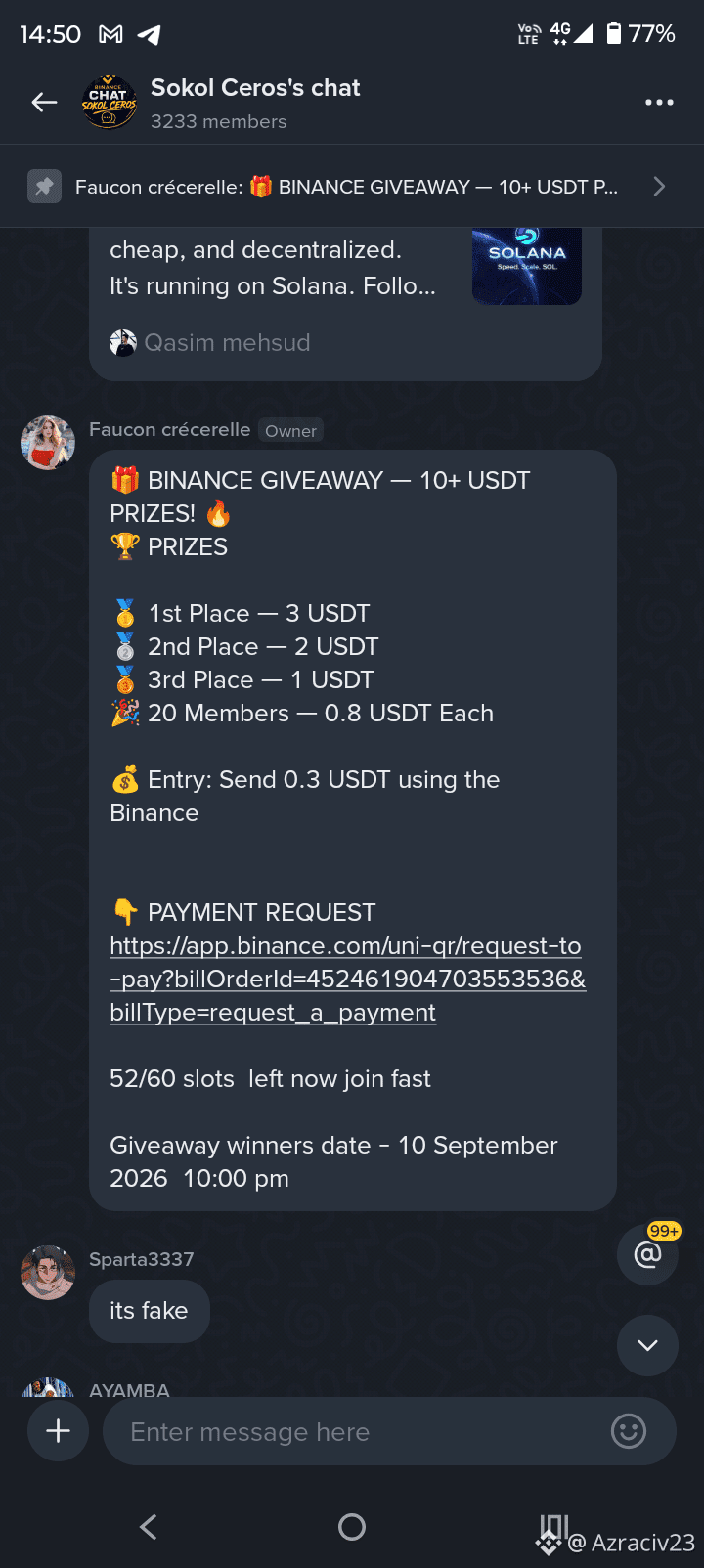
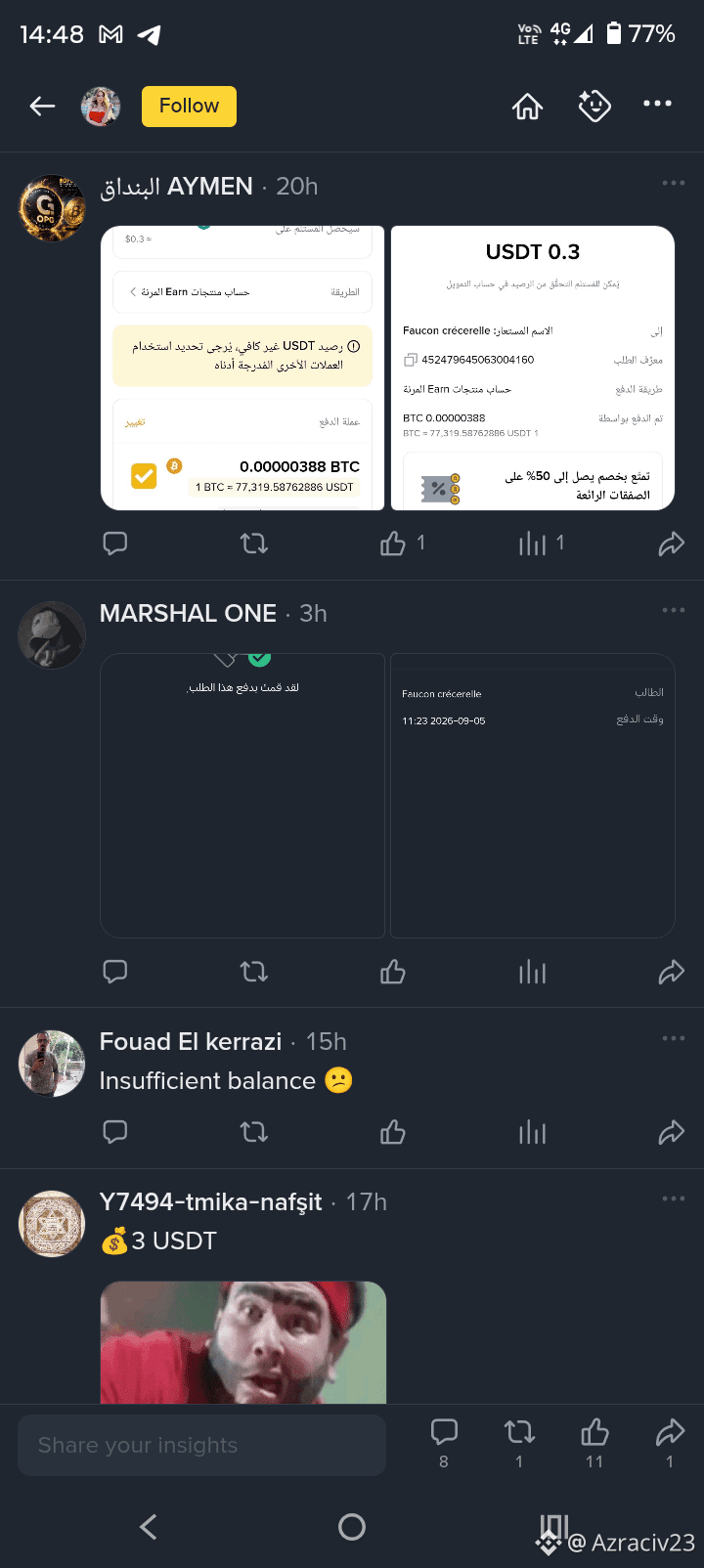
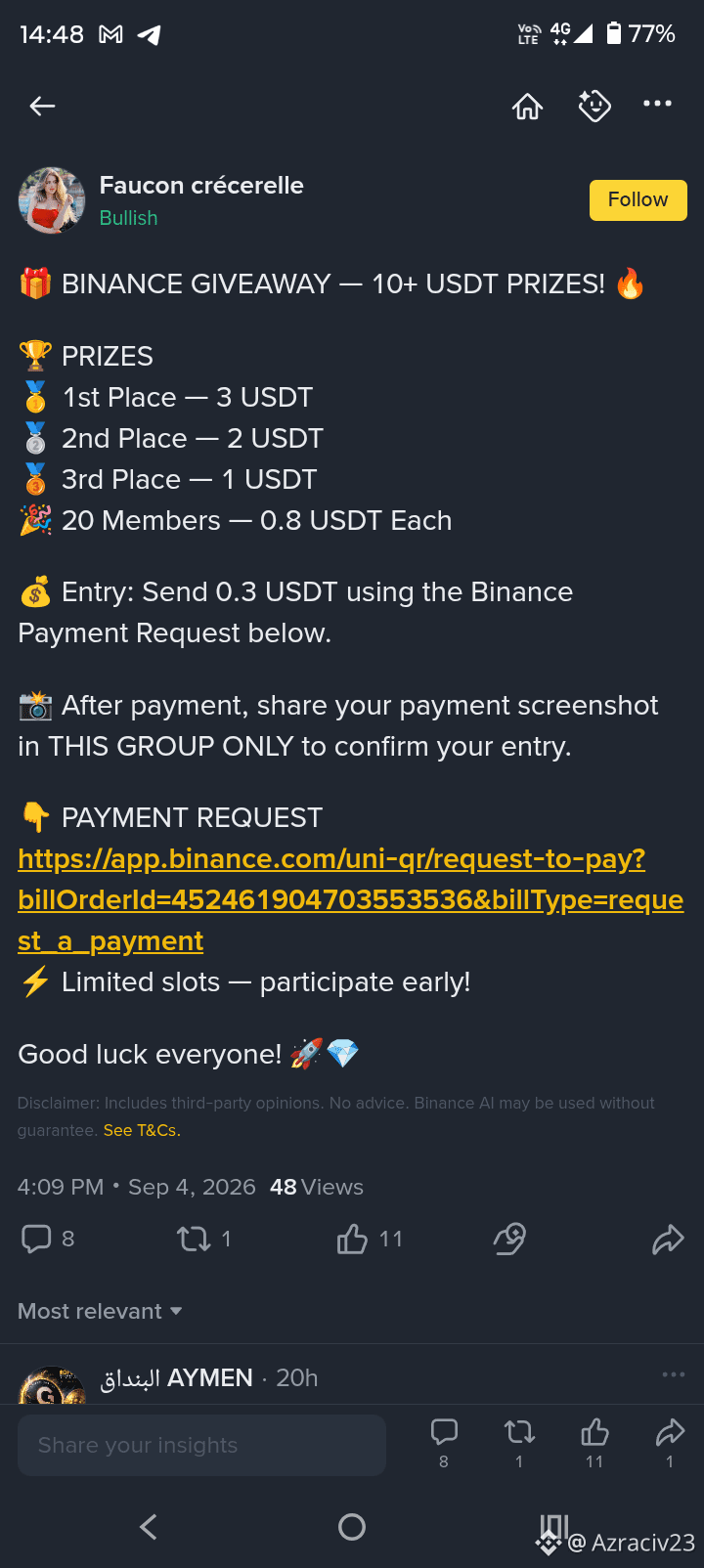
🚨📣⚠️ BETRUGSALARM!!!
MELDEN!
Bitte wirf einen Blick auf diesen gefälschten Betrugs-„Giveaway“ auf Binance Square und MELDE IHN!
SIE verlangt von Nutzern $ 0.3, damit sie Teil ihres „großen Binance-Giveaways“ sein können, und zahlt natürlich nichts! Das ist ein sehr häufiger Betrug, aber trotzdem fallen Nutzer darauf herein und zahlen, weil sie denken – wenn es auf Binance Square ist, muss es echt sein!
SIE ist eine SCHAMLOSE BETRÜGERIN!
MELDE SIE!
Überzeuge dich selbst!
Halte Square sauber!
@Ramadone @Franc1s @Binance_Risk_Announcement @Binance_Risk_Buddy
#ScamAwareness
#ScamAlert
🚨📣⚠️ BETRUGSALARM!!!
MELDEN!
Bitte wirf einen Blick auf diesen gefälschten Betrugs-„Giveaway“ auf Binance Square und MELDE IHN!
SIE verlangt von Nutzern $ 0.3, damit sie Teil ihres „großen Binance-Giveaways“ sein können, und zahlt natürlich nichts! Das ist ein sehr häufiger Betrug, aber trotzdem fallen Nutzer darauf herein und zahlen, weil sie denken – wenn es auf Binance Square ist, muss es echt sein!
SIE ist eine SCHAMLOSE BETRÜGERIN!
MELDE SIE!
Überzeuge dich selbst!
Halte Square sauber!
@_Ram @Franc1s @Binance Risk Sniper @Binance Risk Buddy
#ScamAwareness
#ScamAlert
MELDEN!
Bitte wirf einen Blick auf diesen gefälschten Betrugs-„Giveaway“ auf Binance Square und MELDE IHN!
SIE verlangt von Nutzern $ 0.3, damit sie Teil ihres „großen Binance-Giveaways“ sein können, und zahlt natürlich nichts! Das ist ein sehr häufiger Betrug, aber trotzdem fallen Nutzer darauf herein und zahlen, weil sie denken – wenn es auf Binance Square ist, muss es echt sein!
SIE ist eine SCHAMLOSE BETRÜGERIN!
MELDE SIE!
Überzeuge dich selbst!
Halte Square sauber!
@_Ram @Franc1s @Binance Risk Sniper @Binance Risk Buddy
#ScamAwareness
#ScamAlert
Der zitierte Inhalt wurde entfernt.
2
102
·
--
🧿🚀💥 🧑🏻🩰🤸🏻🧑🏻🩰💥🚀🧿
Ich habe angefangen, über sie zu posten, als
ZEC bei etwa 700 $ lag!
ZEN bei etwa 5 $ lag!
DASH bei etwa 43 $ lag!
Fast jeden Tag habe ich euch gesagt,
dass sie steigen und gemeinsam steigen!
Seht euch die erneut geposteten Beiträge als Beweis an, sie haben Daten und Bilder!
Wenn jemand zugehört hat, GRATULATION 🎉 !
Heute haben wir gesehen
$ZEC bei 1050 $!
$DASH bei 73 $!
$ZEN bei 8 $!
Wenn ihr heute irgendeinen davon gekauft habt, seid ihr im Plus 🎉🚀💥 Glückwunsch an die, die zugehört haben
und besseres Glück beim nächsten Mal an den Rest 🫡🧑🩰🦄
{future}(ZENUSDT)
{future}(DASHUSDT)
{future}(ZECUSDT)
🧿🚀💥 🧑🏻🩰🤸🏻🧑🏻🩰💥🚀🧿
Ich habe angefangen, über sie zu posten, als
ZEC bei etwa 700 $ lag!
ZEN bei etwa 5 $ lag!
DASH bei etwa 43 $ lag!
Fast jeden Tag habe ich euch gesagt,
dass sie steigen und gemeinsam steigen!
Seht euch die erneut geposteten Beiträge als Beweis an, sie haben Daten und Bilder!
Wenn jemand zugehört hat, GRATULATION 🎉 !
Heute haben wir gesehen
$ZEC bei 1050 $!
$DASH bei 73 $!
$ZEN bei 8 $!
Wenn ihr heute irgendeinen davon gekauft habt, seid ihr im Plus 🎉🚀💥 Glückwunsch an die, die zugehört haben
und besseres Glück beim nächsten Mal an den Rest 🫡🧑🩰🦄
Ich habe angefangen, über sie zu posten, als
ZEC bei etwa 700 $ lag!
ZEN bei etwa 5 $ lag!
DASH bei etwa 43 $ lag!
Fast jeden Tag habe ich euch gesagt,
dass sie steigen und gemeinsam steigen!
Seht euch die erneut geposteten Beiträge als Beweis an, sie haben Daten und Bilder!
Wenn jemand zugehört hat, GRATULATION 🎉 !
Heute haben wir gesehen
$ZEC bei 1050 $!
$DASH bei 73 $!
$ZEN bei 8 $!
Wenn ihr heute irgendeinen davon gekauft habt, seid ihr im Plus 🎉🚀💥 Glückwunsch an die, die zugehört haben
und besseres Glück beim nächsten Mal an den Rest 🫡🧑🩰🦄
AzraCiv
·
--
💥🎤🫳🔮
Vor ein paar Stunden fragte ich, ob wir $ZEC bald bei 4 Stellen sehen werden, es würde mich nicht wundern, wenn wir das täten.
Und dieser Moment ist schon da!
Es hält seinen Kopf über $1000 !!!
Ich sagte auch, behaltet diese beiden im Auge, weil sie ZEC folgen! Jetzt haben wir Zen über $6 und Dash über $53!
Hat nur ein paar Stunden gedauert 😅!
Liebst du nicht auch einen bullischen Markt ❤️
$ZEN
$DASH
Vor ein paar Stunden fragte ich, ob wir $ZEC bald bei 4 Stellen sehen werden, es würde mich nicht wundern, wenn wir das täten.
Und dieser Moment ist schon da!
Es hält seinen Kopf über $1000 !!!
Ich sagte auch, behaltet diese beiden im Auge, weil sie ZEC folgen! Jetzt haben wir Zen über $6 und Dash über $53!
Hat nur ein paar Stunden gedauert 😅!
Liebst du nicht auch einen bullischen Markt ❤️
$ZEN
$DASH
2
599
·
--
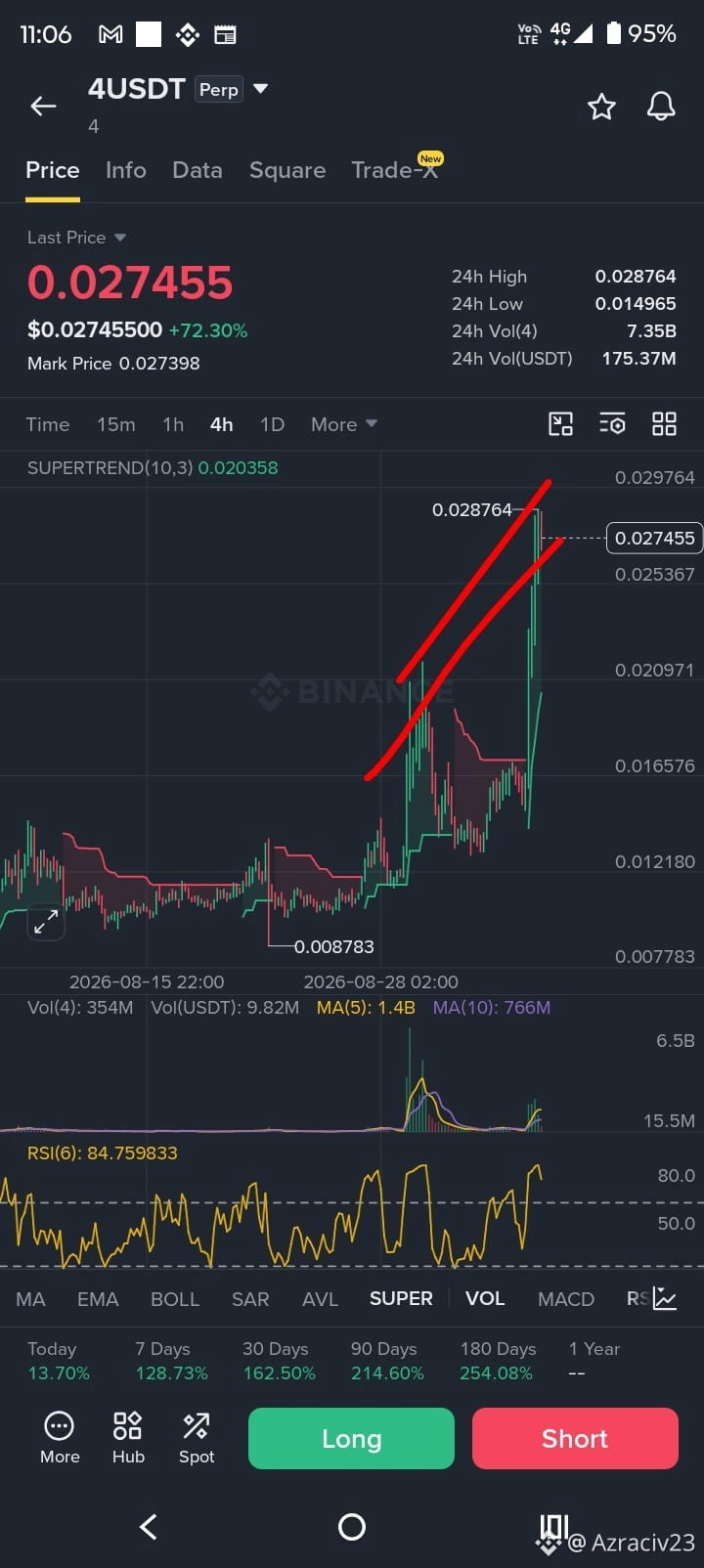
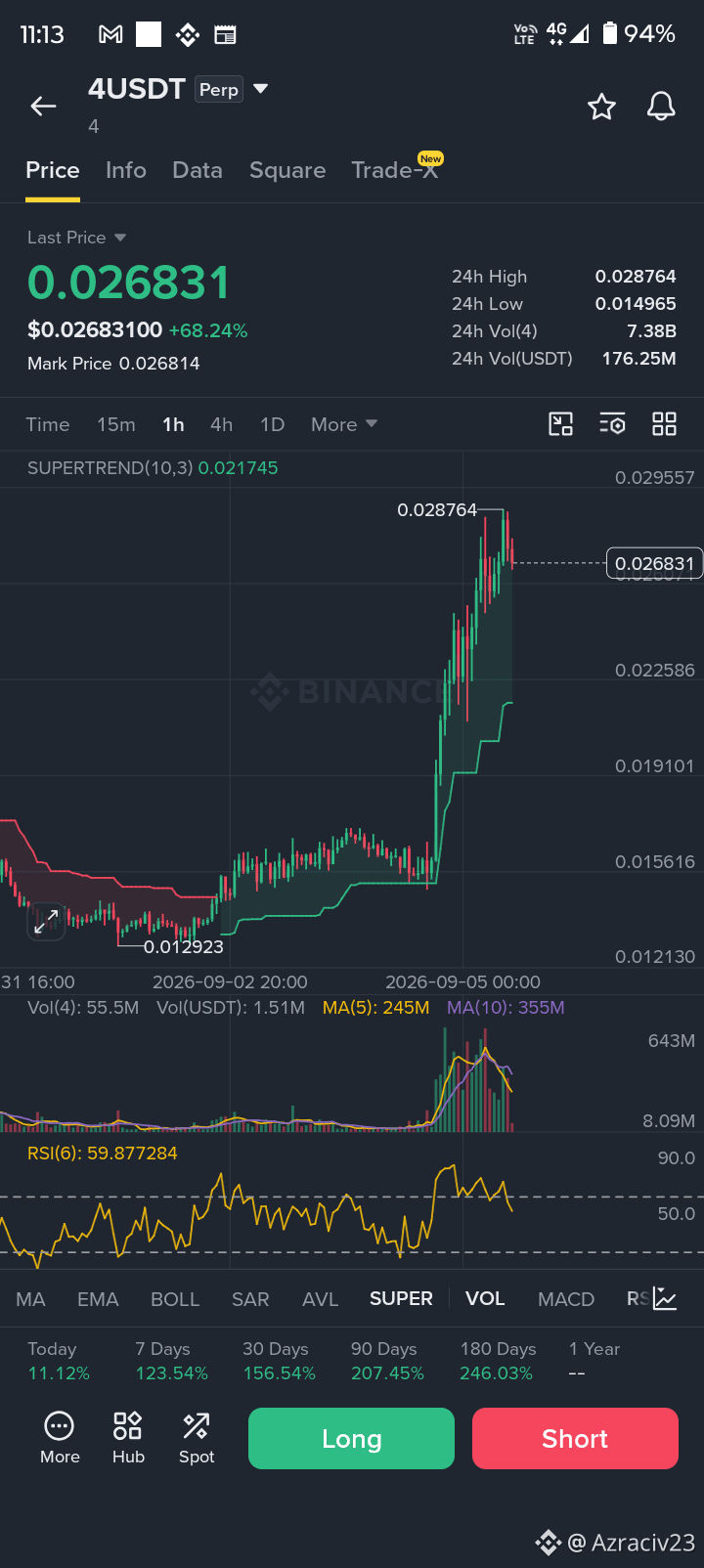
$4
{future}(4USDT)
Ist heute bullisch und liegt über dem Preis von 0,02 $
Ehrlich gesagt habe ich es seit Langem nicht mehr bei diesem Preis gesehen,
aber wird es dort bleiben oder hat es schon angefangen
zu shorten? 👀
Was sagt ihr?
Was an seiner Vergangenheit interessant ist, ist, dass
jedes große Hoch unmittelbar von einem plötzlich roten Docht gefolgt wurde. Ich meine einen großen grünen Docht, dann einen großen roten, und so geht es immer weiter ...
$4 !
$4
Ist heute bullisch und liegt über dem Preis von 0,02 $
Ehrlich gesagt habe ich es seit Langem nicht mehr bei diesem Preis gesehen,
aber wird es dort bleiben oder hat es schon angefangen
zu shorten? 👀
Was sagt ihr?
Was an seiner Vergangenheit interessant ist, ist, dass
jedes große Hoch unmittelbar von einem plötzlich roten Docht gefolgt wurde. Ich meine einen großen grünen Docht, dann einen großen roten, und so geht es immer weiter ...
$4 !
Ist heute bullisch und liegt über dem Preis von 0,02 $
Ehrlich gesagt habe ich es seit Langem nicht mehr bei diesem Preis gesehen,
aber wird es dort bleiben oder hat es schon angefangen
zu shorten? 👀
Was sagt ihr?
Was an seiner Vergangenheit interessant ist, ist, dass
jedes große Hoch unmittelbar von einem plötzlich roten Docht gefolgt wurde. Ich meine einen großen grünen Docht, dann einen großen roten, und so geht es immer weiter ...
$4 !
658
·
--
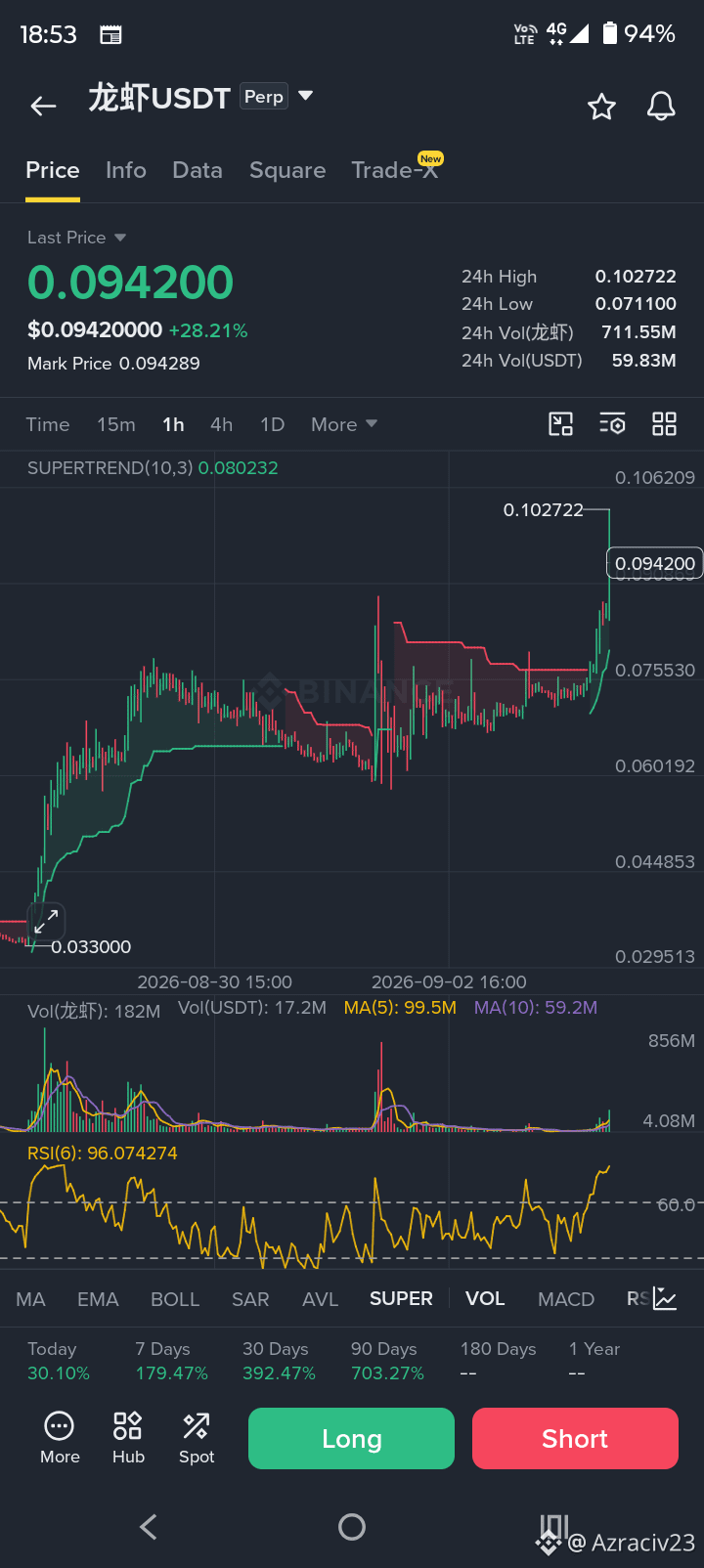
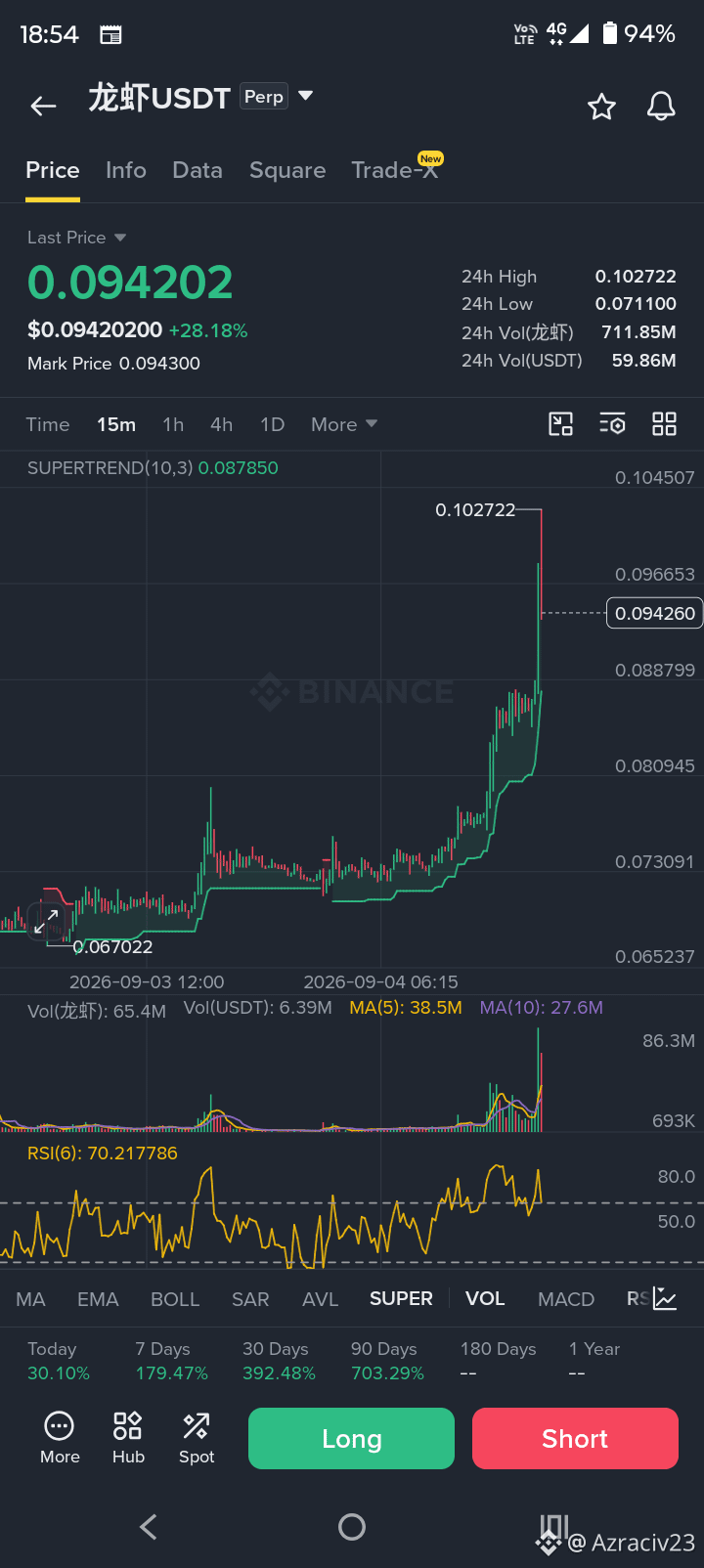
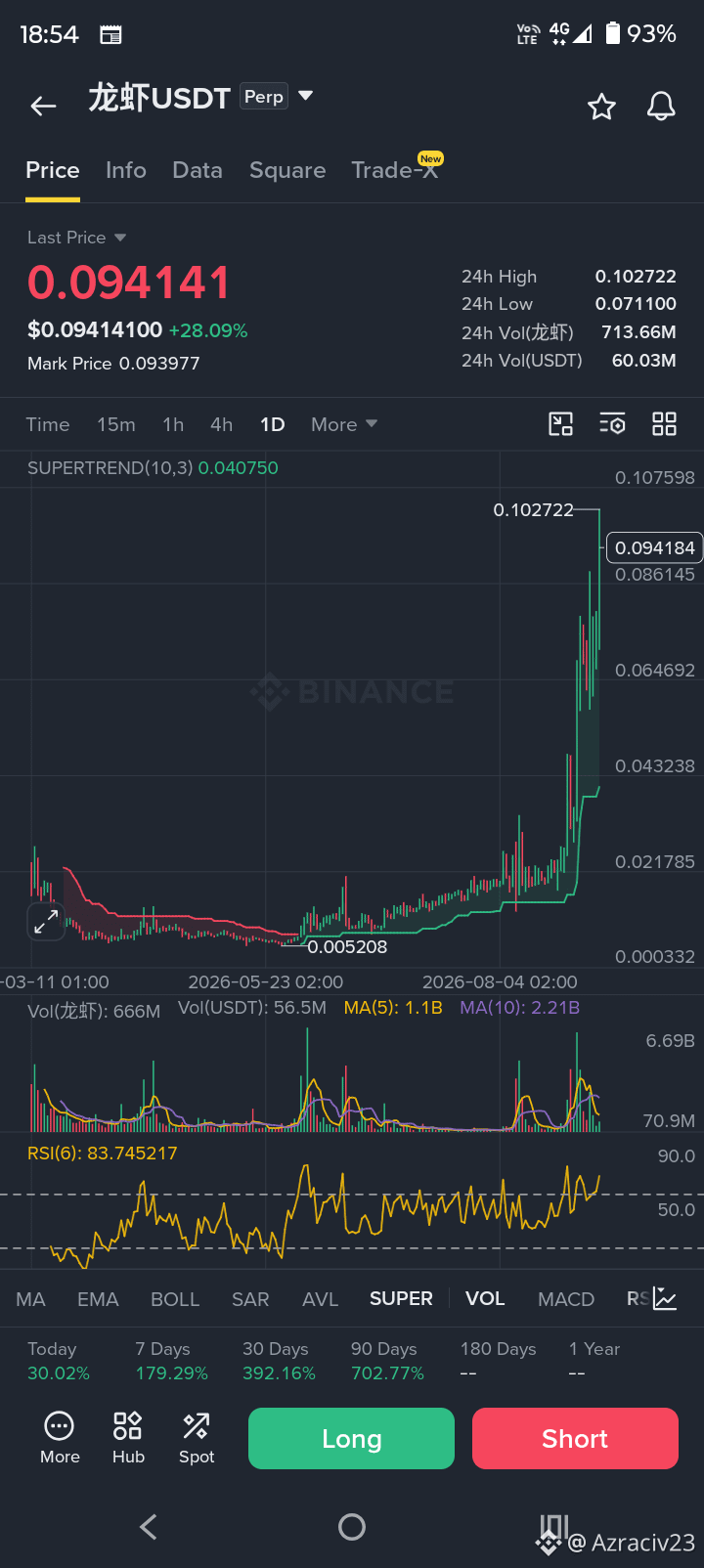
$龙虾
Ist soooo bullisch 😅 !
Ich bin mir nicht sicher, was sein ATH ist,
aber ich denke, es hat es durchbrochen? 🚀
Wenn du long darin bist, nimm bitte deine Gewinne mit
dieser Docht sieht für jetzt zu gut aus, um weiterzumachen 😂
Ein kleiner Rücksetzer jetzt, wo wird es aufhören, niemand weiß es 🔮🫡🧑🏻🩰
Wenn ich klug gewesen wäre und es gehalten hätte, wäre ich jetzt schön im Plus 🫣👇
$龙虾
Ist soooo bullisch 😅 !
Ich bin mir nicht sicher, was sein ATH ist,
aber ich denke, es hat es durchbrochen? 🚀
Wenn du long darin bist, nimm bitte deine Gewinne mit
dieser Docht sieht für jetzt zu gut aus, um weiterzumachen 😂
Ein kleiner Rücksetzer jetzt, wo wird es aufhören, niemand weiß es 🔮🫡🧑🏻🩰
Wenn ich klug gewesen wäre und es gehalten hätte, wäre ich jetzt schön im Plus 🫣👇
Ist soooo bullisch 😅 !
Ich bin mir nicht sicher, was sein ATH ist,
aber ich denke, es hat es durchbrochen? 🚀
Wenn du long darin bist, nimm bitte deine Gewinne mit
dieser Docht sieht für jetzt zu gut aus, um weiterzumachen 😂
Ein kleiner Rücksetzer jetzt, wo wird es aufhören, niemand weiß es 🔮🫡🧑🏻🩰
Wenn ich klug gewesen wäre und es gehalten hätte, wäre ich jetzt schön im Plus 🫣👇
1
704
·
--
💥👑
$BTC
{future}(BTCUSDT)
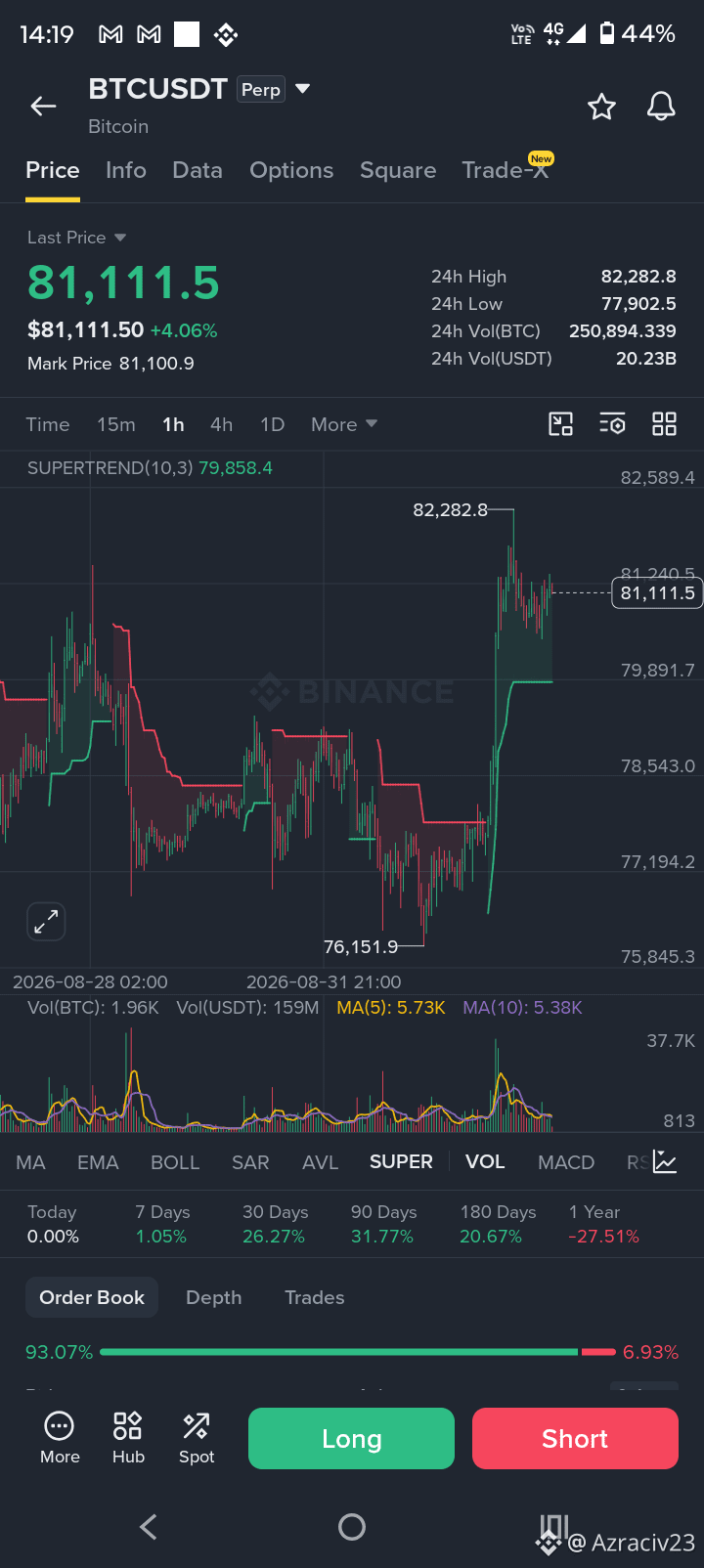
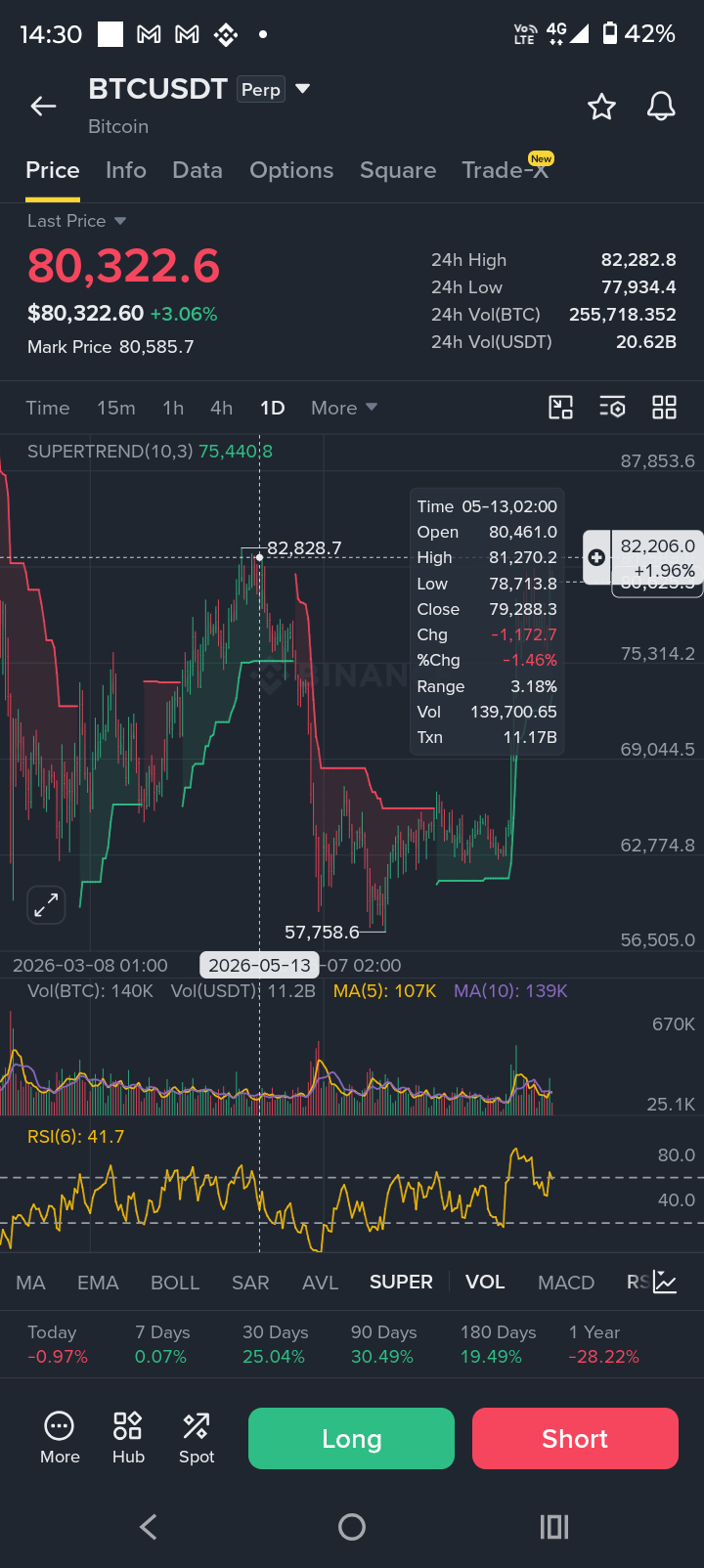
Der König ist bullisch, also folgen alle verbundenen Coins. Im Moment hat er sogar die 82.000 $ geküsst 🔥
Wir können sehen, dass die verbundenen Tokens ähnlich agieren,
Ich habe mir
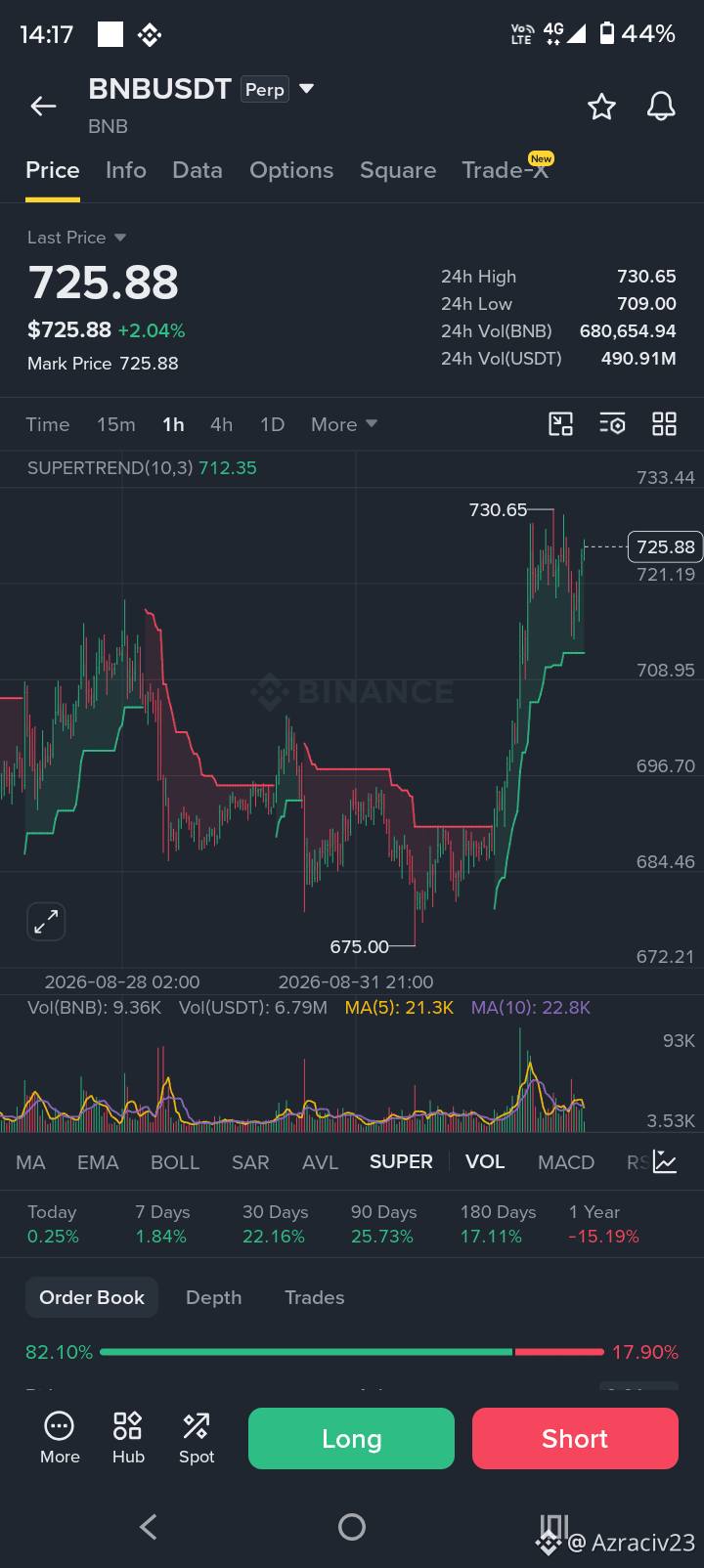
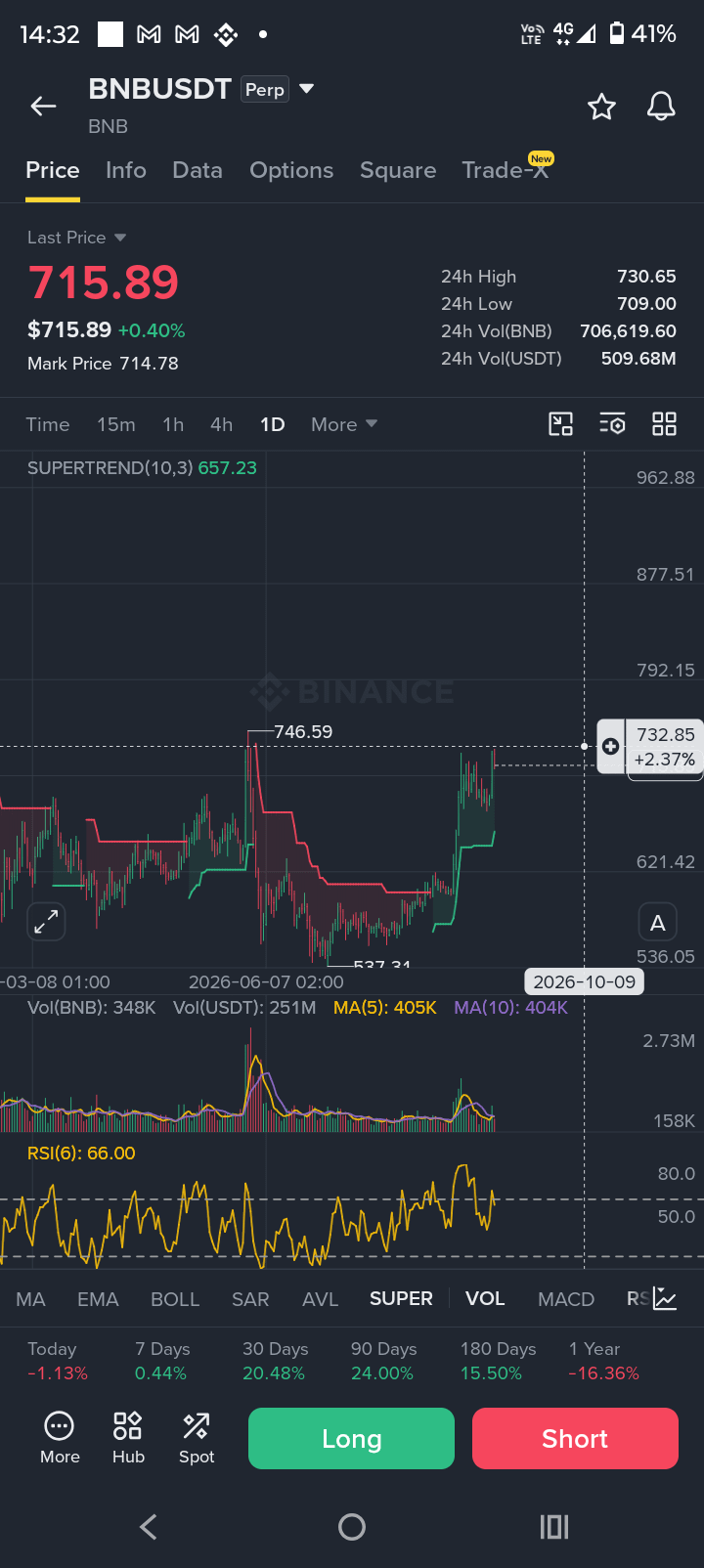
$BNB
{future}(BNBUSDT)
angesehen, und ehrlich gesagt frage ich mich, warum es noch nicht bei 800 $ ist?
👉 Es ist auf jeden Fall auf dem Weg dorthin.
Es ist interessant, dass wir sowohl BTC als auch BNB auf diesem Niveau gesehen haben, so wie sie heute im Mai waren.
Ich vergleiche gerne Charts, und diese beiden sehen sich sehr ähnlich. Ich bin sicher, ETH und Sol sehen auch ziemlich ähnlich aus...
#BitcoinEthereumHitMultiMonthHighs
💥👑
$BTC
Der König ist bullisch, also folgen alle verbundenen Coins. Im Moment hat er sogar die 82.000 $ geküsst 🔥
Wir können sehen, dass die verbundenen Tokens ähnlich agieren,
Ich habe mir
$BNB
angesehen, und ehrlich gesagt frage ich mich, warum es noch nicht bei 800 $ ist?
👉 Es ist auf jeden Fall auf dem Weg dorthin.
Es ist interessant, dass wir sowohl BTC als auch BNB auf diesem Niveau gesehen haben, so wie sie heute im Mai waren.
Ich vergleiche gerne Charts, und diese beiden sehen sich sehr ähnlich. Ich bin sicher, ETH und Sol sehen auch ziemlich ähnlich aus...
#BitcoinEthereumHitMultiMonthHighs
$BTC
Der König ist bullisch, also folgen alle verbundenen Coins. Im Moment hat er sogar die 82.000 $ geküsst 🔥
Wir können sehen, dass die verbundenen Tokens ähnlich agieren,
Ich habe mir
$BNB
angesehen, und ehrlich gesagt frage ich mich, warum es noch nicht bei 800 $ ist?
👉 Es ist auf jeden Fall auf dem Weg dorthin.
Es ist interessant, dass wir sowohl BTC als auch BNB auf diesem Niveau gesehen haben, so wie sie heute im Mai waren.
Ich vergleiche gerne Charts, und diese beiden sehen sich sehr ähnlich. Ich bin sicher, ETH und Sol sehen auch ziemlich ähnlich aus...
#BitcoinEthereumHitMultiMonthHighs
1
240
·
--
🦄💥🤞
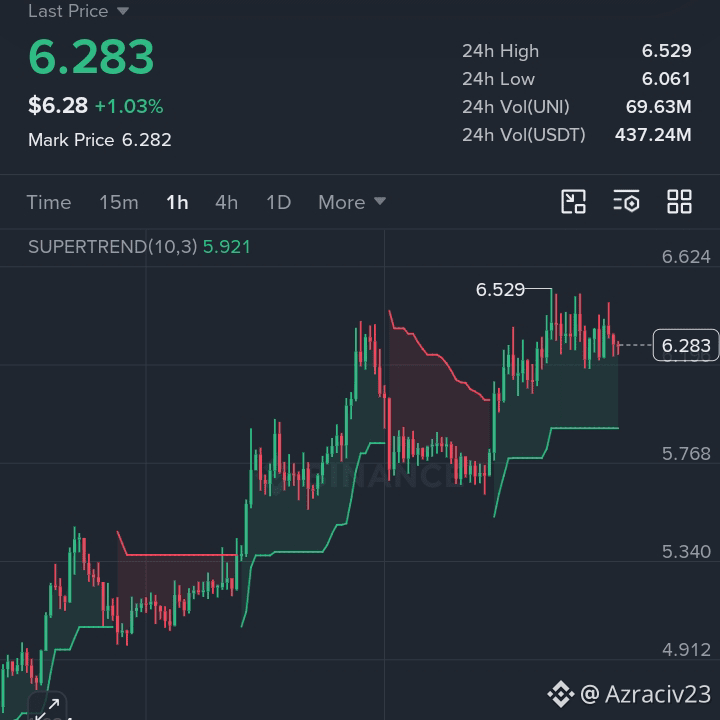
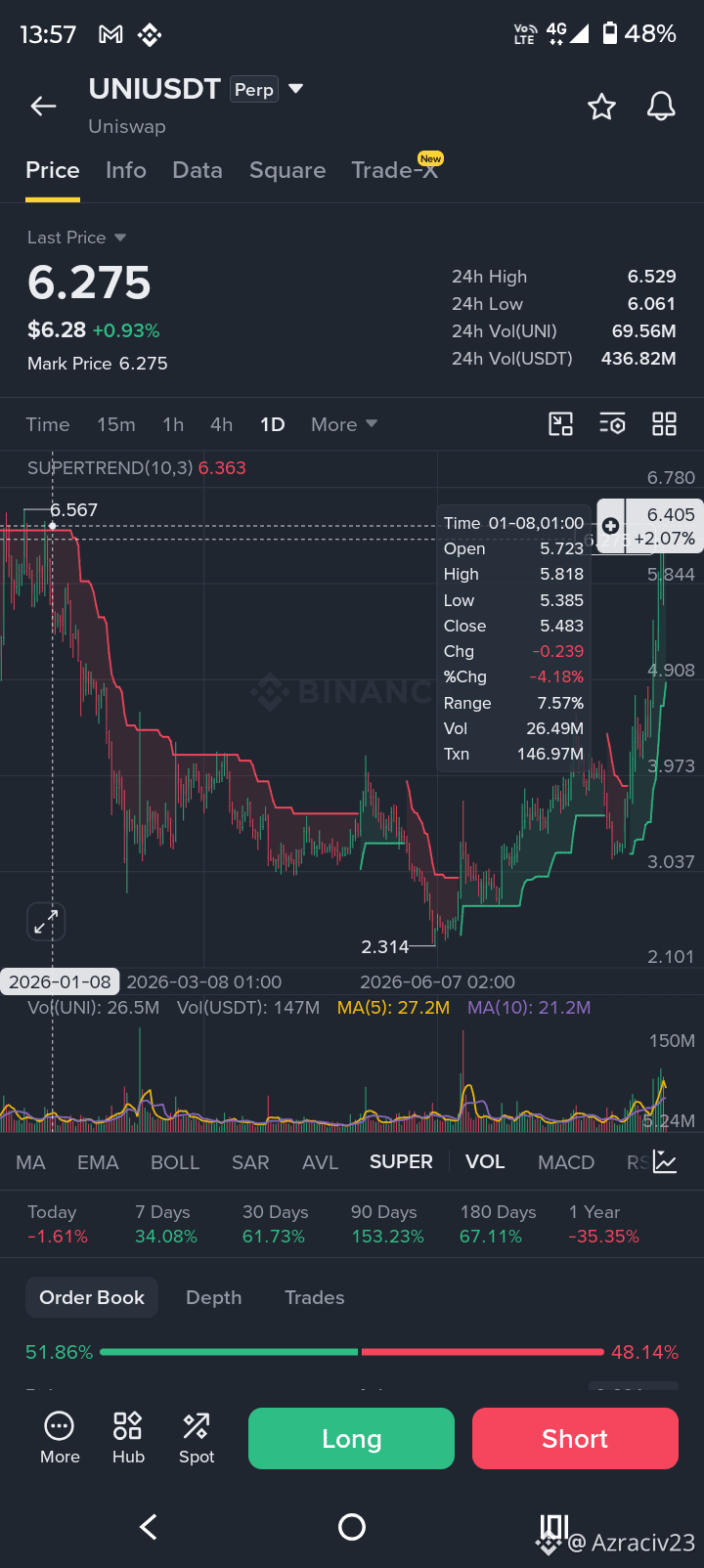
Ich mag diese Coin.
$UNI liegt über 6 $ und wir haben ihn seit Januar nicht mehr zu diesem Preis gesehen!
Wird UNI den 12 $ vom letzten Jahr oder zumindest einen Preis von 10 $ erreichen?
Was sagt ihr?
Ich bin bullisch bei UNI!
Es geht langsam und stetig, es wird sein Ziel 🥅 💪 erreichen
🦄
{future}(UNIUSDT)
🦄💥🤞
Ich mag diese Coin.
$UNI liegt über 6 $ und wir haben ihn seit Januar nicht mehr zu diesem Preis gesehen!
Wird UNI den 12 $ vom letzten Jahr oder zumindest einen Preis von 10 $ erreichen?
Was sagt ihr?
Ich bin bullisch bei UNI!
Es geht langsam und stetig, es wird sein Ziel 🥅 💪 erreichen
🦄
Ich mag diese Coin.
$UNI liegt über 6 $ und wir haben ihn seit Januar nicht mehr zu diesem Preis gesehen!
Wird UNI den 12 $ vom letzten Jahr oder zumindest einen Preis von 10 $ erreichen?
Was sagt ihr?
Ich bin bullisch bei UNI!
Es geht langsam und stetig, es wird sein Ziel 🥅 💪 erreichen
🦄
2
439
Anmelden und weiter Inhalte entdecken
Krypto-Nutzer weltweit auf Binance Square kennenlernen
⚡️ Bleib in Sachen Krypto stets am Puls.
💬 Die weltgrößte Kryptobörse vertraut darauf.
👍 Erhalte verlässliche Einblicke von verifizierten Creators.
E-Mail-Adresse/Telefonnummer
Trendthemen
SECReceivesGrayscaleLitecoinTrustETFFiling
2,220 Aufrufe
100 Kommentare
💎 Institutionelle Aufmerksamkeit erreicht Litecoin
Die ETF-Anmeldung von Grayscale hat $LTC in eine größere Diskussion gebracht. Für Spot-Trader sind Entwicklungen wie diese eine Erinnerung daran, starke Assets zu prüfen, bevor man einen Einstieg tätigt.
#secreceivesgrayscalelitecointrustetffiling
CryptoMahibaloch
·1 Likes
·501 Aufrufe
ClarityActFacesProceduralVoteSept15
85,866 Aufrufe
1,074 Kommentare
US10YearTreasuryYieldNears5%
31,008 Aufrufe
555 Kommentare